

Proceeding Paper

Processing of Gluten-Free Cupcakes Utilizing Plant-Based Lepidium sativum Seed Mucilage as a Fat Replacer †

1
Department of Nutrition and Dietetics, Sharda School of Allied Health Sciences, Sharda University, Greater Noida 201310, India
2
Department of Clinical Research, Sharda School of Allied Health Sciences, Sharda University, Greater Noida 201310, India
*
Author to whom correspondence should be addressed.
Presented at the 4th International Electronic Conference on Processes, 20–22 October 2025; Available online: https://sciforum.net/event/ECP2025.
Eng. Proc. 2025, 117(1), 47; https://doi.org/10.3390/engproc2025117047
Published: 11 February 2026
(This article belongs to the Proceedings of The 4th International Electronic Conference on Processes)

Abstract

This study aimed to produce gluten-free cupcakes (GFCs) using a composite flour blend of Lepidium sativum seed mucilage (LSM) in different proportions. The GFCs substituted oil with 100% LSM (M100), revealing significant reduction in fat content (87.55%), protein 13.43 g/100 g, fiber 2.48 g/100 g, and carbohydrates 58.39 g/100 g. The M100 GFC showed favorable fatty acid ratios (1.80 MUFA:SFA, 0.95 PUFA:SFA, 0.97 omega 6:omega 9) and lipid health quality indices (0.72 atherogenicity index, 0.59 thrombogenic index, 1.39 health-promoting index, and 2.3% ∆desaturase index), with sensory acceptability at 7.07 ± 0.21. The LSM effectively replaced fat, enhanced functionality and improved sensory profiles 7.07 ± 0.21, suggesting its potential for industrial applications.

1. Introduction

At the present time, according to studies, approximately 5% [1] of the global population is facing the adverse health effects due to gluten related diseases, i.e., celiac disease, non-celiac gluten sensitivity, gluten ataxia, dermatitis herpetiformis, wheat allergy, etc. [2]. Elimination diet therapy is the only mode of treatment for susceptible individuals, and has been used as a diagnostic and management tool [3]. Gluten-free diet therapy works best for individuals with gluten-related disorders [4,5,6].
Due to drastic shifts in lifestyle, there is a huge demand for healthy ready-to-eat food items, especially bakery items [7]. The gluten-free market is escalating spontaneously, and remarkable expansion has been observed in different bakery food products [8]. In 2020, the gluten-free market was valued at 4.3 billion and it has been projected to progress to 7.6 billion by 2027, representing a 8.5% compounded growth rate [9]. Unfortunately, gluten-free food items already available in the market are nutritionally imbalanced, high in fat and sugar [10], low in fiber content, lack vital nutrients, and sensorially the least acceptable [11]. There are certain ancient grains that are naturally gluten-free, such as amaranth, barnyard millet, buckwheat, pearl millet, sorghum, ragi, quinoa, soyabean, black gram, and red gram [12]. Therefore, there is an immediate need to resolve this concern by developing a composite flour blend and further enhance gluten-free products using these grains, which can improve the overall nutrient content and contribute to the enhanced functional properties of the developed food product.
In gluten-free bakery formulations, fat is essential for achieving desirable textural properties and better mouthfeel, as it compensates for the differences caused by the absence of gluten [13,14]. Development of low-fat food products for health-conscious individuals without compromising sensory attributes is a significant challenge. Fat replacers help in reducing fat content and maintain desired textural and functional properties in gluten-free bakery products, such as soybean bran, flaxseed, chia seed gel, which act as good fat replacers [15,16].
Mucilage is a natural hydrocolloid polysaccharide that adheres to various techno-functional properties, including stabilization, thickening, emulsifying, water holding and gelling; hence, it acts as a potential fat replacer [17]. Garden cress (Lepidium sativum L.) also known as alive or halim seeds. It belongs to the Brassicaceae (mustard) family and is known for its medicinal and nutritional properties. These seeds have a small reddish-brown coat which has mucilaginous properties and are good source of protein, fats, unsaturated fatty acids, iron, calcium, and certain bioactive compounds such as phenols, flavonoids, and glucosinolates, as well as remarkable techno-functional properties [18]. Although several studies have been conducted to independently apply seed mucilage and composite flours, limited research has been conducted to investigate the coupled effect on gluten-free bakery product development. Combining Lepidium sativum seed mucilage (LSM) with composite flour may lead to the development of nutritionally, sensorially and functionally enhanced food products because LSM has excellent water-holding, thickening and emulsifying properties, making it highly suitable for bakery application. Therefore, to address these gaps, this study aimed to develop and analyze gluten-free cupcakes using plant-based Lepidium sativum seed mucilage as a fat replacer.

2. Material and Methods

2.1. Procurement of Raw Material

The materials used in this study were amaranth millet (RMA 120 (Jodhpur Rajgira 2)), barnyard millet (VL172), soyabean (variety V.L. Soya-99), Lepidium sativum seeds, castor sugar, iodized salt, yogurt, sodium bicarbonate and baking powder sourced from local markets in Indirapuram, Ghaziabad, Uttar Pradesh, India.

2.2. Preparation of Gluten-Free Composite Flour Blend

Three different grains that are naturally gluten-free, amaranth millet, barnyard millet, and soyabean, were selected for the development of a gluten-free composite flour blend. The processing steps for each raw material are as follows.

2.2.1. Soyabean Flour Preparation

Raw soybeans were soaked in distilled water for 8 h at room temperature (25 °C) in a clean dry beaker. The soya beans were spread on a tray lined with parchment paper to remove extra water and further dried in an oven for 10 h at 70 °C to attain moisture content (6.5%), and they were milled into fine flour using a disc pulverizer (SCP-20/2HP, Premier Engineering Works, New Delhi, India).

2.2.2. Banyard Millet Flour Preparation

Thoroughly clean grains were subjected to 8 h of soaking in distilled water at room temperature (25 °C) in a clean beaker followed by oven drying for 8 h at 50 °C to a safe moisture level (9%) for milling. The dried grains were ground into a fine flour using a pulverizer suitable for blending.

2.2.3. Amaranth Millet Flour Preparation

The seeds were cleaned to remove dust and impurities and subsequently ground into fine flour using a pulverizer.

2.2.4. Preparation of Composite Flour

All soyabean, barnyard millet, and amaranth flours were weighed and mixed with a clean and dry spatula in equal proportions (1:1:1) by weight to develop a composite flour blend. This blend served as gluten-free base flour.

2.3. Preparation of Lepidium sativum Seed Mucilage (LSM)

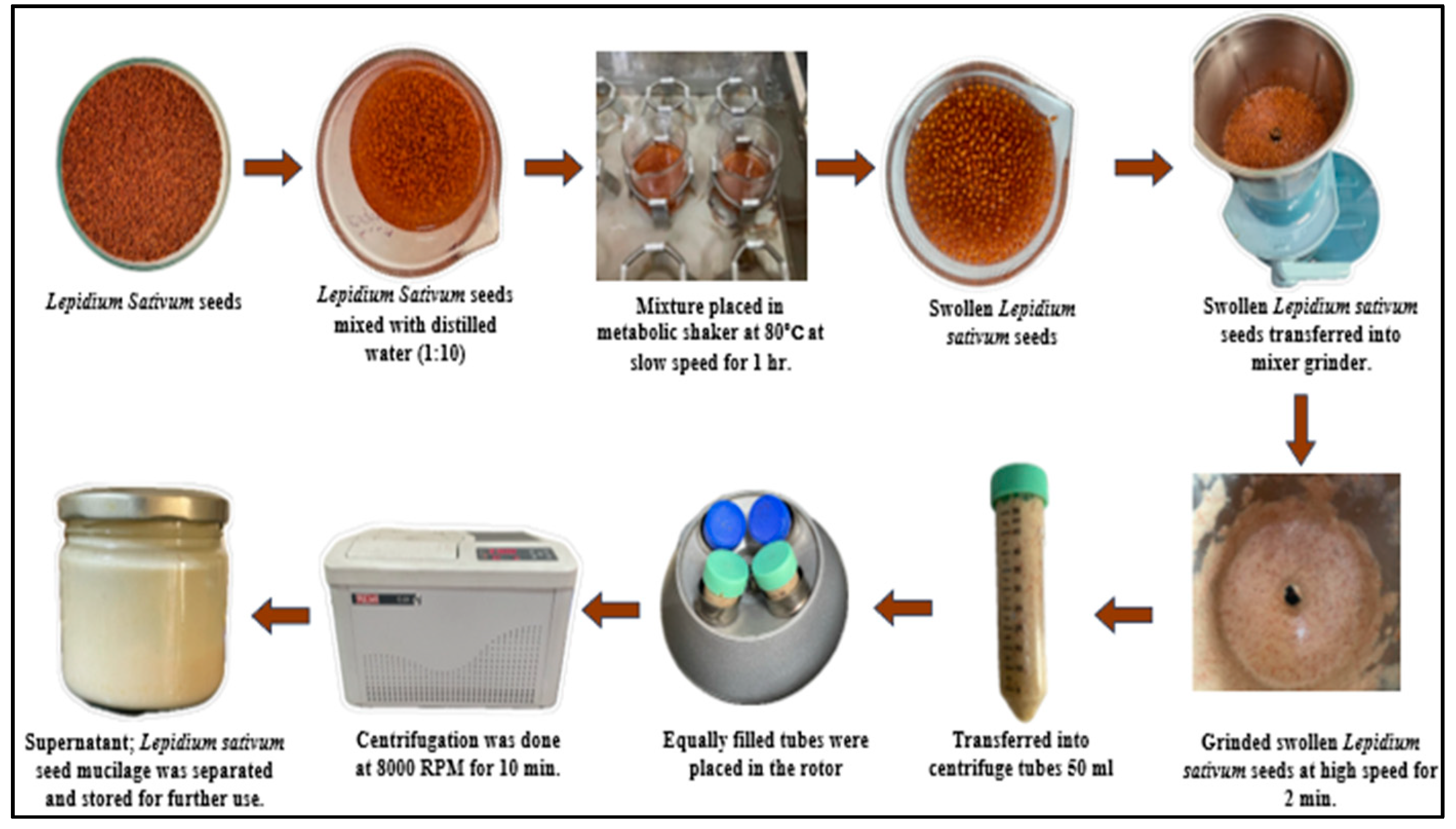
Lepidium sativum seeds (LSM) (10 g) were weighed using an electronic weighing machine (CST-600, Weigh India, New Delhi, India) and scattered in 100 mL of deionized water. The mixture was stirred using a clean stirrer and placed in a shaking incubator as shown in Figure 1 (Labpro 120 18 L, Labpro International, Punjab, India) at 80 °C for 60 min. After 60 min, a mucilaginous layer developed on the seeds, which were then placed on a sieve to remove excess water. The swollen seeds were ground for 2 min using a mixer grinder (750 W; Morphy Richards, Bajaj Electricals Ltd., New Delhi, India). The grounded paste was poured into flat screw PP 50 mL centrifuge tubes and centrifuged (Remi R -4C, REMI Sales & Engineering Ltd., Mumbai, India) for 10 min at 8000 RPM. The mucilage becomes the supernatant, and extra seed particles settle down and become pellets. Mucilage was poured into a clean dry glass jar and maintained at 0 °C for further utilization and evaluation. This extraction process was performed using the method described in the previous [19,20] study, with slight modifications.

2.4. Preparation of Low-Fat Gluten-Free Cupcakes (GFCs)

In a clean dry bowl, the sieved gluten-free composite flour blend (30%), (1%) chemical leavening system, i.e., baking soda, and baking powder were mixed well into a homogenous mixture with the help of a spatula. In another clean and dry bowl, 20% LSM, yogurt 29%, and 20% powdered sugar were added and mixed together with the help of a hand whisk (P HR3705, Royal Philips Electronics, Shanghai, China) for 1 min to develop an emulsion mixture. All dry ingredients were mixed with the emulsion mixture using a clean dry spatula to develop a smooth batter. The developed batter was poured into a cupcake liner and baked in a pre-heated oven (Morphy Richards OTG 60 RCSS Luxe, Bajaj Electricals Ltd., New Delhi, India) at 175 °C for 30 min on the bottom rod. The GFCs were prepared with different levels of LSM used to replace oil, where all other ingredients were standard, as mentioned in Table 1.

2.5. Composition Analysis

2.5.1. Proximate Analysis

Proximate analysis is a necessary quantitative approach to quantify the composition of certain biogenic substances and offers deep insights into GFCs. This quantitative determination is important for understanding the nutritional makeup of the developed GFCs. The hot-air oven drying method (AOAC 934.01) was used to quantify the total moisture content [21] (Lab solution, Digital HAO60L, Lab solution India, Ambala Sadar, India). Total ash content was analyzed using a muffle furnace (AOAC 942.05) [22] (Labcare Digital Equipments, New Delhi, India). Protein estimation was performed using the Kjeldahl digestion method (AOAC 2001.11) [21] (KjelTRON, KDIGB-8M, Tulin Equipments, Chennai, India), fat estimation was performed using Soxhlet extraction apparatus (SSI 063, SSI; Ahmedabad, India) using the (AOAC 963.15) method [23], and crude fiber% was estimated using the classic acid–alkali method (AOAC 920.86) [24]. The carbohydrate content was estimated by the difference method (AOAC 986.25) [25] using the following equation:
C a r b o h y d r a t e ( g / 100 g ) = 100 ( M o i s t u r e + P r o t e i n + F a t + A s h + C r u d e f i b r e ) ( g / 100   g )

2.5.2. Fatty Acid Profiling

The M0 and M100 samples were further analyzed for fatty acid profiling, where crude fat was extracted using the Soxhlet method, which was further used for fatty acid profiling using Gas Chromatography–Flame Ionization Detectors (GC-FID) (HP6890, Agilent Technologies, Inc. Santa Clara, CA, USA) (AOAC 996.06). For fatty acid methyl ester (FAMEs) preparation, 50–100 mg of fat was placed in a test tube, and 20 µL of methanolic 2N KOH solution was added. The preparation was then heated (50 °C for 10 min) using a water bath. After cooling, 1 mL of methanol and 5% HCL were added while shaking. The solution was heated at 70 °C for 10 min and then cooled. The 2 mL petroleum ether (40–60 °C) was added to 1 g of NaSO4 and shaken for 1 min to extract the FAMEs layer. Then, 1 µL of the upper FAMEs layer was injected into GC-FID system. Peaks developed for fatty acids were identified by comparison with the standard FAME peak elution times [26].

2.5.3. Lipid Health Quality Indices (LHQI)

Lipid Health Quality Indices of GFCs were assessed by the help of fatty acid profiling of 0% and 100% fat-substituted GFCs, by calculating as follows in Table 2 [27]:

2.5.4. Gluten Content Estimation

Enzyme-linked immunosorbent assay (ELISA) was employed to quantify gluten content of the developed gluten-free cupcakes (GFCs). The sandwich ELISA Gliadin kit (RIDASCREEN) (Article no R7001) (R-BioPharma AG, Darmstadt, Germany) was used (AOAC 2021.01) [25]. A 5 g sample of GFC was homogenized, and 0.25 g was introduced to centrifuge tube. Then, 2.5 mL of solution was added and mixed for 30 s. The preparation was then maintained at 50 °C for 40 min and cooled to room temperature. After adding 7.5 mL of 80% ethanol and stirring, the solution was centrifuged at 5000 RPM for 10 min. The gliadin diluent was diluted and 80 µL of the supernatant was combined with 920 µL of gliadin diluent. Then, 100 µL of this mixture was added to the wells and incubated at room temperature for 30 min. After washing thrice, 100 µL of the conjugate was added and incubated for 30 min. Fifty microliters of substrate were added to the chromogen, followed by 30 min of dark incubation, and the absorbance was determined at 450 nm.

2.5.5. Sensory Analysis

In the sensory analysis, a nine-point hedonic scale was employed, as recommended, to evaluate five specific parameters: appearance, aroma, texture, taste, and overall acceptability. This scale ranges from 1 to 9, where 1 signifies “dislike extremely,” 2 denotes “dislike very much,” 3 represents “dislike moderately,” 4 indicates “dislike slightly,” 5 corresponds to “neither like nor dislike,” 6 signifies “like slightly,” 7 denotes “like moderately,” 8 represents “like very much,” and 9 indicates “like extremely.” Fifty healthy, semi-trained adult participants were briefed on the evaluation procedure, and sensory analysis of the samples was performed. Ten grams of uniquely coded food samples were presented on a white paper plate, and participants were provided with mineral water and puffed rice to cleanse and neutralize their palates between samples [28,29].

2.5.6. Statistical Analysis

The data are presented as the mean ± SD and all experiments were carried out in triplicate. Significant differences between groups in the proximate analysis were analyzed using one-way ANOVA with Bonferronis’s post hoc test. Moreover, the results of fatty acids profiling and sensory analysis were further evaulated by Student’s t-test. Statistical significance was set at p < 0.05, and all tests were performed using GraphPad software version 8.0.

3. Result and Discussion

This study aimed to formulate novel gluten-free, low-fat, plant-based, and health-oriented cupcakes using composite flour blends and LSM as fat replacers. The composition of the formulations is discussed in Table 1. A composite flour blend was utilized to develop GFCs to make the food product nutritionally dense in terms of protein, fiber, and other vital nutrients. GFCs were then incorporated into LSM to reduce total fat content (fat replacer) and improve the appearance, texture and overall acceptability of the novel GFCs.

3.1. Proximate Analysis

Nutritional constituents of the developed GFCs were determined in this study are presented in Table 3. Moisture content of M0 was (18.12 ± 0.13%) and that of M100 was (19.85 ± 0.07%), which has been observed to increase significantly to a value of p < 0.001; due to addition of seed mucilage [20,30], GFCs prepared with addition of 20% LSM were observed to have significantly higher protein than in GFCs developed using oil. The protein content increased with the addition of seed mucilage [31,32]. There was a significant p < 0.001 increase of 47.25% in protein content after the addition of LSM, i.e., M0 was 9.12 ± 0.12 g/100 g and M100 was 13.43 ± 0.07 g/100 g (Table 3). Gluten-free flour blend developed using different millets and pulses increases the amino-acid profile and overall protein content [33].
Fat content was affected significantly. M0 had 19.48 ± 0.05 g/100 g of fat content and M100 had 2.44 ± 0.23 g/100 g of fat content; there was a reduction of 87.67% of fat, which is a highly significant reduction, producing a value of p < 0.001 (Table 3). This could have occurred because of 100% replacement of fat with Lepidium sativum seed mucilage. Incorporating LSM slightly increased the moisture content of the GFCs. Low-fat components in the formulation macromolecules directly interact with water molecules, which ultimately leads to reduced fat content in GFCs [20]. Pertaining to this, similar results have been observed when chia mucilage was incorporated into cake premixes [31], taro mucilage into cakes [30], chia gum extract into muffins [32], and psyllium and flaxseed mucilage into cookies [20].
As shown in Table 3, as the substitution of oil with mucilage increased, there was a gradual increase in the crude fiber content of the developed GFCs, as LSM has a higher crude fiber content and acts as a prebiotic [34]. Carbohydrate content was determined to increase significantly with a p value of (<0.001) with increasing mucilage content (Table 3); this increase was due to the increasing soluble fibers in the composition, and reducing fat content as carbohydrate is a main component in LSM (77%), i.e., M0 has (49.21 ± 0.03) and M100 has (58.39 ± 0.09) [34].

3.2. Fatty Acid Profile

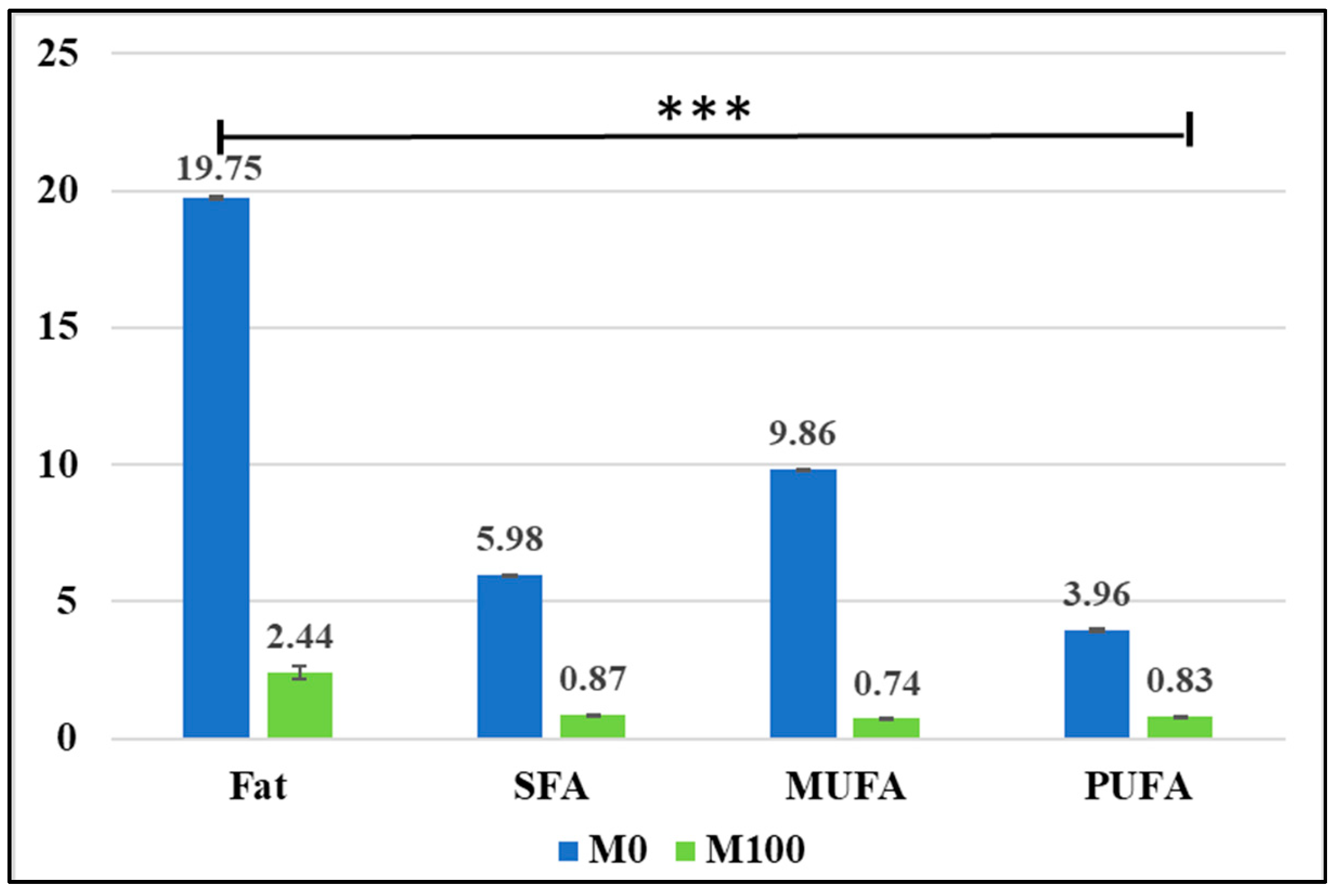
An elaborative fatty acid profile was characterized for M0 and M100 of the developed GFCs, as shown in Table 4 and Figure 2. The total fat content of M0 was 19.64 ± 0.05 g/100 g and that of M100 was 2.44 ± 0.23 g/100 g of GFC, which clearly indicates a highly significant reduction of 87.55% of fat (p < 0.001); such a reduction was also observed in other studies, where a reduction of 43.52% of fat occurred by replacing just 45–50% of margarin with chia seed mucilage in muffins [32]. Another study where chia seed mucilage substituted oil and egg yolk in mayonnaise also decreased lipid levels by 50% [35]. A highly significant change (p-value < 0.001) was reported in SFA content from M0 and M100 GFCs, which were 5.98 ± 0.021 g/100 g and 0.87 ± 0.0057 g/100 g, respectively. The is attributed to fat replacement, which is beneficial, as studies have shown that high levels of SFA in the diet can cause higher serum cholesterol, elevated low-density lipoproteins and very-low-density lipoproteins [36]. In M0, the MUFA and PUFA contents were 9.86 ± 0.0016 g/100 g and 3.96 ± 0.033 g/100 g, respectively, whereas in M100, it was 0.74 ± 0.008 g/100 g and 0.83 ± 0.003 g/100 g, respectively, indicating a highly significant difference (p < 0.001) (Table 4 and Figure 2). Although the values for SFA, MUFA and PUFA were observed to significantly decline because of fat replacement, the overall lipid quality index for the developed product improved, as discussed further in this study. In addition, the decreased total fat and SFA content in M100 elevated its lipid quality index, which coincides with WHO and FAO recommendations to prioritize low SFA intake and improved UFA consumption [37,38]. Trans-fatty acids were not detected in M0 and M100.
Altogether, 37 fatty acids were identified using GC-FID (Table 4) for both M0 and M100. The lowest detection limit for fatty acids was below <0.001 g/100 g. All the fatty acids were grouped into SFA, MUFA, PUFA and trans-fatty acids (Table 4).
The concentration of saturated fatty acids was markedly higher in M0, with a predominance of palmitic acid than in M100. Caprylic, myristic, pentadeconic, palmitic and aracidic acids showed a statistically significant reduction from M0 to M100 after fat substitution (p < 0.001). Some studies have indicated that high levels of SFAs lead to increased serum cholesterol levels; however, certain SFAs increase low-density lipoproteins (LDL) and reduce high-density lipoprotein (HDL) levels [39]. This may contribute to vascular stiffness, high blood pressure and increased inflammation; hence, a product with low SFA content is considered a better option [40]. A significant decrease was recorded in oleic acid proportion: MUFA M0 was 9.75 ± 0.0008 g/100 g and M100 was 0.67 ± 0.007 g/100 g (p < 0.001). Oleic acid is known to maintain oxidative stability and help HDL modulation [41]. The PUFA content was higher in M0 than in M100; specifically, linoleic acid M0 was 3.27 ± 0.03 g/100 g and M100 was 0.65 ± 0.003 g/100 g, and alpha-linolenic acid M0 was 0.53 ± 0.005 g/100 g and M100 was 0.09 ± 0.001 g/100 g. Furthermore, gamma-linolenic acid M0 was 0.045 ± 0.001 g/100 g and M100 was 0.01 ± 0.0001 g/100 g, which may be due to fat replacement or low detectability due to binding with mucilage. All trans-isomer fatty acids were reported to be below the detection limit (<0.01 mg/100 g). Total fat, SFA, MUFA and PUFA may have drastically reduced in M100 as compared to M0 but showed an improved LHQI, which is a dual effect and novel formulation for public health [42].
Elaborated fatty acid profiles show that M100 has predominantly vaso-protective, anti-inflammatory and anti-cholesterolemic properties, along with effectively reduced fat content and a balanced fatty acid profile.

3.3. Lipid Health Quality Indices (LHQI)

M100 reported considerably improved lipid health quality index as compared to M0. M0 and M100 had a UFA:SFA ratio of 2.33 and 1.80, respectively (Table 5), which are above the desirable threshold level, although a minor reduction was marked in M100. This response may have arisen due to low lipid fraction in LSM; correspondingly, it may be possible that UFAs of mucilage might have bound with other components in the formulation, due to which there is limited availability [43,44,45]. Research shows that high UFA content improves vascular flexibility, reduces arterial pressure and stiffness, and decreases thrombus formation and inflammation [46]. Conversely, high saturated fatty acids levels correlate with increased serum cholesterol, with certain SFAs linked to higher LDL and lower HDL levels, which may lead to vascular stiffness and inflammation [39,40,47].
M100 had a slightly higher PUFA:SFA ratio 0.95 than M0, which was 0.66, and this is deemed advantageous; hence, increased PUFA:SFA ratio, as shown in Table 5, indicates an improved, balanced and cardio-protective fat profile. LSM has helped uphold important PUFAs, which are helpful in reducing serum triglycerides, cholesterol and LDL levels [48]. This ratio assesses the dietary impact on cardiovascular health [49,50]. The Omega 6:Omega 9 ratio increase in M100, which was 0.97 from M0, indicating that the quality of lipids improved in M0 and M100. This index shows the ratio of essential to non-essential fatty acids. Essential fatty acids depend on dietary sources, whereas non-essential fatty acids are endogenously produced. This index reflects the balance between pro-inflammatory and anti-inflammatory fats [51,52].
The Index of Atherogenicity (IA) increased from 0.55 to 0.72 due to a relative increase in SFA; despite the increased IA, it remained in the desirable range (<1) (Table 5), denoting no potential to develop atherosclerotic lesions [53,54]. The atherogenicity index is usually assessed for dairy products, seaweed, algal oil items, meat, and meat products [55]. The processing of any food product influences its atherogenic potential [56]. In contrast to the IA thrombogenicity index of M100, which was 0.59, it did not exceed the recommended limit (<1), indicating an anti-thrombogenic effect [56]; that of M0 was 0.82, which is greater than that of M100. This index indicates thrombosis risk: (C12:0, C14:0, C16:0) increase it, while MUFAs and PUFAs inhibit it [57]. Foods with a low thrombogenicity index benefit cardiovascular health [58].
The Health-Promoting Index (HPI) or inverse atherogenicity of M0 was 1.83 and that of M100 was 1.39, although both were in the desirable range (>1) (Table 5). M100 has extremely low absolute fat, owing to seed mucilage acting as a fat replacer, which may be the reason for the low HPI [56]. Chen and Liu introduced this index to measure the ratio between beneficial unsaturated fatty acids (UFAs) and detrimental saturated fatty acids (SFAs) [56].
M0 and M100 had ∆-desaturase indices (DI) (C16:0) reported to be 1.57% and 2.3%, respectively; both were above the desirable range (>1%) (Table 5). M100 reported slightly higher ∆-desaturase index (DI) (C16:0). This increase may have been due to an increase in the relative quantity of C16:0. This index quantifies the conversion of SFAs into MUFAs by the ∆desaturase enzyme. This index functions as a biomarker for lipid quality, showing the transformation of SFAs, such as palmitic acid, into MUFAs, including palmitoleic acid [59]. Its relevance is significant in analyzing endogenous fatty acids during metabolic processes [60]; however, in food products such as GFCs, the index represents the SFA-MUFA balance, indicating the type of fat used, such as oil, butter, ghee, and fish oil [61]. Thus, the overall lipid quality improved, and fat reduction was successfully implemented [56].
Table 5. Lipid Health Quality Indices of M0 and M100.
LHQIM0 M100Desirable RangeReference
UFA:SFA2.331.80 (>1)[62]
PUFA:SFA0.660.95(≥0.4)[63]
Omega 6:Omega 90.340.97(<0.5–1.5>)[63]
Index of Atherogenicity (IA)0.550.72(<1)[27]
Index of Thrombogenicity (IT)0.820.59(<1)[27]
Health-Promoting Index (HPI)1.831.39(>1)[64]
∆Desaturase-Index (C16) %1.57%2.3%(>1%)[56]
UFA: Unsaturated fatty acids; SFA: Saturated fatty acids; PUFA: Polyunsaturated acids. M0: 0% of LSM; M100: 100% of LSM.

3.4. Gluten Content Estimation

The gluten content in our developed product is (2.21 ± 0.1 ppm). According to the Food and Drug Administration [65], any food product falls under the category of gluten-free food only when there is less than 20 ppm gluten. Hence, our developed GFCs are gluten-free, and this 2.21 ppm of detected gluten content in the developed food product could have come from cross-contamination during the manufacturing, processing and storage processes.

3.5. Sensory Analysis

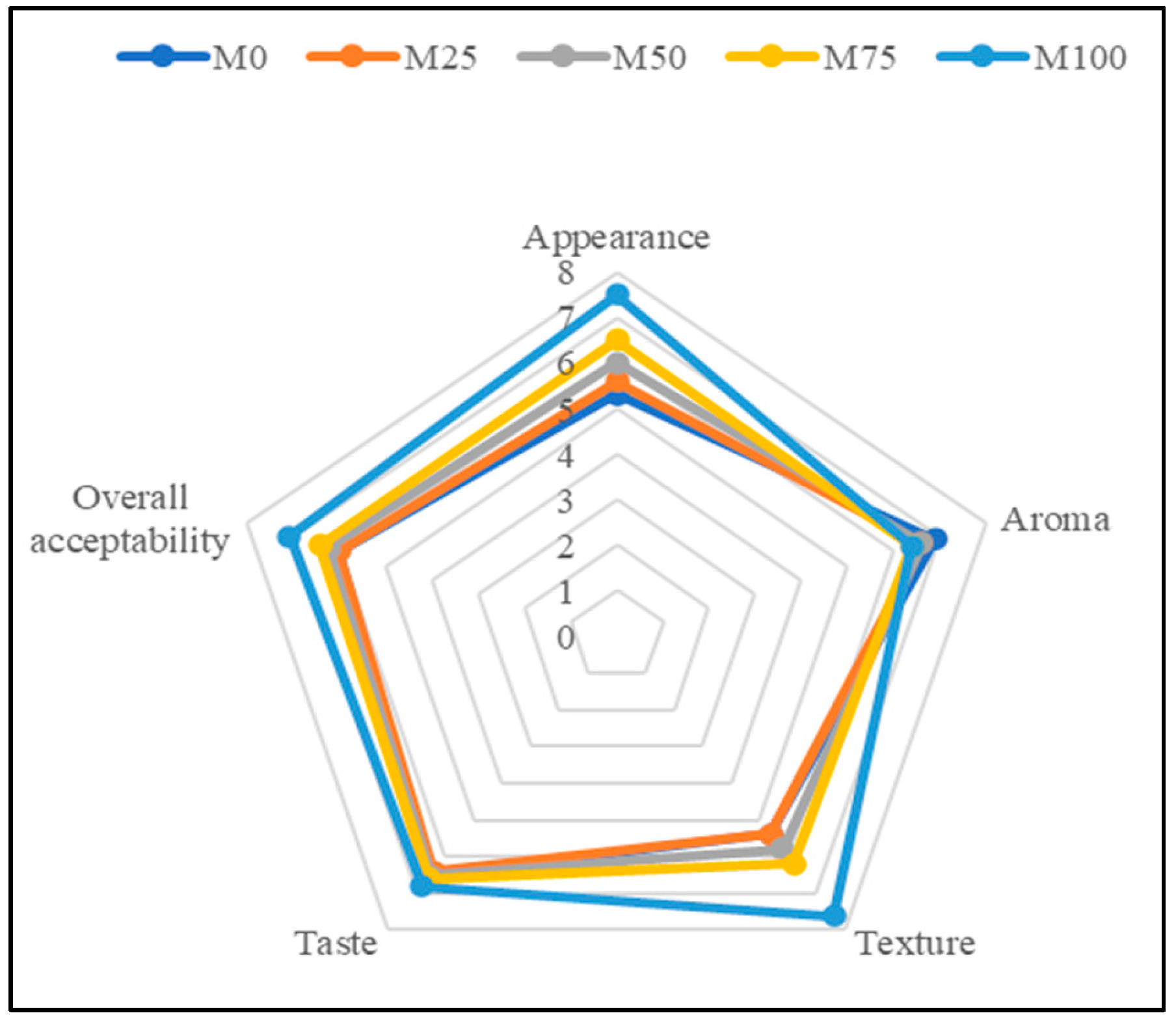
The sensory evaluation of all developed GFCs variants was assessed using a radar plot to compare all the key quality attributes, i.e., appearance, aroma, texture, taste and overall acceptability (Figure 3). Radar graph is an effective visual tool for rapid identification of product strength and weaknesses through the generated polygon.
The axis of the radar graph indicates the sensory attributes and total mean value achieved by the panelists. As illustrated in Figure 3, M100 exhibits the largest and most uniform polygon, indicating superior sensory acceptability when compared to M0 and other variants. M100 was the most visually appealing, which is the first and most important factor for influencing consumer purchase decision, especially in gluten-free bakery products [66] where products suffer from poor surface characteristics and color. Aroma loss in gluten-free bakery items is a huge concern [66,67], but only a slight difference from other variants is reported as it may be protected by the nutty aroma of the composite flour. The most pronounced difference was observed in the texture as the fat substituted textural quality improved, which may be due to Lepidium sativum seed mucilage’s functional properties [68,69] viz. moisture retention and cohesiveness, thereby compensating both fat and gluten reduction.
M100 had an overall acceptability of 7.07 ± 0.21, falling within the range of liked moderately to like very much. The overall radar graph clearly demonstrates that the M100 low-fat gluten-free cookies successfully overcome common sensory limitations associated with gluten-free formulations. M100 has a strong potential for market acceptance and commercial viability.

4. Conclusions

Lepidium sativum seed mucilage has been used as a fat substitute in the development of gluten-free cupcakes. LSM-incorporated gluten-free cupcakes showed a substrantial decrease in total fat content and enhanced protein and fiber proportions compared to M0 and other variants. M100 had significantly lower SFA, MUFA and PUFA content because of drastic fat reduction; however, it demonstrated a highly enhanced lipid quality profile. LHQI was observed to fall in the desirable range for both M0 and M100, but quality of fat content was superior in M100 as compared to M0. The developed gluten-free cupcakes complied with FDA and FSSAI, with gluten content measured at 2.2 ppm. M100 had an overall sensory acceptability of 7.07 ± 0.21, and the mouthfeel of the crumbs of M100 was better than that of M0. Thus, the developed cupcakes are nutritionally and sensorially improved, in addition to being low-fat and gluten-free. Therefore, they have great potential for commercial implementation and will cater to health-conscious consumers looking for gluten-free products to improve health and well-being.

Author Contributions

B.T. contributed to the conceptualization, project administration, investigation, data curation and original draft preparation. K.S. contributed in supervision, validation and project administration. M.C. performed formal analysis, original draft preparation and writing—review and editing. R.S. contributed in supervision and review of original draft. All authors have read and agreed to the published version of the manuscript.

Funding

This research received no external funding.

Institutional Review Board Statement

Not applicable.

Informed Consent Statement

Not applicable.

Data Availability Statement

The data presented in this study are available in the article.

Acknowledgments

The authors are very grateful to all the lab technicians and staff of the Central Instrumentation Facility and Research Lab, Sharda University, for their assistance and support throughout the experimentation.

Conflicts of Interest

The authors declare no conflicts of interest.

Abbreviations

The following abbreviations are used in this manuscript:
GFCsGluten-free Cupcakes
LSMLepidium sativum seed Mucilage
GC-FIDGas Chromatography–Flame Ionization Detector
UFAUnsaturated Fatty Acids
SFASaturated Fatty Acids
MUFAMonounsaturated Fatty Acids
PUFAPoly Unsaturated Fatty Acids
LHQILipid Health Quality Indices
IAAtherogenicity Index
ITThrombogenicity Index
HPIHealth-Promoting Index
DIDesaturase Index
ANOVAAnalysis of Variance
ELISAEnzyme-Linked Immunosorbent Assay
FDAFood and Drug Administration
FSSAIFood Safety Standards Authority of India
AOACAssociation of Official Analytical Chemist
FAMEsFatty Acid Methyl Esters

References

  1. Kamilova, A.N.; Azimova, N.D.; Zakharova, I.N. Gluten related disorders: A review of the literature. Pediatr. Cons. Medicum 2023, 173–178. [Google Scholar] [CrossRef]
  2. Vuletic, B.; Kocovic, A.; Mladenovic, M.; Lekovic, Z.; Radlovic, V.; Stojanovic, B.; Djonovic, N.; Radlovic, N. Gluten-related disorders. Srp. Arh. za Celok. Lek. 2022, 150, 108–112. [Google Scholar] [CrossRef]
  3. Denton, C. The Elimination/Challenge Diet. Minn Med. 2012, 95, 43–44. [Google Scholar] [PubMed]
  4. Roy, M.; Biswas, A.; Azam, M.; Paul, B.; Talukder, D.; Alam, M.; Wahiduzzaman, M.; Islam, M.; Rahman, M. Gluten-free products: A strategy for a nutritionally appropriate, balanced diet for celiac patients and children. Food Res. 2025, 9, 74. [Google Scholar] [CrossRef]
  5. Stanciu, D.; Staykov, H.; Dragomanova, S.; Tancheva, L.; Pop, R.S.; Ielciu, I.; Crișan, G. Gluten Unraveled: Latest Insights on Terminology, Diagnosis, Pathophysiology, Dietary Strategies, and Intestinal Microbiota Modulations—A Decade in Review. Nutrients 2024, 16, 3636. [Google Scholar] [CrossRef]
  6. Comino, I.; Moreno, M.D.L.; Real, A.; Rodríguez-Herrera, A.; Barro, F.; Sousa, C. The Gluten-Free Diet: Testing Alternative Cereals Tolerated by Celiac Patients. Nutrients 2013, 5, 4250–4268. [Google Scholar] [CrossRef]
  7. Dhillon, S.; Munjal, N. Convenience Food Lifestyle Segments—A Study of Delhi-NCR. Indian J. Mark. 2022, 52, 56. [Google Scholar] [CrossRef]
  8. Gutiérrez Reyes, D.E.; Arteaga, C. Trends and Advances in Gluten-Free Products. Health Leadersh. Qual. Life 2024, 3, 1. [Google Scholar] [CrossRef]
  9. Sree, D.R.; S, S. Exploring the use of gluten-free flours in innovative bakery product development: A comprehensive review. Int. J. Sci. Res. Arch. 2024, 12, 478–483. [Google Scholar] [CrossRef]
  10. González, M.P.; Ballestero-Fernández, C.; Fajardo, V.; Achón, M.; García-González, Á.; Alonso-Aperte, E.; Úbeda, N. Gluten-Free Product Contribution to Energy and Macronutrient Intakes in Spanish Children and Adolescents with Celiac Disease. Foods 2022, 11, 3790. [Google Scholar] [CrossRef]
  11. Mir, M.B.; Mir, S.A.; Rajput, R.; Sablania, V. Challenges in Development of Gluten-Free Breads. In Gluten-free Bread Technology; Mir, S.A., Shah, M.A., Hamdani, A.M., Eds.; Springer International Publishing: Cham, Switzerland, 2021; pp. 15–28. ISBN 978-3-030-73898-3. [Google Scholar]
  12. Mishra, S. Millet: The future rice. Int. J. Home Sci. 2022, 8, 83–85. [Google Scholar] [CrossRef]
  13. Kadam, A.; Mali, S.; Jogi, A.; Pratap, A.P. Correlation of Fatty Acid Chain Length Used in the Biscuit Formulation with the Biscuits Texture Profile. Preprints 2024. [Google Scholar] [CrossRef]
  14. Culetu, A.; Stoica-Guzun, A.; Duta, D.E. Impact of fat types on the rheological and textural properties of gluten-free oat dough and cookie. Int. J. Food Sci. Technol. 2020, 56, 126–137. [Google Scholar] [CrossRef]
  15. Milicevic, N.; Sakac, M.; Saric, B.; Skrobot, D.; Filipcev, B.; Simurina, O.; Jovanov, P.; Pestoric, M.; Maric, A. Soybean bran as the fat replacer in gluten-free cookie formulation: Physicochemical properties and sensory profiles. Chem. Ind. Chem. Eng. Q. 2023, 29, 179–187. [Google Scholar] [CrossRef]
  16. Tomić, J.; Škrobot, D.; Dapčević-Hadnađev, T.; Maravić, N.; Rakita, S.; Hadnađev, M. Chia Seed Hydrogel as a Solid Fat Replacer and Structure Forming Agent in Gluten-Free Cookies. Gels 2022, 8, 774. [Google Scholar] [CrossRef]
  17. Puligundla, P.; Lim, S. A Review of Extraction Techniques and Food Applications of Flaxseed Mucilage. Foods 2022, 11, 1677. [Google Scholar] [CrossRef]
  18. Adera, F.; Yusuf, Z.; Desta, M. Physicochemical Properties and Biological Activities of Garden Cress (Lepidium sativum L.) Seed and Leaf Oil Extracts. Can. J. Infect. Dis. Med Microbiol. 2022, 2022, 1–8. [Google Scholar] [CrossRef] [PubMed]
  19. Lim, B.-C.; Lim, J.-W.; Ho, Y.-C. Garden cress mucilage as a potential emerging biopolymer for improving turbidity removal in water treatment. Process. Saf. Environ. Prot. 2018, 119, 233–241. [Google Scholar] [CrossRef]
  20. Mohtarami, F.; Rashidi, Z.; Pirsa, S. Extraction of flaxseed and Plantago Psyllium mucilage: Investigation of rheological properties and efficiency as a fat substitute for the production of low-calorie cookies. J. Food Process. Preserv. 2022, 46. [Google Scholar] [CrossRef]
  21. Thiex, N. Evaluation of Analytical Methods for the Determination of Moisture, Crude Protein, Crude Fat, and Crude Fiber in Distillers Dried Grains with Solubles. J. AOAC Int. 2009, 92, 61–73. [Google Scholar] [CrossRef]
  22. Thiex, N.; Novotny, L.; Crawford, A. Determination of Ash in Animal Feed: AOAC Official Method 942.05 Revisited. J. AOAC Int. 2012, 95, 1392–1397. [Google Scholar] [CrossRef]
  23. Thiex, N.J.; Anderson, S.; Gildemeister, B. Crude Fat, Diethyl Ether Extraction, in Feed, Cereal Grain, and Forage (Randall/Soxtec/Submersion Method): Collaborative Study. J. AOAC Int. 2003, 86, 888–898. [Google Scholar] [CrossRef] [PubMed]
  24. Kerr, W.; Wang, X.; Choi, S. Physical and sensory characteristics of low-fat italian sausage prepared with hydrated oat. J. Food Qual. 2005, 28, 62–77. [Google Scholar] [CrossRef]
  25. Official Methods of Analysis of AOAC International; Latimer, G.W., Jr., Ed.; Oxford University Press: Oxford, UK, 2023; ISBN 978-0-19-761013-8. [Google Scholar]
  26. Mossoba, M.M.; Moss, J.; Kramer, J.K.G. Trans Fat Labeling and Levels in U.S. Foods: Assessment of Gas Chromatographic and Infrared Spectroscopic Techniques for Regulatory Compliance. J. AOAC Int. 2009, 92, 1284–1300. [Google Scholar] [CrossRef] [PubMed]
  27. Tilami, S.K.; Kouřimská, L. Assessment of the Nutritional Quality of Plant Lipids Using Atherogenicity and Thrombogenicity Indices. Nutrients 2022, 14, 3795. [Google Scholar] [CrossRef]
  28. IS 6273-2; Guide for Sensory Evaluation of Foods, Part II: Methods and Evaluation Cards. Bureau of Indian Standards: Old Delhi, India, 1971.
  29. Jabeen, S.; Khan, A.U.; Ahmad, W.; Ahmed, M.-U.; Ali, M.A.; Rashid, S.; Rashid, A.; Sharifi-Rad, J. Development of Gluten-Free Cupcakes Enriched with Almond, Flaxseed, and Chickpea Flours. J. Food Qual. 2022, 2022, 1–11. [Google Scholar] [CrossRef]
  30. Arafa, S.G.; Badr, M.R. Preparation Untraditional Low Calorie Cake Formula by Taro (Colocasia esculenta) Mucilage. J. Food Dairy Sci. 2023, 149–153. [Google Scholar] [CrossRef]
  31. Fernandes, S.S.; Filipini, G.; Salas-Mellado, M.d.L.M. Development of cake mix with reduced fat and high practicality by adding chia mucilage. Food Biosci. 2021, 42. [Google Scholar] [CrossRef]
  32. Rauf, M.A.; Sharif, M.K.; Naz, T.; Razzak, M.A.; Shahid, F.; Aslam, T.; Ali, R.; Ahmad, T. Utilization of Chia Seed Mucilage to Reduce the Fat Contents in Muffins. J. Surv. Fish. Sci. 2024, 11, 56–61. [Google Scholar] [CrossRef]
  33. Khutsidze, T.; Pruidze, E.; Silagadze, M.; Dzneladze, E.; Pkhakadze, G.; Berulava, I. A flour composite mixture for gluten-free confectionery. Potravinarstvo Slovak J. Food Sci. 2024, 18, 453–467. [Google Scholar] [CrossRef]
  34. Lepidium Sativum Mucilage: From Characterization to Prebiotic Assessment. Int. J. Biomed. Investig. 2023, 6, 1–11. [CrossRef]
  35. Fernandes, S.S.; Mellado, M.d.L.M.S. Development of Mayonnaise with Substitution of Oil or Egg Yolk by the Addition of Chia (Salvia Hispânica L.) Mucilage. J. Food Sci. 2017, 83, 74–83. [Google Scholar] [CrossRef]
  36. Stanek, A.; Grygiel-Górniak, B.; Brożyna-Tkaczyk, K.; Myśliński, W.; Cholewka, A.; Zolghadri, S. The Influence of Dietary Interventions on Arterial Stiffness in Overweight and Obese Subjects. Nutrients 2023, 15, 1440. [Google Scholar] [CrossRef]
  37. World Health Organization. Fats and Fatty Acids in Human Nutrition; World Health Organization: Geneva, Switzerland, 2008; Volume 91, ISBN 9789251067338. [Google Scholar]
  38. Mozaffarian, D.; Wu, J.H.Y. Omega-3 Fatty Acids and Cardiovascular Disease: Effects on risk factors, molecular pathways, and clinical events. J. Am. Coll. Cardiol. 2011, 58, 2047–2067. [Google Scholar] [CrossRef]
  39. Sacks, F.M.; Lichtenstein, A.H.; Wu, J.H.Y.; Appel, L.J.; Creager, M.A.; Kris-Etherton, P.M.; Miller, M.; Rimm, E.B.; Rudel, L.L.; Robinson, J.G.; et al. Dietary Fats and Cardiovascular Disease: A Presidential Advisory From the American Heart Association. Circulation 2017, 136, e1–e23. [Google Scholar] [CrossRef]
  40. Livingstone, K.; Givens, D.; Cockcroft, J.; Pickering, J.; Lovegrove, J. Is fatty acid intake a predictor of arterial stiffness and blood pressure in men? Evidence from the Caerphilly Prospective Study. Nutr. Metab. Cardiovasc. Dis. 2013, 23, 1079–1085. [Google Scholar] [CrossRef]
  41. López-Miranda, J.; Pérez-Martinez, P.; Pérez-Jiménez, F. 4-Health Benefits of Monounsaturated Fatty Acids. In Improving the Fat Content of Foods; Williams, C., Buttriss, J., Eds.; Woodhead Publishing Series in Food Science, Technology and Nutrition; Woodhead Publishing: Delhi, India, 2006; pp. 71–106. ISBN 978-1-85573-965-9. [Google Scholar]
  42. Hooper, L.; Martin, N.; Jimoh, O.F.; Kirk, C.; Foster, E.; Abdelhamid, A.S. Reduction in saturated fat intake for cardiovascular disease. Cochrane Database Syst. Rev. 2020, 5, CD011737. [Google Scholar] [CrossRef]
  43. Gao, Z.; Fang, Y.; Cao, Y.; Liao, H.; Nishinari, K.; Phillips, G.O. Hydrocolloid-food component interactions. Food Hydrocoll. 2017, 68, 149–156. [Google Scholar] [CrossRef]
  44. Razavi, S.M.A.; Cui, S.W.; Guo, Q.; Ding, H. Some physicochemical properties of sage (Salvia macrosiphon) seed gum. Food Hydrocoll. 2014, 35, 453–462. [Google Scholar] [CrossRef]
  45. Hollingworth, C.S. Food Hydrocolloids: Characteristics, Properties and Structures; Nova Science Publishers: Hauppauge, NY, USA, 2010; p. 309. [Google Scholar]
  46. Colussi, G.; Catena, C.; Novello, M.; Bertin, N.; Sechi, L. Impact of omega-3 polyunsaturated fatty acids on vascular function and blood pressure: Relevance for cardiovascular outcomes. Nutr. Metab. Cardiovasc. Dis. 2017, 27, 191–200. [Google Scholar] [CrossRef] [PubMed]
  47. Mason, R.P.; Libby, P.; Bhatt, D.L. Emerging Mechanisms of Cardiovascular Protection for the Omega-3 Fatty Acid Eicosapentaenoic Acid. Arter. Thromb. Vasc. Biol. 2020, 40, 1135–1147. [Google Scholar] [CrossRef]
  48. Sellem, F.; Pesando, D.; Bodennec, G.; Girard, J.-P.; Simopoulos, A.P. An Increase in the Omega-6/Omega-3 Fatty Acid Ratio Increases the Risk for Obesity. Nutrients 2016, 8, 128. [Google Scholar] [CrossRef] [PubMed]
  49. Fernandez, M.L.; West, K.L. Mechanisms by which Dietary Fatty Acids Modulate Plasma Lipids. J. Nutr. 2005, 135, 2075–2078. [Google Scholar] [CrossRef]
  50. Brown, T.J.; Brainard, J.; Song, F.; Wang, X.; Abdelhamid, A.; Hooper, L. Omega-3, omega-6, and total dietary polyunsaturated fat for prevention and treatment of type 2 diabetes mellitus: Systematic review and meta-analysis of randomised controlled trials. BMJ 2019, 366, l4697. [Google Scholar] [CrossRef]
  51. Burri, B.J.; Dougherty, R.M.; Kelley, D.S.; Iacono, J.M. Platelet aggregation in humans is affected by replacement of dietary linoleic acid with oleic acid. Am. J. Clin. Nutr. 1991, 54, 359–362. [Google Scholar] [CrossRef]
  52. Thijssen, M.A.; Hornstra, G.; Mensink, R.P. Stearic, Oleic, and Linoleic Acids Have Comparable Effects on Markers of Thrombotic Tendency in Healthy Human Subjects. J. Nutr. 2005, 135, 2805–2811. [Google Scholar] [CrossRef]
  53. Connor, S.; Artaud-Wild, S.; Classick-Kohn, C.; Gustafson, J.; Flavell, D.; Hatcher, L.; Connor, W. The cholesterol/saturated-fat index: An indication of the hypercholesterolaemic and atherogenic potential of food. Lancet 1986, 327, 1229–1232. [Google Scholar] [CrossRef]
  54. Omri, B.; Chalghoumi, R.; Izzo, L.; Ritieni, A.; Lucarini, M.; Durazzo, A.; Abdouli, H.; Santini, A. Effect of Dietary Incorporation of Linseed Alone or Together with Tomato-Red Pepper Mix on Laying Hens’ Egg Yolk Fatty Acids Profile and Health Lipid Indexes. Nutrients 2019, 11, 813. [Google Scholar] [CrossRef] [PubMed]
  55. Monteiro, M.; Matos, E.; Ramos, R.; Campos, I.; Valente, L.M. A blend of land animal fats can replace up to 75% fish oil without affecting growth and nutrient utilization of European seabass. Aquaculture 2018, 487, 22–31. [Google Scholar] [CrossRef]
  56. Chen, J.; Liu, H. Nutritional Indices for Assessing Fatty Acids: A Mini-Review. Int. J. Mol. Sci. 2020, 21, 5695. [Google Scholar] [CrossRef]
  57. Garaffo, M.A.; Vassallo-Agius, R.; Nengas, Y.; Lembo, E.; Rando, R.; Maisano, R.; Dugo, G.; Giuffrida, D. Fatty Acids Profile, Atherogenic (IA) and Thrombogenic (IT) Health Lipid Indices, of Raw Roe of Blue Fin Tuna (Thunnus thynnus L.) and Their Salted Product “Bottarga”. FNS 2011, 2, 736–743. [Google Scholar] [CrossRef]
  58. Temme, E.H.M.; Hornstra, G.; Mensink, R.P. Effects of Diets Enriched in Lauric, Palmitic or Oleic Acids on Blood Coagulation and Fibrinolysis. Thromb. Haemost. 1999, 81, 259–263. [Google Scholar] [CrossRef] [PubMed]
  59. Paton, C.M.; Ntambi, J.M. Biochemical and physiological function of stearoyl-CoA desaturase. Am. J. Physiol. Metab. 2009, 297, E28–E37. [Google Scholar] [CrossRef]
  60. Soyeurt, H.; Dehareng, F.; Mayeres, P.; Bertozzi, C.; Gengler, N. Variation of Δ9-Desaturase Activity in Dairy Cattle. J. Dairy Sci. 2008, 91, 3211–3224. [Google Scholar] [CrossRef]
  61. Semwogerere, F.; Neethling, J.; Muchenje, V.; Hoffman, L.C. Meat quality, fatty acid profile, and sensory attributes of spent laying hens fed expeller press canola meal or a conventional diet. Poult. Sci. 2019, 98, 3557–3570. [Google Scholar] [CrossRef]
  62. Woods, V.B.; Fearon, A.M. Dietary sources of unsaturated fatty acids for animals and their transfer into meat, milk and eggs: A review. Livest. Sci. 2009, 126, 1–20. [Google Scholar] [CrossRef]
  63. Kris-Etherton, P.M.; Krauss, R.M. Public health guidelines should recommend reducing saturated fat consumption as much as possible: YES. Am. J. Clin. Nutr. 2020, 112, 13–18. [Google Scholar] [CrossRef] [PubMed]
  64. Biandolino, F.; Parlapiano, I.; Denti, G.; Di Nardo, V.; Prato, E. Effect of Different Cooking Methods on Lipid Content and Fatty Acid Profiles of Mytilus galloprovincialis. Foods 2021, 10, 416. [Google Scholar] [CrossRef]
  65. U.S. Department of Health and Human Service. Guidance for Industry-Gluten-Free Labeling of Food. Available online: https://www.fda.gov/food/nutrition-food-labeling-and-critical-foods/gluten-free-labeling-foods (accessed on 8 December 2025).
  66. Stantiall, S.E.; Serventi, L. Nutritional and sensory challenges of gluten-free bakery products: a review. Int. J. Food Sci. Nutr. 2017, 69, 427–436. [Google Scholar] [CrossRef]
  67. Šmídová, Z.; Rysová, J. Gluten-Free Bread and Bakery Products Technology. Foods 2022, 11, 480. [Google Scholar] [CrossRef]
  68. Ben Slima, S.; Ktari, N.; Chouikhi, A.; Trabelsi, I.; Hzami, A.; Taktak, M.A.; Msaddak, L.; Ben Salah, R. Antioxidant activities, functional properties, and application of a novel Lepidium sativum polysaccharide in the formulation of cake. Food Sci. Nutr. 2022, 10, 822–832. [Google Scholar] [CrossRef] [PubMed]
  69. Hussain, S.; Mohamed, A.A.; Alamri, M.S.; Saleh, A.; Ibraheem, M.A.; Qasem, A.A.A.; Shamlan, G.; Ababtain, I.A. Rheological, textural, and sensory properties of non-fat yogurt containing cress (Lepidium sativum) seed gum and various starches. Food Sci. Technol. 2022, 42, e30121. [Google Scholar] [CrossRef]
Figure 1. Preparation of Lepidium sativum seed mucilage (LSM).
Engproc 117 00047 g001
Figure 2. Graphical representation of fat composition in (g/100 g). UFA: Unsaturated fatty acids; SFA: Saturated fatty acids; PUFA: Polyunsaturated acids. M0: 0% of LSM; M100: 100% of LSM; *** p < 0.001.
Engproc 117 00047 g002
Figure 3. Radar graph of sensory parameters of developed gluten-free cupcakes.
Engproc 117 00047 g003
Table 1. Composition of gluten-free cupcakes.
IngredientsM0M25M50M75M100
Composite flour blend (% w/w)3030303030
LSM (% w/w)05101520
Oil (% w/w)20151050
Yogurt (% w/w)2929292929
Sugar (% w/w)2020202020
Leavening agents (% w/w)11111
M0: 0% of LSM; M25: 25% of LSM; M50: 50% of LSM, M75: 75% of LSM; M100: 100% of LSM.
Table 2. Lipid Health Quality Indices and formulae.
Lipid Health Quality Indices (LHQI)Formulas
UFA:SFA [ ( S u m o f a l l P U F A s a n d M U F A s ) / S u m o f a l l S F A s ]
PUFA:SFA [ S u m o f a l l P U F A s / S u m o f a l l t h e S F A s ]
Omega 6:Omega 9 [ S u m o f a l l t h e P U F A s / S u m o f a l l t h e M U F A s ]
Index of Atherogenicity [ C 12 : 0 + ( 4 × C 14 : 0 ) + C 16 : 0 } / ( S u m o f a l l t h e U F A s ]
Index of Thrombogenicity ( C 12 : 0 + C 14 : 0 + C 16 : 0 ) / [ ( 0.5 × S u m o f M U F A s ) + ( 0.5 × T o t a l O m e g a 6 ) + ( 3 × T o t a l O m e g a 3 ) + ( o m e g a 3 / o m e g a 6 ) ]
Health Promoting Index [ ( T o t a l M U F A s + T o t a l P U F A s ) / ( C 12 : 0 + ( 4 × C 14 : 0 ) + C 16 : 0 ) ]
∆-Desaturase Index (C16) [ 100 × ( C 16 : 1 ) / ( C 16 : 1 + C 16 : 0 ) ]
UFA: Unsaturated fatty acids; SFA: Saturated fatty acids; PUFA: Polyunsaturated fatty acids; MUFA: Monounsaturated fatty acids.
Table 3. Proximate analysis of developed GFCs.
GroupsMoistureAshProteinFat FiberCarbohydrate
M018.12 ± 0.13 a2.45 ± 0.13 a9.12 ± 0.12 a19.48 ± 0.05 a1.62 ± 0.02 a49.21 ± 0.03 a
M2518.02 ± 0.31 a2.92 ± 0.21 b9.81 ± 0.08 b12.36 ± 0.15 b1.72 ± 0.12 a55.17 ± 0.13 b
M5018.04 ± 0.12 a3.13 ± 0.11 c10.96 ± 0.02 c10.02 ± 0.11 c1.99 ± 0.23 b55.86 ± 0.01 c
M7519.02 ± 0.06 b3.55 ± 0.08 d11.92 ± 0.23 d6.33 ± 0.02 d2.24 ± 0.03 c56.74 ± 0.11 d
M10019.85 ± 0.07 c3.87 ± 0.06 e13.43 ± 0.07 e2.44 ± 0.23 e2.48 ± 0.12 d58.39 ± 0.09 e
M0: 0% of LSM; M25: 25% of LSM; M50: 50% of LSM, M75: 75% of LSM; M100: 100% of LSM. Superscript in lowercase letters (a, b, c, d, e) denotes statistical significance. Means sharing the same superscript letter do not differ significantly, whereas different superscript indicates significant difference (p < 0.05).
Table 4. Fatty acid profiling of M0 and M100.
Fatty AcidsM0 (g/100 g)M100 (g/100 g)p-Value
Saturated Fatty Acids
Butyric Acid (C4:0)0.01 ± 0.00050.01 ± 0.00030.500
Caproic Acid (C6:0)0.01 ± 0.00040.01 ± 0.00020.500
Caprylic Acid (C8:0)0.07 ± 0.00050.014 ± 0.0020.001
Capric Acid (C10:0)0.01 ± 0.00020.01 ± 0.00070.500
Undecanoic Acid (C11:0)0.01 ± 0.00010.01 ± 0.00040.500
Lauric Acid (C12:0)0.01 ± 0.00040.01 ± 0.00040.500
Tridecanoic Acid (C13:0)0.01 ± 0.00020.01 ± 0.00080.500
Myristic Acid (C14:0)0.62 ± 0.0030.14 ± 0.0050.001
Myristoleic Acid (C14:1)0.01 ± 0.00050.01 ± 0.00030.500
Pentadecanoic Acid (C15:0)0.07 ± 0.00070.013 ± 0.00030.001
Palmitic Acid (C16:0)5.03 ± 0.0210.56 ± 0.0010.001
Heptadecanoic Acid (C17:0)0.01 ± 0.00050.01 ± 0.00050.500
Stearic Acid (C18:0)0.01 ± 0.00070.01 ± 0.00040.500
Arachidic Acid (C20:0)0.06 ± 0.00050.01 ± 0.00030.001
Heneicosanoic Acid (C21:0)0.012 ± 0.00030.01 ± 0.00010.329
Bhenic Acid (C22:0)0.01 ± 0.00020.01 ± 0.00050.500
Tricosanoic Acid (C23:0)0.01 ± 0.00080.01 ± 0.00030.500
Lingoceric Acid (C24:0)0.01 ± 0.00010.01 ± 0.00020.500
Monounsaturated Fatty Acids
Cis-10-Pentadecanoic Acid (C15:1)0.01 ± 0.00080.01 ± 0.00070.500
Palmetoleic Acid (C16:1)0.08 ± 0.00010.013 ± 0.0050.135
Cis-10-Heptadecanoic Acid (C17:1)0.01 ± 0.00090.01 ± 0.00020.500
Oleic Acid (C18:1)9.75 ± 0.00080.67 ± 0.0070.001
Cis-11-Ecosenic Acid (C20:1)0.01 ± 0.00020.01 ± 0.00120.500
Erucic Acid (C22:1)0.01 ± 0.00010.01 ± 0.00090.500
Nervonic Acid (C24:1)0.01 ± 0.00050.01 ± 0.00030.500
Polyunsaturated Fatty Acids
Linoleic Acid(C18:2)3.27 ± 0.0320.65 ± 0.0030.001
Alpha Linolenic Acid (C18:3)0.53 ± 0.0050.09 ± 0.0010.001
Gama Linolenic Acid (C18:3)0.045 ± 0.0010.01 ± 0.00010.001
Cis-11,14eicosadienoic Acid (C20:2)0.01 ± 0.00020.01 ± 0.00050.500
8,11,14-Eicosadienoic Acid (C20:3)0.01± 0.0010.01 ± 0.00020.500
Arachidonic Acid (C20:4)0.01± 0.0020.01 ± 0.00030.500
Cis-11,14,17-Eicsatrienoic Acid (C20:3)0.01 ± 0.00050.01 ± 0.00080.500
Epa (C20:5)0.01± 0.00010.01 ± 0.00030.500
Cis-13,16-Docosadienoic Acid (C22:2)0.01 ± 0.00070.01 ± 0.00040.500
Dha (C22:6)0.01 ± 0.00020.01 ± 0.00030.500
Tran Fatty Acids
Elaidic Acid (C18:1)BDLBDLN/A
Linolelaidic Acid (C18:2)BDLBDLN/A
M0: 0% of LSM; M100: 100% of LSM; BDL: Below Detection Limit (<0.01 mg/100 g).
Disclaimer/Publisher’s Note: The statements, opinions and data contained in all publications are solely those of the individual author(s) and contributor(s) and not of MDPI and/or the editor(s). MDPI and/or the editor(s) disclaim responsibility for any injury to people or property resulting from any ideas, methods, instructions or products referred to in the content.