Proceeding Paper

Adopting the Internet of Things and Big Data in Real-Time for Customer Acquisition in a Cloud Environment: An Exploratory Literature Review †

Laboratory of Computer Science, Innovation and Artificial Intelligence (LI3A), Faculté des Sciences Dhar El Mahraz (FSDM), Université Sidi Mohamed Ben Abdellah (USMBA), Fez 30000, Morocco
*
Author to whom correspondence should be addressed.
Presented at the 7th edition of the International Conference on Advanced Technologies for Humanity (ICATH 2025), Kenitra, Morocco, 9–11 July 2025.
Eng. Proc. 2025, 112(1), 76; https://doi.org/10.3390/engproc2025112076
Published: 8 December 2025

Abstract

In this age of consumerism, most companies are doing their utmost to convince their customers of their products and to attract new customers. The IT development we see today is a perfect solution for strengthening the relationship between companies and their customers, giving them the opportunity to expand their customer base. The Internet of Things refers to an inter-connected system of smart devices that communicate and exchange data and big data analytics over the internet. As this involves the process of the treating data to unlock hidden information, patterns, and insights, the combination of both tools creates a revolution in customer relations and gives us the opportunity to understand our customers’ needs before they do themselves. This article presents an exploratory literature review of studies analyzing the relationship between IOT and big data in marketing. It provides a deep analysis of various scholars’ works that examine the methodology used by these tools to reinforce customer relations and acquire new ones. This review provides an overview of the most interesting research on this topic and the methods and techniques employed as well as an analysis of the obstacles and challenges involved. The results of this research show that IOT and big data analytics are key factors for an efficient analysis of clients’ needs.

1. Introduction

Nowadays, everyone [1] is interested in technological development. All managers, stakeholders and entrepreneurs are looking for alternative development options for broadening the economy and displaying more marketing opportunities in order to achieve better performance across all levels. At present, technology is drastically changing the face of the market as it assists in creating virtual marketplaces, with virtual customers, thus defining a wider (out-of-boundaries) market for all organizations irrespective of their geographic locations. In today’s evolving digital landscape, particularly for service-oriented companies, customer loyalty and satisfaction [2] can be instrumental for a business’ success [3].Managing the relationship between customer satisfaction and emerging technologies in AI, ML, IOT, blockchain, big data, and, more recently, ChatGPT has become one of the biggest challenges so far this century. This research attempts to bridge that gap. It achieves this by providing a closer look at key trends, the intersection of these technologies, and their implications in terms of the quality of service. Today, billions of different devices are connected to each other, and lots of heterogeneous data (big data) are being created by them. These devices, which can include anything from sensors, actuators, home appliances, smartphones, and smart devices, to cars, roads, and many other objects that can be connected, actuated, or monitored, are also connected to the internet. Because the emergence of IOT technologies creates competitive advantages in many areas, it is also beginning to be implemented successfully in marketing strategies [4]. The aforementioned connected devices improve data exchange between customers and between customers and companies. These networks are primarily social networks, but they also provide one of the most important suppliers of data. For years, customer marketing has been about target audiences or customers in general. Now, using IOT technologies, companies can direct their focus on individuals with specific habits and behaviors. This review plans to answer the following problem: how can the integration of IOT and big data analytics influence customer acquisition strategies according to current studies? This review also to discusses, the role of IOT and big data in customer acquisition: it focuses on how generated data can be structured to identify client behavior and therefore optimize client acquisition strategies. This review evaluates existing methodologies, analyzes their results, and discusses their broader implications while identifying gaps in the literature to propose future research directions.

2. Background of IOT and Big Data Analytics Technology

IOT (the Internet of Things) and big data analytics are transforming the world of marketing, opening up new possibilities for understanding and engaging with customers. The most precious service that IOT devices can provide is real-time data. IOT creates a huge amount of data from sensors, connected devices, and mobile applications. By constantly analyzing this data in real time, organizations can propose more personalized recommendations based on customer behavior. The Internet of Things (IOT) [5] is transforming customer relationship management (CRM) by enabling real-time data collection from a variety of consumer touch points. This convergence between IOT and CRM promotes deeper analyses of customer behavior, offering more personalized and effective marketing strategies. IOT allows for the constant analysis of customer feedback, making marketing actions more responsive and appropriate. It simplifies CRM operations by automating inventory management and equipment maintenance, and CRM systems can also use IOT to anticipate customer needs and prevent problems before they arise. For example, Rolls-Royce analyzes data from its aircraft engines in real time to prevent breakdowns and optimize maintenance. Also, John Deere (agriculture and heavy machinery). resolved the problem of lacking insight into farmers’ use of their machinery via the integration of IOT sensors into their agricultural equipment in order to monitor machine conditions and crop conditions, resulting in proactive maintenance, reduced downtime, and increased customer satisfaction. Tesla (automotive and connected services) also needed to optimize user experience without physical intervention; its solution was to use IOT sensors to analyze driving and vehicle status and to send remote updates. Leading to predictive maintenance, responsive customer service, and increased loyalty as a result. Finally, Coca-Cola (retail and vending) struggled with Poor inventory management and lack of product personalization. By using intelligent vending machines to collect data on customer purchasing habits, they Optimized product replenishment, increased sales, and improved customer experience.
According to Ijomah et al. [6], big data also plays an important role in customer relationship management and in client acquisition by helping companies to identify the needs of every customer and therefore to make the best decisions in marketing strategies, as it allows companies to analyze various aspects of customer information such as demographics, social media, and purchase activity. Analyzing big data allows us to identify trends and adapt marketing strategies.

3. Research Methodology

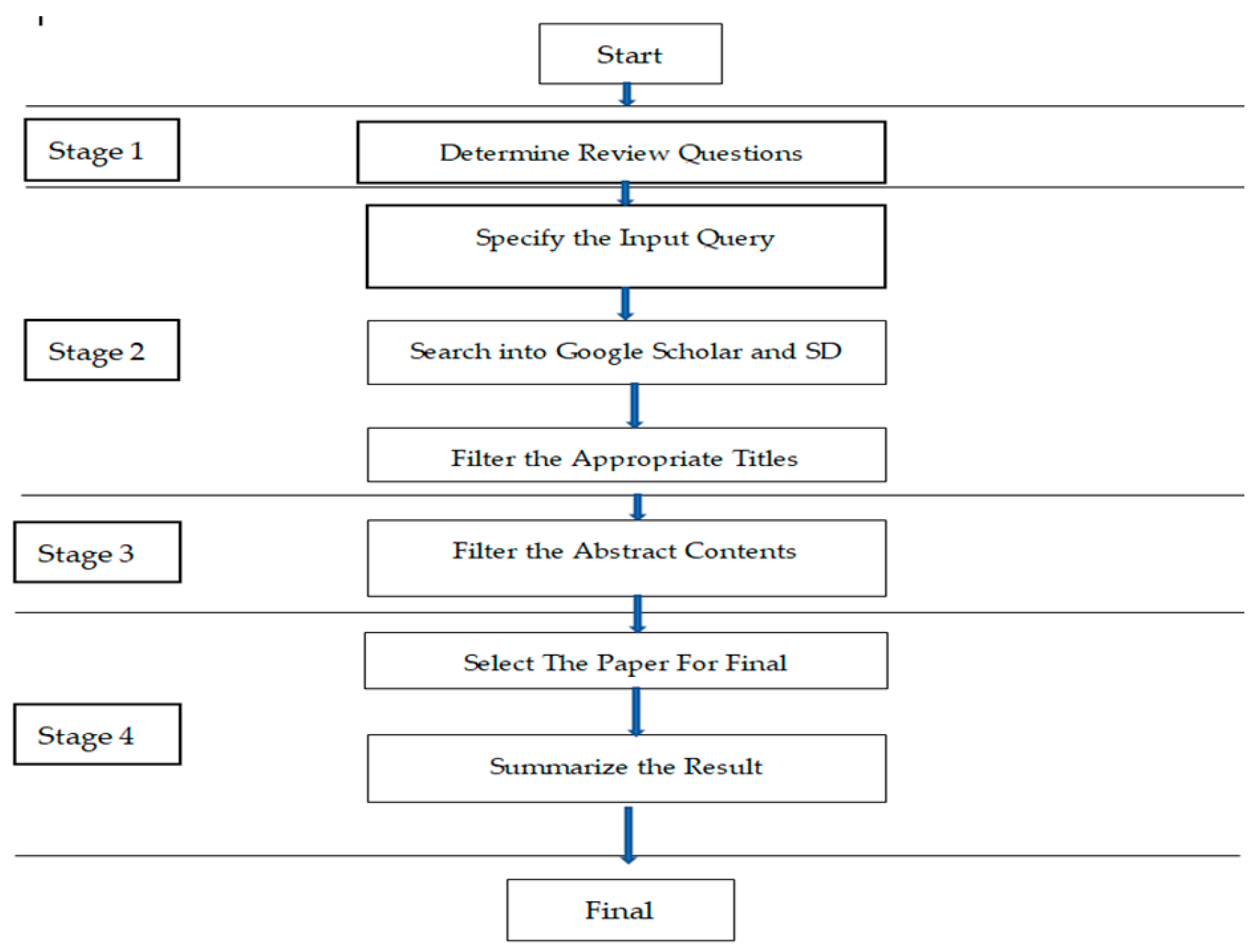
In this paper, our objective was to conduct a systematic review of IOT and big data applications in real-time for new customer acquisition within a cloud environment, as documented in peer-reviewed articles. This involved analyzing studies from reputable databases such as Scopus, PubMed, Web of Science, Science Direct, and Springer Nature. As illustrated in Figure 1, we developed a methodology to extract insights from previous research. This structured approach involved systematically collecting, analyzing, and summarizing relevant studies to address specific research questions. The methodology was organized into four key phases:

3.1. Stage 1

Stage 1 comprised establishing clear research questions, as follows:
  • Q1: What are the most common IOT and big data strategies for acquiring new clients?
  • Q2: How can we analyze customer emotions and needs?
These questions were designed to establish a structured approach for identifying relevant studies in the literature, evaluating the contributions of past research, and setting the foundation for future innovations in the field.

3.2. Stage 2

Stage 2 involved specifying the input queries. To effectively address the research questions, we focused on three primary queries: “IOT and big data in real-time customer acquisition”, “IOT-driven customer acquisition strategies & case studies”, and “Future trends in IOT and big data applications for customer acquisition in cloud environments”. The search process was limited to the first ten pages of results from the selected database, with a focus on research articles published between 2017 and 2024. Articles were initially screened based on their titles to ensure their relevance to the research topic, leading to a selection of 35 papers.

3.3. Stage 3

In stage 3, we filtered the papers selected in the previous stage based on their abstracts to assess their scope and relevance to the research. Papers with abstracts that did not clearly align with the research topic were excluded from further analysis. This process narrowed the selection down to 28 papers.

3.4. Stage 4

In the final stage, a thorough review of the full-text articles was carried out to identify the most relevant papers for the research. Articles that did not closely align with the research objectives were excluded. The selected papers then underwent a comprehensive summarization process to extract key insights and relevant data. This stage refined the selection to 14 papers. Additionally, careful attention was given to avoid duplicates or overlapping studies. The summarized findings are compiled and presented in Table 1.

4. IOT and Big Data Applications in Effective Customer Relationship Management

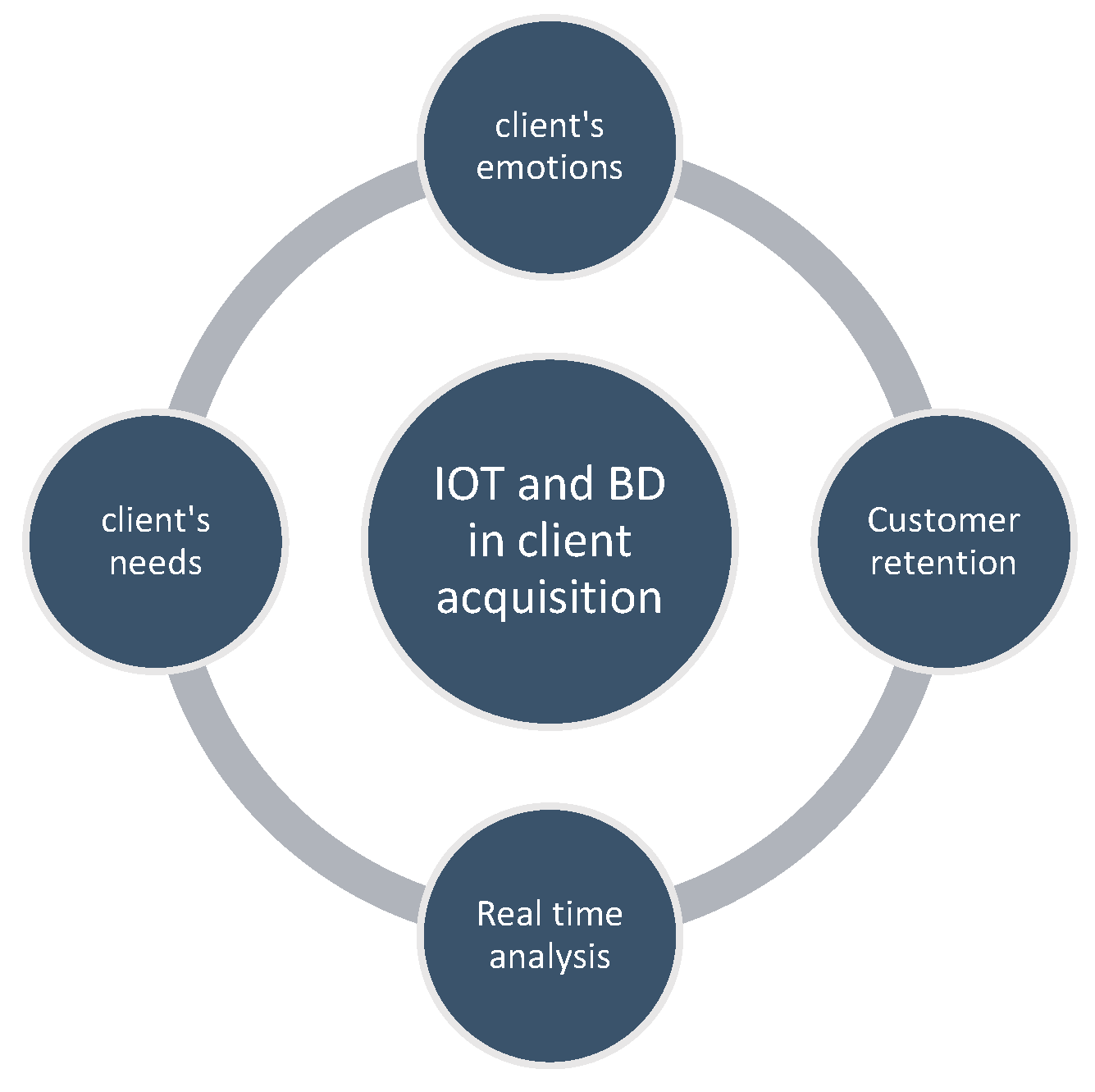
To answer the research questions outlined in the previous section, we sought out the points of view of multiple authors. Initially, we reviewed all the aspects related to custom-er acquisition as mentioned in Figure 2, and the smart strategies regarding the use of IOT devices and big data analytics in marketing strategies and for effective customer relation-ship management. Following this, we analyzed how these new technologies can track a client’s needs and emotions and therefore create successful products for enhancing customer satisfaction and loyalty.

4.1. Smart Strategies for the Use of IOT and Big Data Analytics in Customer Acquisition

The use of IOT and big data in marketing is not a recent phenomenon; it is a very lively field and is being updated as technology develops. Given that the relationship between customers and technological tools such as cell phones and social networks is very strong, marketers are using IOT and big data to implement current strategies and to be close to consumers’ needs.
According to Galletta et al. [7], the increasing worldwide economy and the demand for personalized products are changing the manufacturing market from a market of sellers to a market of buyers. Concerning customer loyalty programs, the authors suggest a cloud software architecture as a service that stores big data related to purchases and products’ ranks and analyzes it in order to recommend a list of products for each customer. This aims to strengthen customer loyalty, which is one of the key retention marketing strategies, and also to extend the profitability and retention of already existing customers. To reach this goal, Industry 4.0 is a new trend being used that combines cloud computing, Cyber Physical Systems (CPSs), the Internet of Things (IOT), and big data analytics technologies in order to bring new opportunities in terms of manufacturing automation and data exchange. The innovation provided by Industry 4.0 allows companies to quickly introduce new added-value products into the market for sale in various sectors; a continuous stream of information generated/received by customers enables companies adopting the proposed SaaS procedure to self-configure their production cycles according to market development and customer preference changes.
Okorie et all. [8] suggested that rapid innovation advancements, as well as increasing exposure to digitization, have led to a more evolved modern customer. As a result, customer practices, expectations, and experiences in general have changed and are still continuing to change. Due to technological enhancement, there has been a phenomenal change in customer buying behavior taking place in the retail sector. With immense advancements in technology brought by the use of computer vision, image processing, artificial intelligence and machine learning, a method has been found as a solution to this which can analyze videos that have been captured at fuel stations (the case study considered by the aforementioned author) and extract those insights in order to help service provider companies to excel in customer identification leading to personalization, asset utilization, improved customer experience at fuel stations, and increases in manpower availability, service standards, traffic management, and the fuel stations operations and safety. According to this research work, service provider companies have been analyzing videos captured on CCTV cameras using machine learning and artificial intelligence to understand customer visiting patterns and learn about their situation. This becomes a win-win situation for both the fuel station and the customer. The fuel station already know which vehicles/customers are coming to the fuel station and they can create targeted communications to some of these customers since they already know their frequency and the value generated by them. And for the customer, this makes traffic and queue management at the fuel station more controlled, thereby providing a clear guideline for the customer for better fueling experience.
Khalil et al. [9] argued that in new business models, the concept of CRM (customer relationship management) has been developed to stipulate a relationship between customer service and administrative efficiency in designing successful marketing standards. The main aim of such companies is to provide loyalty and profitability, as CRM gives additional worth to the customers’ preferences. Successful CRM implementation can significantly improve a company’s revenues and decrease their defection rates and costs, according to previous studies. At this point, CRM based on big data analytics is aimed toward innovative business realism. It was asserted that companies taking advantages of big data as an effective new resource can place themselves in a better position and appear as key players in the ever-competitive intensified global market relying on intellectual capital. Therefore, it was confirmed that big data analytics utilized by CRM staff could reduce the complexity of customer interactions and thus, lead to continued production, large earnings, and unlimited development. The results showed that the implementation of advanced big data analytic tools into companies can improve CRM. By collecting and processing large amounts of data, companies are able to enhance both long-term profits and the quality of their decision-making.
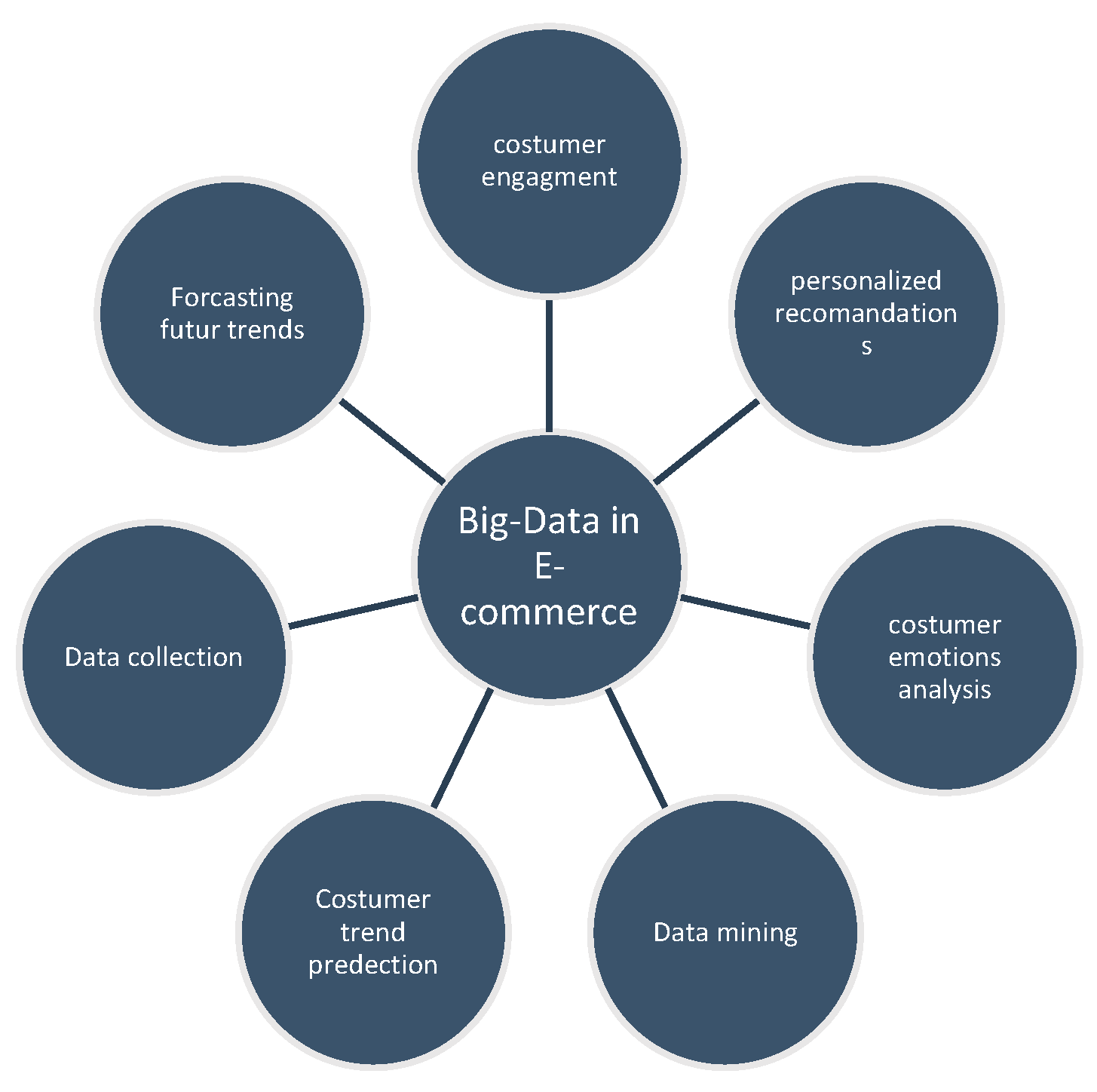
Alshurideh [10] reported that big data analytics have an important impact on customers’ online purchases. Actually, we are currently seeing an increasing number of customers making purchases online, a transition that is attributed to the accessibility of digital information and the diversity of purchasing options. Big data analysis influences consumer behavior when shopping online. It is crucial for e-commerce businesses as it enables them to understand customer preferences, improve engagement, and personalize shopping experiences. This ultimately translates into increased sales. As a result, businesses now have access to vast amounts of real-time data from a variety of sources, including social media and IOT devices, improving customer service and demand forecasting. In conclusion, their study argues that the effective exploitation of BDA is essential for e-commerce businesses to adapt to changing consumer behaviors and thrive in a competitive marketplace. Figure 3 represents the various fields of big data in e-commerce.
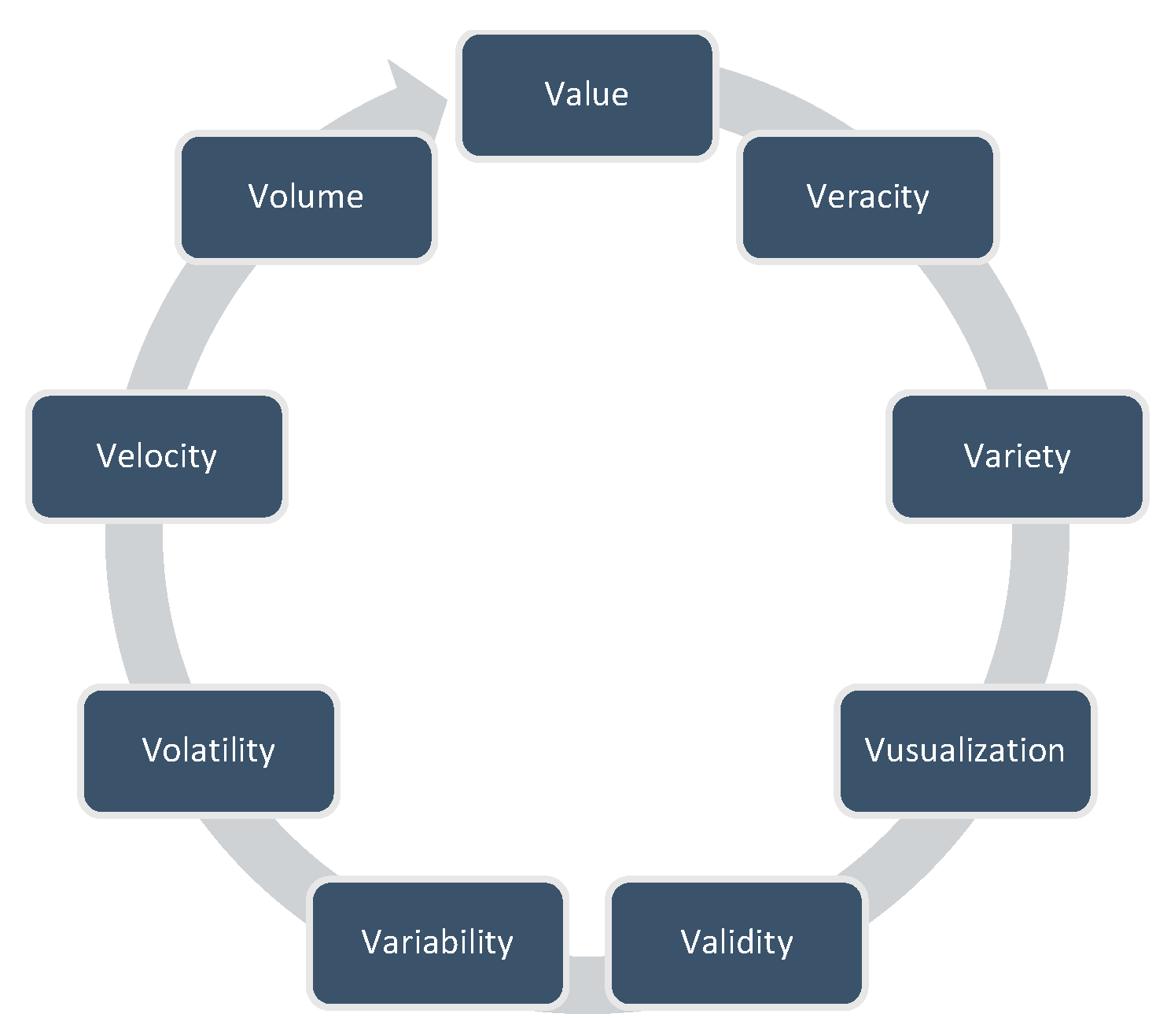
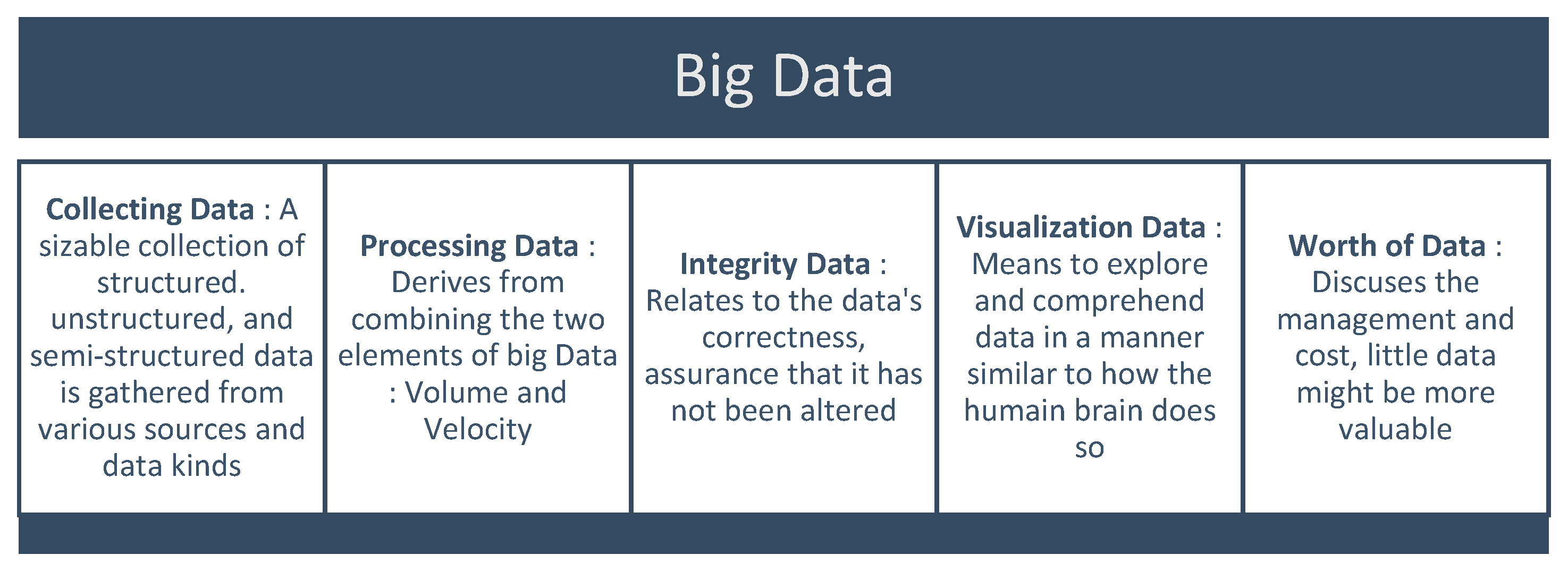
The reference [11] focuses on integrating IOT technologies with machine learning to improve industrial processes by leveraging IOT-based data acquisition systems and machine learning for predictive modeling, fault detection, and efficiency improvement. The author created a system for real-time monitoring that uses sensors based on the Internet of Things (IOT); big data processing using tools like Apache Kafka, Apache Storm, and MongoDB, and a hybrid model for prediction to identify manufacturing faults. As a result, they found that the integration of IOT and machine learning can significantly enhance industrial automation, allowing for predictive analytics, reduced downtime, and improved resource management. Moreover, improving IOT security and increasing the dataset to accommodate more complicated failure scenarios are future developments for this theory. With the same point of view, AL-Jumaili et al. [12] aimed to develop a big data architecture capable of handling real-time data generated by smart buildings. These authors discuss how cloud computing can enhance data management by offering scalable solutions that meet real-time monitoring needs. Overall, the authors advocate for advancements in cloud computing applications to improve monitoring and performance in the power sector, ultimately enhancing decision-making and operational efficiency. Efficient data processing is key for efficient big data analytics, and the quality of the data is measured by nine characteristics and five categories, as reported below in Figure 4 and Figure 5.
Tran [13] Uses T-Mobile and Verizon as case studies in the US telecom industry in their thesis to explore the dynamic effects of investments in big data analytics (BDA) on business performance. The author examines feedback loops between BDA investment, data quality, consumer insights, and company outcomes like sales and profit using a system dynamics model. The results demonstrate that because of economies of scale, BDA helps large businesses increase their market share and profits faster. Small businesses, on the other hand, must make disproportionately larger investments in BDA in order to compete, frequently at the expense of immediate financial gain. As customer intelligence saturates, the model shows diminishing benefits on BDA investment. Their research suggests possible government involvement to address these emerging inequalities. This study offers a novel, dynamic perspective on BDA investment strategies, with practical implications for data-driven decision-making, it also outlines the advantages and disadvantages of big data analytics as illustrated in Table 2. Big data analytics is a crucial enabler of superior investment performance, primarily by enhancing how firms process information and react to dynamic environments.

4.2. Unlocking the Client’s Needs and Emotions: The Role of IOT and Big Data Analytics

In our ultra-connected world, understanding customer needs and emotions has become a major challenge for companies. The Internet of Things (IOT) and big data analysis now make it possible to collect, process and interpret large volumes of information in real time. These technologies make it possible to detect behavior, anticipate expectations, and offer personalized experiences. By exploiting this data, companies can improve their customer relations and optimize their marketing strategies. In this way, IOT and big data are revolutionizing the way organizations interact with their customers.
Tallapragada et al. [14] integrated machine learning, computer vision, and data science techniques in their novel solution for analyzing customer emotions and obtaining meaningful insights for retail businesses. Once the face boundary of the customer is tracked, the data along with the trolley ID is stored in the No-Sql Mongodb database in IBM Bluemix. The number of purchases that the customer does is mitigated to the server along with customer emotion data. The basic idea is to link the customers emotions with their purchasing behavior. Addressing the problem of understanding customers’ behaviors in large retail shops through an intelligent trolley is a great idea that incorporates low cost yet efficient facial emotion tracking combined with IOT and big data to provide meaningful customer behavior insights to retailers. Results show that this technique is robust and efficient for practical pose and illumination variant real-time scenarios.
Ghazaleh et al. [15] noted that IOT and BD are increasingly growing phenomena that business decision-makers as well information professionals had better take into serious consideration in order to accurately determine the modern CRM dimensions in digital economies. The paper analyzes and develops an analytic hierarchy planning-based framework to establish criteria weights and to develop a generic self-assessment model in order to determine the major influencing factors of the Internet of Thing (IOT) and big data (BD) investment in CRM. Through an extensive literature review and analysis using analytic hierarchy process (AHP), this research investigates the role of IOT and BD and their influence on CRM and business excellence in contemporary customer service. AHP enables specifying and simulating the human evaluation of business criteria since its parts help to analyze the strategic structure of an enterprise within a projection of a complex problem. This approach is used by the decision-maker to find a solution to a problem by separating the representation of the multi-level hierarchical. This work also aimed to study the role of IOT and BD in transforming CRM specifically and to identify the business dimensions in IOT and BD leveraged in influencing CRM.The subject of the study includes experts and professionals in the CRM field with a minimum of 10 years’ experience in CRM and technology. Data was collected from four major retail companies in Abu Dhabi. A questionnaire was responded to by six expert employees who worked at the retail companies in managerial positions. In the case of the AHP method, expert opinion is used instead of a survey or such, meaning that the sample can be a little smaller. The results reveal that the real-time analytics attribute was rated the highest, being the most important area of investigation among the respondents, with a priority weight of 44 percent, followed by pricing strategy with a competitive priority of 29 per cent. The third most valued function was customized marketing promotions, while other regulatory attributes such as improved customer retention were the least important according to the evaluators.
Hajli et al. [16] considers the importance of big data in new product success. A company may have large volume of data extracted through multiple sources like multimedia, IOT, social media, etc. IOT refers to devices that are capable of sending and receiving data via a network connection. For the sake of building sustainable competitive advantage, a company is expected to bring together all its data from disparate sources.
Rane et al. [3] reported that AI and ML (machine learning) make it possible to analyze user behavior and predict their preferences, in order to deliver tailored experiences. IOT is a key element in delivering connected services in real time and improving user engagement. Furthermore, big data analysis enables companies to anticipate needs and adapt their services. Customer relations are simplified by conversational agents like ChatGPT, which ensure fast, instant communication, reduce waiting times, and improve customer satisfaction. Moreover, blockchain enhances user confidence by guaranteeing clear and secure management of their personal and transactional data. Automating recurring tasks with AI and ML improves process efficiency and allows employees to focus on complex problems. IOT combined with predictive maintenance helps reduce downtime by identifying problems before they occur. Blockchain ensures the traceability and confidentiality of transactions, enhancing consumer confidence. In addition, service personalization strengthens customer relationships by tailoring offers to personal needs, thus fostering loyalty. The joint integration of these technologies creates a homogenous, intelligent environment, where the customer experience is optimized at every point of contact. This strategy of synergy provides an important strategic capability for maintaining a high level of competitiveness.
The article in [5] examines how data analytics and customer engagement are being revolutionized by the incorporation of the Internet of Things (IOT) into customer relationship management (CRM) platforms. Businesses can learn more about the requirements, tastes, and behaviors of their customers by using real-time data collected by IOT devices from many customer touchpoints. This enhances client satisfaction and loyalty by enabling hyper-personalized marketing, proactive assistance, and predictive maintenance. Through more intelligent services and improved customer experiences, businesses like Tesla, John Deere, and Rolls-Royce show the benefits of IOT-enabled CRM. Improved decision-making increased operational effectiveness, and improved delivery service are among the advantages.
Moreover, Odionu et al. [17] offers a thorough exploration of how big data analytics (BDA) can optimize customer relationship management (CRM) systems, ultimately enhancing customer engagement and retention. BDA can revolutionize CRM by facilitating personalized interactions and offerings based on real-time data. It helps identify customers at risk of churning, allows for comprehensive customer profiling, and enables targeted marketing campaigns. Additionally, BDA can analyze emotional tones in feedback and social media, informing strategy adjustments.
To illustrate these concepts, the author provides case studies from recognizable companies such as Starbucks, Netflix, American Express, and Zara, highlighting real-world applications of BDA in CRM. However, this approach also faces challenges, including concerns related to data privacy and ethics, potential issues with poor data quality leading to misguided decisions, and the technical complexities involved. Integrating and maintaining effective big data tools demands significant investment and expertise.


5. Discussion: Challenges and Limitations

Leveraging IOT and big data for customer acquisition presents both opportunities and challenges. These technologies allow businesses to collect real-time data on consumer habits, behavior, preferences, and usage patterns, allowing for highly customized marketing strategies and improved customer commitment. By analyzing large quantities of data, companies can identify patterns, predict customer needs and optimize their products and services to attract new customers more effectively. However, despite these benefits, a number of challenges need to be overcome. Data privacy concerns and security risks remain important obstacles, as consumers are increasingly aware of how their data is used and demand greater levels of transparency. Companies need to conform to strict data protection rules, such as the GDPR, to maintain customer trust. In addition, the sheer volume of data generated by IOT devices demands a powerful infrastructure and advanced analysis tools, which poses technical and financial challenges, particularly for small businesses. Data integration is another key issue: combining information from multiple sources to create a coherent customer profile can be complicated. Without the right expertise and technology, businesses can have difficulty extracting meaningful information from their data. Furthermore, as IOT adoption grows, competition in the field of data-driven marketing increases, making it vital for businesses to stay one step ahead by continually sharpening their strategies. To overcome these challenges, companies need to invest in strong cyber security safeguards, ensure compliance with regulatory environments, and develop AI-driven analytics capabilities to process data effectively. In addition, encouraging a culture of data-driven decision-making within the organization can help maximize the benefits of IOT and big data. Future research should focus on the intersection between IOT and big data and the societal advancements, as the integration of IOT and big data analytics in customer relationships management not only helps companies to acquire new clients, but also contributes to social progress and improving people’s quality of life.

Author Contributions

Literature review, Y.C.; formal analysis, Y.C.; writing—original draft preparation, Y.C.; writing—review and editing, D.T. and Z.E.H.; supervision, D.T. and Z.E.H.; academic guidance and feedback, I.S. and O.E.B. All authors have read and agreed to the published version of the manuscript.

Funding

This research received no external funding.

Institutional Review Board Statement

Not applicable.

Informed Consent Statement

Not applicable.

Data Availability Statement

No new data was generated or analyzed in this study. Data sharing is therefore not applicable.

Conflicts of Interest

The authors declare no conflicts of interest.

References

  1. Hashem, D.T.N. The reality of internet of things (IoT) in creating a data-driven marketing opportunity: Mediating role of customer relationship management (CRM). J. Theor. Appl. Inf. Technol. 2021, 99, 329–342. [Google Scholar]
  2. Rane, N. Enhancing Customer Loyalty through Artificial Intelligence (AI), Internet of Things (IoT), and Big Data Technologies: Improving Customer Satisfaction, Engagement, Relationship, and Experience. SSRN Electron. J. 2023. [Google Scholar] [CrossRef]
  3. Rane, J.; Kaya, Ö.; Mallick, S.K.; Rane, N.L. Enhancing customer satisfaction and loyalty in service quality through artificial intelligence, machine learning, internet of things, blockchain, big data, and ChatGPT. In Generative Artificial Intelligence in Agriculture, Education, and Business; Deep Science Publishing: London, UK, 2024. [Google Scholar] [CrossRef]
  4. Orzan, M.C.; Zara, I.A. Leverage IoT Technologies for Customer Acquisition and Retention. J. Emerg. Trends Mark. Manag. 2019, 1, 344–349. [Google Scholar]
  5. Boppana, V.R. Role of IoT in Enhancing CRM Data Analytics. SSRN 2020, 3. [Google Scholar] [CrossRef]
  6. Ijomah, T.I.; Idemudia, C.; Eyo-Udo, N.L.; Anjorin, K.F. The role of big data analytics in customer relationship management: Strategies for improving customer engagement and retention. World J. Adv. Sci. Technol. 2024, 6, 013–024. [Google Scholar] [CrossRef]
  7. Galletta, A.; Carnevale, L.; Celesti, A.; Fazio, M.; Villari, M. A Cloud-Based System for Improving Retention Marketing Loyalty Programs in Industry 4.0: A Study on Big Data Storage Implications. IEEE Access 2018, 6, 5485–5492. [Google Scholar] [CrossRef]
  8. Okorie, G.N.; Egieya, Z.E.; Ikwue, U.; Udeh, C.A.; Adaga, E.M.; DaraOjimba, O.D.; Oriekhoe, O.I. Leveraging big data for personalized marketing campaigns: A review. Int. J. Manag. Entrep. Res. 2024, 6, 216–242. [Google Scholar] [CrossRef]
  9. Khalil, T.; Mohammad, A.-R.; Fayez, A.N.; Mohammed, S. Towards effective customer relationship management in Oman: Role of big data. Int. J. Res.-GRANTHAALAYAH 2017, 5, 92–100. [Google Scholar] [CrossRef]
  10. Alshurideh, M.T.R. Utilize Internet of Things (IOTs) on Customer Relationship Marketing (CRM): An Empirical Study. Int. J. Manag. Mark. Intell. 2024, 1, 11–19. [Google Scholar] [CrossRef]
  11. Mali, A.B. IoT-Based Data Acquisition and Machine Learning for Process Optimization. In Proceedings of the 1st International Conference on Innovative Computing Technologies (ICICT-2024), Honolulu, HI, USA, 24–26 April 2024. [Google Scholar]
  12. AL-Jumaili, A.H.A.; Muniyandi, R.C.; Hasan, M.K.; Paw, J.K.S.; Singh, M.J. Big Data Analytics Using Cloud Computing Based Frameworks for Power Management Systems: Status, Constraints, and Future Recommendations. Sensors 2023, 23, 2952. [Google Scholar] [CrossRef] [PubMed]
  13. Tran, D.N.T. Modeling the Impact of Big Data Analysis Investments on the Dynamics of Customer Acquisition. Master Thesis, University of Bergen, Bergen, Norway, August 2020. [Google Scholar]
  14. Tallapragada, V.V.S.; Rao, N.A.; Kanapala, S. EMOMETRIC: An IOT Integrated Big Data Analytic System for Real Time Retail Customer’s Emotion Tracking and Analysis. Int. J. Comput. Intell. Res. 2017, 13, 673–695. [Google Scholar]
  15. Ghazaleh, M.A.; Zabadi, A.M. Promoting a revamped CRM through Internet of Things and Big Data: An AHP-based evaluation. Int. J. Organ. Anal. 2020, 28, 66–91. [Google Scholar] [CrossRef]
  16. Hajli, N.; Tajvidi, M.; Gbadamosi, A.; Nadeem, W. Understanding market agility for new product success with big data analytics. Ind. Mark. Manag. 2020, 86, 135–143. [Google Scholar] [CrossRef]
  17. Odionu, C.S.; Bristol-Alagbariya, B.; Okon, R. Big data analytics for customer relationship management: Enhancing engagement and retention strategies. Int. J. Sch. Res. Sci. Technol. 2024, 5, 050–067. [Google Scholar] [CrossRef]
Figure 1. Systematic literature review methodology.
Engproc 112 00076 g001
Figure 2. Categorization of the selected papers.
Engproc 112 00076 g002
Figure 3. Big data analytics in e-commerce.
Engproc 112 00076 g003
Figure 4. The nine ‘V’ data characteristics.
Engproc 112 00076 g004
Figure 5. The five big data categories.
Engproc 112 00076 g005
Table 1. Search results from three queries.
QueryAll ResultsTitle FilteringAbstract FilteringTotal Papers
154700252012
2274001087
Table 2. Advantages and disadvantages of big data analytics.
AdvantagesDisadvantages
Optimized customer experience: Without a doubt, a company’s most valuable asset is its customers. With a wealth of data at their disposal, they can do sophisticated analytics, create exclusive deals and communications, and create customized plans for every customer.Increased costs: The cost of advanced big data procedures is generally high.
Increased productivity: Big data solutions enable businesses to examine vast amounts of data more quickly, which promotes visibility within the company and improves insights into customers.Data quality: The quality of data has an important influence on the value of the testing process it generates.
Improved decision-making: Making decisions becomes much easier due to business intelligence and sophisticated analytical insights.Security and privacy concerns: Customers usually dislike the idea that big data can easily gather and keep information on their identity.
Disclaimer/Publisher’s Note: The statements, opinions and data contained in all publications are solely those of the individual author(s) and contributor(s) and not of MDPI and/or the editor(s). MDPI and/or the editor(s) disclaim responsibility for any injury to people or property resulting from any ideas, methods, instructions or products referred to in the content.