1. Introduction
Climate change demands immediate attention and a need for strategic response, especially in the cement sector as it accounts for 7% to 9% of global anthropogenic carbon dioxide (CO
2) emissions, making it the world’s second-leading contributor in CO
2 emissions after the iron and steel sector [
1]. Cement is the core component in the construction industry and being one of the eight main industrial sectors worldwide, the utilization of cement represents a nation’s economic and sustainable development. Over the past twenty years, global cement production has reached approximately 4.1 billion metric tons per year with further escalation anticipated in future [
2]. The goal to achieve net-zero by 2050 pursuant to the Paris agreement, which demands limiting global warming to 1.5 °C, has stimulated the innovation and progress of strategic plans, development schemes and frameworks to decarbonize energy-intensive industries such as the cement industry.
The Carbon Border Adjustment Mechanism (CBAM), which was agreed upon by the European Union, seeks to oversee carbon-intensive imports such as cement. The process initiated its first reporting period in October 2023, which will be followed by the free allotment of emission allowances backed by the EU Emissions Trading System (ETS) to avoid carbon leakage. In parallel, countries worldwide have formulated strategies for decarbonizing their cement sectors which reflect their growing commitment towards this issue. The China Cement Association and the Rocky Mountain Institute developed China’s roadmap that describes its upcoming action plans. Likewise, Canada presented its own plan of action focusing on net-zero carbon by 2050 along with modifications in its national carbon pricing policy such as by increasing the carbon cost from CAD 20 to CAD 50 per ton which is further intended to rise by CAD 15 annually from 2023 to 2030 [
3].
Several other global initiatives and regulatory frameworks include the integration of supplementary cementitious materials (SCMs), adoption of alternative materials such as fly ash and blast furnace slag in place of traditional clinker [
4], utilizing alternative raw materials, and assessing CO
2 reduction pathways; however, the lack of a systematic, regulated and globally applicable fuel transition framework across the entire cement production process remains a notable gap in the industry’s decarbonization efforts. The Portland Cement Association (PCA) roadmap 2021 to carbon neutrality considers alternative fuels as the most important with almost 50% contribution in CO
2 emission reduction potential [
5].
The cement industry started the integration of alternative fuels in the mid-1980s initially to lower production costs of clinker manufacturing expenses, as fuel makes up a significant portion of it. However, over the years, increasing environmental concerns have revealed that alternative fuels not only resulted in cost reduction but assisted in GHG reduction [
6]. Fuel sources such as petroleum coke, natural gas, and oil coal remain the dominant fuel utilized in cement kilns. Cement production consumes approximately 120kg of coal per ton of cement [
7]. Different alternative fuels including liquid, solid and gaseous fuels are being co-processed in kilns as substitutes for conventional fossil fuels. The integration of such alternative fuels not only plays a pivotal role in reducing carbon emissions and energy cost but also helps conserve the limited non-renewable resources. Internationally, the use of alternative fuels is a well-established decarbonization lever. A study conducted in 2021 revealed that some cement plants in Europe have successfully replaced over 90% of their fossil fuel usage with alternative fuels, showcasing a major shift toward more sustainable energy practices [
8]. Another research effort found that while many alternative fuels can lower CO
2 emissions by about 1–5%, certain materials, particularly biomass and specific waste streams, can lead to much greater reductions, in some cases reaching up to 18% [
9]. For example, a techno-economic analysis of using Refuse-Derived Fuel (RDF) in cement kilns highlighted not only environmental benefits, such as diverting solid waste from landfills, but also economic advantages for the industry [
10].
Globally, numerous significant and large-scale alternative-fuel projects are revolutionizing cement production with considerable investments. For instance, Votorantim Cimentos secured a USD 150 million IFC loan in July 2023 to increase its alternative fuel integration capability at its Salto de Pirapora plant. At present, more than 30% of the fuels used at the Salto facility are regarded alternative fuels, such as biomass, wood chips, used tires, and refuse-derived fuel (RDF). The project is estimated to be executed and concluded by 2028 [
11]. In Egypt, Suez Cement has invested USD 16 million since 2010 to optimize to co-fire alternative fuel operations in all three plants, seeking to achieve a 24% CO
2 reduction by 2030 [
12]. Cemex España, supported by EUR 4.4 million in EU funds, is integrating synthetic gas (Clyngas) in Alicante to reduce CO
2 by an estimated 400,000 t per decade [
13]. More recently, Lafarge Canada’s Exshaw plant deployed a USD 38 million low-carbon fuel facility to reduce dependence on natural gas use by 50% with construction and demolition (C&D) wood residues as an alternative fuel and redirect 120,000 t of waste annually, mitigating emissions by ≈ 30,000 t CO
2/year [
14]. As a whole, these projects represent pivotal developments in the expanding deployment of high-temperature co-processing of biomass, RDF/SRF, synthetic gas, and industrial waste oils, decreasing dependence on fossil fuels while attaining significant CO
2 mitigation.
Significance of Alternative Fuels in Decarbonizing Pakistan’s Cement Industry
The cement industry of Pakistan that contributes approximately 1% to Pakistan’s gross domestic product (GDP) annually and 25% to all primary industrial energy demand [
15] has appeared as an integral part of the nation’s socio-economic development, leading significantly to logistical backbone, exports, and job opportunities. The industry maintains a network of 16 companies, regionally segmented into north and south, operating under the framework of an oligopolistic market structure and holding a consolidated value of PKR 346 billion as of March 2025. During the first eight months of FY25, total dispatches of the cement sector stood at 30.4 million tons, with exports comprising 19.4%, rising up from 14.8% during the same period the previous year. A total of 60% of the cumulative cost of cement manufacturing is reliant on energy consumption, with coal being the primary source of energy in this sector [
4].
The cement production process is extremely energy-demanding, utilizing electrical and thermal energy throughout the process. As 90% of Pakistan’s cement industry coal demand is being met by imported coal, apart from the manufacturing process, a noticeable amount of energy is also required for the transport, logistics and mining of the raw materials entailed by a substantial cost as well. Generally, 40,000 tons of coal with consumption of 1100–1400 t is required by a 6500 tpd cement plant operating completely on coal every day. As of now, cement producers are bearing USD 90/t on CIF Karachi basis for 6000 Kcal/kg coal whereas, cement plants located in northern region incur transportation and logistics costs of nearly USD
$120, based on their location [
16]. The cement sector is responsible for 65% to 70% of industrial coal utilization, being the major consumer of coal in Pakistan, and nearly 49% of the country’s coal emissions. The rate of these emissions for the cement sector has surged 17% over the period 2015–2020 [
15].
A 2021 World Bank report on Pakistan’s cement industry highlighted that replacing just 25% of coal with alternatives like biomass and waste materials could cut direct CO
2 emissions by as much as 182 kg per ton of cement produced [
15]. This finding is especially significant for Pakistan, a country that produces around 126 million tons of agricultural waste each year. If harnessed through well-developed value chains, this waste could not only replace coal entirely but also generate thousands of jobs and reduce costly fuel imports [
17]. Moreover, a techno-economic study on alternative fuels in Pakistan’s cement sector confirmed the dual benefits of using resources like Refuse-Derived Fuel (RDF) offering both a cost-effective energy solution and a sustainable way to manage urban solid waste [
10]. However, despite this promising potential, a comprehensive decarbonization study revealed that the sector still faces considerable policy and financial hurdles that are slowing the broader adoption of such alternatives [
17].
In FY23, the sector’s emissions were calculated to be over 25 million metric tons of CO
2, fueling national greenhouse gas emission (GHG) databases. About 60% of cement sector emissions originate from the thermal decomposition of limestone (where CO
2 is released as a byproduct during the heating of limestone (CaCO
3) to produce lime (CaO)), while 40% result from the combustion of fossil fuels carried out for energy-intensive clinker operations [
4]. Currently, Pakistan has a clinker generation potential of 78m tons and cement production yield capacity of 86m tons, leading to less than 1% of the global production potential of 4.2 billion tons. However, prior to 2030, Pakistan’s share in the global capacity is likely to increase to 2%, emphasizing the urgency for the intervention of a transition towards alternative fuels that can help not only in low-emission cement production processes, but also in minimizing the substantial financial burden associated with coal’s import [
18]. The current technical innovations persist to lower the thermal energy consumption per unit output of clinker; this intensity is likely to decline from nearly 3.6 GJ/t clinker and an electricity intensity of about 100 kWh/t cement in 2022 to lower than 3.4 GJ/t clinker and 90 kWh/t cement, by the year 2030 in accordance with UN sustainability goals [
18]. While incremental efficiency improvements are valuable, they alone are not enough to meet the ambitious decarbonization goals of the cement industry. A major research gap still exists—there is currently no holistic and integrated framework that evaluates the techno-economic viability, supply chain logistics, and policy landscape required for the large-scale adoption of alternative fuels in Pakistan. Although previous studies have acknowledged certain barriers [
17], they fall short of offering a practical, unified roadmap that stakeholders can act upon. This study aims to bridge that gap by focusing specifically on Pakistan’s cement manufacturing sector. It investigates how imported coal can be replaced with locally available alternative fuels, addressing both the technical and systemic challenges involved in such a transition.
This reduction will not only facilitate Pakistan’s pledge to reduce emissions but also boosts the sector’s competence to attract green financing and participate in global carbon credit markets.
2. Methodology
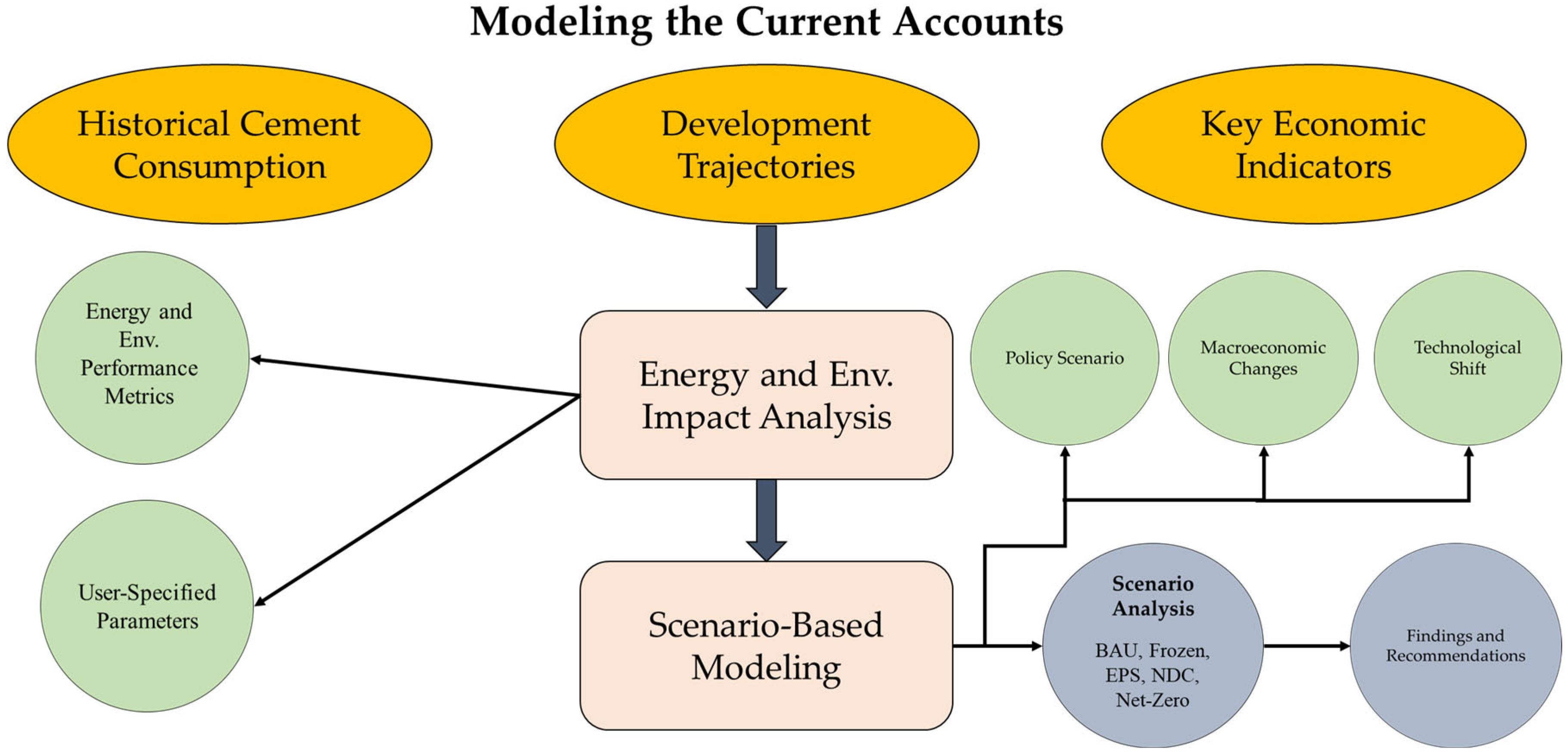
This study utilized a mixed-methods approach to identify practical pathways for reducing emissions in Pakistan’s cement industry. Our objective was to combine technical analysis with real-world insights, ensuring that the proposed decarbonization strategies are grounded in both data and the perspectives of stakeholders directly involved. We conducted a comprehensive desk review of the sector’s emissions, examining sources, baseline operations, and relevant policies, alongside extensive consultative discussions facilitated by the Sustainable Development Policy Institute (SDPI). Key stakeholders, including cement manufacturers, policymakers, and academic experts, contributed valuable insights that shaped the direction of our modeling efforts. For the technical analysis, we employed the LEAP to develop and simulate five future scenarios: (i) Business as Usual (BAU), (ii) Frozen Policy, (iii) Energy Policy Scenario (EPS), (iv) Nationally Determined Contributions (NDC), and (v) Net-Zero. The LEAP model uses a bottom-up methodology, with all assumptions and calculations tailored to Pakistan’s local context and aligned with the specific policy goals of each scenario. In the NDC and Net-Zero cases, the model was optimized to achieve targeted emission reductions of 15%, 50%, and 100%, respectively. Notably, for the Net-Zero scenario, we aligned key parameters with international benchmarks while projecting that the remaining emissions would be mitigated using carbon capture and storage (CCS) technologies. Overall, this integrated framework not only clarifies the current state of emissions but also outlines realistic and policy-aligned pathways for transitioning to a low-carbon future.
Figure 1 illustrates the structure and flow of our scenario modeling and policy assessment using the LEAP tool (Version: LEAP 2024.5.0.7).
To develop the model, data was collected on five key indicators, as summarized in
Table 1. These indicators encompass essential metrics for energy and environmental performance, along with user-defined parameters specific to the cement sector. A critical input for fuel switching was the baseline energy mix in the industry, which consists of approximately 80% coal, 12% natural gas, 1.2% electricity, and 7% from other fuels. This energy profile served as the foundation for modeling substitution scenarios. Additionally, the model incorporates economic drivers of cement demand, particularly its relationship with the expansion of commercial floor space and overall GDP growth. These relationships were adapted from the initial framework developed by UNESCAP for the SDG7 roadmap, ensuring alignment with internationally recognized methodologies and sustainability targets.
3. Results
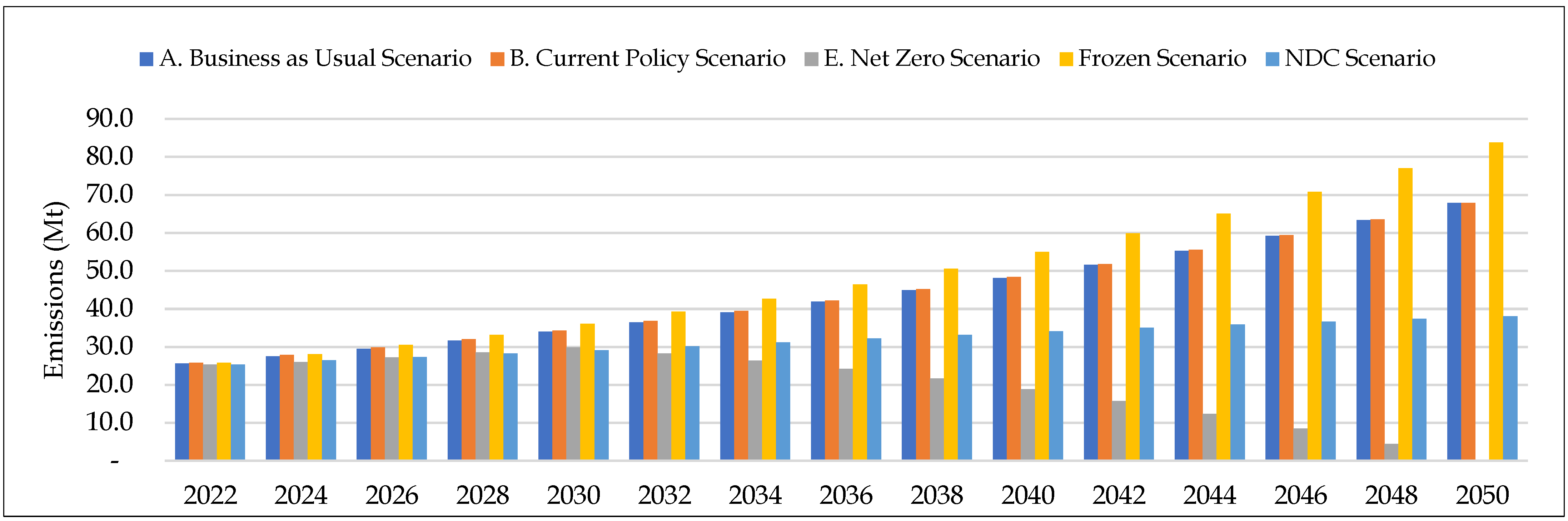
This part outlines the outcomes of the LEAP model, specifically examining the effects of the energy mix and fuel substitution across various scenarios. As shown in
Figure 2, Pakistan’s cement sector’s projected emissions are expected to rise significantly in all scenarios, highlighting the urgent need for decarbonization strategies. The results demonstrate how different energy choices and policy approaches can influence the industry’s future emission trajectory.
The model clearly shows that traditional fuels, such as coal and petroleum coke, are among the most carbon-intensive options in cement production. By replacing them with cleaner alternatives like natural gas, we can significantly reduce greenhouse gas emissions. For instance, natural gas produces less than 60% of the CO
2 emissions per unit of energy compared to coal. This suggests that even a partial switch to cleaner fuels can have a substantial impact.
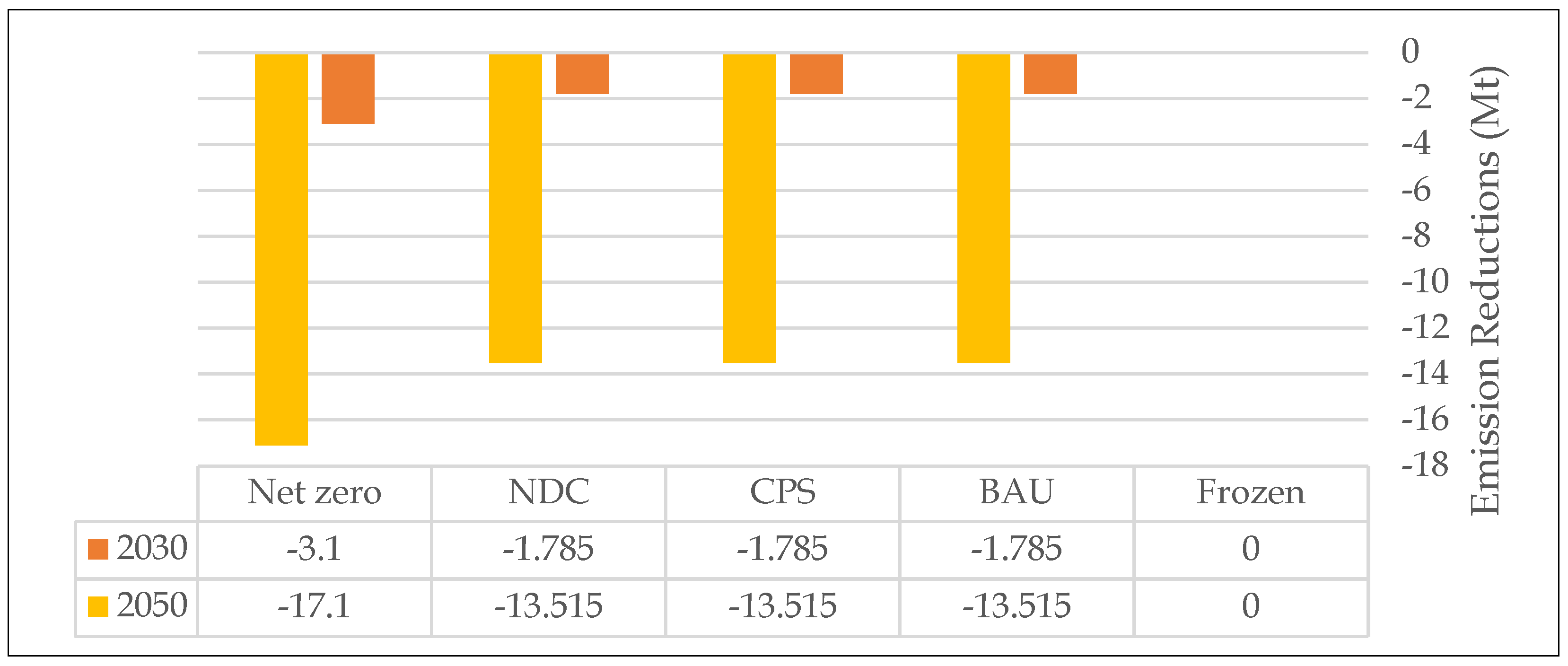
Figure 3 illustrates the outcomes of these substitutions across various modeled scenarios, highlighting how cleaner fuel choices can aid in decarbonizing the cement sector.
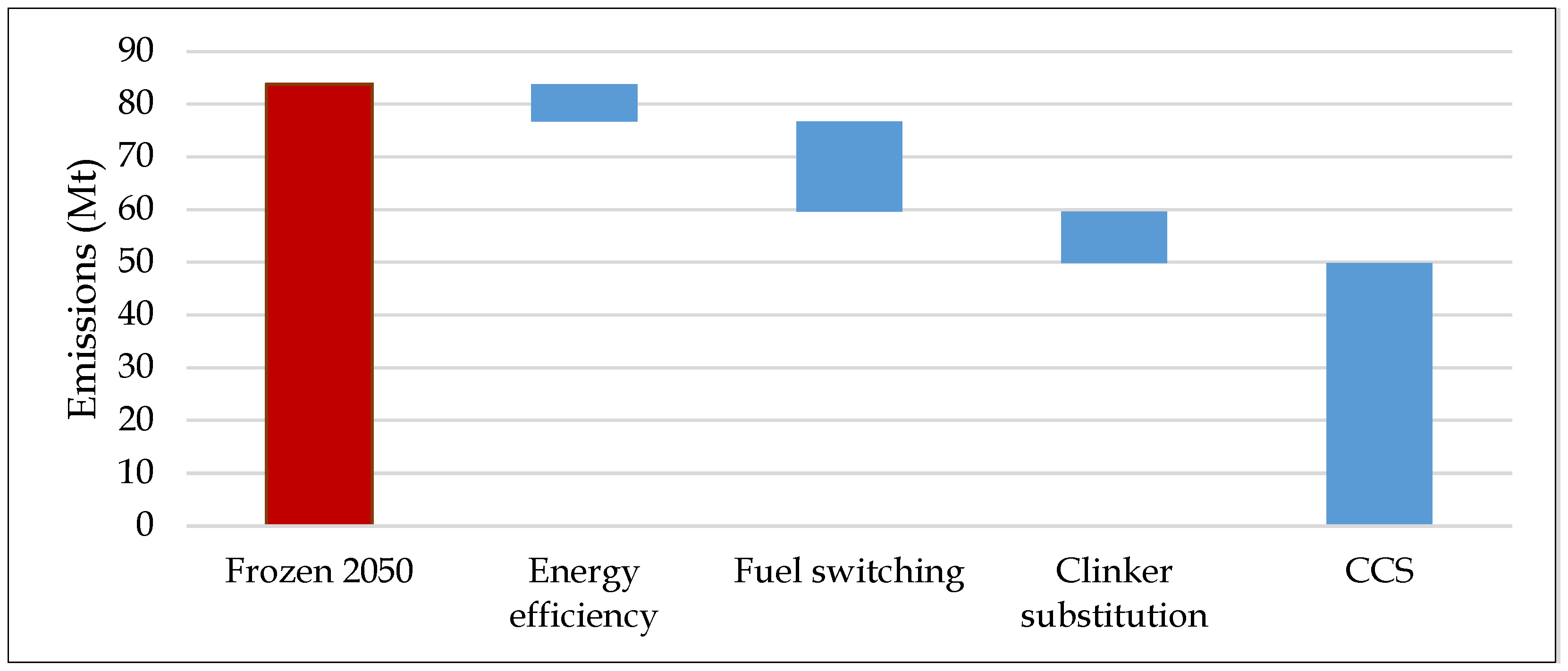
Figure 3 illustrates that other than for the frozen scenario (where the fuel utilization remains the same), fuel substitution is to act fundamentally in driving the decarbonization pathway of the cement industry, especially in countries like Pakistan where it is coal-dominated. For achieving Pakistan’s NDC targets and the net-zero goal by 2050, fuel substitution is to drive a minimum of 13.5 Mt and 17.1 Mt, respectively. The remaining emission reductions are achieved through a combination of decarbonization strategies that align with Pakistan’s policy goals and international climate targets for 2030 and 2050. These strategies go beyond fuel switching and encompass broader systemic changes.
Figure 4 illustrates how fuel substitution fits into this larger context, highlighting its contribution alongside other key approaches that collectively reduce emissions in the cement sector.
This would, however, require strong policy support, such as carbon pricing or targeted incentives. Similarly, while some cement plants are adopting alternative fuels like tire-derived fuel and Refuse-Derived Fuel (RDF), high costs of waste management require additional fiscal and regulatory backing to make these options viable.
4. Discussion and Policy Recommendations
The global discourse on decarbonizing cement is improving and while many countries like Germany and China are pursuing blended cements, carbon capture, and fuel switching technologies, Pakistan remains behind due to institutional inertia, fragmented waste infrastructure, and informal biomass markets. This untapped mitigation potential of alternate fuels, especially from abundant agricultural residues (e.g., cotton stalks, wheat husks, maize cobs), could reduce emissions by 20–35% if used efficiently. However, Pakistan lacks structured fuel supply chains, standardized RDF processing and grading systems, and data-driven pilot programs.
Using various alternative fuels such as chemical waste, agricultural waste, healthcare waste, discarded consumer goods, industrial and municipal solid waste (MSW), used or torn out scrap tires, rice husk, RDF that usually includes plastic, polythene, paper, wood, glass, clothes, mud, and fruit trash as an alternative to coal in cement manufacturing not only lowers the reliance on limited reservoirs of fossil fuels but also help in the mitigation of carbon-intensive emissions while enabling the long-term reduction in operational expenditure for cement plants. With technological improvements, cement kilns offer an exceptional possibility to utilize the above-mentioned wastes for their combustion process, adding to both economic and environmental advantages and profits. Pakistan’s cement industry association and private companies are taking well-defined and sustainable steps by incorporating alternative fuel into cement production operations.
4.1. Initiatives Taken by the Cement Industries of Pakistan
Lucky Cement has switched its energy production from furnace oil to alternative fuel sources including tire-derived fuel (TDF) from shredded tires and refuse-derived fuel (RDF) sourced from municipal solid waste and rice husk, with its Dual Fuel Project registered under the Clean Development Mechanism (CDM) of the Kyoto Protocol, thus reducing CO
2 emissions by 29,000 metric tons every year [
15]. Power Cement is also configured to process alternative fuels [
19]. Fauji Cement on the other hand came forward with a key initiative of building a foundation for Pakistan’s first RDF plant, executing at a capacity of 12 tons per hour, and is further extending its operations by developing a new 7200 tons/day production line accompanied by the available 3700 tons/day facility at Jang Bahtar in Punjab Province [
20]. DG Khan Cement’s Khairpur plant utilizes solid municipal waste in addition to agricultural and industrial waste as alternative fuels; also, it integrates captive power plant and a waste heat recovery system for energy efficiency improvement [
21]. Bestway Cement has incorporated alternative fuels like municipal solid and industrial waste along with used tires as well, while having a total solar capacity of 105.4 MW at all five of its location as of June 2024 [
22]. Various other well-known companies such as Attock Cement, Cherat Cement, and Dewan Cement are also proactively researching and incorporating alternative fuel strategies and frameworks.
Collectively, these sustainable initiatives focus on a substantial transition within Pakistan’s cement sector toward ecologically conscious operations and minimized carbon footprints. The use of alternative fuels and raw materials (AFR) in cement manufacturing presents a promising opportunity for achieving more carbon-efficient operations. However, Pakistan has yet to conduct a comprehensive techno-economic evaluation in this area. Despite the potential benefits, the lack of localized studies and data-driven analyses impedes the practical adoption and scalability of AFR solutions in the country’s cement sector. Proper policy planning and regulatory framework are needed that explain the legal co-processing of alternative fuels in cement kilns by considering waste segregation and fuel quality measures and regulations for the pre-treatment of waste to ensure stable and reliable calorific value and negligible environmental impact.
4.2. Policy Recommendations and the Way Forward
Based on the qualitative and quantitative analysis highlighted above, this paper recommends the following actions for an effective socio-economic transition away from fossil fuels in the cement industry:
Set progressively improving minimum Thermal Substitution Rates (TSRs) for cement industries to improve their adoption rates of alternate fuels such as RDF and TDF. This should however be accompanied by a supporting economic and regulatory environment including necessary incentives for industries to make this transition.
To ensure uptake of safe and high-quality fuel, the National Energy Efficiency & Conservation Authority (NEECA) alongside the Pakistan Standards and Quality Control Authority (PSQCA) must develop a standardized grading criteria for alternate fuels along with accredited fuel testing labs.
After the imposition of the carbon tax in Pakistan’s federal budget (expected to be applicable to coal consumption in the near future) and the CBAM regulations, the cement industry can use carbon markets as an alternate financing mechanism to support this transition. Over the longer run, emission-linked incentives, green tax credits, and financing schemes may be introduced for cement plants that demonstrate measurable emission reductions through fuel switching.
To produce biomass-linked fuels on a scale, there is a need to set up municipal pre-processing hubs that can ensure quality production while also supporting its logistics and aggregation systems. Public–private partnership models would be expedited to support this development.
Align fuel switching policies in the cement sector with broader circular economy goals, using lifecycle assessments (LCA), resource mapping, and social cost modeling to guide decisions.