
Proceeding Paper

Synthesis, Characterization, DFT Study, and In Silico Evaluation of a Thiophene-Thiazole Scaffolds as a Potential Mycobacterium tuberculosis CYP51 Inhibitor †
by
Rahul A. Shinde
1,*,
Vishnu A. Adole
2,* and
Bapu S. Jagdale
2
1
Department of Chemistry, Mahatma Gandhi Vidyamandir’s Maharaja Sayajirao Gaikwad Arts, Science and Commerce College, Malegaon 423105, India
2
Department of Chemistry, Mahatma Gandhi Vidyamandir’s Loknete Vyankatrao Hiray Arts, Science and Commerce College, Panchavati, Nashik 422003, India
*
Authors to whom correspondence should be addressed.
Presented at the 29th International Electronic Conference on Synthetic Organic Chemistry, 14–28 November 2025; Available online: https://sciforum.net/event/ecsoc-29.
Chem. Proc. 2025, 18(1), 58; https://doi.org/10.3390/ecsoc-29-26901
Published: 13 November 2025

Abstract

A thiazole–thiophene derivative, (E)-4-(2-(2-(1-(5-chlorothiophen-2-yl)ethylidene)hydrazinyl)thiazol-4-yl)benzonitrile (CTHTBN), was synthesized via a one-pot multicomponent reaction involving 5-chloro-2-acetylthiophene, thiosemicarbazide, and 4-(2-bromoacetyl)benzonitrile. The synthesized compound was characterized by FT-IR, 1H NMR, and 13C NMR spectroscopy, confirming the formation of the title compound. Density Functional Theory (DFT) calculations at the B3LYP/6-311G(d,p) level were performed to explore the electronic structure and reactivity of CTHTBN. The HOMO and LUMO energies were found to be −5.75 eV and −2.03 eV, respectively, with an energy gap (Eg) of 3.72 eV, suggesting a balanced chemical stability and reactivity. The dipole moment of 7.9381 Debye indicated substantial polarity, favorable for biological interactions. Global reactivity descriptors, including chemical hardness (η = 1.86 eV), chemical softness (σ = 0.5376 eV−1), electronegativity (χ = 3.89 eV), electrophilicity index (ω = 4.07 eV), and maximum charge transfer capacity (ΔNmax = 2.09), further supported the molecule’s electronic competence. Molecular docking against M. tuberculosis CYP51 revealed a strong binding affinity (−8.8 kcal/mol), stabilized by π–sulfur contacts with MET79 and PHE83, π–π stacking with TYR76, and π–π T-shaped interactions with PHE83 and the heme cofactor. Additional π–alkyl interactions with LEU321, ALA325, and the heme group reinforced hydrophobic complementarity, confirming efficient accommodation of CTHTBN in the active site. These findings suggest that CTHTBN holds promising potential as an antimycobacterial agent targeting CYP51 and may be explored in future biological studies.

1. Introduction

Tuberculosis (TB), caused by Mycobacterium tuberculosis (Mtb), continues to pose a major threat to global health, with millions of new infections each year [1,2]. Although several therapeutic agents are currently available, the rise in multidrug-resistant (MDR) and extensively drug-resistant (XDR) strains has diminished their effectiveness and complicated disease management [3,4,5]. Consequently, the exploration of new molecular scaffolds capable of targeting vital enzymes in Mycobacterium tuberculosis is a crucial step toward the development of next-generation antitubercular agents. Heterocycles represent a cornerstone of medicinal chemistry due to their structural diversity and wide-ranging pharmacological applications [6,7,8]. They frequently occur in bioactive natural products and marketed drugs, where they enhance molecular recognition, stability, and selectivity. Among them, heteroaromatic rings containing sulfur and nitrogen are particularly valuable in drug discovery [9,10,11,12]. Thiazole scaffolds, in particular, have drawn significant attention as versatile pharmacophores [13,14,15,16]. Compounds containing thiazole rings display diverse biological effects, including antimicrobial [17], anticancer [18], anti-inflammatory [19], and notably, antitubercular [20,21] activity. Their electronic characteristics and conformational adaptability enable favorable interactions with biological targets, making them privileged structures in drug design. In a similar vein, thiophene derivatives are recognized for their broad therapeutic potential, exhibiting antibacterial, antifungal, anticancer, and antitubercular properties [22,23,24]. Incorporation of the thiophene ring often enhances lipophilicity and electronic delocalization, thereby improving both drug-likeness and biological potency. Alongside synthetic approaches, computational chemistry has become an indispensable tool in drug discovery [25,26,27]. It offers atomistic insights into the physicochemical and electronic behavior of molecules, while also predicting interactions with biological targets, thus accelerating drug development and reducing reliance on resource-intensive experimental screening. Density Functional Theory (DFT) is especially valuable for probing electronic properties such as frontier molecular orbital (FMO) energies, energy gaps, dipole moments, and global reactivity descriptors, which collectively govern molecular stability and reactivity [28,29]. Molecular docking, on the other hand, plays a central role in structure-based drug design by predicting how small molecules may interact with biological macromolecules [30,31,32]. It allows the virtual screening and ranking of compounds based on their theoretical binding potential, thereby guiding structural optimization and helping identify promising candidates before experimental validation. In this work, we describe the synthesis and characterization of a thiophene-thiazole hybrid, (E)-4-(2-(2-(1-(5-chlorothiophen-2-yl)ethylidene)hydrazinyl)thiazol-4-yl)benzonitrile (CTHTBN). The compound was characterized by 1FT-IR, H NMR, and 13C NMR spectroscopy. Furthermore, its electronic structure, reactivity profile, and binding potential were systematically investigated using DFT calculations and molecular docking, with the goal of assessing CTHTBN as a promising scaffold for future antitubercular drug design.

2. Experimental

2.1. Materials and Method

The required chemicals were procured from Make-SD Fine Chemicals (Mumbai, India) and Avra Synthesis (Hyderabad, India) supplied through Sigma Laboratory, Nashik, and used without further purification. NMR spectra were recorded on Bruker Avance III multinuclear FT-NMR spectrometer, with the samples dissolved in DMSO-d6 and tetramethyl silane (TMS) employed as the internal reference standard. Reaction progress was monitored by thin-layer chromatography (TLC) using Merck aluminum plates (Merck KGaA, Darmstadt, Germany) pre-coated with silica gel F254 containing a fluorescent indicator. Prior to use, all glassware was thoroughly cleaned and oven-dried to ensure accuracy and reliability of the experiments.

2.2. General Methodology for the Synthesis of (E)-4-(2-(2-(1-(5-Chlorothiophen-2-yl)ethylidene)hydrazinyl)thiazol-4-yl)benzonitrile (CTHTBN)

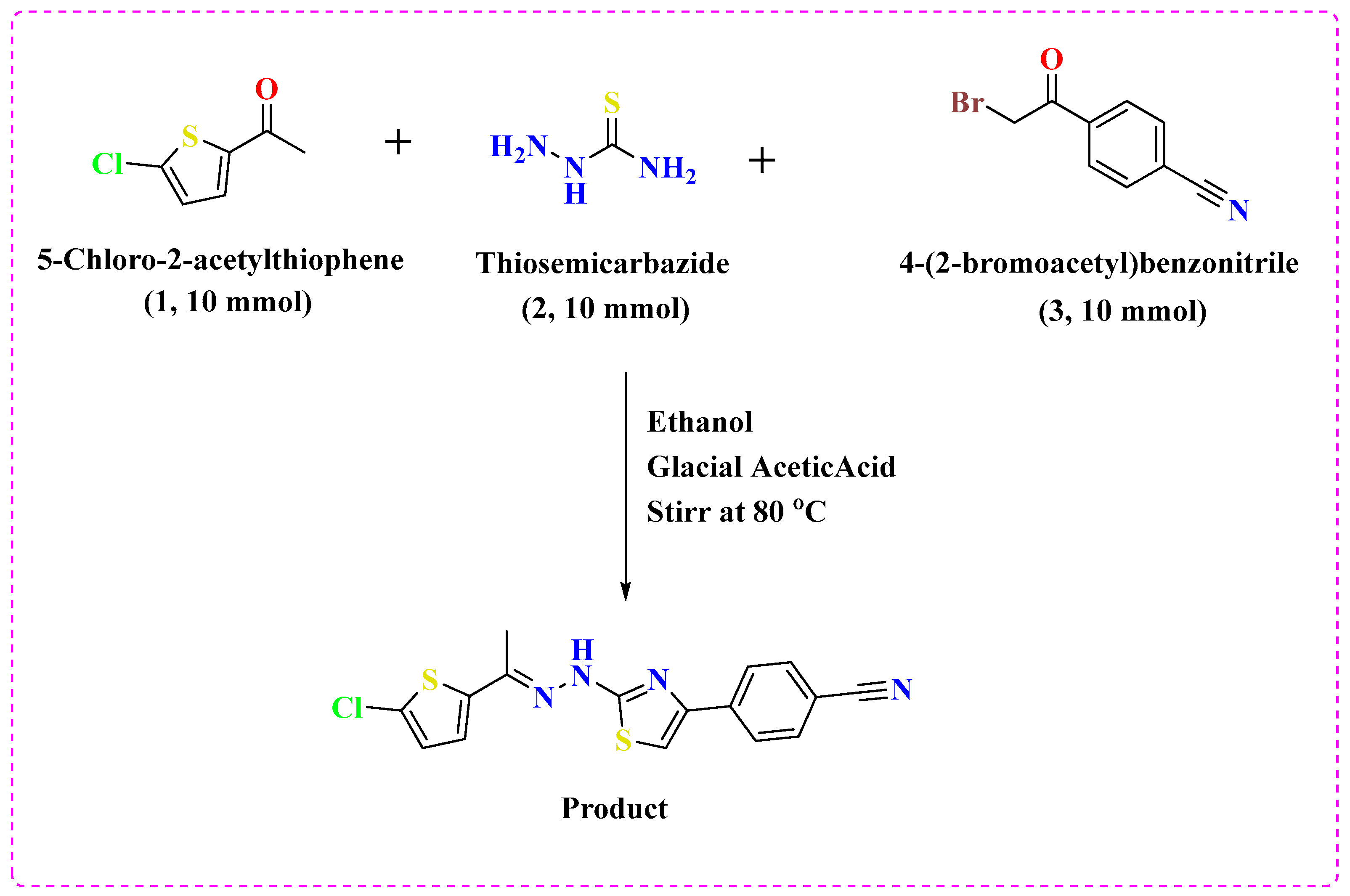
The compound (E)-4-(2-(2-(1-(5-chlorothiophen-2-yl)ethylidene)hydrazinyl)thiazol-4-yl)benzonitrile (CTHTBN) was synthesized by a one-pot multicomponent reaction. 5-Chloro-2-acetylthiophene (1, 10 mmol) and thiosemicarbazide (2, 10 mmol) were stirred in an appropriate amount of ethanol at 80 °C for 1 hour with catalytic glacial acetic acid, generating thiosemicarbazone intermediates in situ. Without isolation, these were reacted with 4-(2-bromoacetyl)benzonitrile (3, 10 mmol) under the same conditions for further 15 minutes as illustrated in Scheme 1. Reaction progress was monitored by TLC, and the final product was isolated and characterized by FT-IR, 1H NMR, and 13C NMR spectroscopy, confirming its structure and purity.

2.3. Physical and Spectral Data for Synthesized Compound

(E)-4-(2-(2-(1-(5-chlorothiophen-2-yl)ethylidene)hydrazinyl)thiazol-4-yl)benzonitrile (CTHTBN):
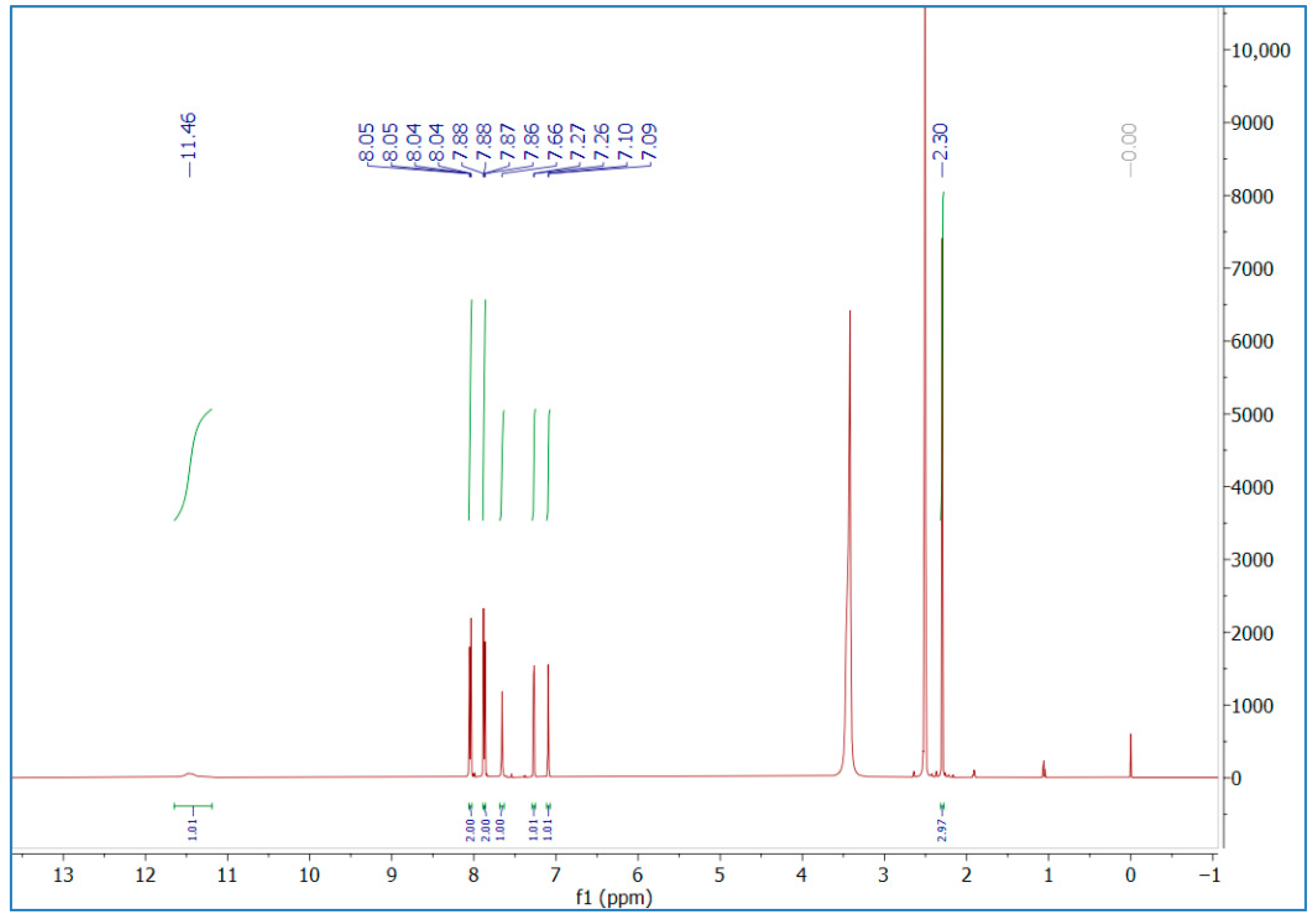
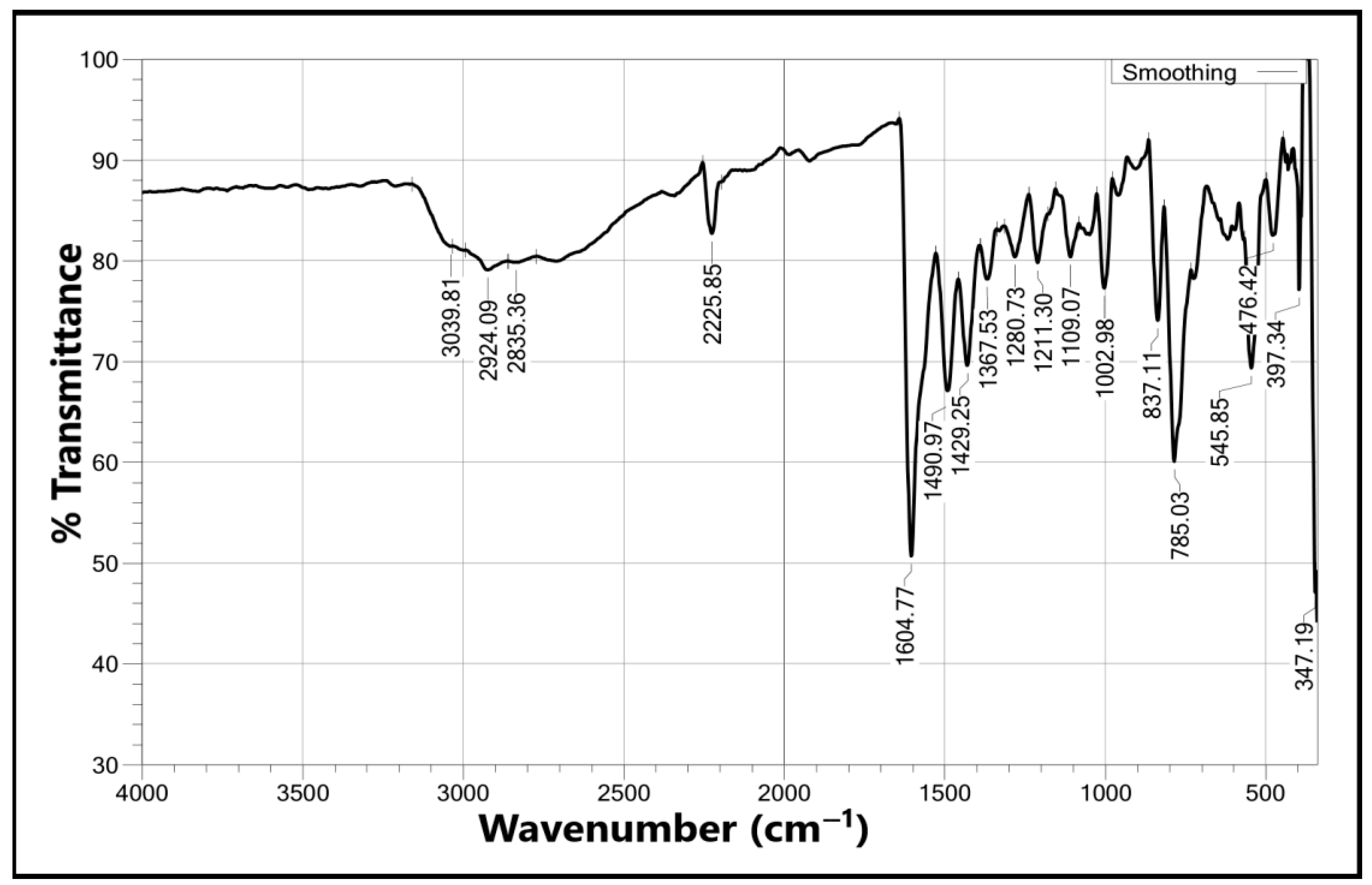
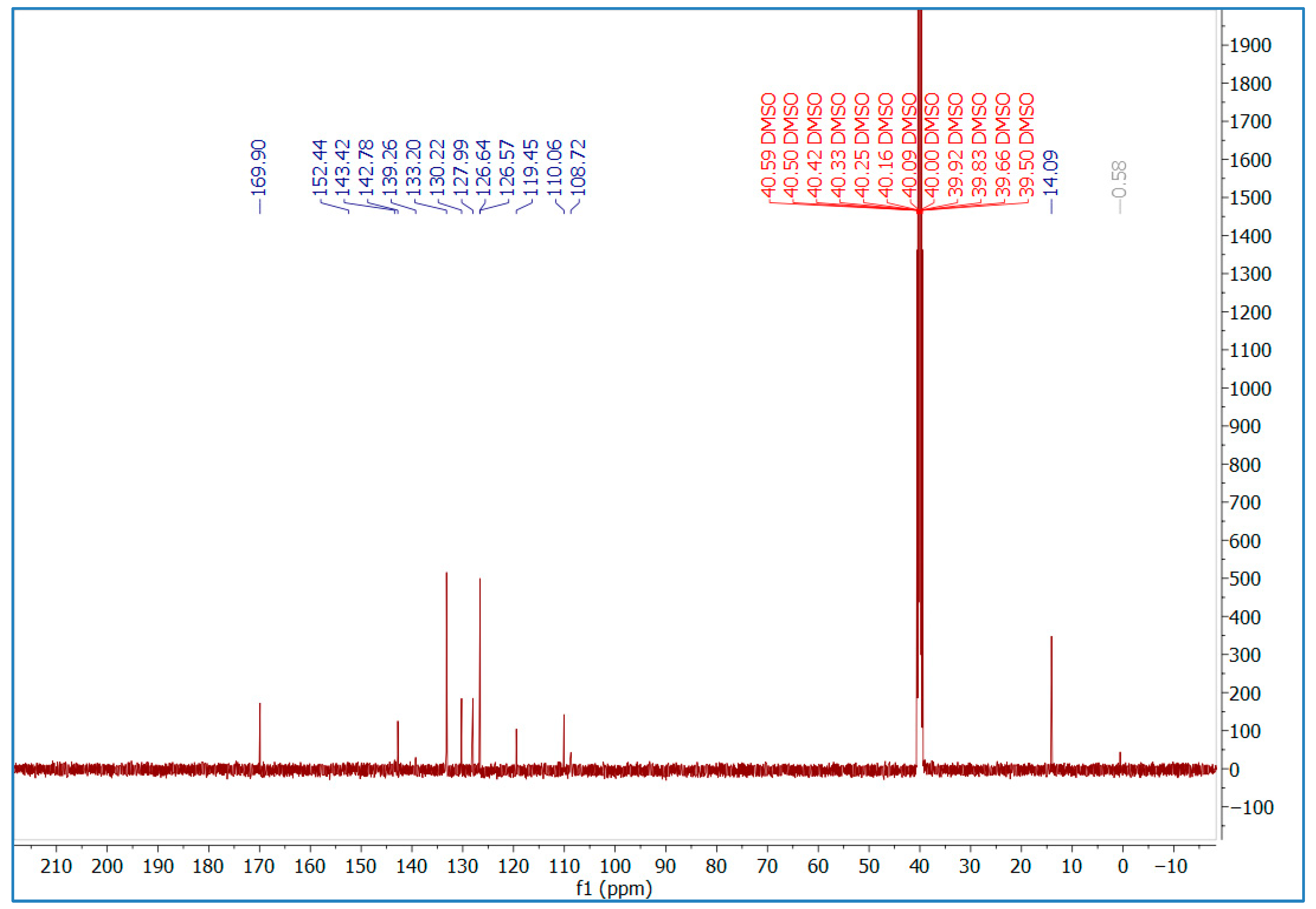
Pale Yellow color; Yield 96%; FT-IR (KBr, cm−1): 3039.81, 2924.09, 2835.36, 2225.85, 1604.77, 1490.97, 1429.25, 1367.53, 1280.73, 1211.30, 1109.07, 1002.98, 837.11, 785.03, 545.85, 476.42, 397.34, 347.19.; 1H NMR (500 MHz, DMSO-d6) δ 11.46 (s, 1H), 8.04 (d, J = 8.4 Hz, 2H), 7.87 (d, J = 8.4 Hz, 2H), 7.66 (s, 1H), 7.27 (d, J = 3.9 Hz, 1H), 7.09 (d, J = 4.0 Hz, 1H), 2.30 (s, 3H).; 13C NMR (126 MHz, DMSO-d6) δ 169.90, 152.44, 143.42, 142.78, 139.26, 133.20, 130.22, 127.99, 126.64, 126.57, 119.45, 110.06, 108.72, 14.09.

2.4. Computational Details

Density Functional Theory (DFT) calculations were carried out using Gaussian 09 (Revision A.02) with molecular geometries fully relaxed without any constraints [33]. The hybrid B3LYP functional combined with the 6-311G(d,p) basis set was employed to optimize molecular structures and analyze geometrical parameters such as bond lengths and bond angles. The optimized molecular geometries were visualized using GaussView 4.1. All computations were performed in the gas phase to obtain detailed structural and electronic insights. From these optimized structures, various molecular and electronic descriptors were extracted, including total energy, electron density distribution, chemical potential (µ), HOMO–LUMO energies, global hardness (η), global softness (σ), electronegativity (χ), electrophilicity index (ω), and maximum electron transfer (ΔNmax).

2.5. Molecular Docking Studies

Molecular docking has emerged as a crucial tool in contemporary drug discovery, enabling the prediction and analysis of interactions between small molecules (ligands) and their biological targets. In this study, molecular docking were performed using AutoDockTools 1.5.6 [34], encompassing protein and ligand preparation, grid box setup, and docking execution. Ligand structures were optimized through energy minimization at the MM2 level using Chem3D Pro (15.1.0.144 version) [35]. The three-dimensional crystal structures of target proteins were retrieved from the Protein Data Bank (https://www.rcsb.org/, accessed on 27 September 2025). To gain deeper insights into binding interactions, both 2D and 3D ligand–receptor complexes were visualized and analyzed using Discovery Studio Visualizer (DSV v24.1.0.23298) [36].

3. Results and Discussion

3.1. Chemistry

The spectral data of CTHTBN provides strong evidence for the proposed structure. In the FT-IR spectrum, the sharp absorption at 2225.85 cm−1 is characteristic of the nitrile (C≡N) stretching vibration of the para-substituted benzonitrile ring, while the band at 3039.81 cm−1 corresponds to aromatic C–H stretching. The bands at 2924.09 and 2835.36 cm−1 are due to aliphatic C–H stretching of the ethylidene methyl group, whereas the absorption at 1604.77 cm−1 can be attributed to C=N and C=C stretching vibrations of the hydrazone and aromatic systems. Additional bands in the range 1490–1211 cm−1 represent aromatic skeletal vibrations, C–N stretching, and heteroaromatic C–S/C–N linkages, while the absorptions at 837.11 and 785.03 cm−1 correspond to out-of-plane aromatic C–H bending, consistent with the para-substituted benzene and substituted thiophene moieties. The low-frequency absorptions below 600 cm−1 are due to C–S stretching and ring deformations of thiazole and thiophene units. The 1H NMR spectrum further corroborates the structure: a sharp singlet at δ 11.46 corresponds to the hydrazone N–H proton, which is highly deshielded due to hydrogen bonding and conjugation. The aromatic region shows two doublets at δ 8.04 (d, J = 8.4 Hz, 2H) and 7.87 (d, J = 8.4 Hz, 2H), corresponding to the four protons of the para-substituted benzonitrile ring, while a singlet at δ 7.66 is assignable to the isolated proton at C-5 of the thiazole ring. The thiophene moiety is evident from two doublets at δ 7.27 (J = 3.9 Hz, 1H) and 7.09 (J = 4.0 Hz, 1H), typical of vicinally coupled protons in a 5-chlorothiophene system. The methyl group of the ethylidene fragment resonates as a singlet at δ 2.30, consistent with its attachment to the C=N unit. The 13C NMR spectrum supports these assignments, with the imine carbon observed at δ 169.90 and thiazole quaternary carbons in the downfield region at δ 152.44–139.26. The aromatic carbons of benzonitrile and thiophene rings appear between δ 133.20–126.57, while the nitrile carbon resonates at δ 119.45, a typical value for sp-hybridized cyano carbons. The thiophene CH carbons are observed at δ 110.06 and 108.72, correlating with the corresponding proton doublets in the 1H NMR spectrum. Finally, the methyl carbon of the ethylidene group resonates at δ 14.09, in agreement with its singlet proton signal at δ 2.30. Overall, the IR, 1H NMR, and 13C NMR spectral data are mutually consistent and confirm the successful synthesis of CTHTBN with all key structural features accounted for, including benzonitrile, thiazole, thiophene, hydrazone, and ethylidene moieties. The experimental FT-IR, 1H NMR and 13C NMR spectra are given in Figure 1, Figure 2 and Figure 3, respectively.

3.2. Computational Study

3.2.1. Molecular Structures

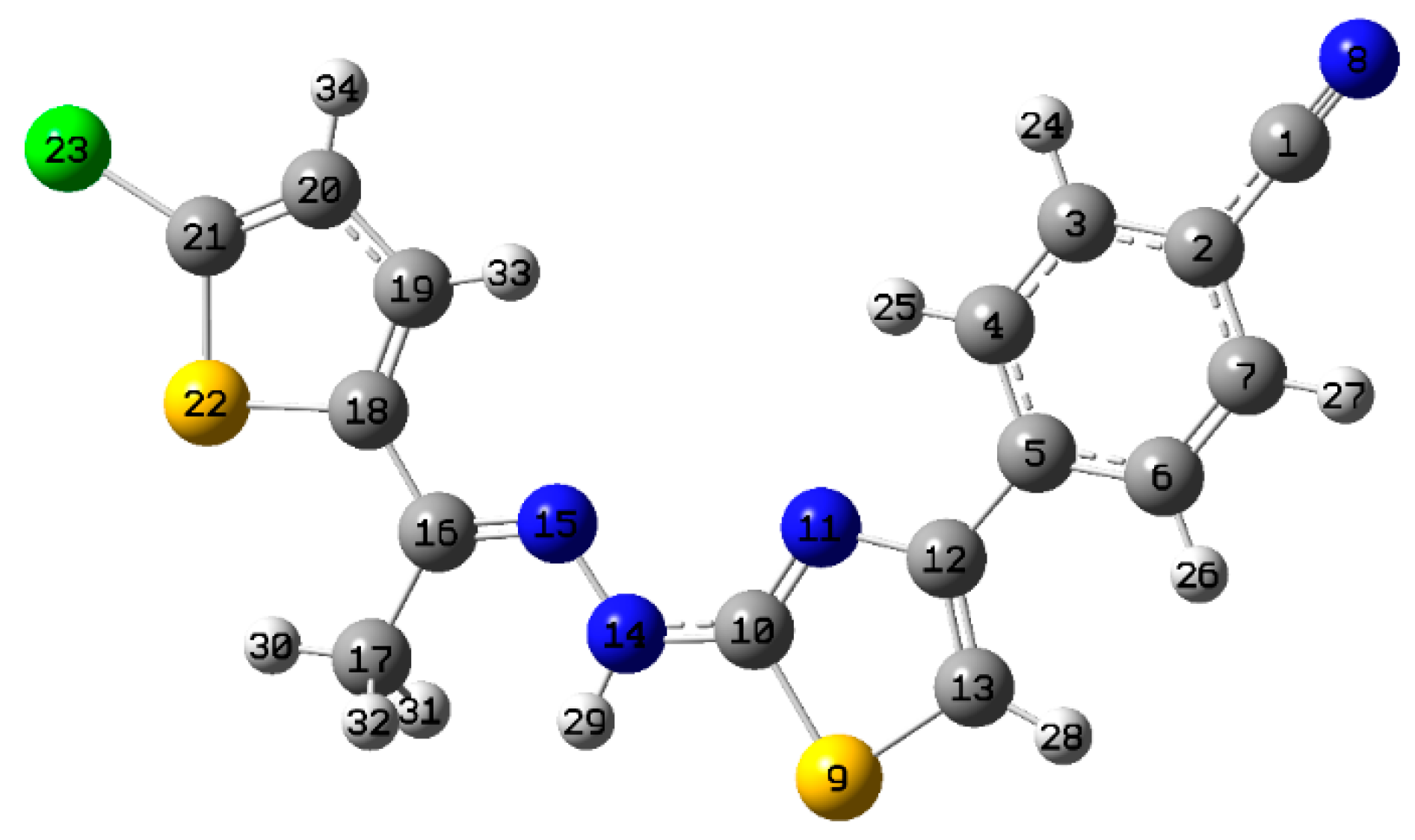
The compound CTHTBN was subjected to theoretical investigation using the DFT method with the B3LYP functional and 6-311G(d,p) basis set to assess its structural and chemical characteristics. The optimized structural parameters of CTHTBN, including bond lengths (Å) and bond angles (°), were determined using the DFT method. Despite the overall asymmetrical nature of the molecule, the optimized geometry (Figure 4) indicates that the compound belongs to the C1 point group. Comprehensive data on bond lengths and bond angles are given in Table 1 and Table 2.
The DFT-optimized geometrical parameters of CTHTBN reveal significant insights into its structural features and electronic delocalization. The C–C bond lengths within the benzene and thiophene rings range from 1.3668 to 1.4293 Å, reflecting typical values between single and double bonds and indicating extensive π-electron delocalization and aromatic stabilization. The nitrile C≡N bond (C1–N8, 1.1557 Å) is notably short, characteristic of a triple bond and representing an electron-rich site susceptible to electrophilic attack. The hydrazinyl linkage exhibits partial double-bond character, as evidenced by N14–N15 (1.3524 Å) and N15–C16 (1.2913 Å) bond lengths, suggesting resonance stabilization across this moiety. C–S bonds in the thiazole and thiophene rings (1.7366–1.7746 Å) correspond to standard single-bond lengths, ensuring structural integrity of the heterocycles. C–H bond lengths (≈1.081–1.096 Å) are typical of sp2 and sp3 hybridized carbons, while single bonds connecting the hydrazinyl and thiazole moieties to substituents show standard bond distances (C16–C17 = 1.511 Å, C16–C18 = 1.463 Å). Analysis of bond angles reveals that aromatic rings maintain planarity, with angles close to 120° (e.g., C2–C1–C3 = 120.43°), consistent with sp2 hybridization. The hydrazinyl linkage exhibits slightly distorted angles (e.g., N11–C10–N14 = 118.60°; C10–N11–C12 = 111.34°) due to conjugation effects. The five-membered thiazole and thiophene rings show smaller bond angles (C18–C22–C21 = 90.95°, C10–C9–C13 = 87.79°), reflecting inherent ring strain. Substituents attached to the core structure induce minor deviations from ideal tetrahedral angles (e.g., C16–C17–C30 = 112.41°, C16–C17–C31 = 110.97°) because of steric and electronic interactions. Overall, the bond length and angle data suggest a molecule with planar aromatic regions, a conjugated hydrazinyl bridge, and slight ring strain in the heterocycles, providing structural stability while defining regions of potential chemical reactivity consistent with MEP and frontier molecular orbital analyses.

3.2.2. Frontier Molecular Orbitals’ and Global Descriptors’ Study

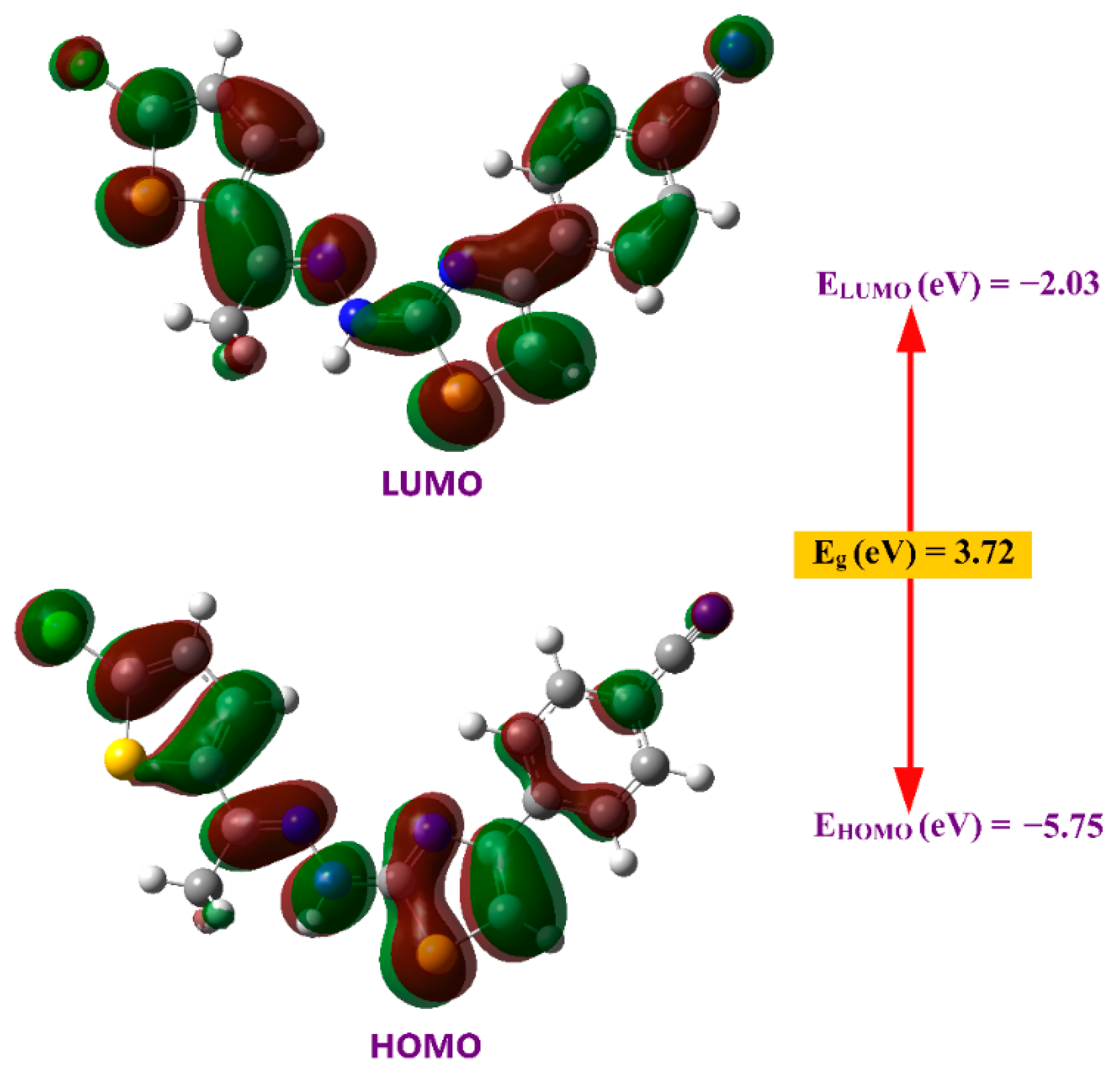
Frontier molecular orbitals provide valuable insight into the electronic structure and reactivity of molecules. The HOMO represents the highest occupied orbital and indicates the electron-donating capacity, while the LUMO corresponds to the lowest unoccupied orbital and reflects the electron-accepting tendency. The relative energies of these orbitals determine how the molecule interacts with electrophiles and nucleophiles. The HOMO–LUMO energy gap (Eg) is a key descriptor of chemical behavior, where a larger Eg indicates higher stability and lower reactivity, while a smaller Eg favors electron transfer, enhanced reactivity, and stronger biological interactions. Thus, EHOMO, ELUMO, and Eg collectively reflect the balance between stability and reactivity, offering theoretical support for understanding the molecule’s potential chemical and biological activities. The frontier molecular orbitals namely HOMO and LUMO with energy gap (Eg) are depicted in Figure 5.
The electronic parameters of the compounds offer valuable information about their electronic structures and potential reactivity. The electronic parameters for compound CTHTBN are presented in Table 3.
Using Koopmans’ theorem, the global reactivity descriptors of the synthesized compound were computed [34] and are given in Table 4.
The synthesized compound, CTHTBN was subjected to a DFT study using the B3LYP functional and 6-311G(d,p) basis set to investigate its electronic and structural properties. The total electronic energy of the optimized structure was calculated to be −2092.12 a.u., indicating a thermodynamically stable molecular conformation. The frontier molecular orbital analysis revealed EHOMO and ELUMO values of −5.75 eV and −2.03 eV, respectively, corresponding to an ionization potential (I) of 5.75 eV and an electron affinity (A) of 2.03 eV. The resulting energy gap (Eg) of 3.72 eV suggests a balance between chemical stability and reactivity, which is crucial for potential biological interactions. Additionally, the molecule exhibited a high dipole moment of 7.9381 Debye, indicating significant polarity, which could favor interactions with polar biological targets through electrostatic or hydrogen bonding interactions. Further, global reactivity descriptors were calculated based on Koopman’s theorem. The electronegativity (χ) of the compound was found to be 3.89 eV, reflecting a moderate tendency to attract electrons. The chemical hardness (η) was 1.86 eV, suggesting moderate resistance to electronic deformation, while the chemical softness (σ), the inverse of hardness, was 0.5376 eV−1, indicating a moderate level of polarizability. The chemical potential (µ) was calculated as −3.89 eV, demonstrating the molecule’s tendency to act as an electron donor. The global electrophilicity index (ω) was 4.07 eV, signifying a good ability to accept electrons and react with nucleophiles. Moreover, the maximum amount of electronic charge the molecule can accept (ΔNmax) was determined to be 2.09, indicating a notable capacity for charge transfer during molecular interactions. Overall, the DFT results suggest that compound 4a is electronically well-balanced, chemically stable, and sufficiently reactive to engage in significant biological interactions, supporting its potential as a pharmacologically active agent.

3.2.3. Molecular Electrostatic Potential Surface Analysis

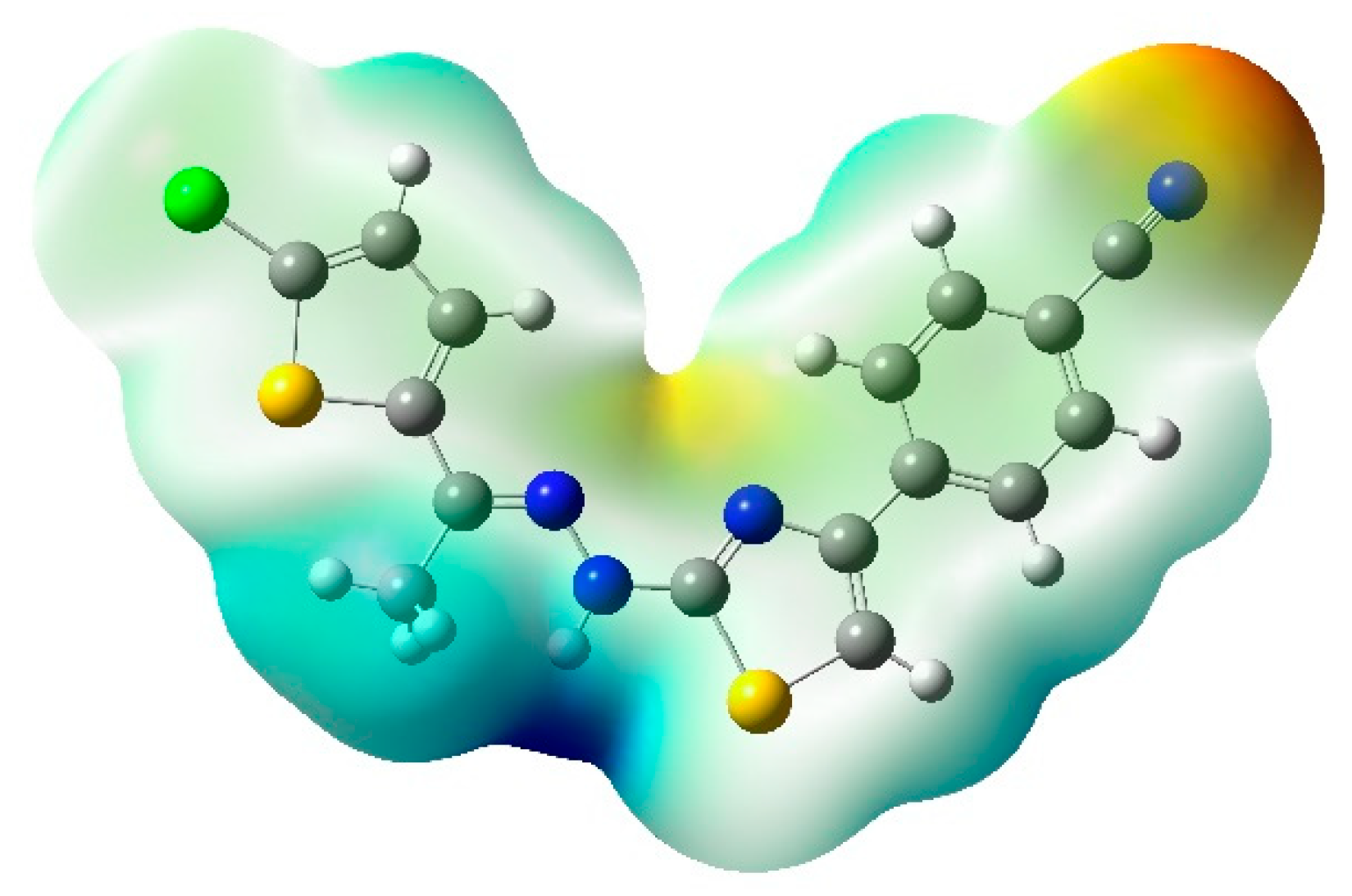
Molecular electrostatic potential (MEP) mapping offers a detailed visualization of the electron density distribution across a molecule, allowing the identification of regions that are likely to participate in chemical interactions. Red-colored zones, indicating areas of high electron density, are typically located near electronegative atoms like oxygen and are prone to attack by electrophiles. In contrast, blue regions represent electron-deficient areas, which can readily interact with nucleophiles. Areas shown in green correspond to regions of relatively balanced electron density, suggesting minimal polarity. MEP analysis is instrumental in predicting sites for hydrogen bonding, reactive centers, and potential molecular interactions with enzymes or receptors. When integrated with frontier molecular orbital (FMO) data, it provides a spatial perspective of molecular reactivity, complementing energy-based electronic insights. This combined approach enhances the understanding of structure–activity relationships and supports rational drug design by correlating electron distribution with potential pharmacological behavior. The MEP surface of CTHTBN is depicted in Figure 6.
The molecular electrostatic potential (MEP) surface illustrates the distribution of electron density and identifies reactive sites within the molecule. Red regions, primarily near the nitrogen of the nitrile group, represent electron-rich areas prone to electrophilic attack and capable of participating in hydrogen-bonding interactions. Blue regions, notably around the hydrogen atoms bonded to the nitrogen of the hydrazinyl linkage, indicate electron-deficient sites favorable for nucleophilic interactions. Green and yellow regions over the thiazole ring and methyl group reflect moderate polarity and relative chemical stability. Overall, the MEP map provides a comprehensive visualization of reactive regions, complementing frontier molecular orbital analysis in predicting chemical reactivity, ligand binding, and potential biological interactions.

3.3. Molecular Docking Study

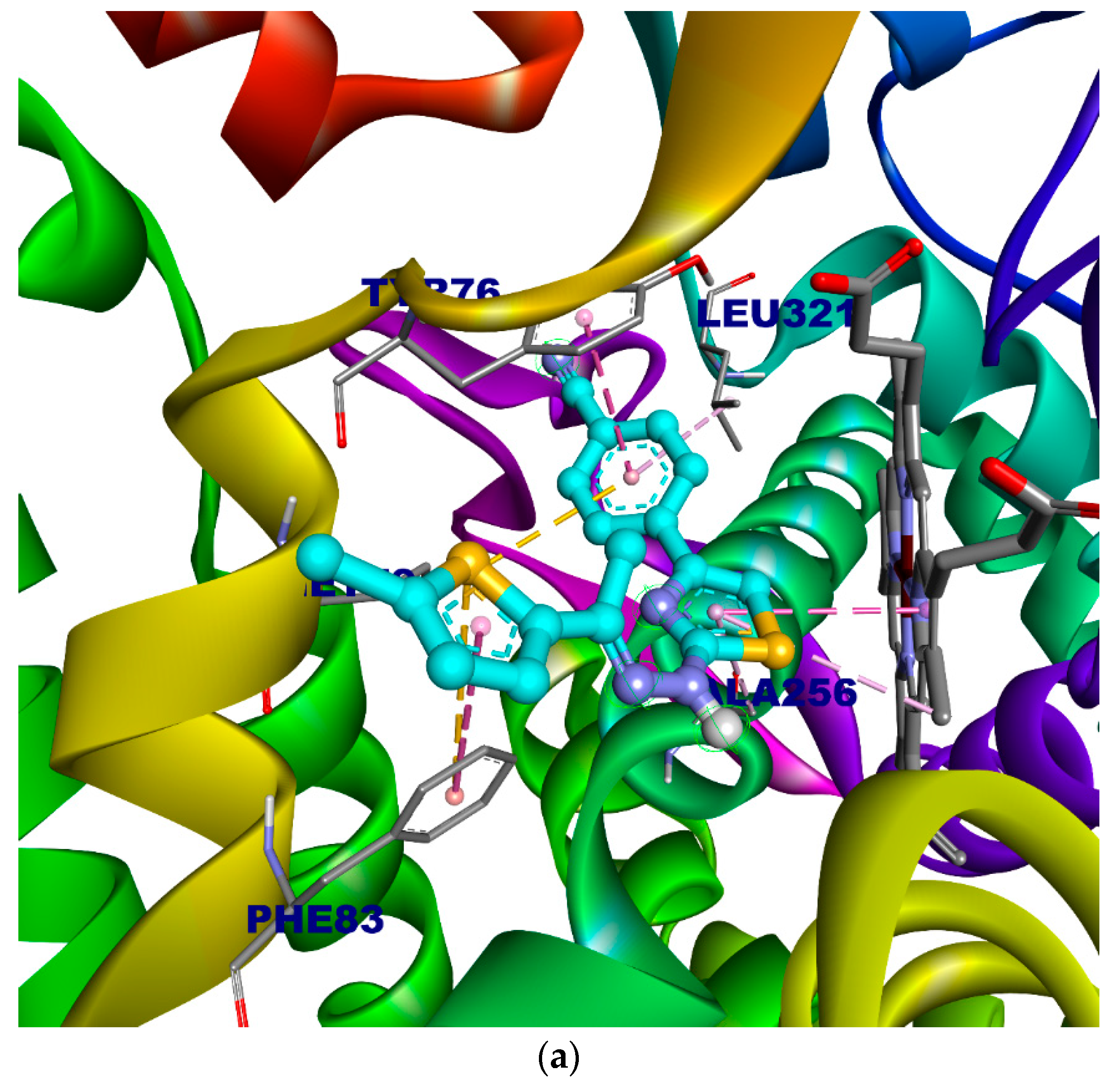
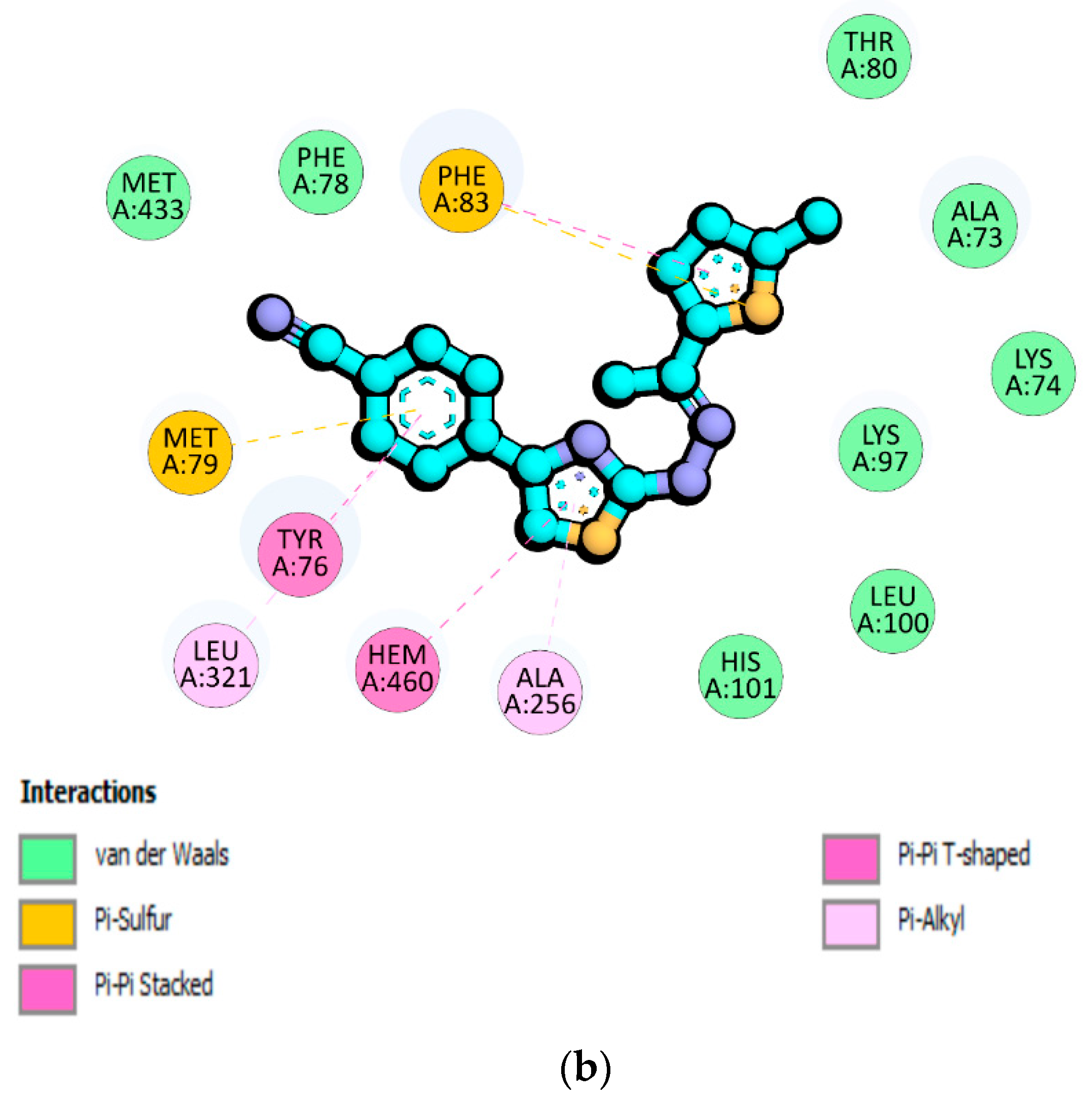
Molecular docking studies of the synthesized compound CTHTBN were performed against Mycobacterium tuberculosis Cytochrome P450 14α-sterol demethylase (CYP51, PDB ID: 1E9X) using AutoDockTools 1.5.6 to evaluate its binding affinity and interaction profile. The compound exhibited favorable binding affinity with a docking score of –8.8 kcal/mol, suggesting stable and favorable accommodation within the enzyme’s active site. A detailed analysis of the docking interactions revealed a diverse set of stabilizing forces. The binding interactions, including the involved residues and types of interactions, are summarized in Table 5.
Two π–sulfur interactions were observed: one between the sulfur atom of MET79 (a sulfur-containing residue) and the aromatic π-system of the ligand, and another between the sulfur atom of the ligand and the aromatic ring of PHE83 (an aromatic residue), supporting proper ligand orientation. A strong π–π stacked interaction was established with TYR76 (aromatic residue), while additional π–π T-shaped interactions were observed with the heme cofactor and with PHE83, confirming the importance of aromatic stacking in ligand anchoring. Hydrophobic complementarity was further reinforced by multiple π–alkyl interactions involving LEU321 and ALA256 (hydrophobic residues), along with additional contacts with the alkyl substituent of the heme group. These interactions highlight the role of non-polar residues in strengthening van der Waals contacts and providing a hydrophobic environment conducive to stable ligand binding. Overall, the docking analysis confirms that CTHTBN is well accommodated in the active cavity of CYP51 through a rich network of π–sulfur interactions with sulfur-containing and aromatic residues, π–π stacking with aromatic residues and the heme group, and π–alkyl contacts with hydrophobic residues. The favorable binding energy and interaction profile strongly support this thiazole–thiophene derivative as a potential inhibitor of lanosterol 14α-demethylase, warranting further investigation as a promising antimycobacterial agent. The 3D and 2D interaction diagrams of title compound are depicted in Figure 7a and Figure 7b, respectively.

4. Conclusions

In this study, the thiazole–thiophene derivative CTHTBN was successfully synthesized via a one-pot multicomponent reaction and thoroughly characterized using FT-IR, 1H NMR, and 13C NMR spectroscopy, confirming its structural integrity. DFT calculations provided insight into its electronic properties, revealing a moderate HOMO–LUMO energy gap (3.72 eV) indicative of balanced chemical stability and reactivity, along with a significant dipole moment (7.9381 D), suggesting strong polarity favorable for biological interactions. Global reactivity descriptors further highlighted the molecule’s electronic readiness for potential interactions. Molecular docking studies demonstrated that CTHTBN binds effectively within the active site of M. tuberculosis CYP51, forming multiple stabilizing interactions, including π–sulfur, π–π stacking, and π–alkyl contacts, as well as hydrophobic interactions with the heme cofactor. These computational findings indicate that CTHTBN is a promising candidate for antimycobacterial applications and provide a strong rationale for subsequent in vitro and in vivo biological evaluations.

Author Contributions

R.A.S.: Conceptualization, methodology, software, validation, writing–original draft preparation. V.A.A.: Methodology, software, validation, writing—original draft, visualization, writing—review & editing, validation. B.S.J.: Supervision, visualization, validation, data curation, writing—review & editing. All authors have read and agreed to the published version of the manuscript.

Funding

This research received no external funding.

Institutional Review Board Statement

Not applicable.

Informed Consent Statement

Not applicable.

Data Availability Statement

The data presented in this study are available on reasonable request from the corresponding author.

Acknowledgments

The authors acknowledge central instrumentation facility (CIF), Savitribai Phule Pune University, Pune for NMR analysis and CIC, KTHM College for FT-IR analysis. Authors also would like to acknowledge MGV’s Maharaja Sayajirao Gaikwad Arts, Science and Commerce College, Malegaon Camp Nashik (India) and MGV’s Loknete Vyankatrao Hiray Arts, Science and Commerce College, Panchavati, Nashik, (India) for providing necessary research facilities.

Conflicts of Interest

The authors declare no conflict of interest.

References

  1. Chakaya, J.; Khan, M.; Ntoumi, F.; Aklillu, E.; Fatima, R.; Mwaba, P.; Kapata, N.; Mfinanga, S.; Hasnain, S.E.; Katoto, P.D.; et al. Global Tuberculosis Report 2020–Reflections on the Global TB burden, treatment and prevention efforts. Int. J. Infect. Dis. 2021, 113, S7–S12. [Google Scholar] [CrossRef]
  2. Sankineni, S.; Chauhan, S.; Shegokar, R.; Pathak, Y. Global health and tuberculosis; past, present, and future. In Tubercular Drug Delivery Systems: Advances in Treatment of Infectious Diseases; Springer International Publishing: Cham, Switherland, 2023; pp. 1–13. [Google Scholar]
  3. Bu, Q.; Qiang, R.; Fang, L.; Peng, X.; Zhang, H.; Cheng, H. Global trends in the incidence rates of MDR and XDR tuberculosis: Findings from the global burden of disease study 2019. Front. Pharmacol. 2023, 14, 1156249. [Google Scholar] [CrossRef] [PubMed]
  4. Cui, K.; Zhao, X.; Liu, W.; Bai, L. Global, regional, and national burden and trends of multidrug-resistant tuberculosis and extensively drug-resistant tuberculosis in adolescents and adults aged 15–49 years from 2010 to 2021: Insights from the global burden of disease study 2021. BMC Med. 2025, 23, 445. [Google Scholar] [CrossRef] [PubMed]
  5. Khawbung, J.L.; Nath, D.; Chakraborty, S. Drug resistant Tuberculosis: A review. Comp. Immunol. Microbiol. Infect. Dis. 2021, 74, 101574. [Google Scholar] [CrossRef] [PubMed]
  6. Baranwal, J.; Kushwaha, S.; Singh, S.; Jyoti, A. A review on the synthesis and pharmacological activity of heterocyclic compounds. Curr. Phys. Chem. 2023, 13, 2–19. [Google Scholar] [CrossRef]
  7. Kabir, E.; Uzzaman, M. A review on biological and medicinal impact of heterocyclic compounds. Results Chem. 2022, 4, 100606. [Google Scholar] [CrossRef]
  8. Qadir, T.; Amin, A.; Sharma, P.K.; Jeelani, I.; Abe, H. A review on medicinally important heterocyclic compounds. Open Med. Chem. J. 2022, 16, e2202280. [Google Scholar] [CrossRef]
  9. Luo, W.; Liu, Y.; Qin, H.; Zhao, Z.; Wang, S.; He, W.; Tang, S.; Peng, J. Nitrogen-containing heterocyclic drug products approved by the FDA in 2023: Synthesis and biological activity. Eur. J. Med. Chem. 2024, 279, 116838. [Google Scholar] [CrossRef]
  10. Gharge, S.; Alegaon, S.G. Recent studies of nitrogen and sulfur containing heterocyclic analogues as novel antidiabetic agents: A review. Chem. Biodivers. 2024, 21, e202301738. [Google Scholar] [CrossRef] [PubMed]
  11. Zheng, Y.; Li, J.; Wu, W.; Qi, C.; Jiang, H. Oxygen-, nitrogen-, and sulfur-containing heterocycles: Recent advances in De Novo synthesis and prospect. Org. Process Res. Dev. 2024, 28, 2988–3025. [Google Scholar] [CrossRef]
  12. Pennington, L.D.; Collier, P.N.; Comer, E. Harnessing the necessary nitrogen atom in chemical biology and drug discovery. Med. Chem. Res. 2023, 32, 1278–1293. [Google Scholar] [CrossRef]
  13. Chugh, V.; Pandey, G.; Rautela, R.; Mohan, C. Heterocyclic compounds containing thiazole ring as important material in medicinal chemistry. Mater. Today Proc. 2022, 69, 478–481. [Google Scholar] [CrossRef]
  14. Dawood, D.H.; Anwar, M.M. Recent advances in the therapeutic insights of thiazole scaffolds as acetylcholinesterase inhibitors. Eur. J. Med. Chem. 2025, 287, 117331. [Google Scholar] [CrossRef]
  15. Petrou, A.; Fesatidou, M.; Geronikaki, A. Thiazole ring—A biologically active scaffold. Molecules 2021, 26, 3166. [Google Scholar] [CrossRef] [PubMed]
  16. Kassem, A.F.; Althomali, R.H.; Anwar, M.M.; El-Sofany, W.I. Thiazole moiety: A promising scaffold for anticancer drug discovery. J. Mol. Struct. 2024, 1303, 137510. [Google Scholar] [CrossRef]
  17. Khamitova, Ц.1.K.; Berillo, D.; Lozynskyi, A.; Konechnyi, Y.; Mural, D.; Georgiyants, V.; Lesyk, R. Thiadiazole and thiazole derivatives as potential antimicrobial agents. Mini Rev. Med. Chem. 2024, 24, 531–545. [Google Scholar] [CrossRef]
  18. Sharma, D.; Sharma, V.; Sharma, A.; Goyal, R.; Tonk, R.K.; Thakur, V.K.; Sharma, P.C. Green chemistry approaches for thiazole containing compounds as a potential scaffold for cancer therapy. Sustain. Chem. Pharm. 2021, 23, 100496. [Google Scholar] [CrossRef]
  19. Hosseininezhad, S.; Ramazani, A. Thiazole ring-the antimicrobial, anti-inflammatory, and anticancer active scaffold. Arab. J. Chem. 2023, 16, 105234. [Google Scholar] [CrossRef]
  20. Bhanwala, N.; Gupta, V.; Chandrakar, L.; Khatik, G.L. Thiazole heterocycle: An incredible and potential scaffold in drug discovery and development of antitubercular agents. ChemistrySelect 2023, 8, e202302803. [Google Scholar] [CrossRef]
  21. Kumar, A.; Debnath, U.; Roy, K.K. Thiazole-Scaffold-Based Anti-tubercular Agents: A Review on Synthesis and Structural Modifications. Synlett 2025, 36, 2705–2731. [Google Scholar]
  22. Archna; Pathania, S.; Chawla, P.A. Thiophene-based derivatives as anticancer agents: An overview on decade’s work. Bioorganic Chem. 2020, 101, 104026. [Google Scholar] [CrossRef]
  23. Mabkhot, Y.N.; Kaal, N.A.; Alterary, S.; Mubarak, M.S.; Alsayari, A.; Bin Muhsinah, A. New thiophene derivatives as antimicrobial agents. J. Heterocycl. Chem. 2019, 56, 2845–2953. [Google Scholar] [CrossRef]
  24. Mishra, I.; Sharma, V.; Kumar, N.; Krishna, G.; Sethi, V.A.; Mittal, R.; Dhakad, P.K.; Mishra, R. Exploring Thiophene Derivatives: Synthesis Strategies and Biological Significance. Med. Chem. 2025, 21, 11–31. [Google Scholar] [CrossRef]
  25. Cavasotto, C.N.; Aucar, M.G.; Adler, N.S. Computational chemistry in drug lead discovery and design. Int. J. Quantum Chem. 2019, 119, e25678. [Google Scholar] [CrossRef]
  26. Cai, J.H.; Zhu, X.Z.; Guo, P.Y.; Rose, P.; Liu, X.T.; Liu, X.; Zhu, Y.Z. Recent updates in click and computational chemistry for drug discovery and development. Front. Chem. 2023, 11, 1114970. [Google Scholar] [CrossRef] [PubMed]
  27. Sadybekov, A.V.; Katritch, V. Computational approaches streamlining drug discovery. Nature 2023, 616, 673–685. [Google Scholar] [CrossRef] [PubMed]
  28. Hasnain, M.; Urrehman, S.; Yousuf, A.; Ali, M.A.; Fatima, T.; Bibi, S.; Bai, F.Q. DFT investigation of functional group effects on the structure of tetraphenyl porphyrin for enhanced nonlinear optical properties. Chem. Papers 2025, 79, 6809–6824. [Google Scholar] [CrossRef]
  29. Guan, H.; Sun, H.; Zhao, X. Application of density functional theory to molecular engineering of pharmaceutical formulations. Int. J. Mol. Sci. 2025, 26, 3262. [Google Scholar] [CrossRef]
  30. Saini, M.; Mehra, N.; Kumar, G.; Paul, R.; Kovács, B. Molecular and structure-based drug design: From theory to practice. In Advances in Pharmacology; Academic Press: Cambridge, MA, USA, 2025; Volume 103, pp. 121–138. [Google Scholar]
  31. Rajasekhar, S.; Karuppasamy, R.; Chanda, K. Exploration of potential inhibitors for tuberculosis via structure-based drug design, molecular docking, and molecular dynamics simulation studies. J. Comput. Chem. 2021, 42, 1736–1749. [Google Scholar] [CrossRef]
  32. Fischer, A.; Smiesko, M.; Sellner, M.; Lill, M.A. Decision making in structure-based drug discovery: Visual inspection of docking results. J. Med. Chem. 2021, 64, 2489–2500. [Google Scholar] [CrossRef] [PubMed]
  33. Frisch, M.J.T.; Schlegelhb, S.; Robbma, C.J.; Montgomery, J.A., Jr.; Vreven, T.; Kudin, K.N.; Burant, J.C.; Millam, J.M.; Iyengar, S.S.; Tomasi, J.; et al. Gaussian 03, Revision C.02; ScienceOpen, Inc.: Lexington, MA, USA, 2004. [Google Scholar]
  34. Trott, O.; Olson, A.J. AutoDock Vina: Improving the speed and accuracy of docking with a new scoring function, efficient optimization, and multithreading. J. Comput. Chem. 2010, 31, 455–461. [Google Scholar] [CrossRef] [PubMed]
  35. Alhawarri, M.B. Exploring the Anticancer Potential of Furanpydone A: A Computational Study on its Inhibition of MTHFD2 Across Diverse Cancer Cell Lines. Cell Biochem. Biophys. 2025, 83, 437–454. [Google Scholar] [CrossRef] [PubMed]
  36. Pitaloka, D.A.E.; Ramadhan, D.S.F.; Arfan; Chaidir, L.; Fakih, T.M. Docking-based virtual screening and molecular dynamics simulations of quercetin analogs as enoyl-acyl carrier protein reductase (InhA) inhibitors of Mycobacterium tuberculosis. Sci. Pharm. 2021, 89, 20. [Google Scholar] [CrossRef]
Scheme 1. Synthesis of titled compound.
Chemproc 18 00058 sch001
Figure 1. FT−IR spectrum of CTHTBN.
Chemproc 18 00058 g001
Figure 2. 1H NMR spectrum of CTHTBN.
Chemproc 18 00058 g002
Figure 3. 13C NMR spectrum of CTHTBN.
Chemproc 18 00058 g003
Figure 4. Optimized structure of CTHTBN.
Chemproc 18 00058 g004
Figure 5. The FMO’s of compound CTHTBN with energy gap (Eg).
Chemproc 18 00058 g005
Figure 6. Molecular electrostatic potential of CTHTBN.
Chemproc 18 00058 g006
Figure 7. (a) 3D interactions of CTHTBN with Mycobacterium tuberculosis Cytochrome P450 14α-sterol demethylase (CYP51, PDB ID: 1E9X). (b) 2D interactions of CTHTBN with Mycobacterium tuberculosis Cytochrome P450 14α-sterol demethylase (CYP51, PDB ID: 1E9X).
Chemproc 18 00058 g007aChemproc 18 00058 g007b
Table 1. Optimized geometrical parameter bond Length (Å) of compound CTHTBN by DFT/B3LYP with 6-311G(d,p) basis set.
BondLength (Å)BondLength (Å)
C1–C21.4293C12–C131.3668
C1–N81.1557C13–H281.0771
C2–C31.4016N14–N151.3524
C2–C71.4036N14–H291.0123
C3–C41.3867N15–C161.2913
C3–H241.083C16–C171.511
C4–C51.4032C16–C181.463
C4–H251.0816C17–H301.0884
C5–C61.404C17–H311.096
C5–C121.4729C17–H321.0963
C6–C71.3848C18–C191.3752
C6–H261.0832C18–S221.7568
C7–H271.0829C19–C201.4172
S9–C101.7746C19–H331.0807
S9–C131.7401C20–C211.3654
C10–N111.2908C20–H341.0809
C10–N141.3743C21–S221.7366
N11–C121.3847C21–Cl231.7308
Table 2. Optimized geometrical parameter bond angle (°) of compound CTHTBN by DFT/B3LYP with 6-311G(d,p) basis set.
AngleValue (°)AngleValue (°)
C2−C1−C3120.4269C2−C1−C7120.2134
C3−C2−C7119.3598C2−C3−C4120.1659
C2−C3−C24119.5589C4−C3−C24120.2752
C3−C4−C5120.913C3−C4−C25120.615
C5−C4−C25118.472C4−C5−C6118.4601
C4−C5−C12119.5111C6−C5−C12122.0287
C5−C6−C7121.0183C5−C6−C26120.2801
C7−C6−C26118.7014C2−C7−C6120.0828
C2−C7−C27119.5739C6−C7−C27120.3433
C10−C9−C1387.7914C9−C10−C11114.9838
C9−C10−C14118.5983C11−C10−C14126.4179
C10−C11−C12111.3402C5−C12−C11118.5242
C5−C12−C13126.2554C11−C12−C13115.2198
C9−C13−C12110.6647C9−C13−C28119.6355
C12−C13−C28129.6988C10−C14−C15120.74
C10−C14−C29118.0429C15−C14−C29121.2143
C14−C15−C16118.4518C15−C16−C17123.5084
C15−C16−C18115.6809C17−C16−C18120.8103
C16−C17−C30112.4121C16−C17−C31110.9692
C16−C17−C32110.9688C30−C17−C31107.1802
C30−C17−C32107.0927C31−C17−C32107.9974
C16−C18−C19127.7652C16−C18−C22121.8274
C19−C18−C22110.407C18−C19−C20113.9804
C18−C19−C33121.6433C20−C19−C33124.3763
C19−C20−C21112.139C19−C20−C34124.6921
C21−C20−C34123.1689C20−C21−C22112.5195
C20−C21−C23127.208C22−C21−C23120.2724
C18−C22−C2190.9541--
Table 3. Electronic parameters of the CTHTBN.
ParameterValue
E (a.u.)−2092.12
EHOMO (eV)−5.75
ELUMO (eV)−2.03
I (eV)5.75
A (eV)2.03
Eg (eV)3.72
Dipole moment (Debye)7.9381
Table 4. Global reactivity parameters of CTHTBN.
ParameterValue
Chemical Hardness ɳ (eV)1.86
Chemical Softness σ (eV−1)0.5376
Electronegativity χ (eV)3.89
Chemical Potential µ (eV)−3.89
Global Electrophilicity ω (eV)4.07
Maximum Electronic Charge ΔNmax2.09
ɳ = chemical hardness; σ, chemical softness; ω, global electrophilicity; χ, electronegativity; µ, chemical potential; ΔNmax = maximum electronic charge.
Table 5. Molecular docking scores and key binding interactions of CTHTBN with selected protein targets.
PDB IDDocking Score (kcal/mol)Key Interactions
1E9X
(M. tuberculosis CYP51)
−8.8π–Sulfur interactions (MET79, Phe83); π–π stacking (TYR76); π–π T-shaped interactions (PHE83, Heme group); π–Alkyl interactions (LEU321, ALA256, Heme alkyl group)
Disclaimer/Publisher’s Note: The statements, opinions and data contained in all publications are solely those of the individual author(s) and contributor(s) and not of MDPI and/or the editor(s). MDPI and/or the editor(s) disclaim responsibility for any injury to people or property resulting from any ideas, methods, instructions or products referred to in the content.