1. Introduction
Heterocyclic substances have garnered much interest due to several of their significant biological and therapeutic uses. Because heterocyclic molecules are useful and have been extensively studied synthetically, research interest on them is growing quickly.Nearly 90% of new drugs contain them, and they are found across chemistry and biology, where a lot of scientific study and usage takes place [
1]. Heterocyclic compounds are of great interest in organic chemistry as they have “strong coordination ability, high electron-blocking capacity”, and a wide range of applications [
2]. In medical chemistry, heterocyclic molecules are primarily of interest. Together with the mother scaffold’s effective substituent groups, the ring structures’ size and type clearly demonstrate their physicochemical characteristics [
3]. “Heterocyclic” comes from “heteros”, a Greek word that means “distinct.” These substances are essentially organic cyclic structures that contain a heteroatom. Common heteroatoms include nitrogen, oxygen, and sulfur; other elements such as Se, P, Si, and B can additionally combine to form heterocyclic molecules [
4].
In addition, they are widely distributed in natural and synthetic bioactive compounds, such as “alkaloids, antibiotics, amino acids, vitamins, hormones, hemoglobin, dyes”, and many other therapeutic agents [
5]. “Alkaloids, cardiac glycosides, antibiotics, and insecticides” are some of the heterocycles of importance to human and animal health. In aromatic rings where a carbon has been substituted by a heteroatom from a N or S family, the electron pair donation availability, and electronegativity difference that characterizes these closed-ring systems, are fundamental in circular systems [
6]. Nitrogen heterocycles are the most essential pharmacophores and a significant class of compounds; however, sulfur-containing heterocycles are frequently present in FDA-approved drugs, and are reported to possess various “anticancer, antimicrobial, antidiabetic, anti-inflammatory, antimalarial, anti-Alzheimer’s, and antifungal activities” [
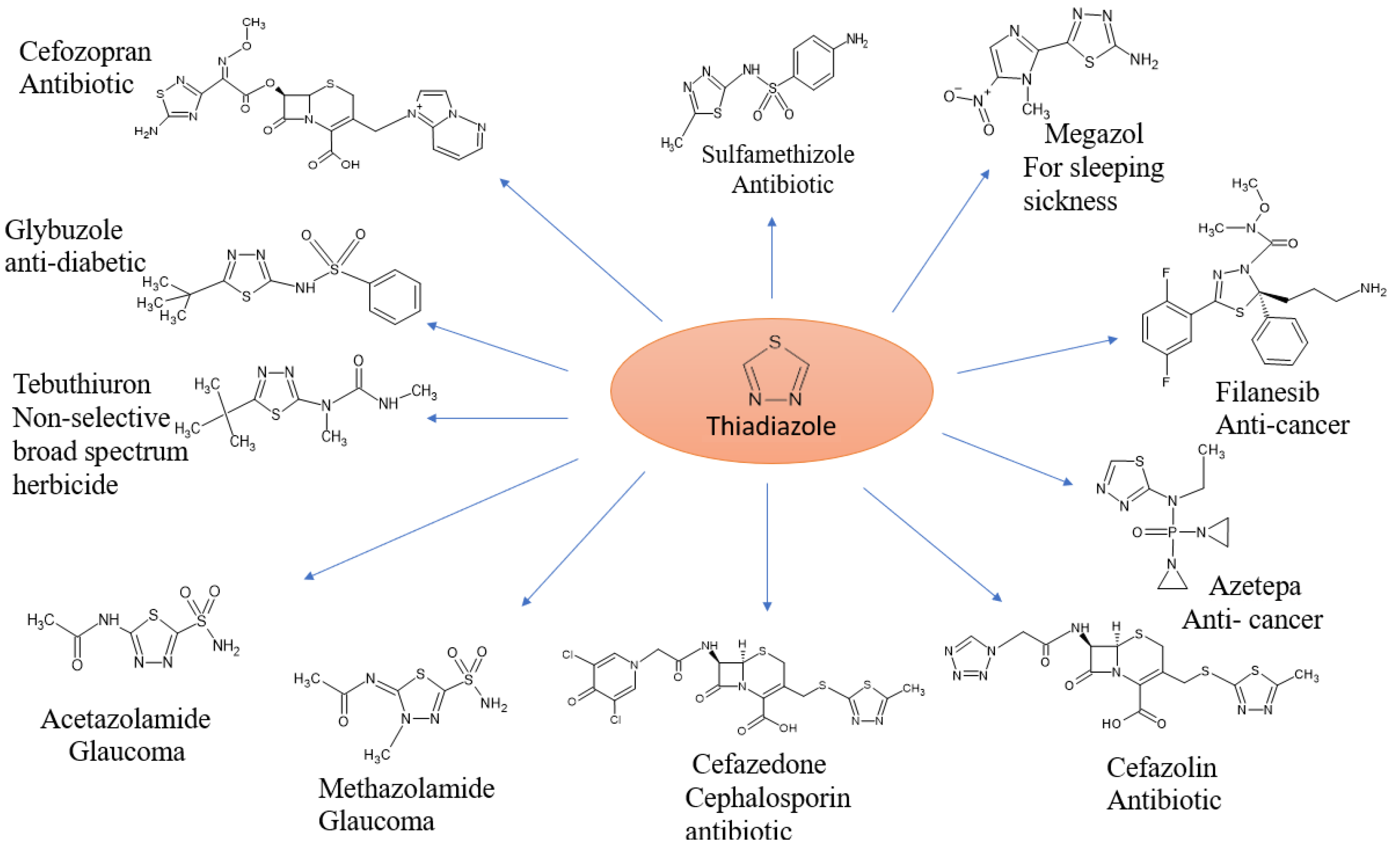
7]. One sulfur atom and two nitrogen atoms make up the framework of the thiadiazole chain. Thiadiazole has 4 distinct isomeric structures. One of the most prevalent and significant components found in the fundamental structure of an array of natural goods and medications is thiadiazole. Since the discovery of powerful sulfa medications that include this nucleus, the pace of advancement pertaining to thiadiazole has significantly increased. Thiadiazole and its derivatives are well known for being important scaffolds in pharmacology. ‘1-3-4-thiadiazoles’ show a variety of inhibitory activities, encompassing enzymes and inhibitors of human platelet aggregation, as well as inhibitors that are antibacterial, anti-inflammatory, anticancer, antioxidant, antitubercular, neuroprotective, and antiviral. These compounds have exceptional pharmacological applications. Some drugs are available on the market containing the thiadiazole moiety. Additionally, some natural products, including polycarpathiamines (A) and (B), in which dendrodoine was taken from the Ascidian Polycarpa aurata., which is derived from Penicillium thiamines B and the marine algae Dendrodoa grossularia (13) (which come from Penicillium oxalicum via extraction), contain the 1,2,4-thiadiazole nucleus, as demonstrated [
8]. Fischer originally described 1,3,4-thiadiazoles in 1882, and Busch went on to develop them. Thiadiazoles with amino, hydroxyl, and mercapto substituents can take on a variety of tautomeric forms. In its completely conjugated form, the ring of the 1,3,4-thiadiazole structure, which contains three different types of atoms,
does not exhibit tautomerism. However, tautomerism is achievable in the presence of specific substituents. Because of the S (sulfur) atom’s inductive effect, this base is incredibly weak with a reasonably elevated aromaticity, the 1,3,4-thiadiazole ring. While it can experience ring cleavage with an aquatic foundation, in aqueous acid solutions, it is reasonably stable. The thiadiazole ring system is a versatile heterocyclic scaffold widely used in medicinal chemistry due to its diverse biological activities, as illustrated in
Figure 1. Additionally, the ring is demonstrated to be extremely electron-poor because of the nitrogen atoms effect of electron withdrawal, making it largely resistant to electrophilic substitution, while vulnerable to assault by nucleophiles. Conversely, the ring
becomes very active, and reacts rapidly to generate an assortment of derivatives when substitutions were introduced at its
5′ and 2′ locations [
9].
Rationale of Design
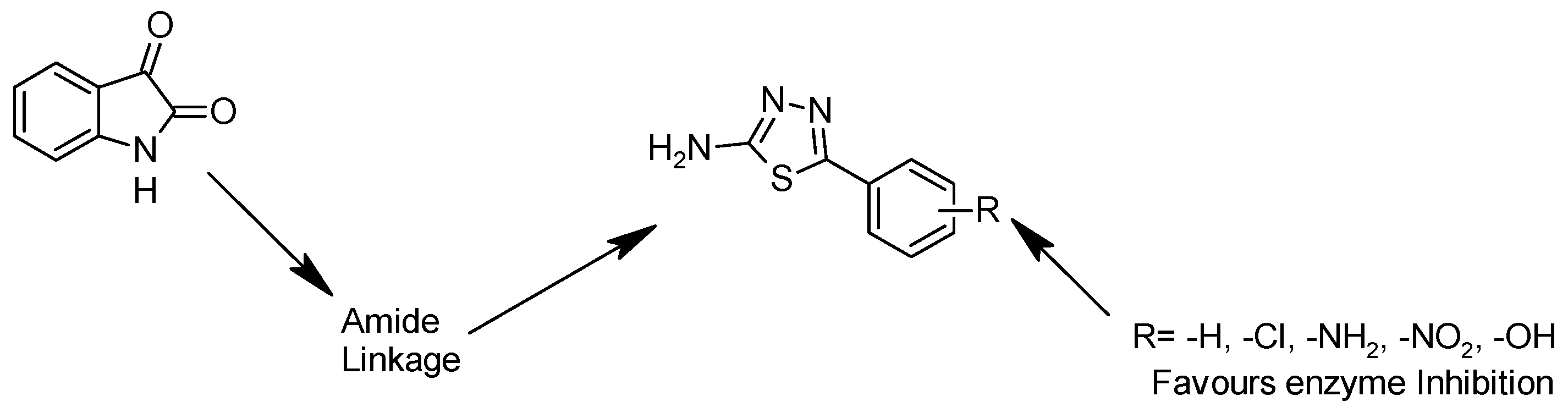
Isatin is an important heterocyclic scaffold with diverse pharmacological properties. Structural modification through an amide linkage to bioactive 1,3,4-thiadiazoles enhances rigidity and target interactions. The substituted thiadiazole ring adds pharmacophoric features, improving binding affinity. Aromatic substituents (R = –H, –Cl, –NH
2, –NO
2, –OH) modulate activity by influencing electronic and steric properties. Thus, isatin–amide–thiadiazole conjugates are expected to show significant enzyme inhibitory activity through combined pharmacological potential and substituent fine-tuning. The 1,3,4-thiadiazole scaffold was selected due to its favorable electronic properties, bioisosteric behavior, and ability to enhance biological activity. The rationale underlying the selection and modification of the 1,3,4-thiadiazole compound is presented in
Figure 2.
3. Result
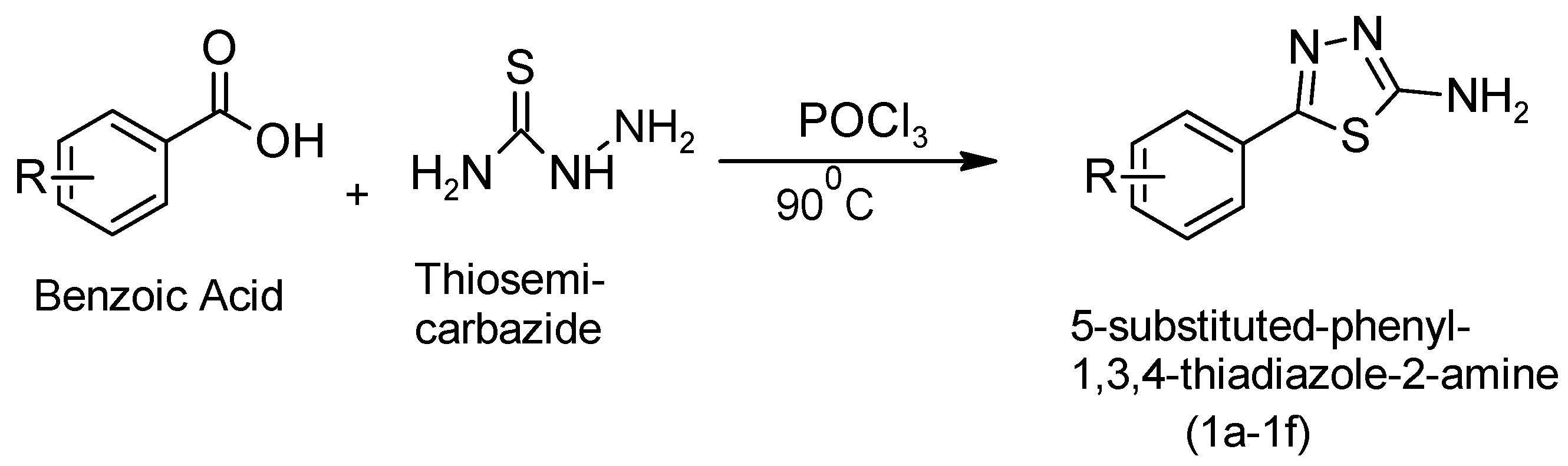
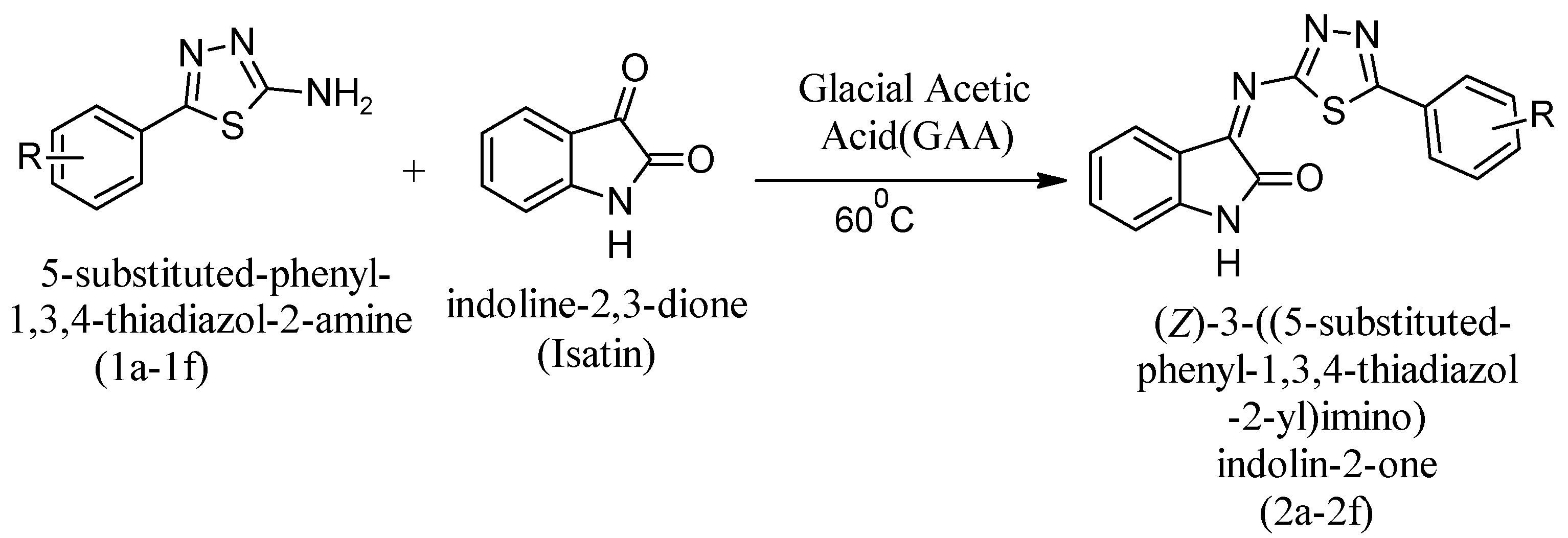
Each one of the designed compounds was examined via in silico computational analysis for their antidiabetic activity (aldose reductase and monoacylglyceryl lipase (MAGL)). These products underwent additional synthesis, and the resulting in vitro efficacy was investigated. All the designed compounds were also accepted by other online computational tools for pharmacological activities, physicochemical properties, and bioactivity properties. Hence, they were chosen for synthesis as per the given reaction scheme.
(Z)-3-((5-phenyl-1,3,4-thidiazole-2-yl)imino)indolin-2-one synthesis process (2a) Yield: 35%, M.P.: 160 °C, Appearance: White crystals, 1H NMR (400 MHz): δ 7.33 (1H, ddd, J = 7.8, 7.6, 1.2 Hz), 7.52-7.76 (5H, 7.58 (ddd, J = 8.2, 1.2, 0.4 Hz), 7.60 (dddd, J = 7.8, 7.4, 1.3, 0.4 Hz), 7.61 (tdd, J = 7.4, 1.6, 1.5 Hz), 7.69 (ddd, J = 8.2, 7.6, 1.5 Hz)), 8.06 (2H, dtd, J = 7.8, 1.5, 0.4 Hz), 8.93 (1H, ddd, J = 7.8, 1.5, 0.4 Hz). IR(cm−1): 3462(N-H, Stretch), 3075-3110(C-H, Stretch), 1769(C=O, Stretch), 1672(C=N, Stretch), 1604(C=C, Bend), 1496 (C=C, Stretch), 1342 (C-N Stretch), 1265 (N-N, Stretch).
(Z)-3-((5-(2-chlorophenyl)-1,3,4-thidiazole-2-yl)imino)indolin-2-1 (2b) Yield: 36%, M.P.: 180 °C, Appearance: Brownish Crystals, 1H NMR (400 MHz): δ 7.32 (1H, ddd, J = 7.8, 7.6, 1.2 Hz), 7.45–7.87 (5H, 7.53 (ddd, J = 7.9, 7.6, 1.7 Hz), 7.57 (ddd, J = 8.2, 1.2, 0.4 Hz), 7.62 (td, J = 7.6, 1.2 Hz), 7.68 (ddd, J = 8.2, 7.6, 1.5 Hz), 7.80 (ddd, J = 7.9, 1.2, 0.4 Hz)), 8.06 (1H, ddd, J = 7.6, 1.7, 0.4 Hz), 8.92 (1H, ddd, J = 7.8, 1.5, 0.4 Hz).
(Z)-3-((5-(4-nitrophenyl)-1,3,4-thidiazole-2-yl)imino)indolin-2-1 (2c) Yield: 38%,M.P.: 170 °C, Appearance: Brownish crystals, 1H NMR (400 MHz): δ 7.42–7.58 (2H, 7.49 (ddd, J = 7.5, 7.1, 1.9 Hz), 7.52 (ddd, J = 7.9, 1.9, 0.5 Hz)), 8.01–8.18 (3H, 8.08 (ddd, J = 7.9, 7.5, 1.5 Hz), 8.12 (ddd, J = 8.8, 1.6, 0.5 Hz)), 8.26 (2H, ddd, J = 8.8, 1.5, 0.5 Hz), 8.67 (1H, ddd, J = 7.1, 1.5, 0.5 Hz).
(Z)-3-((5-(3,5-Dinitrophenyl)-1,3,4-thidiazole-2-yl)imino)indolin-2-1 (2d) Yield: 40%, M.P.: 190 °C, appearance: Yellowish crystal, 1H NMR (400 MHz): δ 7.42–7.60 (2H, 7.49 (ddd, J = 7.5, 7.0, 1.9 Hz), 7.54 (ddd, J = 8.0, 1.9, 0.5 Hz)), 8.01 (1H, ddd, J = 8.0, 7.5, 1.4 Hz), 8.54 (1H, ddd, J = 7.0, 1.4, 0.5 Hz), 8.88 (1H, t, J = 1.7 Hz), 9.00 (2H, dd, J = 1.7, 1.3 Hz).
(Z)-3-((5-(4-aminophenyl)-1,3,4-thidiazole-2-yl)imino)indolin-2-1 (2e) Yield: 42%, M.P.: 195 °C, Appearance: Pale yellow crystal, 1H NMR (400 MHz): δ 6.78 (2H, ddd, J = 8.3, 1.2, 0.4 Hz), 7.28–7.46 (2H, 7.34 (ddd, J = 8.2, 1.3, 0.4 Hz), 7.40 (td, J = 7.6, 1.3 Hz)), 7.64–7.81 (3H, 7.70 (ddd, J = 8.3, 1.7, 0.4 Hz), 7.73 (ddd, J = 8.2, 7.6, 1.5 Hz)), 8.58 (1H, ddd, J = 7.6, 1.5, 0.4 Hz).
(Z)-3-((5-(4-hydroxyphenyl)-1,3,4-thidiazole-2-yl)imino)indolin-2-1 (2f) Yield: 45%, M.P.: 200 °C, Appearance: Whitish crystal, 1H NMR (400 MHz): δ 7.16 (2H, ddd, J = 8.6, 1.2, 0.4 Hz), 7.29–7.47 (2H, 7.35 (ddd, J = 8.2, 1.3, 0.4 Hz), 7.41 (td, J = 7.6, 1.3 Hz)), 7.61–7.79 (3H, 7.69 (ddd, J = 8.2, 7.6, 1.5 Hz), 7.73 (ddd, J = 8.6, 1.7, 0.4 Hz)), 8.90 (1H, ddd, J = 7.6, 1.5, 0.4 Hz).
The IR spectra were recorded using a Shimadzu IR Affinity-1 FTIR spectrophotometer (KBr disc method). The ^1H NMR spectra were obtained on a Bruker DRX-300/400 using DMSO or CDCl
3 with TMS as the internal standard. Signal patterns were designated as d, t, q, m, s, and bs with chemical shifts in δ (ppm). The ^1H-NMR spectrum strongly supports the synthesis of the target compound. A singlet at δ 5.60 ppm corresponds to methylene (–CH2–) protons introduced during the coupling of benzotriazole with quinoline carbohydrazide, serving as a structural marker. The absence of this resonance in the starting materials confirms the new –CH2– linkage. The downfield shift (δ 5.60 ppm) arises from deshielding by adjacent N and C=O groups, substantiating the connectivity. Thus, the methylene proton peak provides unambiguous evidence for the successful formation of the isatin-thiadiazole GI hybrid system. Both IR and 1H-NMR spectra of the most potent compound are presented in
Appendix A and
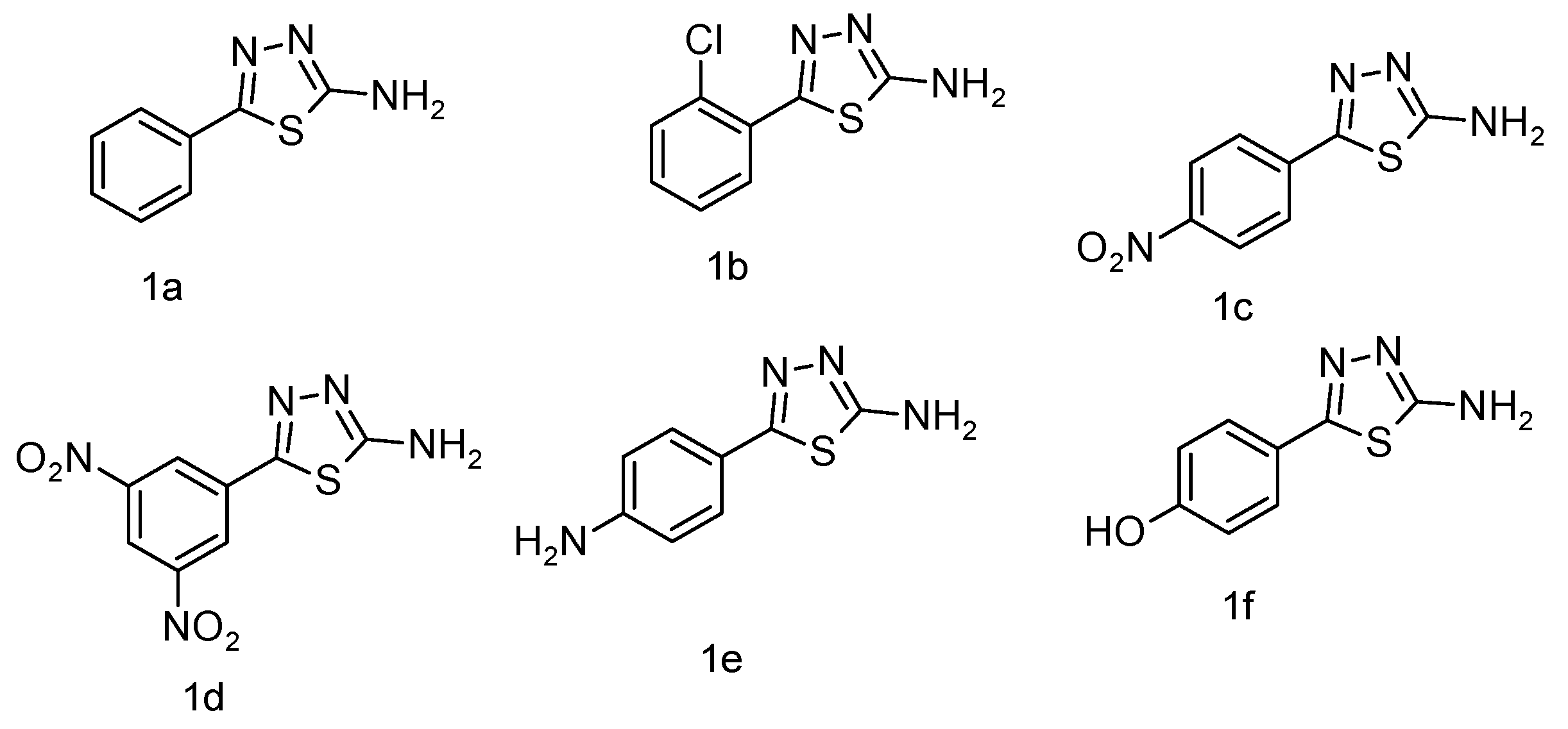
Appendix B. The chemical structures of the synthesized 5-phenyl-1,3,4-thiadiazol-2-amine derivatives (1a–1f) are presented in
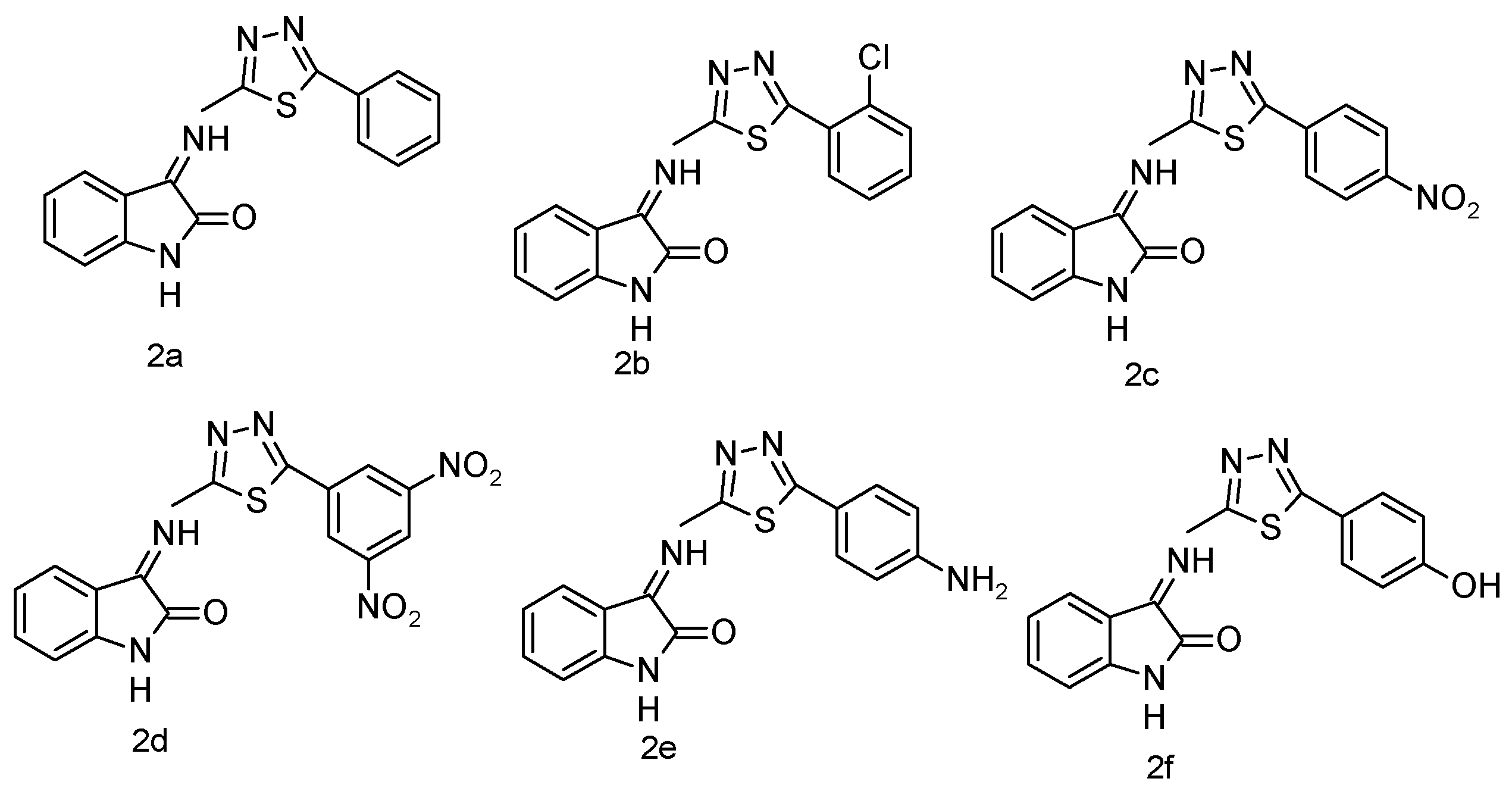
Figure 5. The chemical structures of the final 1,3,4-thiadiazole derivatives are shown in
Figure 6.
3.1. Molecular Docking Studies
Molecular docking was performed using Glide 7.0, with Schrödinger suite version 10.1 used to generate ligand interaction diagrams and visualize protein–ligand interactions. Glide XP docking was employed after minimizing ligand energy, and docking was performed to obtain binding affinities. The binding energy, which reflects the strength of ligand–protein interaction, was used to identify the best configuration for each target. Molecules with the highest binding affinity for each protein were selected for further analysis. The PDB IDs used as antidiabetic targets were 1US0 (aldose reductase), 4W93 (alpha amylase), 5UZN (monoglycerol lipase), and 3IOL (glycogen like protein). The molecular docking scores of the synthesized compounds against all four targets are summarized in
Table 1.
3.2. Physicochemical Studies
Predicting physicochemical characteristics is important in developing antidiabetic medications with improved pharmacological profiles. The toxicity, digital pharmacological action, physico-chemical properties, and oral bioavailability of the developed molecules were assessed using Molinspiration and Property Explorer. The molecular weight (MW), lipid solubility (cLogP), hydrophilicity (clogS), toxicity, number of rotatable bonds (nROTB), drug likeness, and Lipinski’s rule were computed. Toxicities predicted by Osiris Property Explorer and Data Warrior indicated no mutations, tumors, irritation, or adverse effects on reproduction. Higher lipophilicity with low water solubility is a key characteristic for improved pharmacological profiles. All synthesized compounds had solubility (clogS) within the satisfactory range (<−4). Lipophilicity-related clogP quantifies drug-likeness, effectiveness, pharmacokinetics, and toxicity, with favorable profiles at values less than 5. TPSA values were computed, showing poor membrane permeability and low CNS bioavailability, though values greater than 60 Å are chosen for oral molecules. Compounds with negative or null drug likeness values were excluded. These tools help screen active compounds.
Analyzing and Screening ADME Results
Molecule 2a showed good docking scores with the receptors human aldose reductase and monoglyceride lipase. 2a showed docking scores of −10.6, −9.8, and −7.4 with human aldose reductase, monoglyceride lipase, and GLP-1
, respectively. However, a poor score (–6.8) was observed with alpha amylase. The best docking results obtained with 2b were −10.2, −9.4, −7.5, and −7.0 with human aldose reductase, monoglycerol lipase, GLP-1, and alpha
amylase, respectively. 2c also gave a best docking score of −7.8 with human aldose reductase; however, poor scores were obtained with other three targets. Compound 2e was found to be best against aldose reductase with a docking score 7.7, which is comparatively less than the best compounds, 2a and 2b. Molecules 2d and 2f showed poor docking scores with all four targets. Overall, in the case of antidiabetic properties, 2a showed the highest docking score with the receptor human aldose reductase. Compounds 2a–2f were evaluated against various ADME criteria, including LogS, Lipinski’s Rule of five, LogP, BBB and polar surface area (TPSA) permeability, and gastrointestinal absorption. Compounds that met Lipinski’s Rule of five and had higher gastric absorption were chosen for additional analysis; further compounds with low or medium risk or no toxicity were also selected for additional analysis. The ADME and physicochemical properties of the titled compounds are summarized in
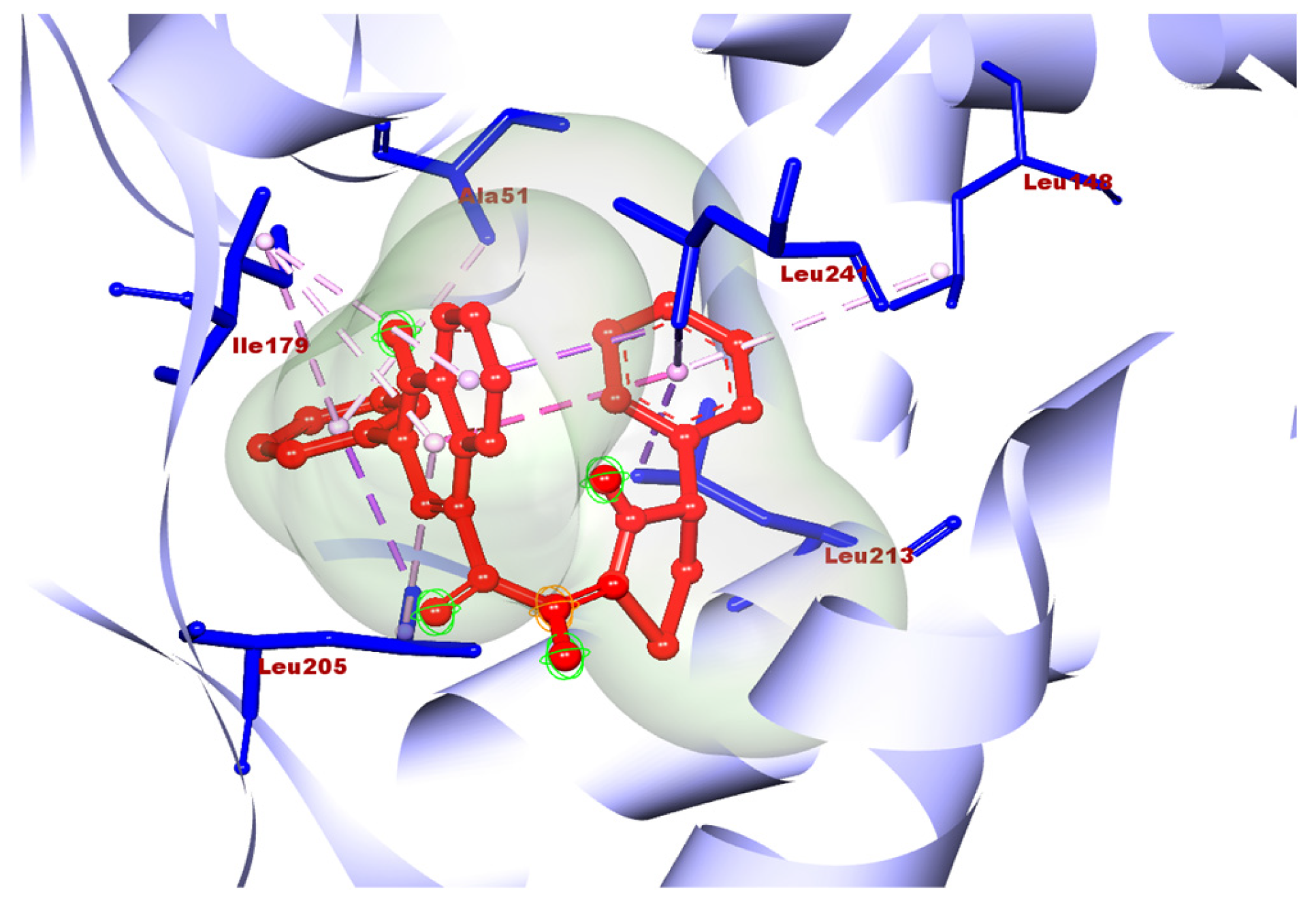
Table 2. Compound 2a was selected as the final hit compound for additional study. The three-dimensional amino acid interactions of compound 2a with the aldose reductase receptor are illustrated in
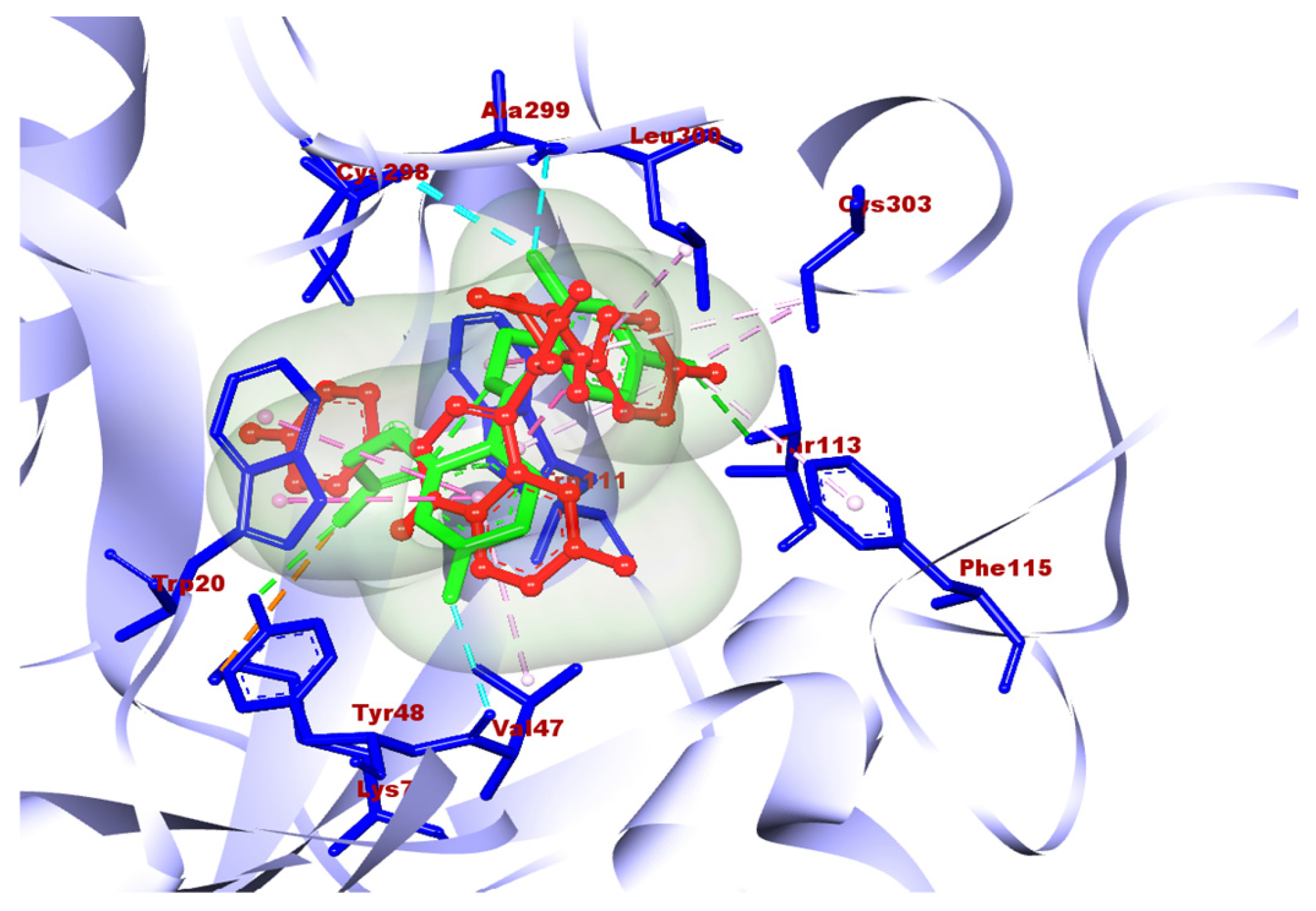
Figure 7. The binding mode of compound 2a was further validated by superimposing it with the co-crystallized ligand at the active site of aldose reductase, as shown in
Figure 8.