

Ligand-Based Identification of Naturally Occurring 1E3G Receptor Inhibitors for Treating Prostate Cancer †
 , and
, and
Abstract
1. Introduction
2. Methodology
2.1. Preparation of Protein and Ligands
2.2. Molecular Docking and Network Pharmacology Study
2.3. ADMET Profiling Methods
2.4. Density Functional Theory (DFT) Calculations
2.5. Molecular Dynamics Simulation
3. Results and Discussion
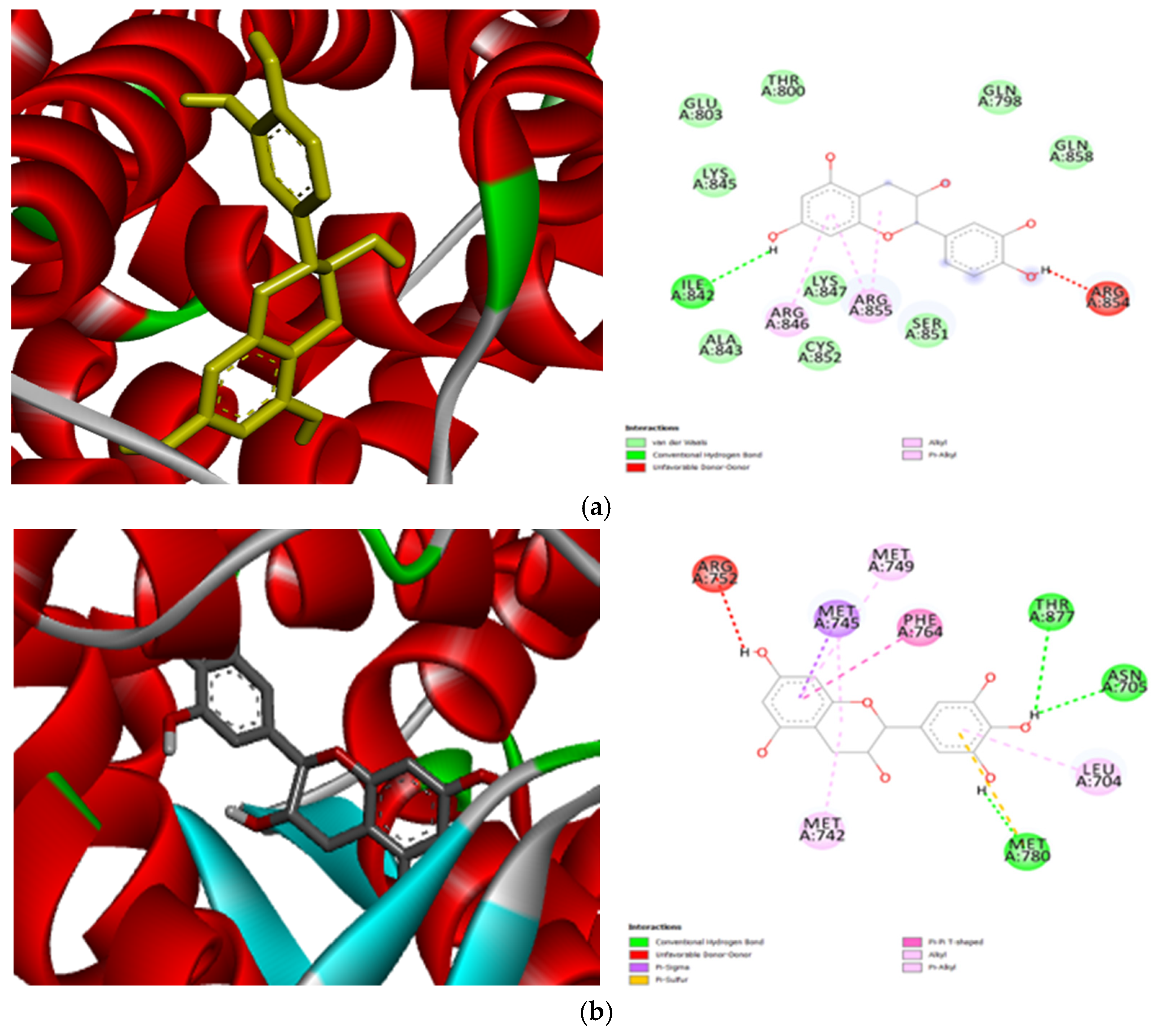
3.1. Molecular Docking
3.2. ADMET Analysis
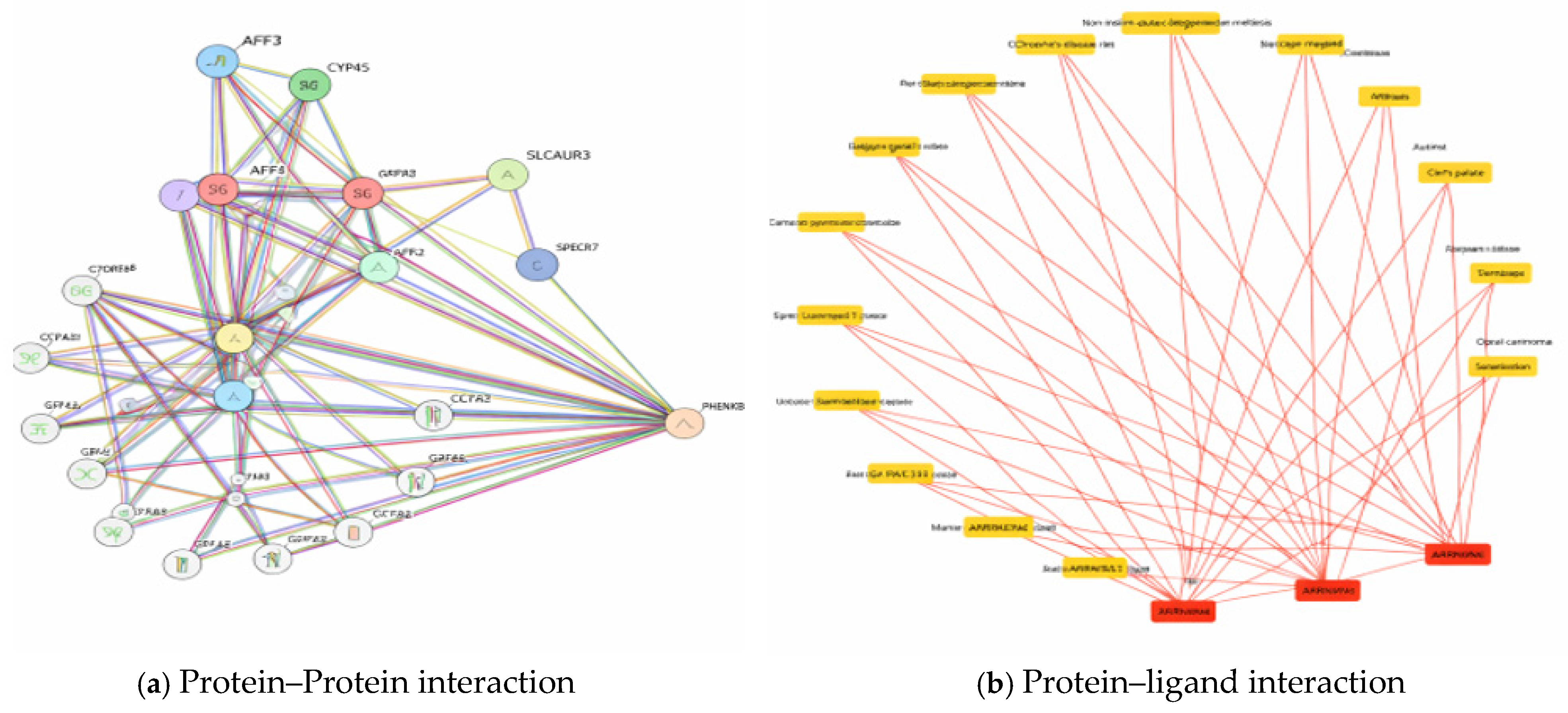
3.3. Network Pharmacology
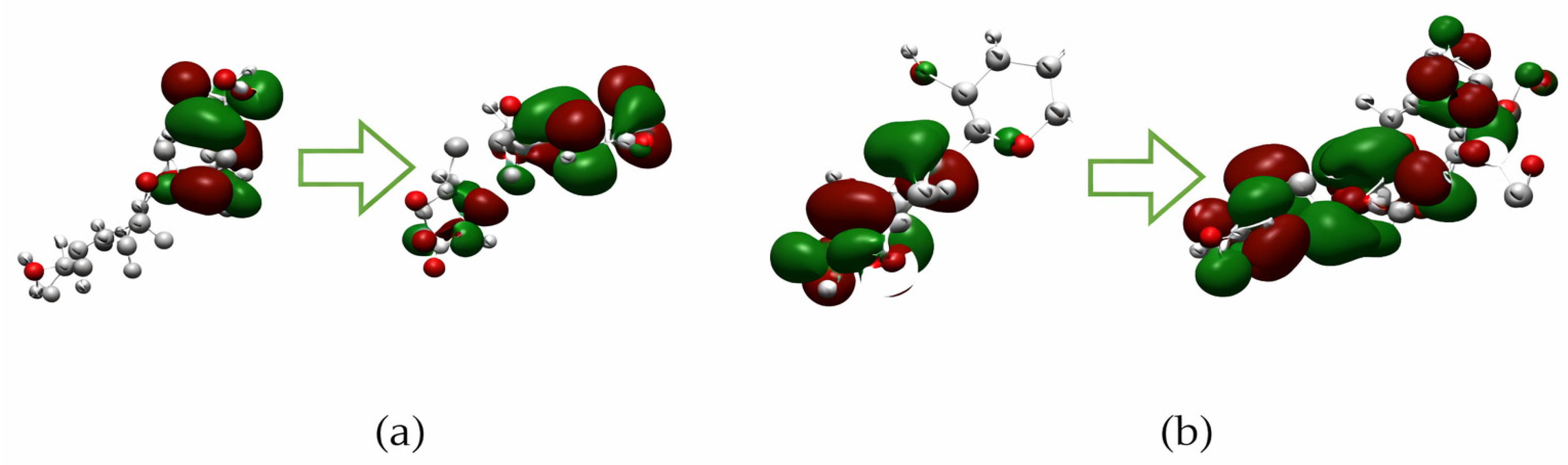
3.4. Optimization
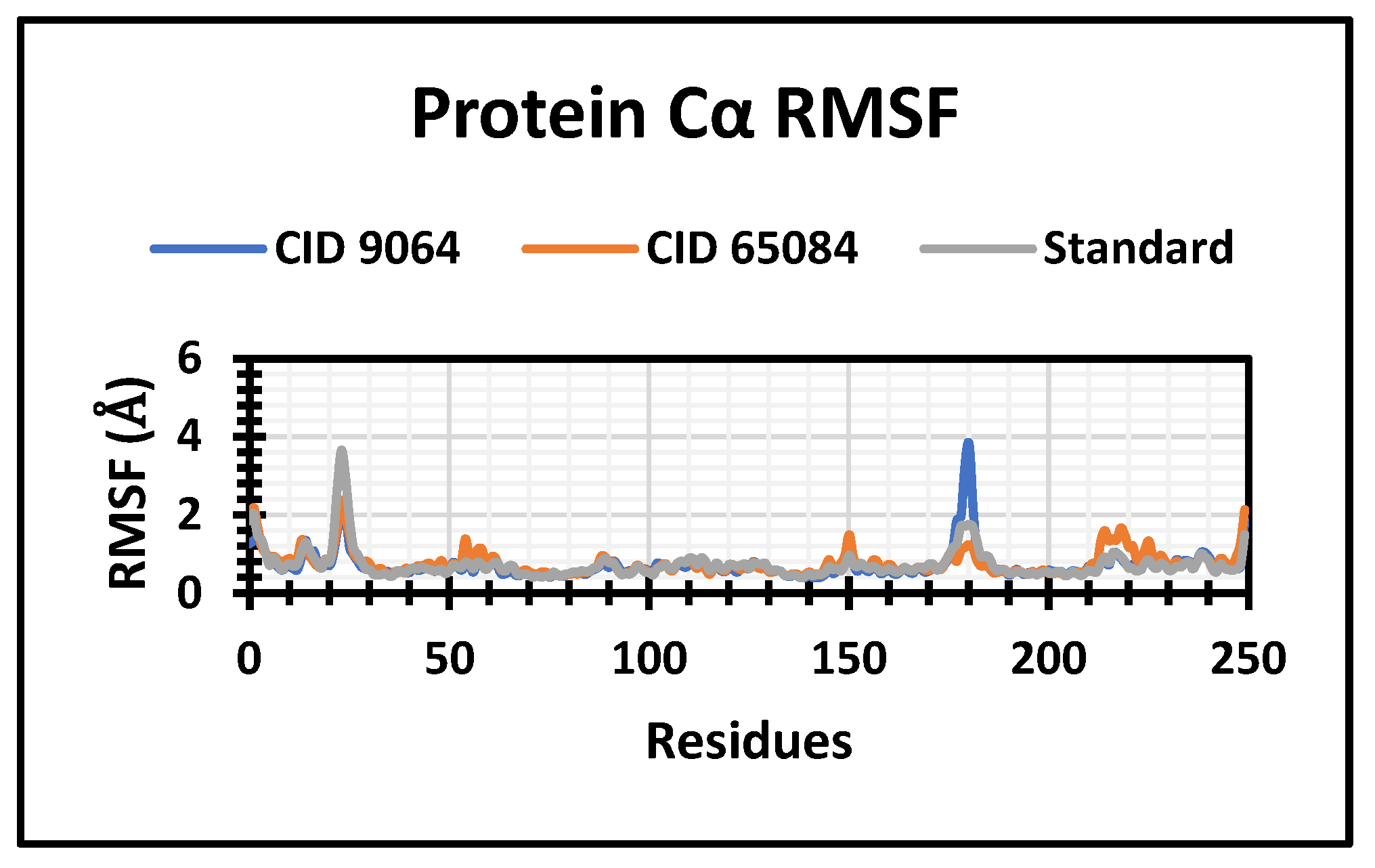
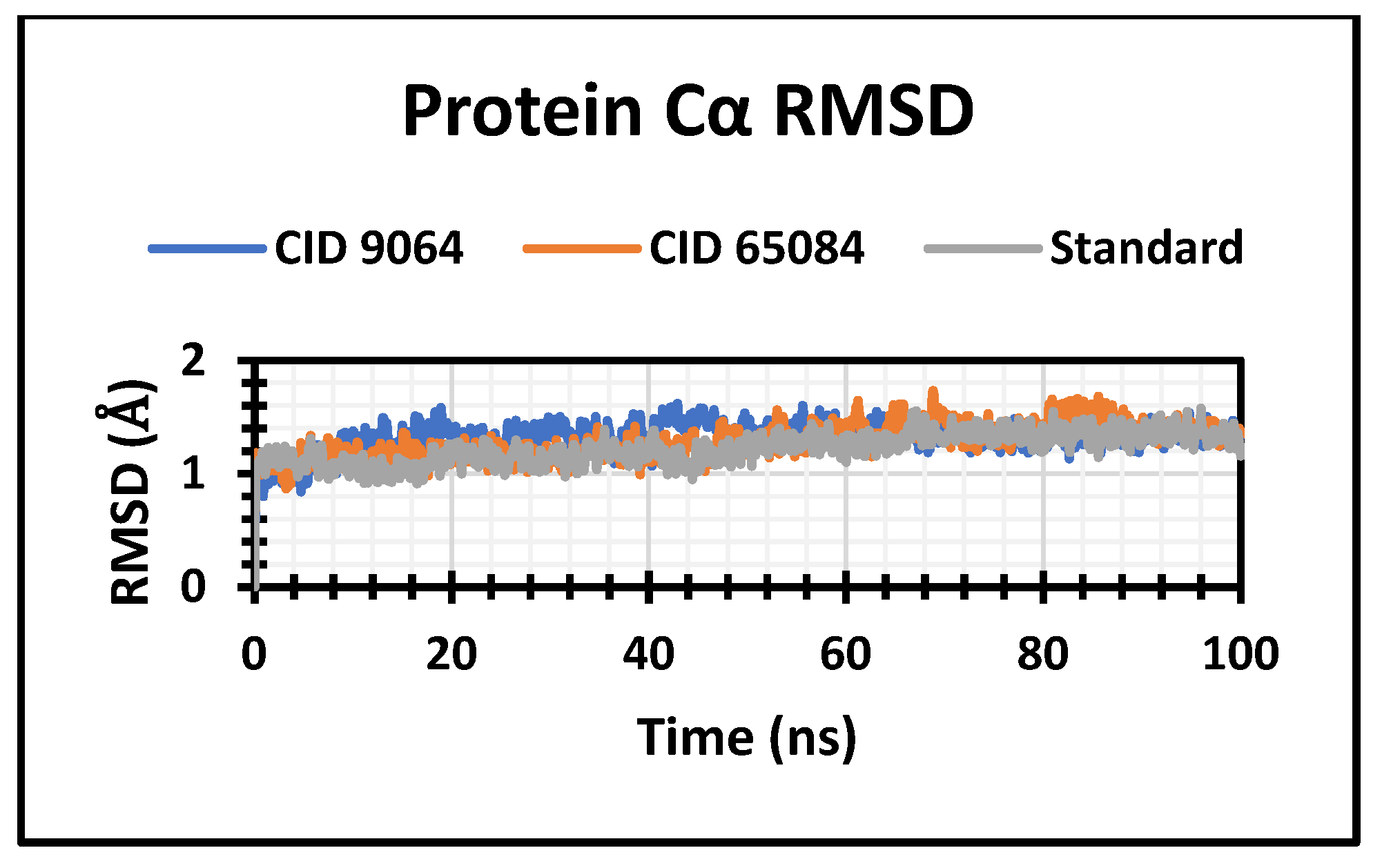
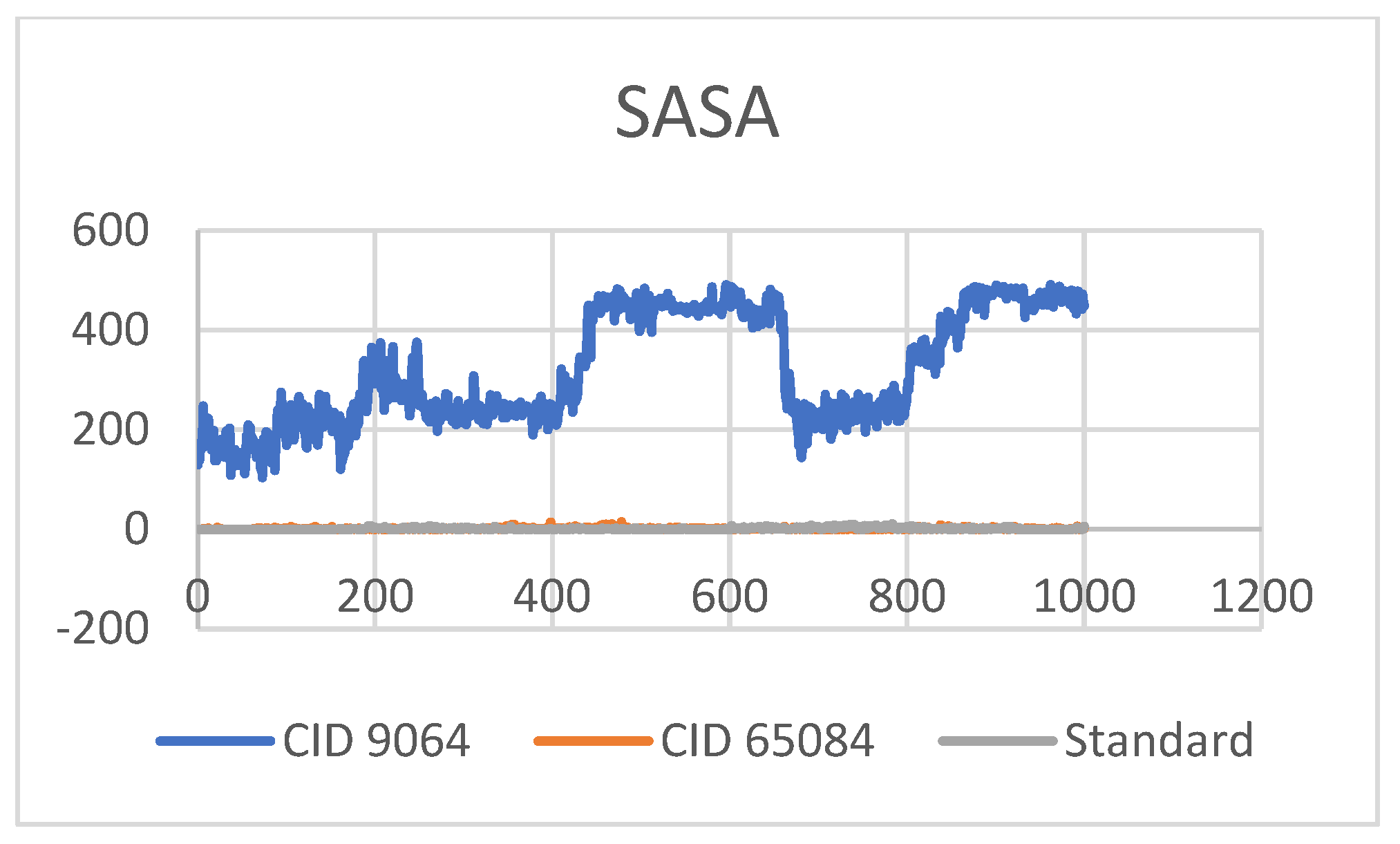
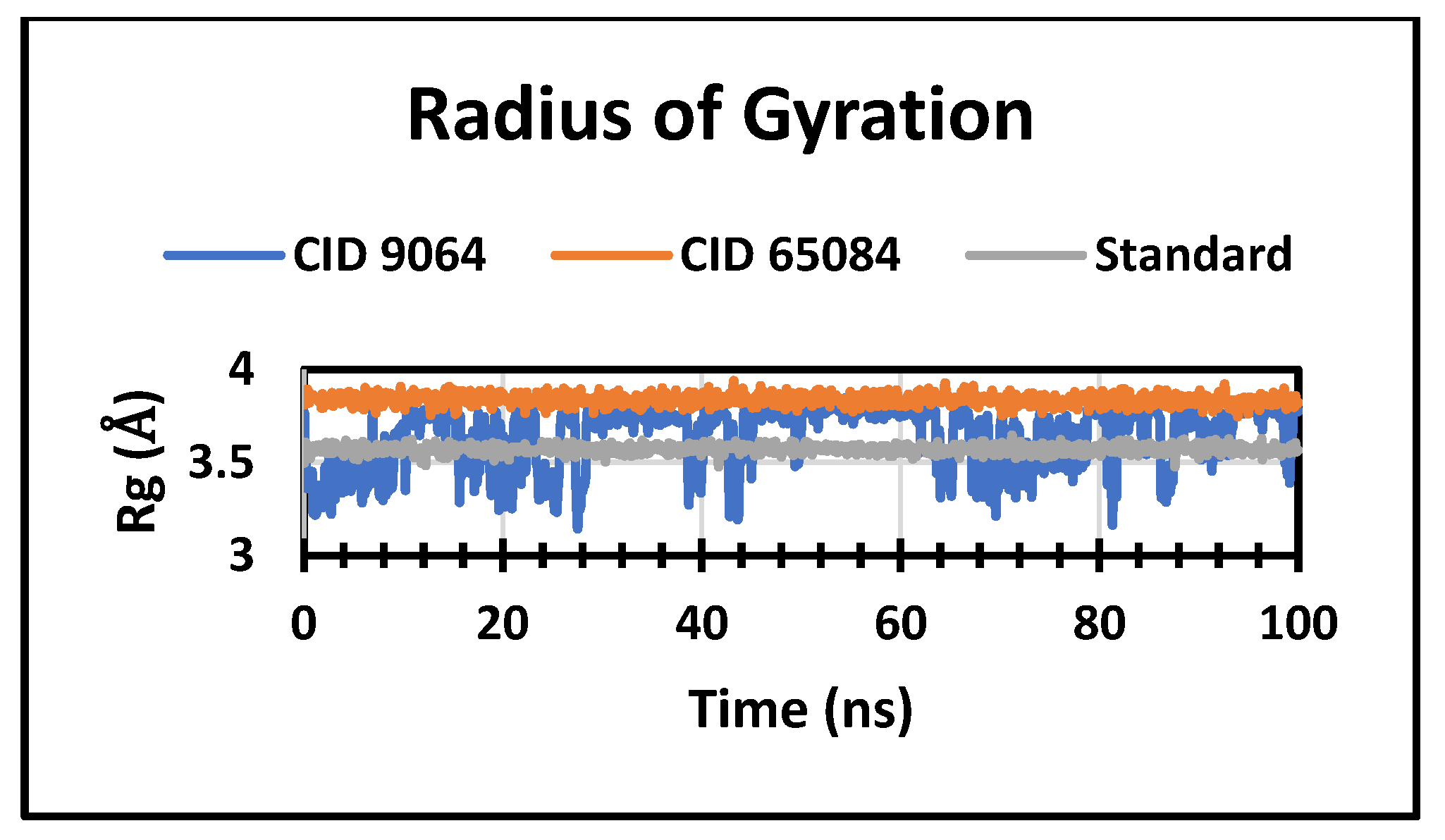
3.5. Molecular Dynamic Simulation
4. Conclusions
Author Contributions
Funding
Institutional Review Board Statement
Informed Consent Statement
Data Availability Statement
Acknowledgments
Conflicts of Interest
References
- Duan, Z.; Shi, M.; Kumaraswamy, A.; Lin, D.; Khokhani, D.; Wang, Y.; Zhang, C.; Flores, D.; Rodansky, E.; Swaim, O.A.; et al. PROX1 is an early driver of lineage plasticity in prostate cancer. J. Clin. Investig. 2025, 135. [Google Scholar] [CrossRef] [PubMed]
- Desai, K.; McManus, J.M.; Sharifi, N. Hormonal Therapy for Prostate Cancer. Endocr. Rev. 2021, 42, 354–373. [Google Scholar] [CrossRef] [PubMed]
- Wei, G.; Huang, Y.; Li, W.; Xie, Y.; Zhang, D.; Niu, Y.; Zhao, Y. SREBF1-based metabolic reprogramming in prostate cancer promotes tumor ferroptosis resistance. Cell Death Discov. 2025, 11, 1–17. [Google Scholar] [CrossRef] [PubMed]
- Mamidala, E. Proceedings of Two-Day National Seminar on Recent Trends in Animal Biotechnology, 1st ed.; Zenodo: Genève, Switzerland, 2025; pp. 1–227. [Google Scholar] [CrossRef]
- Matias, P.M.; Donner, P.; Coelho, R.; Thomaz, M.; Peixoto, C.; Macedo, S.; Otto, N.; Joschko, S.; Scholz, P.; Wegg, A.; et al. Structural Evidence for Ligand Specificity in the Binding Domain of the Human Androgen Receptor. J. Biol. Chem. 2000, 275, 26164–26171. [Google Scholar] [CrossRef] [PubMed]



| Compounds | Ligands (PubChem ID and Binding Energy) | Binding Affinity | RMSD/ub | RMSD/lb |
|---|---|---|---|---|
| Cianidanol | CID: 9064, E = 204.84 | −8 | 3.044 | 1.575 |
| Gallocatechin | CID: 65084, E = 211.28 | −7.9 | 3.137 | 1.429 |
| Ligands | Residues | Distance (Å) | Bonding Category | Bonding Type |
|---|---|---|---|---|
| Cianidanol | A:ARG752:HH21-N:UNK1:O | 2.3410 | Hydrogen Bond | Conventional Hydrogen Bond |
| N:UNK1:H-A:GLN711:OE1 | 1.7838 | Hydrogen Bond | Conventional Hydrogen Bond | |
| N:UNK1:H-A:MET742:SD | 3.0120 | Hydrogen Bond | Conventional Hydrogen Bond | |
| N:UNK1:H-A:LEU701:O | 2.9247 | Hydrogen Bond | Conventional Hydrogen Bond | |
| N:UNK1:H-A:ASN705:OD1 | 1.8033 | Hydrogen Bond | Conventional Hydrogen Bond | |
| A:MET745:CE-N:UNK1 | 3.9977 | Hydrophobic | Pi-Sigma | |
| A:PHE764-N:UNK1 | 4.8436 | Hydrophobic | Pi-Pi T-shaped | |
| N:UNK1-A:LEU704 | 4.6174 | Hydrophobic | Pi-Alkyl | |
| N:UNK1-A:MET780 | 5.0768 | Hydrophobic | Pi-Alkyl | |
| N:UNK1-A:MET780 | 5.0879 | Hydrophobic | Pi-Alkyl | |
| Gallocatechin | N:UNK1:H-A:GLN711:OE1 | 2.9847 | Hydrogen Bond | Conventional Hydrogen Bond |
| A:ARG752:NH1-N:UNK1 | 3.7637 | Electrostatic | Pi-Cation | |
| N:UNK1-A:ARG752 | 4.7254 | Hydrophobic | Pi-Alkyl | |
| N:UNK1-A:PRO682 | 4.4664 | Hydrophobic | Pi-Alkyl | |
| N:UNK1-A:ALA748 | 4.2426 | Hydrophobic | Pi-Alkyl |
| Compound Name | Molecular Weight (g/mol) | Lipophilicity (XLOGP3) | Water Solubility (Log S (ESOL)) | GI Absorption | BBB Permeant | Lipinski |
|---|---|---|---|---|---|---|
| Cianidanol | 290.27 | 0.36 | −2.22 | High | No | Yes; 0 violation |
| Gallocatechin | 306.27 | 0.00 | −2.08 | High | No | Yes; 1 violation: Nh or OH>5 |
| Compound Name | Hepatotoxicity | Carcinogenicity | Mutagenicity | Cytotoxicity |
|---|---|---|---|---|
| Cianidanol | Inactive | Inactive | Inactive | Inactive |
| Gallocatechin | Inactive | Inactive | Inactive | Inactive |
| Compound Name | HOMO | LUMO | Gap | Hardness | Softness |
|---|---|---|---|---|---|
| Cianidanol | −0.2116 | −0.0122 | 0.1993 | 0.0997 | 10.03 |
| Gallocatechin | −0.2177 | −0.0106 | 0.2071 | 0.1035 | 9.66 |
| Compound Name | Stoichiometry | Electron Energy | Enthalpy | Gibbs Free Energy | Dipole Moment (Debye) |
|---|---|---|---|---|---|
| Cianidanol | C15H14O6 | −1030.9420 | −1030.94 | −1030.96 | 3.1873 |
| Gallocatechin | C15H14O7 | −1106.1296 | −1106.12 | −1106.18 | 4.6363 |
Disclaimer/Publisher’s Note: The statements, opinions and data contained in all publications are solely those of the individual author(s) and contributor(s) and not of MDPI and/or the editor(s). MDPI and/or the editor(s) disclaim responsibility for any injury to people or property resulting from any ideas, methods, instructions or products referred to in the content. |
© 2025 by the authors. Licensee MDPI, Basel, Switzerland. This article is an open access article distributed under the terms and conditions of the Creative Commons Attribution (CC BY) license (https://creativecommons.org/licenses/by/4.0/).
Share and Cite
Sayed, A.; Uddin, I.; Banu, S.; Ayman, U.; Alvee, N.J.; Uddin, M.R.; Ripa, J.D. Ligand-Based Identification of Naturally Occurring 1E3G Receptor Inhibitors for Treating Prostate Cancer. Chem. Proc. 2025, 18, 143. https://doi.org/10.3390/ecsoc-29-26893
Sayed A, Uddin I, Banu S, Ayman U, Alvee NJ, Uddin MR, Ripa JD. Ligand-Based Identification of Naturally Occurring 1E3G Receptor Inhibitors for Treating Prostate Cancer. Chemistry Proceedings. 2025; 18(1):143. https://doi.org/10.3390/ecsoc-29-26893
Chicago/Turabian StyleSayed, Abu, Ifteakhar Uddin, Sanjida Banu, Umme Ayman, Nabil Jonayeth Alvee, Mohammed Raihan Uddin, and Joya Datta Ripa. 2025. "Ligand-Based Identification of Naturally Occurring 1E3G Receptor Inhibitors for Treating Prostate Cancer" Chemistry Proceedings 18, no. 1: 143. https://doi.org/10.3390/ecsoc-29-26893
APA StyleSayed, A., Uddin, I., Banu, S., Ayman, U., Alvee, N. J., Uddin, M. R., & Ripa, J. D. (2025). Ligand-Based Identification of Naturally Occurring 1E3G Receptor Inhibitors for Treating Prostate Cancer. Chemistry Proceedings, 18(1), 143. https://doi.org/10.3390/ecsoc-29-26893