
Proceeding Paper

In-Silico Evaluation of Some Newly Synthesized Quinoline Derivatives as Anti- Microbial Agents †
1
Department of Pharmacy, Integrated Academy of Management and Technology, Ghaziabad 201015, Uttar Pradesh, India
2
Dr. K. N. Modi Institute of Pharmaceutical Education and Research, Ghaziabad 201201, Uttar Pradesh, India
*
Author to whom correspondence should be addressed.
Presented at the 29th International Electronic Conference on Synthetic Organic Chemistry, 14–28 November 2025; Available online: https://sciforum.net/event/ecsoc-29.
Chem. Proc. 2025, 18(1), 135; https://doi.org/10.3390/ecsoc-29-26880
Published: 12 November 2025

Abstract

Quinoline derivatives are recognized for their strong antimicrobial activity, particularly as lipase and reductase inhibitors, with drugs like Bosutinib and Lenvatinib based on this scaffold. This study aimed to design and synthesize novel quinoline-based compounds as potential multitarget enzyme inhibitors and assess their in silico antimicrobial activity. The synthesis involved a three-step process: Pfitzinger reaction of substituted isatins and acetophenones to produce quinoline carboxylic acids, synthesis of benzotriazole-amines, and final coupling of intermediates using a base. Molecular docking against the E. coli MsbA protein (PDB ID: 6BPP) was performed for compounds 5a5e, along with ADME and Lipinski’s Rule of Five analyses. All compounds passed initial screening, with compounds 5a and 5d showing favorable drug-like properties. Notably, 5a had the highest docking score (−8.7), followed by 5e (−8.3), indicating strong binding affinity.

1. Introduction

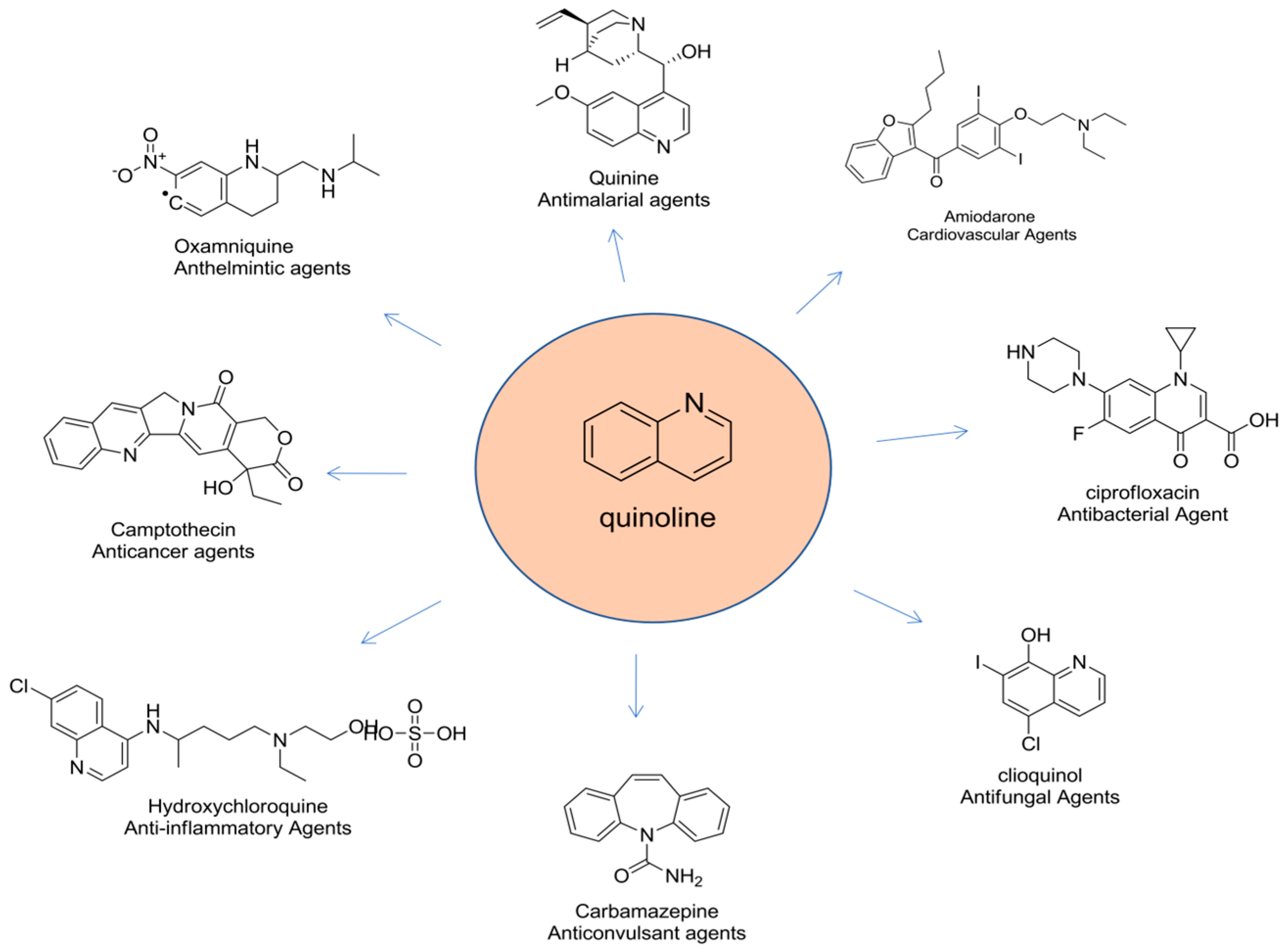
Quinoline derivatives are promising prospects in the fight against infectious disease especially n the era where antimicrobial resistance (AMR) is a global concern, because they have demonstrated strong action against a variety of microorganisms, including bacteria, fungus, protozoa, and mycobacteria. The capacity of quinoline chemicals to interact with microbial enzymes and nucleic acids, interfering with essential functions like DNA replication, protein synthesis, and energy consumption, is primarily responsible for their antibacterial potential. Numerous quinoline derivatives function as enzyme inhibitors, specially targeting important microbial enzymes as reductase, lipase, DNA gyrase, and topoisomerase IV. The therapeutic significance of quinoline scaffolds in highlighted by fact that these enzymes are necessary for bacterial survival and replication and that their blockage might result in cell death. Quinoline derivatives are the basis for several clinically approved medications. Treatment for respiratory, gastrointestinal, and urinary tract infections has been transformed by fluoroquinolones, whichare synthetic antibacterial drugs that target bacterial topoisomerases. Several Pharmacologically significant molecules contain the quinoline ring system, as illustrated in Figure 1, which shows representative medicinal scaffolds featuring the quinoline core. Originally created as Antimalarials, the 4-aminoquinoline chemicals chloroquine and hydroxychloroquinealso have antibacterial and antiviral properties [1,2,3].

Rationale and Objective

The logical design and synthesis of quinoline derivatives with multi-target inhibitory potential continue to be an important topic of research due to the growing prevalence of AMR and the limited supply of novel antibiotics. The present study aimed to design heterocyclic compounds with potential antibacterial activity, synthesize a series of quinoline derivatives, and evaluate their antimicrobial properties using in-silico approaches. There was a progressive framework to the intended research project. Quinoline derivatives were first synthesized, and then their physicochemical and spectral characteristics were assessed utilizing methods including NMR and IR spectroscopy. Two main parts made up the research project: the first part dealt with the compounds’ design and synthesis, while the second part addressed their molecular docking investigations and physicochemical evaluation. Furthermore, in order to forecast the synthetic compounds’ drug-likeness and safety profiles, their pharmacokinetic characteristics were evaluated utilizing computational tools like MOLINSPIRON and OSIRIS (Glide 7.0 and XP Maestro 10.1) software for analysis [4,5,6,7].

2. Material and Methods

All the solvents and reagents were obtained from reliable and authorized sources (LR grade, merck india, CDH Spectrochem, etc.) all the reactions were monitored by thin layer chromatography (TLC) using precoated silica gel G plate at 254 nm under UV Lamp/iodine vapors using different solvent system. Melting points were determined by the open capillary method electric melting point apparatus.

2.1. Synthesis of 2-arylquinoline-4-carboxylic Acids 2a2e (Pfitzinger Reaction) (Step-I)

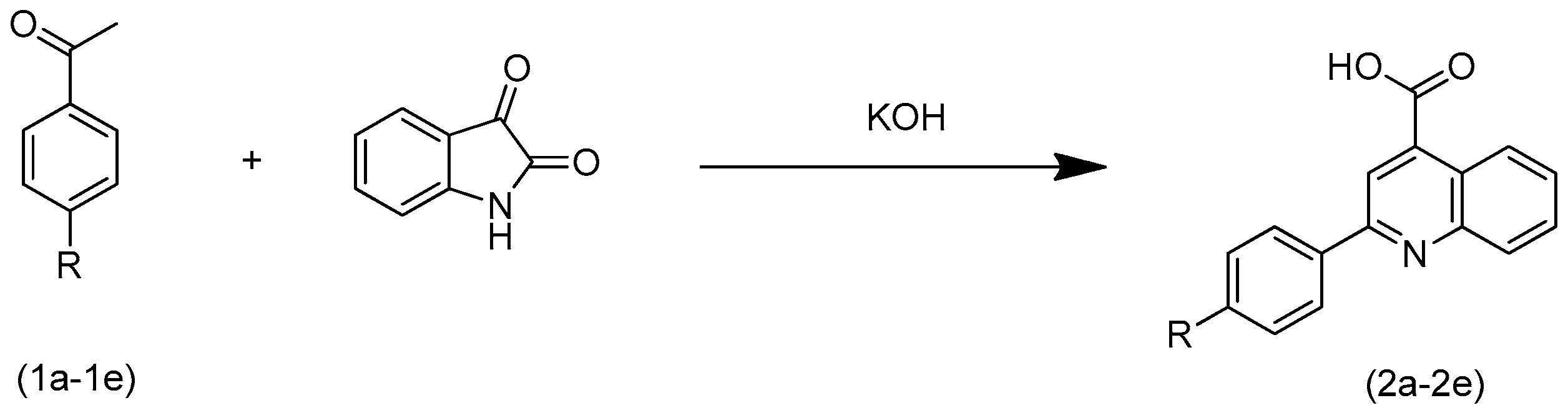
A mixture of isatin (or substituted isatin, 1.0 eq) and acetophenone derivative (1.0 eq) was dissolved in EtOH:H2O (4:1, 10 mL per mmol). KOH (2.0–2.5 eq) was added and the mixture was heated at reflux (78 °C) with stirring for 18–24 h (TLC, DCM:MeOH = 9:1). After cooling, the reaction was poured onto ice–water and carefully acidified with 6 N HCl to pH ≈ 2 to precipitate the product. The solid was collected, washed with water, and dried, then recrystallized from EtOH to afford 2a2e as off-white to yellow solids [8]. The synthesis of quinoline acids was carried out as the initial step of the reaction sequence. The synthetic route employed to obtain quinoline acids in illustrated in Figure 2.

2.2. Synthesis of Ethyl 2-(1H-benzo[d][1,2,3]triazol-1-yl)acetate (BTZ-OEt) (Step-IIa)

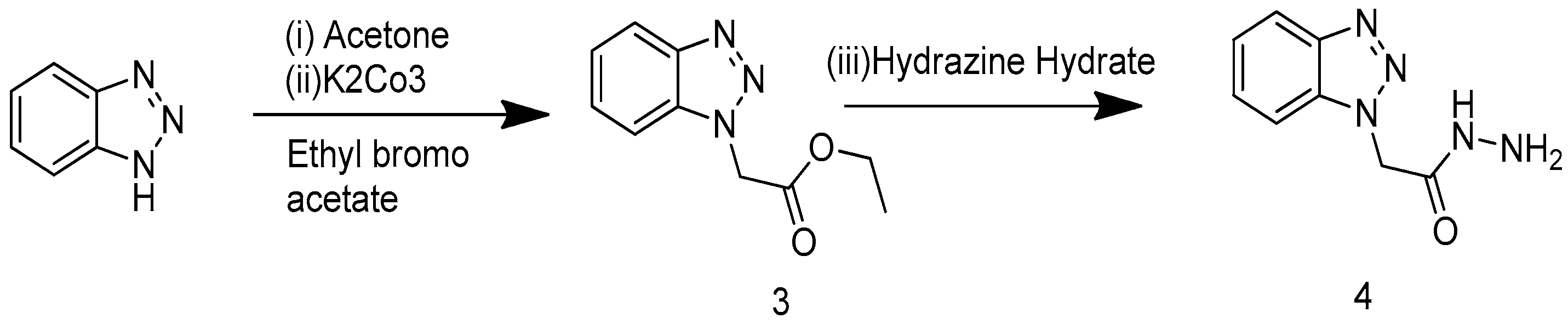
Benzotriazole (1.0 eq) and K2CO3 (2.0 eq) were suspended in dry acetone (15 mL per mmol benzotriazole), then ethyl bromoacetate (1.1–1.2 eq) was added dropwise. The mixture was refluxed (56 °C) for 10–12 h (TLC, hexane:EtOAc = 1:1). After cooling, salts were filtered off and the filtrate was concentrated. The residue was dissolved in EtOAc, washed with water and brine, dried (Na2SO4), and concentrated to give ethyl 2-(1H-benzo[d][1,2,3]triazol-1-yl)acetate as a white solid, used directly in the next step.

2.3. Synthesis of 2-(1H-benzo[d][1,2,3]triazol-1-yl)acetohydrazide 4 (Step-IIb)

The ester from above (1.0 eq) was dissolved in MeOH (10 mL per mmol), hydrazine hydrate (80% w/w, 3.0 eq) was added, and the mixture was refluxed for 2–3 h (TLC, DCM:MeOH = 9:1). After cooling to 0–5 °C, the precipitate was collected, washed with cold MeOH, and dried to give 2-(1H-benzo[d][1,2,3]triazol-1-yl)acetohydrazide. The synthetic reaction employed for the preparation of substituted benzotriazole intermediates is illustrated in Figure 3.

2.4. Synthesis of Final Quinoline Carbohydrazides 5a5e

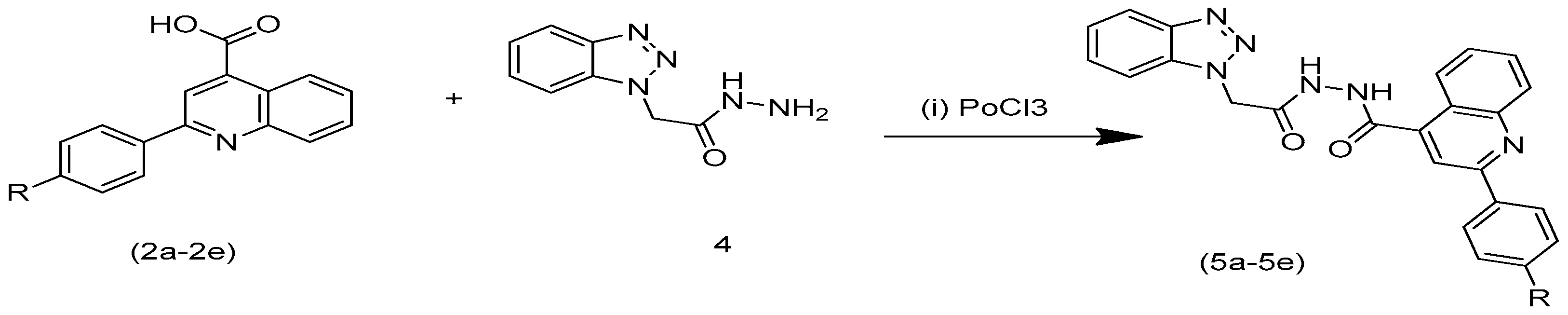
To a cooled solution (0–5 °C) of quinoline-4-carboxylic acid 2a2e (1.0 eq) and hydrazide 4 (1.1 eq) in dry pyridine (2–5 mL per mmol) under N2, POCl3 (3–5 eq) was added dropwise over 10–15 min while maintaining the internal temperature at ≤5 °C. The mixture was stirred 30–45 min at 0–5 °C, then allowed to warm to room temperature and stirred for 4–6 h (TLC, DCM:MeOH = 9:1). The reaction was poured onto crushed ice, and the mixture was carefully neutralized (ice-cold AcOH to quench excess POCl3, then NaHCO3 to pH ≈ 6). The precipitated solid was filtered, washed with water, dried, and recrystallized from EtOH to give 5a5e [9]. The final substituted arylquinoline-carbohydrazide derivatives were synthesized using the reaction sequence shown in Figure 4.

3. Results

3.1. Chemistry

The Pfitzinger reaction was used to create the final compounds in two phases. Initially, the antibacterial potential of the proposed analogues was assessed by computational screening. The chosen compounds were then produced, and their antibacterial properties were evaluated in vitro. Additionally, pharmacological activities, physicochemical characteristics, and bioactivity profiles were predicted using PASS prediction and other computational techniques, all of which bolstered the promise of the created compounds. These findings led to the compounds’ prioritization for synthesis based on the suggested reaction scheme, and they were then tested for antibacterial activity in vitro.
N’-(2-(1H-benzo[d][1,2,3]triazol-1-yl)acetyl)-2-phenylquinoline-4-carbohydrazide (5a) Yield: 44%; M.P.: −118 °C; Rf: −0.62; Buff colored solid; IR (KBr) (cm−1): 3349 (N-H, Stretch), 3058 (C-H, Stretch), 1664 (C=O, Stretch), 1560 (N-H, Bend), 1490 (C=C, Stretch), 1350 (C-N Stretch), 1056 (N-N, Stretch); 1H-NMR (400 MHz, CDCl3); 8.00 (2H, NH, D2O exchangeable), 7.96 (s, 1H, C-H Benzotriazole), 7.75 (s, 1H, C-H Benzotriazole), 7.40 (s, 2H, C-H Benzotriazole), 7.83–8.09 (m, 4H), 7.47–7.54 (d, 3H), 7.74 (s, 1H, Benzotriazole), 7.67–7.68 (d, 2H), 7.29–7.30 (m, 2H, Ar-H), 7.46–7.49 (t, 1H), 5.60 (Methylene).
N’-(2-(1H-benzo[d][1,2,3]triazol-1-yl)acetyl)-2-(4-chlorophenyl)quinoline-4-carbohydrazide (5b) Yield: −41%; M.P.: −130 °C; Rf: −0.63; Yellowish solid; IR (KBr) (cm−1): 3400 (N-H, Stretch), 3132 (C-H, Stretch), 1672 (C=O, Stretch), 1568 (N-H, Bend), 1504 (C=C, Stretch), 1345 (C-N Stretch), 1040 (N-N, Stretch), 766 (C-Cl, Stretch); 1H-NMR (400 MHz, CDCl3); 8.02 (2H, NH, D2O exchangeable), 7.88 (s, 1H, C-H Benzotriazole), 7.43 (s, 1H, C-H Benzotriazole), 7.38 (s, 2H, C-H Benzotriazole) 8.48–8.09 (m, 4H), 7.47–7.54 (d, 3H, 7.58 (s, 1H, Benzotriazole), 7.37–7.58 (d, 2H), 7.29–7.40 (m, 4H), 7.36–7.38 (t, 1H), 5.58 (Methylene).
N’-(2-(1H-benzo[d][1,2,3]triazol-1-yl)acetyl)-2-(4-bromophenyl)quinoline-4-carbohydrazide (5c) Yield: −55%; M.P.: −146 °C; Rf: −0.70; Brown colored solid; IR (KBr) (cm−1): 3455 (N-H, Stretch), 3233 (C-H, Stretch), 1698 (C=O, Stretch), 1577 (N-H, Bend), 1496 (C=C, Stretch), 1342 (C-N Stretch), 1022 (N-N, Stretch), 624 (C-Br, Stretch); 1H-NMR (400 MHz, CDCl3); 8.34 (2H, NH, D2O exchangeable), 7.93 (s, 1H, C-H Benzotriazole), 7.56 (s, 1H, C-H Benzotriazole), 7.28 (s, 2H, C-H Benzotriazole) 8.28–8.42 (m, 4H, Ar-H), 7.46–7.58 (d, 3H), 7.33 (s, 1H, Benzotriazole), 7.28–7.42 (d, 2H), 7.12–7.30 (m, 4H), 7.55–7.58 (t, 1H), 5.68 (Methylene).
Synthesis of N’-(2-(1H-benzo[d][1,2,3]triazol-1-yl)acetyl)-2-(4 aminophenyl) quinoline-4-carbohydrazide (5d) Yield: 33%; M.P.: −165 °C; Rf: −0.53; Brownish yellow sticky solid; IR (KBr) (cm−1): 3455 (N-H, Stretch), 3233 (C-H, Stretch), 1698 (C=O, Stretch), 1577 (N-H, Bend), 1496 (C=C, Stretch), 1342 (C-N Stretch), 1022 (N-N, Stretch); 1H-NMR (400 MHz, CDCl3); 8.86 (2H, NH, D2O exchangeable), 8.13 (s, 1H, C-H Benzotriazole), 7.99 (s, 1H, C-H Benzotriazole), 7.83 (s, 2H, C-H Benzotriazole) 8.38–8.62 (m, 4H), 7.64–7.45 (d, 3H), 7.58 (s, 1H, Benzotriazole), 6.61–6.90 (d, 2H), 7.18–7.36 (m, 4H), 7.45–7.55 (t, 1H), 6.27 (s, NH2, 2H), 5.96 (Methylene).
Synthesis of N’-(2-(1H-benzo[d][1,2,3]triazol-1-yl)acetyl)-2-(2-hydroxyphenyl) quinoline-4-carbohydrazide (5e) Yield: −35%; M.P.: −150 °C; Rf: −0.58; Brownish yellow solid; IR (KBr) (cm−1): 3455 (N-H, Stretch), 3233 (C-H, Stretch), 1698 (C=O, Stretch), 1577 (N-H, Bend), 1496 (C=C, Stretch), 1342 (C-N Stretch), 1085 (C-O, OH, Stretch), 1022 (N-N, Stretch); 1H-NMR (400 MHz, CDCl3); 8.86 (2H, NH, D2O exchangeable), 8.13 (s, 1H, C-H Benzotriazole), 7.99 (s, 1H, C-H Benzotriazole), 7.83 (s, 2H, C-H Benzotriazole) 8.38–8.62 (m, 4H), 7.64–7.45 (d, 3H), 7.58 (s, 1H, Benzotriazole), 6.61–6.90 (d, 2H,), 7.18–7.36 (m, 4H), 7.45–7.55 (t, 1H), 6.27 (s, NH2, 2H), 5.96 (Methylene), 5.35 (1H, OH).

3.2. Molecular Docking Studies

A Linux 64-bit operating system environment with Glide 7.0 and XP Maestro 10.1 software (Schrödinger LLC, New York, NY, USA) [10,11,12] was used for the molecular docking investigations. In order to forecast how tiny compounds will interact with target biomolecules like proteins, these computational methods are frequently employed in structure-based drug design. E. coli MsbA, an ATP-binding cassette transporter, was the target protein in this investigation. It was obtained from the Protein Data Bank (PDB entry: 6BPP) and bound to lipopolysaccharide (LPS) and a known inhibitor G092. The development of antibacterial drugs may benefit from the inhibition of MsbA, which is essential for moving LPS across the bacterial inner membrane.
For the docking process:
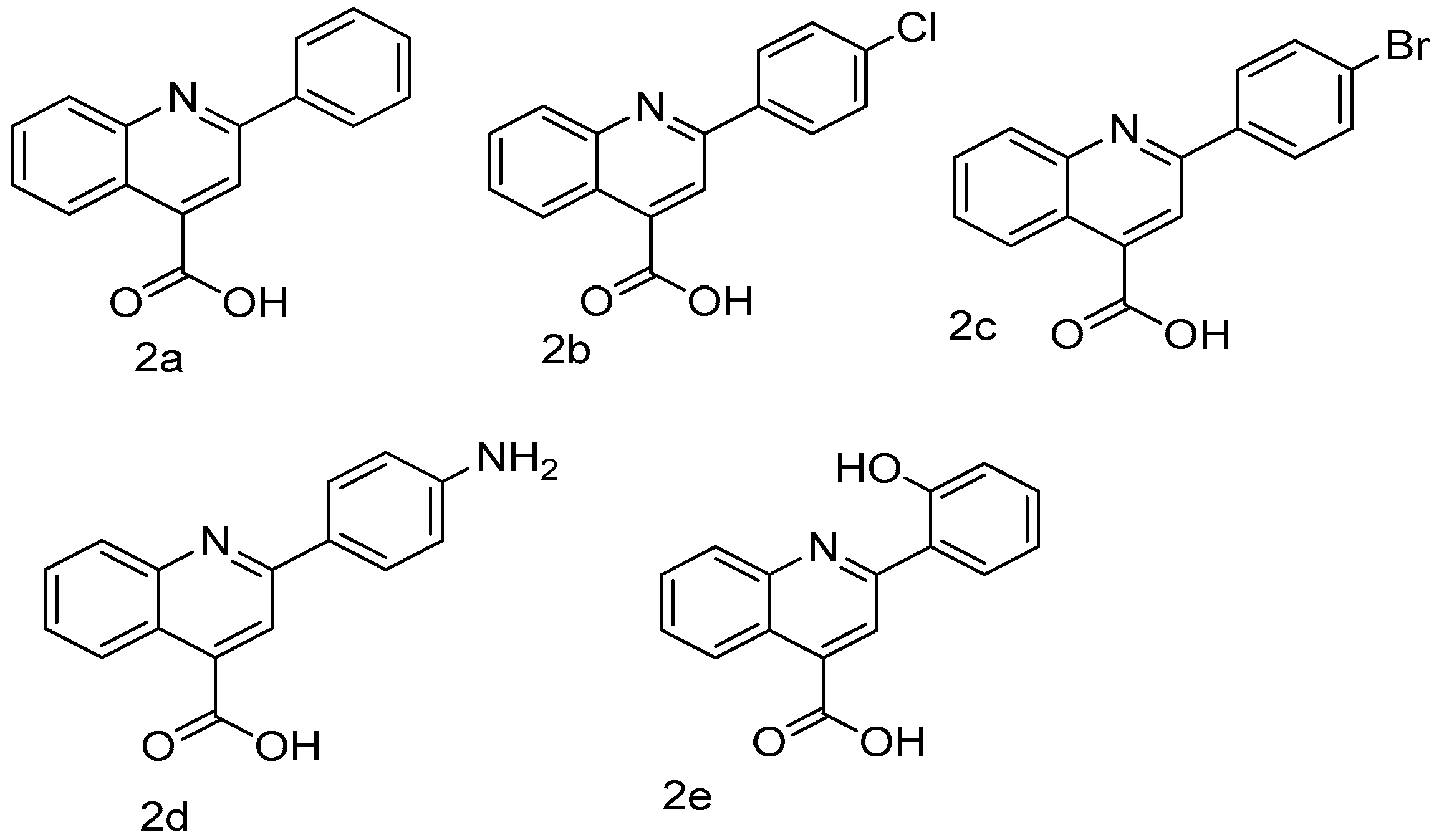
  • In the first step of the reaction 2-arylquinoline-4-carboxylic acid derivatives (2a2e) were synthesized, as illustrated in Figure 5.
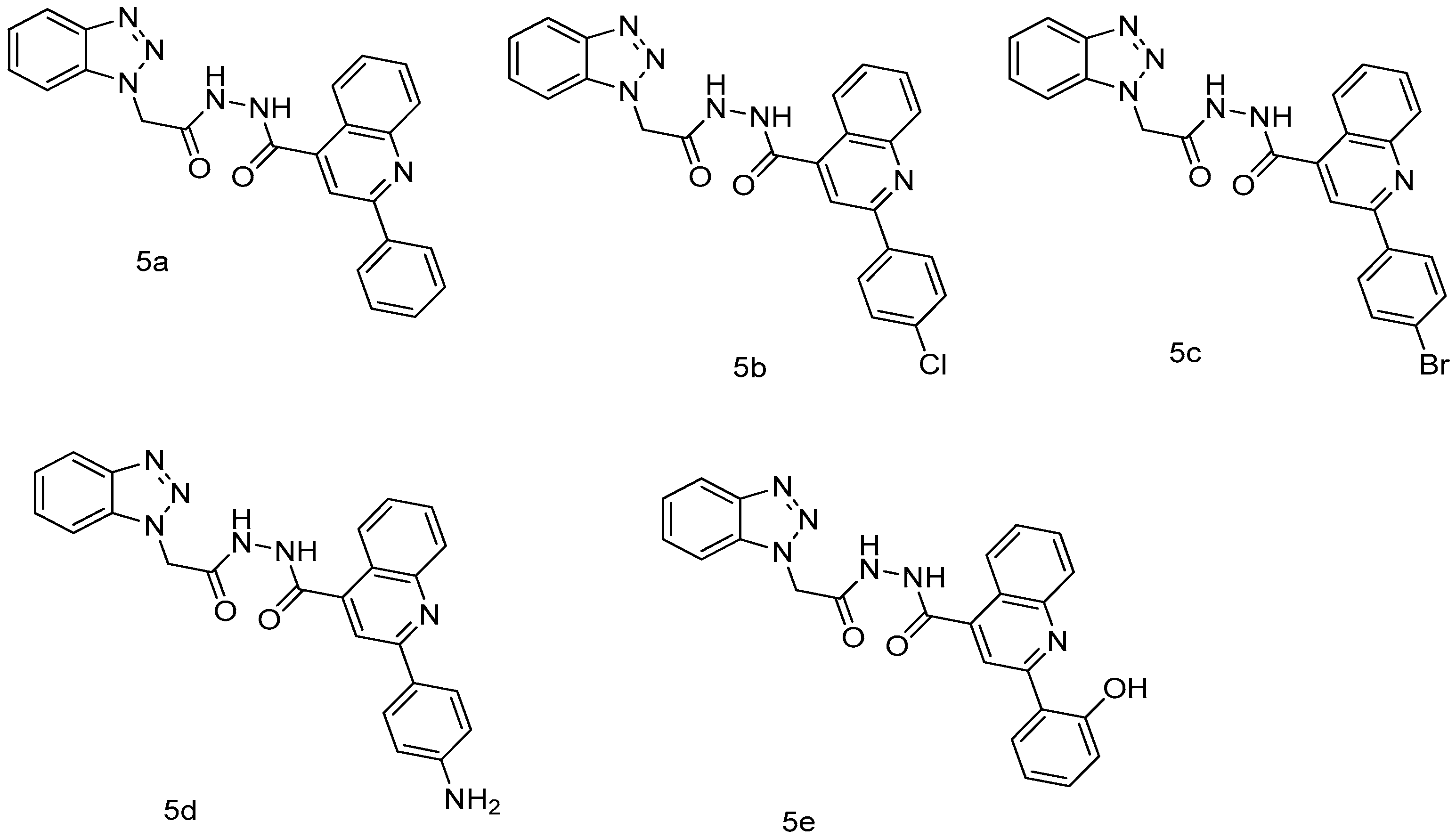
  • Five newly synthesized compounds (labelled 5a5e) were evaluated. The substitution details of the final compounds are shown Figure 6.
  • The protein structure (6BPP) served as the receptor model, and the ligand-binding site was determined based on the position of the co-crystallized inhibitor G092.
  • The standard reference compound (inhibitor G092) and its amino acid interaction profile were taken directly from the RCSB PDB database, ensuring an accurate comparison of docking poses and binding energies.
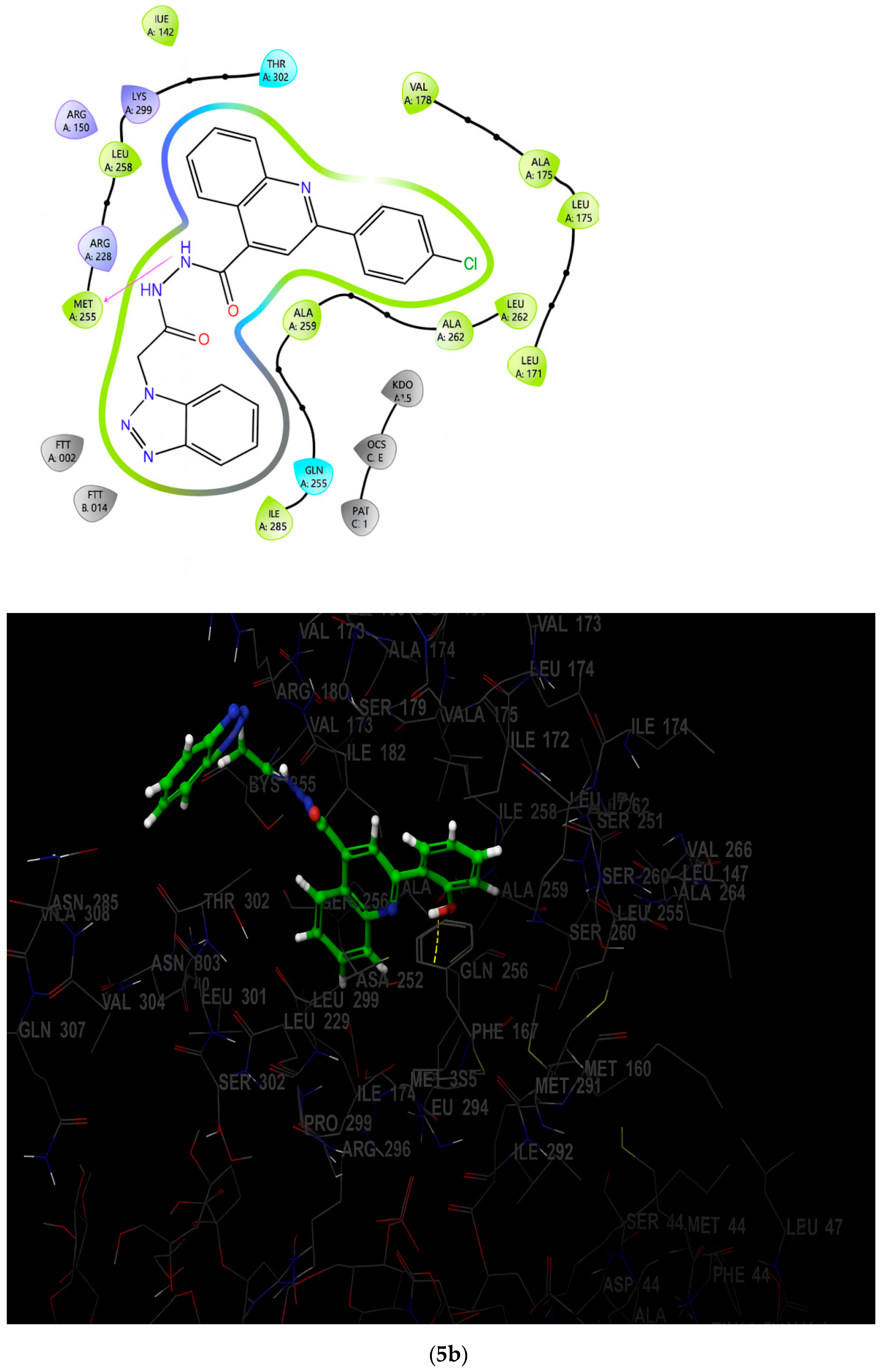
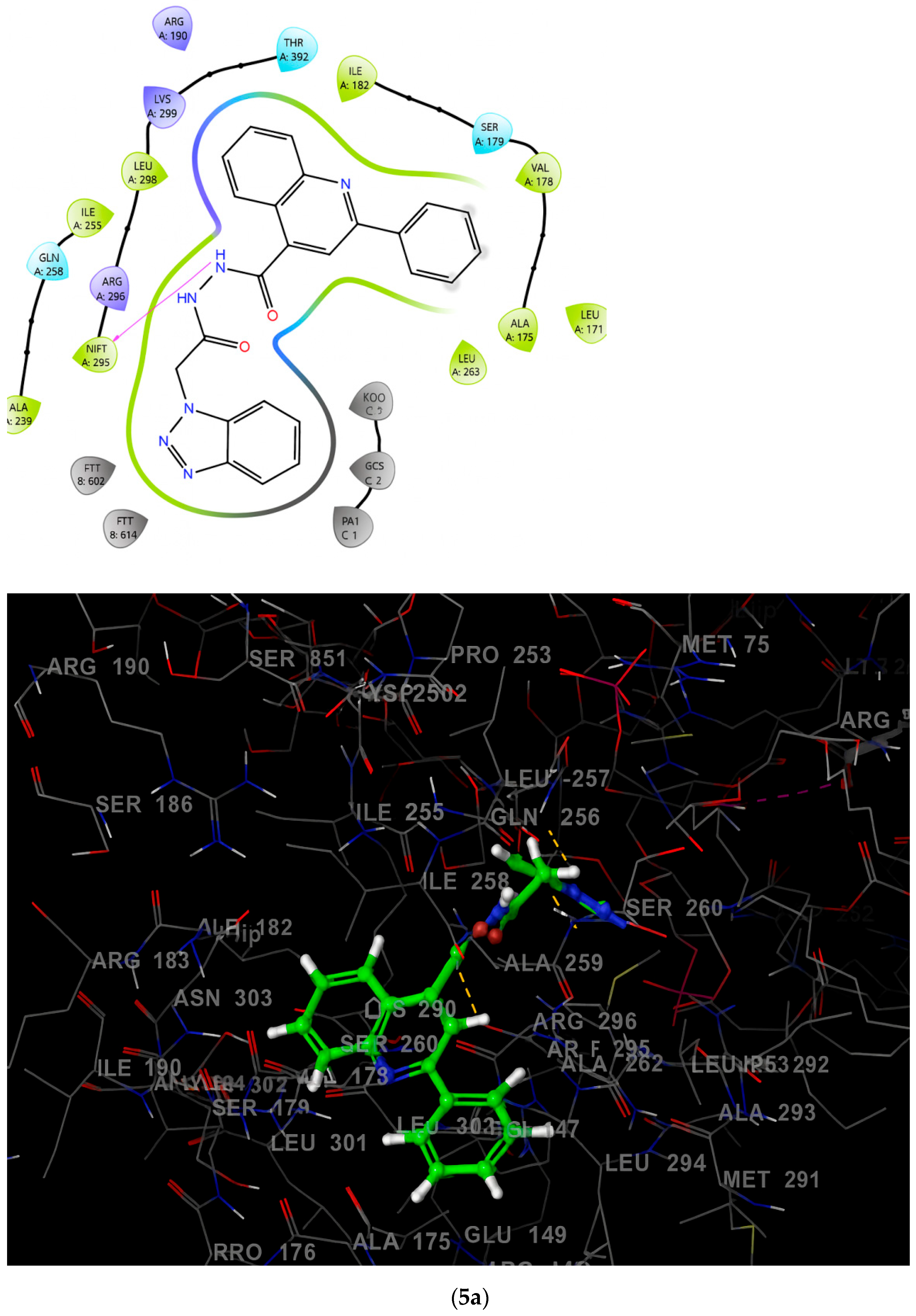
Docking simulations identified each compound’s ideal binding conformations within the MsbA active site by predicting the expected enzyme–inhibitor interactions. The Glide XP (extra precision) scoring function, which rates poses according to anticipated binding affinity and stability, was used to identify these conformations. With an emphasis on hydrogen bonding, hydrophobic contacts, π–π stacking, and other significant noncovalent interactions with amino acid residues in the binding pocket, the docking study was used to compare the binding modes of the proposed compounds to the reference inhibitor. Since compounds 5a5e demonstrated encouraging binding scores and interaction profiles that could compete with or enhance the known inhibitor G092, The docking scores obtained for the synthesized compounds are presented in Table 1, indicating their binding affinity toward target protein. they were therefore given priority as possible lead molecules for more research. High-resolution images were generated using Glide XP post-processing and plotted using Maestro 10.1 for enhanced visualization of critical binding interactions. The binding interaction of compounds 5a and 5b within the MsbA binding pocket are illustrated in Figure 7, showing key residues involved in hydrogen bonding and π–π stacking.

3.3. Physiochemical Properties

The synthesized antibacterial candidates were analyzed for physicochemical properties using Osiris and Molinspiration. Results showed low solubility (cLogS < −4) and high lipophilicity (cLogP > 4), suggesting limited oral suitability but good membrane permeability. TPSA values indicated low CNS penetration, which is desirable for peripheral activity. While drug-likeness scores were negative, they remained within a modifiable range, with compound 5b (−1.18) emerging as the most favorable, followed by 5d (−1.92), highlighting their potential as lead structures for further optimization. The negative drug-likeness scores observed (>−2 for most compounds) reflect modifiable structural features rather than inherent unsuitability. Future optimization strategies may include reducing H-bond donors in the carbohydrazide moiety, incorporating heteroatomic substituents at the phenyl ring to fine-tune lipophilicity, and adopting bioisosteric replacements to improve solubility. These modifications, while not implemented in the current series due to the exploratory nature of this work, form the basis of ongoing SAR-guided analogue development.

ADME Results Screening and Analyzation

In order to assess the compounds (5a5e) pharmacokinetically, a variety of ADME (Absorption, Distribution, Metabolism, and Excretion) characteristics were used. These parameters are important measures of a molecule’s drug-likeness. In order to ensure that oral medications are adequately absorbed from the digestive tract, gastrointestinal (GI) absorption was one of the first elements taken into consideration. Priority was given to compounds with increased GI absorption because this characteristic improves systemic availability and therapeutic efficacy. The TPSA, which is closely linked to a compound’s capacity to pass across biological membranes, was another significant measure examined. Generally speaking, molecules with an ideal TPSA have good permeability across the gut lining and, occasionally, the blood–brain barrier. The evaluation also looked at blood–brain barrier (BBB) permeability, which is a crucial indicator of whether a substance could activate the central nervous system or have unintended neurological effects. The compounds were compared to Lipinski’s Rule of Five, which establishes standards for molecular weight, lipophilicity (LogP), hydrogen bond donors, and hydrogen bond acceptors, in order to assess overall drug-like nature. The probability that a drug is orally active is indicated by adherence to these guidelines. Moreover, lipophilicity (LogP) and water solubility (LogS) were examined. LogS offers information about the compound’s solubility in biological fluids, which affects absorption, while LogP shows the equilibrium between hydrophilicity and lipophilicity, which is necessary for systemic distribution and membrane penetration. An in silico toxicity risk evaluation was conducted in addition to these pharmacokinetic characteristics. Since safety is an essential prerequisite for future development, compounds with low to medium risk or no toxicity were deemed more favorable. Compounds 5a and 5d showed the most desired combination of characteristics among the studied series. They met Lipinski’s criteria, had little expected toxicity, good gastrointestinal absorption, optimal TPSA, and favorable LogS and LogP values. Compounds 5a and 5d were chosen as the most promising candidates based on this thorough ADME investigation. The predicted ADME properties of the synthesized compounds (5a5e) are summarized in Table 2. They are appropriate for more thorough pharmacological and biological research because of their balanced pharmacokinetic behavior, minimal toxicity risk, and excellent absorption profiles.

3.4. Conclusions

In this work, a new series of quinoline derivatives was designed, synthesized, and investigated to assess their potential as multi-targeted enzyme receptor inhibitors. The study was initiated through a comprehensive review of existing literature and supported by computational approaches, including molecular docking, PASS prediction, and physicochemical property evaluations, which guided the rational development of the proposed compounds. The synthesis involved a three-step pathway: initially, quinoline carboxylic acids were obtained via the Pfitzinger reaction, followed by the preparation of benzotriazole-amines, and finally, the coupling of intermediates to yield the target derivatives. Molecular docking studies against the receptor complex of E. coli MsbA (PDB ID: 6BPP) demonstrated that all five designed molecules (5a5e) exhibited satisfactory binding affinities while also meeting Lipinski’s criteria and ADME requirements. From the tested compounds, 5a and 5d stood out as the most promising. Compound 5a achieved the highest docking score (−8.7), while compound 5e also showed strong binding (−8.3). Nonetheless, ADMET evaluation highlighted compound 5a as superior in terms of drug-likeness. Overall, compounds 5a and 5d represent the most promising candidates and warrant further investigation through pre-clinical and in vitro studies to confirm their therapeutic potential. Future work will focus on synthetic optimization of compounds 5a and 5d to improve their drug-likeness profiles while retaining potent MsbA binding.

Supplementary Materials

The following supporting information can be downloaded at: https://www.mdpi.com/article/10.3390/ecsoc-29-26880/s1, Figure S1: FT-IR spectrum of Potent Compound 5a; Figure S2: 1H NMR spectrum of Potent compound 5a.

Author Contributions

Conceptualization, N.S. (Nishtha Shalmali); methodology, N.S. (Neha Sahay); software, N.S. (Nishtha Shalmali); validation, N.S. (Nishtha Shalmali); formal analysis, N.S. (Nishtha Shalmali); investigation, N.S. (Neha Sahay); resources, N.S. (Nishtha Shalmali); data curation, N.S. (Neha Sahay); writing—original draft preparation, N.S. (Neha Sahay); writing—review and editing, N.S. (Nishtha Shalmali); visualization, N.S. (Neha Sahay); supervision, N.S. (Nishtha Shalmali); project administration, N.S. (Nishtha Shalmali). All authors have read and agreed to the published version of the manuscript.

Funding

This research received no external funding.

Institutional Review Board Statement

Not Applicable.

Informed Consent Statement

Not Applicable.

Data Availability Statement

The original contributions presented in this study are included in the article and Supplementary Materials. Further inquiries can be directed to the corresponding author.

Acknowledgments

The corresponding and primary author are thankful to Dr. K. N. Modi Institute of Pharmaceutical Education and Research for providing necessary facilities for the completion of this research work. IIT-Delhi is also acknowledged for providing the IR and NMR instrumentation facilities for characterization of compounds.

Conflicts of Interest

The author declare no conflicts of interest.

Abbreviations

The following abbreviations are used in this manuscript:
TLCThin layer Chromatography
TPSATotal polar surface area
LogPLipophilicity
LogSWater solubility
DMSODimethyl Sulfoxide

References

  1. Desai, N.C.; Harsora, J.P.; Monapara, J.D.; Khedkar, V.M. Synthesis, antimicrobial capability and molecular docking of heterocyclic scaffolds clubbed by 2-Azetidinone, thiazole and quinoline derivatives. Polycycl. Aromat. Compd. 2021, 42, 3924–3938. [Google Scholar] [CrossRef]
  2. Olegário, T.R.; De Araújo, L.G.; Lopes, B.G.; Cristiano, C.M.Z.; De Oliveira Viana, J.; Weber, K.C.; Dantas, J.R.; De Oliveira Lima, E.; Santos, V.C.; Da Silva, L.B.R.; et al. Solvatochromic fluorophores based on 6-fluoro-2-(aryl)quinoline-4-carboxylic acids: Synthesis, optical studies and evaluation of their antimicrobial and larvicidal properties. Spectrochim. Acta A Mol. Biomol. Spectrosc. 2025, 333, 125886. [Google Scholar] [CrossRef] [PubMed]
  3. Hamama, W.S.; Ibrahim, M.E.; Gooda, A.A.; Zoorob, H.H. Convenient synthesis, antimicrobial evaluation and molecular modeling of some novel quinoline derivatives. Synth. Commun. 2016, 47, 224–231. [Google Scholar] [CrossRef]
  4. Harsha, J. Synthesis, molecular docking, Molinspiration and anti-SARS-CoV-2 activity of novel benzimidazolylisoxazoles. Indian J. Chem. 2023, 62A, 1247–1251. [Google Scholar]
  5. Soni, A.; Varshney, M.; Tale, V.S. Molecular docking and pharmacodynamic study of putative ligands from ginger extract for the inhibition of GbpC. Bioorg. Med. Chem. Res. 2023, 31, 1–8. [Google Scholar]
  6. Chafai, N.; Benbouguerra, K.; Kirouani, I.; Hellal, A.; Layaida, H.; Elkolli, M.; Bensouici, C.; Chafaa, S. Synthesis, characterization, DFT, antioxidant, antibacterial, pharmacokinetics and inhibition of SARS-CoV-2 main protease of some heterocyclic hydrazones. J. Mol. Struct. 2022, 1270, 134005. [Google Scholar] [CrossRef]
  7. Mishra, A.; Tangsumranjit, A.; Nigam, M.; Chandra, H.; Almalki, F.A.; Hadda, T.; Waranuch, N. Integrative in silico and Petra/Osiris/Molinspiration (POM) analysis of baicalein: Identification of therapeutically relevant pharmacophores against keloid pathology. Drug Target Insights 2025, 19, 49–58. [Google Scholar] [CrossRef] [PubMed]
  8. Dhruzhinina, T.V.; Kondrashova, N.N.; Shvekhgeimer, M.G.A. Synthesis of new derivatives of polycapromide graft copolymers containing 2-(4-aminophenyl)quinoline-4-carboxylic acid fragments. Fibre Chem. 2004, 36, 7–11. [Google Scholar] [CrossRef]
  9. Ali, M.R.; Kumar, S.; Afzal, O.; Shalmali, N.; Ali, W.; Sharma, M.; Bawa, S. Arch Pharm Chemistry in Life Sciences. Arch. Pharm. Chem. Life Sci. 2017, 350, e1600313. [Google Scholar] [CrossRef] [PubMed]
  10. Halgren, T.A.; Murphy, R.B.; Friesner, R.A.; Beard, H.S.; Frye, L.L.; Pollard, W.T.; Banks, J.L. Glide: A new approach for rapid, accurate docking and scoring. 1. Method and assessment of docking accuracy. J. Med. Chem. 2004, 47, 1739–1749. [Google Scholar] [CrossRef] [PubMed]
  11. Friesner, R.A.; Banks, J.L.; Murphy, R.B.; Halgren, T.A.; Klicic, J.J.; Mainz, D.T.; Repasky, M.P.; Knoll, E.H.; Shelley, M.; Perry, J.K.; et al. Extra precision Glide: Docking and scoring incorporating a model of hydrophobic enclosure for protein–ligand complexes. J. Med. Chem. 2006, 49, 6177–6196. [Google Scholar] [CrossRef] [PubMed]
  12. Schrödinger Release 2015-1: Glide, Version 7.0; Schrödinger, LLC: New York, NY, USA, 2015.
Figure 1. Representative medicinal scaffolds featuring the quinoline ring system.
Chemproc 18 00135 g001
Figure 2. Synthetic reaction to obtain quinoline acids as first step.
Chemproc 18 00135 g002
Figure 3. Synthetic reaction to obtain substituted benzotriazole intermediates.
Chemproc 18 00135 g003
Figure 4. Synthetic reaction to obtain substituted arylquinoline-carbohydrazide derivates as final compounds.
Chemproc 18 00135 g004
Figure 5. Substitutions of 2-arylquinoline-4-carboxylic acid 2a2e.
Chemproc 18 00135 g005
Figure 6. Substitution details of final compounds.
Chemproc 18 00135 g006
Figure 7. High-resolution 2D and 3D binding interaction plots of compound 5a and 5b with the MsbA binding pocket, highlighting key residues involved in hydrogen bonding and π–π stacking.
Chemproc 18 00135 g007aChemproc 18 00135 g007b
Table 1. Docking score of the synthesized compounds.
CodeSubstitutionDocking Score
5a–H−8.7
5bP–Cl−7.3
5cP–Br−7.8
5dP–NH2−8.3
5eO–OH−7.6
Table 2. Predicted ADME Properties of synthesized Compounds (5a5e).
CodeMol. Wt.CLogPHBDHBANrotbTPSAClog SDrug ScoreDrug LikelinessLipinski’s Rule
5a422.442.33825101.8−5.410.076−2.1Yes
5b456.892.93825101.8−5.60.071−1.18Yes
5c5003.05825101.8−6.250.050−3.98No
5d4371.65945127.8−5.490.068−1.92Yes
5e4381.98935122.03−5.120.063−2.11Yes
Disclaimer/Publisher’s Note: The statements, opinions and data contained in all publications are solely those of the individual author(s) and contributor(s) and not of MDPI and/or the editor(s). MDPI and/or the editor(s) disclaim responsibility for any injury to people or property resulting from any ideas, methods, instructions or products referred to in the content.