Proceeding Paper

Simulation and Design of Anti and Syn Isomers of Mannich-Type Compounds Using DFT Calculations and Molecular Docking Analysis †

by
Amira Ait Belkacem
* and
Hichem Sadrik Kettouche
Laboratory of Synthesis of Molecules with Biological Interest, Department of Chemistry, Faculty of Exact Sciences, University of Frères Mentouri Constantine 1, Compus Chaabet Ersas, Constantine 25000, Algeria
*
Author to whom correspondence should be addressed.
Presented at the 29th International Electronic Conference on Synthetic Organic Chemistry, 14–28 November 2025; Available online: https://sciforum.net/event/ecsoc-29.
Chem. Proc. 2025, 18(1), 105; https://doi.org/10.3390/ecsoc-29-26729
Published: 11 November 2025

Abstract

A theoretical study of anti–syn Mannich compound type β-amino ketones using DFT was performed to identify the more stable conformer with a higher energy gap, indicating greater stability and lower reactivity. Docking studies suggest low biological activity, while the opposite conformer shows higher potential.

1. Introduction

Although the anti and syn isomers [1] possess the same structural framework and functional groups, they exhibit distinct physical and biological properties.
In this study, we focused on the structure–activity relationship using Density Functional Theory (DFT) [2] calculations to investigate their relative stability and reactivity. The syn isomer was found to have a larger HOMO–LUMO energy gap, indicating higher molecular stability and lower chemical reactivity. In contrast, the anti isomer displayed a smaller energy gap, corresponding to lower stability and higher reactivity.
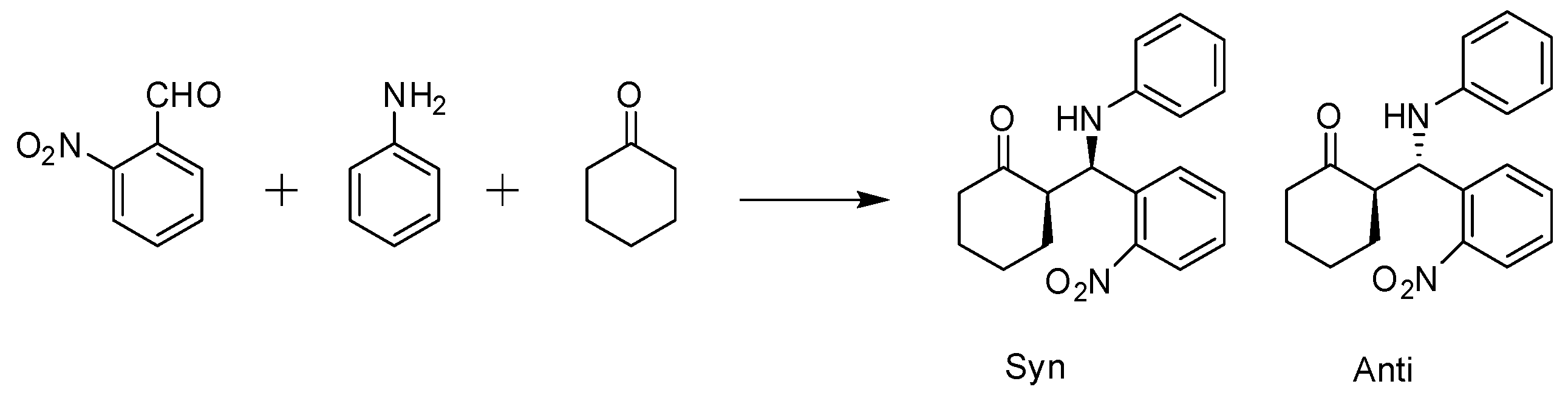
Subsequently, molecular docking studies against acetylcholinesterase were conducted to evaluate their anti-Alzheimer biological activity [3]. The results revealed that the anti isomer Scheme 1 shows stronger binding affinity and, consequently, higher predicted biological activity, while the syn isomer exhibits weaker interactions and lower biological reactivity. These findings establish a clear structure–activity relationship, suggesting that increased chemical reactivity correlates with enhanced biological activity in these Mannich derivatives.

2. Materials and Methods

Material Used

For the molecular docking studies, geometry optimization of the ligand was prepared using the DFT method in the Gaussian 09 program and GaussView 6.0. The optimization was performed at the CAM-B3LYP/6-31G (d,p) level. The target acetyl cholinesterase (AChE) protein (PDB ID: 4m0e) was prepared in Chimera version 1.16. Energy minimization was performed using Swiss-PdbViewer (SPDBV) version 4.1, and the visualization and analysis were conducted using BIOVIA Discovery Studio 2021.

3. Results and Discussion

3.1. DFT Study

The Gaussian 09 program’s DFT method was used for all quantum chemical computations. The results were visualized using the Gauss View 6.0 computer program. Using the standard 6-31G (d, p) basis set, the geometries were optimized at the long-range-corrected (CAM-B3LYP) functional. Numerous quantum chemical parameters were determined using the computed energies of the lowest unoccupied molecular orbital (ELUMO) and the highest occupied molecular orbital (EHOMO) such as the energy gap (ΔEgap)…(1), the dipole moment (μ)…(2), chemical hardness (η)…(3), chemical softness (σ)…(4), electro negativity (χ)…(5), and global electrophilicity index (ω)…(6), using the following equations:
ΔEgap = ELIMO − EHOMO
Dipole moment μ
Chemical   hardness   η = E L I M O E H O M O 2
Chemical   softness   σ = 1 η
Electro   negativity   χ = E L I M O + E H O M O 2
Global   electrophilicity   index   ω = x 2 2 η

3.1.1. Optimization of Structures

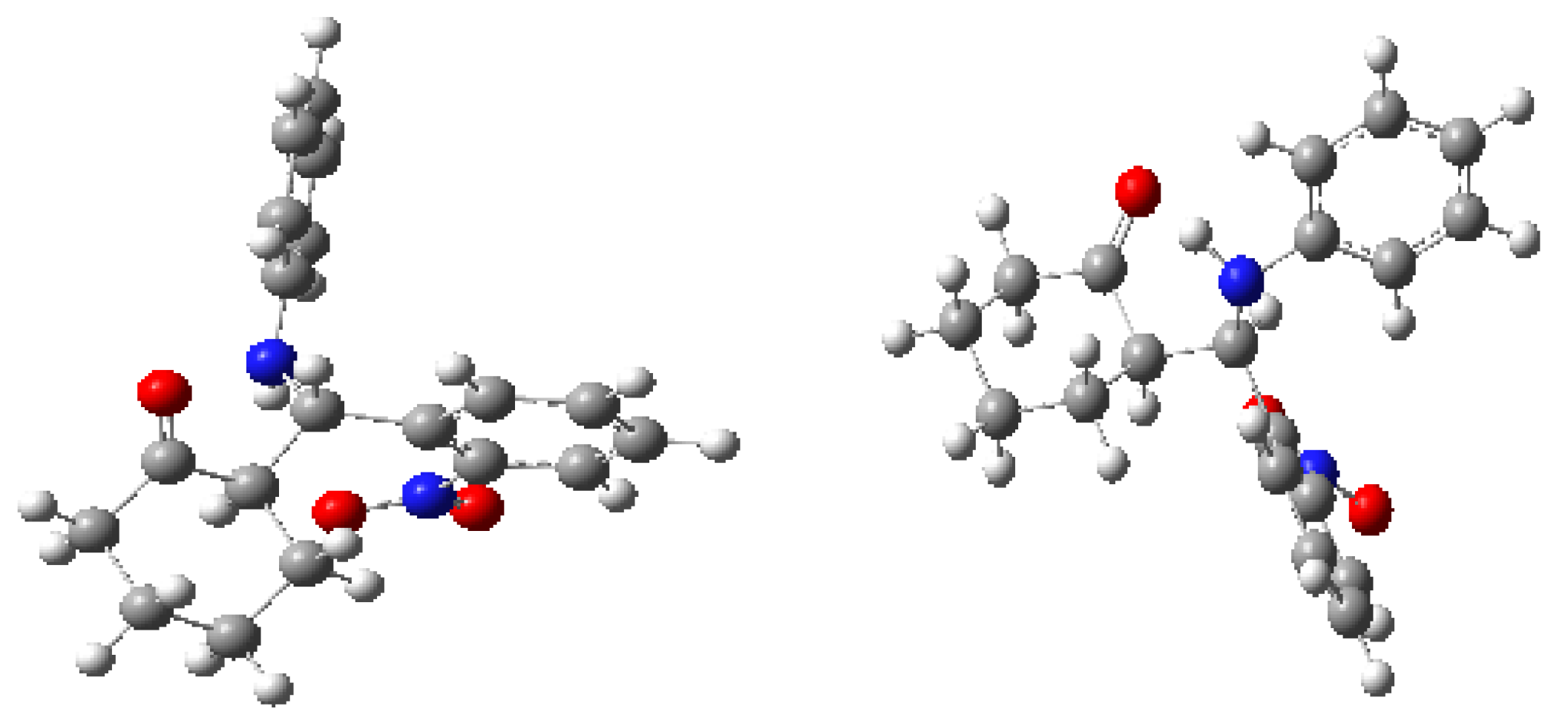
At the theoretical level of CAM-B3LYP/6-31G (d,p), Density Functional Theory (DFT) was used to optimize the geometry of the syn and anti isomers Figure 1. For the syn and anti isomers, the computed total energies at the optimized geometries were −1071.177953 a.u. and −1071.175180 a.u., respectively. These results imply that the syn isomer’s conformation is slightly more stable than the anti isomer’s conformation.

3.1.2. Frontier Molecular Orbital Analysis

The lowest unoccupied molecular orbital (LUMO) and the highest occupied molecular orbital (HOMO), two of the Frontier Molecular Orbitals (FMOs), are essential for determining the chemical reactivity and stability of molecules. The HOMO is directly related to the molecule’s ability to donate electrons and corresponds to the ionization potential, while the LUMO is associated with electron acceptance and relates to the electron’s affinity. The stability and reactivity of drug molecules can be substantially described by these orbitals. High EHOMO values favor a molecule’s ability to transfer electrons to an acceptor species, while low ELUMO values favor a molecule’s ability to absorb electrons. Additionally, the energy needed to excite a molecule’s electrons is indicated by the estimated value of the HOMO-LUMO energy (ΔEgap) of drug molecules. Molecules may be highly unstable, chemically reactive, and easily excited if the ΔEgap is small, while they may be very stable and less reactive if the ΔEgap is large. A greater amount of EHOMO indicates a better tendency toward donating electrons. The syn and anti isomers have HOMO energies of −0.19912 eV and −0.19238 eV, respectively. The anti isomer, having a higher HOMO energy, is more capable of donating electrons. In terms of LUMO energy (−0.09013 eV for syn and −0.09919 eV for anti), the anti isomer again shows a lower value, indicating a greater tendency to accept electrons. Therefore, the anti isomer exhibits both better electron-donating and electron-accepting abilities Table 1.
According to the calculations, the energy gaps of the syn and anti isomers were found to be 0.10899 eV and 0.09319 eV, respectively. The syn isomer exhibits a relatively higher energy gap compared to the anti isomer, indicating a reduced electron transfer capability from donor to acceptor molecules. This higher energy gap is typically associated with greater molecular stability and lower chemical reactivity. Thus, the calculated ΔEgap values suggest that syn isomers possess a high degree of stability, whereas the anti isomer shows lower stability and greater chemical reactivity.
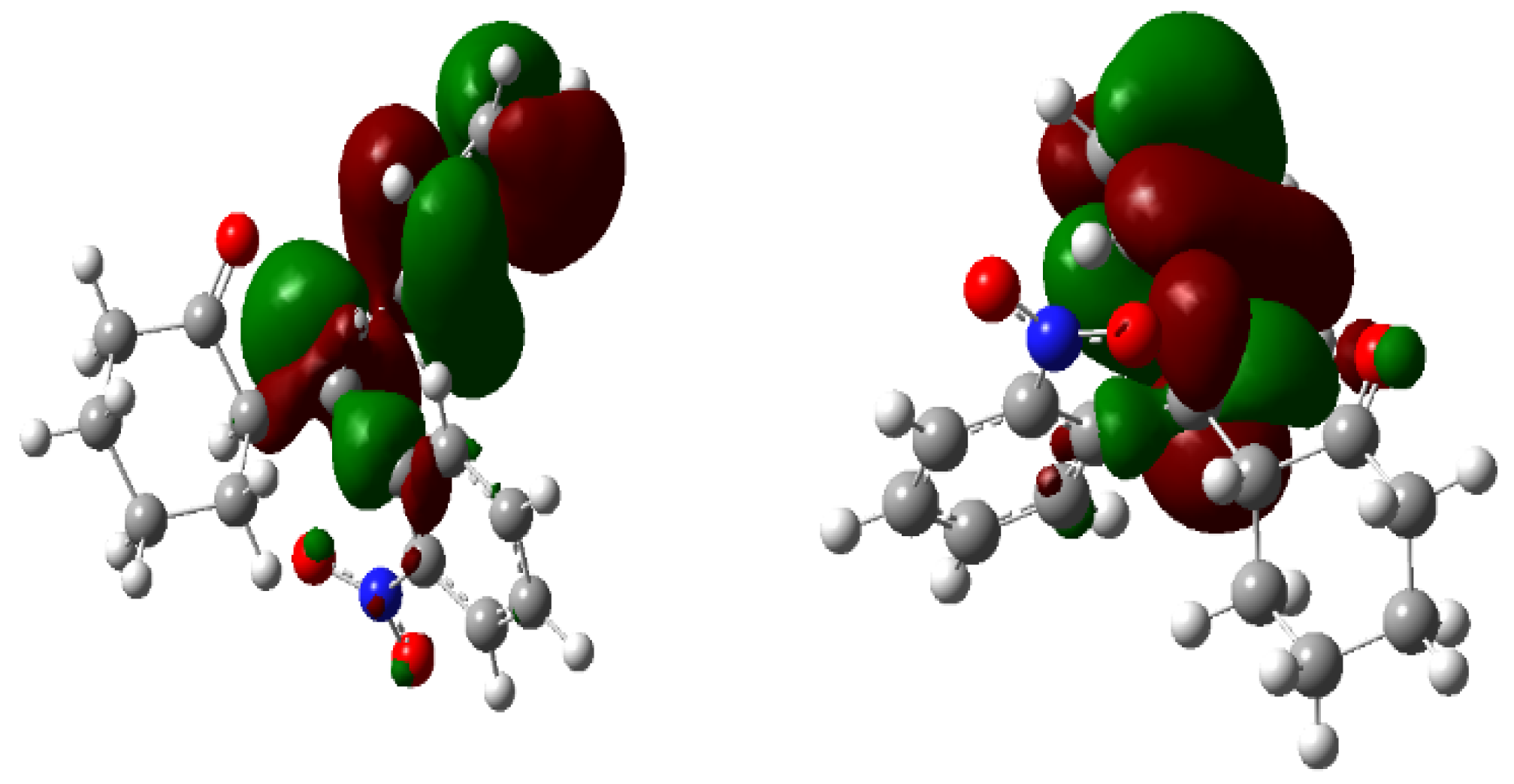
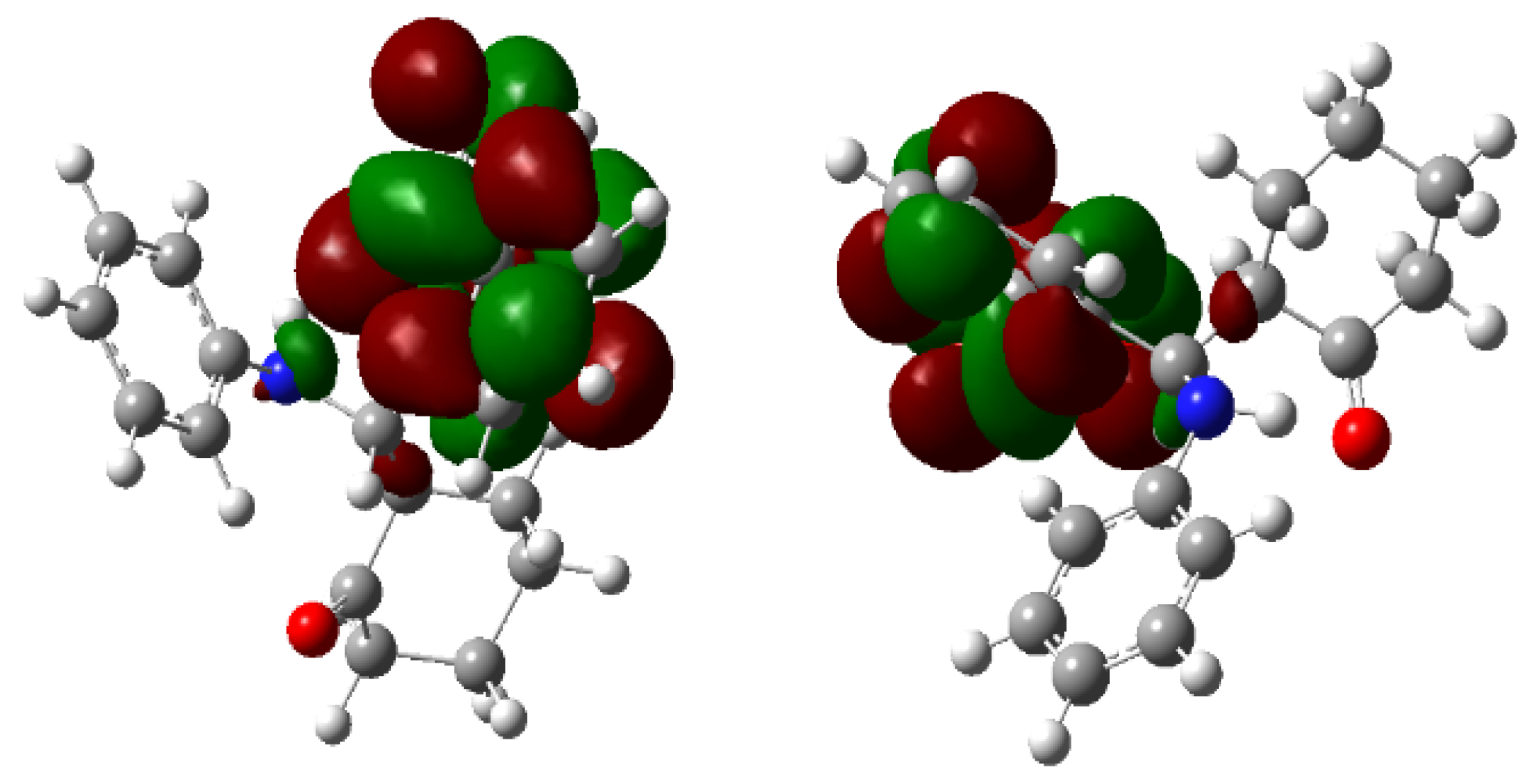
The calculated HOMO Figure 2 and LUMO Figure 3 of the syn and anti ligands clearly illustrate the differences in their electronic distributions, as shown in the figure for the 2-((2-nitrophenyl)(phenylamino)methyl)cyclohexanone derivative, which demonstrated that the LUMO is localized on the aromatic ring and the HOMO is typically found on the amino aromatic group. According to the table, the investigated molecules have higher ELUMO and lower EHOMO values.

3.1.3. Global Reactivity Descriptors

The dipole moment (μ) is a crucial electronic property that arises from the uneven distribution of charges on various atoms and indicates the polarity of pharmacological molecules. The calculated values of dipole moments are 5.404090 D for the syn isomer and 4.442760 D for the anti isomer, which can be explained by the difference in electronegativity caused by stereochemistry. Additionally, drug molecules’ local softness (σ) and hardness (η) can be utilized to evaluate how resistant they are to the polarization or deformation of their electron clouds. These two characteristics are crucial for assessing a molecule’s reactivity and molecular stability. The energy difference between the LUMO and HOMO is equivalent to chemical hardness. The syn molecule has a higher dipole moment (μ = 5.404090 D) compared to the anti one (μ = 4.442760 D), indicating that it is more polar and may exhibit stronger intermolecular interactions, such as hydrogen bonding or dipole–dipole interactions. The syn molecule also exhibits greater chemical hardness (η = 0.054495) than the anti molecule (η = 0.046595), suggesting that it is more resistant to charge transfer and possibly more chemically stable. In contrast, the anti molecule has a higher local softness (σ = 21.4615) than the syn (σ = 18.3503), implying it is more reactive and may more readily participate in chemical interactions, particularly with electrophilic or nucleophilic species.

3.2. Molecular Docking Studies

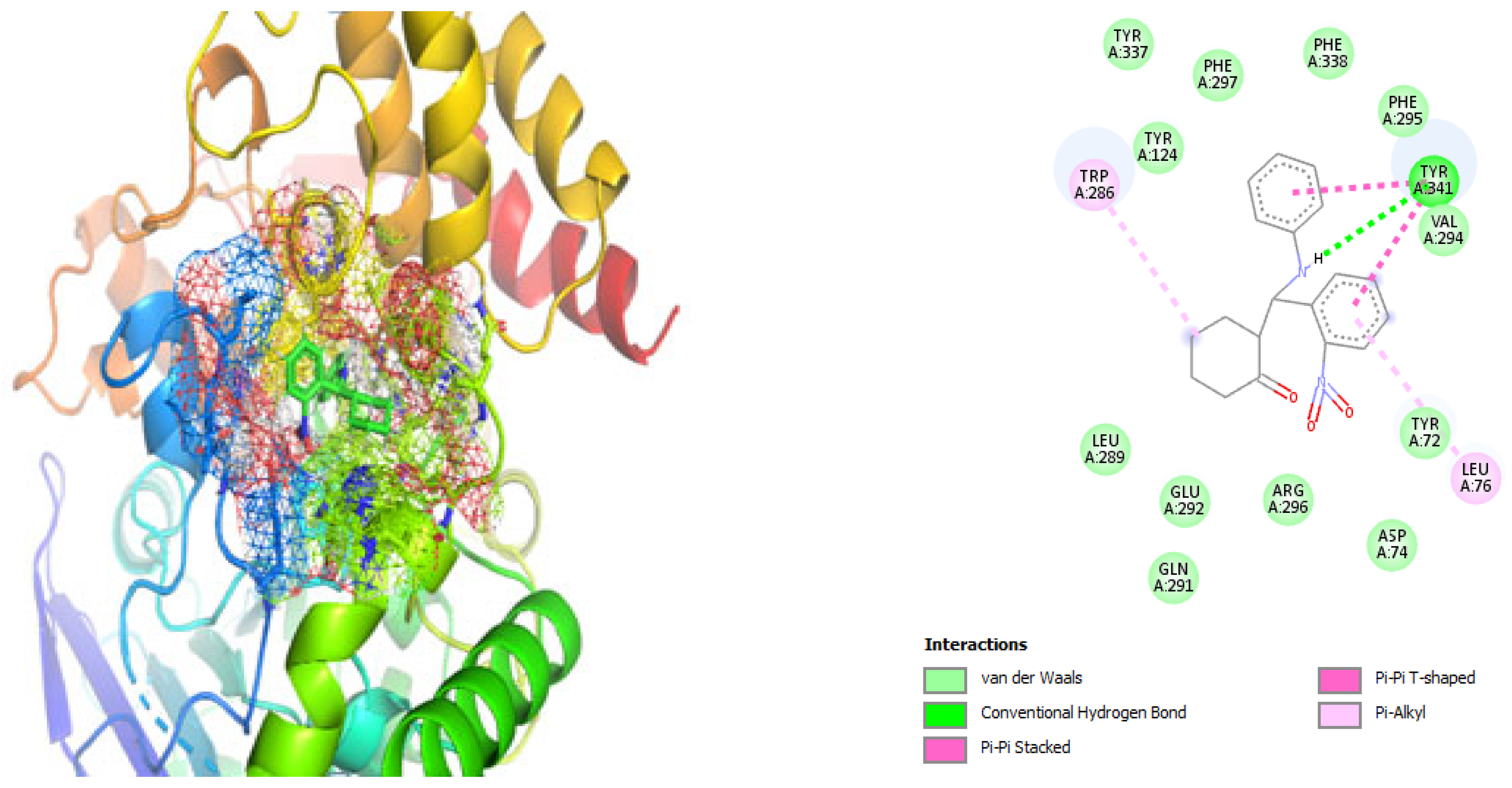
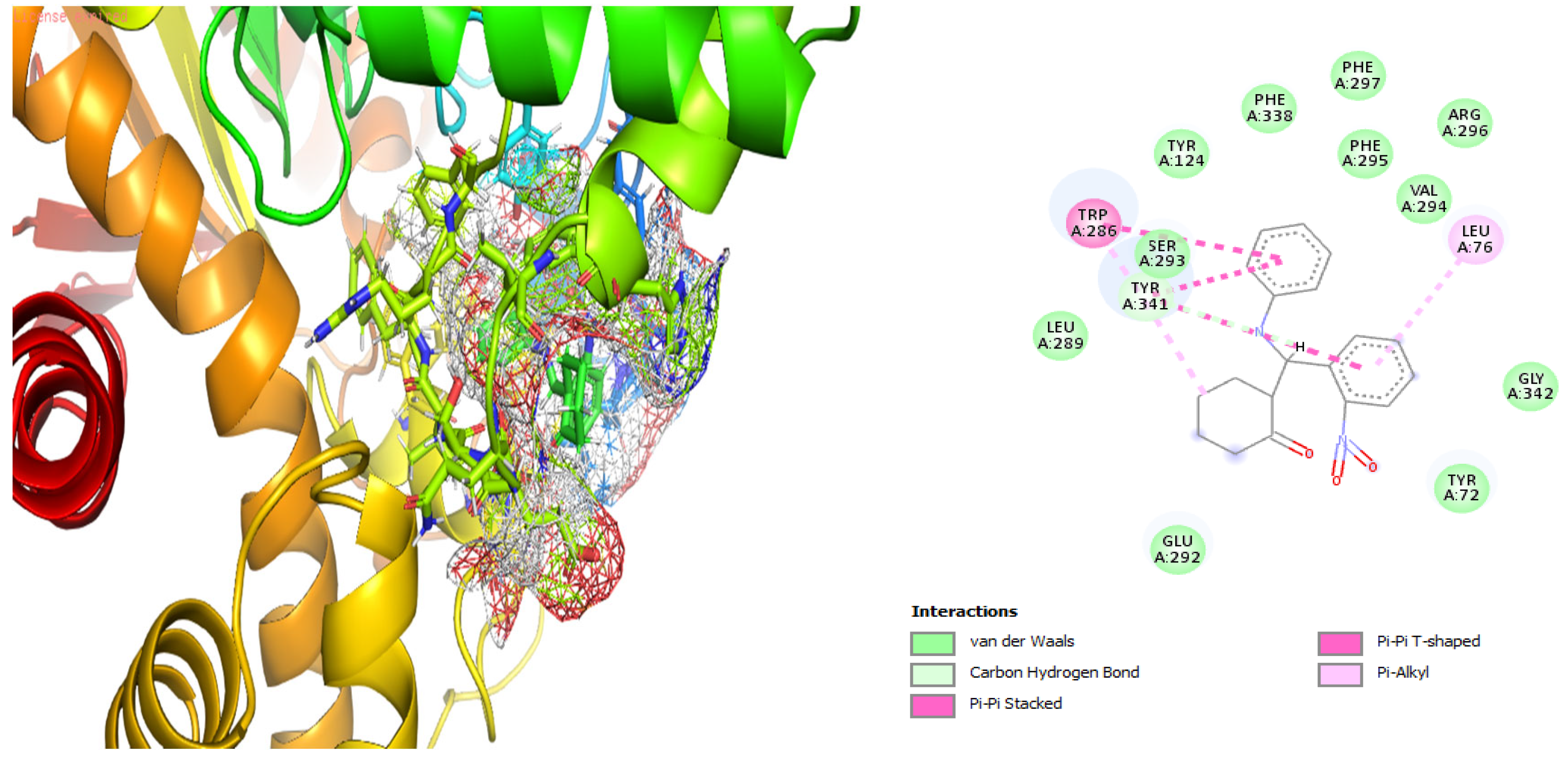
The molecular docking analysis revealed a notable difference in binding affinity and interaction profiles between the anti Figure 4 and syn Figure 5 stereoisomers of the compound within the active site of acetylcholinesterase (AChE). Both isomers exhibited favorable docking scores, indicating a general potential for biological activity in the Peripheral Anionic Site (PAS), which includes ASP74, Tyr72, Tyr124, Trp286, and Tyr341. This is an important site for binding inhibitors that prevents acetylcholine from entering the active site. However, the anti isomer demonstrated a significantly higher binding affinity, which suggests a more stable and effective interaction with the enzyme’s active site. This superior performance is attributed to the formation of hydrogen bonds, Pi-Pi stacked, Pi-Alkyl, and Van Der Waals interactions. This clearly demonstrates the impact of stereochemistry on disease treatment by showing how small changes in the spatial arrangement of atoms can significantly influence the strength, specificity, and nature of molecular interactions with biological targets Table 2. These findings highlight the importance of stereochemical considerations in drug design, particularly in the development of more effective and selective therapeutic agents.

4. Conclusions

In this study, we clearly prove the importance of stereochemistry in molecular structures in relation to structure–activity relationships by theoretical approximation using DFT to demonstrate structural stability and reactivity at the electronic level; molecular docking highlighted the impact of stereochemistry on interactions with biological targets. These results emphasize the importance of stereochemical considerations in drug design for developing more effective and selective therapeutic agents.

Author Contributions

Conceptualization, A.A.B. and H.S.K.; methodology, A.A.B.; software, A.A.B.; validation, H.S.K.; formal analysis, A.A.B.; investigation, H.S.K.; resources, A.A.B.; data curation, A.A.B.; writing—original draft preparation, A.A.B.; writing—review and editing, A.A.B.; visualization, A.A.B.; supervision, H.S.K.; project administration, H.S.K. All authors have read and agreed to the published version of the manuscript.

Funding

This research received no external funding.

Institutional Review Board Statement

Not applicable.

Informed Consent Statement

Not applicable.

Data Availability Statement

All the data are available in this manuscript.

Conflicts of Interest

The authors declare no conflicts of interest.

References

  1. Fu, A.; Li, H.; Si, H.; Yuan, S.; Duan, Y. Theoretical studies of stereoselectivities in the direct syn-and anti-Mannich reactions catalyzed by different amino acids. Tetrahedron Asymmetry 2008, 19, 2285–2292. [Google Scholar] [CrossRef]
  2. Hameed, M.A.; Al-Jeboori, M.J. Synthesis, spectral characterisation, DFT calculations, biological evaluation and molecular docking analysis of new Mannich compounds derived from cyclopentanone. J. Mol. Struct. 2025, 1322, 140619. [Google Scholar] [CrossRef]
  3. Li, Y.; Qiang, X.; Luo, L.; Yang, X.; Xiao, G.; Liu, Q.; Deng, Y. Aurone Mannich base derivatives as promising multifunctional agents with acetylcholinesterase inhibition, anti-β-amyloid aggragation and neuroprotective properties for the treatment of Alzheimer’s disease. Eur. J. Med. Chem. 2017, 126, 762–775. [Google Scholar] [CrossRef] [PubMed]
Scheme 1. General procedure for synthesis.
Chemproc 18 00105 sch001
Figure 1. Optimization structures of anti and syn using CAM-B3LYP/6-31G (d,p) method.
Chemproc 18 00105 g001
Figure 2. HOMO of anti and syn with CAM-B3LYP/6-31G (d,p) method.
Chemproc 18 00105 g002
Figure 3. LUMO of anti and syn with CAM-B3LYP/6-31G (d,p) method.
Chemproc 18 00105 g003
Figure 4. Docking simulation of anti in the active site of AChE.
Chemproc 18 00105 g004
Figure 5. Docking simulation of syn in the active site of AChE.
Chemproc 18 00105 g005
Table 1. Calculated quantum chemical parameters using DFT/CAM-B3LYP/6-31G (d,p) method.
CompoundsELUMO (ev)EHOMO (ev)ΔE (ev)Dipole Moment DM(D)Hardness η (ev)Softness σ (ev)Electronegativity χ (ev)Electrophilicity ω (ev)
Syn−0.09013−0.199120.108995.4040900.05449518.35030.1446250.1919
Anti−0.09919−0.192380.093194.4427600.04659521.46150.1457850.2280
Table 2. Comparison of binding affinity and interactions of anti and syn Mannich stereoisomers with AChE.
SynAnti
TRY 341: Pi-Pi stacked with aromatic anilne.
Pi-Pi stacked with aromatic aldehyde.
TRP 286: Pi-Pi T-shaped with aromatic aniline
Pi-Pi T-shaped with cyclohexanone.
LEU 72, GLY 342.
SER293: Van Der Waals interaction.
TRY 341: Pi-Pi stacked with aromatic anilne.
Pi-Pi stacked with aromatic aldehyde.
Conventional hydrogen bond Hβ.
TRP 286: Pi-Pi Alkyl.
LEU 76: Pi-Pi Alkyl.
GLY 342, ASP 74, TRY 337: Van Der Waals interaction.
Disclaimer/Publisher’s Note: The statements, opinions and data contained in all publications are solely those of the individual author(s) and contributor(s) and not of MDPI and/or the editor(s). MDPI and/or the editor(s) disclaim responsibility for any injury to people or property resulting from any ideas, methods, instructions or products referred to in the content.