Article

Evidence-Based Intervention for Diabetes Prevention (EID) in the United Arab Emirates: Review of Adaptations Using the FRAME Framework


1
Department of Nutrition and Food Studies, New York University, New York, NY 10003, USA
2
Department of Medicine, NYU Grossman School of Medicine, New York, NY 10016, USA
3
Public Health Research Center, New York University Abu Dhabi, Abu Dhabi P.O. Box 1291888, United Arab Emirates
*
Author to whom correspondence should be addressed.
Diabetology 2026, 7(6), 102; https://doi.org/10.3390/diabetology7060102

Submission received: 3 March 2026 / Revised: 13 May 2026 / Accepted: 19 May 2026 / Published: 25 May 2026

Abstract

Background: Diabetes is a growing public health crisis across the Arab region, where rapid urbanization, dietary transitions, and physical inactivity have contributed to some of the highest diabetes rates globally. Despite a growing recognition of the problem, most diabetes prevention efforts in the region remain small-scale or insufficiently adapted to the sociocultural realities of adults living in the UAE. Evidence-based diabetes prevention strategies, such as the United States’ Centers for Disease Control Diabetes Prevention Program (DPP), reduce the risk of developing diabetes but remain underutilized. Methods: The objectives of this study were to (1) describe the systematic cultural adaptation of the Evidence-based Intervention for Diabetes Prevention (EID) using the Framework for Reporting Adaptations and Modifications–Expanded (FRAME), and (2) assess the preliminary acceptability of the adapted materials through formative focus groups. Results: Materials were culturally tailored to address both deep and surface structures. Deep structure adaptations incorporated Arab cultural values, social norms, and religious practices, including Ramadan-specific content. The original 26-session curriculum was condensed to 12 weekly sessions based on prior research and stakeholder input. Surface-level adaptations included translation into Arabic and development of culturally relevant educational videos. Three formative focus groups (n = 7 total participants) provided preliminary findings of strong acceptability of simplified, culturally relevant, and digitally supported materials. Conclusions: This work will inform the adaptation of an evidence-based lifestyle change program aimed at preventing type 2 diabetes in high-risk individuals to better meet the needs of adults living in the UAE. While some countries have created their own national diabetes prevention efforts, like the United Kingdom, there is notably no similar program in the Arab world.

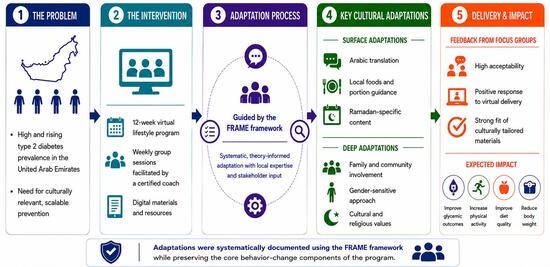
Graphical Abstract

1. Introduction

Type 2 diabetes mellitus represents a major and growing clinical burden worldwide, with particularly high prevalence and early onset observed in the Middle East and North Africa region [1]. In the United Arab Emirates (UAE), rapid socioeconomic development has been accompanied by marked increases in obesity, sedentary behavior, and dysglycemia, placing a substantial proportion of adults at elevated cardiometabolic risk [2]. Despite strong evidence supporting lifestyle-based prevention, translation of these interventions into routine clinical and community settings in the UAE remains limited [3], and few programs have been systematically adapted to local cultural and health system contexts [4]. However, many programs still lack core components like Arabic-language materials, culturally relevant dietary guidance, and Ramadan-specific modifications, when applicable, for Muslims.
Evidence-based lifestyle interventions, including those modeled on the U.S. Diabetes Prevention Program (DPP), have demonstrated clinically meaningful reductions in diabetes incidence, improvements in weight and glycemic outcomes, and favorable effects on quality of life across diverse populations [5,6]. However, growing implementation science literature highlights that intervention effectiveness in real-world settings is strongly influenced by contextual fit, including linguistic accessibility, sociocultural norms, and alignment with patient values and daily practices [7,8]. Cultural adaptation frameworks distinguish surface structure tailoring (e.g., language, symbols, foods) from deep structure tailoring, which incorporates underlying cultural values, social context, and lived experience that influence health behaviors that could be partly driven by gender-based disparities [9]. In non-Western settings, insufficient adaptation has been associated with reduced engagement, lower retention, and diminished clinical impact [10,11]. While some investigators argue that core behavioral mechanisms underlying diabetes prevention are broadly generalizable across populations, others emphasize that failure to address culturally specific factors, such as family structure, gender roles, dietary customs, and religious practices, may compromise both feasibility and sustainability [9,12,13]. These diverging perspectives underscore the clinical importance of balancing fidelity to evidence-based components with thoughtful, transparent adaptation when implementing diabetes prevention interventions in new settings.
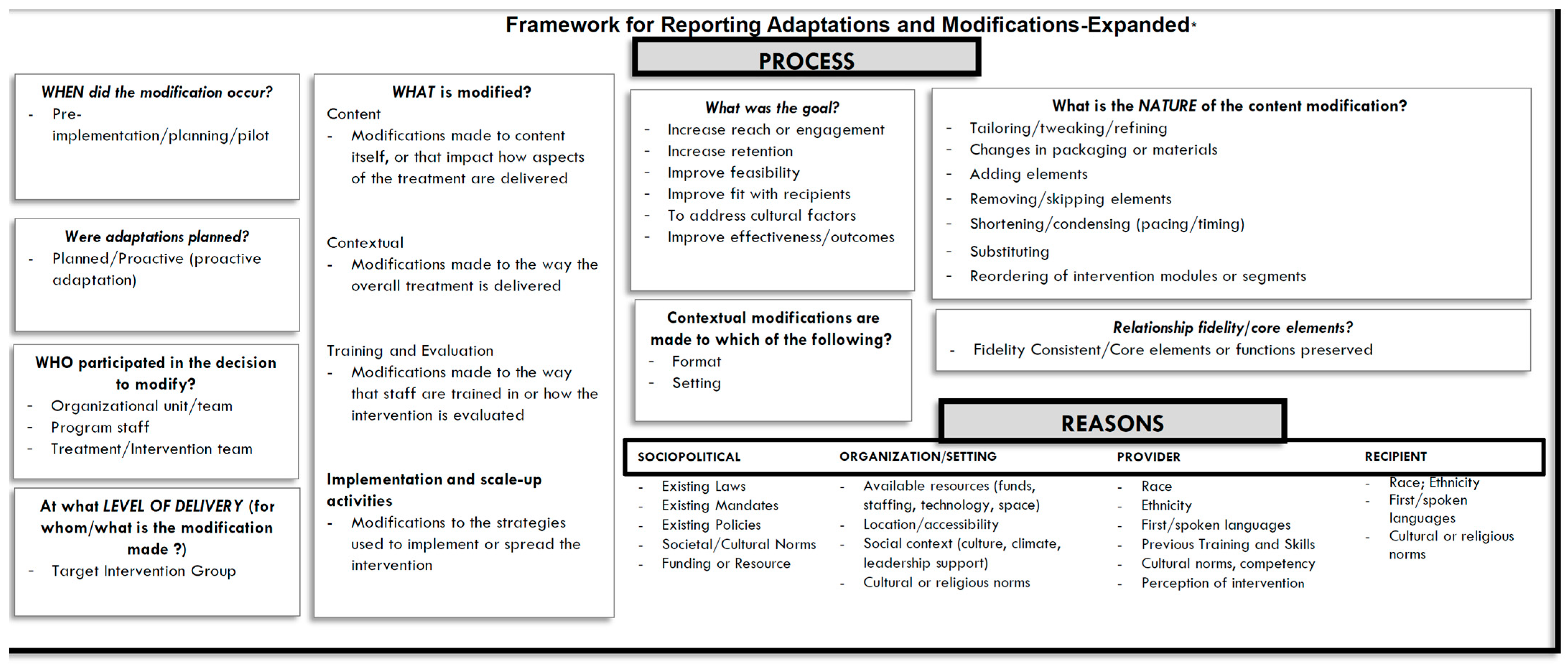
This project addresses this gap by describing the systematic adaptation of an evidence-based diabetes prevention intervention for adults in the UAE, resulting in the Evidence-based Intervention for Diabetes prevention (EID). Guided by the Framework for Reporting Adaptations and Modifications–Expanded (FRAME) [14], this work documents the rationale, process, and nature of curriculum modifications while preserving core behavior change principles grounded in Social Cognitive Theory. In addition, we report findings from formative focus groups assessing the acceptability of the adapted materials. By providing a detailed account of adaptation decisions and early acceptability outcomes, this study aims to inform future clinical and community-based diabetes prevention efforts in the UAE and contribute to the broader literature on culturally responsive implementation of evidence-based interventions. To our knowledge, no prior studies have systematically adapted a diabetes prevention program within the UAE context.

2. Methods

2.1. Intervention Adaptation Process

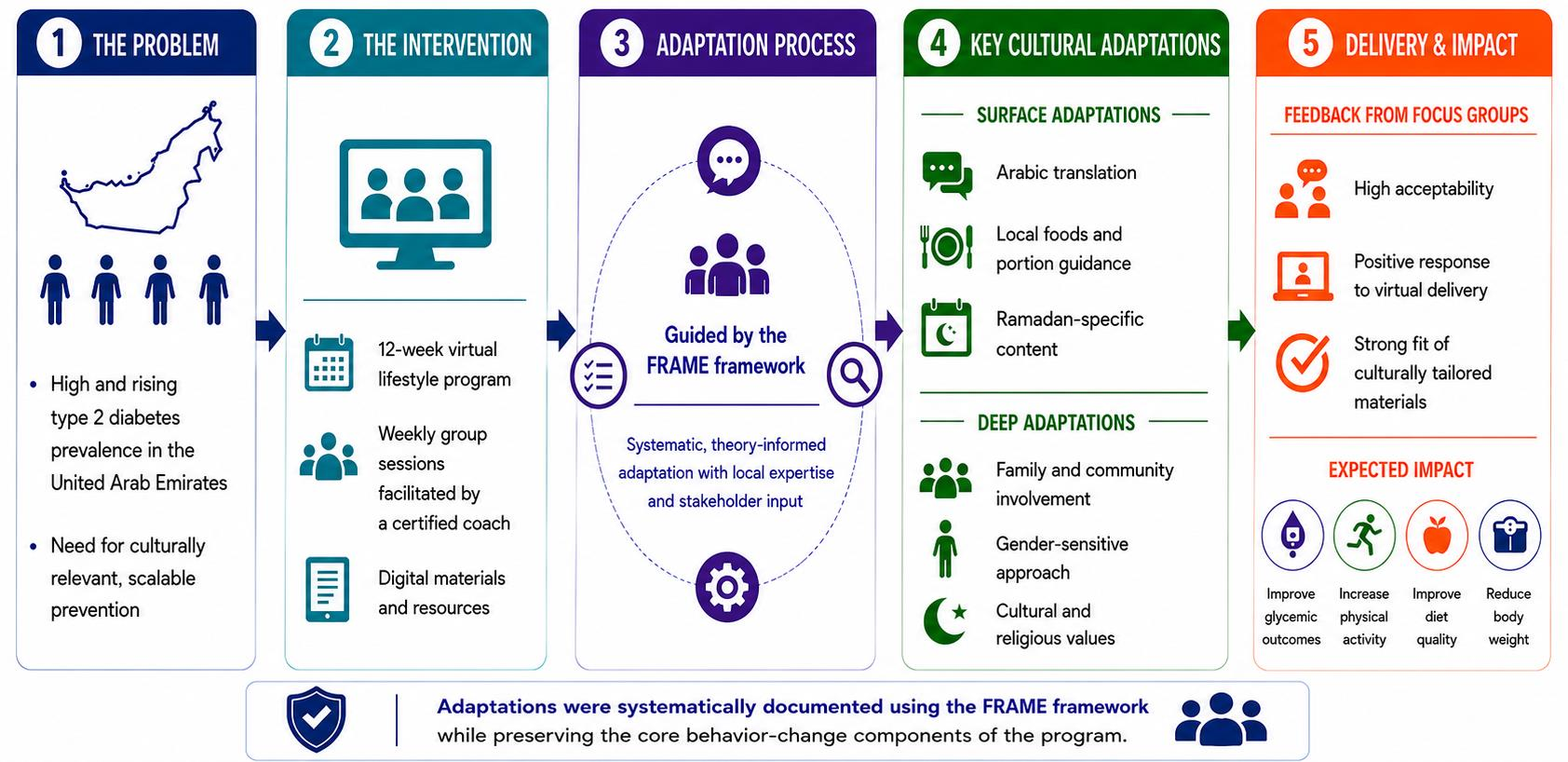
Adaptations were guided by the FRAME and were planned and made during the pre-implementation phase to proactively enhance cultural relevance, accessibility, and participant engagement (Figure 1). Modifications were made to both the content and format of the intervention to improve cultural fit while maintaining fidelity to the original DPP curriculum when possible.

2.2. Adaptation Goals: The Primary Goals of the Adaptation Process Were to

  • Enhance participant engagement and retention;
  • Improve cultural and linguistic fit;
  • Reduce individual and systemic barriers, including those related to transportation, scheduling, and language;
  • Ensure scalability and feasibility for local implementation;
  • Ensure fidelity to major themes of the DPP, including social support, goal-setting and self-efficacy.

2.3. Focus Group Recruitment

Potential participants who met the study’s eligibility criteria (BMI ≥ 25 and/or Diabetes Risk Score > 5, English and Arabic-speaking, and no pre-existing diabetes) were identified through community-based sources. Recruitment notices were circulated online and on NYU Abu Dhabi’s intranet. Potential participants completed the Diabetes Risk Score tool, which evaluates key demographic and lifestyle risk factors such as age, gender, BMI, family history, and physical activity. A score exceeding 5 was utilized as the threshold for intervention eligibility, representing a moderate-to-high risk of developing T2D [15]. Eligible participants were called by a research assistant and we provided a financial incentive following focus group completion (100 AED gift card).

2.4. Focus Group Data Analysis

Formative focus groups were conducted prior to intervention launch to assess the acceptability, cultural relevance, and perceived feasibility of the adapted diabetes prevention materials. Three virtual focus groups, each consisting of two adult participants at elevated risk for type 2 diabetes, were conducted via secure videoconferencing and lasted approximately 60 min. Focus groups were facilitated by trained research staff using a semi-structured discussion guide designed to elicit participant feedback on intervention content, delivery format, cultural appropriateness, and anticipated barriers and facilitators to engagement. Groups were primarily conducted in Arabic. Sessions were audio-recorded for accuracy and quality assurance, professionally transcribed verbatim, translated to English, and de-identified prior to analysis.
A member of the research team reviewed all transcripts and prepared detailed analytic summaries capturing key points, recurring themes, and illustrative participant perspectives relevant to intervention acceptability and feasibility. Summaries were reviewed by members of the investigative team to determine alignment with the stated objectives and reduce individual bias in the interpretation. Consistent with the Framework for Reporting Adaptations and Modifications–Expanded (FRAME), summarized findings were examined to document the nature and rationale of adaptations, identify contextual factors motivating modifications, and distinguish changes addressing surface- versus deep-structure cultural considerations while preserving core intervention components. This approach is consistent with rapid qualitative analysis methods commonly used in formative research [16]. Given the formative purpose of this study, we did not conduct formal thematic analysis, nor did we calculate inter-coder reliability. Instead, the goal was to efficiently identify actionable insights to inform intervention refinement prior to implementation.
Participant demographic characteristics (age, gender distribution, and BMI category) were summarized descriptively to contextualize findings with the understanding that the small sample size limits interpretability.

2.5. Material Review for Cultural Appropriateness

Members of the research team reviewed the 12 videos developed for the education sessions to identify elements of cultural tailoring used to adapt the existing behavior change components present in the curriculum. AJ, EAJ, and JMB used the behavior change taxonomy to identify the core behavior change components present in the original DPP curriculum [17]. They then used the Cultural Sensitivity Framework, which defines cultural tailoring techniques and categorizes them into two groupings: surface-level, which addresses intervention fit, and deep-level, which addresses intervention salience to create a data extraction form [18]. Three research assistants and AJ viewed each of the 12 videos in English and Arabic to identify the core behavior change components present in each video. They also identified how the behavior change component was tailored, if at all. Data was extracted for each of the videos by one researcher, with 10% being extracted by at least two researchers. Combinations of behavior change components and cultural tailoring techniques were tabulated and summarized.

3. Results

3.1. Description of Adaptations

The intervention content will be delivered in twelve 60 min group sessions virtually with an optional supplement included if the intervention period overlaps with Ramadan (Table 1). Each session includes a brief educational video, a facilitated group discussion, and a goal-setting or problem-solving activity aligned with the session topic. Participants receive adapted materials in English and Arabic, including simplified written content, visual examples, and culturally relevant dietary and physical activity guidance. To enhance engagement, sessions also incorporate interactive elements such as polls, brief question-and-answer prompts, word clouds, and short surveys to elicit participant reflections and guide discussion. The intervention incorporates the UAE Department of Health’s Sahatna app as an individual, automated tool to support behavior change between sessions, improving accessibility and participant engagement.
The intervention will target adults (aged 18 and older) who are at risk for developing T2D, as assessed by the Diabetes Risk Score. Individuals with a Diabetes Risk Score greater than 5, and/or a BMI ≥ 25 kg/m2 (representing overweight or obese), and no pre-existing diabetes diagnosis are considered eligible for participation. To ensure the linguistic and cultural integrity of the adaptations, inclusion is further restricted to English and Arabic-speaking individuals.
Training and Evaluation: Lifestyle coaches have been trained by Temple University’s Lifestyle Coach Program. Fidelity checks, in which a coach who did not deliver the intervention will review 10% of sessions using a pre-specified fidelity checklist used in prior work [15], will assess alignment with the core components of the curriculum, including delivery of session objectives, use of behavior change techniques, participant engagement, and consistency with the adapted materials.
Level of Delivery and Involvement: Most adaptations were implemented at the group level (target intervention group), with some changes impacting the individual level, such as using Sahatna, a locally developed smartphone application to encourage personalized goal setting and tracking. The adaptation process involved program staff, intervention developers, researchers, and community members, including an Implementation Advisory Committee that provided feedback on language, visuals, and delivery preferences.
Relationship to Fidelity: All modifications were tracked using FRAME, and fidelity to core components of the DPP curriculum was preserved. Adaptations were fidelity-consistent, ensuring the theoretical foundation (Social Cognitive Theory) and behavioral goals remained intact, including goal-setting, action planning, self-monitoring, problem solving, social support, habit formation, and self-efficacy building.
Materials were culturally tailored to address both surface- and deep-structure adaptations (Table 2). Surface-level adaptations included Arabic translation, simplified language, locally available food examples, culturally appropriate dress during exercise, culturally congruent educational videos, and visual representations from the Arab region. Deep-structure adaptations addressed Arab cultural and religious norms, including the central role of family, social eating contexts, and Ramadan-specific guidance for Suhoor, Iftar, and physical activity during fasting periods. The original DPP curriculum was condensed to 12 weekly sessions based on prior work, focus group feedback, and consultation with an Implementation Advisory Committee comprising local experts in academia, medicine, and public health.

3.2. Focus Group Findings

Three focus groups were conducted between June and December 2025, with two engaging two participants and one engaging three participants (Table 3). Two groups included female participants (n = 5) and one included male participants (n = 2). The average age of participants was 40 years, based on midpoint estimates across the reported age groups. Both male participants reported a BMI > 25 kg/m2, whereas the five female participants’ BMIs ranged between 22 and 23 kg/m2. While the sample size was small, discussions provided useful formative insights into acceptability. Focus group participants emphasized the importance of providing brief, simple, and clear content for the program. They suggested enhanced digital engagement through user-friendly, interactive applications. Participants asked for “infographic-style” images with “brighter colors, avoiding plain text and heavy layout”. Data privacy, transparency, and ongoing participant support were highly valued. An exemplary quote was “Make them feel like it’s useful, and it doesn’t take much time”. Participants encouraged the research team to focus on meaningful engagement over gift cards or other incentives. These findings should be interpreted as preliminary and formative, as the small sample size limits generalizability and thematic saturation. However, such rich data robustly informed the goal of adapting the proposed intervention.

3.3. Cultural Tailoring of Core Behavior Change Components

Each of the educational sessions included a 1 min video in English or Arabic that reinforced material covered in the curriculum. Across the 12 videos, the educational content retained core behavior change components from the original DPP. Each video addressed at least one and up to nine different behavior change components. Action planning, habit formation, self-monitoring, and problem solving were most frequently found across the 12 videos. The videos were also tailored to address surface- and deep-level cultural considerations. Surface-level tailoring included Arabic translation and culturally congruent visual representation, while deep-level tailoring addressed social norms and cultural values relevant to lifestyle change in the UAE context.

4. Discussion

This work will inform the adaptation of an evidence-based lifestyle change program aimed at preventing type 2 diabetes in high-risk individuals to better meet the needs of Arab adults. Unlike prior adaptations of the DPP conducted in Western or other high-income settings, this work explicitly integrates both surface- and deep-structure cultural adaptations within a Middle Eastern context, including language, social norms, and religious practices such as observing Ramadan. Importantly, this study is intended as a formative, pre-implementation effort rather than an evaluation of intervention effectiveness. A key consideration in this work is the balance between fidelity and adaptation. While substantial modifications were made to improve cultural relevance and feasibility (e.g., condensing the curriculum, incorporating culturally specific content), core behavior change components grounded in Social Cognitive Theory [19] were preserved. This approach aligns with implementation science principles, emphasizing that adaptations should enhance contextual fit without compromising theoretical integrity.
While some countries have created their own national diabetes prevention efforts, like the United Kingdom [20], there is notably no similar program in the UAE. The DPP is a year-long program with low retention [21]. Based on this information and the feedback received during the focus groups, measures to condense the program and adapt it to the local context may help improve retention and individual success at weight and hemoglobin A1c reduction and prevention or delay of T2D. The study team has made adaptations to the materials (video development, participant manual updating, and Arabic translation) in order to enhance acceptability within the time and budgetary allotments. Video materials were tailored to address both surface- and deep-level structures while maintaining core behavior change components in an effort to preserve intervention fidelity.
The proposed study has several strengths. We used a formal conceptual model to guide the adaptation process. This rigorous framework for adaptations may help ensure adequate incorporation of stakeholder input, and we included participants who would qualify for the intervention. We worked closely with a local advisory committee to ensure that the adaptations were culturally appropriate and acceptable. We anticipate that by leveraging a digital platform, we will reduce participant burden to travel to attend educational sessions. The proposed study also has several limitations. First, the formative focus groups included a very small sample (n = 7), which limits generalizability and precludes thematic saturation. Second, the qualitative analysis relied on rapid analytic summaries rather than formal coding frameworks and did not include inter-coder reliability assessment. While appropriate for formative work, this reduces methodological rigor. Third, the study did not include quantitative outcomes (e.g., weight change, HbA1c), as the intervention has not yet been implemented. Fourth, the single-arm, pre-implementation design limits conclusions regarding effectiveness. Finally, recruitment through convenience sampling and reliance on digital participation may introduce selection bias and limit the inclusion of individuals with lower digital access.
Sustaining weight loss remains a recognized challenge in lifestyle interventions, and future iterations of this program may consider integration with broader clinical strategies where appropriate. Long-term weight maintenance is influenced by both behavioral and physiological factors, which may require additional support strategies in some individuals. Our long-term goal is to develop strategies to decrease the incidence of diabetes within the UAE. This feasibility trial will provide the preliminary data necessary to compare the effectiveness of education-only, a scalable, automated individual intervention, and an individual automated plus group-based telehealth arm facilitated by a health coach. Diabetes prevention programs in the US are clinically effective and cost-effective. It is important to understand if this is true in other locations and cultural contexts, such as the UAE. Diabetes is a global problem that requires international collaboration to address and stem the growing rates of this common and costly chronic disease.

Author Contributions

Conceptualization, J.M.B. and S.E.S.; methodology, J.M.B., A.L.-J., E.A.J. and S.E.S.; writing—original draft preparation, J.M.B.; writing—review and editing, A.L.-J., E.A.J., T.A.A., M.A., H.G., M.E., O.E.S. and S.E.S.; funding acquisition, J.M.B. and S.E.S. All authors have read and agreed to the published version of the manuscript.

Funding

This research was funded by a New York University Early Stage Award (MPIS J.M.B., S.E.S.). A.L.-J., T.A.A., and M.A. are funded by Tamkeen and the NYU Abu Dhabi Research Institute (NYUAD-G1206).

Institutional Review Board Statement

This study was approved by the NYU Abu Dhabi Institutional Review Board (HRPP-2023-238) on 13 January 2025 and the DOH DOH/ADHRTC/2026/344) on 11 February 2026.

Informed Consent Statement

All participants provided informed consent prior to engagement in study activities.

Data Availability Statement

The information provided is available on reasonable request from the corresponding author and is subject to local laws.

Acknowledgments

We thank focus group participants for their important contributions to this effort. The authors appreciate the expertise and insights offered by the Implementation Advisory Committee and students who recently joined the team. Study data were collected and managed using REDCap (v16.1.4) electronic data capture tools hosted at New York University. REDCap (Research Electronic Data Capture) is a secure, web-based software platform designed to support data capture for research studies, providing (1) an intuitive interface for validated data capture; (2) audit trails for tracking data manipulation and export procedures; (3) automated export procedures for seamless data downloads to common statistical packages; and (4) procedures for data integration and interoperability with external sources.

Conflicts of Interest

The authors declare no conflicts of interest.

Abbreviations

BMIBody Mass Index
CDCCenters for Disease Control and Prevention
DPPDiabetes Prevention Program
EIDEvidence-based Intervention for Diabetes Prevention
FRAMEFramework for Reporting Adaptations and Modifications–Expanded
HbA1cHemoglobin A1c
IRBInstitutional Review Board
MENAMiddle East and North Africa
NYUNew York University
REDCapResearch Electronic Data Capture
T2DType 2 Diabetes
UAEUnited Arab Emirates

References

  1. Duncan, B.B.; Magliano, D.J.; Boyko, E.J. IDF Diabetes Atlas 11th edition 2025: Global prevalence and projections for 2050. Nephrol. Dial. Transplant. 2025, 41, 7–9. [Google Scholar] [CrossRef] [PubMed]
  2. Baynouna, L.M.; Revel, A.D.; Nagelkerke, N.J.; Jaber, T.M.; Omar, O.A.; Ahmed, N.M.; Nazirudeen, M.K.; Al Sayed, M.F.; A Nour, F.; Abdouni, S. Associations of cardiovascular risk factors in Al Ain- United Arab Emirates. Cardiovasc. Diabetol. 2009, 8, 21. [Google Scholar] [CrossRef]
  3. Alzubaidi, H.T.; Chandir, S.; Hasan, S.; McNamara, K.; Cox, R.; Krass, I. Diabetes and cardiovascular disease risk screening model in community pharmacies in a developing primary healthcare system: A feasibility study. BMJ Open 2019, 9, e031246. [Google Scholar] [CrossRef]
  4. Almousa, Z.; Contento, I.R. Pilot Study of the Feasibility of a Worksite Plant-Based Diabetes Prevention Program. AJPM Focus 2023, 2, 100064. [Google Scholar] [CrossRef]
  5. Massey, M.; Nguyen, J.; Ng, B.P. 1076-P: Online Presence and Accessibility of the National Diabetes Prevention Program in Socially Vulnerable Communities. Diabetes 2024, 73, 1076-P. [Google Scholar] [CrossRef]
  6. Dimassi, A.; Lunnay, B.; Aylward, P.; Tyndall, J.; Ward, P.R. Prevention of type 2 diabetes mellitus among people with Middle Eastern backgrounds living in high-income countries: A systematic review. BMJ Open 2025, 15, e089793. [Google Scholar] [CrossRef] [PubMed]
  7. Pratt, R.; Saman, D.M.; Allen, C.; Crabtree, B.; Ohnsorg, K.; Sperl-Hillen, J.M.; Harry, M.; Henzler-Buckingham, H.; O’Connor, P.J.; Desai, J. Assessing the implementation of a clinical decision support tool in primary care for diabetes prevention: A qualitative interview study using the Consolidated Framework for Implementation Science. BMC Med. Inform. Decis. Mak. 2022, 22, 15. [Google Scholar] [CrossRef] [PubMed]
  8. Carroll, J.; Winters, P.; Fiscella, K.; Williams, G.; Bauch, J.; Clark, L.; Sutton, J.; Bennett, N. Process Evaluation of Practice-based Diabetes Prevention Programs: What Are the Implementation Challenges? Diabetes Educ. 2015, 41, 271–279. [Google Scholar] [CrossRef]
  9. Castro, F.G.; Barrera, M.; Martinez, C.R., Jr. The cultural adaptation of prevention interventions: Resolving tensions between fidelity and fit. Prev. Sci. 2004, 5, 41–45. [Google Scholar] [CrossRef]
  10. Agbaria, N.; Nubani-Husseini, M.; Barakat, R.A.; Leiter, E.; Greenberg, K.L.; Karjawally, M.; Keidar, O.; Donchin, M.; Zwas, D.R. Two-Phase Evaluation of a Community-Based Lifestyle Intervention for Palestinian Women in East Jerusalem: A Quasi-Experimental Study Followed by Dissemination. Int. J. Environ. Res. Public Health 2020, 17, 9184. [Google Scholar] [CrossRef]
  11. Mushcab, H.; Alsharif, F.; Nazeer, A.; Mollah, A.; Matroud, A.; Qahtani, S.; Ghamdi, M. Tawazon-An Intensive Lifestyle Diabetes Prevention Program: The Saudi Arabian Pilot. J. Multidiscip. Healthc. 2021, 14, 2767, Correction in J. Multidiscip. Healthc. 2021, 14, 3357–3357. https://doi.org/10.2147/jmdh.S344964. [Google Scholar]
  12. Kreuter, M.W.; Lukwago, S.N.; Bucholtz, D.C.; Clark, E.M.; Sanders-Thompson, V. Achieving cultural appropriateness in health promotion programs: Targeted and tailored approaches. Health Educ. Behav. 2003, 30, 133–146. [Google Scholar] [CrossRef]
  13. Roscoe, J.N.; Shapiro, V.B.; Whitaker, K.; Kim, B.K.E. Classifying Changes to Preventive Interventions: Applying Adaptation Taxonomies. J. Prim. Prev. 2019, 40, 89–109. [Google Scholar] [CrossRef]
  14. Stirman, S.W.; Baumann, A.A.; Miller, C.J. The FRAME: An expanded framework for reporting adaptations and modifications to evidence-based interventions. Implement. Sci. 2019, 14, 58. [Google Scholar] [CrossRef]
  15. Bang, H.; Edwards, A.M.; Bomback, A.S.; Ballantyne, C.M.; Brillon, D.; Callahan, M.A.; Teutsch, S.M.; Mushlin, A.I.; Kern, L.M. Development and validation of a patient self-assessment score for diabetes risk. Ann. Intern. Med. 2009, 151, 775–783. [Google Scholar] [CrossRef]
  16. Nevedal, A.L.; Reardon, C.M.; Widerquist, M.A.O.; Jackson, G.L.; Cutrona, S.L.; White, B.S.; Damschroder, L.J. Rapid versus traditional qualitative analysis using the Consolidated Framework for Implementation Research (CFIR). Implement. Sci. 2021, 16, 67. [Google Scholar] [CrossRef] [PubMed]
  17. Michie, S.; Richardson, M.; Johnston, M.; Abraham, C.; Francis, J.; Hardeman, W.; Eccles, M.P.; Cane, J.; Wood, C.E. The behavior change technique taxonomy (v1) of 93 hierarchically clustered techniques: Building an international consensus for the reporting of behavior change interventions. Ann. Behav. Med. 2013, 46, 81–95. [Google Scholar] [CrossRef]
  18. Griffith, D.M.; Efird, C.R.; Baskin, M.L.; Hooper, M.W.; Davis, R.E.; Resnicow, K. Cultural Sensitivity and Cultural Tailoring: Lessons Learned and Refinements After Two Decades of Incorporating Culture in Health Communication Research. Annu. Rev. Public Health 2023, 45, 195–212. [Google Scholar] [CrossRef] [PubMed]
  19. Bandura, A. Human agency in social cognitive theory. Am. Psychol. 1989, 44, 1175–1184. [Google Scholar] [CrossRef]
  20. Davies, M.J.; Gray, L.J.; Troughton, J.; Gray, A.; Tuomilehto, J.; Farooqi, A.; Khunti, K.; Yates, T. A community based primary prevention programme for type 2 diabetes integrating identification and lifestyle intervention for prevention: The Let’s Prevent Diabetes cluster randomised controlled trial. Prev. Med. 2016, 84, 48–56. [Google Scholar] [CrossRef] [PubMed]
  21. Herman, W.H.; Villatoro, C.; Joiner, K.L.; McEwen, L.N. Uptake, retention, and outcomes of the National Diabetes Prevention Program by enrollee characteristics and program type. Diabetes Res. Clin. Pract. 2023, 203, 110835. [Google Scholar] [CrossRef]
Figure 1. Evidence-based Intervention for Diabetes prevention adaptation process overview.
Diabetology 07 00102 g001
Table 1. Evidence-Based Intervention for Diabetes (EID) Session Description.
Module SessionDerived Key Messages for Videos
1. Introduction to the ProgramProgram overview; definition of type 2 diabetes; risk factors; prevalence and clinical significance in the UAE; goal setting.
2. Get Active to Prevent T2Benefits of physical activity; types of activity and effects on blood glucose; personalized activity planning.
3. Eat Well to Prevent T2Balanced diet; macronutrients and glucose regulation; portion control; mindful eating.
4. Energy In, Energy OutCalorie balance; tracking intake and expenditure; strategies to increase energy expenditure.
5. Manage StressRelationship between stress and blood glucose; stress-management strategies.
6. Eat Well Away from HomeChallenges in restaurants and social settings; planning healthier choices.
7. Managing TriggersIdentification of triggers; goal setting; barrier management; self-monitoring.
8. Get SupportRole of social and cultural support in behavior change.
9. Stay MotivatedReflection on individual goals; celebrating success; strategies to stay motivated; use of community and health system resources.
10. When Weight Loss StallsObesity–diabetes relationship; strategies for overcoming plateaus.
11. Get Enough SleepImportance of sleep for metabolic health; strategies to improve sleep.
12. Prevent Type 2 Diabetes—For Life!Long-term complications of diabetes; benefits of sustained prevention behaviors.
Supplemental Module: Tips for Ramadan (incorporated into one of the 12 sessions based on the timing of Ramadan)Meal planning for Suhoor and Iftar; problem-solving to prevent slips; personalized action planning.
Table 2. Summary of Cultural Adaptations to the CDC Diabetes Prevention Program Curriculum.
Adaptation DomainDescription of Adaptation
LanguageMaterials translated into Arabic with literacy-level considerations.
Cultural Values and NormsContent tailored to Arab family structures and social norms.
Religious PracticesAddition of Ramadan-specific dietary and physical activity guidance.
Delivery FormatCondensed from 26 sessions to 12 sessions with supplemental Ramadan content.
Visual RepresentationUse of culturally congruent imagery and educational videos.
Abbreviations: CDC, Centers for Disease Control and Prevention.
Table 3. Focus Group Findings Informing EID Adaptations, Aligned with FRAME.
FRAME DomainKey FindingsResulting Adaptations
Intervention DesignA one-year program was viewed as too long; participants preferred a shorter, clearly defined commitment.Curriculum condensed to 12 sessions (3 months) to improve feasibility and retention.
Motivation and IncentivesFinancial incentives were acceptable but not primary motivators; relevance and simplicity were emphasized.Program messaging emphasized intrinsic motivation and clear health benefits.
Educational MaterialsPrinted materials were perceived as overly text-heavy; visuals and videos were preferred.Materials redesigned using simplified language, visuals, and culturally relevant videos.
Digital ToolsParticipants valued tracking features but noted poor cultural fit in many apps.Integration of locally trusted digital tools and culturally appropriate tracking.
Data Privacy and SupportStrong emphasis on data security, transparency, and ongoing participant support.Clear communication on data use and inclusion of reminders and support mechanisms.
Engagement BarriersLow awareness of prediabetes risk and prior unsuccessful attempts reduced motivation.Recruitment and education to emphasize early prevention and daily life relevance.
Abbreviations: EID, Evidence-based Intervention for Diabetes prevention; FRAME, Framework for Reporting Adaptations and Modifications–Expanded.
Disclaimer/Publisher’s Note: The statements, opinions and data contained in all publications are solely those of the individual author(s) and contributor(s) and not of MDPI and/or the editor(s). MDPI and/or the editor(s) disclaim responsibility for any injury to people or property resulting from any ideas, methods, instructions or products referred to in the content.