1. Introduction
Diabetes mellitus is a chronic metabolic condition associated with impaired glucose regulation, systemic inflammation, and increased susceptibility to microvascular and macrovascular complications. Beyond its well-documented cardiovascular and renal consequences, diabetes is strongly associated with poor oral health, particularly periodontal disease, gingival inflammation, tooth loss, delayed wound healing, and susceptibility to oral infections [
1,
2,
3]. Evidence suggests that individuals with diabetes not only experience higher rates of oral health complications but may also require more frequent and intensive dental care interventions [
4,
5,
6,
7,
8,
9]. As a result, oral health is increasingly recognized as both a clinical and economic concern in the management of individuals with diabetes. Despite this recognition, there is limited understanding of how diabetes influences the financial burden of dental care. Prior studies have shown mixed findings—some report higher dental spending among diabetics [
10,
11], while others suggest that lower preventive care utilization among diabetics leads to increased dental costs [
12,
13,
14]. Prior work has also documented disparities in preventive dental visits and routine oral healthcare utilization among individuals with diabetes, even after accounting for socioeconomic factors and insurance coverage [
15,
16].
Much of the existing literature [
11,
12,
13,
16] has focused on utilization frequency rather than cost structure, without accounting for differences in the probability of seeking dental care versus intensity of spending once care is initiated. However, few have quantified dental expenditures in a way that distinguishes between (a) the likelihood of obtaining any care and (b) the level of expenditure among individuals who do spend. Given that the dental spending data is characterized by a large proportion of zero values and a right-skewed distribution among users, the calculation of the economic burden of dental care in the context of diabetes requires a structured methodology. Two-part models are widely used in health economics to distinguish the probability of any spending from conditional spending among users and are appropriate for cost-related analyses in healthcare utilization research, as they separately account for participation (any spending) and intensity (extent of spending) among users [
17,
18]. The use of two-part models enables the differentiation of utilization from conditional spending among users.
To address these gaps, this study uses nationally representative data from the 2023 Medical Expenditure Panel Survey (MEPS) and aims to: (i) provide an overview of the demographics of the MEPS sample population by age, gender, income, poverty status, and region; (ii) compare the demographic characteristics of diabetic and non-diabetic populations; and (iii) assess differences between diabetic and non-diabetic populations in terms of dental care utilization, specifically distinguishing those with any dental expenditure versus those without. By addressing these aims, this study provides new evidence on how diabetes status influences dental care utilization and financial burden in the U.S., with implications for preventive care policies and integrated oral-systemic health strategies.
2. Materials and Methods
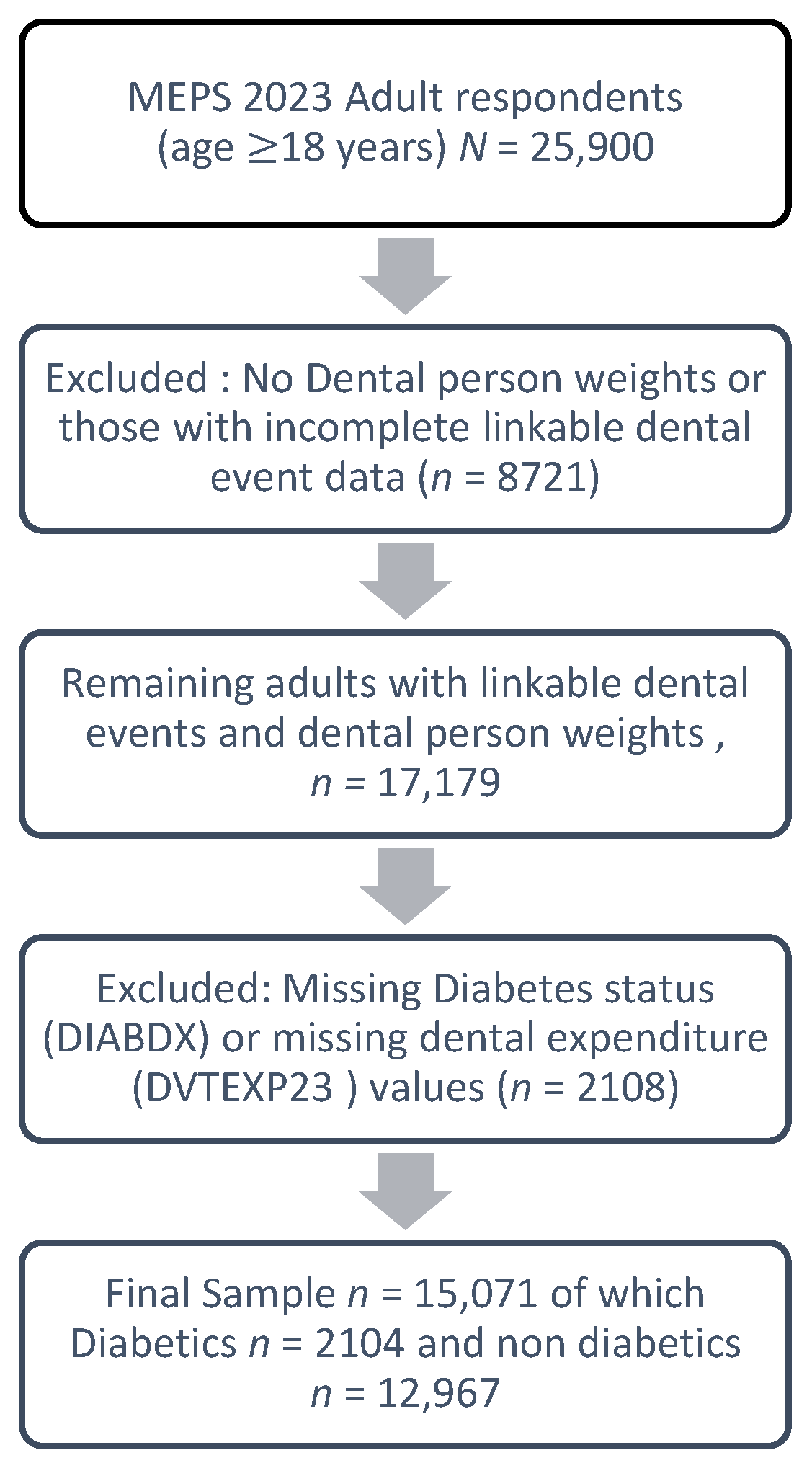
This manuscript was prepared in accordance with the Strengthening the Reporting of Observational Studies in Epidemiology (STROBE) statement for cross-sectional studies. A STROBE-aligned participant flow diagram (
Figure 1) and missingness summary (
Table S1) to enhance transparency and reproducibility is provided.
We conducted a cross-sectional analysis using the 2023 Medical Expenditure Panel Survey (MEPS), a nationally representative survey of the U.S. civilian non-institutionalized population that collects detailed information on demographics, health conditions, healthcare utilization, and expenditures, conducted by the Agency for Healthcare Research and Quality (AHRQ). The datasets used in this study were derived from the 2023 full-year consolidated and dental event expenditure variables and include person-level weights for national inference. The 2023 MEPS adult dataset includes 18,463 respondents representing 330 million individuals (using weights) [
19]. As a nationally representative dataset, MEPS captures detailed information on healthcare utilization, expenditures, demographics, and insurance coverage, along with linkages between conditions and care events. MEPS allows for population-level insights into how demographics, socioeconomic status, and chronic conditions interact to shape healthcare spending. The DE file provides event-level information on dental visits, including expenditures and types of services received. The study population included all adults with complete demographic, health condition, and expenditure data. Individuals were classified as diabetic if they reported a physician diagnosis of diabetes (DIABDX variable). All others were classified as non-diabetic. The dataset was constructed by merging the Household Consolidated (HC) and Dental Events (DE) files using the unique person identifier (DUPERSID). The total annual dental expenditure (DVTEXP23) was defined as all out-of-pocket and third-party payments for dental services incurred during the survey year. All analyses incorporated MEPS survey weights, strata, and primary sampling units to ensure national representativeness.
In accordance with the STROBE guidelines, we explicitly report the (i) study design and setting, (ii) eligibility criteria and participant selection, (iii) clear definitions of exposures, outcomes, and covariates, (iv) population size at each stage of inclusion, (v) handling of missing data, and (vi) statistical methods including model specification and survey weighting. A completed STROBE checklist is provided, together with a participant flow diagram (
Figure 1) and a missingness summary table (
Table S1).
Figure 1 presents the STROBE-aligned flow diagram summarizing participant selection and derivation of the final analytic sample. The final population included 15,071 adults, representing approximately 269 million U.S. adults when applying MEPS dental person weights.
Missingness and data completeness:
Table S1 reports item-level completeness for all analytic variables used in the descriptive and multivariable models. Missingness was minimal overall; education contained a small proportion of missing-coded values and was imputed as described in the Methods Section.
We report sample sizes at each stage via a flow diagram (
Figure 1), quantify missingness for analytic variables (
Table S1), and describe our modeling strategy and assumptions, including the two-part framework for semicontinuous expenditures, the use of survey weights, and the handling of missing data (median imputation for education). Limitations relevant to cross-sectional observational inference including self-reported diabetes, residual confounding, and the absence of oral hygiene/clinical severity measures are explicitly discussed to support the interpretability and evaluability of findings.
Following MEPS analytic guidance for dental analyses, the present study leverages data of US adults (age ≥ 18 years) as adult dental utilization varies significantly from that of children. We then only included those individuals who have a non-zero dental person weight (PERWT23F_dental). This is so since this corresponds to respondents for whom dental events, expenditures, and payer data are complete and linkable.
The primary dependent variable was annual dental expenditures in 2023 (DVTEXP23_dental). Due to the highly skewed distribution and the presence of zero expenditure values, DVTEXP23 was analyzed using the following approaches:
DVTEXP23 > 0: an indicator for whether an individual incurred any dental spending (HAS_DENTAL_SPENDING; 1 = yes, 0 = no).
Continuous cost variable: log-transformed using log1p(DVTEXP23) for linear regressions to stabilize variance
Diabetes status was defined using the analytic dataset indicator (DIABDX), which reflects self-reported physician diagnosis in MEPS. Respondents were categorized as having diabetes or not. We excluded individuals with missing diabetes status (DIABDX variable) or missing annual dental expenditure data (DVTEXP23). The final dataset consisted of 15,071 adults, representing approximately 269 million U.S. adults when survey weights were applied.
Based on prior literature and a conceptual health utilization model, we included the following covariates:
Demographics: Age (categorized as 18–34, 35–64, 65+), gender, education
Socioeconomic variables: Family income level (as % of Federal Poverty Level: poor <100%, near-poor 100–125%, low 125–200%, middle 200–400%, high >400%), insurance status.
Dental Utilization: Total annual spending on dental care, including out-of-pocket, private insurance, and public insurance payments. Binary indicators: any dental spending (yes/no)
Expenditures: Continuous measure of annual dental expenditure (total payments from all sources).
Oral health behavior proxies: indicators preventive care utilization (Preventive > 0). Preventive treatments included CLENTETX—cleaning, prophylaxis, polishing, or periodontal recall, FLUORIDX—fluoride treatment, SEALANTX—sealant application.
Comorbidities: hypertension (HAS_HYPERTENSION), high cholesterol (CHOLDX), coronary heart disease (CHDDX), and stroke (STRKDX).
Geographic controls: U.S. regional indicators (Midwest, South, West; Northeast as reference). The Region variable was included in the models as binary as South vs. non-South using MEPS region classification.
Insurance Coverage: This was a binary variable indicating if a person had insurance or not, looking at if the individual has any insurance (public, private or others) or not.
All analyses incorporated MEPS survey weights, strata, and primary sampling units to ensure national representativeness. We conducted analyses in two stages—bivariate analysis was used to describe demographics overall and stratified by diabetes status. The dataset does not support diagnosis-linked attribution of total annual dental spending to specific clinical categories (e.g., caries versus periodontal disease) or to procedure classes; hence, interpretations are restricted to total spending and utilization measures.
Missing Data: Respondents with missing values for diabetes status, dental weights, or dental expenditure measures were excluded from the analytic sample. All other variables were complete except for education, which had 139 missing-coded values (0.92%). Education missing codes were imputed to the weighted median education value for modelling (summary is provided in
Table S1). Item-level missingness was low for most covariates. Variables required for defining the analytic sample such as diabetes status, dental expenditures, and dental weights were not imputed. For the remaining covariates, missing values were imputed using the median for continuous variables or the mode for categorical variables. Complete-case sensitivity analyses yielded substantively similar results.
We conducted STROBE-aligned sensitivity analyses to assess the robustness of inferences to missing-data handling, age specification, and distributional assumptions. First, because education contained MEPS missing-coded values, we compared the primary model (education imputed to the median) against (i) a complete-case analysis restricted to non-missing education and (ii) a missing-indicator approach. Second, to assess confounding and functional-form concerns for age, we refitted models using categorical age groups (18–34, 35–64, ≥65 years). Third, for conditional spending among users, we compared the primary Gamma-log GLM with an alternative log-normal specification (weighted least squares on log spending). As an additional exploratory check, we refitted both parts including an indicator for any preventive dental visit (Preventive > 0), recognizing this may control for downstream utilization and is therefore interpreted as sensitivity rather than a primary causal adjustment.
We estimated a two-part model: (1) logistic regression for the probability of any dental spending and (2) a generalized linear model (Gamma distribution with log link) for conditional spending among users. The models adjust for demographic, socioeconomic, insurance, and region covariates. The models were estimated overall and stratified by diabetes status. The analyses incorporated MEPS dental person weights and used robust standard errors. Statistical significance was assessed using two-sided tests at α = 0.05.
A log-transformed linear regression model was used to estimate the association between diabetes and dental expenditures among the full sample:
where (X
k) represents the covariates.
3. Results
The final data was comprised of 15,071 individuals representing approximately 269 million U.S. residents (weighted using dental person weights). Of these, 2104 individuals reported a diabetes diagnosis. Adults with diabetes were significantly less likely than non-diabetic adults to have any dental expenditure (38.3% vs. 44.6%;
p < 0.001). However, among those with positive dental spending (5804 nondiabetics and 807 diabetics), individuals with diabetes exhibited higher mean annual dental expenditures (
$1251 vs.
$1076). Adults with diabetes were older on average with 48.7% of the diabetics above the age of 65 years vs. only 25% of the non-diabetics. Diabetics also had a higher prevalence of comorbidities (46.7% of diabetics having any CVD related comorbidity vs. 23% for non-diabetics). The mean dental spending was
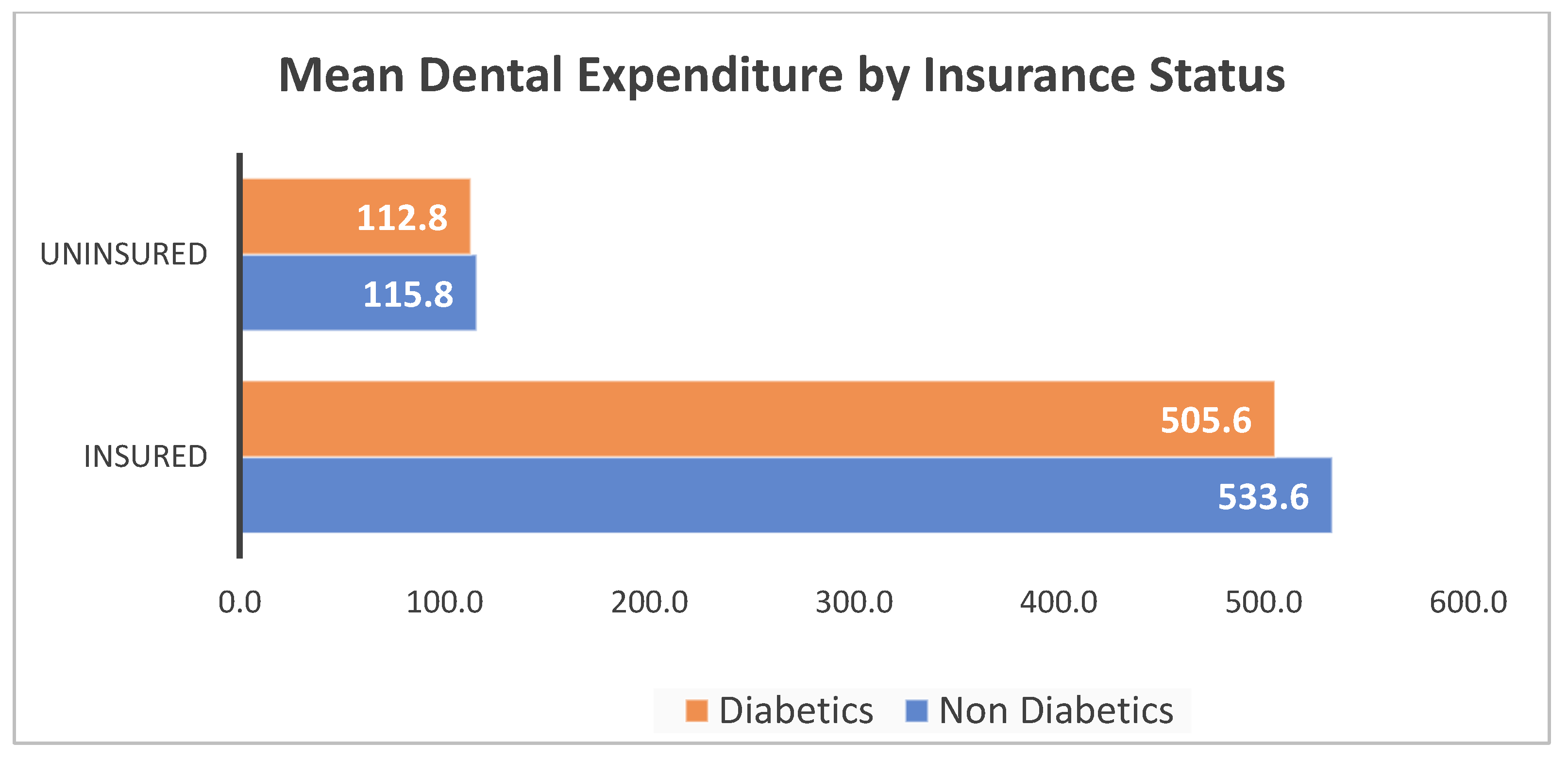
$528 for the insured population vs.
$115 for the uninsured. Preventive dental care utilization was lower among diabetics (28% vs. 36.8% for Preventive) but average dental expenditures were similar for diabetics and non-diabetics. The overall demographic characteristics, as well as those for diabetics vs. non-diabetics, are summarized in
Table 1:
Insurance status was strongly associated with dental service use in both groups (
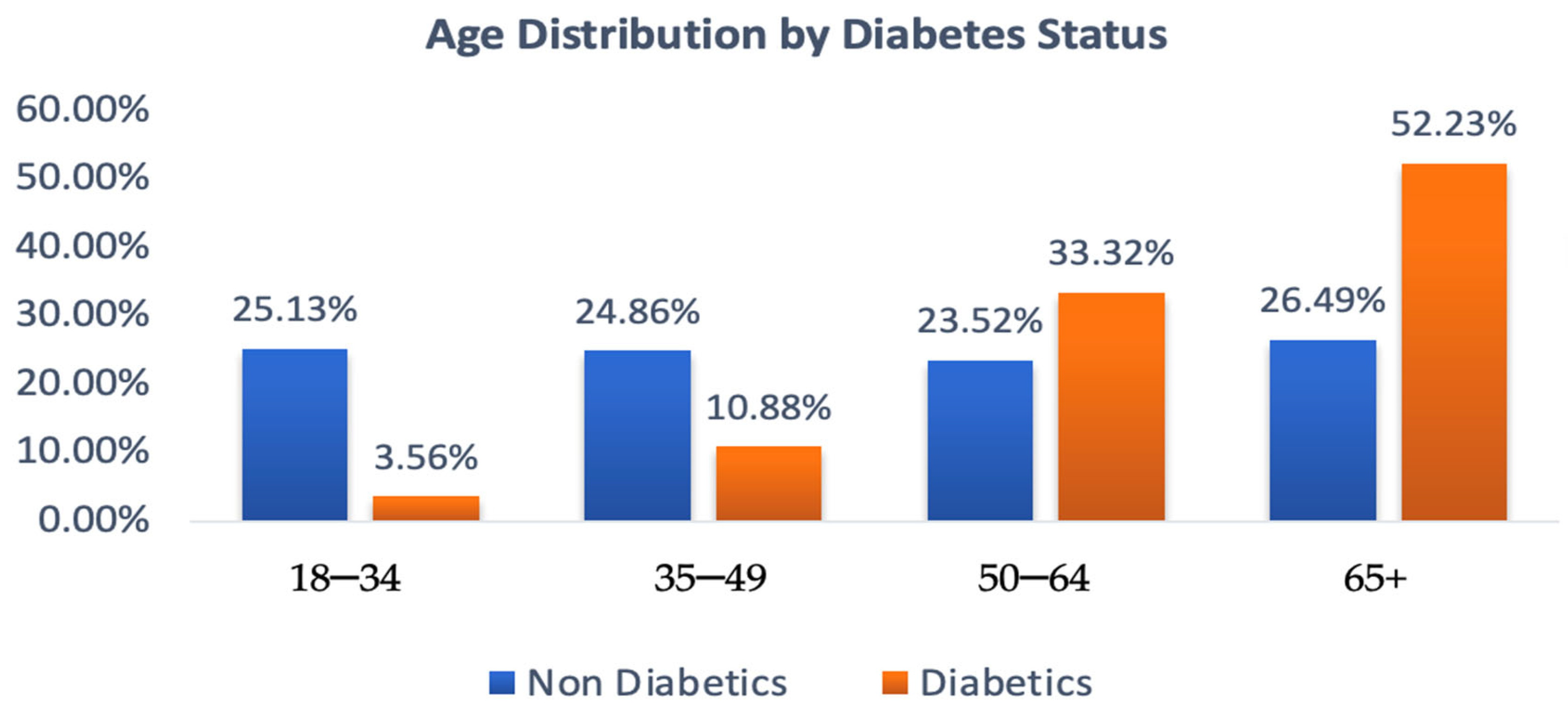
Table 1). A total of 93.6% of the diabetics had insurance as compared to 87.8% of the non-diabetics. A total of 85% of the diabetics were over 50 years old but less than 50% of non-diabetics were over 50 years old (
Figure 2). A total of 70.8% of diabetics had public health insurance while only 42.9% of non-diabetics had the same. Simultaneously, 56.9% of non-diabetics had private health insurance as compared to 39.1% of diabetics. Privately insured individuals were significantly more likely to have any dental spending than publicly insured or uninsured adults in both groups. For both diabetic and non-diabetic populations, individuals with insurance had more than four times the average mean dental expenditure than those without insurance (
Figure 3).
Marked disparities were observed across racial and regional subgroups (
Table 2). Across all racial/ethnic categories, individuals with diabetes reported lower dental utilization than their non-diabetic counterparts except for the Non-Hispanic Black population only. Regionally, dental spending was lowest in the South, with a consistent gap in utilization between diabetic and non-diabetic populations.
Dental utilization exhibited pronounced socioeconomic gradients. In both populations, dental use increased steadily with family income. Among diabetics, only 27% of those in the lowest income quartile had any dental spending, compared with 53% in the highest quartile.
Given that dental utilization patterns differed between diabetic and non-diabetic adults with diabetics having lower dental spending, these differences motivated stratified modelling using a two-part framework. Multivariate models were estimated to identify predictors of (a) having any dental spending and (b) dental spending for conditional spenders. Predictor importance was compared across subgroups to assess whether diabetes status modified the influence of preventive care, income, or insurance on treatment utilization. All analyses were performed using Python v3.14.2, with model coefficients and p-values reported using robust standard errors.
Table 3 presents the standardized logistic regression coefficients for the non-diabetic, diabetic, and overall populations. After adjustment for demographics, socioeconomic factors, and region, diabetic adults had lower odds of any dental spending. Across all models, insurance coverage, preventive care, education, age > 65 years, and female came out as consistent and statistically robust predictors of dental spending.
Insurance coverage was the strongest enabling factor for dental utilization. In the full sample, having any insurance (vs. uninsured) was associated with substantially higher odds of any dental spending (OR = 1.91, 95% CI 1.52–2.40; p < 0.001). The association remained strong among adults without diabetes (OR = 1.81, 95% CI 1.43–2.29; p < 0.001) and was even larger among adults with diabetes (OR = 3.74, 95% CI 1.55–8.99; p = 0.003). Preventive dental use (Preventive > 0) was also extremely strongly associated with any dental spending (OR = 582.69, 95% CI 449.17–755.88; p < 0.001) because preventive visits are intrinsically linked to having a dental event and therefore spending. In the full sample, females were associated with higher odds of spending (OR = 1.25, 95% CI 1.11–1.41; p < 0.001) and education was positively associated with utilization (OR per year = 1.08, 95% CI 1.05–1.10; p < 0.001). Compared with adults aged 18–34, adults aged ≥65 had higher odds of dental spending (OR = 1.69, 95% CI 1.42–2.01; p < 0.001). Region (South vs. non-South) was not significantly associated with dental spending in this specification (OR = 0.98, 95% CI 0.87–1.11; p = 0.776). After covariate adjustment, diabetes status was not independently associated with the probability of any dental spending (OR = 1.04, 95% CI 0.87–1.25; p = 0.677), indicating that the unadjusted gap in utilization by diabetes is largely explained by enabling resources (especially insurance) and sociodemographic differences.
Among adults with any dental spending (
Table 3), preventive utilization was associated with lower conditional expenditures in the overall model, consistent with prevention substituting for higher-cost restorative or urgent treatment among users. In the overall model, insurance coverage was associated with higher conditional spending among spenders, while this association was less precise in the diabetes subgroup, consistent with reduced sample size among diabetic spenders. Older age (≥65 years) was associated with higher conditional spending in the overall and non-diabetes samples. Diabetes status demonstrated a modest positive association with conditional spending in the overall model but did not meet statistical significance thresholds.
Table 4 provides the results for the second stage of the two-part model, estimating spending amounts among adults who incurred any dental expenditure. Among diabetics, age did not significantly influence spending magnitude, suggesting a more homogeneous treatment profile. Among adults with positive dental spending, preventive use was associated with lower conditional expenditures, consistent with prevention being less costly than restorative or acute services. In the full sample, preventive use was associated with 46% lower spending (Odds ratio = 0.54, 95% CI 0.47–0.61;
p < 0.001), with similar reductions among adults without diabetes (Ratio = 0.53;
p < 0.001) and adults with diabetes (Ratio = 0.56;
p < 0.001). Age ≥ 65 was associated with higher conditional spending among spenders (Ratio = 1.43, 95% CI 1.25–1.63;
p < 0.001), particularly among adults without diabetes (Ratio = 1.48;
p < 0.001). In the diabetes subgroup, age effects were imprecise and not statistically significant.
Insurance coverage was associated with higher conditional spending among spenders in the overall sample (Ratio = 1.36, 95% CI 1.07–1.73; p = 0.011) and among adults without diabetes (Ratio = 1.35, p = 0.020), but not among adults with diabetes (Ratio = 1.37, 95% CI 0.59–3.17; p = 0.465), likely reflecting reduced precision from the smaller diabetic subsample size. Finally, diabetes status showed a positive but not statistically significant association with conditional spending (Ratio = 1.14, 95% CI 0.98–1.33; p = 0.098), consistent with higher unadjusted spending among diabetic users but limited statistical certainty after adjustment.
4. Discussion
In this nationally representative MEPS analysis, insurance coverage emerged as the dominant predictor of dental utilization, particularly for adults with diabetes. In the first part of the model, insured adults were substantially more likely to have dental expenditures than uninsured adults, and the insurance association was markedly stronger among adults with diabetes than among those without diabetes, suggesting that lack of coverage may pose an especially steep barrier to initiating dental care among individuals managing a chronic condition. From a policy perspective, this pattern reinforces the premise that expanding dental coverage may be particularly consequential for adults with diabetes. Policy efforts that expand adult dental benefits through Medicaid adult dental coverage, Medicare dental benefit reforms, or subsidized marketplace options could therefore meaningfully reduce unmet dental needs and improve access to routine care for medically vulnerable populations.
A second key finding is that diabetes itself was not independently associated with whether an adult had any dental spending after adjusting for insurance, age bins, sex, education, and region. This implies that the commonly observed lower dental use among people with diabetes may be driven more by differences in access and sociodemographic factors than by diabetes status. In practical terms, interventions targeting enabling resources (coverage and affordability) may be more impactful for closing utilization gaps than approaches focused only on diabetes-specific messaging.
Across all groups, preventive use was strongly associated with entering care (Part 1) and was associated with lower conditional spending among those with expenditures. While the Part 1 association is expected in that preventive visits imply dental events and thus spending, the Part 2 finding—that among users, preventive engagement is linked to lower annual expenditures, consistent with prevention substituting for more costly restorative or urgent services—is meaningful. This supports policy emphasis on facilitating preventive dental care as a potential lever to reduce downstream spending intensity. From a policy perspective, benefit designs that reduce financial friction for preventive dental care (e.g., first-dollar coverage for cleanings and exams, reduced cost-sharing, provider network adequacy) may encourage earlier engagement and reduce progression to higher-cost episodes of care. In diabetes care specifically, aligning incentives across medical and dental coverage such as integrating dental referrals and preventive dental metrics into chronic disease management programs may improve oral health and potentially support broader health goals, while addressing persistent access inequities driven by insurance status. Integrating dental benefits more systematically into health insurance arrangements particularly for low-income and medically complex adults may help shift care toward prevention, reduce downstream treatment burden, and improve overall chronic disease management.
The models also suggest important equity-relevant implications for older adults and women. Adults aged ≥65 years showed higher odds of dental spending and higher conditional spending among users, indicating a group with substantial dental care needs and potentially higher treatment intensity once engaged in care. From a policy standpoint, this supports targeted strategies for older adults such as expanding affordable dental coverage for seniors, strengthening provider participation for older beneficiaries, and improving integration between medical care (including diabetes management) and dental services in geriatric care pathways. At the same time, older adults who remain uninsured or underinsured may face especially high barriers to initiating care, making coverage expansion for seniors particularly consequential.
Women were significantly more likely than men to have any dental spending in our adjusted models, which has an important policy implication. From a policy perspective, this supports ensuring that dental benefit designs and provider capacity need to be responsive to women’s oral health needs, particularly for preventive and maintenance services, while also reinforcing the importance of integrating oral health into broader women’s health and chronic disease management programs. At the same time, because utilization can reflect both need and access/behavior, these findings should be interpreted as a marker of differential patterns of dental care use rather than definitive evidence of a higher clinical disease burden in women.
Taken together, these findings reinforce the importance of improving dental access and health coverage, particularly for diabetic populations. Policies integrating preventive dental care into chronic disease management programs incentivizing preventive care adherence through diabetes care plans or bundling dental assessments into diabetes check-ups may mitigate downstream treatment costs. Moreover, early identification of high-risk diabetic patients with low preventive engagement may present an opportunity for targeted oral health interventions that reduce disease progression and overall healthcare expenditures. For example, integrating dental referral pathways into diabetes care can improve preventive engagement and may reduce avoidable downstream costs. Our findings align with prior national studies reporting reduced dental care use among individuals with diabetes [
15,
20]. Previous analyses of MEPS have documented lower rates of preventive visits and higher rates of unmet dental need among adults with diabetes [
21,
22].
Beyond insurance expansion, the magnitude and patterning of the access association point toward a care-delivery response grounded in integrated, team-based chronic disease management. Contemporary diabetes standards emphasize coordinated, person-centered care and comprehensive evaluation of comorbidities, an approach that supports incorporating oral health assessment and referral as part of routine diabetes workflows. Operationally, this can include structured documentation of a dental home, standardized prompts for referral, and referral tracking within the diabetes care plan. In this framing, dental access is not merely a downstream oral health issue but a component of chronic care management that benefits from shared responsibility across disciplines [
23,
24].
A growing amount of literature supports models that integrate oral health into primary care and chronic disease services, while also documenting persistent operational barriers—fragmented financing, limited interoperability of electronic health records, workforce training gaps, and unclear accountability across disciplines. A systematic review of integration strategies found that many approaches improve processes such as referral pathways and documentation, underscoring that integration is feasible but must be deliberately designed and resourced and that interprofessional models further suggest improvements in patient outcomes and satisfaction when dental professionals are embedded or closely linked to healthcare teams, while highlighting common barriers including communication challenges and lack of interoperable records [
25,
26].
In practical terms, integrated delivery requires clearly articulated roles. Physicians and advanced practice providers (primary care/endocrinology) can embed oral health screening questions into routine diabetes visits, reinforce the importance of preventive dental engagement, and initiate referrals, particularly for patients at elevated risk or those reporting periodontal symptoms. Nurses, diabetes educators, and care managers are well-positioned to implement follow-through: incorporating oral health into self-management education, supporting appointment completion, addressing barriers (transportation, scheduling, coverage literacy), and reinforcing prevention behaviors over time. Dental professionals can align preventive recall and periodontal management with diabetes risk profiles, communicate relevant findings back to the medical team, and support bidirectional care planning. Community health workers and social care navigators can also play an important role by addressing structural barriers that our results suggest are decisive, especially for uninsured and underinsured patients, by providing benefit navigation, community-based referral support, and linkage to low-cost clinics or safety-net providers. The integrated care-pathways literature in diabetes specifically emphasizes that sustainable medical–dental integration often requires infrastructure and commissioning/financing changes [
27]. These results are also relevant considering the recent clinical practice guidance from the American College of Lifestyle Medicine which emphasizes structured therapeutic lifestyle behavior interventions as a core element of type 2 diabetes management and, in some cases, remission-oriented care [
28]. This supports a coordinated, multiprofessional approach in which the medical team and dental team reinforce consistent prevention messaging and behavior-change support across settings, while simultaneously lowering access barriers to preventive care.
Several limitations of the study may be noted. Diabetes status in MEPS is based on self-reported physician diagnosis and may be subject to misclassification and reporting bias. The cross-sectional design limits inference about temporal ordering between diabetes and dental care utilization. Although we adjust for measured sociodemographic and access-related covariates, residual confounding may persist due to unmeasured factors such as health literacy, diabetes duration, disease severity, and glycemic control. Lifestyle and behavioral factors including diet, smoking, and oral hygiene practices likely contribute to both diabetes and oral health outcomes and may partially explain the observed disparities in dental utilization and spending. Because MEPS does not measure oral hygiene behaviors (e.g., brushing/flossing frequency) or clinical oral disease severity (e.g., periodontal probing depth, clinical attachment loss), we cannot isolate causal pathways linking diabetes to oral health outcomes or dental expenditures. Accordingly, we present our findings as population-level associations and interpret the observed differences primarily in terms of access and utilization rather than causation.
5. Conclusions
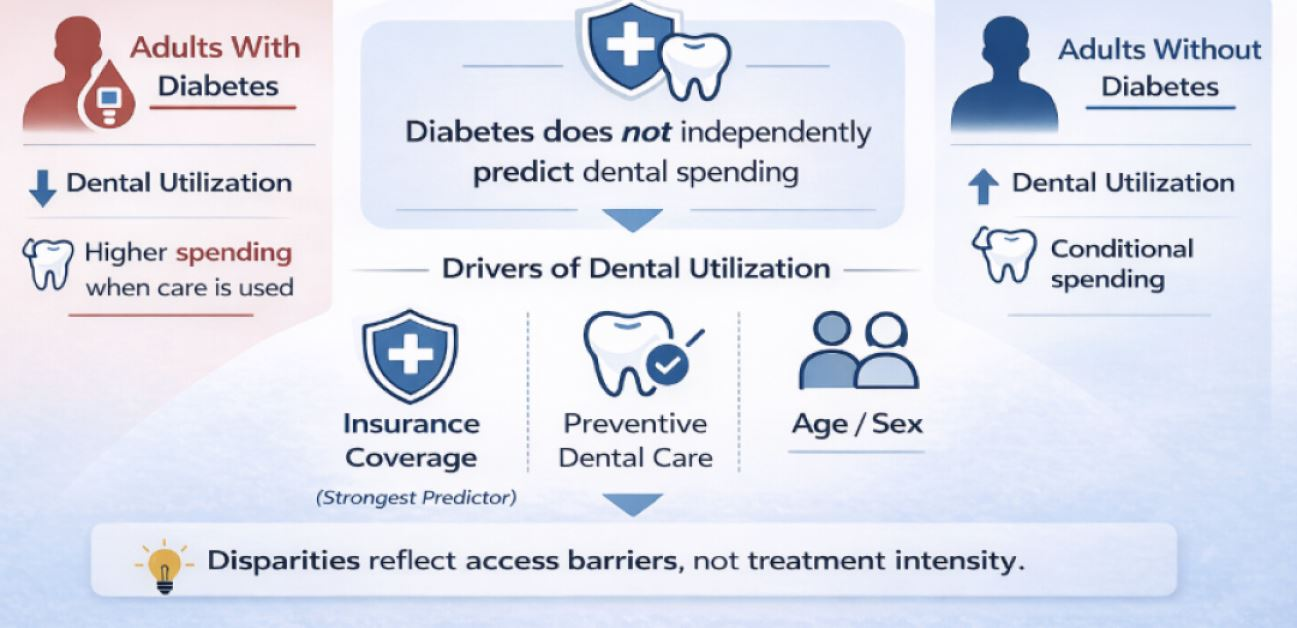
In conclusion, insurance coverage was the dominant predictor of dental care utilization, with particularly strong associations among adults with diabetes, underscoring coverage as a key lever for reducing unmet dental needs in medically vulnerable populations. After adjustment for enabling and sociodemographic factors, diabetes status was not independently associated with having any dental spending, suggesting that the observed utilization gaps largely reflect differences in access rather than diabetes.
Among dental users, preventive utilization was consistently associated with lower annual spending, supporting policies that expand comprehensive adult dental benefits and reduce cost barriers to preventive care. The significant associations observed for older adults and women further indicate the need for targeted strategies, especially improved affordability and access for seniors and benefit designs and service capacity responsive to women’s oral health care needs. Strengthening the integration of oral health into diabetes management could reduce both the financial burden and adverse health outcomes, ultimately supporting a more cost-effective and patient-centered healthcare system. By addressing the disparities in dental utilization, health systems can mitigate long-term oral health complications and financial strain among high-risk populations.