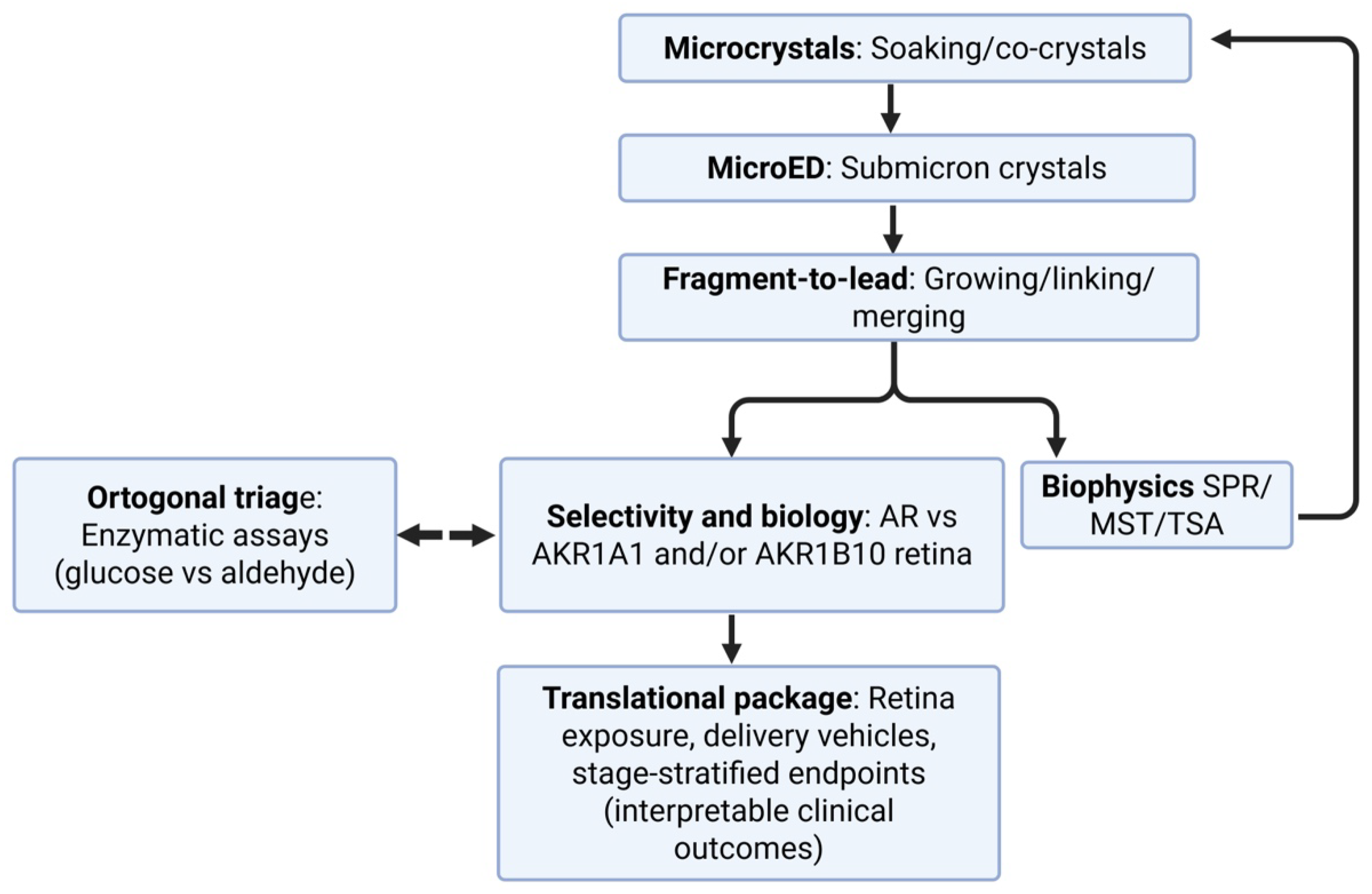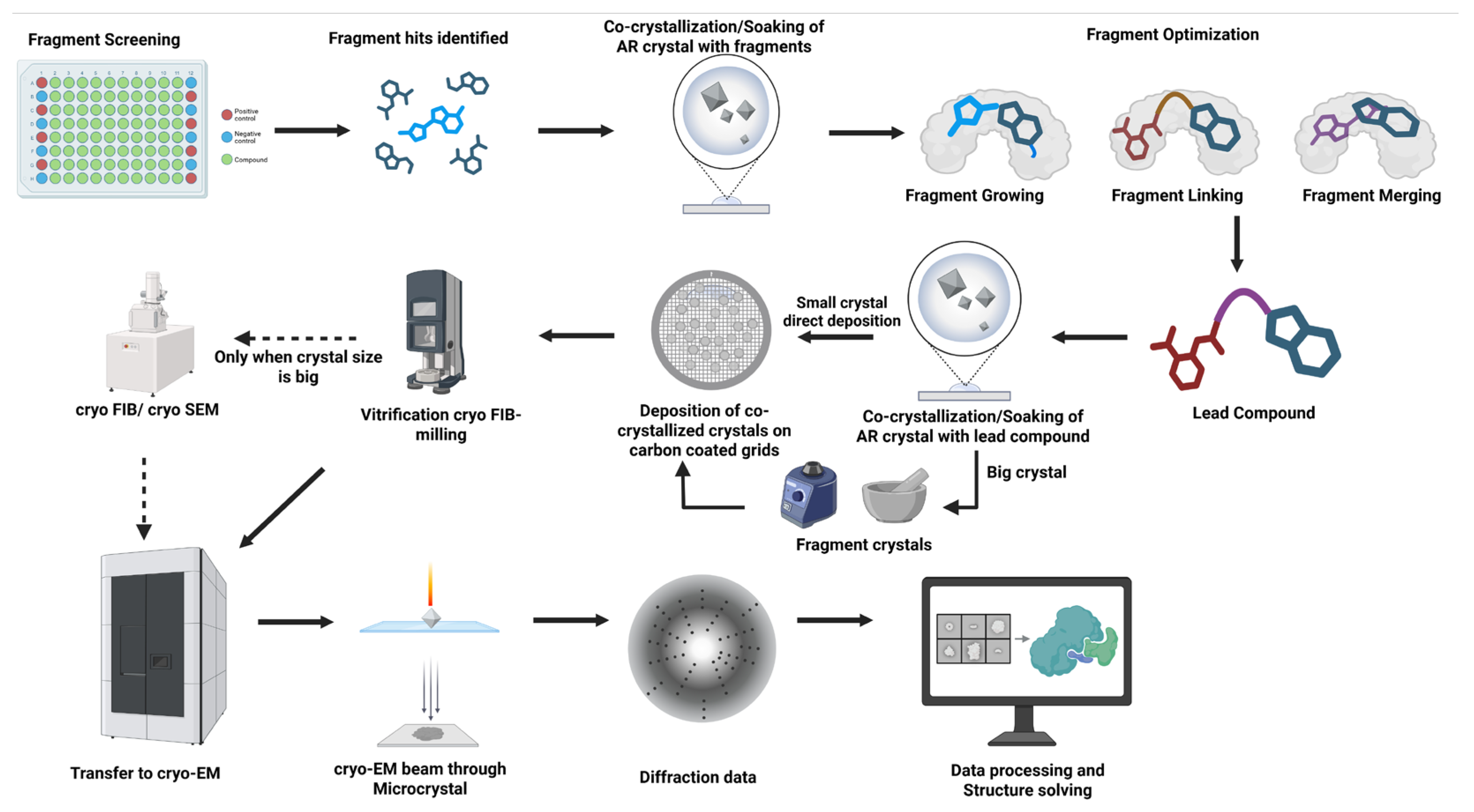

Old Target with New Vision: In Search of New Therapeutics for Diabetic Retinopathy by Selective Modulation of Aldose Reductase

Abstract
1. Introduction
2. Aldose Reductase: Catalytic Activity, and Pathological and Physiological Functions
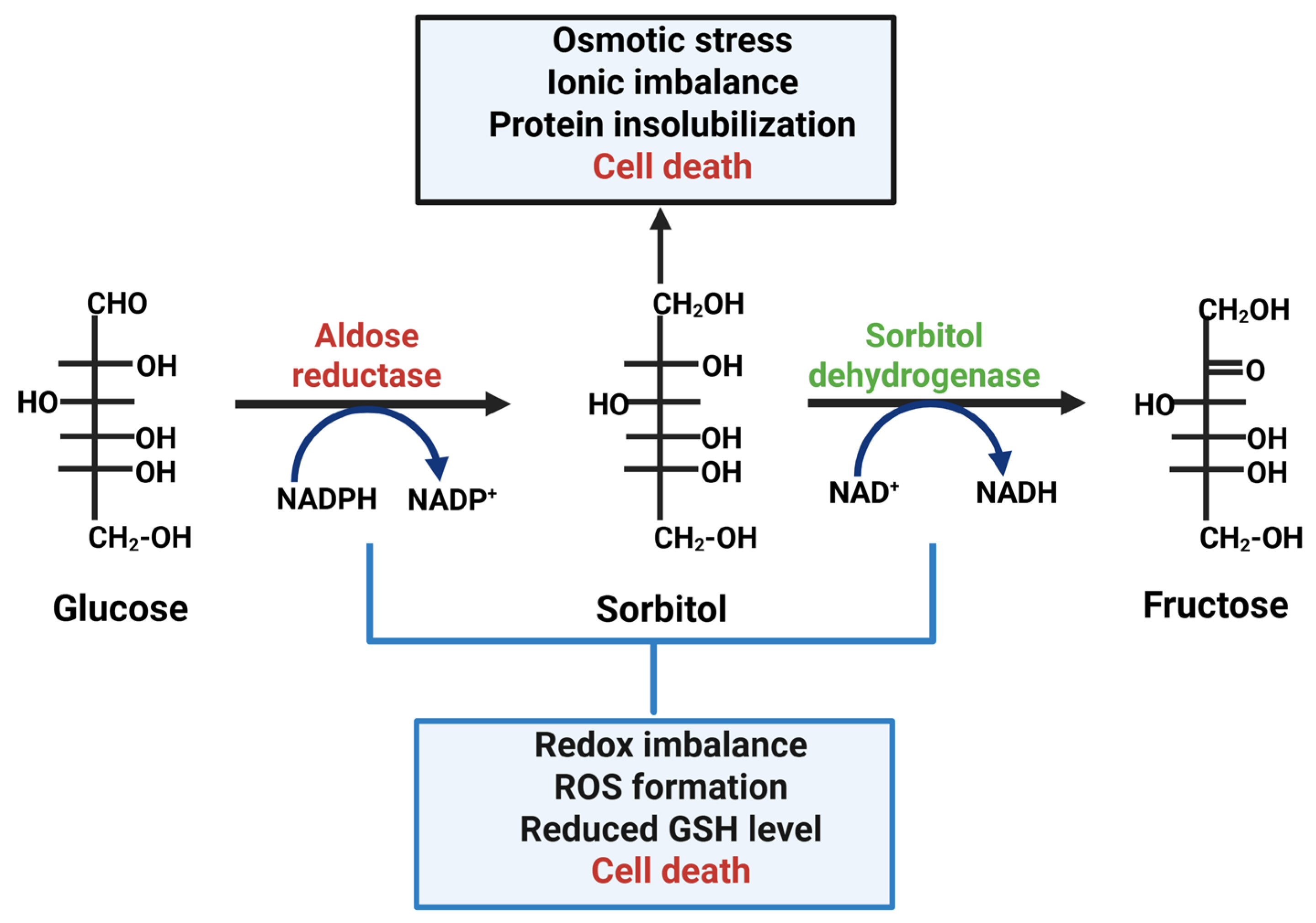
2.1. The Polyol Pathway
2.1.1. Polyol Pathway Activation and Sorbitol Accumulation
2.1.2. Oxidative Stress Generation
2.1.3. Formation of Advanced Glycation End Products (AGEs)
2.1.4. Activation of Protein Kinase C (PKC)
2.2. Clinical Manifestations
2.3. Physiological Function of AR
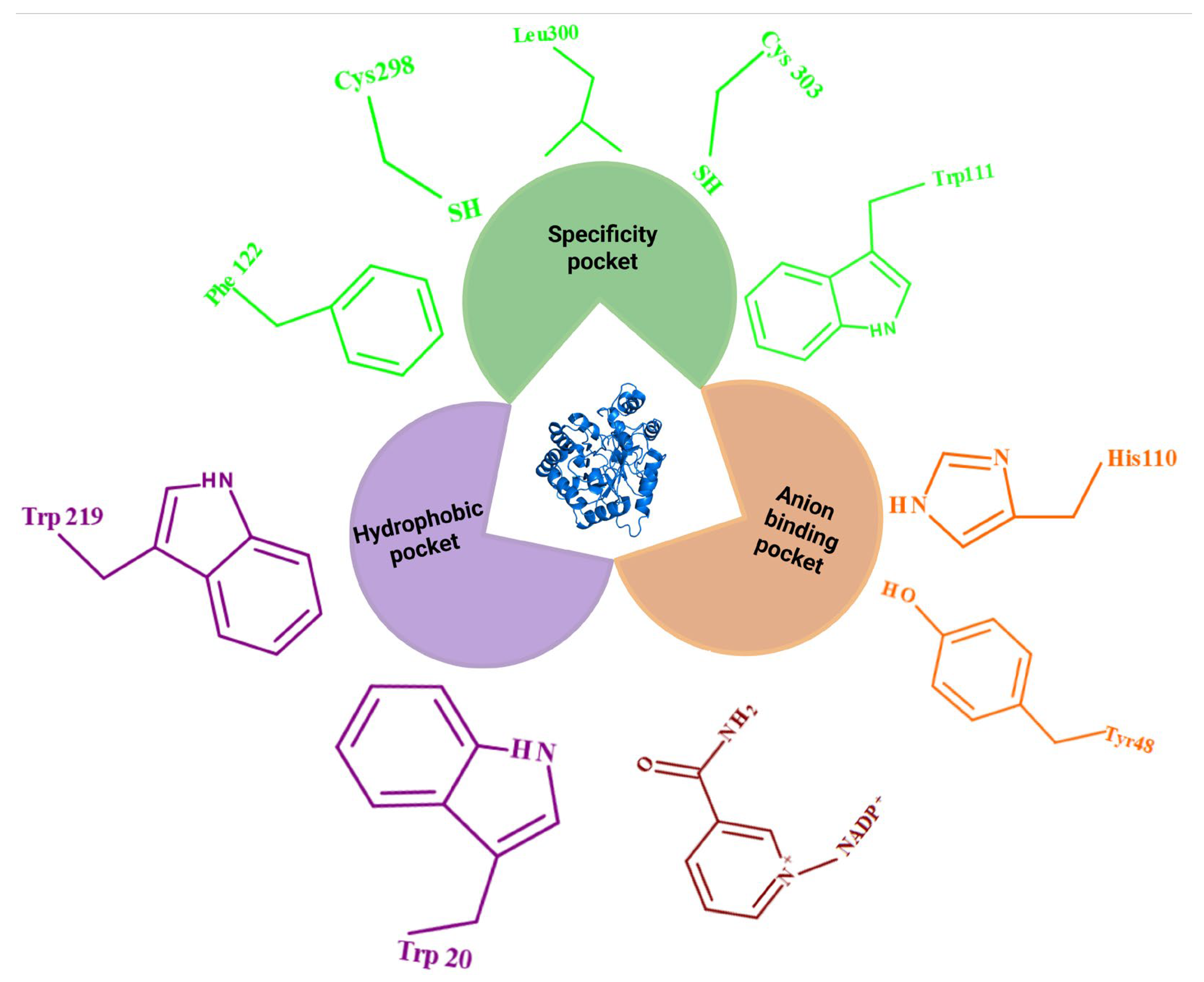
3. Structural Characteristics of Aldose Reductase
3.1. Conformational Flexibility
Structural Homology and Challenges
3.2. Current AR Inhibitors
3.2.1. Major Limitations of ARIs
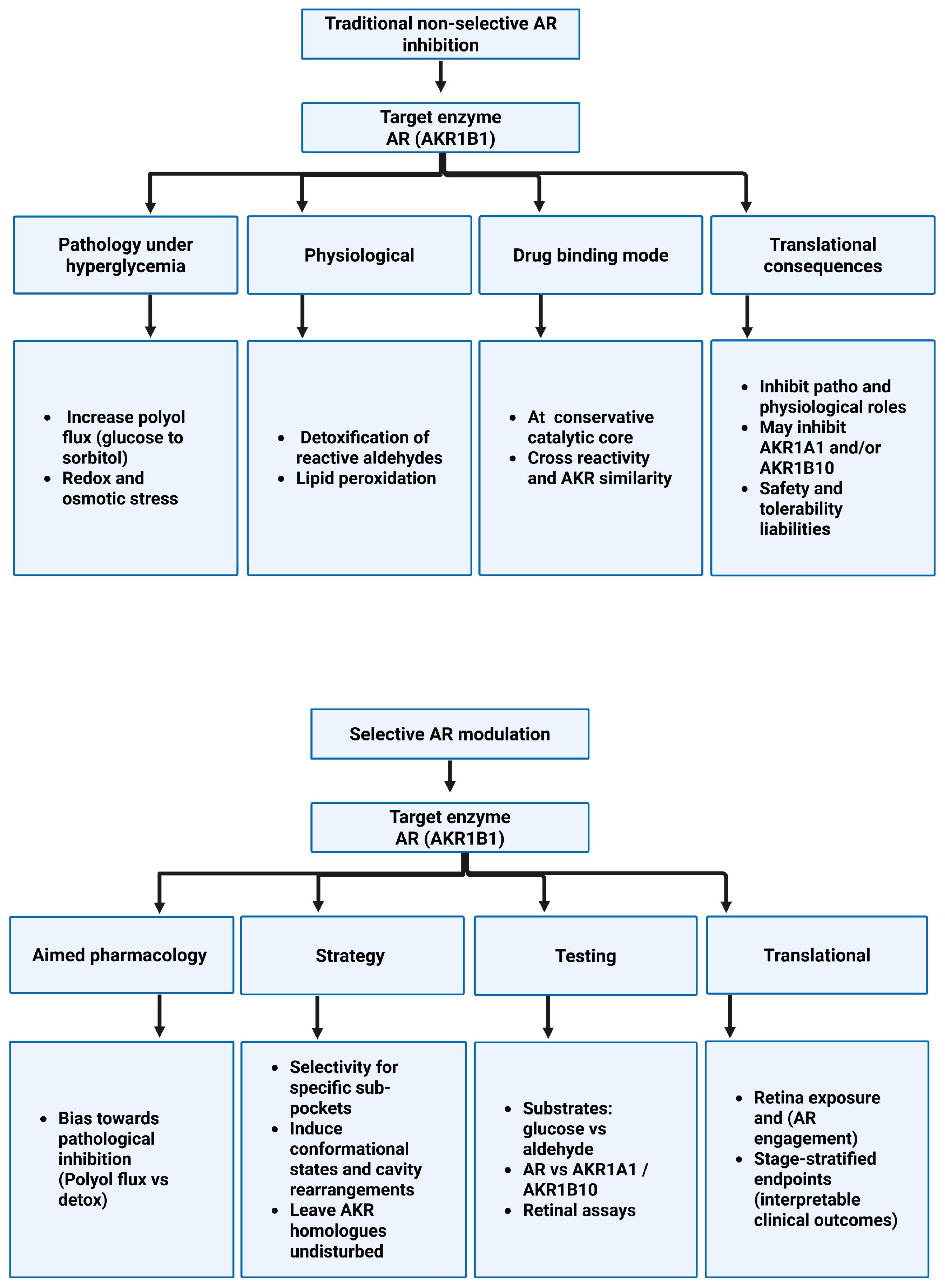
3.2.2. Translational Positioning of Selective/Differential AR Modulation in Current DR Care
3.2.3. New Strategies for Aldose Reductase Inhibitor Design
4. Emerging Tools in Rational Drug Design: Fragment-Based Drug Discovery and MicroED
4.1. Fragment-Based Drug Discovery (FBDD)
4.1.1. Fragment Screening Biophysical Detection
4.1.2. Why AR Is Particularly Well Suited for FBDD
4.2. Microcrystal Electron Diffraction (MicroED)
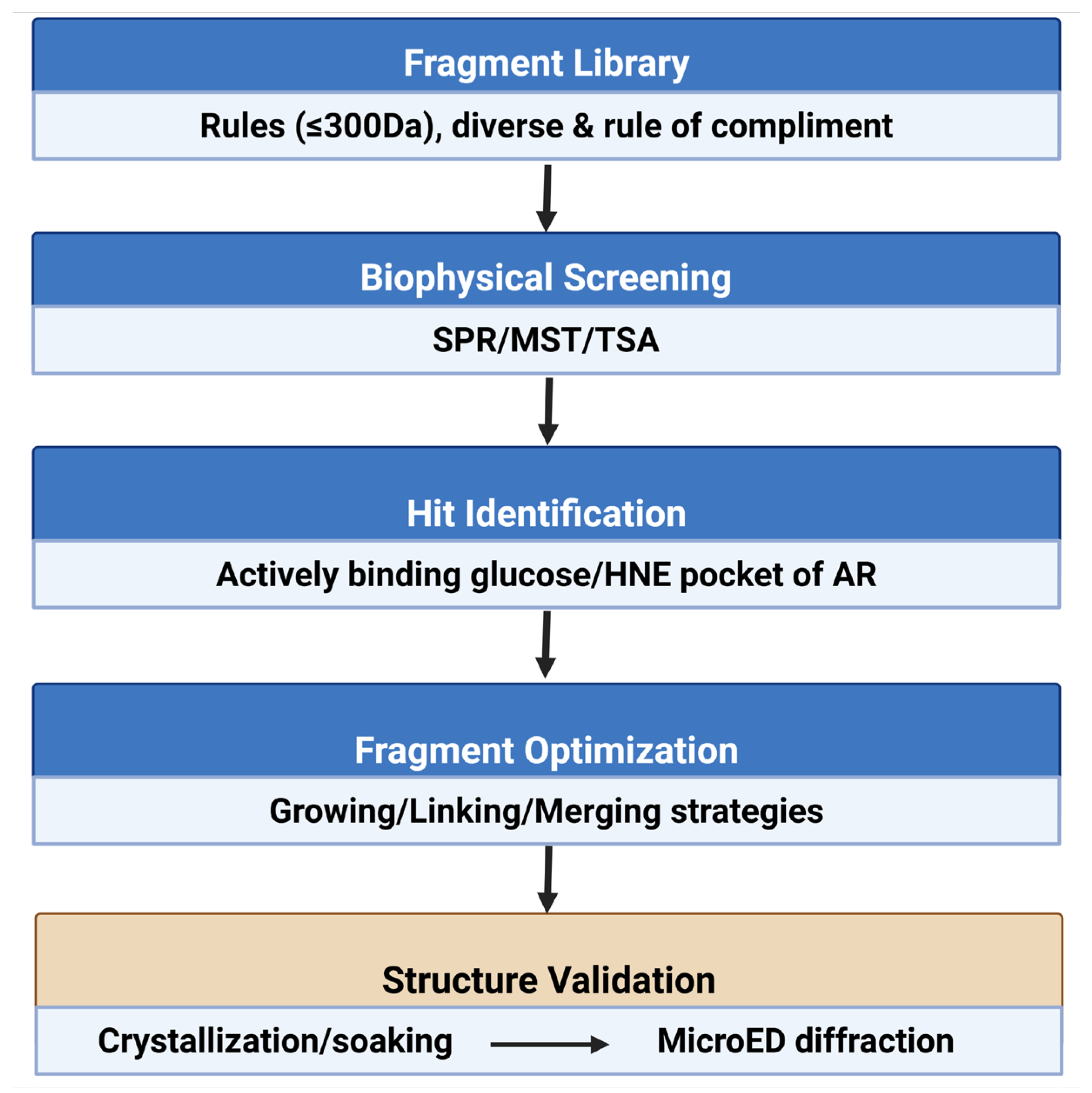
4.3. Proposed Strategy: Integrating FBDD and MicroED for Aldose Reductase Inhibitor Design
4.4. Fragment Optimization Strategies for Selective Aldose Reductase Inhibition
4.5. Structural Validation of Optimized Leads Using MicroED
4.6. Application Workflow: Using MicroED to Guide Differential Inhibitor Design
5. Conclusions and Future Perspectives
Author Contributions
Funding
Institutional Review Board Statement
Informed Consent Statement
Data Availability Statement
Conflicts of Interest
References
- American Diabetes Association. Diagnosis and classification of diabetes mellitus. Diabetes Care 2010, 33, S62–S69. [Google Scholar] [CrossRef] [PubMed]
- American Diabetes Association Professional Practice Committee. 2. Diagnosis and Classification of Diabetes: Standards of Care in Diabetes-2025. Diabetes Care 2025, 48, S27–S49. [Google Scholar] [CrossRef]
- Cade, W.T. Diabetes-related microvascular and macrovascular diseases in the physical therapy setting. Phys. Ther. 2008, 88, 1322–1335. [Google Scholar] [CrossRef]
- Vithian, K.; Hurel, S. Microvascular complications: Pathophysiology and management. Clin. Med. 2010, 10, 505–509. [Google Scholar] [CrossRef] [PubMed]
- Ansari, P.; Tabasumma, N.; Snigdha, N.N.; Siam, N.H.; Panduru, R.V.N.R.S.; Azam, S.; Hannan, J.M.A.; Abdel-Wahab, Y.H.A. Diabetic Retinopathy: An Overview on Mechanisms, Pathophysiology and Pharmacotherapy. Diabetology 2022, 3, 159–175. [Google Scholar] [CrossRef]
- Klein, R.; Klein, B.E.; Moss, S.E.; Davis, M.D.; DeMets, D.L. The Wisconsin epidemiologic study of diabetic retinopathy: III. Prevalence and risk of diabetic retinopathy when age at diagnosis is 30 or more years. Arch. Ophthalmol. 1984, 102, 527–532. [Google Scholar]
- Honasoge, A.; Nudleman, E.; Smith, M.; Rajagopal, R. Emerging Insights and Interventions for Diabetic Retinopathy. Curr. Diabetes Rep. 2019, 19, 100. [Google Scholar] [CrossRef]
- Hendrick, A.M.; Gibson, M.V.; Kulshreshtha, A. Diabetic Retinopathy. Prim. Care 2015, 42, 451–464. [Google Scholar] [CrossRef]
- Song, S.J.; Wong, T.Y. Current concepts in diabetic retinopathy. Diabetes Metab. J. 2014, 38, 416–425. [Google Scholar] [CrossRef][Green Version]
- Bortea, C.I.; Stoica, F.; Boia, M.; Iacob, E.R.; Dinu, M.; Iacob, R.; Iacob, D. Risk Factors Associated with Retinopathy of Prematurity in Very and Extremely Preterm Infants. Medicina 2021, 57, 420. [Google Scholar] [CrossRef]
- Wang, W.; Lo, A.C.Y. Diabetic Retinopathy: Pathophysiology and Treatments. Int. J. Mol. Sci. 2018, 19, 1816. [Google Scholar] [CrossRef]
- Antonetti, D.A.; Silva, P.S.; Stitt, A.W. Current understanding of the molecular and cellular pathology of diabetic retinopathy. Nat. Rev. Endocrinol. 2021, 17, 195–206. [Google Scholar] [CrossRef] [PubMed]
- Brownlee, M. Biochemistry and molecular cell biology of diabetic complications. Nature 2001, 414, 813–820. [Google Scholar] [CrossRef]
- Sheetz, M.J.; King, G.L. Molecular understanding of hyperglycemia’s adverse effects for diabetic complications. JAMA 2002, 288, 2579–2588. [Google Scholar] [CrossRef] [PubMed]
- Stewart, M.W. Pathophysiology of Diabetic Retinopathy. In Diabetic Retinopathy; Springer: New York, NY, USA, 2010; pp. 1–30. [Google Scholar]
- Singh, M.; Kapoor, A.; Bhatnagar, A. Physiological and Pathological Roles of Aldose Reductase. Metabolites 2021, 11, 655. [Google Scholar] [CrossRef] [PubMed]
- Stitt, A.W.; Lois, N.; Medina, R.J.; Adamson, P.; Curtis, T.M. Advances in our understanding of diabetic retinopathy. Clin. Sci. 2013, 125, 1–17. [Google Scholar] [CrossRef]
- Lorenzi, M. The polyol pathway as a mechanism for diabetic retinopathy: Attractive, elusive, and resilient. Exp. Diabetes Res. 2007, 2007, 61038. [Google Scholar] [CrossRef]
- Del Amo, E.M.; Rimpela, A.K.; Heikkinen, E.; Kari, O.K.; Ramsay, E.; Lajunen, T.; Schmitt, M.; Pelkonen, L.; Bhattacharya, M.; Richardson, D.; et al. Pharmacokinetic aspects of retinal drug delivery. Prog. Retin. Eye Res. 2017, 57, 134–185. [Google Scholar] [CrossRef]
- Van den Enden, M.K.; Nyengaard, J.R.; Ostrow, E.; Burgan, J.H.; Williamson, J.R. Elevated glucose levels increase retinal glycolysis and sorbitol pathway metabolism. Implications for diabetic retinopathy. Invest. Ophthalmol. Vis. Sci. 1995, 36, 1675–1685. [Google Scholar]
- Danila, A.I.; Ghenciu, L.A.; Stoicescu, E.R.; Bolintineanu, S.L.; Iacob, R.; Sandesc, M.A.; Faur, A.C. Reductase as a Key Target in the Prevention and Treatment of Diabetic Retinopathy: A Comprehensive Review. Biomedicines 2024, 12, 747. [Google Scholar] [CrossRef]
- Vinores, S.A.; Campochiaro, P.A.; Williams, E.H.; May, E.E.; Green, W.R.; Sorenson, R.L. Aldose reductase expression in human diabetic retina and retinal pigment epithelium. Diabetes 1988, 37, 1658–1664. [Google Scholar] [CrossRef] [PubMed]
- Thomas, T.P.; Porcellati, F.; Kato, K.; Stevens, M.J.; Sherman, W.R.; Greene, D.A. Effects of glucose on sorbitol pathway activation, cellular redox, and metabolism of myo-inositol, phosphoinositide, and diacylglycerol in cultured human retinal pigment epithelial cells. J. Clin. Investig. 1994, 93, 2718–2724. [Google Scholar] [CrossRef] [PubMed]
- Bravi, M.C.; Pietrangeli, P.; Laurenti, O.; Basili, S.; Cassone-Faldetta, M.; Ferri, C.; De Mattia, G. Polyol pathway activation and glutathione redox status in non-insulin-dependent diabetic patients. Metabolism 1997, 46, 1194–1198. [Google Scholar] [CrossRef]
- Ramana, K.V.; Srivastava, S.K. Aldose reductase: A novel therapeutic target for inflammatory pathologies. Int. J. Biochem. Cell Biol. 2010, 42, 17–20. [Google Scholar] [CrossRef] [PubMed]
- Julius, A.; Hopper, W. A non-invasive, multi-target approach to treat diabetic retinopathy. Biomed. Pharmacother. 2019, 109, 708–715. [Google Scholar] [CrossRef]
- Balestri, F.; Moschini, R.; Mura, U.; Cappiello, M.; Del Corso, A. In Search of Differential Inhibitors of Aldose Reductase. Biomolecules 2022, 12, 485. [Google Scholar] [CrossRef]
- Gulec, O.; Turkes, C.; Arslan, M.; Demir, Y.; Dincer, B.; Ece, A.; Irfan Kufrevioglu, O.; Beydemir, S. Novel spiroindoline derivatives targeting aldose reductase against diabetic complications: Bioactivity, cytotoxicity, and molecular modeling studies. Bioorg. Chem. 2024, 145, 107221. [Google Scholar] [CrossRef]
- Ahmad, S.; Ahmad, M.F.A.; Khan, S.; Alouffi, S.; Khan, M.; Prakash, C.; Khan, M.W.A.; Ansari, I.A. Exploring aldose reductase inhibitors as promising therapeutic targets for diabetes-linked disabilities. Int. J. Biol. Macromol. 2024, 280, 135761. [Google Scholar] [CrossRef]
- Kumari, P.; Kohal, R.; Bhavana; Gupta, G.D.; Verma, S.K. Selectivity challenges for aldose reductase inhibitors: A review on comparative SAR and interaction studies. J. Mol. Struct. 2024, 1318, 139207. [Google Scholar] [CrossRef]
- Sarges, R.; Oates, P.J. Aldose reductase inhibitors: Recent developments. Prog. Drug Res. 1993, 40, 99–161. [Google Scholar]
- Maccari, R.; Ottana, R. Targeting aldose reductase for the treatment of diabetes complications and inflammatory diseases: New insights and future directions. J. Med. Chem. 2015, 58, 2047–2067. [Google Scholar]
- Grewal, A.S.; Bhardwaj, S.; Pandita, D.; Lather, V.; Sekhon, B.S. Updates on Aldose Reductase Inhibitors for Management of Diabetic Complications and Non-diabetic Diseases. Mini Rev. Med. Chem. 2016, 16, 120–162. [Google Scholar] [CrossRef]
- Grewal, A.S.; Thapa, K.; Kanojia, N.; Sharma, N.; Singh, S. Natural Compounds as Source of Aldose Reductase (AR) Inhibitors for the Treatment of Diabetic Complications: A Mini Review. Curr. Drug Metab. 2020, 21, 1091–1116. [Google Scholar] [CrossRef]
- Gabbay, K.H. Aldose reductase inhibition in the treatment of diabetic neuropathy: Where are we in 2004? Curr. Diabetes Rep. 2004, 4, 405–408. [Google Scholar] [CrossRef] [PubMed]
- Ramirez, M.A.; Borja, N.L. Epalrestat: An aldose reductase inhibitor for the treatment of diabetic neuropathy. Pharmacotherapy 2008, 28, 646–655. [Google Scholar] [PubMed]
- Hotta, N.; Kawamori, R.; Fukuda, M.; Shigeta, Y. Long-term clinical effects of epalrestat, an aldose reductase inhibitor, on progression of diabetic neuropathy and other microvascular complications: Multivariate epidemiological analysis based on patient background factors and severity of diabetic neuropathy. Diabet. Med. 2012, 29, 1529–1533. [Google Scholar] [PubMed]
- Senthilkumari, S.; Sharmila, R.; Chidambaranathan, G.; Vanniarajan, A. Epalrestat, an Aldose Reductase Inhibitor Prevents Glucose-Induced Toxicity in Human Retinal Pigment Epithelial Cells In Vitro. J. Ocul. Pharmacol. Ther. 2017, 33, 34–41. [Google Scholar] [CrossRef]
- Petrash, J.M. All in the family: Aldose reductase and closely related aldo-keto reductases. Cell. Mol. Life Sci. 2004, 61, 737–749. [Google Scholar] [CrossRef]
- Sun, W.; Oates, P.J.; Coutcher, J.B.; Gerhardinger, C.; Lorenzi, M. A selective aldose reductase inhibitor of a new structural class prevents or reverses early retinal abnormalities in experimental diabetic retinopathy. Diabetes 2006, 55, 2757–2762. [Google Scholar] [CrossRef]
- Cheung, A.K.; Fung, M.K.; Lo, A.C.; Lam, T.T.; So, K.F.; Chung, S.S.; Chung, S.K. Aldose reductase deficiency prevents diabetes-induced blood-retinal barrier breakdown, apoptosis, and glial reactivation in the retina of db/db mice. Diabetes 2005, 54, 3119–3125. [Google Scholar] [CrossRef]
- Sun, W.; Gerhardinger, C.; Dagher, Z.; Hoehn, T.; Lorenzi, M. Aspirin at low-intermediate concentrations protects retinal vessels in experimental diabetic retinopathy through non-platelet-mediated effects. Diabetes 2005, 54, 3418–3426. [Google Scholar] [PubMed]
- Anonymous. A randomized trial of sorbinil, an aldose reductase inhibitor, in diabetic retinopathy. Sorbinil Retinopathy Trial Research Group. Arch. Ophthalmol. 1990, 108, 1234–1244. [Google Scholar]
- Dagher, Z.; Park, Y.S.; Asnaghi, V.; Hoehn, T.; Gerhardinger, C.; Lorenzi, M. Studies of rat and human retinas predict a role for the polyol pathway in human diabetic retinopathy. Diabetes 2004, 53, 2404–2411. [Google Scholar] [CrossRef] [PubMed]
- Asnaghi, V.; Gerhardinger, C.; Hoehn, T.; Adeboje, A.; Lorenzi, M. A role for the polyol pathway in the early neuroretinal apoptosis and glial changes induced by diabetes in the rat. Diabetes 2003, 52, 506–511. [Google Scholar] [CrossRef]
- Barski, O.A.; Gabbay, K.H.; Grimshaw, C.E.; Bohren, K.M. Mechanism of human aldehyde reductase: Characterization of the active site pocket. Biochemistry 1995, 34, 11264–11275. [Google Scholar] [CrossRef]
- Del-Corso, A.; Balestri, F.; Di Bugno, E.; Moschini, R.; Cappiello, M.; Sartini, S.; La-Motta, C.; Da-Settimo, F.; Mura, U. A new approach to control the enigmatic activity of aldose reductase. PLoS ONE 2013, 8, e74076. [Google Scholar]
- Elimam, D.M.; Ibrahim, A.S.; Liou, G.I.; Badria, F.A. Olive and ginkgo extracts as potential cataract therapy with differential inhibitory activity on aldose reductase. Drug Discov. Ther. 2017, 11, 41–46. [Google Scholar] [CrossRef] [PubMed]
- Balestri, F.; Poli, G.; Pineschi, C.; Moschini, R.; Cappiello, M.; Mura, U.; Tuccinardi, T.; Del Corso, A. Aldose Reductase Differential Inhibitors in Green Tea. Biomolecules 2020, 10, 1003. [Google Scholar] [CrossRef]
- Cappiello, M.; Balestri, F.; Moschini, R.; Mura, U.; Del-Corso, A. Intra-site differential inhibition of multi-specific enzymes. J. Enzym. Inhib. Med. Chem. 2020, 35, 840–846. [Google Scholar] [CrossRef]
- Ramana, K.V. ALDOSE REDUCTASE: New Insights for an Old Enzyme. Biomol. Concepts 2011, 2, 103–114. [Google Scholar] [CrossRef]
- Ramasamy, R.; Goldberg, I.J. Aldose reductase and cardiovascular diseases, creating human-like diabetic complications in an experimental model. Circ. Res. 2010, 106, 1449–1458. [Google Scholar] [CrossRef] [PubMed]
- Rao, M.; Chang, K.C. Aldose reductase is a potential therapeutic target for neurodegeneration. Chem. Biol. Interact. 2024, 389, 110856. [Google Scholar] [CrossRef]
- Tanimoto, T.; Maekawa, K.; Okada, S.; Yabe-Nishimura, C. Clinical analysis of aldose reductase for differential diagnosis of the pathogenesis of diabetic complication. Anal. Chim. Acta 1998, 365, 285–292. [Google Scholar] [CrossRef]
- Brownlee, M. The pathobiology of diabetic complications: A unifying mechanism. Diabetes 2005, 54, 1615–1625. [Google Scholar] [CrossRef] [PubMed]
- Alwadani, F.; Saif, M. The role and prevalence of polyol pathway and oxidative stress markers as risk factors for diabetic cataract in adult type-I diabetic and diabetic cataract Saudi patients. J. Clin. Exp. Ophthalmol. 2016, 7, 2. [Google Scholar]
- Doorn, J.A.; Srivastava, S.K.; Petersen, D.R. Aldose reductase catalyzes reduction of the lipid peroxidation product 4-oxonon-2-enal. Chem. Res. Toxicol. 2003, 16, 1418–1423. [Google Scholar] [CrossRef]
- Petrash, J.M.; Harter, T.M.; Murdock, G.L. A potential role for aldose reductase in steroid metabolism. Adv. Exp. Med. Biol. 1997, 414, 465–473. [Google Scholar]
- Iwata, N.; Hara, S.; Nishimura, C.; Takahashi, M.; Mukai, T.; Takayama, M.; Endo, T. Hormonal regulation of aldose reductase in rat ovary during the estrous cycle. Eur. J. Biochem. 1996, 235, 444–448. [Google Scholar] [CrossRef]
- Eisenhofer, G.; Kopin, I.J.; Goldstein, D.S. Catecholamine metabolism: A contemporary view with implications for physiology and medicine. Pharmacol. Rev. 2004, 56, 331–349. [Google Scholar] [CrossRef]
- Niimi, N.; Yako, H.; Takaku, S.; Chung, S.K.; Sango, K. Aldose Reductase and the Polyol Pathway in Schwann Cells: Old and New Problems. Int. J. Mol. Sci. 2021, 22, 1031. [Google Scholar] [CrossRef]
- Hers, H.G. The mechanism of the transformation of glucose in fructose in the seminal vesicles. Biochim. Biophys. Acta 1956, 22, 202–203. [Google Scholar] [CrossRef]
- Hirakawa, H.; Sawada, H.; Yamahama, Y.; Takikawa, S.; Shintaku, H.; Hara, A.; Mase, K.; Kondo, T.; Iino, T. Expression analysis of the aldo-keto reductases involved in the novel biosynthetic pathway of tetrahydrobiopterin in human and mouse tissues. J. Biochem. 2009, 146, 51–60. [Google Scholar] [CrossRef]
- Park, Y.S.; Heizmann, C.W.; Wermuth, B.; Levine, R.A.; Steinerstauch, P.; Guzman, J.; Blau, N. Human carbonyl and aldose reductases: New catalytic functions in tetrahydrobiopterin biosynthesis. Biochem. Biophys. Res. Commun. 1991, 175, 738–744. [Google Scholar] [CrossRef]
- Endo, S.; Matsunaga, T.; Mamiya, H.; Ohta, C.; Soda, M.; Kitade, Y.; Tajima, K.; Zhao, H.T.; El-Kabbani, O.; Hara, A. Kinetic studies of AKR1B10, human aldose reductase-like protein: Endogenous substrates and inhibition by steroids. Arch. Biochem. Biophys. 2009, 487, 1–9. [Google Scholar] [CrossRef]
- Lee, A.Y.; Chung, S.K.; Chung, S.S. Demonstration that polyol accumulation is responsible for diabetic cataract by the use of transgenic mice expressing the aldose reductase gene in the lens. Proc. Natl. Acad. Sci. USA 1995, 92, 2780–2784. [Google Scholar] [CrossRef] [PubMed]
- Ho, E.C.; Lam, K.S.; Chen, Y.S.; Yip, J.C.; Arvindakshan, M.; Yamagishi, S.; Yagihashi, S.; Oates, P.J.; Ellery, C.A.; Chung, S.S.; et al. Aldose reductase—Deficient mice are protected from delayed motor nerve conduction velocity, increased c-Jun NH2-terminal kinase activation, depletion of reduced glutathione, increased superoxide accumulation, and DNA damage. Diabetes 2006, 55, 1946–1953. [Google Scholar] [CrossRef] [PubMed]
- Takahashi, Y.; Wyman, M.; Ferris, F., 3rd; Kador, P.F. Diabeteslike preproliferative retinal changes in galactose-fed dogs. Arch. Ophthalmol. 1992, 110, 1295–1302. [Google Scholar] [CrossRef] [PubMed]
- Kador, P.F.; Akagi, Y.; Takahashi, Y.; Ikebe, H.; Wyman, M.; Kinoshita, J.H. Prevention of retinal vessel changes associated with diabetic retinopathy in galactose-fed dogs by aldose reductase inhibitors. Arch. Ophthalmol. 1990, 108, 1301–1309. [Google Scholar] [CrossRef]
- Srikanth, K.K.; Orrick, J.A. Biochemistry, Polyol Or Sorbitol Pathways. In StatPearls; StatPearls Publishing: Treasure Island, FL, USA, 2025. [Google Scholar]
- Gonzalez, P.; Lozano, P.; Ros, G.; Solano, F. Hyperglycemia and Oxidative Stress: An Integral, Updated and Critical Overview of Their Metabolic Interconnections. Int. J. Mol. Sci. 2023, 24, 9352. [Google Scholar] [CrossRef]
- Luis-Rodriguez, D.; Martinez-Castelao, A.; Gorriz, J.L.; De-Alvaro, F.; Navarro-Gonzalez, J.F. Pathophysiological role and therapeutic implications of inflammation in diabetic nephropathy. World J. Diabetes 2012, 3, 7–18. [Google Scholar] [CrossRef]
- Wu, J.; Jin, Z.; Zheng, H.; Yan, L.J. Sources and implications of NADH/NAD+ redox imbalance in diabetes and its complications. Diabetes Metab. Syndr. Obes. 2016, 9, 145–153. [Google Scholar]
- Steinmetz, P.R.; Balko, C.; Gabbay, K.H. The Sorbitol Pathway and the Complications of Diabetes. N. Engl. J. Med. 1973, 288, 831–836. [Google Scholar] [CrossRef]
- Hohman, T.C.; Nishimura, C.; Robison, W.G., Jr. Aldose reductase and polyol in cultured pericytes of human retinal capillaries. Exp. Eye Res. 1989, 48, 55–60. [Google Scholar] [CrossRef]
- Li, W.; Chan, L.S.; Khatami, M.; Rockey, J.H. Non-competitive inhibition of myo-inositol transport in cultured bovine retinal capillary pericytes by glucose and reversal by Sorbinil. Biochim. Biophys. Acta 1986, 857, 198–208. [Google Scholar] [CrossRef]
- Chakrabarti, S.; Sima, A.A.; Nakajima, T.; Yagihashi, S.; Greene, D.A. Aldose reductase in the BB rat: Isolation, immunological identification and localization in the retina and peripheral nerve. Diabetologia 1987, 30, 244–251. [Google Scholar] [CrossRef]
- Drel, V.R.; Pacher, P.; Ali, T.K.; Shin, J.; Julius, U.; El-Remessy, A.B.; Obrosova, I.G. Aldose reductase inhibitor fidarestat counteracts diabetes-associated cataract formation, retinal oxidative-nitrosative stress, glial activation, and apoptosis. Int. J. Mol. Med. 2008, 21, 667–676. [Google Scholar] [CrossRef] [PubMed]
- Hodgkinson, A.D.; Sondergaard, K.L.; Yang, B.; Cross, D.F.; Millward, B.A.; Demaine, A.G. Aldose reductase expression is induced by hyperglycemia in diabetic nephropathy. Kidney Int. 2001, 60, 211–218. [Google Scholar] [CrossRef]
- Oishi, N.; Kubo, E.; Takamura, Y.; Maekawa, K.; Tanimoto, T.; Akagi, Y. Correlation between erythrocyte aldose reductase level and human diabetic retinopathy. Br. J. Ophthalmol. 2002, 86, 1363–1366. [Google Scholar] [CrossRef] [PubMed]
- Heesom, A.E.; Millward, A.; Demaine, A.G. Susceptibility to diabetic neuropathy in patients with insulin dependent diabetes mellitus is associated with a polymorphism at the 5′ end of the aldose reductase gene. J. Neurol. Neurosurg. Psychiatry 1998, 64, 213–216. [Google Scholar] [CrossRef]
- Ng, D.P.; Conn, J.; Chung, S.S.; Larkins, R.G. Aldose reductase (AC)n microsatellite polymorphism and diabetic microvascular complications in Caucasian Type 1 diabetes mellitus. Diabetes Res. Clin. Pract. 2001, 52, 21–27. [Google Scholar] [CrossRef] [PubMed]
- Park, H.K.; Ahn, C.W.; Lee, G.T.; Kim, S.J.; Song, Y.D.; Lim, S.K.; Kim, K.R.; Huh, K.B.; Lee, H.C. (AC)n polymorphism of aldose reductase gene and diabetic microvascular complications in type 2 diabetes mellitus. Diabetes Res. Clin. Pract. 2002, 55, 151–157. [Google Scholar] [CrossRef] [PubMed]
- Abhary, S.; Hewitt, A.W.; Burdon, K.P.; Craig, J.E. A systematic meta-analysis of genetic association studies for diabetic retinopathy. Diabetes 2009, 58, 2137–2147. [Google Scholar] [CrossRef]
- Yan, L.J. Redox imbalance stress in diabetes mellitus: Role of the polyol pathway. Anim. Model. Exp. Med. 2018, 1, 7–13. [Google Scholar] [CrossRef] [PubMed]
- Obrosova, I.G. Increased sorbitol pathway activity generates oxidative stress in tissue sites for diabetic complications. Antioxid. Redox Signal. 2005, 7, 1543–1552. [Google Scholar] [CrossRef]
- Tang, W.H.; Martin, K.A.; Hwa, J. Aldose reductase, oxidative stress, and diabetic mellitus. Front. Pharmacol. 2012, 3, 87. [Google Scholar] [CrossRef]
- Treberg, J.R.; Quinlan, C.L.; Brand, M.D. Evidence for two sites of superoxide production by mitochondrial NADH-ubiquinone oxidoreductase (complex I). J. Biol. Chem. 2011, 286, 27103–27110. [Google Scholar] [CrossRef]
- Murphy, M.P. How mitochondria produce reactive oxygen species. Biochem. J. 2009, 417, 1–13. [Google Scholar]
- Inoguchi, T.; Li, P.; Umeda, F.; Yu, H.Y.; Kakimoto, M.; Imamura, M.; Aoki, T.; Etoh, T.; Hashimoto, T.; Naruse, M.; et al. High glucose level and free fatty acid stimulate reactive oxygen species production through protein kinase C--dependent activation of NAD(P)H oxidase in cultured vascular cells. Diabetes 2000, 49, 1939–1945. [Google Scholar]
- Miyata, T.; Ueda, Y.; Yamada, Y.; Izuhara, Y.; Wada, T.; Jadoul, M.; Saito, A.; Kurokawa, K.; van Ypersele de Strihou, C. Accumulation of carbonyls accelerates the formation of pentosidine, an advanced glycation end product: Carbonyl stress in uremia. J. Am. Soc. Nephrol. 1998, 9, 2349–2356. [Google Scholar] [CrossRef]
- Miyata, T.; van Ypersele de Strihou, C.; Kurokawa, K.; Baynes, J.W. Alterations in nonenzymatic biochemistry in uremia: Origin and significance of “carbonyl stress” in long-term uremic complications. Kidney Int. 1999, 55, 389–399. [Google Scholar] [CrossRef] [PubMed]
- Kaneko, M.; Bucciarelli, L.; Hwang, Y.C.; Lee, L.; Yan, S.F.; Schmidt, A.M.; Ramasamy, R. Aldose reductase and AGE-RAGE pathways: Key players in myocardial ischemic injury. Ann. N. Y. Acad. Sci. 2005, 1043, 702–709. [Google Scholar] [CrossRef]
- Gugliucci, A. Formation of Fructose-Mediated Advanced Glycation End Products and Their Roles in Metabolic and Inflammatory Diseases. Adv. Nutr. 2017, 8, 54–62. [Google Scholar] [CrossRef]
- Giebel, S.J.; Menicucci, G.; McGuire, P.G.; Das, A. Matrix metalloproteinases in early diabetic retinopathy and their role in alteration of the blood-retinal barrier. Lab. Invest. 2005, 85, 597–607. [Google Scholar] [CrossRef]
- Kowluru, R.A.; Zhong, Q.; Santos, J.M. Matrix metalloproteinases in diabetic retinopathy: Potential role of MMP-9. Expert Opin. Investig. Drugs 2012, 21, 797–805. [Google Scholar] [CrossRef] [PubMed]
- Jin, M.; Kashiwagi, K.; Iizuka, Y.; Tanaka, Y.; Imai, M.; Tsukahara, S. Matrix metalloproteinases in human diabetic and nondiabetic vitreous. Retina 2001, 21, 28–33. [Google Scholar] [CrossRef]
- Mohammad, G.; Kowluru, R.A. Matrix metalloproteinase-2 in the development of diabetic retinopathy and mitochondrial dysfunction. Lab. Invest. 2010, 90, 1365–1372. [Google Scholar] [CrossRef] [PubMed]
- Kowluru, R.A.; Kanwar, M. Oxidative stress and the development of diabetic retinopathy: Contributory role of matrix metalloproteinase-2. Free Radic. Biol. Med. 2009, 46, 1677–1685. [Google Scholar] [CrossRef]
- Hoffmann, S.; He, S.; Ehren, M.; Ryan, S.J.; Wiedemann, P.; Hinton, D.R. MMP-2 and MMP-9 secretion by rpe is stimulated by angiogenic molecules found in choroidal neovascular membranes. Retina 2006, 26, 454–461. [Google Scholar] [CrossRef] [PubMed]
- Navaratna, D.; McGuire, P.G.; Menicucci, G.; Das, A. Proteolytic degradation of VE-cadherin alters the blood-retinal barrier in diabetes. Diabetes 2007, 56, 2380–2387. [Google Scholar]
- Ramana, K.V.; Friedrich, B.; Tammali, R.; West, M.B.; Bhatnagar, A.; Srivastava, S.K. Requirement of aldose reductase for the hyperglycemic activation of protein kinase C and formation of diacylglycerol in vascular smooth muscle cells. Diabetes 2005, 54, 818–829. [Google Scholar] [CrossRef] [PubMed]
- Geraldes, P.; King, G.L. Activation of protein kinase C isoforms and its impact on diabetic complications. Circ. Res. 2010, 106, 1319–1331. [Google Scholar] [CrossRef]
- Srivastava, S.; Chandra, A.; Bhatnagar, A.; Srivastava, S.K.; Ansari, N.H. Lipid peroxidation product, 4-hydroxynonenal and its conjugate with GSH are excellent substrates of bovine lens aldose reductase. Biochem. Biophys. Res. Commun. 1995, 217, 741–746. [Google Scholar] [CrossRef]
- Vander Jagt, D.L.; Kolb, N.S.; Vander Jagt, T.J.; Chino, J.; Martinez, F.J.; Hunsaker, L.A.; Royer, R.E. Substrate specificity of human aldose reductase: Identification of 4-hydroxynonenal as an endogenous substrate. Biochim. Biophys. Acta Protein Struct. Mol. Enzym. 1995, 1249, 117–126. [Google Scholar] [CrossRef]
- Frohnert, B.I.; Bernlohr, D.A. Glutathionylated products of lipid peroxidation: A novel mechanism of adipocyte to macrophage signaling. Adipocyte 2014, 3, 224–229. [Google Scholar] [CrossRef][Green Version]
- Frohnert, B.I.; Long, E.K.; Hahn, W.S.; Bernlohr, D.A. Glutathionylated lipid aldehydes are products of adipocyte oxidative stress and activators of macrophage inflammation. Diabetes 2014, 63, 89–100. [Google Scholar] [CrossRef]
- Srivastava, S.; Ramana, K.V.; Bhatnagar, A.; Srivastava, S.K. Synthesis, quantification, characterization, and signaling properties of glutathionyl conjugates of enals. Methods Enzym. 2010, 474, 297–313. [Google Scholar]
- Bursell, S.E.; Takagi, C.; Clermont, A.C.; Takagi, H.; Mori, F.; Ishii, H.; King, G.L. Specific retinal diacylglycerol and protein kinase C beta isoform modulation mimics abnormal retinal hemodynamics in diabetic rats. Invest. Ophthalmol. Vis. Sci. 1997, 38, 2711–2720. [Google Scholar]
- Way, K.J.; Katai, N.; King, G.L. Protein kinase C and the development of diabetic vascular complications. Diabet. Med. 2001, 18, 945–959. [Google Scholar] [CrossRef]
- Akagi, Y.; Kador, P.F.; Kuwabara, T.; Kinoshita, J.H. Aldose reductase localization in human retinal mural cells. Invest. Ophthalmol. Vis. Sci. 1983, 24, 1516–1519. [Google Scholar] [PubMed]
- Akagi, Y.; Yajima, Y.; Kador, P.F.; Kuwabara, T.; Kinoshita, J.H. Localization of aldose reductase in the human eye. Diabetes 1984, 33, 562–566. [Google Scholar] [CrossRef] [PubMed]
- Kador, P.F.; Akagi, Y.; Terubayashi, H.; Wyman, M.; Kinoshita, J.H. Prevention of pericyte ghost formation in retinal capillaries of galactose-fed dogs by aldose reductase inhibitors. Arch. Ophthalmol. 1988, 106, 1099–1102. [Google Scholar] [CrossRef]
- Varma, S.D.; Kinoshita, J.H. The absence of cataracts in mice with congenital hyperglycemia. Exp. Eye Res. 1974, 19, 577–582. [Google Scholar] [CrossRef]
- Ramana, K.V.; Friedrich, B.; Bhatnagar, A.; Srivastava, S.K. Aldose reductase mediates cytotoxic signals of hyperglycemia and TNF-α in human lens epithelial cells. FASEB J. 2003, 17, 315–317. [Google Scholar] [CrossRef]
- Zatechka, D.S., Jr.; Kador, P.F.; Garcia-Castineiras, S.; Lou, M.F. Diabetes can alter the signal transduction pathways in the lens of rats. Diabetes 2003, 52, 1014–1022. [Google Scholar] [CrossRef]
- Yagihashi, S.; Yamagishi, S.I.; Wada Ri, R.; Baba, M.; Hohman, T.C.; Yabe-Nishimura, C.; Kokai, Y. Neuropathy in diabetic mice overexpressing human aldose reductase and effects of aldose reductase inhibitor. Brain 2001, 124, 2448–2458. [Google Scholar] [CrossRef]
- Song, Z.; Fu, D.T.; Chan, Y.S.; Leung, S.; Chung, S.S.; Chung, S.K. Transgenic mice overexpressing aldose reductase in Schwann cells show more severe nerve conduction velocity deficit and oxidative stress under hyperglycemic stress. Mol. Cell. Neurosci. 2003, 23, 638–647. [Google Scholar] [CrossRef] [PubMed]
- Wang, X.; Martindale, J.L.; Liu, Y.; Holbrook, N.J. The cellular response to oxidative stress: Influences of mitogen-activated protein kinase signalling pathways on cell survival. Biochem. J. 1998, 333, 291–300. [Google Scholar] [CrossRef] [PubMed]
- Purves, T.; Middlemas, A.; Agthong, S.; Jude, E.B.; Boulton, A.J.; Fernyhough, P.; Tomlinson, D.R. A role for mitogen-activated protein kinases in the etiology of diabetic neuropathy. FASEB J. 2001, 15, 2508–2514. [Google Scholar] [CrossRef]
- Kasajima, H.; Yamagishi, S.; Sugai, S.; Yagihashi, N.; Yagihashi, S. Enhanced in situ expression of aldose reductase in peripheral nerve and renal glomeruli in diabetic patients. Virchows Arch. 2001, 439, 46–54. [Google Scholar] [CrossRef]
- Kapor-Drezgic, J.; Zhou, X.; Babazono, T.; Dlugosz, J.A.; Hohman, T.; Whiteside, C. Effect of high glucose on mesangial cell protein kinase C-δ and -ε is polyol pathway-dependent. J. Am. Soc. Nephrol. 1999, 10, 1193–1203. [Google Scholar] [CrossRef] [PubMed]
- Noh, H.; King, G.L. The role of protein kinase C activation in diabetic nephropathy. Kidney Int. Suppl. 2007, 72, S49–S53. [Google Scholar] [CrossRef]
- Sango, K.; Kato, K.; Tsukamoto, M.; Niimi, N.; Utsunomiya, K.; Wataba, K. Physiological and Pathological Roles of Aldose Reductase in Schwann Cells. J. Mol. Genet. Med. 2014, 2, 1–6. [Google Scholar]
- Kobayashi, T.; Kaneko, T.; Iuchi, Y.; Matsuki, S.; Takahashi, M.; Sasagawa, I.; Nakada, T.; Fujii, J. Localization and physiological implication of aldose reductase and sorbitol dehydrogenase in reproductive tracts and spermatozoa of male rats. J. Androl. 2002, 23, 674–683. [Google Scholar] [CrossRef]
- Steffgen, J.; Kampfer, K.; Grupp, C.; Langenberg, C.; Muller, G.A.; Grunewald, R.W. Osmoregulation of aldose reductase and sorbitol dehydrogenase in cultivated interstitial cells of rat renal inner medulla. Nephrol. Dial. Transpl. 2003, 18, 2255–2261. [Google Scholar] [CrossRef][Green Version]
- Pastel, E.; Pointud, J.C.; Volat, F.; Martinez, A.; Lefrancois-Martinez, A.M. Aldo-Keto Reductases 1B in Endocrinology and Metabolism. Front. Pharmacol. 2012, 3, 148. [Google Scholar] [CrossRef]
- Cappiello, M.; Moschini, R.; Balestri, F.; Mura, U.; Del-Corso, A. Basic models for differential inhibition of enzymes. Biochem. Biophys. Res. Commun. 2014, 445, 556–560. [Google Scholar] [CrossRef]
- Guo, M.; Wang, T.; Ge, W.; Ren, C.; Ko, B.C.; Zeng, X.; Cao, D. Role of AKR1B10 in inflammatory diseases. Scand. J. Immunol. 2024, 100, e13390. [Google Scholar] [CrossRef]
- Singh, M.; Kapoor, A.; Bhatnagar, A. Oxidative and reductive metabolism of lipid-peroxidation derived carbonyls. Chem. Biol. Interact. 2015, 234, 261–273. [Google Scholar] [CrossRef]
- Endo, S.; Matsunaga, T.; Nishinaka, T. The Role of AKR1B10 in Physiology and Pathophysiology. Metabolites 2021, 11, 332. [Google Scholar] [CrossRef]
- Zhang, L.; Zhang, H.; Zhao, Y.; Li, Z.; Chen, S.; Zhai, J.; Chen, Y.; Xie, W.; Wang, Z.; Li, Q.; et al. Inhibitor selectivity between aldo-keto reductase superfamily members AKR1B10 and AKR1B1: Role of Trp112 (Trp111). FEBS Lett. 2013, 587, 3681–3686. [Google Scholar] [CrossRef]
- Fujii, J.; Homma, T.; Miyata, S.; Takahashi, M. Pleiotropic Actions of Aldehyde Reductase (AKR1A). Metabolites 2021, 11, 343. [Google Scholar] [CrossRef]
- Rondeau, J.M.; Tete-Favier, F.; Podjarny, A.; Reymann, J.M.; Barth, P.; Biellmann, J.F.; Moras, D. Novel NADPH-binding domain revealed by the crystal structure of aldose reductase. Nature 1992, 355, 469–472. [Google Scholar] [CrossRef]
- Borhani, D.W.; Harter, T.M.; Petrash, J.M. The crystal structure of the aldose reductase.NADPH binary complex. J. Biol. Chem. 1992, 267, 24841–24847. [Google Scholar] [CrossRef]
- Wilson, D.K.; Bohren, K.M.; Gabbay, K.H.; Quiocho, F.A. An unlikely sugar substrate site in the 1.65 A structure of the human aldose reductase holoenzyme implicated in diabetic complications. Science 1992, 257, 81–84. [Google Scholar] [CrossRef]
- Petrash, J.M.; Tarle, I.; Wilson, D.K.; Quiocho, F.A. Aldose reductase catalysis and crystallography. Insights from recent advances in enzyme structure and function. Diabetes 1994, 43, 955–959. [Google Scholar] [CrossRef]
- Biadene, M.; Hazemann, I.; Cousido, A.; Ginell, S.; Joachimiak, A.; Sheldrick, G.M.; Podjarny, A.; Schneider, T.R. The atomic resolution structure of human aldose reductase reveals that rearrangement of a bound ligand allows the opening of the safety-belt loop. Acta Crystallogr. Sect. D Struct. Biol. 2007, 63, 665–672. [Google Scholar] [CrossRef] [PubMed]
- Barski, O.A.; Tipparaju, S.M.; Bhatnagar, A. The aldo-keto reductase superfamily and its role in drug metabolism and detoxification. Drug Metab. Rev. 2008, 40, 553–624. [Google Scholar] [CrossRef] [PubMed]
- Bohren, K.M.; Brownlee, J.M.; Milne, A.C.; Gabbay, K.H.; Harrison, D.H. The structure of Apo R268A human aldose reductase: Hinges and latches that control the kinetic mechanism. Biochim. Biophys. Acta 2005, 1748, 201–212. [Google Scholar] [CrossRef]
- Urzhumtsev, A.; Tete-Favier, F.; Mitschler, A.; Barbanton, J.; Barth, P.; Urzhumtseva, L.; Biellmann, J.F.; Podjarny, A.; Moras, D. A ‘specificity’ pocket inferred from the crystal structures of the complexes of aldose reductase with the pharmaceutically important inhibitors tolrestat and sorbinil. Structure 1997, 5, 601–612. [Google Scholar] [CrossRef]
- Sotriffer, C.A.; Kramer, O.; Klebe, G. Probing flexibility and “induced-fit” phenomena in aldose reductase by comparative crystal structure analysis and molecular dynamics simulations. Proteins 2004, 56, 52–66. [Google Scholar] [CrossRef] [PubMed]
- Klebe, G.; Kramer, O.; Sotriffer, C. Strategies for the design of inhibitors of aldose reductase, an enzyme showing pronounced induced-fit adaptations. Cell. Mol. Life Sci. 2004, 61, 783–793. [Google Scholar] [CrossRef] [PubMed]
- El-Kabbani, O.; Darmanin, C.; Schneider, T.R.; Hazemann, I.; Ruiz, F.; Oka, M.; Joachimiak, A.; Schulze-Briese, C.; Tomizaki, T.; Mitschler, A.; et al. Ultrahigh resolution drug design. II. Atomic resolution structures of human aldose reductase holoenzyme complexed with Fidarestat and Minalrestat: Implications for the binding of cyclic imide inhibitors. Proteins Struct. Funct. Bioinform. 2004, 55, 805–813. [Google Scholar] [CrossRef]
- Wilson, D.K.; Tarle, I.; Petrash, J.M.; Quiocho, F.A. Refined 1.8 A structure of human aldose reductase complexed with the potent inhibitor zopolrestat. Proc. Natl. Acad. Sci. USA 1993, 90, 9847–9851. [Google Scholar]
- Steuber, H.; Heine, A.; Podjarny, A.; Klebe, G. Merging the binding sites of aldose and aldehyde reductase for detection of inhibitor selectivity-determining features. J. Mol. Biol. 2008, 379, 991–1016. [Google Scholar] [CrossRef] [PubMed]
- Steuber, H.; Zentgraf, M.; Gerlach, C.; Sotriffer, C.A.; Heine, A.; Klebe, G. Expect the unexpected or caveat for drug designers: Multiple structure determinations using aldose reductase crystals treated under varying soaking and co-crystallisation conditions. J. Mol. Biol. 2006, 363, 174–187. [Google Scholar] [CrossRef]
- Lin, P.; Niu, Y. Inhibitory selectivity to the AKR1B10 and aldose reductase (AR): Insight from molecular dynamics simulations and free energy calculations. RSC Adv. 2023, 13, 26709–26718. [Google Scholar] [CrossRef] [PubMed]
- Ruiz, F.X.; Pares, X.; Farres, J. Perspective on the Structural Basis for Human Aldo-Keto Reductase 1B10 Inhibition. Metabolites 2021, 11, 865. [Google Scholar] [CrossRef]
- Tarle, I.; Borhani, D.W.; Wilson, D.K.; Quiocho, F.A.; Petrash, J.M. Probing the active site of human aldose reductase. Site-directed mutagenesis of Asp-43, Tyr-48, Lys-77, and His-110. J. Biol. Chem. 1993, 268, 25687–25693. [Google Scholar] [CrossRef]
- Kanazu, T.; Shinoda, M.; Nakayama, T.; Deyashiki, Y.; Hara, A.; Sawada, H. Aldehyde reductase is a major protein associated with 3-deoxyglucosone reductase activity in rat, pig and human livers. Biochem. J. 1991, 279, 903–906. [Google Scholar] [CrossRef]
- Oya, T.; Hattori, N.; Mizuno, Y.; Miyata, S.; Maeda, S.; Osawa, T.; Uchida, K. Methylglyoxal modification of protein: Chemical and immunochemical characterization of methylglyoxal-arginine adducts. J. Biol. Chem. 1999, 274, 18492–18502. [Google Scholar]
- Penning, T.M.; Jonnalagadda, S.; Trippier, P.C.; Rizner, T.L. Aldo-Keto Reductases and Cancer Drug Resistance. Pharmacol. Rev. 2021, 73, 1150–1171. [Google Scholar] [CrossRef] [PubMed]
- Harrison, D.H.; Bohren, K.M.; Ringe, D.; Petsko, G.A.; Gabbay, K.H. An anion binding site in human aldose reductase: Mechanistic implications for the binding of citrate, cacodylate, and glucose 6-phosphate. Biochemistry 1994, 33, 2011–2020. [Google Scholar] [CrossRef]
- Harrison, D.H.; Bohren, K.M.; Petsko, G.A.; Ringe, D.; Gabbay, K.H. The alrestatin double-decker: Binding of two inhibitor molecules to human aldose reductase reveals a new specificity determinant. Biochemistry 1997, 36, 16134–16140. [Google Scholar] [CrossRef]
- Ramunno, A.; Cosconati, S.; Sartini, S.; Maglio, V.; Angiuoli, S.; La Pietra, V.; Di Maro, S.; Giustiniano, M.; La Motta, C.; Da Settimo, F.; et al. Progresses in the pursuit of aldose reductase inhibitors: The structure-based lead optimization step. Eur. J. Med. Chem. 2012, 51, 216–226. [Google Scholar] [CrossRef]
- Rojas, J.J.; Pestana-Nobles, R.; Pacheco-Londono, L.C.; Utria-Munive, J.; Galan-Freyle, N.J. Computational screening identifies selective aldose reductase inhibitors with strong efficacy and limited off target interactions. Sci. Rep. 2025, 15, 28111. [Google Scholar] [CrossRef] [PubMed]
- Gabbay, K.H.; Spack, N.; Loo, S.; Hirsch, H.J.; Ackil, A.A. Aldose reductase inhibition: Studies with alrestatin. Metabolism 1979, 28, 471–476. [Google Scholar] [CrossRef]
- Judzewitsch, R.G.; Jaspan, J.B.; Polonsky, K.S.; Weinberg, C.R.; Halter, J.B.; Halar, E.; Pfeifer, M.A.; Vukadinovic, C.; Bernstein, L.; Schneider, M.; et al. Aldose reductase inhibition improves nerve conduction velocity in diabetic patients. N. Engl. J. Med. 1983, 308, 119–125. [Google Scholar] [CrossRef]
- Goto, Y.; Hotta, N.; Shigeta, Y.; Sakamoto, N.; Kito, S.; Matsuoka, K.; Takahashi, A.; Kikkawa, R.; Sakuma, A. A placebo-controlled double-blind study of epalrestat (ONO-2235) in patients with diabetic neuropathy. Diabet. Med. 1993, 10, 39S–43S. [Google Scholar] [CrossRef]
- Goto, Y.; Hotta, N.; Shigeta, Y.; Sakamoto, N.; Kikkawa, R. Effects of an aldose reductase inhibitor, epalrestat, on diabetic neuropathy. Clinical benefit and indication for the drug assessed from the results of a placebo-controlled double-blind study. Biomed. Pharmacother. 1995, 49, 269–277. [Google Scholar] [PubMed]
- Hotta, N.; Sakamoto, N.; Shigeta, Y.; Kikkawa, R.; Goto, Y. Clinical investigation of epalrestat, an aldose reductase inhibitor, on diabetic neuropathy in Japan: Multicenter study. J. Diabetes Complicat. 1996, 10, 168–172. [Google Scholar] [CrossRef]
- Hotta, N.; Toyota, T.; Matsuoka, K.; Shigeta, Y.; Kikkawa, R.; Kaneko, T.; Takahashi, A.; Sugimura, K.; Koike, Y.; Ishii, J.; et al. Clinical efficacy of fidarestat, a novel aldose reductase inhibitor, for diabetic peripheral neuropathy: A 52-week multicenter placebo-controlled double-blind parallel group study. Diabetes Care 2001, 24, 1776–1782. [Google Scholar] [CrossRef] [PubMed]
- Asano, T.; Saito, Y.; Kawakami, M.; Yamada, N. Fidarestat (SNK-860), a potent aldose reductase inhibitor, normalizes the elevated sorbitol accumulation in erythrocytes of diabetic patients. J. Diabetes Complicat. 2002, 16, 133–138. [Google Scholar] [CrossRef]
- Bril, V.; Hirose, T.; Tomioka, S.; Buchanan, R. Ranirestat for the management of diabetic sensorimotor polyneuropathy. Diabetes Care 2009, 32, 1256–1260. [Google Scholar] [CrossRef] [PubMed]
- Januzzi, J.L., Jr.; Butler, J.; Del Prato, S.; Ezekowitz, J.A.; Ibrahim, N.E.; Lam, C.S.P.; Lewis, G.D.; Marwick, T.H.; Perfetti, R.; Rosenstock, J.; et al. Randomized Trial of a Selective Aldose Reductase Inhibitor in Patients With Diabetic Cardiomyopathy. J. Am. Coll. Cardiol. 2024, 84, 137–148. [Google Scholar] [CrossRef]
- Culebras, A.; Alio, J.; Herrera, J.L.; Lopez-Fraile, M.I. Effect of an aldose reductase inhibitor on diabetic peripheral neuropathy. Arch. Neurol. 1981, 38, 133–134. [Google Scholar] [CrossRef]
- Fagius, J.; Jameson, S. Effects of aldose reductase inhibitor treatment in diabetic polyneuropathy—A clinical and neurophysiological study. J. Neurol. Neurosurg. Psychiatry 1981, 44, 991–1001. [Google Scholar] [CrossRef]
- Handelsman, D.J.; Turtle, J.R. Clinical trial of an aldose reductase inhibitor in diabetic neuropathy. Diabetes 1981, 30, 459–464. [Google Scholar] [CrossRef]
- Lewin, I.G.; O’Brien, I.A.; Morgan, M.H.; Corrall, R.J. Clinical and neurophysiological studies with the aldose reductase inhibitor, sorbinil, in symptomatic diabetic neuropathy. Diabetologia 1984, 26, 445–448. [Google Scholar] [CrossRef]
- Young, R.J.; Ewing, D.J.; Clarke, B.F. A controlled trial of sorbinil, an aldose reductase inhibitor, in chronic painful diabetic neuropathy. Diabetes 1983, 32, 938–942. [Google Scholar] [CrossRef]
- Jaspan, J.; Maselli, R.; Herold, K.; Bartkus, C. Treatment of severely painful diabetic neuropathy with an aldose reductase inhibitor: Relief of pain and improved somatic and autonomic nerve function. Lancet 1983, 2, 758–762. [Google Scholar] [CrossRef] [PubMed]
- Boulton, A.J.; Levin, S.; Comstock, J. A multicentre trial of the aldose-reductase inhibitor, tolrestat, in patients with symptomatic diabetic neuropathy. Diabetologia 1990, 33, 431–437. [Google Scholar] [CrossRef] [PubMed]
- Van Gerven, J.M.; Lemkes, H.H.; van Dijk, J.G. Long-term effects of tolrestat on symptomatic diabetic sensory polyneuropathy. J. Diabetes Complicat. 1992, 6, 45–48. [Google Scholar] [CrossRef]
- Giugliano, D.; Marfella, R.; Quatraro, A.; De Rosa, N.; Salvatore, T.; Cozzolino, D.; Ceriello, A.; Torella, R. Tolrestat for mild diabetic neuropathy: A 52-week, randomized, placebo-controlled trial. Ann. Intern. Med. 1993, 118, 7–11. [Google Scholar] [CrossRef]
- Santiago, J.V.; Snksen, P.H.; Boulton, A.J.; Macleod, A.; Beg, M.; Bochenek, W.; Graepel, G.J.; Gonen, B. Withdrawal of the aldose reductase inhibitor tolrestat in patients with diabetic neuropathy: Effect on nerve function. J. Diabetes Complicat. 1993, 7, 170–178. [Google Scholar] [CrossRef]
- Fung, M.; Thornton, A.; Mybeck, K.; Wu, J.H.-H.; Hornbuckle, K.; Muniz, E. Evaluation of the Characteristics of Safety Withdrawal of Prescription Drugs from Worldwide Pharmaceutical Markets-1960 to 1999. Drug Inf. J. 2001, 35, 293–317. [Google Scholar] [CrossRef]
- Uchida, K.; Kigoshi, T.; Nakano, S.; Ishii, T.; Kitazawa, M.; Morimoto, S. Effect of 24 weeks of treatment with epalrestat, an aldose reductase inhibitor, on peripheral neuropathy in patients with non-insulin-dependent diabetes mellitus. Clin. Ther. 1995, 17, 460–466. [Google Scholar] [CrossRef]
- Nakayama, M.; Nakamura, J.; Hamada, Y.; Chaya, S.; Mizubayashi, R.; Yasuda, Y.; Kamiya, H.; Koh, N.; Hotta, N. Aldose reductase inhibition ameliorates pupillary light reflex and F-wave latency in patients with mild diabetic neuropathy. Diabetes Care 2001, 24, 1093–1098. [Google Scholar] [CrossRef]
- Misawa, S.; Kuwabara, S.; Kanai, K.; Tamura, N.; Nakata, M.; Sawai, S.; Yagui, K.; Hattori, T. Aldose reductase inhibition alters nodal Na+ currents and nerve conduction in human diabetics. Neurology 2006, 66, 1545–1549. [Google Scholar] [CrossRef]
- Hotta, N.; Akanuma, Y.; Kawamori, R.; Matsuoka, K.; Oka, Y.; Shichiri, M.; Toyota, T.; Nakashima, M.; Yoshimura, I.; Sakamoto, N.; et al. Long-term clinical effects of epalrestat, an aldose reductase inhibitor, on diabetic peripheral neuropathy: The 3-year, multicenter, comparative Aldose Reductase Inhibitor-Diabetes Complications Trial. Diabetes Care 2006, 29, 1538–1544. [Google Scholar] [CrossRef] [PubMed]
- Giannoukakis, N. Evaluation of ranirestat for the treatment of diabetic neuropathy. Expert Opin. Drug Metab. Toxicol. 2014, 10, 1051–1059. [Google Scholar] [CrossRef] [PubMed]
- Imran, A.; Shehzad, M.T.; Shah, S.J.A.; Al Adhami, T.; Laws, M.; Rahman, K.M.; Alharthy, R.D.; Khan, I.A.; Shafiq, Z.; Iqbal, J. Development and exploration of novel substituted thiosemicarbazones as inhibitors of aldose reductase via in vitro analysis and computational study. Sci. Rep. 2022, 12, 5734. [Google Scholar] [CrossRef] [PubMed]
- Morgan, P.; Van Der Graaf, P.H.; Arrowsmith, J.; Feltner, D.E.; Drummond, K.S.; Wegner, C.D.; Street, S.D. Can the flow of medicines be improved? Fundamental pharmacokinetic and pharmacological principles toward improving Phase II survival. Drug Discov. Today 2012, 17, 419–424. [Google Scholar] [CrossRef]
- Wang, L.; Gu, Q.; Zheng, X.; Ye, J.; Liu, Z.; Li, J.; Hu, X.; Hagler, A.; Xu, J. Discovery of new selective human aldose reductase inhibitors through virtual screening multiple binding pocket conformations. J. Chem. Inf. Model. 2013, 53, 2409–2422. [Google Scholar] [CrossRef] [PubMed]
- Eisenmann, M.; Steuber, H.; Zentgraf, M.; Altenkamper, M.; Ortmann, R.; Perruchon, J.; Klebe, G.; Schlitzer, M. Structure-based optimization of aldose reductase inhibitors originating from virtual screening. ChemMedChem 2009, 4, 809–819. [Google Scholar] [CrossRef]
- Bon, M.; Bilsland, A.; Bower, J.; McAulay, K. Fragment-based drug discovery-the importance of high-quality molecule libraries. Mol. Oncol. 2022, 16, 3761–3777. [Google Scholar] [CrossRef]
- Erlanson, D.A.; Fesik, S.W.; Hubbard, R.E.; Jahnke, W.; Jhoti, H. Twenty years on: The impact of fragments on drug discovery. Nat. Rev. Drug Discov. 2016, 15, 605–619. [Google Scholar] [CrossRef]
- Clabbers, M.T.B.; Fisher, S.Z.; Coincon, M.; Zou, X.; Xu, H. Visualizing drug binding interactions using microcrystal electron diffraction. Commun. Biol. 2020, 3, 417. [Google Scholar] [CrossRef]
- Purdy, M.D.; Shi, D.; Chrustowicz, J.; Hattne, J.; Gonen, T.; Yeager, M. MicroED structures of HIV-1 Gag CTD-SP1 reveal binding interactions with the maturation inhibitor bevirimat. Proc. Natl. Acad. Sci. USA 2018, 115, 13258–13263. [Google Scholar] [CrossRef]
- Clabbers, M.T.B.; Shiriaeva, A.; Gonen, T. MicroED: Conception, practice and future opportunities. IUCrJ 2022, 9, 169–179. [Google Scholar] [CrossRef] [PubMed]
- Danelius, E.; Patel, K.; Gonzalez, B.; Gonen, T. MicroED in drug discovery. Curr. Opin. Struct. Biol. 2023, 79, 102549. [Google Scholar] [CrossRef]
- Schuffenhauer, A.; Ruedisser, S.; Marzinzik, A.L.; Jahnke, W.; Blommers, M.; Selzer, P.; Jacoby, E. Library design for fragment based screening. Curr. Top. Med. Chem. 2005, 5, 751–762. [Google Scholar] [CrossRef] [PubMed]
- Hopkins, A.L.; Keseru, G.M.; Leeson, P.D.; Rees, D.C.; Reynolds, C.H. The role of ligand efficiency metrics in drug discovery. Nat. Rev. Drug Discov. 2014, 13, 105–121. [Google Scholar] [CrossRef] [PubMed]
- Sandner, A.; Ngo, K.; Sager, C.P.; Scheer, F.; Daude, M.; Diederich, W.E.; Heine, A.; Klebe, G. Which Properties Allow Ligands to Open and Bind to the Transient Binding Pocket of Human Aldose Reductase? Biomolecules 2021, 11, 1837. [Google Scholar] [CrossRef]
- Mashalidis, E.H.; Sledz, P.; Lang, S.; Abell, C. A three-stage biophysical screening cascade for fragment-based drug discovery. Nat. Protoc. 2013, 8, 2309–2324. [Google Scholar] [CrossRef]
- Navratilova, I.; Hopkins, A.L. Fragment screening by surface plasmon resonance. ACS Med. Chem. Lett. 2010, 1, 44–48. [Google Scholar] [CrossRef]
- Chilingaryan, Z.; Yin, Z.; Oakley, A.J. Fragment-based screening by protein crystallography: Successes and pitfalls. Int. J. Mol. Sci. 2012, 13, 12857–12879. [Google Scholar] [CrossRef]
- Baell, J.B.; Holloway, G.A. New substructure filters for removal of pan assay interference compounds (PAINS) from screening libraries and for their exclusion in bioassays. J. Med. Chem. 2010, 53, 2719–2740. [Google Scholar] [CrossRef]
- Aldrich, C.; Bertozzi, C.; Georg, G.I.; Kiessling, L.; Lindsley, C.; Liotta, D.; Merz, K.M., Jr.; Schepartz, A.; Wang, S. The Ecstasy and Agony of Assay Interference Compounds. J. Med. Chem. 2017, 60, 2165–2168. [Google Scholar] [CrossRef]
- Seidler, J.; McGovern, S.L.; Doman, T.N.; Shoichet, B.K. Identification and prediction of promiscuous aggregating inhibitors among known drugs. J. Med. Chem. 2003, 46, 4477–4486. [Google Scholar] [CrossRef] [PubMed]
- Feng, B.Y.; Shelat, A.; Doman, T.N.; Guy, R.K.; Shoichet, B.K. High-throughput assays for promiscuous inhibitors. Nat. Chem. Biol. 2005, 1, 146–148. [Google Scholar] [CrossRef]
- Kitchen, D.B.; Decornez, H.; Furr, J.R.; Bajorath, J. Docking and scoring in virtual screening for drug discovery: Methods and applications. Nat. Rev. Drug Discov. 2004, 3, 935–949. [Google Scholar] [CrossRef] [PubMed]
- Scior, T.; Bender, A.; Tresadern, G.; Medina-Franco, J.L.; Martinez-Mayorga, K.; Langer, T.; Cuanalo-Contreras, K.; Agrafiotis, D.K. Recognizing pitfalls in virtual screening: A critical review. J. Chem. Inf. Model. 2012, 52, 867–881. [Google Scholar] [CrossRef]
- Coyle, J.; Walser, R. Applied Biophysical Methods in Fragment-Based Drug Discovery. SLAS Discov. 2020, 25, 471–490. [Google Scholar]
- Kirkman, T.; Dos Santos Silva, C.; Tosin, M.; Bertacine Dias, M.V. How to Find a Fragment: Methods for Screening and Validation in Fragment-Based Drug Discovery. ChemMedChem 2024, 19, e202400342. [Google Scholar] [PubMed]
- Schuck, P. Reliable determination of binding affinity and kinetics using surface plasmon resonance biosensors. Curr. Opin. Biotechnol. 1997, 8, 498–502. [Google Scholar] [CrossRef] [PubMed]
- Rich, R.L.; Myszka, D.G. Advances in surface plasmon resonance biosensor analysis. Curr. Opin. Biotechnol. 2000, 11, 54–61. [Google Scholar] [CrossRef]
- Lo, M.C.; Aulabaugh, A.; Jin, G.; Cowling, R.; Bard, J.; Malamas, M.; Ellestad, G. Evaluation of fluorescence-based thermal shift assays for hit identification in drug discovery. Anal. Biochem. 2004, 332, 153–159. [Google Scholar] [CrossRef]
- Senisterra, G.; Chau, I.; Vedadi, M. Thermal denaturation assays in chemical biology. Assay. Drug Dev. Technol. 2012, 10, 128–136. [Google Scholar] [CrossRef]
- Jerabek-Willemsen, M.; André, T.; Wanner, R.; Roth, H.M.; Duhr, S.; Baaske, P.; Breitsprecher, D. MicroScale Thermophoresis: Interaction analysis and beyond. J. Mol. Struct. 2014, 1077, 101–113. [Google Scholar] [CrossRef]
- Mueller, A.M.; Breitsprecher, D.; Duhr, S.; Baaske, P.; Schubert, T.; Langst, G. MicroScale Thermophoresis: A Rapid and Precise Method to Quantify Protein-Nucleic Acid Interactions in Solution. Methods Mol. Biol. 2017, 1654, 151–164. [Google Scholar]
- Hartshorn, M.J.; Murray, C.W.; Cleasby, A.; Frederickson, M.; Tickle, I.J.; Jhoti, H. Fragment-based lead discovery using X-ray crystallography. J. Med. Chem. 2005, 48, 403–413. [Google Scholar] [CrossRef]
- Caliandro, R.; Belviso, D.B.; Aresta, B.M.; de Candia, M.; Altomare, C.D. Protein crystallography and fragment-based drug design. Future Med. Chem. 2013, 5, 1121–1140. [Google Scholar] [CrossRef] [PubMed]
- Davies, T.G.; Hyvönen, M. (Eds.) Fragment-Based Drug Discovery and X-Ray Crystallography; Topics in Current Chemistry; Springer: Berlin/Heidelberg, Germany, 2012. [Google Scholar]
- Davies, T.G.; Tickle, I.J. Fragment Screening Using X-Ray Crystallography. In Fragment-Based Drug Discovery and X-Ray Crystallography; Davies, T.G., Hyvönen, M., Eds.; Springer: Berlin/Heidelberg, Germany, 2012; pp. 33–59. [Google Scholar]
- Muller, I. Guidelines for the successful generation of protein-ligand complex crystals. Acta Crystallogr. Sect. D Struct. Biol. 2017, 73, 79–92. [Google Scholar] [CrossRef]
- Howard, E.I.; Sanishvili, R.; Cachau, R.E.; Mitschler, A.; Chevrier, B.; Barth, P.; Lamour, V.; Van Zandt, M.; Sibley, E.; Bon, C.; et al. Ultrahigh resolution drug design I: Details of interactions in human aldose reductase-inhibitor complex at 0.66 A. Proteins Struct. Funct. Bioinform. 2004, 55, 792–804. [Google Scholar] [CrossRef]
- El-Kabbani, O.; Podjarny, A. Selectivity determinants of the aldose and aldehyde reductase inhibitor-binding sites. Cell. Mol. Life Sci. 2007, 64, 1970–1978. [Google Scholar] [CrossRef]
- Steuber, H.; Zentgraf, M.; La Motta, C.; Sartini, S.; Heine, A.; Klebe, G. Evidence for a novel binding site conformer of aldose reductase in ligand-bound state. J. Mol. Biol. 2007, 369, 186–197. [Google Scholar] [CrossRef]
- Hall, D.R.; Kozakov, D.; Whitty, A.; Vajda, S. Lessons from Hot Spot Analysis for Fragment-Based Drug Discovery. Trends Pharmacol. Sci. 2015, 36, 724–736. [Google Scholar] [CrossRef] [PubMed]
- Hopkins, A.L.; Groom, C.R.; Alex, A. Ligand efficiency: A useful metric for lead selection. Drug Discov. Today 2004, 9, 430–431. [Google Scholar] [CrossRef] [PubMed]
- Nannenga, B.L.; Gonen, T. The cryo-EM method microcrystal electron diffraction (MicroED). Nat. Methods 2019, 16, 369–379. [Google Scholar] [CrossRef]
- Cusack, S.; Belrhali, H.; Bram, A.; Burghammer, M.; Perrakis, A.; Riekel, C. Small is beautiful: Protein micro-crystallography. Nat. Struct. Biol. 1998, 5, 634–637. [Google Scholar] [CrossRef]
- Wolff, A.M.; Young, I.D.; Sierra, R.G.; Brewster, A.S.; Martynowycz, M.W.; Nango, E.; Sugahara, M.; Nakane, T.; Ito, K.; Aquila, A.; et al. Comparing serial X-ray crystallography and microcrystal electron diffraction (MicroED) as methods for routine structure determination from small macromolecular crystals. IUCrJ 2020, 7, 306–323. [Google Scholar] [CrossRef]
- Kascakova, B.; Koutska, A.; Burdova, M.; Havlickova, P.; Kuta Smatanova, I. Revealing protein structures: Crystallization of protein-ligand complexes—Co-crystallization and crystal soaking. FEBS Open Bio 2025, 15, 542–550. [Google Scholar] [CrossRef]
- Lin, J.; Gallenito, M.J.; Hattne, J.; Gonen, T. Ligand Screening and Discovery Using Cocktail Soaking and Automated Microcrystal Electron Diffraction. ChemMedChem 2025, 20, e202500156. [Google Scholar] [CrossRef] [PubMed]
- Davis, A.M.; Teague, S.J.; Kleywegt, G.J. Application and limitations of X-ray crystallographic data in structure-based ligand and drug design. Angew. Chem. Int. Ed. Engl. 2003, 42, 2718–2736. [Google Scholar] [CrossRef]
- Ghate, D.; Edelhauser, H.F. Ocular drug delivery. Expert. Opin. Drug Deliv. 2006, 3, 275–287. [Google Scholar] [CrossRef]
- Mannermaa, E.; Vellonen, K.S.; Urtti, A. Drug transport in corneal epithelium and blood-retina barrier: Emerging role of transporters in ocular pharmacokinetics. Adv. Drug Deliv. Rev. 2006, 58, 1136–1163. [Google Scholar] [CrossRef]
- Krans, H.M. Recent clinical experience with aldose reductase inhibitors. J. Diabetes Complicat. 1992, 6, 39–44. [Google Scholar] [CrossRef] [PubMed]
- Stribling, D. Clinical trials with aldose reductase inhibitors. Exp. Eye Res. 1990, 50, 621–624. [Google Scholar] [CrossRef] [PubMed]
- de Souza Neto, L.R.; Moreira-Filho, J.T.; Neves, B.J.; Maidana, R.; Guimaraes, A.C.R.; Furnham, N.; Andrade, C.H.; Silva, F.P., Jr. In silico Strategies to Support Fragment-to-Lead Optimization in Drug Discovery. Front. Chem. 2020, 8, 93. [Google Scholar] [CrossRef]
- Veber, D.F.; Johnson, S.R.; Cheng, H.Y.; Smith, B.R.; Ward, K.W.; Kopple, K.D. Molecular properties that influence the oral bioavailability of drug candidates. J. Med. Chem. 2002, 45, 2615–2623. [Google Scholar] [CrossRef]
- Lipinski, C.A. Lead- and drug-like compounds: The rule-of-five revolution. Drug Discov. Today Technol. 2004, 1, 337–341. [Google Scholar] [CrossRef]
- Lamoree, B.; Hubbard, R.E. Current perspectives in fragment-based lead discovery (FBLD). Essays Biochem. 2017, 61, 453–464. [Google Scholar] [CrossRef]
- Hoffer, L.; Voitovich, Y.V.; Raux, B.; Carrasco, K.; Muller, C.; Fedorov, A.Y.; Derviaux, C.; Amouric, A.; Betzi, S.; Horvath, D.; et al. Integrated Strategy for Lead Optimization Based on Fragment Growing: The Diversity-Oriented-Target-Focused-Synthesis Approach. J. Med. Chem. 2018, 61, 5719–5732. [Google Scholar] [CrossRef] [PubMed]
- Bancet, A.; Raingeval, C.; Lomberget, T.; Le Borgne, M.; Guichou, J.F.; Krimm, I. Fragment Linking Strategies for Structure-Based Drug Design. J. Med. Chem. 2020, 63, 11420–11435. [Google Scholar] [CrossRef] [PubMed]
- Chung, S.; Parker, J.B.; Bianchet, M.; Amzel, L.M.; Stivers, J.T. Impact of linker strain and flexibility in the design of a fragment-based inhibitor. Nat. Chem. Biol. 2009, 5, 407–413. [Google Scholar] [CrossRef]
- Ichihara, O.; Barker, J.; Law, R.J.; Whittaker, M. Compound Design by Fragment-Linking. Mol. Inform. 2011, 30, 298–306. [Google Scholar] [CrossRef]
- Nikiforov, P.O.; Surade, S.; Blaszczyk, M.; Delorme, V.; Brodin, P.; Baulard, A.R.; Blundell, T.L.; Abell, C. A fragment merging approach towards the development of small molecule inhibitors of Mycobacterium tuberculosis EthR for use as ethionamide boosters. Org. Biomol. Chem. 2016, 14, 2318–2326. [Google Scholar] [CrossRef] [PubMed]
- Guha, R. On exploring structure-activity relationships. Methods Mol. Biol. 2013, 993, 81–94. [Google Scholar]
- Holcomb, J.; Spellmon, N.; Zhang, Y.; Doughan, M.; Li, C.; Yang, Z. Protein crystallization: Eluding the bottleneck of X-ray crystallography. AIMS Biophys. 2017, 4, 557–575. [Google Scholar] [CrossRef]
- Tremlett, C.J.; Stubbs, J.; Stuart, W.S.; Shaw Stewart, P.D.; West, J.; Orville, A.M.; Tews, I.; Harmer, N.J. Small but mighty: The power of microcrystals in structural biology. IUCrJ 2025, 12, 262–279. [Google Scholar] [CrossRef]
- Oberthur, D. Microcrystals in structural biology: Small samples, big insights. IUCrJ 2025, 12, 259–261. [Google Scholar] [CrossRef]
- Clabbers, M.T.B.; Xu, H. Microcrystal electron diffraction in macromolecular and pharmaceutical structure determination. Drug Discov. Today Technol. 2020, 37, 93–105. [Google Scholar] [CrossRef]
- Boudes, M.; Garriga, D.; Coulibaly, F. Reflections on the Many Facets of Protein Microcrystallography. Aust. J. Chem. 2014, 67, 1793–1806. [Google Scholar] [CrossRef]
- Fearon, D.; Powell, A.; Douangamath, A.; Dias, A.; Tomlinson, C.W.E.; Balcomb, B.H.; Aschenbrenner, J.C.; Aimon, A.; Barker, I.A.; Bertram, F.; et al. Accelerating Drug Discovery With High-Throughput Crystallographic Fragment Screening and Structural Enablement. Appl. Res. 2024, 4, e202400192. [Google Scholar] [CrossRef]
- Acehan, D.; Spoth, K.A.; Budziszewski, G.R.; Snell, M.E.; Campomizzi, C.S.; Lynch, M.L.; Bowman, S.E.J. Reaching the potential of electron diffraction. Cell Rep. Phys. Sci. 2024, 5, 102007. [Google Scholar] [CrossRef] [PubMed]
- Bochtler, M. X-rays, electrons, and neutrons as probes of atomic matter. Structure 2024, 32, 630–643.e6. [Google Scholar] [CrossRef]
- Nannenga, B.L.; Gonen, T. MicroED: A versatile cryoEM method for structure determination. Emerg. Top. Life Sci. 2018, 2, 1–8. [Google Scholar] [PubMed]
- Clabbers, M.T.B.; Xu, H. Macromolecular crystallography using microcrystal electron diffraction. Acta Crystallogr. Sect. D Struct. Biol. 2021, 77, 313–324. [Google Scholar] [CrossRef] [PubMed]
- Xu, H.; Lebrette, H.; Yang, T.; Srinivas, V.; Hovmoller, S.; Hogbom, M.; Zou, X. A Rare Lysozyme Crystal Form Solved Using Highly Redundant Multiple Electron Diffraction Datasets from Micron-Sized Crystals. Structure 2018, 26, 667–675.e3. [Google Scholar] [CrossRef]



| Features | AKR1B1 (Aldose Reductase; AR) | AKR1B10 | AKR1A1 (Aldehyde Reductase) |
|---|---|---|---|
| Protein information | |||
| a. UniProt id | P15121 | O60218 | P14550 |
| b. Length (amino acids) | 316 | 316 | 325 |
| c. Molecular weight (kDa) | 35.9 | 36 | 36.6 |
| Subcellular localization and expression (high levels) | Cytosol; broad expression; high in lens/peripheral nerve and present in retinal neurovascular unit (cellular and stage dependent) [39,44,45,77,111,124] | Cytosol, and also secreted from the Lysosome; higher in liver/intestine; inducible in multiple pathologies [129,131] | Cytosol; Broad detox enzyme (liver, kidney, and other tissues); relevant mainly as systemic off-target to preserve detox capacity [46,133] |
| Molecular function | Oxidoreductase | Oxidoreductase | Oxidoreductase |
| Sequence/structural relation | Canonical AKR1B family enzyme implicated in diabetic complications; drug design target in DR [39,44,45,139] | Closest homologue (71%/83% sequence identity/similarity to AR), frequently cross-inhibited by ARIs [65,132,139] | More distance AKR1A subfamily enzyme (49%/69% sequence identity/similarity to AR); off-target risk for some ARIs (detox function) [39,46,133] |
| Main physiological role/main substrate | Lipid peroxidation-derived aldehydes (e.g., 4-HNE); glucose (under hyperglycemia) [16,18,104,105] | Endogenous carbonyl substrates; lipid metabolism (including steroids) [65,153] | 2-oxoaldehydes (e.g., 3-deoxyglucosone) [113,151,152] |
| Active site characteristics | The architecture of the active sites also shares similarities between these two enzymes (although with subtle pocket/loop differences). As common features of AKRs, AKR1B1, and AKR1B10 show a (α/β)8-barrel core motif and a highly conserved catalytic tetrad in the active site, which is composed of residues Asp43, Tyr48, Lys77, and His110 and the active site, the neighbouring Trp111 is Trp112 in AKR1B10 (AKR1B1 numbering) [132,139,150] | AKR1A1 presents notable differences with respect to AKR1Bs: (i) it lacks the hyper-reactive active site cysteine (Cys298 in AR) and the Nε of the imidazole ring of the active site histidine interacts with the amide side chain of the nicotinamide ring of NADPH; (ii) the size of loop C is nine residues longer than that of AKR1Bs, determining a rather distinct substrate specificity and inhibitor selectivity [46,146] | |
| Implication on ARI | Need to balance inhibition of pathological polyol flux with preservation of detox capacity; functional triage recommended (glucose vs. aldehyde substrates) [16,47,128] | Major cross-target in selectivity panels; counter-screening and structure-guided optimization are essential [30,132,148] | Safety-relevant detox off-target; include in selectivity/safety profiling to avoid impairing aldehyde clearance [39,46,133] |
| Drug Name (Class/Scaffold Representative) | Trial Phases | Main Indications Studied | Trial Period (Approx) | Key Outcomes | Development Status |
|---|---|---|---|---|---|
| Alrestatin (Carboxylic acid derivative) | Phase I/II | Diabetic neuropathy | ~1978–1983 | Hepatotoxicity, rash | Terminated |
| Trial References: [158,167,168,169] | |||||
| Sorbinil (Cyclic imide) | Phase I–III | Diabetic retinopathy and neuropathy | 1981–1985 | Hypersensitivity (7–10%), limited efficacy | Discontinued |
| Trial References/NCT IDs: [159,170,171,172], NCT00000159 (ClinicalTrials ID) | |||||
| Tolrestat (Carboxylic acid derivative) | Phase III | Diabetic neuropathy and retinopathy | Mid-1980s | Initial efficacy, severe liver toxicity | Approved then Withdrawn (1997) |
| Trial References: [173,174,175,176,177] | |||||
| Epalrestat (Carboxylic acid derivative) | Phase II/III/IV | Diabetic neuropathy | 1990s–ongoing | Safe, effective for long-term use | Approved (Japan, India, others) |
| Trial References: [36,160,161,162,178,179,180,181], NCT03244358 and NCT04925960 (ClinicalTrials ID) | |||||
| Fidarestat (SNK-860) (Cyclic imide) | Phase II | Diabetic neuropathy | Late 1990s–early 2000s | Improved nerve conduction, discontinued further dev | Not approved |
| Trial References: [163,164] | |||||
| Ranirestat (AS-3201) (Fluobenzenes) | Phase III | Diabetic sensorimotor polyneuropathy | 2005–2012 | Improved motor nerve conduction; sensory effect negative | Discontinued |
| Trial References/NCT IDs: [165,182], NCT00101426 (ClinicalTrials ID) | |||||
| AT-007/AT-001 (Govorestat/Caficrestat) (Fused ring heterocyclic) | Phase I/II/III | Diabetic cardiomyopathy (not neuropathy/retinopathy) | 2018–2024 | Subgroup benefit (Phase III), primary endpoint unmet | Phase III readout complete |
| Trial References/NCT IDs: [166], NCT04083339 (ClinicalTrials ID) | |||||
Disclaimer/Publisher’s Note: The statements, opinions and data contained in all publications are solely those of the individual author(s) and contributor(s) and not of MDPI and/or the editor(s). MDPI and/or the editor(s) disclaim responsibility for any injury to people or property resulting from any ideas, methods, instructions or products referred to in the content. |
© 2026 by the authors. Licensee MDPI, Basel, Switzerland. This article is an open access article distributed under the terms and conditions of the Creative Commons Attribution (CC BY) license.
Share and Cite
Kaushik, V.; Karmakar, S.; Fernandes, H. Old Target with New Vision: In Search of New Therapeutics for Diabetic Retinopathy by Selective Modulation of Aldose Reductase. Diabetology 2026, 7, 42. https://doi.org/10.3390/diabetology7030042
Kaushik V, Karmakar S, Fernandes H. Old Target with New Vision: In Search of New Therapeutics for Diabetic Retinopathy by Selective Modulation of Aldose Reductase. Diabetology. 2026; 7(3):42. https://doi.org/10.3390/diabetology7030042
Chicago/Turabian StyleKaushik, Vineeta, Saurav Karmakar, and Humberto Fernandes. 2026. "Old Target with New Vision: In Search of New Therapeutics for Diabetic Retinopathy by Selective Modulation of Aldose Reductase" Diabetology 7, no. 3: 42. https://doi.org/10.3390/diabetology7030042
APA StyleKaushik, V., Karmakar, S., & Fernandes, H. (2026). Old Target with New Vision: In Search of New Therapeutics for Diabetic Retinopathy by Selective Modulation of Aldose Reductase. Diabetology, 7(3), 42. https://doi.org/10.3390/diabetology7030042