Article

Exploring Cultural Readiness: A Qualitative Descriptive Study of Vietnamese Americans’ Engagement in Diabetes Prevention and Self-Management Programs


1
Louise Herrington School of Nursing, Baylor University, Dallas, TX 75246, USA
2
Atrius Health of Internal Medicine and Family Medicine, Inc., Quincy, MA 02169, USA
3
Discovery and Implementation for the Common Good, Boston College, Chestnut Hill, MA 002128, USA
4
Decker College of Nursing and Health Sciences, Binghamton University, Johnson City, NY 13790, USA
5
Quincy Asian Resources, Inc. (QARI), Quincy, MA 02171, USA
6
Boston University Academy, Boston, MA 02215, USA
7
Connell School of Nursing, Boston College, Chestnut Hill, MA 02467, USA
*
Author to whom correspondence should be addressed.
Diabetology 2026, 7(2), 34; https://doi.org/10.3390/diabetology7020034
Submission received: 3 November 2025 / Revised: 13 January 2026 / Accepted: 26 January 2026 / Published: 6 February 2026

Abstract

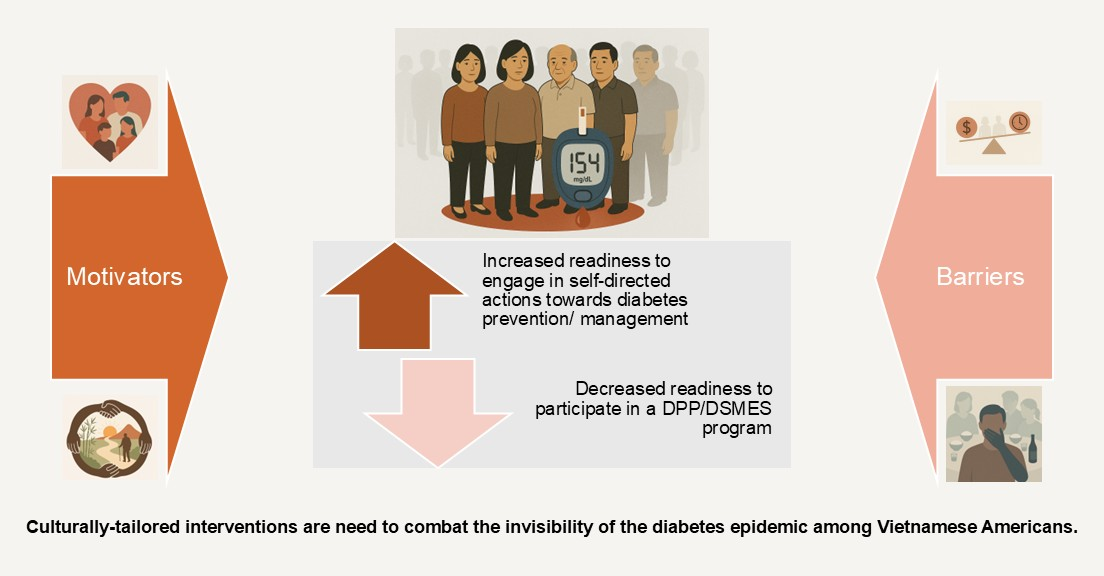
Background/Objectives: There is an invisibility of the diabetes epidemic among Vietnamese Americans. Not only is there limited availability of culturally and linguistically tailored national Diabetes Prevention Program (DPP) and Diabetes Self-Management Education and Support (DSMES) programs, but there are enrollment and retention challenges that hinder these programs’ sustainability and expansion. The purpose of this study was to explore the cultural beliefs, perceived barriers, and motivating factors that influence Vietnamese Americans’ willingness to engage in existing diabetes prevention and self-management programs. Methods: A qualitative descriptive study design was used. A total of 26 participants were recruited through snowball sampling. Bilingual Vietnamese American researchers conducted semi-structured interviews. Content analysis was used to analyze data. Results: Most participants were in the earlier stages of readiness for engagement in a national diabetes program. Major barriers to engagement were related to financial and time constraints, notable among middle-aged participants. Key motivators for engagement included increasing health awareness and family and other social support. Despite their hesitation regarding diabetes program engagement, most participants were further along in the stages of readiness for self-directed lifestyle management. Conclusions: These results will guide the development of a linguistically and culturally adapted diabetes prevention and management program that will support individuals at various stages of their behavior change journey. The program should align with cultural values, address structural barriers, and emphasize the integration of social and familial motivators.

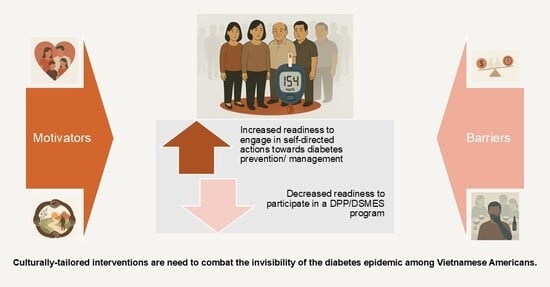
Graphical Abstract

1. Introduction

Type 2 diabetes mellitus (T2DM) is a “silent” and growing problem among Asian Americans. Based on recent national surveillance data in the U.S., the estimated prevalence of T2DM among Southeast Asians, including Vietnamese Americans, is as high, if not higher, than the prevalence of T2DM among Hispanic and non-Hispanic Blacks (22.4% vs. 22.1% vs. 20.4%, respectively) [1]. Asian subgroups have differing languages, cultural systems, and socioeconomic levels that highlight the heterogeneity of factors that impact diabetes prevalence and care considerations. While there has been a focus on several major subgroups of the Asian population, very few studies have focused on Vietnamese Americans [2]. Despite obesity being a common characteristic of type 2 diabetes, most Vietnamese Americans with diabetes are not obese—whether using the body mass index (BMI) cutpoint of 30 kg/m2 for obesity in the general population or the revised cutpoint for obesity of 27.5 kg/m2 in Asian populations [3]. In fact, a large portion of Vietnamese Americans with diabetes are below the BMI cutpoint of 23 kg/m2—the standard threshold used for diabetes screening in Asian populations [4].
There is a gap between the growing burden of diabetes in this population and existing resources available to address the problem. The Diabetes Prevention Program (DPP) and the Diabetes Self-Management Education and Support (DSMES) program are evidence-based interventions that effectively prevent and manage diabetes, improve quality of life, and decrease diabetes-related complications [5]. Specifically, the DPP is a 1-year lifestyle change program aimed at modest weight loss (5–7%), which reduces T2DM risk by 58% [6,7]. Alarmingly, in 2025, only 7 of 1506 US Centers for Disease Control and Prevention (CDC)-recognized DPP sites cater to Asian Americans, indicating a severe resource disparity [8]. For people with diabetes, DSMES provides knowledge, skills, and the ability to support optimal diabetes self-management and has been shown to improve clinical outcomes, health status, and quality of life [9,10,11]. Similarly, few CDC-recognized DSMES programs exist for this priority population. Some of the authors of this paper have been instrumental in culturally adapting, linguistically translating, and establishing CDC-recognized DPP and DSMES programs for Asian populations. While this represents progress, there are continued challenges with enrollment and retention into these programs, which can undermine sustainability of current programs and expansion efforts.
Developing a nuanced understanding of cultural differences and subsequently designing targeted interventions and communications in a culturally responsive manner may enhance enrollment and sustained engagement in DPP and DSMES among Asian Americans [12]. Although Vietnamese Americans are the fourth largest Asian ethnic group in the U.S. [13], there are few studies that explore their cultural beliefs. A systematic review of Vietnamese persons located worldwide found that Vietnamese with diabetes had low diabetes knowledge and low diabetes management self-efficacy scores, which could be partly attributed to the lack of formal diabetes education available in the Vietnamese language [2]. The systematic review also found that Vietnamese with diabetes frequently reported using culturally influenced herbal remedies, and preferred this over the use of oral antihyperglycemics and insulin.
Therefore, the purpose of this study was to explore the cultural beliefs, motivating factors, and perceived barriers that influence Vietnamese Americans’ willingness to engage in existing diabetes prevention and self-management programs. The specific research questions were as follows:
  • What are Vietnamese Americans’ varying levels of readiness to participate in CDC-recognized DPP/DSMES programs? Are there patterns of participant characteristics related to the varying levels of readiness?
  • What are the key barriers, motivating factors, and influences that impact their readiness?
  • What features do they consider to be essential in the DPP/DSMES programs?

2. Methods

This study used a qualitative descriptive (QD) design to provide a comprehensive summary of participants’ perceptions regarding readiness to engage in CDC-recognized DPP and DSMES programs. QD is appropriate when the aim is to present findings in everyday language and stay close to participants’ accounts while allowing low-inference interpretation to identify patterns and organize data meaningfully [14,15]. QD offered a pragmatic approach without imposing a theory-generating or phenomenological lens.

2.1. Sample and Setting

Participants were initially recruited through multiple local community organizations in the Boston metro area that have standing relationships with or access to a wide group of Vietnamese Americans (e.g., churches, temples, civic organizations, and health clinics). A purposive sampling strategy ensured a diverse representation of voices, including but not limited to variations in age, gender, socioeconomic status, and diabetes status [14]. Variation in these variables was tracked in a recruitment log to avoid overrepresentation of any subgroup. Additionally, snowball sampling was utilized, where current research participants were asked to refer to other prospective participants who may be interested or eligible [16]. The goal was to reach data saturation to the point where no new information is gained from interviews [17]. Inclusion criteria included self-identification as follows: (1) a Vietnamese American adult (age 18 years or older) and (2) diagnosed with prediabetes or diabetes or reporting family history of prediabetes or diabetes. There was no limitation to geographical location with the United States. Participants were compensated with a $50 Amazon gift card. The study was approved by the institutional review board of Boston College #23.205.01-1.

2.2. Data Collection

Upon confirming study eligibility, participants were sent a Qualtrics (Drive Provo, UT, USA) link with a consent form and an investigator-developed demographic questionnaire. Bilingual team members (nurse researcher [TN] and/or research associates) first assisted participants with completing the consent form and demographic questionnaire and then conducted semi-structured interviews individually in the preferred language of Vietnamese or English. The interview guide included open-ended questions, which encouraged participants to share their thoughts, feelings, and cultural beliefs related to diabetes prevention and management (see Appendix A). Interviews were audio recorded and transcribed verbatim. One focus group was conducted with a cohort of eight Vietnamese American older adults who had previously completed the DPP. The purpose of individual interviews was to explore perceptions, and the purpose of the focus group was to seek consensus [18].

2.3. Data Analysis

Descriptive statistical analysis was conducted with SPSS 29.0 (IBM, Armonk, NY, USA) solely to summarize participant characteristics, as this study did not use a mixed-methods design. Content analysis was used for qualitative data and began with the first interview and continued in an iterative cycle, as recommended in qualitative descriptive studies [14,18]. The research team, led by a bilingual nurse researcher (AN) and bilingual research associate (QT), reviewed each verbatim transcript in their original languages. Additional bilingual team members (additional nurse researchers, a research associate, and a medical doctor) reviewed all Vietnamese transcripts, and undergraduate research assistants reviewed all English transcripts.
Initial codes were developed independently by each team member, including in vivo coding as deemed appropriate. The research team also used the following operational definitions for the deductive coding or categorization of the participants’ varying levels of readiness based on the Transtheoretical Model (TTM) Stages of Change framework [19] (see Appendix B for decision rules for TTM coding). The participants were initially categorized by their TTM stage of readiness for attending a CDC-recognized DPP/DSMES program, without formal comparisons between DPP and DSMES readiness due to sample size limitations. The first stage, Precontemplation, is when a person is not yet considering change. In Contemplation, the individual starts thinking about change, weighing the benefits and drawbacks, but has not yet made a commitment. Preparation is marked by readiness and planning, where small initial steps are taken toward program engagement. In the Action stage, individuals were currently attending a DPP/DSMES program at the time of the study. Lastly, Maintenance involves completion of a DPP/DSMES program.
The research team recognized that there were also varying levels of readiness for engagement in self-directed lifestyle modifications (SDLM), meaning they may have been anywhere from Precontemplation to Maintenance with regards to recommended healthy eating and physical activity engagement. In addition to analyzing the data for the participants, the stages of readiness were also analyzed for family members of participants, as applicable, to provide additional context for assessing readiness levels among Vietnamese Americans. Patterns in participant characteristics regarding their level of readiness were also explored to provide contextual understanding of readiness levels. Focus group data were analyzed as a collective voice rather than as individual perspectives to avoid over-representation of high-engagement cases. Their individual contributions were only incorporated to provide context and enrich thematic interpretation.
Routine research team debrief meetings were held throughout the data analysis process to reach consensus on initial codes, categories, and themes through the exploration of commonalities and differences within and across transcripts. Through this iterative process, the codes were grouped into broader categories, and the categories were then organized into themes that summarized patterns across the data. All coding decisions and revisions were documented in a shared audit trail using detailed memos. Data saturation was also achieved through consensus reached regarding the redundancy of concepts and lack of new concepts emerging from the interviews, which was achieved at the routine research team debrief meetings. The research team also critically examined and reflected upon their preconceptions and biases during these meetings to ensure that the participants’ perspectives were not overshadowed by those of the researchers. The reflective practice helped create a balanced description of the narratives, allowing for a richer analysis that centered on the participants’ voices.

3. Results

Participants (n = 26) were adults between 18 and 87 years old. Most participants were female (69.2%; n = 18). Many participants were diagnosed with prediabetes (42.3%; n = 11) or diabetes (15.4%; n = 4). The remaining participants were at risk based on family history of prediabetes or diabetes and/or a personal history of gestational diabetes (42.3%; n = 11). More than one-third of the sample had a high school diploma or lower level of education (38.5%; n = 10). Less than half the participants reported proficient spoken and/or written English proficiency (46.2% or n = 12 and 38.5% or n = 10, respectively), and nearly one-quarter (23.1%; n = 6) reported needing support to understand the health literature (see Table 1).
Participants also discussed seven family members with prediabetes (n = 2) or diabetes (n = 5), most of whom were middle-aged (n = 6) and female (n = 4). These included grandmothers (n = 2), parents (n = 2), an aunt/uncle (n = 2), and a husband.
The narratives of the participants and their family members revealed a complex interplay of cultural beliefs, values, and behaviors that influence their readiness to engage in a DPP/DSMES program and to make lifestyle changes. The four themes that emerged were as follows: (1) levels of readiness, (2) cultural influences on health engagement, (3) factors specifically influencing DPP/DSMES engagement, and (4) essential features of diabetes programs (see Table 2, Table 3 and Table 4).

3.1. Theme #1: Levels of Readiness

3.1.1. Readiness for CDC-Recognized DPP or Accredited DSMES Programs

Overall, most participants and their family members were identified as being in the precontemplation (n = 8) or contemplation (n = 8) stages for DPP/DSMES engagement, with 75% (n = 6) of those eligible for DSMES being in the precontemplation/contemplation stages and 67% (n = 10) of those not eligible for DSMES being in the precontemplation/contemplation stages. For participants and their family members who were diagnosed with diabetes, they were the only eligible participants for DSMES programs. None of the participants eligible for DSMES programs had previously attended a DPP.
Notably, all participants who rated their health as fair/poor were in higher preparation/maintenance stages of readiness for DPP/DSMES. Both participants diagnosed with diabetes who rated their health as fair/poor were in the preparation stage of readiness for DSMES.

3.1.2. Readiness for Self-Directed Lifestyle Modifications

Most participants and their family members were identified as being in the action (n = 8) or maintenance (n = 4, and the collective focus group participants n = 8) stages for self-directed lifestyle modifications (SDLMs). Patterns noted among older adults were that they were either diagnosed with prediabetes or diabetes, and all but one was in the SDLM maintenance stage. There was no pattern noted among older adults related to DPP/DSM stages of readiness except for the focus group participants, who were deemed to be collectively in the maintenance stages for both DPP engagement and SDLM. The focus group participants noted that their ongoing commitment to regular exercise and healthier dietary choices stemmed from what they had learned in the recently attended diabetes prevention program. For example, Participant 26 reported walking 30 min every day, even when she was sick. Related to healthier dietary choices, Participant 25 reported using the MyPlate method, filling two-thirds of her plate with vegetables and eating more fruit but less fried foods. Participants 20 and 25 noted that eating healthily has become a habit.

3.2. Theme #2: Cultural Influences on Health Engagement

The influences noted on health engagement included the importance of family, the sense of familial responsibility, “crisis-oriented” approaches to health-seeking behavior, stigma surrounding health discussions, and dietary norms. While these influences may appear broadly applicable to the general population, their specific expressions and implications are deeply routed in cultural context.
The importance of family was a recurring factor mentioned by several participants (n = 12), reflecting not only personal motivation but also culturally embedded values. Many participants expressed that their desire to maintain their health stemmed from a deep commitment to their families—both to enjoy a longer life with loved ones and to model healthy behaviors for their children. This sense of responsibility aligns with cultural values found in collectivist societies, where individual well-being is often viewed through the lens of family benefit. Participant 9 stated, “My family pushes me to be healthier; I can’t let them down,” illustrating how familial encouragement can serve as a powerful motivator rooted in cultural expectations of interdependence and mutual care.
While family was certainly a key motivator for some participants, the cultural value of familial responsibility also served as a barrier in that participants (n = 10) frequently indicated that taking care of family members—both locally and abroad—often takes precedence over personal health. Participant 17 stated that he could only prioritize his health after first taking care of his immediate family here in the U.S. and also making enough money to send to his extended family in Vietnam. This reflects a transnational sense of duty shaped by cultural norms around filial piety and communal responsibility, where self-care may be perceived as secondary or even indulgent in the face of family obligations.
The “crisis-oriented” approach to health-seeking behavior and stigma surrounding health discussions further complicated the willingness to engage in health programs for several participants (n = 7). Most participants expressed that they typically seek medical help only when faced with significant health issues or crises. As Participant 5 explained, “In our culture, we avoid talking about illness until it’s a crisis.” Participant 12 observed, “We only go to the doctor when something is seriously wrong.” A few participants (n = 3) mentioned that the stigma is often exacerbated by multiple layers of historical trauma stemming from experiences like the Vietnam War and being refugees, which has instilled a sense of day-to-day survival and repression of health concerns. Participant 12 noted, “The trauma from our past influences how we approach health today; we carry that weight with us.”
Dietary norms also play a significant role in health priorities for several participants (n = 14). Traditional practices, such as a high consumption of rice and sugary foods, are deeply ingrained in Vietnamese culture. Participant 1 articulated this challenge, saying, “Rice is a staple in our diet; it’s hard to change that habit.” Participant 11 emphasized, “We can’t abandon rice or that lifestyle surrounding rice,” highlighting the struggle of balancing traditional comfort foods with healthier alternatives. The thought is echoed by Participant 15, who stated, “So it’s kind of a challenge…I love Asian food” and “sometimes the food, like bò kho, if you eat like claypot fish, like stew, or something like that, you need a lot of rice to make it take good.”
Additionally, the concept of “nhậu,” which refers to drinking alcohol while consuming unhealthy foods, was noted by Participants 1, 14, and 16’s daughter. They emphasized how such habits are common during family gatherings, reinforcing the difficulty of altering these cultural practices. Participant 14 remarked, “Drinking with meals is part of our culture; it’s hard to change that.” Participant 16’s daughter states that “he’s doing a lot of beer and kind of like, use that to eat a lot.” But Participant 4 said, “I’ll think about my family and forget it. Instead of going to a party, I turn around and go home.” Several participants (n = 12) emphasized the importance of receiving dietary advice that aligns with traditional Vietnamese preferences. As Participant 3 noted, “If it’s not relevant to our culture, we won’t stick with it.”

3.3. Theme #3: Factors Specifically Influencing Engagement in CDC-Recognized DPP/DSMES Programs

3.3.1. Key Motivators

The key motivators for factors that specifically influenced engagement in CDC-recognized DPP/DSMES programs were the need to improve one’s health and social connections. Many participants cited an awareness of the need to improve personal health. Some participants were motivated due to their recent diabetes diagnosis, such as Participant 2 stating, “The A1C result was my wakeup call.” The fear of diabetes complications, such as the need for amputation, was the motivating factor for other participants. Additionally, witnessing diabetes health complications in family members further triggered their desire to participate in a DPP/DSMES program. As stated by Participant 14, “They need to see complications happening to people they know”.
Social connections (i.e., with family, healthcare providers, and community) were another big motivator. The most mentioned social connection was family, as mentioned above in the cultural influences on health engagement theme. Some participants discussed the importance of encouragement by the healthcare providers as stimulus to engage in diabetes programs. Several participants noted community engagement as being motivation, such as Participant 3 who had a strong desire to elevate and support the local community to improve health equity.

3.3.2. Key Barriers

The key barriers identified specifically to the engagement in DPP/DSMES program included financial and time constraints, cultural stigma and a lack of health awareness, and various social barriers. Financial and time constraints were highlighted by several participants (n = 18). Many expressed the difficulty of prioritizing health amidst work commitments and financial struggles, often stating that these challenges make it hard to engage in prevention programs. Participant 6 remarked, “Finding time to take care of myself feels impossible when I’m working multiple jobs just to get by.” Participant 8 stated, “Vietnamese people are more worried about making money to survive. Everyone’s worried about having to work to pay bills. So, they’re less worried [about their health].”
Cultural stigma and a lack of health awareness also emerged as barriers. Many participants (n = 7) noted that without a diagnosis or visible signs of illness, there is often little urgency to engage in health programs. For example, participant 7 stated, “In general, people in the Vietnamese community will not join a prevention program, unless they have been diagnosed [with diabetes]. And the main reason will be they don’t want to take time off from their paid job. They will wait until they are sick and get treatment.” Participant 10 also shared this about her mother who has been diagnosed with diabetes: “It’s hard for my parents to discuss their health issues; they see it as a weakness.” Participant 16’s father, who has also been diagnosed with diabetes, shared that his father did not appreciate the impression of being unhealthy from health care professionals who would discuss ways to maintain health.
Participants also mentioned social barriers such as language and literacy barriers, distrust in the healthcare system, and lack of transportation. The language and literacy barriers were the most mentioned barriers faced primarily by older adults. As stated by Participant 18, “I don’t mind if my doctor does not speak Vietnamese… but for this program (DPP), I would prefer it in Vietnamese. My understand[ing] of English is limited”. The complexity of health information and the inability to communicate effectively in English hindered individuals from fully understanding their health needs.

3.4. Theme #4: Essential Features of Diabetes Prevention or Self-Management Programs

Beyond cultural considerations, participants identified key structural elements that would make diabetes programs more accessible and effective. Programs should be community-based, culturally sensitive, and led by individuals who understand Vietnamese culture and language. The most common setting requested by participants were churches and temples. Participants preferred programs that are engaging and provide practical, actionable information.
Flexible timing and program formats were highly valued, and some participants (n = 6) preferred virtual or hybrid options to accommodate their busy lifestyles. Participant 9 expressed her interest in learning more about diabetes prevention and suggested providing childcare to ease the burden of DPP participation. Additionally, some participants (n = 7) expressed that practical incentives, like fresh vegetables and grocery store gift cards, could enhance their motivation to participate in health programs. “Incentives help make it feel worth the effort,” remarked Participant 2.

4. Discussion

The findings from this study reflect a rich tapestry of cultural beliefs, challenges, and motivations that inform the readiness of Vietnamese Americans to engage in diabetes prevention and management programs. These insights highlight the importance of culturally tailored approaches to address the unique needs and values of this community. Most participants were motivated to engage in healthy lifestyle behavior changes, but few had interest in attending CDC-recognized or accredited DPP/DSMES program to mitigate diabetes and its complications. Nearly all participants in the Preparation, Action, and Maintenance stages for SDLM wanted to take part in some form of diabetes prevention program. This engagement pattern was noted regardless of diabetes risk status, gender, or age.
Time constraints, financial pressure, and competing family responsibilities were major obstacles to both DPP/DSMES engagement and SDLM for middle-aged participants in this study. These individuals prioritized work and caregiving over personal health. In contrast, retired older adults in this study showed heightened interest in self-care and had more time to commit to the rigorous yearlong DPP. This aligns with findings from prior research reporting that DPP participants skewed older, with a mean age of 60 years [20]. However, older age often leads to forgetfulness, which results in non-adherence to DSMES [21]. Study participants acknowledged the cost and time required to sustain a healthy lifestyle. Some cited Western fast-food culture and shared kitchen space in multigenerational households as obstacles to home cooking. For example, a rideshare driver noted the challenges of maintaining a healthy diet and physical activity amid an irregular, sedentary work schedule. However, the cost-effectiveness and potential of lifestyle intervention would be most impactful with a younger cohort of 45 years or less, where intervention can prevent the progression of prediabetes into diabetes and serious health complications [22]. Thus, identifying and addressing barriers to enrolling younger participants is essential.
As with many immigrant populations, cultural beliefs may hinder health progress [2]. Limited engagement in preventive care, coupled with beliefs like “denial of illness,” where avoiding screening is seen as avoiding disease, undermines chronic illness prevention and delays the diagnosis and intervention for prediabetes and T2DM [12,23,24]. There is a concept of “face pride,” or in Vietnamese, “giữ thể diện” (literally meaning “preserving one’s dignity”), embedded in the Vietnamese community to avoid disclosing any illnesses or chronic medical conditions [25]. Vietnamese culture values community harmony and avoiding shame or being burdensome. For instance, someone who is unwell might downplay their illness not just to protect their own dignity, but out of concern for how it might reflect on their family or to avoid worrying others unnecessarily. The stigma around openly discussing health and complications further conceals the true disease burden and challenges efforts to promote healthy interventions.
As mentioned in the data analysis section, the TTM was only used as an organizing framework for analysis. Additionally, codes were derived inductively and then mapped to the stages of readiness to contextualize the findings. While this study did not test an intervention, readiness assessment using the TTM can provide valuable insights for intervention design [26]. The literature supports the sustained effectiveness of TTM-based approaches in improving self-efficacy, metabolic control, and long-term diabetes management [19,27,28]. Within this present study, participants who reported fair or poor health often expressed greater motivation and readiness to engage in diabetes programs than those reporting good health. Also in the context of the present study, most participants with prediabetes rated their health as good, although perceived risk of diabetes was not assessed. In other studies, there was an association of how patients with prediabetes perceived their general health and their perceived risk of developing diabetes [29,30]. Strategies to engage individuals in earlier stages of readiness must focus on reshaping perceptions of health and risk using techniques such as motivational interviewing [31].
Consistent with the prior literature, the findings underscore the significant role of family and community in health decision-making. Collectivist values, particularly hiếu thảo (filial piety), shape behaviors and attitudes toward health [32,33]. While family involvement can enhance clinical and psychosocial outcomes [34,35], cultural practices such as shared meals and nhậu (social drinking) may complicate adherence to dietary guidelines [30,36]. Notably, spouses were more persuasive when perceiving their partner to be engaged in healthy eating [37], suggesting potential leverage points within family dynamics.
Participants expressed a preference for culturally tailored, community-based programs. Building on the work of A. T. Nguyen et al. [38,39], the formation of a community advisory board and program adaptations considering language, use of metaphors, cultural values, and health goals are recommended to guide program development and cultural adaptation. Community health workers (CHWs) should also be engaged to build trust and ensure cultural alignment [40].
There is a gap between the readiness for SDLM and willingness to engage in DPP/DSMES. Perhaps a way to address this gap is to utilize a human-centered design in the intervention design, as a creative problem-solving process that starts with empathy (i.e., understanding what end-users think, feel, say, and do) to provide innovative solutions that bring about better user experiences [41]. Human-centered design methods, like empathy mapping and the triple diamond design process (i.e., discover, define, develop, then validate and iterate), can uncover these hesitations and propose design solutions that can better address these concerns, placing end-users at the center of the process.

4.1. Study Limitations

This study recruited participants from a metropolitan area with universal health coverage that offers broad access to health resources. However, the DPP remains relatively unknown and underutilized by both healthcare providers and community members. Although the sample was geographically limited and relatively small, data saturation was reached. This may limit the transferability of findings to the broader population. Some participants provided secondary accounts on behalf of family members, which may not fully reflect those individuals’ perspectives or readiness stages. Furthermore, because the TTM is an individualistic behavior-change model, it may have limitations when applied within a collectivist cultural context such as Vietnamese culture.

4.2. Implications for Diabetes Care, Education, & Research

The findings of this study provide a starting point to more precisely understand how Vietnamese Americans’ cultural beliefs, values, and motivators influence diabetes knowledge and DPP/DSMES readiness. Health professionals can create a higher urgency of action for Vietnamese Americans with prediabetes or diabetes risk who perceive their health as “good/excellent” but are still in earlier stages of DPP/DSMES and SDLM readiness. It will require assessing and working to understand the antecedents of one’s perceived diabetes risk and health rating, which includes improving knowledge and appealing to an individual’s need for self-control while considering individual differences due to gender and acculturation level [24,29].
Future efforts should examine how family, traditional practices, community networks, providers, and system infrastructure influence health behaviors. Expanding research across Vietnamese American subgroups can reveal tailored barriers and facilitators, enabling more effective, culturally responsive interventions. Longitudinal studies using technology offer promising avenues for scalable interventions that will increase DPP accessibility. A significant portion of our participants reported confidence using digital tools (42.3% computers, 61.6% smartphones), supporting the potential acceptance of digital delivery. Digital DPPs have been associated with substantial cost savings [42]. Some participants in this present study were open to using devices like FitBits or continuous glucose monitors if they were easy to use, but were viewed as only being suitable for the younger generation or as requiring technical support for older adults.

5. Conclusions

The findings of this study underscore the critical role of culturally relevant and community-based approaches in enhancing diabetes prevention and self-management programs for Vietnamese Americans. By recognizing the interplay of cultural beliefs, values, and motivators, diabetes care and education specialists can better align interventions with individuals’ lived realities and their readiness to engage. Recognizing and addressing these perceptions is essential for designing effective interventions that resonate with their readiness level. These insights offer a foundation for precision health research focused on developing customized interventions that address the diverse needs and health profiles of Vietnamese Americans, with an emphasis on human-centered design.

Author Contributions

Conceptualization, T.H.N. and A.P.N.; methodology, T.H.N. and A.P.N.; validation, T.H.N. and A.P.N.; formal analysis, all authors; investigation, T.H.N. and C.T.; writing—original draft preparation, all authors; writing—review and editing, A.P.N.; visualization, A.P.N. and Q.V.T.; supervision, T.H.N.; project administration, C.T.; funding acquisition, T.H.N. All authors have read and agreed to the published version of the manuscript.

Funding

This research was funded by the Betty Irene Moore Foundation, grant number GBMF9048.

Institutional Review Board Statement

The study was conducted in accordance with the Declaration of Helsinki, and the protocol was approved by the Ethics Committee of Boston College #23.205.01-1 on 21 April 2023.

Informed Consent Statement

Informed consent was obtained from all subjects involved in the study.

Data Availability Statement

The data that support the findings of this study may be made available from the corresponding author upon reasonable request and with appropriate ethical approvals.

Acknowledgments

The authors thank the late Miyong Kim (University of Texas at Austin) for her valuable support of this project, as well as the undergraduate research assistants for their contributions.

Conflicts of Interest

The authors whose names are listed immediately below certify that they have NO conflicts of interest to declare, whether financial or non-financial: Angelina P. Nguyen, Tu-Mai Tran, Quynh Vuong Tu, and Timothea Vo. Author Cherry Tran was employed by the company Quincy Asian Resources, Inc. (QARI). The remaining authors declare that the research was conducted in the absence of any commercial or financial relationships that could be construed as a potential conflict of interest. The funder had no role in the design of the study; in the collection, analyses, or interpretation of data; in the writing of the manuscript; or in the decision to publish the results.

Abbreviations

The following abbreviations are used in this manuscript:
CDCCenters of Disease Control and Prevention
CHWCommunity Health Workers
DPPDiabetes Prevention Program
DSMESDiabetes Self-Management Education and Support
IRBInstitutional Review Board
QDQualitative Descriptive
SDLMSelf-directed lifestyle modification
T2DMtype 2 diabetes mellitus
TTMTranstheoretical Model

Appendix A

Interview Guide

  • To start us off, can you all share how you are currently managing your health as a person with pre-diabetes?
  • Can we go around the room and share how long we’ve had pre-diabetes?
    • Optional follow-up: how did you find out you have pre-diabetes?
  • Did your healthcare provider give you any suggestions or resources on how to manage your pre-diabetes?
  • Did any of your providers recommend enrolling in a diabetes prevention program? Or have you ever heard about the diabetes prevention program?
    • Clarify/define the program: The diabetes prevention program– or DPP, is a one-year program that helps participants sustain a healthy lifestyle to manage their pre-diabetes. This includes support in weight management and physical activity. As part of this program, participants meet in weekly group sessions that are facilitated by a health coach for the first 6 months. After that, the group meets once a month for the last 6 months.
      o
      Can you see the benefits of this?
      o
      Do you think this is feasible?
  • For participants with diabetes: Have you attended any diabetes education courses? If so, tell us more about the courses.
  • One main component of the DPP is weight management and healthy eating. Can you share a time when eating healthy was a challenge for you?
    • Optional follow-up: Can I ask, what did you eat yesterday?
  • Another main component of the DPP is regular physical activity. Can you share a time when engaging in physical activity was hard for you?
    • Optional follow-up: Can you give us an example of the physical activity you did this past week?
  • Our diabetes prevention program takes about a year. How do you feel about engaging in a long-term program to prevent diabetes like that?
  • For our particular project, we want participants to wear Fitbits or continuous glucose to monitor and measure how much physical activity they get. How interested would you be in wearing those devices?

Appendix B

Categorization for Levels of Readiness

The Diabetes Prevention Program (DPP) refers to the CDC-recognized year-long lifestyle change program for adults with prediabetes or at risk for type 2 diabetes. Diabetes Self-Management Education and Support (DSMES) refers to accredited education and support services for individuals with diabetes. Participants without a diabetes diagnosis were only eligible for the DPP. For participants who have been diagnosed with diabetes, they were also asked if they had attended or been referred to the DPP prior to their diabetes diagnosis. While theoretically a participant with diabetes could have been at different stages of readiness for DPP vs. DSMES had they previously attended a DPP, this did not apply to any of our participants. As such, collective stage assignments for DPP/DSMES readiness are not conflated.
Self-Directed Lifestyle Management (SDLM) refers to diet, physical activity, alcohol use, sleep, and stress management for all participants, regardless of their diabetes diagnosis. For participants with diabetes, SDLM also refers to necessary monitoring of blood glucose and medication adherence.
Coding workflow began with content analysis by bilingual Vietnamese Americans researchers. Coders first coded behaviors (e.g., statement of intent, recent actions, duration of behaviors) that indicate readiness for DPP/DSMES engagement based on the operational definitions and decision rules for classification based on an iterative consensus achieved during routine team debrief meetings (see Table A1 and Table A2). In cases of mixed signals, the research team always erred on the side of an increased readiness level.
Table A1. Operational Definitions and Decision Rules for Classification of Transtheoretical Model Stage for Engagement in a DPP/DSMES Program.
Stage of Readiness and Operational DefinitionObservable Indicators
Precontemplation—perceives no need or rejects program participation (e.g., “I already manage” or “no desire”)Explicit refusal to attend a program; strong belief that the program is unnecessary; no info-seeking actions
Contemplation—asks about program features or benefits but has not initiated concrete steps to attendRequests information; expresses interest “if” certain conditions are met; no schedule to attend at this time
Preparation—has taken small steps (e.g., discussed referral with a clinician, looked up programs, requesting more information)Concrete steps have been taken (e.g., contacted program coordinator or lifestyle coach, asked provider for a referral) and/or has a planned start date
Action—currently attending a program Enrolled/attending classes/sessions (beyond general community-provided general health or diabetes-specific courses); engaging with the lifestyle coach/diabetes educator
Maintenance—has completed at least one DPP/DSMES programCompleted DPP or completed DSMES program with follow-up as prescribed
Note. Bolded words are the name of the Transtheoretical Model Stage of Engagement in a DPP/DSMES Program.
Table A2. Operational Definitions and Decision Rules for Classification of Transtheoretical Model Stage for Self-Directed Lifestyle Management.
Stage of Readiness and Operational DefinitionObservable Indicators
Precontemplation—no intention to change lifestyle behaviors; denies need to modify diet/activity; continues high-risk behaviorsStrong belief that current health behaviors are appropriate; Denies the risk of developing diabetes if not yet diagnosed with diabetes; Denies the need to make any behavior changes whether diagnosed with diabetes or not
Contemplation—acknowledges need for change health behavior change and intends to act; has not initiated any behavior change Expresses curiosity regarding recommended healthy behaviors
Preparation—health information seeking behaviors or small steps started towards behavior changes (e.g., reducing meal portions/rice/sugar, trial walks, or exploring time-restricted eating)Actively seeking education resources; May have initiated one or two behavior changes recently for less than 1 month
Action—recent adoption of healthier behaviors for more than 1 month but less than 6 months (e.g., consistent dietary changes, regular activity, self-monitoring)Implemented recommended health behaviors for 1 month, but no more than 6 months or half a year
Maintenance—sustained lifestyles lasting longer than 6 months; relapse prevention skills; behaviors integrated into daily routinesLong-standing routines (e.g., “no longer eats rice,” walks regularly—more than twice per week, goes to the gym more than twice per week); health behaviors sustained for at least 6 months
Note. Bolded words are the name of the Transtheoretical Model Stage for Self-Directed Lifestyle Management.

References

  1. Cheng, Y.J.; Kanaya, A.M.; Araneta, M.R.G.; Saydah, S.H.; Kahn, H.S.; Gregg, E.W.; Fujimoto, W.Y.; Imperatore, G. Prevalence of diabetes by race and ethnicity in the United States, 2011–2016. JAMA 2019, 322, 2389–2398. [Google Scholar] [CrossRef] [PubMed]
  2. Nguyen, A.T.; Jones, E.J. Diabetes beliefs, culturally influenced self-management practices, and interventions among Vietnamese Adults: A systematic review. J. Transcult. Nurs. 2021, 32, 266–275. [Google Scholar] [CrossRef]
  3. De Souza, L.R.; Chan, K.T.; Kobayashi, K.; Karasiuk, A.; Fuller-Thomson, E. The prevalence and management of diabetes among Vietnamese Americans: A population-based survey of an understudied ethnic group. Chronic Illn. 2022, 18, 306–319. [Google Scholar] [CrossRef]
  4. American Diabetes Association Professional Practice Committee. 2. Diagnosis and Classification of Diabetes: Standards of Care in Diabetes—2025. Diabetes Care 2024, 48, S27–S49. [Google Scholar] [CrossRef]
  5. DiBenedetto, C.A.; Myers, B.E. A conceptual model for the study of student readiness in the 21st century. NACTA J. 2016, 60. [Google Scholar]
  6. Diabetes Prevention Program Outcomes Study Research Group. Long-term effects of the Diabetes Prevention Program interventions on cardiovascular risk factors: A report from the DPP Outcomes Study. Diabet. Med. 2013, 30, 46–55. [Google Scholar] [CrossRef] [PubMed]
  7. Diabetes Prevention Program Research Group. Long-term effects of metformin on diabetes prevention: Identification of subgroups that benefited most in the Diabetes Prevention Program and Diabetes Prevention Program Outcomes Study. Diabetes Care 2019, 42, 601–608. [Google Scholar] [CrossRef] [PubMed]
  8. Center for Disease Control and Prevention. Diabetes Prevention Recognition Program Registry. Available online: https://dprp.cdc.gov/registry (accessed on 25 April 2025).
  9. Powers, A.; Winder, M.; Maurer, M.; Brittain, K. Impact of inpatient diabetes transitions of care consult on glycemic control. Patient Educ. Couns. 2020, 103, 1255–1257. [Google Scholar] [CrossRef]
  10. Powers, M.A. If DSME were a pill, would you prescribe it? Diabetes Spectr. 2017, 30, 51–57. [Google Scholar] [CrossRef][Green Version]
  11. Steinsbekk, A.; Rygg, L.; Lisulo, M.; Rise, M.B.; Fretheim, A. Group based diabetes self-management education compared to routine treatment for people with type 2 diabetes mellitus. A systematic review with meta-analysis. BMC Health Serv. Res. 2012, 12, 213. [Google Scholar] [CrossRef]
  12. Tolentino, D.A.; Boy, P.; Long, S.N.; Roca, R.P.E., III; Peña, M.; Palao, G.M.G.; Palao, G.J.G.; Luzuriaga, M.R.U.D.O.; Choi, S.E. Navigating Type 2 Diabetes Care: Asian American Perspectives on Self-Management Education and Support. Sci. Diabetes Self-Manag. Care 2025, 51, 225–240. [Google Scholar] [CrossRef]
  13. Krogstad, J.M.I.C. Key Facts About Asians in the U.S. Available online: https://pewrsr.ch/3e3t4nF (accessed on 8 October 2025).
  14. Sandelowski, M. Whatever happened to qualitative description? Res. Nurs. Health 2000, 23, 334–340. [Google Scholar] [CrossRef] [PubMed]
  15. Neergaard, M.A.; Olesen, F.; Andersen, R.S.; Sondergaard, J. Qualitative description–the poor cousin of health research? BMC Med. Res. Methodol. 2009, 9, 52. [Google Scholar] [CrossRef] [PubMed]
  16. Etikan, I.; Alkassim, R.; Abubakar, S. Comparision of snowball sampling and sequential sampling technique. Biom. Biostat. Int. J. 2016, 3, 55. [Google Scholar] [CrossRef]
  17. Rahimi, S.; Khatooni, M. Saturation in qualitative research: An evolutionary concept analysis. Int. J. Nurs. Stud. Adv. 2024, 6, 100174. [Google Scholar] [CrossRef] [PubMed]
  18. Willis, D.G.; Sullivan-Bolyai, S.; Knafl, K.; Cohen, M.Z. Distinguishing features and similarities between descriptive phenomenological and qualitative description research. West. J. Nurs. Res. 2016, 38, 1185–1204. [Google Scholar] [CrossRef]
  19. Miezah, D.; Amoadu, M.; Opoku, P.N.; Junior, E.M.; Zutah, J.; Obeng, P.; Sarfo, J.O. Transtheoretical-Based Model of Intervention for Diabetes and Prediabetes: A Scoping Review. J. Diabetes Res. 2024, 2024, 2935795. [Google Scholar] [CrossRef]
  20. Cannon, M.J.; Masalovich, S.; Ng, B.P.; Soler, R.E.; Jabrah, R.; Ely, E.K.; Smith, B.D. Retention among participants in the National Diabetes Prevention Program lifestyle change program, 2012–2017. Diabetes Care 2020, 43, 2042–2049. [Google Scholar] [CrossRef]
  21. Abu, S.; Llahana, S. Factors influencing the uptake of culturally tailored diabetes self-management education and support programmes among ethnic minority patients with type 2 diabetes: A systematic review. Prim. Care Diabetes 2025, 19, 103–110. [Google Scholar] [CrossRef]
  22. Herman, W.H. The cost-effectiveness of diabetes prevention: Results from the Diabetes Prevention Program and the Diabetes Prevention Program Outcomes Study. Clin. Diabetes Endocrinol. 2015, 1, 9. [Google Scholar] [CrossRef]
  23. Jenkins, C.N.; Le, T.; McPhee, S.J.; Stewart, S.; Ha, N.T. Health care access and preventive care among Vietnamese immigrants: Do traditional beliefs and practices pose barriers? Soc. Sci. Med. 1996, 43, 1049–1056. [Google Scholar] [CrossRef]
  24. Uba, L. Cultural barriers to health care for Southeast Asian refugees. Public Health Rep. 1992, 107, 544. [Google Scholar]
  25. Nguyen, T.N.M.; Saunders, R.; Dermody, G.; Whitehead, L. The influence of culture on the health beliefs and health behaviours of older Vietnam-born Australians living with chronic disease. J. Adv. Nurs. 2024, 80, 3781–3796. [Google Scholar] [CrossRef] [PubMed]
  26. Salinas Martínez, A.M.; Gómez Campusano, R.I.; Cordero Franco, H.F.; Chávez Barrón, K.A.; Gutiérrez Sauceda, C.J.; Guzmán de la Garza, F.J.; Núñez Rocha, G.M. Multiple unhealthy behaviors share equivalent profiles of readiness for change in patients with type 2 Diabetes. Int. J. Environ. Res. Public Health 2021, 18, 3631. [Google Scholar] [CrossRef]
  27. Dunkel, A.; von Storch, K.; Hochheim, M.; Zank, S.; Polidori, M.C.; Woopen, C. Long-term effects of Transtheoretical Model-based lifestyle intervention on self-efficacy and self-management in patients with type 2 diabetes—Randomised controlled trial. Int. J. Behav. Med. 2025, 32, 45–57. [Google Scholar] [CrossRef] [PubMed]
  28. Selçuk-Tosun, A.; Zincir, H. The effect of a transtheoretical model–based motivational interview on self-efficacy, metabolic control, and health behaviour in adults with type 2 diabetes mellitus: A randomized controlled trial. Int. J. Nurs. Pract. 2019, 25, e12742. [Google Scholar] [CrossRef]
  29. Nguyen, A.P. Risk perception of developing diabetes: A concept analysis. Nurs. Forum. 2020, 55, 559–568. [Google Scholar] [CrossRef]
  30. Nguyen, A.P.; McEwen, M.M.; Loescher, L.J. Perceived risk of diabetes among Vietnamese Americans with Prediabetes: Mixed methods study. Asian Pac. Isl. Nurs. J. 2023, 7, e39195. [Google Scholar] [CrossRef] [PubMed]
  31. Dineen, T.E.; Bean, C.; Jung, M.E. Successes and challenges from a motivational interviewing-informed diabetes prevention program situated in the community. Health Promot. Pract. 2024, 25, 274–284. [Google Scholar] [CrossRef]
  32. Lim, A.J.; Lau, C.Y.H.; Cheng, C.-Y. Applying the dual filial piety model in the United States: A comparison of filial piety between Asian Americans and Caucasian Americans. Front. Psychol. 2022, 12, 786609. [Google Scholar] [CrossRef]
  33. Miyawaki, C.E.; Chen, N.-W.; Meyer, O.L.; Tran, M.T.; Markides, K.S. Vietnamese adult-child and spousal caregivers of older adults in Houston, Texas: Results from the Vietnamese Aging and Care Survey (VACS). J. Gerontol. Soc. Work 2020, 63, 5–18. [Google Scholar] [CrossRef]
  34. Ali, S.H.; Mohsin, F.M.; Rouf, R.; Parekh, R.; Dhar, B.; Kaur, G.; Parekh, N.; Islam, N.S.; DiClemente, R.J. Family involvement in Asian American health interventions: A scoping review and conceptual model. Public Health Rep. 2023, 138, 885–895. [Google Scholar] [CrossRef]
  35. Nguyen, A.P.; Mai, L.A.T.; Spies, L.A.; Carriveau, K.L. Interventions for family support in cardiometabolic disease: An integrative review. Nurs. Open 2023, 10, 5797–5812. [Google Scholar] [CrossRef]
  36. Spies, L.A.; Lan Anh, M.T. Provider perceptions of hypertension care in a low-resource setting. Int. J. Nurs. Pract. 2021, 27, e12900. [Google Scholar] [CrossRef] [PubMed]
  37. August, K.J.; Dowell, A.; Sorkin, D.H. Disease factors associated with spousal influence on diabetic diet: An exploratory comparison of Vietnamese American and White older adults. Health Psychol. Open 2017, 4. [Google Scholar] [CrossRef] [PubMed]
  38. Nguyen, A.; Eschiti, V.; Nagykaldi, Z.; Bui, T.C.; Nguyen, U.-S.; Nguyen, T.; Nguyen, A.P.; Tow, J.; Dwyer, K. Cultural adaptation of an mHealth intervention for diabetes self-management: An Ecological Validity Model approach. J. Transcult. Nurs. 2025, 36, 459–466. [Google Scholar] [CrossRef] [PubMed]
  39. Nguyen, A.T.; Jones, E.J.; O’Neal, K.S.; Netter, M.K.; Dwyer, K.A. An academic-community engagement: A roadmap for developing a culturally relevant diabetes self-management program among Vietnamese Americans. Collab. A J. Community-Based Res. Pract. 2022, 5, 14. [Google Scholar] [CrossRef]
  40. Nguyen, A.P.; Tadano, M.; Im, B.Y.; Kim, M.T.; Nguyen, T.H. Cultural tailoring and implementation science for cardiometabolic interventions in Asian Americans: A systematic review. Nurs. Open 2024, 11, e70083. [Google Scholar] [CrossRef]
  41. IDEO.org. The Field Guide to Human-Centered Design; IDEO.org: San Francisco, CA, USA, 2015; Available online: https://www.ideo.org/perspective/the-field-guide-to-human-centered-design (accessed on 25 April 2025).
  42. Sweet, C.C.; Jasik, C.B.; Diebold, A.; DuPuis, A.; Jendretzke, B. Cost savings and reduced health care utilization associated with participation in a digital diabetes prevention program in an adult workforce population. J. Health Econ. Outcomes Res. 2020, 7, 139. [Google Scholar] [CrossRef]
Table 1. Participant Characteristics (n = 26).
Participant Characteristics Mean (SD) or Percentage (n)
Mean age (range 18–87 years)51.23 (19.86)
Gender—Female (%)69.2 (n = 18)
Marital Status—Married (%)57.7 (n = 15)
Years in U.S. (range 6–44 years)25.46 (9.99)
English Proficiency (Speaking)—Good or Excellent (%)46.2 (n = 12)
English Proficiency (Reading)—Good or Excellent (%)38.5 (n = 10)
Educational Level: High School or Less (%)38.5 (n = 10)
Health Insurance—Yes (%)96.2 (n = 25)
Regular Source of Health Care (PCP)—Yes (%)92.3 (n = 24)
Health Rating—Good or Excellent (%)65.4 (n = 17)
Risk or Presence of Diabetes:
      -
Family History of Prediabetes/Diabetes Only (%)
      -
Prediabetes (%)
      -
Diabetes (%)
42.3 (n = 11)
42.3 (n = 11)
15.4 (n = 4)
Smoking—Not at all/Never (%)88.4 (n = 23)
Food Insecurity—Yes (%)11.5 (n = 3)
Health Literacy Support—Often or Always (%) 23.1 (n = 6)
Confidence with Medical Forms—Quite or Extremely Confident (%)57.7 (n = 15)
Confidence with Using Computer—Quite or Extremely Confident (%)42.3 (n = 11)
Confidence Using Smart Phone—Quite or Extremely Confident (%)61.6 (n = 16)
Table 2. Stages of readiness: comparison between Diabetes Prevention Program/Diabetes Self-Management Education and Support (DPP/DSMES) and Self-Directed Lifestyle Modification (SDLM).
DPP/DSMES
Readiness
SDLM
Readiness
Health RatingDiabetes Diagnosis Age, Gender
(Age Category)
PrecontemplationPrecontemplationN/APreDMM * (middle aged)
ContemplationN/AT2DMF * (older adult)
PreparationN/APreDMM * (middle aged)
ActionGoodPreDM48, F
GoodAt Risk44, F
GoodAt Risk21, M
N/AT2DMM * (middle aged)
MaintenanceGoodAt Risk32, M
Contemplation PrecontemplationN/AT2DMF * (middle aged)
PreparationGoodAt Risk30, M
N/AT2DMF * (middle aged)
GoodPreDM49, M
GoodAt Risk32, F
ActionGoodPreDM41, F
MaintenanceGoodT2DM53, M
N/AT2DMF * (older adult)
Preparation PreparationFair/PoorAt Risk44, F
Fair/PoorT2DM53, M
ActionGoodAt Risk42, F
GoodAt Risk49, F
Fair/PoorPreDM57, F
MaintenanceFair/PoorT2DM69, F
MaintenanceMaintenanceGood (3), Fair/Poor (5)PreDMFocus group: F (n = 7), M (n = 1) (older adults; Mean = 74.87 years)
Note. * = family member of interviewee; F = Female; M = Male; N/A = not applicable (health rating was collected for participants only, not for their family members); PreDM = Prediabetes; T2DM = Type 2 diabetes mellitus.
Table 3. Exemplary quotes for selected categories from “cultural influences on health engagement” theme.
Category Exemplary Quotes
Cultural Motivator: Importance of Family as a Motivator
  • Participant 13: * “My priority is to be healthy, and my family is my priority. Most middle age Asian men does not like to talk about health issue, until their family push them.”
  • Focus Group Participants: *
    “Yes, when we change how we eat, our family changes too… Because I am the cook, so my husband eats what I cook.”
    “Program also encourage us to motivate family member to exercise with us.”
Cultural Barrier: Familial Responsibility
  • Participant 5: “They [Vietnamese Americans] place supporting family as more priority than spending time in a prevention program.”
  • Participant 7: * “Everyone has a different work schedule. They take care of family afterwork, and many also work at the nail salon in the weekend.”
  • Participant 12: “A lot of men are in this grind of trying to make money to provide for their family.”
  • Participant 17: * “Vietnamese in US are hard worker. Not only take care family here, also try to help family in Vietnam. They don’t have time to think about themselves.”
Cultural Barrier: “Crisis-Oriented” Approach to Health-Seeking Behavior & Stigma Surrounding Health Discussions
  • Participant 4: *
    “People only care after diagnosed is confirmed.”
    “In US, they think illness is not a concern, because we have good medicines here and good hospitals.”
  • Participant 7: *
    “Only when we don’t feel good, we go to the doctors, but then it’s severe.”
Note. * = quotes have been translated from Vietnamese to English.
Table 4. Exemplary Quotes for Selected Categories from “Factors Specifically Influencing Engagement in CDC-recognized DPP/DSMES Programs” Theme.
Category Exemplary Quotes
Key Motivators: Social Connection and Community Engagement
  • Participant 5:
    “Thoughts of participating to help the community might motivate uncle and grandma to join the DPP.”
    “They would not want to spend time on programs like DPP unless it is a community level trend or movement.”
  • Participant 8: * “[Ways to encourage people to attend the DPP include:] table at community event. Bilingual flyers will be good. Give them information about diabetes, complications, and how to prevent diabetes, information to reach out for additional health.”
  • Participant 11: “[DPP] in-person is better and as a community event, people are more engage.”
  • Participant 18: * “If you have a [DPP] website, you can share as info at the clinic… lot of people likes to read more to understand their condition, that will be very good for the community.”
  • Focus Group Participants: * “If you can make this program more accessible to the Vietnamese community, there will be a lot of interest. This was the first group, some people were not sure, after they see our results, now they want to join.”
Key Barrier: Financial and Time Constraints
  • Participant 5:
    “My uncle likely sees [joining a diabetes prevention program] that as a waste of time for him.”
    “They place supporting family as more priority than spending time in a prevention program.”
    “My family is very stubborn. They belief they can fix it themselves by exercising, eat better by joining a program that they have to spend their valuable time. “
    “Time is precious, they want they want to make the most out of their time.”
  • Participant 7: *
    “In general, people in the Vietnamese community will not join a prevention program, unless they have been diagnosed. And the main reason will be they don’t want to take time away from their paid job. They will wait until they are sick and get treatment.”
    “Making money is the biggest reason they won’t join groups to prevent illnesses.”
  • Participant 8: *
    “We, Vietnamese, here are all always focused on making a living to pay bills. We don’t have time to think about our health. Even like me, I was shocked and woke up after my brother’s death.”
    “Vietnamese people are more worried about making money to survive. Everyone’s worried about having to work to pay bills. So, they’re less worried about their health.”
  • Participant 12:
    “I think maybe a mix of both, in person is nice, but need to be convenience, if it is too far out taken too long then I am not willing to take that time to do that.”
    “I am not sure if you can somehow approach that idea to a 40-year-old Vietnamese person, say like hey, spend some time to do this program. I think it is a little hard to do that. “
    “A lot of men are in this grind of trying to make money to provide for their family.”
  • Participant 13: * “Finding time is difficult”.
  • Participant 17: *
    “Vietnamese come to US, all busy in making a living. Their work schedule might be abnormal, No one have time to think about their own health, the most important is to work and make a living.”
    “I used to work several jobs. No time for exercise.”
    “People who monitor and manage will have better control of disease. But when you have a lot of other life stress, you don’t have time to take care yourself”.
    “Vietnamese mostly wants to maximize their time for work and make money. You need to research in that area to see if working people can attend your program”
  • Participant 18: *
    “I want to have time for me to go exercise. If there is childcare for 2 h so I can go exercise, will be helpful for me”.
    “I think my health is most important for me. Some others might think money is more important. They think t hey can buy good healthy food for their health when they have money…”
  • Focus Group Participants: * “If my kids they want to learn, they go on Google. They say that: Mom, you have time to go to class, but we don’t have time, if we need anything, we look up on Google.”
Key Barrier: Cultural Stigma and Lack of Health Awareness
  • Participant 7:*
    “In general, people in the Vietnamese community will not join a prevention program, unless they have been diagnosed. And the main reason will be they don’t want to take time away from their paid job. They will wait until they are sick and get treatment.”
  • Participant 12:
    “I think stigma behind Vietnamese immigrants in their 60’s 70’s, they don’t like to get help from people. They are resisting receiving help. Because they see that as a form of weakness in a way.”
    “I am not sure if you can somehow approach that idea to a 40-year-old Vietnamese person, say like hey, spend some time to do this program. I think it is a little hard to do that.”
  • Participant 18:*
    “I think he might find it strange. I think he will feel a little bit frustrated, that a nurse came over his place x times of weeks or x amount of time in a week… He will get the impression that he is not healthy.”
Note. * = quotes have been translated from Vietnamese to English.
Disclaimer/Publisher’s Note: The statements, opinions and data contained in all publications are solely those of the individual author(s) and contributor(s) and not of MDPI and/or the editor(s). MDPI and/or the editor(s) disclaim responsibility for any injury to people or property resulting from any ideas, methods, instructions or products referred to in the content.