
Next Article in Journal
Chymase and Fetuin-A in Metabolic Inflammation: Molecular Pathways Linking to Insulin Resistance
Previous Article in Journal
Treatment with Curcumin Delays the Development of Type 1 Diabetes Mellitus by Decreasing Proinflammatory Cytokines in Non-Obese Diabetic Mice
 
 
Due to scheduled maintenance work on our servers, there may be short service disruptions on this website between 11:00 and 12:00 CEST on March 28th.
Article

Liver Fat Reduction and Cardiovascular Remodelling in Adults with Obesity and Type 2 Diabetes: A Secondary Analysis of the DIASTOLIC Randomised Controlled Trial

1
Department of Cardiovascular Sciences, University of Leicester and the Leicester NIHR Biomedical Research Centre, Glenfield Hospital, Leicester LE3 9QP, UK
2
British Heart Foundation (BHF) Leicester Centre of Research Excellence, Glenfield Hospital, Leicester LE3 9QP, UK
3
College of Applied Medical Sciences, University of Jeddah, Jeddah 23218, Saudi Arabia
4
NIHR Leicester Biomedical Research Centre, Leicester General Hospital, Leicester LE5 4PW, UK
5
Diabetes Research Centre, University of Leicester, Leicester LE5 4PW, UK
*
Author to whom correspondence should be addressed.
Diabetology 2026, 7(2), 32; https://doi.org/10.3390/diabetology7020032

Submission received: 22 December 2025 / Revised: 17 January 2026 / Accepted: 26 January 2026 / Published: 3 February 2026

Abstract

Background: Type 2 diabetes (T2D) increases cardiovascular disease (CVD) risk and predisposes individuals to heart failure with preserved ejection fraction. Metabolic dysfunction-associated steatotic liver disease (MASLD), prevalent in T2D, may worsen cardiac remodelling and haemodynamics. This secondary analysis of the DIASTOLIC trial examined the relationship of liver fat to cardiac remodelling in T2D at baseline and after a 12-week intervention or standard care. Methods: Adults with obesity and T2D and matched controls underwent hepatic MRI, cardiac MRI, echocardiography, and adipokine profiling as part of the DIASTOLIC study (NCT02590822). Participants with T2D were randomised to supervised exercise, a low-calorie meal-replacement plan (MRP), or routine care for 12 weeks. A baseline case–control and then pre- and post-analyses in those with T2D were performed. Associations between changes in liver fat and cardiovascular measures were assessed using correlation and adjusted generalised linear models. Results: At baseline, 81 T2D and 35 healthy controls were compared, and 76 subjects with T2D completed the trial. Participants with T2D had ~4× higher hepatic fat and adverse haemodynamics. The MRP arm achieved the greatest reductions in BMI, blood pressure, dysglycaemia, insulin resistance, and hepatic fat (−8.9%), with favourable adipokine changes. Overall, hepatic fat loss was associated with reductions in cardiac index and stroke volume and with additional reductions in end-diastolic volume in the MRP arm, independent of BMI. Conclusions: In T2D, hepatic fat is strongly linked to pathological haemodynamic profiles. Intensive caloric restriction achieves substantial hepatic fat loss and normalisation of hyperdynamic cardiovascular physiology independent of weight loss, identifying hepatic steatosis as a potential therapeutic target for early cardiovascular risk reduction.

1. Introduction

The global prevalence of diabetes in 2024, at 11.1%, has reached pandemic proportions, with type 2 diabetes (T2D) accounting for 96% of all cases [1,2]. This figure is projected to rise, with an estimated 783 million people to be affected by 2045 [2]. Cardiovascular disease (CVD) represents the most severe complication of T2D, affecting approximately 30% of individuals, and is the leading cause of morbidity and mortality in T2D [3,4]. In 2022, heart failure (HF) was recognised as the most common cardiovascular complication of T2D [5]. Under the new American College of Cardiology definition of HF, those with a diagnosis of T2D are said to be in stage A HF [6]. Additionally, non-invasive cardiac imaging studies have shown that patients with T2D, who are asymptomatic of HF, have early maladaptive changes in cardiovascular structure and function termed stage B HF [7].
The mechanisms underpinning the progression from asymptomatic T2D (stage B HF) to symptomatic heart failure with preserved ejection fraction (HFpEF) (stage C/D HF) remain poorly understood. The accumulation of ectopic fat deposits in organs, such as the liver and heart, is linked to an increased risk of CVD [8]. Hepatic fat accumulation and metabolic disease form a vicious cycle, with metabolic dysfunction-associated steatotic liver disease (MASLD) arising from insulin resistance and inflammation and then driving further metabolic dysfunction [9,10]. In the setting of T2D, similar inflammatory processes seem to affect both the heart and the liver, such as free fatty acid accumulation, mitochondrial dysfunction, and oxidative stress [9,11]. However, new evidence suggests that in the setting of liver disease, liver-derived secretory factors may directly drive the development of CVD through increased inflammation, atherosclerosis, and oxidative stress, which in turn may worsen HF and coronary artery disease in T2D [12]. Beyond structural changes, emerging data show that MASLD, in the context of T2D, is associated with a hyperdynamic haemodynamic phenotype characterised by increased cardiac output (CO), altered preload reserve, and impaired myocardial perfusion [13]. Cumulatively, this suggests hepatic fat as a potential therapeutic target for ameliorating CVD in obese high-risk populations.
The aims of this secondary analysis of the DIASTOLIC trial were to (1) determine the differential effects of various lifestyle interventions for weight loss on hepatic fat and parameters of cardiovascular structure, function, and haemodynamics, and (2) determine the relationship between changes in liver fat and cardiac remodelling following intervention or routine care.

2. Materials and Methods

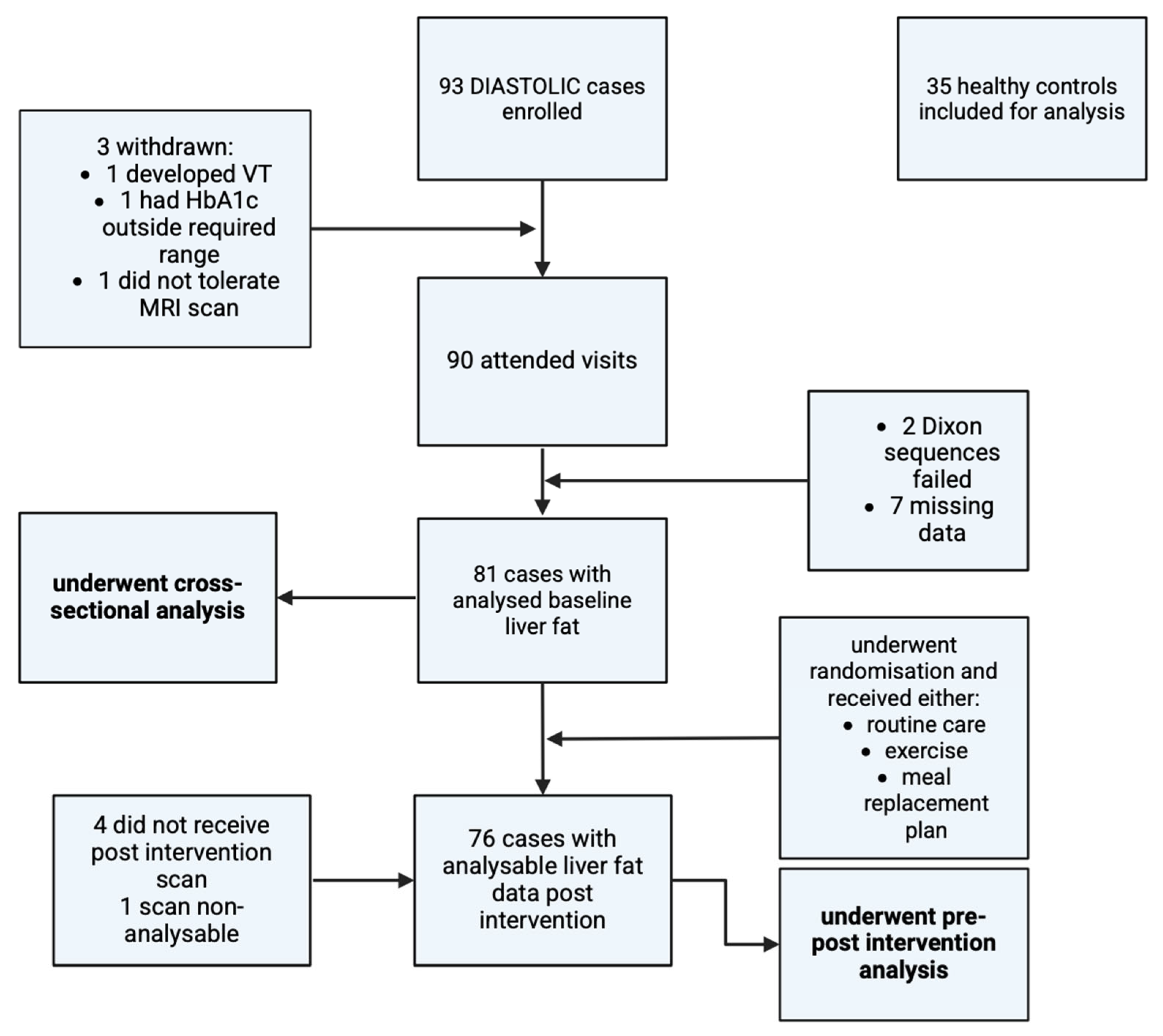
This is a post hoc secondary analysis of the Diabetes Interventional Assessment of Slimming or Training to Lessen Inconspicuous Cardiovascular Dysfunction (DIASTOLIC) study [14]. This was a prospective, randomised, open-label, blinded endpoint trial that assessed the effects of a 12-week intervention with either (1) supervised aerobic exercise consisting of moderate-intensity sessions thrice weekly, (2) a nutritionally complete low-energy Meal Replacement Plan (MRP), or (3) routine care with standard lifestyle advice on cardiac dysfunction. Key inclusion criteria for cases included adults with an established diagnosis of T2D and obesity, who were free from symptomatic CVD. Key exclusion criteria were T2D duration > 12 years, history, signs or symptoms of CVD, and inability to exercise or undertake the MRP. Detailed inclusion and exclusion criteria, along with additional information on the interventions, can be found in the Supplementary Material (Sections S1 and S2). Those with T2D were compared to age-, sex-, and ethnicity-matched healthy volunteers as a nested case–control analysis. The trial is registered (NCT02590822) and received national ethics approval (15/WM/0222). All participants provided informed consent prior to any data collection. A study consort diagram is demonstrated in Figure 1. Analysis was performed with interventions pooled and also separated to evaluate the differential effects of each intervention.

2.1. Demographics

At the baseline visit, eligibility was confirmed, and written informed consent was obtained. Demographic data, including age, sex, and ethnicity, were recorded, together with relevant medical history and medication use. Anthropometric measurements included height, weight, body mass index (BMI), blood pressure, and waist and hip circumference. Body composition was assessed using dual-energy X-ray absorptiometry. Habitual physical activity and sedentary behaviour were evaluated using a combination of objective accelerometry and validated physical activity questionnaires. Smoking status was recorded by self-report at baseline. Further details on the collection of demographics, medical history, and anthropometrics have been previously reported in the DIASTOLIC study protocol [14].

2.2. Hepatic Fat

Two-point Dixon fat-water magnetic resonance imaging (MRI) was used to acquire images of the liver. Briefly, localiser images were acquired, followed by abdominal 2-point Dixon images. This included the acquisition of 24 images in a single stack, at the abdomen, positioned at the dome of the liver, during an end-expiration breath-hold. The following parameters were used: a 5 mm slice thickness with a 20% slice gap, repetition time (TR) of 6.78 ms, echo time (TE) of 2.39 ms with a 500 × 375 mm matrix, and a field of view reading of 500 mm on a 1.5T scanner (Aera, Siemens Medical Imaging, Erlangen, Germany).
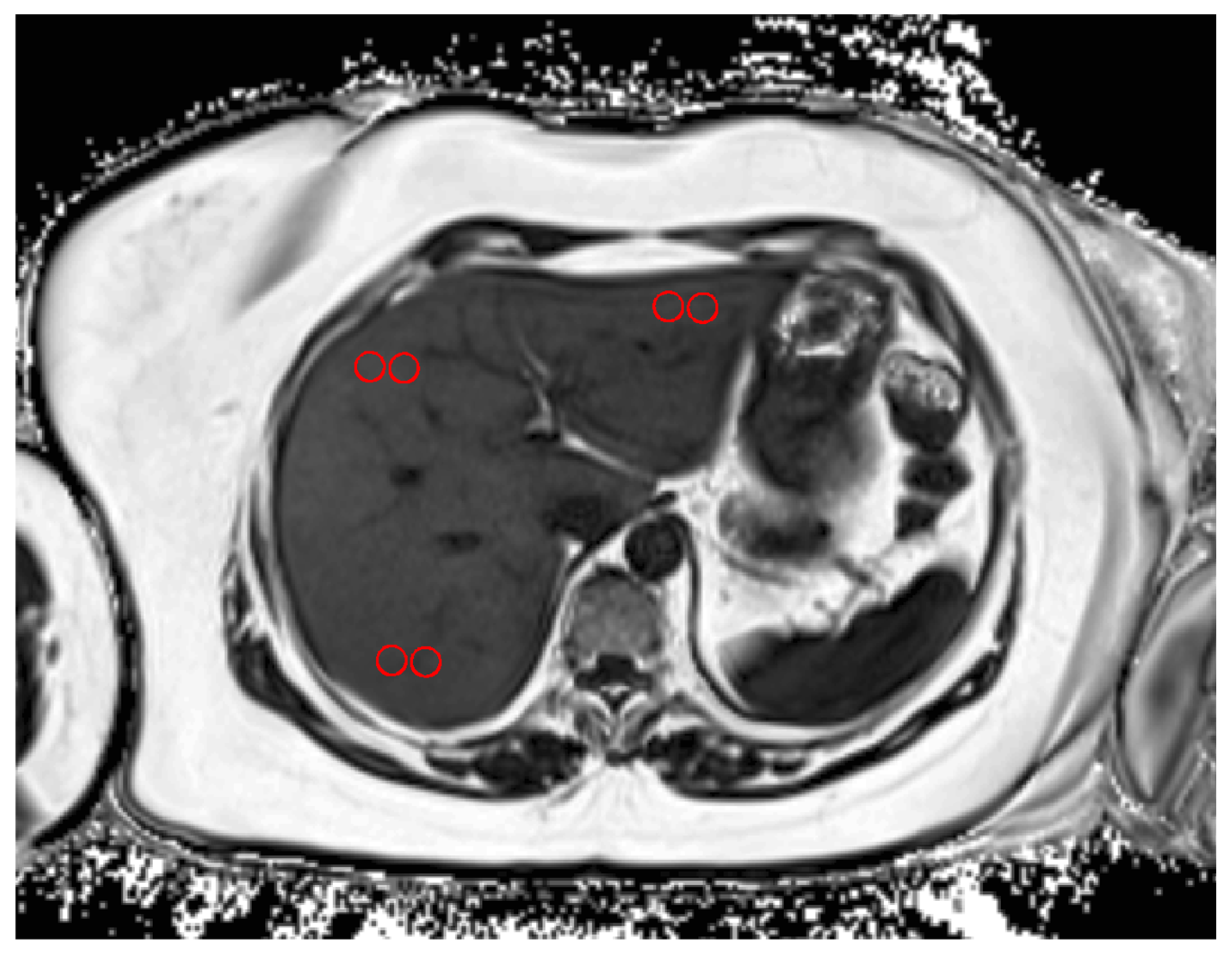
Java Image Manipulation software Version 8 (Xinapse Systems) was used for the quantification of hepatic fat. Blinded intra-rater reliability analysis between three-slice and single-slice images of 5mm demonstrated excellent correlation with an intraclass correlation coefficient of 1.0 [95% CI 0.99, 1.00 (p < 0.001)]; therefore, a single 5mm slice image was used for this analysis. Slice selection was standardised by identifying the level of the largest liver cross-section near the porta hepatis. Six (5 mm2 each) elliptical regions of interest were manually positioned at the posterior, anterior, and left lobes of the liver, and a mean hepatic fat percentage was calculated (Figure 2).

2.3. Cardiovascular MRI

MRI scans were conducted on a 1.5 T platform (MAGNETOM Aera; Siemens, Erlangen, Germany), as previously described [14]. The MRI outcomes of interest were preselected to permit investigation of cardiovascular structure and function and include left ventricular (LV) end diastolic volume index (EDVi), LV mass index, mass/volume, global longitudinal strain (GLS), diastolic strain rates (PEDSR), cardiac index (cardiac output/body surface area, CI), stroke volume index (SVi), and ejection fraction (EF). In addition, myocardial perfusion reserve and aortic distensibility were assessed as key measures of coronary microvascular function and arterial stiffness, respectively. Images were analysed offline, blinded to treatment group, using cmr42 version 5 (Circle Cardiovascular Imaging, Calgary, AB, Canada), and aortic distensibility was analysed using Java image Manipulation version 6 (Xinapse Software, Essex, UK). Cardiac chamber volumes, function, and strain were assessed and, at baseline, were normalised and indexed to height2.7 accordingly. Height, instead of body surface area, was used for indexing in order to prevent overcorrection in the setting of obesity and bias introduced with significant weight loss [15].

2.4. Echocardiography

Transthoracic echocardiography was performed and interpreted according to American Society of Echocardiography guidelines [16] by two operators using an iE33 system with an S5-1 transducer (Philips Medical Systems, Best, The Netherlands). As per current recommendations, Doppler echocardiography was performed to assess LV filling pressures, which were estimated using early diastolic transmitral flow velocity (E) and early diastolic mitral annular velocity (e’) [17].

2.5. Fasting Bloods

Fasting blood samples were obtained and subsequently stored at −80 °C prior to batch analysis. Glucose, HbA1c, liver function (albumin, total bilirubin, alkaline phosphatase, and alanine transaminase), kidney function (sodium, potassium, urea, and creatinine), and lipid profile (fasting triglycerides, HDL, low-density lipoprotein, and total cholesterol) were analysed according to the standard operating procedures in the accredited clinical laboratory at the University Hospitals of Leicester NHS Trust. Insulin and leptin were quantified by multiplex assay on a Luminex platform [14]. Insulin resistance was estimated by multiplying insulin and glucose levels, which provided the widely recognised homeostatic model assessment of insulin resistance (HOMA-IR). Plasma adiponectin was analysed using a Quantikine ELISA assay (R&D Systems, Minneapolis, MN, USA). All samples were assayed in duplicate (the mean was reported), with all samples having a coefficient of variance (%CV) ≤ 20%.

2.6. Statistical Analysis

Normality of variables was assessed using histograms and Q-Q plots. Continuous variables were reported as a mean ± standard deviation if normally distributed or median (interquartile range) if non-normally distributed. Prior to randomisation, baseline descriptive analysis was performed between those with T2D (cases) and healthy volunteers (controls).
Subsequent analyses were confined to those with T2D who underwent randomisation to one of the three aforementioned treatment allocations. Analysis was initially performed with participants across all three arms pooled together in order to increase statistical power. Following this, the analysis was separated to investigate if there was a presence of a differential effect of each intervention arm. In order to limit multiple statistical testing, changes in key variables over the intervention period were expressed as a mean/median difference (95% CI). Analysis of covariance (ANCOVA) was performed to compare week 12 hepatic fat between all trial arms, adjusting for baseline hepatic fat. Associations between the change in hepatic fat and CMR/echo parameters of interest were calculated using Spearman’s rank correlation test. Change was calculated as the baseline value of the variable—week 12 value. Those meeting significance at the univariable stage were taken forward into generalised linear modelling to identify if change in hepatic fat was independently associated with change in cardiac parameters of interest after adjusting for change in BMI and baseline value of the dependent variable of interest. Data were analysed using IBM SPSS Statistics for Mac, version 28.0, Armok, NY, USA. A two-tailed p-value of < 0.05 was deemed statistically significant.

3. Results

3.1. Baseline Demographics

Eighty-one participants with T2D and 35 healthy controls without T2D were included in this case–control analysis (Figure 1). Baseline characteristics are displayed in Table 1. Both cases and controls were well balanced for age, sex, and ethnicity. Participants with T2D had a higher BMI and blood pressure and were more likely to have dyslipidaemia.

3.2. Liver and Cardiovascular Imaging

The percentage of hepatic fat was four times higher in participants with T2D (13.8% vs. 2.9%) compared to controls. Presence of MASLD, defined radiologically by a hepatic fat fraction ≥5% on MRI [18], was eight times higher in participants with T2D (84% vs. 11%) compared to controls. There was evidence of adverse cardiovascular remodelling in those with T2D, with cases having higher LV mass and mass/volume, EF, CI, E/e’, and lower LV EDVi and E/A, myocardial perfusion reserve, and aortic distensibility (Table 2).

3.3. Post-Intervention Analysis in T2D

Changes in anthropometric measures and biochemical markers at baseline and week 12 within each intervention arm are displayed in Table 3. There were significant reductions in BMI and systolic BP in both the routine care and MRP arms, but not the exercise arm. The MRP arm had the greatest BMI and blood pressure reduction with a mean reduction of 4.7 kg/m2 and 13.9 mmHg, respectively. There was a trend towards improved glycaemic control and lower insulin resistance in both exercise and MRP arms; this was most profound in the MRP arm, with a mean decrease in HbA1c of 1% and HOMA-IR of 7.45. Only the MRP arm had meaningful changes in adipokine biochemistry, with a rise in adiponectin and a fall in leptin observed post calorie restriction. Hepatic fat decreased in all three intervention groups, with the largest reduction observed in the MRP arm [adjusted median reduction 8.9%, 95% CI (3.12, 13.66)], with the corresponding 95% confidence interval excluding the null.
Changes in cardiovascular parameters are displayed in Table 4. While there were no differences in GLS across all interventions, there was a modest decrease in PEDSR in the MRP arm. A moderate improvement in PEDSR was demonstrated in the exercise arm. Higher chamber volumes and reduced LV mass/volume, CI, EF, and SVi were observed in the MRP arm. These changes have been demonstrated and explored in the previous DIASTOLIC primary trial [19].
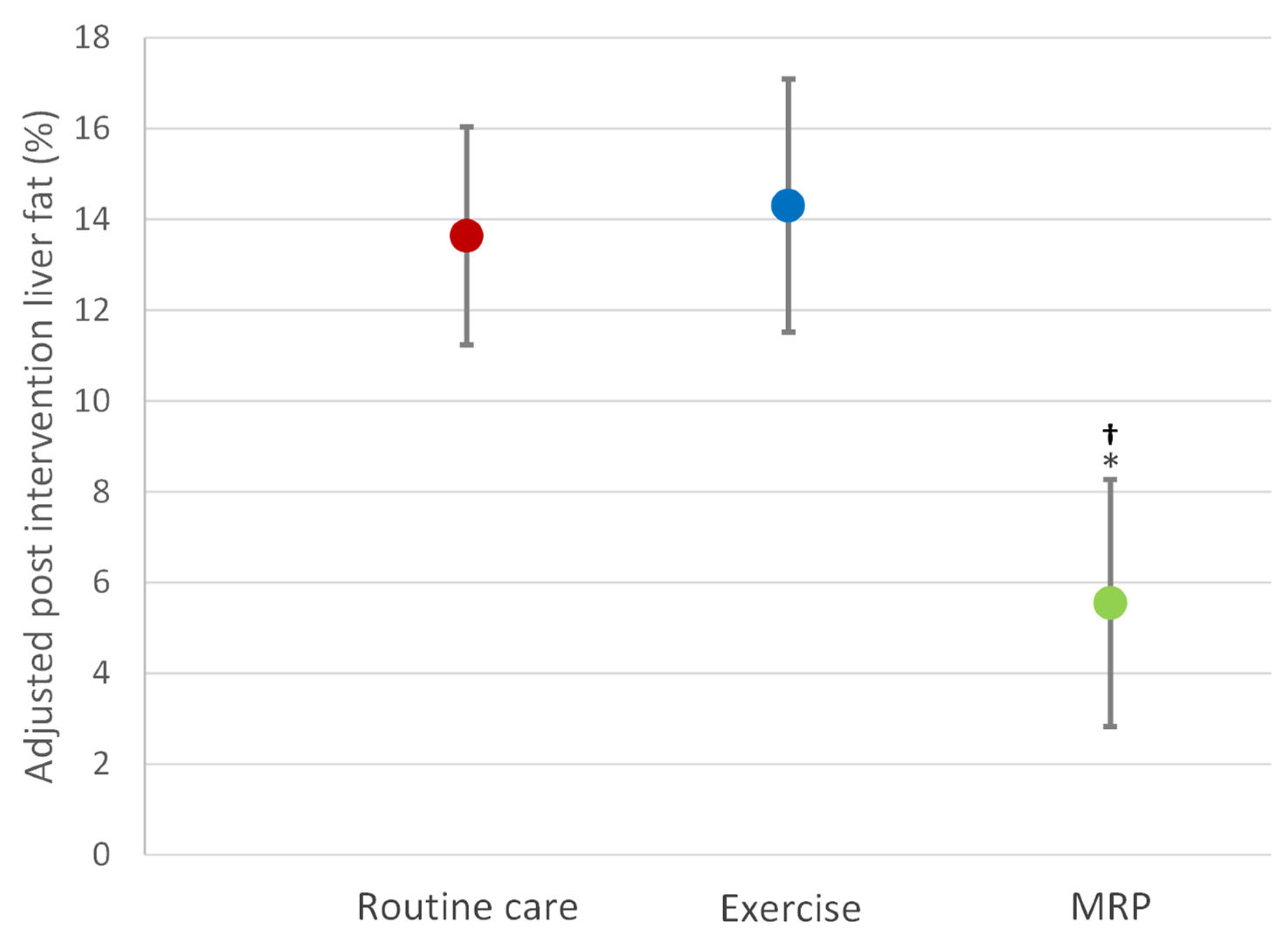
Figure 3 demonstrates a significantly lower post-intervention hepatic fat in the MRP arm compared to both the exercise and routine care arms after adjusting for baseline hepatic fat. However, there was no difference in post-intervention hepatic fat between the exercise and routine care arms.

3.4. Associations Between Liver Fat Reduction and Cardiac Remodelling in the Pooled Cohort

After pooling all three intervention arms (n = 76), there was a mean liver fat reduction of 4.8%, with n = 13 (20%) of the cohort who initially met the MASLD criteria no longer meeting it at follow-up.
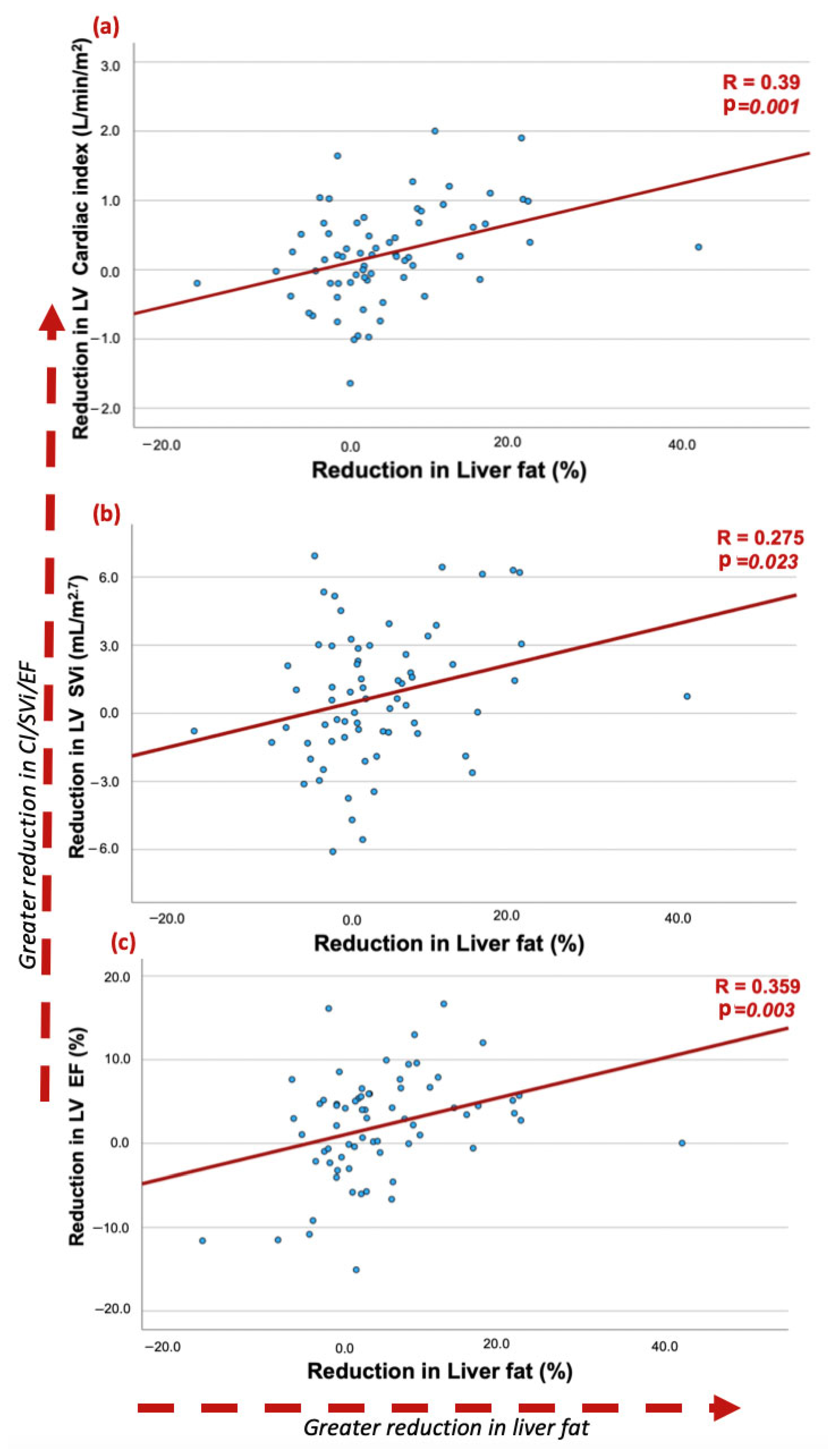
Table 5 demonstrates correlation testing between liver fat reduction and change in various cardiac parameters of interest. Liver fat reduction was positively correlated with reductions in EF, CI, and SVi (Figure 4). After adjusting for the baseline of the dependent variable of interest and change in BMI, a reduction in liver fat was only associated with a reduction in CI (Table 6). Liver fat reduction was not associated with changes in strain, diastolic dysfunction, or myocardial perfusion.

3.5. Sensitivity Analysis in Meal Replacement Group

Given that the only intervention showing a significant decrease in hepatic fat post-intervention was the MRP arm, a sensitivity analysis was performed in this group. Table S1 demonstrates correlations between the change in liver fat and the change in cardiovascular parameters by each intervention arm. Within the MRP arm, a decrease in liver fat was associated with reductions in EDVi, CI, and SVi. None of the other parameters were associated with hepatic fat reduction. Given the significant univariable correlations seen, generalised linear modelling was then performed on the aforementioned significant cardiac parameters (Table 7). After adjustment for the baseline value of the dependent variable being tested and reduction in BMI, hepatic fat reduction was strongly associated with reductions in SVi, CI, and EDVi. In this sensitivity analysis, compared to the pooled analysis, the effect sizes observed are much larger when restricted to the MRP arm only.

4. Discussion

This secondary analysis of the DIASTOLIC trial examined whether changes in hepatic fat content were associated with reverse cardiac remodelling in adults with obesity and T2D. Across the intervention period, reductions in hepatic fat were associated with favourable changes in cardiac haemodynamics, including normalisation of elevated cardiac output and stroke volume indices, independent of changes in BMI. While a trend towards hepatic fat reduction was observed with routine care and exercise, the largest and most consistent reductions occurred in the MRP arm, which was also the only intervention associated with clear improvements in cardiac haemodynamic responses. These findings suggest that hepatic fat reduction, rather than weight loss per se, may be a potentially modifiable contributor to early cardiovascular reverse remodelling in type 2 diabetes.

4.1. Effects of Lifestyle Interventions

After 12 weeks, hepatic fat reduction was greatest in the MRP arm, with no significant benefit observed in the exercise or routine care groups. This was unexpected given prior evidence that both dietary and exercise interventions can modestly improve MASLD, with additive effects when combined [20]. The limited benefit in the exercise arm likely reflects the minimal weight loss achieved (mean BMI reduction: 0.4 kg/m2), given that weight loss is the strongest determinant of hepatic fat reduction [21]. However, it is important to note that the exercise intervention was designed to achieve an improvement in cardiorespiratory fitness rather than focusing on weight loss. The MRP arm also showed the greatest improvements in glycaemic control and insulin resistance, with 80% of participants achieving T2D remission (post-intervention mean HbA1c 6.2%).
Finally, only the MRP group exhibited a favourable shift in adipokine profile, with increased adiponectin and reduced leptin. Elevated leptin levels in visceral obesity are known to activate RAAS and fibro-inflammatory pathways that promote myocardial fibrosis and impaired relaxation in HFpEF [22]; thus, improvements here are biologically consistent with the greater fat loss.
Notably, 20% of those who met MASLD criteria at baseline (n = 68) no longer fulfilled the definition post-intervention, highlighting the rapid reversibility of hepatic steatosis with intensive caloric restriction. These findings of remission of T2D and hepatic steatosis with a low-calorie diet are in line with previous work, where they also describe a degree of β-cell recovery [23,24].
With respect to cardiac functional parameters, there were no changes in GLS across any intervention arm, which is consistent with prior work showing that GLS, in those without symptomatic CVD, is relatively insensitive to short-term metabolic interventions [25]. A modest within-group trend towards worsening diastolic strain was observed in the MRP arm, consistent with previous studies of very low-calorie diets in which a transient deterioration in diastolic function has been reported, followed by improvement over longer-term follow-up [26]. Participants undergoing supervised exercise showed a moderate improvement in diastolic function, as previously described [19]. This could be due to improvements in endothelial function, inflammation, and myocardial calcium handling, which have been observed in aerobic exercise [27,28,29].

4.2. Liver Fat and Cardiovascular Remodelling

Our findings indicate that adults with obesity and T2D show features consistent with stage B HF, despite the absence of clinical symptoms. They exhibited a high resting cardiac output state, diastolic dysfunction, impaired myocardial perfusion, and increased aortic stiffness. While diastolic dysfunction, fibrosis, and concentric remodelling are well described in T2D [30], we additionally observed higher CI, EF, and SVi in the T2D cohort. Obesity is known to increase cardiac output due to elevated metabolic demand from excess free adipose tissue and sympathetic activation [31,32]. Similarly, individuals with compensated liver disease often display increased CO and vasodilation driven by liver-derived factors, leading to hyperdynamic circulation [33]. The majority of our cohort met criteria for MASLD, suggesting that hepatic fat accumulation may contribute to these haemodynamic changes.
Contrastingly, T2D typically impairs the augmentation of CO under stress because of coronary microvascular dysfunction and perivascular fibrosis [34,35], consistent with the reduced myocardial perfusion reserve observed in this cohort of those with T2D. Importantly, in the MRP group, CI, EF, and SVi decreased toward levels seen in healthy controls, suggesting an improvement in pathological haemodynamic responses. The 66% relative reduction in hepatic fat in the MRP arm was strongly associated with reductions in CI and SV, and this persisted after adjustment for BMI. Though the pooled analysis across all three interventions demonstrated a similar association, the effect size was attenuated, and neither routine care nor exercise alone showed significant relationships between hepatic fat reduction and CI changes in isolation. Hepatic fat reduction did not influence diastolic strain rates, hypertrophy, or aortic stiffness, indicating that several core features of diabetic cardiomyopathy may be independent of hepatic steatosis.

4.3. Mechanistic Considerations

Increased cardiac output and elevated LV filling pressures have been reported in MASLD [36] and increased further in metabolic dysfunction-associated steatohepatitis (MASH) [37]. A subset of patients with MASH develop an obstructive HFpEF phenotype characterised by preload reserve failure, high-normal EF, and increased CO [13]. Given that MASH precedes cirrhosis, the mechanisms may involve early portal hypertension, altered sympathetic tone, and release of vasodilatory mediators leading to a hyperdynamic circulation [38,39,40].
However, MASLD usually coexists with obesity, making it difficult to distinguish whether increased cardiac output arises from adipose-driven metabolic demand or hepatic factors. Here, for the first time, we demonstrate that normalisation of pathologically raised cardiac output in obesity, MASLD, and T2D is associated with reductions in hepatic fat independent of weight loss. The mechanism remains uncertain but may relate to reduced RAAS activation, lower portal pressures, and decreased sympathetic drive. Importantly, these haemodynamic changes occur in the absence of overt structural remodelling or symptomatic heart failure, suggesting that they represent an early and potentially reversible stage of cardiovascular dysfunction. These pathological haemodynamic changes, if persistent, can lead to LV dilation, hypertrophy, wall stress, and eventually symptomatic heart failure [41]. Thus, hepatic fat represents a potentially modifiable therapeutic target for early cardiovascular risk reduction in T2D, with dietary intervention via a low-calorie MRP offering a non-pharmacological route to improving pathological cardiovascular haemodynamics.

4.4. Strengths and Limitations

This DIASTOLIC trial has several important strengths. It was a well-conducted, randomised controlled study with balanced groups and high participant retention. All participants underwent comprehensive cardiovascular phenotyping using cardiac MRI, the reference standard for non-invasive assessment of chamber structure, function, haemodynamics, and myocardial perfusion. Hepatic fat was also quantified using MRI-based fat fraction techniques, which provide the highest sensitivity and specificity for quantifying hepatic steatosis [42]. Additionally, the use of standardised imaging protocols and blinded analysis and interpretation reduces measurement variability and strengthens internal validity. Finally, the combined assessment of cardiac, hepatic, metabolic, and adipokine changes provides an integrated cardio-metabolic picture that is rarely captured in lifestyle intervention studies.
However, several limitations should be considered. First, this was a secondary, exploratory post hoc analysis, and the original trial was not specifically powered to detect associations between hepatic fat reduction and cardiac reverse remodelling. This increases the risk of Type II error, particularly when stratifying by intervention arm, where sample sizes were smaller; thus, results must be interpreted with caution. Second, although cardiac MRI provides precise measurements, the relatively short 12-week intervention period limits our ability to determine whether the observed haemodynamic improvements in the MRP group translate into longer-term structural reverse remodelling. Third, although BMI was the only covariate included in the regression models to minimise overfitting, residual confounding from other metabolic or haemodynamic variables cannot be fully excluded. Fourth, participants in this trial were free of symptomatic CVD, and therefore, the findings may not be generalisable to individuals with symptomatic or advanced HF. Finally, a liver biopsy was not performed, so histological conclusions regarding inflammation, fibrosis, or portal haemodynamics remain inferential.
Overall, despite these limitations, the study provides robust imaging-based evidence supporting a link between hepatic fat reduction and normalisation of pathological haemodynamics in T2D and highlights a potentially modifiable target for early cardiovascular risk reduction.

5. Conclusions

In T2D, hepatic fat is strongly linked to pathological cardiovascular haemodynamic profiles. Intensive caloric restriction achieves substantial hepatic fat loss and normalisation of hyperdynamic cardiovascular physiology independent of weight loss, identifying hepatic steatosis as a potential therapeutic target for early cardiovascular risk reduction.

Supplementary Materials

The following supporting information can be downloaded at https://www.mdpi.com/article/10.3390/diabetology7020032/s1. Section S1 detailed inclusion and exclusion criteria for the DIASTOLIC primary trial; Section S2 detailed description of interventions in DIASTOLIC; and Table S1 Correlation between liver fat reduction and Δ cardiovascular parameters in the three trial arms.

Author Contributions

See the main outcomes paper for contributions to the original study. P.R., L.K.A., and K.P. analysed the data. P.R. conducted statistical analysis and drafted the manuscript with input from E.M.B., G.S.G., M.J.D., and G.P.M. All authors critically revised the manuscript and contributed to subsequent revisions. All authors approved the final version. All authors have read and agreed to the published version of the manuscript.

Funding

This study was funded by the NIHR Research Trainees Coordinating Centre through a career development fellowship to GPM (CDF 2014-07-045) and supported by the NIHR Leicester Biomedical Research Centre and Clinical Research Facility. GPM is also supported by the British Heart Foundation Leicester Centre for Research Excellence.

Institutional Review Board Statement

DIASTOLIC was granted ethical approval by the National Research Ethics Committee (REC), REC: West Midlands—Coventry and Warwickshire Research Ethics Committee. REC reference: 15/WM/0222, Approval date: 7 July 2015 (final approval). Registration: NCT02590822 found: Study Details|NCT02590822|Diabetes Interventional Assessment of Slimming or Training to Lessen Inconspicuous Cardiovascular Dysfunction|ClinicalTrials.gov. Clinical trial registration date: 29 October 2015.

Informed Consent Statement

All participants provided informed consent prior to any data collection.

Data Availability Statement

Data are available upon request to the corresponding author.

Acknowledgments

We acknowledge the support from the Leicester Biomedical Research Centre and the NIHR Leicester Clinical Research Facility. The views expressed in this paper are those of the authors and not necessarily those of the NIHR, NHS, or the UK Department of Health and Social Care.

Conflicts of Interest

Cambridge Weight Plan provided the dietary supplements free of charge but was not involved in the conduct of the study, analysis or interpretation of the data, or writing of the report. No other potential conflicts of interest relevant to this article were reported.

References

  1. Ong, K.L.; Stafford, L.K.; McLaughlin, S.A.; Boyko, E.J.; Vollset, S.E.; Smith, A.E.; Dalton, B.E.; Duprey, J.; Cruz, J.A.; Hagins, H.; et al. Global, regional, and national burden of diabetes from 1990 to 2021, with projections of prevalence to 2050: A systematic analysis for the Global Burden of Disease Study 2021. Lancet 2023, 402, 203–234. [Google Scholar] [CrossRef] [PubMed]
  2. IDF Diabetes Atlas, 11th ed.; International Diabetes Federation: Brussles, Belgium, 2025; Available online: https://www.diabetesatlas.org (accessed on 17 January 2025).
  3. Einarson, T.R.; Acs, A.; Ludwig, C.; Panton, U.H. Prevalence of cardiovascular disease in type 2 diabetes: A systematic literature review of scientific evidence from across the world in 2007–2017. Cardiovasc. Diabetol. 2018, 17, 83. [Google Scholar] [CrossRef] [PubMed]
  4. Low Wang, C.C.; Hess, C.N.; Hiatt, W.R.; Goldfine, A.B. Clinical Update: Cardiovascular Disease in Diabetes Mellitus: Atherosclerotic Cardiovascular Disease and Heart Failure in Type 2 Diabetes Mellitus—Mechanisms, Management, and Clinical Considerations. Circulation 2016, 133, 2459–2502. [Google Scholar] [CrossRef] [PubMed]
  5. NHS Digital. National Diabetes Audit. 2022 to 2023. Available online: https://files.digital.nhs.uk/91/084B1D/National%20Diabetes%20Audit%2C%202017-18%2C%20Report%202a.pdf (accessed on 17 November 2025).
  6. Heidenreich, P.A.; Bozkurt, B.; Aguilar, D.; Allen, L.A.; Byun, J.J.; Colvin, M.M.; Deswal, A.; Drazner, M.H.; Dunlay, S.M.; Evers, L.R.; et al. 2022 AHA/ACC/HFSA Guideline for the Management of Heart Failure: A Report of the American College of Cardiology/American Heart Association Joint Committee on Clinical Practice Guidelines. Circulation 2022, 145, e895–e1032. [Google Scholar] [CrossRef]
  7. Ng, A.C.; Bertini, M.; Ewe, S.H.; van der Velde, E.T.; Leung, D.Y.; Delgado, V.; Bax, J.J. Defining Subclinical Myocardial Dysfunction and Implications for Patients With Diabetes Mellitus and Preserved Ejection Fraction. Am. J. Cardiol. 2019, 124, 892–898. [Google Scholar] [CrossRef]
  8. Powell-Wiley, T.M.; Poirier, P.; Burke, L.E.; Després, J.-P.; Gordon-Larsen, P.; Lavie, C.J.; Lear, S.A.; Ndumele, C.E.; Neeland, I.J.; Sanders, P.; et al. Obesity and Cardiovascular Disease: A Scientific Statement From the American Heart Association. Circulation 2021, 143, e984–e1010. [Google Scholar] [CrossRef]
  9. Stefan, N.; Schick, F.; Birkenfeld, A.L.; Häring, H.-U.; White, M.F. The role of hepatokines in NAFLD. Cell Metab. 2023, 35, 236–252. [Google Scholar] [CrossRef]
  10. Park, J.; Kim, G.; Kim, H.; Lee, J.; Jin, S.-M.; Kim, J.H. The associations between changes in hepatic steatosis and heart failure and mortality: A nationwide cohort study. Cardiovasc. Diabetol. 2022, 21, 287. [Google Scholar] [CrossRef]
  11. Ramesh, P.; Yeo, J.L.; Brady, E.M.; McCann, G.P. Role of inflammation in diabetic cardiomyopathy. Ther. Adv. Endocrinol. Metab. 2022, 13, 20420188221083530. [Google Scholar] [CrossRef]
  12. Liu, X.; Shao, Y.; Han, L.; Zhang, R.; Chen, J. Emerging Evidence Linking the Liver to the Cardiovascular System: Liver-derived Secretory Factors. J. Clin. Transl. Hepatol. 2023, 11, 1246–1255. [Google Scholar] [CrossRef]
  13. Salah, H.M.; Pandey, A.; Soloveva, A.; Abdelmalek, M.F.; Diehl, A.M.; Moylan, C.A.; Wegermann, K.; Rao, V.N.; Hernandez, A.F.; Tedford, R.J.; et al. Relationship of Nonalcoholic Fatty Liver Disease and Heart Failure With Preserved Ejection Fraction. JACC Basic Transl. Sci. 2021, 6, 918–932. [Google Scholar] [CrossRef] [PubMed]
  14. Gulsin, G.S.; Brady, E.M.; Swarbrick, D.J.; Athithan, L.; Henson, J.; Baldry, E.; McAdam, J.; Marsh, A.-M.; Parke, K.S.; Wormleighton, J.V.; et al. Rationale, design and study protocol of the randomised controlled trial: Diabetes Interventional Assessment of Slimming or Training tO Lessen Inconspicuous Cardiovascular Dysfunction (the DIASTOLIC study). BMJ Open 2019, 9, e023207. [Google Scholar] [CrossRef] [PubMed]
  15. Moukarzel, J.; Guevara, E.; Casciaro, M.E.; Guilenea, F.N.; Pascaner, A.F.; Craiem, D. Echocardiographic Measurements of Left Heart Chamber Size in a Large Cohort of Subjects: Comparison of Body Surface Area and Height Indexing to Account for Effects of Obesity. J. Am. Soc. Echocardiogr. 2022, 35, 1159–1167.e2. [Google Scholar] [CrossRef] [PubMed]
  16. Picard, M.H.; Adams, D.; Bierig, S.M.; Dent, J.M.; Douglas, P.S.; Gillam, L.D.; Keller, A.M.; Malenka, D.J.; Masoudi, F.A.; McCulloch, M.; et al. American Society of Echocardiography Recommendations for Quality Echocardiography Laboratory Operations. J. Am. Soc. Echocardiogr. 2011, 24, 1–10. [Google Scholar] [CrossRef]
  17. Nagueh, S.F.; Smiseth, O.A.; Appleton, C.P.; Byrd, B.F., 3rd; Dokainish, H.; Edvardsen, T.; Flachskampf, F.A.; Gillebert, T.C.; Klein, A.L.; Lancellotti, P.; et al. Recommendations for the Evaluation of Left Ventricular Diastolic Function by Echocardiography: An Update from the American Society of Echocardiography and the European Association of Cardiovascular Imaging. J. Am. Soc. Echocardiogr. 2016, 29, 277–314. [Google Scholar] [CrossRef]
  18. Maurice, J.; Manousou, P. Non-alcoholic fatty liver disease. Clin. Med. 2018, 18, 245–250. [Google Scholar] [CrossRef]
  19. Gulsin, G.S.; Swarbrick, D.J.; Athithan, L.; Brady, E.M.; Henson, J.; Baldry, E.; Argyridou, S.; Jaicim, N.B.; Squire, G.; Walters, Y.; et al. Effects of Low-Energy Diet or Exercise on Cardiovascular Function in Working-Age Adults With Type 2 Diabetes: A Prospective, Randomized, Open-Label, Blinded End Point Trial. Diabetes Care 2020, 43, 1300–1310. [Google Scholar] [CrossRef]
  20. Kenneally, S.; Sier, J.H.; Moore, J.B. Efficacy of dietary and physical activity intervention in non-alcoholic fatty liver disease: A systematic review. BMJ Open Gastroenterol. 2017, 4, e000139. [Google Scholar] [CrossRef]
  21. Koutoukidis, D.A.; Koshiaris, C.; Henry, J.A.; Noreik, M.; Morris, E.; Manoharan, I.; Tudor, K.; Bodenham, E.; Dunnigan, A.; Jebb, S.A.; et al. The effect of the magnitude of weight loss on non-alcoholic fatty liver disease: A systematic review and meta-analysis. Metabolism 2021, 115, 154455. [Google Scholar] [CrossRef]
  22. Packer, M. The Adipokine Hypothesis of Heart Failure with a Preserved Ejection Fraction. JACC 2025, 86, 1269–1373. [Google Scholar] [CrossRef]
  23. Lim, E.L.; Hollingsworth, K.G.; Aribisala, B.S.; Chen, M.J.; Mathers, J.C.; Taylor, R. Reversal of type 2 diabetes: Normalisation of beta cell function in association with decreased pancreas and liver triacylglycerol. Diabetologia 2011, 54, 2506–2514. [Google Scholar] [CrossRef]
  24. Taylor, R.; Al-Mrabeh, A.; Zhyzhneuskaya, S.; Peters, C.; Barnes, A.C.; Aribisala, B.S.; Hollingsworth, K.G.; Mathers, J.C.; Sattar, N.; Lean, M.E.; et al. Remission of Human Type 2 Diabetes Requires Decrease in Liver and Pancreas Fat Content but Is Dependent upon Capacity for β Cell Recovery. Cell Metab. 2018, 28, 547–556.e3. [Google Scholar] [CrossRef] [PubMed]
  25. Murray, J.; Bennett, H.; Bezak, E.; Perry, R.; Boyle, T. The effect of exercise on left ventricular global longitudinal strain. Eur. J. Appl. Physiol. 2022, 122, 1397–1408. [Google Scholar] [CrossRef] [PubMed]
  26. Rayner, J.J.; Abdesselam, I.; Peterzan, M.A.; Akoumianakis, I.; Akawi, N.; Antoniades, C.; Tomlinson, J.W.; Neubauer, S.; Rider, O.J. Very low calorie diets are associated with transient ventricular impairment before reversal of diastolic dysfunction in obesity. Int. J. Obes. 2019, 43, 2536–2544. [Google Scholar] [CrossRef] [PubMed]
  27. Gambardella, J.; Morelli, M.B.; Wang, X.; Santulli, G. Pathophysiological mechanisms underlying the beneficial effects of physical activity in hypertension. J. Clin. Hypertens. 2020, 22, 291–295. [Google Scholar] [CrossRef]
  28. Petersen, A.M.; Pedersen, B.K. The anti-inflammatory effect of exercise. J. Appl. Physiol. 1985 2005, 98, 1154–1162. [Google Scholar] [CrossRef]
  29. Verboven, M.; Van Ryckeghem, L.; Belkhouribchia, J.; Dendale, P.; Eijnde, B.O.; Hansen, D.; Bito, V. Effect of Exercise Intervention on Cardiac Function in Type 2 Diabetes Mellitus: A Systematic Review. Sports Med. 2018, 49, 255–268. [Google Scholar] [CrossRef]
  30. Gulsin, G.S.; Athithan, L.; McCann, G.P. Diabetic cardiomyopathy: Prevalence, determinants and potential treatments. Ther. Adv. Endocrinol. Metab. 2019, 10, 2042018819834869. [Google Scholar] [CrossRef]
  31. Poirier, P.; Giles, T.D.; Bray, G.A.; Hong, Y.; Stern, J.S.; Pi-Sunyer, F.X.; Eckel, R.H.; American Heart Association; Obesity Committee of the Council on Nutrition, Physical Activity, and Metabolism. Obesity and Cardiovascular Disease: Pathophysiology, Evaluation, and Effect of Weight Loss. Circulation 2006, 113, 898–918. [Google Scholar] [CrossRef]
  32. Borlaug, B.A.; Jensen, M.D.; Kitzman, D.W.; Lam, C.S.P.; Obokata, M.; Rider, O.J. Obesity and heart failure with preserved ejection fraction: New insights and pathophysiological targets. Cardiovasc. Res. 2022, 118, 3434–3450. [Google Scholar] [CrossRef]
  33. Xanthopoulos, A.; Starling, R.C.; Kitai, T.; Triposkiadis, F. Heart Failure and Liver Disease: Cardiohepatic Interactions. JACC Heart Failure 2019, 7, 87–97. [Google Scholar] [CrossRef] [PubMed]
  34. Madsen, P.L.; Sejersen, C.; Nyberg, M.; Sørensen, M.H.; Hellsten, Y.; Gaede, P.; Bojer, A.S. The cardiovascular changes underlying a low cardiac output with exercise in patients with type 2 diabetes mellitus. Front. Physiol. 2024, 15, 1294369. [Google Scholar] [CrossRef] [PubMed]
  35. Levelt, E.; Rodgers, C.T.; Clarke, W.T.; Mahmod, M.; Ariga, R.; Francis, J.M.; Liu, A.; Wijesurendra, R.S.; Dass, S.; Sabharwal, N.; et al. Cardiac energetics, oxygenation, and perfusion during increased workload in patients with type 2 diabetes mellitus. Eur. Heart J. 2016, 37, 3461–3469. [Google Scholar] [CrossRef] [PubMed]
  36. VanWagner, L.B.; Wilcox, J.E.; Colangelo, L.A.; Lloyd-Jones, D.M.; Carr, J.J.; Lima, J.A.; Lewis, C.E.; Rinella, M.E.; Shah, S.J. Association of nonalcoholic fatty liver disease with subclinical myocardial remodeling and dysfunction: A population-based study. Hepatology 2015, 62, 773–783. [Google Scholar] [CrossRef]
  37. Styczynski, G.; Kalinowski, P.; Michałowski, Ł.; Paluszkiewicz, R.; Ziarkiewicz-Wróblewska, B.; Zieniewicz, K.; Tataj, E.; Rabczenko, D.; Szmigielski, C.A.; Sinski, M. Cardiac Morphology, Function, and Hemodynamics in Patients with Morbid Obesity and Nonalcoholic Steatohepatitis. J. Am. Heart Assoc. 2021, 10, e017371. [Google Scholar] [CrossRef]
  38. McAvoy, N.C.; Semple, S.; Richards, J.M.J.; Robson, A.J.; Patel, D.; Jardine, A.G.M.; Leyland, K.; Cooper, A.S.; Newby, D.E.; Hayes, P.C. Differential visceral blood flow in the hyperdynamic circulation of patients with liver cirrhosis. Aliment. Pharmacol. Ther. 2016, 43, 947–954. [Google Scholar] [CrossRef]
  39. Møller, S.; Bendtsen, F. The pathophysiology of arterial vasodilatation and hyperdynamic circulation in cirrhosis. Liver Int. 2018, 38, 570–580. [Google Scholar] [CrossRef]
  40. Estrela, H.F.G.; Damásio, E.S.; Fonseca, E.K.U.N.; Bergamaschi, C.T.; Campos, R.R. Differential Sympathetic Vasomotor Activation Induced by Liver Cirrhosis in Rats. PLoS ONE 2016, 11, e0152512. [Google Scholar] [CrossRef]
  41. Turkbey, E.B.; McClelland, R.L.; Kronmal, R.A.; Burke, G.L.; Bild, D.E.; Tracy, R.P.; Arai, A.E.; Lima, J.A.; Bluemke, D.A. The impact of obesity on the left ventricle: The Multi-Ethnic Study of Atherosclerosis (MESA). JACC Cardiovasc. Imaging 2010, 3, 266–274. [Google Scholar] [CrossRef]
  42. Zhang, Y.N.; Fowler, K.J.; Hamilton, G.; Cui, J.Y.; Sy, E.Z.; Balanay, M.; Hooker, J.C.; Szeverenyi, N.; Sirlin, C.B. Liver fat imaging—A clinical overview of ultrasound, CT, and MR imaging. Br. J. Radiol. 2018, 91, 20170959. [Google Scholar] [CrossRef]
Figure 1. Consort diagram demonstrating participant numbers at enrolment, randomisation, and post-intervention.
Diabetology 07 00032 g001
Figure 2. Reconstructed MRI image through the liver with 6 regions of interest placed in the anterior, posterior, and left lobes of the liver. Slices were identified as the largest liver cross-section near the porta hepatis.
Diabetology 07 00032 g002
Figure 3. Adjusted post-intervention liver fat means were estimated from ANCOVA controlling for baseline hepatic fat. Values are means with 95% confidence intervals. * p < 0.05 vs. routine care; † p < 0.05 vs. exercise.
Diabetology 07 00032 g003
Figure 4. Scatter plot with line of best fit demonstrating the relationship between liver fat reduction and reductions in (a) cardiac index, (b) stroke volume index, and (c) ejection fraction. Stroke volume is indexed to height2.7, while cardiac output is indexed to body surface area. R and p values determined from correlation testing.
Diabetology 07 00032 g004
Table 1. Baseline characteristics demonstrating demographics, anthropometrics, medical history, medication use, biochemistry, and liver fat.
T2DM (n = 81)Controls (n = 35)
Demographics
Age (years)50.2 ± 6.648.7 ± 6.3
Male Sex at birth (%)48 (59)19 (54)
Ethnicity (%)
Caucasian50 (62)23 (66)
Black or other ethnic minority31 (38)12 (34)
Anthropometrics
Height (cm)168 ± 10169 ± 9
Weight (kg)103.0 ± 17.170.2 ± 10.8
BMI (kg/m2)36.4 ± 5.5 24.5 ± 2.5
Systolic BP (mmHg)140 ± 15122 ± 13
Diastolic BP (mmHg)87 ± 877 ± 7
Heart rate (bpm)76 (69–80)60 (54–68)
Medical history
Duration of diabetes (months)56 (32–94)-
Current smokers, N (%)14 (17) 1 (3)
Hypertension, N (%)41 (51)0 (0)
Dyslipidemia, N (%)52 (64)0 (0)
Anti-hypertensive use (%)61 (75)0 (0)
Statin (%)54 (67)0 (0)
Biochemistry
eGFR90 (82–90)85 (78–90)
Fasting Glucose (mmol/L)7.7 (6.7–10.2)5.0 (4.8–5.1)
HbA1c (%)7.1 (6.5–8.1)5.4 (5.2–5.6)
Cholesterol (mmol/L)4.6 ± 1.05.7 ± 0.8
Triglycerides (mmol/L)1.9 (1.3–2.8)1.0 (0.7–1.5)
HDL (mmol/L)1.2 (1.0–1.4)1.7 (1.6–2.0)
LDL (mmol/L)2.5 (1.8–2.95)3.4 (2.7–4.0)
Cholesterol/HDL (mmol/L)3.9 ± 0.93.3 ± 0.8
Haemoglobin (g/L)145 ± 16141 ± 14
Brain natriuetic peptide (ng/L)9.6 (4.5–15.7)17.5 (9.2–22.3)
Adiponectin (ng/L)3449 (2620–5118)9636 (5026–14,341)
Leptin (pg/L)18911 (9821–30,713)4762 (2637–9715)
C peptide (ng/L)2654 (1886–3503)971 (763–1195)
Insulin (mIU/L)26.5 (19.1–36.9)7.3 (4.9–10.0)
HOMA-IR9.4 (6.5–13.7)1.6 (1.1–2.3)
BMI: body mass index; BP: blood pressure.
Table 2. MRI and ECHO parameters between cases and controls.
T2DM (n = 81)Controls (n = 35)
MRI
LV mass (g)120.8 ± 24.9107.4 ± 32.7
LV mass index (g/m2.7)29.5 ± 5.1 25.6 ± 5.2
LV EDV (mL)139.2 (125.6–174.3)153.1 (120.5–194.4)
LV EDV index (mL/m2.7)35.1 (32.6–39.4)35.8 (31.7–41.3)
LV mass/volume0.82 ± 0.130.71 ± 0.10
LV EF (%)68.0 ± 6.765.1 ± 5.0
LV SV (mL)100.2 (83.3–113.7)98.7 (79.7–117.4)
LV SV index (mL/m2.7)24.6 (21.3–27.0)23.8 (20.6–27.1)
LV Cardiac output (L/min)7.33 ± 1.585.76 ± 1.29
LV CI (L/min/m2)3.08 ± 0.603.47 ± 0.61
LV global longitudinal strain (%)16.9 ± 2.617.7 ± 1.5
LV PEDSR (s−1)1.01 ± 0.201.09 ± 0.16
Myocardial perfusion reserve3.04 ± 0.984.0 ± 1.01
Aortic distensibility (mmHg−1 × 10⁻³)4.16 ± 1.996.56 ± 2.05
Liver fat (%)13.8 (7.2–23.6)2.9 (2.5–3.6)
MASLD, N (%)68 (84)4 (11)
Echocardiography
E/A0.96 ± 0.201.22 ± 0.25
Average E/E’8.20 ± 2.39 6.46 ± 1.53
MASLD is defined as liver fat ≥ 5%. LV: left ventricle; PEDSR: peak early diastolic strain rate; EDV: end diastolic volume; EF: ejection fraction; CI: cardiac index; SV: stroke volume; and MASLD: metabolic dysfunction-associated steatotic liver disease.
Table 3. Bioanthropometric and hepatic fat measurements at baseline and 12 weeks, and mean change from baseline to 12 weeks in the three trial arms.
Routine Care (n = 27)Exercise (n = 20)Meal Replacement Plan (n = 21)
BaselineWeek 12 Mean Difference (95% CI)BaselineWeek 12 Mean Difference (95% CI)BaselineWeek 12 Mean Difference (95% CI)
Weight (kg)102.6 ± 14.9100.4 ± 14.52.28
(0.89, 3.67)
99.2 ± 16.397.8 ± 16.61.38
(0.69, 2.07)
106.7 ± 16.293.0 ± 15.013.68
(11.65, 15.71)
BMI (kg/m2)36.7 ± 4.835.9 ± 4.60.84
(0.31, 1.37)
34.7 ± 5.834.3 ± 5.90.44
(0.18, 0.70)
37.3 ± 5.832.6 ± 5.64.71
(4.00, 5.42)
Systolic BP (mmHg)138 ± 13132 ± 156.4
(2.93, 9.83)
134 ± 17135 ± 15−0.45
(−6.39, 5.49)
147 ± 16133 ± 1713.88
(5.56. 22.2)
Hba1c (%)7.2
(6.7–7.9)
7.0
(6.4–7.8)
0.00
(−0.50, 0.10) *
7.4
(6.9–8.2)
7.4
(6.4–8.0)
−0.10
(−0.10, 0.10) *
6.9
(6.3–8.1)
6.0
(5.7–6.6)
0.75
(0.40, 1.20) *
HOMA-IR7.8
(4.5–9.7)
6.6
(3.3–12.0)
0.81
(−2.14, 2.09) *
10.1
(6.5–15.3)
6.5
(4.4–14.7)
2.91
(0.18, 4.96) *
10.3
(8.0–13.6)
4.3
(3.0–6.0)
5.98
(3.90, 9.34) *
Adiponectin (ng/L)4121
(3077–7615)
4007
(2338–6966)
17.81
(−580.19, 339.42) *
3004
(2231–4331)
2768 (2175–4177)354.54
(−149.33, 778.19) *
3573 (2578–4674)4764 (3158–6160)−774.33
(−2847.87, 122.71) *
Leptin (pg/L)19,607
(9610–35,008)
18,113
(8470–27,506)
2035.8
(798.79, 4052.09) *
15,637
(9747–23,793)
12,692 (9524–22,479)526.05
(−1265.13, 2466.93) *
19,349 (9894–48,694)6413 (3337–20,559)9873.31
(6181.66, 13,119.17) *
Hepatic fat (%)16.3 (8.7–24.2)13.0
(5.9–20.5)
0.56
(−0.50, 2.95) *
14.4
(7.1–25.5)
12.9
(4.4–21.5)
2.23
(0.32, 5.90) *
15.1
(6.0–23.4)
4.5
(3.6–5.7)
8.90
(3.12, 13.66) *
Data are mean ± SD or median (interquartile range). * Data are median change (95% CI). BP: blood pressure.
Table 4. CMR and echocardiography data at baseline and 12 weeks in the three trial arms.
Routine Care (n = 27)Exercise (n = 20)Meal Replacement Plan (n = 21)
BaselineWeek 12 Mean Difference (95% CI)BaselineWeek 12 Mean Difference (95% CI)BaselineWeek 12 Mean Difference (95% CI)
CMR
LV mass (g)116.1 ± 22.4117.0 ± 24.2−0.90 (−4.73, 2.93)123.1 ± 21.9122.0 ± 20.91.15 (−4.44, 6.73)130.5 ± 26.5125.6 ± 27.05.56 (−0.40, 11.53)
LV mass index (g/m2.7)28.8 ± 4.129.0 ± 3.9−0.13 (−1.08, 0.82)29.8 ± 4.829.5 ± 4.10.29 (−1.11, 1.71)31.6 ± 5.930.2 ± 5.61.45 (0.015, 2.89)
LV EDV
(mL)
133.9 (124.8–153.8)128.7 (116.5–153.9)−0.53 (−4.86, 7.63) *147.2 (128.6–162.3)148.5 (130.7–161.2)1.76 (−8.25, 6.28) *169.2 (127.4–180.6)172.3 (116.3–188.9)3.61 (−5.50, 8.11) *
LV EDVi
(mL/m2.7)
35.0
(29.9–39.7)
34.5
(29.8–38.6)
−0.15 (−1.13, 1.82) *34.6 (32.3–39.2)34.0
(32.5–40.6)
0.40 (−1.77, 1.51) *37.8
(33.2–41.4)
37.5
(33.4–44.4)
0.88 (−1.34, 1.88) *
LV mass/volume0.82 ± 0.110.84
± 0.13
−0.02 (−0.05, 0.01)0.85 ± 0.120.83 ± 0.120.02 (−0.02, 0.06)0.83 ± 0.130.80 ± 0.110.03 (0.01, 0.06)
LV EF
(%)
67.61
± 5.37
66.19
± 5.26
1.42 (−0.92, 3.76)66.82 ± 7.9066.03 ± 6.150.79 (−2.20, 3.78)69.77 ± 7.4365.23 ± 6.084.54 (2.18, 6.89)
LV stroke volume
(mL)
88.4
(81.8–108.3)
85.8
(79.7–101.9)
3.57 (−3.50, 7.46) *93.0 (85.4–107.9)96.0
(83.1–109.4)
−1.58 (−2.80, 3.53) *109.2
(94.6–124.0)
105.7
(82.6–126.2)
7.53 (0.71, 11.30) *
Stroke volume index (mL/m2.7)23.6
(21.1–26.8)
22.6
(20.5–25.7)
0.99 (−1.24, 1.78) *24.1 (20.0–26.5)24.6
(20.7–25.7)
−0.39 (−0.71, 0.94) *24.8
(23.2–28.1)
24.0
(20.4–27.2)
1.59 (0.58, 3.40) *
LV cardiac output (L/min)7.22 ± 1.506.52 ± 1.380.71 (0.21, 1.20)7.03 ± 1.147.13 ± 1.60−0.10 (−0.58, 0.37)7.91 ± 1.746.57 ± 1.771.42 (0.62, 2.21)
LV CI (L/min/m2)3.31 ± 0.573.01 ± 0.480.29 (0.07, 0.51)3.27 ± 0.493.32 ± 0.610.053 (−0.28, 0.17)3.53 ± 0.683.13 ± 0.750.42 (0.07, 0.78)
LV global longitudinal strain (%)17.41 ± 2.2216.78 ± 1.780.63 (−0.16, 1.41)16.34 ± 2.8816.11 ± 2.480.23 (−0.79, 1.25)16.56 ± 2.8815.96 ± 1.840.61 (−0.51, 1.72)
LV PEDSR (s−1)1.06 ± 0.150.98 ± 0.180.07 (0.02, 0.13)0.92 ± 0.201.03 ± 0.17−0.10 (−0.16, −0.04)1.00 ± 0.200.96 ± 0.230.05 (−0.03, 0.13)
Myocardial perfusion reserve2.75
± 0.78
3.23
± 1.11
−0.48 (−1.00, 0.03)3.35 ± 0.863.45 ± 1.22−0.10 (−0.75, 0.54)2.98 ± 1.113.15 ± 0.89−0.18 (−0.79, 0.44)
Aortic distensibility (mmHg−1 × 10⁻³)4.2
± 1.9
4.7
± 1.8
−0.51 (−1.21, 0.20)4.2 ± 2.04.7 ± 3.4−0.55 (−1.97, 0.87)3.7 ± 2.04.6 ± 2.3−0.90 (−1.41, −0.38)
Echocardiography
E/A1.00 ±
0.21
1.01
± 0.25
−0.01 (−0.09, 0.06)0.94 ± 0.191.00 ± 0.21−0.06 (−0.15, 0.03)0.92 ± 0.200.99 ± 0.23−0.07 (−0.17, 0.03)
E/E’8.68
± 2.29
8.89
± 1.15
−0.22 (−1.76, 1.32)11.57 ± 6.329.81 ± 3.331.76 (−84.98, 88.49)8.92 ± 1.938.05 ± 1.870.87 (−0.75, 2.50)
Data are mean ± SD or median (interquartile range). * Data are median change (95% CI). LV: left ventricle; PEDSR: peak early diastolic strain rate; EDVi end diastolic volume index; EF: ejection fraction; and CI: cardiac index.
Table 5. Correlation between liver fat reduction and Δ prespecified CMR/ECHO parameters of interest.
ImagingCorrelation Coefficientp-Value
CMR
Δ LV mass (g)0.0880.476
Δ LV mass index (g/m2.7)0.0990.421
Δ LV EDVi (mL/m2.7)−0.0260.833
Δ LV mass/volume0.1930.115
Δ LV EF (%)0.3590.003
Δ SVi (mL/m2.7)0.2750.023
Δ LV CI (L/min/m2)0.3900.001
Δ LV global longitudinal strain (%)−0.040 0.749
Δ LV PEDSR (s−1)0.1650.180
Δ Myocardial perfusion reserve−0.0400.779
Δ Aortic distensibility (mmHg−1 × 10⁻³)−0.2080.093
Echocardiography
Δ E/A0.0970.451
Δ E/E’0.2000.398
Δ: Change in value of a given parameter defined as baseline—week 12. LV: left ventricle; EDVi: end diastolic volume index; EF: ejection fraction; and CI: cardiac index; PEDSR: peak early diastolic strain rate.
Table 6. Multiple linear regression model evaluating the relationship between liver fat reduction and Δ cardiac parameters, adjusting for the baseline of the dependent variable and Δ BMI.
Δ Liver Fat (Independent Variable)
Dependent variable
Imaging parameterB coefficient95% CIp-value
Δ LV EF (%)0.078−0.093, 0.2490.371
Δ LV CI (L/min/m2)0.0210.003, 0.0400.024
Δ LV SVi (mL/m2.7)−0.077−0.163, 0.0080.076
Δ: Change in value of a given parameter defined as baseline—week 12. EF: ejection fraction; CI: cardiac index; and SVi: stroke volume index.
Table 7. Multiple linear regression model evaluating the relationship between liver fat reduction and Δ cardiac parameter, adjusting for baseline of the dependent variable and Δ BMI, restricted to the MRP arm.
Liver Fat Reduction (Independent Variable)
Dependent variable
Imaging parameterB coefficient95% CIp-value
Δ LV EDV index (mL/m2.7)0.1440.013, 0.2740.031
Δ LV CI (L/min/m2)0.0450.018, 0.071<0.001
Δ LV SV index (mL/m2.7)0.1540.046, 0.2620.005
Δ: Change in value of a given parameter defined as baseline—week 12. LV: left ventricle; EDV: end diastolic volume; CI: cardiac index; and SV: stroke volume.
Disclaimer/Publisher’s Note: The statements, opinions and data contained in all publications are solely those of the individual author(s) and contributor(s) and not of MDPI and/or the editor(s). MDPI and/or the editor(s) disclaim responsibility for any injury to people or property resulting from any ideas, methods, instructions or products referred to in the content.