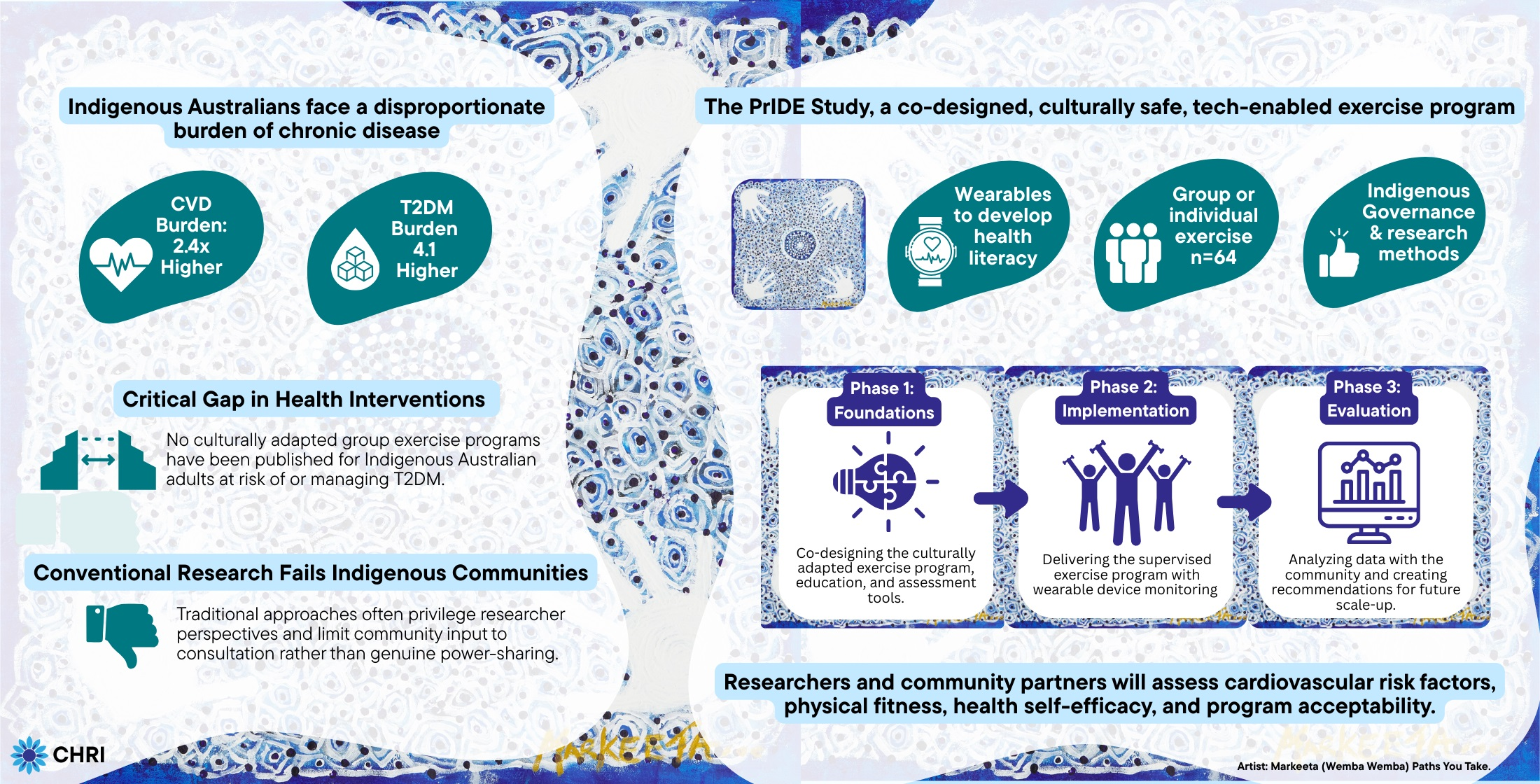

Preventing Indigenous Cardiovascular Disease and Diabetes Through Exercise (PrIDE) Study Protocol: A Co-Designed Wearable-Based Exercise Intervention with Indigenous Peoples in Australia
 , , , , , , , , and
Abstract
1. Introduction
2. Aim and Objectives
- Objective 1: Co-design and develop culturally safe and acceptable, evidence-based exercise programs that utilize wearable technology to address T2DM management and CVD prevention for Indigenous participants.
- Objective 2: Evaluate the efficacy of two different wearable-based exercise programs on cardiovascular risk factors, physical fitness and health self-efficacy among Indigenous participants with T2DM.
- Objective 3: Identify implementation factors and resource requirements for scaling up successful wearable-based exercise interventions for Indigenous communities with high T2DM burden across regional, rural, and remote areas.
3. Materials and Methods
3.1. Study Design
3.2. Indigenous Governance
3.3. Patient and Public Involvement
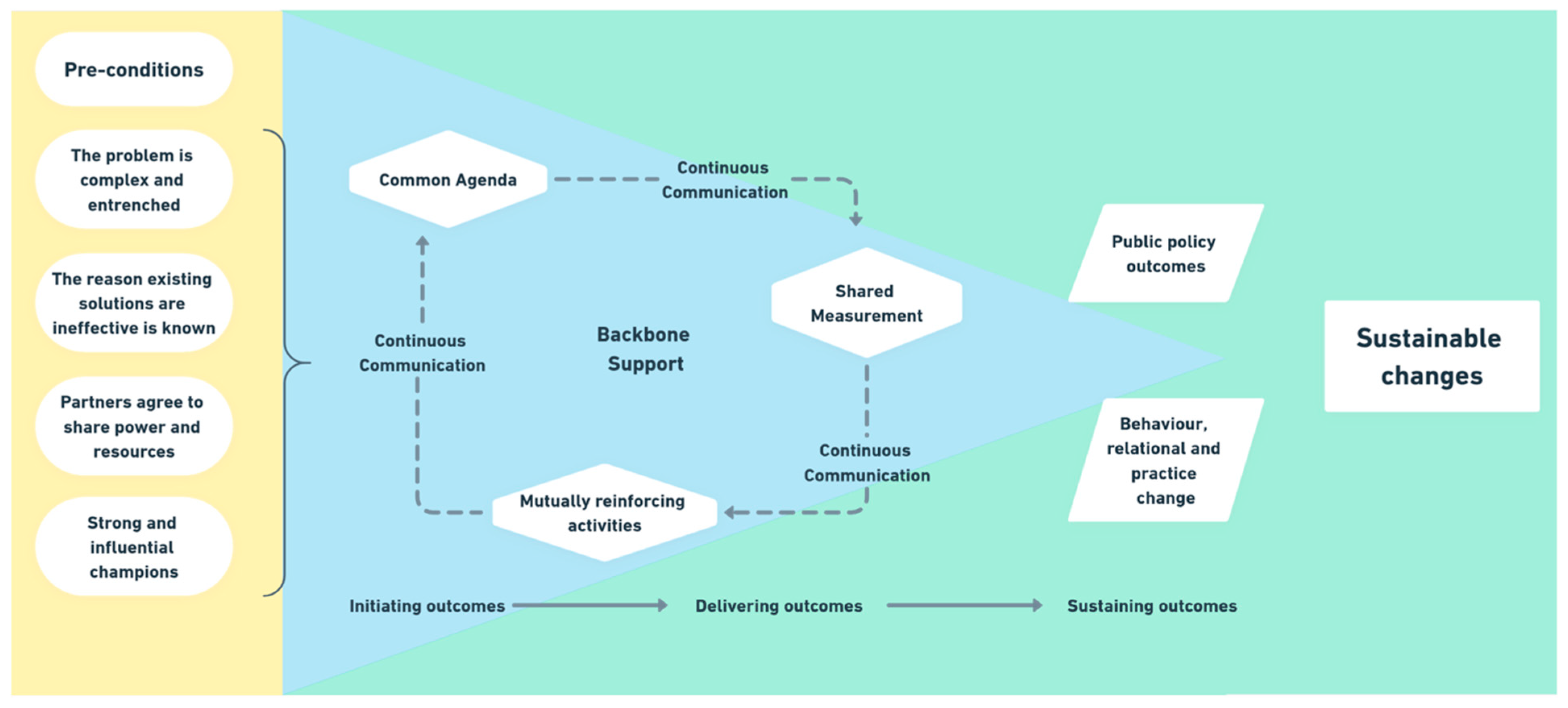
3.4. Methodological Framework
3.5. Study Setting and Participants
3.6. Study Phases and Procedures
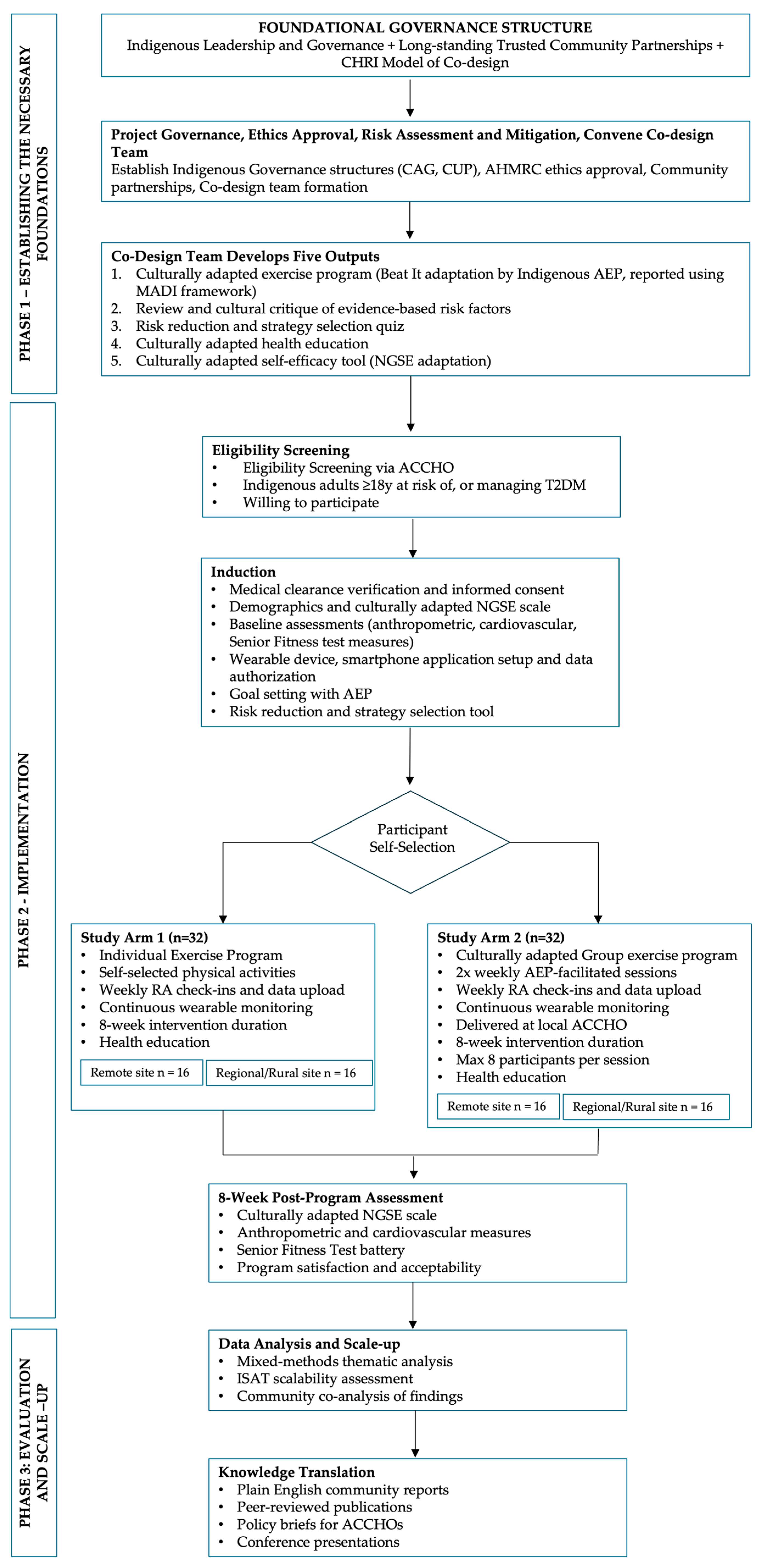
3.6.1. Phase One: Establishing the Necessary Foundations
Output 1: Culturally Adapted PrIDE Exercise Program
Output 2: Review and Cultural Critique of Evidence-Based Risk Factors
Output 3: Risk Reduction and Strategy Selection Quiz
Output 4: Culturally Adapted Health Education Sessions
Output 5: Culturally Adapted Health Self-Efficacy Tool
3.6.2. Phase Two: Program Implementation
3.6.3. Phase Three: Evaluation and Scale-Up
3.7. Outcome Measures
3.8. Data Collection and Analysis
3.8.1. Quantitative Analysis
3.8.2. Qualitative Analysis
3.9. Ethics, Data Management and Dissemination
4. Discussion
5. Conclusions
Author Contributions
Funding
Institutional Review Board Statement
Informed Consent Statement
Data Availability Statement
Acknowledgments
Conflicts of Interest
Abbreviations
| ACCHO | Aboriginal Community Controlled Health Organization |
| AEP | Accredited Exercise Physiologist |
| AF | Atrial Fibrillation |
| AHMRC | Aboriginal Health and Medical Research Council of NSW |
| CAG | Consumer Advisory Group |
| CHRI | Co-design Health Research and Innovation |
| CUP | Consumer User Panel |
| CVD | Cardiovascular Disease |
| ECG | Electrocardiograph |
| ISAT | Intervention Scale up Assessment Tool |
| MADI | Model for Adaptation Design and Impact |
| NGSE | New General Self Efficacy |
| NHMRC | National Health and Medical Research Council |
| NSW | New South Wales |
| PrIDE | Preventing Indigenous cardiovascular disease and Diabetes through Exercise |
| RA | Research Assistant |
| STARDIT | Standardized Data on Initiatives |
| T2DM | Type 2 Diabetes Mellitus |
| TGA | Therapeutic Goods Administration |
| UDL | Universal Design for Learning |
| UNSW | University of New South Wales |
| WAAHEC | Western Australia Aboriginal Health Ethics Committee |
References
- Australian Institute of Health and Welfare. Leading causes of mortality. In Aboriginal and Torres Strait Islander Health Performance Framework–Summary Report; AIHW, Australian Government: Canberra, Australia, 2024. [Google Scholar]
- Australian Institute of Health and Welfare. Australian Burden of Disease Study: Impact and Causes of Illness and Death in Aboriginal and Torres Strait Islander People 2018; Australian Burden of Disease Study series no. 26; AIHW, Australian Government: Canberra, Australia, 2022.
- Versace, V.L.; Skinner, T.C.; Bourke, L.; Harvey, P.; Barnett, T. National Analysis of the Modified Monash Model, Population Distribution and a Socio-economic Index to Inform Rural Health Workforce Planning. Aust. J. Rural Health 2021, 29, 801–810. [Google Scholar] [CrossRef]
- Australian Institute of Health and Welfare. Rural and Remote Health. Available online: https://www.aihw.gov.au/reports/rural-remote-australians/rural-and-remote-health (accessed on 20 May 2025).
- Gwynn, J.; Gwynne, K.; Rodrigues, R.; Thompson, S.; Bolton, G.; Dimitropoulos, Y.; Dulvari, N.; Finlayson, H.; Hamilton, S.; Lawrence, M.; et al. Atrial Fibrillation in Indigenous Australians: A Multisite Screening Study Using a Single-Lead ECG Device in Aboriginal Primary Health Settings. Heart Lung Circ. 2021, 30, 267–274. [Google Scholar] [CrossRef]
- Wang, A.; Green, J.B.; Halperin, J.L.; Piccini, J.P. Atrial Fibrillation and Diabetes Mellitus. J. Am. Coll. Cardiol. 2019, 74, 1107–1115. [Google Scholar] [CrossRef]
- The Emerging Risk Factors Collaboration. Diabetes Mellitus, Fasting Blood Glucose Concentration, and Risk of Vascular Disease: A Collaborative Meta-Analysis of 102 Prospective Studies. Lancet 2010, 375, 2215–2222. [Google Scholar] [CrossRef]
- Australian Institute of Health and Welfare. 1.09 Diabetes. Available online: https://www.indigenoushpf.gov.au/measures/1-09-diabetes (accessed on 20 May 2025).
- Hacker, K. The Burden of Chronic Disease. Mayo Clin. Proc. Innov. Qual. Outcomes 2024, 8, 112–119. [Google Scholar] [CrossRef] [PubMed]
- Sheeran, P.; Maki, A.; Montanaro, E.; Avishai-Yitshak, A.; Bryan, A.; Klein, W.M.P.; Miles, E.; Rothman, A.J. The Impact of Changing Attitudes, Norms, and Self-Efficacy on Health-Related Intentions and Behavior: A Meta-Analysis. Health Psychol. 2016, 35, 1178–1188. [Google Scholar] [CrossRef] [PubMed]
- Beaglehole, R.; Bonita, R.; Horton, R.; Adams, C.; Alleyne, G.; Asaria, P.; Baugh, V.; Bekedam, H.; Billo, N.; Casswell, S.; et al. Priority Actions for the Non-Communicable Disease Crisis. Lancet Lond. Engl. 2011, 377, 1438–1447. [Google Scholar] [CrossRef]
- Nutbeam, D. The Evolving Concept of Health Literacy. Soc. Sci. Med. 2008, 67, 2072–2078. [Google Scholar] [CrossRef] [PubMed]
- Colberg, S.R.; Sigal, R.J.; Yardley, J.E.; Riddell, M.C.; Dunstan, D.W.; Dempsey, P.C.; Horton, E.S.; Castorino, K.; Tate, D.F. Physical Activity/Exercise and Diabetes: A Position Statement of the American Diabetes Association. Diabetes Care 2016, 39, 2065–2079. [Google Scholar] [CrossRef]
- Lu, L.; Zhang, J.; Xie, Y.; Gao, F.; Xu, S.; Wu, X.; Ye, Z. Wearable Health Devices in Health Care: Narrative Systematic Review. JMIR mHealth uHealth 2020, 8, e18907. [Google Scholar] [CrossRef]
- Brickwood, K.-J.; Watson, G.; O’Brien, J.; Williams, A.D. Consumer-Based Wearable Activity Trackers Increase Physical Activity Participation: Systematic Review and Meta-Analysis. JMIR mHealth uHealth 2019, 7, e11819. [Google Scholar] [CrossRef] [PubMed]
- Piwek, L.; Ellis, D.A.; Andrews, S.; Joinson, A. The Rise of Consumer Health Wearables: Promises and Barriers. PLoS Med. 2016, 13, e1001953. [Google Scholar] [CrossRef]
- Henson, C.; Chapman, F.; Shepherd, G.; Carlson, B.; Chau, J.Y.; Gwynn, J.; McCowen, D.; Rambaldini, B.; Ward, K.; Gwynne, K. Mature Aged Aboriginal and Torres Strait Islander Adults Are Using Digital Health Technologies (Original Research). Digit. Health 2022, 8, 205520762211458. [Google Scholar] [CrossRef] [PubMed]
- Lowitja Institute. Co-Design Versus Faux-Design of Aboriginal and Torres Strait Islander Health Policy: A Critical Review; Lowitja Institute: Collingwood, Australia, 2025. [Google Scholar]
- Gwynne, K.; Rambaldini, B.; Christie, V.; Meharg, D.; Gwynn, J.; Dimitropoulos, Y.; Parter, C.; Skinner, J. Applying Collective Impact in Aboriginal Health Services and Research: Three Case Studies Tell an Important Story. Public Health Res. Pract. 2022, 32, e3222215. [Google Scholar] [CrossRef]
- National Health and Medical Research Council. Ethical Guidelines for Research with Aboriginal and Torres Strait Islander Peoples. Available online: https://www.nhmrc.gov.au/research-policy/ethics/ethical-guidelines-research-aboriginal-and-torres-strait-islander-peoples (accessed on 22 May 2025).
- Dennis, S.; Kwok, W.; Alison, J.; Hassett, L.; Nisbet, G.; Refshauge, K.; Sherrington, C.; Williams, A. How Effective Are Allied Health Group Interventions for the Management of Adults with Long-Term Conditions? An Umbrella Review of Systematic Reviews and Its Applicability to the Australian Primary Health System. BMC Prim. Care 2024, 25, 325. [Google Scholar] [CrossRef]
- White, L.; Kirwan, M.; Christie, V.; Hurst, L.; Gwynne, K. The Effectiveness of Clinician-Led Community-Based Group Exercise Interventions on Health Outcomes in Adults with Type 2 Diabetes Mellitus: A Systematic Review and Meta-Analysis. Int. J. Environ. Res. Public Health 2024, 21, 601. [Google Scholar] [CrossRef]
- Umpierre, D. Physical Activity Advice Only or Structured Exercise Training and Association with HbA1c Levels in Type 2 Diabetes: A Systematic Review and Meta-Analysis. JAMA 2011, 305, 1790. [Google Scholar] [CrossRef]
- Hurst, L.; Kirwan, M.; Christie, V.; Cross, C.; Baylis, S.; White, L.; Gwynne, K. The Effect of Community-Based Exercise on Health Outcomes for Indigenous Peoples with Type 2 Diabetes: A Systematic Review. Int. J. Environ. Res. Public Health 2024, 21, 290. [Google Scholar] [CrossRef] [PubMed]
- Sukala, W.R.; Page, R.; Rowlands, D.S.; Krebs, J.; Lys, I.; Leikis, M.; Pearce, J.; Cheema, B.S. South Pacific Islanders Resist Type 2 Diabetes: Comparison of Aerobic and Resistance Training. Eur. J. Appl. Physiol. 2012, 112, 317–325. [Google Scholar] [CrossRef]
- Sukala, W.R.; Page, R.; Lonsdale, C.; Lys, I.; Rowlands, D.; Krebs, J.; Leikis, M.; Cheema, B.S. Exercise Improves Quality of Life in Indigenous Polynesian Peoples with Type 2 Diabetes and Visceral Obesity. J. Phys. Act. Health 2013, 10, 699–707. [Google Scholar] [CrossRef]
- Shah, V.O.; Carroll, C.; Mals, R.; Ghahate, D.; Bobelu, J.; Sandy, P.; Colleran, K.; Schrader, R.; Faber, T.; Burge, M.R. A Home-Based Educational Intervention Improves Patient Activation Measures and Diabetes Health Indicators among Zuni Indians. PLoS ONE 2015, 10, e0125820. [Google Scholar] [CrossRef]
- Kirwan, M.; Chiu, C.L.; Hay, M.; Laing, T. Community-Based Exercise and Lifestyle Program Improves Health Outcomes in Older Adults with Type 2 Diabetes. Int. J. Environ. Res. Public Health 2021, 18, 6147. [Google Scholar] [CrossRef]
- Kirwan, M.; Chiu, C.L.; Laing, T.; Chowdhury, N.; Gwynne, K. A Web-Delivered, Clinician-Led Group Exercise Intervention for Older Adults with Type 2 Diabetes: Single-Arm Pre-Post Intervention. J. Med. Internet Res. 2022, 24, e39800. [Google Scholar] [CrossRef] [PubMed]
- Kirwan, M.; Gwynne, K.; Laing, T.; Hay, M.; Chowdhury, N.; Chiu, C.L. Can Health Improvements from a Community-Based Exercise and Lifestyle Program for Older Adults with Type 2 Diabetes Be Maintained? A Follow up Study. Diabetology 2022, 3, 348–354. [Google Scholar] [CrossRef]
- Kirwan, M.; Chiu, C.L.; Henson, C.; Laing, T.; Fermanis, J.; Scott, L.; Janszen, J.; Gwynne, K. Empowering Through Group Exercise: Beat It Trainers’ Views on Successful Implementation of a Diabetes Management Program Online and In-Person. Diabetology 2024, 5, 667–676. [Google Scholar] [CrossRef]
- Kirwan, M.; Chiu, C.L.; Fermanis, J.; Allison, K.; Laing, T.; Gwynne, K. Culturally Adapted, Clinician-Led, Bilingual Group Exercise Program for Older Migrant Adults: Single-Arm Pre–Post-Intervention. Int. J. Environ. Res. Public Health 2025, 22, 888. [Google Scholar] [CrossRef]
- Lukaszyk, C.; Coombes, J.; Sherrington, C.; Tiedemann, A.; Keay, L.; Mackean, T.; Clemson, L.; Cumming, R.; Broe, T.; Ivers, R. The Ironbark Program: Implementation and Impact of a Community-based Fall Prevention Pilot Program for Older Aboriginal and Torres Strait Islander People. Health Promot. J. Austr. 2018, 29, 189–198. [Google Scholar] [CrossRef]
- Ivers, R.; Coombes, J.; Sherrington, C.; Mackean, T.; Tiedemann, A.; Hill, A.-M.; Keay, L.; Clemson, L.; Simpson, J.; Ryder, C.; et al. Healthy Ageing among Older Aboriginal People: The Ironbark Study Protocol for a Cluster Randomised Controlled Trial. Inj. Prev. 2020, 26, 581–587. [Google Scholar] [CrossRef]
- Gidgup, M.J.R.; Kickett, M.; Hill, K.D.; Francis-Coad, J.; Weselman, T.; Coombes, J.; Ivers, R.; Bowser, N.; Palacios, V.; Hill, A. Connecting and Reconnecting to a Community, with a Sense of Belonging—Exploring Aboriginal Elders’ Perspectives of Engaging in a Physical Activity Program. Health Promot. J. Austr. 2022, 33, 138–149. [Google Scholar] [CrossRef] [PubMed]
- CAST. Universal Design for Learning Guidelines Version 3.0. Available online: https://udlguidelines.cast.org (accessed on 14 July 2025).
- Wallerstein, N.; Duran, B.; Oetzel, J.G.; Minkler, M. (Eds.) Community-Based Participatory Research for Health: Advancing Social and Health Equity, 3rd ed.; Jossey-Bass, A Wiley brand: San Francisco, CA, USA, 2018; ISBN 978-1-119-25885-8. [Google Scholar]
- Verbunt, E.; Luke, J.; Paradies, Y.; Bamblett, M.; Salamone, C.; Jones, A.; Kelaher, M. Cultural Determinants of Health for Aboriginal and Torres Strait Islander People—A Narrative Overview of Reviews. Int. J. Equity Health 2021, 20, 181. [Google Scholar] [CrossRef] [PubMed]
- Nolan-Isles, D.; Macniven, R.; Hunter, K.; Gwynn, J.; Lincoln, M.; Moir, R.; Dimitropoulos, Y.; Taylor, D.; Agius, T.; Finlayson, H.; et al. Enablers and Barriers to Accessing Healthcare Services for Aboriginal People in New South Wales, Australia. Int. J. Environ. Res. Public Health 2021, 18, 3014. [Google Scholar] [CrossRef]
- Gwynne, K.; Jeffries, T., Jr.; Lincoln, M. Improving the Efficacy of Healthcare Services for Aboriginal Australians. Aust. Health Rev. 2019, 43, 314. [Google Scholar] [CrossRef]
- Martin, K.; Mirraboopa, B. Ways of Knowing, Being and Doing: A Theoretical Framework and Methods for Indigenous and Indigenist Re-Search. J. Aust. Stud. 2003, 27, 203–214. [Google Scholar] [CrossRef]
- Bessarab, D.; Ng’andu, B. Yarning About Yarning as a Legitimate Method in Indigenous Research. Int. J. Crit. Indig. Stud. 2010, 3, 37–50. [Google Scholar] [CrossRef]
- Curtis, E.; Jones, R.; Tipene-Leach, D.; Walker, C.; Loring, B.; Paine, S.-J.; Reid, P. Why Cultural Safety Rather than Cultural Competency Is Required to Achieve Health Equity: A Literature Review and Recommended Definition. Int. J. Equity Health 2019, 18, 174. [Google Scholar] [CrossRef] [PubMed]
- Kirk, M.A.; Moore, J.E.; Wiltsey Stirman, S.; Birken, S.A. Towards a Comprehensive Model for Understanding Adaptations’ Impact: The Model for Adaptation Design and Impact (MADI). Implement. Sci. 2020, 15, 56. [Google Scholar] [CrossRef]
- Ernawati, U.; Wihastuti, T.A.; Utami, Y.W. Effectiveness of Diabetes Self-Management Education (DSME) in Type 2 Diabetes Mellitus (T2DM) Patients: Systematic Literature Review. J. Public Health Res. 2021, 10, 2240. [Google Scholar] [CrossRef] [PubMed]
- Chen, G.; Gully, S.M.; Eden, D. Validation of a New General Self-Efficacy Scale. Organ. Res. Methods 2001, 4, 62–83. [Google Scholar] [CrossRef]
- Vogt, D.S.; King, D.W.; King, L.A. Focus Groups in Psychological Assessment: Enhancing Content Validity by Consulting Members of the Target Population. Psychol. Assess. 2004, 16, 231–243. [Google Scholar] [CrossRef]
- Le Grande, M.; Ski, C.F.; Thompson, D.R.; Scuffham, P.; Kularatna, S.; Jackson, A.C.; Brown, A. Social and Emotional Wellbeing Assessment Instruments for Use with Indigenous Australians: A Critical Review. Soc. Sci. Med. 2017, 187, 164–173. [Google Scholar] [CrossRef]
- Esler, D.M.; Johnston, F.; Thomas, D. The Acceptability of a Depression Screening Tool in an Urban, Aboriginal Community-controlled Health Service. Aust. N. Z. J. Public Health 2007, 31, 259–263. [Google Scholar] [CrossRef] [PubMed]
- Esler, D.; Johnston, F.; Thomas, D.; Davis, B. The Validity of a Depression Screening Tool Modified for Use with Aboriginal and Torres Strait Islander People. Aust. N. Z. J. Public Health 2008, 32, 317–321. [Google Scholar] [CrossRef]
- Rikli, R.E.; Jones, C.J. Development and Validation of Criterion-Referenced Clinically Relevant Fitness Standards for Maintaining Physical Independence in Later Years. Gerontologist 2013, 53, 255–267. [Google Scholar] [CrossRef] [PubMed]
- Rikli, R.E.; Jones, C.J. Senior Fitness Test Manual, 2nd ed.; Human Kinetics: Champaign, IL, USA, 2013; ISBN 978-1-4504-1118-9. [Google Scholar]
- The Australian Prevention Partnership Centre; NSW Ministry of Health. The Intervention Scalability Assessment Tool: A Guide for Assessing the Scalability of Health Interventions; Sax Institute: Glebe, Australia, 2019.
- Nunn, J.S.; Shafee, T.; Chang, S.; Stephens, R.; Elliott, J.; Oliver, S.; John, D.; Smith, M.; Orr, N.; Preston, J.; et al. Standardised Data on Initiatives—STARDIT: Beta Version. Res. Involv. Engagem. 2022, 8, 31. [Google Scholar] [CrossRef] [PubMed]



| UDL Guideline | PrIDE Implementation |
|---|---|
| UDL Principle 1: Multiple Means of Representation | |
| Options for language and symbols | Culturally safe health education messaging; Multiple dissemination formats including plain English reports, in-person whole community meetings, and visual materials such as infographics and videos; Integration of Indigenous knowledge systems alongside Western methodologies; Privileging Indigenous ways of knowing and doing alongside biomedical approaches |
| Options for mathematical expressions and symbols | Visual wearable device displays; Real-time biofeedback through smartwatch; Graphical progress tracking via smartphone app; Multiple data representation formats to honor diverse interpretations |
| Options for comprehension | Yarning circles for knowledge sharing; Iterative co-design process for program adaptation; Authentic representation of community perspectives in research design |
| UDL Principle 2: Multiple Means of Engagement | |
| Options for recruiting interest | Self-selection between individual vs. group programs; Choice of exercise activities in individual arm; Community-determined health priorities leading research direction |
| Options for sustaining effort and persistence | Weekly check-ins with research assistants; Real-time feedback through wearable technology; Cultural safety and belonging throughout program delivery; Fostering joy through culturally meaningful activities |
| Options for self-regulation | Risk reduction online quiz for personalized strategies; Individual exercise prescriptions; Self-monitoring through wearable devices; Community ownership and control of research processes |
| UDL Principle 3: Multiple Means of Action and Expression | |
| Options for physical action | Choice between individual or group exercise programs; Accommodations for physical limitations; Multiple ways to engage in physical activity; Honoring diverse movement practices and traditions |
| Options for expression and communication | Yarning circles as culturally safe communication method; Qualitative interviews alongside quantitative measures; Community member involvement in data interpretation; Centering storytelling and oral traditions as foundational knowledge systems |
| Options for executive functions | Iterative co-design process allowing for ongoing input; Community governance structures and collective decision-making; Participant agency in program selection and goal setting; Interdependent learning and knowledge co-creation |
| Outcome Category | Outcome Domain | Specific Measures | Data Collection Method |
|---|---|---|---|
| Primary Outcomes | Cardiovascular risk factors | Resting heart rate Blood pressure Waist circumference | Physical assessment administered by RA |
| Physical fitness tests | 30 s arm curl test (upper body strength) 30 s sit-to-stand test (lower body strength) Six-minute walk test (aerobic capacity) Timed one-legged stand test (balance) Chair sit-and-reach test (flexibility) | Senior Fitness Test battery [52] administered by AEP and RA | |
| Health self-efficacy | Culturally adapted NGSE scale | Self-report questionnaire administered by RA | |
| Secondary Outcomes | Program feasibility | Adherence to intervention Attendance rates Completion rates | Administrative data and RA records |
| Clinical monitoring | Atrial fibrillation detection incidents | Withings ScanWatch 2 data | |
| Physical activity | Active minutes per day Daily steps | Withings ScanWatch 2 data | |
| Program acceptability | Utility and comfort of the wearable device Accessibility, safety, comfort and inclusiveness of self-selected exercise program | Qualitative interviews and/or yarning circles with participants, RAs and AEPs | |
| Process Outcomes | Scale-up readiness | ISAT [53] to assess scale up of community-based exercise and wearable program | Structured assessment tool with expert panel |
| STARDIT reporting | Standardized documentation of initiative processes, stakeholder involvement, resource allocation, and outcomes using the STARDIT framework [54] | Member of research team will complete and upload to STARDIT Wikimedia platform for transparent, accessible reporting of research processes and findings |
Disclaimer/Publisher’s Note: The statements, opinions and data contained in all publications are solely those of the individual author(s) and contributor(s) and not of MDPI and/or the editor(s). MDPI and/or the editor(s) disclaim responsibility for any injury to people or property resulting from any ideas, methods, instructions or products referred to in the content. |
© 2026 by the authors. Licensee MDPI, Basel, Switzerland. This article is an open access article distributed under the terms and conditions of the Creative Commons Attribution (CC BY) license.
Share and Cite
Kirwan, M.; Henson, C.; Bancroft-Duroux, B.; Meharg, D.; Christie, V.; Capes-Davis, A.; Boney, S.; Tully, B.; McCowen, D.; Ward, K.; et al. Preventing Indigenous Cardiovascular Disease and Diabetes Through Exercise (PrIDE) Study Protocol: A Co-Designed Wearable-Based Exercise Intervention with Indigenous Peoples in Australia. Diabetology 2026, 7, 9. https://doi.org/10.3390/diabetology7010009
Kirwan M, Henson C, Bancroft-Duroux B, Meharg D, Christie V, Capes-Davis A, Boney S, Tully B, McCowen D, Ward K, et al. Preventing Indigenous Cardiovascular Disease and Diabetes Through Exercise (PrIDE) Study Protocol: A Co-Designed Wearable-Based Exercise Intervention with Indigenous Peoples in Australia. Diabetology. 2026; 7(1):9. https://doi.org/10.3390/diabetology7010009
Chicago/Turabian StyleKirwan, Morwenna, Connie Henson, Blade Bancroft-Duroux, David Meharg, Vita Christie, Amanda Capes-Davis, Sara Boney, Belinda Tully, Debbie McCowen, Katrina Ward, and et al. 2026. "Preventing Indigenous Cardiovascular Disease and Diabetes Through Exercise (PrIDE) Study Protocol: A Co-Designed Wearable-Based Exercise Intervention with Indigenous Peoples in Australia" Diabetology 7, no. 1: 9. https://doi.org/10.3390/diabetology7010009
APA StyleKirwan, M., Henson, C., Bancroft-Duroux, B., Meharg, D., Christie, V., Capes-Davis, A., Boney, S., Tully, B., McCowen, D., Ward, K., Cohen, N., & Gwynne, K. (2026). Preventing Indigenous Cardiovascular Disease and Diabetes Through Exercise (PrIDE) Study Protocol: A Co-Designed Wearable-Based Exercise Intervention with Indigenous Peoples in Australia. Diabetology, 7(1), 9. https://doi.org/10.3390/diabetology7010009