
Article

Leveraging the Individualized Metabolic Surgery Score to Predict Weight Loss with Tirzepatide in Adults with Type 2 Diabetes and Obesity

by
Regina Castaneda
1,2,†,
Diego Sepulveda
1,2,†,
Rene Rivera Gutierrez
1,2,
Jose Villamarin
2,
Dima Bechenati
3,
Maria A. Espinosa
2,
Alfredo Verastegui
4,
Elif Tama
5,
Allyson W. McNally
1,
Pamela K. Bennett
1,
Andres Acosta
2 and
Maria D. Hurtado Andrade
1,2,*
1
Division of Endocrinology, Diabetes and Metabolism, Mayo Clinic, 4500 San Pablo Road, Jacksonville, FL 32224, USA
2
Precision Medicine for Obesity Program, Division of Gastroenterology and Hepatology, Mayo Clinic, 200 1st St SW, Rochester, MN 55905, USA
3
Department of Family Medicine, Mayo Clinic, 200 1st St SW, Rochester, MN 55905, USA
4
Division of Surgical Oncology, Mayo Clinic, 4500 San Pablo Road, Jacksonville, FL 32224, USA
5
Division of Internal Medicine, Henry Ford Rochester Hospital, 1101 W University Dr, Rochester, MN 48307, USA
*
Author to whom correspondence should be addressed.
These authors have contributed equally to this work.
Diabetology 2026, 7(1), 10; https://doi.org/10.3390/diabetology7010010
Submission received: 7 October 2025 / Revised: 15 November 2025 / Accepted: 23 December 2025 / Published: 5 January 2026

Abstract

Background/Objectives: Individuals with type 2 diabetes (T2D) achieve less total body weight loss (TBWL) with obesity medications compared to those without T2D. The individualized metabolic surgery (IMS) score, originally developed to predict T2D remission after bariatric surgery, inversely correlates with TBWL response to semaglutide. IMS reflects T2D severity, incorporating HbA1c and T2D duration and medication use. This study aims to evaluate TBWL with tirzepatide across IMS severity categories and identify predictors of response in a real-world cohort. Methods: This retrospective analysis included 717 adults with T2D using tirzepatide for overweight or obesity within the Mayo Clinic Health System. Patients were stratified by IMS severity (mild, moderate, severe) and quartiles. Primary endpoint: TBWL% at 15 months. Secondary endpoints: categorical thresholds (≥5%, ≥10%, ≥15%, ≥20%) and predictors of TBWL%. Linear mixed-effects models and regression models were employed. Results: At 15 months, TBWL was greater in mild versus severe IMS groups (14.8% vs. 11.0%, p = 0.015), with similar trends across quartiles. The proportion achieving ≥ 20% TBWL was nearly two-fold higher in mild versus severe IMS (27% vs. 14%, p = 0.03). Female sex independently predicted greater TBWL, whereas insulin use, higher T2D medication burden (particularly weight-promoting agents), and HbA1c > 7% were associated with less TBWL. Conclusions: Tirzepatide produced clinically meaningful TBWL across all IMS categories, although TBWL declined with increasing IMS severity. Glycemic control and T2D medication use emerged as strong predictors of TBWL. The IMS score may serve as a practical tool to anticipate weight-loss trajectories, guide personalized treatment decisions, and inform patient counseling.

1. Introduction

Obesity is a complex, multifactorial disease linked to a wide range of comorbidities, including type 2 diabetes (T2D) [1]. The metabolic dysfunction associated with increased adiposity, particularly visceral fat accumulation, creates a proinflammatory environment that disrupts insulin signaling, leading to insulin resistance and impaired pancreatic β-cell function [2]. Studies consistently demonstrate a strong association between increasing body mass index (BMI) and the risk of T2D, underscoring the central role of obesity in its pathogenesis [3]. While treating obesity can significantly reduce the risk of developing T2D and improve glycemic control, its presence may hinder the clinical efficacy of obesity medications [4].
Glucagon-like peptide-1 (GLP-1)–based therapies were originally developed for the treatment of T2D and, given their clinical efficacy for weight reduction, they are now approved for the treatment of overweight and obesity [5]. While they are very effective weight loss medications, individuals with T2D consistently lose less weight than those without T2D. For instance, semaglutide leads to a total body weight loss (TBWL) of approximately 15% in individuals without T2D, whereas in those with T2D, the TBWL is 10% [6,7]. Similarly, tirzepatide, a dual glucose-dependent insulinotropic polypeptide (GIP) and GLP-1 receptor agonist, leads to an average TBWL of 20% and 15% in individuals without and with T2D, respectively [8,9].
Several metabolic, pharmacologic, and physiologic mechanisms likely account for this discrepancy. In patients with suboptimal glycemic control, improvements in glucose metabolism can reduce glucosuria, restore hydration, and replenish glycogen stores, processes that attenuate net weight loss [4]. Concomitant use of antidiabetic agents may also contribute. For instance, thiazolidinediones increase adipocyte proliferation and differentiation, while hypoglycemia-inducing agents may promote compensatory caloric intake, both of which counteract weight reduction [10]. Furthermore, hyperinsulinemia accompanying insulin resistance in T2D enhances adipocyte lipid uptake and suppresses lipolysis, limiting fat mass loss [11]. Together, these mechanisms may help explain, at least in part, why the weight-loss efficacy of agents such as tirzepatide and semaglutide is consistently attenuated in patients with T2D, with uncontrolled T2D likely driving poorer outcomes.
The Individualized Metabolic Surgery (IMS) score, originally developed to predict T2D remission after bariatric surgery, reflects the severity of T2D. This score incorporates four key elements: T2D duration, glycemic control (HbA1c levels), insulin use, and the number of T2D medications [12]. Based on these elements, patients are categorized as having mild, moderate, or severe disease. Our previous work has shown that the IMS score inversely correlates with weight loss response to semaglutide [13]. Building on these findings and given tirzepatide’s dual agonism and enhanced pharmacologic profile, we aim to evaluate TBWL in response to this agent across the IMS score spectrum and identify specific parameters associated with weight trajectories. We hypothesize that higher IMS scores will predict inferior weight loss in response to tirzepatide.

2. Materials and Methods

Study design and participants: This retrospective analysis of electronic health records (EHRs) from the Mayo Clinic Health System compared weight loss outcomes across IMS groups (mild, moderate, and severe; and quartiles) in individuals with overweight or obesity and T2D who were prescribed tirzepatide for weight management. The Mayo Clinic Institutional Review Board waived the requirement for informed consent due to the minimal risk and retrospective design of the study (IRB #17-001068). Participants were identified from a large database of patients prescribed tirzepatide for weight management between 3 June 2022 and 19 September 2024 (Figure 1). T2D was defined by the presence of a documented diagnosis or a hemoglobin A1c (HbA1c) value ≥ 6.5% prior to the start of tirzepatide treatment. Eligibility criteria included a clinical diagnosis of T2D and an indication for treatment with tirzepatide; individuals with overweight (BMI ≥ 27 kg/m2) in the presence of an adiposity-related comorbidity or those with obesity (BMI ≥ 30 kg/m2), regardless of comorbidity status. Those individuals with type 1 diabetes (as documented in the EHR), with less than 12 months of tirzepatide use, history of bariatric surgery, concurrent use of other obesity medications (including compounded formulations), inconsistent medication use, pregnancy, active malignancy, medical conditions affecting weight outcomes (e.g., Prader–Willi Syndrome), absence of baseline or follow-up weight data, and lack of required parameters for IMS classification were excluded. The study followed the Strengthening the Reporting of Observational Studies in Epidemiology (STROBE) guidelines.
Data collection: Weight measurements were obtained from EHRs at baseline (±14 days from tirzepatide initiation) and at subsequent follow-up visits at months 3 (±30 days), 6 (±30 days), 9 (±30 days), 12 (±45 days), 15 (±45 days), as well as at the last available follow-up. Collected data included demographic characteristics (age, sex, race) sociodemographic factors (financial strain), anthropometric measures (weight and height to calculate body mass index [BMI]), and vital signs (systolic and diastolic blood pressures). Laboratory variables comprised hemoglobin A1c (HbA1c), fasting glucose, aspartate aminotransferase (AST), alanine aminotransferase (ALT), and lipids (total cholesterol, triglycerides, low-density lipoprotein [LDL]-cholesterol, and high-density lipoprotein [HDL]-cholesterol). Medical history data captured adiposity-related comorbidities: T2D, dyslipidemia, hypertension, gastroesophageal reflux disease (GERD), metabolic dysfunction-associated steatotic liver disease (MASLD), obstructive sleep apnea (OSA), anxiety, and depression. Maximum tirzepatide dose during follow-up was recorded and categorized as low (≤7.5 mg) or high (≥10 mg) for weekly subcutaneous administration. Additionally, to determine the IMS score, baseline data on the number of T2D medications, insulin use, and T2D duration (years) were collected. We also recorded the specific classes of T2D medications at baseline, categorizing them as weight-gain promoting (sulfonylureas, thiazolidinediones, meglitinides, in addition to insulin) or weight-neutral/weight-loss promoting (biguanides, SGLT2 inhibitors, DPP-4 inhibitors). When applicable, the medication stop date was recorded, and no weight measurements after this date were collected. All EHR-derived data were rigorously validated through a comprehensive manual chart review to ensure the accuracy and completeness of weight measurements and medication records. Quality checks on data entry for outliers (i.e., individuals with greater than 30% TBWL) were also performed. Participants whose medication use could not be confirmed, despite a documented prescription, were excluded from the study.
IMS Score calculation: The Individualized Metabolic Surgery (IMS) score for each patient was calculated at the start of tirzepatide therapy using the Cleveland Clinic validated calculator https://riskcalc.org/Metabolic_Surgery_Score (accessed on 11 January 2025). The calculation included four parameters: the number of T2D medications (0–5), insulin use (yes/no), duration of T2D (0–40 years), and whether HbA1c was below 7% (yes/no). The resulting score ranges from 0 to 180, with higher values indicating greater severity of T2D, and is categorized as mild (0–59), moderate (60–119), or severe (120–180).
Study endpoints: The primary endpoint was TBWL% at 15 months after tirzepatide initiation, assessed for the overall cohort and stratified by IMS category (mild-, moderate-, or severe). TBWL% was calculated as: TBWL% = 100 × (Baseline Weight − Weight at Follow-up)/Baseline Weight. Secondary endpoints included TBWL% across IMS quartiles; the proportion of individuals achieving weight-loss thresholds (≥5%, ≥10%, ≥15%, and ≥20%) by IMS groups and quartiles; and predictors of weight-loss outcomes at the last follow-up. To enhance analytic precision, IMS was examined both by severity categories and by quartiles. This dual approach was chosen because the number of participants with mild IMS was relatively small compared with the other categories, and quartile-based stratification allowed for a more balanced distribution and finer resolution of potential score–response relationships. All endpoints were specified a priori and reported regardless of statistical significance.
Statistical Analysis: For the primary endpoint, TBWL% was analyzed over time using a linear mixed-effects model (LMM) with random intercepts for subjects, which accounts for missing weights and provides robust estimates of weight-loss trajectories. The model accounted for covariates including time, IMS (continuous or quartiles), age, sex, and prior use of obesity medication, and the interaction effect between time and IMS. Results are reported as estimated marginal means ± standard error of the mean (SEM). Pairwise comparisons were corrected using Tukey adjustment. For predictors of weight loss outcomes, we performed univariate linear regression followed by multivariable linear regression. The IMS score is a composite measure that includes HbA1c, insulin use, disease duration, and number of T2D medications, and thus conceptually overlaps with some known predictors of tirzepatide response. To avoid statistical collinearity or redundancy, we ran separate linear regression models for IMS and individual predictors rather than including overlapping variables in the same multivariable model. This approach allowed us to assess the independent associations of IMS with weight loss outcomes while maintaining model stability. Analyses were conducted using BlueSky Statistics (v10.3.7) and R software (v4.4.2); figures were generated using GraphPad Prism (v10.4.2).
Role of the funding source: This study was supported by the National Institutes of Health (K12-AR084222) and the Mayo Clinic Center for Women’s Health Research, which provided protected research time for Dr. Hurtado Andrade to conduct this work.

3. Results

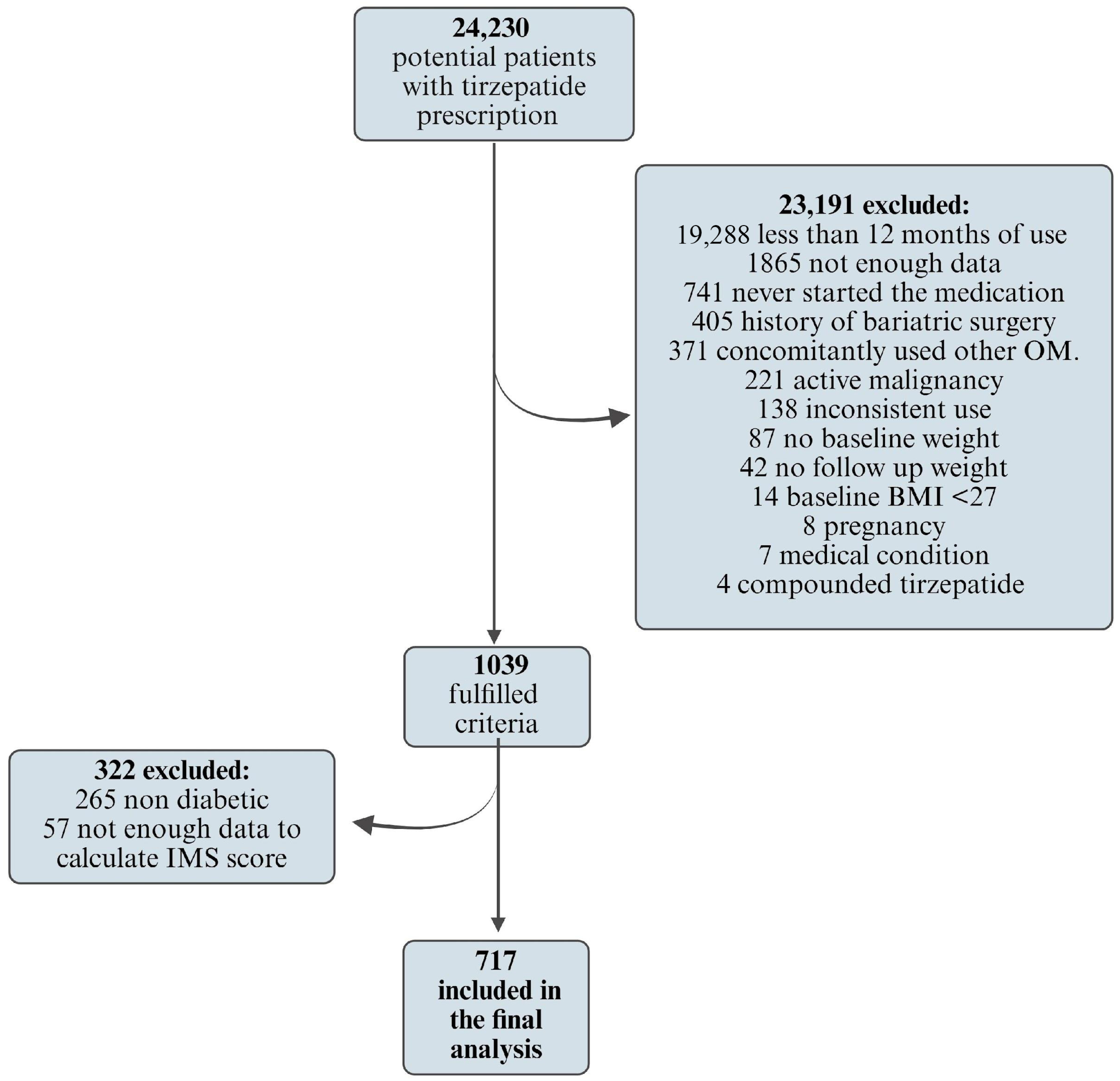
A total of 24,230 tirzepatide prescriptions were issued between June 2022 and May 2024 within the Mayo Clinic Health System. Of these, 23,191 patients met at least one exclusion criterion and were excluded from the analysis. The most common reasons for exclusion were less than 12 months of use (n = 19,288), insufficient data (n = 1865), and never initiating the medication (n = 741). Additional exclusions included a history of bariatric surgery (n = 405), concomitant use of other obesity medications (n = 371), active malignancy (n = 221), inconsistent use (n = 138), missing baseline weight (n = 87), no follow-up weight (n = 42), baseline BMI < 27 kg/m2 (n = 14), pregnancy (n = 8), medical conditions that could interfere with outcomes (e.g., Prader-Willi syndrome, uncontrolled hypothyroidism; n = 7), and use of compounded tirzepatide (n = 4). Among the remaining 1039 patients, 265 were identified as non-diabetic, and 57 lacked at least one of the four parameters required to calculate the IMS score and were therefore excluded. A total of 717 patients were included in the final analysis (Figure 1).
Baseline characteristics: Baseline characteristics of the 717 patients in this study are summarized for the entire cohort and stratified by IMS classification in Table 1, with 40 patients categorized as mild, 404 as moderate, and 273 as severe. Nearly half of participants were women (53%, n = 717), and differed significantly across groups, as women comprised a higher proportion of the mild (n = 23, 58%) and moderate (n = 233, 58%) IMS group, but a lower proportion of the severe category (n = 122, 45%) (p = 0.003). The cohort was predominantly middle-aged, with a median age of 58 years (IQR 50–64). Patients in the severe category were older (median 61 years, IQR 55–67) compared with those in the moderate (median 55 years, IQR 48–62) and mild category (median 58 years, IQR 52–64) (p < 0.001). Furthermore, the cohort was predominantly White (n = 639, 89%), with similar racial distributions across IMS categories (p = 0.572). Median baseline weight was 108.9 kg (IQR 95.0–128.5) and did not differ significantly across groups (p = 0.227). In contrast, while the overall cohort had a median BMI of 37.3 kg/m2 (IQR 33.1–42.7), significant variations were observed across categories (p = 0.008): the mild category had the lowest median BMI (36.4 kg/m2, IQR 32.8–40.4), followed by the severe category (36.3 kg/m2, IQR 32.5–41.4), and the moderate category had the highest median BMI (38.1 kg/m2, IQR 33.6–43.6). Across the cohort, class III obesity (BMI ≥ 40 kg/m2) was the most prevalent (n = 265, 37%). Adiposity-related comorbidities were common in the cohort, with dyslipidemia (n = 622, 87%) and hypertension (n = 575, 80%) being the most prevalent, followed by obstructive sleep apnea (n = 376, 52%) and gastroesophageal reflux disease (n = 294, 41%). An increase in the prevalence of dyslipidemia and hypertension was observed across groups, with the severe category having the highest rates (p < 0.001). Nearly 60% of the cohort reported no financial strain, and no significant differences were observed between groups (p = 0.431). Baseline cardiometabolic parameters differed across IMS severity categories. As expected, fasting glucose and HbA1c increased progressively with higher IMS severity (p < 0.01), consistent with their inclusion in the IMS score. In contrast, diastolic blood pressure, total cholesterol, and LDL-cholesterol decreased across increasing IMS score severity. Prior use of obesity medications was reported in 272 patients (38%) and was highest in the severe category (n = 132, 48%) compared with the moderate (n = 126, 31%) and mild (n = 14, 35%) categories (p < 0.001). Most patients achieved a high maximum tirzepatide dose (≥10 mg; n = 519, 72%), with no significant differences across IMS score categories (p = 0.994). As expected, IMS parameters showed the most significant differences across categories, with a stepwise increase in T2D duration, proportion of insulin users, HbA1c > 7%, and number of T2D in the severe category (all p < 0.001). T2D medication use varied significantly across IMS severity groups. In terms of weight-gain promoting T2D medication, sulfonylureas were more frequent in severe IMS (20.1%) compared with moderate (8.4%) and mild (0%) (p < 0.001), while thiazolidinedione and meglitinide use was rare. Among weight-neutral or weight loss-promoting medications, the biguanide metformin was the most common therapy overall (66%), prescribed predominantly in moderate and severe IMS groups (p < 0.001). SGLT2 inhibitor use increased with IMS severity (0%, 13.6%, and 37.7% in mild, moderate, and severe, respectively; p < 0.001), whereas DPP-4 inhibitor use was low and did not differ by group. The same trends in baseline characteristics were observed across IMS score quartiles (Table A1). Based on IMS quartiles, 181 patients were included in the 1st quartile (IMS = 18.2–54.4), 181 patients in the 2nd quartile (IMS = 54.6–81.2), 180 patients in the 3rd quartile (IMS = 81.6–109.6), and 175 patients in the 4th quartile (IMS = 109.8–174.3).
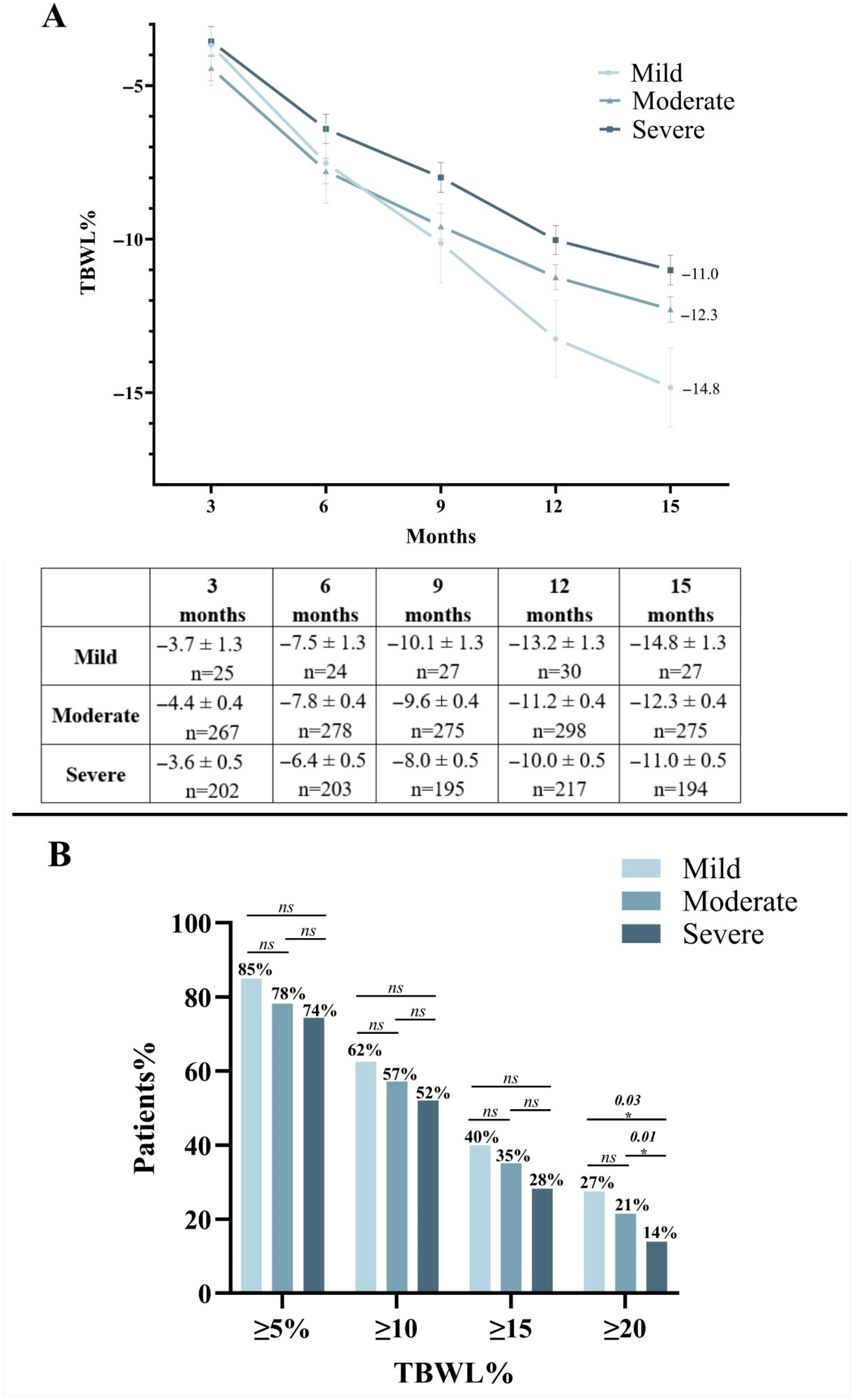
Weight loss outcomes by IMS classification: Weight loss outcomes decreased progressively with increasing severity. At 12 months, patients in the mild category achieved greater weight loss than those in the severe category (13.2 ± 1.3% vs. 10.0 ± 0.5%, p = 0.045), and this pattern persisted at 15 months (14.8 ± 1.3% vs. 11.0 ± 0.5%, p = 0.015) (Figure 2A). Detailed pairwise comparisons and effect sizes calculated at each timepoint are presented in Table A2. At the last follow-up, the proportion of patients achieving a TBWL% ≥ 20% was nearly two-fold higher in the mild category than in the severe category (27% vs. 14%, p = 0.03) and approximately 1.5-fold higher in moderate than in the severe (21% vs. 14%, p = 0.01) (Figure 2B).
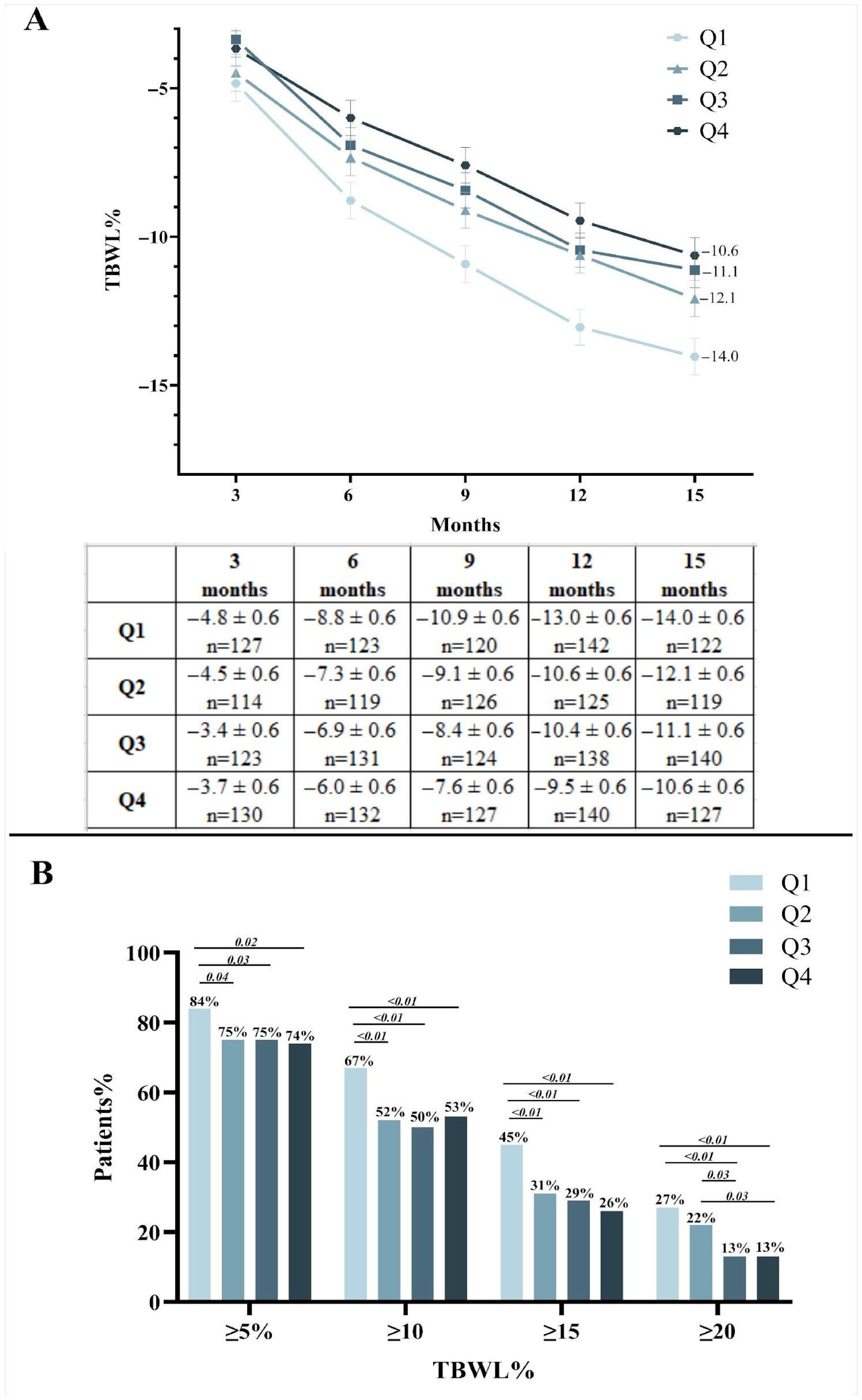
Weight loss outcomes by IMS quartiles: Starting at 6 months, differences in weight loss were observed significantly favoring the lowest quartiles. At 12 months, patients in Q1 achieved greater weight loss (13.0 ± 0.6%) compared with Q2 (10.6 ± 0.6%, p = 0.019), Q3 (10.4 ± 0.6%, p = 0.010), and Q4 (9.5 ± 0.6%, p < 0.001). At 15 months, Q1 continued to exhibit superior outcomes (14.0 ± 0.6%) compared with Q3 (11.1 ± 0.6%, p = 0.004) and Q4 (10.6 ± 0.6%, p < 0.001) (Figure 3A). Detailed pairwise comparisons and effect sizes calculated at each timepoint are presented in Table A3. At the last follow-up, participants in the lowest quartile had a higher proportion achieving ≥5%, ≥10%, ≥15%, and ≥20% TBWL compared to higher quartiles, with Q1 achieving ≥20% TBWL in roughly twice as many participants as Q4 (27% vs. 13%, p < 0.01) (Figure 3B).
Predictors of weight loss outcomes: In univariate analyses (Table 2A), female sex was associated with a significantly greater weight loss, whereas prior use of an obesity medication, longer T2D duration, the use of insulin, weight-gain–promoting T2D medication alone or combined with a weight-neutral T2D medication, and an HbA1C > 7 predicted less weight loss. In multivariable models adjusting for sex and IMS parameters (Table 2B), female sex continued to be associated with greater TBWL, whereas the use of insulin, treatment with ≥3 T2D medications, and HbA1c > 7% remained significant predictors of attenuated weight loss. T2D duration was not a significant predictor of weight loss response in this model. When medication-specific variables were modeled along with sex (Table 2C), female sex was associated with greater TBWL, whereas prior obesity medication use, weight-gain–promoting T2D regimens, either without insulin or insulin alone, predicted less weight loss.

4. Discussion

This study is the first to use the IMS score to evaluate weight loss outcomes in patients with T2D using tirzepatide for weight management. We demonstrate that weight loss outcomes diminish with increasing T2D severity. After 15 months of treatment, patients classified as mild by the IMS score or in the 1st quartile (lowest IMS scores) achieved approximately 35% greater weight loss compared to those in the severe category or the 4th quartile. Furthermore, a significantly higher proportion of patients in the mild category and the 1st quartile achieved clinically meaningful weight loss thresholds of ≥20% TBWL compared with those in the severe category and 3rd and 4th quartiles. Our analysis further identified key predictors of weight loss response in individuals with T2D. Male sex and prior use of obesity medications were associated with inferior outcomes, and among the IMS score parameters, an HbA1c level greater than 7%, insulin use, and the number and type of T2D medications (i.e., weight gain promoting T2D) emerged as strong predictors of reduced weight loss.
The attenuated weight loss observed in patients with higher IMS scores, i.e., reflecting greater metabolic impairment, aligns with prior research demonstrating that T2D history as well as baseline metabolic and clinical characteristics influence the response to GLP-1–based therapies [14,15,16,17]. Pivotal clinical trials have shown that individuals without T2D achieve approximately 33% greater weight loss with tirzepatide (20% TBWL in individuals without T2D vs. 15% in those with T2D) following 72 weeks of treatment at a 15 mg weekly subcutaneous dose [8,9]. The enhanced weight loss response to tirzepatide in individuals within the mild IMS score category resembles our previous findings with semaglutide, demonstrating consistency of the association across two GLP-1–based therapies [18]. After 12 months of treatment with ≥1 mg of semaglutide, participants in the mild/moderate and severe IMS categories achieved 8.3 ± 0.7% vs. 5.5 ± 0.6% TBWL, respectively. The differential weight loss response is likely driven by a combination of factors, including a dysregulated metabolic state that limits GLP-1 effectiveness, concomitant use of glucose-lowering agents that may promote weight gain, compensatory eating behaviors with the use of glucose-lowering agents that can cause hypoglycemia, and hyperinsulinemia [4,10,11]. In individuals with T2D, cumulative allostatic load, a composite physiological stress measure that has been linked to adverse health outcomes and weight loss effectiveness, may also play a role [19,20].
Glycemic control has emerged as a key determinant of weight loss outcomes in individuals with T2D, with elevated HbA1c consistently being associated with reduced weight loss response to GLP-1–based therapies [16,17,21,22]. For instance, an observational study including 4767 adults with T2D from the Diabetes Patient Follow-up (DPV) registry demonstrated an association between higher baseline HbA1c and a lower likelihood of marked weight reduction [21]. This finding is further supported by post hoc analyses of the SURPASS program, which showed that for every 2.7% increase in baseline HbA1c, participants were 13% less likely to achieve ≥10% total body weight loss following 52 weeks of treatment with tirzepatide (OR 0.87, 95% CI 0.80–0.95) [16]. Conversely, for every 1% decrease in baseline HbA1c, participants were 28% more likely to achieve ≥15% weight loss (OR 1.28, 95% CI 1.15–1.43) [17]. This blunted weight loss response observed in the setting hyperglycemia may be explained, at least in part, by impaired central and peripheral GLP-1 signaling. Supporting this notion, recent data from rodents suggest that lower systemic glycemia facilitates GLP-1 receptor agonist entry into hypothalamic structures, thereby enhancing fat oxidation and weight loss, process that is impaired in the setting of hyperglycemia [23]. Similarly, the insulinotropic effect of endogenous GIP has been shown to be blunted in metabolic disease but to recover as glycemia improves [24].
Another important predictor of the effectiveness of weight loss interventions is the concomitant use of other medications for T2D management. Insulin, thiazolidinediones, and sulfonylureas, while effective in improving glycemic control and reducing the risk of micro- and macrovascular complications, are associated with concomitant weight gain [25]. The UK Prospective Diabetes Study (UKPDS) demonstrated that treatment with sulfonylureas or insulin was coupled with an average weight gain of 5 kg in 10 years, with the greatest gain observed in the latter (6.5 kg) [25,26]. Conversely, metformin has shown a modest weight-lowering effect, with nearly 3% TBWL observed (−2.9 kg; 95% CI, −3.4 to −2.3) following five years of treatment in patients with recently diagnosed T2D [27]. In individuals with T2D treated with tirzepatide, the concomitant use of metformin has been associated with 77% higher odds of achieving ≥15% TBWL, effect that may be explained by its modest appetite-suppressing effects [17,28,29]. In this context, it is important to note that the IMS score considers only the total number of T2D medications without distinguishing their weight-promoting profile. As a result, it may not fully capture the differential impact of individual medications on weight outcomes, highlighting a limitation of using the IMS score to predict weight loss. Remarkably, the number and type of T2D medications emerged as strong predictors in our analysis, suggesting that it is not merely the quantity, but also the specific weight-related profile of each medication that plays a pivotal role in influencing weight outcomes.
In our analysis, the duration of T2D did not demonstrate a clear association with weight loss outcomes. This aligns with literature, indicating that weight loss responses to GLP-1 receptor agonists are independent of T2D duration. A post hoc analysis of the SURPASS program examined weight loss outcomes with tirzepatide stratified by T2D duration (≤5 years, 5–10 years, ≥10 years) and found no significant differences in total body weight loss across these subgroups for tirzepatide doses of 5, 10, and 15 mg weekly [30].
This research has significant clinical implications. The weight loss observed in our cohort meets the minimum threshold of ≥5 TBWL% required to observe improvements in cardiometabolic parameters in patients with T2D, as outlined in the most recent American Association of Clinical Endocrinology consensus statement [31]. However, the attenuated response observed in individuals with higher IMS scores may hinder the improvement in adiposity-related comorbidities [31]. Recognizing this blunted response is critical for setting realistic treatment expectations, guiding shared decision-making, and identifying patients who may require more aggressive therapeutic strategies. In such cases, close monitoring, reinforcement of lifestyle interventions, and timely consideration of adjunctive options, including metabolic bariatric surgery should be integrated into individualized care plans to optimize outcomes. In other words, integrating IMS scoring into clinical practice could enhance precision in obesity management by allowing clinicians to anticipate therapeutic response, personalize treatment intensity, and facilitate patient-centered care.
While IMS provides pragmatic interpretability, external validation in independent cohorts is warranted to confirm its reproducibility and clinical applicability. Future studies should aim to refine the prognostic utility of IMS by incorporating body composition assessments, which may provide additional insights beyond weight-based endpoints. The systematic collection of lifestyle factors, including diet, physical activity, and adherence, will be essential to better account for behavioral influences on treatment response. Additionally, controlled studies should evaluate side effects and dose titration patterns to more fully elucidate determinants of treatment efficacy and safety across IMS groups. Further work should also assess longitudinal changes in cardiometabolic parameters, including glycemic control, lipid levels, and blood pressure, across IMS-stratified groups to enable a more comprehensive evaluation of both metabolic and weight-loss efficacy. Moreover, the integration of machine-learning models may enhance predictive performance and represents a promising direction for advancing precision medicine in obesity.
This study has several strengths, including a large sample size, a multicenter design, and the use of real-world outcomes in a more heterogeneous patient population compared to pivotal phase III randomized controlled trials. It is important to note that, despite the smaller sample size in the mild category, this prompted the inclusion of quartile-based analyses to further validate the findings across more evenly distributed subgroups, with results reassuring the robustness and consistency of the findings. Furthermore, missing weight measurements were appropriately addressed using linear mixed-effects models. Despite these strengths, several limitations should be considered. First, the observational nature of the study inherently limits the precision of data collection for IMS parameters as well as medication dose, start, and discontinuation, a limitation partly mitigated by a meticulous chart review of EHRs. Second, although all patients received lifestyle intervention advice, the absence of detailed records on diet and physical activity restricts our ability to assess the contribution of lifestyle behaviors to the observed weight loss outcomes. Third, a potential overestimation of the treatment effect may have been introduced by including only patients who completed at least 12 months of tirzepatide therapy, as individuals who discontinued early due to side effects or lack of efficacy were excluded. However, it is important to note that this approach allows us to assess long-term outcomes and ensure adequate exposure, providing insights into the durability of treatment effects. Finally, given that the study population was predominantly White, these findings may not be fully generalizable to racially and ethnically diverse populations, as variations in the effectiveness of GLP-1-based medications have been observed across different racial and ethnic groups [17].

5. Conclusions

In this large, real-world cohort of patients with obesity and T2D, tirzepatide produced clinically meaningful weight loss, though responses diminished progressively with increasing IMS scores. Individuals with lower IMS scores, i.e., less severe T2D, achieved significantly greater weight loss, highlighting the potential utility of this tool in predicting treatment response. Among IMS parameters, poor glycemic control, greater diabetes medication burden, and the use of weight gain–promoting agents emerged as strong determinants of attenuated weight-loss response, highlighting the central influence of metabolic disease severity on treatment outcomes with GLP-1–based therapies. Acknowledging this attenuated response is critical to setting appropriate treatment expectations, supporting shared decision-making, and identifying patients who may benefit from more intensive strategies. Collectively, these findings provide clinically actionable insights that, once validated, could be used to support personalized treatment planning and optimize weight and cardiometabolic outcomes in patients with T2D.

Author Contributions

R.C., D.S., A.V., E.T., A.A. and M.D.H.A. contributed to the study design. R.C., D.S., D.B., R.R.G., M.A.E., A.W.M., P.K.B. and J.V. collected the data. R.C. and A.V. performed the statistical analyses. R.C., D.S. and M.D.H.A. prepared the first draft of the manuscript. R.C., D.S., D.B., R.R.G., M.A.E., J.V., A.V. and M.D.H.A. had full access to all study data. M.D.H.A. is the guarantor of this work and, as such, takes responsibility for the integrity of the data and the accuracy of the data analysis. All authors reviewed, edited, and approved the final version of the manuscript for submission. All authors have read and agreed to the published version of the manuscript.

Funding

This research was funded by the Mayo Clinic Center for Women’s Health Research.

Institutional Review Board Statement

The study was conducted in accordance with the Declaration of Helsinki, and approved by the Institutional Review Board (IRBe) (protocol code 17-001068 and date of 3 March 2017).

Informed Consent Statement

Patient consent was waived due to the minimal risk and retrospective design of the study (IRB #17-001068).

Data Availability Statement

The data presented in this study, along with its data dictionary to facilitate reproduction of the analyses, are available upon reasonable request from the corresponding author.

Conflicts of Interest

Andres Acosta M.D. Ph.D. has research technologies licensed by Gila Therapeutics and Phenomix Sciences from the University of Florida and Mayo Clinic. He has received consultant fees in the past five years from Rhythm Pharmaceuticals, Gila Therapeutics, Amgen, General Mills, Regeneron, Boehringer Ingelheim, Novo Nordisk, Currax, Nestlé, Phenomix Sciences, Bausch Health, and RareDiseases. Dr. Acosta receives research funding from the National Institutes of Health, Vivus Pharmaceuticals, Novo Nordisk, Apollo Endosurgery, Satiogen Pharmaceuticals, Spatz Medical, Rhythm Pharmaceuticals, Regeneron, and Boehringer Ingelheim. Maria D. Hurtado Andrade M.D. Ph.D. is an advisor for Novo Nordisk. Dr. Hurtado Andrade receives research funding from the National Institute of Health (K12-AR084222), the Mayo Clinic Center for Women’s Health Research, and Phenomix Sciences. No disclosures for the rest of the authors.

Abbreviations

The following abbreviations are used in this manuscript:
T2DType 2 Diabetes
BMIBody Mass Index
TBWLTotal Body Weight Loss
GLP-1Glucagon-Like Peptide-1
GIPGlucose-Dependent Insulinotropic Polypeptide
IMSIndividualized Metabolic Surgery
HbA1cHemoglobin A1c
EHRElectronic Health Record
IRBInstitutional Review Board
STROBEStrengthening the Reporting of Observational Studies in Epidemiology
ASTAspartate Aminotransferase
ALTAlanine Aminotransferase
LDLLow-Density Lipoprotein
HDLHigh-Density Lipoprotein
GERDGastroesophageal Reflux Disease
MASLDMetabolic Dysfunction–Associated Steatotic Liver Disease
OSAObstructive Sleep Apnea
SGLT2Sodium–Glucose Cotransporter 2
DPP-4Dipeptidyl Peptidase-4
LMMLinear Mixed-Effects Model
SEMStandard Error of the Mean
NIHNational Institutes of Health
IQRInterquartile Range
UKPDSUnited Kingdom Prospective Diabetes Study
DPVDiabetes Patient Follow-up (Registry)
OROdds Ratio
CIConfidence Interval
Q1, Q2, Q3, Q4Quartiles 1–4

Appendix A

Table A1. Comparison of Baseline Demographics and Clinical Characteristics Across Individualized Metabolic Surgery Score Quartiles.
VariableQ1 (n = 181)Q2 (n = 181)Q3 (n = 180)Q4 (n = 175)p Value
Sex, female (%)118 (65.2%)101 (55.8%)83 (46.1%)76 (43.4%)<0.001
Age, years (IQR)55.0 (48.0, 63.0)55.0 (47.0, 61.0)59.0 (53.0, 64.2)61.0 (55.0, 67.0)<0.001
Race—n (%)0.813
    White161 (89.0%)158 (87.3%)161 (89.4%)159 (90.9%)
    Black8 (4.4%)11 (6.1%)6 (3.3%)6 (3.4%)
    Asian 8 (4.4%)7 (3.9%)5 (2.8%)4 (2.3%)
    Other4 (2.2%)5 (2.8%)8 (4.4%)6 (3.4%)
Financial Strain, no—n (%)115 (63.5%)114 (63.0%)105 (58.3%)114 (65.1%)0.278
Baseline Anthropometrics
    Weight, kg (IQR)108.9 (96.2, 129.2)111.0 (95.0, 134.4)107.2 (92.3, 123.4)108.9 (96.4, 127.6)0.210
    BMI kg/m2 (IQR)38.9
(34.1, 43.9)
37.8 (33.4, 44.4)36.3 (32.8, 40.6)36.5 (32.4, 41.7)0.002
Obesity Category—n (%)0.101
    Overweight (>27 kg/m2)12 (6.6%)16 (8.8%)16 (8.9%)16 (9.1%)
    Obesity Class I (≥30 kg/m2)42 (23.2%)47 (26.0%)62 (34.4%)55 (31.4%)
    Obesity Class II (≥35 kg/m2)48 (26.5%)41 (22.7%)50 (27.8%)47 (26.9%)
    Obesity Class III (≥40 kg/m2)79 (43.6%)77 (42.5%)52 (28.9%)57 (32.6%)
Adiposity-related comorbidity—n (%)
    Dyslipidemia141 (77.9%)149 (82.3%)164 (91.1%)168 (96.0%)<0.001
    Hypertension119 (65.7%)142 (78.5%)155 (86.1%)159 (90.9%)<0.001
    OSA82 (45.3%)102 (56.4%)94 (52.2%)98 (56.0%)0.127
    GERD68 (37.6%)66 (36.5%)83 (46.1%)77 (44.0%)0.171
    Depression59 (32.6%)72 (39.8%)69 (38.3%)63 (36.0%)0.514
    Anxiety51 (28.2%)62 (34.3%)68 (37.8%)69 (39.4%)0.118
    MASLD33 (18.2%)50 (27.6%)46 (25.6%)36 (20.6%)0.124
Baseline laboratories and vital signs
    SBP—mmHg 126.0
(118.0, 137.0)
127.0
(117.5, 134.0)
128.5
(122.0, 137.2)
128.0
(118.5, 136.0)
0.118
    DBP—mmHg (IQR)80.0
(75.0, 85.0)
80.0
(74.5, 84.5)
79.0
(72.0, 83.0)
76.0
(69.8, 81.0)
<0.001
    Fasting glucose—mg/dL (IQR)119.0
(100.0, 142.0)
146.0
(121.0, 178.5)
154.0
(119.5, 183.5)
162.0
(128.5, 196.5)
<0.001
    HbA1c—% (IQR)6.3 (5.9, 7.0)7.4 (6.6, 8.3)7.6 (7.0, 8.7)7.9 (7.3, 8.6)<0.001
    Triglycerides—mg/dL (IQR)143.0
(112.0, 187.0)
152.5
(110.5, 212.0)
173.0
(119.0, 270.0)
156.5
(104.8, 235.5)
0.020
    Total Cholesterol—mg/dL (IQR)161.0
(132.0, 188.0)
158.0
(132.0, 181.0)
154.0
(127.0, 175.5)
145.0
(119.0, 167.0)
0.002
    LDL-cholesterol—mg/dL (IQR)84.0
(65.0, 114.0)
82.0
(60.0, 103.0)
78.0
(57.2, 95.5)
65.0
(52.0, 87.0)
<0.001
    HDL-cholesterol—mg/dL (IQR)43.0
(37.0, 52.0)
43.0
(37.0, 51.0)
40.0
(34.0, 50.0)
41.0
(35.0, 51.0)
0.059
    AST—U/L (IQR)23.0
(19.0, 30.2)
27.0
(21.0, 36.0)
24.0
(18.0, 32.0)
23.0
(19.0, 32.0)
0.047
    ALT—U/L (IQR)29.0
(21.0, 38.0)
33.0
(23.0, 46.2)
29.0
(22.0, 41.0)
24.5
(18.0, 34.0)
0.001
Previous obesity medication, yes—n (%)47 (26.0%)58 (32.0%)78 (43.3%)89 (50.9%)<0.001
Tirzepatide dosing—n(%)0.799
    2.5 mg weekly SQ2 (1.1%)6 (3.3%)4 (2.2%)4 (2.3%)
    5 mg weekly SQ20 (11.0%)13 (7.2%)13 (7.2%)14 (8.0%)
    7.5 mg weekly SQ32 (17.7%)33 (18.2%)24 (13.3%)33 (18.9%)
    10 mg weekly SQ33 (18.2%)37 (20.4%)28 (15.6%)29 (16.6%)
    12.5 mg weekly SQ27 (14.9%)27 (14.9%)36 (20.0%)28 (16.0%)
    15 mg weekly SQ67 (37.0%)65 (35.9%)75 (41.7%)67 (38.3%)
Tirzepatide low vs. high dose—n (%)0.412
    Low dose (≤7.5mg)54 (29.8%)52 (28.7%)41 (22.8%)51 (29.1%)
    High dose (≥10 mg)127 (70.2%)129 (71.3%)139 (77.2%)124 (70.9%)
IMS Parameters
    Diabetes duration, years (IQR)1.0
(0.0, 3.0)
6.0
(3.0, 7.0)
10.0
(8.0, 14.2)
20.0
(15.0, 25.0)
<0.001
    On Insulin, yes—n (%)5 (2.8%)27 (14.9%)79 (43.9%)143 (81.7%)<0.001
    HbA1c > 7% (%)—n (%)49 (27.1%)125 (69.1%)136 (75.6%)154 (88.0%)<0.001
    T2D medications 2.0 (1.0, 2.0)2.0 (2.0, 2.0)2.0 (2.0, 3.0)3.0 (2.0, 3.0)<0.001
    Mean Score (SD)36.6 (11.9)68.7 (7.6)96.4 (8.4)126.4 (11.8)<0.001
Non-Insulin Diabetes Medication at Baseline
Weight Gain Promoting
    Sulfonylureas3 (1.7%)13 (7.2%)32 (17.8%)41 (23.4%)<0.001
    Thiazolidinediones1 (0.6%)0 (0.0%)4 (2.2%)2 (1.1%)0.123
    Meglitinides0 (0.0%)0 (0.0%)0 (0.0%)2 (1.1%)0.059
Weight Neutral or Weight Loss Promoting
    Biguanides97 (53.6%)126 (69.6%)121 (67.2%)129 (73.7%)<0.001
    SGLT2 inhibitors7 (3.9%)30 (16.6%)54 (30.0%)67 (38.3%)<0.001
    DPP-4 inhibitors0 (0.0%)5 (2.8%)8 (4.4%)6 (3.4%)0.019
p-values are shown, with statistically significant values highlighted in bold. Continuous variables are reported as median and interquartile range (IQR) with Kruskal–Wallis test p-values, while qualitative variables are shown as counts and percentages with Fisher’s exact test p-values. BMI denotes Body Mass Index; GERD, Gastroesophageal Reflux Disease; MASLD, Metabolic Associated Liver Disease; OSA, Obstructive Sleep Apnea; SBP, Systolic Blood Pressure; DBP, Diastolic Blood Pressure; HbA1c; hemoglobin A1C; LDL, Low-Density Lipoprotein; HDL, High-Density Lipoprotein; AST, Aspartate Aminotransferase; ALT, Alanine Aminotransferase; DPP-4 inhibitors, Dipeptidyl Peptidase-4 inhibitors; SGLT2 inhibitors, Sodium-Glucose Cotransporter-2 inhibitors.
Table A2. Pairwise Comparisons of Body Weight Loss with Tirzepatide Across IMS Severity Groups.
Time (Months)ComparisonDifference (95% CI)p-Value (Tukey HSD)
3Mild vs. Moderate0.73 ± 2.670.853
3Mild vs. Severe−0.13 ± 2.720.995
3Moderate vs. Severe−0.87 ± 1.270.375
6Mild vs. Moderate0.25 ± 2.690.981
6Mild vs. Severe−1.12 ± 2.740.704
6Moderate vs. Severe−1.37 ± 1.260.085
9Mild vs. Moderate−0.55 ± 2.640.912
9Mild vs. Severe−2.14 ± 2.690.264
9Moderate vs. Severe−1.59 ± 1.270.039
12Mild vs. Moderate−2.00 ± 2.580.281
12Mild vs. Severe−3.21 ± 2.640.045
12Moderate vs. Severe−1.21 ± 1.250.140
15Mild vs. Moderate−2.54 ± 2.630.141
15Mild vs. Severe −3.82 ± 2.690.015
15Moderate vs. Severe−1.28 ± 1.270.120
Mean differences in percent total body weight loss (TBWL%) between Individualized Metabolic Surgery (IMS) severity groups at 3, 6, 9, 12, and 15 months following tirzepatide initiation. Values represent adjusted mean differences with 95% confidence intervals derived from linear mixed-effects models. p-values are adjusted for multiple comparisons using Tukey’s honestly significant difference (HSD) test; p-values in bold indicate statistical significance.
Table A3. Pairwise Comparisons of Body Weight Loss with Tirzepatide Across IMS Quartiles.
Time (Months)ComparisonDifference (95% CI)p-Value (Tukey HSD)
3Q1 vs. Q2−0.36 ± 1.660.974
3Q1 vs. Q3−1.47 ± 1.680.313
3Q1 vs. Q4−1.16 ± 1.690.534
3Q2 vs. Q3−1.11 ± 1.690.567
3Q2 vs. Q4−0.80 ± 1.700.791
3Q3 vs. Q40.31 ± 1.650.983
6Q1 vs. Q2−1.45 ± 1.660.316
6Q1 vs. Q3−1.86 ± 1.670.128
6Q1 vs. Q4−2.79 ± 1.690.007
6Q2 vs. Q3−0.41 ± 1.670.964
6Q2 vs. Q4−1.33 ± 1.690.412
6Q3 vs. Q4−0.93 ± 1.630.682
9Q1 vs. Q2−1.81 ± 1.650.140
9Q1 vs. Q3−2.48 ± 1.680.021
9Q1 vs. Q4−3.31 ± 1.71<0.001
9Q2 vs. Q3−0.67 ± 1.670.861
9Q2 vs. Q4−1.50 ± 1.690.301
9Q3 vs. Q4−0.84 ± 1.650.752
12Q1 vs. Q2−2.42 ± 1.630.019
12Q1 vs. Q3−2.60 ± 1.640.010
12Q1 vs. Q4−3.58 ± 1.67<0.001
12Q2 vs. Q3−0.17 ± 1.650.997
12Q2 vs. Q4−1.16 ± 1.670.527
12Q3 vs. Q4−0.98 ± 1.620.630
15Q1 vs. Q2−1.95 ± 1.660.098
15Q1 vs. Q3−2.92 ± 1.670.004
15Q1 vs. Q4−3.41 ± 1.70<0.001
15Q2 vs. Q3−0.97 ± 1.670.668
15Q2 vs. Q4−1.46 ± 1.700.330
15Q3 vs. Q4−0.50 ± 1.640.934
Pairwise comparisons of percent total body weight loss (TBWL%) between quartiles of the Individualized Metabolic Surgery (IMS) score at 3, 6, 9, 12, and 15 months after tirzepatide initiation. Values represent adjusted mean differences with 95% confidence intervals derived from linear mixed-effects models. p-values were adjusted for multiple testing using Tukey’s honestly significant difference (HSD) method; p-values in bold indicate statistical significance.

References

  1. Ansari, S.; Haboubi, H.; Haboubi, N. Adult obesity complications: Challenges and clinical impact. Ther. Adv. Endocrinol. Metab. 2020, 11, 2042018820934955. [Google Scholar] [CrossRef]
  2. Galicia-Garcia, U.; Benito-Vicente, A.; Jebari, S.; Larrea-Sebal, A.; Siddiqi, H.; Uribe, K.B.; Ostolaza, H.; Martín, C. Pathophysiology of type 2 diabetes mellitus. Int. J. Mol. Sci. 2020, 21, 6275. [Google Scholar] [CrossRef]
  3. Haase, C.L.; Eriksen, K.T.; Lopes, S.; Satylganova, A.; Schnecke, V.; McEwan, P. Body mass index and risk of obesity-related conditions in a cohort of 2.9 million people: Evidence from a UK primary care database. Obes. Sci. Pract. 2021, 7, 137–147. [Google Scholar] [CrossRef]
  4. Bays, H.E. Why does type 2 diabetes mellitus impair weight reduction in patients with obesity? A review. Obes. Pillars 2023, 7, 100076. [Google Scholar] [CrossRef]
  5. Pedersen, S.D.; Manjoo, P.; Dash, S.; Jain, A.; Pearce, N.; Poddar, M. Pharmacotherapy for obesity management in adults: 2025 clinical practice guideline update. CMAJ 2025, 197, E797–E809. [Google Scholar] [CrossRef] [PubMed]
  6. Wilding, J.P.; Batterham, R.L.; Calanna, S.; Davies, M.; Van Gaal, L.F.; Lingvay, I.; McGowan, B.M.; Rosenstock, J.; Tran, M.T.; Wadden, T.A.; et al. Once-weekly semaglutide in adults with overweight or obesity. N. Engl. J. Med. 2021, 384, 989–1002. [Google Scholar] [CrossRef]
  7. Davies, M.; Færch, L.; Jeppesen, O.K.; Pakseresht, A.; Pedersen, S.D.; Perreault, L.; Rosenstock, J.; Shimomura, I.; Viljoen, A.; Wadden, T.A.; et al. Semaglutide 2·4 mg once a week in adults with overweight or obesity, and type 2 diabetes (STEP 2): A randomised, double-blind, double-dummy, placebo-controlled, phase 3 trial. Lancet 2021, 397, 971–984. [Google Scholar] [CrossRef] [PubMed]
  8. Jastreboff, A.M.; Aronne, L.J.; Ahmad, N.N.; Wharton, S.; Connery, L.; Alves, B.; Kiyosue, A.; Zhang, S.; Liu, B.; Bunck, M.C.; et al. Tirzepatide once weekly for the treatment of obesity. N. Engl. J. Med. 2022, 387, 205–216. [Google Scholar] [CrossRef]
  9. Garvey, W.T.; Frias, J.P.; Jastreboff, A.M.; le Roux, C.W.; Sattar, N.; Aizenberg, D.; Mao, H.; Zhang, S.; Ahmad, N.N.; Bunck, M.S.; et al. Tirzepatide once weekly for the treatment of obesity in people with type 2 diabetes (SURMOUNT-2): A double-blind, randomised, multicentre, placebo-controlled, phase 3 trial. Lancet 2023, 402, 613–626. [Google Scholar] [CrossRef] [PubMed]
  10. Bays, H.E. Adiposopathy, diabetes mellitus, and primary prevention of atherosclerotic coronary artery disease: Treating “sick fat” through improving fat function with antidiabetes therapies. Am. J. Cardiol. 2012, 110, 4B–12B. [Google Scholar] [CrossRef]
  11. Saltiel, A.R.; Kahn, C.R. Insulin signalling and the regulation of glucose and lipid metabolism. Nature 2001, 414, 799–806. [Google Scholar] [CrossRef]
  12. Aminian, A.; Brethauer, S.A.; Andalib, A.; Nowacki, A.S.; Jimenez, A.; Corcelles, R.; Hanipah, Z.N.; Zubaidah, Z.; Punchai, S.; Bhatt, D.L.; et al. Individualized metabolic surgery score: Procedure selection based on diabetes severity. Ann. Surg. 2017, 266, 650–657. [Google Scholar] [CrossRef]
  13. Ghusn, W.; Fansa, S.; Anazco, D.; Tama, E.; Cifuentes, L.; Gala, K.; De La Rosa, A.; Sacoto, D.; Campos, A.; Feris, F.; et al. The association between previous use of anti-obesity medication and semaglutide weight loss outcomes. Diabetes Obes. Metab. 2024, 26, 2167–2175. [Google Scholar] [CrossRef]
  14. Wong, H.J.; Sim, B.; Teo, Y.H.; Teo, Y.N.; Chan, M.Y.; Yeo, L.L.; Eng, P.C.; Tan, B.Y.; Sattar, N.; Dalakoti, M.; et al. Efficacy of GLP-1 Receptor Agonists on Weight Loss, BMI, and Waist Circumference for Patients With Obesity or Overweight: A Systematic Review, Meta-analysis, and Meta-regression of 47 Randomized Controlled Trials. Diabetes Care 2025, 48, 292–300. [Google Scholar] [CrossRef]
  15. Wang, J.; Lin, C.; Cai, X.; Wang, Y.; Wei, T.; Wang, Y.; Tie, C.; Yang, Y.; Lv, F.; Yang, W.; et al. Glucagon-like peptide-1 receptor agonist treatment associated weight fluctuation and influencing factors in patients with overweight or obesity. Diabetes Obes. Metab. 2025, 27, 5042–5051. [Google Scholar] [CrossRef] [PubMed]
  16. Pearson, E.R.; Del Prato, S.; Pavo, I.; Franco, D.R.; Zheng, J.; Nicolay, C.; Hemmingway, A.; Wiese, R.J.; Kahn, S.E. Predictors of Initial and Sustained Glycemic and Weight Response to Tirzepatide: A Post Hoc Analysis of SURPASS-4. Diabetes 2025, 74, 1850–1862. [Google Scholar] [CrossRef] [PubMed]
  17. Małecki, M.T.; Batterham, R.L.; Sattar, N.; Levine, J.A.; Rodríguez, Á.; Bergman, B.K.; Wang, H.; Ghimpeteanu, G.; Lee, C.J. Predictors of ≥15% Weight Reduction and Associated Changes in Cardiometabolic Risk Factors With Tirzepatide in Adults With Type 2 Diabetes in SURPASS 1–4. Diabetes Care 2023, 46, 2292–2299. [Google Scholar] [CrossRef] [PubMed]
  18. Ghusn, W.; Anazco, D.; Fansa, S.; Tama, E.; Cifuentes, L.; Gala, K.; Calderon, G.; Collazo-Clavell, M.L.; Hurtado, M.D.; Acosta, A. Weight loss outcomes with semaglutide based on diabetes severity using the individualized metabolic surgery score. eClinicalMedicine 2024, 72, 102625. [Google Scholar] [CrossRef]
  19. Steptoe, A.; Hackett, R.A.; Lazzarino, A.I.; Bostock, S.; La Marca, R.; Carvalho, L.A.; Hamer, M. Disruption of multisystem responses to stress in type 2 diabetes: Investigating the dynamics of allostatic load. Proc. Natl. Acad. Sci. USA 2014, 111, 15693–15698. [Google Scholar] [CrossRef]
  20. Tremblay, A.; Chaput, J.-P. Obesity: The allostatic load of weight loss dieting. Physiol. Behav. 2012, 106, 16–21. [Google Scholar] [CrossRef]
  21. Heni, M.; Frühwald, L.; Karges, W.; Naudorf, M.; Niemöller, K.; Pagnia, F.; Reindel, J.; Seufert, J.; Ufer, G.; Wagner, C.; et al. Heterogeneity in response to GLP-1 receptor agonists in type 2 diabetes in real-world clinical practice: Insights from the DPV register–an IMI-SOPHIA study. Diabetologia 2025, 68, 1666–1673. [Google Scholar] [CrossRef]
  22. Yeh, T.-L.; Tsai, M.-C.; Tsai, W.-H.; Tu, Y.-K.; Chien, K.-L. Effect of glucagon-like peptide-1 receptor agonists on glycemic control, and weight reduction in adults: A multivariate meta-analysis. PLoS ONE 2023, 18, e0278685. [Google Scholar] [CrossRef] [PubMed]
  23. Bakker, W.; Imbernon, M.; Salinas, C.G.; Chao, D.H.M.; Hassouna, R.; Morel, C.; Martin, C.; Leger, C.; Denis, R.G.; Castel, J.; et al. Acute changes in systemic glycemia gate access and action of GLP-1R agonist on brain structures controlling energy homeostasis. Cell Rep. 2022, 41, 111698. [Google Scholar] [CrossRef] [PubMed]
  24. Kushner, P.; Anderson, J.E.; Simon, J.; Boye, K.S.; Ranta, K.; Torcello-Gómez, A.; Levine, J.A. Efficacy and Safety of Tirzepatide in Adults With Type 2 Diabetes: A Perspective for Primary Care Providers. Clin. Diabetes 2022, 41, 258–272. [Google Scholar] [CrossRef]
  25. Hermansen, K.; Mortensen, L.S. Bodyweight changes associated with antihyperglycaemic agents in type 2 diabetes mellitus. Drug Saf. 2007, 30, 1127–1142. [Google Scholar] [CrossRef] [PubMed]
  26. UK Prospective Diabetes Study (UKPDS) Group. Intensive blood-glucose control with sulphonylureas or insulin compared with conventional treatment and risk of complications in patients with type 2 diabetes (UKPDS 33). Lancet 1998, 352, 837–853. [Google Scholar] [CrossRef]
  27. Kahn, S.E.; Haffner, S.M.; Heise, M.A.; Herman, W.H.; Holman, R.R.; Jones, N.P.; Kravitz, B.G.; Lachin, J.M.; O’Neill, M.C.; Zinman, B.; et al. Glycemic durability of rosiglitazone, metformin, or glyburide monotherapy. N. Engl. J. Med. 2006, 355, 2427–2443. [Google Scholar] [CrossRef]
  28. Lee, A.; Morley, J.E. Metformin decreases food consumption and induces weight loss in subjects with obesity with type II non-insulin-dependent diabetes. Obes. Res. 1998, 6, 47–53. [Google Scholar] [CrossRef]
  29. Mäkimattila, S.; Nikkilä, K.; Yki-Järvinen, H. Causes of weight gain during insulin therapy with and without metformin in patients with type II diabetes mellitus. Diabetologia 1999, 42, 406–412. [Google Scholar] [CrossRef]
  30. Abdalla, M.A.; Soyiri, I.; Atkin, S.; Sathyapalan, T. Tirzepatide as a novel therapeutic option for patients with type 2 diabetes: A pooled analysis of subgroups of SURPASS 1-5 trials. J. Diabetol. 2023, 14, 65–73. [Google Scholar] [CrossRef]
  31. Nadolsky, K.; Garvey, W.T.; Agarwal, M.; Bonnecaze, A.; Burguera, B.; Chaplin, M.D.; Griebeler, M.L.; Harris, S.R.; Schellinger, J.N.; Simonetti, J.; et al. American Association of Clinical Endocrinology Consensus Statement: Algorithm for the Evaluation and Treatment of Adults with Obesity/Adiposity-Based Chronic Disease—2025 Update. Endocr. Pract. 2025, 31, 1351–1394. [Google Scholar] [CrossRef] [PubMed]
Figure 1. Flowchart of patient inclusion and exclusion. Among 24,230 individuals prescribed tirzepatide, 23,191 were excluded—most commonly for <12 months of use (n = 19,288) or insufficient data (n = 1865). The final cohort included 717 patients with type 2 diabetes and complete data for the Individualized Metabolic Surgery (IMS) Score. OM = obesity medication; BMI = body mass index.
Diabetology 07 00010 g001
Figure 2. Tirzepatide Weight Loss Outcomes by Individualized Metabolic Surgery (IMS) Score Classification. (A) Trajectory of total body weight loss (TBWL%) over 15 months stratified by IMS category (mild, moderate, severe). The main effect of IMS classification was not significant (p = 0.39), but the IMS × time interaction was (p = 0.03), indicating differential weight loss trajectories. At 12 months, predicted TBWL% was −13.3% (mild), −11.2% (moderate), and −10.0% (severe). Error bars represent standard error; p values derived from Tukey post hoc tests. (B) Percentage of patients who reached clinically significant total body weight loss (TBWL) thresholds at their final follow-up. Specifically, 23% of patients in the mild group, 21% in the moderate group, and 12% in the severe group achieved ≥20% TBWL. Statistical comparisons using the chi-square test revealed significant differences between mild and severe groups (p = 0.03), and between moderate and severe groups (p = 0.01). * Denotes a statistically significant p-value (<0.05); ns, not statistically significant.
Diabetology 07 00010 g002
Figure 3. Tirzepatide Weight Loss Outcomes by Individualized Metabolic Surgery (IMS) Score Quartiles. (A) Trajectory of total body weight loss (TBWL%) over 15 months stratified by IMS quartiles (Q1–Q4). The main effect of IMS quartile was not significant (p = 0.39), but the interaction between IMS quartile and time was (p = 0.03), indicating differing weight loss trajectories. At 15 months, mean predicted TBWL% was −13.0% in Q1, −10.6% in Q2, −10.4% in Q3, and −9.5% in Q4. Error bars denote standard error; p values derived from Tukey post hoc tests. (B) Proportion of participants achieving key TBWL thresholds at last follow-up. The proportion achieving ≥20% TBWL was highest in Q1 (27%) compared with Q4 (13%, p < 0.01) and Q3 (13%, p < 0.01). Fisher’s exact test was used for group comparisons.
Diabetology 07 00010 g003
Table 1. Comparison of Baseline Demographics and Clinical Characteristics Across Individualized Metabolic Surgery Score Categories.
VariableAll Cohort
(n = 717)
Mild
(n = 40)
Moderate
(n = 404)
Severe
(n = 273)
p Value
Sex, female (%)378 (52.7%)23 (57.5%)233 (57.7%)122 (44.7%)0.003
Age, years (IQR)58.0
(50.0, 64.0)
58.0
(52.0, 64.0)
55.0
(47.8, 62.0)
61.0
(55.0, 67.0)
<0.001
Race—n (%)0.572
   White639 (89.1%)38 (95.0%)354 (87.6%)247 (90.5%)
   Black31 (4.3%)1 (2.5%)20 (5.0%)10 (3.7%)
   Asian24 (3.3%)1 (2.5%)17 (4.2%)6 (2.2%)
   Other23 (3.2%)0 (0.0%)13 (3.2%)10 (3.7%)
Financial Strain, no—n (%)448 (62.5%)27 (67.5%)250 (61.9%)171 (62.6%)0.431
Baseline Anthropometrics (IQR)
    Weight, kg108.9
(95.0, 128.5)
107.0
(95.0, 129.3)
109.0
(94.6, 129.0)
108.0
(95.6, 127.5)
0.416
    BMI kg/m2 37.3
(33.1, 42.7)
36.4
(32.8, 40.4)
38.1
(33.6, 43.6)
36.3
(32.5, 41.4)
0.015
Obesity Category—n (%) 0.123
    Overweight (>27 kg/m2)60 (8.4%)4 (10.0%)31 (7.7%)25 (9.2%)
    Obesity Class I (≥30 kg/m2)206 (28.7%)10 (25.0%)108 (26.7%)88 (32.2%)
    Obesity Class II (≥35 kg/m2)186 (25.9%)15 (37.5%)98 (24.3%)73 (26.7%)
    Obesity Class III (≥40 kg/m2)265 (37.0%)11 (27.5%)167 (41.3%)87 (31.9%)
Adiposity-related comorbidity—n (%)
    Dyslipidemia622 (86.8%)31 (77.5%)333 (82.4%)258 (94.5%)<0.001
    Hypertension575 (80.2%)25 (62.5%)307 (76.0%)243 (89.0%)<0.001
    OSA376 (52.4%)21 (52.5%)211 (52.2%)144 (52.7%)0.991
    GERD294 (41.0%)16 (40.0%)155 (38.4%)123 (45.1%)0.220
    Depression263 (36.7%)14 (35.0%)150 (37.1%)99 (36.3%)0.949
    Anxiety250 (34.9%)10 (25.0%)133 (32.9%)107 (39.2%)0.098
    MASLD165 (23.0%)7 (17.5%)103 (25.5%)55 (20.1%)0.187
Baseline laboratories and vital signs (IQR)
    SBP—mmHg 128.0
(119.0, 136.0)
125.0
(117.0, 137.0)
127.0
(118.0, 136.0)
129.5
(120.0, 137.0)
0.082
    DBP—mmHg 78.0
(73.0, 83.0)
80.0
(75.5, 85.5)
80.0
(74.0, 84.0)
76.0
(70.0, 82.0)
<0.001
    Fasting glucose—mg/dL 142.0
(115.0, 178.0)
104.0
(97.0, 123.0)
138.0
(115.0, 177.0)
155.0
(124.0, 189.5)
<0.001
    HbA1c—% 7.3
(6.5, 8.2)
6.1
(5.8, 6.4)
7.1
(6.3, 8.0)
7.8
(7.1, 8.6)
<0.001
    Triglycerides—mg/dL 155.0
(111.0, 224.2)
150.0
(109.5, 235.0)
152.5
(113.0, 211.0)
163.0
(109.0, 248.0)
0.394
    Total Cholesterol—mg/dL 153.5
(127.0, 179.8)
167.0
(145.0, 188.5)
157.0
(132.0, 184.5)
146.0
(122.8, 171.2)
0.005
    LDL-cholesterol—mg/dL 77.0
(58.0, 100.5)
84.0
(67.5, 107.0)
81.0
(62.0, 104.0)
67.0
(53.0, 89.0)
<0.001
    HDL-cholesterol—mg/dL 42.0
(36.0, 51.0)
44.0
(39.0, 54.0)
42.0
(36.0, 51.0)
42.0
(35.0, 51.0)
0.243
    AST—U/L 24.0
(19.0, 32.2)
23.0
(19.0, 31.0)
24.0
(19.0, 33.0)
24.0
(18.0, 32.0)
0.509
    ALT—U/L 29.0
(21.0, 40.0)
28.0
(19.0, 40.5)
31.0
(22.0, 42.0)
25.5
(19.0, 35.2)
0.013
Previous obesity medication—n (%)272 (37.9%)14 (35.0%)126 (31.2%)132 (48.4%)<0.001
Tirzepatide dosingn (%)0.963
    2.5 mg weekly SQ16 (2.2%)0 (0.0%)10 (2.5%)6 (2.2%)
    5 mg weekly SQ60 (8.4%)3 (7.5%)34 (8.4%)23 (8.4%)
    7.5 mg weekly SQ122 (17.0%)8 (20.0%)67 (16.6%)47 (17.2%)
    10 mg weekly SQ127 (17.7%)6 (15.0%)77 (19.1%)44 (16.1%)
    12.5 mg weekly SQ118 (16.5%)9 (22.5%)65 (16.1%)44 (16.1%)
    15 mg weekly SQ274 (38.2%)14 (35.0%)151 (37.4%)109 (39.9%)
Tirzepatide low vs. high dose—n (%)0.994
    Low dose (≤7.5mg)198 (27.6%)11 (27.5%)111 (27.5%)76 (27.8%)
    High dose (≥10 mg)519 (72.4%)29 (72.5%)293 (72.5%)197 (72.2%)
IMS Parameters
    Diabetes duration, years (IQR)8.0
(3.0, 15.0)
0.0
(0.0, 1.0)
5.0
(2.0, 7.0)
17.0
(13.0, 23.0)
<0.001
    On Insulin, yes—n (%)254 (35.4%)0 (0.0%)62 (15.3%)192 (70.3%)<0.001
    HbA1c > 7% (%)—n (%)464 (64.7%)0 (0.0%)238 (58.9%)226 (82.8%)<0.001
    T2D medications (IQR)2.0
(2.0, 3.0)
1.0
(1.0, 1.0)
2.0
(2.0, 2.0)
2.0
(2.0, 3.0)
<0.001
    Mean Score (SD)81.2
(54.4, 109.6)
18.2
(18.2, 18.2)
64.6
(47.6, 78.6)
116.0
(107.1, 129.0)
<0.001
Non-Insulin Diabetes Medication at Baseline
Weight Gain Promoting
  Sulfonylureas89 (12.4%)0 (0.0%)34 (8.4%)55 (20.1%)<0.001
  Thiazolidinediones7 (1.0%)0 (0.0%)2 (0.5%)5 (1.8%)0.251
  Meglitinides2 (0.3%)0 (0.0%)0 (0.0%)2 (0.7%)0.253
Weight Neutral or Weight Loss Promoting
   Biguanides473 (66.0%)0 (0.0%)282 (69.8%)191 (70.0%)<0.001
  SGLT2 inhibitors158 (22.0%)0 (0.0%)55 (13.6%)103 (37.7%)<0.001
  DPP-4 inhibitors19 (2.6%)0 (0.0%)8 (2.0%)11 (4.0%)0.211
p-values are shown, with statistically significant values highlighted in bold. Continuous variables are reported as median and interquartile range (IQR) with Kruskal–Wallis test p-values, while qualitative variables are shown as counts and percentages with Fisher’s exact test p-values. BMI denotes Body Mass Index; GERD, Gastroesophageal Reflux Disease; MASLD, Metabolic Associated Liver Disease; OSA, Obstructive Sleep Apnea; SBP, Systolic Blood Pressure; DBP, Diastolic Blood Pressure; HbA1c, hemoglobin A1C; LDL, Low-Density Lipoprotein; HDL, High-Density Lipoprotein; AST, Aspartate Aminotransferase; ALT, Alanine Aminotransferase; DPP-4 inhibitors, Dipeptidyl Peptidase-4 inhibitors; SGLT2 inhibitors, Sodium-Glucose Cotransporter-2 inhibitors.
Table 2. Predictors of Total Body Weight Loss at Last Follow-Up.
(A) Univariate Linear Regression for Predictors of Total Body Weight Loss at Last Follow-Up
VariableEstimate95% CIp Value
Sex, female−3.21−4.83, −1.59<0.001
Age, years−0.01−0.08, 0.070.828
BMI, kg/m2−0.06−0.17, 0.050.272
Previous obesity medication use, yes2.300.62, 3.980.007
Tirzepatide Dose ≥ 10 mg, yes−1.35−3.25, 0.540.161
Diabetes duration, years0.100.01, 0.20.038
On Insulin, yes2.731.07, 4.410.001
≥3 T2D medications, yes1.57−0.29, 3.440.099
Weight-gain promoting T2D medication, yes3.501.88, 5.11<0.001
Weight-neutral/loss promoting T2D medication, yes−1.56−3.25, 0.140.072
Concomitant use of weight-neutral/loss and weight-gain
promoting T2D medication, yes
3.421.72, 5.12<0.001
HbA1c > 7%2.210.49, 3.930.012
(B) Multivariable Linear Regression for Predictors of Total Body Weight Loss—IMS Parameters Adjusted for Sex at Last Follow-Up
VariableEstimate95% CIp value
Sex, female−3.03−4.64, −1.42<0.001
Diabetes duration, years0.01−0.11, 0.110.964
On insulin, yes1.68−0.26, 3.620.009
≥3 T2D medications, yes2.110.44, 3.790.014
HbA1c > 7%1.780.04, 3.510.045
(C) Multivariable Linear Regression for Predictors of Total Body Weight Loss—T2D Medications Parameters Adjusted for sex at Last Follow-Up
VariableEstimate95% CIp value
Sex, female−3.02−1.41, −4.62<0.001
Previous obesity medication use, yes2.200.55, 3.860.009
Weight-gain promoting T2D Medication Excluding Insulin, yes4.151.19, 7.120.006
Insulin Use, yes2.520.78, 4.250.005
Since %TBWL values are negative in this dataset, positive estimates indicate less weight loss, whereas negative estimates indicate greater weight loss. p-values in bold indicate statistical significance. BMI denotes Body Mass Index; T2D, Type 2 Diabetes. Please note that the IMS score is a composite measure that includes HbA1c, insulin use, disease duration, and number of T2D medications, and thus conceptually overlaps with some known predictors of tirzepatide response. To avoid statistical collinearity or redundancy, we ran separate linear regression models for IMS and individual predictors rather than including overlapping variables in the same multivariable model. This approach allowed us to assess the independent associations of IMS with weight loss outcomes while maintaining model stability.
Disclaimer/Publisher’s Note: The statements, opinions and data contained in all publications are solely those of the individual author(s) and contributor(s) and not of MDPI and/or the editor(s). MDPI and/or the editor(s) disclaim responsibility for any injury to people or property resulting from any ideas, methods, instructions or products referred to in the content.