1. Introduction
Urinary incontinence (UI) and female sexual dysfunction are among the most common pelvic floor disorders, with a substantial impact on quality of life (QoL), emotional wellbeing, psychosexual health, and self-perception. Although these conditions frequently coexist, involuntary urine leakage during sexual activity remains an underreported and insufficiently explored symptom, despite its significant psychological and relational consequences [
1].
Involuntary urine leakage during sexual activity, particularly during vaginal penetration or orgasm, described in the literature as coital urinary incontinence (CUI), represents a complex manifestation of pelvic floor dysfunction situated at the interface between urogynecology and female sexual medicine [
1].
Although this symptomatology was long considered rare, current evidence suggests that urinary leakage associated with sexual activity is considerably more common than previously believed, with reported prevalence varying widely depending on the study population, definitions used, assessment tools, and the extent to which the symptom is actively investigated during clinical history taking [
2,
3].
Among women diagnosed with UI, the prevalence of urinary leakage associated with sexual activity ranges widely in the literature, from approximately 10% to more than 60%. The symptom is more frequently reported in patients with severe stress urinary incontinence (SUI), overactive bladder, or mixed urinary incontinence (MUI). Nevertheless, CUI remains profoundly underdiagnosed. Many patients avoid spontaneously reporting these symptoms because of stigma, emotional distress, and the misconception that urine leakage during sexual activity represents an inevitable consequence of childbirth, menopause, or aging [
2,
4].
At the same time, the impact of CUI on female sexual health remains insufficiently assessed in clinical practice, although its consequences often extend far beyond the urinary symptom itself, affecting sexual arousal, sexual satisfaction, intimate relationships, and QoL [
5]. In some cases, persistent fear of urinary leakage may lead to anticipatory anxiety and progressive reduction in sexual activity, transforming sexual intercourse into an experience dominated by stress and hypervigilance. Moreover, many women develop avoidance behaviors, sometimes progressing to sexual abstinence, without seeking medical evaluation. Avoidance of certain sexual positions and preventive bladder emptying before intercourse are frequently described in the literature [
6].
The relationship between urinary continence and female sexual function is considerably more complex than simple sphincteric dysfunction. Contemporary concepts increasingly support the idea that continence mechanisms, pelvic organ support, and female sexuality represent interdependent components of the same anatomical and functional pelvic unit [
1]. Pelvic connective tissue integrity, neuromuscular function, local vascularization, and hormonal balance play interconnected roles in both urinary continence and female sexual function. As a result, UI, pelvic organ prolapse, and associated sexual dysfunction commonly coexist and may mutually influence one another [
7].
Despite growing interest in female pelvic floor pathology, urinary leakage associated with sexual activity continues to be insufficiently represented in the literature. Published studies frequently employ heterogeneous definitions and assessment methods, while the impact on female sexual function is often analyzed secondarily compared with urinary symptom severity. In recent years, however, the literature has increasingly begun to address coital urinary incontinence as a distinct manifestation of pelvic floor dysfunction [
8].
The aim of this article is to provide a contemporary overview of CUI, focusing on the underlying pathophysiological mechanisms, the clinical characteristics of urinary leakage associated with penetration and orgasm, targeted medical history and pelvic examination, the impact on female sexual health, and currently available therapeutic options.
2. Materials and Methods
This manuscript was conducted as a narrative review of the current literature addressing CUI in women.
A comprehensive literature search was performed using the PubMed/MEDLINE, Scopus, and Google Scholar databases to identify publications relevant to the pathophysiology, clinical evaluation, and management of CUI. The search included articles published up to June 2026 and was performed using combinations of the following keywords: coital urinary incontinence, urinary leakage during intercourse, urinary leakage during orgasm, female sexual dysfunction, stress urinary incontinence, overactive bladder, detrusor overactivity, pelvic floor dysfunction, pelvic organ prolapse, menopause, pelvic floor muscle training, neuromodulation, platelet-rich plasma, and regenerative therapies.
Original research articles, systematic and narrative reviews, clinical guidelines, and expert consensus documents published in English were considered for inclusion. Priority was given to studies specifically addressing CUI and its association with female pelvic floor disorders. Because of the limited number of studies dedicated exclusively to CUI, additional evidence regarding UI, female sexual dysfunction, overactive bladder, pelvic floor disorders, menopause, and emerging therapeutic approaches was included when considered clinically relevant to provide a comprehensive overview of the topic.
The identified publications were reviewed for relevance based on their scientific quality, clinical applicability, and contribution to the understanding of CUI. Additional references were identified through manual screening of the reference lists of selected articles. Owing to the heterogeneity of the available literature and the limited number of studies specifically investigating CUI, the evidence was synthesized narratively rather than quantitatively.
3. Pathophysiology of Coital Urinary Incontinence
The pathophysiological mechanisms involved in CUI are complex and vary according to the timing of urinary leakage during sexual activity. Current evidence supports the existence of distinct mechanisms underlying urinary leakage associated with vaginal penetration compared with orgasm-associated leakage, although overlap between these clinical forms frequently exists. Interpretation of available data is limited by the heterogeneity of definitions and clinical assessment methods, with many studies failing to clearly differentiate between the two clinical presentations [
3,
7].
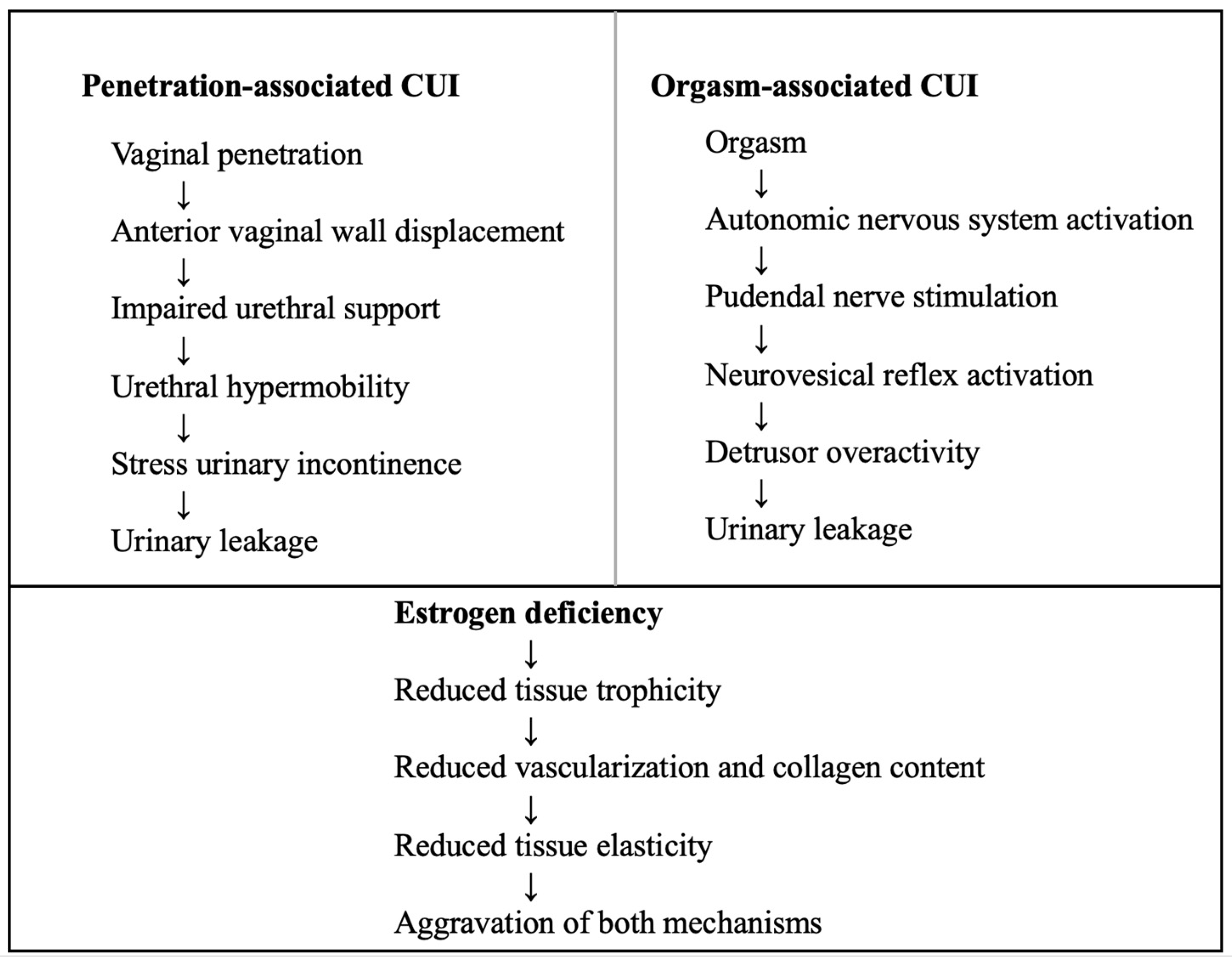
Urinary leakage associated with vaginal penetration is most commonly correlated with severe SUI, urethral hypermobility, and impairment of the support mechanisms of the proximal urethra and bladder neck. During penetration, mobilization of the anterior vaginal wall and alterations in vesicourethral dynamics may promote urinary leakage in patients with impaired pelvic support structures and altered continence mechanisms. In addition, anterior compartment prolapse and pelvic floor support abnormalities may further contribute to symptom development through alterations in urethral support during sexual activity [
5,
9].
Female orgasm is a complex neurophysiological phenomenon involving the integration of autonomic, somatic, and sensory components of the pelvic nervous system [
10,
11]. During orgasm, activation of sympathetic and parasympathetic nervous structures, pudendal nerve stimulation, and contractions of the striated pelvic floor musculature occur in association with changes in vesicourethral dynamics and pelvic visceral sensitivity [
12].
The innervation of the urinary bladder and structures involved in female sexual function demonstrates significant peripheral and central neural interconnections. Autonomic fibers originating from the pelvic plexus, together with somatic pathways mediated by the pudendal nerve, contribute simultaneously to urinary continence, pelvic sensation, and the female sexual response. In this context, intense stimulation of pelvic structures during orgasm may facilitate activation of bladder reflex pathways in susceptible individuals [
8,
13,
14,
15].
Numerous urodynamic studies have demonstrated an association between orgasm-associated UI and detrusor overactivity. In these patients, activation of neurovesical reflexes and increased bladder excitability may promote involuntary bladder contractions and consequent urinary leakage during orgasm [
16].
Emerging evidence indicates that the pathophysiology of CUI extends beyond isolated anatomical defects of pelvic support. In particular, orgasm-associated urinary leakage appears to involve complex neurophysiological and functional mechanisms. However, the exact interplay between pelvic neural pathways, the female orgasmic response, and urinary leakage remains incompletely elucidated [
3,
13].
Menopause-related hormonal changes may progressively contribute to the development and worsening of CUI. Estrogen deficiency is associated with multiple structural and functional alterations of the lower genitourinary tract, including vaginal and urethral atrophy, reduced vascularization, decreased collagen content, and impaired tissue elasticity. Collectively, these changes may weaken pelvic floor support and continence mechanisms. Furthermore, reduced tissue perfusion may adversely affect pelvic neuromuscular trophicity and alter the function of autonomic and somatic nerve pathways involved in the innervation of the urethra, vagina, and bladder neck [
17,
18].
Current evidence suggests that the pathophysiology of coital urinary incontinence differs according to the timing of urinary leakage during sexual activity. The main clinical and pathophysiological characteristics of the two clinical presentations are summarized in
Table 1.
The proposed pathophysiological mechanisms underlying penetration- and orgasm-associated coital urinary incontinence are illustrated in
Figure 1.
4. Clinical Evaluation
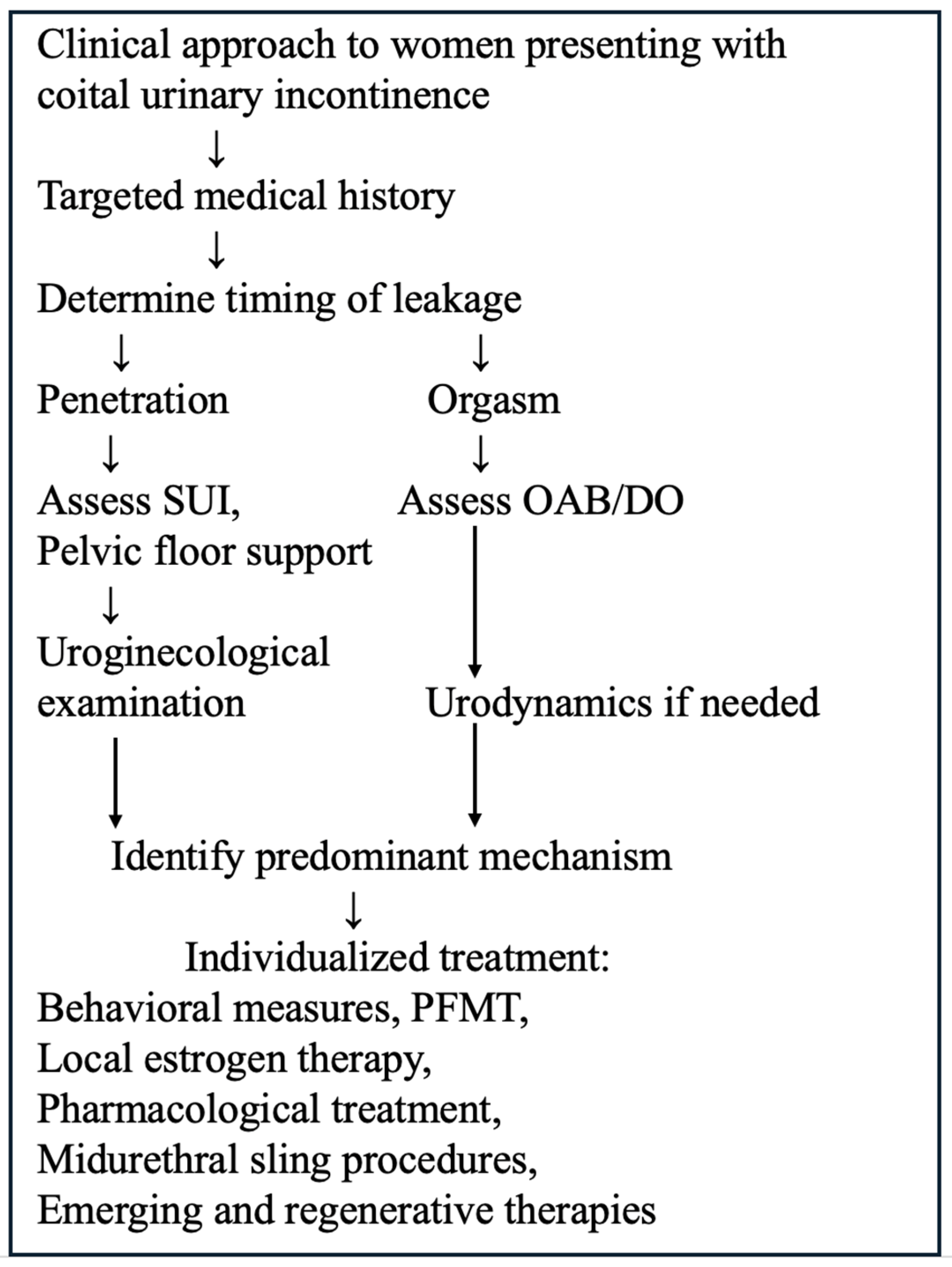
The evaluation of CUI is predominantly based on history and clinical evaluation and requires targeted questioning regarding the occurrence of urinary leakage during sexual activity. Clinical history taking should establish the timing of urinary leakage, differentiating symptoms associated with vaginal penetration from those occurring during orgasm. It is also important to determine whether symptoms occur constantly or intermittently and to identify factors that may influence urinary leakage, including bladder fullness, specific sexual positions, and orgasm intensity [
3].
Associated urinary symptoms should also be evaluated, including stress urinary incontinence, symptom severity, urinary urgency, frequency, nocturia, and symptoms of overactive bladder [
1].
Assessment of the impact on female sexual health should include changes in sexual arousal and satisfaction. It is important to establish symptom onset, progression over time, and the relationship between symptoms and the transition to peri- and postmenopause. Symptom duration, patient age at symptom onset, and the time elapsed since menopause may provide relevant information regarding the contribution of hormonal and genitourinary changes to symptom development [
1,
3,
8].
The urogynecological examination should include evaluation of pelvic floor support, identification of pelvic organ prolapse, assessment of vaginal and urethral trophicity, and evaluation of urethral mobility and potential anterior compartment defects. Assessment of urethral trophicity includes evaluation of the urethral meatus and periurethral mucosa, identifying signs of atrophy and tissue fragility. In selected cases, evaluation may be complemented by urodynamic testing, particularly in patients with mixed symptomatology or suspected detrusor overactivity [
1].
Several questionnaires have been used in the literature to evaluate urinary symptoms and their impact on female sexual function, including the International Consultation on Incontinence Questionnaire Female Lower Urinary Tract Symptoms Sexual Matters associated with Lower Urinary Tract Symptoms module (ICIQ-FLUTSsex), the Pelvic Organ Prolapse/Urinary Incontinence Sexual Questionnaire (PISQ), and the Female Sexual Function Index (FSFI) [
19,
20,
21,
22].
However, there is currently no standardized instrument dedicated exclusively to the assessment of COI [
3,
23,
24].
The main components of the clinical evaluation of women with CUI are summarized in
Table 2.
5. Therapeutic Options
The management of CUI should be individualized and adapted to the clinical characteristics and underlying pathophysiological mechanisms involved, within the context of the frequently multifactorial nature of symptoms. Therapeutic management should consider the coexistence of SUI, overactive bladder symptoms, pelvic floor support abnormalities, and genitourinary syndrome of menopause, as well as their impact on female sexual function and QoL [
3,
8,
17].
Many patients spontaneously adopt behavioral strategies aimed at reducing symptoms, including bladder emptying before intercourse, limiting fluid intake before sexual activity, or avoiding certain sexual positions. Although these measures may reduce the frequency of urinary leakage episodes in some patients, they do not address the underlying pathophysiological mechanisms [
1,
3].
5.1. Conservative Treatment
Conservative treatment frequently represents the first therapeutic step in the management of coital urinary incontinence, particularly in patients with mild or moderate symptoms and in the absence of severe anatomical pelvic floor defects [
26].
Pelvic floor rehabilitation and pelvic floor muscle training are among the most commonly used conservative interventions. These approaches aim to improve vesicourethral support, optimize pelvic neuromuscular control, and enhance the ability of pelvic floor musculature to respond to pressure variations and mechanical stress occurring during sexual activity. Available evidence reported improvement in CUI among patients with SUI undergoing pelvic floor rehabilitation programs [
3,
27,
28].
In peri- and postmenopausal patients, local estrogen therapy may contribute to improved vaginal and urethral trophicity and reduction in symptoms associated with genitourinary syndrome of menopause. Improvement in tissue trophicity and local vascularization may exert beneficial effects on both urinary symptoms and sexual discomfort associated with genitourinary atrophy [
3,
16].
In certain situations, conservative management may also include interventions targeting overactive bladder symptoms, such as bladder training and management of factors promoting urinary urgency. Nevertheless, available evidence regarding the exclusive efficacy of conservative treatment in CUI remains limited, as most studies evaluate this symptom within the broader context of female UI [
3,
25,
28].
Although Serati et al. initially proposed a conceptual distinction between penetration-associated and orgasm-associated CUI, subsequent clinical studies have demonstrated that the overlap between SUI and detrusor overactivity is more common than previously appreciated. El-Azab et al. reported that women with MUI may exhibit both mechanisms simultaneously, while the more recent urodynamic study by Çetinkaya et al. further supported the coexistence of stress-related and urgency-related mechanisms in many patients. Collectively, these findings indicate that the pathophysiology of CUI is frequently multifactorial and reinforce the importance of individualized diagnostic evaluation and treatment selection [
3,
12,
25].
5.2. Pharmacological Treatment
Pharmacological treatment may play an important role, particularly in patients with overactive bladder symptoms or urodynamically demonstrated detrusor overactivity. In these situations symptom control may contribute to reducing episodes of urinary leakage associated with sexual activity, especially those occurring during orgasm [
3,
29].
Antimuscarinic agents represent one of the most widely used therapeutic options for controlling overactive bladder symptoms. By reducing involuntary bladder contractions and improving urinary urgency, these therapies may reduce the frequency of urinary leakage in some patients. However, associated adverse effects, including xerostomia, constipation, and medication intolerance, may limit long-term adherence [
30,
31].
Beta-3 adrenergic receptor agonists represent an important therapeutic alternative, exerting effects on bladder muscle relaxation and improvement of overactive bladder symptoms, frequently with a more favorable tolerability profile compared with antimuscarinic agents [
32].
In peri- and postmenopausal patients, local vaginal estriol therapy may have beneficial effects on urinary symptoms associated with estrogen deficiency through improvement of urethral and vaginal trophicity and enhancement of local vascularization [
17,
29,
33,
34].
Nevertheless, evidence regarding the specific efficacy of pharmacological therapies in coital urinary incontinence remains scarce. Most studies evaluate treatment outcomes within the broader spectrum of mixed urinary incontinence and overactive bladder, without specifically analyzing their impact on urinary leakage associated with sexual activity [
3,
25].
5.3. Surgical Treatment
Surgical treatment may represent an effective therapeutic option in patients in whom CUI is predominantly associated with SUI and pelvic floor support defects. Surgical intervention is generally considered in women with moderate to severe symptoms, frequent urinary leakage episodes, substantial impairment of QoL, and clinically significant SUI, particularly after failure of conservative management [
3].
Midurethral sling procedures, including tension-free vaginal tape (TVT) and transobturator tape (TOT), are among the most widely used surgical interventions for stress urinary incontinence and have been associated with improvement of coital urinary incontinence symptoms in selected patients [
35,
36].
Numerous studies have reported improvement or resolution of coital urinary incontinence following surgical treatment of stress urinary incontinence, particularly in patients with urinary leakage associated with vaginal penetration. Available literature have also demonstrated improvement in urinary symptoms and reduction in their impact on sexual activity following surgical treatment of SUI [
23,
37]. In the SISTEr study, the proportion of sexually active women reporting urinary incontinence significantly decreased postoperatively, from 53% preoperatively to 9% at follow-up. In parallel, the proportion of patients reporting limitation of sexual activity because of fear of urinary leakage decreased from 52% to 10% after surgery [
38].
In patients with significant anterior compartment defects and major pelvic support abnormalities, correction of pelvic anatomical defects may further contribute to reducing urinary leakage associated with sexual activity. Available data suggest that surgical treatment is more effective in patients whose symptoms are predominantly stress-related. In contrast, in patients with mixed urinary incontinence, surgical correction of pelvic support defects may improve the stress-related component without directly influencing mechanisms associated with bladder overactivity or detrusor overactivity. In such cases, urgency symptoms and urinary leakage associated with sexual activity may persist postoperatively and require additional conservative or pharmacological treatment [
3,
25,
39,
40].
Consequently, careful patient selection and realistic preoperative counseling remain essential in the management of CUI [
3].
5.4. Emerging Therapeutic Perspectives
In recent years, interest in minimally invasive and regenerative therapies for female pelvic floor disorders has increased significantly. In the context of CUI, these therapies aim to improve tissue trophicity, enhance urethral support, and improve pelvic neuromuscular function, with potential benefits for both urinary symptoms and female sexual function [
41].
Vaginal laser therapy and radiofrequency-based therapies have been proposed as therapeutic options for patients with menopausal urogenital symptoms and mild to moderate urinary incontinence. Proposed mechanisms include stimulation of collagen remodeling, increased local vascularization, and improvement of vaginal and urethral mucosal trophicity. Some studies have reported improvement in urinary symptoms and female sexual function following these therapies; however, available evidence remains heterogeneous, and the lack of prospective randomized studies limits the formulation of firm recommendations [
18,
27,
41,
42].
While observational studies have generally reported improvements in urinary symptoms and female sexual function, randomized controlled evidence remains limited. Furthermore, current international recommendations consider vaginal laser therapy a promising but still investigational approach, emphasizing that additional high-quality prospective studies are required before its routine use can be recommended in clinical practice [
41,
42].
Interest in regenerative therapies, including platelet-rich plasma (PRP) and cellular therapies, has also increased, driven by advances in regenerative medicine and growing interest in restoring pelvic floor function through biological and tissue-based mechanisms [
43].
Cellular therapies employ various cell types with regenerative potential, particularly mesenchymal stem cells and adipose-derived cells, aiming to stimulate tissue regeneration, collagen remodeling, enhancement of local vascularization, and optimization of pelvic neuromuscular function. These therapies aim not only to improve anatomical pelvic support but also to influence processes involved in tissue trophicity, neuromuscular function, local innervation, and the regenerative capacity of periurethral and vaginal structures [
44].
In the context of CUI, interest in these approaches derives from the complex and multifactorial nature of symptoms, involving anatomical, hormonal, vascular, and neurophysiological components simultaneously. Nevertheless, clinical experience regarding the use of regenerative therapies in CUI remains limited, and available evidence is still insufficient to support standardized recommendations [
45].
Neuromodulation represents one of the most promising modern therapeutic directions investigated in female pelvic floor disorders, particularly in patients with overactive bladder symptoms and detrusor overactivity. Sacral neuromodulation acts predominantly on sacral nerve roots, especially S3, which are involved in the control of the urinary bladder, urethra, and pelvic structures. By influencing neurovesical reflexes and reducing bladder excitability, these therapies may improve urinary urgency, urge urinary incontinence, and detrusor overactivity. Interest in neuromodulation for CUI derives from the interconnection between neurological mechanisms involved in bladder control and female sexual function. In this context, reduction in bladder overactivity through neuromodulation may also exert favorable effects on urinary leakage associated with sexual activity in selected cases. Sacral neuromodulation is primarily performed in specialized neurourology and urogynecology centers and requires a multidisciplinary approach and careful patient selection [
46].
At present, evidence regarding the efficacy of emerging therapies in CUI remains extremely limited, with most available data extrapolated from studies evaluating female UI and pelvic floor disorders more broadly. Existing studies generally include small patient populations and short follow-up periods. Additional prospective studies are required to evaluate long-term efficacy and define optimal patient selection criteria [
31,
47].
Recent literature further supports the need for caution regarding emerging and minimally invasive therapies. For vaginal laser therapy, recent position statements emphasize that, although observational studies have reported improvements in genitourinary symptoms, urinary symptoms, and sexual function, robust evidence remains insufficient to support routine use in clinical practice [
48]. Similarly, recent PRP studies and reviews suggest a favorable safety profile and potential symptomatic benefit in female SUI, but the evidence remains heterogeneous, with small study populations, variable protocols, and limited follow-up [
49,
50]. For cellular therapies, recent reviews indicate that regenerative cell-based approaches may be safe and biologically plausible for female SUI, although clinical efficacy remains insufficiently established and larger randomized trials are still required [
43]. In the field of neuromodulation, contemporary data support its role in refractory OAB, but outcome reporting remains inconsistent and evidence specifically addressing CUI is lacking [
51]. Overall, these findings reinforce that emerging therapies for CUI should currently be interpreted as extrapolated, mechanism-based therapeutic possibilities rather than standardized treatment options.
The currently available therapeutic approaches for CUI, together with their principal indications and the evidence available in the literature, are summarized in
Table 3.
The proposed clinical approach to women presenting with CUI, integrating the diagnostic evaluation and individualized therapeutic strategy based on the predominant underlying mechanism, is illustrated in
Figure 2.
6. Clinical Implications and Future Perspectives
Current evidence suggests that the best therapeutic outcomes are achieved in patients with CUI predominantly associated with SUI and urinary leakage during vaginal penetration, situations in which surgical treatment may lead to significant symptom improvement. However, this also highlights the need to identify alternative therapeutic strategies for patients with mild or moderately symptomatic disease, in whom surgical indications should be carefully weighed [
25,
42].
In this context, the combination of pelvic floor rehabilitation, local hormonal therapy, and minimally invasive or regenerative therapies may represent an intermediate therapeutic step, particularly in peri- and postmenopausal patients with associated genitourinary trophic changes. These interventions deserve prospective evaluation because of their minimally invasive nature, absence of hospitalization requirements, and potential to provide a therapeutic alternative before surgical correction in carefully selected cases [
5,
8,
17].
Despite increasing interest in CUI, important gaps in the available literature remain. Most published studies are observational, involve relatively small patient populations, and frequently evaluate coital urinary incontinence as a secondary outcome within broader studies on urinary incontinence or female sexual dysfunction. Well-designed prospective studies using standardized definitions and validated outcome measures are needed to improve understanding of the condition and optimize therapeutic decision-making [
2,
3,
18,
25].
The currently available evidence on coital urinary incontinence is derived from a limited number of studies with heterogeneous designs. The principal publications that have shaped the current understanding of CUI are summarized in
Table 4.
7. Conclusions
CUI represents a complex and frequently underdiagnosed manifestation of female pelvic floor dysfunction, in which continence mechanisms, pelvic support, hormonal status, and the neurophysiological sexual response interact closely. Differentiating between urinary leakage occurring during penetration and that associated with orgasm has direct implications for clinical evaluation and therapeutic decision-making.
Therapeutic management should be personalized, stepwise, and adapted to the predominant underlying mechanisms. Active inquiry regarding this symptom during clinical history taking is essential, as many patients do not report it spontaneously. Prospective studies are needed to evaluate the efficacy of combined therapies and to better define the role of conservative, regenerative, and surgical treatments within the therapeutic algorithm of CUI.
Author Contributions
Conceptualization, M.B., A.B. and R.V.; methodology, M.B.; validation, M.B. and R.V.; investigation, M.B.; data curation, M.B., A.B. and R.V.; writing—original draft preparation, A.B. and M.B.; writing—review and editing, R.V.; visualization, M.B. and A.B.; supervision, R.V.; project administration, M.B.; All authors have read and agreed to the published version of the manuscript.
Funding
This research received no external funding.
Institutional Review Board Statement
Not applicable.
Informed Consent Statement
Not applicable.
Data Availability Statement
No new data were created or analyzed in this study. Data sharing is not applicable to this article.
Conflicts of Interest
The authors declare no conflicts of interest.
Abbreviations
| CUI | coital urinary incontinence |
| DO | detrusor overactivity |
| FSFI | Female Sexual Function Index |
| GSM | genitourinary syndrome of menopause |
| LUTS | lower urinary tract symptoms |
| OAB | overactive bladder |
| PFMT | pelvic floor muscle training |
| PISQ-IR | Pelvic Organ Prolapse/Urinary Incontinence Sexual Questionnaire–IUGA Revised |
| PRP | platelet-rich plasma |
| QoL | quality of life |
| SUI | stress urinary incontinence |
| TOT | transobturator tape |
| TVT | tension-free vaginal tape |
| UI | urinary incontinence |
References
- Haylen, B.T.; De Ridder, D.; Freeman, R.M.; Swift, S.E.; Berghmans, B.; Lee, J.; Monga, A.; Petri, E.; Rizk, D.E.; Sand, P.K.; et al. An international urogynecological association (IUGA)/international continence society (ICS) joint report on the terminology for female pelvic floor dysfunction. Neurourol. Urodyn. 2010, 29, 4–20. [Google Scholar] [CrossRef] [Scilit] [PubMed]
- Athey, R.; Gray, T.; Kershaw, V.; Radley, S.; Jha, S. Coital Incontinence: A Multicentre Study Evaluating Prevalence and Associations. Int. Urogynecol. J. 2024, 35, 1969–1975. [Google Scholar] [CrossRef] [Scilit] [PubMed]
- Serati, M.; Salvatore, S.; Uccella, S.; Nappi, R.E.; Bolis, P. Female Urinary Incontinence During Intercourse: A Review on an Understudied Problem for Women’s Sexuality. J. Sex. Med. 2009, 6, 40–48. [Google Scholar] [CrossRef] [Scilit] [PubMed]
- Lau, H.-H.; Huang, W.-C.; Su, T.-H. Urinary leakage during sexual intercourse among women with incontinence: Incidence and risk factors. PLoS ONE 2017, 12, e0177075. [Google Scholar] [CrossRef] [Scilit] [PubMed]
- Rodríguez-Almagro, J.; Hernández Martínez, A.; Martínez-Vázquez, S.; Peinado Molina, R.A.; Bermejo-Cantarero, A.; Martínez-Galiano, J.M. A Qualitative Exploration of the Perceptions of Women Living with Pelvic Floor Disorders and Factors Related to Quality of Life. J. Clin. Med. 2024, 13, 1896. [Google Scholar] [CrossRef] [Scilit] [PubMed]
- Pinheiro Sobreira Bezerra, L.R.; Britto, D.F.; Ribeiro Frota, I.P.; Lira Do Nascimento, S.; Morais Brilhante, A.V.; Lucena, S.V.; Moura Brasil, D.M. The Impact of Urinary Incontinence on Sexual Function: A Systematic Review. Sex. Med. Rev. 2020, 8, 393–402. [Google Scholar] [CrossRef] [Scilit] [PubMed]
- Grzybowska, M.E.; Wydra, D.G. Coital incontinence: A factor for deteriorated health-related quality of life and sexual function in women with urodynamic stress urinary incontinence. Int. Urogynecol. J. 2017, 28, 697–704. [Google Scholar] [CrossRef] [Scilit] [PubMed]
- Rogers, R.G. Sexual function in women with pelvic floor disorders. Can. Urol. Assoc. J. 2013, 7, 199. [Google Scholar] [CrossRef] [Scilit] [PubMed]
- Azadzoi, K.M.; Siroky, M.B. Neurologic Factors in Female Sexual Function and Dysfunction. Korean J. Urol. 2010, 51, 443. [Google Scholar] [CrossRef] [Scilit] [PubMed]
- Ramos, S.A.; Guimarães, T.; Bollens, R. Urethral leak: An unusual symptom of pudendal nerve entrapment. Cent. Eur. J. Urol. 2020, 73, 46–48. [Google Scholar] [CrossRef] [Scilit] [PubMed]
- Wise, N.J.; Frangos, E.; Komisaruk, B.R. Brain Activity Unique to Orgasm in Women: An fMRI Analysis. J. Sex. Med. 2017, 14, 1380–1391. [Google Scholar] [CrossRef] [Scilit] [PubMed]
- Çetinkaya, Ş.E.; Seval, M.M.; Varlı, B.; Dökmeci, F. The association of coital incontinence with clinical factors and single voiding cycle ambulatory urodynamic monitoring findings in women. Front. Med. 2023, 10, 1160637. [Google Scholar] [CrossRef] [Scilit] [PubMed]
- De Groat, W.C.; Griffiths, D.; Yoshimura, N. Neural Control of the Lower Urinary Tract. Compr. Physiol. 2014, 5, 327–396. [Google Scholar] [CrossRef] [Scilit] [PubMed]
- Tajkarimi, K.; Burnett, A.L. The Role of Genital Nerve Afferents in the Physiology of the Sexual Response and Pelvic Floor Function. J. Sex. Med. 2011, 8, 1299–1312. [Google Scholar] [CrossRef] [Scilit] [PubMed]
- Levin, R.J. The Physiology of Sexual Arousal in the Human Female: A Recreational and Procreational Synthesis. Arch. Sex. Behav. 2002, 31, 405–411. [Google Scholar] [CrossRef] [Scilit] [PubMed]
- Șerbănescu, L.; Mirea, S.; Ionescu, P.; Petrica, L.A.; Iorga, I.C.; Surdu, M.; Surdu, T.V.; Rotar, V. Involuntary Urine Loss in Menopause—A Narrative Review. J. Clin. Med. 2025, 14, 7664. [Google Scholar] [CrossRef] [Scilit] [PubMed]
- Robinson, D.; Cardozo, L.D. The role of estrogens in female lower urinary tract dysfunction. Urology 2003, 62, 45–51. [Google Scholar] [CrossRef] [Scilit] [PubMed]
- Gray, T.; Li, W.; Campbell, P.; Jha, S.; Radley, S. Evaluation of coital incontinence by electronic questionnaire: Prevalence, associations and outcomes in women attending a urogynaecology clinic. Int. Urogynecol. J. 2018, 29, 969–978. [Google Scholar] [CrossRef] [Scilit] [PubMed]
- Todhunter-Brown, A.; Hazelton, C.; Campbell, P.; Elders, A.; Hagen, S.; McClurg, D. Conservative interventions for treating urinary incontinence in women: An Overview of Cochrane systematic reviews. Cochrane Database Syst. Rev. 2022, 2022, CD012337. [Google Scholar] [CrossRef] [Scilit] [PubMed]
- Rosen, C.; Brown, J.; Heiman, S.; Leib, R. The Female Sexual Function Index (FSFI): A Multidimensional Self-Report Instrument for the Assessment of Female Sexual Function. J. Sex. Marital. Ther. 2000, 26, 191–208. [Google Scholar] [CrossRef] [Scilit] [PubMed]
- Rogers, R.G.; Rockwood, T.H.; Constantine, M.L.; Thakar, R.; Kammerer-Doak, D.N.; Pauls, R.N.; Parekh, M.; Ridgeway, B.; Jha, S.; Pitkin, J.; et al. A new measure of sexual function in women with pelvic floor disorders (PFD): The Pelvic Organ Prolapse/Incontinence Sexual Questionnaire, IUGA-Revised (PISQ-IR). Int. Urogynecol. J. 2013, 24, 1091–1103. [Google Scholar] [CrossRef] [Scilit] [PubMed]
- Jackson, S.; Donovan, J.; Brookes, S.; Eckford, S.; Swithinbank, L.; Abrams, P. The Bristol Female Lower Urinary Tract Symptoms questionnaire: Development and psychometric testing. Br. J. Urol. 1996, 77, 805–812. [Google Scholar] [CrossRef] [Scilit] [PubMed]
- Jha, S.; Walters, S.J.; Bortolami, O.; Dixon, S.; Alshreef, A. Impact of pelvic floor muscle training on sexual function of women with urinary incontinence and a comparison of electrical stimulation versus standard treatment (IPSU trial): A randomised controlled trial. Physiotherapy 2018, 104, 91–97. [Google Scholar] [CrossRef] [Scilit] [PubMed]
- Stamos, D.; Sapouna, V.; Astraka, K.M.; Thanopoulou, S.; Giannakis, I.; Pantou, A.; Baltogiannis, D.; Paschopoulos, M.; Sofikitis, N.; Zachariou, A. Female Sexual Function and Pelvic Floor Muscle Training: A Narrative Review. Cureus 2025, 17, e85751. [Google Scholar] [CrossRef] [Scilit] [PubMed]
- El-Azab, A.S.; Yousef, H.A.; Seifeldein, G.S. Coital incontinence: Relation to detrusor overactivity and stress incontinence. Neurourol. Urodyn. 2011, 30, 520–524. [Google Scholar] [CrossRef] [Scilit] [PubMed]
- Frigerio, M.; Barba, M.; Cola, A.; Braga, A.; Celardo, A.; Munno, G.; Schettino, M.; Vagnetti, P.; De Simone, F.; Di Lucia, A.; et al. Quality of Life, Psychological Wellbeing, and Sexuality in Women with Urinary Incontinence—Where Are We Now: A Narrative Review. Medicina 2022, 58, 525. [Google Scholar] [CrossRef] [Scilit] [PubMed]
- Bo, K.; Talseth, T.; Holme, I. Single blind, randomised controlled trial of pelvic floor exercises, electrical stimulation, vaginal cones, and no treatment in management of genuine stress incontinence in women. BMJ 1999, 318, 487–493. [Google Scholar] [CrossRef] [Scilit] [PubMed]
- Dumoulin, C.; Cacciari, L.P.; Hay-Smith, E.J.C. Pelvic floor muscle training versus no treatment, or inactive control treatments, for urinary incontinence in women. Cochrane Database Syst. Rev. 2018, 2018, CD005654. [Google Scholar] [CrossRef] [Scilit] [PubMed]
- Bodner-Adler, B.; Alarab, M.; Ruiz-Zapata, A.M.; Latthe, P. Effectiveness of hormones in postmenopausal pelvic floor dysfunction—International Urogynecological Association research and development—Committee opinion. Int. Urogynecol. J. 2020, 31, 1577–1582. [Google Scholar] [CrossRef] [Scilit] [PubMed]
- Gormley, E.A.; Lightner, D.J.; Faraday, M.; Vasavada, S.P. Diagnosis and Treatment of Overactive Bladder (Non-Neurogenic) in Adults: AUA/SUFU Guideline Amendment. J. Urol. 2015, 193, 1572–1580. [Google Scholar] [CrossRef] [Scilit] [PubMed]
- Harding, C.K.; Lapitan, M.C.; Arlandis, S.; Bø, K.; Cobussen-Boekhorst, H.; Costantini, E.; Groen, J.; Nambiar, A.K.; Omar, M.I.; Peyronnet, B.; et al. EAU Guidelines on Management of Non-Neurogenic Female Lower Urinary Tract Symptoms; Edn Presented at the EAU Annual Congress; European Association of Urology (EAU): Arnhem, The Netherlands, 2025. [Google Scholar]
- Chapple, C.R.; Kaplan, S.A.; Mitcheson, D.; Klecka, J.; Cummings, J.; Drogendijk, T.; Dorrepaal, C.; Martin, N. Randomized Double-blind, Active-controlled Phase 3 Study to Assess 12-Month Safety and Efficacy of Mirabegron, a β3-Adrenoceptor Agonist, in Overactive Bladder. Eur. Urol. 2013, 63, 296–305. [Google Scholar] [CrossRef] [Scilit] [PubMed]
- Mac Bride, M.B.; Rhodes, D.J.; Shuster, L.T. Vulvovaginal Atrophy. Mayo Clin. Proc. 2010, 85, 87–94. [Google Scholar] [CrossRef] [Scilit] [PubMed]
- Allafi, A.H.; Al-johani, A.S.; Babukur, R.M.; Fikri, J.; Alanazi, R.R.; Ali, S.D.M.H.; Alkathiry, A.; Alfozan, A.M.; Mayoof, K.I.A.A.H.; Abualhamael, M.A. The Link Between Menopause and Urinary Incontinence: A Systematic Review. Cureus 2024, 16, e71260. [Google Scholar] [CrossRef] [Scilit] [PubMed]
- Atılgan, A.E.; Eren, E.Ç. The effect of tension-free vaginal tape on coital incontinence concomitant with stress urinary incontinence. LUTS Low. Urin. Tract Symptoms 2021, 13, 118–122. [Google Scholar] [CrossRef] [Scilit] [PubMed]
- Ford, A.A.; Rogerson, L.; Cody, J.D.; Ogah, J. Mid-urethral sling operations for stress urinary incontinence in women. Cochrane Database Syst. Rev. 2015, 7, CD006375. [Google Scholar] [CrossRef] [Scilit] [PubMed]
- Roumeguere, T.; Quackels, T.; Bollens, R.; Degroote, A.; Zlotta, A.; Bossche, M.; Schulman, C. Trans-Obturator Vaginal Tape (TOT) for Female Stress Incontinence: One Year Follow-Up in 120 Patients. Eur. Urol. 2005, 48, 805–809. [Google Scholar] [CrossRef] [Scilit] [PubMed]
- Tennstedt, S. Design of the stress incontinence surgical treatment efficacy trial (SISTEr). Urology 2005, 66, 1213–1217. [Google Scholar] [CrossRef] [Scilit] [PubMed]
- Barber, M.D.; Maher, C. Epidemiology and outcome assessment of pelvic organ prolapse. Int. Urogynecol. J. 2013, 24, 1783–1790. [Google Scholar] [CrossRef] [Scilit] [PubMed]
- Maher, C.; Feiner, B.; Baessler, K.; Schmid, C. Surgical management of pelvic organ prolapse in women. Cochrane Database Syst. Rev. 2013, 4, CD004014. [Google Scholar] [CrossRef] [Scilit] [PubMed]
- Ruffolo, A.; Braga, A.; Torella, M.; Frigerio, M.; Cimmino, C.; De Rosa, A.; Sorice, P.; Castronovo, F.; Salvatore, S.; Serati, M. Vaginal Laser Therapy for Female Stress Urinary Incontinence: New Solutions for a Well-Known Issue—A Concise Review. Medicina 2022, 58, 512. [Google Scholar] [CrossRef] [Scilit] [PubMed]
- Salvatore, S.; Ruffolo, A.F.; Phillips, C.; Athanasiou, S.; Cardozo, L.; Serati, M.; the EUGA Working Group. Vaginal laser therapy for GSM/VVA: Where we stand now—A review by the EUGA Working Group on Laser. Climacteric 2023, 26, 336–352. [Google Scholar] [CrossRef] [Scilit] [PubMed]
- Dankova, I.; Pyrgidis, N.; Tishukov, M.; Georgiadou, E.; Nigdelis, M.P.; Solomayer, E.-F.; Marcon, J.; Stief, C.G.; Hatzichristou, D. Efficacy and Safety of Platelet-Rich Plasma Injections for the Treatment of Female Sexual Dysfunction and Stress Urinary Incontinence: A Systematic Review. Biomedicines 2023, 11, 2919. [Google Scholar] [CrossRef] [Scilit] [PubMed]
- González Enguita, C.; Garranzo García-Ibarrola, M.; Tufet I Jaumont, J.J.; Garde García, H.; González López, R.; Quintana Franco, L.M.; Torres Zambrano, G.M.; García-Arranz, M. Cell Therapy in the Treatment of Female Stress Urinary Incontinence: Current Status and Future Proposals. Life 2024, 14, 861. [Google Scholar] [CrossRef] [Scilit] [PubMed]
- Gandhi, J.; Chen, A.; Dagur, G.; Suh, Y.; Smith, N.; Cali, B.; Khan, S.A. Genitourinary syndrome of menopause: An overview of clinical manifestations, pathophysiology, etiology, evaluation, and management. Am. J. Obstet. Gynecol. 2016, 215, 704–711. [Google Scholar] [CrossRef] [Scilit] [PubMed]
- Feloney, M.P.; Stauss, K.; Leslie, S.W. Sacral Neuromodulation. In StatPearls [Internet]; Updated 18 April 2024; StatPearls Publishing: Treasure Island, FL, USA, 2026. Available online: https://www.ncbi.nlm.nih.gov/books/NBK567751/ (accessed on 27 May 2026).
- Borislavschi, A.; Petca, A. Between Promise and Proof: Evaluating PRP’s Role in Modern Gynecology. Medicina 2025, 61, 1514. [Google Scholar] [CrossRef] [Scilit] [PubMed]
- Giarenis, I.; Tsiapakidou, S.; Zacche, M.; Mukhopadhyay, S.; Mahmood, T. European Board and College of Obstetrics and Gynaecology (EBCOG) position statement on the use of laser vaginal devices for treatment of genitourinary syndrome of menopause, vaginal laxity, pelvic organ prolapse and stress urinary incontinence. Eur. J. Obstet. Gynecol. Reprod. Biol. 2024, 299, 342–344. [Google Scholar] [CrossRef] [Scilit] [PubMed]
- Ashton, L.; Nakatsuka, H.; Johnson, C.M.; Kenne, K.; Kreder, K.J.; Kruse, R.; Wendt, L.; Takacs, E.B.; Vollstedt, A.J. A single injection of platelet-rich plasma injection for the treatment of stress urinary incontinence in females: A randomized placebo-controlled trial. Urology 2024, 193, 63–68. [Google Scholar] [CrossRef] [Scilit] [PubMed]
- Pitsillidi, A.; Vona, L.; Bettocchi, S.; Schiermeier, S.; Noé, G.K. PRP therapy for stress urinary incontinence and pelvic organ prolapse: A new frontier in personalized treatment? J. Pers. Med. 2025, 15, 214. [Google Scholar] [CrossRef] [Scilit] [PubMed]
- Roman, M.P.; Ciortea, R.; Doumouchtsis, S.K.; Măluțan, A.M.; Bucuri, C.E.; Ormindean, C.M.; Suciu, V.E.; Nati, I.D.; Căilean, A.; Mihu, D. Comparison of different treatment outcomes for refractory overactive bladder: A systematic review and meta-analysis. Toxins 2025, 17, 479. [Google Scholar] [CrossRef] [Scilit] [PubMed]
| Disclaimer/Publisher’s Note: The statements, opinions and data contained in all publications are solely those of the individual author(s) and contributor(s) and not of MDPI and/or the editor(s). MDPI and/or the editor(s) disclaim responsibility for any injury to people or property resulting from any ideas, methods, instructions or products referred to in the content. |