Review

From Diagnostics to Prescribing: Antibiotic and Diagnostic Stewardship in Contemporary UTI Care

by
Kavin Raj Cyril Thiagaraj
1,2,*,
Shwetambari V. Ingawale
1,
Hira Bakhtiar Khan
1,2 and
Mehwash Nadeem
1,2,3
1
Teesside Urology Research Alliance (TURA), Middlesbrough TS4 3BW, UK
2
Department of Urology, James Cook University Hospital, Middlesbrough TS4 3BW, UK
3
Department of Urology, Newcastle University, Newcastle upon Tyne NE2 4HH, UK
*
Author to whom correspondence should be addressed.
Submission received: 26 January 2026 / Revised: 22 March 2026 / Accepted: 6 May 2026 / Published: 12 May 2026

Abstract

Background: Urinary tract infections (UTIs) are a leading cause of urine testing and antibiotic prescribing across healthcare settings. Despite established clinical guidelines, inappropriate practice such as unnecessary urine cultures, treatment of asymptomatic bacteriuria, suboptimal antibiotic selection, and excessive treatment duration remain common. These practices contribute to antimicrobial resistance, adverse drug events, and increased healthcare costs. Methods: This narrative review synthesises evidence from PubMed-indexed studies, including systematic reviews, randomised controlled trials, and implementation studies, to evaluate the impact of antibiotic and diagnostic stewardship interventions on UTI management. Studies assessing outcomes related to urine testing practices, antibiotic utilisation, and clinical safety were included. Discussion: The literature demonstrates that integrated stewardship interventions effectively reduce inappropriate urine testing and antibiotic use without negatively affecting patient outcomes. Diagnostic stewardship strategies such as limiting urine cultures to patients with appropriate clinical indications, implementing reflex testing algorithms, and improving result interpretation reduce downstream antibiotic overuse. When combined with antibiotic stewardship approaches including clinical decision support, audit-and-feedback, and bundled interventions, these strategies lead to sustained improvements in prescribing behaviour and care quality. Conclusions: Antibiotic and diagnostic stewardship are synergistic and essential components of optimal UTI management. Interventions targeting both diagnostic decision-making and antibiotic use can safely reduce unnecessary testing and treatment. Future stewardship efforts should prioritise integrated, multidisciplinary approaches supported by clinical decision support tools to enable real-time, sustainable improvements in UTI care across clinical settings.

1. Introduction

Urinary tract infections (UTIs) represent one of the most common bacterial infections worldwide, with an annual incidence of approximately 11% in women and 3% in men [1]. By the age of 32 years, nearly half of all women are expected to have experienced at least one UTI, with lifetime prevalence estimates reaching 40–50% [2]. Women experience a disproportionately higher burden due to anatomical and hormonal factors, whereas UTIs in men are generally considered complicated and more frequently warrant culture-directed therapy [1]. In contrast, older adults often present with atypical or non-specific symptoms, and asymptomatic bacteriuria (ASB) is particularly prevalent in this population, increasing the risk of misdiagnosis and overtreatment [3,4]. Overall, the epidemiology, clinical presentation, and management of UTIs are strongly influenced by both sex and age. Given their widespread occurrence, UTIs are a major driver of antibiotic prescribing in clinical practice, and this substantial prescribing burden has been associated with persistently high levels of inappropriate antibiotic use across healthcare settings.
In outpatient practice, an estimated 50–70% of UTI prescriptions do not meet established diagnostic criteria, with many patients receiving antibiotics in the absence of documented urinary symptoms [5]. Retrospective analyses further demonstrate that up to 68% of prescribed regimens are inappropriate due to incorrect antibiotic selection or excessive treatment duration [6]. Large national cohort data involving 654,432 women have revealed frequent use of non-first-line fluoroquinolones, with more than 75% of treatment courses exceeding guideline-recommended durations [7]. This issue is particularly pronounced in older populations, where inappropriate treatment of ASB remains common despite evidence demonstrating no clinical benefit and potential harm [3,4]. Among older women with recurrent UTIs, approximately 41% receive unnecessary antibiotic therapy, often reflecting treatment of ASB rather than true infection [8]. In outpatient practice, an estimated 50–70% of UTI prescriptions do not meet established diagnostic criteria, with many patients receiving antibiotics in the absence of documented urinary symptoms [5]. Retrospective analyses further demonstrate that up to 68% of prescribed regimens are inappropriate due to incorrect antibiotic selection or excessive treatment duration [6]. Large national cohort data involving 654,432 women have revealed frequent use of non-first-line fluoroquinolones, with more than 75% of treatment courses exceeding guideline-recommended durations [7]. This issue is particularly pronounced in older populations, where inappropriate treatment of ASB remains common despite evidence demonstrating no clinical benefit and potential harm [3,4]. Among older women with recurrent UTIs, approximately 41% receive unnecessary antibiotic therapy, often reflecting treatment of ASB rather than true infection [8].
These data underscore significant gaps in guideline-concordant prescribing and highlight the urgent need for effective antimicrobial stewardship interventions, which are defined as coordinated efforts to improve and measure appropriate antibiotic use through strategies such as prospective audit and feedback, formulary restriction, and optimisation of antibiotic selection, dosing, and duration. While this traditional stewardship efforts focus on refining the use of existing antimicrobial agents, preventive strategies such as immunoprophylaxis are emerging as promising approaches in the management of recurrent UTIs. Sublingual whole-cell bacterial vaccines have demonstrated sustained reductions in recurrence rates and favourable safety profiles in systematic reviews and long-term cohort studies [9,10,11,12]. These interventions enhance host mucosal immune responses and reduce reliance on repeated antibiotic courses. By decreasing the need for recurrent antibiotic exposure, such vaccines present a meaningful opportunity to mitigate antimicrobial resistance; however, they have not yet been routinely incorporated into formal diagnostic and antimicrobial stewardship frameworks.
This review evaluates the current evidence supporting diagnostic and antimicrobial stewardship in UTI management, identifies established and emerging interventions, and explores how preventive approaches such as immunoprophylaxis may be integrated into stewardship strategies to support comprehensive and sustainable UTI care.

2. Methodology

2.1. Literature Search and Selection

A narrative review of the literature was conducted to examine current practices, evidence, and concepts related to AMS and DS. A comprehensive literature search was performed using PubMed/MEDLINE, Google Scholar, and the Cochrane Library. Publications from database inception through 2025 were considered.
Search terms were selected to capture both antibiotic and diagnostic stewardship domains and included combinations of keywords such as antibiotic stewardship, antimicrobial stewardship, diagnostic stewardship, laboratory stewardship, urine culture stewardship, appropriate antibiotic use, immunoprophylaxis and clinical decision-making. Reference lists of relevant articles were also reviewed to identify additional pertinent publications.

2.2. Study Inclusion

A total of 46 papers were included in this narrative review. Of these, 15 primarily addressed diagnostic stewardship (DS) interventions, focusing on urine culture ordering practices, reflex testing algorithms, laboratory optimisation, selective susceptibility reporting, and diagnostic clinical decision support. In total, 18 studies primarily focused on antimicrobial stewardship (AMS) strategies, including optimisation of antibiotic selection, dosing, duration, de-escalation, audit-and-feedback, educational interventions, and electronic prescribing support tools. Five studies incorporated integrated DS and AMS components, evaluating combined effects on urine testing behaviour and antibiotic utilisation. The remaining publications provided epidemiological context, guideline updates, prevention strategies, catheter-associated UTI frameworks, or immunoprophylaxis data relevant to stewardship-informed UTI care.
Articles were selected based on their relevance to the objectives of this review, with emphasis on studies describing stewardship principles, implementation strategies, and clinical or utilisation outcomes. Eligible publications included original research articles, interventional studies, reviews, and consensus or guideline documents conducted in healthcare settings.
Articles were excluded if they were case reports, conference abstracts without full text, editorials lacking substantive discussion, or non-English-language publications. Studies not directly related to clinical diagnostic or antibiotic stewardship were also excluded.

2.3. Data Synthesis

Relevant information was extracted and synthesised narratively. Due to variability in study design, interventions, and outcome measures, a qualitative synthesis was performed rather than a quantitative meta-analysis. Findings were organised thematically to highlight key stewardship concepts, areas of consensus, and emerging practices across healthcare settings.
The next sections will focus on discussing DS and AMS individually.

3. Diagnostic Stewardship

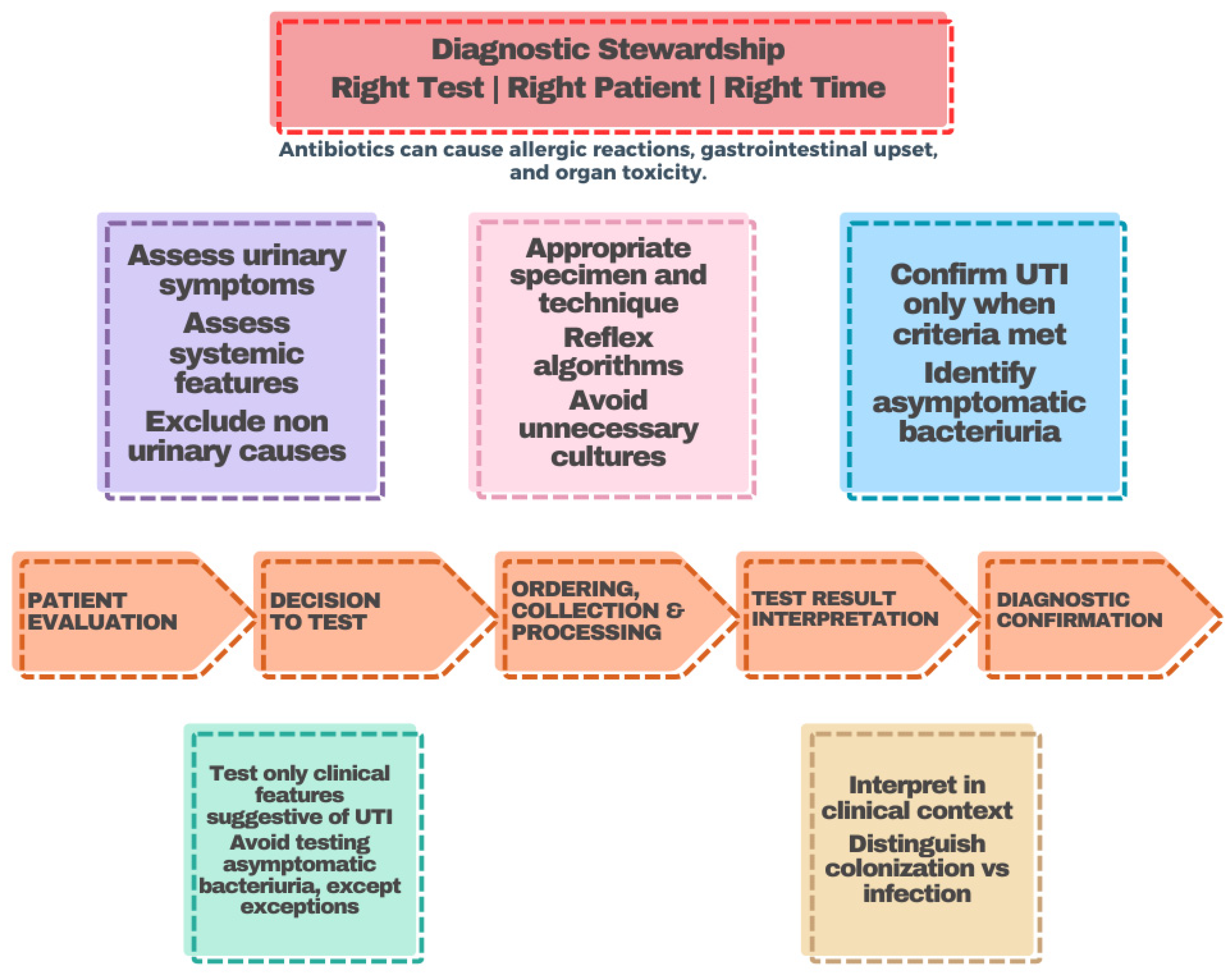
DS has emerged as a critical strategy to improve pre-prescribing decision-making. A summary of its key features is provided in Figure 1.
In 2022, a modified Delphi consensus was published in which one hundred and sixty-five questions were reviewed by an expert panel of 15 individuals, suggesting 18 overarching guidance statements to inform future practices [13]. The main principles outlined are as follows:
  • Ordering: Urine cultures should only be ordered when there is documented evidence of urinary symptoms. Strategies such as electronic alerts discouraging culture requests in asymptomatic patients, and cancellation of unnecessary repeat cultures, are recommended to reduce inappropriate testing.
  • Processing: Conditional reflex urine cultures, where cultures are only performed if urinalysis shows evidence of infection, are supported. The use of urinalysis parameters, particularly white blood cell count, as criteria for proceeding to culture is endorsed.
  • Reporting: Selective reporting of antimicrobial susceptibilities and use of “nudges” in laboratory reports are recommended to discourage treatment of asymptomatic bacteriuria and guide appropriate therapeutic decisions.
For urologists, who frequently manage patients with bacteriuria in native or reconstructed urinary systems, application of these principles to ensure appropriate interpretation of urine diagnostics is particularly important.

3.1. The Burden of Inappropriate Testing and the Rationale for Stewardship

Misinterpretation of nonspecific symptoms and overreliance on laboratory findings contribute substantially to unnecessary treatment (Table 1).
In one multisite analysis, more than one-third of hospitalised patients with ASB received unnecessary antibiotics [3]. Testing triggered by ambiguous findings such as confusion or abnormal urine odour fail to correlate reliably with true infection and frequently leads to overtreatment [4].
Pyuria remains a common trigger for urine culture ordering, but it lacks diagnostic specificity and commonly reflects colonisation, catheter irritation, or inflammation unrelated to infection [14]. These limitations are amplified by high baseline rates of bacteriuria in patients with reconstructed urinary tracts, long-term catheters, or life-long nephrostomies. Collectively, these challenges underscore the need for structured, evidence-driven diagnostic pathways.

3.2. Optimising Urine-Culture Ordering

Stewardship begins with appropriate test ordering. Consensus guidance emphasises restricting urine cultures to patients with localised urinary symptoms or systemic signs of infection suggestive of a urinary source [13]. Ordering cultures solely for nonspecific symptoms elevates culture volume without improving outcomes [15].
Several ordering-level DS interventions have demonstrated meaningful reductions in unnecessary urine testing. One effective strategy involves removing routine urine-culture checkboxes from admission and preoperative order sets, thereby reducing automatic or reflexive test ordering and prompts clinicians to reconsider the clinical indication. Many institutions additionally require clinicians to document specific urinary symptoms before a culture can be released by the laboratory, ensuring that testing is aligned with established diagnostic criteria rather than nonspecific findings such as confusion or malodorous urine.
Embedding clinical decision-support (CDS) alerts within the electronic health records further provides real-time guidance, reminding clinicians to correlate urinalysis abnormalities with symptoms and discouraging culture requests in the absence of appropriate clinical features.
In a large prospective pre–post study, a CDS-based diagnostic intervention reduced inappropriate urine culture orders from 41.6% to 36.4% (p < 0.001) and decreased unnecessary antibiotic use from 85.7% to 72.9%, representing a 55% reduction in overall antibiotic utilisation [16]. Together, these interventions help shift practice patterns toward more deliberate, symptom-driven testing and form the foundation of effective diagnostic stewardship programmes.

3.3. Refining Laboratory Processing Through Reflex Culture Algorithms

Pre-analytic and analytic laboratory processes play a critical role in determining the clinical value of urine culture testing. In a comprehensive systematic review, LaRocco et al. demonstrated that optimised pre-analytic practices, including appropriate specimen collection, handling, and processing, significantly reduce contamination rates and improve the diagnostic accuracy of urine cultures [17]. Building on these principles, reflex culture algorithms that initiate culture only after predefined urinalysis criteria are met, have consistently reduced low-value testing. Many institutions employ pyuria thresholds such as ≥10 white blood cells per high-power field, as supported by laboratory utilisation guidelines [18].
In a multicentre evaluation, Claeys et al. reported that implementation of reflex culture algorithms across three medical centres resulted in a 39.5% reduction in UTI days of therapy (95% CI 13.9–57.5%) alongside a system-wide decrease in urine culture volume [15]. These findings were further corroborated by a 2025 urinalysis-reflex-to-culture (UARC) implementation, in which Zimilover et al. observed a reduction in reflexed urine cultures from 74.3% to 24.7% and a corresponding decline in antibiotic utilisation associated with urine testing from 39.2% to 33.5% (p < 0.05) [19]. Collectively, these data underscore how laboratory-level stewardship interventions directly translate into meaningful reductions in unnecessary antibiotic exposure.

3.4. Selective Reporting to Influence Clinical Decision-Making

The manner in which laboratory results are communicated strongly influences prescribing behaviour. Thoughtful report design, often described as “nudging”, can discourage unnecessary antibiotic therapy. Interpretive comments that explicitly remind clinicians to correlate culture results with patient symptoms have been shown to reduce overtreatment [13].
Selective or cascade reporting of antimicrobial susceptibilities is another effective stewardship technique. In this model, laboratories report narrow-spectrum, guideline-recommended agents first and withhold broader-spectrum antibiotics unless necessary. Cascade reporting has been associated with increased use of preferred agents and reductions in unnecessary fluoroquinolone prescribing [20].
Rather than limiting clinician autonomy, this approach preserves access to broader-spectrum options while encouraging rational antibiotic selection.

3.5. Evidence Supporting Successful Diagnostic Stewardship Programmes

The evidence supporting successful DS programmes is robust and expanding across diverse healthcare settings. In a 151-bed urban safety-net hospital, implementation of urine culture restrictions for catheterised patients resulted in a 52% reduction in urine cultures per 1000 patient-days, alongside a decrease in catheter-associated culture rates from 27% to 12%, without an increase in missed infections [21].
Similarly, a large CDS-based pre–post intervention study demonstrated a statistically significant reduction in inappropriate urine culture ordering, from 41.6% to 36.4%, and a concomitant decline in unnecessary antibiotic use from 85.7% to 72.9%, corresponding to an overall 55% reduction in antibiotic utilisation [16].
Reflex-based urinalysis-to-culture (UARC) protocols have also shown meaningful impact, with one implementation reporting a reduction in reflexed urine cultures to 51.3% and an associated decrease in antibiotic prescribing linked to urine testing by approximately six percentage points [22].
In addition, nurse-driven diagnostic stewardship initiatives have consistently reduced both total and inappropriate urine culture orders without adversely affecting length of stay, readmission rates, or mortality [23].
Collectively, these findings demonstrate that structured DS interventions, particularly reflex testing algorithms and CDS-enabled ordering strategies, can substantially reduce unnecessary testing and antimicrobial exposure while maintaining patient safety, reinforcing their role as core components of effective diagnostic stewardship programmes.

3.6. Special Considerations

Certain patient populations warrant exceptions to standard DS criteria. Due to their unique clinical history, interpretation of urine analysis and the threshold for urine culture must be decided on an individual basis. Some of these are listed below:

3.6.1. Pregnant Women

Treatment of ASB during pregnancy has consistently been shown to reduce the risk of progression to pyelonephritis and lower the risk of adverse obstetric outcomes, including preterm delivery and low birth weight. As a result, routine screening and treatment of ASB in pregnant individuals remains a well-established and evidence-based exception to diagnostic stewardship restrictions [24].

3.6.2. Urological Procedures Involving Mucosal Disruption

In patients undergoing urological procedures associated with mucosal disruption, preoperative screening and targeted treatment of bacteriuria may reduce the risk of postoperative infectious complications. This approach is particularly relevant in procedures where bacteraemia or seeding of the urinary tract is more likely, such as transurethral interventions. Preoperative ASB screening prior to procedures such as transurethral resection of the prostate (TURP) or ureteroscopy has been associated with the prevention of 15–20% of postoperative infections, supporting the rationale for maintaining targeted diagnostic exceptions in this clinical context [25].

3.6.3. Recurrent UTIs

Urine cultures may be clinically warranted in this cohort even in the absence of pyuria. Factors such as prior antibiotic exposure, intermittent bacterial shedding, and altered host inflammatory responses can reduce the sensitivity of urinalysis in this population [26]. Importantly, in catheterised patients, who may present with ASB or negative cultures despite symptoms, antibiotic treatment is generally not warranted. The 2023 update by Patel et al. details preventions of catheter associated UTIs whereas Advani et al. has established through the analysis of over two hundred thousand urine samples that UARC should be avoided in catheterised individuals [27,28].

3.7. Future Directions

Future advances in diagnostic stewardship will increasingly rely on emerging technologies that improve diagnostic speed, accuracy, and specificity of UTI management. The Nature Reviews Urology analysis highlights the limitations of traditional diagnostic categories and calls for a shift toward biomarker-driven, host-response-based diagnostics [29].
Emerging advances in DS increasingly focus on host-response-based approaches rather than pathogen detection alone. Immune-profiling signatures, including urinary cytokines, chemokines, and markers of leukocyte activation, show promise in distinguishing true infection from asymptomatic colonisation and inflammatory states unrelated to infection. In parallel, rapid culture-independent diagnostic technologies, such as microfluidic platforms, nanopore sequencing, cartridge-based molecular panels, and automated susceptibility modules, are being developed to substantially shorten diagnostic turnaround times, in some cases to under one hour, thereby reducing reliance on empiric antibiotic therapy.
Machine-learning tools that integrate clinical symptoms, comorbid conditions, urinalysis parameters, and prior microbiologic data further offer potential for real-time decision support at the point of care. However, the clinical utility of these emerging diagnostics must be validated across diverse urologic populations, including postoperative patients, individuals with urinary reconstruction, chronically catheterised patients, and those in resource-limited settings. As these technologies evolve, adherence to diagnostic stewardship principles will remain essential to ensure that increased diagnostic precision translates into reduced overtreatment and improved patient outcomes.

4. Antimicrobial Stewardship

While diagnostic stewardship focuses on reducing unnecessary or inappropriate testing, antimicrobial stewardship (AMS) uses accurate diagnostic information to optimise antibiotic selection, dosing, and duration, minimising inappropriate use and resistance towards available antimicrobial agents. UTIs are commonly classified by anatomical site, complexity, and recurrence, yet individual clinical presentations often remain heterogeneous and ambiguous, complicating decision-making [30]. Consequently, inappropriate or excessive antibiotic use may occur, leading to adverse drug effects, disruption of normal microbiota, recurrence, development of antimicrobial resistance, compromised patient outcomes, and increased healthcare costs.
Implementation of AMS programmes have been shown to improve outcomes, emphasising the avoidance of unnecessary antibiotics, optimisation of treatment where indicated, while minimising toxicity and the emergence of resistant organisms [31].

4.1. Burden of Inappropriate Antibiotic Use

Multiple studies consistently highlight alarmingly high rates of inappropriate antibiotic use in the management of UTIs, reflecting substantial gaps in guideline-concordant practice and AMS (Table 2).
Murray et al. in his narrative analysis estimated that approximately 50–70% of outpatient antibiotic prescriptions for UTIs did not meet established clinical diagnostic criteria, with many patients receiving treatment despite the absence of urinary symptoms, a key contributor to overtreatment and the potential development of resistance [5]. Similarly, a retrospective multicentre outpatient review by Wattengel et al. reported that nearly 68% of UTI antibiotic prescriptions were inappropriate, primarily due to incorrect antibiotic selection and treatment duration [6].
Furthermore, national cohort data encompassing over 650,000 women with uncomplicated UTIs revealed frequent use of non-first-line fluoroquinolones, with more than 75% of courses exceeding recommended durations according to guidelines [7]. Given the variability in antibiotic prescribing practices, we have summarised the most commonly prescribed antibiotics in UTI management in Table 3 alongside evidence that supports their use. Among older women with recurrent UTIs, 41% of antibiotic courses were deemed unnecessary, often reflecting treatment of ASB without documented symptoms. Additional studies in asymptomatic populations identified widespread antibiotic use in patients with no indication for therapy, illustrating persistent overtreatment of asymptomatic bacteriuria or pyuria [8].
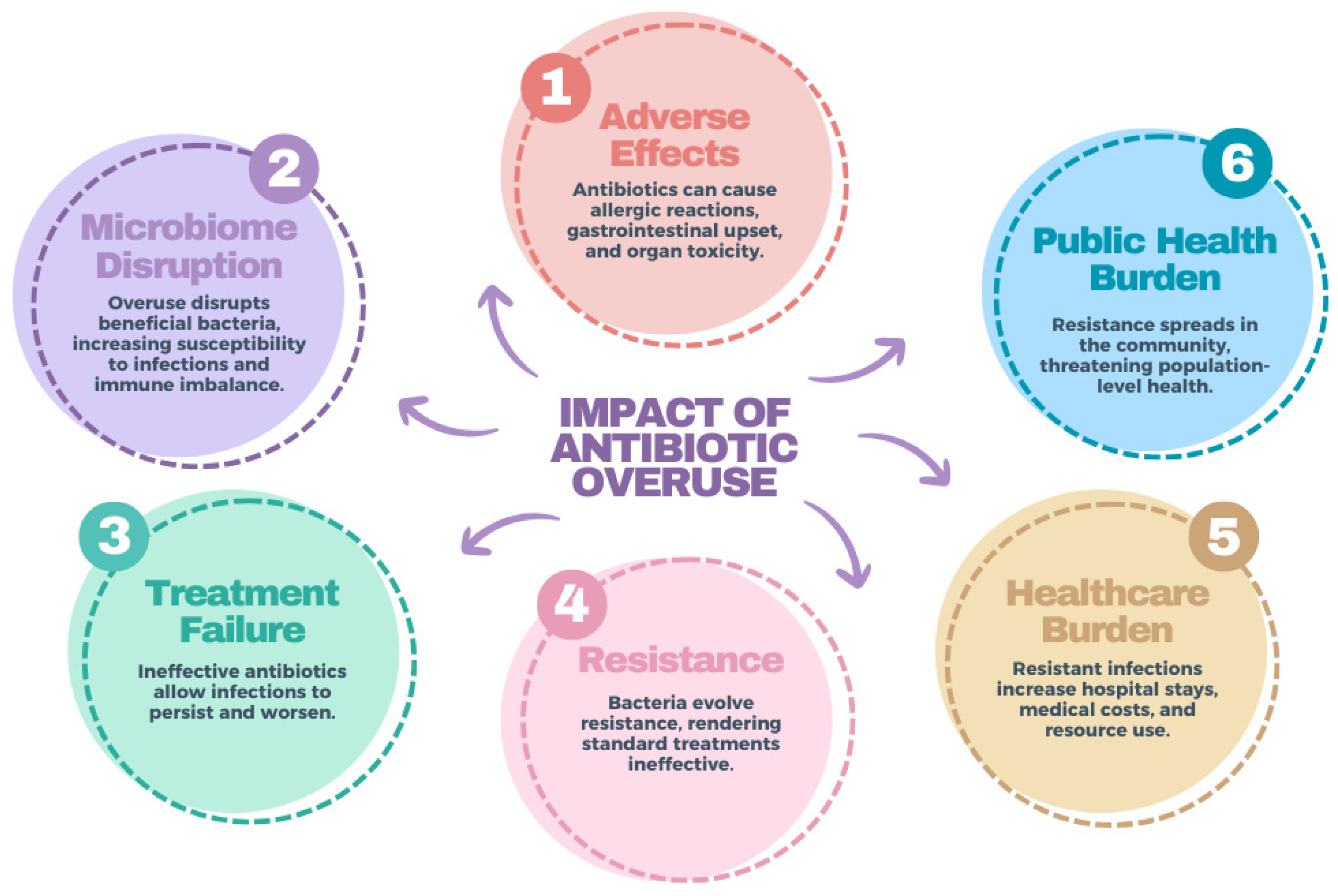
These prescribing practices carry significant clinical and public health consequences (Figure 2) and addressing this challenge necessitates multifaceted interventions; however establishing comprehensive AMS programmes can avert a bleak future with advanced AMR.

4.2. Core Stewardship Principles

In 2021, Geobel et al. introduced a framework of five Ds for appropriate outpatient implementation of AMS, namely right diagnosis, right drug, right dose, right duration, and de-escalation [32]. These D’s have provided a unified and reproducible framework allowing measurable improvements in antibiotic prescribing quality for UTIs. Multiple studies, across both inpatient and outpatient settings, consistently demonstrate that interventions targeting one or more of these domains lead to reductions in inappropriate antibiotic initiation, unnecessary broad-spectrum use, excessive dosing, and prolonged treatment durations. The next section will review available literature for each of these disciplines individually, and a summary of these can be seen in Table 4.

4.2.1. Making an Accurate Diagnosis

Making the right diagnosis is the first step in implementing AMS in the real world as diagnostic errors are a major driver of unnecessary antibiotic prescribing. Gilboa et al. reported the use of a clinical decision-support tool designed to distinguish true UTI from asymptomatic bacteriuria reduced unnecessary antibiotic use by approximately 33.6%, with inappropriate prescribing affecting 31% of patients prior to intervention [33]. Similarly, a quality-improvement initiative in a paediatric ED increased guideline-concordant urine collection from 54.7% to 96.2%, and following intervention, 100% of antibiotic prescriptions were in line with the guidance, directly linking improved diagnostic processes to enhanced AMS outcomes [34].
Stewardship Impact: Reducing inappropriate diagnoses prevents unnecessary antibiotic initiation. Strengthened DS is especially important given the evolving classification of UTIs, underscoring the need for clear, standardised diagnostic guidelines to minimise misdiagnosis.

4.2.2. Choosing an Appropriate Antimicrobial Agent

Correct use of antimicrobials is the steppingstone to ensure compliance with AMS principles. The INSPIRE (Intelligent Stewardship Prompts to Improve Real-time Empiric antibiotic selection) randomised clinical trial, reported a reduced empiric extended-spectrum antibiotic use by 17.4% in hospitalised UTI patients, while increasing standard-spectrum prescribing [35]. Additionally, Neumann et al. suggested that implementation of an evidence-based UTI order panel in outpatient settings significantly improved guideline-concordant antibiotic selection, while a study by Cai et al. demonstrated that a precision medicine-based approach, incorporating individualised clinical history, local resistance patterns, and risk stratification, can enhance stewardship outcomes without compromising clinical efficacy, thereby highlighting the value of both structured and individualised prescribing strategies in routine practice [36,39].
Stewardship Impact: Optimised drug choice reduces unnecessary broad-spectrum exposure, lowers selective pressure for resistance, and aligns prescribing with evidence-based recommendations.

4.2.3. Careful Dosing and Adequate Duration

Optimisation of dose and duration represents a measurable and clinically meaningful AMS outcome. The IDSA and the Society for Healthcare Epidemiology of America (SHEA) recommend integrating clinical decision support systems (CDSS) into stewardship programmes to prompt prescribers to reassess antibiotic therapy, including dose and duration, and to optimise therapy based on patient-specific factors and pharmacokinetic/pharmacodynamic principles. For example, electronic checklists and time-out audits have been shown to reduce unnecessary antibiotic exposure and improve compliance with recommended durations [37].
Stewardship Impact: Correct dosing minimises under or overtreatment and reduces adverse effects such as Clostridioides difficile infection. Shorter, evidence-based durations lower the risk of resistance as well as drug-related harm while maintaining clinical efficacy.

4.2.4. Timely De-Escalation

De-escalation based on microbiological data is an often underutilised stewardship strategy. In hospitalised UTI patients, Abuelshayeb et al. reported appropriate de-escalation in approximately 40.3% of cases, resulting in reduced avoidable broad-spectrum antibiotic use [38].
Stewardship Impact: De-escalation allows for decreased exposure to broad spectrum antibiotics thereby optimising antimicrobial exposure and preserving its effectiveness.

4.3. Sustainability of AMS

Sustaining AMS programmes over the long term remains a challenge. However, several measures can be implemented to ensure long-term results. These are discussed below.

4.3.1. Guideline Dissemination and Educational Initiatives

Percival et al. performed a controlled pre–post intervention study in an ED, where education on guideline-recommended UTI management, supplemented with local resistance data, was provided. He reported a remarkably increased guideline-concordant antibiotic prescribing from 44.8% to 83%. Additionally, nitrofurantoin uses for uncomplicated cystitis rose from 12% to 80%, while concordance between empiric therapy and pathogen susceptibility improved from 74% to 89%, without an increase in repeat ED visits [40].
Similarly, a prospective antimicrobial stewardship initiative in elderly medicine wards demonstrated a 3.61-fold increase in appropriate antibiotic prescribing following poster-based guideline dissemination, which further increased to a 5.05-fold improvement when combined with formal teaching sessions (p < 0.05), highlighting the additive benefit of multimodal education [41]. Systematic reviews of ambulatory UTI stewardship interventions support these findings, identifying clinician education paired with guideline dissemination and CDSS as key components associated with increased adherence to first-line agents and reduced inappropriate broad-spectrum antibiotic use, particularly fluoroquinolones [42].
These findings highlight the significance of targeted educational interventions in combination with guideline dissemination. By raising clinician awareness, providing clear treatment pathways, and integrating recommendations into workflows such as CDSS, these strategies enhance guideline adherence, especially when reinforced with local resistance data and complementary patient education and awareness.

4.3.2. Regular Audit and Feedback (A&F)

In a retrospective, pharmacist-led outpatient stewardship programme, 282 UTI prescriptions were audited and individualised written feedback was provided bi-weekly. Following implementation, guideline-concordant antibiotic selection increased from 20% at baseline to a median of 69.2%, and appropriate treatment duration improved from 55% to 70.4% [43]. Similarly, a quasi-experimental outpatient study evaluating pharmacist-led A&F reported nearly a twofold increase in overall appropriate antibiotic prescribing, from 27.5% to 50.5%. Improvements were observed in appropriate drug selection (53% → 70%), duration of therapy (57.5% → 83.5%), and appropriate indication (94% → 98%), without an increase in treatment failures or adverse events [44]. A recent narrative review of outpatient UTI stewardship interventions further supports these findings, identifying A&F as one of the most frequently used and consistently effective strategies for improving guideline-concordant antibiotic prescribing, especially when integrated with education and clinical decision support [45].
These findings highlight that systematically reviewing prescribers’ antibiotic use and providing clinicians with personalised performance data compared to benchmarks, guidelines, or peer performance may be able to prevent failure of AMS after the initial implementation phase.

4.3.3. Electronic Clinical Decision Support (e-CDS)

E-CDS encompasses real-time, automated AMS guidance integrated into EHR or computerised provider order entry (CPOE) systems, designed to support clinicians at the point of antibiotic prescribing. In the context of UTIs, e-CDS tools typically synthesise patient-specific information, such as prior microbiology results, recent antibiotic exposure, and comorbid conditions, to generate immediate recommendations that promote guideline-concordant, narrow-spectrum empiric therapy when the likelihood of multidrug-resistant organisms (MDROs) is low.
The most robust evidence derives from the INSPIRE cluster-randomised clinical trial [35], conducted across 59 U.S. community hospitals and including 127,403 adult inpatients with UTIs. In this study, CPOE-embedded stewardship prompts resulted in a 17.4% reduction in empiric extended-spectrum antibiotic days of therapy during the first three hospital days (rate ratio 0.83; 95% CI 0.77–0.89; p < 0.001), without an associated increase in intensive care unit transfer or hospital length of stay, thereby demonstrating both effectiveness and safety [35]. Consistent findings have been reported in earlier quasi-experimental and observational studies, where EHR-based alerts and antibiogram-linked prescribing prompts were associated with increased use of first-line agents and reduced prescribing of fluoroquinolones and other broad-spectrum antibiotics for UTIs [45].
Overall, the available literature suggests that e-CDS provides timely, point-of-care feedback therefore it stands as singular high-impact AMS intervention in UTI management.

4.3.4. A Non-Antibiotic Approach: Immunoprophylaxis for Recurrent UTI

Immunoprophylaxis represents an emerging non-antibiotic preventive strategy for recurrent urinary tract infections (rUTIs), aiming to enhance host immune responses against common uropathogens while reducing reliance on long-term antimicrobial prophylaxis. Sublingual bacterial vaccines composed of heat-inactivated whole bacteria, which includes strains of Escherichia coli, Klebsiella pneumoniae, Proteus vulgaris, and Enterococcus faecalis, have demonstrated clinically meaningful reductions in UTI recurrence [12]. A recent systematic review evaluating sublingual immunoprophylaxis reported decreases in annual UTI incidence from 3.2 to 6.8 to 0–1.5 episodes per year at 12 months, with a favourable safety profile and predominantly mild adverse events [9]. In a prospective real-world cohort of 125 patients, MV140 reduced the mean number of UTIs by 3.2 episodes per year, with 38% of patients remaining infection-free at 12 months [10]. Long-term multicentre data from a cohort of 1003 patients further demonstrated sustained reductions in recurrence rates over 12 months, with adverse events reported in only 1.49% of cases [11]. Similarly, a large prospective study of 1104 women treated with sublingual vaccines reported overall efficacy rates of 91.7%, 82.3%, and 57.6% at 3, 6, and 12 months, respectively [12].
Collectively, these findings suggest that sublingual immunoprophylaxis may represent an effective and well-tolerated preventive strategy for rUTIs, offering a non-antibiotic alternative capable of reducing recurrence frequency and potentially limiting the need for long-term antimicrobial prophylaxis.

4.4. Future Directions

Future research should prioritise the expansion and standardisation of electronic stewardship interventions, particularly electronic medical record (EMR) and embedded clinical decision support (CDS) systems integrated with local antibiogram data, to improve scalability, consistency, and long-term sustainability.
Harmonisation of UTI definitions, especially for complicated infections is essential to enhance diagnostic accuracy and facilitate comparability across studies. Additional investigations are warranted to assess the long-term durability of stewardship-related improvements, particularly in high-volume outpatient and primary care settings where inappropriate prescribing remains most prevalent.
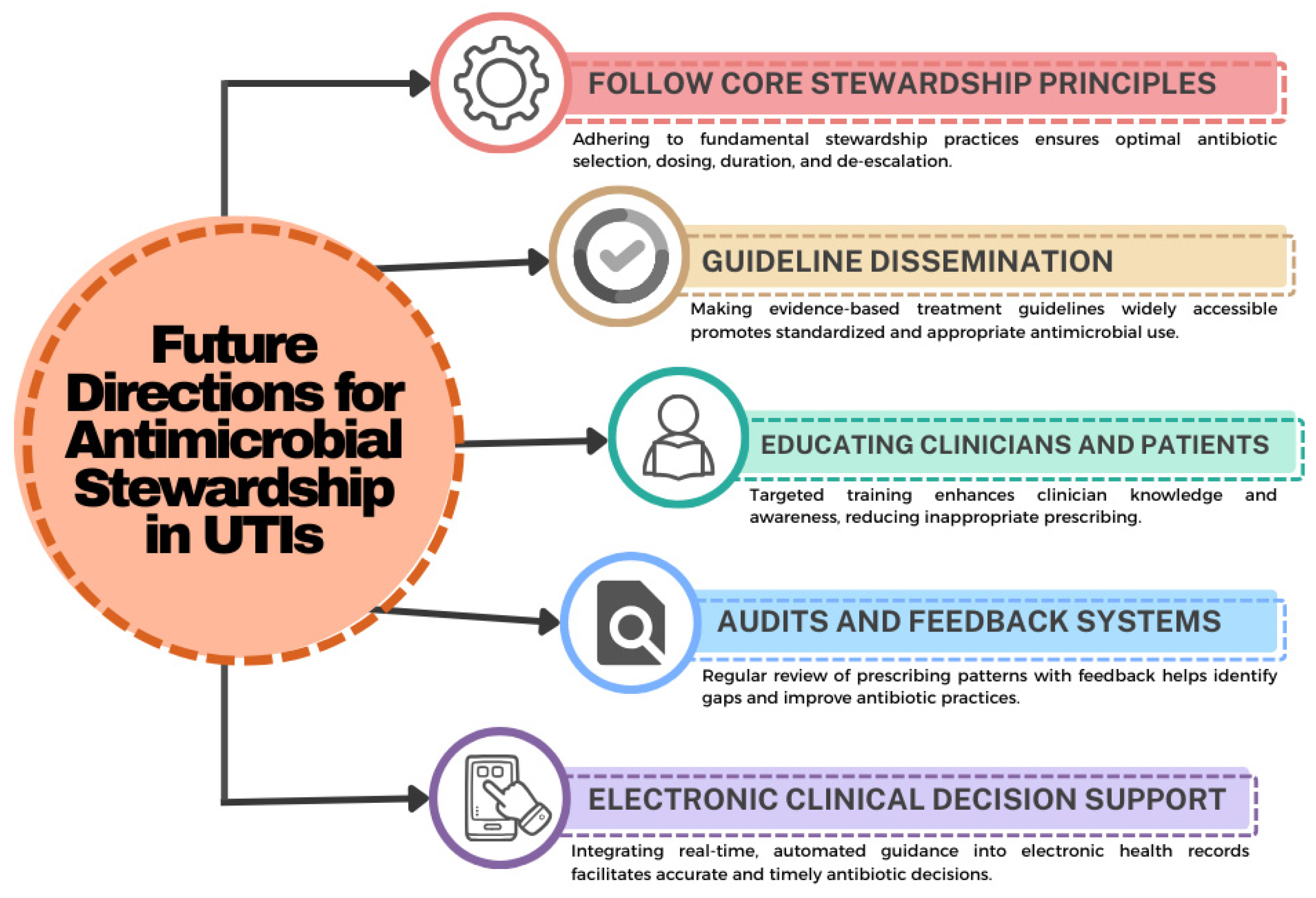
Furthermore, research grounded in behavioural and implementation science may help optimise clinician engagement, promote sustained adherence to stewardship principles, and thereby strengthen the overall impact of antimicrobial stewardship initiatives on UTI management and resistance mitigation (Figure 3).
Finally, the integration of effective non-antibiotic preventive strategies, including immunoprophylaxis, into comprehensive UTI care pathways may further support efforts to reduce antimicrobial overuse and limit the progression of resistance.

5. Conclusions

Diagnostic stewardship and antimicrobial stewardship are complementary strategies that merge to optimise urine culture practices and the management of UTIs. Reflex urine culture algorithms alongside cascading reports can limit antibiotic usage; however, amalgamating newer techniques such as urinary biomarkers and integrating machine learning can further strengthen DS protocols. Once a decision to treat has been made, AMS principles must be borne in mind. Incorporating electronic decision aid tools into routine practice can prevent errors in prescribing and ensure adherence to guidelines, but to sustain these affects regular audits and feedback to the prescribers must be provided. Collectively, DS and AMS protocols, if appropriately applied can curb AMR and allow for improved management strategies in the future.

Author Contributions

Conceptualisation: M.N.; Methodology: K.R.C.T. and S.V.I.; Investigation: K.R.C.T. and S.V.I.; Writing—original draft preparation: K.R.C.T. and S.V.I.; Writing—review and editing: H.B.K. and M.N.; Visualisation: H.B.K. and M.N.; Supervision: M.N.; Project administration: H.B.K. All authors have read and agreed to the published version of the manuscript.

Funding

This research received no external funding.

Institutional Review Board Statement

Not applicable.

Informed Consent Statement

Not applicable.

Data Availability Statement

The data presented in this study are available in publicly accessible repositories and databases. No new datasets were generated for this review. These data were derived from the following resources available in the public domain: Pubmed—https://pubmed.ncbi.nlm.nih.gov.

Acknowledgments

The paper had been Co-authored by Kavin Raj and Shwetambari V. Ingawale. A generative AI assistant (ChatGPT, OpenAI’s GPT-5.5 model) was used to support language editing and to suggest alternative phrasings. No AI-generated text, data, or references were included without independent verification by the authors.

Conflicts of Interest

The funders had no role in the design of the study; in the collection, analysis, or interpretation of data; in the writing of the manuscript; or in the decision to publish the results.

Abbreviations

AMR—Antimicrobial Resistance; AMS—Antimicrobial Stewardship; ASB—Asymptomatic Bacteriuria; CDS—Clinical Decision Support; DS—Diagnostic Stewardship; EHR—Electronic Health Record; MDRO—Multidrug-Resistant Organism; UARC—Urinalysis Reflex to Culture; UTI—Urinary Tract Infection.

References

  1. Kurotschka, P.K.; Gágyor, I.; Ebell, M.H. Acute Uncomplicated UTIs in Adults: Rapid Evidence Review. Am. Fam. Physician 2024, 109, 167–174. [Google Scholar]
  2. Bavanandan, S.; Keita, N. Urinary Tract Infection Prevention and Treatment. Semin. Nephrol. 2023, 43, 151468. [Google Scholar] [CrossRef]
  3. Flokas, M.E.; Andreatos, N.; Alevizakos, M.; Kalbasi, A.; Onur, P.; Mylonakis, E. Inappropriate Management of Asymptomatic Patients with Positive Urine Cultures: A Systematic Review and Meta-analysis. Open Forum Infect. Dis. 2017, 4, ofx207. [Google Scholar] [CrossRef] [PubMed]
  4. Rowe, T.A.; Juthani-Mehta, M. Urinary Tract Infection in Older Adults. Aging Health 2013, 9, 519–528. [Google Scholar] [CrossRef] [PubMed]
  5. Murray, K.; Shimabukuro, J.; Khalfay, N.; Chiang, J.N.; Lenore Ackerman, A. Antibiotic Overprescription for “Urinary Tract Infections” Is Associated with Poor Diagnostic Stewardship and Low Adherence to Guidelines. Neurourol. Urodyn. 2025, 44, 382–389. [Google Scholar] [CrossRef]
  6. Wattengel, B.A.; DiTursi, S.; Schroeck, J.L.; Sellick, J.A.; Mergenhagen, K.A. Outpatient antimicrobial stewardship: Targets for urinary tract infections. Am. J. Infect. Control 2020, 48, 1009–1012. [Google Scholar] [CrossRef] [PubMed]
  7. Durkin, M.J.; Keller, M.; Butler, A.M.; Kwon, J.H.; Dubberke, E.R.; Miller, A.C.; Polgreen, P.M.; Olsen, M.A. An Assessment of Inappropriate Antibiotic Use and Guideline Adherence for Uncomplicated Urinary Tract Infections. Open Forum Infect. Dis. 2018, 5, ofy198. [Google Scholar] [CrossRef]
  8. Critchlow, E.; Kuzma, A.; Koelper, N.; Agrawal, S.; Dutcher, L.; Arya, L. Unnecessary Antibiotics in Older Female Patients with Recurrent Urinary Tract Infections. Int. Urogynecol. J. 2025, 36, 1319–1326. [Google Scholar] [CrossRef]
  9. Medina-Polo, J.; Arrébola-Pajares, A.; Falkensammer, E.; Tandogdu, Z. A systematic review of the current evidence of the effectiveness and safety of immunoprophylaxis using sublingual dead whole bacteria to prevent recurrent urinary tract infections (rUTIs). Antibiotics 2025, 15, 6. [Google Scholar] [CrossRef]
  10. Lopes, F.A.; Miranda, M.; Ye, A.; Rodrigues, J.; Pé-Leve, P.; Reis, J.P.; Pereira e Silva, R. Immunoprophylaxis with MV140 is effective in the reduction of urinary tract infections—A prospective real-life study. Vaccines 2024, 12, 1426. [Google Scholar] [CrossRef]
  11. Ramírez Sevilla, C.; Gómez Lanza, E.; Llopis Manzanera, J.; Cetina Herrando, A.; Puyol Pallàs, J.M. A focus on long-term follow-up of immunoprophylaxis to recurrent urinary tract infections: 10 years of experience with MV140 vaccine in a cohort of 1003 patients support high efficacy and safety. Arch. Esp. Urol. 2022, 75, 753–757. [Google Scholar] [CrossRef]
  12. Ramírez Sevilla, C.; Gómez Lanza, E.; Puyol Pallàs, M. Immunoactive prophylaxis protocol of uncomplicated recurrent urinary tract infections in a cohort of 1104 women treated with Uromune® vaccine. Life 2024, 14, 464. [Google Scholar] [CrossRef] [PubMed]
  13. Claeys, K.C.; Trautner, B.W.; Leekha, S.; Coffey, K.C.; Crnich, C.J.; Diekema, D.J.; Fakih, M.G.; Goetz, M.B.; Gupta, K.; Jones, M.M.; et al. Optimal Urine Culture Diagnostic Stewardship Practice—Results from an Expert Modified-Delphi Procedure. Clin. Infect. Dis. 2022, 75, 382–389. [Google Scholar] [CrossRef] [PubMed]
  14. Wilson, M.L.; Gaido, L. Laboratory Diagnosis of Urinary Tract Infections in Adult Patients. Clin. Infect. Dis. 2004, 38, 1150–1158. [Google Scholar] [CrossRef]
  15. Claeys, K.C.; Brown, C.H.; Pineles, L.; Evans, C.T.; Cao, L.; Trautner, B.W.; Crnich, C.J.; Balasubramanian, P.; Ewers, T.; Gupta, K.; et al. Implementation of Diagnostic Stewardship to Improve Urinary Tract Infection Antibiotic Use Across Three Medical Centers. Clin. Infect. Dis. 2025, 82, 494–500. [Google Scholar] [CrossRef]
  16. Alghamdi, A.; Alkazemi, A.; Ibrahim, A.; Alraey, M.; Alaboud, M.; Farooqi, I.; Khan, M.A.; Allam, A.; Alwadai, M.; Alyahya, R.; et al. Impact of Diagnostic Stewardship on Urine Culture Ordering in Saudi Arabia: Prospective Pre- and Postintervention Study. JMIR Med. Inform. 2025, 13, e68044. [Google Scholar] [CrossRef] [PubMed]
  17. LaRocco, M.T.; Franek, J.; Leibach, E.K.; Weissfeld, A.S.; Kraft, C.S.; Sautter, R.L.; Baselski, V.; Rodahl, D.; Peterson, E.J.; Cornish, N.E. Effectiveness of Preanalytic Practices on Contamination and Diagnostic Accuracy of Urine Cultures: A Laboratory Medicine Best Practices Systematic Review and Meta-analysis. Clin. Microbiol. Rev. 2016, 29, 105–147. [Google Scholar] [CrossRef]
  18. Miller, J.M.; Binnicker, M.J.; Campbell, S.; Carroll, K.C.; Chapin, K.C.; Gilligan, P.H.; Gonzalez, M.D.; Jerris, R.C.; Kehl, S.C.; Patel, R.; et al. A Guide to Utilization of the Microbiology Laboratory for Diagnosis of Infectious Diseases: 2018 Update by the Infectious Diseases Society of America and the American Society for Microbiology. Clin. Infect. Dis. 2018, 67, e1–e94. [Google Scholar] [CrossRef]
  19. Orner, E.; Zimilover, A.; Cheng, S.; Cowman, K.; Thwe, P.; Szymczak, W.; Gendlina, I. P-1586. Urine Culture Reflex Implemented to Reduce Inappropriate Testing. Open Forum Infect. Dis. 2025, 12, ofae631.1753. [Google Scholar] [CrossRef]
  20. Wu, H.; Lutgring, J.D.; McDonald, L.C.; Webb, A.; Fields, V.; Blum, L.; Mojica, M.; Edwards, J.; Soe, M.M.; Pollock, D.A. Selective and Cascade Reporting of Antimicrobial Susceptibility Testing Results and Its Impact on Antimicrobial Resistance Surveillance-National Healthcare Safety Network, April 2020 to March 2021. Microbiol. Spectr. 2023, 11, e0164622. [Google Scholar] [CrossRef]
  21. Mena Lora, A.J.; Hua, J.; Ali, M.; Krill, C.; Takhsh, E.; Bleasdale, S.C. Changing the culture: Impact of a diagnostic stewardship intervention for urine culture testing and CAUTI prevention in an urban safety-net community hospital. Antimicrob. Steward. Healthc. Epidemiol. ASHE 2024, 4, e14. [Google Scholar] [CrossRef]
  22. Zimilover, A.; Cheng, S.; Orner, E.; Cowman, K.; Thwe, P.; Szymczak, W.; Gendlina, I. Impact of Urinalysis Reflex to Urine Culture Program on Antibiotic Use. Antimicrob. Steward. Healthc. Epidemiol. 2025, 5, s92. [Google Scholar] [CrossRef]
  23. Fabre, V.; Pleiss, A.; Klein, E.; Demko, Z.; Salinas, A.; Jones, G.; Gadala, A.; Hicks, L.A.; Neuhauser, M.M.; Srinivasan, A.; et al. A Pilot Study to Evaluate the Impact of a Nurse-Driven Urine Culture Diagnostic Stewardship Intervention on Urine Cultures in the Acute Care Setting. Jt. Comm. J. Qual. Patient Saf. 2020, 46, 650–655. [Google Scholar] [CrossRef]
  24. Smaill, F.M.; Vazquez, J.C. Antibiotics for asymptomatic bacteriuria in pregnancy. Cochrane Database Syst. Rev. 2019, 2019, CD000490. [Google Scholar] [CrossRef]
  25. Wagenlehner, F.M.E.; Naber, K.G. Editorial Commentary: Asymptomatic Bacteriuria--Shift of Paradigm. Clin. Infect. Dis. 2012, 55, 778–780. [Google Scholar] [CrossRef]
  26. Kellner, J.D. Who Benefits, and How Much? Indirect Effects of Childhood Pneumococcal Vaccination in Adults at Increased Risk of Pneumococcal Disease. Clin. Infect. Dis. 2019, 68, 1374–1375. [Google Scholar] [CrossRef] [PubMed]
  27. Patel, P.K.; Advani, S.D.; Kofman, A.D.; Lo, E.; Maragakis, L.L.; Pegues, D.A.; Pettis, A.M.; Saint, S.; Trautner, B.; Yokoe, D.S.; et al. Strategies to prevent catheter-associated urinary tract infections in acute-care hospitals: 2022 Update. Infect. Control Hosp. Epidemiol. 2023, 44, 1209–1231. [Google Scholar] [CrossRef] [PubMed]
  28. Advani, S.D.; Turner, N.A.; Schmader, K.E.; Wrenn, R.H.; Moehring, R.W.; Polage, C.R.; Vaughn, V.M.; Anderson, D.J. Optimizing reflex urine cultures: Using a population-specific approach to diagnostic stewardship. Infect. Control Hosp. Epidemiol. 2023, 44, 206–209. [Google Scholar] [CrossRef] [PubMed]
  29. Simoni, A.; Schwartz, L.; Junquera, G.Y.; Ching, C.B.; Spencer, J.D. Current and emerging strategies to curb antibiotic-resistant urinary tract infections. Nat. Rev. Urol. 2024, 21, 707–722. [Google Scholar] [CrossRef]
  30. Wagenlehner, F.M.E.; Bjerklund Johansen, T.E.; Cai, T.; Koves, B.; Kranz, J.; Pilatz, A.; Tandogdu, Z. Epidemiology, definition and treatment of complicated urinary tract infections. Nat. Rev. Urol. 2020, 17, 586–600. [Google Scholar] [CrossRef]
  31. Abbo, L.; Hooton, T. Antimicrobial Stewardship and Urinary Tract Infections. Antibiotics 2014, 3, 174–192. [Google Scholar] [CrossRef]
  32. Goebel, M.C.; Trautner, B.W.; Grigoryan, L. The Five Ds of Outpatient Antibiotic Stewardship for Urinary Tract Infections. Clin. Microbiol. Rev. 2021, 34, 4. [Google Scholar] [CrossRef]
  33. Gilboa, M.; Boatwright, R.; Salazar, V.; Simon, J.C.; North, B.; Vu, C.; Vega, A.; Deronde, K.J.; Rosa, R.; Abbo, L.M. Development and validation of an antimicrobial stewardship clinical decision-support tool to improve the management of urinary tract infections versus asymptomatic bacteriuria in hospitalized patients. Antimicrob. Steward. Healthc. Epidemiol. 2024, 4, e210. [Google Scholar] [CrossRef]
  34. Walters, E.M.; D’Auria, J.; Jackson, C.; Walsh-Kelly, C.; Park, D.; Willis, Z.I. An Ambulatory Antimicrobial Stewardship Initiative to Improve Diagnosis and Treatment of Urinary Tract Infections in Children. Jt. Comm. J. Qual. Patient Saf. 2019, 45, 829–837. [Google Scholar] [CrossRef]
  35. Gohil, S.K.; Septimus, E.; Kleinman, K.; Varma, N.; Avery, T.R.; Heim, L.; Rahm, R.; Cooper, W.S.; Cooper, M.; McLean, L.E.; et al. Stewardship Prompts to Improve Antibiotic Selection for Urinary Tract Infection. JAMA 2024, 331, 2018–2028. [Google Scholar] [CrossRef] [PubMed]
  36. Neumann, M.; Stevens, R.W.; Cole, K.; Vergidis, P.; Virk, A.; Ilges, D.; Jensen, K.L. Impact of an evidence-based order panel on antibiotic prescribing in ambulatory patients with cystitis. Antimicrob. Steward. Healthc. Epidemiol. 2025, 5, e96. [Google Scholar] [CrossRef] [PubMed]
  37. Watson, K.J.; Trautner, B.; Russo, H.; Phe, K.; Lasco, T.; Pipkins, T.; Lembcke, B.; Al Mohajer, M. Using clinical decision support to improve urine culture diagnostic stewardship, antimicrobial stewardship, and financial cost: A multicenter experience. Infect. Control Hosp. Epidemiol. 2020, 41, 564–570. [Google Scholar] [CrossRef]
  38. Abuelshayeb, L.; Abu-Farha, R.; Hammour, K.A.; Zawiah, M. Carbapenem De-escalation in urinary tract infections: Prevalence and outcomes among hospitalized patients. BMC Infect. Dis. 2025, 25, 562. [Google Scholar] [CrossRef]
  39. Cai, T.; Brugnolli, A.; Lanzafame, M.; Dellai, F.; Tascini, C.; Scarparo, C.; Racanelli, V.; Massidda, O.; Bonkat, G.; Gallelli, L.; et al. A Precision Medicine Model for Targeted Antibiotic Therapy in Urinary Tract Infections: A Valuable Tool to Reduce Hospitalization Stay and the Time to Switch to Oral Treatment. Antibiotics 2025, 14, 211. [Google Scholar] [CrossRef]
  40. Percival, K.M.; Valenti, K.M.; Schmittling, S.E.; Strader, B.D.; Lopez, R.R.; Bergman, S.J. Impact of an antimicrobial stewardship intervention on urinary tract infection treatment in the ED. Am. J. Emerg. Med. 2015, 33, 1129–1133. [Google Scholar] [CrossRef] [PubMed]
  41. Mithrakumar, P.; Barua, M. Antibiotic Stewardship in Lower Urinary Tract Infections Among the Elderly at a District General Hospital. Cureus 2025, 17, e95002. [Google Scholar] [CrossRef] [PubMed]
  42. Munsiff, S.; Sakai, A.; Dumyati, G. Systematic review of antibiotic stewardship interventions for urinary tract infection management in the ambulatory setting. Antimicrob. Steward. Healthc. Epidemiol. 2022, 2, s26. [Google Scholar] [CrossRef]
  43. Burns, K.W.; Johnson, K.M.; Pham, S.N.; Egwuatu, N.E.; Dumkow, L.E. Implementing outpatient antimicrobial stewardship in a primary care office through ambulatory care pharmacist-led audit and feedback. J. Am. Pharm. Assoc. 2020, 60, e246–e251. [Google Scholar] [CrossRef] [PubMed]
  44. Choi, P.W.; Benzer, J.A.; Coon, J.; Egwuatu, N.E.; Dumkow, L.E. Impact of pharmacist-led selective audit and feedback on outpatient antibiotic prescribing for UTIs and SSTIs. Am. J. Health-Syst. Pharm. 2021, 78, S62–S69. [Google Scholar] [CrossRef]
  45. Grigoryan, L.; Trautner, B.W. Antibiotic Stewardship Interventions for Urinary Tract Infections in Outpatient Settings. Infect. Dis. Clin. N. Am. 2024, 38, 277–294. [Google Scholar] [CrossRef] [PubMed]
Figure 1. Overview of diagnostic stewardship.
Uro 06 00012 g001
Figure 2. Consequences on antibiotic overuse.
Uro 06 00012 g002
Figure 3. Key points which define the future of antimicrobial stewardship.
Uro 06 00012 g003
Table 1. Summary of inappropriate urine testing practices and associated consequences.
Inappropriate Test UsePotential Consequences
Routine urine cultures ordered in asymptomatic patients [3]Overdiagnosis. Treatment of colonising organisms or asymptomatic bacteriuria. Unnecessary antibiotic prescribing. Increased cost and length of stay.
Urine cultures obtained for nonspecific symptoms (e.g., confusion, malodorous urine, falls) [4]Overdiagnosis. Inappropriate antibiotic use. Missed diagnosis of the true underlying cause of symptoms.
Urine cultures ordered solely for pyuria or positive dipstick without symptoms [14]Overdiagnosis. Treatment of colonisation or inflammation unrelated to infection. Increased antimicrobial exposure.
Routine pre-operative urine cultures for low-risk urologic procedures [15]Overdiagnosis. Unnecessary antibiotic prescribing without proven benefit.
Urine cultures in catheterised patients without systemic or localising symptoms [16]Overdiagnosis. Increased risk of inappropriate antibiotics and catheter-associated complications.
Repeat urine cultures to document “clearance” in improving or asymptomatic patients [3]Over-testing. Unnecessary laboratory utilisation and antibiotic prolongation.
Screening for asymptomatic bacteriuria outside established indications (non-pregnant, non-procedural) [3]Overdiagnosis. No clinical benefit and increased antimicrobial resistance risk.
Reflex antibiotic treatment of positive urine cultures without clinical correlation [14]Overdiagnosis. Treatment of contaminants or colonisers. Increased adverse drug events.
Broad susceptibility reporting without stewardship guidance [15]Overtreatment. Selection of unnecessarily broad-spectrum antibiotics.
Table 2. Key papers highlighting the burden of inappropriate antibiotic use.
Setting/PopulationMeasure of Inappropriate UseKey FindingsStudy (Citation)
OutpatientPrescriptions not meeting diagnostic criteria.~50–70% prescriptions were administered without meeting clinical diagnostic criteria.Murray et al. (2025) [5]
OutpatientAntibiotic choice and treatment duration.68% of regimens were inappropriate, mainly due to incorrect selection and treatment duration.Wattengel et al. (2020) [6]
National cohort of >650,000 womenGuideline adherence (antibiotic choice & duration).Frequent prescription of non-first-line fluoroquinolones; >75% of courses exceeded recommended guideline durations.Durkin et al. (2018) [7]
Older women with rUTIs/ASBUnnecessary antibiotic courses.41% of women with rUTIs received unnecessary antibiotics; many asymptomatic patients received antibiotics without indication.Critchlow et al. (2025) [8]
Table 3. Summary of most commonly prescribed antibiotics in UTI management.
AntibioticsClassPrimary IndicationReported DataStudy (Citation)
Amoxicillin–Clavulanate (Co-amoxiclav)β-lactam/β-lactamase inhibitorSecond-line lower UTI; complicated UTI.Reported as the most prescribed antibiotic in some European primary care settings (up to 47.2%).[6]
Fluoroquinolones (Ciprofloxacin, Levofloxacin)FluoroquinoloneComplicated UTI; pyelonephritis; historically used for uncomplicated UTI.Frequently recommended historically; major target of stewardship reduction efforts.[32]
Third-generation Cephalosporins (Ceftriaxone, Cefixime)Third-generation CephalosporinComplicated UTI; pyelonephritis (IV/IM therapy).Used in 50.6% of cystitis-related admissions and 55.6% of pyelonephritis admissions in U.S. hospital data.[30]
Trimethoprim–Sulfamethoxazole (TMP–SMX)Sulfonamide combinationFirst-line uncomplicated UTI (in regions with low resistance rates).Commonly recommended internationally; frequently first line in non-UK settings.[1]
CephalexinFirst-generation CephalosporinAlternative agent for lower UTI when first-line therapy unsuitable.Commonly prescribed in U.S. primary care; ~13% of pre-UTI prescriptions in cohort analyses.[6]
Piperacillin–TazobactamExtended-spectrum Penicillin/β-lactamase inhibitorSevere complicated UTI; healthcare associated infections.Widely used in hospitalised patients with complicated UTI; stewardship focuses due to ESBL selection pressure.Multiple hospital-based cohort studies.
Carbapenems (e.g., Meropenem)Carbapenem (β-lactam)ESBL-producing or multidrug-resistant complicated UTI.Increasing use in resistant Enterobacterales infections; considered last-line therapy.Global AMR surveillance reports.
Table 4. Core principles of antimicrobial stewardship and their impact.
Core Stewardship PrinciplesKey Impact on AMSSupporting Evidence
Accurate DiagnosisReduces unnecessary antibiotic initiation by distinguishing true UTI from ASBDiagnostic CDS reduced unnecessary antibiotic use by ~33.6%; improved urine collection increased guideline-concordant prescribing to 100% [33,34]
Appropriate Drug SelectionMinimises broad-spectrum overuse and resistance selectionINSPIRE trial reduced extended spectrum use by 17.4%; outpatient order panels improved guideline adherence [35,36]
Correct DosagePrevents under- and overdosing, reducing toxicity and treatment failureEMR-based CDSS improved appropriately from 79.3% to 92.7% [37]
Adequate DurationReduces total antibiotic exposure and resistance pressureCorrect duration increased from 38.5% to 71.1% with CDSS intervention [37]
Timely De-escalationOptimises therapy based on culture results and limits unnecessary broad-spectrum useDe-escalation is feasible in ~40.3% of hospitalised UTI cases [38]
Disclaimer/Publisher’s Note: The statements, opinions and data contained in all publications are solely those of the individual author(s) and contributor(s) and not of MDPI and/or the editor(s). MDPI and/or the editor(s) disclaim responsibility for any injury to people or property resulting from any ideas, methods, instructions or products referred to in the content.