Article

Novel Dual-Action Pump Shows Promise to Reduce Intra-Renal Pressure and Improve Irrigant Flow in Flexible Ureteroscopy


1
Division of Urology, Groote Schuur Hospital, University of Cape Town, Cape Town 7700, South Africa
2
Division of Urology, Department of Surgery, Frere Hospital and Faculty of Medicine and Health Sciences, Walter Sisulu University, East London 5200, South Africa
*
Author to whom correspondence should be addressed.
Submission received: 25 January 2026 / Revised: 3 March 2026 / Accepted: 10 April 2026 / Published: 16 April 2026

Abstract

Background/Objective: To describe a novel dual-action pump (DAP) which is hypothesised to reduce mean intrarenal pressure (IRP) and increase irrigation flow during flexible ureterorenoscopy (fURS). The DAP incorporates a low-volume, user-controlled pumping/suctioning unit, to precisely control fluid boluses into the upper urinary tract via a ureterorenoscope and simultaneously draws out an identical volume of the delivered irrigant via a syphoning UAS. This human cadaveric study aims to assess the DAP’s impact on IRP and the irrigant flow rate compared to a traditional UAS. Methods: Twelve fresh frozen human cadaver renal units were studied in situ. An 11/13 UAS was placed under fluoroscopic guidance and a fURS was introduced. Continuous pressure was monitored. The DAP and syphoning UAS were compared to a conventional irrigation system in terms of IRP and irrigant flow at variable irrigant fluid heights and during fluid bolus administration. Results: The mean IRP was reduced by 79–141%. Maximum IRP was reduced by up to 180%. The mean irrigation flow rate was improved by 44–86%. The small sample size of 12 limits the results obtained. Conclusions: The novel DAP system shows promise in reducing intra-renal pressure and improving irrigant flow in flexible ureteroscopy.

1. Introduction

Fluid irrigation during retrograde intrarenal surgery (RIRS) is necessary to improve visibility and distention of the upper urinary tract for stone manipulation and clearance. However, to maintain a safe IRP during the procedure, the surgeon must maintain the outflow as close as possible to the inflow, as discrepancies frequently lead to surpassing the safe threshold pressures during RIRS. This may lead to pyelorenal backflow and forniceal rupture, potentially leading to haemorrhage, urosepsis, post-operative pain and acute kidney injury [1,2,3,4,5,6,7]. Several on-demand flushing devices using a manual hand-held or foot-controlled pump that delivers a bolus of irrigant via the ureteroscope have been described. However, delivering these boluses may elevate the IRP, with authors reporting IRP measurements exceeding 400 mmHg documented during RIRS [3,8,9].
Ureteral access sheaths (UASs) are often used in RIRS and can be helpful to lower IRP, improve drainage and thereby visualisation during treatment and facilitate multiple re-entries for the removal of stone fragments and tumour biopsies. However, their use is associated with ureteric trauma, and increased surgical cost [5,10,11,12].
The objective of this paper is to describe the design and safety of a novel manually operated dual-action pump (DAP) that enables the urologist to deliver fluid boluses of no more than 2 mL into the upper urinary tract as the unit is compressed and simultaneously drawing out the same volume of fluid from the kidney, theoretically maintaining IRP within acceptable parameters, and improving irrigation flow, which would improve visibility during RIRS. The DAP relies on the recently described syphoning ureteric access sheath (SUAS) for active aspiration functionality, allowing fluid, blood, debris and small fragments to be aspirated alongside each other [8,12]. We further report the results of a pre-clinical trial assessing the impact of the DAP on IRP and irrigant flow rate when compared to the traditional UAS.

2. Materials and Methods

2.1. Design of the Dual-Action Pump (DAP)

The DAP comprises a low-volume, manual, foot-controlled pumping unit that is incorporated into a commercially available foot-operated irrigation system for RIRS.
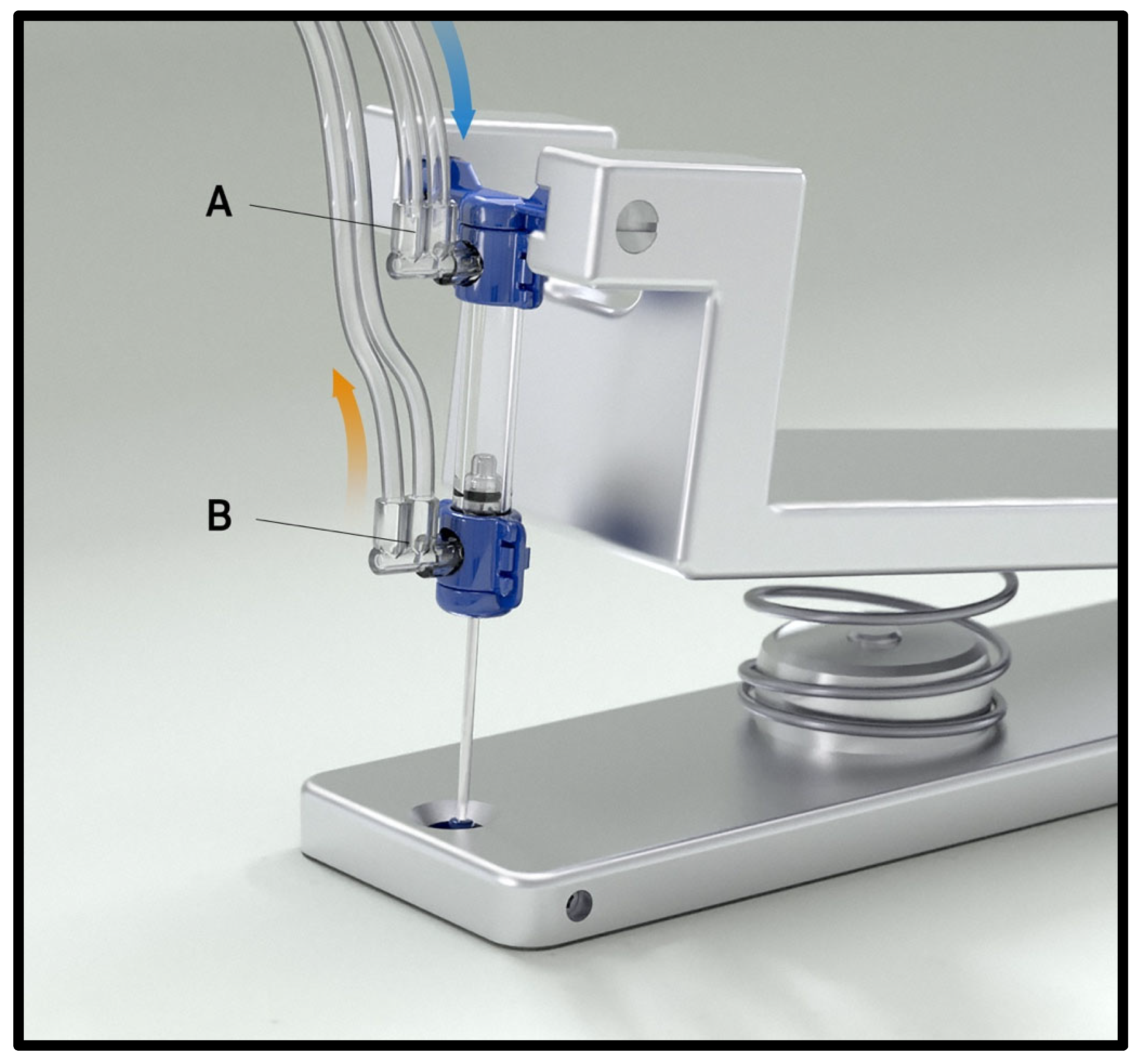
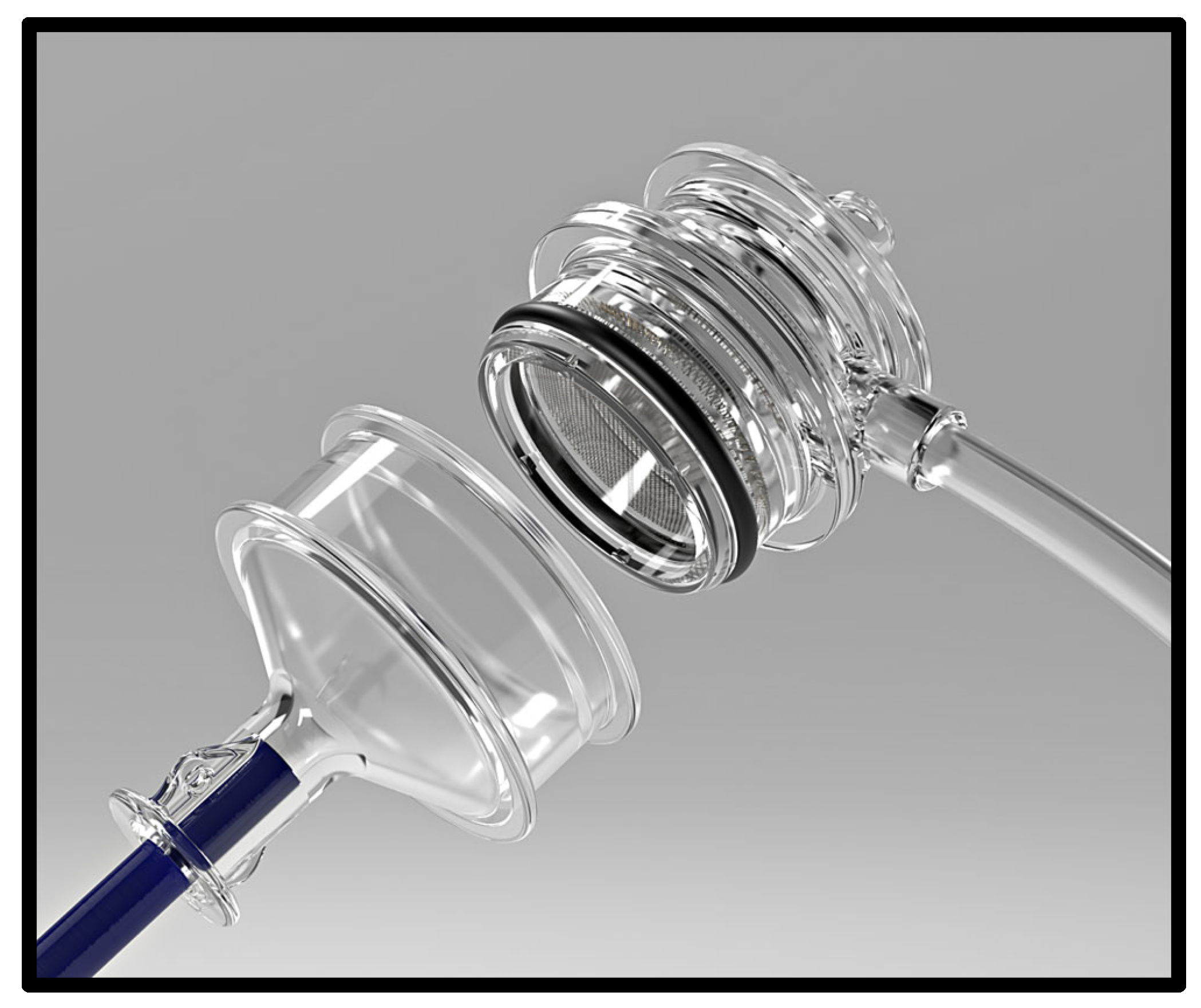
As the device is compressed, a fluid bolus not exceeding 2 mL is delivered into the upper urinary tract. The greater the compression, the larger the bolus volume; the quicker the compression, the faster the bolus is jetted into the upper urinary tract. Delivering a bolus during DAP compression momentarily renders the small stone fragments waterborne. These fragments are evacuated from the collecting system simultaneously by aspiration of the identical bolus volume from the kidney via the descending arm of the SAUS. This previously described SUAS consists of a conventional UAS equipped with a syphon box attached [11,12]. Bolus administration and bolus aspiration are synchronised to avert alterations and changes in the IRP. The DAP is released to prime the pump to deliver the next bolus. Repetitive, careful compression and release can be performed quickly to remove debris efficiently. Fragments that are flushed out are gathered in a sieve within the syphon box, facilitating effortless retrieval. When the suctioning arm of the DAP is disconnected from the SUAS, the DAP operates as a uni-directional pump to instil fluid—used as the comparator in this study.

2.2. Safety and Efficacy Assessment

2.2.1. Ethics Statement

This study was approved by the Cadaver Research Governance Committee, Department of Human Biology, Faculty of Health Sciences, University of Cape Town (Reference Number: CRCG 2022/002), and the University of Cape Town Surgical Department Research Committee (Project 2022/071).

2.2.2. Experiment

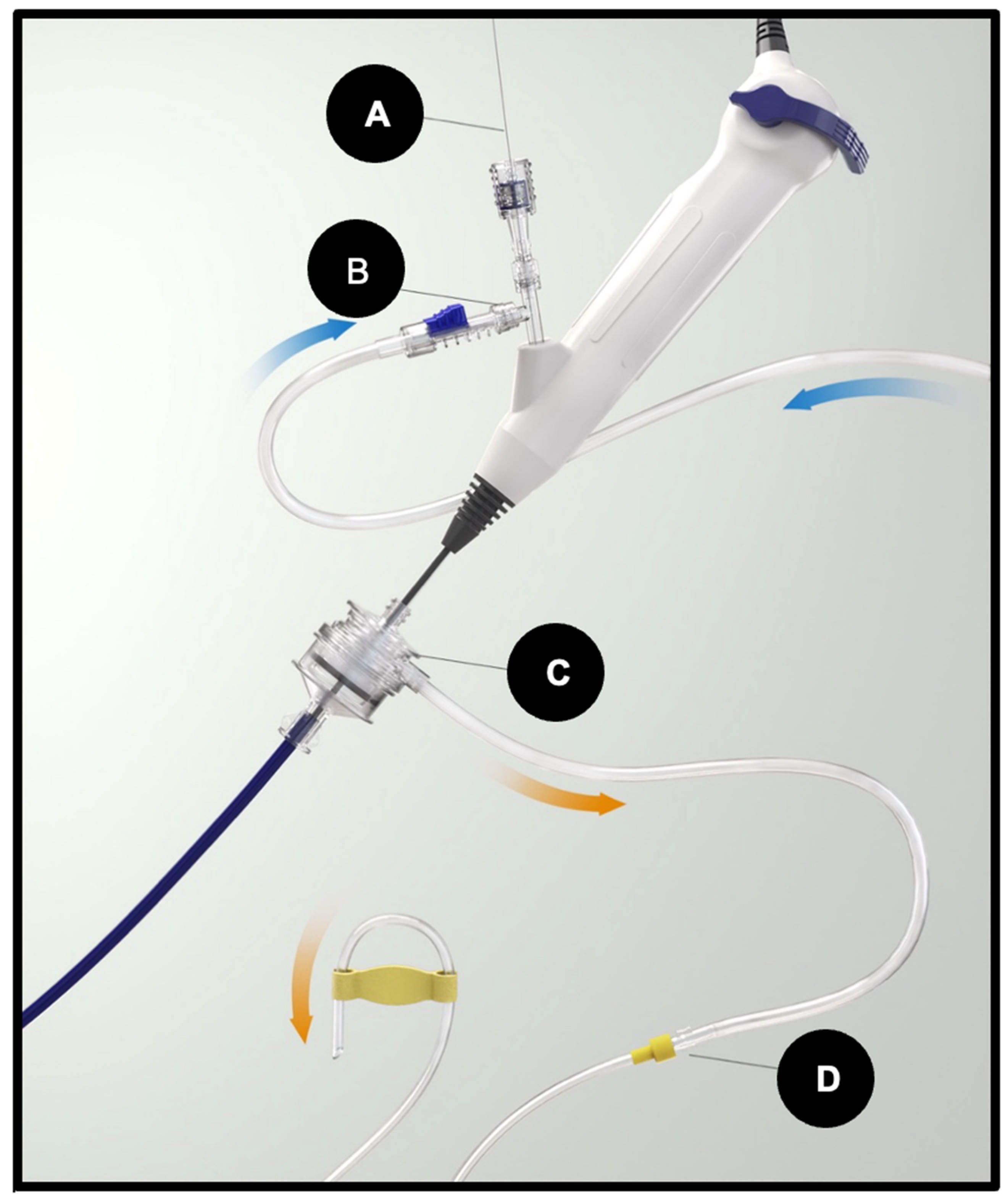
Cadaver model: Six fresh cadavers (12 renal units) were acquired from the Department of Human Anatomy at the University of Cape Town. The cadavers were positioned in lithotomy. A flexible cystoscope was introduced into the bladder to locate the ureteric orifices. An 11/13 French (F) UAS was inserted into the cadaveric kidney over a guidewire. Fluoroscopy confirmed that the correct position of the UAS was just at or above the pelvic ureteric junction. If any resistance to UAS introduction occurred, the ureter was manually dilated. An 8.5 F flexible ureteroscope (fURS) was then inserted into the collecting system. A fibre optic pressure measurement device (FISO Technologies, Inc., Quebec, QC, Canada) was inserted into the renal pelvis through the working channel of the fURS. A standard cysto-irrigation set (total length 220 cm) was attached to the inlet of the DAP(Figure 1) at a variable fluid column height. The DAP and SUAS (Figure 2 and Figure 3) were compared to a conventional UAS and user-controlled irrigation pump in terms of irrigant flow and IRP.
Examination of safety: To evaluate safety, the IRP was continuously measured for 5 min while the DAP was connected, from which the mean IRP was determined. Second, the volume of the irrigant flow was measured for one minute. The IRP and flow measurements were conducted with the UAS’s distal end (the funnel) positioned 25 cm above kidney level, with irrigation set at 80 cm, 120 cm, and 160 cm above the table. As a control, the tests were repeated when the DAP was removed, utilising a conventional UAS and irrigation device that administered 2 mL boluses at the same rate.
Examination of DAP functionality: With the DAP connected, IRP was initially recorded in response to three DAP boluses administered 5 s apart, followed by a second recording in response to five DAP boluses administered 1 s apart. The volume of each bolus was 2 mL. The height of the irrigation fluid was maintained at 120 cm above kidney level. As a control, the tests were repeated when the DAP was removed, utilising a conventional UAS and irrigation device that administered 2 mL boluses at the same rate.
Following the study, the cadavers were embalmed for teaching purposes.

2.2.3. Statistical Analyses

All analyses were performed using GraphPad Prism, Version 5.03 and the significance level was set at p < 0.05. Data are reported as the mean, median, and standard deviation (SD). The Mann–Whitney U test was used to compare mean IRP and minute flow volume.
Generative artificial intelligence (GenAI) was not used in this paper.

3. Results

The assessment of consolidated bag height at 80, 120, and 160 cm above kidney level indicates that the use of the DAP leads to a statistically significant improvement in mean IRP across different irrigation bag heights (Table 1).
The mean drainage flow when comparing the DAP to a conventional UAS exhibited a statistically significant improvement in mean irrigant flow across different irrigation bag heights, with a flow rate twice that of conventional methods observed at 80 cm above the kidney (Table 2).
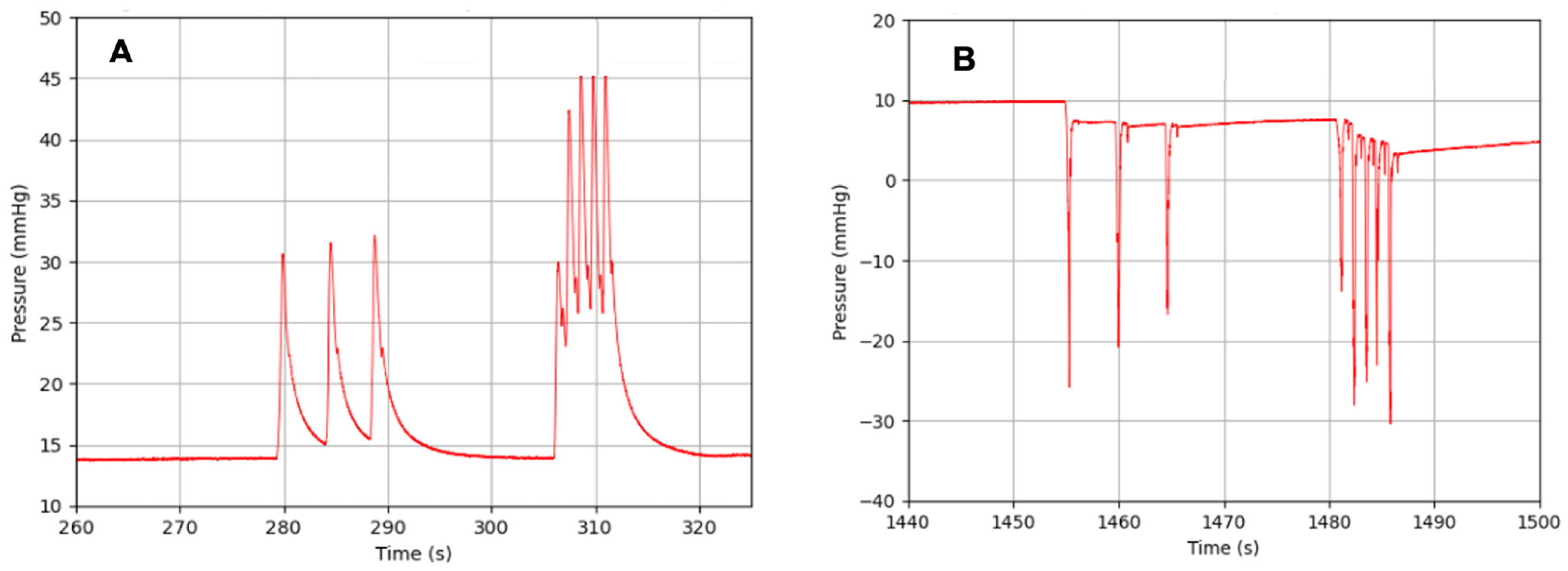
The administration of slow (three boluses, each separated by 5 s) and fast (five boluses, each separated by 1 s) boluses, utilising the DAP, led to a non-statistically significant reduction in the mean IRP. The mean maximum IRP was significantly reduced (Table 3, Figure 4).

4. Discussion

The novel DAP is a device that can deliver an ultra-low-volume fluid bolus while simultaneously drawing out the identical fluid volume via a syphoning UAS. IRP refers to the hydrostatic pressure within the renal pelvis and calyces. Isovolumetric irrigation and suction mitigate fluid overdistension of the renal pelvis, thereby reducing IRP. No optimal bolus volume or delivery rate has been described to our knowledge. The major significance of this is, firstly, improved irrigant flow and, secondly, maintenance of “safe” IRP (<40 mmHg) by actively promoting drainage from the kidney.
Flow:
The importance of irrigant flow cannot be understated in fURS, as flow is a surrogate for visibility. In endoscopic procedures, flow depends greatly on the relationship between inflow and outflow. Inflow is largely a component on the irrigation pressure and working channel size, whereas outflow is determined by the fURS scope size and its relation to the inner diameter of the UAS. Kim et al. quantitatively demonstrated that smaller UAS size reduces outflow, owing to greater outflow resistance [11]. This has led to downsizing of fURS and upsizing of UAS to improve inflow/outflow [10]. Poor visibility does not allow for safe surgery, and adequate visibility is often achieved at the consequence of “unsafe” IRP (>40 mmHg) [1,3]. A recent systematic review by Panthier et al. highlights the importance of IRP, flow and intra-renal trauma, noting that improved irrigant flow could improve visibility and make surgery safer and more efficient, while potentially decreasing intra-renal temperatures during high-powered laser lithotripsy [13].
In this study, irrespective of irrigant bag height, irrigant flow was noted to be 78% higher in the DAP group (13.6 mL/min improvement at irrigation bag height 120 cm above the table). This relationship reaffirms the previously described SUAS which has shown to improve fURS irrigant flow while reducing IRP [12,14].
IRP:
Since the initial description by Hinman et al. in 1926 [1], Pyelovenous backflow has historically been seen to occur at IRP > 40 mmHg, while more recently evidence suggests it can occur at even lower pressures of 20 mmHg—a mere 5 mmHg above the upper limit of what is deemed normal IRP (0–15 mmHg). Elevated IRP has been linked to infection, haemorrhage, renal impairment, and post-operative pain [4,15].
Combating high IRP is a topic of ongoing research for urologists, with many promising devices and strategies continuously being developed. In a recent systematic review, Tokas et al. noted that use of a UAS and smaller-diameter fURS was more favourable in reducing IRP, while achieving optimal stone-free rates [4,15]. Yekani et al. described a syphon UAS that shows promise in lowering IRP, while Lin et al. described a vacuum-assisted UAS to aid in the removal of particulate matter while controlling IRP [14,16,17]. The use of a large-calibre UAS during RIRS is perhaps the most critical element involved in decreasing IRP; Auge et al. demonstrated that RIRS without a UAS resulted in an IRP two-to-three-fold higher than when using a UAS; however, its use may come with a risk of ureteric wall injuries [18]. Wright et al. concluded in a cadaveric porcine model that a larger calibre UAS (12/14Fr vs. 10/12Fr) has the advantage of lower IRP while improving irrigate flow [19]. In this study the DAP and SUAS with a 11/13Fr UAS demonstrated safe and almost 50% lower IRP than a conventional 11/13Fr UAS.
IRP and Flow:
Kim et al. demonstrated that flow rate was linearly dependent on renal pelvis pressure, while Sierra et al. concluded in a recent pilot study that maintaining IRP around 30 mmHg by controlling flow was not feasible to maintain good visualisation [3,11]. Lazarus et al. demonstrated in an in vitro porcine model that fluid bolus size and UAS use are important contributors to improve flow, and that using >2 mL bolus irrigation even with a UAS may result in a high IRP [9]. Croghan et al. demonstrated an IRP of >294 mmHg during RIRS [2]. In response to bolus irrigation, maximum IRP for the DAP and SUAS connected was significantly lower than a conventional UAS and conventional irrigation device, irrespective of bolus interval. Using conventional irrigation and a UAS, rapid bolus administration resulted in promptly attaining an IRP of >45 mmHg, while when using the DAP and SUAS, the mean maximum IRP was reduced by >100% and never >25 mmHg.
These promising findings suggest that flow and thereby visibility need not be sacrificed to lower and achieve a “safe” IRP. Finally, in promoting the removal of irrigate fluid, the DAP/SUAS has the potential to remove small renal fragments, blood, and particulate matter, further improving visibility and perhaps even stone-free rates [2,3,5,9].
Our study has limitations; a small sample number of 12 in vivo fresh human cadaveric kidneys limits its application to live human models and may overemphasise the results obtained. Poor tissue compliance and a lack of peristalsis from living tissue may render the results obtained less useful in a clinical setting, while explaining the wide variations in results obtained. Cadaver models were selected based on the availability of fresh specimens and the ability to gain access into the renal pelvis—no other specific inclusion/exclusion criteria were implemented. Thus, the measurements obtained may not be representative of pathological renal states, or aberrant anatomical variants (small kidneys, extra-renal pelvis, and stones).

5. Conclusions

The novel dual-action pump system shows potential in reducing intra-renal pressure and improving irrigant flow in flexible ureteroscopy. These encouraging findings warrant confirmation in a pilot clinical trial.

Author Contributions

Conceptualization, J.L. and J.J.; methodology, J.L., J.J. and M.W.; software, J.L.; validation, J.L.; formal analysis, J.L.; investigation, J.L. and M.W.; resources, J.L. and M.W.; data curation, J.L.; writing—original draft preparation, M.W.; writing—review and editing, J.L., M.W. and J.J.; visualisation, M.W.; supervision, J.L.; project administration, J.L.; funding acquisition, J.L. All authors have read and agreed to the published version of the manuscript.

Funding

This study was funded by Wismed PL (Wroclaw 53-338 Wielka 31/2, Poland) as part of the Small Fragment Removal System (SFRS). Development of the SFRS was supported by the National Centre for Research and Development (NCRD) in the frame of the Operational Programme Smart Growth within the “SFRS” project (Project No. POIR.01.01.01-00-1617/20).

Institutional Review Board Statement

This study was approved by the Department of Surgery Research Committee DRC approval RE: Project 2022/071. Approval Date: 23 July 2022. Department of Surgery Departmental Research Committee Groote Schuur Hospital Observatory 7925 South Africa Tel (021) 404 5108. Permission for this study was granted by the Cadaver Research Governance Committee, Department of Human Biology, Faculty of Health Sciences, University of Cape Town—Reference Number: CRCG 2022/002. Approval Date: 18 July 2022.

Informed Consent Statement

Informed consent was obtained from all subjects involved in the study.

Data Availability Statement

The original contributions presented in this study are included in the article. Further inquiries can be directed to the corresponding author.

Conflicts of Interest

The authors declare no conflicts of interest. The funders had no role in the design of the study; in the collection, analyses, or interpretation of data; in the writing of the manuscript; or in the decision to publish the results.

Abbreviations

The following abbreviations are used in this manuscript:
fURS Flexible Ureterorenoscopy
IRP Intra-renal Pressure
RIRS Retrograde Intra-renal Surgery
UAS Ureteric Access Sheath
DAPS Dual-Action Pump System
SUAS Syphon Ureteric Access Sheath
FISO Fibre Optic Sensors and Pressure Signal Conditioner
RGP Retrograde Pyelography

References

  1. Hinman, F.; Redewill, F.H. Pyelovenous back flow. J. Am. Med. Assoc. 1926, 87, 1287–1293. [Google Scholar] [CrossRef]
  2. Croghan, S.M.; Skolarikos, A.; Jack, G.S.; Manecksha, R.P.; Walsh, M.T.; O’Brien, F.J.; Davis, N.F. Upper urinary tract pressures in endourology: A systematic review of range, variables and implications. BJU Int. 2023, 131, 267–279. [Google Scholar] [CrossRef] [PubMed]
  3. Sierra, A.; Corrales, M.; Kolvatzis, M.; Doizi, S.; Traxer, O. Real-time intrarenal pressure control during flexible ureterorenoscopy using a vascular PressureWire: Pilot study. J. Clin. Med. 2022, 12, 147. [Google Scholar] [CrossRef]
  4. Tokas, T.; Herrmann, T.R.W.; Skolarikos, A.; Nagele, U. Pressure matters: Intrarenal pressures during normal and pathological conditions, and impact of increased values on renal physiology. World J. Urol. 2019, 37, 125–131. [Google Scholar] [CrossRef] [PubMed]
  5. Zhu, Z.; Cui, Y.; Zeng, F.; Li, Y.; Chen, Z.; Hequn, C. Comparison of suctioning and traditional ureteral access sheath during flexible ureteroscopy in the treatment of renal stones. World J. Urol. 2019, 37, 921–929. [Google Scholar] [CrossRef] [PubMed]
  6. Zhong, W.; Leto, G.; Wang, L.; Zeng, G. Systemic inflammatory response syndrome after flexible ureteroscopic lithotripsy: A study of risk factors. J. Endourol. 2015, 29, 25–28. [Google Scholar] [CrossRef]
  7. Stenberg, A.; Bohman, S.O.; Morsing, P.; Müller-Suur, C.; Olsen, L.; Persson, A.E.G. Back-leak of pelvic urine to the bloodstream. Acta Physiol. Scand. 1988, 134, 223–234. [Google Scholar] [CrossRef]
  8. Blew, B.D.; Knudsen, B.E.; Gupta, M.; Gettman, M.T.; Segura, J.W. Comparison of Peditrol irrigation device and common methods of irrigation. J. Endourol. 2005, 19, 562–565. [Google Scholar] [CrossRef]
  9. Lazarus, J.; Wisniewski, P.; Kaestner, L. Beware the bolus size: Understanding intrarenal pressure during ureteroscopic fluid administration. S. Afr. J. Surg. 2020, 58, 220. [Google Scholar]
  10. De Coninck, V.; Keller, E.X.; Rodríguez-Monsalve, M.; Audouin, M.; Doizi, S.; Traxer, O. Systematic review of ureteral access sheaths: Facts and myths. BJU Int. 2018, 122, 959–969. [Google Scholar] [CrossRef] [PubMed]
  11. Kim, H.J.; Louters, M.M.; Dau, J.J.; Hall, T.L.; Ghani, K.R.; Roberts, W.W. Quantification of outflow resistance for ureteral drainage devices used during ureteroscopy. World J. Urol. 2023, 41, 873–878. [Google Scholar] [CrossRef] [PubMed]
  12. Lazarus, J.; Kaestner, L. Novel syphon ureteric access sheath has the potential to improve renal pressures and irrigant flow. BJU Int. 2022, 129, 642–647. [Google Scholar] [CrossRef] [PubMed]
  13. Panthier, F.; Pauchard, F.; Traxer, O. Retrograde intrarenal surgery and safety: Pressure and temperature—A systematic review. Curr. Opin. Urol. 2023, 33, 308–317. [Google Scholar] [CrossRef] [PubMed]
  14. Yekani, S.; Lazarus, J.; de Bruyn, M.; Kaestner, L. A pilot study of a novel syphon ureteral access sheath shows potential to reduce renal pressures and improve irrigant flow. Urology 2023, 176, 50–54. [Google Scholar] [CrossRef] [PubMed]
  15. Tokas, T.; Skolarikos, A.; Herrmann, T.R.W.; Nagele, U. Role of intrarenal pressure in modern-day endourology (mini-PCNL and flexible URS): A systematic review of literature. Curr. Urol. Rep. 2021, 22, 52. [Google Scholar] [CrossRef] [PubMed]
  16. Lin, L.; Zheng, L.; Wang, S.; Kuang, R.; Ye, X. Retrograde intrarenal surgery for immediate and complete removal of large stones. BJU Int. 2023, 131, 568–570. [Google Scholar] [CrossRef] [PubMed]
  17. Du, C.; Song, L.; Wu, X.; Deng, X.; Yang, Z.; Zhu, X.; Zhu, L.; He, J. Clinical application of a patented perfusion and suctioning platform and ureteral access sheath in the treatment of large ureteral stones below the L4 level. Int. Urol. Nephrol. 2019, 51, 207–213. [Google Scholar] [CrossRef] [PubMed]
  18. Auge, B.K.; Pietrow, P.K.; Lallas, C.D.; Raj, G.V.; Santa-Cruz, R.W.; Preminger, G.M. Ureteral access sheath provides protection against elevated renal pressures during routine flexible ureteroscopic stone manipulation. J. Endourol. 2004, 18, 33–36. [Google Scholar] [CrossRef] [PubMed]
  19. Wright, A.; Williams, K.; Somani, B.K.; Rukin, N.J. Intrarenal pressure and irrigation flow with commonly used ureteric access sheaths and instruments. Cent. Eur. J. Urol. 2015, 68, 434–438. [Google Scholar] [CrossRef]
Figure 1. Dual-action pump (DAP) simultaneously provides synchronous and isovolumetric irrigation and suction when activated. The blue arrow indicates irrigation fluid moving from the irrigation bag towards the kidney via outlet A, while the yellow arrow depicts irrigation fluid flowing away from the kidney via outlet B.
Uro 06 00011 g001
Figure 2. Graphical representation of the SUAS—which comprises a standard UAS with a syphon box connected. The suctioning ability of the DAP is reliant on the SUAS.
Uro 06 00011 g002
Figure 3. Graphical representation of the DAP and SUAS. The blue arrow depicts irrigation fluid flowing from the irrigation bag towards the direction of the kidney via fURS. The yellow arrow depicts irrigation fluid flowing away from kidney from SUAS via DAP suctioning outlet. (A—FISO pressure sensor; B—DAP irrigation outlet; C—SUAS; D—DAP suctioning arm outlet).
Uro 06 00011 g003
Figure 4. Graphical displaying IRP changes in response to bolus irrigation. (A) Conventional UAS—in response to 2 mL bolus, IRP rises rapidly and slowly returns to baseline. Following 5 quick boluses, IRP above 40 mmHg is rapidly achieved. (B) DAP and SUAS—in response to 2 mL bolus, IRP lowers and returns to baseline rapidly, without reaching high (>40 mmHg) pressures.
Uro 06 00011 g004
Table 1. Mean IRP at various irrigation bag height levels.
Irrigation Bag
Height
(cm Above Kidney)
Mean IRP with DAP (mm/Hg)Mean IRP with Conventional UAS (mm/Hg)IRP Difference (mm/Hg)Percentage
Increase
(%)
p Value
80−2.6 ± 10.214.5 ± 5.516.7140<0.001
1201.8 ± 10.718.0 ± 6.916.2106<0.001
1607.0 ± 10.321.0 ± 8.714.071<0.001
Table 2. Mean drainage flow at various irrigation bag height levels.
Irrigation Bag
Height
(cm Above Kidney)
Mean Drainage Flow with DAP (mL/min)Mean Drainage Flow with Conventional UAS (mL/min)Difference (mL/min)Percentage Increase (%)p Value
8026.1 ± 7.714.2 ± 5.511.9104<0.001
12034.3 ± 10.020.7 ± 6.913.678<0.001
16040.8 ± 10.626.1 ± 8.814.766<0.001
Table 3. Mean and mean maximum IRP during bolus administration.
BolusMean IRP
with DAP
(mmHg)
Mean IRP with
Conventional UAS
(mmHg)
IRP Difference (mmHg)Percentage Decrease
(%)
p Value
3× slow boluses12.0 ± 4.113.7 ± 5.31.76<0.05
5× fast boluses12.0 ± 10.714.4 ± 6.92.48<0.05
BolusMean Maximum IRP with DAP
(mmHg)
Mean Maximum IRP with
Conventional UAS
(mmHg)
Mean Maximum IRP Difference (mmHg)Percentage Decrease
(%)
p Value
3× slow boluses12.0 ± 4.113.7 ± 5.31.76<0.05
5× fast boluses12.0 ± 10.714.4 ± 6.92.48<0.05
Disclaimer/Publisher’s Note: The statements, opinions and data contained in all publications are solely those of the individual author(s) and contributor(s) and not of MDPI and/or the editor(s). MDPI and/or the editor(s) disclaim responsibility for any injury to people or property resulting from any ideas, methods, instructions or products referred to in the content.