Article

HCC Recurrence After Curative Intent Treatment: The Need for New High-Risk Criteria in the Context of Adjuvant Therapy


1
Department of Hepatology, Sunshine Coast University Hospital, Birtinya, QLD 4575, Australia
2
Department of Interventional Radiology, Sunshine Coast University Hospital, Birtinya, QLD 4575, Australia
3
School of Health and Sport Sciences, University of the Sunshine Coast, Sippy Downs, QLD 4556, Australia
*
Author to whom correspondence should be addressed.
Livers 2026, 6(2), 14; https://doi.org/10.3390/livers6020014
Submission received: 15 December 2025 / Revised: 12 February 2026 / Accepted: 13 February 2026 / Published: 24 February 2026

Abstract

Background and Aim: Adjuvant therapy after curative intent treatment for hepatocellular carcinoma (HCC) is a significant unmet need. The IMbrave050 study demonstrated improved recurrence-free survival (RFS) in patients with high-risk HCC receiving adjuvant atezolizumab and bevacizumab post-curative treatment compared to active surveillance. However, the IMbrave050 cohort was predominantly Asian, largely underwent surgical resection, and had chronic liver disease (CLD) mainly due to hepatitis B features that differ markedly from the Australian setting, where microwave ablation (MWA) is more common and hepatitis B-related CLD is less prevalent. Given these differences, this study aimed to explore the performance of the IMbrave050 risk criteria in an Australian population of patients with early-stage HCC undergoing curative treatment to determine if the criteria identified patients with a high risk of recurrence who may benefit from adjuvant treatment. Method: We performed a retrospective 5-year study of 50 patients with early-stage HCC undergoing MWA with curative intent or liver resection. Patients were stratified into high- and low-risk groups using the IMbrave050 criteria. The primary outcomes were RFS and overall survival (OS) in the high- and low-risk cohorts. Results: For patients who underwent liver resection, the 1-year RFS was 77.8% and 100% in high- and low-risk patients respectively (p = NS). In those who underwent MWA, the 1-year RFS was 89.5% in the high-risk cohort and 73.3% in the low-risk cohort (p = NS). OS at 1-year was 100% in all cohorts (p = NS). Conclusions: In this Western cohort receiving predominantly ablation as curative therapy the current high-risk criteria do not reliably distinguish between those with increased risk of early recurrence and those without. Criteria defining high-risk may need to be refined to better identify patients who may benefit from adjuvant therapy in this setting.

1. Introduction

Hepatocellular carcinoma (HCC) was the seventh most common cause of cancer-related death in Australia in 2021 and is the third leading cause of death from cancer worldwide [1]. The incidence of HCC is rising in Australia and has doubled from 1999 to 2020 [2]. The management of HCC is uniquely challenging as it is almost always diagnosed in patients with liver cirrhosis. The stage of disease, performance status and underlying liver function are incorporated in the Barcelona Clinic Liver Cancer (BCLC) staging system which guides treatment options for HCC [3]. Curative treatment is recommended for patients with early-stage disease who have preserved liver function and good performance status (BCLC 0/A) [3]. The curative treatment options include ablation, resection or liver transplant depending on the stage, presence of portal hypertension and number of tumours. HCC carries a poor prognosis with a 5-year survival of 24.2% and as such new therapeutic strategies are urgently needed [2].
Akin to other cancers, curative treatment for HCC is compromised by a risk of recurrent disease which can be high as 70%, highlighting the need for adjuvant therapy [4]. A number of agents have been investigated as adjuvant options in HCC. The STORM trial which reviewed adjuvant sorafenib was negative [5]. Adjuvant interferon did not improve recurrence-free survival (RFS) in patients with viral hepatitis [6,7]. Improved RFS and overall survival (OS), however, was observed in a Korean study evaluating the use of adjuvant activated cytokine-induced cells in patients with curative HCC, suggesting a possible role for immunotherapy in this setting [8].
The use of adjuvant immunotherapy has revolutionised modern cancer therapy and has led to improved outcomes in other solid organ malignancies compared to traditional chemotherapy. For example, the addition of neoadjuvant and adjuvant pembrolizumab compared to standard care improved OS in patients with triple-negative breast cancer [9]. Neoadjuvant and adjuvant durvalumab in addition to standard therapy led to significantly improved event-free survival and OS in patients with muscle-invasive bladder cancer [10]. The goal of treatment with immunotherapy in HCC is twofold, firstly to prevent early disease recurrence by eliminating any microscopic residual disease but also to prevent late recurrence of HCC through secondary prevention. Previously the use of immunotherapy for HCC has been limited to the treatment of advanced disease where the IMbrave150 trial established atezolizumab and bevacizumab as the standard of care for unresectable HCC, replacing sorafenib as the preferred first-line treatment [11].
The IMbrave050 study investigated the use of atezolizumab and bevacizumab in the adjuvant setting, demonstrating a significant improvement in RFS compared to active surveillance [12]. However, this benefit diminished over time, as the interim analysis revealed a convergence of the RFS curves [13]. Defined high-risk criteria for patients undergoing liver resection included poor tumour differentiation, tumours greater than 5 cm, four or more tumours, or vascular invasion (microvascular invasion or segmental portal vein invasion). For patients who underwent ablation, the high-risk criteria were tumours greater than 2 cm or multiple tumours [12].
Given the potential benefit of adjuvant treatment for high-risk patients undergoing curative treatment for HCC, our aim was to confirm that the IMbrave050 risk stratification criteria could be applied to an Australian population to accurately identify a cohort of patients who may benefit from adjuvant therapy.

2. Materials and Methods

The study design was a retrospective cohort study over a 5-year period between 2019 and 2024 in a tertiary hepatology centre in Queensland, Australia. Data was extracted from the statewide electronic medical record (Cerner Millennium, Kansas City, MO, USA). The inclusion criteria were persons aged 18 years or older, first diagnosis of HCC, and curative intent treatment with either microwave ablation (MWA) or liver resection. No patients were excluded that met these criteria. Patients were risk-stratified into high-risk and low-risk groups according to the IMbrave050 criteria. Biochemistry, Child–Pugh and Model of End-Stage Liver Disease (MELD-Na) scores, Eastern Cooperative Oncology Group (ECOG) status and BCLC stage were obtained at time of HCC diagnosis.
All patients underwent HCC screening and were discussed at a hepatology multidisciplinary meeting (MDT) with the interval of follow up determined by the findings on imaging. The follow up interval and choice of imaging modality for HCC surveillance was determined by the MDT group and included liver ultrasound, multiphase computed tomography (CT) of the liver, and multiphase magnetic imaging resonance (MRI). HCC was diagnosed radiologically using the CT/MRI Liver Imaging Reporting and Data System (LI-RADS) and MDT consensus opinion with histopathology confirming the diagnosis in some ablation patients and all resection patients [14]. The Edmondson–Steiner grading system was used for grading of liver biopsies [15]. A pairwise deletion approach was used for missing data and some patients had missing data for tumour differentiation, microvascular invasion, Child–Pugh and MELD-Na status which has been indicated in Table 1, Table 2, Table 3 and Table 4.
The primary outcomes were RFS and OS in the high- and low-risk cohorts and outcomes were compared to explore whether the IMbrave050 risk stratification appropriately selects patients who may benefit from adjuvant immunotherapy. The Kaplan–Meier method was used for survival analysis, and the log rank test was used to compare the cumulative probability of disease recurrence and death in high- and low-risk groups. A p value of <0.05 was considered significant. Statistical analysis was done using SPSS version 15.0 (SPSS, Chicago, IL, USA). This retrospective observational study was reviewed and approved by the Townsville ethical review board (HREC/2024/QTHS/113109), and the requirement for informed consent was waived.

3. Results

Fifty patients met the inclusion criteria. The median age was 69 (IQR 61–75). 82% of patients (n = 41) were male. The most common cause of underlying chronic liver disease (CLD) was Hepatitis C (34%), followed by alcohol-related liver disease (ARLD) (32%) and metabolic dysfunction-associated steatotic liver disease (MASLD) (18%) (Table 1 and Table 2). The majority of patients had a single lesion (86%) and had Barcelona clinic liver cancer (BCLC) grade 0/A HCC at time of diagnosis. Baseline tumour characteristics including the grade, number, size, presence of microvascular invasion and baseline alpha-fetoprotein (AFP) are detailed in Table 3 and Table 4. The initial treatment was MWA in 78% (n = 39) of patients. Two patients who had a liver resection later received MWA (with one patient receiving intra-operative MWA and later MWA of a different lesion). Eight patients received transarterial chemoembolisation (TACE). Of these patients, two underwent initial TACE as a downstaging procedure to facilitate curative treatment. Three were bridging to liver transplant and three had TACE after disease progression.
There were no procedure-related deaths. Four patients experienced complications related to the curative procedure which included pneumothorax (n = 2), surgical site infection (n = 1) and perihepatic collection (n = 1).
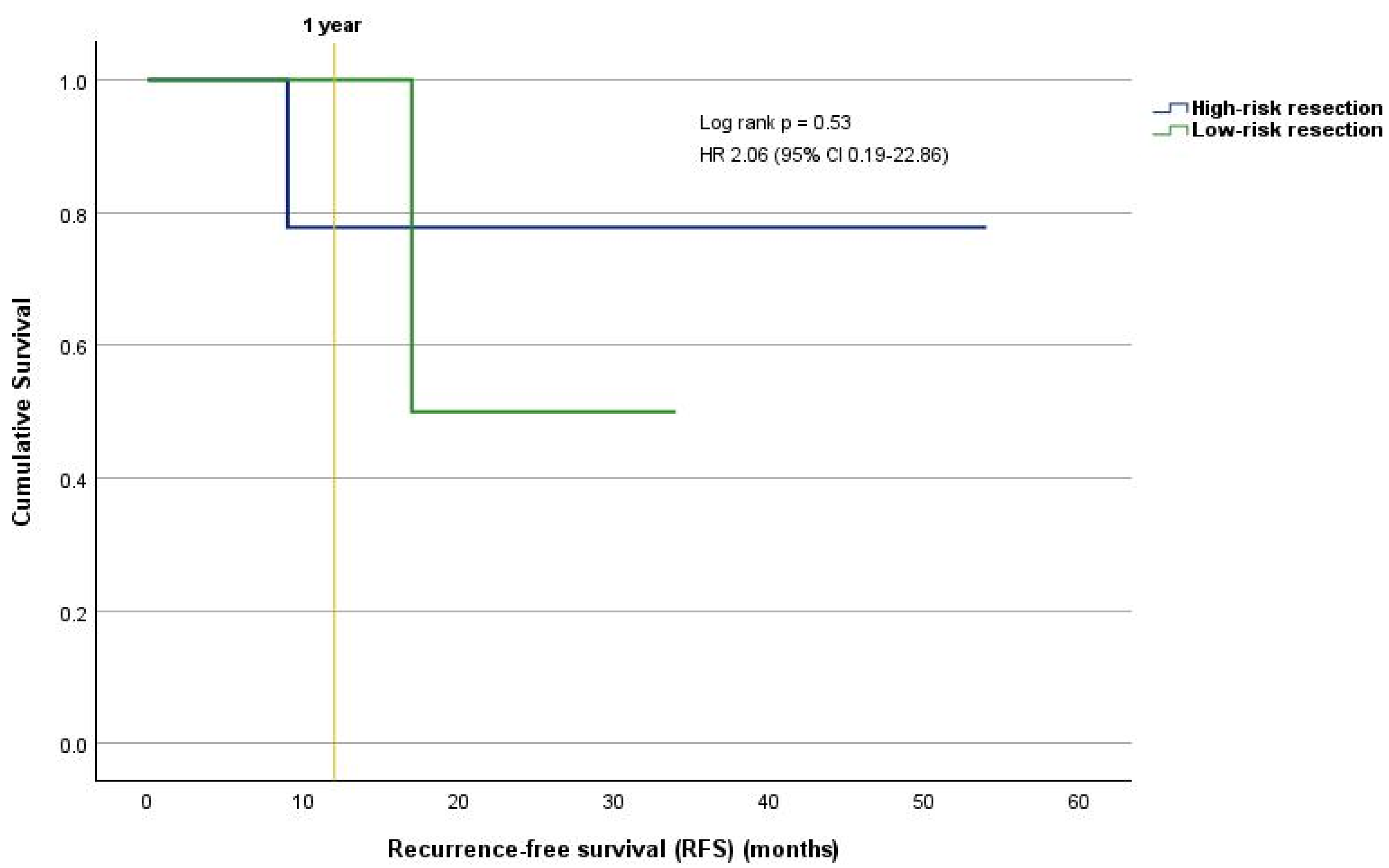
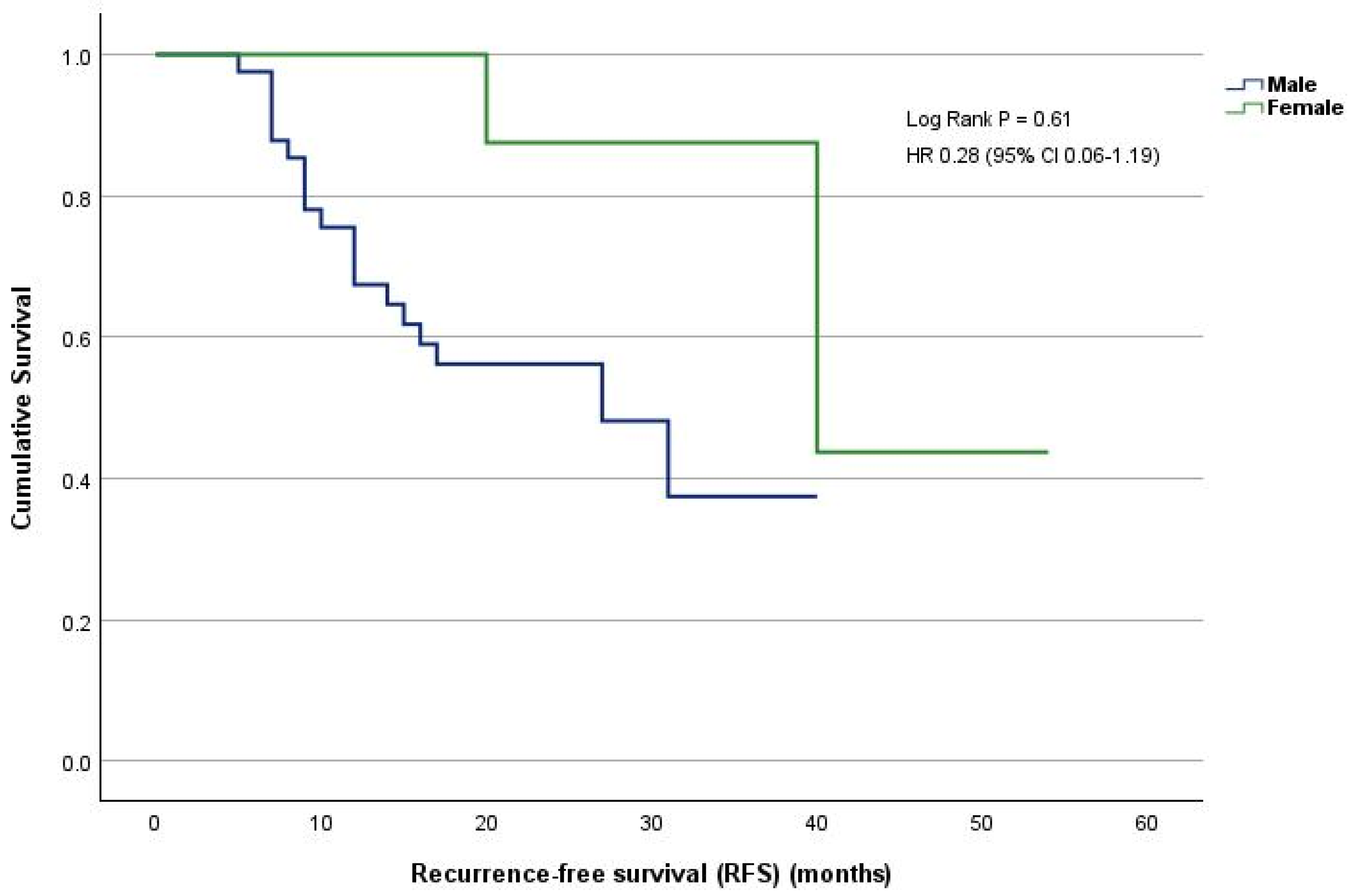
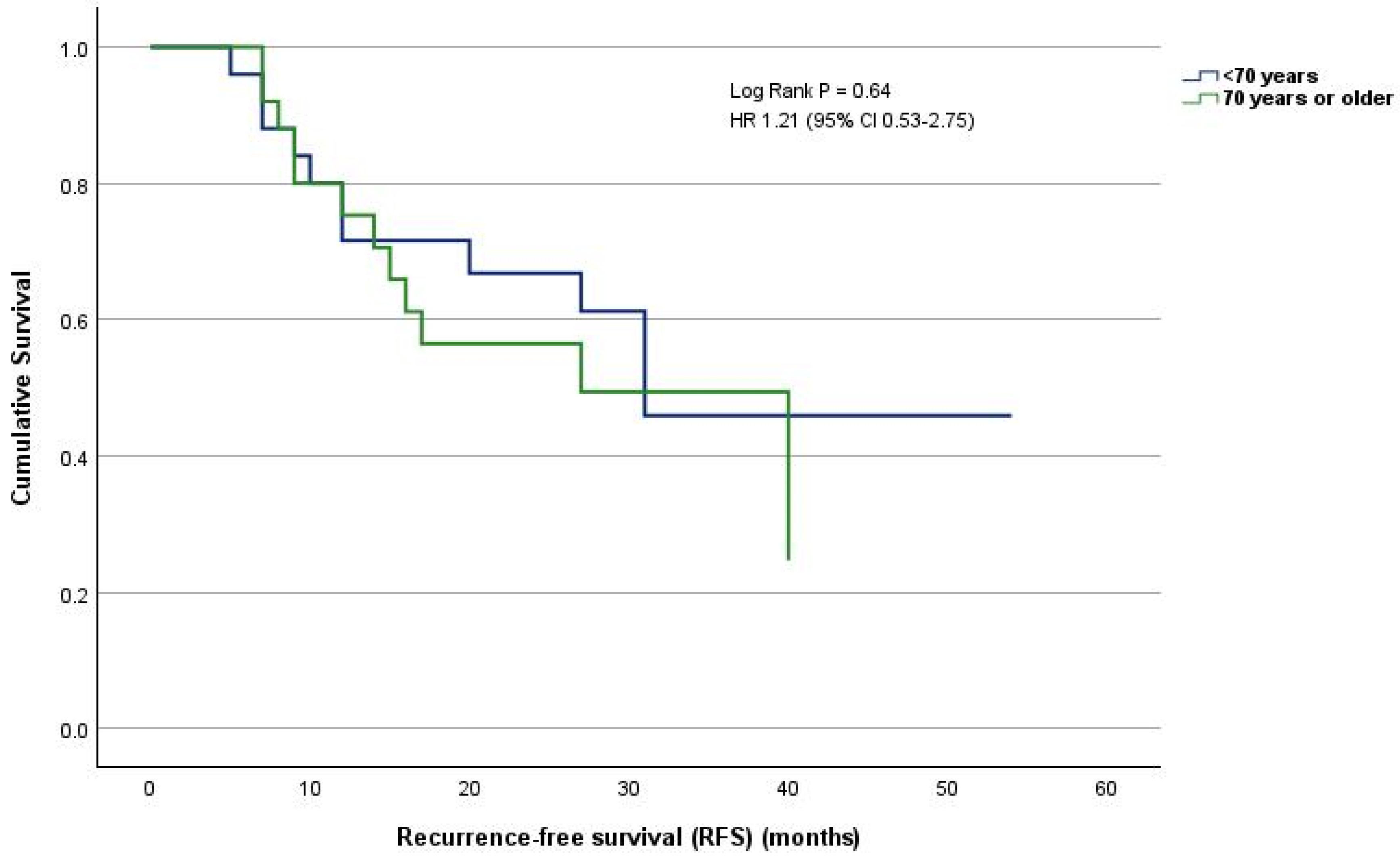
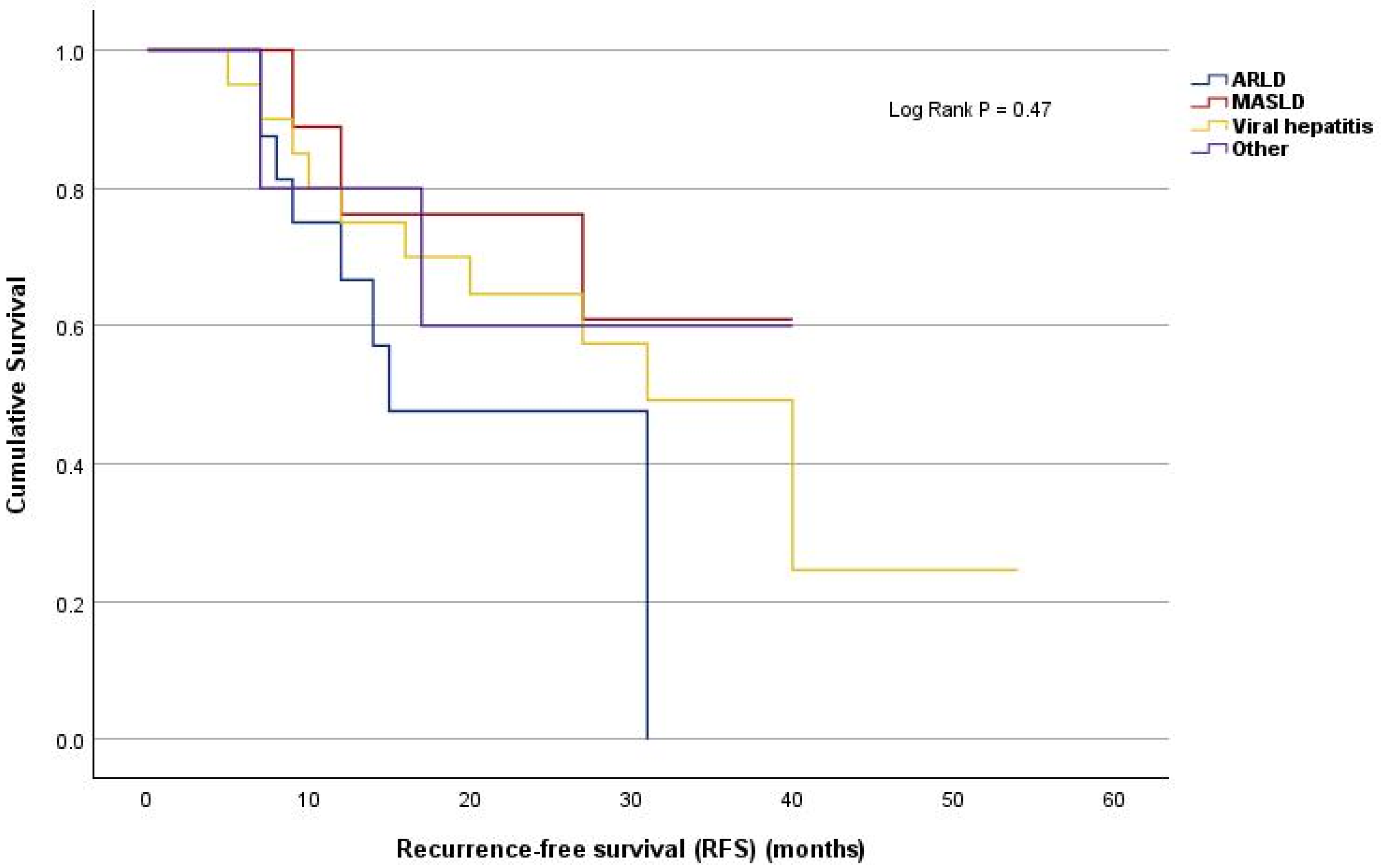
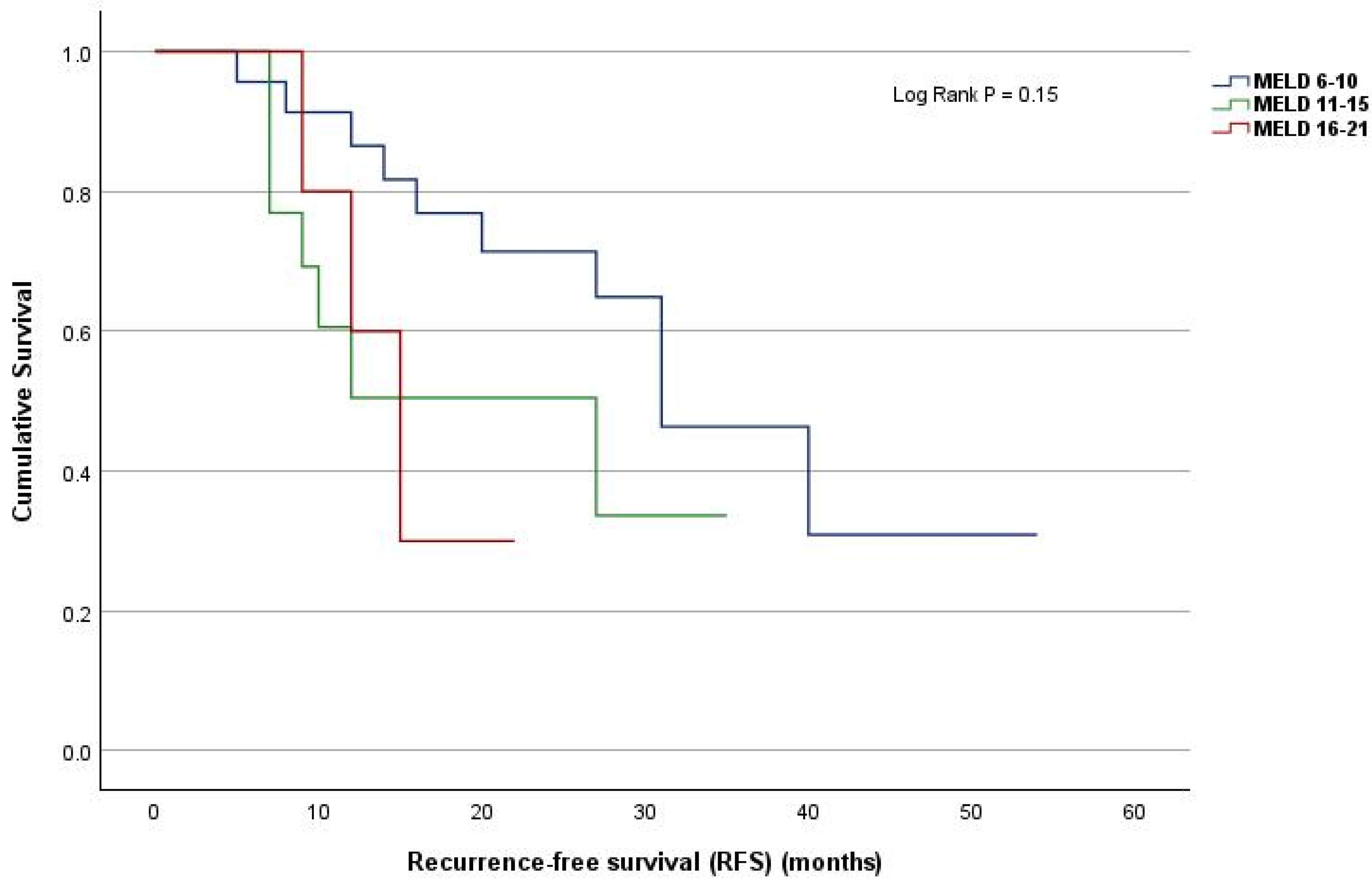
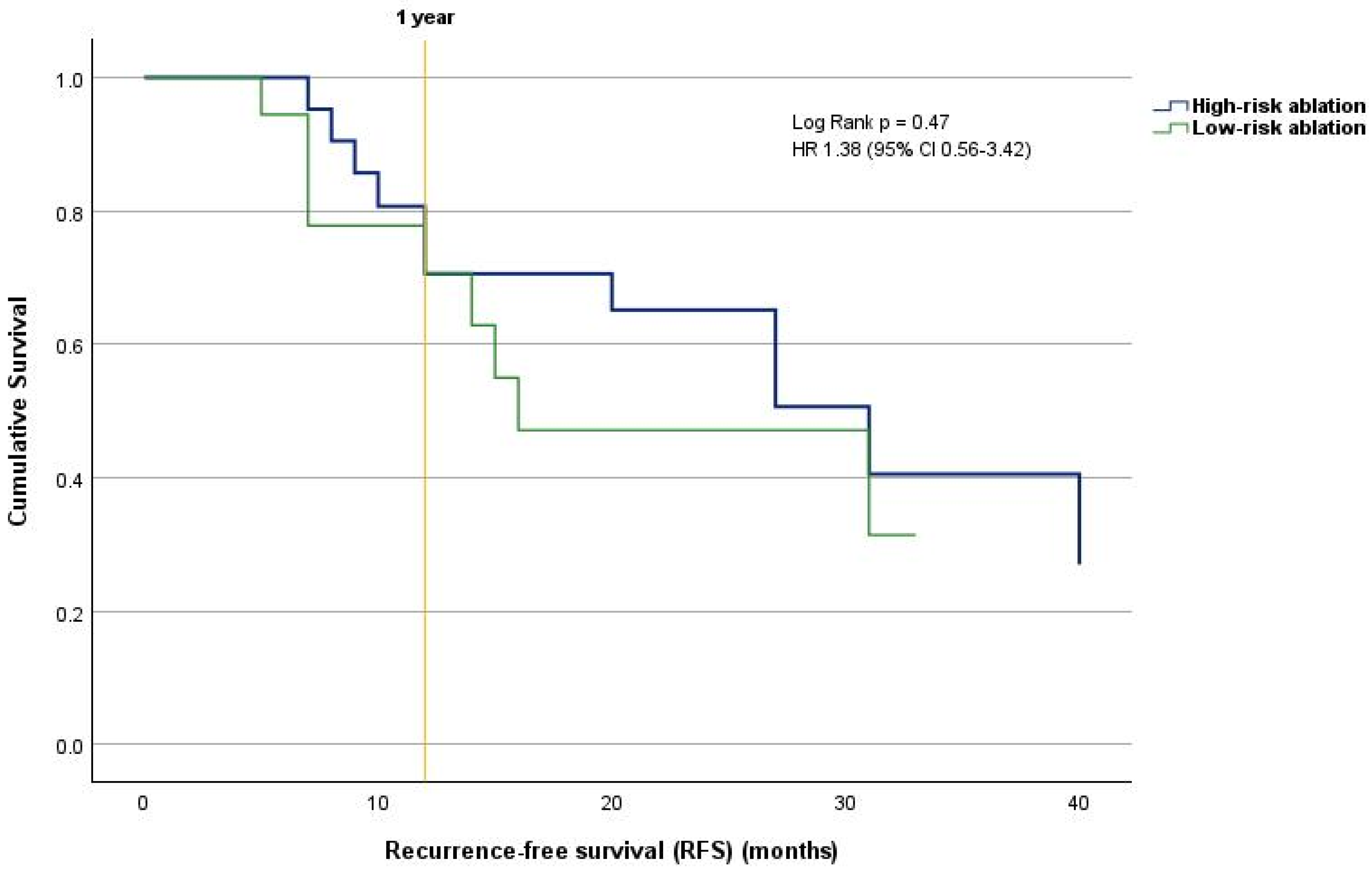
The majority of patients fulfilled high-risk criteria as defined by IMbrave050 with 53.8% undergoing MWA (n = 21) and 81.8% (n = 9) undergoing liver resection. One-year RFS in patients who underwent liver resection was 77.8% in high-risk and 100% in low-risk patients (p = NS). Median follow up time was 35 months (95% CI 25–45 months) in the high-risk resection group and 34 months (95% CI NE) in the low-risk resection group. In patients who underwent MWA, 1-year RFS was 89.5% in the high-risk cohort and 73.3% in the low-risk cohort (p = NS) (Figure 1). Median follow up time was 30 months (95% CI 25–35 months) in the high-risk ablation group and 26 months (95% CI 11–41 months) in the low-risk ablation group. One-year RFS for the entire cohort was 82.2%. OS at 1-year was 100% in all cohorts. There was no significant difference in RFS when accounting for gender, age, aetiology or MELD-Na score (Figure 2, Figure 3, Figure 4, Figure 5 and Figure 6).

4. Discussion

The major finding of this study is that accepted criteria to define patients with HCC who may benefit from adjuvant therapy do not appear to apply to Australian patients. We found no significant difference in 1-year RFS or OS in our ablation cohort after stratification into high- and low-risk groups per the IMbrave050 protocol. The high-risk group in fact had improved RFS compared to the low-risk group although this did not reach statistical significance. These results are likely due to key epidemiological differences in Australian patients diagnosed with HCC compared to the IMbrave050 cohort. Liver resection was the predominant curative treatment in the IMbrave050 cohort, and the majority of patients were of Asian background with CLD secondary to Hepatitis B infection. This differs from the Australian context, where the majority of patients undergo MWA and the prevalence of Hepatitis B-associated CLD is much lower. The proportion of patients undergoing MWA as the curative treatment was 78% in our cohort compared to only 12.4% in the IMbrave050 cohort. The most common causes of CLD in our cohort were Hepatitis C, ARLD and MASLD which are typical for a Western population. There is some evidence that patients with non-viral HCC, particularly MASLD, may not respond as well to immune therapy compared to viral-related HCC. A meta-analysis of 1656 patients with advanced HCC undergoing PDL1 immunotherapy found that patients with non-viral HCC had significantly worse overall survival compared to patients with viral HCC [16]. Additionally, patients with MASLD were found to have significantly worse overall survival compared to patients without [16].
Early and late recurrence of HCC are mechanistically distinct. Early recurrence typically refers to disease recurrence occurring prior to 2 years which is secondary to metastases and is thought to be influenced by tumour characteristics such as size and number of lesions whereas late recurrence occurs after 2 years and is attributed to de novo HCC [17]. Ablation is associated with a higher risk of recurrence compared to resection, noting that patients undergoing ablation tend to be older and have more advanced liver disease which are both predictors of recurrence in their own right [18]. Despite our population being older and predominantly undergoing ablation, OS was excellent with all patients in the study alive at 1-year and a 1-year RFS of 89.5% and 73.3% in the high- and low-risk ablation groups respectively (p = NS). RFS was numerically improved in the high-risk ablation group compared to the low-risk ablation group across the study period though this was not statistically significant (HR 1.38, 95% CI, 0.56–3.42, p = NS). In the IMbrave050 study, the ablation cohort was much smaller than the resection group (n = 83) and there was no significant difference in RFS in the subgroup analysis of these ablation patients (HR 0.61, 95% CI 0.26–1.41) [12].
Adverse effects of atezolizumab and bevacizumab are not insignificant. Atezolizumab like other immunotherapeutic agents can lead to a wide array of dermatological, gastrointestinal, endocrinological and other immunogenic effects [19]. Adverse effects of bevacizumab include hypertension and bleeding which underline the importance of variceal screening and prophylaxis prior to the commencement of therapy [19]. Treatment was required to be discontinued in 9% of patients in the IMbrave050 trial and almost half of all patients (41%) experienced a Grade 3 or 4 event [12]. Given the lack of evidence for adjuvant therapy in the ablation cohort and the risk of significant complications, it is unclear whether the benefits of adjuvant therapy outweigh the risks in this population.
In addition to atezolizumab and bevacizumab, there are a number of other potential adjuvant therapy options. Lee et al. (2015) administered adjuvant activated cytokine-induced cells and found significantly improved OS and RFS [8]. The patient cohort were Koreans with predominantly Hepatitis B-related HCC, and most underwent ablation as curative treatment. At 5 years follow up, the treatment arm continued to demonstrate improved RFS (HR 0.67, 95% CI 0.48–0.94) [20]. A more recent phase 2 trial looking at the use of sintilimab (a PD-1 inhibitor) in patients with high-risk HCC (defined as the presence of microvascular invasion (MVI)) demonstrated promising results with improved RFS compared to active surveillance [21].
Updated data from the IMbrave050 study published in 2025 revealed the improved RFS observed in the treatment arm was not sustained over time (median follow up 35.1 months, HR 0.90 (95% CI 0.72–1.12) [13]. Analysis of the OS end point is still immature. It is possible that the lack of sustained efficacy may be due to incomplete eradication of micrometastases with insignificant RFS after the 1-year time period. However, there has been some criticism of the risk stratification criteria utilised by IMbrave050 [22,23] and the use of different criteria may better select patients who would benefit from adjuvant immunotherapy. Tada et al. (2024) proposed the AD-ON score to assist in determining whether patients at high-risk of recurrence undergoing ablation should receive adjuvant immunotherapy [23]. Hepatitis C, alpha-fetoprotein (AFP)-L3 and des-gamma-carboxy prothrombin (DCP) were considered as predictors of recurrence and incorporated into the score [23]. The AFP-L3 isoform is produced by malignant liver cells, demonstrates good specificity for detecting HCC and is useful particularly for small tumours with a study by Li et al. demonstrating detection rates of approximately 35% in patients with small HCC [24]. DCP is a non-functional thrombin precursor produced by HCC cells [25]. Norman et al. demonstrated that the combination of AFP-L3 and DCP predicted 61% of HCC recurrences in patients who had undergone liver transplant [25]. The presence of MVI on histopathology is another independent negative prognostic marker of HCC recurrence [26].
Our exploratory findings raise several questions about the applicability of the IMbrave050 criteria to Australian and other Western populations. There are key differences in patient demographics which leads to variation in the types of curative treatment offered. Ablation is the most common treatment in our centre, and our patient cohort is older and frequently have co-morbid medical conditions that may limit their fitness to undergo surgery. In Australia there is universal access to specialist healthcare although despite this HCC screening rates are still well below target. MASLD is now the most common cause of CLD in many Western countries including Australia and there is some limited evidence suggesting that these patients do not respond as well to immunotherapy for HCC compared to patients with CLD secondary to viral hepatitis.
Our study is limited by its observational design and small sample size. There was no statistically significant difference in RFS between the high- and low-risk groups however the interpretation of these results is impacted by the small sample size. Treatment bias is a consideration with older patients more likely to undergo ablation. All cases were discussed at a hepatology MDT with input from hepatobiliary surgeons and consideration of resection in suitable patients. To our knowledge this is the first study to examine if criteria to select patients for adjuvant therapy are applicable in the Australian setting and further research into this area is needed with larger cohorts of patients to enable robust analysis of subgroups to explore our findings in more detail.

5. Conclusions

The role of adjuvant therapy for patients undergoing ablation or resection is unclear with limited evidence in this subgroup as well as in patients with non-viral HCC. The overrepresentation of Hepatitis B and resection in the IMbrave050 cohort affects the generalisability of findings to the Australian population. Further research is required to explore the practical application of the IMbrave050 model and to consider whether a new high-risk definition is required to identify which patients could benefit from adjuvant therapy.

Author Contributions

N.C.: writing and editing abstract and manuscript, data collection and analysis; R.G. and J.O.: writing and editing abstract and manuscript, data analysis; A.S., T.W., R.W., J.L. and B.G.: revision and review of manuscript. All authors have read and agreed to the published version of the manuscript.

Funding

This research received no external funding.

Institutional Review Board Statement

The study was conducted in accordance with the Declaration of Helsinki, and approved by Townsville Hospital and Health Service Human Research Ethics Committee (HREC) (protocol code: HREC/2024/QTHS/113109; date of approval: 4 February 2025).

Informed Consent Statement

The requirement for patient consent was waived due to the retrospective observational study design with approval from the Townsville Hospital and Health Service Human Research Ethics Committee (HREC/2024/QTHS/113109).

Data Availability Statement

The data presented in this study are available on request from the corresponding author due to ethical restrictions.

Conflicts of Interest

The authors declare no conflicts of interest.

References

  1. Sung, H.; Ferlay, J.; Siegel, R.L.; Laversanne, M.; Soerjomataram, I.; Jemal, A.; Bray, F. Global Cancer Statistics 2020: GLOBOCAN Estimates of Incidence and Mortality Worldwide for 36 Cancers in 185 Countries. CA Cancer J. Clin. 2021, 71, 209–249. [Google Scholar] [CrossRef]
  2. Australian Institute of Health and Welfare (AlHW). Cancer Data in Australia; AIHW: Canberra, Australia, 2024. [Google Scholar]
  3. Reig, M.; Forner, A.; Rimola, J.; Ferrer-Fàbrega, J.; Burrel, M.; Garcia-Criado, Á.; Kelley, R.K.; Galle, P.R.; Mazzaferro, V.; Salem, R.; et al. BCLC strategy for prognosis prediction and treatment recommendation: The 2022 update. J. Hepatol. 2022, 76, 681–693. [Google Scholar] [CrossRef]
  4. Wang, J.H.; Wang, C.C.; Hung, C.H.; Chen, C.L.; Lu, S.N. Survival comparison between surgical resection and radiofrequency ablation for patients in BCLC very early/early stage hepatocellular carcinoma. J. Hepatol. 2012, 56, 412–418. [Google Scholar] [CrossRef] [PubMed]
  5. Bruix, J.; Takayama, T.; Mazzaferro, V.; Chau, G.Y.; Yang, J.; Kudo, M.; Cai, J.; Poon, R.T.; Han, K.H.; Tak, W.Y.; et al. Adjuvant sorafenib for hepatocellular carcinoma after resection or ablation (STORM): A phase 3, randomised, double-blind, placebo-controlled trial. Lancet Oncol. 2015, 16, 1344–1354. [Google Scholar] [CrossRef] [PubMed]
  6. Chen, L.T.; Chen, M.F.; Li, L.A.; Lee, P.H.; Jeng, L.B.; Lin, D.Y.; Wu, C.C.; Mok, K.T.; Chen, C.L.; Lee, W.C.; et al. Long-term results of a randomized, observation-controlled, phase III trial of adjuvant interferon Alfa-2b in hepatocellular carcinoma after curative resection. Ann. Surg. 2012, 255, 8–17. [Google Scholar] [CrossRef]
  7. Mazzaferro, V.; Romito, R.; Schiavo, M.; Mariani, L.; Camerini, T.; Bhoori, S.; Capussotti, L.; Calise, F.; Pellicci, R.; Belli, G.; et al. Prevention of hepatocellular carcinoma recurrence with alpha-interferon after liver resection in HCV cirrhosis. Hepatology 2006, 44, 1543–1554. [Google Scholar] [CrossRef]
  8. Lee, J.H.; Lee, J.H.; Lim, Y.S.; Yeon, J.E.; Song, T.J.; Yu, S.J.; Gwak, G.Y.; Kim, K.M.; Kim, Y.J.; Lee, J.W.; et al. Adjuvant immunotherapy with autologous cytokine-induced killer cells for hepatocellular carcinoma. Gastroenterology 2015, 148, 1383–1391.e1386. [Google Scholar] [CrossRef]
  9. Schmid, P.; Cortés, J.; Dent, R.A.; McArthur, H.L.; Pusztai, L.; Kummel, S.; Denkert, C.; Park, Y.H.; Hui, R.; Harbeck, N.; et al. LBA4 Neoadjuvant pembrolizumab or placebo plus chemotherapy followed by adjuvant pembrolizumab or placebo for high-risk early-stage TNBC: Overall survival results from the phase III KEYNOTE-522 study. Ann. Oncol. 2024, 35, S1204–S1205. [Google Scholar] [CrossRef]
  10. Powles, T.; Catto, J.W.F.; Galsky, M.D.; Al-Ahmadie, H.; Meeks, J.J.; Nishiyama, H.; Vu, T.Q.; Antonuzzo, L.; Wiechno, P.; Atduev, V.; et al. Perioperative Durvalumab with Neoadjuvant Chemotherapy in Operable Bladder Cancer. N. Engl. J. Med. 2024, 391, 1773–1786. [Google Scholar] [CrossRef]
  11. Finn, R.S.; Qin, S.; Ikeda, M.; Galle, P.R.; Ducreux, M.; Kim, T.-Y.; Kudo, M.; Breder, V.; Merle, P.; Kaseb, A.O.; et al. Atezolizumab plus Bevacizumab in Unresectable Hepatocellular Carcinoma. N. Engl. J. Med. 2020, 382, 1894–1905. [Google Scholar] [CrossRef] [PubMed]
  12. Qin, S.; Chen, M.; Cheng, A.L.; Kaseb, A.O.; Kudo, M.; Lee, H.C.; Yopp, A.C.; Zhou, J.; Wang, L.; Wen, X.; et al. Atezolizumab plus bevacizumab versus active surveillance in patients with resected or ablated high-risk hepatocellular carcinoma (IMbrave050): A randomised, open-label, multicentre, phase 3 trial. Lancet 2023, 402, 1835–1847. [Google Scholar] [CrossRef] [PubMed]
  13. Yopp, A.; Kudo, M.; Chen, M.; Cheng, A.L.; Kaseb, A.O.; Lee, H.C.; Qin, S.; Cha, E.; Hack, S.P.; Lian, Q.; et al. LBA39 Updated efficacy and safety data from IMbrave050: Phase III study of adjuvant atezolizumab (atezo) + bevacizumab (bev) vs active surveillance in patients (pts) with resected or ablated high-risk hepatocellular carcinoma (HCC). Ann. Oncol. 2024, 35, S1230. [Google Scholar] [CrossRef]
  14. Aslam, A.; Chernyak, V.; Tang, A.; Miller, F.H.; Bashir, M.; Do, R.; Sirlin, C.; Lewandowski, R.J.; Kim, C.Y.; Kielar, A.Z.; et al. CT/MRI LI-RADS 2024 Update: Treatment Response Assessment. Radiology 2024, 313, e232408. [Google Scholar] [CrossRef]
  15. Edmondson, H.A.; Steiner, P.E. Primary carcinoma of the liver: A study of 100 cases among 48,900 necropsies. Cancer 1954, 7, 462–503. [Google Scholar] [CrossRef]
  16. Foerster, F.; Gairing, S.J.; Müller, L.; Galle, P.R. NAFLD-driven HCC: Safety and efficacy of current and emerging treatment options. J. Hepatol. 2022, 76, 446–457. [Google Scholar] [CrossRef]
  17. Imamura, H.; Matsuyama, Y.; Tanaka, E.; Ohkubo, T.; Hasegawa, K.; Miyagawa, S.; Sugawara, Y.; Minagawa, M.; Takayama, T.; Kawasaki, S.; et al. Risk factors contributing to early and late phase intrahepatic recurrence of hepatocellular carcinoma after hepatectomy. J. Hepatol. 2003, 38, 200–207. [Google Scholar] [CrossRef]
  18. Lee, H.A.; Lee, Y.-S.; Kim, B.K.; Jung, Y.K.; Kim, S.U.; Park, J.Y.; Kim, J.H.; An, H.; Kim, D.Y.; Yim, H.J.; et al. Change in the Recurrence Pattern and Predictors over Time after Complete Cure of Hepatocellular Carcinoma. Gut Liver 2021, 15, 420–429. [Google Scholar] [CrossRef] [PubMed]
  19. Zanuso, V.; Pirozzi, A.; Balsano, R.; Pressiani, T.; Rimassa, L. Safety and Efficacy of Atezolizumab and Bevacizumab Combination as a First Line Treatment of Advanced Hepatocellular Carcinoma. J. Hepatocell. Carcinoma 2023, 10, 1689–1708. [Google Scholar] [CrossRef]
  20. Lee, J.H.; Lee, J.H.; Lim, Y.S.; Yeon, J.E.; Song, T.J.; Yu, S.J.; Gwak, G.Y.; Kim, K.M.; Kim, Y.J.; Lee, J.W.; et al. Sustained efficacy of adjuvant immunotherapy with cytokine-induced killer cells for hepatocellular carcinoma: An extended 5-year follow-up. Cancer Immunol. Immunother. 2019, 68, 23–32. [Google Scholar] [CrossRef]
  21. Wang, K.; Xiang, Y.J.; Yu, H.M.; Cheng, Y.Q.; Liu, Z.H.; Qin, Y.Y.; Shi, J.; Guo, W.X.; Lu, C.D.; Zheng, Y.X.; et al. Adjuvant sintilimab in resected high-risk hepatocellular carcinoma: A randomized, controlled, phase 2 trial. Nat. Med. 2024, 30, 708–715. [Google Scholar] [CrossRef]
  22. Rose, S.; Ashraf, M.U.; Premkumar, M. Adjuvant therapy in hepatocellular carcinoma: The IMbrave050 trial. Lancet 2024, 404, 656–657. [Google Scholar] [CrossRef]
  23. Tada, F.; Hiraoka, A.; Nakatani, K.; Matsuoka, K.; Fukumoto, M.; Matsuda, T.; Yanagihara, E.; Saneto, H.; Murakami, T.; Onishi, K.; et al. Clinical features of patients with hepatocellular carcinoma treated with radiofrequency ablation therapy: Developing a simple score to determine the need for immune-adjuvant therapy. Clin. J. Gastroenterol. 2024, 17, 401–411. [Google Scholar] [CrossRef]
  24. Li, D.; Mallory, T.; Satomura, S. AFP-L3: A new generation of tumor marker for hepatocellular carcinoma. Clin. Chim. Acta 2001, 313, 15–19. [Google Scholar] [CrossRef] [PubMed]
  25. Norman, J.S.; Li, P.J.; Kotwani, P.; Shui, A.M.; Yao, F.; Mehta, N. AFP-L3 and DCP strongly predict early hepatocellular carcinoma recurrence after liver transplantation. J. Hepatol. 2023, 79, 1469–1477. [Google Scholar] [CrossRef] [PubMed]
  26. Zhang, X.; Li, J.; Shen, F.; Lau, W.Y. Significance of presence of microvascular invasion in specimens obtained after surgical treatment of hepatocellular carcinoma. J. Gastroenterol. Hepatol. 2018, 33, 347–354. [Google Scholar] [CrossRef] [PubMed]
Figure 1. Recurrence-free survival (in months) in high-risk versus low-risk microwave ablation.
Livers 06 00014 g001
Figure 2. Recurrence-free survival (in months) in high-risk versus low-risk liver resection.
Livers 06 00014 g002
Figure 3. Recurrence-free survival (in months) comparison of different genders.
Livers 06 00014 g003
Figure 4. Recurrence-free survival (in months) comparison of different age groups.
Livers 06 00014 g004
Figure 5. Recurrence-free survival (in months) comparison of different aetiologies of chronic liver disease.
Livers 06 00014 g005
Figure 6. Recurrence-free survival (in months) comparison of MELD scores.
Livers 06 00014 g006
Table 1. Patient demographics.
SexN (%)
Male: 41 (82%)
Female: 9 (17.3%)
Age (years)MedianInterquartile range
6961–75
Aetiology of liver diseaseN (%)
Hepatitis C virus-related cirrhosis17 (34%)
Alcohol-related cirrhosis16 (32%)
Metabolic dysfunction-associated steatotic liver disease9 (18%)
Idiopathic4 (8%)
Hepatitis B virus-related cirrhosis3 (6%)
Haemochromatosis1 (2%)
Model for End-Stage Liver Disease (MELD-Na) (n = 42)MedianInterquartile range
107–13
Childs Pugh scoreN (%)
A: 35
B: 6
C: 1
Not specified: 8
Barcelona Clinic Liver Cancer (BCLC)N (%)
BCLC 0: 13 (26%)
BCLC A: 35 (70%)
BCLC B: 2 (4%)
Eastern Cooperative Oncology Group (ECOG)N (%)
ECOG 0: 49 (98%)
ECOG 1: 1 (2%)
Table 2. Patient demographics according to high- and low-risk groups.
SexN in High-Risk GroupN in Low-Risk Group
Male: 22
Female: 8
Total: 30
Male: 19
Female: 1
Total: 20
Age (years)Median in high-risk groupMedian in low-risk group
Median: 68 years (IQR 61–75 years)Median: 71 years (IQR 59–75 years)
Aetiology of liver diseaseN in high-risk groupN in low-risk group
Hepatitis C virus-related cirrhosis116
Alcohol-related cirrhosis79
Metabolic dysfunction-associated steatotic liver disease81
Idiopathic31
Hepatitis B virus-related cirrhosis12
Haemochromatosis01
Total: 30Total: 20
Model for End-Stage Liver Disease (MELD-Na) (n = 42)Median in high-risk groupMedian in low-risk group
Median: 10 (IQR 7–12) Median: 10 (IQR 8–13)
Childs Pugh scoreN in high-risk groupN in low-risk group
A: 22
B: 3
C: 0
Not specified: 5
A: 13
B: 3
C: 1
Not specified: 3
Barcelona Clinic Liver Cancer (BCLC)N in high-risk groupN in low-risk group
BCLC 0: 2
BCLC A: 26
BCLC B: 2
Total: 30
BCLC 0: 11
BCLC A: 9
BCLC B: 0
Total: 20
Eastern Cooperative Oncology Group (ECOG)N in high-risk groupN in low-risk group
ECOG 0: 30
ECOG 1: 0
Total: 30
ECOG 0: 19
ECOG 1: 1
Total: 20
Table 3. Tumour characteristics.
Tumour Grade (Edmondson–Steiner Grading System)N (%)
Well differentiated: 7 (21.9%)
Moderately differentiated: 16 (50%)
Poorly differentiated: 6 (18.8%)
Biopsy non-diagnostic for HCC: 2 (6.3%)
Not specified: 1 (3.1%)
Total: 32
Number of intrahepatic tumours at diagnosisN (%)
1: 43 (86%)
2: 6 (12%)
3: 1 (2%)
Presence of any intrahepatic tumours > 5 cmN (%)
Yes: 6 (12%)
No: 44 (88%)
Presence of microvascular invasion (in patients who underwent resection)N (%)
Yes: 6
No: 5
Diameter of the largest intrahepatic tumour at diagnosis (cm)Median
2.3
Interquartile range
1.8–2.9
Alpha-fetoprotein (AFP) (ng/mL)Median
5
Interquartile range
3.2–9.4
Table 4. Tumour characteristics according to curative treatment.
Number of Intrahepatic Tumours at DiagnosisAblationResectionTotal
134943
2516
3011
Total391150
Tumour grade (Edmondson–Steiner grading system)AblationResectionTotal
Well differentiated527
Moderately differentiated101616
Poorly differentiated336
Biopsy not diagnostic of HCC202
Not specified011
Total211132
Diameter of the largest intrahepatic tumour at diagnosis (cm)
Ablation (n = 39)Median: 2.2 cm (IQR 1.7–2.5 cm)
Resection (n = 11)Median: 5.2 cm (IQR 2.7–7 cm)
Alpha-fetoprotein (AFP) (ng/mL)
Ablation (n = 39)Median: 4.6 ng/mL (IQR 1–12 ng/mL)
Resection (n = 11)Median: 5 ng/mL (IQR 3.4–8.9 ng/mL)
Disclaimer/Publisher’s Note: The statements, opinions and data contained in all publications are solely those of the individual author(s) and contributor(s) and not of MDPI and/or the editor(s). MDPI and/or the editor(s) disclaim responsibility for any injury to people or property resulting from any ideas, methods, instructions or products referred to in the content.