
Article

Body Image, Psychological Distress, and Well-Being in Italian Women with Lipedema: A Controlled Cross-Sectional Study

1
Scuola di Psicoterapia Cognitiva (SPC), 00199 Rome, Italy
2
Linfamed SRL, 33100 Udine, Italy
3
Biology, Ecology and Earth Sciences Department, University of Calabria, 87036 Rende, Italy
4
Research Group in Sports Nutrition (DBSS-Nut), Dynamical Business & Science Society—DBSS International, Sociedad per Acciones Simplificada (SAS), Bogotá 110311, Colombia
*
Author to whom correspondence should be addressed.
These authors contributed equally to this work.
Women 2026, 6(3), 50; https://doi.org/10.3390/women6030050
Submission received: 13 May 2026 / Revised: 9 July 2026 / Accepted: 16 July 2026 / Published: 28 July 2026

Abstract

Lipedema is a chronic disorder characterized by the abnormal and disproportionate accumulation of painful subcutaneous adipose fat, primarily affecting the lower limbs and occurring almost exclusively in women. The aim of this controlled cross-sectional study was to compare body image, psychological distress, and psychological well-being in women with (n = 77) and without lipedema (n = 32). Psychological functioning was assessed using validated measures of depressive symptoms (PHQ-9), eating attitudes (EAT-26), perceived stress (PSS), medically unexplained symptoms (M.U.S.), psychological well-being (WHO-5), life satisfaction (SWLS), psychological flexibility (AAQ-II), pain intensity (VAS), together with measures of body image, lifetime psychological burden, maladaptive cognitive beliefs, symptom severity, and anthropometric parameters. Compared with controls, women with lipedema reported significantly greater body image dissatisfaction, perceived distress, M.U.S., depressive symptoms, disordered eating attitudes, and pain, together with lower psychological well-being, life satisfaction, and psychological flexibility (all p < 0.001). Within the lipedema group, PHQ-9 scores were significantly predicted by M.U.S. scores, maladaptive cognitions, and pain intensity (VAS), whereas EAT-26 scores were predicted by PHQ-9 scores and maladaptive cognitions. These findings indicate that lipedema is associated with a substantial psychological burden and support integrating psychological assessment and intervention into multidisciplinary care.

1. Introduction

First described by Allen and Hines in 1940 [1], lipedema was officially recognized by the World Health Organization as a distinct disease entity with the adoption of ICD-11 in 2019 [2], which came into effect in 2022 [3]. Lipedema is a chronic, progressive disorder characterized by a symmetrical and disproportionate accumulation of subcutaneous adipose tissue. It is generally resistant to conventional weight-loss interventions, although some evidence suggests potential benefits of low-carbohydrate or ketogenic dietary approaches [4]. The condition is commonly associated with pain and edema [5]. It primarily affects women, whereas the rare cases reported in men are generally associated with hormonal imbalance [6].
Lipedema is estimated to affect approximately 10% of women worldwide [7]. Disease progression is commonly classified into three clinical stages, ranging from an enlarged subcutaneous adipose layer with small nodules to severe tissue deformity; a fourth stage, characterized by the coexistence of lipedema and secondary lymphedema (lipo-lymphedema), has also been described [8,9]. Although the etiology of lipedema remains poorly understood [10], current evidence suggests that both genetic and hormonal factors contribute to its development. A genetic predisposition has been hypothesized and partially supported by the identification of mutations in the AKR1C1 gene [8,11]. Hormonal influences are also supported by the frequent onset or worsening of symptoms during periods of hormonal change, particularly puberty, pregnancy, and menopause [5,12,13].
Lipedema is associated with markedly reduced quality of life, driven by diagnostic and therapeutic challenges as well as by its symptoms, signs, and complications, including pain, edema, easy bruising, impaired lymphatic flow, and reduced mobility [14,15,16]. Pain is considered the hallmark symptom, present at all stages and often triggered by minimal pressure or prolonged postures [17]. Women with lipedema report greater pain intensity and functional impairment compared to controls [18]. Despite being a primary treatment target [9,19], pain pathogenesis remains unclear [5]. Patients frequently describe it as persistent and unpredictable, and interfering with daily functioning [20].

1.1. Psychological Burden of Lipedema

The psychological burden of lipedema is increasingly recognized as a multidimensional construct encompassing body image disturbance, emotional distress, maladaptive eating behaviors, reduced psychological well-being, and impaired quality of life. These dimensions are influenced by several clinical factors (particularly pain intensity and disease severity) that were therefore considered in the present study.
In women with lipedema, body image represents one of the most profoundly affected psychological domains. Research consistently indicates that the disproportionate accumulation of adipose tissue, particularly in the lower body, contributes to physical appearance dissatisfaction, reduced self-esteem, and increased psychological vulnerability [21,22]. These concerns tend to worsen with disease progression and have been associated with greater emotional distress, anxiety, and depressive symptoms [15,23].
Psychological distress is another prominent feature of lipedema. Compared with controls, women with lipedema consistently report higher levels of perceived stress, which are associated with greater symptom severity, pain intensity, and poorer psychological well-being [24,25]. Chronic stress may arise not only as a consequence of persistent pain, functional limitations, and body dissatisfaction but may also exacerbate symptom perception through reciprocal interactions between psychological and physiological processes, contributing to the maintenance of emotional distress.
Psychological well-being and depressive symptoms are lower in women with lipedema compared to controls [18,24,25,26,27,28,29]. Conversely, more favorable psychological outcomes are associated with greater psychological flexibility and better physical functioning [10,30]. The psychological burden of lipedema may also manifest through maladaptive coping strategies and social withdrawal [23,31,32]. Furthermore, social stigma, repeated ineffective treatments, and delayed or inadequate medical recognition may exacerbate body dissatisfaction, psychological distress, and depressive symptoms and, in severe cases, increase vulnerability to suicidal ideation [33].
Recent evidence also confirms a reduced health-related quality of life and high burden of depressive symptoms among women with lipedema [34]. Health-related quality of life is impaired across multiple domains, including physical functioning, pain, emotional well-being, and social functioning [35].
Finally, accumulating evidence indicates that pain intensity and disease severity are among the strongest predictors of depression, reduced psychological well-being, and poorer quality of life [36,37,38]. Stress may also contribute to pain exacerbation and disease progression [9,39], highlighting the importance of considering both pain intensity and symptom severity when investigating the psychological burden of lipedema.

1.2. Determinants of Psychological Outcomes

Greater symptom severity—including pain, heaviness, stiffness, and reduced mobility—and more advanced disease stages are consistently associated with higher levels of depression, disordered eating, social impairment, and poorer quality of life [25,29]. These associations may be partly explained by prolonged exposure to pain, functional limitations, weight-related stigma, and medical comorbidities.
Emerging evidence also suggests that psychological distress may not simply result from lipedema but may interact with its clinical course. Higher levels of stress before symptom onset and increased rates of traumatic experiences have been reported, together with elevated prevalence of depression, chronic stress, burnout, eating disorders, and post-traumatic stress disorder [40,41]. Recent studies further confirm that health-related quality of life is impaired across multiple domains, including physical functioning, pain, emotional well-being, and social functioning [34,35]. Conversely, psychological flexibility has emerged as a potential protective factor, being associated with lower emotional distress, better adaptation to chronic pain, and improved quality of life.
Collectively, these findings support a biopsychosocial conceptualization of lipedema, in which physical symptoms, body image, emotional functioning, and behavioral responses interact to shape the overall psychological burden, highlighting the need for multidisciplinary assessment and intervention.
Despite this substantial psychological burden, only a minority of women with lipedema seek psychological support.

1.3. Psychological Interventions and Research Gaps

Although conservative treatment primarily focuses on compression therapy, physical exercise, manual lymphatic drainage, nutritional counseling, and weight management, growing evidence suggests that multidisciplinary care should also incorporate psychological interventions. Cognitive-behavioral therapy (CBT) [42] may help reduce dysfunctional body-related beliefs, depressive symptoms, and maladaptive coping strategies, whereas Acceptance and Commitment Therapy (ACT) [43,44] may enhance psychological flexibility and adaptation to chronic pain and to body shape. Psychoeducation [45,46], stress-management techniques [47], and self-compassion interventions [48,49] have also been proposed as promising approaches, although evidence from controlled intervention studies remains limited.
In addition, ineffective treatments, delayed diagnosis, and weight-related stigma may contribute to self-stigmatization, body dissatisfaction, and persistent psychological distress. Consequently, interventions aimed at enhancing resilience and adaptive coping may help reduce stress, improve emotional adjustment, and promote psychological well-being [16,28]. Although previous studies have documented elevated rates of depression, anxiety, eating disorders, and impaired quality of life, few investigations have simultaneously examined multiple dimensions of psychological functioning—including body image, perceived stress, depressive symptoms, eating attitudes, psychological flexibility, subjective well-being, life satisfaction, pain, and symptom severity—within the same sample of women with lipedema. Furthermore, evidence from Italian populations remains scarce. Adopting this multidimensional perspective may help clarify the complex relationships between physical symptoms and psychological functioning, identify clinically relevant targets for multidisciplinary assessment and intervention, and provide the rationale for the present study.

1.4. Rationale and Objectives of the Present Study

Based on previous evidence, the present study sought to answer the following research question: Do women with lipedema differ from women without lipedema in body image, psychological distress, psychological well-being, and clinical characteristics?
The present study aimed to comprehensively investigate the psychological profile of women with lipedema by comparing them with women without lipedema across multiple domains of psychological functioning. Specifically, the two groups were compared on measures of body image, perceived stress, depressive symptoms, eating attitudes, subjective psychological well-being, life satisfaction, psychological flexibility, pain, symptom severity, and anthropometric characteristics.
A secondary aim was to examine the associations between pain, symptom severity, and psychological outcomes within the lipedema group in order to identify clinically relevant targets for multidisciplinary assessment and intervention.
We hypothesized that women with lipedema, compared with women without lipedema, would report:
(1).
Higher levels of body image discomfort, perceived stress, depressive symptoms, disordered eating attitudes, symptom severity, pain, and less favorable anthropometric characteristics;
(2).
Lower levels of subjective psychological well-being and life satisfaction;
(3).
Greater psychological inflexibility.

2. Results

2.1. Socio-Demographic Characteristics

The sample included 109 women: 77 with lipedema and 32 controls. Statistical comparison of socio-demographic characteristics between lipedema and control groups is reported in Table 1. In relation to age and educational level, no significant differences were found between groups, although in the control group, a higher proportion of women had an advanced degree. Marital and employment status differed significantly between groups: women with lipedema were more frequently married, whereas women in the control group were more often single.

2.2. Clinical Characteristics of the Lipedema Group

Among women with lipedema, most participants were classified as stage 2, followed by stage 3 and stage 1. About type, most of them were classified as type 3 + 4 (40%). The most frequently reported onset period was puberty (57.1%).
The mean LS total score was 40.9 (SD = 10.6), corresponding to a mean item score of 2.4 (SD = 0.6). Pain-related LS items showed a low-to-moderate intensity (detailed pain results are reported in Supplementary Table S1).
The mean SS total score was 19.8 (SD = 11.4), and the mean item score was 2.2 (SD = 1.3). The mean lower-limb mobility score, assessed using the LEFS, was 2.9 (SD = 1.4).
A positive family history was reported by 35% of participants. Most women reported distress related to limited treatment awareness (66.2%), delayed diagnosis (57.1%), and insufficient medical support (37.6%).
Lipedema group parameters, including treatment, are reported in Table 2 and Table 3.

2.3. Group Comparisons

2.3.1. Anthropometric and Clinical Variables

The two groups, lipedema and control, were compared based on the results of all administered tests. Table 4 shows the observed scores and statistical significance.
Women with lipedema, compared with controls, had significantly higher weight (76.4 ± 18.1 vs. 61.4 ± 12.4; p < 0.05), greater waist and hip circumferences, respectively 85.7 ± 16.1 vs. 78.7 ± 15.1 (p < 0.034) and 111.8 ± 15.6 vs. 96.6 ± 16.5 (p < 0.001). Nonetheless, waist-to-hip ratio (WHR) was significantly lower in the lipedema group (0.765 ± 0.077 vs. 0.813 ± 0.063, p = 0.001). No significant difference emerged for height.
Anthropometric characteristics differed across lipedema stages. Body weight (p < 0.001), waist circumference (p = 0.003), and hip circumference (p < 0.001) increased progressively from Stage 1 to Stage 3 + 4, whereas no significant differences were observed in height (p = 0.234).
Pain levels were significantly higher in the lipedema group compared to controls (VAS: 4.2 ± 2.8 vs. 1.2 ± 1.6; Welch’s t-test, p < 0.0001). Furthermore, VAS showed a progressive increase across stages (stage 1: 3.5 ± 2.5; stage 2: 3.9 ± 2.8; stage 3 + 4: 5.4 ± 2.8), although the overall difference did not reach statistical significance (p = 0.08).
Obesity was the most frequently reported comorbidity, present in 32.4% of the lipedema group versus 9.3% of the control group (Z-test: p < 0.0029). Regarding lifetime overweight, 46.7% of the lipedema group reported having experienced it prevalently in adolescence (56%). Only 15.62% of the control group reported overweight issues (p = 0.005).
Lifestyle. A significantly higher proportion of women with lipedema reported currently following a specific dietary regimen compared with controls (64.9% vs. 18.8%, p < 0.001). Among women with lipedema, the prescribed dietary regimen was predominantly an anti-inflammatory one, whereas women in the control group most commonly reported following a Mediterranean or low-calorie diet. No significant difference in physical activity was observed between groups (75% vs. 72%). Walking was the most commonly reported activity (61%).
Pharmacological Treatments. Fifty-six percent of women with lipedema were on medication, compared with 47% of controls (no significant difference) (full item lists are reported in the Supplementary Materials Table S2).
Comorbidities associated with lipedema. The lipedema group, compared with controls, reported a higher mean number of comorbidities (2.0 ± 1.6 vs. 0.9 ± 1.3; p < 0.01).

2.3.2. Psychological Variables

  • Body Image Discomfort.
The lipedema group showed lower scores on items 1 (p < 0.001), 2 (p < 0.001), 3 (p < 0.001), and 4 (p < 0.001). Body image experiences across the lifespan were also examined. On average, women with lipedema, compared to controls, reported a greater number of body image-related distress conditions (6.0 ± 2.4 vs. 2.7 ± 2.6; p < 0.001). Item-level analyses revealed highly significant group differences for items 3, 6, and 10 (p < 0.0001), significant differences for items 2 (p < 0.01) and 7 (p < 0.005), and marginal differences for items 5 and 8; no significance for the others.
  • Psychological Distress.
Regarding Medically Unexplained Symptoms (MUS), 98.7% of women with lipedema and 84.4% of controls experienced at least one MUS. The lipedema group reported a significantly higher average number of MUS than the control group (6.2 ± 3.5 vs. 2.4 ± 2.3, p < 0.001). The prevalence of individual MUS in the lipedema group is reported in the Supplementary Materials (Table S3). With respect to Perceived Stress (PSS), the lipedema group reported significantly higher scores than controls (18.5 ± 8.3 vs. 13.2 ± 6.3, p = 0.002). With regard to Stressful Life Events, the lipedema group reported a higher number of stressful life events than controls; however, this difference was not statistically significant (p = 0.37).
  • Mental Health
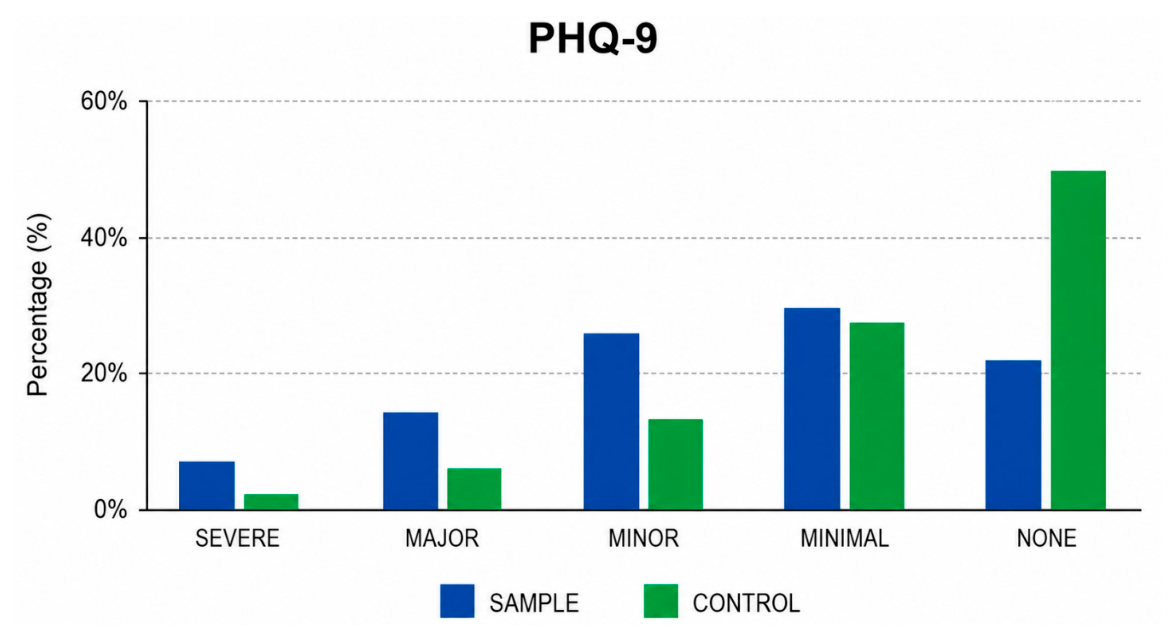
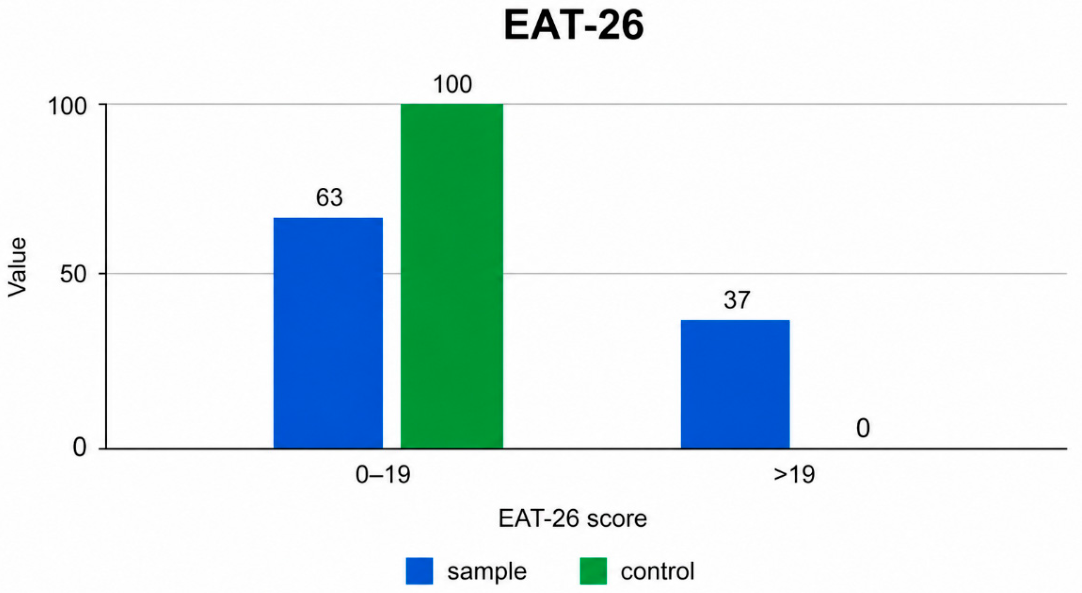
For PHQ-9, women with lipedema showed higher scores than controls (9.9 ± 5.5 vs. 4.4 ± 3.1; p < 0.001). Similarly, the EAT-26 lipedema group showed higher scores than controls (17.4 ± 13.8 vs. 3.7 ± 2.7; p < 0.001). Based on PHQ-9 scores, 12% of women with lipedema presented moderate depressive symptoms and 6% severe depressive symptoms, whereas no moderate or severe cases were observed in the control group. In addition, 37% of the lipedema group scored above the EAT-26 clinical cutoff, compared with none of the controls (Figure 1 and Figure 2).
Regarding lifetime mental health disorders, women with lipedema reported a significantly higher lifetime burden of emotional disorders than controls (2.4 ± 2.0 vs. 1.2 ± 1.4; p < 0.001). Anxiety was the most prevalent condition (57% vs. 31%; p = 0.013). Help-seeking was also higher in the lipedema group (49.3% vs. 15.6%; p < 0.01).
  • Dysfunctional Cognitive Beliefs
Women with lipedema reported significantly higher levels of dysfunctional cognitive beliefs than controls. The total dysfunctional beliefs score was significantly higher in the lipedema group (26.4 ± 12.9) than in controls (17.9 ± 9.2, p = 0.002). Likewise, the lipedema score across the eight dysfunctional beliefs items was higher in women with lipedema (3.30 ± 1.6 vs. 2.2 ± 1.1). Specifically, they showed greater catastrophizing (p = 0.015), rigid interpersonal expectation (p = 0.013), overgeneralization (p = 0.002), negative bias (p = 0.002), and self-blame tendencies (p = 0.002). No significant between-group differences emerged for dichotomous thinking (p = 0.055), fortune telling (p = 0.058), or mind reading (p = 0.321) (see Supplementary Materials, Table S4).
  • Psychological Well-being, Life Satisfaction, and Psychological Flexibility
At the WHO-5, the lipedema sample showed a significantly lower mean score (46.2 ± 2.8 vs. 62.4 ± 17.3; p < 0.001). Similarly, at the SWLS, women with lipedema reported significantly lower scores (19.2 ± 7.9 vs. 25.0 ± 6.6; p-value < 0.001). Conversely, on the AAQ-II, which has an inverse polarity compared with the WHO-5 and SWLS, the lipedema sample reported significantly higher mean scores (34.9 ± 10.5 vs. 27.4 ± 8.6; p-value < 0.001).
Regarding Childhood Quality of Life, no statistically significant differences were observed between women with lipedema and the control group.

2.3.3. Psychometric Outcomes Across Disease Stages

The Kruskal–Wallis test revealed no statistically significant differences across the three groups (Stage 1: n = 15; Stage 2: n = 44; Stage 3 + 4: n = 18) for any of the primary psychometric scales (PHQ-9, EAT-26, WHO-5, PSS, SWLS). Relating to EAT-26, while formal statistical significance was not reached, a clinically meaningful observation warrants specific comment. The median EAT-26 score in the Stage 3 + 4 group was 20.0 [IQR 9.5–29.8], which corresponds exactly to the established cut-off for disordered eating risk (≥20). Furthermore, the proportion of patients scoring at or above the cut-off increased progressively across stages: 20.0% (3/15) in Stage 1, 38.6% (17/44) in Stage 2, and 50.0% (9/18) in Stage 3 + 4. Nevertheless, Chi-square analysis of this categorical distribution did not reach statistical significance.

2.4. Correlational Analyses

2.4.1. Correlations Among Psychological Variables

Variance analysis (Spearman’s rho correlation) did not show significant differences in psychological impact across different disease stages for PHQ-9, EAT-26, or lifespan mental disorders. Pairwise comparisons between lipedema stages also demonstrated no statistically significant differences.
Within the lipedema group, PHQ-9 and EAT-26 scores were positively associated with lifetime mental health burden, whereas no significant correlations were observed with age.
MUS showed a strong positive correlation with PHQ-9 scores and moderate correlations with EAT-26 and lifetime mental health problems.
VAS was positively correlated with all mental health indicators, with moderate effect sizes.
Stressful life events were moderately associated with lifetime mental health problems, while positive Childhood Quality of Life was associated with lower PHQ-9 scores.
Body image variables were significantly associated with PHQ-9, EAT-26, and lifetime mental health outcomes; more positive body-related experiences were linked to lower psychological distress.
Full correlation results are reported in the Supplementary Materials (Table S5).

2.4.2. Correlations Between VAS and Clinical Variables

In women with lipedema, VAS showed significant correlations with multiple indicators of mental health and physical symptoms (full correlation results are reported in the Supplementary Materials, Table S14):
-
Positive significant correlations with medically unexplained symptoms (MUS; P. correlation = 0.467, p < 0.001), PSS (P. correlation = 0.430, p < 0.001), AAQ-II (P. correlation = 0.370, p < 0.001), and Stressful Life Events (total) (P. correlation = 0.273, p = 0.016).
-
Negative significant correlations with SWLS (P. correlation = −0.397, p < 0.001); WHO-5 (P. correlation = 0.427, p < 0.001); body image item: pride in physical appearance (P. correlation = −0.288, p = 0.011); positive thoughts about the body (P. correlation = −0.228, p = 0.046).
-
In relation to Childhood Quality of Life, there was a significant correlation for the item “During my childhood, there were no serious health-related events in my family” (P. correlation = −0.396, p < 0.001), while non-significant correlations were found for childhood emotional support, childhood happiness, and stressful childhood events.
Full correlation results are reported in the Supplementary Materials (Table S6).

2.4.3. Predictors of Mental Health and Stress

Predictors of Depressive Symptoms (PHQ-9). A multiple linear regression in the lipedema group identified three significant predictors of higher PHQ-9 scores: higher MUS scores (b = 0.845, p < 0.001), stronger tendencies to negative bias (b = 0.719, p < 0.001), and greater pain intensity (VAS; b = 0.343, p = 0.05) were all associated with increased PHQ-9 scores. MUS emerged as the strongest predictor. The model explained 63.7% of the variance in depressive symptoms (adjusted R2 = 0.637), and no multicollinearity issues were observed. Disease stage did not significantly predict PHQ-9 scores.
Predictors of Disordered Eating Behaviors (EAT-26). In the lipedema group, multiple regression identified two significant predictors of disordered eating: PHQ-9 higher scores (b = 0.860, p = 0.003) were associated with increased EAT-26 scores, while greater body pride (“I am proud of my physical appearance”; b = −4.058, p = 0.007) predicted lower EAT-26 scores. PHQ-9 emerged as the strongest predictor. The model explained 31.7% of the variance (adjusted R2 = 0.317), with no multicollinearity issues. Disease stage was not a significant predictor.
Predictors of Perceived Stress (PSS). A multiple linear regression was conducted to identify predictors of perceived stress (PSS) in women with lipedema. The final model explained 58.9% of the variance (adjusted R2 = 0.589) and identified four significant predictors: higher MUS scores (b = 0.876, p < 0.001) and stronger tendencies to negative bias (b = 0.773, p = 0.035) were associated with higher perceived stress, whereas greater body pride (b = −1.734, p = 0.028) predicted lower stress; AAQ-II total score showed a positive trend (b = 0.164, p = 0.061). The lipedema stage did not significantly influence perceived stress.

3. Discussion

The present controlled cross-sectional study provides a comprehensive evaluation of the psychological burden associated with lipedema by integrating clinical and psychosocial dimensions, including body image, perceived stress, mental health, psychological well-being, symptom severity, pain, and quality of life.
Overall, the findings confirm that lipedema is not only a chronic adipose tissue disorder with well-known physical symptoms and signs, but also a condition associated with substantial psychological burden. Consistent with previous research [24,25], this burden appears closely linked to symptom severity, pain intensity, and body image concerns, with significant implications for mental health and psychological well-being [16,17,26,33,34].
From a physical standpoint, women with lipedema had higher body weight and a significantly greater difference in waist-to-hip ratio, reflecting the characteristic adipose tissue distribution of the disorder. Furthermore, these parameters increased significantly from Stage 1 to Stage 3 + 4, confirming that the clinical staging reflects an anatomical progression of lipedema. Obesity was also more frequently reported as a comorbidity.
Although the majority of women with lipedema reported adhering to a specific dietary regimen, physical activity levels were comparable between groups, suggesting that lifestyle factors alone cannot explain these differences. Most participants presented stage II lipedema with type 3 + 4 involvement, indicating moderate disease severity affecting both the upper and lower limbs. Symptom onset most commonly occurred during puberty, supporting the view that lipedema is an early-onset, long-lasting condition. Despite a generally low-to-moderate symptom severity, functional mobility remained relatively well preserved.
A noteworthy finding was that many participants first became aware of lipedema through online sources and reported considerable distress related to delayed diagnosis, poor disease awareness, and insufficient medical support. These findings emphasize the need for greater public awareness and improved healthcare professional education to facilitate earlier diagnosis and more appropriate multidisciplinary management.
Pain emerged as a central feature of lipedema, in agreement with previous studies [8,9,17]. Women with lipedema reported significantly higher pain intensity than controls, with a progressive increase across stages, although the overall difference did not reach statistical significance, likely because of the limited sample size, particularly in the advanced-stage group. Pain was associated with greater perceived stress, medically unexplained symptoms (MUS), depressive symptoms, disordered eating attitudes, lifetime psychological burden, lower psychological well-being and life satisfaction, reduced psychological flexibility, and poorer body image. These findings support the hypothesis that pain represents one of the principal mechanisms linking the physical manifestations of lipedema with its psychological consequences [20,36].
Body image emerged as one of the core psychological dimensions affected in women with lipedema. Compared with controls, participants reported lower body satisfaction and more body image-related distress experiences throughout life. These difficulties often originated during adolescence and persisted into adulthood, leading to avoidance of body exposure, concealment of affected body areas, and frequent weight monitoring. Body image distress was strongly associated with depressive symptoms, disordered eating attitudes, and overall psychological burden, whereas body pride appeared to function as a protective factor. These findings should be interpreted cautiously because body image was assessed using ad hoc measures developed for the present study that have not yet undergone formal psychometric validation.
Women with lipedema also showed a substantially higher burden of stress-related and somatic symptoms. Elevated perceived stress suggests persistent psychological distress associated with living with a chronic and frequently misunderstood condition. Particularly noteworthy was the role of medically unexplained symptoms, which emerged as the strongest predictor of depressive symptoms. This finding may reflect a generalized psychophysiological stress response characterized by fatigue, sleep disturbances, autonomic symptoms, and reduced resilience.
The number of stressful life events did not differ between groups. This finding may indicate that the greater lifetime psychological burden reported by women with lipedema is more closely related to the ongoing psychological impact of the condition than to a higher frequency of stressful life events. This interpretation is consistent with previous evidence suggesting altered stress regulation in women with lipedema [24,28].
Mental health outcomes further highlighted the substantial psychological burden associated with lipedema. Women with lipedema reported significantly higher depressive symptoms and disordered eating attitudes than controls. More than half of the patients reported a lifetime history of mental health disorders, with anxiety representing the most frequent diagnosis, and many of them had previously received psychological or psychiatric treatment. Participants also endorsed more maladaptive cognitive belief patterns, including greater catastrophizing thinking, rigid interpersonal expectations, overgeneralization, negative bias, and self-blame tendencies, reflecting lower psychological flexibility and mood, as well as higher anxiety. Moreover, depressive symptoms emerged as a major predictor of disordered eating attitudes, supporting the interpretation that dysfunctional eating behaviors represent maladaptive coping responses to emotional distress and body dissatisfaction rather than primary eating disorders.
Although childhood quality of life did not differ between groups, in adulthood, women with lipedema reported significantly lower psychological well-being and life satisfaction. These findings suggest that psychological impairment is primarily related to the burden of the disease rather than to early-life adversity. Consistent with the previous literature [13,15,23,50], lipedema appears to negatively affect emotional regulation, resilience, and everyday functioning. Therefore, in line with previous studies, psychological well-being assessed through the WHO-5 may be considered one of the principal contributors to overall quality of life in this population.
The absence of significant between-stage differences in the primary psychometric outcomes supports the decision to analyze the lipedema sample as a single group. Overall, the lack of association between disease stage and psychological outcomes suggests that subjective factors—including pain intensity, negative cognitive bias, and medically unexplained symptoms—may represent more important determinants of psychological burden than anatomical severity itself. Likewise, the psychological indices (PSS, PHQ-9, EAT-26, WHO-5, and SWLS) appeared largely independent of disease stage, indicating that psychological distress is not simply a linear consequence of morphological progression. This finding is consistent with recent evidence showing that depression and psychological well-being are more strongly mediated by pain intensity [18] and psychosocial factors than by anatomical staging per se [51,52]. Nevertheless, the Stage 3 + 4 subgroup showed the highest EAT-26 scores, with the median exceeding the clinical cut-off, a finding that warrants confirmation in larger and adequately powered samples.
The present findings have several important clinical implications. They reinforce the need for multidisciplinary management integrating medical, rehabilitative, nutritional, and psychological interventions. Pain management, stress regulation, and body image-focused interventions appear particularly relevant, while enhancing psychological flexibility and addressing maladaptive cognitive belief patterns may improve mental health outcomes [53]. Routine screening for depressive symptoms, disordered eating attitudes, body image difficulties, and psychological distress should be incorporated into clinical assessment, together with improved patient education to reduce stigma and diagnostic delay. Overall, comprehensive interventions should address both the physical and psychological dimensions of lipedema in order to improve well-being, body acceptance, and quality of life.
Emerging technologies represent a promising avenue for strengthening the multidisciplinary management of lipedema. Digital health interventions—including telepsychology, mobile health applications, wearable devices, virtual reality (VR), and artificial intelligence (AI)-supported tools—may facilitate continuous monitoring of pain, physical activity, body image concerns, and psychological distress while improving access to evidence-based psychological care. VR has shown encouraging results in chronic pain management, body image disturbances, and anxiety disorders, whereas AI-assisted platforms may support personalized psychoeducation, symptom monitoring, and adherence to multidisciplinary treatment. However, these technologies should complement rather than replace face-to-face clinical care, and challenges related to accessibility, digital literacy, data privacy, and clinical validation require careful consideration. Future research should evaluate the feasibility, acceptability, and effectiveness of technology-assisted interventions specifically for women with lipedema.

Strengths, Limitations and Future Directions

The present study has several strengths. First, it provides a comprehensive assessment of the psychological burden associated with lipedema by integrating clinical and psychological dimensions, including body image, perceived stress, depressive symptoms, eating attitudes, psychological well-being, life satisfaction, psychological flexibility, pain, and symptom severity. Second, the inclusion of a control group enabled direct comparisons across multiple psychological and anthropometric variables, an approach that remains relatively uncommon in the current lipedema literature. Third, the study combined validated psychometric instruments with condition-specific measures, enabling a multidimensional characterization of the disorder. Finally, the examination of cognitive and emotional processes, including maladaptive beliefs and body image, offers novel insights into potential mechanisms underlying psychological distress in women with lipedema.
Several limitations should be acknowledged. First, a controlled cross-sectional design precludes causal inferences regarding the relationships between lipedema and psychological outcomes. Second, the relatively small sample size, particularly for the control group and for participants with advanced stages of lipedema, may have limited the statistical power and the generalizability of some findings. Third, data were collected through self-report measures, which may be subject to reporting bias. In addition, some questionnaires were developed ad hoc for this study and have not yet undergone formal psychometric validation. Finally, participants were recruited on a voluntary basis, and the diagnosis of lipedema was based on previous clinical diagnosis and self-report rather than independent clinical confirmation within the study.
Future studies should adopt longitudinal designs to clarify the temporal relationships between lipedema progression and psychological outcomes. Larger and more representative samples, particularly including women with advanced disease stages, are needed to improve statistical power and generalizability. The psychometric validation of the ad hoc instruments used in this study would further strengthen future research. Moreover, intervention studies should evaluate multidisciplinary approaches targeting pain management, body image, psychological distress, and cognitive processes. Finally, integrating biological markers with psychological assessment, such as emerging evidence on altered microRNA expression in lipedema tissue [54], may contribute to a more comprehensive understanding of the pathophysiology and psychosocial burden of the disorder.

4. Materials and Methods

4.1. Study Design

This was a controlled cross-sectional study designed to compare women with clinically diagnosed lipedema and controls without lipedema at a single time point relating to psychological burden.

4.2. Participants

Given the absence of a national registry of women with lipedema in Italy, recruitment was based on feasibility rather than a formal sampling framework. Consequently, no a priori sample size calculation was performed. For the purposes of the present analysis, a sample of 109 women aged 18 years or older was selected and divided into two groups:
  • Group 1 (Lipedema group): 77 women with a diagnosis of lipedema;
  • Group 2 (Control group): 32 women without lipedema and other chronic painful conditions.
Inclusion criteria for the lipedema group were: female sex, age ≥ 18 years, clinically confirmed diagnosis of lipedema, adequate Italian language proficiency, and the ability to complete the questionnaires independently. Inclusion criteria for the control group were: female sex, age ≥ 18 years, absence of lipedema and chronic painful conditions, adequate Italian language proficiency, and the ability to complete the questionnaires independently.
Exclusion criteria for both groups included cognitive or sensory impairments that could interfere with questionnaire completion and severe psychiatric disorders preventing reliable participation.
All participants in the lipedema group had previously received a clinical diagnosis of lipedema, established by the same experienced physiatrist according to internationally accepted clinical diagnostic criteria for lipedema.

4.3. Procedure

Data were collected between September 2024 and February 2025 using an online survey administered through Google Forms. Participation was voluntary, and no financial incentives were offered.
Participants with lipedema were recruited through a private healthcare facility specialized in the assessment and management of lipedema and lymphedema. Eligible women had previously received a clinical diagnosis of lipedema. Controls were recruited through public advertisements and were screened according to the study eligibility criteria.
Potential participants in both groups were initially contacted by the administrative staff via e-mail. Participants who expressed interest in participating received the participant information sheet and the informed consent form. Only after the signed documents had been returned, the administrative staff sent a second e-mail containing a link to the Google Forms questionnaire together with a unique alphanumeric identification code.
Participants entered the identification code when completing the questionnaire, allowing questionnaire responses to remain anonymous. The completed questionnaires were automatically stored in a dedicated research database, whereas informed consent forms and personal identifying information were stored separately. This procedure ensured that identifying information and research data remained separate throughout the study, guaranteeing participant anonymity and confidentiality.
Participants completed the questionnaires independently online, without assistance from healthcare professionals or researchers. However, the research team was available to answer procedural questions if required.
The study was approved by the Ethics Committee of the Cognitive Psychotherapy School, Rome (protocol no. 9/23, 21 December 2023) and was conducted in accordance with the Declaration of Helsinki.

4.4. Data Collection

An online survey was used to collect demographic, physical, medical, and psychological data. Full item lists are reported in the Supplementary Materials.
Collected Parameters Included:
  • Sociodemographic variables: age, marital status, education, employment.
  • Physical variables: anthropometric data, current specific dietary regimen, physical activity.
  • Clinical variables: lipedema stage/type, period of onset, symptoms, family history, comorbidities (for details see Supplementary Materials, Table S7), treatment, pharmacological treatments.

4.5. Instruments

Questionnaires were presented in the same order to all participants and required approximately 20 min to be completed.

4.5.1. Clinical Conditions and Pain

Lipedema symptoms were assessed using a 17-item list, developed for the present study (LS), rated on a 5-point Likert scale, with higher scores indicating greater symptom severity (for details, see Supplementary Materials, Table S8).
Symptom severity was also measured using the Symptom Severity (SS) scale [26] (for details, see Supplementary Materials, Table S9).
Lower limb mobility was assessed using the Italian version of the Lower Extremity Functional Scale (LEFS) [55,56]. The LEFS consists of 20 items rated on a 5-point Likert scale (0 = extreme difficulty; 4 = no difficulty) assessing difficulties in daily activities (e.g., getting in and out of a bathtub, walking between rooms).
Pain intensity was measured using the Visual Analog Scale (VAS) [57], with an 11-point scale ranging from 0 (no pain) to 10 (worst possible pain), commonly used to assess chronic pain conditions. Participants rated their average daily pain intensity.

4.5.2. Body Image

Body image was assessed using two questionnaires developed for the present study (see Supplementary Materials, Tables S10 and S11). Current body image: participants responded by indicating on a scale from 1 to 5 how much they agreed with the following statements (1 = strongly disagree; 5 = strongly agree). Lifetime body image experiences were assessed using 11 multiple-choice items.

4.5.3. Psychological Stress

Stress-related somatic symptoms were assessed on the basis of the Medically Unexplained Symptoms (MUS) scale [58]. The instrument includes 20 items assessing persistent, nonspecific physical symptoms (e.g., chronic fatigue, daytime sleepiness). Item-level responses were considered indicators of stress-related symptomatology. The original version has demonstrated associations with biological stress markers, including salivary cortisol and hsCRP. An Italian adaptation of the MUS questionnaire (Sintomi Vaghi e Aspecifici—MUS®) was used [59].
Perceived stress was measured using the Italian version of the Perceived Stress Scale (PSS) [22,60]. The scale assesses the extent to which life situations are appraised as stressful over the past month using a 5-point Likert scale. To obtain the total score, the values of items 4, 5, 7, and 8 must be reversed and added to the scores of the other items. A higher total score indicates greater perceived stress.
Two questionnaires were developed for the present study to assess stressful life events and childhood quality of life. For Stressful Life Events Questionnaires, participants indicated which of 10 events were experienced during their lifetime (see Supplementary Materials, Table S12). Childhood Quality of Life was assessed using four positively worded statements rated on a 5-point Likert scale (1 = completely disagree; 5 = completely agree) (see Supplementary Materials, Table S13).

4.5.4. Mental Health

Depression was assessed using the Italian version of the Patient Health Questionnaire-9 (PHQ-9) [61,62]. It consists of nine items rated on a 4-point Likert scale assessing symptom frequency over the previous two weeks. Total scores range from 0 to 27, with established cut-offs for depression severity.
Eating attitudes and risk of eating disorders were assessed using the Italian version of the Eating Attitudes Test–26 (EAT-26) [63,64]. The questionnaire includes 26 items assessing eating-related concerns and behaviors. Total scores above 20 indicate a possible eating disorder.
A questionnaire was developed for the present study to assess Lifetime Mental Health Disorders. Participants were assessed dichotomously for the presence of seven disorders. Responses captured whether participants had experienced each disorder at any point in their lifetime and the number of episodes. Participants were asked whether any of the reported disorders required specialist counseling (see Supplementary Materials, Table S14).
According to Beck’s cognitive theory, emotional distress is maintained by dysfunctional beliefs and systematic cognitive distortions that bias the interpretation of internal and external experiences [42]. Based on this framework, an 8-item Dysfunctional Beliefs Questionnaire was developed for the present study to assess common dysfunctional belief patterns in everyday life. The items represented core cognitive distortions, including catastrophizing, rigid interpersonal expectations, dichotomous thinking, fortune telling, mind reading, overgeneralization, negative bias, and self-blame tendencies. Responses were rated on a 0–7 Likert scale, with higher scores indicating greater endorsement of dysfunctional cognitions. The 8th item of the Dysfunctional Beliefs Questionnaire showed good internal consistency in the present sample (Cronbach’s α = 0.851) (see Supplementary Materials, Table S3).

4.5.5. Psychological Well-Being and Life Satisfaction

Psychological well-being was assessed using the Italian version of the WHO-5 Well-Being Index [65,66]. The instrument includes five items rated on a 6-point Likert scale assessing positive psychological well-being over the previous two weeks. Higher scores indicate greater psychological well-being.
Life satisfaction was assessed with the Italian version of the Satisfaction With Life Scale (SWLS) [67,68]. The SWLS consists of five items rated on a 7-point Likert scale, with higher scores indicating greater life satisfaction.
Psychological flexibility was measured using the Italian version of the Acceptance and Action Questionnaire-II (AAQ-II) [69,70]. The instrument measures experiential avoidance and psychological inflexibility. In accordance with validation studies, a 7-item version was used, with higher scores indicating greater psychological inflexibility.
Some measures were developed for the present study and used in exploratory analyses; future research should aim to establish their psychometric properties.

4.6. Statistical Analysis

Descriptive statistics (means and standard deviations) were calculated for all study variables. Internal consistency was assessed using Cronbach’s alpha and McDonald’s omega.
Given the sample size, parametric analyses were considered appropriate based on the Central Limit Theorem. Group differences were examined using independent-samples t-tests, with Welch’s correction applied when the assumption of homogeneity of variance was violated, as assessed by Levene’s test. When assumptions for parametric analyses were not met, the Mann–Whitney U test was used. Comparisons across disease stages were performed using the Kruskal–Wallis test.
Associations between variables were examined using Pearson correlation coefficients for continuous variables and Spearman rank correlations for ordinal variables. Within the lipedema group, multiple linear regression analyses were conducted using stepwise selection of predictor variables, while disease stage was forced into all models as a control variable using the enter method.
Statistical significance was set at p < 0.05. All analyses were performed using IBM SPSS Statistics (for Windows, Version 29.0, IBM Corp., Armonk, NY, USA).

5. Conclusions

Lipedema is associated with a substantial psychological burden that extends beyond its physical manifestations. Women with lipedema experience chronic pain, body image dissatisfaction, maladaptive cognitive patterns, and higher perceived stress, all of which contribute to increased risk of depressive symptoms, disordered eating, and reduced psychological well-being and life satisfaction. These difficulties often emerge early and persist across the lifespan.
The findings suggest that psychological distress in lipedema is driven by a multifactorial interaction between physical symptoms and cognitive-emotional processes. Pain intensity, somatic symptom burden (MUS), and negative cognitive biases emerged as the strongest predictors of depressive symptoms, while body-related positive attitudes appear to play a protective role.
Overall, these results highlight the need for integrated, multidisciplinary interventions that address both the physical and psychological aspects of the condition. Targeting pain, improving body image, and promoting psychological flexibility may be key to enhancing mental health and quality of life in women with lipedema.

Supplementary Materials

The following supporting information can be downloaded at https://www.mdpi.com/article/10.3390/women6030050/s1, Table S1. Lipedema Symptoms Scale (LS): Pain-Related Results; Table S2. Pharmacological Treatments; Table S3. Most Frequently Reported MUS Symptoms in the Lipedema Group; Table S4. Cognitive Disfunctional Beliefs Questionnaire (Ad Hoc); Table S5. Correlations Among Clinical and Psychological Variables in Women with Lipedema (n = 77); Table S6. Correlations Between Pain Intensity (VAS) and Clinical and Psychological Variables in Women with Lipedema (n = 77); Table S7: Assessed Comorbidities; Table S8: Lipedema Symptoms Scale (LS); Table S9: Symptom Severity (SS) scale; Table S10. Current Body Image Scale; Table S11. Body Image Across the Lifetime; Table S12. Stressful Life Events; Table S13. Childhood Quality of Life; Table S14. Lifetime Mental Health Disorders.

Author Contributions

Conceptualization: N.F. and A.O.; methodology: N.F., A.O. and V.B.; software: V.B.; validation: N.F. and V.B.; formal analysis: N.F. and V.B.; investigation: N.F. and V.B.; resources: A.O.; data curation: N.F. and V.B.; writing—original draft preparation: N.F.; writing—review and editing: N.F., A.O. and R.C.; visualization: R.C.; supervision: R.C.; project administration A.O. All authors have read and agreed to the published version of the manuscript.

Funding

This research received no external funding.

Institutional Review Board Statement

The study was conducted in accordance with the Declaration of Helsinki and was approved by the Ethics Committee of the Cognitive Psychotherapy School—Rome (n.pr. 9/23—21 December 2023), in accordance with ethical guidelines for research involving human participants.

Informed Consent Statement

Informed written consent was obtained from all subjects involved in the study.

Data Availability Statement

The data supporting the findings of this study are available from the corresponding author upon reasonable request.

Conflicts of Interest

Author Alberto Onorato was employed by the company Linfamed SRL. The remaining authors declare that the research was conducted in the absence of any commercial or financial relationships that could be construed as a potential conflict of interest.

References

  1. Allen, E.V.N.; Hines, E.A. Lipedema of the legs: A syndrome characterized by fat legs and orthostatic edema. Proc. Staff Meet. Mayo Clin. 1940, 15, 184–187. [Google Scholar] [CrossRef] [Scilit] [PubMed]
  2. World Health Organization. The 72nd World Health Assembly Resolution for ICD-11 Adoption; World Health Organization: Geneva, Switzerland, 2019; WHO Resolution for ICD-11 Adoption; Available online: https://www.who.int/publications/m/item/eleventh-revision-of-the-international-classification-of-diseases-adoption-wha72 (accessed on 3 February 2026).
  3. World Health Organization. International Classification of Diseases, Eleventh Revision (ICD-11); World Health Organization: Geneva, Switzerland, 2022; ICD-11 Browser; Available online: https://icd.who.int/browse/2026-01/mms/en (accessed on 3 February 2026).
  4. Cannataro, R.; Abrego-Guandique, D.M.; Cione, E. Management of lipedema with a biphasic ketogenic/low-carbohydrate diet: A case report. Front. Nutr. 2026, 13, 1728651. [Google Scholar] [CrossRef] [Scilit] [PubMed]
  5. Aksoy, H.; Karadag, A.S.; Wollina, U. Cause and management of lipedema-associated pain. Dermatol. Ther. 2021, 34, e14364. [Google Scholar] [CrossRef] [Scilit] [PubMed]
  6. Bertlich, M.; Jakob, M.; Bertlich, I.; Schift, R.; Bertlich, R. Lipedema in a male patient: Report of a rare case—Management and review of the literature. GMS Interdiscip. Plast. Reconstr. Surg. DGPW 2021, 10, Doc11. [Google Scholar] [CrossRef] [Scilit] [PubMed]
  7. Kruppa, P.; Georgiou, I.; Biermann, N.; Prantl, L.; Klein-Weigel, P.; Mojtaba Ghods, M. Lipedema—Pathogenesis, diagnosis, and treatment options. Dtsch. Arztebl. Int. 2020, 117, 396–403. [Google Scholar] [CrossRef] [Scilit] [PubMed]
  8. Herbst, K.L. Rare adipose disorders (RADs) masquerading as obesity. Acta Pharmacol. Sin. 2012, 33, 155–172. [Google Scholar] [CrossRef] [Scilit]
  9. Wollina, U. Lipedema: An update. Dermatol. Ther. 2019, 32, e12805. [Google Scholar] [CrossRef] [Scilit] [PubMed]
  10. Buck, D.W., II; Herbst, K.L. Lipedema: A relatively common disease with extremely common misconceptions. Plast. Reconstr. Surg. Glob. Open 2016, 4, e1043. [Google Scholar] [CrossRef] [Scilit] [PubMed]
  11. Paolacci, S.; Precone, V.; Acquaviva, F.; Chiurazzi, P.; Fulcheri, E.; Pinelli, M.; Buffelli, F.; Michelini, S.; Herbst, K.L.; Unfer, V.; et al. Genetica del lipedema: Nuove prospettive sulla ricerca genetica e sulla diagnosi molecolare. Eur. Rev. Med. Pharmacol. Sci. 2019, 23, 5581–5594. [Google Scholar] [CrossRef] [Scilit] [PubMed]
  12. Torre, Y.S.; Wadeea, R.; Rosas, V.; Herbst, K.L. Lipedema: Friend and foe. Horm. Mol. Biol. Clin. Investig. 2018, 33, 20170076. [Google Scholar] [CrossRef] [Scilit] [PubMed]
  13. Cannataro, R.; Michelini, S.; Ricolfi, L.; Caroleo, M.C.; Gallelli, L.; De Sarro, G.; Onorato, A.; Cione, E. Management of lipedema with ketogenic diet: 22-month follow-up. Life 2021, 11, 1402. [Google Scholar] [CrossRef] [Scilit] [PubMed]
  14. Fonder, M.A.; Loveless, J.W.; Lazarus, G.S. Lipedema, a frequently unrecognized problem. J. Am. Acad. Dermatol. 2007, 57, S1–S3. [Google Scholar] [CrossRef] [Scilit] [PubMed]
  15. Forner-Cordero, I.; Szolnoky, G.; Forner-Cordero, A.; Kemény, L. Lipedema: An overview of its clinical manifestations, diagnosis and treatment of the disproportional fatty deposition syndrome—Systematic review. Clin. Obes. 2012, 2, 86–95. [Google Scholar] [CrossRef] [Scilit] [PubMed]
  16. Alwardat, N.; Di Renzo, L.; Alwardat, M.; Romano, L.; De Santis, G.L.; Gualtieri, P.; Carrano, E.; Nocerino, P.; De Lorenzo, A. The effect of lipedema on health-related quality of life and psychological status: A narrative review of the literature. Eat. Weight Disord. 2020, 25, 851–856. [Google Scholar] [CrossRef] [Scilit] [PubMed]
  17. Falck, J.; Rolander, B.; Nygårdh, A.; Jonasson, L.L.; Mårtensson, J. Women with lipoedema: A national survey on their health, health-related quality of life, and sense of coherence. BMC Womens Health 2022, 22, 457. [Google Scholar] [CrossRef] [Scilit] [PubMed]
  18. Kempa, S.; Gross, M.; Oliinyk, D.; Siegmund, A.; Müller, M.; Prantl, L.; Tews, H.C. Health implications of lipedema: Analysis of patient questionnaires and population-based matched controls. Life 2024, 14, 295. [Google Scholar] [CrossRef] [Scilit] [PubMed]
  19. Romeijn, J.R.M.; de Rooij, M.J.M.; Janssen, L.; Martens, H. Exploration of patient characteristics and quality of life in patients with lipoedema using a survey. Dermatol. Ther. 2018, 8, 303–311. [Google Scholar] [CrossRef] [Scilit] [PubMed]
  20. Melander, C.; Juuso, P.; Olsson, M. Women’s experiences of living with lipedema. Health Care Women Int. 2022, 43, 54–69. [Google Scholar] [CrossRef] [Scilit] [PubMed]
  21. Staufenbiel, S.M.; Penninx, B.W.; Spijker, A.T.; Elzinga, B.M.; van Rossum, E.F. Hair cortisol, stress exposure, and mental health in humans: A systematic review. Psychoneuroendocrinology 2013, 38, 1220–1235. [Google Scholar] [CrossRef] [Scilit] [PubMed]
  22. Cohen, S.; Kamarck, T.; Mermelstein, R. A global measure of perceived stress. J. Health Soc. Behav. 1983, 24, 385–396. [Google Scholar] [CrossRef] [Scilit]
  23. Dudek, J.E.; Białaszek, W.; Ostaszewski, P.; Smidt, T. Depression and appearance-related distress in functioning with lipedema. Psychol. Health Med. 2018, 23, 846–853. [Google Scholar] [CrossRef] [Scilit] [PubMed]
  24. Al-Wardat, M.; Clarke, C.; Alwardat, N.; Kassab, M.; Salimei, C.; Gualtieri, P.; Marchetti, M.; Best, T.; Di Renzo, L. The difficulties in emotional regulation among a cohort of females with lipedema. Int. J. Environ. Res. Public Health 2022, 19, 13679. [Google Scholar] [CrossRef] [Scilit] [PubMed]
  25. Dudek, J.E.; Białaszek, W.; Gabriel, M. Quality of life, its factors, and sociodemographic characteristics of Polish women with lipedema. BMC Women’s Health 2021, 21, 27. [Google Scholar] [CrossRef] [Scilit] [PubMed]
  26. Dudek, J.E.; Białaszek, W.; Ostaszewski, P. Quality of life in women with lipoedema: A contextual behavioural approach. Qual. Life Res. 2016, 25, 401–408. [Google Scholar] [CrossRef] [Scilit] [PubMed]
  27. Bertsch, T.; Erbacher, G. Lipoedema—Myths and facts Part 1. Phlebologie 2018, 47, 84–92. [Google Scholar] [CrossRef] [Scilit]
  28. Bertsch, T.; Erbacher, G.; Corda, D.; Damstra, R.J.; Van Duinen, K.; Elwell, R.; Van Esch-Smeenge, J.; Faerber, G.; Fetzer, S.; Fink, J.; et al. Lipoedema—Myths and facts, Part 5: European best practice of lipoedema—Summary of the European Lipoedema Forum consensus. Phlebologie 2020, 49, 31–49. [Google Scholar] [CrossRef] [Scilit]
  29. Clarke, C.; Kirby, J.N.; Smidt, T.; Best, T. Stages of lipoedema: Experiences of physical and mental health and health care. Qual. Life Res. 2023, 32, 127–137. [Google Scholar] [CrossRef] [Scilit] [PubMed]
  30. Evans, S. Lipoedema: The first UK patient survey. Br. J. Community Nurs. 2013, 18, S26–S27. [Google Scholar] [CrossRef] [Scilit] [PubMed]
  31. Puhl, R.M.; Heuer, C.A. Obesity stigma: Important considerations for public health. Am. J. Public Health 2010, 100, 1019–1028. [Google Scholar] [CrossRef] [Scilit] [PubMed]
  32. Seo, C.A. You mean it’s not my fault: Learning about lipedema, a fat disorder. Narrat. Inq. Bioeth. 2014, 4, E6–E9. [Google Scholar] [CrossRef] [Scilit] [PubMed]
  33. Stutz, J. The Physical and Emotional Effects of Lipedema. Fat Disorders Resource Society. 2015. Available online: https://www.youtube.com/watch?v=FI2RIRsZX0M (accessed on 3 February 2026).
  34. Kunzová, M.; Lagová, E.; Keith, L. Mental and physical health burden and quality of life in Czech women with lipedema. Front. Glob. Womens Health 2025, 6, 1629077. [Google Scholar] [CrossRef] [Scilit] [PubMed]
  35. Günay, U.B.; Talak, G.R.; Demiröz, A. Health-related quality of life among lipedema patients: A systematic review and meta-analysis. Phlebology 2025. Advance online publication. [Google Scholar] [CrossRef] [Scilit] [PubMed]
  36. Aitzetmüller-Klietz, M.L.; Busch, L.; Hamatschek, M.; Paul, M.; Schriek, C.; Wiebringhaus, P.; Aitzetmüller-Klietz, M.; Kückelhaus, M.; Hirsch, T. Understanding the vicious circle of pain, physical activity, and mental health in lipedema patients—A response surface analysis. J. Clin. Med. 2023, 12, 5319. [Google Scholar] [CrossRef] [Scilit] [PubMed]
  37. Hamatschek, M.; Knors, H.; Klietz, M.L.; Wiebringhaus, P.; Aitzetmueller, M.; Hirsch, T.; Kueckelhaus, M. Characteristics and patient-reported outcome measures in lipedema patients—Establishing a baseline for treatment evaluation in a high-volume center. J. Clin. Med. 2022, 11, 2836. [Google Scholar] [CrossRef] [Scilit] [PubMed]
  38. Herbst, K.L.; Ehrlic, C.; Wright, T.; McHutchison, L.; Schwartz, J.; Sleigh, M.; Donahue, P.M.C.; Lisson, K.H.; Faris, T.; Miller, J.; et al. Standard of care for lipedema in the United States. Phlebology 2021, 36, 779–789. [Google Scholar] [CrossRef] [Scilit] [PubMed]
  39. Langendoen, S.I.; Habbema, L.; Nijsten, T.E.; Neumann, H.A. Lipoedema: From clinical presentation to therapy. A review of the literature. Br. J. Dermatol. 2009, 161, 980–986. [Google Scholar] [CrossRef] [Scilit] [PubMed]
  40. Erbacher, G.; Bertsch, T. Lipoedema and pain: What is the role of the psyche? Results of a pilot study with 150 patients with lipoedema. Phlebologie 2020, 49, 305–316. [Google Scholar] [CrossRef] [Scilit]
  41. Buso, G.; Depairon, M.; Tomson, D.; Raffoul, W.; Vettor, R.; Mazzolai, L. Lipedema: Un invito all’azione! Obesity 2019, 27, 1567–1576. [Google Scholar] [CrossRef] [Scilit] [PubMed]
  42. Beck, A.T. Cognitive Therapy and the Emotional Disorders; International Universities Press: New York, NY, USA, 1976. [Google Scholar]
  43. Hayes, S.C.; Strosahl, K.D.; Wilson, K.G. Acceptance and Commitment Therapy: An Experiential Approach to Behavior Change; Guilford Press: New York, NY, USA, 1999. [Google Scholar]
  44. Hayes, S.C.; Strosahl, K.D.; Wilson, K.G. Acceptance and Commitment Therapy: The Process and Practice of Mindful Change, 2nd ed.; Guilford Press: New York, NY, USA, 2012. [Google Scholar]
  45. Falloon, I.R.H.; Boyd, J.L.; McGill, C.W. Family Care of Schizophrenia: A Problem-Solving Approach to the Treatment of Mental Illness; Guilford Press: New York, NY, USA, 1984. [Google Scholar]
  46. Amador, X.F.; David, A.S. (Eds.) Insight and Psychosis: Awareness of Illness in Schizophrenia and Related Disorders, 2nd ed.; Oxford University Press: Oxford, UK, 2004. [Google Scholar] [CrossRef] [Scilit]
  47. Meichenbaum, D. Stress inoculation training: A preventative and treatment approach. In Principles and Practice of Stress Management, 3rd ed.; Lehrer, P.M., Woolfolk, R.L., Sime, W.E., Eds.; Guilford Press: New York, NY, USA, 2007; pp. 497–518. [Google Scholar]
  48. Neff, K.D. Self-compassion: An alternative conceptualization of a healthy attitude toward oneself. Self Identity 2003, 2, 85–101. [Google Scholar] [CrossRef] [Scilit]
  49. Neff, K.D.; Germer, C.K. A pilot study and randomized controlled trial of the Mindful Self-Compassion program. J. Clin. Psychol. 2013, 69, 28–44. [Google Scholar] [CrossRef] [Scilit] [PubMed]
  50. Cohen, S.; Janicki-Deverts, D.; Miller, G.E. Psychological stress and disease. JAMA 2007, 298, 1685–1687. [Google Scholar] [CrossRef] [Scilit] [PubMed]
  51. Luta, X.; Buso, G.; Porceddu, E.; Psychogyiou, R.; Keller, S.; Mazzolai, L. Clinical characteristics, comorbidities, and correlation with advanced lipedema stages: A retrospective study from a Swiss referral centre. PLoS ONE 2025, 20, e0319099. [Google Scholar] [CrossRef] [Scilit] [PubMed]
  52. Kunzová, M. Disordered eating risk and well-being in women with lipedema. Front. Glob. Womens Health 2026, 7, 1720708. [Google Scholar] [CrossRef] [Scilit] [PubMed]
  53. Fabbro, N.; Garlatti, V.; Onorato, A. Qualità della vita della donna con lipedema. In La Pratica del Benessere Psicologico; Fabbro, N., Ed.; Giovanni Fioriti Editore: Roma, Italy, 2023. [Google Scholar]
  54. Cione, E.; Michelini, S.; Abrego-Guandique, D.M.; Vaia, N.; Michelini, S.; Puleo, V.; Bertelli, M.; Caroleo, M.C.; Cannataro, R. Identification of specific microRNAs in adipose tissue affected by lipedema. Curr. Issues Mol. Biol. 2024, 46, 11957–11974. [Google Scholar] [CrossRef] [Scilit] [PubMed]
  55. Binkley, J.M.; Stratford, P.W.; Lott, S.A.; Riddle, D.L. The Lower Extremity Functional Scale (LEFS): Scale development, measurement properties, and clinical application. Phys. Ther. 1999, 79, 371–383. [Google Scholar] [CrossRef] [Scilit]
  56. Cacchio, A.; De Blasis, E.; Necozione, S.; Rosa, F.; Riddle, D.L.; Di Orio, F.; De Blasis, D.; Santilli, V. The Italian version of the Lower Extremity Functional Scale was reliable, valid, and responsive. J. Clin. Epidemiol. 2010, 63, 550–557. [Google Scholar] [CrossRef] [Scilit] [PubMed]
  57. Huskisson, E.C. Measurement of pain. Lancet 1974, 2, 1127–1131. [Google Scholar] [CrossRef] [Scilit] [PubMed]
  58. Tsigos, C.; Stefanaki, C.; Lambrou, G.I.; Boschiero, D.; Chrousos, G.P. Stress and inflammatory biomarkers and symptoms are associated with bioimpedance measures. Eur. J. Clin. Investig. 2014, 44, 126–134. [Google Scholar] [CrossRef] [Scilit] [PubMed]
  59. BioTekna. MUS®—Medically Unexplained Symptoms Self-Evaluation n.2012001626; BioTekna: Venice, Italy, 2012. [Google Scholar]
  60. Fossati, A. Questionario Sullo Stress Percepito. Available online: https://www.futuremedicalinnovation.it/wpcontent/uploads/2017/10/ps_questionario_stress.pdf (accessed on 3 February 2026).
  61. Kroenke, K.; Spitzer, R.L.; Williams, J.B. The PHQ-9: Validity of a brief depression severity measure. J. Gen. Intern. Med. 2001, 16, 606–613. [Google Scholar] [CrossRef] [Scilit] [PubMed]
  62. Stefana, A.; Cena, L.; Trainini, A.; Palumbo, G.; Gigantesco, A.; Mirabella, F. A screening for antenatal maternal depression: Comparative performance of the Edinburgh Postnatal Depression Scale and Patient Health Questionnaire-9. Ann. Ist. Super. Sanità 2024, 60, 55–63. [Google Scholar] [CrossRef] [Scilit] [PubMed]
  63. Garner, D.M.; Olmsted, M.P.; Bohr, Y.; Garfinkel, P.E. The Eating Attitudes Test: Psychometric features and clinical correlates. Psychol. Med. 1982, 12, 871–878. [Google Scholar] [CrossRef] [Scilit] [PubMed]
  64. Dotti, A.; Lazzari, R. Validation and reliability of the Italian EAT-26. Eat. Weight Disord. 1998, 3, 188–194. [Google Scholar] [CrossRef] [Scilit] [PubMed]
  65. Heun, R.; Burkart, M.; Maier, W.; Bech, P. Internal and external validity of the WHO Well-Being Scale in the elderly general population. Acta Psychiatr. Scand. 1999, 99, 171–178. [Google Scholar] [CrossRef] [Scilit] [PubMed]
  66. Carrozzino, D.; Christensen, K.S.; Patierno, C.; Woźniewicz, A.; Møller, S.B.; Arendt, I.T.P.; Zhang, Y.; Yuan, Y.; Sasaki, N.; Nishi, D.; et al. Cross-cultural validity of the WHO-5 Well-Being Index and Euthymia Scale: A clinimetric analysis. J. Affect. Disord. 2022, 311, 276–283. [Google Scholar] [CrossRef] [Scilit] [PubMed]
  67. Diener, E.; Emmons, R.A.; Larsen, R.J.; Griffin, S. The Satisfaction With Life Scale. J. Pers. Assess. 1985, 49, 71–75. [Google Scholar] [CrossRef] [Scilit] [PubMed]
  68. Di Fabio, A.; Busoni, L. Psychometric properties of the Italian version of the Satisfaction with Life Scale (SWLS) with university students. Couns. G. Ital. 2009, 2, 201–211. [Google Scholar]
  69. Bond, F.W.; Hayes, S.C.; Baer, R.A.; Carpenter, K.M.; Guenole, N.; Orcutt, H.K.; Waltz, T.; Zettle, R.D. Preliminary psychometric properties of the Acceptance and Action Questionnaire-II: A revised measure of psychological inflexibility and experiential avoidance. Behav. Ther. 2011, 42, 676–688. [Google Scholar] [CrossRef] [Scilit] [PubMed]
  70. Pennato, T.; Berrocal, C.; Bernini, O.; Rivas, T. Italian version of the Acceptance and Action Questionnaire-II (AAQ-II): Dimensionality, reliability, convergent and criterion validity. J. Psychopathol. Behav. Assess. 2013, 35, 552–563. [Google Scholar] [CrossRef] [Scilit]
Figure 1. Sample versus control groups results at PHQ-9 scores.
Women 06 00050 g001
Figure 2. Sample versus control groups about EAT-26 under and above the critical score.
Women 06 00050 g002
Table 1. Statistical comparison of socio-demographic characteristics between lipedema and control groups.
CharacteristicsLipedema (n = 77)Control (n = 32)Statisticp-Value
Age (years) 43.9 ± 12.547.7 ± 15.6t = −1.2340.223
Marital status (n, %)Married42 (54%)8 (25%)χ2 = 8.320.04 *
Single27 (35.1%)17 (53.1%)
Separated/Divorced6 (7.8%)5 (15.6%)
Widow2 (2.6%)2 (6.3%)
Education (n, %)Compulsory education32 (41.6%)8 (25%)χ2 = 5.810.055
Bachelor’s degree35 (45.5%)14 (43.8%)
Advanced degree10 (13%)10 (31.3%)
Employment status (n, %)Full-time45 (58.4%)11 (34.2%)χ2 = 11.900.018 *
Part-time11 (14.3%)2 (6.3%)
Self-employed professional8 (10.4%)10 (31.3%)
Retired8 (10.4%)7 (21.9%)
Unemployed/Other5 (6.5%)2 (6.3%)
* Statistically significant at p < 0.05.
Table 2. Lipedema group parameters (Part I).
Parameters
Type of Lipedema (%)type 10%
type 213%
type 313%
type 40%
type 512%
type 2 + 43%
type 3 + 440%
No answer19%
Lipedema Stages (%)Stage 118.2%
Stage 258.4%
Stage 319.5%
Stage 43.9%
Onset PeriodChildhood7.8%
Puberty57.1%
Adulthood13%
Pregnancy3.9%
Menopause2.6%
After other pathology1.3%
Unknown14.3%
Table 3. Lipedema group parameters (Part II).
ParametersMean ± SD/%
Lipedema Symptoms (LS) scoreTotal40.9 ± 10.6
Item mean2.4 ± 0.6
Symptom Severity (SS) scoreTotal19.8 ± 11.4
Item mean2.2 ± 1.3
Lower Extremity Functional Scale (LEFS)Item mean2.9 ± 1.4
Family HistoryPositive35%
Unknown65%
Source of First KnowledgeInternet/social media36.4%
Health care professionals35%
Family/friends11.7%
Other patients3.9%
Unknown13%
Discomfort due to poor knowledgeLack of treatment awareness66.2%
Delayed diagnosis57.1%
Insufficient medical support37.6%
Lipedema TreatmentConservative treatments58.4%
Compression garments59.7%
Discomfort due to poor knowledge and lipedema treatment were multichoice items.
Table 4. Results of the lipedema group versus the control group.
VariableLipedema GroupControl GroupStatistical Testp-Value
Anthropometric
Parameters
Height (cm)164.3 ± 6.6164.2 ± 6.8t-test0.94
Weight (kg)76.4 ± 18.161.4 ± 12.4Welch t-test<0.05
Waist circumference (cm)85.7 ± 16.178.7 ± 15.1Welch t-test0.034
Hip circumference (cm)111.8 ± 15.696.6 ± 16.5Welch t-test0.00004
PainVAS4.2 ± 2.81.2 ± 1.6Welch t-test<0.0001
ObesityObesity32.4%9.3%Z-test<0.0029
Lifetime obesity46.7%15.6%Z-test0.005
ComorbiditiesOther comorbidities (mean)2.0 ± 1.60.9 ± 1.3t-test<0.01
LifestyleCurrently following a specific dietary regimen64.9%18.8%t-test<0.001
Physical activity ≥ 1 h/week75%72%t-test0.72
Body Image Discomfort1st item: I am proud of my physical appearance.1.9 ± 1.13.4 ± 1.2t-test<0.001
2nd: I often have positive thoughts about my body.2.0 ± 1.03.3 ± 0.9t-test<0.001
3rd: I calmly face situations in which it is necessary to expose my body.2.0 ± 1.23.2 ± 1.1t-test<0.001
4th: I often experience positive emotions regarding my physical appearance.2.0 ± 1.13.3 ± 1.1t-test<0.001
Lifespan Body image distress conditions6.0 ± 2.42.7 ± 2.6t-test<0.001
Psychological StressMUS (number)6.2 ± 3.52.4 ± 2.3t-test<0.001
PSS18.5 ± 8.313.2 ± 6.3t-test0.002
Mental HealthPHQ-99.9 ± 5.54.4 ± 3.1t-test<0.001
EAT-2617.4 ± 13.83.7 ± 2.7t-test<0.001
Lifetime mental health episodes2.4 ± 2.01.2 ± 1.4Rate ratio<0.001
Lifetime anxiety57%31%Z-test0.013
Access to mental health specialists49.3%15.6%t-test<0.05
Disfuntional Cognitive BeliefsCatastrofizing thinking2.7 ± 2.11.6 ± 1.8t-test0.015
Self-blaming tendencies2.8 ± 2.51.4 ± 1.7t-test0.002
Negative bias3.0 ± 2.41.6 ± 1.8t-test0.002
Rigid interpersonal expectations5.1 ± 1.93.8 ± 2.3t-test0.013
Overgeneralization3.1 ± 2.31.9 ± 1.6t-test0.002
Well-Being, Life Satisfaction, FlexibilityWHO-546.9 ± 2.862.9 ± 17.3t-test<0.001
SWLS19.2 ± 7.925.0 ± 6.6t-test<0.001
AAQ-II34.9 ± 10.527.4 ± 8.6t-test<0.001
Disclaimer/Publisher’s Note: The statements, opinions and data contained in all publications are solely those of the individual author(s) and contributor(s) and not of MDPI and/or the editor(s). MDPI and/or the editor(s) disclaim responsibility for any injury to people or property resulting from any ideas, methods, instructions or products referred to in the content.