1. Introduction
Congenital toxoplasmosis is one of the main perinatal infections, with the potential to cause severe neurological and ophthalmological sequelae in the fetus [
1]. Caused by the protozoan
Toxoplasma gondii, the infection can be transmitted vertically when susceptible pregnant women acquire a primary infection during pregnancy, resulting in a clinical spectrum that ranges from asymptomatic forms to severe manifestations [
2]. The severity of fetal infection is directly related to the gestational age at the time of maternal seroconversion, which significantly influences clinical management [
3]. This review examines the epidemiology, pathophysiology, diagnosis, prevention, treatment, and prognosis of toxoplasmosis during pregnancy, with a focus on regional peculiarities, particularly in Brazil, where more virulent strains and high prevalence rates pose unique challenges.
Although several reviews on congenital toxoplasmosis have been published in recent years, important gaps remain regarding the interpretation of emerging evidence in high-prevalence settings. Most available reviews are largely based on data from Europe and North America, where epidemiological patterns, circulating genotypes, screening policies, and disease burden differ substantially from those observed in countries such as Brazil. In addition, recent advances in diagnostic methods, prenatal management, and long-term follow-up warrant an updated synthesis of the literature. Therefore, this review aims to summarize current evidence on the epidemiology, pathophysiology, diagnosis, treatment, and outcomes of gestational and congenital toxoplasmosis, with particular emphasis on the challenges and unique characteristics encountered in high-prevalence countries.
2. Literature Search Strategy
This narrative review was based on a comprehensive search of PubMed/MEDLINE, Scopus, Embase, and Google Scholar. The search was conducted between January and March 2025 and included publications available up to March 2025. The following keywords and MeSH terms were used alone or in combination: “Toxoplasma gondii”, “toxoplasmosis”, “congenital toxoplasmosis”, “pregnancy”, “vertical transmission”, “prenatal diagnosis”, “screening”, “amniocentesis”, “polymerase chain reaction”, “spiramycin”, “pyrimethamine”, “sulfadiazine”, “treatment”, and “fetal outcomes”.
Priority was given to systematic reviews, meta-analyses, clinical guidelines, consensus statements, and original studies with direct relevance to toxoplasmosis during pregnancy and congenital toxoplasmosis. Articles published in English, Portuguese, and French were considered. Seminal studies were retained when necessary to provide historical context or to support concepts that remain foundational to current clinical practice. Publications not directly related to pregnancy or congenital toxoplasmosis, duplicate reports, and studies with insufficient methodological information were excluded.
3. Epidemiology and Prevalence
3.1. Global Prevalence
The prevalence of toxoplasmosis varies widely among geographic regions. In the United States, seroprevalence in women of reproductive age (15–44 years) decreased from 15% (1988–1994) to 9% (2009–2010) [
4]. In Europe, there are striking differences: 7% in Norway, 10% in the United Kingdom, and 37–44% in France [
5]. In Brazil, studies show a high seroprevalence, ranging from 30% to 75% in pregnant women, significantly higher than in developed countries, placing Brazil as a high-risk region for congenital toxoplasmosis [
2].
Recent studies continue to demonstrate marked geographic heterogeneity in the epidemiology of toxoplasmosis. While seroprevalence has declined in several high-income countries over recent decades, Latin America remains one of the regions with the highest burden of infection and congenital disease. In Brazil, seroprevalence among pregnant women frequently exceeds that reported in North America and Western Europe, reflecting differences in environmental exposure, socioeconomic conditions, food habits, and circulation of genetically diverse parasite strains [
6,
7,
8,
9,
10,
11,
12,
13,
14,
15,
16].
3.2. Incidence of Primary Infection in Pregnancy
The incidence of primary infection during pregnancy ranges from 0.2 per 1000 pregnant women in the United States to 2.1 per 1000 in France [
17]. In Brazil, limited data suggest an even higher incidence, especially in endemic areas [
18]. The incidence of acute infection is estimated at 4.2–5.7 per 1000 pregnancies, with a prevalence of congenital toxoplasmosis between 0.6–1.0 per 1000 live births [
19]. In Europe, the incidence is lower, ranging from 0.5–2.1 per 1000 pregnancies, with a prevalence of congenital toxoplasmosis of 0.07–0.12 per 1000 live births [
20].
3.3. Risk Factors
The main risk factors for maternal–fetal transmission include [
21]: (1) Maternal infection at advanced gestational age, (2) Highly virulent strains of
T. gondii, (3) High parasitic load, (4) Source of infection (oocysts versus tissue cysts), and (5) Maternal immunosuppression.
3.4. Gestational Age and Severity of Infection
The relationship between gestational age at maternal seroconversion and the rate of vertical transmission was demonstrated by the SYROCOT (Systematic Review on Congenital Toxoplasmosis) Study Group, which analyzed 26 international cohorts [
3].
Table 1 summarizes the gestational age, transmission rate, and risk of severe sequela of congenital toxoplasmosis.
An inverse pattern is observed: the probability of transmission increases with gestational age, but the severity of sequelae decreases [
22]. In the first trimester, the transmission rate is low (<10%), but infections result in aggressive forms, with high fetal mortality, hydrocephalus, intracranial calcifications, and severe chorioretinitis [
23]. In the second trimester, the transmission rate is intermediate (20–45%), with manifestations of moderate severity, including ocular and neurological lesions [
24]. In the third trimester, transmission rates are high (60–80%), but the newborn is often asymptomatic at birth, with a risk of late sequelae, particularly ophthalmological ones [
25].
4. Regional Differences in Virulence
4.1. Genotypes and Virulence
Three main clonal lineages of
T. gondii (types 1, 2, and 3) have been identified, with distinct geographic distribution [
26]. In Western Europe, type 2 predominates, being less virulent, whereas in South America, including Brazil, types 1, 3, and more virulent atypical strains predominate [
27].
Although Brazil has been the focus of many studies investigating
Toxoplasma gondii genetic diversity, similar findings have been reported across South America. In French Guiana, atypical Amazonian strains have been associated with severe acquired and congenital toxoplasmosis, including fatal outbreaks among immunocompetent individuals [
28,
29]. Similarly, studies from Colombia have demonstrated a high prevalence of atypical genotypes associated with more severe ocular disease than that typically observed in Europe [
30]. These observations suggest that the remarkable genetic diversity of
T. gondii across South America may contribute to regional differences in disease presentation, although host, environmental, and healthcare-related factors also play important roles.
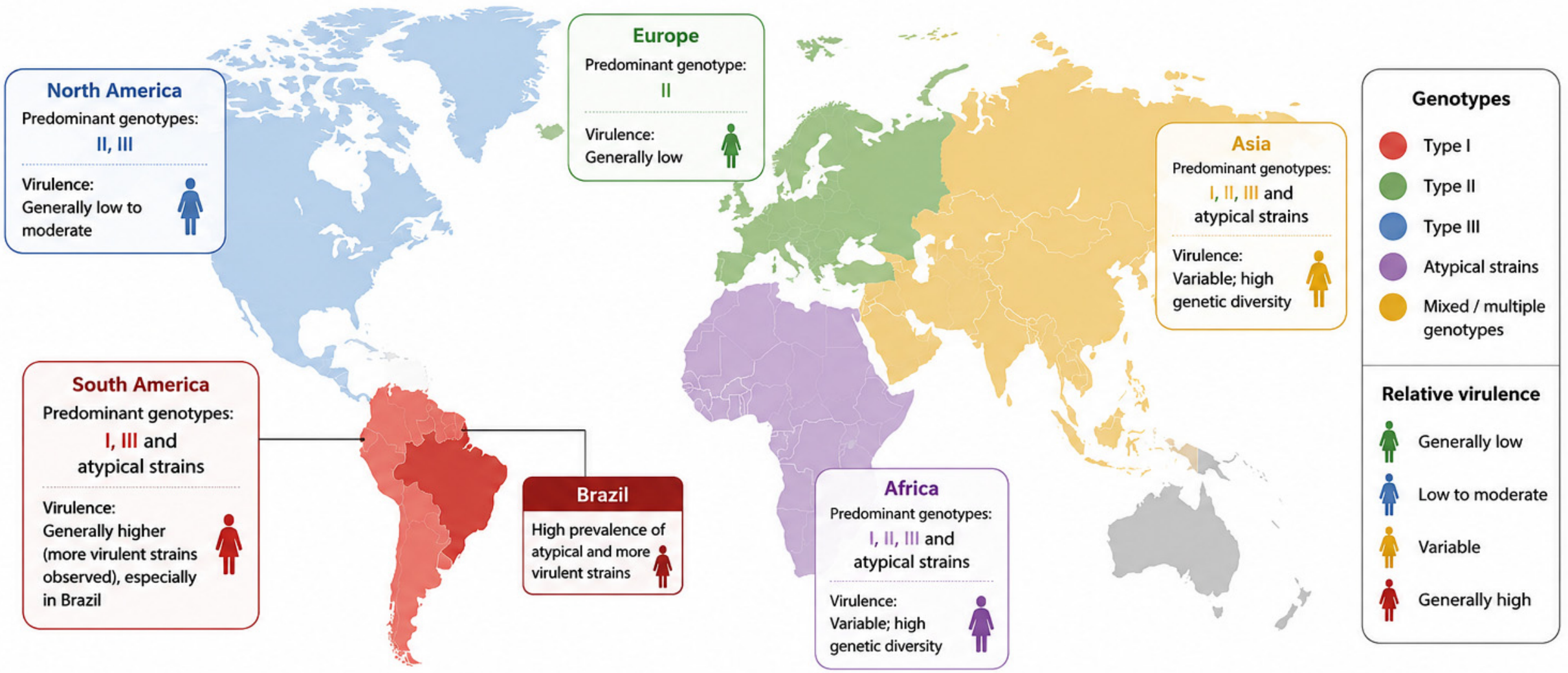
These regional differences in genotype distribution and virulence patterns are summarized in
Figure 1, which illustrates the global geographic distribution of the major
T. gondii genotypes.
4.2. Toxoplasmosis in Brazil Versus Europe
The study by Gilbert et al. [
31] compared 30 Brazilian children with 281 European children with congenital toxoplasmosis, revealing striking differences [
31]: (1) Brazilian children had a 5-fold higher risk of severe ocular lesions, (2) 50% developed chorioretinitis in the first year, compared to 10% in Europe, (3) Lesions were larger, multiple, and with greater involvement of the posterior pole, and (4) 87% of affected eyes had predicted visual impairment, versus 29% in Europe. These differences suggest that the predominance of atypical
T. gondii genotypes in Brazil may contribute to the greater severity of congenital toxoplasmosis observed in some studies. However, disease severity is likely influenced by multiple factors, including parasite genotype, host characteristics, timing of diagnosis, access to prenatal care, and treatment availability [
32].
5. Justification for Universal Screening in Brazil
Universal screening in Brazil is justified by [
33]:
High prevalence: Incidence of 4.2–5.7 per 1000 pregnancies and seroprevalence of 30–75% in pregnant women;
Sequelae severity: The predominance of atypical strains has been associated with a higher frequency of severe manifestations, although the observed outcomes are likely influenced by both parasite- and host-related factors;
Effective treatment: Regimens with spiramycin and pyrimethamine-sulfadiazine are effective;
Cost-effectiveness: Studies show that screening is advantageous in high-risk populations, with an estimated savings of €212 per birth in France, being even more relevant in Brazil, where incidence is 2–10 times higher [
34,
35].
Despite the potential benefits of prenatal screening, universal screening programs remain controversial. Concerns include variability in cost-effectiveness across different epidemiological settings, the possibility of false-positive results leading to unnecessary investigations and anxiety, and the need for substantial healthcare resources to support repeated testing and specialist follow-up. Consequently, screening policies differ considerably among countries, with some nations adopting universal screening and others favoring targeted testing or preventive education alone. Therefore, the appropriateness of universal screening should be interpreted within the local epidemiological and healthcare context.
6. Pathophysiology of Transmission
Routes of Transmission
Toxoplasma gondii is mainly transmitted orally or through contact with contaminated materials [
36]:
Ingestion of oocysts in contaminated food or water: Oocysts excreted in feline feces (definitive hosts) contaminate soil, water, fruits, and vegetables. Poorly washed vegetables and untreated water are significant sources, especially in regions with high oocyst prevalence [
37].
Consumption of raw or undercooked meat: Tissue cysts are present in the meat of mammals (beef, pork, lamb) and poultry. Eating undercooked meat is one of the main routes of transmission [
38]. Raw fish does not transmit toxoplasmosis but may carry other infections, such as Listeria monocytogenes, which is dangerous in pregnancy [
39];
Contact with contaminated soil or sand: Activities such as gardening without protection expose individuals to oocysts, especially in areas frequented by cats [
40];
Other routes: Rarely, transmission occurs through blood transfusion or organ transplantation [
41];
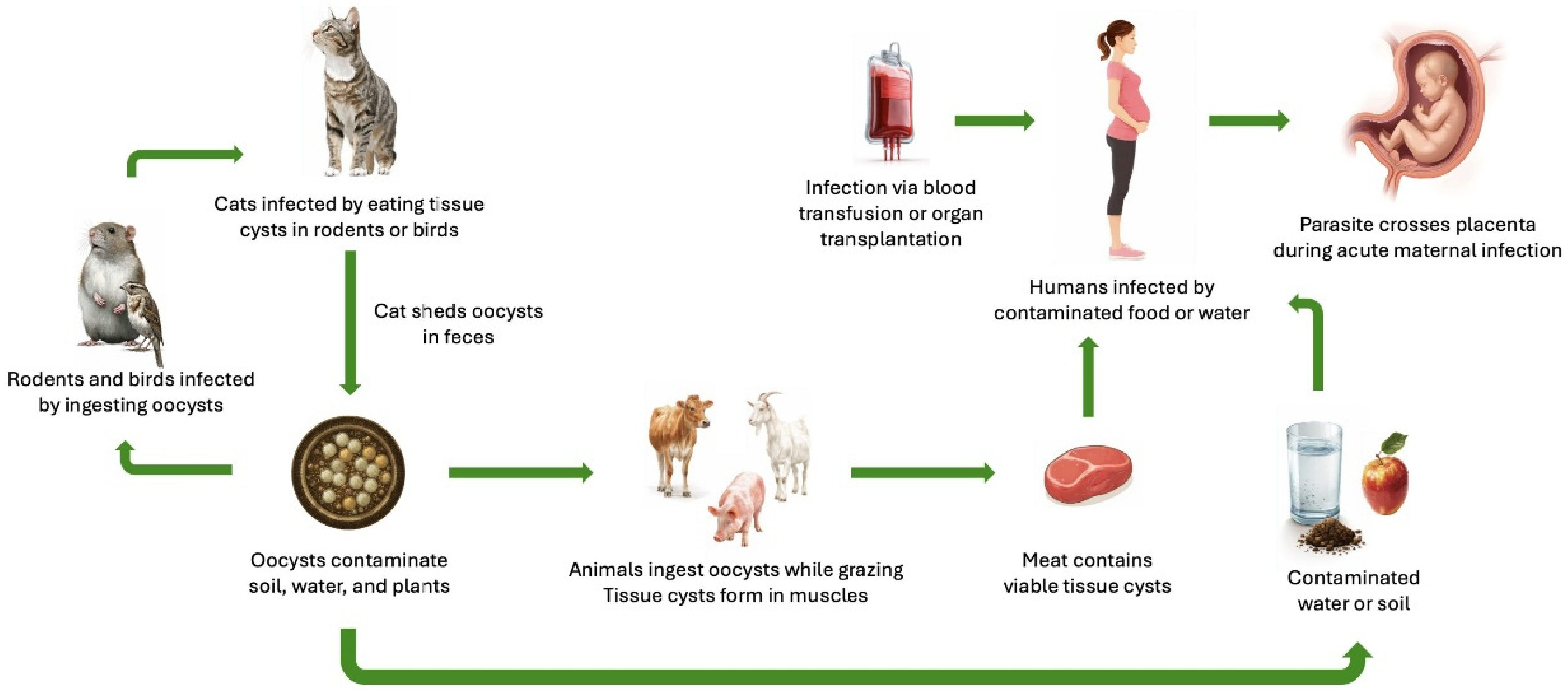
Vertical transmission: Occurs when the pregnant woman acquires a primary infection, with the parasite transmitted to the fetus via the placenta during parasitemia, most commonly in untreated acute infections [
42] (
Figure 2).
7. Pathophysiology of Vertical Transmission
Vertical transmission occurs through the transplacental passage of tachyzoites during the parasitemic phase of primary maternal infection [
43]. Parasitemia lasts approximately 2–4 weeks after the initial infection, representing the critical window for vertical transmission [
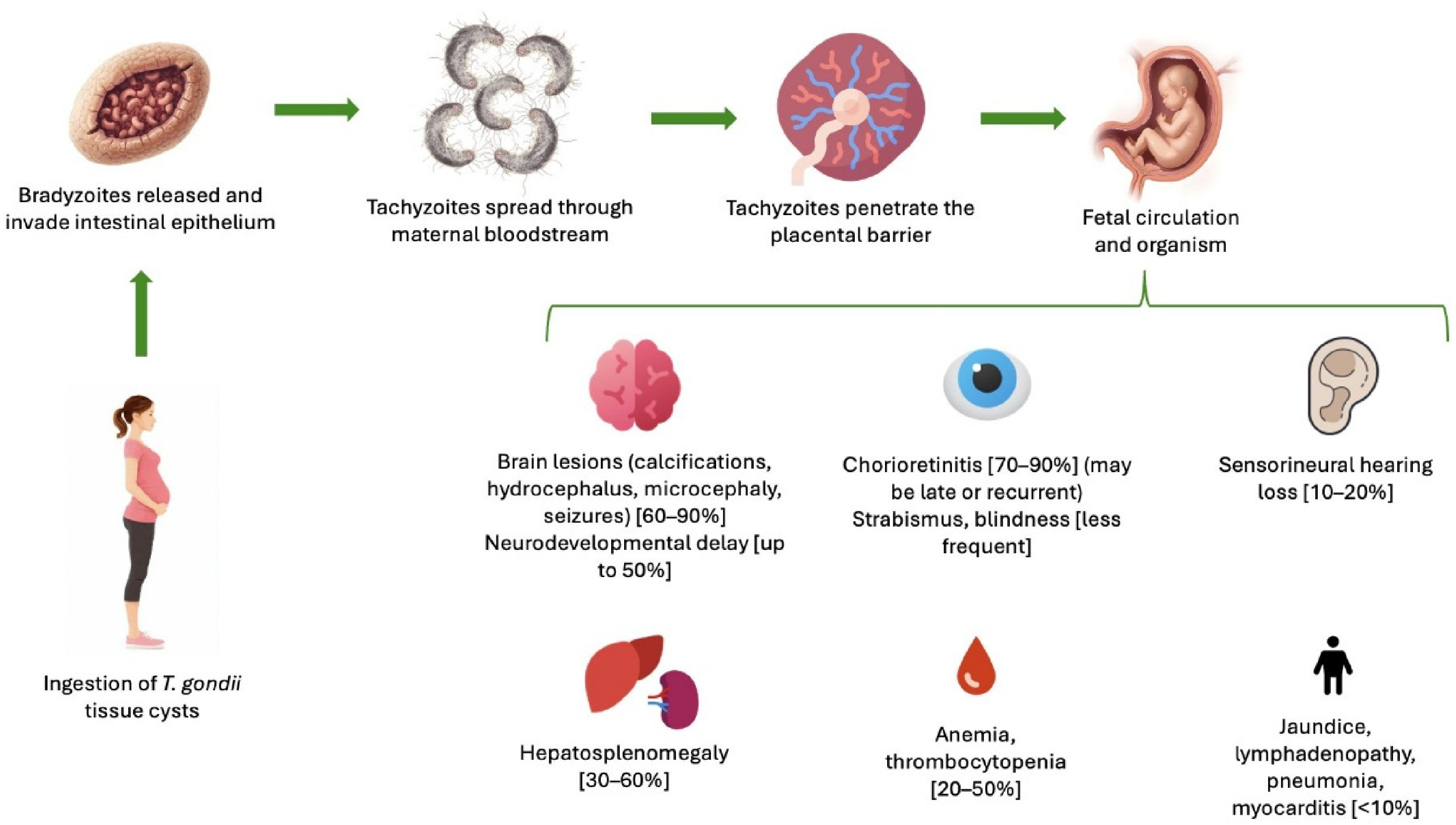
44]. During this phase, tachyzoites circulate in maternal blood, cross the placenta, and invade fetal cells, particularly in the brain and muscles, forming tissue cysts in response to fetal immunity [
45] (
Figure 3).
Beyond parasite-related factors, host immune responses play a fundamental role in determining the risk of vertical transmission and disease severity. Control of
Toxoplasma gondii infection relies predominantly on a Th1-mediated immune response characterized by the production of interleukin-12 (IL-12), interferon-γ (IFN-γ), and tumor necrosis factor-α (TNF-α), which are essential for restricting parasite replication. However, pregnancy requires the establishment of maternal–fetal immune tolerance, creating a complex immunological environment in which excessive inflammatory responses may threaten fetal development while insufficient immune activation may facilitate parasite dissemination [
46].
The placenta functions not only as a physical barrier but also as an active immunological interface. Trophoblast cells can recognize
T. gondii through innate immune pathways and produce cytokines and antimicrobial mediators that limit parasite invasion. Recent studies have highlighted the importance of maternal–fetal immune interactions, including the role of regulatory T cells, placental macrophages (Hofbauer cells), and local cytokine networks in modulating susceptibility to vertical transmission. These findings suggest that congenital disease severity reflects a complex interplay between parasite virulence, placental defense mechanisms, and host immune responses [
47,
48].
Timing of Seroconversion and Diagnostic Limitations
Serological detection often occurs after active parasitemia, creating a diagnostic challenge. IgM antibodies appear within a few days (<1 week) after infection, peaking at 3–5 weeks [
49]. IgG antibodies emerge weeks after infection, reaching detectable levels at 4–6 weeks [
50]. This lag between parasitemia (2–4 weeks) and serological positivity means that vertical transmission may already have occurred by the time the infection is detected [
51].
8. Diagnosis
8.1. Maternal Diagnosis
Diagnostic strategies for gestational toxoplasmosis vary substantially across countries. While some nations, such as France and Austria, have implemented routine prenatal screening programs, others rely on targeted testing based on clinical suspicion or identified risk factors [
52,
53]. Consequently, the interpretation of serological results and subsequent management algorithms may differ according to local guidelines, disease prevalence, and healthcare resources.
In cases of equivocal or discordant serological findings, referral to specialized reference laboratories is strongly recommended. These centers provide access to advanced diagnostic techniques, including confirmatory immunoblotting, specialized IgG avidity testing, and expert interpretation of complex serological profiles. Such expertise is particularly important when isolated IgM positivity is detected, as false-positive results may lead to unnecessary anxiety, invasive procedures, and inappropriate treatment. Reference laboratories therefore play a critical role in improving diagnostic accuracy and supporting clinical decision-making during pregnancy [
54,
55,
56,
57].
8.2. Serological Screening
Serological interpretation requires expertise, especially in cases of IgM positivity in the first trimester [
58]. The IgG avidity test is crucial for dating the infection:
High avidity Infection more than 4 months earlier, no fetal risk;
Low avidity: Possible recent infection, requiring further investigation.
8.3. Diagnostic Flowchart
IgG (−)/IgM (−): Susceptible pregnant woman → Preventive measures, repeat every trimester.
IgG (+)/IgM (−): Past infection → No fetal risk.
IgG (−)/IgM (+): Possible early acute infection → Repeat in 2–3 weeks.
IgG (+)/IgM (+):
- ○
High avidity (>60%): Infection > 4 months, no fetal risk.
- ○
Low avidity (<30%): Possible infection < 16 weeks, treat with spiramycin, refer to specialized center.
- ○
Intermediate avidity (30–60%): Confirmatory tests, specialist evaluation.
8.4. Challenges of False-Positive IgM
False-positive IgM results are a major challenge, with rates up to 60% in some commercial kits [
59]. Causes include: (1) Limitations of commercial kits [
60], (2) Prolonged persistence of IgM (detectable for up to 2 years in 9–27% of cases) [
61], (3) Rheumatoid factor [
62], (4) Concomitant viral infections (Epstein–Barr virus, Cytomegalovirus, Human parvovirus B19 (Primate erythroparvovirus 1) [
63,
64,
65], (5) Autoimmune diseases (systemic lupus erythematosus, rheumatoid arthritis, Hashimoto’s thyroiditis) [
66,
67,
68], and (6) States of immune hyperactivation (mononucleosis, viral hepatitis) [
69,
70].
Confirmatory assays in reference laboratories are essential [
71]. Studies show that 73.2% of obstetricians are unaware of IgM limitations, and 91.2% do not use the avidity test [
72].
9. Fetal Diagnosis
9.1. Amniocentesis
Amniocentesis with PCR for
T. gondii in amniotic fluid is the gold standard, performed after 18 weeks and at least 4 weeks after maternal seroconversion, with sensitivity of 92% and specificity of 100% [
73].
9.2. Fetal Lesions and Ultrasound Findings
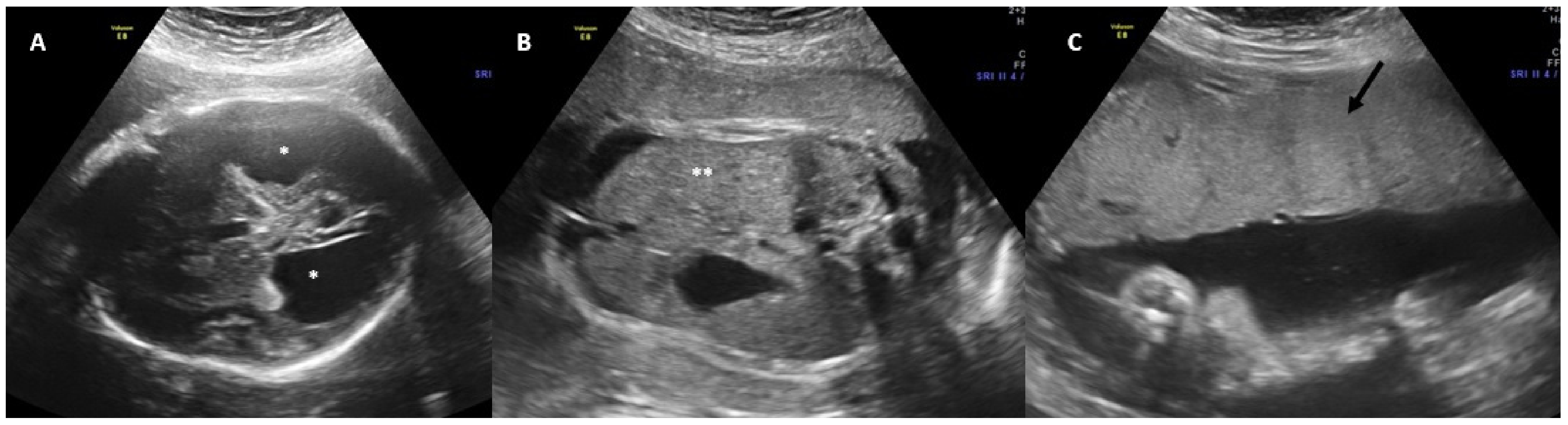
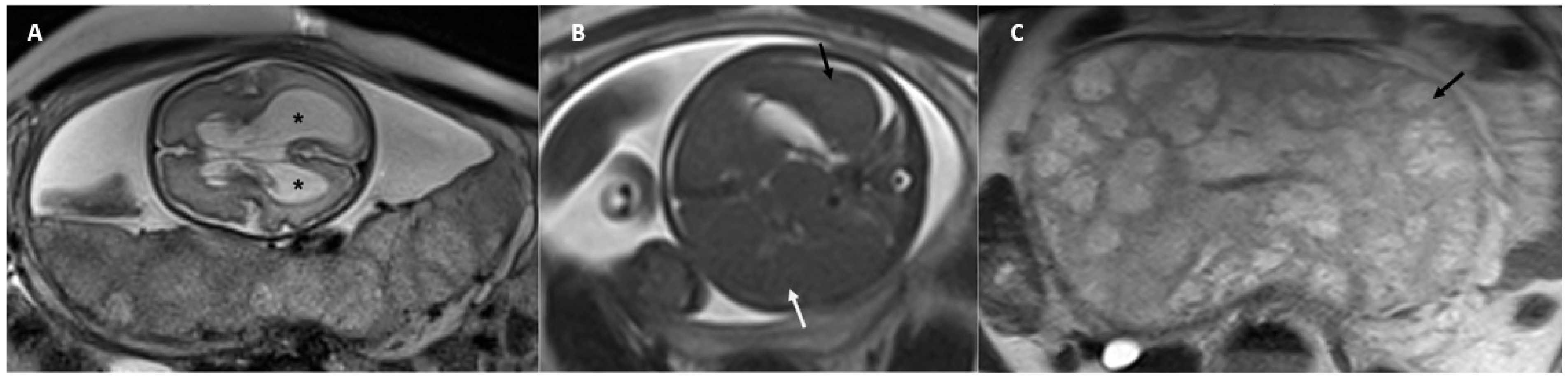
Congenital toxoplasmosis can cause lesions detectable by ultrasound, such as intracranial calcifications, ventriculomegaly, retinal detachment, congenital cataract, microcephaly, hepatosplenomegaly, ascites, and fetal growth restriction [
74]. The sensitivity of ultrasound increases in the second and third trimesters [
75] (
Figure 4 and
Figure 5).
Fetal ultrasonography remains an important complementary diagnostic tool and may reveal findings suggestive of congenital infection, including ventriculomegaly, intracranial calcifications, hydrocephalus, hepatosplenomegaly, placentomegaly, ascites, and fetal growth restriction. However, many infected fetuses have normal ultrasound examinations. Therefore, prenatal diagnosis should be interpreted within the context of maternal serology, timing of infection, molecular testing results, and fetal imaging findings. Postnatal serological and clinical evaluation remains essential when uncertainty persists despite prenatal investigation.
Recent systematic reviews reinforce that amniocentesis with PCR for
T. gondii in amniotic fluid remains the gold standard for fetal diagnosis, with sensitivity around 92% and specificity close to 100% when performed after 18–20 weeks and at least four weeks after maternal seroconversion [
76]. Although investigations have assessed less invasive methods, such as PCR in maternal peripheral blood, urine, or neonatal blood, these have shown low diagnostic accuracy and do not replace testing in amniotic fluid [
77]. Regarding maternal diagnosis, the use of the IgG avidity test remains essential to distinguish recent infections from past infections. In this context, amniocentesis is recommended in cases of seroconversion or when recent primary infection cannot be excluded [
78].
Although PCR analysis of amniotic fluid is considered the cornerstone of prenatal diagnosis, its diagnostic performance is influenced by the timing of testing. False-negative results may occur when amniocentesis is performed too soon after maternal infection, before sufficient fetal shedding of parasite DNA into the amniotic fluid has occurred. For this reason, most guidelines recommend performing amniocentesis no earlier than 18 weeks of gestation and at least four weeks after the estimated date of maternal infection. Consequently, a negative PCR result does not completely exclude fetal infection, particularly when clinical suspicion remains high.
Recent evidence indicates that pregnant women treated early with spiramycin in the first trimester, even with low or intermediate IgG avid test considering risk of vertical transmission than previously estimated [
79], which reinforces the need to assess the indication for the procedure on a case-by-case basis, taking into account the risk of transmission, the safety of the procedure, and the performance of PCR, while always discussing with the patient the real necessity of the test [
80].
In terms of screening policies, French and other European experiences show that monthly testing in susceptible pregnant women is associated with lower rates of congenital transmission, although there is significant variation between countries, depending on whether universal screening programs exist [
78,
81]. At the same time, although
Toxoplasma gondii presents a well-characterized life cycle, it exhibits remarkable genetic diversity influenced by geographic factors and clonal strain recombination, leading to the emergence of atypical variants. This variability has relevant clinical implications, showing that, even without a fully established correlation between virulence and clinical manifestations, infections by atypical strains tend to be more severe in South and Central America than in European and North American countries [
82]. Thus, in Brazil, the high seroprevalence justifies universal screening and a more interventionist approach. In this context, the decision to perform amniocentesis must balance risks and benefits, considering epidemiological data, the safety of the procedure, and the performance of PCR in amniotic fluid [
78,
82].
10. Emerging Diagnostic Technologies
Although serology and PCR analysis of amniotic fluid remain the cornerstones of diagnosis in maternal and congenital toxoplasmosis, several emerging technologies may further improve diagnostic accuracy, infection characterization, and risk stratification. Quantitative real-time PCR (qPCR) has been investigated not only for the detection of
Toxoplasma gondii DNA but also as a potential tool for estimating parasite burden, which may correlate with transmission risk and disease severity. More recently, digital PCR (dPCR) has demonstrated superior analytical sensitivity and precision compared with conventional qPCR, particularly in samples with low parasitic loads, enabling absolute DNA quantification without the need for calibration curves [
83,
84,
85].
In parallel, multiplex molecular platforms capable of simultaneously detecting multiple congenital pathogens—including T. gondii, cytomegalovirus, rubella virus, herpes simplex virus, and parvovirus B19—have emerged as attractive diagnostic alternatives in fetal medicine. These approaches may improve diagnostic efficiency in cases of nonspecific ultrasound abnormalities where several congenital infections must be considered in the differential diagnosis.
Next-generation sequencing (NGS) technologies have also expanded research opportunities in congenital toxoplasmosis. Beyond pathogen detection, NGS may facilitate genotyping of circulating strains, characterization of genetic diversity, surveillance of atypical variants, and investigation of parasite virulence determinants. Such applications are particularly relevant in regions such as South America, where substantial genetic heterogeneity has been associated with more severe clinical presentations [
86,
87].
Novel serological biomarkers are also being investigated to improve infection dating and prognostic assessment. These include refined IgG avidity approaches, recombinant antigen-based assays, stage-specific antigen profiling, and host immune response biomarkers. Future developments may help distinguish recent from past infection more accurately and identify pregnancies at increased risk of vertical transmission.
Despite these advances, most emerging technologies remain investigational or restricted to specialized centers. At present, they complement rather than replace established diagnostic strategies based on maternal serology, IgG avidity testing, amniotic fluid PCR, and fetal imaging.
11. Prognosis and Follow-Up
Prognosis Based on Gestational Age
The prognosis of congenital toxoplasmosis varies with the gestational age at maternal seroconversion and the treatment initiation. Data from the SYROCOT study and the TOXOGEST trial provide detailed estimates [
3,
88].
Table 2 presents the prognosis with and without treatment, including transmission rates and sequela.
Early treatment with spiramycin, initiated within 3 weeks of seroconversion, significantly reduces vertical transmission (OR 0.48; 95% CI 0.28–0.80), reinforcing the need for diagnosis and intervention during the parasitemia phase [
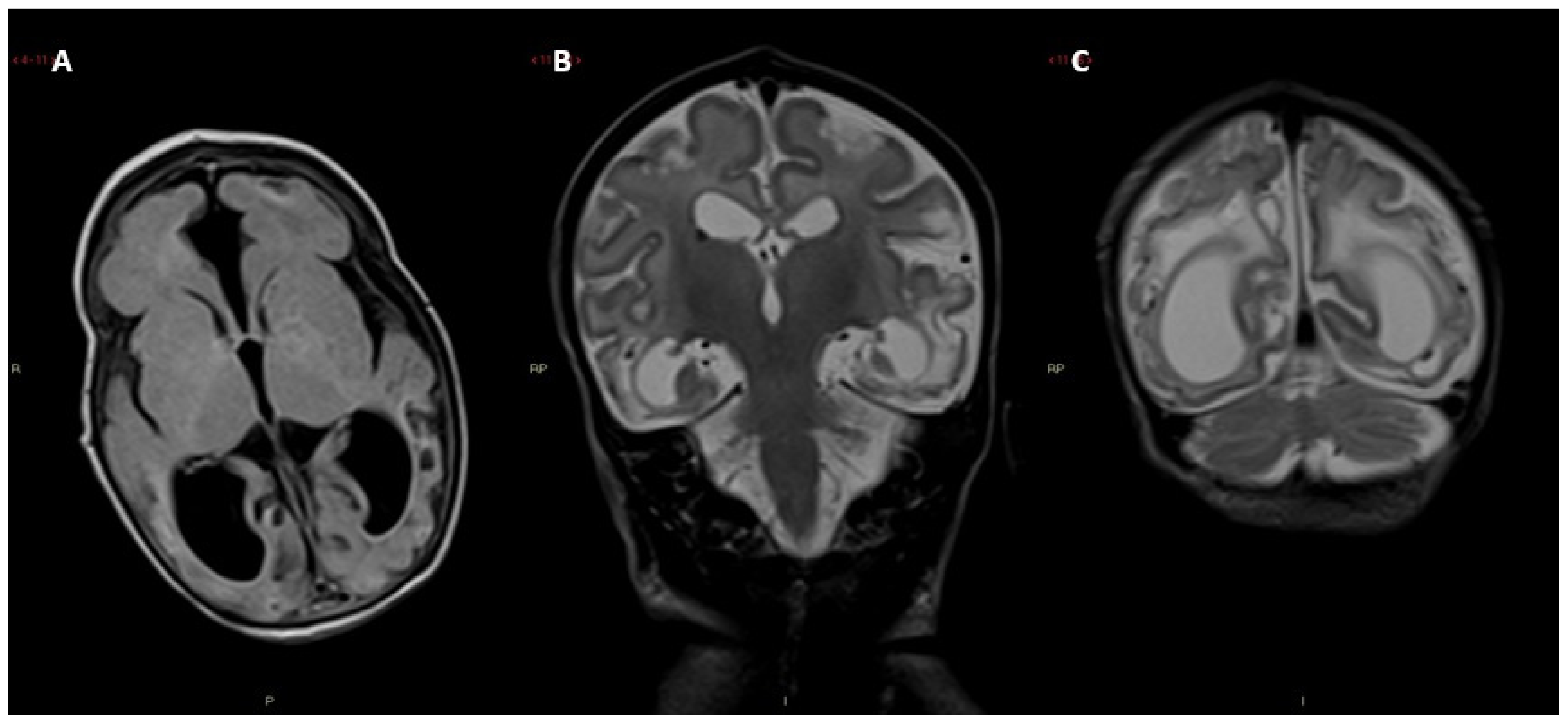
3]. During pregnancy, it is recommended to maintain serial ultrasounds, with emphasis on detailed neurosonography, to identify ventriculomegaly, intracranial calcifications, and other associated abnormalities at early stage [
76]. Garozzo et al. [
89] highlight that children exposed during pregnancy, even when asymptomatic at birth and adequately treated during the first year of life, may present late manifestations, particularly recurrent ocular lesions. Complementarily, Gündeslioğlu et al. [
90] emphasize that neurological and visual sequelae continue to be observed in long-term follow-ups, directly impacting quality of life. These findings demonstrate that monitoring should not be limited to the immediate postnatal period but should extend for several years, with periodic evaluations of vision, hearing, and neuropsychomotor development, to detect and promptly treat late complications. Recent updates on surveillance demonstrate that serological interpretation in the first year of life requires caution, since seroconversion may be delayed or maternal antibodies may persist longer than expected [
76,
81].
In this context, treatment during the first year of life plays a vital role in controlling the infection until the child’s immune system is capable of containing parasite proliferation. To this objective, Ribeiro et al. [
78] suggest that therapy should be adjusted according to weight and preferably available in standardized liquid formulations, since medications are in general, available only as adult tablets. This adaptation ensures greater safety, reduces handling errors, and optimizes administration. Nevertheless, severe complications may occur, especially in cases of infection acquired during the first trimester of pregnancy.
Finally, it is important to emphasize that the lack of international consensus on gestational toxoplasmosis screening remains a challenge. While some countries adopt systematic screening programs, others do not recommend routine testing [
91]. Recent evidence suggests that standardized protocols, with monthly serological monitoring and therapeutic regimen adjustment after the 16th–18th week, contribute to reducing the incidence of congenital disease, particularly by avoiding delays in diagnosis and treatment initiation. These findings reinforce the relevance of continuous surveillance in women of childbearing age, pregnant women, and exposed children, as well as the importance of initiating postnatal therapy early with safe and standardized drug formulation protocols [
78] (
Figure 6).
12. Long-Term Sequelae
In Brazil, children with congenital toxoplasmosis are at increased risk of severe sequela due to the virulence of local strains [
2]. The main long-term sequelae include:
Recurrent chorioretinitis: Up to 85% of cases, with multiple lesions and involvement of the posterior pole, often leading to severe visual impairment [
31];
Neurocognitive deficits: Observed in 20–30% of children infected during the first or second trimester, including developmental delays and learning difficulties [
92];
Sensorineural hearing loss: Affects up to 15% of children, especially in early infections [
93];
Epilepsy: Prevalence of 10–20% in cases with brain lesions, such as intracranial calcifications [
94];
Visual impairment: Present in 50–87% of cases with severe chorioretinitis, including partial or total blindness [
31];
Neurological sequelae of ventriculomegaly: Include persistent hydrocephalus (5–10%), motor deficits, and severe intellectual disability in untreated cases [
23];
Intracranial calcifications: Associated with seizures and neurological deficits in 10–15% of cases [
74].
Beyond the classical neurological and ophthalmological sequelae, increasing attention has been directed toward the long-term functional impact of congenital toxoplasmosis. Studies have reported impairments in visual function, learning performance, academic achievement, and neurocognitive development among affected individuals. Behavioral and psychosocial difficulties have also been described, although the magnitude of these associations remains incompletely understood. Importantly, some manifestations may not become apparent until adolescence or adulthood, particularly recurrent chorioretinitis, which can lead to progressive visual impairment. These long-term consequences may substantially affect quality of life, educational attainment, social participation, and occupational functioning, reinforcing the importance of prolonged multidisciplinary follow-up even in children who appear asymptomatic during early life [
95,
96,
97,
98].
13. Monitoring
Follow-up of children with congenital toxoplasmosis should include [
22]: (1) Serial ophthalmologic evaluations to detect chorioretinitis, (2) Annual hearing tests up to 5 years of age, (3) Neuropsychomotor assessment to identify cognitive or motor deficits, and (4) Prolonged antiparasitic treatment (12 months) in symptomatic cases.
Special Considerations for Brazil
Due to the high prevalence and virulence of strains, Brazil requires: (1) Intensified surveillance with universal screening, (2) Early treatment to minimize sequelae, (3) Rigorous follow-up of infected children, (4) Mandatory reporting, required since 2016 [
99], and (5) Specific education adapted to local conditions.
14. Prevention
Although preventive measures such as avoidance of undercooked meat, proper food handling, hand hygiene, and reduction in exposure to potentially contaminated soil are widely recommended, substantial differences exist among national policies regarding prenatal screening. Countries such as France and Austria have adopted routine serological screening programs for susceptible pregnant women, whereas the United States and the United Kingdom generally emphasize primary prevention through education and targeted testing rather than universal screening. These differences reflect ongoing debates regarding cost-effectiveness, disease prevalence, healthcare infrastructure, and the strength of evidence supporting prenatal screening programs. Consequently, prevention strategies should be interpreted within the context of local epidemiological and healthcare conditions.
14.1. Primary Preventive Measures
Measures to reduce the risk of infection include [
100]:
Proper cooking of meat: Internal temperature of at least 66 °C to inactivate tissue cysts [
101];
Freezing of meat: Freezing at −12 °C for 48–72 h or at −20 °C for 24 h inactivates cysts [
101]. The temperature of −12 °C can be achieved in common household freezers, which usually operate between −15 °C and −18 °C, making this measure feasible for residential use;
Washing fruits and vegetables: Use running water and, if possible, a sodium hypochlorite solution (1 tablespoon of bleach per 1 L of water) [
37];
Use of gloves for gardening: To avoid contact with soil contaminated by cat feces [
40];
Care with feline feces: Pregnant women should avoid handling litter boxes; if necessary, wear gloves and wash hands, since oocysts become infective after 1–5 days [
36];
Consumption of treated water: Use filtered or boiled water, especially in areas with poor sanitation [
37];
Cleaning utensils: Wash with hot water and detergent after contact with raw meat [
100].
14.2. Maternal Education
Educational programs adapted to local conditions, emphasizing hygiene and food safety, significantly reducing seroconversion during pregnancy [
102].
15. Maternal Treatment
15.1. Therapeutic Regimens
15.1.1. Initial Prophylaxis Spiramycin
Spiramycin (1 g orally three times daily, total of 3 g/day) is initiated upon suspicion of infection until the need for the triple-drug regimen is defined [
103]. In Brazil, it is available as Rovamycina
® (Abbott Healthcare, Chicago, IL, USA, 500 mg tablets), Macromicina
® (Macleods Pharmaceuticals, Mumbai, India), Toxocare
® (Corona Remedies, Ahmedabad, India), Spye
® (Bayer Zydus Pharma, Thane, India), and generics. The standard dose is 2 tablets of 500 mg three times daily. It is parasitostatic, with placental concentration but limited transplacental passage, being effective as early prophylaxis but less so for established fetal infection [
104]. It is safe (category B), with no teratogenic effects [
105].
In recent years, important advances have been reported regarding the therapeutic management of toxoplasmosis during pregnancy, although the lack of large-scale randomized clinical trials capable of consolidating definitive evidence still persists. According to Bollani et al. [
81], clinical management continues to follow a stepwise approach, recommending that in cases of suspected or confirmed recent maternal infection, spiramycin is the initial drug of choice, since its early administration is associated with reduced placental transmission. In cases of fetal infection confirmation by amniotic fluid PCR or strong clinical suspicion, immediate substitution with the triple regimen—pyrimethamine, sulfadiazine, and folinic acid—is recommended, as it is more effective in preventing severe neurological and ocular lesions. The group also highlights that, although the hematological adverse effects of pyrimethamine and sulfadiazine require strict monitoring, the combination of these drugs remains the internationally accepted therapeutic standard in confirmed cases.
Complementing this perspective, Ribeiro et al. [
78], in their systematic review with meta-analysis, emphasize that current therapeutic protocols show significant efficacy both in reducing the rate of vertical transmission and attenuation of the severity of clinical manifestations in infected newborns. The study also shows that triple therapy provides more consistent results than spiramycin alone, especially when initiated soon after diagnostic confirmation. Another point highlighted is the need for standardization of drug formulations, since the medications available on the market are generally presented as adult tablets, requiring individualized compounding to adjust doses for pediatric use. The adoption of safe and standardized liquid preparations not only increases dosing accuracy but also reduces administration errors and improves treatment adherence. Thus, both the international literature and the review by Ribeiro et al. [
78] converge in supporting standardized protocols that combine early initiation of therapy, individualized dosing, and continuous monitoring of adverse events. In summary, although no new drugs have yet been approved for clinical use, recent evidence reinforces the efficacy of current regimens and underscores the need to improve their implementation to ensure better maternal–fetal outcomes.
15.1.2. Treatment of Confirmed Fetal Infection—Triple Regimen
After 16–18 weeks, in cases of confirmed fetal infection, the triple regimen is used [
106]:
Pyrimethamine: 50 mg/day (2 tablets of 25 mg orally twice daily). Available in Brazil as Daraprim® (GlaxoSmithKline, 25 mg tablets).
Sulfadiazine: 3 g/day (2 tablets of 500 mg orally three times daily). Available as generic sulfadiazine (500 mg tablets).
Folinic acid: 10–15 mg/day (1 tablet of 15 mg orally once daily) to prevent hematologic toxicity. Available as Leucovorin® (15 mg tablets).
In Brazil, due to the virulence of strains, the triple regimen is recommended before 20 weeks in confirmed maternal infections [
88]. Pyrimethamine is contraindicated in the first trimester (category C) due to teratogenic risks [
107].
Despite the widespread acceptance of prenatal treatment for toxoplasmosis, the interpretation of treatment efficacy remains challenging. Much of the available evidence derives from observational studies, retrospective cohorts, and non-randomized comparisons, which are inherently susceptible to selection bias, confounding, and differences in screening practices. Although studies such as SYROCOT [
3] and TOXOGEST [
88] have suggested reductions in vertical transmission and disease severity with treatment, the magnitude of these benefits remains debated, and some analyses have reported less consistent effects. Furthermore, randomized controlled trials are scarce, largely because of ethical concerns regarding withholding treatment from pregnant women with suspected acute infection. Consequently, current recommendations are based on the best available evidence rather than on a large body of randomized clinical trials and should therefore be interpreted within the context of these methodological limitations. While the overall balance of evidence generally supports prenatal treatment, uncertainty remains regarding the magnitude of benefit associated with specific therapeutic regimens and the extent to which treatment modifies long-term outcomes in congenital toxoplasmosis.
16. Challenges in Access to Treatment in Brazil
Access to the triple regimen is limited by [
108]: (1) Intermittent shortages of pyrimethamine, sulfadiazine, and folinic acid in the unified public health system (SUS) since 2015; (2) Limited production of sulfadiazine, with dependence on foreign producers; and (3) High cost of folinic acid, hindering adherence to treatment [
109].
Evidence of Efficacy
The TOXOGEST study (2018) showed a trend toward reduced transmission with pyrimethamine–sulfadiazine (18.5% vs. 30% with spiramycin,
p = 0.147) and a significant reduction in brain lesions (0% vs. 8.6%,
p = 0.02) [
88]. Data from the SYROCOT study indicate that treatment with spiramycin initiated within 3 weeks of seroconversion reduces vertical transmission (OR 0.48; 95% CI 0.28–0.80), reinforcing the need for diagnosis and treatment during parasitemia [
3].
17. Guidelines from Leading Medical Societies
17.1. International Guidelines (Low-Prevalence Countries)
American College of Obstetricians and Gynecologists (USA): Selective screening for high-risk pregnant women; initial spiramycin therapy, progressing to triple therapy if fetal infection is confirmed [
110];
Royal College of Obstetricians and Gynaecologists (UK): No routine screening; emphasis on preventive measures [
111];
Society of Obstetricians and Gynaecologists of Canada (Canada): Screening limited to high-risk pregnant women or those with suggestive symptoms [
112].
17.2. Brazilian Guidelines (High-Prevalence Country)
Federação Brasileira das Associações de Ginecologia e Obstetrícia: Universal serological screening in the first trimester; repeat testing each trimester in susceptible women; IgG avidity testing for IgM-positive results; spiramycin until 18 weeks; triple therapy before 20 weeks in confirmed infections [
113];
Sociedade Paulista de Obstetrícia e Ginecologia: Mandatory screening at the first prenatal visit; monthly follow-up for susceptible women; IgG avidity testing for IgM-positive results; immediate treatment in suspected cases [
114];
Brazilian Ministry of Health: Universal screening; mandatory notification of maternal and congenital toxoplasmosis; specialized follow-up [
80].
18. Future Directions and Research Gaps
Although important advances have been achieved in the diagnosis and management of gestational toxoplasmosis, several questions remain unresolved. In particular, the optimal frequency of serological screening in susceptible pregnant women remains uncertain, especially in regions with high disease prevalence and substantial burden of congenital infection.
Current evidence suggests that earlier diagnosis and treatment may reduce vertical transmission; however, the most effective screening strategies, their cost-effectiveness, and their impact on maternal and neonatal outcomes require further investigation. Future prospective studies should evaluate the balance between potential benefits, healthcare resource utilization, false-positive results, and patient-centered outcomes across different epidemiological settings.
Additional research is also needed to improve risk stratification, validate emerging diagnostic technologies, and better define the long-term impact of prenatal treatment on congenital disease outcomes.
19. Conclusions and Future Perspectives
Congenital toxoplasmosis remains an important challenge for maternal and child health, particularly in high-prevalence countries such as Brazil, where infection burden is substantial and genetically diverse
Toxoplasma gondii strains are frequently identified [
2]. Several aspects of the disease are well established. The risk of vertical transmission increases with gestational age, whereas disease severity is generally greater following early maternal infection, resulting in the well-recognized inverse relationship between transmission risk and clinical severity [
3]. Diagnostic challenges persist because of the limited duration of parasitemia and delays in serological detection following maternal infection [
44]. In addition, the high false-positive rate of isolated IgM results reinforces the importance of confirmatory testing and expert interpretation [
59].
Recent advances have improved the diagnosis and management of gestational and congenital toxoplasmosis. IgG avidity testing has enhanced the differentiation between recent and past infections, while PCR analysis of amniotic fluid has become the reference standard for prenatal diagnosis of fetal infection when appropriately indicated. Longitudinal studies have also demonstrated that children who are asymptomatic at birth may later develop ocular or neurological sequelae, supporting prolonged multidisciplinary follow-up.
At the same time, important uncertainties remain. Although prenatal treatment is widely recommended and studies such as SYROCOT [
3] and TOXOGEST suggest benefits in reducing vertical transmission and disease severity, the magnitude of treatment efficacy remains a subject of ongoing debate because much of the available evidence derives from observational studies rather than randomized clinical trials [
88]. Likewise, while several studies support prenatal screening programs in high-prevalence settings and favorable cost-effectiveness analyses have been reported in countries such as Brazil [
33], screening strategies continue to vary internationally according to local epidemiology, healthcare resources, and interpretation of the available evidence.
Future research should focus on improving risk stratification, identifying early biomarkers of vertical transmission, refining screening strategies, and developing novel therapeutic approaches [
115]. Advances in the understanding of host immune responses, parasite genetic diversity, and maternal–fetal interactions may further improve prevention and management strategies. Although vaccine development remains promising, significant scientific and safety challenges must still be overcome before implementation during pregnancy becomes feasible [
116].
Author Contributions
Conceptualization, A.R.H. and E.T.; methodology, A.B., C.L. and E.A.J.; validation, G.Y.C., P.T.C. and H.W.; formal analysis, G.Y.C. and L.K.d.A.T.; investigation, A.R.H. and A.B.; resources, E.A.J. and H.W.; data curation, E.T. and P.T.C.; writing—original draft preparation, E.A.J., G.Y.C. and L.K.d.A.T.; writing—review and editing, A.B. and P.T.C.; visualization, E.A.J., A.B., A.R.H., E.T., P.T.C., H.W., C.L., G.Y.C. and L.K.d.A.T.; supervision, E.A.J.; project administration, A.R.H. All authors have read and agreed to the published version of the manuscript.
Funding
This research received no external funding.
Institutional Review Board Statement
Our investigations were carried out following the rules of the Declaration of Helsinki of 1975, revised in 2013. As this is a review article, it was not necessary to obtain ethics committee approval.
Informed Consent Statement
Not applicable.
Data Availability Statement
The data presented in this study are available on request from the corresponding author.
Conflicts of Interest
The authors report no conflict of interest.
References
- Ministério da Saúde. Nota Técnica nº 14/2020—Toxoplasmose na Gestação; Ministério da Saúde: Brasília, Brazil, 2020. Available online: https://www.gov.br/saude/pt-br (accessed on 1 June 2020).
- Dubey, J.P.; Lago, E.G.; Gennari, S.M.; Su, C.; Jones, J.L. Toxoplasmosis in humans and animals in Brazil: High prevalence, high burden of disease, and epidemiology. Parasitology 2012, 139, 1375–1424. [Google Scholar] [CrossRef] [PubMed]
- Thiébaut, R.; Leproust, S.; Chêne, G.; Gilbert, R.; SYROCOT Study Group. Effectiveness of prenatal treatment for congenital toxoplasmosis: A meta-analysis of individual patients’ data. Lancet 2007, 369, 115–122. [Google Scholar] [CrossRef] [PubMed]
- Maldonado, Y.A.; Read, J.S.; Committee on Infectious Diseases. Diagnosis, treatment, and prevention of congenital toxoplasmosis in the United States. Pediatrics 2017, 139, e20163860. [Google Scholar] [CrossRef] [PubMed]
- Torgerson, P.R.; Mastroiacovo, P. The global burden of congenital toxoplasmosis: A systematic review. Bull. World Health Organ. 2013, 91, 501–508. [Google Scholar] [CrossRef] [PubMed]
- Bigna, J.J.; Tochie, J.N.; Tounouga, D.N.; Bekolo, A.O.; Ymele, N.S.; Youda, E.L.; Sime, P.S.; Nansseu, J.R. Global, regional, and country seroprevalence of Toxoplasma gondii in pregnant women: A systematic review, modelling and meta-analysis. Sci. Rep. 2020, 10, 12102. [Google Scholar] [CrossRef] [PubMed]
- Salari, N.; Rahimi, A.; Zarei, H.; Abdolmaleki, A.; Rasoulpoor, S.; Shohaimi, S.; Mohammadi, M. Global seroprevalence of Toxoplasma gondii in pregnant women: A systematic review and meta-analysis. BMC Pregnancy Childbirth 2025, 25, 90. [Google Scholar] [CrossRef] [PubMed]
- Rostami, A.; Riahi, S.M.; Gamble, H.R.; Fakhri, Y.; Nourollahpour Shiadeh, M.; Danesh, M.; Behniafar, H.; Paktinat, S.; Foroutan, M.; Mokdad, A.H.; et al. Global prevalence of latent toxoplasmosis in pregnant women: A systematic review and meta-analysis. Clin. Microbiol. Infect. 2020, 26, 673–683. [Google Scholar] [CrossRef] [PubMed]
- Friesema, I.H.; Waap, H.; Swart, A.; Györke, A.; Le Roux, D.; Evangelista, F.M.; Spano, F.; Schares, G.; Deksne, G.; Gargaté, M.J.; et al. Systematic review and modelling of Toxoplasma gondii seroprevalence in humans, Europe, 2000 to 2021. Euro Surveill. 2025, 30, 2500069. [Google Scholar] [CrossRef] [PubMed]
- Mulu Gelaw, Y.; Worku Dagnew, G.; Degu Alene, G.; Gangneux, J.P.; Robert-Gangneux, F. Toxoplasma gondii seroprevalence among pregnant women in Africa: A systematic review and meta-analysis. PLoS Negl. Trop. Dis. 2024, 18, e0012198. [Google Scholar] [CrossRef] [PubMed]
- Walana, W.; Odai, S.A.; Tamomh, A.G. Prevalence, risk factors, diagnosis and outcomes of Toxoplasma gondii infection in pregnancy: A review. Parasitol. Int. 2026, 110, 103143. [Google Scholar] [CrossRef] [PubMed]
- Ahmed, M.; Sood, A.; Gupta, J. Toxoplasmosis in pregnancy. Eur. J. Obstet. Gynecol. Reprod. Biol. 2020, 255, 44–50. [Google Scholar] [CrossRef] [PubMed]
- Dubey, J.P.; Murata, F.H.A.; Cerqueira-Cézar, C.K.; Kwok, O.C.H.; Villena, I. Congenital toxoplasmosis in humans: An update of worldwide rate of congenital infections. Parasitology 2021, 148, 1406–1416. [Google Scholar] [CrossRef] [PubMed]
- Akbari, M.; Azadi, D.; Habibi, D.; Khodashenas, S.; Shariatmadari, F.; Abedi, B. Toxoplasmosis Infection in Newborn: A Systematic Review and Meta-analysis. Adv. Biomed. Res. 2022, 11, 75. [Google Scholar] [PubMed]
- Nayeri, T.; Sarvi, S.; Moosazadeh, M.; Amouei, A.; Hosseininejad, Z.; Daryani, A. The global seroprevalence of anti-Toxoplasma gondii antibodies in women who had spontaneous abortion: A systematic review and meta-analysis. PLoS Negl. Trop. Dis. 2020, 14, e0008103. [Google Scholar] [CrossRef] [PubMed]
- World Health Organization. Toxoplasma Gondii: Background Document for the WHO Guidelines for Drinking-Water Quality and the WHO Guidelines on Sanitation and Health; World Health Organization: Geneva, Switzerland, 2025. [Google Scholar] [CrossRef]
- Evengård, B.; Petersson, K.; Engman, M.L.; Wiklund, S.; Ivarsson, S.A.; Teär-Fahnehjelm, K.; Forsgren, M.; Gilbert, R.; Malm, G. Low incidence of toxoplasma infection during pregnancy and in newborns in Sweden. Epidemiol. Infect. 2001, 127, 121–127. [Google Scholar] [CrossRef] [PubMed]
- Avelino, M.M.; Campos, D., Jr.; Parada, J.B.; Castro, A.M. Risk factors for Toxoplasma gondii infection in women of childbearing age. Rev. Inst. Med. Trop. Sao Paulo 2004, 46, 81–87. [Google Scholar] [CrossRef] [PubMed]
- Lago, E.G.; Neto, E.C.; Melamed, J.; Rucks, A.P.; Presotto, C.; Coelho, J.C.; Parise, C.; Vargas, P.R.; Goldbeck, A.S.; Fiori, R.M. Congenital toxoplasmosis: Late pregnancy infections detected by neonatal screening and maternal serological testing at delivery. Paediatr. Perinat. Epidemiol. 2007, 21, 525–531. [Google Scholar] [CrossRef] [PubMed]
- Dunn, D.; Wallon, M.; Peyron, F.; Petersen, E.; Peckham, C.; Gilbert, R. Mother-to-child transmission of toxoplasmosis: Risk estimates for clinical counselling. Lancet 1999, 353, 1829–1833. [Google Scholar] [CrossRef] [PubMed]
- Jones, J.L.; Lopez, A.; Wilson, M.; Schulkin, J.; Gibbs, R. Congenital toxoplasmosis: A review. Obstet. Gynecol. Surv. 2001, 56, 296–305. [Google Scholar] [CrossRef] [PubMed]
- Wallon, M.; Peyron, F.; Cornu, C.; Vinault, S.; Abrahamowicz, M.; Kopp, C.B.; Binquet, C. Congenital Toxoplasma infection: Monthly prenatal screening decreases transmission rate and improves clinical outcome at age 3 years. Clin. Infect. Dis. 2013, 56, 1223–1231. [Google Scholar] [CrossRef] [PubMed]
- Foulon, W.; Villena, I.; Stray-Pedersen, B.; Decoster, A.; Lappalainen, M.; Pinon, J.M.; Jenum, P.A.; Hedman, K.; Naessens, A. Treatment of toxoplasmosis during pregnancy: A multicenter study of impact on fetal transmission and children’s sequelae at age 1 year. Am. J. Obstet. Gynecol. 1999, 180, 410–415. [Google Scholar] [CrossRef] [PubMed]
- Gilbert, R.; Dunn, D.; Wallon, M.; Hayde, M.; Prusa, A.; Lebech, M.; Kortbeek, T.; Peyron, F.; Pollak, A.; Petersen, E. Ecological comparison of the risks of mother-to-child transmission and clinical manifestations of congenital toxoplasmosis according to prenatal treatment protocol. Epidemiol. Infect. 2001, 127, 113–120. [Google Scholar] [CrossRef] [PubMed]
- Hohlfeld, P.; Daffos, F.; Costa, J.M.; Thulliez, P.; Forestier, F.; Vidaud, M. Prenatal diagnosis of congenital toxoplasmosis with a polymerase-chain-reaction test on amniotic fluid. N. Engl. J. Med. 1994, 331, 695–699. [Google Scholar] [CrossRef] [PubMed]
- Lehmann, T.; Marcet, P.L.; Graham, D.H.; Dahl, E.R.; Dubey, J.P. Globalization and the population structure of Toxoplasma gondii. Proc. Natl. Acad. Sci. USA 2006, 103, 11423–11428. [Google Scholar] [CrossRef] [PubMed]
- Pena, H.F.; Gennari, S.M.; Dubey, J.P.; Su, C. Population structure and mouse-virulence of Toxoplasma gondii in Brazil. Int. J. Parasitol. 2008, 38, 561–569. [Google Scholar] [CrossRef] [PubMed]
- Demar, M.; Ajzenberg, D.; Maubon, D.; Djossou, F.; Panchoe, D.; Punwasi, W.; Valery, N.; Peneau, C.; Daigre, J.L.; Aznar, C.; et al. Fatal outbreak of human toxoplasmosis along the Maroni River: Epidemiological, clinical, and parasitological aspects. Clin. Infect. Dis. 2007, 45, e88–e95. [Google Scholar] [CrossRef] [PubMed]
- Simon, S.; de Thoisy, B.; Mercier, A.; Nacher, M.; Demar, M. Virulence of atypical Toxoplasma gondii strains isolated in French Guiana in a murine model. Parasite 2019, 26, 60. [Google Scholar] [CrossRef] [PubMed]
- de-la-Torre, A.; Sauer, A.; Pfaff, A.W.; Bourcier, T.; Brunet, J.; Speeg-Schatz, C.; Ballonzoli, L.; Villard, O.; Ajzenberg, D.; Sundar, N.; et al. Severe South American ocular toxoplasmosis is associated with decreased Ifn-γ/Il-17a and increased Il-6/Il-13 intraocular levels. PLoS Negl. Trop. Dis. 2013, 7, e2541. [Google Scholar] [PubMed]
- Gilbert, R.E.; Freeman, K.; Lago, E.G.; Bahia-Oliveira, L.M.; Tan, H.K.; Wallon, M.; Buffolano, W.; Stanford, M.R.; Petersen, E.; European Multicentre Study on Congenital Toxoplasmosis (EMSCOT). Ocular sequelae of congenital toxoplasmosis in Brazil compared with Europe. PLoS Negl. Trop. Dis. 2008, 2, e277. [Google Scholar] [CrossRef] [PubMed]
- Reis, M.M.; Tessaro, M.M.; d’Azevedo, P.A. Serologic profile of toxoplasmosis in pregnant women from a public hospital in Porto Alegre. Rev. Bras. Ginecol. Obstet. 2006, 31, 158–164. [Google Scholar] [CrossRef]
- Stillwaggon, E.; Carrier, C.S.; Sautter, M.; McLeod, R. Maternal serologic screening to prevent congenital toxoplasmosis: A decision-analytic economic model. PLoS Negl. Trop. Dis. 2011, 5, e1333. [Google Scholar] [CrossRef] [PubMed]
- Sawers, L.; Wallon, M.; Mandelbrot, L.; Villena, I.; Stillwaggon, E.; Kieffer, F. Prevention of congenital toxoplasmosis in France using prenatal screening: A decision-analytic economic model. PLoS ONE 2022, 17, e0273781. [Google Scholar] [CrossRef] [PubMed]
- Higa, L.T.; Araújo, S.M.; Tsuneto, L.; Castilho-Pelloso, M.; Garcia, J.L.; Santana, R.G.; Falavigna-Guilherme, A.L. A prospective study of Toxoplasma-positive pregnant women in southern Brazil: A health alert. Trans. R. Soc. Trop. Med. Hyg. 2010, 104, 400–405. [Google Scholar] [CrossRef] [PubMed]
- Jones, J.L.; Dubey, J.P. Foodborne toxoplasmosis. Clin. Infect. Dis. 2012, 55, 845–851. [Google Scholar] [CrossRef] [PubMed]
- Ferreira, F.P.; Caldart, E.T.; Freire, R.L.; Mitsuka-Breganó, R.; de Freitas, F.M.; Miura, A.C.; Mareze, M.; Martins, F.D.C.; Urbano, M.R.; Seifert, A.L.; et al. The effect of water source and soil supplementation on parasite contamination in organic vegetable gardens. Rev. Bras. Parasitol. Vet. 2018, 27, 327–337. [Google Scholar] [CrossRef] [PubMed]
- Lin, Y.L.; Liao, Y.S.; Liao, L.R.; Chen, F.N.; Kuo, H.M.; He, S. Seroprevalence and sources of Toxoplasma infection among in-digenous and immigrant pregnant women in Taiwan. Parasitol. Res. 2008, 103, 67–74. [Google Scholar] [CrossRef] [PubMed]
- Lamont, R.F.; Sobel, J.; Mazaki-Tovi, S.; Kusanovic, J.P.; Vaisbuch, E.; Kim, S.K.; Uldbjerg, N.; Romero, R. Listeriosis in human pregnancy: A systematic review. J. Perinat. Med. 2011, 39, 227–236. [Google Scholar] [CrossRef] [PubMed]
- Torrey, E.F.; Yolken, R.H. Toxoplasma oocysts as a public health problem. Trends Parasitol. 2013, 29, 380–384. [Google Scholar] [CrossRef] [PubMed]
- Bowie, W.R.; King, A.S.; Werker, D.H.; Isaac-Renton, J.L.; Bell, A.; Eng, S.B.; Marion, S.A. Outbreak of toxoplasmosis associated with municipal drinking water. Lancet 1997, 350, 173–177. [Google Scholar] [CrossRef] [PubMed]
- Montoya, J.G.; Liesenfeld, O. Toxoplasmosis. Lancet 2004, 363, 1965–1976. [Google Scholar] [CrossRef] [PubMed]
- Codaccioni, C.; Picone, O.; Lambert, V.; Maurice, P.; Pomar, L.; Winer, N.; Guibaud, L.; Lavergne, R.A.; Saliou, A.H.; Quinio, D.; et al. Ultrasound features of fetal toxoplasmosis: A contemporary multicenter survey in 88 fetuses. Pediatr. Diagn. 2020, 40, 1741–1752. [Google Scholar] [CrossRef] [PubMed]
- Hitt, J.A.; Filice, G.A. Detection of Toxoplasma gondii parasitemia by gene amplification, cell culture, and mouse inoculation. J. Clin. Microbiol. 1992, 30, 3181–3184. [Google Scholar] [CrossRef] [PubMed]
- Robert-Gangneux, F.; Dardé, M.L. Epidemiology of and diagnostic strategies for toxoplasmosis. Clin. Microbiol. Rev. 2012, 25, 264–296. [Google Scholar] [CrossRef] [PubMed]
- Sasai, M.; Pradipta, A.; Yamamoto, M. Host immune responses to Toxoplasma gondii. Int. Immunol. 2018, 30, 113–119. [Google Scholar] [CrossRef] [PubMed]
- Megli, C.J.; Coyne, C.B. Infections at the maternal-fetal interface: An overview of pathogenesis and defence. Nat. Rev. Microbiol. 2022, 20, 67–82. [Google Scholar] [PubMed]
- Faral-Tello, P.; Pagotto, R.; Bollati-Fogolín, M.; Francia, M.E. Modeling the human placental barrier to understand Toxoplasma gondii’s vertical transmission. Front. Cell. Infect. Microbiol. 2023, 3, 1130901. [Google Scholar]
- Fricker-Hidalgo, H.; Bailly, S.; Brenier-Pinchart, M.P.; Dard, C.; Jean, D.; Coston, A.L.; Garnaud, C.; Pelloux, H. How to estimate time of infection with Toxoplasma gondii in pregnant women. Use of specific IgG and IgM kinetics by 7 techniques on 691 sera. Diagn. Microbiol. Infect. Dis. 2020, 96, 114987. [Google Scholar] [CrossRef] [PubMed]
- Jenum, P.A.; Stray-Pedersen, B.; Melby, K.K.; Kapperud, G.; Whitelaw, A.; Eskild, A.; Eng, J. Incidence of Toxoplasma gondii infection in 35,940 pregnant women in Norway and pregnancy outcome for infected women. J. Clin. Microbiol. 1998, 36, 2900–2906. [Google Scholar] [CrossRef] [PubMed]
- Živković, T.; Ivović, V.; Vujanić, M.; Klun, I.; Bobić, B.; Nikolić, A.; Djurković-Djaković, O. Adverse fetal outcome in the absence of timely prenatal diagnosis of congenital toxoplasmosis. Wien. Klin. Wochenschr. 2011, 123, 43–46. [Google Scholar] [CrossRef] [PubMed]
- Peyron, F.; L’ollivier, C.; Mandelbrot, L.; Wallon, M.; Piarroux, R.; Kieffer, F.; Hadjadj, E.; Paris, L.; Garcia-Meric, P. Maternal and Congenital Toxoplasmosis: Diagnosis and Treatment Recommendations of a French Multidisciplinary Working Group. Pathogens 2019, 8, 24. [Google Scholar] [CrossRef] [PubMed]
- Prusa, A.R.; Kasper, D.C.; Sawers, L.; Walter, E.; Hayde, M.; Stillwaggon, E. Congenital toxoplasmosis in Austria: Prenatal screening for prevention is cost-saving. PLoS Negl. Trop. Dis. 2017, 11, e0005648. [Google Scholar] [CrossRef] [PubMed]
- Liesenfeld, O.; Montoya, J.G.; Kinney, S.; Press, C.; Remington, J.S. Effect of testing for IgG avidity in the diagnosis of Toxoplasma gondii infection in pregnant women: Experience in a US reference laboratory. J. Infect. Dis. 2001, 183, 1248–1253. [Google Scholar] [CrossRef] [PubMed]
- Teimouri, A.; Mohtasebi, S.; Kazemirad, E.; Keshavarz, H. Role of Toxoplasma gondii IgG Avidity Testing in Discriminating between Acute and Chronic Toxoplasmosis in Pregnancy. J. Clin. Microbiol. 2020, 58, e00505–e00520. [Google Scholar] [CrossRef] [PubMed]
- Tork, M.; Sadeghi, M.; Asgarian-Omran, H.; Basirpour, B.; Ahmadi, S.; Ghasemzadeh, F.; Sarvi, S.; Gholami, S.; Hosseini, S.A.; Daryani, A.; et al. Assessment of simultaneous IgM, IgG avidity, and IgA testing in diagnosis of acute toxoplasmosis in pregnant women: A systematic review and meta-analysis study. BMC Pregnancy Childbirth 2025, 25, 537. [Google Scholar] [PubMed]
- Souza, I.M.F.N.B.; Siqueira, V.D.S.; Ribeiro, I.D.C.; Moraes, L.S.P.; Prado, D.P.G.D.; Rezende, S.R.; Costa, W.L.G.D.; Rezende, H.H.A. Molecular and serological diagnosis of toxoplasmosis: A systematic review and meta-analysis. Rev. Inst. Med. Trop. Sao Paulo 2023, 65, e19. [Google Scholar] [CrossRef] [PubMed]
- Liesenfeld, O.; Montoya, J.G.; Tathineni, N.J.; Davis, M.; Brown, B.W., Jr.; Cobb, K.L.; Parsonnet, J.; Remington, J.S. Confirmatory serologic testing for acute toxoplasmosis and rate of induced abortions among women reported to have positive Toxoplasma immunoglobulin M antibody titers. Am. J. Obstet. Gynecol. 2001, 184, 140–145. [Google Scholar] [CrossRef] [PubMed]
- Wilson, M.; Remington, J.S.; Clavet, C.; Varney, G.; Press, C.; Ware, D. Evaluation of six commercial kits for detection of human immunoglobulin M antibodies to Toxoplasma gondii. J. Clin. Microbiol. 1997, 35, 3112–3115. [Google Scholar] [CrossRef] [PubMed]
- US Food and Drug Administration. Toxoplasma IgM Testing: Guidance for Industry. 2011. Available online: https://www.fda.gov/regulatory-information (accessed on 15 June 2026).
- Gras, L.; Gilbert, R.E.; Wallon, M.; Peyron, F.; Cortina-Borja, M. Duration of the IgM response in women acquiring Toxoplasma gondii during pregnancy: Implications for clinical practice and cross-sectional incidence studies. Epidemiol. Infect. 2004, 132, 541–548. [Google Scholar] [CrossRef] [PubMed]
- Meek, B.; van Gool, T.; Gilis, H.; Peek, R. Dissecting the IgM antibody response during the acute and latent phase of toxoplasmosis. Diagn. Microbiol. Infect. Dis. 2001, 41, 131–137. [Google Scholar] [CrossRef] [PubMed]
- Klutts, J.S.; Ford, B.A.; Perez, N.R.; Gronowski, A.M. Evidence-based approach for interpretation of Epstein-Barr virus serological patterns. J. Clin. Microbiol. 2009, 47, 3204–3210. [Google Scholar] [CrossRef] [PubMed]
- Chen, L.; Liu, J.; Shi, L.; Song, Y.; Song, Y.; Gao, Y.; Dong, Y.; Li, L.; Shen, M.; Zhai, Y.; et al. Seasonal influence on TORCH infection and analysis of multi-positive samples with indirect immunofluorescence assay. J. Clin. Lab. Anal. 2019, 33, e22828. [Google Scholar] [CrossRef] [PubMed]
- Araújo, P.R.; Ferreira, A.W. High diagnostic efficiency of IgM-ELISA with the use of multiple antigen peptides (MAP1) from T. gondii ESA (SAG-1, GRA-1 and GRA-7), in acute toxoplasmosis. Rev. Inst. Med. Trop. Sao Paulo 2010, 52, 63–68. [Google Scholar] [CrossRef] [PubMed]
- Araujo, F.G.; Barnett, E.V.; Gentry, L.O.; Remington, J.S. False-positive anti-Toxoplasma fluorescent-antibody tests in patients with antinuclear antibodies. Appl. Microbiol. 1971, 22, 270–275. [Google Scholar] [CrossRef] [PubMed]
- West, S.G. Systemic lupus erythematosus and related diseases: Issues in the diagnosis of SLE. Lupus 1996, 5, S6–S10. [Google Scholar]
- Shoenfeld, Y.; Zandman-Goddard, G.; Stojanovich, L.; Cutolo, M.; Amital, H.; Levy, Y.; Abu-Shakra, M.; Barzilai, O.; Berkun, Y.; Blank, M.; et al. The mosaic of autoimmunity: Hormonal and environmental factors involved in autoimmune diseases—2008. Isr. Med. Assoc. J. 2008, 10, 8–12. [Google Scholar] [PubMed]
- Samad, M.A.; Begum, N.A.; Shamsunahar; Ahmed, M.U. Serological diagnosis of Toxoplasma gondii infection in women associated with gyneco-obstetric problems. Southeast Asian J. Trop. Med. Public Health 1993, 24, 102–106. [Google Scholar] [PubMed]
- Hong, C.; Huang, Z.; He, Y.; Wang, R.; Lin, J.; Liu, Y.; Liu, B.; Lan, X.; He, Q.; Luo, W.; et al. Human cytomegalovirus reactivation in cirrhosis patients with acute decompensation. Clin. Mol. Hepatol. 2025, 31, 1316–1332. [Google Scholar] [CrossRef] [PubMed]
- Petersen, E.; Vesco, G.; Villari, S.; Buffolano, W. What do we know about risk factors for infection in humans with Toxoplasma gondii and how can we prevent infections? Zoonoses Public Health 2010, 57, 8–17. [Google Scholar] [CrossRef] [PubMed]
- Liesenfeld, O.; Press, C.; Montoya, J.G.; Gill, R.; Isaac-Renton, J.L.; Hedman, K.; Remington, J.S. False-positive results in immunoglobulin M (IgM) toxoplasma antibody tests and importance of confirmatory testing: The Platelia Toxo IgM test. J. Clin. Microbiol. 1997, 35, 174–178. [Google Scholar] [CrossRef] [PubMed]
- Romand, S.; Wallon, M.; Franck, J.; Thulliez, P.; Peyron, F.; Dumon, H. Prenatal diagnosis using polymerase chain reaction on amniotic fluid for congenital toxoplasmosis. Obstet. Gynecol. 2001, 97, 296–300. [Google Scholar] [CrossRef] [PubMed]
- Daffos, F.; Forestier, F.; Capella-Pavlovsky, M.; Thulliez, P.; Aufrant, C.; Valenti, D.; Cox, W.L. Prenatal management of 746 pregnancies at risk for congenital toxoplasmosis. N. Engl. J. Med. 1988, 318, 271–275. [Google Scholar] [CrossRef] [PubMed]
- Montoya, J.G.; Remington, J.S. Management of Toxoplasma gondii infection during pregnancy. Clin. Infect. Dis. 2008, 47, 554–566. [Google Scholar] [CrossRef] [PubMed]
- Schneider, M.O.; Faschingbauer, F.; Kagan, K.O.; Groß, U.; Enders, M.; Kehl, S. Toxoplasma gondii infection in pregnancy–recommendations of the Working Group on Obstetrics and Prenatal Medicine (AGG–Section on Maternal Disorders). Geburtshilfe Frauenheilkd. 2023, 83, 1431–1445. [Google Scholar] [PubMed]
- Franco, P.S.; Scussel, A.C.M.O.; Silva, R.J.; Araújo, T.E.; Gonzaga, H.T.; Marcon, C.F.; Brito-de-Sousa, J.P.; Diniz, A.L.D.; Paschoini, M.C.; Barbosa, B.F.; et al. Systematic Review and Meta-Analysis of Congenital Toxoplasmosis Diagnosis: Advances and Challenges. J. Trop. Med. 2024, 2024, 1514178. [Google Scholar] [CrossRef] [PubMed]
- Ribeiro, S.K.; Mariano, I.M.; Cunha, A.C.R.; Pajuaba, A.C.A.M.; Mineo, T.W.P.; Mineo, J.R. Treatment protocols for gestational and congenital toxoplasmosis: A systematic review and meta-analysis. Microorganisms 2025, 13, 723. [Google Scholar] [CrossRef] [PubMed]
- Bonetti, A.; Comelli, A.; Chiesa, A.; Spinoni, V.; Vola, A.; Prefumo, F.; Valcamonico, A.; Bonfanti, C.; Caligaris, S.; Tomasoni, L.R.; et al. Risk of Congenital Toxoplasmosis in Newborns from Mothers with Documented Infection: Experience from Two Referral Centres. Pathogens 2025, 14, 157. [Google Scholar] [CrossRef] [PubMed]
- Trotta, M.; Trotta, A.; Spataro, E.; Giache, S.; Borchi, B.; Zammarchi, L.; Campolmi, I.; Galli, L.; Pasquini, L. Primary toxoplasmosis acquired during early pregnancy: Is it currently overestimated? Eur. J. Obstet. Gynecol. Reprod. Biol. 2021, 267, 285–289. [Google Scholar] [CrossRef] [PubMed]
- Bollani, L.; Auriti, C.; Achille, C.; Garofoli, F.; De Rose, D.U.; Meroni, V.; Salvatori, G.; Tzialla, C. Congenital toxoplasmosis: The state of the art. Front. Pediatr. 2022, 10, 894573. [Google Scholar] [CrossRef] [PubMed]
- Vieira, G.C.D.; Duarte, É.D.S.M. Atypical strains of Toxoplasma gondii and its impact on development of toxoplasmosis. Res. Soc. Dev. 2023, 12, e3412239884. [Google Scholar] [CrossRef]
- Recalt, E.; Lespagnol, A.; Hamet, L.; Guegan, H.; Gangneux, J.-P.; Galibert, M.-D.; Robert-Gangneux, F. Evaluation of droplet digital PCR for the clinical diagnosis of toxoplasmosis. Microbiol. Spectr. 2025, 13, e0298425. [Google Scholar] [CrossRef] [PubMed]
- De La Fuente Villar, B.B.; Gomes, L.H.F.; Portari, E.A.; Ramos, C.N.P.; Rocha, D.N.; Pereira, J.P.; Neves, E.S.; Guida, L.D.C. Real-time PCR in the diagnosis of congenital toxoplasmosis. Braz. J. Infect. Dis. 2023, 27, 102804. [Google Scholar] [CrossRef] [PubMed]
- Allam, A.F.; Shehab, A.Y.; Ahmed, N.A.; Elshereedy, A.G.; Farag, H.F.; Abdo, S.M.; Ibrahim, H.S. IgG avidity and placenta real-time PCR in detection of active maternal toxoplasmosis: Relation to pregnancy outcomes. Exp. Parasitol. 2025, 279, 109065. [Google Scholar] [PubMed]
- Kowalczyk, M.; Sroka, J.; Wójcik-Fatla, A. Evolution of Toxoplasma gondii Detection and Genotyping Methods. J. Parasitol. Res. 2026, 2026, 5586858. [Google Scholar] [CrossRef] [PubMed]
- Koutsogiannis, Z.; Denny, P.W. Rapid genotyping of Toxoplasma gondii isolates via Nanopore-based multi-locus sequencing. AMB Express 2024, 14, 68. [Google Scholar] [PubMed]
- Mandelbrot, L.; Kieffer, F.; Sitta, R.; Laurichesse-Delmas, H.; Winer, N.; Mesnard, L.; Berrebi, A.; Le Bouar, G.; Bory, J.P.; Cordier, A.G.; et al. Prenatal therapy with pyrimethamine + sulfadiazine vs spiramycin to reduce placental transmission of toxoplasmosis: A multicenter, randomized controlled trial. Am. J. Obstet. Gynecol. 2018, 219, 386.e1–386.e9. [Google Scholar] [CrossRef] [PubMed]
- Garozzo, M.T.; Garozzo, R.; Betta, P.; Cilauro, S.; Saporito, A.; Amico, P.D.; Tina, G.; Motta, A.; Pulvirenti, A.; Alaimo, S.; et al. Congenital toxoplasmosis: An observational retrospective study in the Eastern Sicily. Front. Pediatr. 2025, 13, 1597001. [Google Scholar] [CrossRef] [PubMed]
- Gundeslioglu, O.O.; Haytoglu, Z.; Esen, E.; Alabaz, D.; Cay, U.; Ozlu, F.; Kibar, F.; Cetiner, S. Congenital Toxoplasmosis and Long-term Outcomes. Turk. Parazitol. Derg. 2024, 48, 8–14. [Google Scholar] [CrossRef] [PubMed]
- Yamada, H.; Tanimura, K.; Deguchi, M.; Tairaku, S.; Morizane, M.; Uchida, A.; Ebina, Y.; Nishikawa, A. A cohort study of maternal screening for congenital Toxoplasma gondii infection: 12 years’ experience. J. Infect. Chemother. 2019, 25, 427–430. [Google Scholar] [CrossRef] [PubMed]
- Fortin, O.; Mulkey, S.B. Neurodevelopmental outcomes in congenital and perinatal infections. Curr. Opin. Infect. Dis. 2023, 36, 405–413. [Google Scholar] [CrossRef] [PubMed]
- McGee, T.; Wolters, C.; Stein, L. Auditory consequences of congenital toxoplasmosis. Pediatrics 1992, 89, 923–928. [Google Scholar]
- Remington, J.S.; McLeod, R.; Thulliez, P.; Desmonts, G. Toxoplasmosis. In Infectious Diseases of the Fetus and Newborn Infant, 5th ed.; Remington, J.S., Klein, J.O., Eds.; WB Saunders: Philadelphia, PA, USA, 2001; pp. 205–346. [Google Scholar]
- Garweg, J.G.; Kieffer, F.; Mandelbrot, L.; Peyron, F.; Wallon, M. Long-Term Outcomes in Children with Congenital Toxoplasmosis-A Systematic Review. Pathogens 2022, 11, 1187. [Google Scholar] [PubMed]
- Cerisola, A.; Francia, M.; Gesuele, J.P. Congenital toxoplasmosis. Semin. Pediatr. Neurol. 2025, 54, 101203. [Google Scholar] [CrossRef] [PubMed]
- Nguyen, T.G.; Garnaud, C.; Brenier-Pinchart, M.P.; Robert, M.G. Diagnosis and treatment of congenital toxoplasmosis: An updated overview. Expert Rev. Anti-Infect. Ther. 2026, 24, 501–516. [Google Scholar] [CrossRef] [PubMed]
- Holler, S.R.; Dos Passos, C.; Ribeiro, A.L.; Küster, S.Z.; Silvestre, E.A.; Martins, D.R.; Teixeira, A.C.M.; Antunes, M.T.Z.; Bischoff, A.R.; Carvalho, C.G. Incidence of congenital toxoplasmosis among live births in a tertiary center in Southern Brazil. J. Trop. Pediatr. 2026, 72, fmag037. [Google Scholar] [CrossRef] [PubMed]
- Ministério da Saúde. Protocolo de Vigilância da Toxoplasmose Gestacional e Congênita; Ministério da Saúde: Brasília, Brazil, 2016. Available online: https://bvsms.saude.gov.br/bvs/publicacoes/protocolo_notificacao_investigacao_toxoplasmose_gestacional_congenita.pdf (accessed on 10 October 2018).
- Dubey, J.P. Strategies to reduce transmission of Toxoplasma gondii to animals and humans. Vet. Parasitol. 1996, 64, 65–70. [Google Scholar] [CrossRef] [PubMed]
- Cook, A.J.; Gilbert, R.E.; Buffolano, W.; Zufferey, J.; Petersen, E.; Jenum, P.A.; Foulon, W.; Semprini, A.E.; Dunn, D.T. Sources of toxoplasma infection in pregnant women: European multicentre case-control study. BMJ 2000, 321, 142–147. [Google Scholar] [CrossRef] [PubMed]
- Di Mario, S.; Basevi, V.; Gagliotti, C.; Spettoli, D.; Gori, G.; D’Amico, R.; Magrini, N. Prenatal education for congenital toxoplasmosis. Cochrane Database Syst. Rev. 2015, 2015, CD006171. [Google Scholar] [CrossRef] [PubMed]
- Desmonts, G.; Couvreur, J. Congenital toxoplasmosis: A prospective study of 378 pregnancies. N. Engl. J. Med. 1974, 290, 1110–1116. [Google Scholar] [CrossRef] [PubMed]
- Schoondermark-Van de Ven, E.; Melchers, W.; Camps, W.; Eskes, T.; Meuwissen, J.; Galama, J. Effectiveness of spiramycin for treatment of congenital Toxoplasma gondii infection in rhesus monkeys. Antimicrob. Agents Chemother. 1994, 38, 1930–1936. [Google Scholar] [CrossRef] [PubMed]
- Rajapakse, S.; Weeratunga, P.; Rodrigo, C.; de Silva, N.L.; Fernando, S.D. Prophylaxis of human toxoplasmosis: A systematic review. Pathog. Glob. Health 2017, 111, 333–342. [Google Scholar] [CrossRef] [PubMed]
- Cortina-Borja, M.; Tan, H.K.; Wallon, M.; Paul, M.; Prusa, A.; Buffolano, W.; Malm, G.; Salt, A.; Freeman, K.; Petersen, E.; et al. Prenatal treatment for serious neurological sequelae of congenital toxoplasmosis: An observational prospective cohort study. PLoS Med. 2010, 7, e1000351. [Google Scholar] [CrossRef] [PubMed]
- Harpey, J.P.; Darbois, Y.; Lefebvre, G. Teratogenicity of pyrimethamine. Lancet 1983, 322, 399. [Google Scholar] [CrossRef] [PubMed]
- Chaves, L.A.; Silva, Z.R.; Godói, I.P.; Detoni, C.B.; Oliveira, L.M.; Dudus, M.M.; Santos, D.M. Congenital Toxoplasmosis in Brazil: A Document Analysis of Government Guidelines for the Prescription and Medicine Use. Arch. Health Sci. 2025, 31, 1–6. [Google Scholar] [CrossRef]
- Strang, A.G.G.F.; Ferrari, R.G.; do Rosário, D.K.; Nishi, L.; Evangelista, F.F.; Santana, P.L.; de Souza, A.H.; Mantelo, F.M.; Guilherme, A.L.F. The congenital toxoplasmosis burden in Brazil: Systematic review and meta-analysis. Acta Trop. 2020, 211, 105608. [Google Scholar] [CrossRef]
- ACOG Practice Bulletin No. 151: Cytomegalovirus, parvovirus B19, varicella zoster, and toxoplasmosis in pregnancy. Obstet. Gynecol. 2015, 125, 1510–1525. [CrossRef] [PubMed]
- Royal College of Obstetricians and Gynaecologists. Antenatal Care: Routine Care for the Healthy Pregnant Woman; RCOG: London, UK, 2008. [Google Scholar]
- Paquet, C.; Yudin, M.H.; Society of Obstetricians and Gynaecologists of Canada. Toxoplasmosis in pregnancy: Prevention, screening, and treatment. J. Obstet. Gynaecol. Can. 2013, 35, 78–81. [Google Scholar] [CrossRef] [PubMed]
- Sá, M.F.S.; Fernandes, C.E. (Eds.) Guia Prático: Infecções No Ciclo Gravídico-Puerperal; Federação Brasileira das Associações de Ginecologia e Obstetrícia (FEBRASGO): São Paulo, Brazil, 2016; Available online: https://www.febrasgo.org.br/media/k2/attachments/02-INFECCOyES_NO_CICLO_GRAVIDO_PUERPERAL.pdf (accessed on 15 June 2026).
- Francisco, R.P.V.; Mattar, R.; Quintana, S.M. Manual de Obstetrícia da SOGESP; Editora dos Editores Eirelli: São Paulo, Brazil, 2022. [Google Scholar]
- Peyron, F.; Garweg, J.G.; Wallon, M.; Descloux, E.; Rolland, M.; Barth, J. Long-term impact of treated congenital toxoplasmosis on quality of life and visual performance. Pediatr. Infect. Dis. J. 2011, 30, 597–600. [Google Scholar] [CrossRef] [PubMed]
- Foroutan, M.; Zaki, L.; Tavakoli, S.; Soltani, S.; Taghipour, A.; Ghaffarifar, F. Rhomboid antigens are promising targets in the vaccine development against Toxoplasma gondii. EXCLI J. 2019, 18, 259–272. [Google Scholar] [CrossRef] [PubMed]
Figure 1.
Global distribution of the major Toxoplasma gondii genotypes and their associated virulence patterns.
Figure 1.
Global distribution of the major Toxoplasma gondii genotypes and their associated virulence patterns.
Figure 2.
Schematic representation of the Toxoplasma gondii life cycle. Cats are the definitive hosts, shedding oocysts that contaminate soil, water, and vegetation. Intermediate hosts (livestock, rodents, birds) become infected by ingesting oocysts, forming tissue cysts in muscles. Humans acquire infection mainly through undercooked meat, contaminated food or water, blood transfusion, or congenitally via transplacental transmission.
Figure 2.
Schematic representation of the Toxoplasma gondii life cycle. Cats are the definitive hosts, shedding oocysts that contaminate soil, water, and vegetation. Intermediate hosts (livestock, rodents, birds) become infected by ingesting oocysts, forming tissue cysts in muscles. Humans acquire infection mainly through undercooked meat, contaminated food or water, blood transfusion, or congenitally via transplacental transmission.
Figure 3.
Diagram illustrating the sequence from maternal ingestion of tissue cysts to fetal infection. After intestinal invasion, tachyzoites disseminate through the maternal bloodstream, cross the placental barrier, and reach the fetal circulation. The most commonly affected organs include the brain, eyes, liver, and spleen, leading to neurological, ocular, hematologic, and systemic manifestations.
Figure 3.
Diagram illustrating the sequence from maternal ingestion of tissue cysts to fetal infection. After intestinal invasion, tachyzoites disseminate through the maternal bloodstream, cross the placental barrier, and reach the fetal circulation. The most commonly affected organs include the brain, eyes, liver, and spleen, leading to neurological, ocular, hematologic, and systemic manifestations.
Figure 4.
Prenatal ultrasound findings in congenital toxoplasmosis. (A) Ventricular dilatation (*). (B) Hepatomegaly (**). (C) Placentomegaly (arrow).
Figure 4.
Prenatal ultrasound findings in congenital toxoplasmosis. (A) Ventricular dilatation (*). (B) Hepatomegaly (**). (C) Placentomegaly (arrow).
Figure 5.
Prenatal magnetic resonance imaging T2-weighted. (A) Axial of head showing the asymmetric ventricular dilatation (*). Axial of abdomen showing the splenomegaly (black arrow) and hepatomegaly (white arrow) (B). Sagittal view showing the placentomegaly (black arrow) (C).
Figure 5.
Prenatal magnetic resonance imaging T2-weighted. (A) Axial of head showing the asymmetric ventricular dilatation (*). Axial of abdomen showing the splenomegaly (black arrow) and hepatomegaly (white arrow) (B). Sagittal view showing the placentomegaly (black arrow) (C).
Figure 6.
Central nervous system computed tomography of newborn. (A) Significant enlargement of the lateral ventricles, most evident in the occipital horns. Thinned cerebral parenchyma, especially in the parietal and occipital regions, suggesting cortical atrophy. Intracranial calcifications (diffuse hypointense areas). White matter changes: heterogeneous hyposignals, indicating gliosis, necrosis, or chronic inflammation. (B) Significant dilation of the lateral ventricles. Thinned cerebral cortex and increased subarachnoid spaces, suggesting reduced cortical volume. Areas of heterogeneous periventricular signal, which may correspond to gliosis or necrosis secondary to congenital infection. Hypointense punctiform foci, scattered in the white matter, compatible with intracranial calcifications. Symmetrical changes in the white matter, typical of congenital encephalitis. (C) Significant dilation of the lateral ventricles, with thinning of the cortical mantle. Enlarged subarachnoid spaces: suggesting cortical atrophy or diffuse loss of brain volume. Changes in the periventricular white matter (heterogeneous signal on T2, consistent with gliosis or necrosis). Posterior fossa: cerebellum relatively preserved in contour, but slight asymmetry of the cerebellar hemispheres is noted; vermis visible.
Figure 6.
Central nervous system computed tomography of newborn. (A) Significant enlargement of the lateral ventricles, most evident in the occipital horns. Thinned cerebral parenchyma, especially in the parietal and occipital regions, suggesting cortical atrophy. Intracranial calcifications (diffuse hypointense areas). White matter changes: heterogeneous hyposignals, indicating gliosis, necrosis, or chronic inflammation. (B) Significant dilation of the lateral ventricles. Thinned cerebral cortex and increased subarachnoid spaces, suggesting reduced cortical volume. Areas of heterogeneous periventricular signal, which may correspond to gliosis or necrosis secondary to congenital infection. Hypointense punctiform foci, scattered in the white matter, compatible with intracranial calcifications. Symmetrical changes in the white matter, typical of congenital encephalitis. (C) Significant dilation of the lateral ventricles, with thinning of the cortical mantle. Enlarged subarachnoid spaces: suggesting cortical atrophy or diffuse loss of brain volume. Changes in the periventricular white matter (heterogeneous signal on T2, consistent with gliosis or necrosis). Posterior fossa: cerebellum relatively preserved in contour, but slight asymmetry of the cerebellar hemispheres is noted; vermis visible.

Table 1.
Gestational age, transmission rate, and risk of severe sequelae of congenital toxoplasmosis.
Table 1.
Gestational age, transmission rate, and risk of severe sequelae of congenital toxoplasmosis.
| Gestational Age | Transmission Rate | Approximate Risk of Severe Sequelae |
|---|
| <13 weeks | <10% | >60% |
| 18 weeks | 25% | 40% |
| 26 weeks | 45% | 25% |
| 36 weeks | 70% | <10% |
Table 2.
Prognosis with and without treatment, including transmission rates and sequelae, according to gestational age in congenital toxoplasmosis.
Table 2.
Prognosis with and without treatment, including transmission rates and sequelae, according to gestational age in congenital toxoplasmosis.
| Gestational Age | Transmission Risk Without Treatment | Prognosis Without Treatment | Transmission Risk with Treatment | Prognosis with Treatment |
|---|
| First trimester | Low | Highest risk of severe neurological and ocular sequelae, including fetal loss, hydrocephalus, intracranial lesions, and severe chorioretinitis | Reduced | Lower risk of severe fetal manifestations and improved clinical outcomes |
| Second trimester | Intermediate | Moderate risk of neurological, ocular, and developmental complications | Reduced | Reduced frequency and severity of fetal and neonatal complications |
| Third trimester | High | Most infants asymptomatic at birth, although late ocular manifestations may occur | Reduced | Majority of infants remain asymptomatic, with lower risk of long-term sequelae |
| Disclaimer/Publisher’s Note: The statements, opinions and data contained in all publications are solely those of the individual author(s) and contributor(s) and not of MDPI and/or the editor(s). MDPI and/or the editor(s) disclaim responsibility for any injury to people or property resulting from any ideas, methods, instructions or products referred to in the content. |




 ,
,