1. Introduction
Unintended pregnancy remains one of the most common adverse reproductive outcomes globally, with an estimated 121 million unintended pregnancies and over 73 million induced abortions occurring each year, a substantial share of which happen in middle- and high-income European settings where contraception is formally available but unevenly accessed [
1,
2]. Women’s decisions about whether and how to prevent pregnancy are rarely shaped by preference alone; they are also shaped by affordability of contraceptive methods, the clarity of counseling received, local service availability, partner influence, and the ability to distinguish accurate reproductive-health information from persuasive but inaccurate online content [
3,
4]. When several of these influences coincide—limited access, fragmented counseling, and a saturated online information environment—women may face a contraceptive decision without the clarity needed to act confidently, even when the formal care they receive appears adequate on paper.
Repeat abortion is often discussed as though it were a direct proxy for vulnerability [
5,
6], yet the literature consistently suggests a more layered reality. Some women with repeat abortion histories function well when care is timely, stigma is low, and method access is straightforward. Others experience marked decisional strain even after a single abortion because counseling is fragmented, social support is unstable, or contraceptive information is contradictory. This means that counting prior procedures alone may flatten clinically important differences between women who are well-supported and women who are overwhelmed. Systematic reviews of abortion and mental health have reached the same conclusion, namely that contextual and relational factors account for most of the observed psychological burden attributed to abortion itself [
5,
6]. A more informative framework may therefore be to examine how abortion history interacts with decision quality, information quality, and the confidence with which women can implement a contraceptive choice.
Digital misinformation is particularly relevant because contraception is now heavily discussed on short-form video platforms, forums, and influencer-driven accounts where anecdote often outruns evidence [
7,
8]. Inaccurate contraceptive information is of course not confined to digital channels; family, peers, and earlier clinical encounters can also transmit it. We focus on the digital environment because its reach, speed, and algorithmic amplification make it an increasingly dominant and modifiable source at the point of decision, while acknowledging that offline misinformation remains relevant and was not separately quantified here. Systematic reviews indicate that health misinformation on social media is widespread, affects a substantial proportion of users, and is especially dense in reproductive-health topics such as contraception, fertility, and abortion [
9,
10]. Women may be told that combined oral contraceptives invariably cause infertility, that emergency contraception is equivalent to abortion, that intrauterine devices are uniformly harmful, or that cycle-tracking apps are reliably protective without careful counseling on method failure and user dependence. None of these messages act in isolation. Misinformation can amplify pre-existing stigma, heighten fear of side effects, and increase uncertainty at the exact moment when a woman needs to make a time-sensitive decision after an abortion or after another unintended pregnancy scare. The probable clinical consequence is not simply lower knowledge; it is decisional conflict—feeling uninformed, unsupported, unclear about values, and unsure that the chosen method can actually be carried out.
Quality of life offers a broader outcome lens than symptom scores alone. Depression and anxiety scales are essential because they quantify short-term distress burden, but reproductive vulnerability also affects perceived physical functioning, psychological stability, social relationships, environmental security, and confidence in future planning. For that reason, the present study combined the Patient Health Questionnaire-9 (PHQ-9) [
11], the Generalized Anxiety Disorder-7 (GAD-7) [
12], the WHOQOL-BREF [
13], and the WHO-5 Well-being Index [
14] with the Decisional Conflict Scale [
15], together with measures of contraceptive self-efficacy, reproductive autonomy, and a digital misinformation index. This combination spans several conceptually distinct domains: the information environment (the digital misinformation index), the decision-making process (decisional conflict, contraceptive self-efficacy, and reproductive autonomy), emotional symptoms (PHQ-9 and GAD-7), and overall well-being and quality of life (WHO-5 and WHOQOL-BREF). Grouping the measures this way avoids implying, for example, that self-efficacy is an emotional symptom or that the misinformation index is itself a well-being outcome. It also allows a more nuanced interpretation of why some women report lower QoL despite only modest symptom elevations, namely because competing pressures around cost, information, and social judgment may impair daily functioning before they are fully captured by conventional psychiatric symptom thresholds.
Romania and the wider Central and Eastern European region remain especially relevant settings for this type of research because formal legality does not always translate into frictionless access, and regional estimates continue to document variation in abortion safety and service quality [
16]. Women may face provider-level inconsistency, uneven availability of counseling, differences between urban and peripheral services, and persistent cultural ambivalence toward both abortion and modern contraception. In such environments, online information can assume outsized influence. When in-person counseling is brief or delayed, digital content becomes a substitute decision aid, although often an unregulated and low-quality one. A study that explicitly places misinformation beside access barriers, mental health, and abortion history therefore has practical value. It can generate hypotheses about which women are most likely to avoid highly effective contraception, which variables travel together as a vulnerability pattern, and which leverage points would be most actionable in tertiary-center practice.
Accordingly, this manuscript presents a cross-sectional study of 134 women grouped by no abortion history, single abortion history, and repeat abortion history. The primary objectives were to compare digital misinformation burden, decisional conflict, contraceptive self-efficacy, mental health symptoms, and quality of life across groups; to identify predictors of current non-use of highly effective contraception; and to test whether decisional conflict mediates the relationship between misinformation, structural barriers, and QoL. We hypothesized that repeat abortion history would be associated with worse unadjusted psychosocial profiles, but that digital misinformation, access barriers, and lower self-efficacy—concepts grounded in Bandura’s social-cognitive framework [
17] and in the accumulated evidence supporting patient decision aids in preference-sensitive care [
18]—would emerge as more proximal explanatory factors in multivariable models. We also anticipated that an exploratory person-centered profile analysis would reveal a subgroup characterized less by abortion count alone than by the co-occurrence of misinformation, low support, high conflict, and poor QoL. Taken together, these objectives are framed by a broader conception of reproductive vulnerability as a state shaped by multiple interacting dimensions of the contraceptive decision environment—information quality, decisional conflict, self-efficacy, and access barriers—that extend beyond abortion history alone, and it is this integrative framework that the present study sets out to examine.
2. Materials and Methods
2.1. Study Design and Setting
A cross-sectional observational study was conducted at the Doctoral School and Department of Obstetrics and Gynecology of the “Victor Babes” University of Medicine and Pharmacy Timisoara, Romania. The study site is a university-affiliated tertiary center with obstetrics–gynecology and family-planning services where women commonly present for contraceptive counseling, post-abortion review, or discussion of future fertility planning. Recruitment proceeded consecutively during scheduled outpatient visits over the enrollment window, subject to eligibility screening by the investigating clinicians. Participants were recruited and data were collected between 1 August 2024 and 31 March 2025, following ethics approval on 6 July 2024. Eligible women were aged 18 to 42 years, able to complete the study questionnaires in Romanian, and willing to provide written informed consent. Women were excluded if they had a current pregnancy, were undergoing active fertility treatment, or had a physician-documented severe psychiatric disorder that would preclude independent completion of the instruments.
The study was designed as cross-sectional and comparative so that three predefined groups could be examined along a clinically familiar gradient of reproductive history while still supporting multivariable modeling, mediation analysis, and exploratory profile analysis. Data were collected during a single study visit using a structured self-report booklet completed in a private counseling room, with clarification available from study staff on request. On average, completion of the self-report booklet required approximately 20 to 25 min, and the accompanying brief structured interview with study staff added a further 10 to 15 min, for a total participant burden of about 30 to 40 min per visit. All questionnaires were administered in Romanian and returned in sealed envelopes to preserve confidentiality. A unique study identifier linked the booklet to a minimal set of clinical variables extracted from the participant’s outpatient record, ensuring that no direct identifiers were stored alongside the psychometric data.
2.2. Participants, Group Allocation, and Study Variables
The final cohort comprised 134 women aged 18 to 42 years. Participants were assigned to one of three study groups based on self-reported reproductive history corroborated with the outpatient record: no abortion history (n = 41), one prior abortion on request (n = 53), and repeat abortion history defined as at least two previous abortions on request (n = 40). This grouping strategy was chosen because it allows two useful contrasts at once: a simple exposure gradient from none to repeat abortion, and a separation between women with any abortion experience and those with repeated exposure to the same reproductive decision context. Age, educational attainment, rural or urban residence, partner status, and parity were recorded to characterize each group and to support covariate adjustment.
Beyond demographic and reproductive variables, the dataset included measures that could reasonably influence post-counseling reproductive choices. These were prior emergency contraception use, predominant information source for contraception, contradictory online advice exposure, avoidance of hormonal methods because of online content, a digital misinformation index, an access barrier index, contraceptive self-efficacy, reproductive autonomy, perceived stigma, depressive symptoms, anxiety symptoms, psychological well-being, decisional conflict, overall QoL, and current use versus non-use of highly effective contraception.
2.3. Instruments and Outcomes
Validated psychometric instruments were used for the core psychological outcomes. Depressive symptoms were assessed with the Patient Health Questionnaire-9 (PHQ-9) [
11], anxiety symptoms with the Generalized Anxiety Disorder-7 (GAD-7) [
12], positive mental well-being with the WHO-5 [
14], and global quality of life with the WHOQOL-BREF [
13]. Decisional conflict was measured using the Decisional Conflict Scale, with higher values indicating more uncertainty, poorer information confidence, and lower implementation readiness [
15]. Reproductive autonomy was assessed with items adapted from the validated Reproductive Autonomy Scale developed by Upadhyay and colleagues [
19], and perceived stigma related to abortion and contraception was summarized using items drawn from the Individual-Level Abortion Stigma scale framework [
20,
21]. To capture the contemporary information environment and access context, four additional indices were administered: a digital misinformation index (0–20) summarizing exposure to and endorsement of common online claims about contraception; an access barrier index (0–12) covering cost, travel, appointment availability, and provider-level friction; a contraceptive self-efficacy score (0–20) assessing perceived ability to initiate and continue a chosen method; and a reproductive autonomy score (0–20). A perceived stigma scale (0–10) summarized anticipated judgment related to abortion or contraception. All continuous scores were coded so that higher values represented more of the underlying construct, except for self-efficacy, autonomy, WHO-5, and QoL, where higher scores indicated more favorable states.
Because the digital misinformation index, access barrier index, and contraceptive self-efficacy score are not established external instruments, their construction warrants explicit description. Candidate items were drafted by the study team from recurring contraceptive claims observed on social media and from documented access barriers in the local service context, then reviewed for face and content validity by two obstetrician–gynecologists and one health psychologist and refined for clarity in Romanian. In its final form the digital misinformation index comprised 10 items, the access barrier index 6 items, and the contraceptive self-efficacy score 10 items, each rated on ordinal Likert-type response options (0–2 per item) and summed to the ranges reported above. The digital misinformation index comprised items presenting common online claims about contraception (for example, that hormonal methods routinely cause infertility or that emergency contraception is equivalent to abortion), with higher scores reflecting greater exposure to and endorsement of inaccurate content; it is a measure of misinformation exposure and endorsement rather than of objective knowledge. To make the construct explicit, the index is intended to capture two adjacent but distinguishable dimensions—a self-reported encounter with specific inaccurate online claims (exposure) and the degree to which the respondent regarded those claims as true (endorsement)—rather than objective contraceptive knowledge, generic health literacy, or trust in clinicians, which we regard as related but non-interchangeable constructs that we did not separately validate here. Because exposure and endorsement items were summed into a single score, the index cannot disentangle these two dimensions, and associations involving it should be read as reflecting their combination; teasing them apart is an explicit priority for future instrument development. The access barrier index summed practical obstacles spanning cost, travel, appointment availability, and provider-level friction. Items were scored on ordinal response options and summed to the ranges reported above. Internal consistency in the present sample was acceptable to good (Cronbach α = 0.84) for the misinformation index, α = 0.79 for the barrier index, and α = 0.86 for the self-efficacy score; for completeness, the reproductive autonomy score showed α = 0.81 and the perceived stigma score α = 0.78. These indices were not subjected to formal factor analysis or external criterion validation and were not piloted in a separate sample; internal consistency therefore speaks only to item homogeneity and not to structural or criterion validity, and they should therefore be regarded as study-specific, exploratory measures, and all findings that depend on them are interpreted accordingly and with explicit caution. The term “misinformation burden,” used informally elsewhere, refers to the digital misinformation index score and is not a separate construct.
The main comparative outcomes were decisional conflict, PHQ-9, GAD-7, WHO-5, and WHOQOL-BREF overall QoL. The principal behavioral outcome for multivariable analysis was current non-use of highly effective contraception, defined as non-use of intrauterine, implant-based, or hormonal methods at the time of the study visit. A second clinically relevant outcome was moderate-to-high decisional conflict, operationalized as a decisional conflict score of at least 35 points for descriptive modeling. The thresholds and indices were chosen to preserve clinical face validity and to translate complex counseling experiences into analyzable outcomes.
2.4. Statistical Analysis
No a priori sample-size calculation was performed, because recruitment was constrained by the consecutive enrollment of eligible women attending a single tertiary center over a fixed window rather than by a pre-specified target. To demonstrate the adequacy of the achieved sample for the primary comparisons, we therefore conducted sensitivity and post hoc precision analyses rather than relying on significance alone. For the three-group comparison of decisional conflict by analysis of variance (α = 0.05, power = 0.80, total n = 134, three groups), the achieved sample was sensitive to a between-group effect of f ≈ 0.27 (η2 ≈ 0.067), i.e., a small-to-medium effect; the observed effects for the core outcomes were considerably larger than this detectable threshold. For the logistic model of contraceptive non-use, the number of outcome events relative to the small set of pre-specified predictors gave an events-per-variable ratio above the conventional minimum of 10, and predictive performance was summarized with the AUC and its 95% confidence interval rather than coefficient significance alone. Effect sizes (η2, Cramér’s V) and 95% confidence intervals are reported throughout so that the robustness and precision of estimates, and not merely their statistical significance, can be judged. The more data-intensive analyses (mediation and Gaussian-mixture profiling) are correspondingly framed as exploratory and hypothesis-generating, as detailed below.
All analyses were performed in Python (version 3.11) using the pandas, statsmodels, scikit-learn, and SciPy libraries; figures were generated with matplotlib. Continuous variables were summarized as mean ± standard deviation, whereas categorical variables were reported as counts and percentages. Overall between-group comparisons across the three abortion-history strata were evaluated with one-way analysis of variance for continuous measures and Pearson’s chi-square test for categorical variables. Linear regression was used to model decisional conflict and quality of life, while binary logistic regression was used for current non-use of highly effective contraception. Pearson correlation coefficients quantified bivariate relationships among misinformation, barriers, self-efficacy, decisional conflict, symptom scores, well-being, and QoL. All significance testing was two-sided, and p-values below 0.05 were interpreted as statistically significant. To aid interpretation beyond significance, effect sizes were reported alongside the main comparisons (η2 for analysis of variance and Cramér’s V for categorical contrasts), and regression models were accompanied by standardized coefficients or odds ratios with 95% confidence intervals. For the logistic model of contraceptive non-use, discrimination was summarized using the area under the receiver-operating-characteristic curve (AUC) and calibration was assessed by the Hosmer–Lemeshow test, so that the predictive interpretation does not rest on coefficient significance alone.
Three advanced analyses were added to increase methodological depth. First, hierarchical linear regression examined how much additional variance in QoL was explained when mental-health variables and then digital-decision variables were introduced in sequential blocks. Second, a simple mediation framework estimated indirect effects of digital misinformation and access barriers on QoL through decisional conflict using 2000 bootstrap resamples and percentile confidence intervals. Third, an exploratory Gaussian-mixture profile analysis with diagonal covariance matrices was applied to standardized psychosocial variables to identify participant phenotypes with distinct patterns of misinformation, conflict, distress, support, and QoL. Given the cross-sectional design and the modest sample size, the mediation and profiling analyses are explicitly exploratory and hypothesis-generating: the mediation models test statistical association consistent with an assumed direction rather than establishing causal mediation, and the mixture profiles describe patterns in this sample rather than stable population phenotypes. Assumption checks for linear models included inspection of residual distributions and variance inflation factors; no variable exceeded a VIF of 5. Given the strong intercorrelations among the psychosocial predictors, multicollinearity was examined explicitly: all VIF values remained below 5 (range 1.6–3.9), below the conventional threshold of concern, although values in this range still indicate moderate shared variance. To probe the stability of the decisional conflict and quality-of-life models against this overlap, we re-estimated them entering the correlated predictors singly and in reduced combinations; the direction and approximate magnitude of the misinformation, barrier, and self-efficacy associations were preserved, supporting that the multivariable findings are not artifacts of collinearity. We nonetheless interpret the individual coefficients of closely related predictors cautiously and return to potential conceptual overlap in the limitations. Missing data were minimal (<2% on any variable) and handled by complete-case analysis.
3. Results
The analyses yielded a consistent gradient across reproductive-history strata, but the gradient was not driven by abortion history alone. Women with repeat abortion history had the highest burden of digital misinformation, structural barriers, decisional conflict, stigma, depressive symptoms, and anxiety, and they also showed the lowest reproductive autonomy, self-efficacy, well-being, quality of life, and highly effective contraceptive use. Women with one prior abortion generally occupied an intermediate position, whereas the no-history group showed the most favorable profile. Importantly, several multivariable results suggested that once misinformation, barriers, and self-efficacy were taken into account, abortion history became less explanatory than the more proximate decision-environment variables (
Table 1). The detailed findings are presented below in
Table 1,
Table 2,
Table 3,
Table 4,
Table 5,
Table 6,
Table 7,
Table 8 and
Table 9 and
Figure 1,
Figure 2 and
Figure 3.
The groups differed not only in abortion history but also in background. Age and parity rose from the no-history to the repeat-abortion group, and lower educational attainment was about three times more common in the abortion groups (all
p < 0.001). Rural residence and living with a partner did not differ significantly (
Table 2). The repeat-abortion group therefore reflects a broader profile shaped by age, prior childbearing, and education rather than abortion count alone.
Table 2.
Contraceptive pathway and digital information environment across study groups.
Table 2.
Contraceptive pathway and digital information environment across study groups.
| Variable | No History (n = 41) | Single Abortion (n = 53) | Repeat Abortion (n = 40) | p-Value |
|---|
| Emergency contraception ever | 9 (22.0) | 24 (45.3) | 23 (57.5) | 0.004 |
| Contradictory online contraceptive advice | 14 (34.1) | 35 (66.0) | 30 (75.0) | <0.001 |
| Avoided hormonal methods because of online content | 9 (22.0) | 24 (45.3) | 30 (75.0) | <0.001 |
| Current use of highly effective contraception | 39 (95.1) | 36 (67.9) | 18 (45.0) | <0.001 |
| Predominant information source: Clinician-led | 21 (51.2) | 14 (26.4) | 7 (17.5) | 0.008 |
| Predominant information source: Mixed sources | 13 (31.7) | 17 (32.1) | 16 (40.0) | 0.008 |
| Predominant information source: Mostly social media | 7 (17.1) | 22 (41.5) | 17 (42.5) | 0.008 |
| Digital misinformation index (0–20) | 3.6 ± 1.7 | 7.7 ± 1.7 | 10.0 ± 2.0 | <0.001 |
| Access barrier index (0–12) | 2.5 ± 1.5 | 5.1 ± 1.7 | 6.9 ± 1.6 | <0.001 |
| Contraceptive self-efficacy (0–20) | 17.8 ± 1.9 | 14.7 ± 2.2 | 12.5 ± 2.0 | <0.001 |
Across groups, the digital-information picture shifted markedly. From the no-history to the repeat-abortion group, reported exposure to contradictory online advice rose (34.1% to 75.0%), as did avoidance of hormonal methods because of online content (22.0% to 75.0%), while reliance on clinician-led information fell (51.2% to 17.5%) and social media became a leading source (17.1% to 42.5%). In parallel, the digital misinformation index rose (3.6 to 10.0) and self-efficacy fell (17.8 to 12.5), while use of highly effective contraception dropped from 95.1% to 45.0% (all
p < 0.001 except emergency-contraception use,
p = 0.004). These cross-sectional associations are consistent with, but do not establish, a shift away from clinician-led information in the repeat-abortion group (
Table 3).
Table 3.
Mental health, decisional conflict, autonomy, and quality-of-life indicators by group.
Table 3.
Mental health, decisional conflict, autonomy, and quality-of-life indicators by group.
| Outcome | No History (n = 41) | Single Abortion (n = 53) | Repeat Abortion (n = 40) | p-Value |
|---|
| PHQ-9 score | 3.1 ± 1.8 | 6.5 ± 1.9 | 8.5 ± 2.4 | <0.001 |
| GAD-7 score | 2.3 ± 1.3 | 4.7 ± 1.3 | 6.6 ± 1.6 | <0.001 |
| WHO-5 well-being score | 20.5 ± 2.2 | 17.6 ± 2.1 | 15.4 ± 2.6 | <0.001 |
| Decisional Conflict Scale (0–100) | 17.6 ± 6.8 | 33.6 ± 10.3 | 43.9 ± 9.3 | <0.001 |
| Reproductive autonomy score (0–20) | 17.8 ± 1.3 | 16.2 ± 1.8 | 14.8 ± 1.9 | <0.001 |
| Perceived stigma score (0–10) | 1.3 ± 1.0 | 3.2 ± 1.1 | 4.3 ± 0.8 | <0.001 |
| WHOQOL-BREF overall QoL (0–100) | 78.1 ± 5.1 | 69.5 ± 5.6 | 61.3 ± 5.6 | <0.001 |
The psychosocial measures followed the same gradient. From the no-history to the repeat-abortion group, depression (PHQ-9 3.1 to 8.5), anxiety (GAD-7 2.3 to 6.6), and perceived stigma increased, while well-being (WHO-5), reproductive autonomy, and quality of life (78.1 to 61.3) decreased (all
p < 0.001). Decisional conflict more than doubled (17.6 to 43.9), and is highlighted here because it lies closer to counseling and information quality than symptom scores and may be a more actionable target (
Table 4).
Table 4.
Multivariable linear regression for decisional conflict score.
Table 4.
Multivariable linear regression for decisional conflict score.
| Predictor | B Coefficient | 95% CI | p-Value |
|---|
| Single abortion history vs. none | 2.2 | −2.6 to 7.0 | 0.361 |
| Repeat abortion history vs. none | 4.1 | −2.6 to 10.8 | 0.230 |
| Digital misinformation index, per 1-point | 1.9 | 1.0 to 2.7 | <0.001 |
| Access barrier index, per 1-point | 1.2 | 0.4 to 2.1 | 0.007 |
| Contraceptive self-efficacy, per 1-point | −1.0 | −1.9 to −0.2 | 0.021 |
| Social support score, per 1-point | 0.8 | −0.4 to 2.0 | 0.205 |
| Mostly social media vs. clinician/mixed | 1.4 | −1.4 to 4.3 | 0.311 |
In the multivariable model, higher misinformation (B = 1.9,
p < 0.001) and more barriers (B = 1.2,
p = 0.007) were independently associated with greater decisional conflict, whereas higher self-efficacy was associated with less (B = −1.0,
p = 0.021). After these variables were included, abortion history was no longer independently associated with conflict (adjusted R
2 = 0.699). One interpretation, which the cross-sectional data cannot confirm, is that abortion history may act partly as a marker of repeated exposure to difficult decision environments rather than as an independent driver of conflict (
Table 5).
Table 5.
Logistic regression for current non-use of highly effective contraception.
Table 5.
Logistic regression for current non-use of highly effective contraception.
| Predictor | Adjusted OR | 95% CI | p-Value |
|---|
| Digital misinformation index, per 1-point | 1.21 | 0.91 to 1.62 | 0.185 |
| Contraceptive self-efficacy, per 1-point | 0.68 | 0.51 to 0.90 | 0.008 |
| Lower educational attainment | 2.74 | 1.07 to 7.02 | 0.035 |
| Any abortion history | 1.43 | 0.22 to 9.23 | 0.709 |
For current non-use of highly effective contraception, higher self-efficacy was the clearest protective factor (OR 0.68,
p = 0.008) and lower education an independent risk factor (OR 2.74,
p = 0.035). Misinformation showed a non-significant positive trend (OR 1.21,
p = 0.185), and abortion history was not independently associated with non-use (OR 1.43,
p = 0.709). The model showed a moderate explanatory value (pseudo-R
2 = 0.329), as seen in
Table 6.
Table 6.
Pearson correlation matrix for key continuous variables.
Table 6.
Pearson correlation matrix for key continuous variables.
| Variable | DMI | ABI | CSE | DCS | PHQ-9 | GAD-7 | WHO-5 | QoL |
|---|
| DMI | 1.00 | — | — | — | — | — | — | — |
| ABI | 0.60 | 1.00 | — | — | — | — | — | — |
| CSE | −0.78 | −0.68 | 1.00 | — | — | — | — | — |
| DCS | 0.80 | 0.67 | −0.74 | 1.00 | — | — | — | — |
| PHQ-9 | 0.70 | 0.63 | −0.63 | 0.68 | 1.00 | — | — | — |
| GAD-7 | 0.73 | 0.71 | −0.71 | 0.74 | 0.60 | 1.00 | — | — |
| WHO-5 | −0.60 | −0.54 | 0.60 | −0.57 | −0.70 | −0.59 | 1.00 | — |
| QoL | −0.73 | −0.75 | 0.72 | −0.77 | −0.74 | −0.73 | 0.58 | 1.00 |
The measures were strongly intercorrelated (all
p < 0.001). Quality of life was most strongly associated with decisional conflict (r = −0.77), barriers (r = −0.75), and PHQ-9 (r = −0.74), and misinformation correlated 0.80 with decisional conflict and −0.78 with self-efficacy. The magnitude of these correlations should be read cautiously: it indicates that these constructs travel together but also raises the possibility of partial conceptual overlap rather than fully separate mechanisms, a point we revisit as a limitation (
Table 7).
Table 7.
Hierarchical regression blocks for WHOQOL-BREF overall quality of life.
Table 7.
Hierarchical regression blocks for WHOQOL-BREF overall quality of life.
| Block | Variables Introduced | R2 | ΔR2 | Adj. R2 | Key Retained Predictors |
|---|
| Model 1: Demographic-reproductive | Age, rural residence, lower education, abortion history | 0.638 | 0.638 | 0.624 | Single history (−6.74, p < 0.001); repeat history (−14.26, p < 0.001) |
| Model 2: + mental health | PHQ-9, GAD-7, WHO-5 added to Model 1 | 0.720 | 0.082 | 0.703 | Repeat history (−6.22, p = 0.002); PHQ-9 (−1.07, p < 0.001); GAD-7 (−1.08, p = 0.001) |
| Model 3: + digital-decision | Misinformation, barriers, DCS, autonomy, self-efficacy | 0.766 | 0.045 | 0.741 | PHQ-9 (−0.87, p < 0.001); barrier index (−0.93, p = 0.049) |
Explained variance in QoL rose as predictors were added: from 0.638 with demographics and abortion history alone to 0.720 after adding mental-health measures and 0.766 after adding the digital-decision variables. By the final model, PHQ-9 and the barrier index remained significant while the abortion-history group membership was largely attenuated, consistent with group differences being partly accounted for by these other factors (
Table 8).
Table 8.
Mediation of misinformation and structural barriers on quality of life through decisional conflict.
Table 8.
Mediation of misinformation and structural barriers on quality of life through decisional conflict.
| Pathway | Indirect Effect | 95% Bootstrap CI | Direct Effect | 95% Bootstrap CI | Total Effect | 95% Bootstrap CI |
|---|
| Misinformation → DCS → QoL | −0.37 | −0.69 to −0.11 | −0.16 | −0.66 to 0.33 | −0.52 | −1.00 to −0.07 |
| Barrier index → DCS → QoL | −0.23 | −0.49 to −0.05 | −0.79 | −1.31 to −0.33 | −1.02 | −1.56 to −0.52 |
In an exploratory mediation model, the indirect path from misinformation to QoL through decisional conflict was −0.37 (95% CI −0.69 to −0.11) and the corresponding path for barriers was −0.23 (95% CI −0.49 to −0.05); barriers also retained a direct association with QoL (−0.79). Because the design is cross-sectional, these results are consistent with decisional conflict acting as an intermediate variable but cannot distinguish this from reverse or shared-cause explanations, and are presented as hypothesis-generating only. Because exposure, mediator, and outcome were all measured at the same visit, no temporal ordering can be established, and the bootstrap confidence intervals quantify the precision of an assumed model rather than verifying its directionality; the mediation estimates should accordingly be read as statistical decomposition under an assumed structure, not as evidence of a causal pathway (
Table 9).
Table 9.
Exploratory psychosocial profiles identified with Gaussian-mixture modeling.
Table 9.
Exploratory psychosocial profiles identified with Gaussian-mixture modeling.
| Profile | n (%) | Dominant History | No/Single/Repeat % | DMI | ABI | DCS | PHQ-9 | Support | QoL | HEC Use % |
|---|
| P1: Supported low-noise planners | 36 (26.9) | No history | 91.7/8.3/0.0 | 3.4 | 2.3 | 15.8 | 2.9 | 7.7 | 79.2 | 94.4 |
| P2: Ambivalent digitally exposed | 50 (37.3) | Single abortion | 16.0/74.0/10.0 | 7.2 | 4.7 | 30.3 | 5.9 | 6.8 | 71.2 | 74.0 |
| P3: Structurally constrained distressed | 48 (35.8) | Repeat abortion | 0.0/27.1/72.9 | 9.9 | 6.8 | 45.3 | 8.5 | 5.9 | 61.0 | 45.8 |
The exploratory profiling suggested three groups: a low-risk profile (26.9%, mostly no-history women) with low misinformation, low conflict, and high contraceptive use; an intermediate profile (37.3%, mostly single-abortion women); and a higher-risk profile (35.8%, mostly repeat-abortion women) combining high misinformation, high barriers, high conflict, low support, and the lowest contraceptive use (45.8%). Membership did not map perfectly onto abortion count, suggesting that vulnerability is patterned rather than defined by history alone. As noted in the Methods, these profiles are exploratory and sample-specific. Given the modest sample size relative to the number of parameters in a mixture model, the three-profile solution should be interpreted conservatively: it describes co-occurring patterns within this dataset and is offered as hypothesis-generating, not as evidence of stable, replicable psychosocial phenotypes. The number, size, and boundaries of the profiles may not be reproduced in a larger or differently recruited sample, and the labels are descriptive conveniences rather than validated clinical categories (
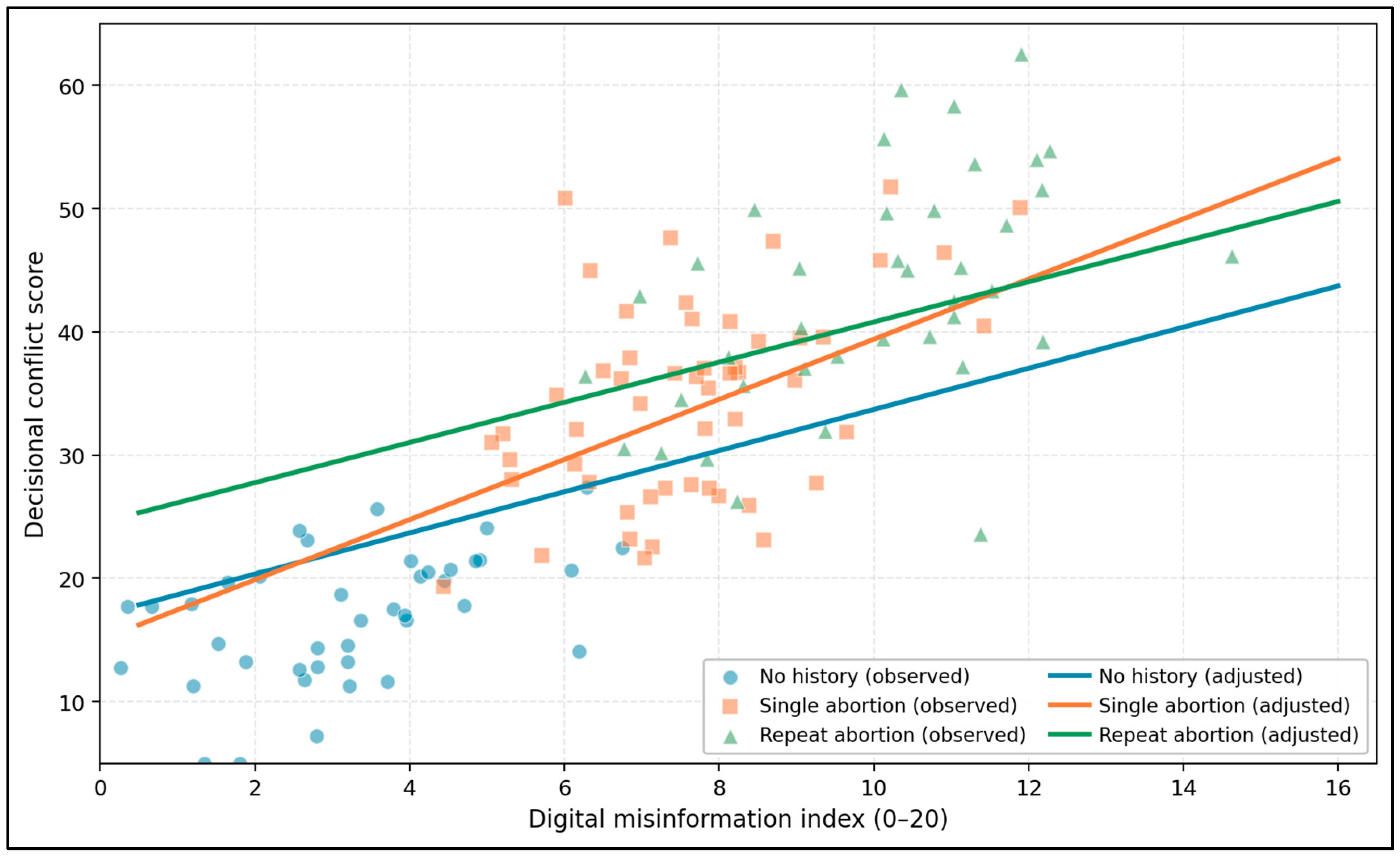
Figure 1).
Figure 1.
Misinformation burden and decisional conflict by abortion history.
Figure 1.
Misinformation burden and decisional conflict by abortion history.
Figure 1 shows the adjusted association between misinformation and decisional conflict (barriers and self-efficacy held at their medians). In all three groups, predicted decisional conflict was higher at higher misinformation scores. The repeat-abortion group sat above the others across the whole range, consistent with a higher baseline level of conflict rather than a steeper effect of misinformation.
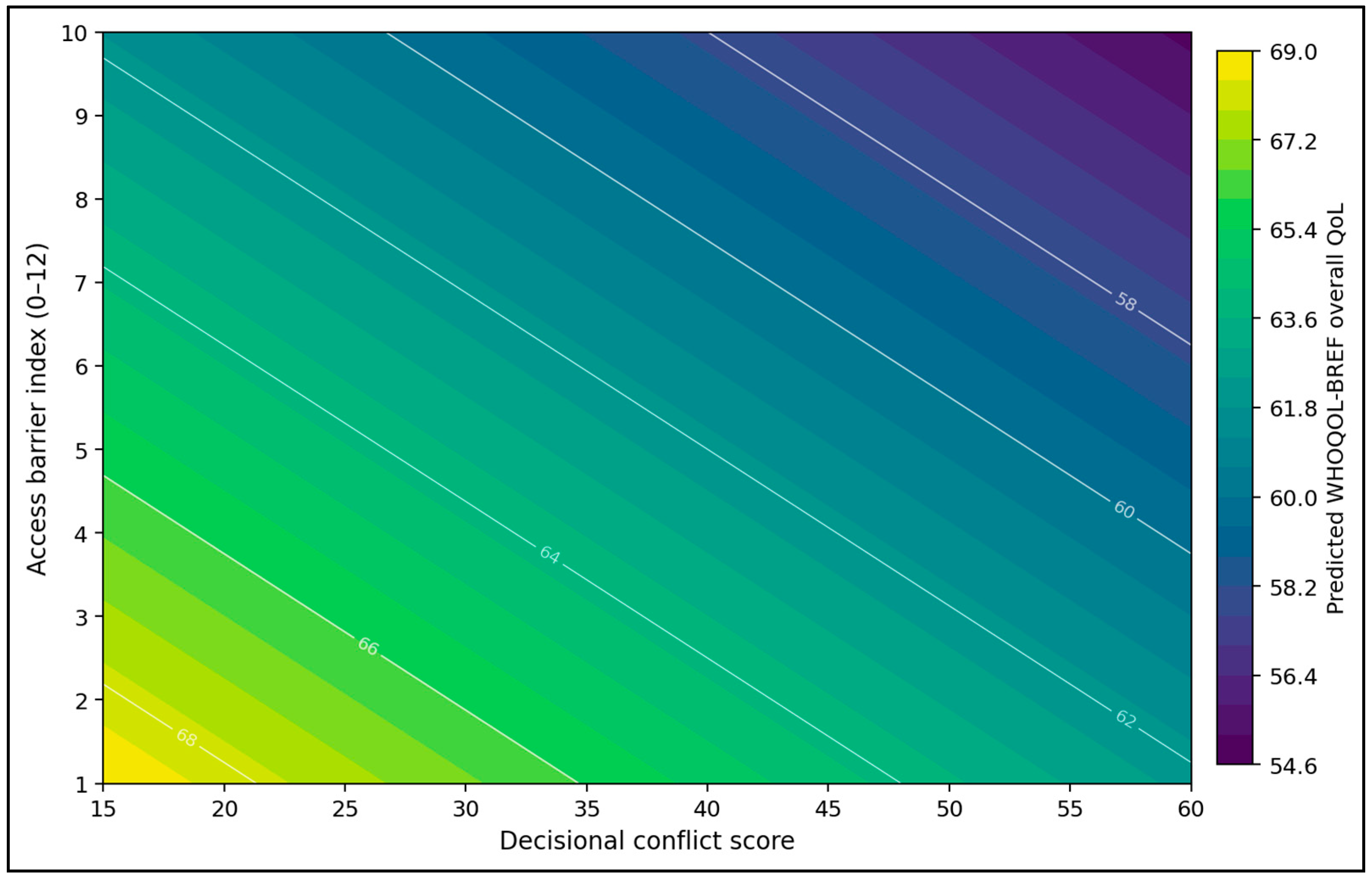
Figure 2 shows predicted quality of life for women with repeat abortion history across combinations of decisional conflict and barriers (other variables held at their medians). Predicted QoL was lowest where both decisional conflict and barriers were high (about 58 points) and highest where both were low (about 69 points), illustrating that the two factors were associated with poorer QoL together rather than in isolation.
Figure 2.
Predicted quality-of-life surface in women with repeat abortion history.
Figure 2.
Predicted quality-of-life surface in women with repeat abortion history.
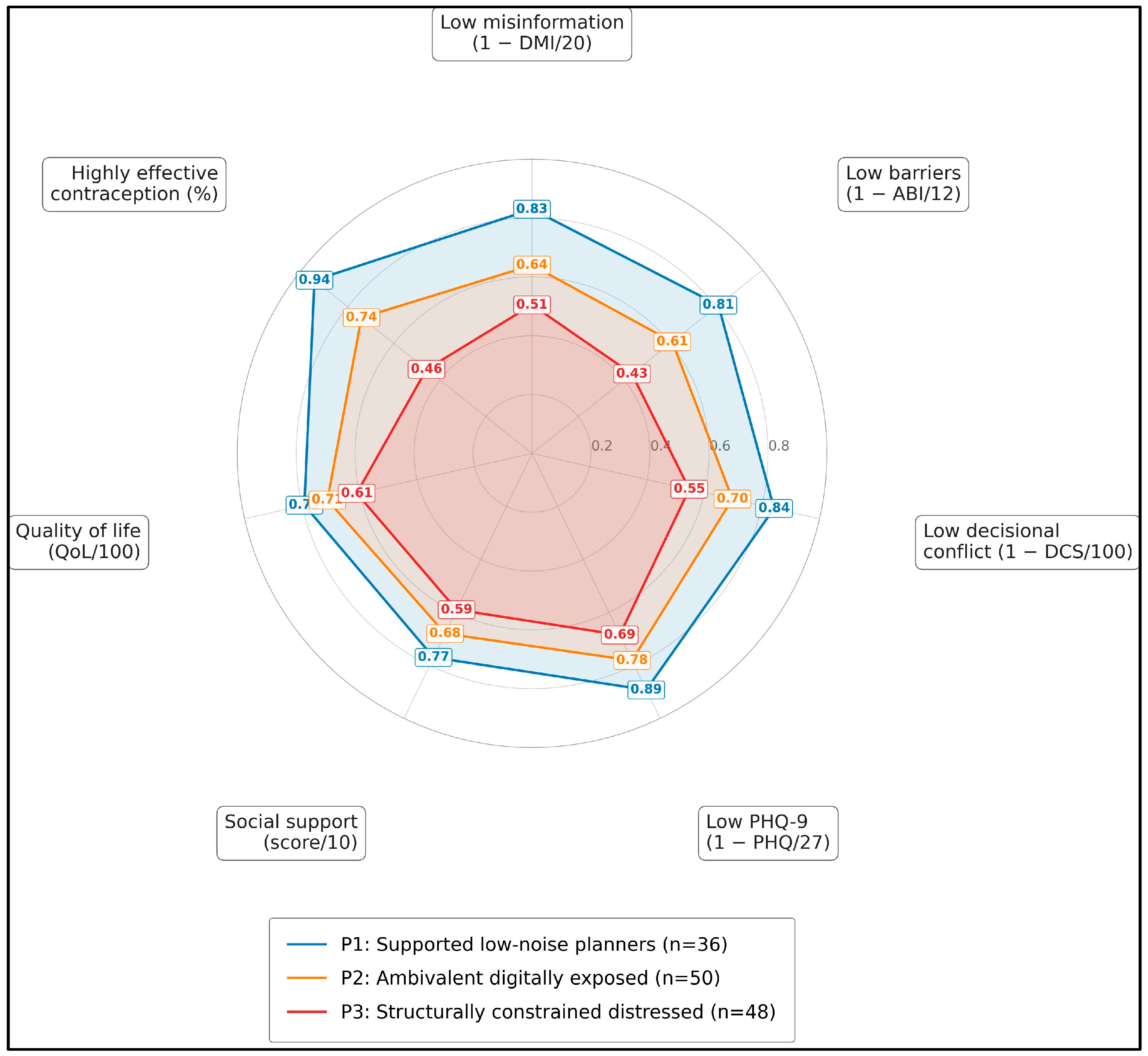
Figure 3 displays the three profiles from
Table 9 across seven indicators rescaled so that higher values are always more favorable. The low-risk profile covers the largest area and the higher-risk profile the smallest, with the latter showing simultaneously unfavorable values across information, access, psychological, and behavioral measures rather than a single deficit.
Figure 3.
Radar chart comparing the three psychosocial profiles identified by Gaussian-mixture modeling across seven favorable-direction indicators.
Figure 3.
Radar chart comparing the three psychosocial profiles identified by Gaussian-mixture modeling across seven favorable-direction indicators.
4. Discussion
4.1. Analysis of Findings
The first major finding of this study is that abortion history retained descriptive value but lost much of its explanatory value once digital misinformation, barriers, and self-efficacy were introduced. Unadjusted analyses showed a clear stepwise gradient from no history to repeat abortion history across almost every psychosocial measure. However, the decisional conflict model indicated that misinformation and barriers, together with lower self-efficacy, accounted for much of the conflict that initially appeared to travel with reproductive history. This is conceptually important because it shifts the interpretation away from abortion as a morally loaded event count and toward abortion history as a marker of repeated exposure to weak decision environments. Our observations are consistent with the conclusions of the American Psychological Association task force [
22] and the systematic review by Charles and colleagues [
5], both of which concluded that contextual adversity rather than procedure count drives most of the variance in mental health outcomes after abortion. In contemporary practice, misinformation may function as a barrier in its own right, especially when it generates fear of hormones, mistrust of clinicians, or confusion about emergency contraception and fertility-awareness methods. Because the design is cross-sectional, this interpretation is one of several. The data are equally compatible with reverse or bidirectional pathways and with shared underlying vulnerability: women with lower baseline well-being or greater psychosocial distress may be more likely to experience decisional conflict, rely on lower-quality information sources, and have an unintended pregnancy or abortion. We therefore describe these relationships as associations and avoid language implying that misinformation or barriers cause decisional conflict, lower QoL, or reproductive vulnerability.
The second major finding is that decisional conflict deserves more attention as a reproductive-health endpoint. It was not merely another scale score moving in parallel with depression and anxiety; it appeared to sit at the intersection of information quality, practical barriers, self-efficacy, and QoL. The correlation matrix, the multivariable decisional conflict model, the hierarchical QoL analysis, and the mediation results all pointed in the same direction. Women with higher misinformation exposure and stronger access barriers tended to feel less able to make or carry out a contraceptive decision, and that uncertainty in turn was associated with poorer quality of life. Clinically, this suggests that post-abortion or post-counseling care should not be evaluated only by whether a method was prescribed. It should also be evaluated by whether the woman felt informed, supported, confident, and clear about the choice. The literature on shared decision-making provides a ready clinical framework for such evaluation [
23], and a large Cochrane review has demonstrated that patient decision aids reduce decisional conflict and improve informed choice in preference-sensitive contexts [
18]. A woman who leaves the clinic undecided or fearful may look superficially “counseled,” yet remain at high risk of discontinuation or non-initiation, outcomes that themselves contribute disproportionately to unintended pregnancy [
24]. For clarity, we treat decisional conflict primarily as an intermediate, potentially modifiable target that lies between the information and access environment and downstream quality of life; its role in the exploratory mediation models is statistical and should not be read as establishing it as a confirmed causal mechanism.
The profile analysis offers a third contribution by demonstrating that vulnerability is patterned rather than uniform. The most clinically concerning class was not defined by repeat abortion history alone, but by the co-occurrence of high misinformation, high barriers, high decisional conflict, elevated depressive symptoms, low support, and poor QoL. This phenotype is particularly useful because it suggests that women at greatest risk may require integrated rather than single-domain intervention. In a tertiary-center setting, that might mean coordinated counseling that combines myth correction, method-specific decision aids, mental-health screening, and navigation of cost or scheduling barriers. The middle “ambivalent digitally exposed” profile is equally interesting because it suggests an earlier intervention window before the full distressed pattern consolidates. Person-centered analyses can outperform simple binary exposure models when reproductive behavior is embedded in overlapping social, informational, and emotional processes, and the pattern seen here resonates with population-level evidence that method-related failure and discontinuation—rather than any single demographic marker—sustain the unmet need for effective contraception in Europe [
24,
25].
Against this background, the specific contribution of the present study is narrower and more concrete than a general restatement that distress, barriers, and misinformation matter. Prior work has typically examined these factors separately; here they are measured together in the same women alongside decisional conflict, contraceptive self-efficacy, and quality of life, allowing a direct comparison of their relative association with current contraceptive behavior within a single model. In this sample, the digital information environment and self-efficacy were associated with the behavioral outcome at least as strongly as abortion history, and the exploratory profiling indicated that these factors co-occur in identifiable patterns rather than acting independently. The Romanian and wider Central and Eastern European setting is used here not as a claim of novelty in itself but because it offers an informative case in which contraception is legal and formally available yet clinician-led counseling is frequently displaced by online sources; this makes the gap between formal access and decision-ready access easier to observe. The practical implications we draw are correspondingly specific: routine family-planning and post-abortion visits could screen for decisional conflict and low self-efficacy, pair brief myth-correction with method-specific decision aids, and prioritize women showing the combined high-conflict, high-barrier, low-support pattern for integrated support, rather than triaging by abortion count. These suggestions are hypotheses for prospective testing rather than established recommendations.
A further methodological implication concerns how reproductive vulnerability is documented in the first place. Our findings suggest that vulnerability is shaped by several interconnected dimensions—decisional conflict, reproductive autonomy, misinformation exposure, counseling needs, and access barriers—that extend well beyond abortion history and that are not routinely captured in a comparable way across studies or services. Progress is therefore likely to depend on more structured and standardized approaches to recording reproductive and obstetric care. A useful precedent comes from the Nursing Minimum Data Set literature, in which standardized clinical terminologies and minimum data elements have been used to capture otherwise “invisible” dimensions of care complexity and relate them to patient outcomes [
26]. By analogy, the field would benefit from developing and validating standardized obstetric and reproductive-health data sets that systematically record constructs such as decisional conflict, reproductive autonomy, misinformation exposure, counseling needs, and access barriers within routine clinical practice. Embedding such standardized elements would improve comparability across studies and settings and would make it easier to identify, prospectively, the women at greatest risk of reproductive vulnerability. We therefore see this not only as a direction for future research but as an agenda the field should actively promote: the co-design and psychometric validation of a shared reproductive-health minimum data set capable of capturing these decision-environment dimensions alongside conventional reproductive history.
Our findings sit coherently within the broader literature on reproductive mental health. Large prospective cohorts such as the Turnaway Study reported that women who received a wanted abortion were not at elevated long-term risk of adverse mental-health outcomes compared with women denied abortion, suggesting that circumstance, access, and social context matter more than the procedure itself [
27]. The American Psychological Association’s comprehensive evaluation [
22] and an earlier systematic review [
5] reached convergent conclusions, emphasizing that pre-existing vulnerabilities and life adversity drive most of the psychiatric outcomes commonly attributed to abortion. Our results extend that framework by showing that among women who have had one or more abortions, decision-environment features—misinformation exposure, structural access barriers, and self-efficacy—track with contemporary psychological burden more closely than procedure count per se, consistent with a common-risk-factors reanalysis of U.S. national survey data [
28] and a narrative synthesis of unintended pregnancy, induced abortion, and mental health [
6]. These observations also align with a Dutch prospective cohort that documented elevated incidence of common mental disorders mainly among women with pre-existing vulnerability rather than as a direct effect of abortion itself [
29]. Taken together, the weight of the literature discourages interpretations in which repeat abortion is read as a direct marker of psychiatric risk, and instead supports the view that decision-environment factors, of which digital misinformation is now a prominent member, carry much of the explanatory weight.
Our results also have implications for contraceptive service design. The Contraceptive CHOICE Project and subsequent real-world analyses demonstrated that removing cost and access barriers substantially increases uptake of long-acting reversible contraception and reduces unintended pregnancy and abortion rates [
30,
31]. Shared decision-making models emphasize that informed choice depends not only on knowledge but also on confidence, clarity, and trust [
23], and the observation that contraceptive self-efficacy was the most robust predictor of current method use in our cohort underscores the importance of structured decision-support tools, patient decision aids, and theory-informed counseling in consolidating such gains [
17,
18]. Because method-related discontinuation is a dominant driver of unintended pregnancy in European populations [
27], embedding myth correction and decision-support into routine family-planning visits may be especially valuable in settings where social media increasingly competes with clinician counseling for women’s attention [
9,
10]. Contemporary WHO guidance reinforces these priorities by situating comprehensive information and decision-support at the center of high-quality abortion and post-abortion care [
32], and evidence from both high-income and lower-resource settings converges on the same principle that access alone is insufficient without the decisional and informational scaffolding needed to translate access into sustained method use [
33,
34,
35].
4.2. Study Limitations
This manuscript has important limitations. First, the cross-sectional design precludes causal inference, so even the mediation results should be understood as analytic indicators of plausible pathways rather than proof of directional influence. Second, several indices—especially the digital misinformation, barrier, self-efficacy, autonomy, and stigma scores—were adapted for this setting and are not tied to a single validated external instrument; formal cross-cultural validation would strengthen future work. Third, recruitment was restricted to a single tertiary center in western Romania, which may limit generalizability to primary-care or rural settings where contraceptive counseling and digital media habits may differ. We therefore regard the external validity of these findings as limited. The participants were women attending a university-affiliated tertiary service that concentrates more complex reproductive histories and may not represent women managed in community, primary-care, or non-academic settings, nor women in other health systems with different access conditions and online-information ecosystems. Consequently, although our results can be read as broadly consistent with the wider literature on reproductive mental health, they cannot yet be assumed to integrate fully into that evidence base or to transfer directly to the design of contraception services elsewhere; multi-site and prospective replication in varied settings is required before any such generalization, and the service-design implications we raise should be treated as locally grounded hypotheses rather than transportable recommendations. Fourth, the reliance on self-report introduces potential recall and social-desirability biases, particularly for stigmatized behaviors such as abortion and emergency contraception use. Fifth, the sample size of 134 is adequate for the main comparisons and multivariable models but modest for advanced methods such as mixture modeling, meaning that the profile solution should be read as exploratory and hypothesis-generating rather than as evidence of stable psychosocial phenotypes. Sixth, several of the key variables—digital misinformation, decisional conflict, self-efficacy, autonomy, barriers, and quality of life—were strongly intercorrelated, raising the possibility of partial conceptual overlap rather than fully distinct constructs; although variance inflation factors were acceptable, entering closely related psychosocial variables in the same models risks partial overadjustment, and the indices would benefit from formal assessment of discriminant validity. We also focused on digital misinformation specifically and did not separately quantify offline misinformation, which may also be influential. Finally, the study does not include domain-specific WHOQOL-BREF subscales, partner violence variables, or longitudinal contraceptive continuation outcomes, all of which would strengthen a future prospective study.