Review

Polysaccharide-Based Drug Delivery Systems in Pediatrics: Addressing Age-Specific Challenges and Therapeutic Applications


by
Anđelka Račić
1,*,
Biljana Gatarić
1,
Valentina Topić Vučenović
2 and
Aneta Stojmenovski
3,4
1
Department of Pharmaceutical Technology and Cosmetology, Faculty of Medicine, University of Banja Luka, Save Mrkalja 14, 78000 Banja Luka, Bosnia and Herzegovina
2
Department of Pharmacokinetics and Clinical Pharmacy, Faculty of Medicine, University of Banja Luka, Save Mrkalja 14, 78000 Banja Luka, Bosnia and Herzegovina
3
Centre for Biomedical Research, Faculty of Medicine, University of Banja Luka, Save Mrkalja 16, 78000 Banja Luka, Bosnia and Herzegovina
4
SSPC Pharmaceutical Research Centre, School of Pharmacy, University College Cork, T12 K8AF Cork, Ireland
*
Author to whom correspondence should be addressed.
Polysaccharides 2025, 6(4), 108; https://doi.org/10.3390/polysaccharides6040108
Submission received: 28 October 2025 / Revised: 24 November 2025 / Accepted: 27 November 2025 / Published: 1 December 2025
(This article belongs to the Collection Current Opinion in Polysaccharides)

Abstract

Pediatric drug delivery presents unique challenges due to physiological and pharmacological differences across age groups, requiring specialized formulation approaches beyond simple dose adjustments of adult medications. This review synthesizes recent advances in polysaccharide-based pediatric drug delivery and highlights novel findings that may accelerate clinical translation. It summarizes how chitosan, alginate, hyaluronic acid, dextran, modified starches, and other polysaccharides are engineered into nanoparticles, hydrogels, films, and orodispersible/mini-tablet formulations to improve stability, bioavailability, taste masking, and controlled release across neonates to adolescents. These systems can accommodate developmental variations in absorption, distribution, metabolism, and excretion processes across pediatric subpopulations, with particular emphasis on oral and alternative administration routes. Evidence supporting unexpectedly high acceptability of mini-tablets, successful integration of modified polysaccharides in 3D-printed personalized low-dose therapies, and the emergence of blood–brain barrier-penetrating and RGD-functionalized polysaccharide nanocarriers for pediatric oncology are emphasized as novel, clinically relevant trends. This review also addresses regulatory considerations, safety profiles, and future perspectives. By integrating developmental insights with innovative formulation strategies, polysaccharide polymers offer promising solutions to improve medication adherence, safety, and efficacy across the pediatric age spectrum.

1. Introduction

Pediatric drug delivery represents a complex and evolving field that faces unique challenges distinct from adult medicine. Children are not simply “small adults,” but rather a heterogeneous population with substantial physiological differences that change dramatically throughout development [1,2]. These differences significantly impact drug absorption, distribution, metabolism, and excretion processes, necessitating specialized formulation approaches beyond simple dose adjustments of adult drugs [3,4]. Despite increased regulatory attention and scientific advancement in recent decades, there remains a significant gap in age-appropriate formulations designed specifically for pediatric patients [5,6].
The oral route remains the most preferred administration pathway for pediatric patients due to its ease of administration and non-invasive nature [7]. However, conventional oral formulations present numerous challenges in pediatric populations. Liquid formulations, while traditionally favored for younger children, often require taste-masking agents, preservatives, and solubilizers that may pose safety concerns [8,9]. Additionally, these formulations frequently lack controlled-release capabilities, necessitating multiple daily doses that can reduce adherence [10]. Solid dosage forms, particularly mini-tablets and orodispersible formulations, have emerged as promising alternatives that combine the stability and dosing precision with improved acceptability across various age groups [11,12,13].
Polysaccharide polymers have gained significant attention as versatile biomaterials for addressing these pediatric-specific challenges [14,15]. These natural biopolymers (Table 1), including chitosan, alginate, dextran, cellulose derivatives, and various plant-derived polysaccharides, offer exceptional biocompatibility, biodegradability, and functional versatility for pharmaceutical applications [16,17]. Their inherent properties, such as mucoadhesion, pH-responsiveness, and ability to form various structures (nanoparticles, hydrogels, films), make them particularly valuable for developing age-appropriate drug delivery systems [18,19].
The physiological differences across pediatric age groups present both challenges and opportunities for drug delivery innovation. Neonates and infants exhibit distinct gastrointestinal characteristics, including variable gastric pH, reduced digestive fluid volumes, and higher intestinal permeability compared to older children and adults [24,25,26]. These developmental variations influence drug solubility, stability, and absorption kinetics, requiring tailored formulation strategies [27,28]. Similarly, age-dependent changes in hepatic metabolism and renal excretion significantly impact drug pharmacokinetics and necessitate careful consideration in delivery system design [29,30].
Polysaccharide-based delivery systems offer promising solutions to these challenges through various mechanisms. For instance, chitosan’s mucoadhesive properties and ability to temporarily open epithelial tight junctions can enhance the absorption of poorly bioavailable drugs across the intestinal mucosa [31]. Alginate-based formulations provide pH-responsive release profiles that can protect acid-labile drugs from gastric degradation while enabling controlled release in the intestinal environment [16]. Furthermore, the versatility of polysaccharides allows for the development of various pediatric-friendly dosage forms, including orodispersible films (ODFs), mini-tablets, and chewable formulations that improve acceptability and compliance [32,33].
Beyond oral delivery, polysaccharide polymers have demonstrated significant potential in alternative administration routes relevant to pediatric care (Table 2). These include nasal delivery systems for vaccines and central nervous system-targeted therapies [34,35] transdermal formulations that leverage the enhanced permeability of neonatal and infant skin [36], and targeted delivery platforms for pediatric oncology applications [37]. The latter is particularly significant given the long-term adverse effects associated with conventional chemotherapy in developing tissues and organs [38,39].
Recent advances in polysaccharide modification techniques, including chemical derivatization, crosslinking, and conjugation, have further expanded the functional capabilities of these biopolymers [40,41,42,43]. These modifications enable precise control over properties such as solubility, degradation rate, and drug release kinetics, allowing for the development of increasingly sophisticated delivery systems tailored to pediatric needs [44]. Additionally, the emergence of nanotechnology has opened new avenues for polysaccharide-based formulations, offering improved drug stability, enhanced cellular uptake, and potential for targeted delivery [45,46,47]. However, it is important to approach nanotechnology carefully and ensure the responsible use of nanocarriers for children [45]. Regulatory guidelines emphasize the use of only well-validated, GRAS excipients (Generally Recognized as Safe) and avoidance of toxic solvents or adjuvants in pediatric formulations, and nanoparticles are generally engineered at ~100–150 nm to prevent capillary blockage. To date, few polymeric nanoformulations have advanced to pediatric trials (mostly for oncology), underscoring the need for dedicated pediatric PK/toxicity studies. In practice, each polymeric carrier must demonstrate age-appropriate safety before it can be used clinically. Overall, available evidence suggests that biodegradable polymeric nanoparticles have favorable biocompatibility, but long-term pediatric safety must be confirmed case-by-case under stringent regulatory oversight [46,47].
Despite these promising developments, several challenges remain in translating polysaccharide-based delivery systems to clinical pediatric applications. These include manufacturing scalability, regulatory considerations specific to pediatric formulations, and the need for comprehensive safety and efficacy data across different age groups [48]. Furthermore, the biological heterogeneity of pediatric populations necessitates careful consideration of age-appropriate dosing strategies and potential age-dependent variations in response to these delivery systems [49].
This review aims to provide a comprehensive analysis of polysaccharide-based drug delivery systems in pediatric applications, examining their potential to address age-specific challenges and enhance therapeutic outcomes. We explore the fundamental characteristics of various polysaccharide polymers, their formulation into different dosage forms, and their applications across diverse pediatric conditions. Special emphasis is placed on how these delivery systems can be tailored to accommodate the physiological and pharmacological differences across pediatric age groups, from neonates to adolescents. By integrating physiological understanding with innovative formulation strategies, this review seeks to highlight the significant potential of polysaccharide polymers in advancing pediatric drug delivery and improving medication safety, efficacy, and acceptability for this vulnerable patient population.

2. Formulation Trends and Acceptability in Pediatric Drug Delivery

Recent developments in pediatric drug delivery have emphasized the requirement for dosage forms that are age-appropriate and suited to the physiological and developmental needs of children. These formulations must meet high standards of acceptability and safety while allowing for flexible, accurate dosing to accommodate individual therapeutic needs. They also require child-safe excipients, pleasant taste and texture, and compliance with regulatory guidelines [5,6]. The ICH E11(R1) guideline on clinical investigation of medicinal products in pediatric populations requires that excipient selection be scientifically justified, as children display age-dependent physiological differences such as immature metabolic pathways and organ function, which may increase sensitivity to excipient-related toxicity [50]. The European Medicines Agency (EMA) also issues regulatory guidance that underscores the importance of developing age-appropriate formulations and justifying excipient choices based on pediatric safety data. These frameworks collectively recommend minimizing both the number and quantity of excipients, and ensuring that each excipient in a pediatric formulation is supported by a risk–benefit assessment tailored to the intended age group [51]. Additionally, the Safety and Toxicity of Excipients for Pediatrics (STEP) database offers an updated repository of clinical, non-clinical, and regulatory information on excipient use in children [52]. These resources facilitate evidence-based decision-making by enabling researchers to identify excipients with established pediatric tolerability, recognize age groups at elevated risk, and avoid excipients with documented toxicities or insufficient safety data. Early integration of these tools in formulation development is essential to ensure both the safety and regulatory compliance of pediatric drug products.
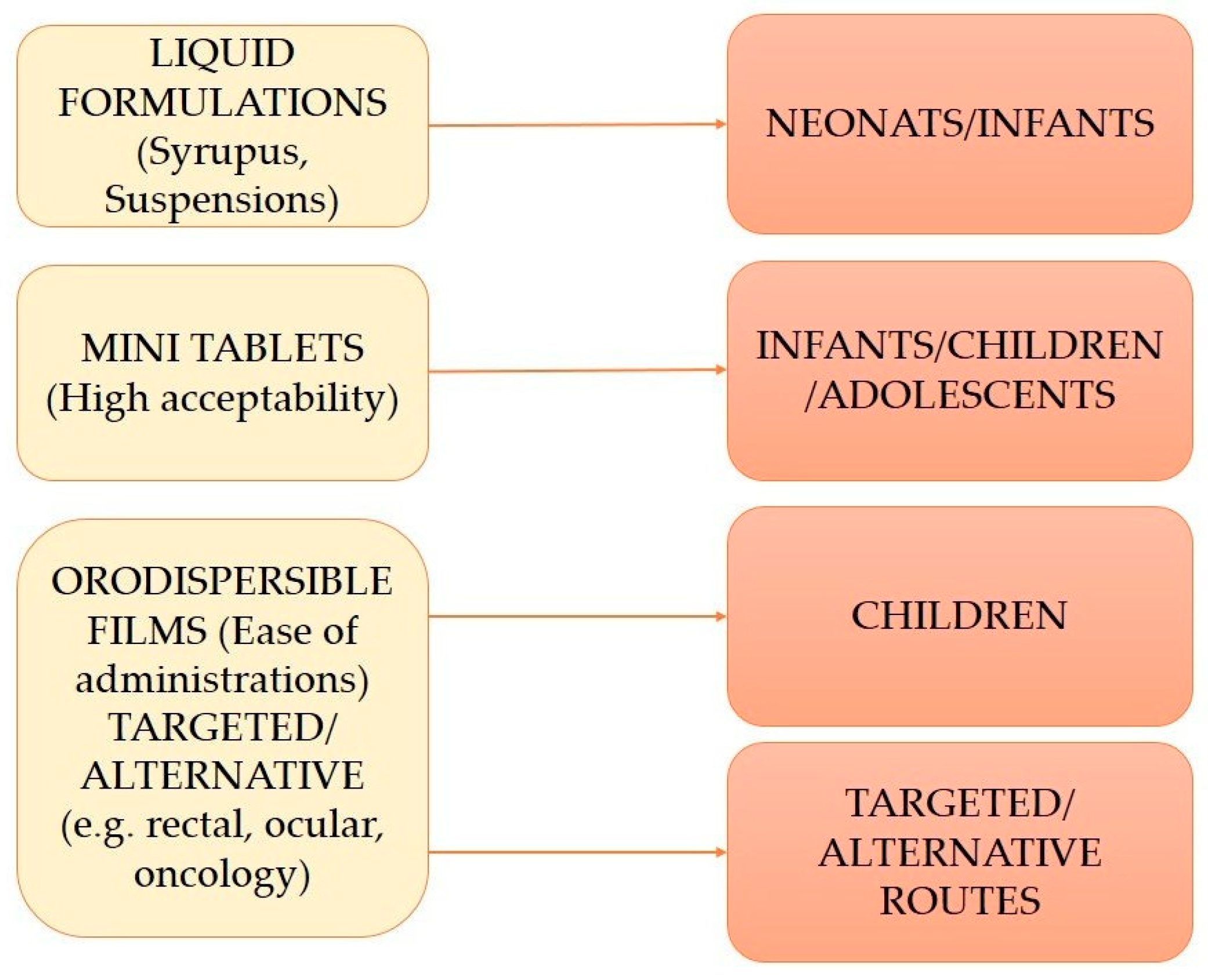
Oral pediatric formulations (Figure 1) are available in various formats—including liquids (e.g., syrups, suspensions, elixirs) and solids (e.g., tablets, capsules, chewable tablets, powders, and orodispersible forms) [6]. One of the primary challenges in pediatric formulation is selecting the most suitable dosage form for each age group. While liquid formulations are typically favored for younger children who may struggle with swallowing solids, emerging evidence suggests that this approach may not always be optimal. For instance, tablets have traditionally been considered inappropriate for children under six years old [53]. However, a study of 55 children aged 4–12 years showed that even children as young as four could successfully swallow tablets, with some even preferring them [11]. Mini-tablets, typically 2 to 4 mm in diameter, have demonstrated surprising acceptability, even in children under two years old and neonates, but evidence is currently limited, and uncertainties remain regarding larger sizes, multiple-unit dosing, and use in children with medical conditions. Klingmann [12] reported that mini-tablets were more acceptable than syrup in all pediatric age groups (Figure 2). These findings have contributed to the World Health Organization’s call for a transition from liquid to solid dosage forms and have influenced regulatory perspectives in the European Union [12]. Further research from the Netherlands comparing the acceptability of different oral forms, mini-tablets, syrups, suspensions, and powders, found mini-tablets to be most favored by both children and their caregivers [13]. These findings support the broader shift toward solid dosage forms in pediatric medicine, which offer several key advantages: better taste masking, more accurate dosing, improved stability, and fewer harmful excipients compared to liquids.
Although liquid medications are widely used, they pose challenges such as masking unpleasant tastes, ensuring accurate dosing, and avoiding potentially harmful excipients that may cause allergic reactions, central nervous system disturbances, or jaundice. Common examples of these excipients include ethanol, propylene glycol, polyoxyl castor oil, polysorbate 80, parabens, benzyl alcohol, benzoic acid, sodium metabisulfites, saccharin, aspartame, glucose, sucrose, and sorbitol [8]. Liquids also often require refrigeration, have shorter shelf lives, and are more complex to package and store [9]. Additionally, most do not offer controlled-release options, often necessitating multiple daily doses and reducing adherence [10]. In contrast, solid forms, especially mini-tablets, provide a more stable, cost-effective, and patient-friendly alternative. Their small size allows for flexible dosing by adjusting the number of units administered, making them suitable across a wide age range [54]. The development of orally disintegrating mini-tablets (mini ODTs) has further advanced this field [6,55]. Mini ODTs not only retain the benefits of mini-tablets but also dissolve quickly in the mouth, allowing for buccal or sublingual absorption. This can bypass first-pass metabolism and lead to faster therapeutic effects. Alternatively, after disintegration, the drug may be swallowed for absorption via the gastrointestinal tract, offering multiple routes of delivery from a single dosage form [56]. These features make mini ODTs especially valuable for younger children and those with swallowing difficulties, effectively combining the flexibility of liquids with the stability and precision of solids. As such, they are increasingly recognized as a gold standard for age-appropriate formulations [57]. While challenges remain such as optimizing taste masking and achieving sustained-release profiles, the use of polysaccharide-based matrices in both mini ODTs and ODFs supports the development of child-friendly, adaptable drug delivery platforms suitable for oral and buccal administration [56].

3. Pediatric Drug Delivery: Age-Specific Considerations

3.1. Physiological and Pharmacological Differences Across Pediatric Age Groups

The pediatric patients represent a heterogeneous population with substantial physiological and pharmacological differences compared to adults [1]. These differences arise from continuous developmental changes occurring throughout childhood and exert a profound influence on all pharmacokinetic processes of the drug (absorption, distribution, metabolism and excretion), as well as pharmacodynamic responses. Maturational processes occur in a non-linear, age-dependent manner, with significant variability among preterm and term neonates, infants, children, and adolescents [1,2,3]. A thorough understanding of these developmental variations is essential for the rational design of drug delivery systems tailored to pediatric patients [4,56].

3.2. Impact on Drug ADME (Absorption, Distribution, Metabolism, Excretion)

Age-related physiological changes can significantly impact drug absorption, particularly for orally administered formulation [4,56]. The gastrointestinal tract undergoes substantial maturation throughout childhood, with the most pronounced differences observed in neonates [24,25,58,59]. This developmental progression involves changes in factors such as salivary secretion and pH, gastric pH and volume, gastrointestinal motility, intestinal permeability, enzymatic activity, and bile salt secretion, all of which can potentially influence drug absorption kinetics [26,59].
Pediatric oral cavity development shows age-related changes which should be considered when developing orodispersible formulations. Notably, the total oral cavity surface area increases from approximately 117.6 cm2 in pre-school children to 214.7 cm2 in adults [60,61]. In parallel, both basal and stimulated salivary secretion rates exhibit a progressive increase across pediatric age subgroups [24]. Salivary pH exhibits the highest variation in the first months of life (from weakly acidic to neutral) and gradually increases with age, reaching adult values by pre-school age, while no significant age-related differences were observed in salivary electrolyte composition and buffer capacity beyond early infancy. Similarly, salivary amylase activity, essential for the hydrolysis of polysaccharides, is initially low in newborns but progressively increases, typically attaining adult concentrations by five to six months of age, though considerable individual variability is observed, with some infants reaching these levels as early as three months [24].
It is commonly reported that gastric pH at birth is neutral to slightly acidic but rapidly shifts, increasing again to near-neutral values before gradually decreasing to adult acidity levels by about two years of age [26]. More recent evidences, however, indicate that gastric pH is elevated only immediately after birth due to swallowed amniotic fluid, then it quickly declines within a few hours and remaining below pH 3 in all pediatric age subpopulations under fasting conditions [25,59]. Nevertheless, frequent milk-based feedings in neonates prolong periods of elevated gastric pH, thereby affecting drug solubility and stability [27,58,59]. Gastric emptying rates also appear less influenced by age than previously thought. Full-term neonates demonstrate more mature gastric emptying compared to pre-terms, but across pediatric age groups from infants to adolescents, gastric emptying rates for both solids and liquids show no significant age-related differences. Instead, meal-related factors (composition, volume, physicochemical properties) exert greater influence than age on gastric emptying patterns [24,28]. Neonates also produce lower volumes of digestive fluids and bile salts, limiting lipophilic drug absorption, and exhibit higher intestinal permeability [2,25,58]. The expression and activity of drug-metabolizing enzymes and transporters as well display age related changes in both the intestine and liver, and can substantially affect the oral absorption and systemic availability of drugs in pediatric populations [25,59,62]. Maturational changes can also significantly impact drug absorption through alternative administration routes [2]. In neonates and young infants, transdermal absorption is often enhanced due to factors such as thinner stratum corneum and epidermis, increased epidermal hydration and a higher surface area-to-body weight ratio compared to adults [36,63].
The distribution process is significantly influenced by changes in body composition, plasma protein binding, and tissue perfusion during development. Total body water decreases from 80 to 85% of body weight in preterm neonates to 70–75% in term neonates, gradually reaching adult values (55–60%) by early childhood, while body fat is lower, affecting drug distribution volumes. Hydrophilic compounds typically exhibit larger distribution volumes in neonates, while lipophilic drugs may show smaller volume [1,2,64]. Plasma protein binding represents another important factor influencing drug distribution. Neonates have lower concentrations of albumin and α1-acid glycoprotein, with potentially reduced binding affinity. This results in higher free drug fractions, increasing pharmacological effects and toxicity risks for highly protein-bound drugs [1,2,3]. Various brain-specific factors influence how drugs are distributed to the central nervous system, and these factors change throughout developmental stages [1,2,65]. Neonates show reduced expression of efflux transporters like P-glycoprotein, allowing greater central nervous system (CNS) penetration of certain drugs. As the blood–brain barrier (BBB) matures, these transporters become more active, limiting drug entry into the brain and requiring alternative strategies for CNS drug delivery [65,66,67].
Hepatic drug metabolism undergoes substantial maturation throughout childhood. Phase I metabolism, primarily mediated by cytochrome P450 (CYP) enzymes, shows significant age-dependent variability [29,30]. CYP3A7 predominates in the fetal liver but rapidly declines after birth, while CYP3A4 increases progressively during the first year. Other CYP enzymes follow different patterns: CYP2D6 and CYP2E1 reach adult levels within weeks, while CYP1A2, CYP2C9, and CYP2C19 mature more slowly [2,30,66]. Hepatic glucuronidation is markedly reduced in neonates and infants, leading to significantly lower drug clearance for substrates of these enzymes. The maturation of UGT isoforms occurs at different developmental stages: some reach adult activity within the first month (e.g., UGT1A1, UGT2B4), others during infancy (e.g., UGT1A3, UGT1A9), and some not until adolescence (e.g., UGT1A6, UGT2B17) [68,69]. Sulfation pathways are relatively well-developed at birth, often serving as the primary route for drugs that can undergo both pathways in neonate [70].
Renal drug excretion involves three distinct processes—glomerular filtration, tubular secretion, and tubular reabsorption—each of which follows its own unique trajectory and rate of maturation during development [1,2]. Glomerular filtration rate gradually rises during fetal development, rapidly matures after birth in relation to gestational and postmenstrual age, and generally reaches adult levels by one year of age [71,72]. Tubular secretion and reabsorption processes generally lag behind glomerular filtration, with adult capacity not achieved until approximately 15 months and 2 years of age, respectively [1,2]. Reduced renal clearance significantly impacts pharmacokinetics of renaly excreted drugs, typically resulting in prolonged half-lives and potential drug accumulation with repeated dosing.
Understanding these age-dependent ADME processes is essential for designing effective polysaccharide polymer-based drug delivery systems. For example, pH-responsive formulations can be tailored to the presence of gastric acidity from early life, while also considering the frequent postprandial buffering observed in neonates. For drugs undergoing significant first-pass metabolism, polysaccharide-based nanocarriers can potentially bypass or reduce intestinal and hepatic metabolism, thereby improving bioavailability—especially in older children with greater metabolic capacity. In neonates or infants with immature renal function, these delivery systems can be engineered to provide controlled release profiles, maintaining therapeutic drug concentrations while minimizing the risk of toxicity. By systematically addressing these age-specific ADME characteristics, polysaccharide polymer-based drug delivery platforms can be optimized to enhance both therapeutic efficacy and safety across the pediatric age spectrum [73,74,75]. Overall, these findings highlight that the design of pediatric formulations must be inherently age-specific, as developmental changes strongly influence the behavior and performance of polysaccharide-based drug delivery systems. This necessitates careful alignment of polymer properties and dosage-form characteristics with the physiological stage of the target age group. Tailoring formulation strategies to these developmental characteristics is therefore essential to ensure consistent therapeutic performance and safety across the pediatric population.

4. Polysaccharide Polymers: Characteristics and Uses in Pediatric Drug Delivery

4.1. Chitosan

Chitosan is a positively charged (cationic) linear polysaccharide obtained by deacetylating chitin, a naturally occurring biopolymer commonly found in the exoskeletons of crustaceans and the cell walls of fungi. It consists of repeating β-(1 → 4)-linked D-glucosamine and N-acetyl-D-glucosamine units. Degree of deacetylation (DD) and molecular weight (MW) are two key factors influencing its characteristics, solubility, charge density, and biological activity. Chitosan’s value in drug delivery stems from its excellent biocompatibility and biodegradability, resulting in safe, non-toxic degradation products. Chitosan is a polycationic polymer with amino groups (pKa~6.5) which makes it soluble in acidic to neutral solutions. Therefore, its cationic nature at acidic to neutral pH allows it to adhere effectively to negatively charged mucosal surfaces, increasing the residence time of drug delivery systems. Additionally, chitosan can temporarily open epithelial tight junctions, facilitating enhanced paracellular transport of hydrophilic drugs. It also possesses intrinsic antimicrobial activity against a wide range of bacteria and fungi. Chitosan’s unique combination of properties has led to its widespread use in drug delivery systems such as nanoparticles, hydrogels, films, and fibers, enabling controlled drug release. It is generally considered non-toxic and possesses low immunogenicity [18,19].
Chitosan-based systems, including nanoparticles, microparticles, and beads, are particularly valuable for oral drug delivery, as they protect proteins and peptides (such as insulin) from enzymatic degradation in the gastrointestinal tract and enhance their absorption across the intestinal mucosa. Chitosan polymer-based carriers have been widely researched for this purpose, and chemical or physical modifications have further improved their properties, highlighting their potential as oral insulin delivery (OID) systems. Their pronounced mucoadhesive properties prolong intestinal residence time, while their ability to enhance epithelial permeability promotes effective drug uptake [31]. Chitosan is widely explored in nasal drug delivery, cancer therapy, and gene delivery due to its mucoadhesive and permeation-enhancing properties, ability to improve drug stability and targeting, and its capacity to form protective complexes with nucleic acids for efficient cellular uptake [19]. Chitosan is gaining attention in pediatric formulations with promising applications including nasal vaccine delivery to potentially improve immune response and compliance [76], as well as in dentistry, oncology, and systemic drug delivery. In pediatric dentistry, chitosan has shown strong potential both as a drug delivery vehicle and a therapeutic agent. When formulated into nanoparticles, it enables sustained and controlled release of active ingredients, improving bioavailability and enhancing penetration through oral tissues. For example, fluoride varnishes made with chitosan nanoparticles have outperformed traditional sodium fluoride varnishes in remineralizing enamel lesions. This is largely due to their enhanced ability to deliver fluoride, calcium, and phosphate ions essential for enamel repair [77]. Chitosan has also been integrated into mucoadhesive buccal films containing cetylpyridinium chloride, either alone or in combination with polymers like hydroxypropyl methylcellulose (HPMC), methylcellulose (MC), hydroxyethyl cellulose (HEC), or polyvinyl alcohol (PVA), to manage oral infections in children. Notably, chitosan–PVA composite films have demonstrated strong antimicrobial action and rapid bactericidal effects against Streptococcus mutans, making them a promising non-invasive solution for pediatric oral health [78]. Several of these chitosan-based formulations are now progressing through clinical trials, further supporting their clinical potential [79].
In pediatric oncology, chitosan-based nanoparticles are gaining traction as targeted delivery systems for treating brain tumors such as medulloblastoma and ependymoma. These nanoparticles are specifically designed to deliver small interfering RNA (siRNA) to cancer cells. Structurally, they feature an iron oxide (Fe3O4) core encased in a chitosan shell, which is then functionalized with polyethyleneimine and polyethylene glycol (PEG) to enhance siRNA binding, cellular uptake, and stability. Chitosan serves as a versatile platform for covalent modification, allowing for effective siRNA encapsulation while maintaining low toxicity. When loaded with siRNA targeting the Ape1 gene, these nanoparticles successfully inhibited DNA repair in tumor cells, enhancing their sensitivity to radiotherapy [80]. Their small size (~40 nm) supports deep tumor penetration, while ligands like chlorotoxin aid in crossing the BBB to further improve delivery [81]. An especially innovative use of chitosan-based carriers has been in targeting diffuse intrinsic pontine glioma (DIPG), a highly aggressive and treatment-resistant pediatric brain tumor. In this case, researchers developed SN-38-loaded nanoparticles using an amphiphilic chitosan-g-poly(methyl methacrylate)-poly(acrylic acid) copolymer. These were surface-modified with a peptide shuttle to improve BBB permeability. The resulting particles (~200 nm in size with a +16 mV zeta potential) demonstrated high compatibility with DIPG cells and were primarily taken up via clathrin-mediated endocytosis. Importantly, they preserved SN-38’s anticancer efficacy and showed enhanced permeability and uptake in a BBB coculture model. In vivo studies confirmed their ability to accumulate in the brain after intravenous injection, significantly improving targeted drug delivery to the tumor site [82]. Together, these findings highlight the growing promise of chitosan-based nanocarriers in advancing therapeutic strategies for pediatric brain cancer treatment.
Chitosan-based nanoparticles have emerged as a promising strategy for pediatric asthma therapy. Treating this condition in children is particularly challenging due to difficulties in diagnosis and the limited effectiveness of conventional liquid formulations—especially for poorly water-soluble drugs like zafirlukast [83]. In recent study, zafirlukast was encapsulated within chitosan nanoparticles to enhance its solubility and therapeutic potential. The nanoscale design provided a greater surface area, enabling complete drug release within 30 min and resulting in improved in vivo performance, highlighting the formulation’s potential for more effective pediatric asthma management [84]
The film-forming and encapsulation capabilities of chitosan can be utilized to microencapsulate bitter-tasting drugs. Also, the development of chitosan-coated microparticles encapsulating propranolol hydrochloride is being investigated for pediatric use, with the aim of improving drug stability, improving dosing convenience, and providing a sustained therapeutic effect [85]. Biocompatible and antimicrobial chitosan-based hydrogels or films could be beneficial for treating wounds or inflammatory skin disease in children, such as atopic dermatitis [86].
The rectal route is a valuable alternative for pediatric patients who are vomiting, unconscious, or unable to swallow, offering rapid systemic absorption and partial avoidance of first-pass metabolism [87]. Mucoadhesive nature of chitosan, combined with the ability to form thermosensitive or in situ gelling systems, ensures that the drug is retained at the absorption site for a prolonged period, leading to improved therapeutic outcomes for conditions like seizures or inflammatory bowel disease in children [88].
Despite its advantages, chitosan’s application is limited by its pH-dependent solubility (insoluble at physiological pH unless modified). The variability in DD and MW across different sources can lead to batch-to-batch inconsistencies in properties, necessitating careful characterization and standardization [18].

4.2. Hyaluronic Acid

Hyaluronic acid (HA), or hyaluronan, is an anionic, non-sulfated glycosaminoglycan naturally present in the extracellular matrix of connective, epithelial, and neural tissues. It is a linear polysaccharide composed of repeating disaccharide units of D-glucuronic acid and N-acetyl-D-glucosamine. HA exhibits exceptional biocompatibility and non-immunogenicity as it is an endogenous molecule. A valuable property is its hygroscopicity, enabling it to bind and retain vast amounts of water, forming viscous hydrogels crucial for tissue hydration and lubrication. HA solutions display unique viscoelastic behavior. Its molecular weight can vary widely, significantly influencing its biological activity and rheological properties [89].
HA is a multifunctional polymer widely used in advanced drug delivery systems, including targeted cancer therapies via CD44-mediated uptake, ophthalmic formulations to enhance drug retention and comfort, intra-articular injections for osteoarthritis treatment and sustained drug release, and wound healing applications through hydrogels and scaffolds that support tissue regeneration [89,90,91].
Nebulized high molecular weight HA (HMW-HA) has shown efficacy in treating recurrent upper respiratory infections, bronchitis, and chronic airway inflammation in children by hydrating the mucosa, reducing inflammation, and improving mucociliary clearance [92]. In pediatric care, high molecular weight hyaluronic acid (HMW-HA) has been explored as an adjunct to hypertonic saline in respiratory physiotherapy for children with cystic fibrosis and non-CF bronchiectasis. Its use has been associated with improved airway clearance, offering a promising supportive approach in managing these conditions. However, to fully realize its therapeutic potential, further research is needed to refine delivery parameters—such as particle size, concentration, and compatibility with inhalation devices—and to develop standardized protocols specifically suited for pediatric patients [93].
Current research is focused on developing HA-based mucoadhesive oral hydrogels designed specifically for pediatric drug delivery. The goal is to enhance drug absorption and formulate more child-friendly dosage forms, easy to swallow. In this context, fluconazole-loaded sesame oil liposomes embedded within a hyaluronic acid hydrogel have been evaluated for the treatment of oral candidiasis [94]. HA containing creams and gels are well-suited for managing inflammatory skin conditions such as atopic dermatitis in children, due to their hydrating, anti-inflammatory, and skin barrier-restoring properties. Additionally, clinical cases reported by the authors demonstrate the high efficacy of topical HA in pediatric patients with thermal burns, where its use effectively minimized scarring [95,96].
In addition to these applications, it is important to highlight the significant role of HA in ophthalmic formulations, where its unique properties make it one of the most valuable polysaccharides used in pediatric and general ocular therapy. The ocular route presents a particular challenge due to the eye’s natural defense mechanisms, which rapidly eliminate foreign substances and consequently limit drug bioavailability. HA, a natural constituent of the vitreous body, is widely incorporated into ophthalmic preparations because of its excellent biocompatibility, mucoadhesiveness, and pseudoplastic behavior. Its viscoelastic characteristics allow uniform spreading across the ocular surface during blinking, making it an effective vehicle for artificial tears and drug solutions. Moreover, HA can be cross-linked to form films or inserts, providing a sustained-release platform that prolongs drug residence time and enhances therapeutic efficacy [97,98].

4.3. Alginate

Alginate is a natural anionic polysaccharide extracted from brown seaweeds, consisting of linear copolymers of (1 → 4)-linked β-D-mannuronic acid (M) and α-L-guluronic acid (G) residues. Renowned for its biocompatibility, biodegradability, and non-toxicity, alginate has garnered extensive interest in biomedical fields. One of its most remarkable features is the ability to form hydrogels through ionotropic gelation with divalent cations, most commonly calcium ions (Ca2+), under mild, aqueous conditions. This property makes alginate particularly suitable for encapsulating sensitive biomolecules and living cells. The G-blocks are primarily responsible for this crosslinking, forming an “egg box” structure. Alginate also exhibits mucoadhesive properties and pH sensitivity, with alginic acid being insoluble, allowing for pH responsive drug release. Owing to these characteristics, alginate has been widely studied for applications in drug delivery, tissue engineering, wound healing, magnetic scaffold fabrication, and regenerative medicine [99]. Alginate is widely used in biomedical applications due to its absorbent, biocompatible, and pH-sensitive properties. Alginate microparticles are extensively used for encapsulating drugs, proteins, and even cells for sustained or controlled release. The release profile can be tuned by varying alginate concentration, combination with other polymers, and crosslinker concentration. In wound dressings, it offers moisture retention, exudate absorption, and hemostatic effects, and can carry antimicrobial agents [100]. Additionally, its pH sensitivity makes alginate ideal for enteric coatings and targeted colon-specific drug delivery.
Liquid alginate-based formulations are widely used and clinically proven for managing gastroesophageal reflux in neonates and infants by forming a protective raft on stomach contents [101]. Alginate, often in combination with other polymers like Eudragit®, is used to develop microparticles for delivering drugs such as budesonide specifically to the colon in children with inflammatory bowel disease, thereby minimizing systemic side effects [102].
Alginate’s ability to form viscous solutions and gels can be used to improve the texture and suspend drugs in pediatric oral liquid formulations, potentially aiding in taste-masking and ensuring dose uniformity [103]. In solid dosage forms such as ODFs, sodium alginate SA has demonstrated strong performance as a rapidly hydrating and fast-disintegrating matrix. In a study involving pediatric patients with hypertension, captopril-loaded ODFs formulated with SA-rich polymer blends showed improved bioavailability and more sustained plasma drug levels compared to conventional tablets [104].
Alginate is widely used in the development of in situ gelling ophthalmic systems. Upon contact with the neutral pH and electrolytes of lacrimal fluid, alginate solutions undergo rapid gelation, which increases the formulation’s viscosity and prolongs ocular residence time. This feature enhances drug bioavailability by maximizing contact with the corneal surface and is particularly advantageous for treating pediatric ocular infections or inflammation [105].

4.4. Pectin

Pectin is a complex anionic heteropolysaccharide found in the cell walls of terrestrial plants, particularly abundant in fruits. Its backbone primarily consists of α-(1 → 4)-linked D-galacturonic acid residues, which can be methyl-esterified. The degree of esterification classifies pectins into High Methoxyl (HM, DE > 50%) and Low Methoxyl (LM, DE < 50%) types, dictating their gelling mechanisms. HM pectins form gels in high sugar concentrations and acidic pH, while LM pectins form gels with divalent cations (e.g., Ca2+). Pectin is biocompatible, biodegradable (primarily by colonic microflora), and has GRAS status. It exhibits mucoadhesive properties and can be chemically modified. Some LM pectins are amidated (LMA pectin), altering their gelling characteristics [106,107]. Pectin is utilized in drug delivery for its controlled release capabilities, colon-specific targeting, and mucoadhesive properties. Calcium pectinate hydrogels enable sustained drug release, while pectin’s resistance to upper GI degradation makes it ideal for colon-targeted therapies. Its mucoadhesiveness supports buccal, nasal, and ophthalmic delivery, and it also functions as a stabilizer and thickener in oral liquid formulations [107,108].
Pectin’s GRAS status and its ability to form gels and viscous solutions make it ideal for improving the texture and palatability of pediatric oral liquids, potentially masking unpleasant tastes and aiding in suspending drugs [106,108,109]. Pectin, specifically high methyl-esterified pectin, has shown promising utility in pediatric drug delivery by being useful in 3D-printed chewable dosage forms. For hydrocortisone printlets in pediatric adrenal insufficiency, pectin allowed for the preparation of strong, reversible gel-like structures for thermally reversible semi-solid extrusion printing to yield stable and fast release of dosage forms with precise low-dose delivery [110]. In personalized therapies for rare metabolic disorders including MSUD and OTC deficiency as well, pectin was the main gelling agent in amino acid-loaded systems. Its cohesive gelation in sugar- and acid-rich matrices maintained structural integrity through improved palatability and enabled the preparation of multi-active printlets [111]. In both cases, pectin facilitated the preparation of child-friendly, customized therapies providing higher acceptability and reproducible therapeutic performance.

4.5. Dextran

Dextran is a neutral, biocompatible, biodegradable, non-toxic, and very hydrophilic polysaccharide composed primarily of α-1,6-linked glucose units. Dextran is biosynthesized intra- or extracellularly by lactic acid bacteria, which represent one of the most important microbial groups due to their role in food fermentation. Biosynthesized dextran may range from low to high molecular weight depending on the specific fermentation conditions and the bacterial strain employed. Key properties include high water solubility, excellent biocompatibility, and low immunogenicity for specific molecular weight fractions. Dextran is biodegradable by dextranase found in the body [112]. Its abundant hydroxyl groups allow for extensive chemical modification, leading to derivatives with tailored properties. Certain MW fractions (e.g., Dextran 40, Dextran 70) are used clinically as plasma volume expanders [113].
Dextran’s versatile polymeric structure enables multiple drug delivery applications. As a backbone for drug conjugation, dextran improves solubility, prolongs circulation half-life, reduces systemic toxicity, and exploits the enhanced permeability and retention effect for passive tumor targeting [114]. In nanoparticles and microparticles formulations, dextran and its derivatives form hydrophilic carriers that afford controlled release, stealth characteristics, and reduced opsonization [115]. Crosslinked dextran hydrogels serve as sustained release depots and scaffolds in tissue engineering. When used as a coating material, dextran enhances biocompatibility and diminishes immunogenicity of other delivery systems [112].
Hypertonic saline dextran solutions have been used safely and effectively in pediatric critical care and cardiac surgery for fluid resuscitation [116]. Biocompatibility and protein stabilizing properties make dextran a potential excipient for pediatric vaccines or protein-based drugs, helping to maintain their activity [117]. Coating nanoparticles with dextran could reduce their immunogenicity and prolong circulation time when administered to children, potentially improving therapeutic outcomes and reducing adverse reactions. In an in vivo study conducted on pregnant murine models, peptide-functionalized dextran–iron oxide nanoparticles exhibited a prolonged circulation time and their safety was confirmed [118].

4.6. Guar Gum

Guar gum is a galactomannan polysaccharide obtained from the endosperm of Cyamopsis tetragonoloba. It structurally consists of a linear backbone of β-Dmannopyranose units linked through (1 → 4) bonds with single α-D-galacto-pyranose side chains attached by (1 → 6) linkages, giving a mannose: galactose ratio of about 2:1 [119]. This non-ionic and hydrophilic polymer hydrates rapidly both in hot and cold water to form viscous solutions that remain stable over a wide pH range, 1.0–10.5 [120]. The high molecular weight (≈5 × 10⁴–8 × 10⁶ Da) and good hydration capacity of guar gum bestow excellent thickening, stabilizing, suspending, and binding properties, turning it into a versatile excipient in solid and liquid formulations [121].
Guar gum is biodegradable, biocompatible, and non-toxic-supportive for its application in pediatric and geriatric drug delivery due to the aforementioned critical issues of excipient safety and physiological tolerance [122]. It has also been recognized for its potential in taste masking-a very critical palatability parameter in pediatrics. Sanjay et al. [123] identified it among natural polysaccharides that were able to form viscous coatings or matrices which could limit drug–taste receptor interaction, hence enhancing palatability.
Guar gum, though very frequently combined with chitosan in mucoadhesive formulations, is highly suitable for colon-targeted drug delivery owing to its biodegradability and responsiveness to colonic bacteria. Such polymers prolong the residence time of the drugs within the gastrointestinal tract by providing a longer time for mucosal contact and, hence, absorption. This dual functionality not only allows for delayed site-specific release but also enhances the bioavailability of poorly absorbed drugs, making guar gum highly useful in matrix tablets and compression-coated formulations [124,125].

4.7. Cellulose Derivates

Cellulose derivatives, being non-toxic and biodegradable with good biocompatibility, are among the most commonly used excipients in the formulation of solid, semi-solid, and liquid dosage forms [126]. These polymers contain a variety of chemically modified cellulose ethers that differ in their unique structural features. These structural varieties form a basis for differing physicochemical properties and applications in drug delivery. HPMC is one of the semisynthetic cellulose derivatives with attached methyl and hydroxypropyl substituents on the cellulose backbone. It offers different physicochemical characteristics mainly based on the degree of substitution and molar substitution, governing the solubility, viscosity, and thermal gelation behaviors of the polymer. These characteristics enable the use of such excipients as controlled drug release matrices. Other frequently used cellulose ethers include ethylcellulose (EC), sodium carboxymethylcellulose (NaCMC), and MC. All these cellulose ethers have unique modifications: ethyl groups in EC provide hydrophobicity, carboxymethyl groups in NaCMC introduce anionic properties, while methyl substituents in MC allow for temperature-responsive gelation. Substitution of hydroxyl groups on the cellulose backbone allows modification of its performance in various pharmaceutical formulations, which is achieved by controlling proper reaction conditions of etherification reactions [127].
EC, in particular, can be used to form microparticles that help control drug release in a predictable and stable manner. In one of the studies, carbamazepine was encapsulated in EC microparticles, which were then embedded in alginate beads and dispersed within an iota-carrageenan gel, thereby structuring this sustained-release system. This ensured that the gel retained the practical advantages of a suspension—easy swallowing and flexible dosing—while also preventing the precipitation of carbamazepine, a well-documented problem in pediatric liquid formulations, which may result in unpredictable dosing. The final formulation ensured a controlled release profile even for children below six years [128]. In addition to EC, other cellulose derivatives have been recognized for their safety in children. According to the Safety and Toxicity of Excipients for Paediatrics (STEP) database, HPMC, NaCMC, and MC are considered safe for pediatric use.
In recent research, HPMC was employed as the main matrix for 3D-printed gummy drug formulations prepared with a semi-solid extrusion bioprinter. Gummies are particularly suitable for children because of their chewable texture, pleasant taste, and visually appealing shapes and colors, and HPMC provides the necessary viscosity and gelation to maintain the printed structure while delivering precise doses. This approach allows for flexible, child-friendly formulations that can be tailored for individualized dosing and demonstrates the potential of HPMC-based 3D-printed gummies in future pediatric clinical applications [129]. HPMC has also been used in freeze-dried mucoadhesive buccal matrices for pediatric propranolol delivery, either alone or combined with chitosan. These matrices form porous, hydrophilic networks that rapidly hydrate, providing mucoadhesion, controlled drug release, and good biocompatibility, and CH/HPMC combinations showed enhanced mucoadhesion and drug permeation, making them promising child-friendly oral dosage forms [130]. Beyond oral delivery, HPMC-based hydrogels have been explored for pediatric wound healing. To address challenges of achieving both high antibacterial activity and good biosafety, a nanocomposite hydrogel dressing was developed by incorporating silver nanoparticles into a hydroxypropyl methylcellulose–hydroxyapatite scaffold (HMC-HA/AgNPs). This formulation forms a porous, biocompatible network with high mechanical strength and strong antibacterial activity. In animal studies, HMC-HA/AgNPs hydrogels promoted effective wound closure, demonstrating their potential as a safe, biocompatible, and easily applied hydrogel for treating burns and skin injuries in children. Therefore, these HMC-HA/AgNPs hydrogels have great potential as a versatile hydrogel for pediatric burn wound healing, combining antimicrobial efficacy with excellent wound-repair properties [131]. MC has also been studied as an intranasal powder in young children to reduce inflammatory airway episodes, highlighting the versatility of cellulose derivatives for non-invasive pediatric drug and excipient application [132]. More recently, NaCMC has been applied in pediatric oral formulation design: in a taste-masking brivaracetam solution, NaCMC combined with HP-β-CD significantly reduced activation of bitter taste receptors, improving palatability and adherence. Together, these polysaccharide-based excipients demonstrate broad utility in creating safe, acceptable, and effective pediatric drug delivery systems [133]. NaCMC has demonstrated clinical value in pediatric mucosal and surgical applications. In children with surgical repair of congenital choanal atresia, intra- and postoperative topical NaCMC gel effectively prevented scar formation and restenosis; no re-narrowing during long-term follow-up was reported [134]. Carboxymethylcellulose has also been used clinically in hyaluronate–CMC barrier films [Seprafilm®] (Genzyme Corp., Cambridge, MA, USA) to prevent adhesions in the postoperative state in children. In a retrospective analysis of 18 pediatric surgical patients ranging in age from 3 months to 18 years, Seprafilm® was used during abdominal procedures—most commonly during adhesiolysis for bowel obstruction—and was well tolerated with no reported postoperative bowel obstruction, abscess, or inflammatory reaction. Several follow-up operations had either reduced or no adhesions, further supporting the safety and efficacy of hyaluronate–CMC barriers in pediatric surgery [135].

4.8. Inulin

Inulin is a fructan of plant origin that consists of linear β(2 → 1)-linked fructose units terminated by an α-D-(1 → 2) glucopyranoside residue. Although the β(2 → 1) linkage dominates, some inulins do contain branches via β(2 → 6) links. The degree of polymerization of inulin varies widely: FOS (DP ≤ 10) and inulin (DP > 10), although most plant inulins contain between 2 and 60 fructose units, whereas microbial ones can be as large as >106 Da. Inulin displays low solubility, slight viscosity, low hygroscopicity, and high molecular flexibility due to its β-linked fructosyl backbone. Since human enzymes cannot hydrolyze such linkages, inulin reaches the colon intact and is fermented by β-fructosidase-producing bacteria, hence its characteristic prebiotic or bifidogenic activity [136].
Inulin-type fructans are widely used in pediatric formulations due to their prebiotic activity and excellent tolerability. Clinical evidence indicates that mixtures of long-chain inulin and galactooligosaccharides promote a bifidogenic microbiota in infants and toddlers, improve the consistency of the stool, decrease intestinal permeability, and reduce gastrointestinal and respiratory infections and early atopic manifestations [137].
Beyond nutritional applications, inulin has been investigated as a pharmaceutical excipient in pediatric drug delivery. The formulation of zidovudine into inulin-based liposomes was used to mask its bitter taste, which enhances the pediatric acceptability of the said drug. In the process, encapsulation increased the solubility and dissolution and yielded small, uniform amorphous particles; inulin provided stabilizing and taste-masking functions. Dissolution testing over a range of pH indicated improved release characteristics, suggesting potential dose reduction in pediatric HIV therapy [138].

4.9. Other Polysaccharides Explored in Pediatric Drug Delivery

Along with the highly researched polysaccharides mentioned earlier, there are a few additional natural polymers that have been investigated for pediatric drug delivery uses. Below is a summary of the major studies on these polysaccharides, including their formulation type and therapeutic indications (Table 3).
The studies outlined in Table 2 highlight the potential of various alternative polysaccharides for drug delivery in children. Although these polymers have not been investigated as extensively as more traditional polysaccharides, many possess desirable properties such as biocompatibility, mucoadhesiveness, and suitability for a wide range of pediatric drug formulations. For example, gum- and plant-based polymers have shown benefits in oral suspensions, oral gels, and ODFs, facilitating easier administration and improved patient compliance. Further research into these materials holds promise for expanding the range of safe, effective, and child-friendly drug delivery systems.

5. Advantages of Polysaccharide Polymers in Drug Delivery

Natural polymers such as polysaccharides are well adapted to cellular physiology and therefore exhibit exceptional properties, including biocompatibility, non-toxicity, low immunogenicity, availability, stability, and affordability. As members of the third major class of biopolymers (carbohydrates), polysaccharides play vital roles in various physiological processes such as fertilization, immune response, blood coagulation, disease prevention, and enhancing therapeutic outcomes. Within cells, they contribute to structural support, lubrication, energy storage, and the transmission of cellular signals. Owing to their numerous advantages and exceptional flexibility, these polymers serve as a versatile platform for developing drug delivery systems aimed at minimizing drug loss and reducing toxicity [14,15].

5.1. Biocompatibility and Biodegradability

Polysaccharides possess two significant advantages that make them ideal for drug delivery system formulation: their inherent biocompatibility and biodegradability, both critical attributes when selecting materials for biomedical applications.
They are naturally occurring polymers derived directly from biomass, including plants, animals, and microorganisms [15]. Structural similarity to components of the human extracellular matrix contributes to their excellent biocompatibility and low toxicity. Moreover, the biodegradability of polysaccharides arises from their ability to degrade into monosaccharides, which can be readily metabolized or excreted by the body. This property is crucial for minimizing the risk of chronic inflammation and undesirable accumulation in tissues. Structurally, polysaccharides are composed of monosaccharide units connected via glycosidic bonds, these sugar residues may be glycosidically linked to each other or covalently attached to other molecular entities. Carbohydrate-active enzymes facilitate the degradation process by breaking down the structural limitations imposed by glycosidic bonds [16].

5.2. Chemical Modification Potential

Many natural polysaccharides inherently exhibit limited biological activity. To enhance and diversify their bioactivity, chemical modification strategies are widely employed to alter their chemical structure and molecular conformation. Modifications targeting functional groups such as carboxyl (-COOH), amino (-NH2), and hydroxyl (-OH) groups have led to the development of polysaccharide derivatives with tailored properties for specific biomedical and pharmaceutical applications [17]. For instance, sulfation of polysaccharides extracted from Sphallerocarpus gracilis has been shown to significantly enhance antioxidant activity compared to their non-sulfated counterparts [40]. Similarly, phosphorylation markedly increases antioxidant capacity [41], while carboxymethylation has been reported to improve the antifungal efficacy of chitosan against Candida species [42]. These chemical modifications are effective tools for enhancing the physicochemical and biological characteristics of polysaccharides, thereby making them more suitable for use in drug delivery systems due to improved stability, biocompatibility, non-toxicity, and biodegradability [43]. Beyond augmenting existing bioactivities, structural modification of polysaccharides can introduce new functional properties, including antioxidant, antitumor, immunomodulatory, antiviral, antibacterial, and anticoagulant activities [148]. Advanced chemical modifications such as grafting [149], cross-linking [150], complexation [44], and covalent coupling further expand the applicability of polysaccharides in drug delivery by enhancing therapeutic efficacy and enabling their use as alternatives to synthetic excipients or polymers [43].
A chemically modified pregelatinized hydroxypropyl pea starch (Lycoat® RS720) was used as a superdisintegrant (4–10% w/w) in an ODF designed for pediatric delivery of 30 mg racecadotril. The modification significantly enhanced disintegration time and enabled rapid drug release, demonstrating the effectiveness of polymer modification. Combined with PVA and glycerol as a plasticizer, the resulting ODF exhibited favorable mechanical properties and showed bioequivalence to a marketed product (Hidrasec) [151]. In another research, Lycoat® RS720 was optimized in different concentrations (20–30%) to find applications in developing epinephrine HCl-containing FDFs for future pediatric applications in anaphylaxis. The experiment was able to display that epinephrine could successfully be incorporated into FDFs, with potential benefits to pediatric formulations from modified polysaccharides like Lycoat® RS720. The formulation was also able to mask epinephrine’s bitterness, as evidenced by feedback from volunteers [152]. Lycoat® RS720 was also used as the primary film-forming polymer in ODF for buccal delivery of a measles vaccine. Combined with Neosorb® P60W and Tween 80, the formulation enabled stable incorporation of vaccine microparticles. The resulting ODF showed strong potential as a needle-free, child-friendly alternative to traditional vaccines, offering effective immune response and improved accessibility [153]. These findings reinforce the value of chemically modified polysaccharides in improving formulation performance and pediatric compliance.

5.3. Mucoadhesion Properties

Mucoadhesion, the phenomenon by which materials adhere to mucosal surfaces, has become one of the most prominent approaches for the development of drug delivery systems. Polysaccharide-based polymers are particularly attractive in this context due to their ability to form noncovalent interactions with mucin, the major glycoprotein component of mucus. These interactions are primarily facilitated by hydrophilic functional groups, such as hydroxyl, carboxyl, and amino groups that enable the formation of a bioadhesive layer with epithelial and mucosal tissues. Such materials have great potential in improving therapeutic efficacy, extending the residence time at the site of action, and minimizing systemic side effects, thus offering a more efficient approach to targeted drug delivery [90,154].
Mucoadhesion is typically described in two main phases: the contact phase, where the polymer wets and spreads on the mucosal surface to establish close contact, and the consolidation stage, where stronger interactions form through polymer–mucin chain interpenetration and secondary bonding, determining the overall adhesion strength and durability [90].
Enhancing drug bioavailability through mucoadhesive drug delivery systems has been a significant focus in pharmaceutical research. Such systems have been effectively applied across various routes of administration, including oromucosal [155], buccal [156], ocular [157], and nasal [158]. By prolonging the residence time of the drug at the site of absorption, mucoadhesive systems can enhance therapeutic efficacy and reduce dosing frequency [98].

5.4. Biological Activities

Beyond their role in enhancing mucoadhesion in drug delivery systems, polysaccharide polymers exhibit a diverse array of biological activities, making them valuable in various biomedical applications.
Polysaccharides from various sources, such as fungi, bacteria, and marine organisms, have demonstrated significant antioxidant properties. For instance, extracellular polysaccharides from Lactobacillus plantarum and Streptomyces species exhibit strong free radical scavenging abilities, including DPPH and hydroxyl radicals, and possess metal-chelating properties. This activity is influenced by their molecular weight, monosaccharide composition, and the presence of functional groups like hydroxyl and carboxyl groups. Chitosan is another notable antioxidant, capable of scavenging peroxide free radicals and protecting against oxidative stress [15,159].
Certain polysaccharides exhibit anti-inflammatory properties by modulating immune responses. Chitosan has been shown to reduce inflammation and oxidative stress in animal models. Additionally, arabinoxylans from wheat and rice bran can modulate gut microbiota and increase regulatory T cells, leading to reduced inflammation [160]. Also, polysaccharides such as β-glucans and pectins have demonstrated the ability to modulate immune responses. They can activate macrophages, dendritic cells, and natural killer (NK) cells, leading to enhanced cytokine production and improved host defense mechanisms. This immunomodulatory effect is attributed to their interaction with pattern recognition receptors like toll-like receptors (TLRs) and dectin-1 on immune cells [161].
Natural polysaccharides have also demonstrated beneficial effects in metabolic regulation. Certain dietary polysaccharides contribute to the lowering of blood glucose and cholesterol levels, making them promising agents for managing conditions such as diabetes and hyperlipidemia. Some examples of polysaccharides having hypoglycemic and hypocholesterolemic properties include sulfated polysaccharides from Bullacta exarate chitosan, and kefiran [15,43].
Polysaccharide polymers are suitable for use as effective nanocarriers for protein delivery, improving the stability of encapsulated proteins and extending their therapeutic action. For example, orally administered insulin-loaded dextran–chitosan polyelectrolyte nanoparticles have shown enhanced bioavailability and a prolonged hypoglycemic effect [15].

5.5. Safety Profile

Polysaccharide-based polymers derived from natural sources are widely recognized for their excellent biocompatibility and low toxicity, properties that are particularly critical in pediatric applications. Nevertheless, the long-term safety of these materials, including excipients classified as GRAS, warrants ongoing evaluation, especially in the context of chronic exposure during early developmental stages [15,48]. Proper safety assessment of modified biopolymers is necessary to keep the risks of their use as low as possible. A full set of biocompatibility tests including in vitro and in vivo tests is necessary to evaluate cytotoxicity, hemocompatibility, genotoxicity and immunogenicity. These investigations are important in both the assessment of potential biological risks and to disclose the safety of the intended drug delivery system. In addition, the degradation products of these biopolymers need to be non-toxic and readily metabolized through endogenous physiological pathways. Comprehensive knowledge of the kinetics of degradation and of the nature of the produced degradation products is essential for the establishment of a larger safety margin. In line with regulatory requirements, extensive safety assessments, including toxicity testing, biodegradability evaluations, and migration studies are typically mandated prior to the approval of modified biopolymers for biomedical or pharmaceutical applications [154].
Aluani et al. evaluated the biocompatibility of chitosan–alginate nanoparticles loaded with quercetin, focusing on their safety for subsequent oral administration in Wistar rats. The research identified that these physicochemical features need to be considered in the context of interactions with biological systems, thus potential nanoparticle toxicity. Primitive cell reactions were also determined by standard biocompatibility tests such as viability tests and cellular membrane integrity analyses that are well-established indicators of cytotoxicity and cellular injury. These evaluations were performed in order to gather key information on the systemic tolerance and potential biotoxicity of the nanoparticles developed and are part of the increasing evidence needed for its safe use in drug delivery system [162].

6. Formulation Strategies for Polysaccharide-Based Delivery Systems

6.1. Polysaccharide–Drug Conjugates

Polysaccharide–drug conjugates are an innovative drug delivery method. This strategy involves chemically linking drugs to polysaccharide molecules, forming macromolecular prodrugs. The aim is to improve drug effectiveness by enhancing stability, solubility, and targeting ability, while reducing toxicity. Polysaccharides are ideal for this due to their biocompatibility, biodegradability, low toxicity, and easily modifiable chemical structure. Polysaccharide–drug conjugates work by selectively releasing the drug at target sites through the cleavage of a chemical linker. Conditions like specific enzymes, pH changes, or redox environments common in diseased tissues trigger this cleavage. Linkers like ester, amide, or carbamate bonds can be customized for controlled release [37]. In pediatric applications, careful linker selection enables precise drug delivery, reduces therapeutic toxicity, and facilitates sustained or controlled drug release [163]. Some polysaccharides, like hyaluronic acid, also enable targeted delivery through receptor-mediated uptake by target cells expressing specific receptors (e.g., CD44) [164].
Among others, polysaccharide–drug conjugates possess a number of features that are especially interesting for pediatric applications. One, they can enhance the taste of orally ingested drugs, a crucial concern in pediatric formulations where the taste of the therapeutic is usually unpleasant to prohibit the ecological activity. Second, through alteration in the pharmacokinetic profile of the drug, conjugates can produce extended circulation times and a sustained drug effect, making possible dosing once or less than once a day, an important advantage when children are at risk of non-compliance. Third, the improved solubility and stability because of polysaccharide conjugation could be essential for drugs that are generally hard to formulate in a suitable manner for administration to children. Moreover, the ability to achieve targeted delivery may also reduce toxic side effects [45]. Natural polysaccharides inherent biocompatibility and biodegradability also reduce concerns about carrier-induced toxicity [15].
Several polysaccharides have been explored for drug conjugation, including chitosan, hyaluronic acid, dextran, alginate, and cyclodextrins [37]. For example, hyaluronic acid-paclitaxel conjugates have shown promise in cancer therapy due to CD44 receptor targeting [165]. Dextran–drug conjugates have been investigated for various drugs to improve their half-life and reduce toxicity. In the context of pediatrics, research is increasingly directed towards developing conjugates for treating childhood cancers, inflammatory diseases, and infections, with an emphasis on oral or other non-invasive delivery routes. There is a strong emphasis on non-invasive delivery methods like oral administration. Chitosan-based conjugates are particularly promising due to their ability to adhere to mucosal surfaces and improve drug absorption. Formulating safe, effective, and well-characterized conjugates tailored for children remains a key and growing area of study [37].

6.2. Polysaccharide Particles

This formulation approach relies on the natural capacity of some polysaccharide molecules or their derived structures to self-organize into highly defined nano to microscale particles under certain physicochemical conditions. These structures, which can for example, form micelles, nanoparticles, nanogels or vesicles, are also produced by non-covalent interactions and steric forces, e.g., hydrophobic interactions, hydrogen bonds, electrostatic forces or van der Waals forces. Hydrophobically modified polysaccharides (e.g., cholesterol-modified pullulan, acetylated dextran) can self-assemble into core–shell nanoparticles in aqueous media, where the hydrophobic core serves as a reservoir for lipophilic drugs, and the hydrophilic polysaccharide shell provides stability and biocompatibility [166]. Other types include polyelectrolyte complexes formed by the interaction of oppositely charged polysaccharides (e.g., chitosan and alginate), which can encapsulate charged drug molecules. The morphology and size of these particles can be controlled by factors such as the polysaccharide molecular weight, the degree of hydrophobic modification and the polymer concentration [167]. Drugs can be incorporated into polysaccharide particles either by physical encapsulation within the particle core or matrix, or by chemical conjugation to the polysaccharide chain prior to particle formation. Hydrophobic drugs are typically entrapped within the hydrophobic domains of amphiphilic polysaccharide micelles or nanoparticles, while hydrophilic drugs can be incorporated into the aqueous core of vesicles or into the matrix of hydrogel-like nanoparticles.
Numerous polysaccharides, such as chitosan, alginate, hyaluronic acid, pullulan, dextran, and cyclodextrins, have been utilized to formulation self-assembling drug delivery systems [46]. For example, chitosan-based nanoparticles, formed through emulsification or ionic gelation, have been extensively studied for oral and nasal drug delivery due to its mucoadhesive and absorption enhancing properties [47]. For pediatric applications, research is focused on developing nanoparticle-based formulations for vaccines (e.g., mucoadhesive nanoparticles for nasal immunization) [34], oral delivery of antibiotics with improved palatability and bioavailability [168], and targeted delivery of anticancer drugs for childhood cancers [163]. The development of inhalable polysaccharide micro/nanoparticles for treating respiratory diseases like asthma or cystic fibrosis in children is also a significant area of research. Self-assembling polysaccharide particles show promise but face challenges for pediatric use, including scale up, consistency, stability, and understanding their behavior and immune effects in children. Comprehensive testing is needed to ensure safety and efficacy across age groups [169].

6.3. Hydrogels

Polysaccharide-based hydrogels are three-dimensional networks formed by cross-linked polymer chains containing hydrophilic chains that have the capacity to absorb and retain large amount of water or biological fluids without dissolving. Due to their unique structure water absorption capacity, soft nature, and natural compatibility with the body, they are inherently perfect biomaterials, suitable for such biomedical applications as drug delivery. Interestingly, such hydrogels can be tailored to respond to different physiological stimuli such as pH, temperature, enzymes, or ionic strength to enable controlled and target drug release. Crosslinking, which is essential for forming the stable 3D network, can be achieved through physical or chemical methods. Physical cross-linking involves non-covalent interactions like hydrogen bonding, ionic interactions such as alginate cross-linked with calcium ions or hydrophobic associations. Chemical cross-linking involves the formation of covalent bonds resulting in hydrogels that are typically more stable and possess superior mechanical strength [170].
Polysaccharide hydrogels offer numerous advantages for pediatric drug delivery. Hydrogels that can be administered via minimally invasive routes and in situ gel are more favorable to the pediatric population, as they can reduce discomfort and promote patient adherence. In situ gel are usually prepared by means of temperature-sensitive sol–gel transitions, e.g., based on combinations of poloxamer and polysaccharides. In addition, high water content and soft texture of hydrogels can improve the palatability and ease of swallowing of oral formulations, which is a major challenge in pediatric therapy [73,171,172]. They can provide sustained and controlled drug release, reducing the need for frequent dosing and improving therapeutic outcomes and patient adherence [173]. Drugs can be incorporated into polysaccharide hydrogels either by physical entrapment within the gel matrix during its formation or by covalent conjugation to the polysaccharide chains. The selection of method depends on the drug properties and the desired release profile. Drug release from hydrogels is governed by several mechanisms, including diffusion of the drug through the swollen polymer network, swelling of the hydrogel followed by drug release, and erosion or degradation of the hydrogel matrix. The release rate can be modulated by controlling the hydrogel’s cross-linking density, pore size, degradation rate, and the interaction between the drug and the polysaccharide [73].
In pediatrics, there is increasing interest in hydrogels for delivering growth factors, gene therapies, and child-friendly oral formulations, as well as in situ forming systems for targeted delivery with minimal systemic exposure [174,175]. Despite advancements, several challenges hinder the clinical use of polysaccharide hydrogels in pediatrics. These include scalable manufacturing, precise in vivo drug release control, and ensuring long-term biocompatibility and low immunogenicity. Mechanical weakness, mismatched degradation rates, and difficulties in taste masking while maintaining drug load and release profiles further complicate oral formulations. Additionally, regulatory approval must account for age-specific physiological and safety considerations [79].

6.4. Coatings and Films

Polysaccharide-based coatings and films represent a crucial formulation strategy in drug delivery, particularly valued for their application in oral dosage forms, including those designed for pediatric patients. These thin layers are applied to tablets, pellets, granules, or even nanoparticles, or they can be formulated as ODFs or patches. The primary purposes of using polysaccharide coatings and films include masking unpleasant tastes or odors of drugs, protecting the active pharmaceutical ingredient (API) from degradation (moisture, light, or acidic environments), controlling the rate and site of drug release (enteric coatings for intestinal release, sustained-release coatings), improving the ease of swallowing, enhancing patient compliance (especially in pediatrics and geriatrics), and even facilitating drug absorption through mucosal surfaces (in the case of buccal or sublingual films) [176,177].
Coatings are typically applied to solid dosage forms using techniques such as fluid-bed coating or compression coating. Taste masking is the main reason for coatings in pediatric formulations, where bitter or unpalatable drugs can lead to poor adherence. For controlled release, coatings can be designed to dissolve at specific pH values or they can form a diffusion barrier to slow down drug release. In this way it is possible to reduce dosing frequency, which is also beneficial for pediatric adherence. The use of natural, biocompatible polysaccharides minimizes concerns about excipient toxicity in children [85,178].
Cellulose derivatives like HPMC are widely used for immediate-release film coatings for taste masking and improving swallowability. EC is used for creating sustained-release coatings [178]. Alginates and chitosan are explored for enteric coatings and mucoadhesive films [179]. Pectin-based coatings are investigated for colon-specific drug delivery [180]. Recent advancements include the development of multi-layer coatings for more complex release profiles, the use of nanocomposite coatings and the application of novel coating technologies like supercritical fluid coating or hot-melt coating [181].
On the other hand, ODFs are thin, flexible polymeric films that rapidly dissolve or disintegrate in the oral cavity upon contact with saliva, releasing the drug for local or systemic absorption. Polysaccharides are excellent film formers for ODFs, providing good mechanical strength, flexibility, and dissolution characteristics [169]. ODFs offer several benefits for pediatric patients: they are easy to administer (no need for water, no risk of choking), allow for precise dosing, can bypass first-pass metabolism if designed for buccal or sublingual absorption (leading to potentially faster onset of action and improved bioavailability), and can be made visually appealing with colors and flavors. Polysaccharides such as cellulose derivatives, starch, chitosan, alginate and carrageenan are often used due to their biocompatibility, biodegradability, GRAS status for film formation [178]. Current research includes the development of mucoadhesive films for prolonged contact time and enhanced absorption [169], films with incorporated microparticles or nanoparticles for improved drug loading or controlled release [85,171], and the use of 3D printing technologies to create personalized ODFs with precise dosing tailored to individual pediatric patients [182].
The main challenges for ODFs can be limited by the drug loading capacity especially for high-dose drugs, uniformity of the content, and taste masking. Stability of the films, such as sensitivity to moisture or mechanical fragility, is another concern. On the other hand, polysaccharides functional properties vary based on their structure and interactions, making it essential to understand their physicochemical traits and optimize formulations for stability and commercial viability [169,181].

7. Overcoming Delivery Challenges: Polysaccharide Polymers in Pediatric Cancer Treatment

Over the past several decades, significant progress in the treatment of pediatric cancers has led to a substantial decline in mortality rates. Since the mid-1970s, mortality for childhood cancers has decreased by over 50%, with the most improvements in hematological malignancies such as non-Hodgkin lymphoma and acute lymphoblastic leukemia [163]. These advances are attributed to comprehensive clinical trials, improved supportive care, better risk assessment, and the development of targeted therapies [38]. Today, the 5-year survival rate for pediatric cancer patients approaches 80% [39], a remarkable achievement that highlights the importance of continued innovation in oncology. Despite significant advances in pediatric oncology, long-term complications among childhood cancer survivors remain a major clinical concern. Many of these late effects stem from the aggressive chemotherapeutic and radiotherapeutic regimens used during treatment, which, while effective in achieving remission, often compromise healthy developing tissues. Endocrine disorders are among the most frequently reported complications, affecting growth, thyroid function, pubertal development, and overall hormonal balance. Additionally, reproductive dysfunction is a common issue, particularly in patients treated with gonadotoxic agents, leading to infertility and delayed sexual maturation [39]. Renal toxicity, especially from platinum-based drugs like cisplatin, can result in long-lasting nephrotoxicity, demanding lifelong monitoring and sometimes leading to chronic kidney disease [183]. Beyond physical health, survivors are also at risk for neurocognitive impairments, secondary cancers, and psycho-social challenges, all of which can significantly impact their quality of life. As survival rates improve, attention must increasingly focus on minimizing these adverse effects through tailored treatment approaches based on individual risk, preventive measures to minimize long-term damage, long-term care strategies that provide physical, emotional, and social support after treatment [184].

7.1. Limitations of Conventional Chemotherapy

A central limitation in pediatric cancer treatment is the use of chemotherapeutic regimens originally designed for adults. The lack of pediatric-specific formulations further complicate treatment, frequently requiring off-label prescribing and dosage adjustments based on limited evidence [185]. These agents are often non-specific, leading to systemic toxicity and aforementioned long-term adverse effects. Children, whose organs and systems are still developing, are particularly vulnerable to these effects. Moreover, pediatric patients are a heterogeneous population. Drug pharmacokinetics and pharmacodynamics vary widely depending on age, weight, developmental stage, and organ function [49].

Biological Barriers to Drug Delivery

Current systemically delivered anticancer molecular therapeutics face significant delivery challenges that limit their effectiveness. These therapeutics rely entirely on passive transvascular mechanisms to penetrate both primary and metastatic solid tumors, a process that is slow and inefficient. This passive transendothelial delivery requires maintaining a high drug concentration gradient across the tumor endothelial cell barrier to drive any drug into the tumor tissue. The unfortunate reality for patients is that only a small fraction (less than 0.1–1%) of administered drugs actually reaches the intended tumor sites. To compensate for this poor penetration and achieve therapeutically effective concentrations at neoplastic sites, clinicians must administer increasingly high doses, often approaching maximum tolerated dose limits. This approach creates a significant blood-to-tumor concentration gradient in an attempt to force uptake and achieve some level of efficacy [186]. Effective drug delivery is further slowed down by physiological barriers, especially in the context of solid and brain tumors. In solid tumors, the high interstitial pressure and irregular vasculature within tumor tissues restrict drug penetration, contributing to the poor delivery efficiency. The irregular tumor vasculature creates areas of both high and low perfusion, resulting in uneven drug distribution throughout the tumor mass. For pediatric brain tumors, the BBB represents an additional significant obstacle. Including endothelial cells, pericytes, and astrocytes, the BBB tightly regulates molecular traffic into the central nervous system (CNS). Endothelial cells express efflux transporters such as P-glycoprotein, which actively pump drugs out of the cells, further limiting therapeutic efficacy [187]. As a result, treating pediatric CNS malignancies often require invasive methods or the use of drugs with poor CNS penetration. Consequently, the dual problems of poor delivery efficiency and drug toxicity continue to undermine the effectiveness of multiple classes of cancer therapeutics. This inefficient delivery mechanism represents a fundamental challenge in cancer treatment [188].

7.2. Improving Cancer Treatment Outcomes with Polysaccharide Drug Carriers

Cancer is a leading cause of death worldwide, second only to cardiovascular disease. While chemotherapy is commonly used alongside surgery, hormone and radiation therapy, it causes severe side effects due to non-specific targeting, poor bioavailability, and high dose requirements. Polysaccharide-based carriers offer a solution by targeting cancer cells specifically, reducing toxicity. These non-toxic, biodegradable, hydrophilic biopolymers (including chitosan, alginates, cyclodextrin, pullulan, hyaluronic acid, dextran, guar gum, pectin, and cellulose) can be chemically modified to improve drug bioavailability and stability, enhancing therapeutic delivery to cancer tissue [37]. It has been found that polysaccharides have become a class of promising biopolymer carrier materials to deliver anticancer therapeutic molecules [189].

7.3. Colon-Specific Drug Delivery Using Polysaccharides

Polysaccharide-based biomaterials are emerging as promising tools in the fight against colorectal cancer, thanks to their unique biological properties and compatibility with the human body. Alginate can form protective gels that shield drugs from harsh stomach acids, allowing them to reach the intestines intact. Chitosan’s ability to adhere to mucosal surfaces helps drugs stay in place longer and improves absorption. Although cyclodextrins are not true polysaccharides and are not degraded by colonic enzymes, they are often included in colon-specific systems because they enhance the solubility of poorly water-soluble drugs. Cellulose contributes structural strength and allows for controlled drug release. Pectin not only supports colon-targeted delivery but also has its own anticancer effects. Starch and guar gum, both biodegradable and digestible, are particularly useful for oral and colon-targeted drug delivery. These polysaccharides also take advantage of tumor characteristics, like leaky vasculature, to accumulate more effectively at cancer sites [190]. Dextran and amylose (a component of starch) are resistant to human digestive enzymes but are readily cleaved by glycosidases produced by colonic microflora, enabling site-specific drug release. Inulin, a fructan polysaccharide, is fermented by colonic microbiota, which leads to breakdown of the polymer matrix and subsequent drug release [191,192]. While challenges like manufacturing consistency and drug–polymer interactions remain, recent research continues to push the boundaries, suggesting that these natural materials could play an important role in making cancer treatments more effective and less toxic [193].

7.4. Alginate-Coated Titanium Dioxide Nanoparticles: A Safer Delivery System for Neuroblastoma Therapy

Alginate-coated titanium dioxide nanoparticles loaded with temozolomide offer a promising new approach for treating neuroblastoma. While titanium dioxide has known anticancer properties, its use has been limited by harmful side effects like oxidative stress and toxicity to healthy cells. By combining it with alginate—a natural, biocompatible polysaccharide with antioxidant and anti-inflammatory properties—researchers have created nanoparticles that target tumor cells more precisely and safely. These 30–60 nm particles not only improve drug delivery but also modulate key cancer-related pathways like NF-κB and MAPK. The result is better tumor suppression, reduced side effects, and improved survival compared to traditional treatment [193].

7.5. Active Tumor Targeting with RGD Peptides

The tumor microenvironment, a complex and evolving network of cellular and extracellular components plays a critical role in cancer progression, metastasis, and resistance to therapy. This complexity is particularly challenging in pediatric cancers, where developmental considerations add another layer of intricacy. In recent years, Arg-Gly-Asp (RGD) peptides have gained attention in cancer nanomedicine for their strong binding affinity to integrins, especially αvβ3 and αvβ5, which are commonly overexpressed in tumor cells and angiogenic regions of the TME [194]. This overexpression provides a selective target for therapeutic intervention that can be exploited across various cancer types, including pediatric malignancies. Functionalizing nanoparticles with RGD peptides offer a powerful strategy to overcome the limitations of passive targeting via the enhanced permeability and retention effect (Figure 3). These RGD-modified nanocarriers allow for active targeting through precise molecular recognition, improving drug accumulation at tumor sites while minimizing systemic toxicity—a particularly important consideration in pediatric patients whose developing organs are more vulnerable to treatment-related damage. When combined with polysaccharide-based delivery systems, RGD-functionalized nanoparticles can further enhance therapeutic efficacy through improved biocompatibility and reduced immunogenicity [195]. This approach holds promise in advancing precision oncology, with emerging interest in their application to pediatric cancers and increasing representation in clinical trials [196].

7.6. Theranostic Applications of Polysaccharide Biopolymers in Modern Cancer Treatment

Theranostics is a term derived from the combination of “therapy” and “diagnostics”, referring to an integrated approach that combines diagnostic and therapeutic functions within a single platform. These systems combine contrast agents and drugs in one carrier, enabling real-time imaging to monitor treatment efficacy, which helps prevent treatment overdose or underdose and facilitates personalized therapy approaches. Polysaccharides have emerged as particularly valuable natural biomolecules for developing theranostic platforms. Most used polysaccharides are chitosan, alginates, cyclodextrin, hyaluronic acid, dextran, guar gum, and pectin [37,197]. Their utility stems from their ability to simultaneously serve as a matrix for loading both contrast agents and therapeutic drugs, making them effective for combined drug delivery and imaging applications. Polysaccharides offer several beneficial physicochemical properties, including biodegradability, safety, abundance, and diverse functionality and charge characteristics that can be modified to create theranostics with specific desired properties [198].

7.7. Addressing the Gap in Polysaccharide-Based Delivery Systems for Pediatric Oncology

Despite the promising potential of polysaccharide-based delivery systems in cancer therapy, there remains a notable shortage of studies specifically focused on pediatric oncology applications. This research gap stems from multiple factors. First, the regulatory and ethical difficulties surrounding pediatric clinical trials create significant barriers to entry, with rigorous requirements for safety data and limited patient populations for recruitment [199,200]. Second, the biological heterogeneity of pediatric cancers—which often differ fundamentally from adult malignancies in their key genetic factors and microenvironmental characteristics—requires specialized research [201,202]. Additionally, the pharmaceutical industry’s economic considerations often favor adult oncology research, where larger patient populations promise greater return on investment [203]. The unique pharmacokinetic and pharmacodynamic profiles in children, which change dramatically across developmental stages, further complicate the translation of delivery systems optimized for adults [204]. Although pediatric tumors differ biologically from adult ones, shared signaling pathways suggest that insights from adult oncology can guide pediatric treatment strategies [205]. Despite these challenges, the potential benefits of polysaccharide-based carriers for pediatric patients are substantial, including reduced systemic toxicity, improved quality of life during treatment, and decreased long-term effects [206]. Moving forward, dedicated research initiatives, collaborative pediatric oncology networks, and targeted funding mechanisms are essential to bridge this gap [207]. By addressing the unique needs and challenges of pediatric cancer patients, polysaccharide-based delivery systems could revolutionize treatment outcomes and survivorship quality in this vulnerable population.

8. Conclusions

In summary, pediatric drug delivery poses unique challenges due to physiological and pharmacological variations across age groups. Children cannot be treated as small adults, as factors like gastric pH, enzymatic activity, and renal function evolve, affecting drug absorption, distribution, metabolism, and excretion. Polysaccharide-based systems offer versatile platforms to address these hurdles. Polymers such as chitosan, alginate, and hyaluronic acid enable safe formulations (nanoparticles, hydrogels, films, and orodispersible tablets) that enhance bioavailability, controlled release, and acceptability.
Chitosan’s mucoadhesion and permeability enhancement support oral and nasal delivery, while alginate’s pH-sensitive gelation protects acid-labile drugs and enables colon targeting. Hyaluronic acid hydrogels and films exploit HA’s hygroscopicity and biocompatibility for respiratory infections and wound healing. ODFs and mucoadhesive matrices improve dosing accuracy and adherence, especially in younger children.
In pediatric oncology, polysaccharide carriers reduce systemic toxicity and overcome biological barriers. Chitosan and alginate-coated nanoparticles can cross the blood–brain barrier, deliver chemotherapeutics, and co-deliver imaging agents. Conjugation with RGD peptides enhances tumor-specific uptake. However, translating preclinical successes to clinical practice requires addressing manufacturing scalability, batch-to-batch consistency, safety evaluation, and pediatric regulatory requirements.
Future integration of technologies, 3D printing for personalized dosage forms, chemical modifications to fine-tune release kinetics, and novel crosslinking methods to optimize hydrogels, will significantly expand pediatric drug delivery. Collaboration among academia, industry, and regulators to generate robust safety and efficacy data across subpopulations is essential. By aligning formulations with physiological nuances of neonates through adolescents, polysaccharide-based platforms promise sustainable outcomes, reduced adverse effects, and ultimately enhanced quality of life for pediatric patients.

Author Contributions

Conceptualization, A.R. and B.G.; methodology, A.R., B.G. and V.T.V.; writing—original draft preparation, A.R., B.G., V.T.V. and A.S.; writing—review and editing, A.R. and B.G.; visualization, A.R.; supervision, A.R. and B.G. All authors have read and agreed to the published version of the manuscript.

Funding

This research received no external funding.

Data Availability Statement

No new data were created or analyzed in this study.

Acknowledgments

During the preparation of this manuscript, the authors used [ChatGPT 4.5] for the purposes of stylization and grammatical corrections of the text. The authors have reviewed and edited the output and take full responsibility for the content of this publication.

Conflicts of Interest

The authors declare no conflicts of interest.

Abbreviations

The following abbreviations are used in this manuscript:
ODTsMini orodispersible tablets
ODFsOrodispersible films
CYPCytochrome P450
HPMCHydroxypropyl Methylcellulose
MCMethylcellulose
ECEthylcellulose
HECHydroxyethyl cellulose
PVAPolyvinyl alcohol
PEGPolyethylene glycol
BBBBlood–brain barrier
HAHyaluronic acid
HMHigh Methoxyl
LMLow Methoxyl
GRASGenerally recognized as safe

References

  1. van den Anker, J.; Reed, M.D.; Allegaert, K.; Kearns, G.L. Developmental changes in pharmacokinetics and pharmacodynamics. J. Clin. Pharmacol. 2018, 58, S10–S25. [Google Scholar] [CrossRef]
  2. Lu, H.; Rosenbaum, S. Developmental pharmacokinetics in pediatric populations. J. Pediatr. Pharmacol. Ther. 2014, 19, 262–276. [Google Scholar] [CrossRef] [PubMed]
  3. Batchelor, H.K.; Marriott, J.F. Paediatric pharmacokinetics: Key considerations. Br. J. Clin. Pharmacol. 2015, 79, 395–404. [Google Scholar] [CrossRef]
  4. Batchelor, H.K.; Marriott, J.F. Formulations for children: Problems and solutions. Br. J. Clin. Pharmacol. 2015, 79, 405–418. [Google Scholar] [CrossRef] [PubMed]
  5. Gerrard, S.E.; Walsh, J.; Bowers, N.; Salunke, S.; Hershenson, S. Innovations in pediatric drug formulations and administration technologies for low resource settings. Pharmaceutics 2019, 11, 518. [Google Scholar] [CrossRef] [PubMed]
  6. Khan, D.; Kirby, D.; Bryson, S.; Shah, M.; Mohammed, A.R. Paediatric specific dosage forms: Patient and formulation considerations. Int. J. Pharm. 2022, 616, 121501. [Google Scholar] [CrossRef]
  7. Mu, Y.; Zhao, L.; Shen, L. Medication adherence and pharmaceutical design strategies for pediatric patients: An overview. Drug Discov. Today 2023, 28, 103766. [Google Scholar] [CrossRef]
  8. Arthur, S.; Burgess, A. How to identify and manage ‘problem’excipients in medicines for children. Pharm. J. 2017, 299, 42–45. [Google Scholar]
  9. Campbell, G.A.; Vallejo, E. Primary packaging considerations in developing medicines for children: Oral liquid and powder for constitution. J. Pharm. Sci. 2015, 104, 52–62. [Google Scholar] [CrossRef]
  10. El-Rachidi, S.; Larochelle, J.M.; Morgan, J.A. Pharmacists and pediatric medication adherence: Bridging the gap. Hosp. Pharm. 2017, 52, 124–131. [Google Scholar] [CrossRef]
  11. Bracken, L.; McDonough, E.; Ashleigh, S.; Wilson, F.; Shakeshaft, J.; Ohia, U.; Mistry, P.; Jones, H.; Kanji, N.; Liu, F. Can children swallow tablets? Outcome data from a feasibility study to assess the acceptability of different-sized placebo tablets in children (creating acceptable tablets (CAT)). BMJ Open 2020, 10, e036508. [Google Scholar] [CrossRef] [PubMed]
  12. Klingmann, V. Acceptability of mini-tablets in young children: Results from three prospective cross-over studies. AAPS PharmSciTech 2017, 18, 263–266. [Google Scholar] [CrossRef]
  13. van Riet-Nales, D.A.; de Neef, B.J.; Schobben, A.F.; Ferreira, J.A.; Egberts, T.C.; Rademaker, C.M. Acceptability of different oral formulations in infants and preschool children. ADC 2013, 98, 725–731. [Google Scholar] [CrossRef]
  14. Barclay, T.G.; Day, C.M.; Petrovsky, N.; Garg, S. Review of polysaccharide particle-based functional drug delivery. Carbohydr. Polym. 2019, 221, 94–112. [Google Scholar] [CrossRef]
  15. Benalaya, I.; Alves, G.; Lopes, J.; Silva, L.R. A review of natural polysaccharides: Sources, characteristics, properties, food, and pharmaceutical applications. Int. J. Mol. Sci. 2024, 25, 1322. [Google Scholar] [CrossRef]
  16. Li, J.; He, Z.; Liang, Y.; Peng, T.; Hu, Z. Insights into algal polysaccharides: A review of their structure, depolymerases, and metabolic pathways. J. Agric. Food Chem. 2022, 70, 1749–1765. [Google Scholar] [CrossRef]
  17. Prasher, P.; Sharma, M.; Mehta, M.; Satija, S.; Aljabali, A.A.; Tambuwala, M.M.; Anand, K.; Sharma, N.; Dureja, H.; Jha, N.K. Current-status and applications of polysaccharides in drug delivery systems. Colloid Interface Sci. 2021, 42, 100418. [Google Scholar] [CrossRef]
  18. Desai, N.; Rana, D.; Salave, S.; Gupta, R.; Patel, P.; Karunakaran, B.; Sharma, A.; Giri, J.; Benival, D.; Kommineni, N. Chitosan: A potential biopolymer in drug delivery and biomedical applications. Pharmaceutics 2023, 15, 1313. [Google Scholar] [CrossRef]
  19. Haider, A.; Khan, S.; Iqbal, D.N.; Shrahili, M.; Haider, S.; Mohammad, K.; Mohammad, A.; Rizwan, M.; Kanwal, Q.; Mustafa, G. Advances in chitosan-based drug delivery systems: A comprehensive review for therapeutic applications. Eur. Polym. J. 2024, 210, 112983. [Google Scholar] [CrossRef]
  20. Zhao, L.; Zhou, Y.; Zhang, J.; Liang, H.; Chen, X.; Tan, H.J.P. Natural polymer-based hydrogels: From polymer to biomedical applications. Pharmaceutics 2023, 15, 2514. [Google Scholar] [CrossRef] [PubMed]
  21. Dash, M.; Chiellini, F.; Ottenbrite, R.M.; Chiellini, E. Chitosan—A versatile semi-synthetic polymer in biomedical applications. Prog. Polym. Sci. 2011, 36, 981–1014. [Google Scholar] [CrossRef]
  22. Parhi, R.; Sahoo, S.K.; Das, A. Applications of polysaccharides in topical and transdermal drug delivery: A recent update of literature. Braz. J. Pharm. Sci. 2023, 58, e20802. [Google Scholar] [CrossRef]
  23. Bashir, S.; Hina, M.; Iqbal, J.; Rajpar, A.; Mujtaba, M.; Alghamdi, N.; Wageh, S.; Ramesh, K.; Ramesh, S.J.P. Fundamental concepts of hydrogels: Synthesis, properties, and their applications. Polymers 2020, 12, 2702. [Google Scholar] [CrossRef]
  24. Wollmer, E.; Ungell, A.-L.; Nicolas, J.-M.; Klein, S. Review of paediatric gastrointestinal physiology relevant to the absorption of orally administered medicines. Adv. Drug Deliv. Rev. 2022, 181, 114084. [Google Scholar] [CrossRef]
  25. Stillhart, C.; Vučićević, K.; Augustijns, P.; Basit, A.W.; Batchelor, H.; Flanagan, T.R.; Gesquiere, I.; Greupink, R.; Keszthelyi, D.; Koskinen, M. Impact of gastrointestinal physiology on drug absorption in special populations––An UNGAP review. Eur. J. Pharm. Sci. 2020, 147, 105280. [Google Scholar] [CrossRef]
  26. Nicolas, J.M.; Bouzom, F.; Hugues, C.; Ungell, A.L. Oral drug absorption in pediatrics: The intestinal wall, its developmental changes and current tools for predictions. Biopharm. Drug Dispos. 2017, 38, 209–230. [Google Scholar] [CrossRef] [PubMed]
  27. Omari, T.; Davidson, G. Multipoint measurement of intragastric pH in healthy preterm infants. Arch. Dis. Child. Fetal Neonatal Ed. 2003, 88, F517–F520. [Google Scholar] [CrossRef] [PubMed]
  28. Bonner, J.J.; Vajjah, P.; Abduljalil, K.; Jamei, M.; Rostami-Hodjegan, A.; Tucker, G.T.; Johnson, T.N. Does age affect gastric emptying time? A model-based meta-analysis of data from premature neonates through to adults. Biopharm. Drug Dispos. 2015, 36, 245–257. [Google Scholar] [CrossRef] [PubMed]
  29. Emoto, C.; Johnson, T.N. Cytochrome P450 enzymes in the pediatric population: Connecting knowledge on P450 expression with pediatric pharmacokinetics. Adv. Pharmacol. 2022, 95, 365–391. [Google Scholar]
  30. Subash, S.; Prasad, B. Age-dependent changes in cytochrome P450 abundance and composition in human liver. Drug Metab. Dispos. 2024, 52, 1363–1372. [Google Scholar] [CrossRef]
  31. Alfatama, M.; Choukaife, H.; Alkhatib, H.; Al Rahal, O.; Zin, N.Z.M. A comprehensive review of oral chitosan drug delivery systems: Applications for oral insulin delivery. Nanotechnol. Rev. 2024, 13, 20230205. [Google Scholar] [CrossRef]
  32. Karavasili, C.; Gkaragkounis, A.; Fatouros, D.G. Patent landscape of pediatric-friendly oral dosage forms and administration devices. Expert Opin. Ther. Pat. 2021, 31, 663–685. [Google Scholar] [PubMed]
  33. Giuliano, E.; Longo, E.; Gagliardi, A.; Costa, S.; Squillace, F.; Voci, S.; Verdiglione, M.; Cosco, D. Development and Characterization of Niaprazine-Loaded Xanthan Gum-Based Gel for Oral Administration. Gels 2025, 11, 101. [Google Scholar] [CrossRef] [PubMed]
  34. Şenel, S.; Yüksel, S. Chitosan-based particulate systems for drug and vaccine delivery in the treatment and prevention of neglected tropical diseases. Drug Deliv. Transl. Res. 2020, 10, 1644–1674. [Google Scholar] [CrossRef] [PubMed]
  35. Fazekas, T.; Eickhoff, P.; Pruckner, N.; Vollnhofer, G.; Fischmeister, G.; Diakos, C.; Rauch, M.; Verdianz, M.; Zoubek, A.; Gadner, H. Lessons learned from a double-blind randomised placebo-controlled study with a iota-carrageenan nasal spray as medical device in children with acute symptoms of common cold. BMC Complement. Altern. Med. 2012, 12, 147. [Google Scholar]
  36. Duarah, S.; Sharma, M.; Wen, J. Recent advances in microneedle-based drug delivery: Special emphasis on its use in paediatric population. Eur. J. Pharm. Biopharm. 2019, 136, 48–69. [Google Scholar] [CrossRef]
  37. Yadav, N.; Francis, A.P.; Priya, V.V.; Patil, S.; Mustaq, S.; Khan, S.S.; Alzahrani, K.J.; Banjer, H.J.; Mohan, S.K.; Mony, U. Polysaccharide-drug conjugates: A tool for enhanced cancer therapy. Polymers 2022, 14, 950. [Google Scholar] [CrossRef]
  38. Pui, C.-H.; Gajjar, A.J.; Kane, J.R.; Qaddoumi, I.A.; Pappo, A.S. Challenging issues in pediatric oncology. Nat. Rev. Clin. Oncol. 2011, 8, 540–549. [Google Scholar] [CrossRef]
  39. van Santen, H.M.; Chemaitilly, W.; Meacham, L.R.; Tonorezos, E.S.; Mostoufi-Moab, S. Endocrine health in childhood cancer survivors. Pediatr. Clin. N. Am. 2020, 67, 1171–1186. [Google Scholar] [CrossRef]
  40. Xu, Y.; Song, S.; Wei, Y.; Wang, F.; Zhao, M.; Guo, J.; Zhang, J. Sulfated modification of the polysaccharide from Sphallerocarpus gracilis and its antioxidant activities. Int. J. Biol. Macromol. 2016, 87, 180–190. [Google Scholar] [CrossRef]
  41. Xia, S.; Zhai, Y.; Wang, X.; Fan, Q.; Dong, X.; Chen, M.; Han, T. Phosphorylation of polysaccharides: A review on the synthesis and bioactivities. Int. J. Biol. Macromol. 2021, 184, 946–954. [Google Scholar] [CrossRef]
  42. Wang, Z.; Zheng, Y.; Hu, Y.; Yang, L.; Liu, X.; Zhao, R.; Gao, M.; Li, Z.; Feng, Y.; Xu, Y. Improvement of antibacterial activity of polysaccharides via chemical modification: A review. Int. J. Biol. Macromol. 2024, 269, 132163. [Google Scholar] [CrossRef]
  43. Mohammed, A.S.A.; Naveed, M.; Jost, N. Polysaccharides; classification, chemical properties, and future perspective applications in fields of pharmacology and biological medicine (a review of current applications and upcoming potentialities). J. Polym. Environ. 2021, 29, 2359–2371. [Google Scholar] [CrossRef]
  44. Li, S.; Zhang, H.; Chen, K.; Jin, M.; Vu, S.H.; Jung, S.; He, N.; Zheng, Z.; Lee, M.-S. Application of chitosan/alginate nanoparticle in oral drug delivery systems: Prospects and challenges. Drug Deliv. 2022, 29, 1142–1149. [Google Scholar] [CrossRef] [PubMed]
  45. Omidian, H.; Mfoafo, K. Exploring the potential of nanotechnology in pediatric healthcare: Advances, challenges, and future directions. Pharmaceutics 2023, 15, 1583. [Google Scholar] [CrossRef] [PubMed]
  46. Nieto González, N.; Obinu, A.; Rassu, G.; Giunchedi, P.; Gavini, E. Polymeric and lipid nanoparticles: Which applications in pediatrics? Pharmaceutics 2021, 13, 670. [Google Scholar] [CrossRef] [PubMed]
  47. Nieto González, N.; Cerri, G.; Molpeceres, J.; Cossu, M.; Rassu, G.; Giunchedi, P.; Gavini, E. Surfactant-free chitosan/cellulose acetate phthalate nanoparticles: An attempt to solve the needs of captopril administration in paediatrics. Pharmaceuticals 2022, 15, 662. [Google Scholar] [CrossRef]
  48. Saito, J.; Agrawal, A.; Patravale, V.; Pandya, A.; Orubu, S.; Zhao, M.; Andrews, G.P.; Petit-Turcotte, C.; Landry, H.; Croker, A. The current states, challenges, ongoing efforts, and future perspectives of pharmaceutical excipients in pediatric patients in each country and region. Children 2022, 9, 453. [Google Scholar] [CrossRef]
  49. Colletti, M.; Di Paolo, V.; Galardi, A.; Maria Milano, G.; Mastronuzzi, A.; Locatelli, F.; Di Giannatale, A. Nano-delivery in pediatric tumors: Looking back, moving forward. Anticancer. Agents Med. Chem. 2017, 17, 1328–1343. [Google Scholar] [CrossRef]
  50. European Medicines Agency. ICH E11 (R1) Guideline on Clinical Investigation of Medicinal Products in the Pediatric Population; European Medicines Agency: Amsterdam, The Netherlands, 2017. [Google Scholar]
  51. EMA. Guideline on Pharmaceutical Development of Medicines for Paediatric Use. Available online: https://www.ema.europa.eu/en/documents/scientific-guideline/guideline-pharmaceutical-development-medicines-paediatric-use_en.pdf (accessed on 22 November 2025).
  52. Salunke, S.; Brandys, B.; Giacoia, G.; Tuleu, C. The STEP (Safety and Toxicity of Excipients for Paediatrics) database: Part 2–the pilot version. Int. J. Pharm. 2013, 457, 310–322. [Google Scholar] [CrossRef]
  53. Yeung, V.W.; Wong, I.C. When do children convert from liquid antiretroviral to solid formulations? Pharm. World Sci. 2005, 27, 399–402. [Google Scholar] [CrossRef] [PubMed]
  54. Meyers, R.S. The past, present, and future of oral dosage forms for children. J. Pediatr. Pharmacol. Ther. 2024, 29, 22–31. [Google Scholar] [CrossRef] [PubMed]
  55. Lura, A.; Luhn, O.; Gonzales, J.S.; Breitkreutz, J. New orodispersible mini-tablets for paediatric use–A comparison of isomalt with a mannitol based co-processed excipient. Int. J. Pharm. 2019, 572, 118804. [Google Scholar] [CrossRef] [PubMed]
  56. Mfoafo, K.A.; Omidian, M.; Bertol, C.D.; Omidi, Y.; Omidian, H. Neonatal and pediatric oral drug delivery: Hopes and hurdles. Int. J. Pharm. 2021, 597, 120296. [Google Scholar] [CrossRef] [PubMed]
  57. O’Brien, F.; Clapham, D.; Krysiak, K.; Batchelor, H.; Field, P.; Caivano, G.; Pertile, M.; Nunn, A.; Tuleu, C. Making medicines baby size: The challenges in bridging the formulation gap in neonatal medicine. Int. J. Mol. Sci. 2019, 20, 2688. [Google Scholar] [CrossRef]
  58. Van Den Abeele, J.; Rayyan, M.; Hoffman, I.; Van de Vijver, E.; Zhu, W.; Augustijns, P. Gastric fluid composition in a paediatric population: Age-dependent changes relevant for gastrointestinal drug disposition. Eur. J. Pharm. Sci. 2018, 123, 301–311. [Google Scholar] [CrossRef]
  59. Mooij, M.G.; de Koning, B.A.; Huijsman, M.L.; de Wildt, S.N. Ontogeny of oral drug absorption processes in children. Expert Opin. Drug Metab. Toxicol. 2012, 8, 1293–1303. [Google Scholar] [CrossRef]
  60. Watanabe, S.; Dawes, C. Salivary flow rates and salivary film thickness in five-year-old children. J. Dent. Res. 1990, 69, 1150–1153. [Google Scholar] [CrossRef]
  61. Collins, L.; Dawes, C. The surface area of the adult human mouth and thickness of the salivary film covering the teeth and oral mucosa. J. Dent. Res. 1987, 66, 1300–1302. [Google Scholar] [CrossRef]
  62. Brouwer, K.L.; Aleksunes, L.M.; Brandys, B.; Giacoia, G.P.; Knipp, G.; Lukacova, V.; Meibohm, B.; Nigam, S.K.; Rieder, M.; de Wildt, S.N. Human ontogeny of drug transporters: Review and recommendations of the pediatric transporter working group. Clin. Pharmacol. Ther. 2015, 98, 266–287. [Google Scholar] [CrossRef]
  63. Yun, Y.E.; Calderon-Nieva, D.; Hamadeh, A.; Edginton, A.N. Development and evaluation of an in silico dermal absorption model relevant for children. Pharmaceutics 2022, 14, 172. [Google Scholar] [CrossRef]
  64. Friis-Hansen, B. Body composition during growth. In vivo measurements and biochemical data correlated to differential anatomical growth. Pediatrics 1971, 47 (Suppl. S2), 264. [Google Scholar]
  65. Ghersi-Egea, J.-F.; Saudrais, E.; Strazielle, N. Barriers to drug distribution into the perinatal and postnatal brain. Pharm. Res. 2018, 35, 84. [Google Scholar] [CrossRef] [PubMed]
  66. Smits, A.; Annaert, P.; Cavallaro, G.; De Cock, P.A.; de Wildt, S.N.; Kindblom, J.M.; Lagler, F.B.; Moreno, C.; Pokorna, P.; Schreuder, M.F. Current knowledge, challenges and innovations in developmental pharmacology: A combined conect4children Expert Group and European Society for Developmental, Perinatal and Paediatric Pharmacology White Paper. Br. J. Clin. Pharmacol. 2022, 88, 4965–4984. [Google Scholar] [CrossRef] [PubMed]
  67. Verscheijden, L.; Van Hattem, A.; Pertijs, J.; De Jongh, C.; Verdijk, R.; Smeets, B.; Koenderink, J.; Russel, F.; de Wildt, S. Developmental patterns in human blood–brain barrier and blood–cerebrospinal fluid barrier ABC drug transporter expression. Histochem. Cell Biol. 2020, 154, 265–273. [Google Scholar] [CrossRef] [PubMed]
  68. Farhan, N.; Dahal, U.P.; Wahlstrom, J. Development and Evaluation of Ontogeny Functions of the Major UDP-Glucuronosyltransferase Enzymes to Underwrite Physiologically Based Pharmacokinetic Modeling in Pediatric Populations. J. Clin. Pharmacol. 2024, 64, 1222–1235. [Google Scholar] [CrossRef]
  69. Badée, J.; Fowler, S.; de Wildt, S.N.; Collier, A.C.; Schmidt, S.; Parrott, N. The ontogeny of UDP-glucuronosyltransferase enzymes, recommendations for future profiling studies and application through physiologically based pharmacokinetic modelling. Clin. Pharmacokinet. 2019, 58, 189–211. [Google Scholar] [CrossRef]
  70. Ladumor, M.K.; Bhatt, D.K.; Gaedigk, A.; Sharma, S.; Thakur, A.; Pearce, R.E.; Leeder, J.S.; Bolger, M.B.; Singh, S.; Prasad, B. Ontogeny of hepatic sulfotransferases and prediction of age-dependent fractional contribution of sulfation in acetaminophen metabolism. Drug Metab. Dispos. 2019, 47, 818–831. [Google Scholar] [CrossRef]
  71. Salem, F.; Johnson, T.N.; Hodgkinson, A.B.; Ogungbenro, K.; Rostami-Hodjegan, A. Does “birth” as an event impact maturation trajectory of renal clearance via glomerular filtration? Reexamining data in preterm and full-term neonates by avoiding the creatinine bias. J. Clin. Pharmacol. 2021, 61, 159–171. [Google Scholar] [CrossRef]
  72. Iacobelli, S.; Guignard, J.-P. Maturation of glomerular filtration rate in neonates and infants: An overview. Pediatr. Nephrol. 2021, 36, 1439–1446. [Google Scholar] [CrossRef]
  73. Farasati Far, B.; Naimi-Jamal, M.R.; Safaei, M.; Zarei, K.; Moradi, M.; Yazdani Nezhad, H. A review on biomedical application of polysaccharide-based hydrogels with a focus on drug delivery systems. Polymers 2022, 14, 5432. [Google Scholar] [CrossRef]
  74. Kumari, A.; Singh, B. Emerging trends in designing polysaccharide based mucoadhesive network hydrogels as versatile platforms for innovative delivery of therapeutic agents: A review. Int. J. Biol. Macromol. 2025, 300, 140229. [Google Scholar] [CrossRef] [PubMed]
  75. Yuan, H.; Guo, C.; Liu, L.; Zhao, L.; Zhang, Y.; Yin, T.; He, H.; Gou, J.; Pan, B.; Tang, X. Progress and prospects of polysaccharide-based nanocarriers for oral delivery of proteins/peptides. Carbohydr. Polym. 2023, 312, 120838. [Google Scholar] [CrossRef] [PubMed]
  76. Dmour, I.; Islam, N. Recent advances on chitosan as an adjuvant for vaccine delivery. Int. J. Biol. Macromol. 2022, 200, 498–519. [Google Scholar] [CrossRef] [PubMed]
  77. Wassel, M.O.; Sherief, D.I. Ion release and enamel remineralizing potential of miswak, propolis and chitosan nano-particles based dental varnishes. Pediatr. Dent. J. 2019, 29, 1–10. [Google Scholar] [CrossRef]
  78. Abouhussein, D.; El Nabarawi, M.A.; Shalaby, S.H.; Abd El-Bary, A. Cetylpyridinium chloride chitosan blended mucoadhesive buccal films for treatment of pediatric oral diseases. J. Drug Deliv. Sci. Technol. 2020, 57, 101676. [Google Scholar] [CrossRef]
  79. Domingues, C.; Jarak, I.; Veiga, F.; Dourado, M.; Figueiras, A. Pediatric drug development: Reviewing challenges and opportunities by tracking innovative therapies. Pharmaceutics 2023, 15, 2431. [Google Scholar] [CrossRef]
  80. Kievit, F.M.; Stephen, Z.R.; Wang, K.; Dayringer, C.J.; Sham, J.G.; Ellenbogen, R.G.; Silber, J.R.; Zhang, M. Nanoparticle mediated silencing of DNA repair sensitizes pediatric brain tumor cells to γ-irradiation. Mol. Oncol. 2015, 9, 1071–1080. [Google Scholar] [CrossRef]
  81. Kievit, F.M.; Veiseh, O.; Fang, C.; Bhattarai, N.; Lee, D.; Ellenbogen, R.G.; Zhang, M. Chlorotoxin labeled magnetic nanovectors for targeted gene delivery to glioma. ACS Nano 2010, 4, 4587–4594. [Google Scholar] [CrossRef]
  82. Bukchin, A.; Sanchez-Navarro, M.; Carrera, A.; Resa-Pares, C.; Castillo-Ecija, H.; Balaguer-Lluna, L.; Teixido, M.; Olaciregui, N.G.; Giralt, E.; Carcaboso, A.M. Amphiphilic polymeric nanoparticles modified with a protease-resistant peptide shuttle for the delivery of SN-38 in diffuse intrinsic pontine glioma. ACS Appl. Nano Mater. 2021, 4, 1314–1329. [Google Scholar] [CrossRef]
  83. de Alencar Morais Lima, W.; de Souza, J.G.; García-Villén, F.; Loureiro, J.L.; Raffin, F.N.; Fernandes, M.A.; Souto, E.B.; Severino, P.; Barbosa, R.d.M. Next-generation pediatric care: Nanotechnology-based and AI-driven solutions for cardiovascular, respiratory, and gastrointestinal disorders. World J. Pediatr. 2025, 21, 8–28. [Google Scholar] [CrossRef]
  84. Li, H.; Yao, Y.; Fu, H. Novel pediatric suspension of nanoparticulate zafirlukast for the treatment of asthma: Assessment and evaluation in animal model. Micro Nano Lett. 2021, 16, 485–491. [Google Scholar] [CrossRef]
  85. Stojmenovski, A.; Gatarić, B.; Vučen, S.; Railić, M.; Krstonošić, V.; Kukobat, R.; Mirjanić, M.; Škrbić, R.; Račić, A. Formulation and Evaluation of Polysaccharide Microparticles for the Controlled Release of Propranolol Hydrochloride. Pharmaceutics 2024, 16, 788. [Google Scholar] [CrossRef] [PubMed]
  86. Chuah, L.-H.; Loo, H.-L.; Goh, C.F.; Fu, J.-Y.; Ng, S.-F. Chitosan-based drug delivery systems for skin atopic dermatitis: Recent advancements and patent trends. Drug Deliv. Transl. Res. 2023, 13, 1436–1455. [Google Scholar] [CrossRef]
  87. Jannin, V.; Lemagnen, G.; Gueroult, P.; Larrouture, D.; Tuleu, C. Rectal route in the 21st Century to treat children. Adv. Drug Deliv. Rev. 2014, 73, 34–49. [Google Scholar] [CrossRef]
  88. Purohit, T.J.; Hanning, S.M.; Wu, Z. Advances in rectal drug delivery systems. Pharm. Dev. Technol. 2018, 23, 942–952. [Google Scholar] [CrossRef] [PubMed]
  89. Buckley, C.; Murphy, E.J.; Montgomery, T.R.; Major, I. Hyaluronic acid: A review of the drug delivery capabilities of this naturally occurring polysaccharide. Polymers 2022, 14, 3442. [Google Scholar] [CrossRef] [PubMed]
  90. Račić, A.; Krajišnik, D. Biopolymers in mucoadhesive eye drops for treatment of dry eye and allergic conditions: Application and perspectives. Pharmaceutics 2023, 15, 470. [Google Scholar] [CrossRef]
  91. Smith, M.J.; Dempsey, S.G.; Veale, R.W.; Duston-Fursman, C.G.; Rayner, C.A.; Javanapong, C.; Gerneke, D.; Dowling, S.G.; Bosque, B.A.; Karnik, T. Further structural characterization of ovine forestomach matrix and multi-layered extracellular matrix composites for soft tissue repair. J. Biomater. Appl. 2022, 36, 996–1010. [Google Scholar] [CrossRef]
  92. Casale, M.; Vella, P.; Moffa, A.; Oliveto, G.; Sabatino, L.; Grimaldi, V.; Ferrara, P.; Salvinelli, F. Hyaluronic acid and upper airway inflammation in pediatric population: A systematic review. Int. J. Pediatr. Otorhinolaryngol. 2016, 85, 22–26. [Google Scholar] [CrossRef]
  93. Di Cicco, M.; Peroni, D.; Sepich, M.; Tozzi, M.G.; Comberiati, P.; Cutrera, R. Hyaluronic acid for the treatment of airway diseases in children: Little evidence for few indications. Pediatr. Pulmonol. 2020, 55, 2156–2169. [Google Scholar] [CrossRef] [PubMed]
  94. Alkhalidi, H.M.; Hosny, K.M.; Rizg, W.Y. Oral gel loaded by fluconazole-sesame oil nanotransfersomes: Development, optimization, and assessment of antifungal activity. Pharmaceutics 2020, 13, 27. [Google Scholar] [CrossRef] [PubMed]
  95. Pires, P.C.; Damiri, F.; Zare, E.N.; Hasan, A.; Neisiany, R.E.; Veiga, F.; Makvandi, P.; Paiva-Santos, A.C. A review on natural biopolymers in external drug delivery systems for wound healing and atopic dermatitis. Int. J. Biol. Macromol. 2024, 263, 130296. [Google Scholar] [CrossRef] [PubMed]
  96. Bravo, B.; Correia, P.; Gonçalves Junior, J.E.; Sant’Anna, B.; Kerob, D. Benefits of topical hyaluronic acid for skin quality and signs of skin aging: From literature review to clinical evidence. Dermatol. Ther. 2022, 35, e15903. [Google Scholar] [CrossRef]
  97. Dubashynskaya, N.; Poshina, D.; Raik, S.; Urtti, A.; Skorik, Y.A. Polysaccharides in Ocular Drug Delivery. Pharmaceutics 2020, 12, 22. [Google Scholar] [CrossRef]
  98. Račić, A.; Dukovski, B.J.; Lovrić, J.; Dobričić, V.; Vučen, S.; Micov, A.; Stepanović-Petrović, R.; Tomić, M.; Pecikoza, U.; Bajac, J. Synergism of polysaccharide polymers in antihistamine eye drops: Influence on physicochemical properties and in vivo efficacy. Int. J. Pharm. 2024, 655, 124033. [Google Scholar] [CrossRef]
  99. Samiraninezhad, N.; Asadi, K.; Rezazadeh, H.; Gholami, A. Using chitosan, hyaluronic acid, alginate, and gelatin-based smart biological hydrogels for drug delivery in oral mucosal lesions: A review. Int. J. Biol. Macromol. 2023, 252, 126573. [Google Scholar] [CrossRef]
  100. Abourehab, M.A.; Rajendran, R.R.; Singh, A.; Pramanik, S.; Shrivastav, P.; Ansari, M.J.; Manne, R.; Amaral, L.S.; Deepak, A. Alginate as a promising biopolymer in drug delivery and wound healing: A review of the state-of-the-art. Int. J. Mol. Sci. 2022, 23, 9035. [Google Scholar] [CrossRef]
  101. Ablaza, T.J.J.; Crisostomo, E.A.; Uy, M.E.V. A Systematic Review on the Efficacy and Safety of Alginate–based Liquid Formulations in Reducing Gastroesophageal Reflux in Neonates and Infants. Acta Medica Philipp. 2024, 58, 55. [Google Scholar]
  102. D’Amico, V.; Arduino, I.; Vacca, M.; Iacobazzi, R.M.; Altamura, D.; Lopalco, A.; Rizzi, R.; Cutrignelli, A.; Laquintana, V.; Massimo, F. Colonic budesonide delivery by multistimuli alginate/Eudragit® FS 30D/inulin-based microspheres as a paediatric formulation. Carbohydr. Polym. 2023, 302, 120422. [Google Scholar] [CrossRef]
  103. Kruk, K.; Winnicka, K. Alginates combined with natural polymers as valuable drug delivery platforms. Mar. Drugs 2022, 21, 11. [Google Scholar] [CrossRef]
  104. Abdelkader, H.; Abdel-Aleem, J.A.; Mousa, H.S.; Elgendy, M.O.; Al Fatease, A.; Abou-Taleb, H.A. Captopril polyvinyl alcohol/sodium alginate/gelatin-based oral dispersible films (ODFs) with modified release and advanced oral bioavailability for the treatment of pediatric hypertension. Pharmaceuticals 2023, 16, 1323. [Google Scholar] [CrossRef] [PubMed]
  105. Liu, Z.; Li, J.; Nie, S.; Liu, H.; Ding, P.; Pan, W. Study of an alginate/HPMC-based in situ gelling ophthalmic delivery system for gatifloxacin. Int. J. Pharm. 2006, 315, 12–17. [Google Scholar] [CrossRef] [PubMed]
  106. Kedir, W.M.; Deresa, E.M.; Diriba, T.F. Pharmaceutical and drug delivery applications of pectin and its modified nanocomposites. Heliyon 2022, 8, e10654. [Google Scholar] [CrossRef] [PubMed]
  107. Sultana, N. Biological properties and biomedical applications of pectin and pectin-based composites: A review. Molecules 2023, 28, 7974. [Google Scholar] [CrossRef]
  108. Kapoor, D.U.; Garg, R.; Gaur, M.; Pareek, A.; Prajapati, B.G.; Castro, G.R.; Suttiruengwong, S.; Sriamornsak, P. Pectin hydrogels for controlled drug release: Recent developments and future prospects. Saudi Pharm. J. 2024, 32, 102002. [Google Scholar] [CrossRef]
  109. GRAS Substances Database. Available online: https://www.fda.gov/food/generally-recognized-safe-gras/gras-substances-scogs-database (accessed on 15 May 2025).
  110. Rodríguez-Pombo, L.; Gallego-Fernández, C.; Jørgensen, A.K.; Parramon-Teixidó, C.J.; Cañete-Ramirez, C.; Cabañas-Poy, M.J.; Basit, A.W.; Alvarez-Lorenzo, C.; Goyanes, A. 3D printed personalized therapies for pediatric patients affected by adrenal insufficiency. Expert Opin. Drug Deliv. 2024, 21, 1665–1681. [Google Scholar] [CrossRef]
  111. Rodríguez-Pombo, L.; de Castro-López, M.J.; Sánchez-Pintos, P.; Giraldez-Montero, J.M.; Januskaite, P.; Duran-Piñeiro, G.; Bóveda, M.D.; Alvarez-Lorenzo, C.; Basit, A.W.; Goyanes, A. Paediatric clinical study of 3D printed personalised medicines for rare metabolic disorders. Int. J. Pharm. 2024, 657, 124140. [Google Scholar] [CrossRef]
  112. Petrovici, A.R.; Pinteala, M.; Simionescu, N. Dextran formulations as effective delivery systems of therapeutic agents. Molecules 2023, 28, 1086. [Google Scholar] [CrossRef]
  113. Elalmis, Y.B.; Tiryaki, E.; Ikizler, B.K.; Yucel, S. Dextran-based micro-and nanobiomaterials for drug delivery and biomedical applications. In Micro-And Nanoengineered Gum-Based Biomaterials for Drug Delivery and Biomedical Applications; Elsevier: Amsterdam, The Netherlands, 2022; pp. 303–331. [Google Scholar]
  114. Junyaprasert, V.B.; Thummarati, P. Innovative design of targeted nanoparticles: Polymer–drug conjugates for enhanced cancer therapy. Pharmaceutics 2023, 15, 2216. [Google Scholar] [CrossRef]
  115. Gaur, U.; Sahoo, S.K.; De Tapas, K.; Ghosh, P.C.; Maitra, A.; Ghosh, P. Biodistribution of fluoresceinated dextran using novel nanoparticles evading reticuloendothelial system. Int. J. Pharm. 2000, 202, 1–10. [Google Scholar] [CrossRef]
  116. Rocha-e-Silva, R.; Canêo, L.F.; Lourenço Filho, D.D.; Jatene, M.B.; Barbero-Marcial, M.; Oliveira, S.A.; Rocha-e-Silva, M. First use of hypertonic saline dextran in children: A study in safety and effectiveness for atrial septal defect surgery. Shock 2003, 20, 427–430. [Google Scholar] [CrossRef]
  117. Gholap, A.D.; Said, R.P.; Pawar, R.D.; Ambore, G.S.; Hatvate, N.T. Importance of carbohydrate-drug conjugates in vaccine development: A detailed review. Compr. Anal. Chem. 2023, 103, 191–256. [Google Scholar]
  118. Bolandparvaz, A.; Vapniarsky, N.; Harriman, R.; Alvarez, K.; Saini, J.; Zang, Z.; Van De Water, J.; Lewis, J.S. Biodistribution and toxicity of epitope-functionalized dextran iron oxide nanoparticles in a pregnant murine model. J. Biomed. Mater. Res. A 2020, 108, 1186–1202. [Google Scholar] [CrossRef]
  119. Castro-López, C.; Contreras-Esquivel, J.C.; Martinez-Avila, G.C.; Rojas, R.; Boone-Villa, D.; Aguilar, C.N.; Ventura-Sobrevilla, J.M. Guar gum as a promising hydrocolloid: Properties and industry overview. In Applied Chemistry and Chemical Engineering; Apple Academic Press: Burlington, ON, Canada, 2017; Volume 5, pp. 183–205. [Google Scholar]
  120. Naliyadhara, M.V.; Chovatiya, R.B.; Vekariya, S.R.; Undhad, D.D.; Buddhadev, S.S. Innovative Drug Delivery Systems: The Comprehensive Role of Natural Polymers in Fast-Dissolving Tablets. Eng. Proc. 2025, 87, 40. [Google Scholar]
  121. Thombare, N.; Jha, U.; Mishra, S.; Siddiqui, M. Guar gum as a promising starting material for diverse applications: A review. Int. J. Biol. Macromol. 2016, 88, 361–372. [Google Scholar] [CrossRef] [PubMed]
  122. George, A.; Shah, P.A.; Shrivastav, P.S. Guar gum: Versatile natural polymer for drug delivery applications. Eur. Polym. J. 2019, 112, 722–735. [Google Scholar] [CrossRef]
  123. Sanjay, L.R.; Ashokbhai, M.K.; Ghatole, S.; Roy, S.; Kashinath, K.P.; Kaity, S. Strategies for beating bitter taste of pharmaceutical formulations towards better therapeutic outcome. RSC Pharm. 2025, 2, 59–81. [Google Scholar] [CrossRef]
  124. Kumar, J.; Kanojia, N.; Jatindernath; Dalabehera, M.; Chandel, P. Plant-Derived Excipients: Applications in Drug Formulation. In Innovative Pharmaceutical Excipients: Natural Sources; Springer: Berlin/Heidelberg, Germany, 2025; pp. 77–94. [Google Scholar]
  125. Gokhale, N.; Meval, A.; Gupta, D.; Vinchurkar, K.; Suryawanshi, M. Natural Polymers in Oral Drug Delivery. In Innovative Pharmaceutical Excipients: Natural Sources; Springer: Berlin/Heidelberg, Germany, 2025; pp. 299–320. [Google Scholar]
  126. Lukova, P.; Katsarov, P.; Pilicheva, B. Application of starch, cellulose, and their derivatives in the development of microparticle drug-delivery systems. Polymers 2023, 15, 3615. [Google Scholar] [CrossRef]
  127. Garg, T.; Arora, S.; Pahwa, R. Cellulose and its derivatives: Structure, modification, and application in controlled drug delivery. Future J. Pharm. Sci. 2025, 11, 76. [Google Scholar] [CrossRef]
  128. Mawazi, S.M.; Al-Mahmood, S.M.A.; Chatterjee, B.; Hadi, H.A.; Doolaanea, A.A. Carbamazepine Gel Formulation as a Sustained Release Epilepsy Medication for Pediatric Use. Pharmaceutics 2019, 11, 488. [Google Scholar] [CrossRef] [PubMed]
  129. Tagami, T.; Ito, E.; Kida, R.; Hirose, K.; Noda, T.; Ozeki, T. 3D printing of gummy drug formulations composed of gelatin and an HPMC-based hydrogel for pediatric use. Int. J. Pharm. 2021, 594, 120118. [Google Scholar] [CrossRef] [PubMed]
  130. Abruzzo, A.; Crispini, A.; Prata, C.; Adduci, R.; Nicoletta, F.P.; Dalena, F.; Cerchiara, T.; Luppi, B.; Bigucci, F. Freeze-dried matrices for buccal administration of propranolol in children: Physico-chemical and functional characterization. J. Pharm. Sci. 2021, 110, 1676–1686. [Google Scholar] [CrossRef]
  131. Qiu, Y.; Sun, X.; Lin, X.; Yi, W.; Jiang, J. An injectable metal nanoparticle containing cellulose derivative-based hydrogels: Evaluation of antibacterial and in vitro-vivo wound healing activity in children with burn injuries. Int. Wound J. 2022, 19, 666–678. [Google Scholar] [CrossRef]
  132. Popov, T.; Josling, P.; Dubuske, L. Protective Role of Intranasal Methylcellulose Powder Against Nasal Inflammatory Episodes in Children Attending Daycare Facilities. J. Allergy Clin. Immunol. 2024, 153, AB232. [Google Scholar] [CrossRef]
  133. Li, C.; Yuan, J.; Zhang, H.; Liu, N.; Wang, Z.; Zheng, A.; Bo, X. Taste-masking mechanism of brivaracetam oral solution using cyclodextrin and sodium carboxymethyl cellulose. Int. J. Pharm. 2025, 675, 125368. [Google Scholar] [CrossRef]
  134. Kotova, E.; Vyazmenov, E.; Bogomilsky, M. New ways of solving the problem of restenosis in the surgical treatment of congenital choanal atresia in children. Vestn. Otorinolaringol. 2020, 85, 45–47. [Google Scholar] [CrossRef]
  135. Winfield, R.D.; Ang, D.N.; Chen, M.K.; Kays, D.W.; Langham, M.R., Jr.; Beierle, E.A. The use of Seprafilm® in pediatric surgical patients. Am. Surg. 2007, 73, 792–795. [Google Scholar] [CrossRef]
  136. Karimi, I.; Ghowsi, M.; Mohammed, L.J.; Haidari, Z.; Nazari, K.; Schiöth, H. Inulin as a Biopolymer; Chemical Structure, Anticancer Effects, Nutraceutical Potential and Industrial Applications: A Comprehensive Review. Polymers 2025, 17, 412. [Google Scholar] [CrossRef]
  137. Veereman, G. Pediatric applications of inulin and oligofructose. J. Nutr. 2007, 137, 2585S–2589S. [Google Scholar] [CrossRef]
  138. Okafor, N.I.; Nnaji, N.J. Liposomes, facilitating the encapsulation and improved solubility of zidovudine antiretroviral drug. BioNanoScience 2024, 14, 4877–4894. [Google Scholar] [CrossRef]
  139. Piriyaprasarth, S.; Sriamornsak, P. Flocculating and suspending properties of commercial citrus pectin and pectin extracted from pomelo (Citrus maxima) peel. Carbohydr. Polym. 2011, 83, 561–568. [Google Scholar] [CrossRef]
  140. Pereyra, R.B.; Gonzalez Vidal, N.L. Amiodarone chewable gels as a potential appproach for paediatric congenital cardiopathies treatment: Comparison between animal and vegetal gelling agents. Eur. J. Pharm. Biopharm. 2024, 201, 114370. [Google Scholar] [CrossRef] [PubMed]
  141. Neis, J.S.; Zamberlan, A.M.; Saraiva, E.S.; Costa Pommer, E.; Dias, M.S.; Ferreira, L.M.; Adams, A.I.H. Pediatric-friendly suspension for oral administration of pyrimethamine in congenital toxoplasmosis: Development and in use-stability study. J. Drug Deliv. Sci. Technol. 2024, 102, 106427. [Google Scholar]
  142. Chachlioutaki, K.; Tzimtzimis, E.K.; Tzetzis, D.; Chang, M.-W.; Ahmad, Z.; Karavasili, C.; Fatouros, D.G. Electrospun Orodispersible Films of Isoniazid for Pediatric Tuberculosis Treatment. Pharmaceutics 2020, 12, 470. [Google Scholar] [CrossRef]
  143. Krieser, K.; Emanuelli, J.; Daudt, R.M.; Bilatto, S.; Willig, J.B.; Guterres, S.S.; Pohlmann, A.R.; Buffon, A.; Correa, D.S.; Külkamp-Guerreiro, I.C. Taste-masked nanoparticles containing Saquinavir for pediatric oral administration. Mater. Sci. Eng. C 2020, 117, 111315. [Google Scholar] [CrossRef]
  144. Khalid, G.M.; Musazzi, M.U.; Francesca, S.; Silvia, F.; Paola, M.; Cilurzo, F. Extemporaneous printing of diclofenac orodispersible films for pediatrics. Drug Dev. Ind. Pharm. 2021, 47, 636–644. [Google Scholar] [CrossRef]
  145. Patel, J.P.; Hendricks-Wenger, A.; Stewart, C.; Boone, K.; Futtrell-Peoples, N.; Kennedy, L.; Barker, E.D. Establishing Novel Doxorubicin-Loaded Polysaccharide Hydrogel for Controlled Drug Delivery for Treatment of Pediatric Brain Tumors. bioRxiv 2022. [Google Scholar] [CrossRef]
  146. Ogaji, I.J.; Hoag, S.W. Effect of Grewia Gum as a Suspending Agent on Ibuprofen Pediatric Formulation. AAPS PharmSciTech 2011, 12, 507–513. [Google Scholar] [CrossRef]
  147. Meunier, L.; Garthoff, J.A.; Schaafsma, A.; Krul, L.; Schrijver, J.; van Goudoever, J.B.; Speijers, G.; Vandenplas, Y. Locust bean gum safety in neonates and young infants: An integrated review of the toxicological database and clinical evidence. Regul. Toxicol. Pharmacol. 2014, 70, 155–169. [Google Scholar] [CrossRef]
  148. Zhao, T.; Yang, M.; Ma, L.; Liu, X.; Ding, Q.; Chai, G.; Lu, Y.; Wei, H.; Zhang, S.; Ding, C. Structural modification and biological activity of polysaccharides. Molecules 2023, 28, 5416. [Google Scholar] [CrossRef]
  149. Ma, X.; Chi, C.; Pu, Y.; Miao, S.; Liu, D. Conjugation of soy protein isolate (SPI) with pectin: Effects of structural modification of the grafting polysaccharide. Food Chem. 2022, 387, 132876. [Google Scholar] [CrossRef]
  150. Singh, B.; Kumar, A. Graft and crosslinked polymerization of polysaccharide gum to form hydrogel wound dressings for drug delivery applications. Carbohydr. Res. 2020, 489, 107949. [Google Scholar] [CrossRef]
  151. Wang, B.; Yang, L.; Wang, B.; Luo, C.; Wang, Y.; Wang, H.; Chen, F.; Xiang, X. Development, in vitro and in vivo evaluation of racecadotril orodispersible films for pediatric use. AAPS PharmSciTech 2021, 22, 15. [Google Scholar] [CrossRef] [PubMed]
  152. Alayoubi, A.; Haynes, L.; Patil, H.; Daihom, B.; Helms, R.; Almoazen, H. Development of a fast dissolving film of epinephrine hydrochloride as a potential anaphylactic treatment for pediatrics. Pharm. Dev. Technol. 2017, 22, 1012–1016. [Google Scholar] [CrossRef] [PubMed]
  153. Gala, R.P.; Popescu, C.; Knipp, G.T.; McCain, R.R.; Ubale, R.V.; Addo, R.; Bhowmik, T.; Kulczar, C.D.; D’Souza, M.J. Physicochemical and preclinical evaluation of a novel buccal measles vaccine. AAPS PharmSciTech 2017, 18, 283–292. [Google Scholar] [PubMed]
  154. Puri, V.; Sharma, A.; Dheer, D.; Kesharwani, P. Recent update on the chemical modalities of mucoadhesive biopolymeric systems for safe and effective drug delivery. Appl. Mater. Today 2025, 44, 102690. [Google Scholar] [CrossRef]
  155. Kumar, A.; Sahu, R.K.; Chameettachal, S.; Pati, F.; Kumar, A. Fabrication and analysis of chitosan oligosaccharide based mucoadhesive patch for oromucosal drug delivery. Drug Dev. Ind. Pharm. 2022, 48, 602–610. [Google Scholar] [CrossRef]
  156. Alopaeus, J.F.; Hellfritzsch, M.; Gutowski, T.; Scherließ, R.; Almeida, A.; Sarmento, B.; Škalko-Basnet, N.; Tho, I. Mucoadhesive buccal films based on a graft co-polymer–A mucin-retentive hydrogel scaffold. Eur. J. Pharm. Sci. 2020, 142, 105142. [Google Scholar]
  157. Račić, A.; Čalija, B.; Milić, J.; Milašinović, N.; Krajišnik, D. Development of polysaccharide-based mucoadhesive ophthalmic lubricating vehicles: The effect of different polymers on physicochemical properties and functionality. J. Drug Deliv. Sci. Technol. 2019, 49, 50–57. [Google Scholar] [CrossRef]
  158. Alcantara, K.P.; Nalinratana, N.; Chutiwitoonchai, N.; Castillo, A.L.; Banlunara, W.; Vajragupta, O.; Rojsitthisak, P.; Rojsitthisak, P. Enhanced nasal deposition and anti-coronavirus effect of favipiravir-loaded mucoadhesive chitosan–alginate nanoparticles. Pharmaceutics 2022, 14, 2680. [Google Scholar] [CrossRef] [PubMed]
  159. Bai, L.; Xu, D.; Zhou, Y.-M.; Zhang, Y.-B.; Zhang, H.; Chen, Y.-B.; Cui, Y.-L. Antioxidant activities of natural polysaccharides and their derivatives for biomedical and medicinal applications. Antioxidants 2022, 11, 2491. [Google Scholar] [CrossRef] [PubMed]
  160. Jabeen, N.; Atif, M. Polysaccharides based biopolymers for biomedical applications: A review. Polym. Adv. Technol. 2024, 35, e6203. [Google Scholar] [CrossRef]
  161. Yu, Y.; Shen, M.; Song, Q.; Xie, J. Biological activities and pharmaceutical applications of polysaccharide from natural resources: A review. Carbohydr. Polym. 2018, 183, 91–101. [Google Scholar] [CrossRef] [PubMed]
  162. Aluani, D.; Tzankova, V.; Kondeva-Burdina, M.; Yordanov, Y.; Nikolova, E.; Odzhakov, F.; Apostolov, A.; Markova, T.; Yoncheva, K. Еvaluation of biocompatibility and antioxidant efficiency of chitosan-alginate nanoparticles loaded with quercetin. Int. J. Biol. Macromol. 2017, 103, 771–782. [Google Scholar] [CrossRef]
  163. Yang, S.; Wallach, M.; Krishna, A.; Kurmasheva, R.; Sridhar, S. Recent developments in nanomedicine for pediatric cancer. J. Clin. Med. 2021, 10, 1437. [Google Scholar] [CrossRef]
  164. Jong, A.; Wu, C.-H.; Gonzales-Gomez, I.; Kwon-Chung, K.J.; Chang, Y.C.; Tseng, H.-K.; Cho, W.-L.; Huang, S.-H. Hyaluronic acid receptor CD44 deficiency is associated with decreased Cryptococcus neoformans brain infection. J. Biol. Chem. 2012, 287, 15298–15306. [Google Scholar] [CrossRef]
  165. Lee, H.; Lee, K.; Park, T.G. Hyaluronic acid—paclitaxel conjugate micelles: Synthesis, characterization, and antitumor activity. Bioconjugate Chem. 2008, 19, 1319–1325. [Google Scholar] [CrossRef]
  166. Nsairat, H.; Lafi, Z.; Al-Najjar, B.O.; Al-Samydai, A.; Saqallah, F.G.; El-Tanani, M.; Oriquat, G.A.; Sa’bi, B.M.; Ibrahim, A.A.; Dellinger, A.L. How advanced are self-assembled nanomaterials for targeted drug delivery? A comprehensive review of the literature. Int. J. Nanomed. 2025, 20, 2133–2161. [Google Scholar] [CrossRef]
  167. Wang, N.; Tian, J.; Wang, L.; Wen, C.; Song, S. Polyelectrolyte complex formation of alginate and chito oligosaccharide is influenced by their proportion and alginate molecular weight. Int. J. Biol. Macromol. 2024, 273, 133173. [Google Scholar] [CrossRef]
  168. Li, C.; Zhou, K.; Chen, D.; Xu, W.; Tao, Y.; Pan, Y.; Meng, K.; Shabbir, M.A.B.; Liu, Q.; Huang, L. Solid lipid nanoparticles with enteric coating for improving stability, palatability, and oral bioavailability of enrofloxacin. Int. J. Nanomedicine 2019, 14, 1619–1631. [Google Scholar] [CrossRef] [PubMed]
  169. Visan, A.I.; Cristescu, R. Polysaccharide-based coatings as drug delivery systems. Pharmaceutics 2023, 15, 2227. [Google Scholar] [CrossRef] [PubMed]
  170. Berradi, A.; Aziz, F.; Achaby, M.E.; Ouazzani, N.; Mandi, L. A comprehensive review of polysaccharide-based hydrogels as promising biomaterials. Polymers 2023, 15, 2908. [Google Scholar] [CrossRef] [PubMed]
  171. Katsarov, P.; Shindova, M.; Lukova, P.; Belcheva, A.; Delattre, C.; Pilicheva, B. Polysaccharide-based micro-and nanosized drug delivery systems for potential application in the pediatric dentistry. Polymers 2021, 13, 3342. [Google Scholar] [CrossRef]
  172. Pereira, M.; Silva, F.C.; Simões, S.; Ribeiro, H.M.; Almeida, A.J.; Marto, J. Innovative, sugar-free oral hydrogel as a co-administrative vehicle for pediatrics: A strategy to enhance patient compliance. AAPS PharmSciTech 2022, 23, 107. [Google Scholar] [CrossRef]
  173. Khan, B.; Arbab, A.; Khan, S.; Fatima, H.; Bibi, I.; Chowdhry, N.P.; Ansari, A.Q.; Ursani, A.A.; Kumar, S.; Hussain, J. Recent progress in thermosensitive hydrogels and their applications in drug delivery area. MedComm–Biomater. Appl. 2023, 2, e55. [Google Scholar] [CrossRef]
  174. Ta, H.T.; Dass, C.R.; Larson, I.; Choong, P.F.; Dunstan, D.E. A chitosan hydrogel delivery system for osteosarcoma gene therapy with pigment epithelium-derived factor combined with chemotherapy. Biomaterials 2009, 30, 4815–4823. [Google Scholar] [CrossRef]
  175. Shan, B.H.; Wu, F.G. Hydrogel-based growth factor delivery platforms: Strategies and recent advances. Adv. Mater. 2024, 36, 2210707. [Google Scholar] [CrossRef]
  176. Bhaskar, R.; Ola, M.; Khade, S.; Pawar, A.; Tikhe, R.; Madwe, V.; Shinde, S. Oral Thin Films: A Modern Frontier in Drug Delivery Systems. J. Drug Deliv. Ther. 2025, 15, 150–164. [Google Scholar] [CrossRef]
  177. Hu, S.; Liu, X.; Zhang, S.; Quan, D. An overview of taste-masking technologies: Approaches, application, and assessment methods. AAPS PharmSciTech 2023, 2, 67. [Google Scholar] [CrossRef]
  178. Patel, K.; Barot, S. Advances in Taste-Masking Strategies for Pediatric Brain-Related Disease Treatments: Focus on Polymeric Coatings in Orally Disintegrating Tablets. Int. J. Sci. R. Tech. 2025, 2, 437–452. [Google Scholar]
  179. Cook, M.T.; Tzortzis, G.; Khutoryanskiy, V.V.; Charalampopoulos, D. Layer-by-layer coating of alginate matrices with chitosan–alginate for the improved survival and targeted delivery of probiotic bacteria after oral administration. J. Mater. Chem. B 2013, 1, 52–60. [Google Scholar] [CrossRef] [PubMed]
  180. Khotimchenko, M. Pectin polymers for colon-targeted antitumor drug delivery. Int. J. Biol. Macromol. 2020, 158, 1110–1124. [Google Scholar] [CrossRef]
  181. Jacob, S.; Boddu, S.H.; Bhandare, R.; Ahmad, S.S.; Nair, A.B. Orodispersible films: Current innovations and emerging trends. Pharmaceutics 2023, 15, 2753. [Google Scholar] [CrossRef]
  182. Soubhagya, A.; Balagangadharan, K.; Selvamurugan, N.; Sathya Seeli, D.; Prabaharan, M. Preparation and characterization of chitosan/carboxymethyl pullulan/bioglass composite films for wound healing. J. Biomater. Appl. 2022, 36, 1151–1163. [Google Scholar] [CrossRef]
  183. Crona, D.J.; Faso, A.; Nishijima, T.F.; McGraw, K.A.; Galsky, M.D.; Milowsky, M.I. A systematic review of strategies to prevent cisplatin-induced nephrotoxicity. Oncologist 2017, 22, 609–619. [Google Scholar] [CrossRef]
  184. Dixon, S.B.; Chow, E.J.; Hjorth, L.; Hudson, M.M.; Kremer, L.C.; Morton, L.M.; Nathan, P.C.; Ness, K.K.; Oeffinger, K.C.; Armstrong, G.T. The future of childhood cancer survivorship: Challenges and opportunities for continued progress. Pediatr. Clin. N. Am. 2020, 67, 1237. [Google Scholar] [CrossRef]
  185. Benning, T.J.; Shah, N.D.; Inselman, J.W.; Van Houten, H.K.; Ross, J.S.; Wyatt, K.D. Drug labeling changes and pediatric hematology/oncology prescribing: Measuring the impact of US legislation. Clin. Trials 2021, 18, 732–740. [Google Scholar] [CrossRef]
  186. Dreher, M.R.; Liu, W.; Michelich, C.R.; Dewhirst, M.W.; Yuan, F.; Chilkoti, A. Tumor vascular permeability, accumulation, and penetration of macromolecular drug carriers. J. Natl. Cancer Inst. 2006, 98, 335–344. [Google Scholar] [CrossRef]
  187. Power, E.A.; Rechberger, J.S.; Gupta, S.; Schwartz, J.D.; Daniels, D.J.; Khatua, S. Drug delivery across the blood-brain barrier for the treatment of pediatric brain tumors–An update. Adv. Drug Deliv. Rev. 2022, 185, 114303. [Google Scholar] [CrossRef]
  188. Kim, S.M.; Faix, P.H.; Schnitzer, J.E. Overcoming key biological barriers to cancer drug delivery and efficacy. J. Control. Release 2017, 267, 15–30. [Google Scholar] [CrossRef] [PubMed]
  189. Peng, P.; Yang, K.; Tong, G.; Ma, L. Polysaccharide nanoparticles for targeted cancer therapies. Curr. Drug Metab. 2018, 19, 781–792. [Google Scholar] [CrossRef] [PubMed]
  190. Dattilo, M.; Patitucci, F.; Prete, S.; Parisi, O.I.; Puoci, F. Polysaccharide-based hydrogels and their application as drug delivery systems in cancer treatment: A review. J. Funct. Biomater. 2023, 14, 55. [Google Scholar] [CrossRef] [PubMed]
  191. Rajpurohit, H.; Sharma, S. Polymers for Colon Targeted Drug Delivery. J. Pharm. Sci. Technol. 2010, 62, 190–201. [Google Scholar] [CrossRef]
  192. Sinha, V.R.; Kumria, R. Polysaccharides in colon-specific drug delivery. Int. J. Pharm. 2001, 224, 19–38. [Google Scholar] [CrossRef]
  193. Maryam, S.; Krukiewicz, K. Sweeten the pill: Multi-faceted polysaccharide-based carriers for colorectal cancer treatment. Int. J. Biol. Macromol. 2024, 282, 136696. [Google Scholar] [CrossRef]
  194. Javid, H.; Oryani, M.A.; Rezagholinejad, N.; Esparham, A.; Tajaldini, M.; Karimi-Shahri, M. RGD peptide in cancer targeting: Benefits, challenges, solutions, and possible integrin–RGD interactions. Cancer Med. 2024, 13, e6800. [Google Scholar] [CrossRef]
  195. Bogdanović, B.; Fagret, D.; Ghezzi, C.; Montemagno, C. Integrin Targeting and Beyond: Enhancing Cancer Treatment with Dual-Targeting RGD (Arginine–Glycine–Aspartate) Strategies. Pharmaceuticals 2024, 17, 1556. [Google Scholar] [CrossRef]
  196. Lorenzoni, S.; Rodríguez-Nogales, C.; Blanco-Prieto, M.J. Targeting tumor microenvironment with RGD-functionalized nanoparticles for precision cancer therapy. Cancer Lett. 2025, 614, 217536. [Google Scholar] [CrossRef]
  197. Gálisová, A.; Jirátová, M.; Rabyk, M.; Sticová, E.; Hájek, M.; Hrubý, M.; Jirák, D. Glycogen as an advantageous polymer carrier in cancer theranostics: Straightforward in vivo evidence. Sci. Rep. 2020, 10, 10411. [Google Scholar] [CrossRef]
  198. Gupta, A.; Sood, A.; Fuhrer, E.; Djanashvili, K.; Agrawal, G. Polysaccharide-based theranostic systems for combined imaging and cancer therapy: Recent advances and challenges. ACS Biomater. Sci. Eng. 2022, 8, 2281–2306. [Google Scholar] [CrossRef] [PubMed]
  199. Saletta, F.; Wadham, C.; Ziegler, D.S.; Marshall, G.M.; Haber, M.; McCowage, G.; Norris, M.D.; Byrne, J.A. Molecular profiling of childhood cancer: Biomarkers and novel therapies. BBA Clin. 2014, 1, 59–77. [Google Scholar] [CrossRef] [PubMed]
  200. Zwaan, C.M.; Kolb, E.A.; Reinhardt, D.; Abrahamsson, J.; Adachi, S.; Aplenc, R.; De Bont, E.S.; De Moerloose, B.; Dworzak, M.; Gibson, B.E. Collaborative efforts driving progress in pediatric acute myeloid leukemia. J. Clin. Oncol. 2015, 33, 2949–2962. [Google Scholar] [CrossRef]
  201. Gröbner, S.N.; Worst, B.C.; Weischenfeldt, J.; Buchhalter, I.; Kleinheinz, K.; Rudneva, V.A.; Johann, P.D.; Balasubramanian, G.P.; Segura-Wang, M.; Brabetz, S. The landscape of genomic alterations across childhood cancers. Nature 2018, 555, 321–327. [Google Scholar] [CrossRef]
  202. Marshall, G.M.; Carter, D.R.; Cheung, B.B.; Liu, T.; Mateos, M.K.; Meyerowitz, J.G.; Weiss, W.A. The prenatal origins of cancer. Nat. Rev. Cancer 2014, 14, 277–289. [Google Scholar] [CrossRef]
  203. Moreno, L.; Pearson, A.D.; Paoletti, X.; Jimenez, I.; Geoerger, B.; Kearns, P.R.; Zwaan, C.M.; Doz, F.; Baruchel, A.; Vormoor, J. Early phase clinical trials of anticancer agents in children and adolescents—An ITCC perspective. Nat. Rev. Clin. Oncol. 2017, 14, 497–507. [Google Scholar]
  204. Lam, S.; Guchelaar, H.; Boven, E. The role of pharmacogenetics in capecitabine efficacy and toxicity. Cancer Treat. Rev. 2016, 50, 9–22. [Google Scholar] [CrossRef]
  205. Rossig, C.; Juergens, H.; Berdel, W.E. New targets and targeted drugs for the treatment of cancer: An outlook to pediatric oncology. Pediatr. Hematol. Oncol. 2011, 28, 539–555. [Google Scholar] [CrossRef]
  206. van der Meel, R.; Sulheim, E.; Shi, Y.; Kiessling, F.; Mulder, W.J.; Lammers, T. Smart cancer nanomedicine. Nat. Nanotechnol. 2019, 14, 1007–1017. [Google Scholar] [CrossRef]
  207. Pearson, A.D.; Herold, R.; Rousseau, R.; Copland, C.; Bradley-Garelik, B.; Binner, D.; Capdeville, R.; Caron, H.; Carleer, J.; Chesler, L. Implementation of mechanism of action biology-driven early drug development for children with cancer. Eur. J. Cancer 2016, 62, 124–131. [Google Scholar] [CrossRef]
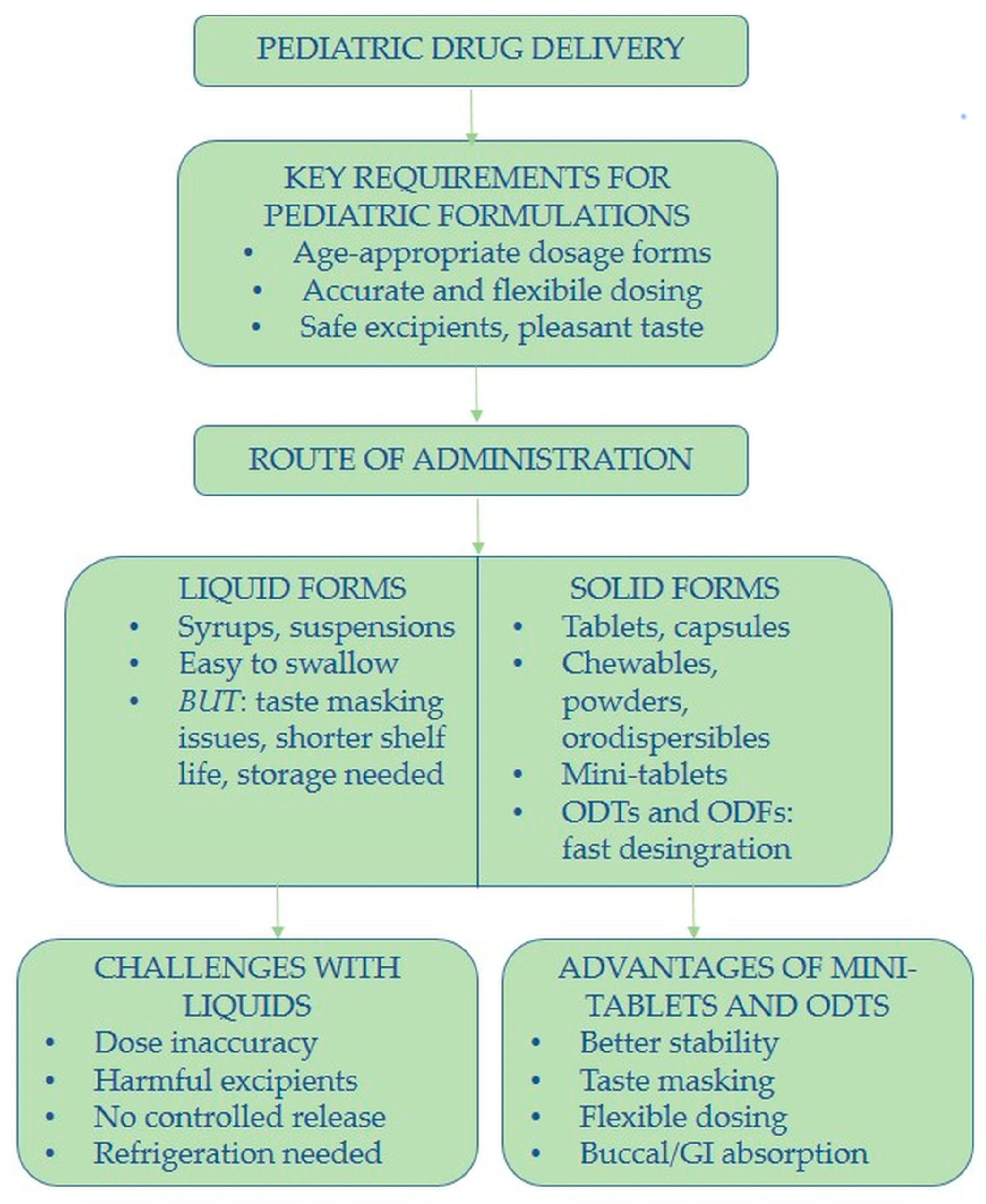
Figure 1. Overview of formulation trends in pediatric oral drug delivery (ODTs—orodispersible tablets; ODFs—orodispersible films).
Polysaccharides 06 00108 g001
Figure 2. Polysaccharide-based pediatric dosage forms and target age groups.
Polysaccharides 06 00108 g002
Figure 3. Polysaccharide-based nanocarrier for targeted pediatric drug delivery.
Polysaccharides 06 00108 g003
Table 1. Classification of Polysaccharides Used in Pediatric Drug Delivery Based on Origin.
ClassificationPolymer
Examples
Origin and DescriptionRepresentative Derivatives and Applications
NaturalAlginate (ALG), Hyaluronic Acid (HA), Starch, DextranDirectly extracted from natural sources (seaweed, animal tissues, plants, or microbial fermentation). They possess inherent biocompatibility and biodegradability [20].Alginate: In situ gelling systems, microencapsulation. Hyaluronic Acid: Ophthalmic solutions, tissue engineering scaffolds. Starch/Dextran: Plasma expanders, nanoparticle cores.
Semi-SyntheticChitosan, Cellulose Derivatives (e.g., HPMC, CMC), Modified StarchesDerived from natural polymers through chemical modification (e.g., deacetylation, etherification, esterification) to enhance solubility, stability, or functionality [21,22].Chitosan: Mucoadhesive nanoparticles, permeation enhancers. HPMC/CMC: Tablet binders, film-forming agents, viscosity modifiers. Modified Starches: Hydrogels, sustained-release matrices.
SyntheticPoly (vinyl alcohol) (PVA), Poly (ethylene glycol) (PEG)Fully synthesized in the laboratory. While not polysaccharides, they are often conjugated to natural polysaccharides to create hybrid systems with enhanced properties [23].PEGylated Polysaccharides: Used to prolong systemic circulation time (stealth effect) of nanocarriers, improving pharmacokinetics.
Table 2. Route-specific advantages and limitations of polysaccharides in pediatric use.
RoutePolymerProsChallenge
Polysaccharides 06 00108 i001Chitosan/Alginate
Mini-tablets, ODFs
High AcceptabilityTaste Masking
Polysaccharides 06 00108 i002Hyaluronic acid
Nebulized
Reduced inflammation Particle size, compatibility with inhalation devices
Polysaccharides 06 00108 i003Chitosan/Hyaluronic acid
Gels, Creams
Skin permeabilitySkin permeability variability
Polysaccharides 06 00108 i004Alginate-coated nanoparticlesCNS targetingRegulatory and ethical aspects
Table 3. Selected Polysaccharides Used in Pediatric Drug Delivery Systems and Their Reported Applications.
PolysaccharideFormulation TypeTarget Disease/UseAge GroupStudy Reference
PectinOral suspensionPain
management
Children[139]
Chewable gelCongenital cardiopathies treatmentChildren[140]
CarrageenanNasal sprayCommon coldPediatric[35]
Oral gelEpilepsyChildren[128]
Oral jellyAiding solid dosage swallowing (non-specific)Children with dysphagia[32]
Xanthan gumOral gelSleep disturbancesChildren[33]
Oral suspensionCongenital toxoplasmosisPediatric[141]
Oral suspensionType 2 diabetesInfants/Children[32]
PullulanOrodispersible filmTuberculosis Children[142]
Oral suspensionHIV/AIDSPediatric[143]
MaltodextrinOrodispersible filmPain
management
Children[144]
AmylopectinHydrogelMedulloblastomaPediatric[145]
Grewia gumOral suspensionPain
management
Pediatric[146]
Gellan gumSemi-solid (pudding-like gel)Aiding swallowing of oral medications (non-specific)Children with dysphagia[32]
Locust bean gumThickened infant formulaGastroesophageal refluxNeonates and infants[147]
Disclaimer/Publisher’s Note: The statements, opinions and data contained in all publications are solely those of the individual author(s) and contributor(s) and not of MDPI and/or the editor(s). MDPI and/or the editor(s) disclaim responsibility for any injury to people or property resulting from any ideas, methods, instructions or products referred to in the content.