
Communication

GC-MS Analysis of Liposoluble Components from Six Kinds of Bast Fibers and Correlative Study on Their Antibacterial Activity

Institute of Bast Fiber Crops, Chinese Academy of Agriculture Sciences, Changsha 410205, China
*
Authors to whom correspondence should be addressed.
These authors contributed equally to this work.
Polysaccharides 2025, 6(4), 107; https://doi.org/10.3390/polysaccharides6040107
Submission received: 29 September 2025 / Revised: 21 November 2025 / Accepted: 27 November 2025 / Published: 29 November 2025

Abstract

This study systematically investigated the liposoluble components and their potential correlation with antibacterial activity in six bast fiber varieties—Apocynum venetum, Corchorus capsularis, Hibiscus cannabinus, Linum usitatissimum, Cannabis sativa, and Boehmeria nivea—using gas chromatography-mass spectrometry (GC-MS). The analysis identified a range of compounds including alkanes, phenols, sterols, esters, and triterpenoids, with notable compositional differences among the fibers. Tetracontane was predominant in A. venetum (40.39%) and H. cannabinus (22.47%), while γ-sitosterol was highest in C. capsularis (12.80%). L. usitatissimum was rich in n-hexadecanoic acid (9.16%), C. sativa in heptacosanal (8.96%), and B. nivea in both tetracontane (45.42%) and tetracosane (10.09%). Based on existing literature, components such as 2,4-di-tert-butylphenol, γ-sitosterol, n-hexadecanoic acid, lupeol, and betulin were inferred as key antibacterial constituents. A comprehensive review of reported antimicrobial activities revealed distinct antibacterial spectra and intensities across the varieties, aligning with their unique liposoluble profiles. This study provides a systematic chemical profile of bast fibers and offers a predictive assessment of their antibacterial potential. The findings lay a chemical foundation for future targeted research and development of antibacterial materials derived from specific bast fiber varieties.

1. Introduction

Bast fibers are a type of natural renewable material. Due to their excellent mechanical properties and biocompatibility, they are widely used in fields such as textiles and biomedicine [1,2]. In recent years, the antibacterial activity of bast fibers has attracted increasing attention—antibacterial textiles, medical dressings, and other products developed from bast fiber materials have shown broad application prospects [3]. Liposoluble components in bast fibers (e.g., phenols, sterols, fatty acids) are important sources of their biological activity. Existing studies have shown that various compounds in these components can inhibit the growth of bacteria (e.g., Escherichia coli, Staphylococcus aureus) and fungi (e.g., Candida albicans) [4,5,6].
However, current research on bast fibers’ liposoluble components mostly focuses on a single variety (e.g., C. sativa or L. usitatissimum), lacking a systematic comparison of component differences among multiple bast fiber varieties. At the same time, the correlation between specific liposoluble components and antibacterial activity in most bast fiber varieties remains unclear, which limits the targeted development of bast fiber-based antibacterial products.
In this study, six common bast fiber varieties (A. venetum, C. capsularis, H. cannabinus, L. usitatissimum, C. sativa, B. nivea) were used as research objects. A comprehensive qualitative and quantitative analysis of their liposoluble extracts was conducted using GC-MS technology, enabling systematic characterization of their chemical profiles. Potential antibacterial components were inferred through cross-referencing with existing literature on antimicrobial activity. Furthermore, by constructing a potential antibacterial component profile and performing hierarchical clustering analysis, the antibacterial potential of these varieties was comprehensively evaluated and compared based on a review and consolidation of existing antimicrobial research. This integrated approach aimed to systematically characterize their chemical profiles and predict their antibacterial potential based on the presence of known bioactive compounds. The study specifically addresses the research gap in comparative analyses of liposoluble components across multiple bast fiber varieties and provides a chemical basis for hypothesizing their antibacterial properties. We emphasize that the antibacterial correlation is inferred from literature on pure compounds, rather than confirmed by means of direct bioassays on these specific extracts, thereby laying a groundwork and generating hypotheses for subsequent targeted experimental validation.

2. Materials and Methods

2.1. Materials

The bast fibers of six bast fiber varieties (A. venetum, C. capsularis, H. cannabinus, L. usitatissimum, C. sativa, B. nivea) were used in this study. The liposoluble components were extracted using petroleum ether as the solvent. All solvents used were of analytical grade.

2.2. Sample Preparation

The liposoluble extracts were obtained from the bast fibers. Specifically, 15.0 g of each powdered fiber sample was accurately weighed and mixed with 150 mL of petroleum ether (solid-to-solvent ratio 1:10, w/v). Extraction was performed under reflux at 60 °C for 2 h with continuous agitation to ensure thorough contact between the solid and solvent. After extraction, the solvent was removed under reduced pressure to obtain the crude liposoluble extract. Prior to GC-MS analysis, the extracted samples were diluted 10-fold with dichloromethane to achieve a suitable concentration for injection.

2.3. GC-MS Analysis

Qualitative and quantitative analysis of the liposoluble components was performed on a GC-MS system (QP2010 Ultra, Shimadzu, Kyoto, Japan). The analysis utilized a DB-5MS capillary column (30 m × 0.32 mm × 0.25 μm; Agilent, J&W Scientific, Santa Clara, CA, USA) with high-purity helium as the carrier gas at a constant flow rate of 2.50 mL/min. A sample volume was injected in split mode (split ratio 10:1) at an injector temperature of 250 °C. The oven temperature program was set as follows: hold at 40 °C for 2 min, ramp to 300 °C at a rate of 15 °C/min, and then hold at 300 °C for 15 min. The mass spectrometer interface temperature was maintained at 280 °C, the ion source temperature at 220 °C, and the mass spectra were acquired in the scan range of m/z 45–500 with a solvent cut time of 3 min. Components were identified by comparison with the NIST mass spectral library, and their relative contents were calculated based on peak area percentages (area normalization method).

3. Results and Discussion

3.1. Comparative Analysis of Liposoluble Components in Bast Fibers of Six Varieties

The six bast fiber varieties (A. venetum, C. capsularis, H. cannabinus, L. usitatissimum, C. sativa, and B. nivea) investigated in this study, along with the focus on GC-MS analysis and antibacterial activity correlation, are illustrated in Figure 1.
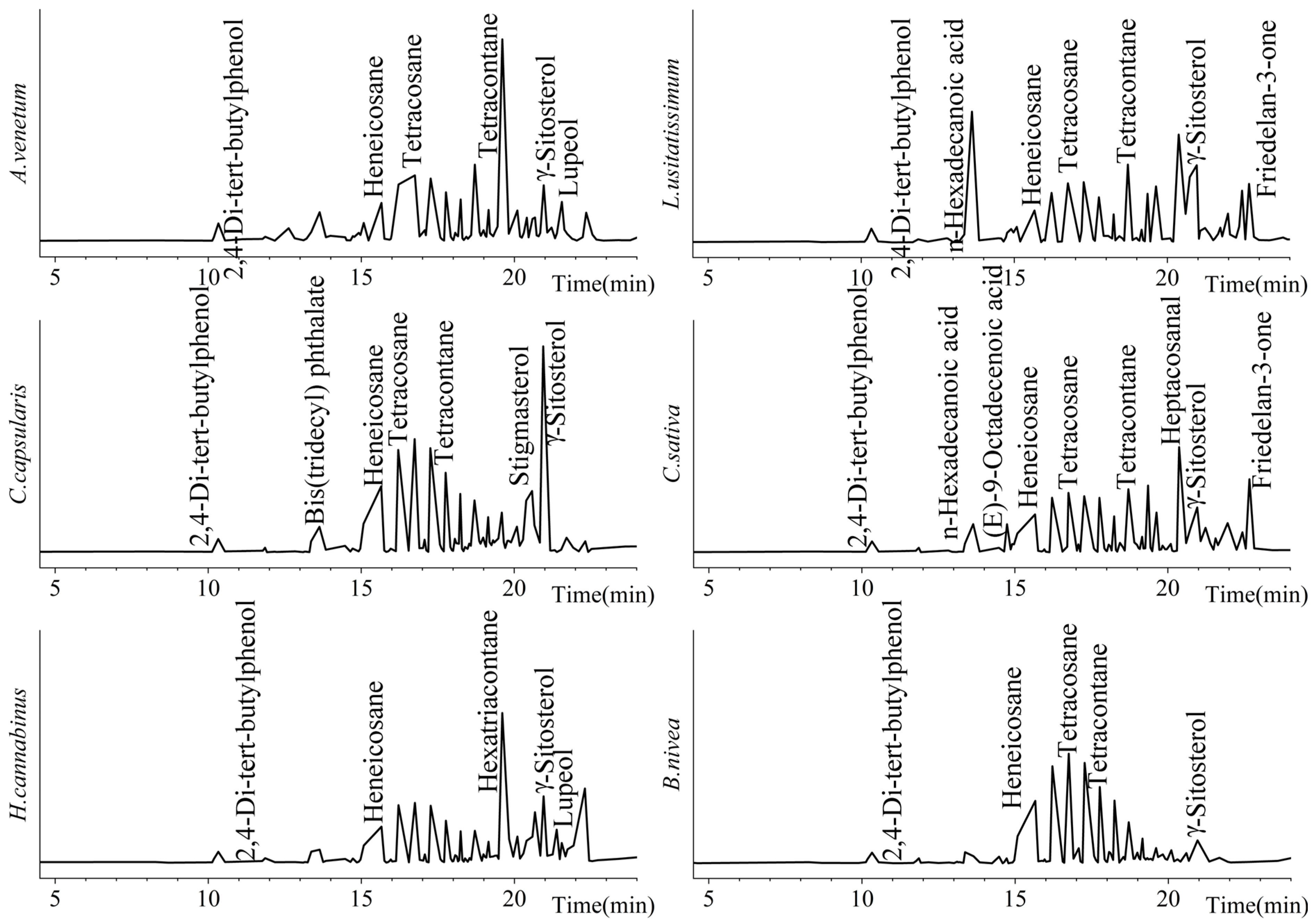
The liposoluble components of the bast fibers of six varieties were analyzed by means of gas chromatography–mass spectrometry (GC-MS) (Figure 2). As shown in Figure 2, the GC-MS total ion chromatograms (TIC) of lipophilic extracts from six types of bast fibers exhibit distinct peak pattern variations, reflecting differences in the complexity and abundance of compounds in each sample. A. venetum displays a rich distribution of chromatographic peaks, particularly within the 15–25 min retention time range, where a series of moderately abundant peaks correspond to various sterols (such as γ-sitosterol and stigmasterol) and triterpenoids (such as lupeol and betulin). C. capsularis is characterized by a prominent, sharp dominant peak at approximately 22 min, identified as γ-sitosterol, whose high peak area aligns with its relative content of 12.80% reported in Table 1, serving as a key chemical marker for this fiber. H. cannabinus shows multiple consecutive medium-to-high abundance peaks between 20–30 min, indicating a complex composition of mid- to long-chain compounds, with a notable characteristic peak around 25 min corresponding to the triterpenoid lupenone, consistent with quantitative results. L. usitatissimum exhibits a distinct cluster of early-eluting peaks in the 10–15 min range, primarily attributed to fatty acids, especially n-hexadecanoic acid (palmitic acid), whose high content (9.16%) in flax is clearly reflected. C. sativa presents relatively dispersed peaks across multiple retention periods, reflecting its chemical diversity; some peaks in the 15–20 min range are likely associated with its characteristic triterpenoids (such as α- and β-amyrin) and aldehydes. B. nivea is marked by a series of high-abundance, closely spaced, sharp peaks in the 20–30 min interval, typical of long-chain alkanes (such as tetracontane and tetracosane), directly demonstrating the dominant presence of alkane components in ramie.
To intuitively display the relative contents of major identified compounds across the six bast fiber varieties, the key liposoluble components (including alkanes, sterols, fatty acids, phenols, and esters) and their quantitative data are summarized in Table 1. These compounds are the core components that constitute the chemical characteristics of each fiber, and their content differences directly reflect the species-specific metabolic differences of the bast fibers.
As shown in Table 1, alkanes are the dominant components in A. venetum, B. nivea, and C. capsularis, with tetracontane being the most abundant (40.39% in A. venetum, 45.42% in B. nivea, and 32.07% in C. capsularis). B. nivea also has high contents of tetracosane (10.09%) and heneicosane (10.13%), forming a characteristic alkane-rich profile. C. capsularis stands out for its highest γ-sitosterol content (12.8%), accompanied by significant amounts of stigmasterol (3.85%) and campesterol (3.25%), making sterols its signature component. H. cannabinus has a unique high content of hexatriacontane (15.93%) among the six varieties, in addition to tetracontane (22.47%) and γ-sitosterol (5.32%). L. usitatissimum is distinguished by its exclusive high content of n-hexadecanoic acid (9.16%), which is a key marker for this fiber. A. venetum shows the most comprehensive composition, containing not only high levels of tetracontane but also multiple bioactive components such as lupeol (2.87%), γ-sitosterol (4.05%), and 2,4-di-tert-butylphenol (1.34%). C. sativa exhibits moderate contents of various compounds without an obvious dominant component, reflecting its chemical diversity.
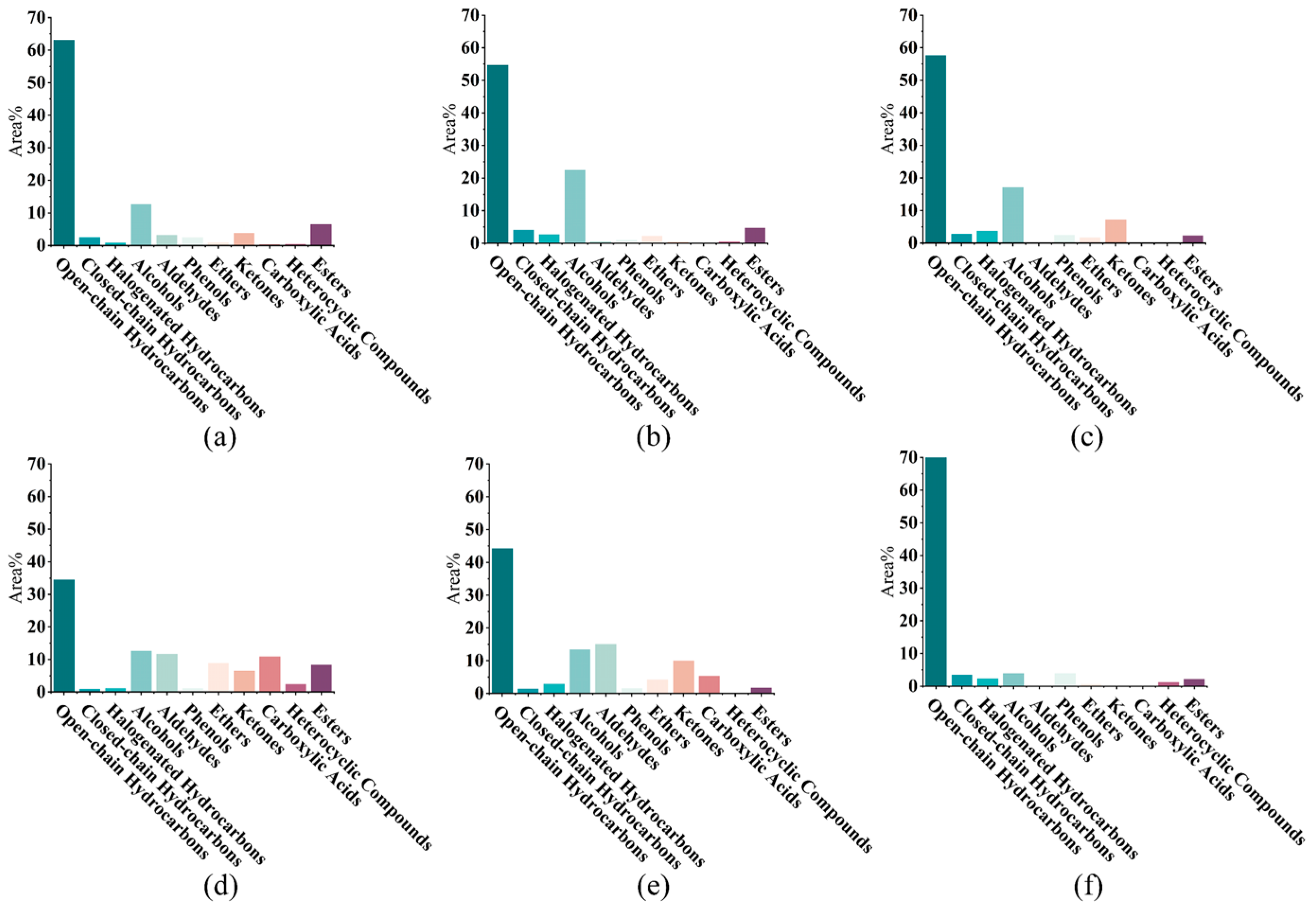
Figure 3 illustrates the relative content distribution of major chemical categories—including alkanes, alcohols, aldehydes, and phenols—across the six bast fibers. A. venetum and B. nivea show a predominance of alkanes, whereas C. capsularis contains the highest sterol content. L. usitatissimum is characterized by a high abundance of carboxylic acids, mainly attributed to its elevated n-hexadecanoic acid content (9.16%), a distinctive feature among the fibers. H. cannabinus exhibits a relatively balanced composition, with triterpenoids such as lupeol and lupenone contributing notably to its bioactive potential. In contrast, C. sativa displays chemical diversity, showing relative abundance in triterpenoids (e.g., α- and β-amyrin) and ketones (e.g., friedelin), consistent with reported terpenoid-rich characteristics. These category-specific profiles align well with GC-MS identification results, highlighting not only species-specific chemical signatures among the fibers but also providing a chemical basis for interpreting their differential bioactivities.
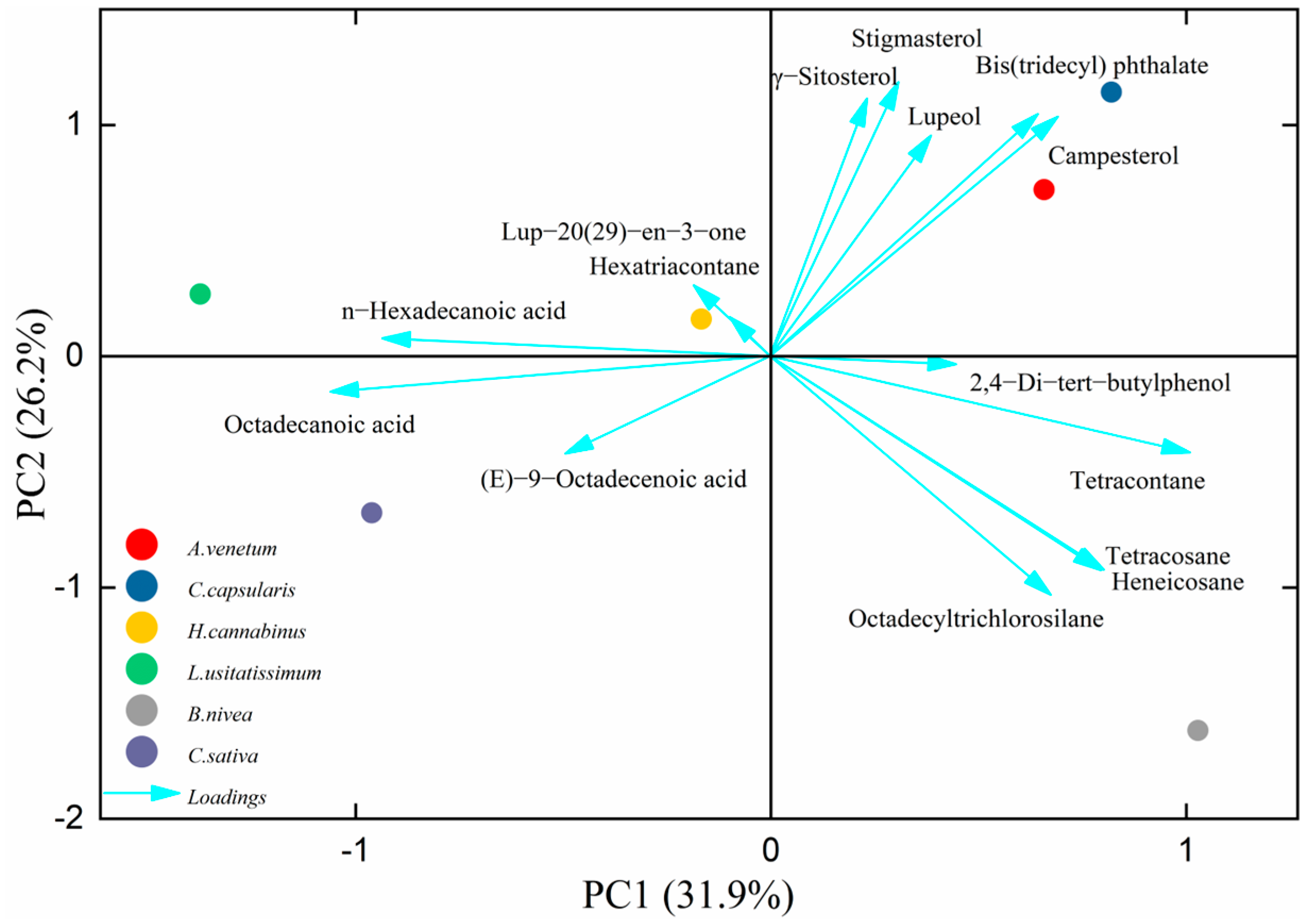
To further elucidate the overall differences and interrelationships among the liposoluble components of the six bast fibers, a principal component analysis (PCA) was performed on 15 representative compounds. As shown in Figure 4, the cumulative variance contribution rate of principal component 1 (PC1) and principal component 2 (PC2) reached 58.1%, effectively capturing the majority of the original data’s information and successfully discriminating the different fibers. The score plot revealed distinct distribution patterns: L. usitatissimum was separated furthest along the positive PC1 axis, primarily driven by strong positive loadings from fatty acids like n-hexadecanoic acid and stearic acid, consistent with its previously identified rich fatty acid profile. In contrast, C. capsularis was distinctly located on the positive PC2 axis, a position highly correlated with its elevated contents of sterols such as γ-sitosterol, stigmasterol, and campesterol, highlighting its specificity in sterol metabolism. C. sativa was positioned on the positive PC1 axis but closer to the center, influenced by elaidic acid and stearic acid, with α-amyrin and β-amyrin also contributing to its unique chemical identity. A. venetum and H. cannabinus were located proximately, indicating similar chemical compositions influenced by lupcol and its derivatives; however, Kenaf was differentiated along the negative PC1 direction due to the presence of hexatriacontane. Meanwhile, B. nivea was situated in the negative quadrant of both PC1 and PC2, a distribution closely linked to long-chain alkanes like tetracontane, tetracosane, and heneicosane, aligning with the conclusion that alkanes dominate its composition. In the corresponding loading plot, the vectors of these key compounds pointed toward the sample directions they significantly influenced, visually illustrating the driving relationships. Collectively, the PCA results strongly corroborate the GC-MS findings from a multivariate statistical perspective, systematically revealing the overall differences and intrinsic connections in the liposoluble components among the six bast fibers.

3.2. Correlation Between Liposoluble Components and Antibacterial Activity

To clarify the distribution of known antibacterial constituents in various bast fibers, we compiled the relative contents of the major antibacterial components (Table 2).
Based on the GC-MS compositional data and a comprehensive review of existing literature on the antimicrobial activities of pure compounds, we predicted the following components to be potential contributors to the antibacterial properties of these bast fibers: 2,4-di-tert-butylphenol, a broad-spectrum antibacterial phenolic compound, was detected in all six bast fiber varieties with a content range of 0.89~1.34%; Study [7] confirmed its inhibitory effects on Escherichia coli and Staphylococcus aureus, with minimum inhibitory concentrations (MIC) of 50 μg/mL and 0.78 μg/mL respectively, indicating that it may be a universally existing antibacterial component in bast fibers. γ-sitosterol, a plant sterol with antibacterial and antifungal activities [8], showed relatively high contents in C. capsularis (12.80%) and H. cannabinus (5.32%), suggesting that these two bast fiber varieties may have stronger antifungal potential. n-hexadecanoic acid, a saturated fatty acid with antibacterial activity against Gram-positive bacteria, was previously isolated from Brassica nigra oil; in 2017, Abdel Karim further verified its antibacterial activity against Staphylococcus aureus, Aspergillus niger, Pseudomonas aeruginosa, and Candida albicans via the cup-dish agar diffusion method, and its content in L. usitatissimum reached 9.16%, implying excellent inhibitory effects on Gram-positive bacteria for this variety [9]. Additionally, triterpenoids (lupeol and betulin) also exhibit antibacterial properties: existing studies [10] showed that lupeol exerts antibacterial effects by generating NO to induce apoptosis-like death (ALD) in bacteria, while the MIC values of betulin against Escherichia coli, Pseudomonas aeruginosa, and Staphylococcus aureus are 1024 μg/mL, 256 μg/mL, and 1024 μg/mL respectively [11]; since A. venetum and H. cannabinus contain these two triterpenoids, they may have potential inhibitory effects on Gram-negative bacteria.
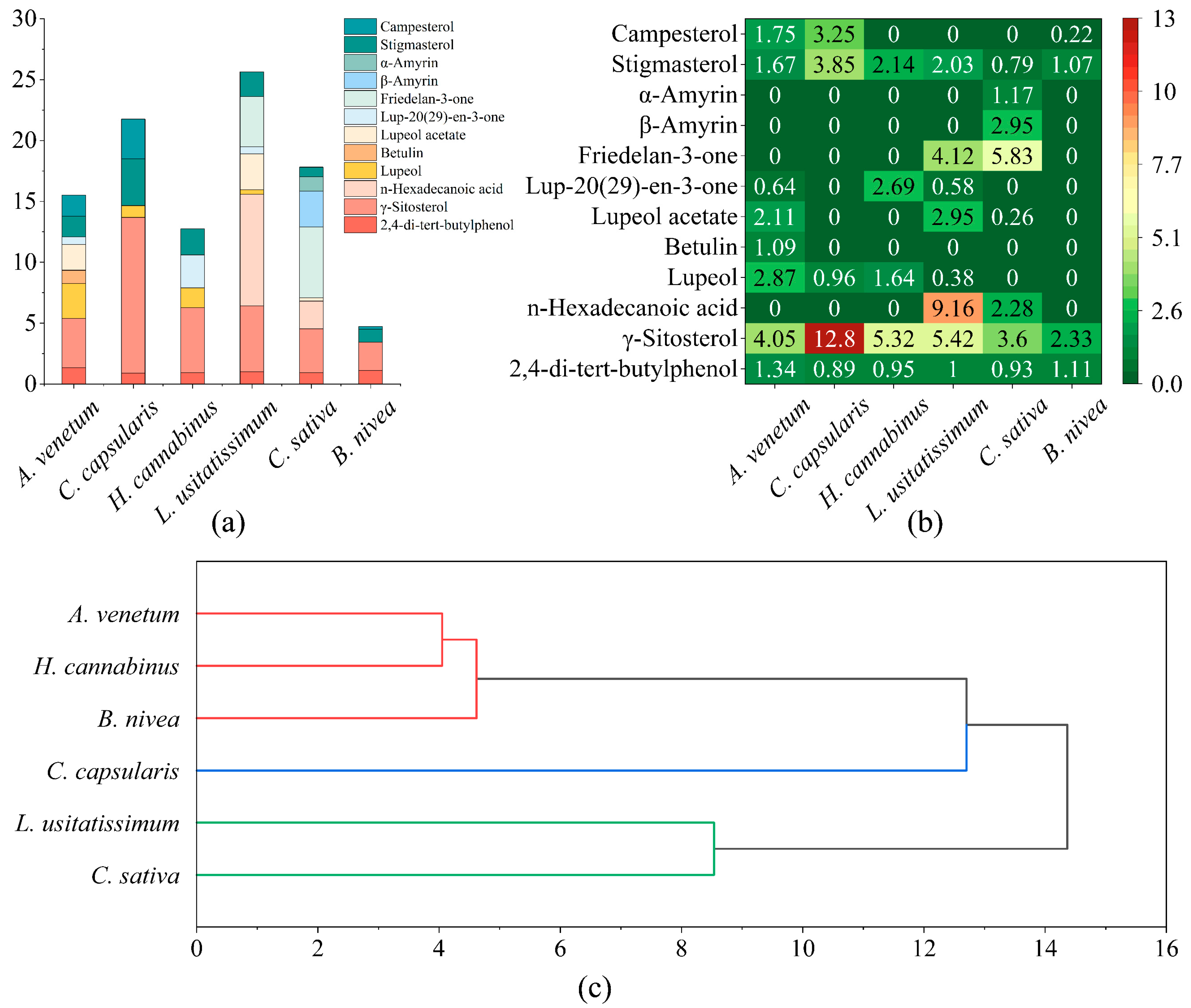
To systematically compare the distribution patterns of these predicted key antibacterial components among the six bast fibers, we constructed a “Potential Antibacterial Component Profile.” As shown in Figure 5a, the stacked bar chart clearly displays the total relative content of components such as 2,4-di-tert-butylphenol, γ-sitosterol, n-hexadecanoic acid, lupeol, and betulin in each fiber, as well as the contribution proportion of each component. C. capsularis exhibited the highest total content of antibacterial components due to its richness in γ-sitosterol, while L. usitatissimum was distinguished by its high content of n-hexadecanoic acid. The heatmap in Figure 5b further intuitively presents the content differences of each predicted antibacterial component in different fibers through color gradients, forming a unique “antibacterial component fingerprint,” which facilitates the rapid identification of the antibacterial component characteristics of different fibers.
Furthermore, based on the content data of the aforementioned potential antibacterial components, we performed a Hierarchical Clustering Analysis (HCA, Figure 5c) on the six fibers. The clustering results divided the six fibers into two main clusters, indicating that fibers within the same cluster (such as A. venetum, H. cannabinus, and C. capsularis) share similar antibacterial component profiles. This clustering based on predicted active components suggests that fibers within the same group may share similar antibacterial targets or spectra. This finding provides a hypothesis-generating, chemotaxonomic basis for guiding the selection of specific bast fiber materials for further investigation against particular pathogens.

3.3. Literature Overview of Antibacterial Activities and Comparative Discussion

To contextualize our chemical findings within the existing body of knowledge, we summarized the reported antibacterial activities of extracts from these bast fibers based on previous studies (Table 3). It is crucial to note that these literature data were obtained from different plant samples, locations, and extraction protocols, and thus, a direct quantitative comparison with our compositional data is not feasible. However, a qualitative overview reveals that antibacterial activity has been reported for extracts of all six varieties, with differing spectra and intensities.
A. venetum shows selective antibacterial activity: its ethanol extract demonstrates good inhibition against Escherichia coli, while the aqueous extract is more effective against Staphylococcus aureus [12]. C. capsularis exhibits broad-spectrum antibacterial activity, with its petroleum ether extract showing significant inhibition against both E. coli and S. aureus [13]. H. cannabinus extracts also display activity against these two bacteria, with the activity strength potentially linked to its polysaccharide and phenolic content [14]. L. usitatissimum extracts are particularly effective against Gram-positive bacteria, including S. aureus and Propionibacterium acnes, which is consistent with its high content of n-hexadecanoic acid and other active compounds [15]. C. sativa has attracted attention for the strong antibacterial activity of its cannabinoids (e.g., CBD) against Gram-positive bacteria, including methicillin-resistant S. aureus (MRSA), though it shows no significant effect on Gram-negative bacteria [16]. Furthermore, studies have directly confirmed that ramie extracts exhibit strong antibacterial activity against both Escherichia coli and Staphylococcus aureus [17].
Interestingly, some qualitative consistencies can be observed between the reported activities and our predicted potential based on chemical composition. For instance, the strong reported activity of C. capsularis (Table 3) aligns with its high content of predicted antibacterial sterols (e.g., γ-sitosterol) identified in our study. Similarly, the reported efficacy of L. usitatissimum against Gram-positive bacteria corresponds with its high abundance of n-hexadecanoic acid, a compound known for such activity. These consistencies, while not conclusive, lend preliminary support to our chemical predictions. Nevertheless, the discrepancies highlight the significant influence of extrinsic factors on bioactivity and underscore the necessity of future experimental validation using the same plant material to establish definitive structure–activity relationships. This comparative overview provides hypotheses and a chemical rationale for selecting specific bast fiber varieties for subsequent targeted antibacterial screening and product development.

4. Conclusions

This study systematically analyzed the liposoluble components in the bast fibers of six types of bast fibers (A. venetum, C. capsularis, H. cannabinus, L. usitatissimum, C. sativa, B. nivea) using GC-MS. A diverse range of compounds was identified and quantified, primarily including alkanes, phenols, sterols, esters, and triterpenoids. Significant differences in composition and content were observed among the different bast fibers. Specifically, tetracontane was the major component in A. venetum and H. cannabinus, with contents of 40.39% and 22.47%, respectively. γ-sitosterol was the most abundant compound in jute (12.80%). L. usitatissimum was rich in n-hexadecanoic acid (9.16%), while heptacosanal was the predominant compound in C. sativa (8.96%). B. nivea contained high levels of both tetracontane (45.42%) and tetracosane (10.09%). Multivariate statistical analysis (PCA) further confirmed distinct chemical profiles among the six fibers. By integrating component analysis with existing literature, compounds such as 2,4-di-tert-butylphenol, γ-sitosterol, n-hexadecanoic acid, and triterpenoids (lupeol and betulin) were identified as potential antibacterial components based on the literature. Hierarchical clustering analysis (HCA) of these antibacterial components revealed similarity relationships among the fiber varieties. Moreover, the comprehensive review of antibacterial activities revealed distinct antibacterial spectra and strengths among the six varieties, which showed qualitative consistency with the predicted structure–activity relationships derived from their unique liposoluble profiles.
This study provides a systematic and comparative chemical profiling of multiple bast fiber varieties for the first time, establishing a foundational framework for predicting their antibacterial potential based on liposoluble composition. The integrated use of GC-MS, PCA, HCA, and literature-based component–activity correlation represents a novel approach in the field of bast fiber research. However, we acknowledge that the antibacterial correlations are inferred from existing literature rather than direct bioassays, which should be addressed in subsequent experimental validation. Future research will focus on the separation and purification of these candidate antibacterial components to validate their individual and synergistic antibacterial efficacy and elucidate their mechanisms of action. This will facilitate the development of targeted, high-value antibacterial materials and products derived from bast fibers.

Author Contributions

Conceptualization, X.Z. and X.F.; methodology, L.C.; software, G.X.; validation, Y.H.; formal analysis, S.T.; investigation, W.Z. and Z.C.; resources, Z.C.; data curation, Z.P.; Conceptualization, methodology, analysis, supervision, project administration, funding acquisition, and writing—review and editing, Q.Y. and S.D. All authors have read and agreed to the published version of the manuscript.

Funding

This research was funded by the National Natural Science Foundation of China with project number 32301281; the Natural Science Foundation of Hunan Province with project number 2023JJ30621, 2023JJ50315 and 2024JJ7221; the Yuelu Youth Funds of IBFC with project number IBFC-YLQN-202402; the China Agriculture Research System with project number CARS-19-E22; the Chinese Agricultural Science and Technology Innovation Project with project number ASTIP-IBFC-05.

Data Availability Statement

The datasets generated during and/or analyzed during the current study are available from the corresponding author upon reasonable request.

Conflicts of Interest

The authors declare that they have no known competing financial interests or personal relationships that could have appeared to have influenced the work reported in this paper.

References

  1. Zimniewska, M. Hemp fibre properties and processing target textile: A review. Materials 2022, 15, 1901. [Google Scholar] [CrossRef] [PubMed]
  2. Atmakuri, A.; Palevicius, A.; Griskevicius, P.; Janusas, G. Investigation of mechanical properties of hemp and flax fibers hybrid composites for biomedical applications. Mechanics 2019, 25, 149–155. [Google Scholar] [CrossRef]
  3. Liu, X.; Yang, C.; Sun, M.; Quan, G.; Gong, B.; Kang, Q.; Xiao, L.; Zhu, W.; Wang, H. Preparation of new natural hemp fiber-based antibacterial hydrogel dressing and its performance in promoting wound healing of bacterial infection. Colloids Surf. A Physicochem. Eng. Asp. 2025, 719, 137008. [Google Scholar] [CrossRef]
  4. Vaquero, M.R.; Alberto, M.R.; De Nadra, M.M. Antibacterial effect of phenolic compounds from different wines. Food Control 2007, 18, 93–101. [Google Scholar] [CrossRef]
  5. Mudalungu, C.M.; Mokaya, H.O.; Tanga, C.M. Beneficial sterols in selected edible insects and their associated antibacterial activities. Sci. Rep. 2023, 13, 10786. [Google Scholar] [CrossRef] [PubMed]
  6. Casillas-Vargas, G.; Ocasio-Malavé, C.; Medina, S.; Morales-Guzmán, C.; Del Valle, R.G.; Carballeira, N.M.; Sanabria-Ríos, D.J. Antibacterial fatty acids: An update of possible mechanisms of action and implications in the development of the next-generation of antibacterial agents. Prog. Lipid Res. 2021, 82, 101093. [Google Scholar] [CrossRef] [PubMed]
  7. Seenivasan, A.; Manikkam, R.; Kaari, M.; Sahu, A.K.; Said, M.; Dastager, S.G. 2,4-Di-tert-butylphenol (2,4-DTBP) purified from Streptomyces sp. KCA1 from Phyllanthus niruri: Isolation, characterization, antibacterial and anticancer properties. J. King Saud Univ.-Sci. 2022, 34, 102088. [Google Scholar] [CrossRef]
  8. Duke, J. Duke’s Ethanobotanical and Phytochemistry Database. Available online: https://phytochem.nal.usda.gov (accessed on 1 September 2025).
  9. Abdel-Karim, M.; Weam, A.M.P.; Yousif, M.; Inas, O.P. GC-MS Analysis and antimicrobial activity of sudanese Brassica nigra L. (Brassicaceae) fixed oil. Int. J. Sci. Eng. App. Sci. 2017, 3, 74–81. [Google Scholar]
  10. Kim, H.; Lee, D.G. Lupeol-induced nitric oxide elicits apoptosis-like death within Escherichia coli in a DNA fragmentation-independent manner. Biochem. J. 2021, 478, 855–869. [Google Scholar] [CrossRef] [PubMed]
  11. Oloyede, H.O.B.; Ajiboye, H.O.; Salawu, M.O.; Ajiboye, T.O. Influence of oxidative stress on the antibacterial activity of betulin, betulinic acid and ursolic acid. Microb. Pathog. 2017, 111, 338–344. [Google Scholar] [CrossRef] [PubMed]
  12. Li, Z.; Dong, Z.F.; Zhang, J.F.; Gong, J.X.; Meng, F.J. A Study on the Antibacterial Property of the Extract from Apocynum venetum. Adv. Mater. Res. 2011, 332, 164–167. [Google Scholar] [CrossRef]
  13. Ilhan, S.; Savaroğlu, F.; Çolak, F. Antibacterial and Antifungal Activity of Corchorus olitorius L. (Molokhia) Extracts. Int. J. Nat. Eng. Sci. 2007, 1, 59–61. [Google Scholar]
  14. Birhanie, Z.M.; Xiao, A.; Yang, D.; Huang, S.; Zhang, C.; Zhao, L.; Liu, L.; Li, J.; Chen, A.; Tang, H.; et al. Polysaccharides, total phenolic, and flavonoid content from different kenaf (Hibiscus cannabinus L.) genotypes and their antioxidants and antibacterial properties. Plants 2021, 10, 1900. [Google Scholar] [CrossRef] [PubMed]
  15. Nand, P.; Drabu, S.; Gupta, K.R. Antimicrobial investigation of Linum usitatissimum for the treatment of acne. Nat. Prod. Commun. 2011, 6, 1934578X1100601133. [Google Scholar] [CrossRef]
  16. Martinenghi, L.D.; Jønsson, R.; Lund, T.; Jenssen, H. Isolation, purification, and antimicrobial characterization of cannabidiolic acid and cannabidiol from Cannabis sativa L. Biomolecules 2020, 10, 900. [Google Scholar] [CrossRef] [PubMed]
  17. Lee, A.Y.; Wang, X.; Lee, D.G.; Kim, Y.M.; Jung, Y.S.; Kim, H.B.; Kim, H.Y.; Cho, E.J.; Lee, S. Various biological activities of ramie (Boehmeria nivea). J. Appl. Biol. Chem. 2014, 57, 279–286. [Google Scholar] [CrossRef]
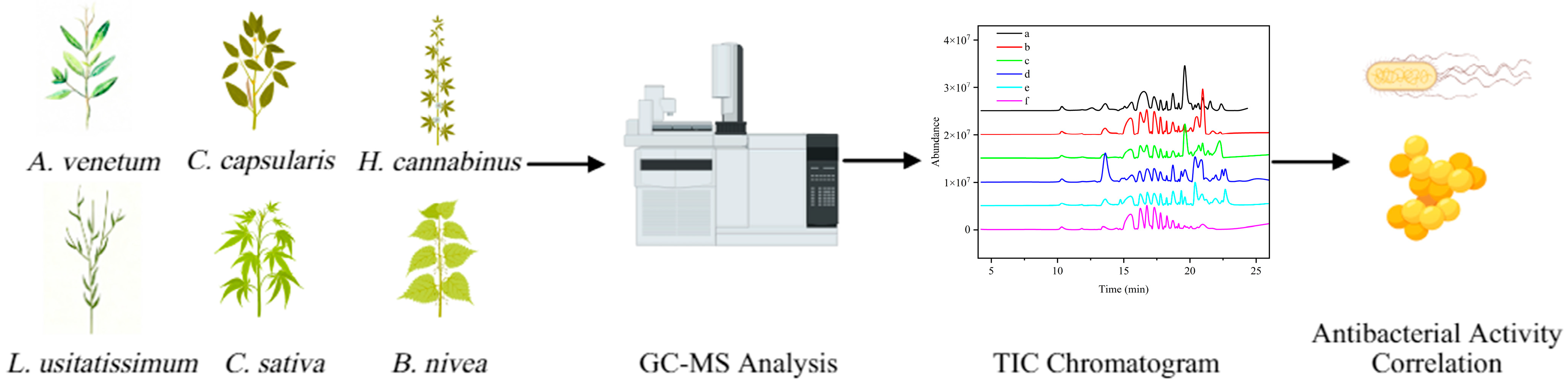
Figure 1. Schematic diagram of the research framework for comparative analysis of liposoluble components and antibacterial activity correlation in six bast fiber varieties. The TIC Chromatogram from top to bottom is as follows: (a) A. venetum; (b) C. capsularis; (c) H. cannabinus; (d) L. usitatissimum; (e) C. sativa; (f) B. nivea.
Polysaccharides 06 00107 g001
Figure 2. GC-MS total ion chromatograms (TICs) of liposoluble components from six bast fiber varieties with annotations of major identified compounds.
Polysaccharides 06 00107 g002
Figure 3. Comparative relative contents of liposoluble components in bast fibers of six bast fiber varieties (a) A. venetum; (b) C. capsularis; (c) H. cannabinus; (d) L. usitatissimum; (e) C. sativa; (f) B. nivea. analyzed by GC-MS. Data are expressed as peak area percentage (%). Components are categorized by chemical classes (Open-chain Hydrocarbons, Closed-chain Hydrocarbons, Halogenated Hydrocarbons, Alcohols, Aldehydes, Phenols, Ethers, Ketones, Carboxylic Acids, Heterocyclic Compounds, Esters). Significant differences in composition among varieties are evident.
Polysaccharides 06 00107 g003
Figure 4. Principal component analysis (PCA) score and loading plots for liposoluble components in six bast fiber varieties.
Polysaccharides 06 00107 g004
Figure 5. Comparative analysis of predicted potential antibacterial components in six bast fiber varieties: (a) Stacked bar chart showing the total relative content and contribution of key antibacterial components; (b) heatmap displaying the content gradient of each antibacterial component, forming a unique “antibacterial component fingerprint”; (c) hierarchical clustering analysis (HCA) dendrogram illustrating the similarity relationships among the six varieties based on their antibacterial component profiles.
Polysaccharides 06 00107 g005
Table 1. Relative contents of major liposoluble compounds in six bast fiber varieties.
SpeciesA. venetumC. capsularisH. cannabinusL. usitatissimumC. sativaB. nivea
Contents (%)
Compounds
Tetracontane40.3932.0722.4720.2423.2345.42
γ-Sitosterol4.0512.85.325.423.62.33
Tetracosane4.46.814.963.495.2510.09
Heneicosane4.556.814.993.895.1610.13
n-Hexadecanoic acid0009.162.280
Stigmasterol1.673.852.142.030.791.07
Lupeol2.870.961.640.3800
2,4-Di-tert-butylphenol1.340.890.9510.931.11
Bis(tridecyl) phthalate2.141.640000
Campesterol1.753.250000.22
Hexatriacontane1.77015.930.360.650
Lup-20(29)-en-3-one0.6402.690.5800
Octadecanoic acid0000.970.720
(E)-9-Octadecenoic acid0.380002.280
Octadecyltrichlorosilane0.740.740.960.590.751.16
The total number of compounds identified in each sample is as follows: A. venetum (n = 85), C. capsularis (n = 78), H. cannabinus (n = 84), L. usitatissimum (n = 89), C. sativa (n = 87), B. nivea (n = 83).
Table 2. Relative contents of key antibacterial components in six bast fibers.
Species
A. venetumC. capsularisH. cannabinusL. usitatissimumC. sativaB. nivea
Contents (%)
Compounds
2,4-di-tert-butylphenol1.340.890.9510.931.11
γ-Sitosterol4.0512.85.325.423.62.33
n-Hexadecanoic acid0009.162.280
Lupeol2.870.961.640.3800
Betulin1.0900000
Lupeol acetate2.11002.950.260
Lup-20(29)-en-3-one0.6402.690.5800
Friedelan-3-one0004.125.830
β-Amyrin00002.950
α-Amyrin00001.170
Stigmasterol1.673.852.142.030.791.07
Campesterol1.753.250000.22
Table 3. Literature summary of reported antibacterial activities of extracts from the six bast fibers.
VarietyTarget MicroorganismActivity StrengthReferences
A. venetumEscherichia coli**[12]
Staphylococcus aureus**[12]
Saccharomyces cerevisiae*[12]
Aspergillus niger-[12]
C. capsularisEscherichia coli***[13]
Staphylococcus aureus***[13]
Yersinia enterocolitica***[13]
Geotrichum candidum***[13]
Botrytis cinerea**[13]
H. cannabinusStaphylococcus aureus**[14]
Escherichia coli**[14]
L. usitatissimumStaphylococcus aureus***[15]
Propionibacterium acnes***[15]
Staphylococcus epidermidis**[15]
C. sativaStaphylococcus aureus****[16]
Staphylococcus epidermidis****[16]
Escherichia coli-[16]
Pseudomonas aeruginosa-[16]
B. niveaEscherichia coli***[17]
Staphylococcus aureus***[17]
The antibacterial potency is indicated as follows: - (None), * (Weak), ** (Moderate), *** (Strong), **** (Extremely Strong). This assessment is based on a comprehensive judgment of indicators described in the original literature, such as inhibition zone diameter and minimum inhibitory concentration (MIC). The activities summarized here are from independent studies in the literature and are based on extracts from plant materials that may differ in origin, growth conditions, and processing methods from those used in the present chemical analysis. This table is intended for qualitative contextual reference only.
Disclaimer/Publisher’s Note: The statements, opinions and data contained in all publications are solely those of the individual author(s) and contributor(s) and not of MDPI and/or the editor(s). MDPI and/or the editor(s) disclaim responsibility for any injury to people or property resulting from any ideas, methods, instructions or products referred to in the content.