
Review

The Endocrine–Metabolic Axis Regulation in Offspring Exposed to Maternal Obesity—Cause or Consequence in Metabolic Disease Programming?

1
CNC—Center for Neuroscience and Cell Biology, CIBB—Centre for Innovative Biomedicine and Biotechnology, University of Coimbra, 3004-531 Coimbra, Portugal
2
Ph.D. Programme in Experimental Biology and Biomedicine (PDBEB), Institute for Interdisciplinary Research (IIIUC), University of Coimbra, 3004-531 Coimbra, Portugal
3
Obstetrics Department, Centro Hospitalar e Universitário de Coimbra, 3004-561 Coimbra, Portugal
4
Coimbra Institute for Clinical and Biomedical Research (iCBR), Faculty of Medicine, University of Coimbra, 3000-548 Coimbra, Portugal
5
Centre of Investigation in Environment-Genetics and Oncobiology (CI-MAGO), 3000-548 Coimbra, Portugal
6
Laboratory of Metabolism and Exercise (LametEx), Research Centre in Physical Activity, Health and Leisure (CIAFEL), Laboratory for Integrative and Translational Research in Population Health (ITR), Faculty of Sport, University of Porto, 4099-002 Porto, Portugal
*
Author to whom correspondence should be addressed.
Obesities 2022, 2(3), 236-255; https://doi.org/10.3390/obesities2030019

Submission received: 16 June 2022 / Revised: 10 July 2022 / Accepted: 13 July 2022 / Published: 19 July 2022

Abstract

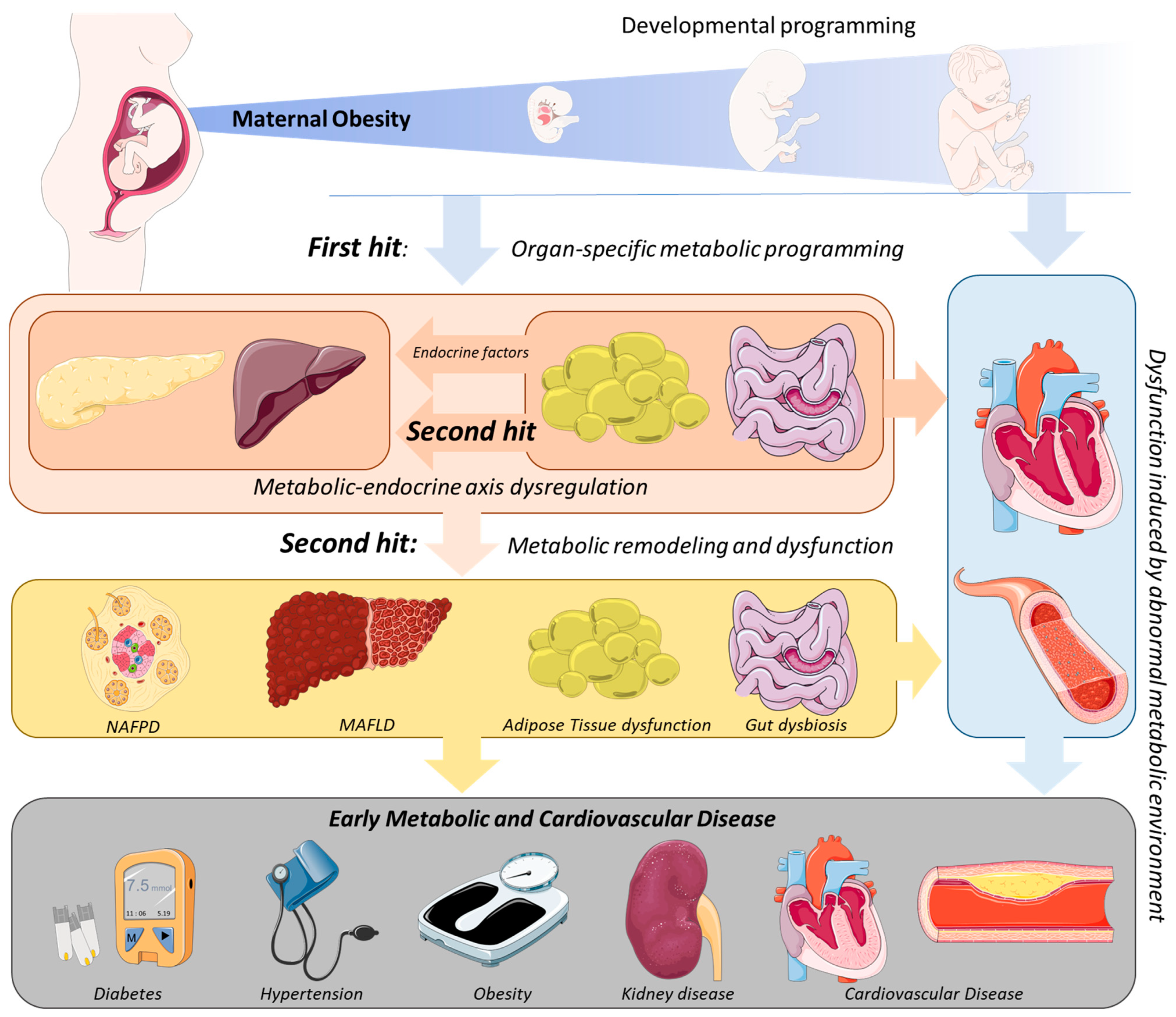
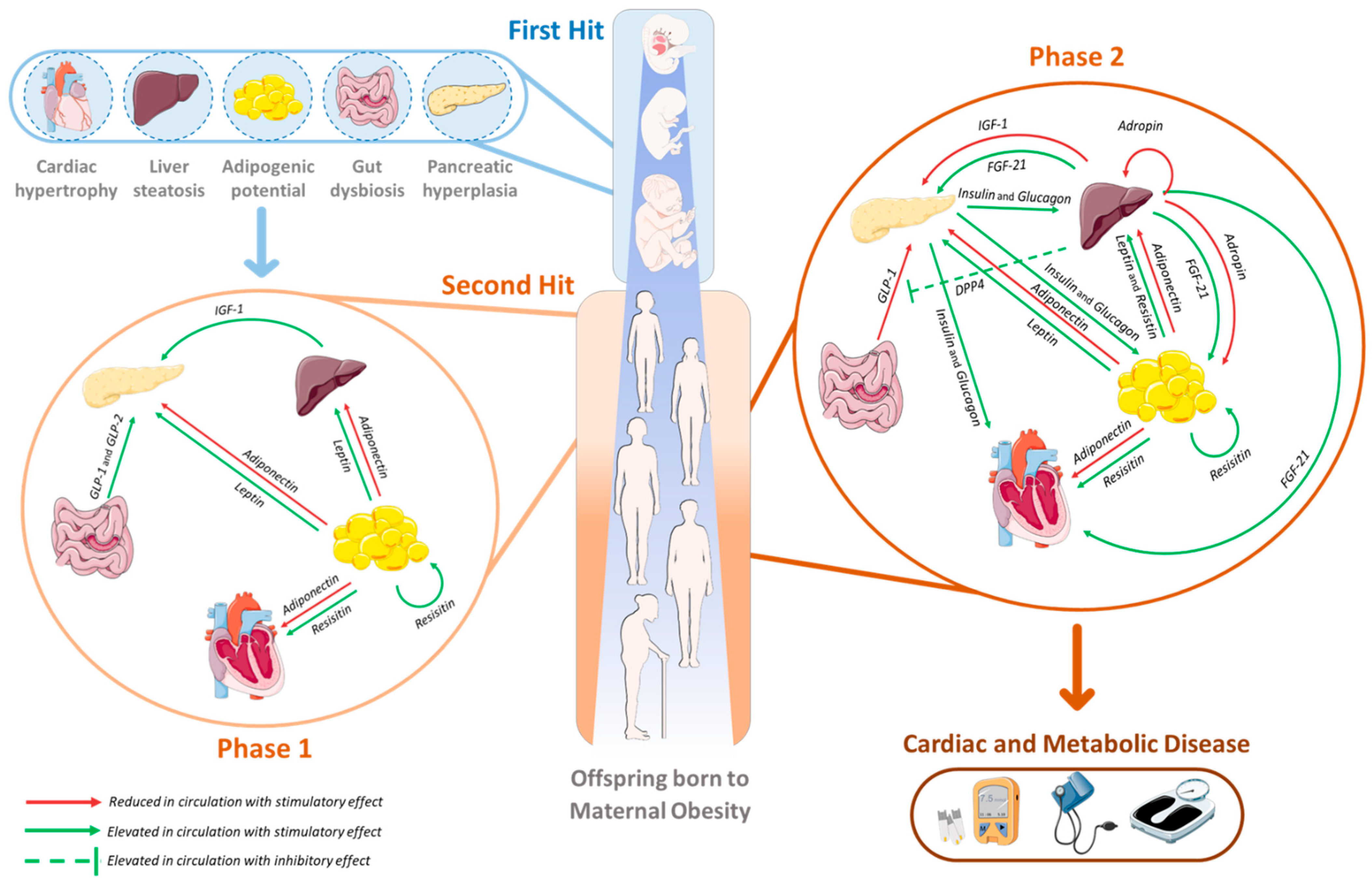
Obesity incidence is rising worldwide, including women of reproductive age, contributing to increased gestations in which Maternal Obesity (MO) occurs. Offspring born to obese mothers present an increased predisposition to develop metabolic (e.g., obesity, diabetes) and cardiovascular disease (CVD). The developmental programming of the metabolic dysfunction in MO offspring can initiate in utero. The different availability of metabolic substrates, namely glucose, can modulate cellular growth, proliferation, and differentiation, resulting in different levels of tissue maturation and function. We defined the remodelling of these early processes as the first hit of metabolic disease programming. Among these, adipocyte early differentiation and gut dysbiosis are initial repercussions occurring in MO offspring, contributing to -tissue-specific dysfunction. The second hit of disease programming can be related to the endocrine–metabolic axis dysregulation. The endocrine–metabolic axis consists of multi-organ communication through the release of factors that are able to regulate the metabolic fate of cells of organs involved in physiological metabolic homeostasis. Upon adipose tissue and gut early dysregulation, these organs’ endocrine function can be programmed to the disrupted release of multiple factors (e.g., adiponectin, leptin, glucagon-like peptide). This can be perceived as a natural mechanism to overcome metabolic frailty in an attempt to prevent or postpone organ-specific disease. However, the action of these hormones on other tissues may potentiate metabolic dysfunction or even trigger disease in organs (liver, pancreas, heart) that were also programmed in utero for early disease. A second phase of the endocrine–metabolic dysregulation happens when the affected organs (e.g., liver and pancreas) self-produce an endocrine response, affecting all of the involved tissues and resulting in a new balance of the endocrine–metabolic axis. Altogether, the second hit exacerbates the organ-specific susceptibility to disease due to the new metabolic environment. The developmental programming of the endocrine–metabolic axis can start a vicious cycle of metabolic adaptations due to the release of factors, leading to an endocrine response that can jeopardize the organism’s function. Diseases programmed by MO can be boosted by endocrine dysregulation, namely Non-Alcoholic Fatty Liver Disease, Non-Alcoholic Fatty Pancreas Disease, and the aggravation of the adipose tissue and gut dysfunction. Chronic metabolic dysregulation can also predispose MO offspring to CVD through the modulation of the endocrine environment and/or the metabolic status. To cease the vicious cycle of MO disease transmission among generations and-provide preventive and specialized prenatal and postnatal care to MO offspring, it is necessary to understand the molecular mechanisms underlying the MO-related disease development. In this review, we summarize most of the developmental programming molecular events of the endocrine–metabolic axis described on the offspring exposed to MO, providing a brief overview of the potential mechanisms that predispose MO offspring to metabolic disease, and discuss the programming of the endocrine–metabolic axis as a plausible mechanism for metabolic disease predisposition in MO offspring.
Keywords: maternal overweight; endocrine dysregulation; metabolic dysfunction; disease predisposition; developmental programming maternal overweight; endocrine dysregulation; metabolic dysfunction; disease predisposition; developmental programming