Article

Preparation of AlLi Alloy by Mechanical Milling at Low Li Concentration and Its Reaction with Water for Hydrogen Generation


by
José Luis Iturbe García
* and
Elizabeth Teresita Romero Guzmán
Departamento de Química, Instituto Nacional de Investigaciones Nucleares, Carretera México–Toluca s/n, La Marquesa, Ocoyoacac 52045, Estado de México, Mexico
*
Author to whom correspondence should be addressed.
Hydrogen 2026, 7(2), 50; https://doi.org/10.3390/hydrogen7020050

Submission received: 6 February 2026 / Revised: 2 April 2026 / Accepted: 3 April 2026 / Published: 17 April 2026

Abstract

Research on hydrogen production by chemical methods has focused on combining metals to carry out the hydrolysis reaction under ambient conditions. In particular, aluminum and lithium metals were considered, with lithium used at low concentrations in order to activate aluminum. Under these conditions, the metals can react with water to obtain the maximum hydrogen yield. The main objective of this work was to prepare the lithium−aluminum alloy by mechanical milling and its chemical reaction with water to produce hydrogen under laboratory conditions. A high–energy Spex mill was used for material preparation and the time scheduled for alloys preparation was relatively short. Several techniques were used for its characterization, such as X–ray diffraction, scanning electron microscopy, gas chromatography, and low-temperature physical adsorption. According to the results, two phases were produced during the milling process when using 5% lithium. The volume of hydrogen generated was measured using a graduated burette. Depending on the volume obtained, the aluminum reacted to generate hydrogen with an efficiency of 95.24%. No additives or catalysts were used in material synthesis or hydrogen production. According to these results, the hydrogen does not require any purification because it is clean hydrogen and can therefore be used directly in fuel cells.

1. Introduction

Much emphasis has been placed on climate change through various economic, scientific, and political forums held over several decades. One of these meetings was Paris 2015, aimed at keeping the global temperature rise to 1.5 °C by 2030. Similarly, more recent meetings have taken place in various cities such as Bonn 2017, Egypt 2022, Dubai COP 2023, Azerbaijan 2024, and the 2025 meeting in Belém, Brazil. These meetings are held to reach agreements and prevent, as far as possible, the continued increase in the temperature of our planet due to greenhouse gases such as carbon dioxide (CO2), which are still being emitted into the atmosphere without any control by the countries committed to making these reductions. As well as the European summit of 23 October 2025, where thousands of scientists urged the leaders of the European Union to consider maintaining the goal of reducing CO2 to less than 90% by 2040, they believe that global warming has already reached a value of 1.3 °C compared to the pre-industrial era and that in 2024 it temporarily exceeded 1.5 °C, according to the World Meteorological Organization (WMO). These meetings aim to mitigate the effects of climate change. It is hoped that the agreements reached at these meetings will not come too late to stop environmental degradation and prevent the planet’s temperature from exceeding 1.5 °C by 2050. A very comprehensive report on the state of the climate over the last two years has recently been published, taking into account very important aspects of global warming on our planet. It also mentions record levels of pollution recorded in 2024 and 2025, highlighting vital indicators such as the increase in temperature despite the efforts made by some countries to limit the consumption of hydrocarbon derivatives, CO2 emissions into the atmosphere, the loss of vegetation due to forest fires and deforestation, the increase in ocean temperature, the loss of ice mass in Greenland and Antarctica, as well as the disappearance of glaciers in large mountains [1]. The situation is far from encouraging due to various factors, especially the ongoing human activities that release pollutants without any control, and the resulting consequences, particularly the climatic ones, which have caused various natural phenomena that harm the planet and its biodiversity.
Currently, public and private transportation has begun the energy transition by using clean and renewable energy sources, such as hybrid or electric vehicles. Although the percentage at a global level is very small, it is a promising initiative to avoid the continued use of fossil fuels in the near future. For several decades, hydrogen has been considered as a possible substitute for fossil fuels through its use in fuel cells. As an energy carrier, hydrogen offers the advantage that it does not emit greenhouse gases and has a higher calorific value than commonly used transportation fuels such as gasoline or diesel [2]. The supply of hydrogen to various industries has been insufficient, and to use it in transportation, large-scale production using clean energy sources such as solar, wind, hydroelectric, and nuclear is required [3,4]. Each of these energy sources has advantages and disadvantages; however, the most important factor is the production of hydrogen in large quantities to meet all industrial needs.
Some countries have conducted economic studies on the use and production of hydrogen, projecting it for the future to facilitate the energy transition due to the global problem of climate change [5]. Medium-term projects have been proposed to generate hydrogen without generating CO2 in their processes, one of which is the electrolysis of water using nuclear energy, as a strategy in the development of some operating nuclear power plants [6]. Likewise, it is intended to use other methods with the same purpose, such as high-temperature nuclear reactors suitable for producing large quantities of hydrogen through high-efficiency processes such as sulfur-iodine (SI), high-temperature steam electrolysis (HTSE), and the hybrid sulfur (HyS) process [7].
There are also research projects where certain materials are used in different procedures and conditions to generate hydrogen; in some cases, important advances have been made using catalysts or systems to purify hydrogen [8,9,10,11,12]. Unconventional and more sophisticated methods have been reported, such as metal irradiation or its combination with laser ablation to carry out hydrolysis reactions in hydrogen generation [13,14]. There are studies where modifications were made to traditional electrolyzers such as PEM type using porous materials through capillary transport, where energy efficiency in hydrogen generation can be improved by this process [15]. Other types of research are mentioned related to highly active commercial catalysts such as Pt or Ir to replace them in PEM-type cells for the manufacture of electrolyzers in hydrogen generation as well as for the oxygen evolution reaction (OER) and hydrogen evolution reaction (HER) [16,17,18].
When using aluminum to react easily with water in the production of hydrogen, the oxide layer on its surface must first be removed. Several methods have been reported, including chemical activation of the metal, combination with other metals to form alloys, and mechanical milling, to carry out the hydrolysis reaction in the generation of hydrogen and its use in fuel cells [19,20,21,22]. Compounds with some catalytic activity based on aluminum hydroxide have been reported to carry out the hydrolysis of aluminum itself in the production of hydrogen under certain temperature conditions which fluctuated above 100 °C [23]. Theoretically, 1 g of Al can produce 1361.1 mL of H2 when reacting with water at 25 °C and atmospheric pressure. However, the volume of hydrogen generated per gram of aluminum is relative because it depends on whether, in the hydrolysis reaction, the aluminum is transformed into an oxide or whether the product formed after hydrolysis is the corresponding hydroxide. It is well known that the dense passive layer that forms on the surface of aluminum prevents hydrolysis at room temperature. Therefore, the main challenge in promoting hydrolysis lies in removing the oxide film and preventing the formation of new oxide films. This is a key objective in research using aluminum as the primary material to improve its reaction with water for hydrogen generation. Research has been conducted to activate aluminum by combining metals, some oxides, and salts to improve the properties of aluminum in hydrolysis, potentially resulting in an economical method [24,25,26,27,28].
On the other hand, lithium, due to its physicochemical properties, is a highly reactive metal and reacts easily with water to produce hydrogen [29]. It can also combine with other metals; however, with aluminum, it particularly favors the formation of AlLi phases. This combination significantly improves the activity of aluminum when reacting with water [30]. Since most alkali metals react with water to form the corresponding hydroxide, increasing the lithium concentration and forming the AlLi alloy also increases the formation of LiOH, favoring the hydrolysis reaction with aluminum and thus improving the reaction yield [31,32,33]. The Al2Li3 and Al4Li9 phases can be formed instead of the AlLi phase by increasing the lithium concentration to 40% [34,35]. In the present investigation, lithium with low concentration was used to activate aluminum in a 5:95 ratio; using these metals, the alloy was prepared by the mechanical alloying process with a programmed milling time of 3 h. After milling, the material was analyzed by X–ray diffraction to identify the phases formed. These phases reacted with distilled water under normal conditions of laboratory to generate hydrogen. This work provides a novel and viable method for generating clean hydrogen for direct use in fuel cells, primarily in portable devices.

2. Materials and Methods

2.1. Materials

The reagents used in this research to prepare the alloys and produce hydrogen were aluminum (Aldrich Chemistry, St Louis, MO, USA) with a purity of 99.7% in granular form and a particle size of approximately 1 mm. In the case of lithium, it was purchased from Alfa Aesar (Miami, FL, USA) in granular form, with a maximum particle size of 4 mm and a purity of 99.4%. Due to the fact that the materials (aluminum and lithium) react readily with the environment, a glove box with an inert atmosphere was used for handling. The gas used was high-purity Ar (CRiOGAS, Purity Plus SPECIALTY GASES, Toluca, Mexico).

2.2. Sample Preparation

For the preparation of AlLi intermetallics, aluminum was considered at 95% by weight and lithium at 5%. The milling of the materials was carried out with a high–energy Spex–type mill which was designed and built at the National Institute of Nuclear Research (Mexico). The programmed milling time was considered in all experiments to be 3 h continuously, and the material was left to rest inside the container overnight to reduce its activity after milling and avoid contact with the environment and possible oxidation of the phases formed. The milling process was carried out with three milling media of 1.2 cm diameter. Under these conditions, the milling time was reduced due to the high impact that occurred inside the container, between the milling media and the sample. The ratio between the weight of milling media and the weight of the sample was maintained at 5. The samples of the Al5Li phases were weighed to carry out the reactions with water on an OHAUS Explorer EX224 balance with an IR sensor. It should be mentioned that the milling system available in our chemistry laboratory was used to prepare some metallic alloys, taking into account the metal/metal ratio when preparing an alloy of two or more metals and types of metals according to the objective set.

2.3. Characterization

The identification of the material after milling was carried out by X–ray diffraction with a Bruker D8 (Karlsruhe, Germany) Advance X–ray diffractometer which had a one–dimensional energy dispersive detector to identify elements, formed phases and, in this case, the by–product obtained after hydrogen generation. The diffractometer had a Kα radiation source with a wavelength of 1.5406 Å coming from a copper anode, a diffracted beam monochromator which was configured at 40 kV and 40 mA with 2θ steps of 0.02° and short counting times which were programmed between 15 and 20 min, to acquire the information of the samples through their corresponding diffractograms. Subsequently, they were identified according to their respective PFD cards to know the phases formed. A 2–theta interval of 20 to 90° was considered for acquiring the diffraction patterns. The identification and quantification of the crystalline phases were performed using the DIFFRAC.EVA program. This program relies on a database of reference patterns derived from the Open Crystallography Database (COD) and the Powder Diffraction Archive (PDF). A scanning electron microscope (JEOL JSM 5900 LV SEM) JEOL Ltd. (Tokyo, Japan) equipped with an energy-dispersive X–ray probe (EDAX) was used to determine the morphology and elemental chemical composition of the samples. Another technique used to characterize the material was physical adsorption with nitrogen at 77 K for which the automatic adsorption system (BELSORP Max, Bel Japan, Inc., Osaka, Japan) was used. The samples were heated to 250 °C for 2.5 h to achieve degassing. With this analysis, the specific area, total pore volume, and pore size were determined. To characterize the hydrogen produced from the reactions between the Al5Li phases and water, gas chromatography (GC) measurements were performed. Several 200 µL volumes of the hydrogen obtained after the reaction between the AlLi and water phases were injected into a gas chromatograph (Gow–Mac 580 in-instrument, GOW-MAC Instrument Co., Bethlehem, PA, USA) with a TCD, equipped with two injectors-controlled by Clarity Software V.7.0.01.402 and a 5 Å molecular sieve column at 35 °C. Argon gas was used as the carrier gas in the GC at a flow rate of 20 mL/min. The time used in each repetition from the point of application of the hydrogen samples until the end of the analysis was approximately 5 min.

2.4. Hydrogen Production

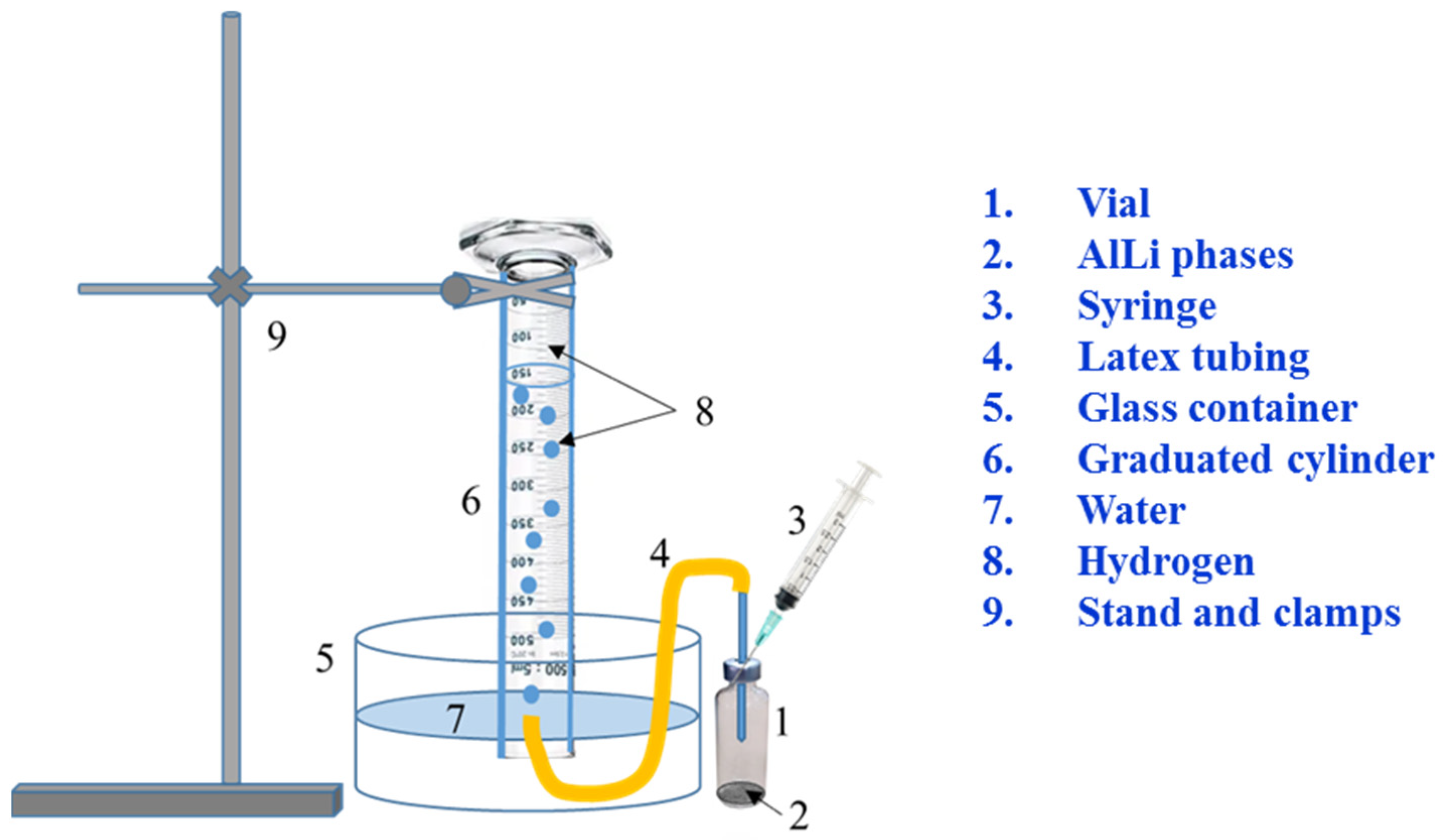
The reactions between the phases obtained by mechanical milling and water to generate hydrogen were carried out in a 20 mL glass vial which was hermetically sealed with a rubber stopper and an aluminum ring seal to prevent any hydrogen leakage during the reaction. The system was verified to ensure there was no leakage in this case of hydrogen during the reaction. Amounts of ground powder from 20 to 200 mg were placed inside the vial. Then, 5 mL of distilled water was added with a syringe which was inserted through the rubber stopper; in this type of reaction, catalysts were not used to initiate hydrogen generation. The hydrogen generation process was carried out under ambient conditions (temp. 20 °C), and the volume of hydrogen was measured by liquid displacement with a graduated burette. The solid by–product of these reactions was separated from the liquid phase by centrifugation, subsequently dried and characterized. No purification process was used in the hydrogen generation because hydrogen was clean. Figure 1 illustrates the scheme for generating hydrogen.

3. Results and Discussion

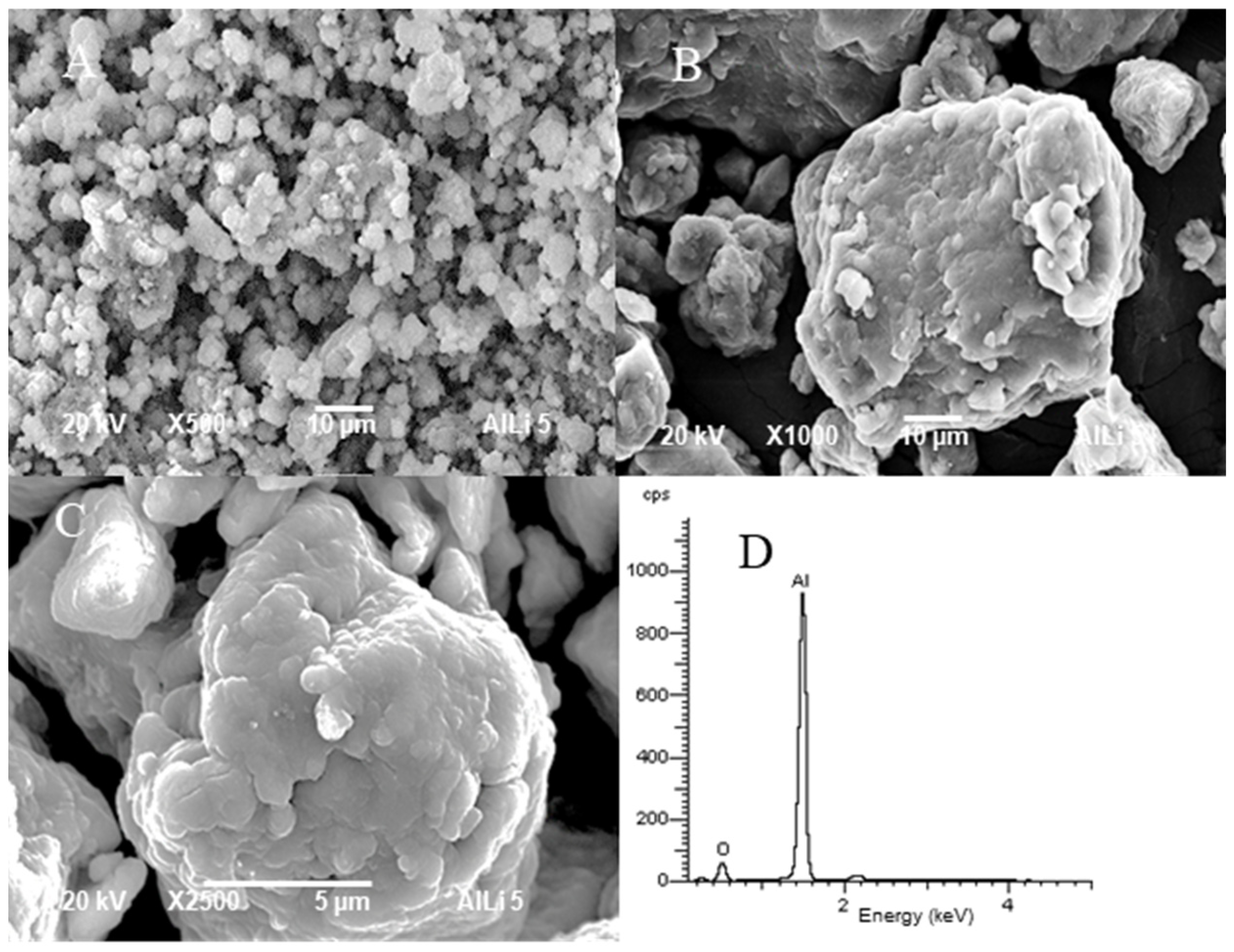
Figure 2 shows several micrographs of the aluminum−lithium compound obtained after 3 h of milling using 5% lithium, in the form (Al5Li) and the X–ray spectrum (EDAX). Image A shows an overview of the powders, where particles of different sizes are observed. The analysis was performed at 500× magnification; under these conditions, a well-defined morphology cannot be discerned. According to the scale reported on the image, the particle sizes are less than 10 microns; the micrograph indicates that there is some uniformity of the material without a well-defined shape being apparent. Image B shows another micrograph of the same material with higher resolution, where clusters of various sizes formed by smaller particles can be observed. The micrograph was obtained at 1000× magnification. The surface of the agglomerates has the appearance of a sintered material. The third micrograph, indicated by the letter C, illustrates another particle of the Al5Li material with even greater resolution, where a cluster formed by layers of various sizes overlapping each other can be observed. The clusters of Al5Li material inside the container are formed during the three hours of milling through the rotational movement generated by an electric motor, which is transmitted to the milling system where a large impact occurs between the milling media, the surface of the container, and the aluminum and lithium particles. This mechanism deforms the particles, which then appear as flakes. Due to the continuous impact, the particle structure is refined over time, causing its size to constantly change. Consequently, the space between layers decreases, and the number of particle layers increases. Image D shows the X–ray spectrum as a complementary result of the EDAX analysis of the Al5Li powders before the reaction, where only aluminum and, to a lesser extent, oxygen could be identified as a fundamental part of the elements present in the matrix, although two other intensities are observed in the same spectrum. The difference in peak height observed on the spectrum between these two elements is primarily due to the fact that aluminum is present at a percentage of 95% in the AlLi mixture, and the presence of oxygen is the result of impurities contained in the argon gas used inside the glove box during material handling, as well as oxygen reacted from the environment during the preparation of the analysis. In this type of analysis, lithium was not detected due to its physicochemical characteristics, particularly its low atomic number, which made it impossible to excite the atoms with the analytical techniques used in this work. There are two other intensities that appear on the same spectrum; at the beginning, a peak with minimal intensity is observed, corresponding to carbon, whose origin comes from the adhesive tape where the samples are placed for analysis. Another intensity was identified on the spectrum with an energy of 2.18 keV. This X–ray energy is characteristic of gold. The presence of this metal is due to the coating applied to the surface of the samples before analysis to prevent electrical overload in the material during image acquisition and elemental analysis. On the other hand, according to the results, the shape of the material does not influence the generation of hydrogen when it reacts with water. During milling, the surface of the aluminum is practically free of the oxide layer; therefore, under these conditions, the hydrolysis reaction with water is favored. Thus, with this milling process, the reaction to obtain hydrogen is carried out easily and quickly.
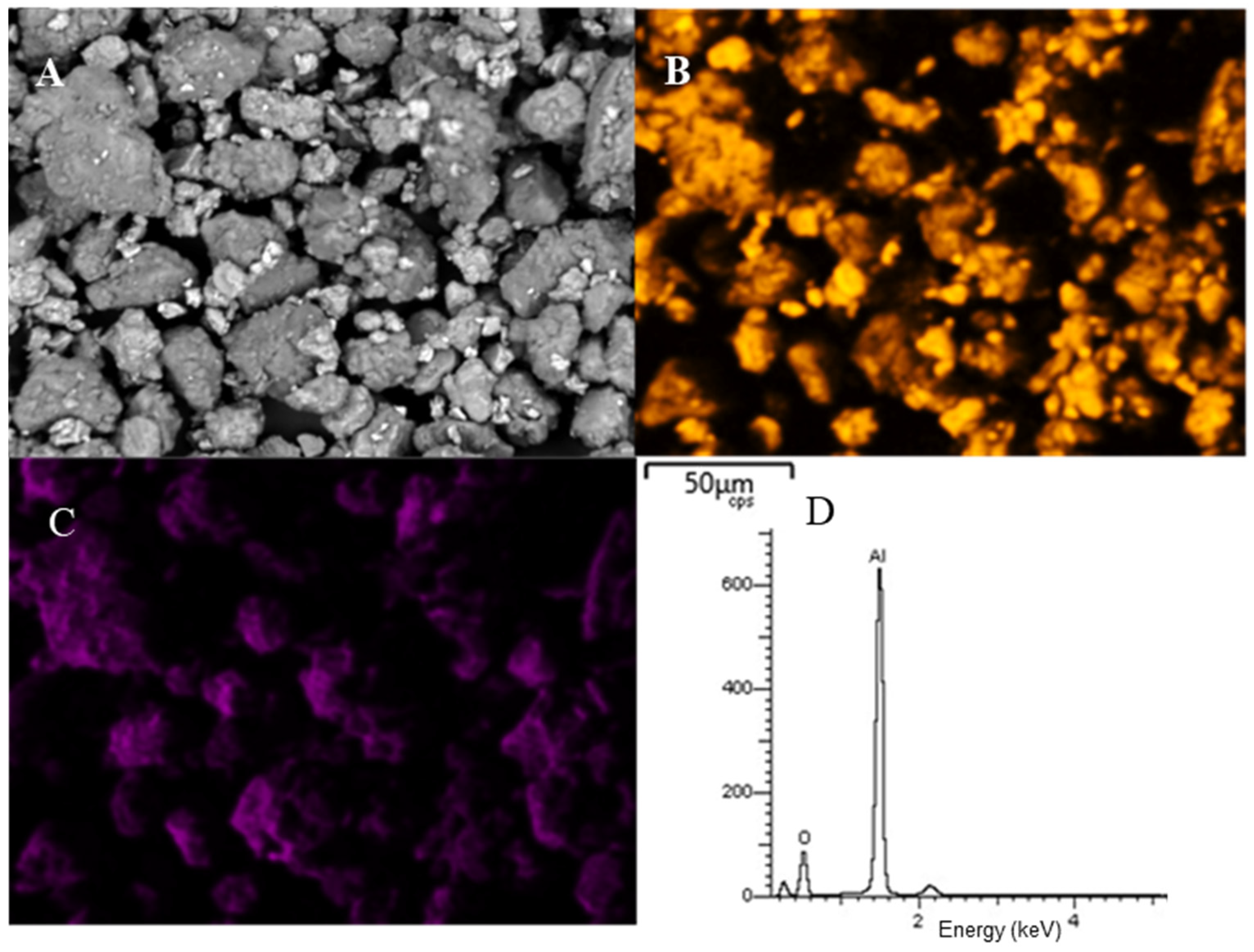
Figure 3 shows the micrographs of the Al5Li particles ground for three hours with their respective EDAX analysis. In image (A), particles of various sizes are observed where it is not possible to identify either the phases or the elements that contain them. A series of characterizations are required, and knowledge of the phases formed after milling is needed, such as XRD and SEM techniques to identify their morphology, as well as their elemental composition using the EDAX probe. The analysis performed using SEM and EDAX was carried out to map the different components of the AlLi and Al8.9Li1.1 phases and, according to the color, to determine their distribution in the sample. In Figure 3A, a series of particles of various sizes can be observed as part of the same particles shown in Figure 2. The size of these particles ranges from nanometric to micrometric sizes, and even larger clusters can be observed. Micrograph (B) shows the mapping image corresponding to aluminum. In this particular case, the orange color indicates the distribution of this element as part of the powders. The intense coloration is due to the percentage of aluminum in the AlLi and Al8.9Li1.1 phases, which on this occasion was 95%. On the other hand, image (C) corresponds to the mapping of oxygen as an element present in the sample in a smaller proportion; a lower distribution than that of aluminum is observed because the oxygen may have formed a thin layer of aluminum oxide. The oxygen comes from impurities present in the argon gas which was used in the handling of the samples inside the glove box. In the case of lithium, which is present in the AlLi and Al8.9Li1.1 phases, it could not be detected due to its atomic number, which is too low for identification using techniques that employ X–ray activation. When bombarded with this type of radiation, no signal is obtained because the radiation does not interact with the electrons of this element, and therefore no characteristic X–rays of lithium are produced. Therefore, the X–ray spectrum of the Al5Li sample only indicates the elements aluminum and oxygen as part of the Al5Li phases, which are revealed both in the mapping images and in the X–ray signals in the EDAX spectrum, indicated by the letter D.
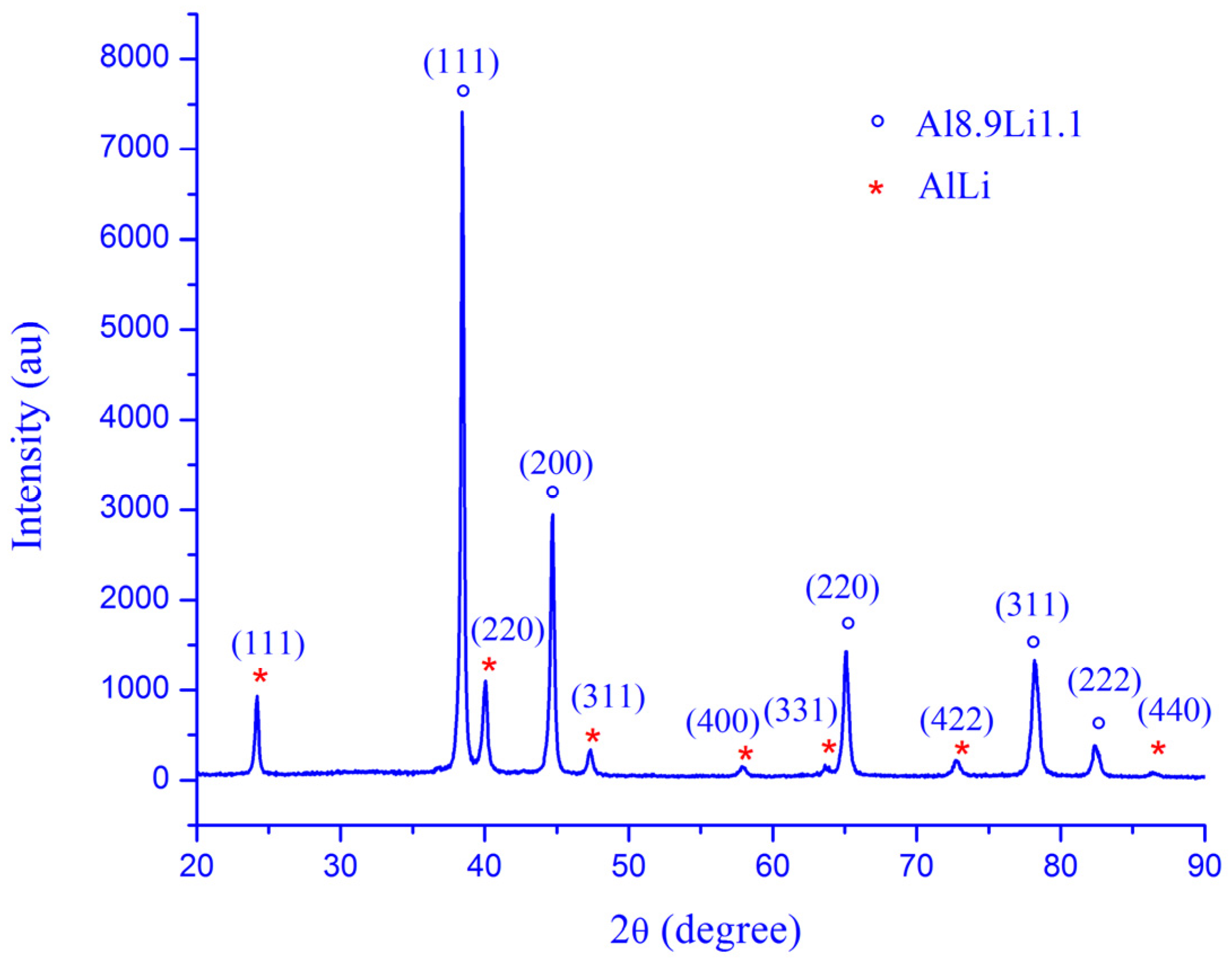
Figure 4 shows the results obtained by X–ray diffraction, where the diffractogram of the material milled for 3 h in preparation of Al5Li phases is observed. The milling time used in this work was 3 h for the formation of the AlLi phases. This time of 3 h was chosen based on previous research on milling times, where millings were performed from 30 min to 10 h on the same material using the same milling system with different concentrations of aluminum and lithium. According to these results, the optimal time obtained for the complete formation of the aluminum−lithium phases was 3 h. These results are reported in the literature [30]. According to PDF cards 65–4905 and 65–7533, it corresponds to the AlLi and Al8.9Li1.1 phases, respectively. The first phase presents relatively small intensities in relation to the second, which has a cubic crystalline form. The 2θ angle values corresponding to the main peaks are as follows: 24.219, 40.067, 47.369, 57.955, 63.732, 72.790, and 86.493 with their respective crystalline planes (h k l) of (111), (220), (311), (400), (331), (422), and (440). The second phase identified as part of the compound was Al8.9Li1.1, whose intensities were higher than those of the first phase. To determine the relative percentage of one phase with respect to the other, the area under the main peak of each phase was considered. To get an idea of the relative percentage of formation of each phase, the peak areas were integrated. According to the values of their respective areas, the percentage corresponding to the Al8.9Li1.1 phase was 78.8%, and for the AlLi phase, it was 21.2%. The peaks in the diffractogram representing the Al8.9Li1.1 phase are well separated which do not interfere with those of AlLi phase. Data from the diffraction pattern cards also indicate that Al8.9Li1.1 has a cubic crystalline structure. The value of the peaks in 2θ is found at angles 38.506, 44.761, 65.158, 78.308, and 82.521, whose (h k l) planes correspond to (111), (200), (220), (311), and (222), respectively. The mixture of these two phases forms the material obtained by mechanical milling from Al5Li, which reacts with water to produce hydrogen.
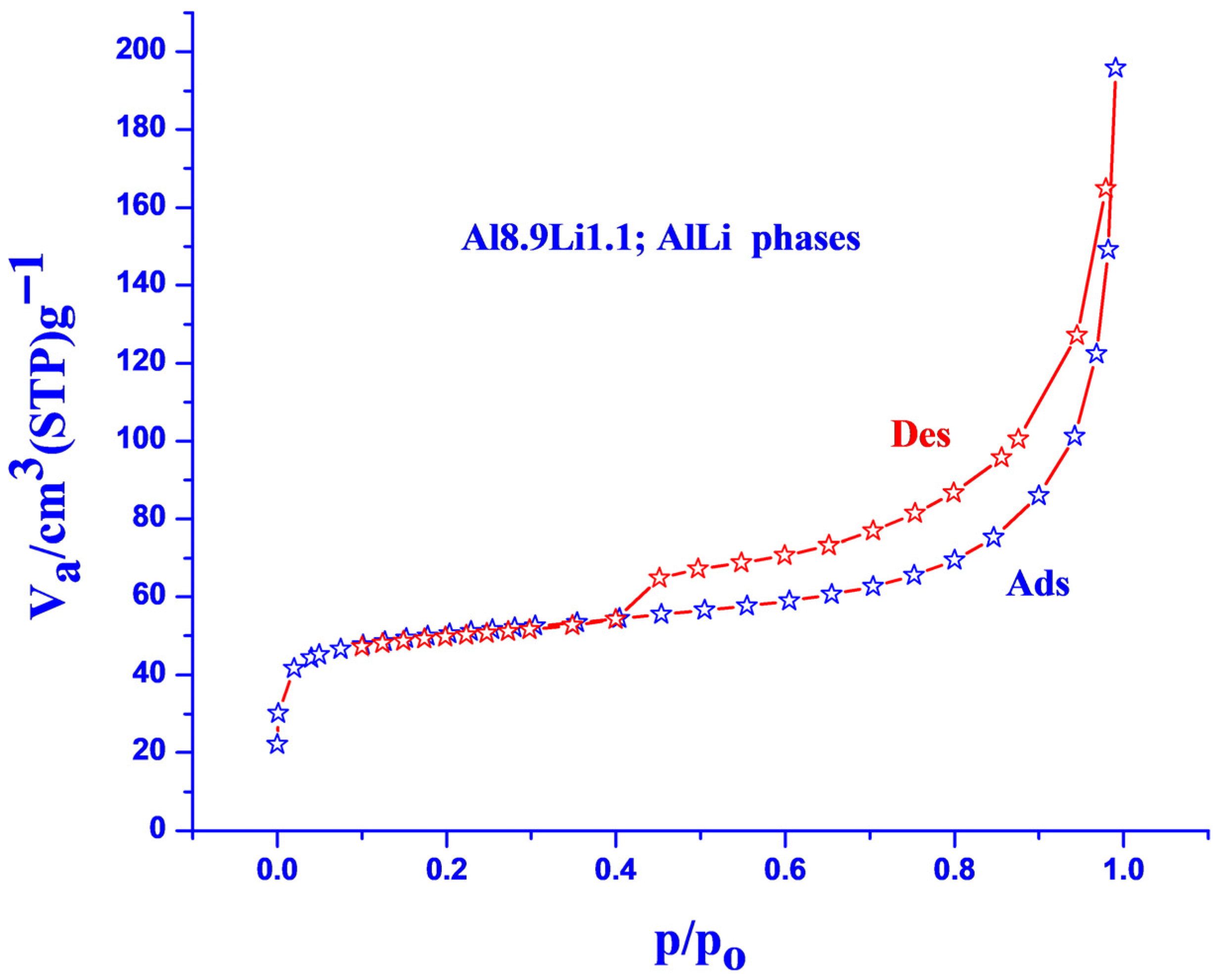
The results of the physical adsorption with nitrogen at low temperature (77 K) of the AlLi and Al8.9Li1.1 phases are shown in Figure 5. This information is used to determine the structural properties of the material prepared by mechanical milling for 3 h. The graphs represent the adsorption process with a blue line and the desorption process with a red line. The shapes of the curves correspond to isotherms similar to those of type IV, as reported by the IUPAC. Therefore, the phases considered in this study correspond to a mesoporous material, according to the reported values for pore sizes between 2 and 50 nm. In this case, the multipoint BET method was used with a pressure range (p/p0) of 0 to 1, obtaining a surface area value of 17 m2/g for the AlLi-Al8.9L1.1 phases. Nitrogen adsorption on the AlLi-Al8.9Li1.1 material prepared by mechanical milling corresponds to a total pore volume of 0.30 cm3/g. This analysis was carried out at a relative pressure (p/p0) of 0.99. The average pore diameter of Al5Li phases was 7.04 nm; according to this value, the material has a porous texture which facilitates the reaction with water to generate hydrogen. The shape of the isotherm presents a hysteresis loop, which is associated with the condensation of the gas at the capillary level. This phenomenon is usually present in mesoporous materials, and therefore, absorption is limited in a high–pressure range p/p0. With this type of characteristic, there are mesoporous materials that exhibit type IV isotherms. In general, when the surface area has high values, they have a greater capacity to adsorb gases [36]. The shape of the hysteresis loop obtained in this study was an H3 type, which does not limit adsorption to a high p/p0 pressure value. This type of hysteresis can also correspond to aggregates of particles with pores of non-uniform sizes and shapes. Porous materials, as in this case, allow water to come into contact with the entire surface and easily penetrate the material, causing the reaction kinetics to occur rapidly.
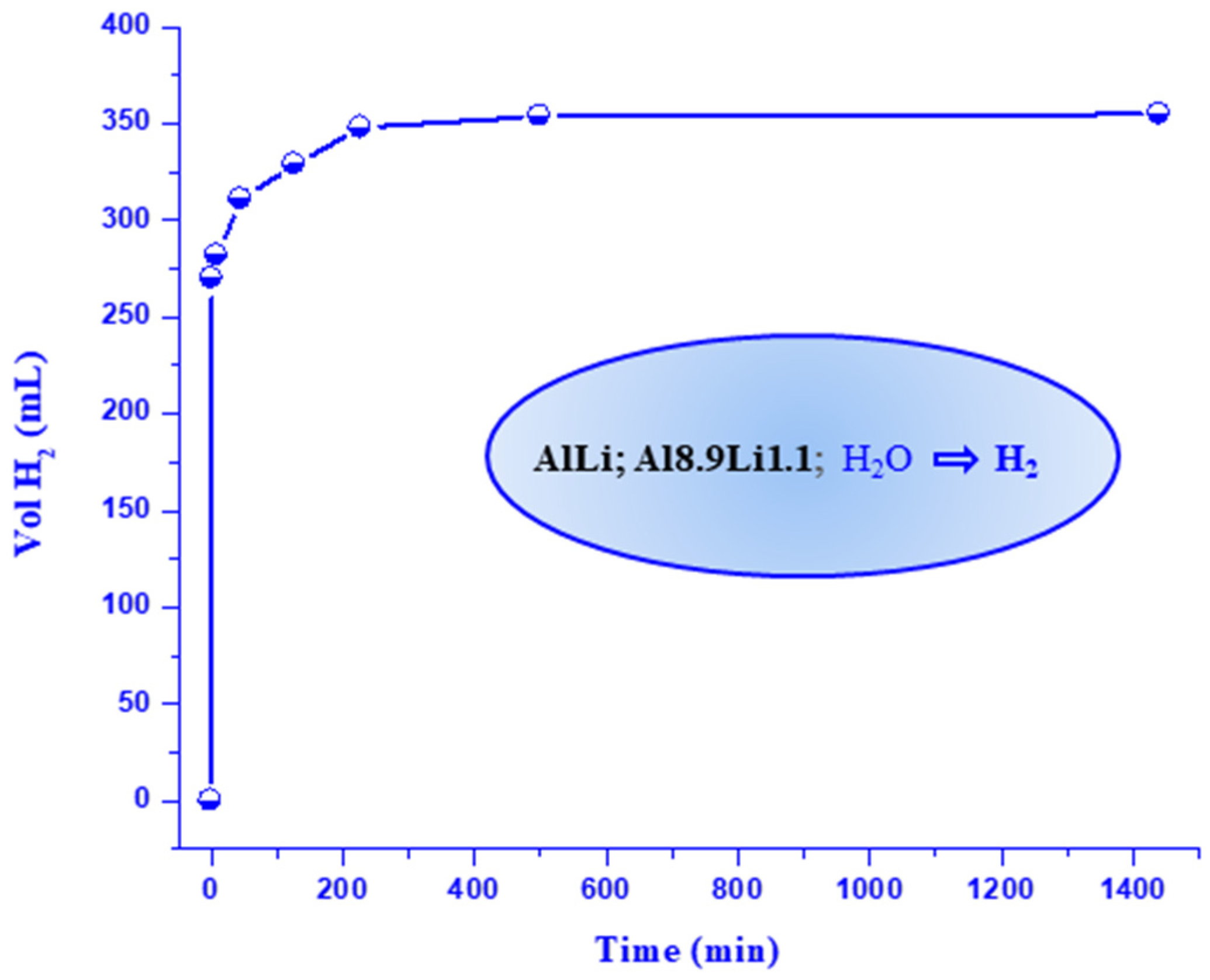
Figure 6 presents the kinetics between AlLi and Al8.9Li1.1 phases and water as a function of reaction time. The graph shows the production of hydrogen as time passes. During the alloy formation process, micrometric and nanometric particles were formed, which favored an instantaneous reaction upon contact with water. In the preparation of alloys by mechanical milling with aluminum lithium, at the end of the programmed milling time and upon opening the container, the material was very electronically active, which had the ability to react very quickly with oxygen, so that upon contact with the environment an almost instantaneous oxidation took place, that is, the material reacted so quickly that it produced a red color tone, since at this moment the protective oxide layer was not formed, especially in aluminum. Passivation within the container was only partially achieved on the aluminum. Although the handling of the milling materials was carried out in a glove box with a controlled atmosphere, the argon gas contained oxygen impurities. These impurities reacted with the aluminum during milling without completely covering the metal surface. Due to this, the intermetallic reaction with water occurred rapidly because most of the aluminum surface was devoid of the oxide layer, leading to a quick reaction with water. Furthermore, particle size is another important factor to consider. The three-hour milling time is sufficient to obtain micrometric and nanometric particles, which also promotes a faster reaction of these phases upon contact with water. Regarding lithium, this metal does not passivate within the container because it is unlikely that any type of oxide would form in situ that could slow down the reaction kinetics. Since this metal was not passivated, the reaction with water favored the formation of lithium hydroxide, activating the aluminum. Both metals then generated hydrogen during the time that both materials reacted completely. According to this mechanism, only one hydrogen atom is released from the water, and consequently, the remaining hydrogen atom reacts with both metals to form the corresponding hydroxides. The reaction to obtain hydrogen took approximately 4 h. It means that the kinetics were slow because the temperature generated at the beginning of the reaction decreased, which caused the reaction to be slower as time passed. The volume of hydrogen obtained with this material in our laboratory conditions was 1680 ± 23 mL/g of the material. This value was the average of a series of experiments carried out from 20 repetitions, which are considered reproducible events in the generation of hydrogen through this chemical process, since in each experiment the reactions carried out inside the vial were similar, obtaining volumes of hydrogen whose average value is the one indicated above. It should be noted that the efficiency both in the preparation of the material by mechanical milling and in the generation of hydrogen was 100%. On the one hand, this efficiency is stated because when carrying out the milling for three hours, the starting materials such as aluminum or lithium were not obtained, as demonstrated by the analysis carried out by XRD. On the other hand, the reaction of the material with distilled water was carried out in its entirety without detecting the presence of any starting product; only the AlLi and Al8.9Li1.1 phases were identified [30]. In addition, as demonstrated by chromatographic analysis, only hydrogen was observed without the presence of any other gas as an impurity. In both processes (milling and hydrogen production), no additives or catalysts were used. The chemical reactions performed in the intermetallic aluminum−lithium preparation by mechanical milling are shown in Equation (1) and the one realized in hydrogen generation, and the by–products are shown in Equation (2):
Al + Li → AlLi + Al8.9Li1.1
AlLi + Al8.9Li1.1 + H2O → H2 + Al(OH)3 + LiAl2(OH)7 · 2H2O
In other studies, conducted with the same materials, aluminum and lithium, under the same milling conditions using lithium at a higher concentration, the AlLi and Al8.9Li1.1 phases were identified, and their reaction with water generated a volume of hydrogen similar to that obtained in this work. Using 20% Li [30], the two phases reported in Equation (1) were also formed, the same as those obtained with 5% lithium. When combining Li with aluminum at low concentrations, one would think that aluminum would react with lithium from a stoichiometric point of view, only forming phases with low percentages and leaving elemental aluminum; however, according to the diffraction pattern (Figure 4), no aluminum was detected. To confirm whether the aluminum did not react, the diffraction pattern values were obtained according to the PDF cards (65–7533 and 85–1327) of both the Al8.9Li1.1 phase and the aluminum. There is a difference in the 2θ values for each intensity, proving the formation of the Al8.9Li1.1 phase, which is similar to that of metallic aluminum. Therefore, the peaks that appear in the diffractogram correspond to the Al8.9Li1.1 phase. Together with the AlLi phase, these are responsible for generating hydrogen when reacting with water.
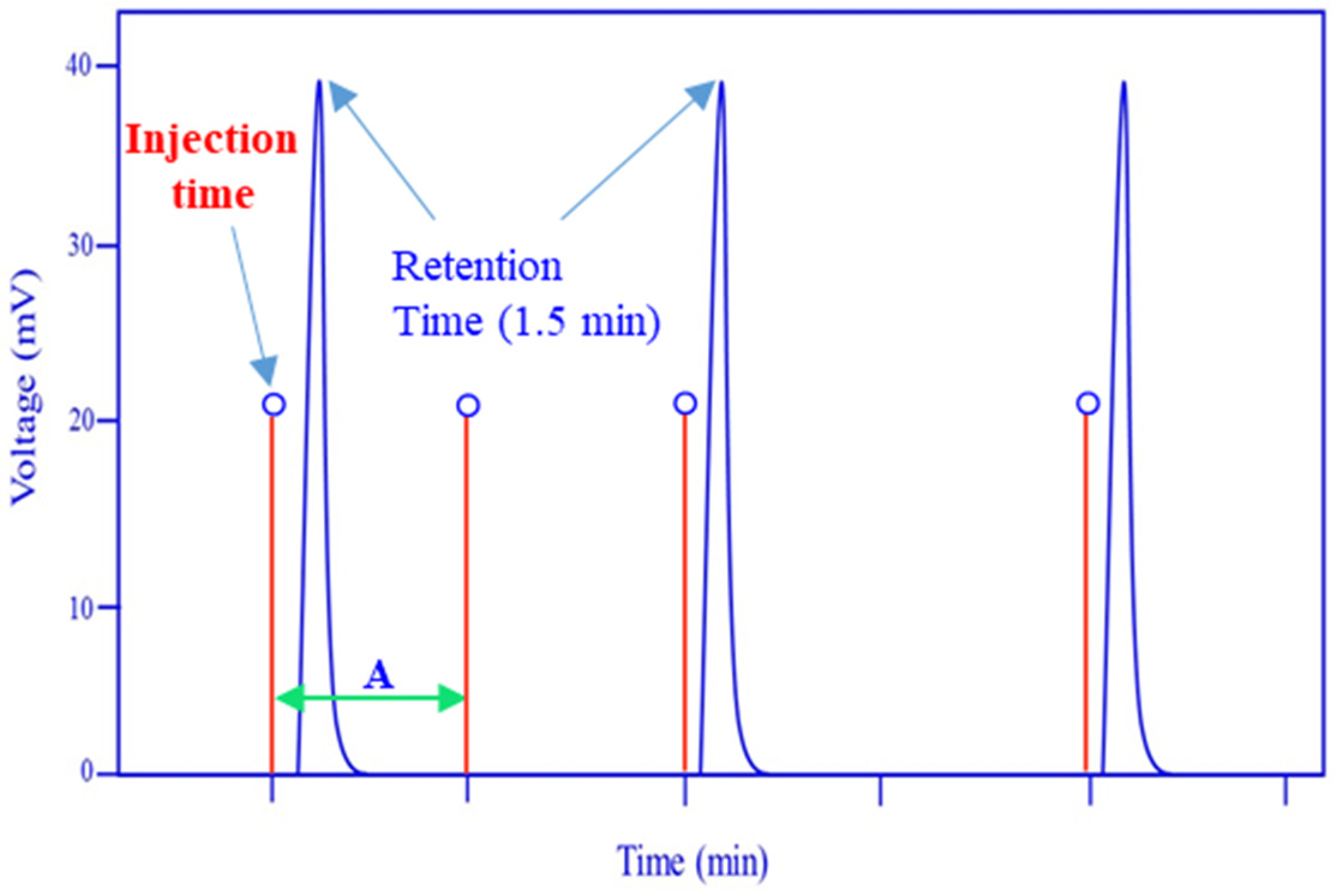
Figure 7 shows three chromatograms of hydrogen obtained from the reaction between the AlLi and Al8.9Li1.1 phases and water under ambient conditions. The figure indicates the point where the hydrogen injection takes place, which is taken as time zero, the retention time of the hydrogen inside the column, as well as the duration of the analysis, indicated by the letter A, where the injection of each hydrogen sample was performed at intervals of approximately 5 min. In all cases, a single peak with a retention time of 1.5 min was observed, corresponding to hydrogen; no other signals indicating gaseous impurities were observed. The hydrogen generated by this process was characterized by gas chromatography to determine if any gaseous impurities were present and to verify the reaction’s efficiency of gas generation. For this purpose, samples of hydrogen generated during the reaction between the AlLi and Al8.9Li1.1 phases and water were collected directly and placed in 10 mL vials, which were sealed with a rubber stopper and an aluminum ring seal to prevent any hydrogen leakage before chromatographic analysis. For each analysis, 200 µL of the sample was transferred using an airtight syringe to the gas chromatograph injector port. These results indicate that the gas produced during the reaction consists of pure molecular hydrogen; likewise, it can be stated that with this procedure, practically clean molecular hydrogen is obtained. This result can be explained by the fact that only one hydrogen atom is released from the water molecule during hydrolysis, and the remaining OH groups react with the metals to form the corresponding hydroxides, thus allowing the release of pure hydrogen.
The reactions between Al5Li materials milled for 3 h and water, which lead to hydrogen generation, are disclosed in Equations (3) and (4):
2Li + 2H2O → 2LiOH + H2
2Al + 6H2O → 2Al(OH)3 + 3H2
The reaction of lithium with water first causes hydrolysis, generating hydrogen and lithium hydroxide, which in turn favors the reaction with aluminum, generating more hydrogen and then the corresponding hydroxide. Another factor that contributes to the reaction kinetics between the AlLi and Al8.9Li1.1 phases and water is the particle size, since the smaller these particles are, the faster the reaction takes place. However, these reactions occur in the system almost instantaneously.
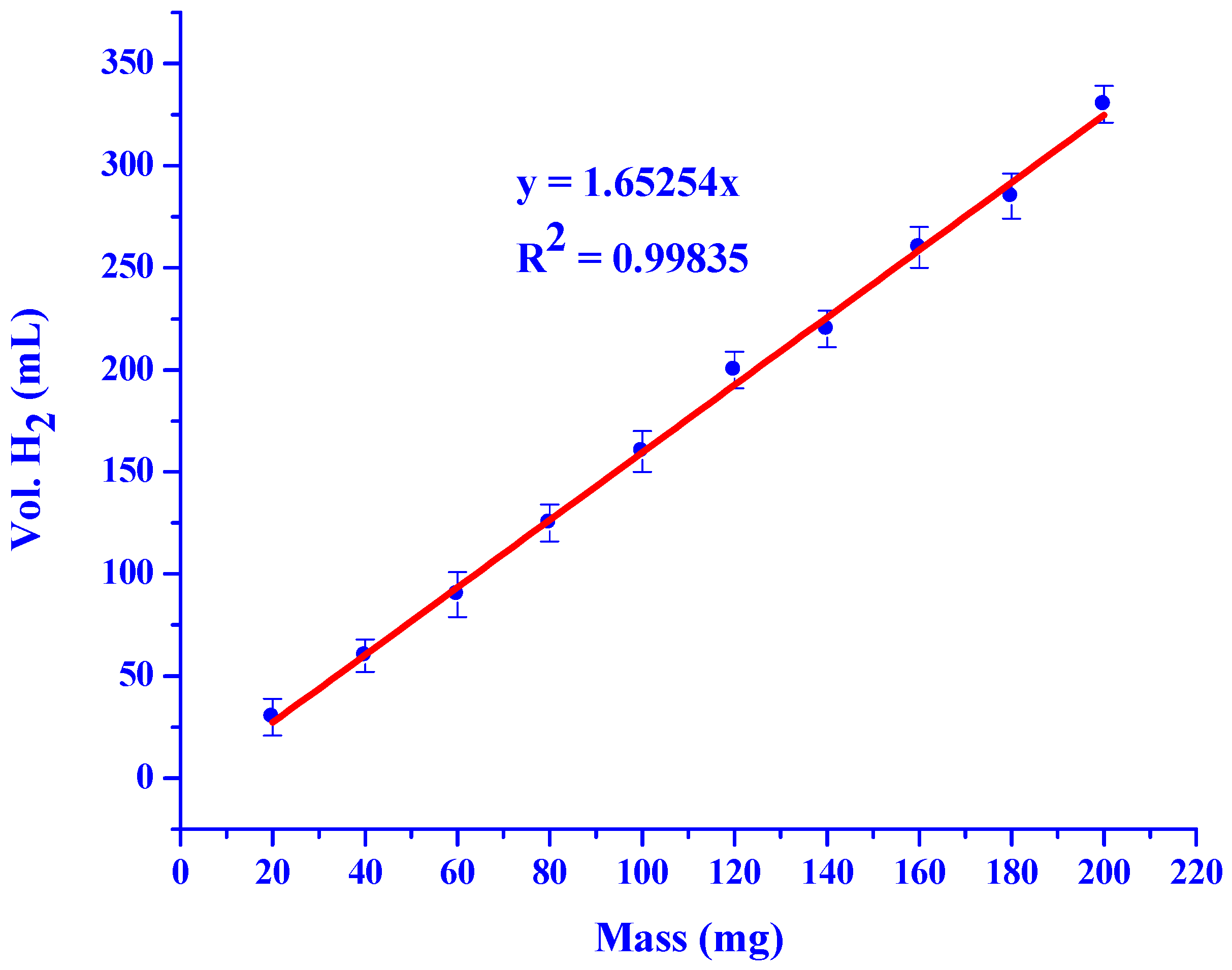
Figure 8 shows the curve obtained from the weight of the material used in the reaction with water versus the volume of hydrogen produced. According to these results, the curve exhibits a linear trend as a function of the amount of reacting material, that is, the volume of hydrogen is directly proportional to the mass of the material. Therefore, this can be extrapolated to any desired reaction amount. In these experiments, small quantities of the AlLi and AlLi8.9Li1.1 phases were weighed, ranging from 20 to 200 mg. Small quantities were reacted due to the rapid and vigorous interaction of the material with water, despite the fact that the material (AlLi and Al8.9Li1.1) was kept at rest for deactivation for a reasonable time. In this hydrogen generation process, the AlLi and Al8.9Li1.1 material is transformed by reacting with water during hydrogen generation, but there is no loss of material as the reaction time elapses.
The curve is a straight line whose angle with respect to the mass and hydrogen is very close to 45° and whose R value was very acceptable, proving that large quantities of the material can be used for the reaction with water in the generation of hydrogen under ambient conditions and without additives or catalysts. In this process, no purification system is required for the generated hydrogen since clean hydrogen is produced, which can be used directly in fuel cells, as was verified with a small commercial fuel cell that functioned properly with the hydrogen produced from the AlLi and Al8.9Li1.1 phases and water. High–performance PEM fuel cell specifications are as follows: dimensions (width × height × depth): 32 mm × 32 mm × 10 mm; total weight: 27.3 g; output power: 270 mW; output voltage: 0.6 V (DC); output current: 0.45 A; hydrogen volume: 25 mL; operating time: 60 min.
Unlike what has been reported in the literature on hydrogen generation using various materials alone or in combination, the processes are laborious and, in some cases, require activating the materials at temperatures well above ambient and using various catalysts to carry out the reaction appropriately. However, these processes involving lithium are more laborious, sometimes requiring catalysts to improve the aluminum hydrolysis reaction, and the volume of hydrogen obtained is lower than that generated in this research. Similarly, the hydrolysis of aluminum with NaOH solution under temperature and high-pressure conditions shows that increasing the temperature accelerates the reaction rate [37,38,39]. In this work, hydrogen can be generated simply with reproducible results at room temperature without the use of additives, either during the mechanical milling of the Al5Li material or when the AlLi–Al8.9Li1.1 phases react with water in the presence of catalysts. It was verified that hydrogen can be used directly in a fuel cell, such as those used in small electronic devices. This research is the starting point for the future development of other processes using the same materials and for scaling up to a higher level. The AlLi alloys employed in this work to generate hydrogen can also be used to store significant amounts of energy.

4. Conclusions

Through mechanical alloying, two phases (AlLi and Al8.9Li1.1) were prepared from the metals aluminum and lithium using low concentrations of lithium (5%) as demonstrated by the XRD pattern. The programmed time in the mechanical milling system for preparing the Al5Li phases was 3 h, a relatively short time to fully combine the metals, due to the significant impact between the milling media, sample, and walls of the stain–less–steel container. The volume of hydrogen generated from the reaction of the AlLi and Al8.9Li1.1 phases and water, using a low percentage of lithium under ambient conditions, was on average 1680 mL. The process used in this work to generate hydrogen is known as green chemistry, as no waste is produced primarily CO2 and the by-products can be used in other scientific or industrial fields. The specific area as the main parameter was also determined, which indicates that it is a mesoporous material. The activation of aluminum with 5% lithium to obtain hydrogen was significant; according to the volume generated, the contribution of aluminum as a main component in the composition of the phases with a low lithium concentration was 95.24%. No additives or catalysts were used in either the mechanical milling to prepare the Al5Li phases or in the hydrolitic process to generate hydrogen. In this work, clean hydrogen was obtained, which does not require any purification process and can be used directly in fuel cells. It can be noted that under our working conditions, hydrogen was obtained using a straightforward and uncomplicated method. According to the results of this research, Al5Li phases can be considered as an energy storage medium. With the energy transition underway, hydrogen has proven to be a viable candidate to replace some by-products of fossil fuels, such as gasoline and diesel, which are continuously used in certain types of transportation globally.

Author Contributions

J.L.I.G., research, project planning, methodology, writing—original draft, and writing—review and editing. E.T.R.G., research, methodology, and XRD analysis. The authors contributed to the discussion of the results presented and editing. All authors have read and agreed to the published version of the manuscript.

Funding

This research received no external funding.

Data Availability Statement

The original contributions presented in this study are included in the article. Further inquiries can be directed at the corresponding author.

Acknowledgments

The authors thank the XRD and SEM staff as well as the technicians of the Chemistry Department for their valuable support in carrying out the corresponding analyses.

Conflicts of Interest

The authors declare no conflicts of interest.

References

  1. Ripple, W.J.; Wolf, C.; Mann, M.E.; Rockström, J.; Gregg, J.W.; Xu, C.; Wunderling, N.; Perkins-Kirkpatrick, S.E.; Schaeffer, R.; Broadgate, W.J.; et al. The 2025 state of the climate report: A planet on the brink. BioScience 2025, 75, 1016–1027. [Google Scholar] [CrossRef]
  2. Nikolaidis, P.; Poullikkas, A. A comparative overview of hydrogen production processes. Renew. Sust. Energy Rev. 2017, 67, 597–611. [Google Scholar] [CrossRef]
  3. Balcı, Y.; Erbay, C. Green hydrogen production from offshore wind: A techno-economic analysis for Türkiye. Int. J. Hydrogen Energy 2025, 97, 377–390. [Google Scholar] [CrossRef]
  4. Zvereva, E.R.; Marina, G.E.; Akhmetova, I.G.; Zverev, L.O. Prospects for obtaining green hydrogen at mini–hydroelectric power plants for transport. Int. J. Hydrogen Energy 2025, 97, 291–298. [Google Scholar] [CrossRef]
  5. Ratib, M.K.; Muttaqi, K.M.; Islam, M.R.; Sutanto, D.; Agalgaonkar, A.P. Large–scale production of green hydrogen from solar energy in Australia: Operation and control of a multi–unit PEM electrolyser system. Int. J. Hydrogen Energy 2025, 98, 873–886. [Google Scholar] [CrossRef]
  6. Bayramov, A.N. Comprehensive assessment of system efficiency and competitiveness of nuclear power plants in combination with hydrogen complex. Int. J. Hydrogen Energy 2023, 48, 27068–27078. [Google Scholar] [CrossRef]
  7. Anil Antony, N.K.; Maheshwari, A.; Rao, R. A generic methodology to evaluate economics of hydrogen production using energy from nuclear power plants. Int. J. Hydrogen Energy 2017, 42, 25813–25823. [Google Scholar] [CrossRef]
  8. Ayub, M.N.; Shahzad, U.; Rabbee, M.F.; Saeed, M.; Rahman Khan, M.M.; Rahman, M.M. Recent advances on water electrolysis based on nanoscale inorganic metal–oxides and metal-oxyhydroxides for hydrogen energy production. Int. J. Hydrogen Energy 2025, 97, 307–327. [Google Scholar] [CrossRef]
  9. Nam, J.Y.; Lee, T.R.; Tokmurzin, D.; Park, S.J.; Ra, H.W.; Yoon, S.J.; Mun, T.Y.; Yoon, S.M.; Moon, J.H.; Lee, J.G.; et al. Hydrogen-rich gas production from disposable COVID–19 mask by steam gasification. Fuel 2023, 331, 125720. [Google Scholar] [CrossRef]
  10. Hou, X.; Qing, S.; Liu, Y.; Li, L.; Gao, Z.; Qin, Y. Enhancing effect of MgO modification of Cu-Al spinel oxide catalyst for methanol steam reforming. Int. J. Hydrogen Energy 2020, 45, 477–489. [Google Scholar] [CrossRef]
  11. Peters, T.A.; Carvalho, P.A.; Stange, M.; Bredesen, R. Formation of hydrogen bubbles in Pd-Ag membranes during H2 permeation. Int. J. Hydrogen Energy 2020, 45, 7488–7496. [Google Scholar] [CrossRef]
  12. Podila, S.; Driss, H.; Zaman, S.F.; Ali, A.M.; Al-Zahrani, A.A.; Daous, M.A.; Petrov, L.A. MgFe and Mg–Co–Fe mixed oxides derived from hydrotalcites: Highly efficient catalysts for COx free hydrogen production from NH3. Int. J. Hydrogen Energy 2020, 45, 873–890. [Google Scholar] [CrossRef]
  13. Escobar–Alarcón, L.; Iturbe–García, J.L.; González–Zavala, F.; Solís–Casados, D.A.; Pérez–Hernándeze, R.; Haro–Poniatowski, E. Hydrogen production by ultrasound assisted liquid laser ablation of Al, Mg and Al–Mg alloys in water. Appl. Surf. Sci. 2019, 479, 189–196. [Google Scholar] [CrossRef]
  14. Escobar–Alarcón, L.; Iturbe–García, J.L.; González–Zavala, F.; Solís–Casados, D.A.; Pérez–Hernándeze, R.; Haro–Poniatowski, E. Hydrogen production by laser irradiation of metals in water under an ultrasonic field: A novel approach. Int. J. Hydrogen Energy 2019, 44, 1579–1581. [Google Scholar] [CrossRef]
  15. Hodges, A.; Hoang, A.L.; Tsekouras, G.; Wagner, K.; Lee, C.Y.; Swiegers, G.F.; Wallace, G.G. A high–performance capillary–fed electrolysis cell promises more cost–competitive renewable hydrogen. Nat. Commun. 2022, 13, 1304. [Google Scholar] [CrossRef]
  16. Choi, J.Y.; Kim, J.G.; Lee, H.J.; Pak, C. Advanced iridium catalysts on multi–porous tantalum oxide supports for efficient proton exchange membrane water electrolysis. Int. J. Hydrogen Energy 2025, 97, 57–65. [Google Scholar] [CrossRef]
  17. Schalenbach, M.; Kasian, O.; Mayrhofer, K.J.J. An alkaline water electrolyzer with nickel electrodes enables efficient high current density operation. Int. J. Hydrogen Energy 2018, 45, 11932–11938. [Google Scholar] [CrossRef]
  18. Hao, M.; Xu, Z.; Xin Liu, X.; Ma, J.; Wang, L.; Li, C.; Wang, W. The in situ growth of FeCo nanoalloys in NiFeCoP nanosheets arrays with superhydrophilicity and surperaerophobicity for efficient overall water splitting. Int. J. Hydrogen Energy 2023, 48, 147–159. [Google Scholar] [CrossRef]
  19. Wang, H.; Ma, H.; Jin, Z.; Shi, J.; Zhang, Z.; Wei, C.; Gao, Q.; Hou, G. Sn–free Al–based on-demand hydrogen production materials for easy recycling. Int. J. Hydrogen Energy 2024, 49, 1332–1343. [Google Scholar] [CrossRef]
  20. Wang, W.; Chen, D.M.; Yang, K. Investigation on microstructure and hydrogen generation performance of Al–rich alloys. Int. J. Hydrogen Energy 2010, 35, 12011–12019. [Google Scholar] [CrossRef]
  21. Nie, H.; Zhang, S.; Schoenitz, M.; Dreizin, E.L. Reaction interface between aluminum and water. Int. J. Hydrogen Energy 2013, 38, 11222–11232. [Google Scholar] [CrossRef]
  22. Soler, L.; Macanas, J.; Muñoz, M.; Casado, J. Aluminum and aluminum alloys as sources of hydrogen for fuel cell applications. J. Power Sources 2007, 169, 144–149. [Google Scholar] [CrossRef]
  23. Gai, W.Z.; Zhang, S.H.; Yang, Y.; Deng, Z.Y. High activity AlOOH catalyzed Al hydrolysis for hydrogen generation. Sustain. Energy Technol. Assess. 2020, 38, 100676. [Google Scholar] [CrossRef]
  24. Guan, X.; Zhou, Z.; Luo, P.; Wu, F.; Dong, S. Hydrogen generation from the reaction of Al–based composites activated by low–melting–point metals/oxides/salts with water. Energy 2019, 188, 116107. [Google Scholar] [CrossRef]
  25. Wei, C.; Liu, D.; Xu, S.; Cui, T.; An, Q.; Liu, Z.; Gao, Q. Effects of Cu additives on the hydrogen generation performance of Al–rich alloys. J. Alloys Compd. 2018, 738, 105–110. [Google Scholar] [CrossRef]
  26. Zhao, C.; Xu, F.; Sun, L.; Chen, J.; Guo, X.; Yan, E.; Yu, F.; Peng, H.; Zou, Y.; Liu, Z.; et al. A novel Al BiOCl composite for hydrogen generation from water. Int. J. Hydrogen Energy 2019, 44, 6655–6662. [Google Scholar] [CrossRef]
  27. Qiao, D.; Lu, Y.; Tang, Z.; Fan, X.; Wang, T.; Li, T.; Liaw, P.K. The superior hydrogen–generation performance of multi–component Al alloys by the hydrolysis reaction. Int. J. Hydrogen Energy 2019, 44, 3527–3537. [Google Scholar] [CrossRef]
  28. Ziebarth, J.T.; Woodall, J.M.; Kramer, R.A.; Choi, G. Liquid phase–enabled reaction of Al–Ga and Al–Ga–In–Sn alloys with water. Int. J. Hydrogen Energy 2011, 36, 5271–5279. [Google Scholar] [CrossRef]
  29. Romero–Guzmán, E.T.; Iturbe–García, J.L. CO2 Transformation at Controlled Temperature with Lithium Hydroxide Solution and Metallic Lithium. J. Miner. Mater. Charact. Eng. 2024, 12, 189–203. [Google Scholar]
  30. Iturbe–García, J.L.; Alvarez–Acosta, D.L. High Efficiency in Clean Hydrogen Production Using Water and AlLi Phases Prepared by Mechanical Alloying. Hydrogen 2024, 5, 53. [Google Scholar] [CrossRef]
  31. Khzouz, M.; Gkanas, I.E.; Girella, A.; Statheros, T.; Milanese, C. Sustainable hydrogen production via LiH hydrolysis for unmanned air vehicle (UAV) applications. Int. J. Hydrogen Energy 2020, 45, 5384–5394. [Google Scholar] [CrossRef]
  32. Liu, Y.; Wang, X.; Liu, H.; Dong, Z.; Li, S.; Ge, H.; Yan, M. Effect of salts addition on the hydrogen generation of Al–LiH composite elaborated by ball milling. Energy 2015, 89, 907–913. [Google Scholar] [CrossRef]
  33. Chen, X.; Zhao, Z.; Hao, M.; Wang, D. Hydrogen generation by splitting water with Al–Li alloys. Int. J. Energy Res. 2013, 37, 1624–1634. [Google Scholar] [CrossRef]
  34. Chen, X.; Zhao, Z.; Liu, X.; Hao, M.; Chen, A.; Tang, Z. Hydrogen generation by the hydrolysis reaction of ball–milled aluminum –lithium alloys. J. Power Sources 2014, 254, 345–352. [Google Scholar] [CrossRef]
  35. Fan, M.Q.; Liu, S.; Wang, C.; Chen, D.K.Y.; Shu, K.Y. Hydrolytic hydrogen generation using milled aluminum in water activated by Li, In, and Zn additives. Fuel Cells 2011, 12, 642–648. [Google Scholar] [CrossRef]
  36. Iturbe–García, J.L.; Bonifacio Martínez, J.; Granados Correa, F.; López–Muñoz, B.E. Behavior of a hydrotalcite type material obtained from MgAl alloy for CO2 adsorption. Appl. Clay Sci. 2019, 183, 105296. [Google Scholar] [CrossRef]
  37. Yang, W.; Zhang, T.; Zhou, J.; Shi, W.; Liu, J.; Cen, K. Experimental study on the effect of low melting point metal additives on hydrogen production in the aluminum–water reaction. Energy 2015, 88, 537–543. [Google Scholar] [CrossRef]
  38. Yang, W.; Zhang, T.; Liu, J.; Wang, Z.; Zhou, J.; Cen, K. Experimental researches on hydrogen generation by aluminum with adding lithium at high temperature. Energy 2015, 93, 451–457. [Google Scholar] [CrossRef]
  39. Dong, Z.; Yao, W.; Niu, F.; Chen, D.; Huang, Y. Hydrogen generation dynamics of the reaction between metal aluminum and sodium hydroxide solution under pressurized condition. Int. J. Hydrogen Energy 2026, 198, 152795. [Google Scholar] [CrossRef]
Figure 1. System for hydrogen generation.
Hydrogen 07 00050 g001
Figure 2. Al5Li particles obtained by mechanical milling.
Hydrogen 07 00050 g002
Figure 3. Micrographs of Al5Li particles (A), without and with mapping (B,C), as well as the X–ray pattern (EDAX) (D).
Hydrogen 07 00050 g003
Figure 4. Diffractogram of AlLi and Al8.9Li1.1 phases obtained after 3 h of milling from Al5Li.
Hydrogen 07 00050 g004
Figure 5. Isotherm of AlLi and Al8.9Li1.1 phases with nitrogen at 77 K, showing adsorption/desorption lines.
Hydrogen 07 00050 g005
Figure 6. Reaction kinetics to produce hydrogen.
Hydrogen 07 00050 g006
Figure 7. Gas chromatograms of three hydrogen samples produced by Al5Li alloy and water.
Hydrogen 07 00050 g007
Figure 8. Linear trend in hydrogen generation as a function of the weight material.
Hydrogen 07 00050 g008
Disclaimer/Publisher’s Note: The statements, opinions and data contained in all publications are solely those of the individual author(s) and contributor(s) and not of MDPI and/or the editor(s). MDPI and/or the editor(s) disclaim responsibility for any injury to people or property resulting from any ideas, methods, instructions or products referred to in the content.