
Impact of Cathode Surface Area on Gas–Liquid Mass Transfer and Acetate Production Efficiency in H2-Mediated Microbial Electrosynthesis from CO2


Abstract
1. Introduction
2. Materials and Methods
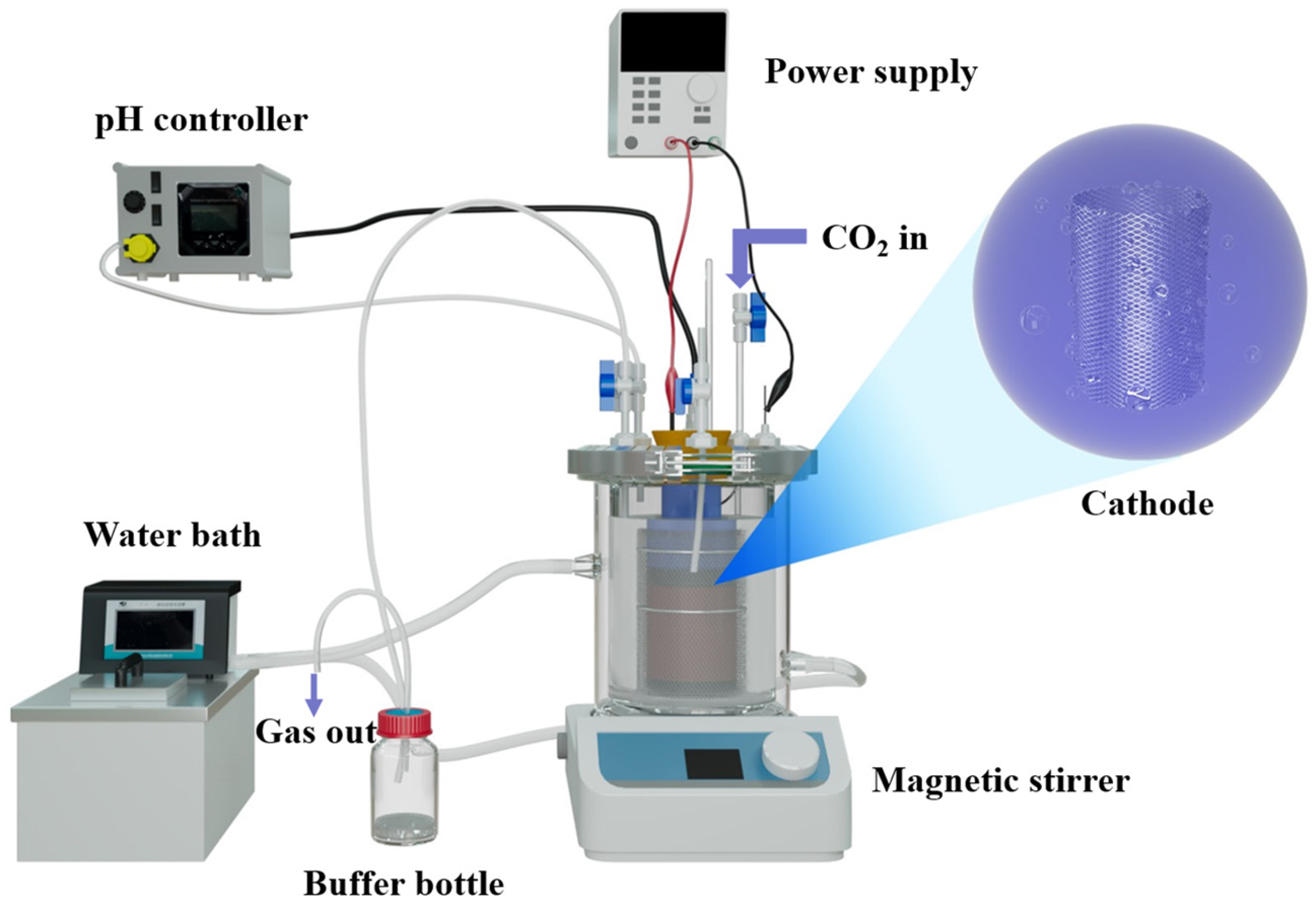
2.1. MES Reactor Construction
2.2. Operating Conditions for the MES Reactor
2.2.1. Compositions of the Anolyte and Catholyte
2.2.2. Reactor Operating Parameters
2.3. Analyses and Calculations
2.3.1. Gas Sample Analysis
2.3.2. Liquid Sample Analysis
2.3.3. Determination of H2 Mass Transfer Coefficient
2.3.4. Imaging of H2 Bubbles on the Cathode Surface
2.3.5. Calculations
3. Results and Discussion
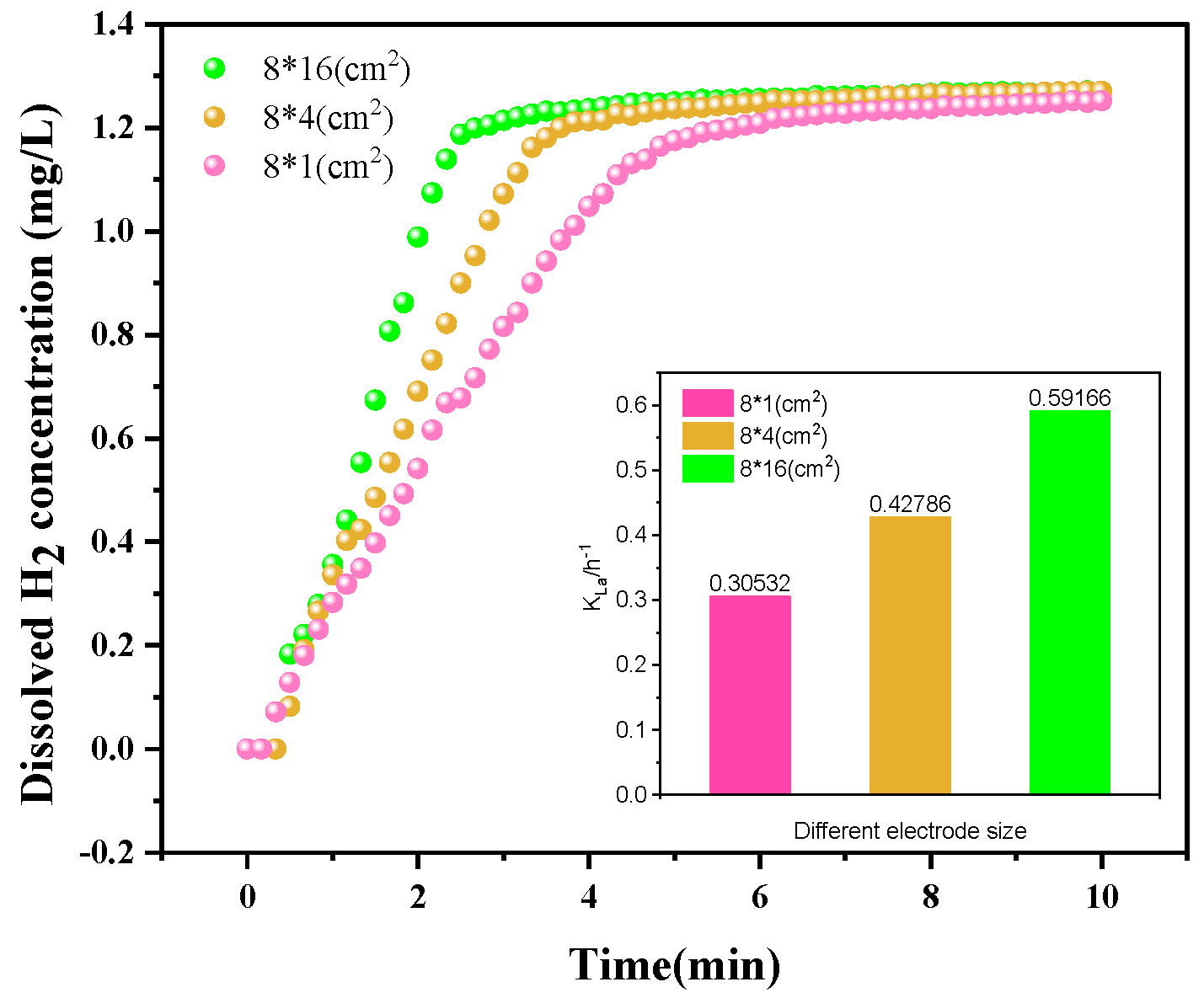
3.1. Impact of Cathode Surface Area on Hydrogen Mass Transfer
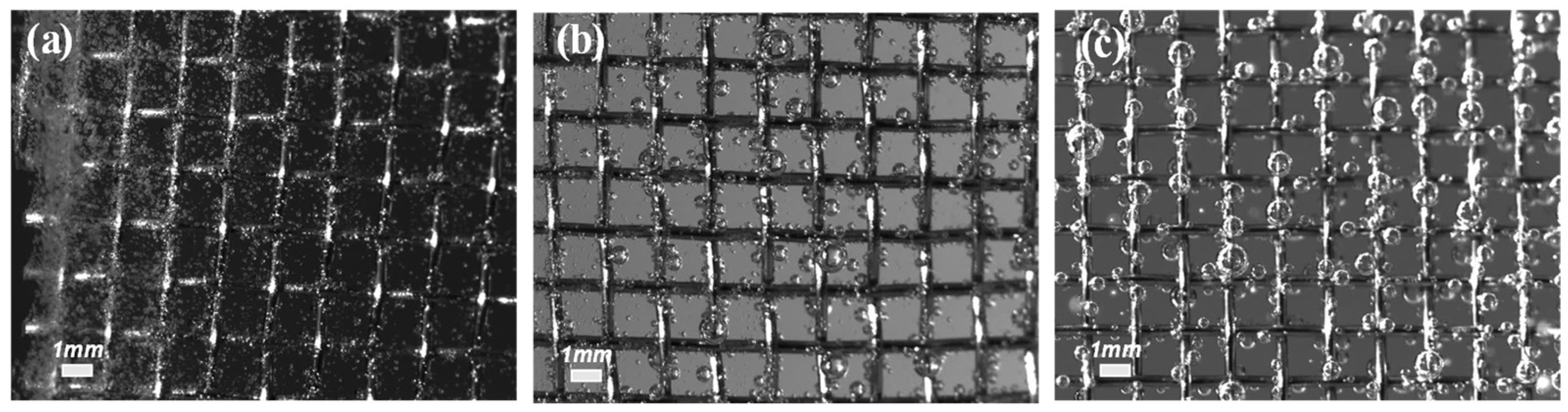
3.2. Impact of Cathode Surface Area on Hydrogen Bubble Formation
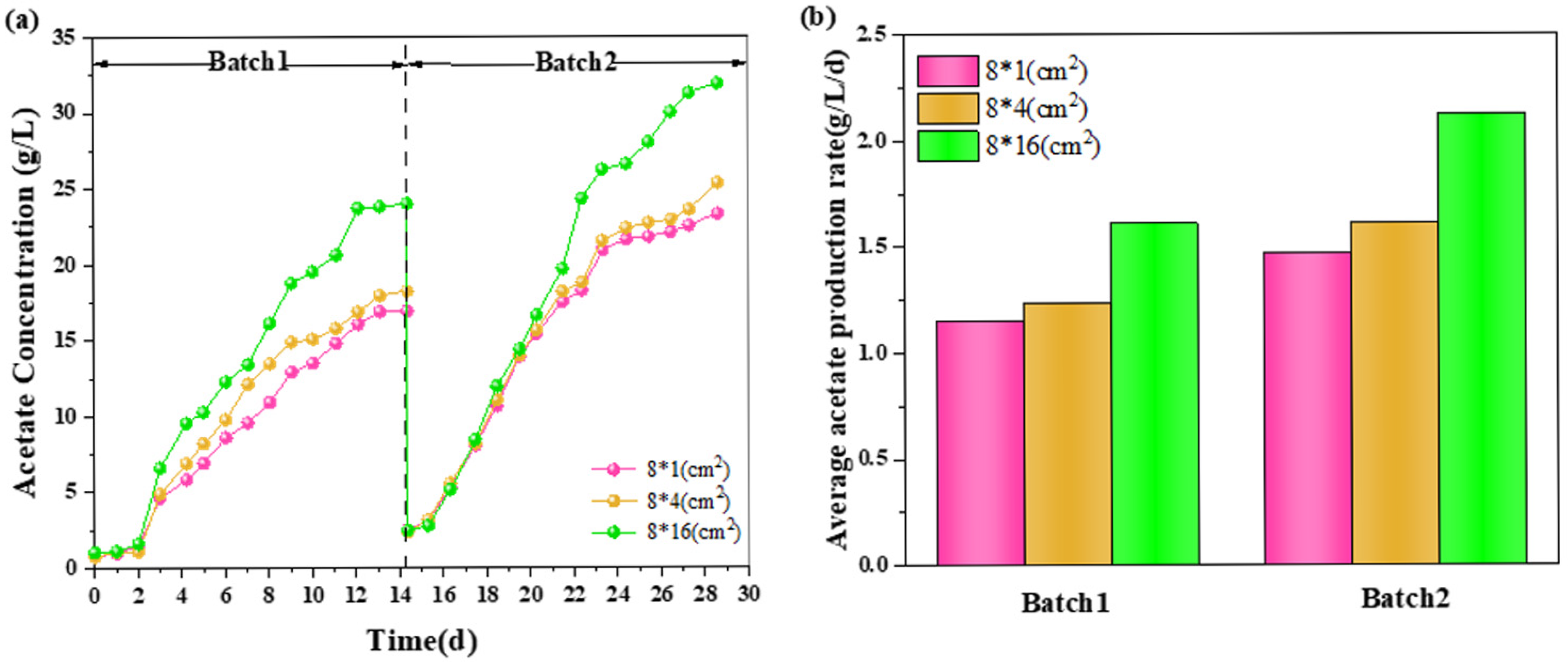
3.3. Impact of Cathode Surface Area on Acetate Production in MES Reactors
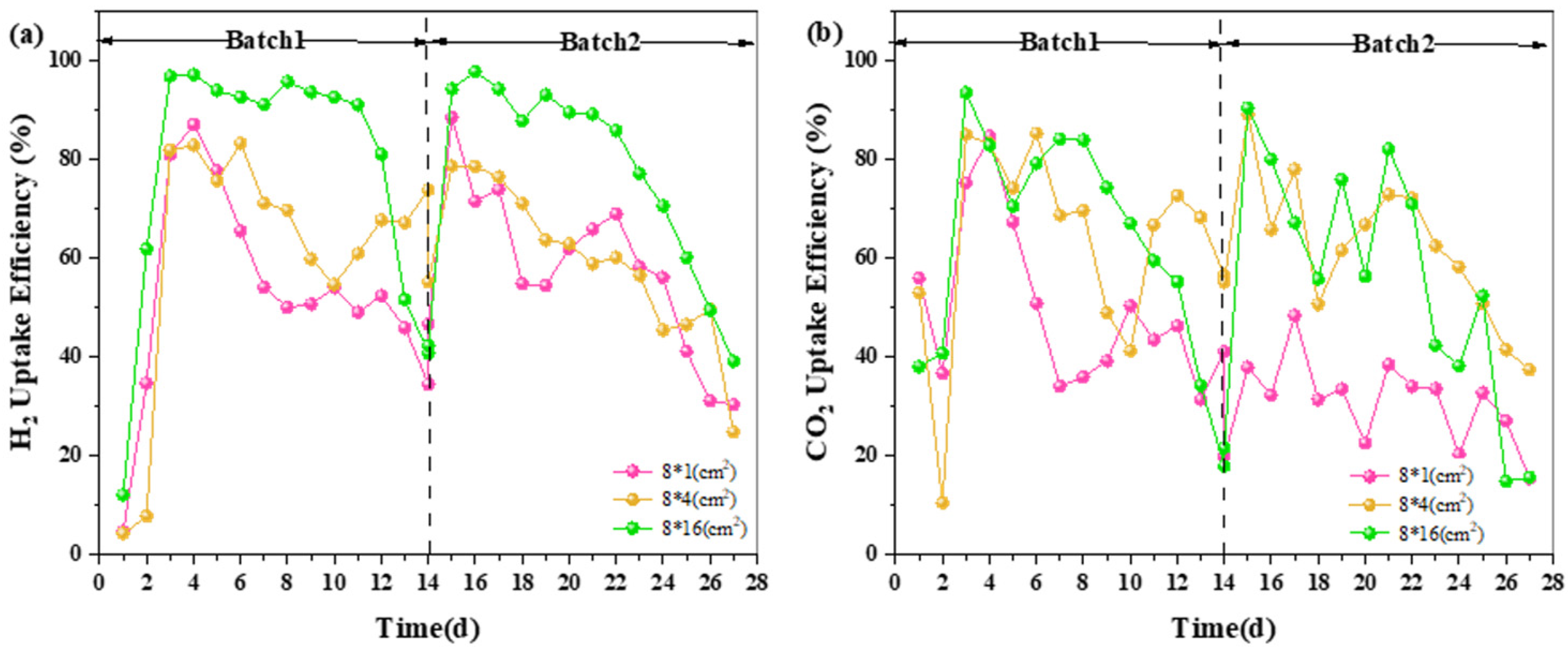
3.4. Impact of Cathode Surface Area on Gas Uptake Efficiency by Microbes
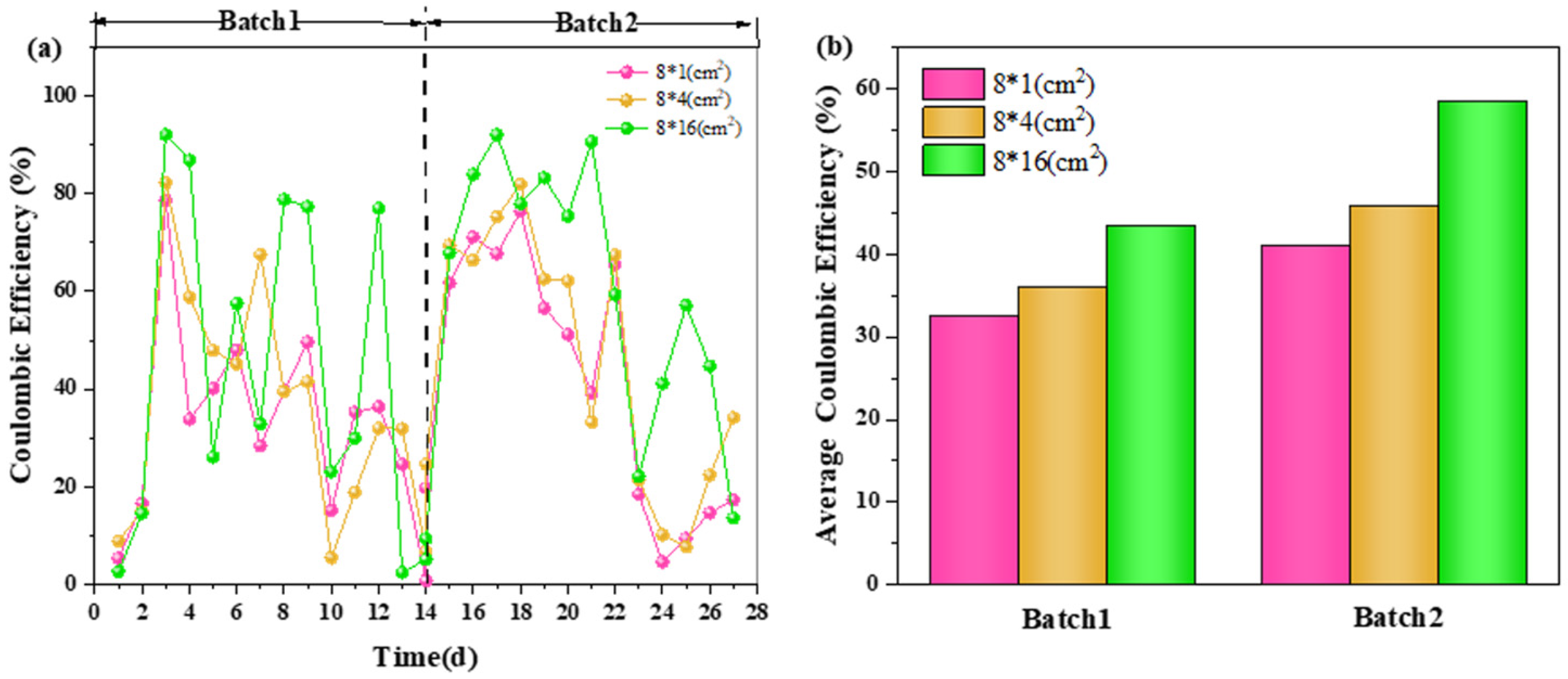
3.5. Impact of Cathode Surface Area on Coulombic Efficiency of the MES Process
4. Conclusions
Supplementary Materials
Author Contributions
Funding
Data Availability Statement
Conflicts of Interest
References
- Chaitanya, N.K.; Rajpurohit, A.; Nair, P.S.; Chatterjee, P. Enhanced carbon capture and medium chain fatty acid production using microbial electrosynthesis: Role of electrode surface area. Bioresour. Technol. 2025, 435, 132916. [Google Scholar] [CrossRef] [Scilit] [PubMed]
- Rabaey, K.; Rozendal, R.A. Microbial electrosynthesis—Revisiting the electrical route for microbial production. Nat. Rev. Microbiol. 2010, 8, 706–716. [Google Scholar] [CrossRef] [Scilit] [PubMed]
- Bian, Y.; Leininger, A.; May, H.D.; Ren, Z.J. H2 mediated mixed culture microbial electrosynthesis for high titer acetate production from CO2. Environ. Sci. Ecotechnol. 2024, 19, 100324. [Google Scholar] [CrossRef] [Scilit] [PubMed]
- Ying, Z.; Qiu, Q.; Ye, J.; Chen, H.; Zhao, J.; Shen, Y.; Chu, B.; Gao, H.; Zhang, S. Mechanism, performance enhancement, and economic feasibility of CO2 microbial electrosynthesis systems: A data-driven analysis of research topics and trends. Renew. Sustain. Energy Rev. 2024, 202, 114704. [Google Scholar] [CrossRef] [Scilit]
- Nevin, K.P.; Woodard, T.L.; Franks, A.E.; Summers, Z.M.; Lovley, D.R. Microbial electrosynthesis: Feeding microbes electricity to convert carbon dioxide and water to multicarbon extracellular organic compounds. mBio 2010, 1, e00103-10. [Google Scholar] [CrossRef] [Scilit]
- Lovley, D.R.; Nevin, K.P. Electrobiocommodities: Powering microbial production of fuels and commodity chemicals from carbon dioxide with electricity. Curr. Opin. Biotechnol. 2013, 24, 385–390. [Google Scholar] [CrossRef] [Scilit]
- Ganesh, I. Electrochemical conversion of carbon dioxide into renewable fuel chemicals—The role of nanomaterials and the commercialization. Renew. Sustain. Energy Rev. 2016, 59, 1269–1297. [Google Scholar] [CrossRef] [Scilit]
- Shen, Q.; Huang, X.; Liu, J.; Guo, C.; Zhao, G. Biomimetic photoelectrocatalytic conversion of greenhouse gas carbon dioxide: Two-electron reduction for efficient formate production. Appl. Catal. B Environ. 2017, 201, 70–76. [Google Scholar] [CrossRef] [Scilit]
- Nitopi, S.; Bertheussen, E.; Scott, S.B.; Liu, X.; Engstfeld, A.K.; Horch, S.; Seger, B.; Stephens, I.E.L.; Chan, K.; Hahn, C.; et al. Progress and Perspectives of Electrochemical CO2 Reduction on Copper in Aqueous Electrolyte. Chem. Rev. 2019, 119, 7610–7672. [Google Scholar] [CrossRef] [Scilit]
- Hori, Y. Electrochemical CO2 reduction on metal electrodes. In Modern Aspects of Electrochemistry; Springer: New York, NY, USA, 2008; Volume 42, pp. 89–189. [Google Scholar] [CrossRef] [Scilit]
- Nevin, K.P.; Hensley, S.A.; Franks, A.E.; Summers, Z.M.; Ou, J.; Woodard, T.L.; Snoeyenbos-West, O.L.; Lovley, D.R. Electrosynthesis of organic compounds from carbon dioxide is catalyzed by a diversity of acetogenic microorganisms. Appl. Environ. Microbiol. 2011, 77, 2882–2886. [Google Scholar] [CrossRef] [Scilit]
- Batlle-Vilanova, P.; Ganigué, R.; Ramió-Pujol, S.; Bañeras, L.; Jiménez, G.; Hidalgo, M.; Balaguer, M.D.; Colprim, J.; Puig, S. Microbial electrosynthesis of butyrate from carbon dioxide: Production and extraction. Bioelectrochemistry 2017, 117, 57–64. [Google Scholar] [CrossRef] [Scilit] [PubMed]
- Vassilev, I.; Hernandez, P.A.; Batlle-Vilanova, P.; Freguia, S.; Krömer, J.O.; Keller, J.; Ledezma, P.; Virdis, B. Microbial Electrosynthesis of Isobutyric, Butyric, Caproic Acids, and Corresponding Alcohols from Carbon Dioxide. ACS Sustain. Chem. Eng. 2018, 6, 8485–8493. [Google Scholar] [CrossRef] [Scilit]
- Bajracharya, S.; Srikanth, S.; Mohanakrishna, G.; Zacharia, R.; Strik, D.P.; Pant, D. Biotransformation of carbon dioxide in bioelectrochemical systems: State of the art and future prospects. J. Power Sources 2017, 356, 256–273. [Google Scholar] [CrossRef] [Scilit]
- James, D.; Shilpa, N.; Freya, B.; Michael, K.; Dennis, S.S. Low-Carbon Fuel and Chemical Production by Anaerobic Gas Fermentation. Adv. Biochem. Eng. Biotechnol. 2016, 156, 293–321. [Google Scholar]
- Drake, H.L.; Gößner, A.S.; Daniel, S.L. Old Acetogens, New Light. Ann. N. Y. Acad. Sci. 2008, 1125, 100–128. [Google Scholar] [CrossRef] [Scilit]
- Bajracharya, S.; Sharma, M.; Mohanakrishna, G.; Benneton, X.D.; Strik, D.P.; Sarma, P.M.; Pant, D. An overview on emerging bioelectrochemical systems (BESs): Technology for sustainable electricity, waste remediation, resource recovery, chemical production and beyond. Renew. Energy 2016, 98, 153–170. [Google Scholar] [CrossRef] [Scilit]
- Pan, Z.; Hu, X.; Cai, W.; Cui, K.; Wang, Y.; Guo, K. An Electrolytic Bubble Column with Gas Recirculation for High-Rate Microbial Electrosynthesis of Acetate from CO2. Ind. Eng. Chem. Res. 2023, 62, 16616–16621. [Google Scholar] [CrossRef] [Scilit]
- Reguera, G.; McCarthy, K.D.; Mehta, T.; Nicoll, J.S.; Tuominen, M.T.; Lovley, D.R. Extracellular electron transfer via microbial nanowires. Nature 2005, 435, 1098–1101. [Google Scholar] [CrossRef] [Scilit]
- Choi, O.; Sang, B.-I. Extracellular electron transfer from cathode to microbes: Application for biofuel production. Biotechnol. Biofuels 2016, 9, 11. [Google Scholar] [CrossRef] [Scilit]
- Zhu, X.; Jack, J.; Leininger, A.; Yang, M.; Bian, Y.; Lo, J.; Xiong, W.; Tsesmetzis, N.; Ren, Z.J. Syngas mediated microbial electrosynthesis for CO2 to acetate conversion using Clostridium ljungdahlii. Resour. Conserv. Recycl. 2022, 184, 106395. [Google Scholar] [CrossRef] [Scilit]
- Chen, G.; Wang, R.; Sun, M.; Chen, J.; Iyobosa, E.; Zhao, J. Carbon dioxide reduction to high–value chemicals in microbial electrosynthesis system: Biological conversion and regulation strategies. Chemosphere 2023, 344, 140251. [Google Scholar] [CrossRef] [Scilit]
- Shang, G.; Yu, J.; Cai, W.; Cui, K.; Shen, X.; Jin, P.; Guo, K. Comparison of in-situ and ex-situ electrolytic H2 supply for microbial methane production from CO2. Bioresour. Technol. 2023, 388, 129728. [Google Scholar] [CrossRef] [Scilit]
- Liu, C.; Colón, B.C.; Ziesack, M.; Silver, P.A.; Nocera, D.G. Water splitting–biosynthetic system with CO2 reduction efficiencies exceeding photosynthesis. Science 2016, 352, 1210–1213. [Google Scholar] [CrossRef] [Scilit]
- Pan, Z.; Liu, Z.; Hu, X.; Cui, K.; Cai, W.; Guo, K. Enhancement of acetate production in hydrogen-mediated microbial electrosynthesis reactors by addition of silica nanoparticles. Bioresour. Bioprocess. 2023, 10, 3. [Google Scholar] [CrossRef] [Scilit]
- Gao, J.-Y.; Cai, W.-F.; Bai, J.-R.; Zhu, Y.-C.; Zhang, Y.-X.; Wang, S.; Guo, K.; Chen, Q.-Y.; Wang, Y.-H. Strengthening H2 gas–liquid mass transfer using superaerophobic cathodes for enhanced methane production from CO2 in H2-mediated microbial electrosynthesis system. Bioresour. Technol. 2025, 417, 131850. [Google Scholar] [CrossRef] [Scilit] [PubMed]
- Jensen, M.B.; Ottosen, L.D.M.; Kofoed, M.V.W. H2 gas-liquid mass transfer: A key element in biological Power-to-Gas methanation. Renew. Sustain. Energy Rev. 2021, 147, 111209. [Google Scholar] [CrossRef] [Scilit]
- Temesgen, T.; Bui, T.T.; Han, M.; Kim, T.-I.; Park, H. Micro and nanobubble technologies as a new horizon for water-treatment techniques: A review. Adv. Colloid Interface Sci. 2017, 246, 40–51. [Google Scholar] [CrossRef] [Scilit] [PubMed]
- Cai, W.; Cui, K.; Liu, Z.; Jin, X.; Chen, Q.; Guo, K.; Wang, Y. An electrolytic-hydrogen-fed moving bed biofilm reactor for efficient microbial electrosynthesis of methane from CO2. Chem. Eng. J. 2022, 428, 132093. [Google Scholar] [CrossRef] [Scilit]
- Kantzow, C.; Mayer, A.; Weuster-Botz, D. Continuous gas fermentation by Acetobacterium woodii in a submerged membrane reactor with full cell retention. J. Biotechnol. 2015, 212, 11–18. [Google Scholar] [CrossRef] [Scilit]
- Wu, W.T.; Jong, J.Z. Liquid-phase dispersion in an airlift reactor with a net draft tube. Bioprocess. Eng. 1994, 11, 43–47. [Google Scholar] [CrossRef] [Scilit]


Disclaimer/Publisher’s Note: The statements, opinions and data contained in all publications are solely those of the individual author(s) and contributor(s) and not of MDPI and/or the editor(s). MDPI and/or the editor(s) disclaim responsibility for any injury to people or property resulting from any ideas, methods, instructions or products referred to in the content. |
© 2026 by the authors. Licensee MDPI, Basel, Switzerland. This article is an open access article distributed under the terms and conditions of the Creative Commons Attribution (CC BY) license.
Share and Cite
Guo, Y.; Zhao, M.; Yi, Y.; Cao, J.; Wang, B.; Zhang, H.; Cai, W.; Cui, K.; Patil, S.A.; Guo, K. Impact of Cathode Surface Area on Gas–Liquid Mass Transfer and Acetate Production Efficiency in H2-Mediated Microbial Electrosynthesis from CO2. Hydrogen 2026, 7, 42. https://doi.org/10.3390/hydrogen7010042
Guo Y, Zhao M, Yi Y, Cao J, Wang B, Zhang H, Cai W, Cui K, Patil SA, Guo K. Impact of Cathode Surface Area on Gas–Liquid Mass Transfer and Acetate Production Efficiency in H2-Mediated Microbial Electrosynthesis from CO2. Hydrogen. 2026; 7(1):42. https://doi.org/10.3390/hydrogen7010042
Chicago/Turabian StyleGuo, Yuhan, Menglong Zhao, Yan Yi, Jiahao Cao, Bingyan Wang, Hong Zhang, Wenfang Cai, Kai Cui, Sunil A. Patil, and Kun Guo. 2026. "Impact of Cathode Surface Area on Gas–Liquid Mass Transfer and Acetate Production Efficiency in H2-Mediated Microbial Electrosynthesis from CO2" Hydrogen 7, no. 1: 42. https://doi.org/10.3390/hydrogen7010042
APA StyleGuo, Y., Zhao, M., Yi, Y., Cao, J., Wang, B., Zhang, H., Cai, W., Cui, K., Patil, S. A., & Guo, K. (2026). Impact of Cathode Surface Area on Gas–Liquid Mass Transfer and Acetate Production Efficiency in H2-Mediated Microbial Electrosynthesis from CO2. Hydrogen, 7(1), 42. https://doi.org/10.3390/hydrogen7010042