
RETRACTED: Bio-Aerodynamic Flow Field Optimization in PEM Fuel Cells: A Peregrine Falcon-Inspired Flow Field Approach

 ,
,  , ,
, ,
Abstract
1. Introduction
2. Model Establishment and Verification
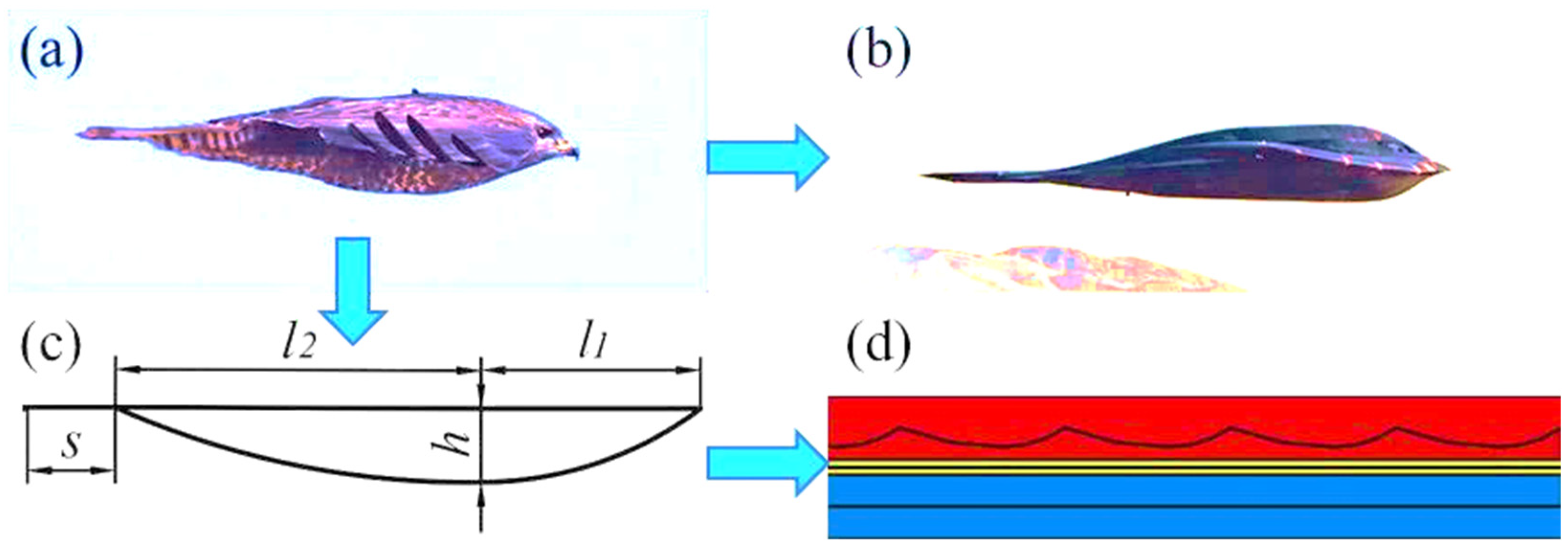
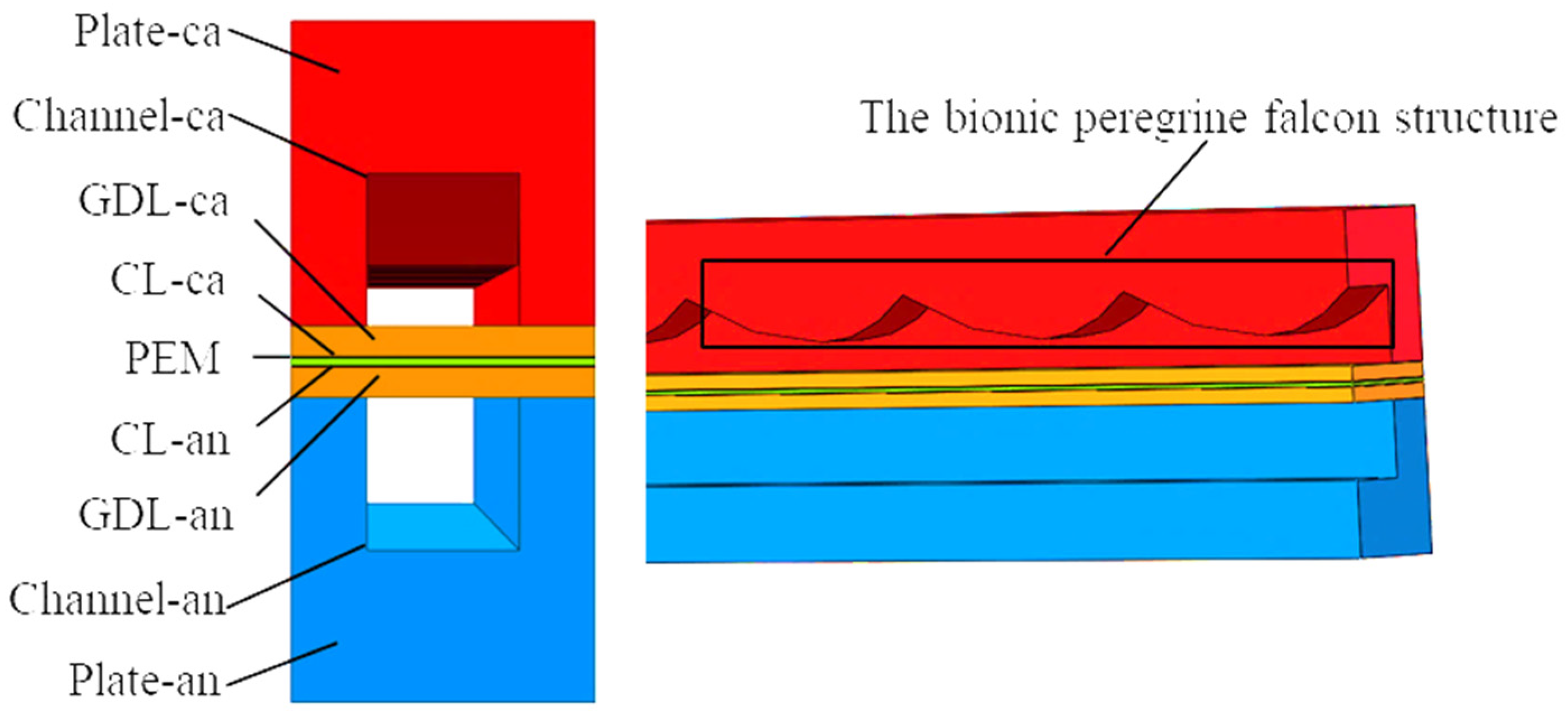
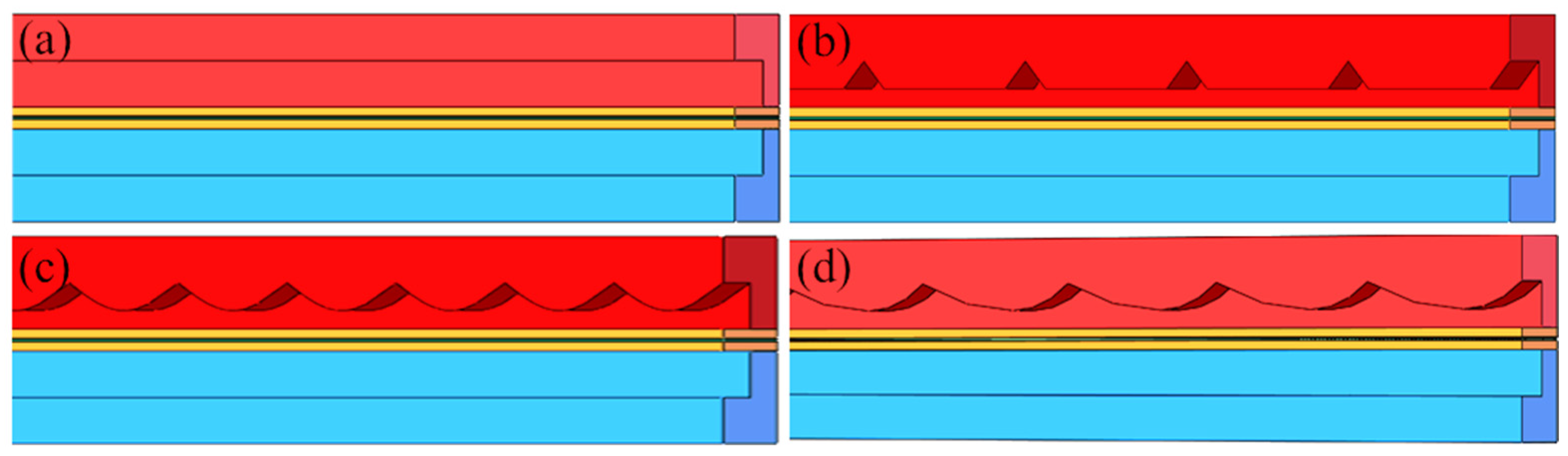
2.1. Physical Geometry
2.2. Mathematical Model
2.2.1. Model Assumptions
2.2.2. Governing Equations
2.3. Boundary Conditions
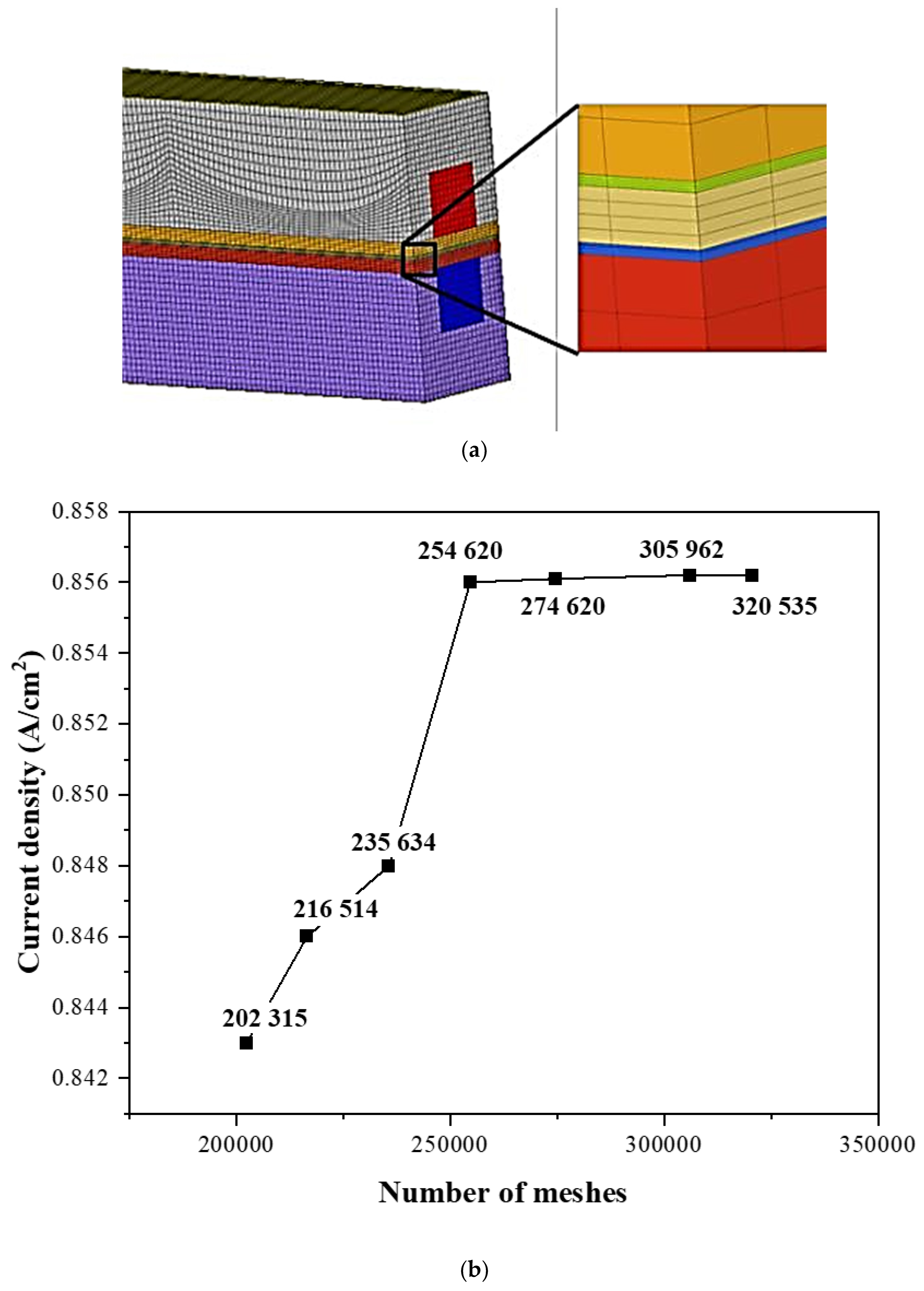
2.4. Grid Independence Verification and Model Validation
Mesh and Single-Cell Performance Assessment
3. Results and Discussions
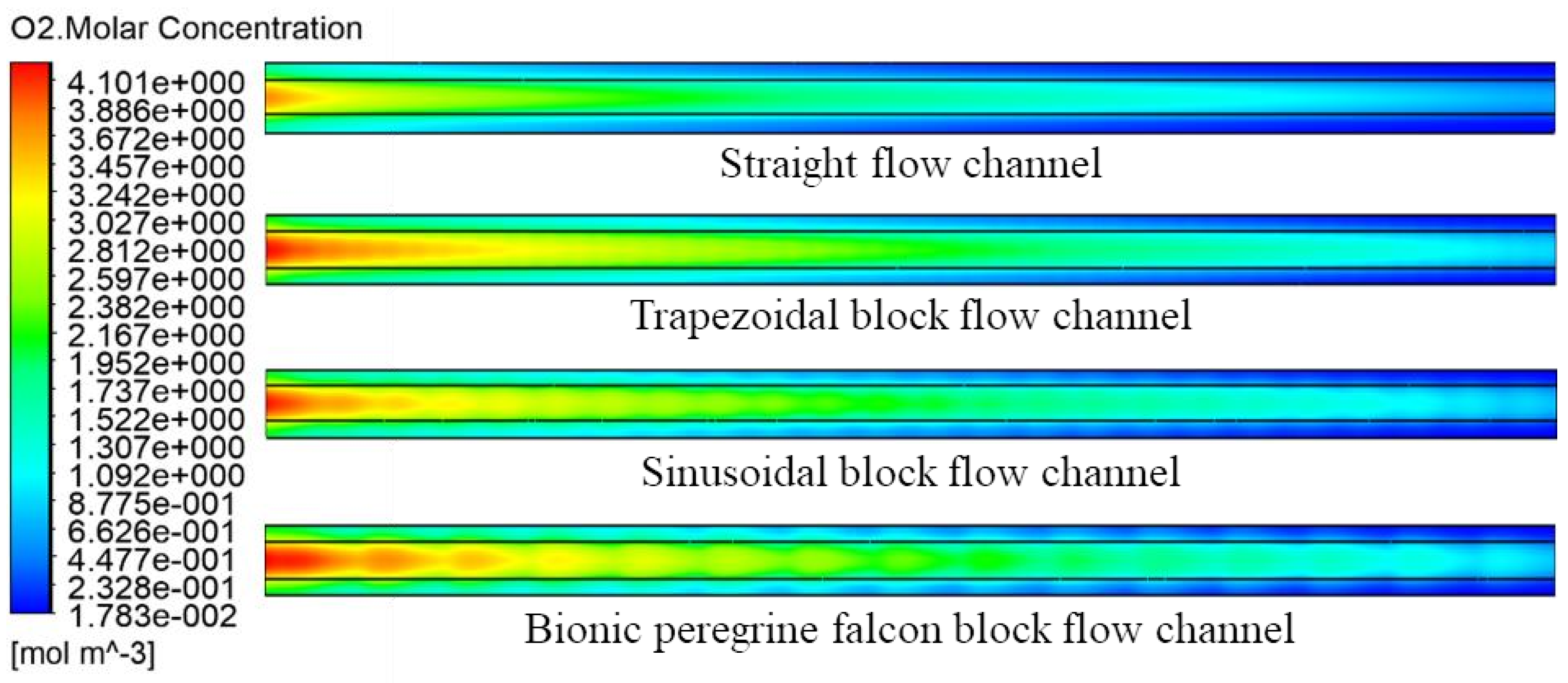
3.1. Molar Concentration Distribution of Oxygen
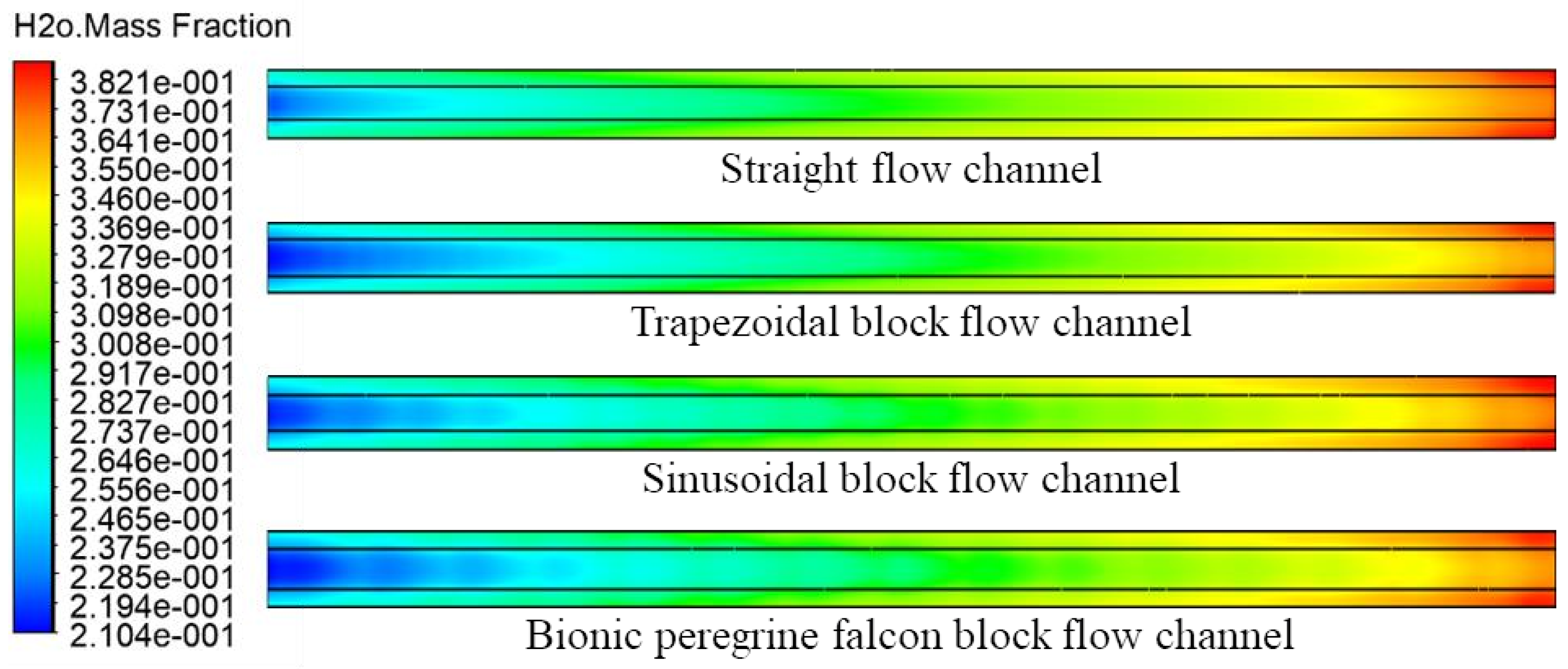
3.2. Water Mass Fraction Distribution
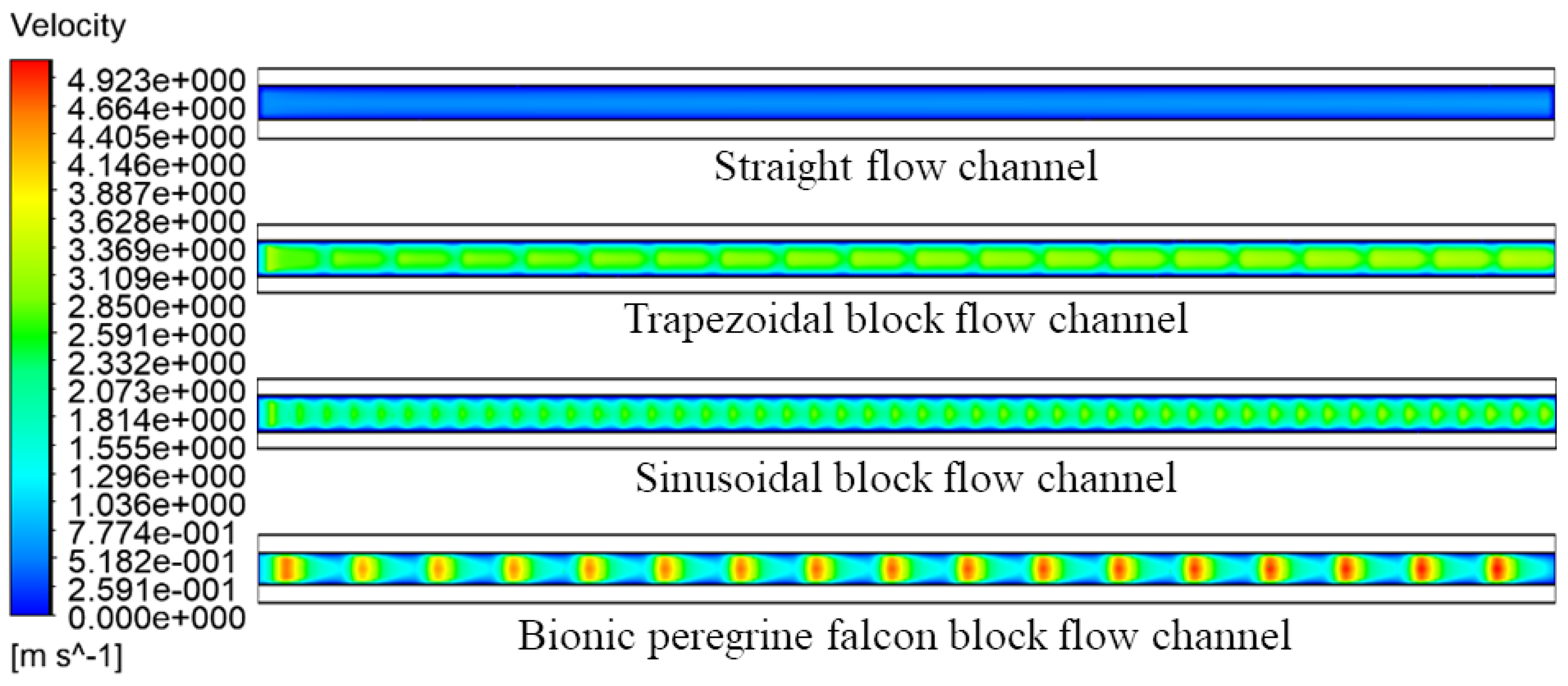
3.3. Velocity Distribution
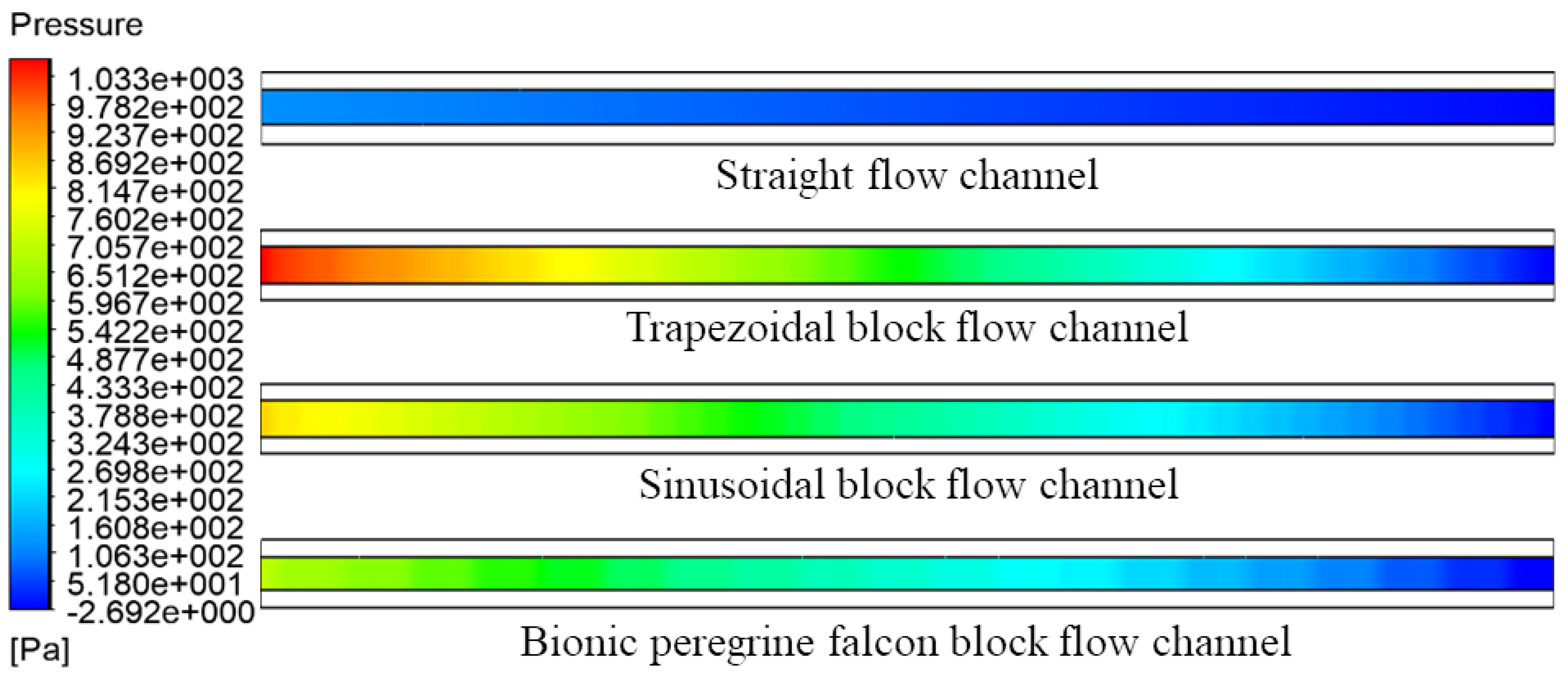
3.4. Pressure Distribution
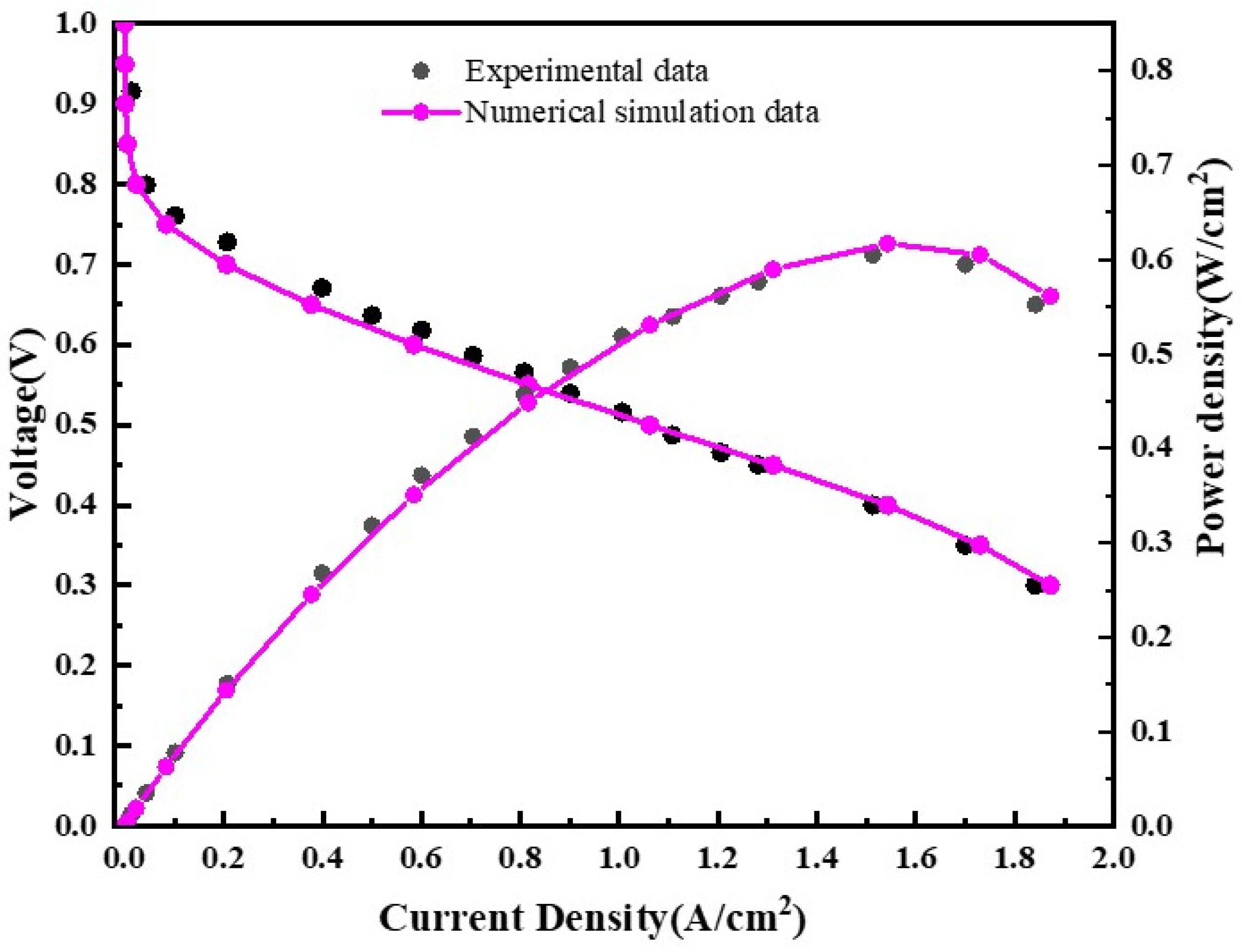
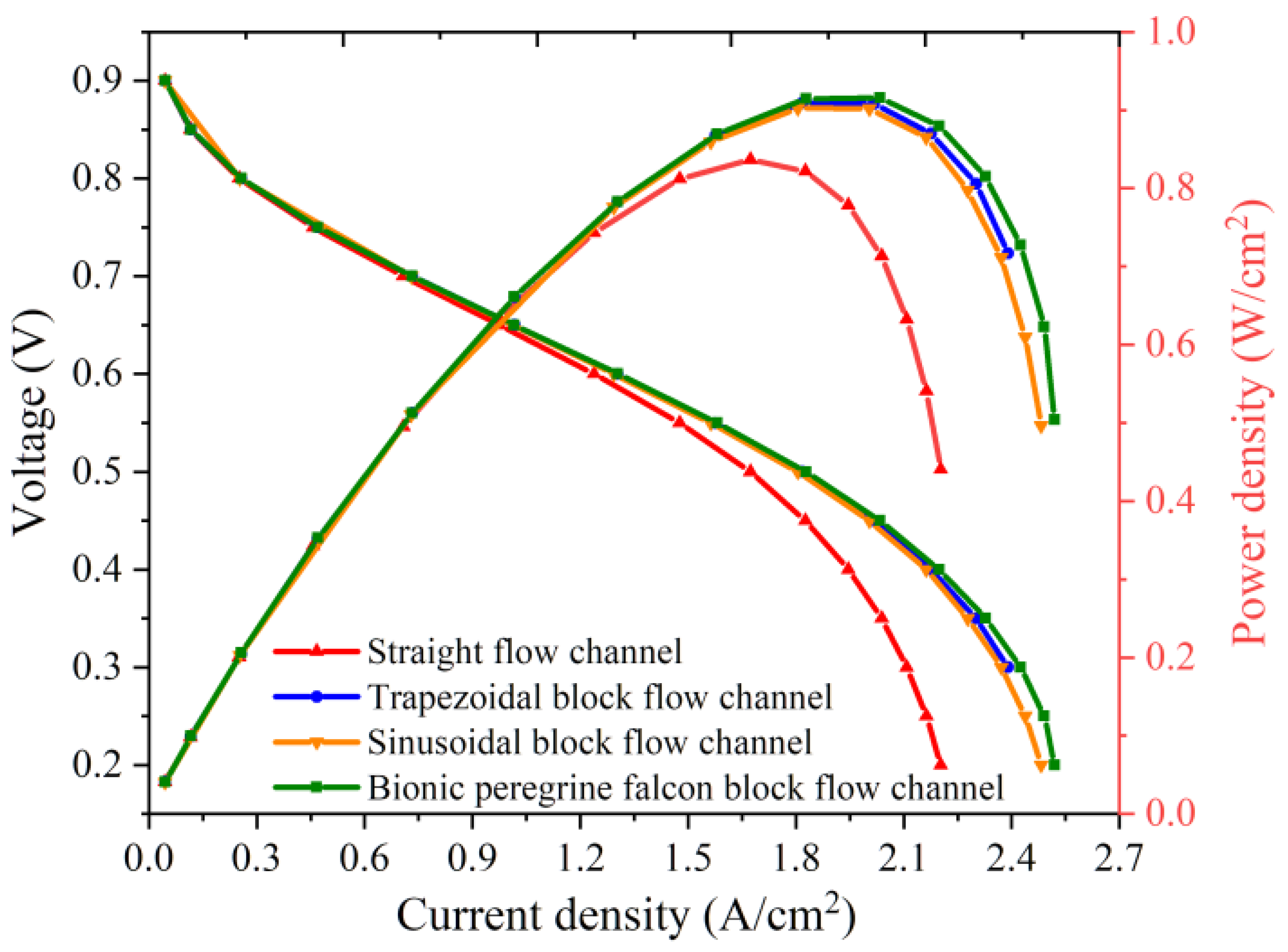
3.5. Polarization and Power Density Curves
4. Conclusions
- Compared to the conventional straight channel, the bionic flow field significantly improves oxygen distribution and flow uniformity in the cathode by promoting aerodynamic acceleration and minimizing stagnant zones.
- The falcon-inspired structure increases peak power density by 9.45% while simultaneously reducing pressure drop, demonstrating enhanced electrochemical performance with lower parasitic losses.
- Analysis of velocity streamlines and oxygen mass fraction contours shows that the bionic geometry enhances convective transport and facilitates effective water removal, particularly near the outlet region.
- The optimized flow field reduces local pressure variations, ensuring more uniform reactant delivery and mitigating concentration polarization, especially at high current densities.
- This design maintains system stability while requiring less pumping power, highlighting its practical potential for integration into low-loss, high-performance PEMFC systems.
- Overall, the proposed bionic flow field, leveraging aerodynamic optimization, provides a feasible and scalable structural strategy for next-generation PEMFC design.
Author Contributions
Funding
Data Availability Statement
Conflicts of Interest
References
- Babay, M.A.; Adar, M.; Nouri, R.; Chebak, A.; Mabrouki, M. Integrated Thermodynamic Analysis and Channel Variation Effects on Solid Oxide Electrolysis for Efficient Hydrogen Generation. Procedia Comput. Sci. 2024, 236, 152–159. [Google Scholar] [CrossRef]
- Babay, M.A.; Adar, M.; Mabrouki, M. Modeling and Simulation of a PEMFC Using Three-Dimensional Multi-Phase Computational Fluid Dynamics Model. In Proceedings of the 2021 9th International Renewable and Sustainable Energy Conference, IRSEC 2021, Tetouan, Morocco, 23–27 November 2021. [Google Scholar]
- Babay, M.A.; Adar, M.; Chebak, A.; Mabrouki, M. Dynamics of Gas Generation in Porous Electrode Alkaline Electrolysis Cells: An Investigation and Optimization Using Machine Learning. Energies 2023, 16, 5365. [Google Scholar] [CrossRef]
- Babay, M.A.; Adar, M.; Chebak, A.; Mabrouki, M. Forecasting green hydrogen production: An assessment of renewable energy systems using deep learning and statistical methods. Fuel 2025, 381, 133496. [Google Scholar] [CrossRef]
- Babay, M.A.; Adar, M.; Touairi, S.; Chebak, A.; Mabrouki, M. Numerical Simulation and Thermal Analysis of Pressurized Hydrogen Vehicle Cylinders: Impact of Geometry and Phase Change Materials. J. Adv. Res. Fluid Mech. Therm. Sci. 2024, 117, 71–90. [Google Scholar] [CrossRef]
- Chen, Y.; Enearu, O.; Montalvão, D.; Sutharssan, T. A Review of Computational Fluid Dynamics Simulations on PEFC Performance. J. Appl. Mech. Eng. 2016, 5, 1000241. [Google Scholar] [CrossRef]
- Xie, B.; Zhang, H.; Huo, W.; Wang, R.; Zhu, Y.; Lizhen, W.; Zhang, G.; Ni, M.; Jiao, K. Large-scale three-dimensional simulation of proton exchange membrane fuel cell considering detailed water transition mechanism. Appl. Energy 2023, 331, 120469. [Google Scholar] [CrossRef]
- Oumaima, B.; Youcef, K.; Amrouche, F.; Abdallah, M.; Yasmina, K. CFD investigation of the effect of flow field channel design based on constriction and enlargement configurations on PEMFC performance. Fuel 2023, 357, 129920. [Google Scholar] [CrossRef]
- Ghasabehi, M.; Ghanbari, S.; Asadi, M.R.; Shams, M.; Kanani, H. Optimization of baffle and tapering integration in the PEM fuel cell flow field employing artificial intelligence. Energy 2024, 302, 131884. [Google Scholar] [CrossRef]
- Boni, M.; Manikanta, C.; Velisala, D. Experimental evaluation of proton exchange membrane fuel cell performance with sinusoidal flow channel designs. Int. J. Hydrogen Energy 2023, 53, 1233–1241. [Google Scholar] [CrossRef]
- Liu, Z.; Yang, L.; Mao, Z.; Zhuge, W.; Zhang, Y.; Wang, L. Behavior of PEMFC in starvation. J. Power Sources 2006, 157, 166–176. [Google Scholar] [CrossRef]
- Liu, Z.; Li, Q.; Yang, S.; Zhang, H.; Chen, X.; Xie, N.; Deng, C.; Du, W. Numerical investigation of PEMFC performance based on different multistage serpentine flow field designs. Chem. Eng. J. 2024, 500, 156951. [Google Scholar] [CrossRef]
- Cai, G.; Liang, Y.; Liu, Z.; Liu, W. Design and optimization of bio-inspired wave-like channel for a PEM fuel cell applying genetic algorithm. Energy 2019, 192, 116670. [Google Scholar] [CrossRef]
- Babay, M.A.; Adar, M.; Chebak, A.; Mabrouki, M. Enhancing proton exchange membrane fuel cell efficiency: Optimal tilt angles and airflow dynamics in wedge-shaped flow channels. Fuel 2025, 397, 135447. [Google Scholar] [CrossRef]
- Babay, M.A.; Adar, M.; Chebak, A.; Mabrouki, M. Comparative sustainability analysis of serpentine flow-field and straight channel PEM fuel cell designs. Int. J. Syst. Assur. Eng. Manag. 2024, 15, 3954–3970. [Google Scholar] [CrossRef]
- Babay, M.A.; Adar, M.; Chebak, A.; Mabrouki, M. Exploring the sustainability of serpentine flow-field fuel cell, straight channel PEM fuel cells hight temperature through numerical analysis. Energy Nexus 2024, 14, 100283. [Google Scholar] [CrossRef]
- Klika, V.; Kubant, J.; Pavelka, M.; Benziger, J. Non-equilibrium thermodynamic model of water sorption in Nafion membranes. J. Memb. Sci. 2017, 540, 35–49. [Google Scholar] [CrossRef]
- Fan, L.; Zhang, G.; Jiao, K. Characteristics of PEMFC operating at high current density with low external humidification. Energy Convers. Manag. 2017, 150, 763–774. [Google Scholar] [CrossRef]
- Jiang, Y.; Yang, Z.; Jiao, K.; Du, Q. Sensitivity analysis of uncertain parameters based on an improved proton exchange membrane fuel cell analytical model. Energy Convers. Manag. 2018, 164, 639–654. [Google Scholar] [CrossRef]
- Carcadea, E.; Varlam, M.; Marinoiu, A.; Raceanu, M.; Ismail, M.S.; Ingham, D.B. Influence of catalyst structure on PEM fuel cell performance—A numerical investigation. Int. J. Hydrogen Energy 2019, 44, 12829–12841. [Google Scholar] [CrossRef]
- Berning, T.; Lu, D.M.; Djilali, N. Three-dimensional computational analysis of transport phenomena in a PEM fuel cell. J. Power Sources 2002, 106, 284–294. [Google Scholar] [CrossRef]
- Wu, H.; Berg, P.; Li, X. Non-isothermal transient modeling of water transport in PEM fuel cells. J. Power Sources 2007, 165, 232–243. [Google Scholar] [CrossRef]
- Soong, C.Y.; Yan, W.M.; Tseng, C.Y.; Liu, H.C.; Chen, F.; Chu, H.S. Analysis of reactant gas transport in a PEM fuel cell with partially blocked fuel flow channels. J. Power Sources 2005, 143, 36–47. [Google Scholar] [CrossRef]
- Liu, H.-C.; Yan, W.-M.; Soong, C.; Chen, F. Effects of baffle-blocked flow channel on reactant transport and cell performance of a proton exchange membrane fuel cell. J. Power Sources 2005, 142, 125–133. [Google Scholar] [CrossRef]
- Dong, P.; Xie, G.; Ni, M. The mass transfer characteristics and energy improvement with various partially blocked flow channels in a PEM fuel cell. Energy 2020, 206, 117977. [Google Scholar] [CrossRef]
- Ghanbarian, A.; Kermani, M.J. Enhancement of PEM fuel cell performance by flow channel indentation. Energy Convers. Manag. 2016, 110, 356–366. [Google Scholar] [CrossRef]
- Heo, S.; Choi, J.; Park, Y.; Vaz, N.; Ju, H. Reliability-Based Design Optimization of the PEMFC Flow Field with Consideration of Statistical Uncertainty of Design Variables. Energies 2024, 17, 1882. [Google Scholar] [CrossRef]
- He, L.; Hou, M.; Gao, Y.; Fang, D.; Wang, P.; Lv, B.; Shao, Z. A novel three-dimensional flow field design and experimental research for proton exchange membrane fuel cells. Energy Convers. Manag. 2020, 205, 112335. [Google Scholar] [CrossRef]
- Fan, L.; Niu, Z.; Zhang, G.; Jiao, K. Optimization design of the cathode flow channel for proton exchange membrane fuel cells. Energy Convers. Manag. 2018, 171, 1813–1821. [Google Scholar] [CrossRef]
- Perng, S.-W.; Wu, H.-W.; Chen, Y.-B.; Zeng, Y.-K. Performance enhancement of a high temperature proton exchange membrane fuel cell by bottomed-baffles in bipolar-plate channels. Appl. Energy 2019, 255, 113815. [Google Scholar] [CrossRef]
- Heidary, H.; Kermani, M.J.; Prasad, A.; Advani, S.; Dabir, B. Numerical modelling of in-line and staggered blockages in parallel flowfield channels of PEM fuel cells. Int. J. Hydrogen Energy 2016, 42, 2265–2277. [Google Scholar] [CrossRef]
- Xia, L.; Yu, Z.; Xu, G.; Ji, S.; Sun, B. Design and optimization of a novel composite bionic flow field structure using three-dimensional multiphase computational fluid dynamic method for proton exchange membrane fuel cell. Energy Convers. Manag. 2021, 247, 114707. [Google Scholar] [CrossRef]
- Bao, Z.; Niu, Z.; Jiao, K. Analysis of single- and two-phase flow characteristics of 3-D fine mesh flow field of proton exchange membrane fuel cells. J. Power Sources 2019, 438, 226995. [Google Scholar] [CrossRef]
- Dhahad, H. Experimental study of the effect of flow field design to PEM fuel cells performance. Renew. Energy Focus 2019, 30, 71–77. [Google Scholar] [CrossRef]
- Vemuloori, V.; Naga Srinivasulu, G.; Rao, K. Investigation of CO2 bubble behavior and performance in air-breathing direct methanol fuel cells with spiral-patterned anode flow field. Therm. Sci. Eng. Prog. 2025, 59, 103346. [Google Scholar] [CrossRef]
- Ahmadi, N.; Rezazadeh, S.; Mirzaee, I.; Pourmahmoud, N. Three-dimensional computational fluid dynamic analysis of the conventional PEM fuel cell and investigation of prominent gas diffusion layers effect. J. Mech. Sci. Technol. 2012, 26, 2247–2257. [Google Scholar] [CrossRef]
- Amanifard, N.; Moayedi, H. Computational analysis of fuel saving by using porous-end configuration for a PEM fuel cell. Int. J. Hydrogen Energy 2022, 47, 8549–8564. [Google Scholar] [CrossRef]
- Cai, Y.; Yue, S.; Wei, F.; Hu, J.; Chen, B. Research on performance of proton exchange membrane fuel cell with an innovative flow field. Case Stud. Therm. Eng. 2023, 50, 103418. [Google Scholar] [CrossRef]
- Gu, H.; Peng, C.; Qian, Z.; Lv, S.; Feng, J.; Luo, K.; Zhan, M.; Xu, P.; Xu, X. Design and optimization of gas channel with groove baffles for PEMFC using genetic algorithm. Int. J. Heat Mass Transf. 2024, 227, 125543. [Google Scholar] [CrossRef]
- Jang, J.-H.; Yan, W.-M.; Li, H.-Y.; Chou, Y.-C. Humidity of reactant fuel on the cell performance of PEM fuel cell with baffle-blocked flow field designs. J. Power Sources 2006, 159, 468–477. [Google Scholar] [CrossRef]
- Bashiri, S.; Amanifard, N.; Moayedi, H. Performance improvement and fuel saving by using obstacle in cathode channel of a porous-end PEMFC: A CFD simulation study. Therm. Sci. Eng. Prog. 2025, 62, 103684. [Google Scholar] [CrossRef]
- Wang, N.; Cheng, Y.; Fan, X.; Ding, R.; Zhou, H.; Xin, C.; Shi, R. Progressive topology-curvature optimization of flow channel for PEMFC and performance assessment. Front. Energy 2025, 19, 395–412. [Google Scholar] [CrossRef]
- Dong, F.; Sheng, T.; Ni, J.; Xu, S. Pore-scale heat transfer and flow characteristics of metal foam cooling flow field with three-dimensional ordered arrangement in PEMFC. Int. J. Hydrogen Energy 2025, 126, 133–146. [Google Scholar] [CrossRef]
- Xiao, L.; Bian, M.; Sun, Y.; Yuan, J.; Wen, X. Transport properties evaluation of pore-scale GDLs for PEMFC using orthogonal design method. Appl. Energy 2024, 357, 122445. [Google Scholar] [CrossRef]
- Karthikeyan, P.; Kumar, M.; Shanmugam, S.; Kumar, P.; Murali, S.; Senthil Kumar, A.P. Optimization of Operating and Design Parameters on Proton Exchange Membrane Fuel Cell by using Taguchi method. Procedia Eng. 2013, 64, 409–418. [Google Scholar] [CrossRef]
- Shixiang, X.; Lin, R.; Cui, X.; Shan, J. The application of orthogonal test method in the parameters optimization of PEMFC under steady working condition. Int. J. Hydrogen Energy 2016, 41, 11390. [Google Scholar] [CrossRef]
- Abdollahzadeh, M.; Ribeirinha, P.; Boaventura, M.; Mendes, A. Three-dimensional modeling of PEMFC with contaminated anode fuel. Energy 2018, 152, 939–959. [Google Scholar] [CrossRef]
- Barati, S.; Ghazi, M.M.; Khoshandam, B. Study of effective parameters for the polarization characterization of PEMFCs sensitivity analysis and numerical simulation. Korean J. Chem. Eng. 2019, 36, 146–156. [Google Scholar] [CrossRef]



| Parameters | Value |
|---|---|
| Proton exchange membrane thickness | 0.025 mm |
| Catalyst layer thickness | 0.01 mm |
| Gas diffusion layer thickness | 0.2 mm |
| Number of unit structures imitating peregrine falcon | 20 |
| Structural height of mock peregrine falcon unit | 0.6 mm |
| Unit structural length of imitation peregrine falcon | 4.8 mm |
| Flow channel width and height | 1 mm |
| The length of each component | 96 mm |
| Plate width, height | 2 mm |
| Number of horizontal cells | 0.5 |
| Equation | Scope | Formulation | |
|---|---|---|---|
| Mass conservation | O2/H2/gaseous H2O transport in GCs/GDLs/CLs | (1) | |
| Momentum conservation | H2/O2 mixture flow in GCs/GDLs/CLs | (2) | |
| Gas species | H2/O2 mixture mass transfer in GCs/GDLs/CLs | (3) | |
| Liquid water | Liquid H2O transport in GDLs/CLs | (4) | |
| Membrane water | H2O transport in CLs/PEM | (5) | |
| Energy conservation | Heat transfer in all zones | (6) | |
| Charge conservation | Proton/electron transport in CLs/GDLs | (7) | |
| (8) | |||
| Source | Formulation | Unit | |
|---|---|---|---|
| Mass conservation | |||
| Gas species | |||
| Liquid water | |||
| Energy conservation | |||
| Charge conservation | |||
| Membrane water | |||
| Parameter | Relation | |
|---|---|---|
| Effective porosity | (9) | |
| Relative permeability of gas phase (m2) | (10) | |
| Dynamic viscosity of gas mixture (Pa·s) | (11) | |
| Mole fraction | (12) | |
| Effective gas mixture diffusion coefficient (m2/s) | (13) | |
| Binary diffusion coefficient of oxygen | (14) | |
| Binary diffusion coefficient of hydrogen | (15) | |
| Liquid water velocity (m/s) | (16) | |
| Dynamic viscosity of liquid water (Pas) | (17) | |
| Relative permeability of liquid phase (m2) | (18) | |
| Capillary pressure (Pa) | (19) | |
| Capillary diffusion coefficient | (20) | |
| Saturation vapor pressure (Pa) | (21) | |
| Effective membrane water diffusion coefficient | (22) | |
| Membrane water concentration (mol/m3) | (23) | |
| Water content | (24) | |
| Water activity | ||
| Anode/cathode electrochemical reaction rate (A/cm2) | (25) | |
| (26) | ||
| Equilibrium potential (V) | (27) | |
| Parameters | Symbol | Unit | Value |
|---|---|---|---|
| Contact angle (GDL, CL) | ° | 120, 95 | |
| Dry film density | kg/m3 | 1900 | |
| Electrolyte volume fraction (CL, PEM) | - | 0.4, 1 | |
| Equivalent weight of film | kg/mol | 1100 | |
| Inlet mole fraction (H2/H2O/O2/N2) | - | 0.697/0.303/0.146/0.55 | |
| Inlet temperature | K | 343 | |
| Operating pressure | atm | Anode:1.0, Cathode:1.0 | |
| Operating temperature | K | 343 K | |
| Permeability (GDL, CL, PEM) | m2 | 1 × 10⁻¹², 1 × 10⁻¹³, 1 × 10⁻¹⁸ | |
| Porosity (GDL, CL) | - | 0.6, 0.3 | |
| Reference volumetric current density | A/m3 | Anode: 3000, Cathode: 0.012 | |
| Relative humidity of gas | - | Anode: 1.0, Cathode:1.0 | |
| Solid conductivity (GDL, CL) | S/m | 2500 | |
| Stoichiometric ratio | - | Anode: 1.2, Cathode:2.0 | |
| Thermal conductivity (GDL, CL, PEM) | W/(mK) | 1.6, 0.8, 0.45 | |
| Transfer coefficient | - |
Disclaimer/Publisher’s Note: The statements, opinions and data contained in all publications are solely those of the individual author(s) and contributor(s) and not of MDPI and/or the editor(s). MDPI and/or the editor(s) disclaim responsibility for any injury to people or property resulting from any ideas, methods, instructions or products referred to in the content. |
© 2025 by the authors. Licensee MDPI, Basel, Switzerland. This article is an open access article distributed under the terms and conditions of the Creative Commons Attribution (CC BY) license (https://creativecommons.org/licenses/by/4.0/).
Share and Cite
Babay, M.-A.; Adar, M.; El Messoussi, M.E.; Chebak, A.; Mabrouki, M. RETRACTED: Bio-Aerodynamic Flow Field Optimization in PEM Fuel Cells: A Peregrine Falcon-Inspired Flow Field Approach. Hydrogen 2025, 6, 102. https://doi.org/10.3390/hydrogen6040102
Babay M-A, Adar M, El Messoussi ME, Chebak A, Mabrouki M. RETRACTED: Bio-Aerodynamic Flow Field Optimization in PEM Fuel Cells: A Peregrine Falcon-Inspired Flow Field Approach. Hydrogen. 2025; 6(4):102. https://doi.org/10.3390/hydrogen6040102
Chicago/Turabian StyleBabay, Mohamed-Amine, Mustapha Adar, Mohamed Essam El Messoussi, Ahmed Chebak, and Mustapha Mabrouki. 2025. "RETRACTED: Bio-Aerodynamic Flow Field Optimization in PEM Fuel Cells: A Peregrine Falcon-Inspired Flow Field Approach" Hydrogen 6, no. 4: 102. https://doi.org/10.3390/hydrogen6040102
APA StyleBabay, M.-A., Adar, M., El Messoussi, M. E., Chebak, A., & Mabrouki, M. (2025). RETRACTED: Bio-Aerodynamic Flow Field Optimization in PEM Fuel Cells: A Peregrine Falcon-Inspired Flow Field Approach. Hydrogen, 6(4), 102. https://doi.org/10.3390/hydrogen6040102