
Article

Fecal Microbiota of the Bobcat (Lynx rufus) in a Temperate Forest of Central Mexico

by
Leslie M. Montes-Carreto
1,
Jimena Herandi Espinal-Cárdenas
1,2,
Hanya D. Arellano-Hernández
3,
José Antonio Guerrero
2,* and
Esperanza Martinez-Romero
1,*
1
Laboratorio de Ecología Genómica, Centro de Ciencias Genómicas, Universidad Nacional Autónoma de México, Cuernavaca 62210, Morelos, Mexico
2
Laboratorio de Monitoreo y Conservación de Fauna, Facultad de Ciencias Biológicas, Universidad Autónoma del Estado de Morelos, Cuernavaca 62209, Morelos, Mexico
3
Escuela Superior de Ciencias Experimentales y Tecnología, Universidad Rey Juan Carlos, 28933 Móstoles, Madrid, Spain
*
Authors to whom correspondence should be addressed.
Ecologies 2026, 7(3), 68; https://doi.org/10.3390/ecologies7030068
Submission received: 29 April 2026 / Revised: 12 July 2026 / Accepted: 13 July 2026 / Published: 15 July 2026

Abstract

Carnivores harbor gut microbial communities adapted to protein and fat-rich diets. These microbial communities play an important role in amino acid degradation and bile acid metabolism. The bobcat (Lynx rufus) spans diverse North America habitats, yet its gut microbiota across regions remains under characterized. Here, we characterized the fecal microbiota of bobcats from a high-elevation temperate forest in central Mexico (Chichinautzin Biological Corridor) using 16S rRNA gene amplicon sequencing (V3–V4 region). Comparisons with previously published studies were used only to place our findings in the context of the available literature. In total, 632 amplicon sequence variants (ASVs) were recovered from 10 samples. A total of 35 bacterial families and 58 genera were identified. The most abundant genera included Clostridium, Fusobacterium, Bacteroides, and Phocaeicola. Several samples were dominated by genera such as Pseudomonas, Blautia, Ammoniphilus, Alloprevotella, and Hafnia, indicating marked among-sample variability. Functional prediction suggested that pathways related to ABC transporters, purine and pyrimidine metabolism, ribosomal functions, two-component systems, amino acid metabolism, and central carbon metabolism were among the most represented inferred functional categories. These predictions should be regarded as exploratory and hypothesis-generating, providing an overview of the potential metabolic capabilities of the fecal microbiota inferred from 16S rRNA gene data.

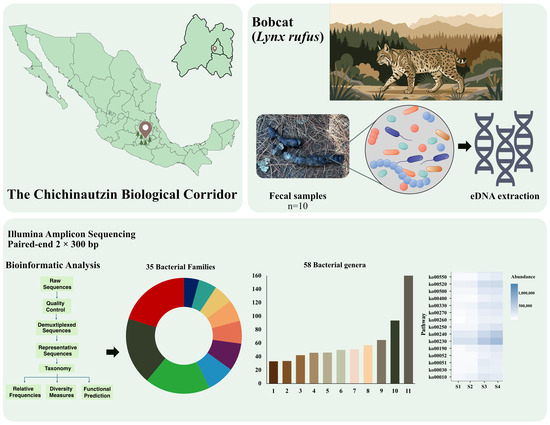
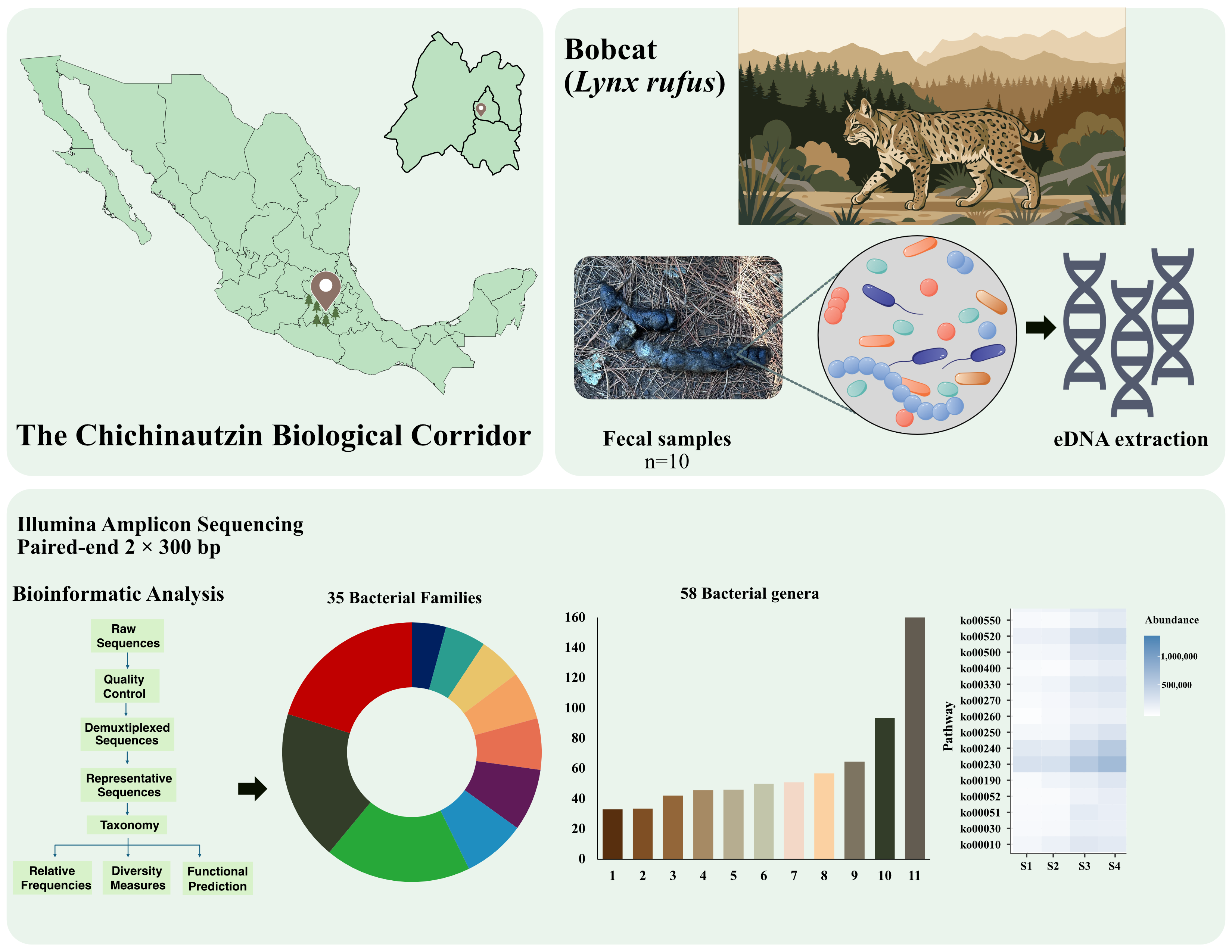
Graphical Abstract

1. Introduction

The microbiota comprises a diverse assemblage of microorganisms, including commensal bacteria that may actively interact with the host immune system [1], beneficial taxa that perform essential functions for host health such as vitamin production and short-chain fatty acid synthesis [2] and opportunistic microorganisms that may contribute to disease development under certain conditions [3]. The microbiota plays a fundamental role in host health by influencing digestion, metabolism, immune function, disease resistance, and reproductive success [4,5,6].
Consequently, microbiome study has become increasingly important for wildlife health and conservation [7,8]. Previous studies in mammals suggest that gut microbiota composition may vary according to diet, prey availability, and host-related factors [9,10,11,12,13], although the relative contribution of these factors remains poorly understood. Carnivores, including felids, harbor distinct microbiomes characterized by microbial communities adapted to high-protein diets [14].
Studies on the gut microbiota of wild felids have focused on large species [15,16,17]. These studies suggest the presence of a recurrent microbial community dominated by the phyla Firmicutes (Bacillota), Fusobacteria (Fusobacteriota), Actinobacteria (Actinomycetota), Proteobacteria (Pseudomonadota), and Bacteroidetes (Bacteroidota) although microbiota composition varies according to host diet and geographic location. For example, a study on Bengal tigers (Panthera tigris tigris) showed that individuals from different protected areas exhibited distinct microbiota compositions and functional profiles [18]. Large felids harbour gut microbiomes dominated by Firmicutes (Clostridium), Bacteroidetes (Bacterioides), Fusobacteria (Fusobacterium) and Proteobacteria (Pseudomonas, Enterobacteriaceae family) [17,19].
The bobcat (Lynx rufus) is a medium-sized felid widely distributed across North America, occupying a broad range of habitats including forests, grasslands, and urban edges [20]. As an obligate carnivore, its diet consists primarily of lagomorphs, rodents, and birds, with occasional consumption of reptiles and insects, although dietary composition has been reported to vary among regions [21,22,23]. However, few studies have comprehensively characterized the gut microbiota of L. rufus. A comparative study of bobcats (wild and in captivity) and domestic cats in the central United States found that L. rufus harbors a gut microbiota dominated by Firmicutes, Proteobacteria, Actinobacteria, Bacteroidetes, and Verrucomicrobia [24]. Bobcats exhibited higher proportions of Proteobacteria and Actinobacteria than domestic cats [24]. Another study conducted in the Mapimi Biosphere Reserve, Mexico, reported that bobcat microbiota was dominated by Fusobacteria, Firmicutes, Actinobacteria, and Proteobacteria [25].
The objective of this study was to characterize the fecal microbiota of Lynx rufus inhabiting a temperate forest in central Mexico, aiming to provide a better understanding of the microbial communities present in this species and the predicted functional profile within this specific ecological context.

2. Materials and Methods

2.1. Study Site

Fecal samples were collected in the surroundings of Cerro San Ignacio, in the locality of Parres, Mexico City, located in the central–northern zone of Fraction I of the Chichinautzin Biological Corridor Flora and Fauna Protection Area (Figure 1). The vegetation associations present in the area include pine–oak forest, pine forest, and subalpine grasslands. Elevation ranges from 2900 to 3100 m above sea level, and the climate is temperate semi-cold, with a mean annual temperature between 5 and 12 °C.

2.2. Collection and Identification of Fecal Samples

The search for lynx fecal samples was conducted on 8 March and 22 March 2023, through random walks along roads and trails within the study area, as lynxes typically defecate in these locations [26]. Surveys were carried out between 07:00 and 09:00 h to minimize environmental exposure prior to sample collection. To reduce the likelihood of repeated sampling from the same animal, each fecal sample was collected at a minimum distance of 1 km from the nearest sample. Bobcats in fragmented habitats have average home ranges of 1.5 km2 that may overlap [27]. In addition, a minimum distance of 1.2 km between fecal samples has been recommended for genetic studies to reduce the likelihood of sampling the same individual [28].
Fresh fecal samples were identified in the field by an experienced felid specialist based on morphological characteristics including shape, texture, size, color, and odor, as well as the presence of associated tracks [29]. The host species identity was not confirmed by genetic analysis. Therefore, although all samples were classified as bobcat (Lynx rufus) feces according to established field identification criteria, misidentification of the species cannot be completely ruled out. A total of 10 samples were collected and stored individually in sterile 50 mL tubes. Nitrile gloves sanitized with 70% ethanol were used and changed after handling each sample. Samples were transported to the laboratory in a cooler.

2.3. Extracting DNA from Stool Samples

Prior to DNA extraction, fresh fecal pellets were gently rinsed with sterile distilled water to remove adhering soil particles and other potential surface contaminants. A total of 230 mg from the internal portion of each sample was used for DNA extraction. DNA was extracted using the Wizard Genomic DNA Purification Kit (Promega, Madison, WI, USA) following the manufacturer’s protocol. The extracted DNA was further purified using the High Pure PCR Template Preparation Kit (Roche, Mannheim, Germany). DNA concentration was quantified using a NanoDrop spectrophotometer (Thermo Fisher Scientific, Wilmington, DE, USA) and DNA quality was assessed by electrophoresis on a 1.2% agarose gel stained with ethidium bromide.

2.4. Sequencing

The V3–V4 hypervariable regions of the 16S rRNA gene were amplified for each sample using the following specific primers: 341F (5′-AGGCAGAACCTACGGGIGGCWGCAG-3′) and 805R (5′-GACTACHVGGGTATCTAATCC-3′) [30]. PCR reactions (25 µL) contained 1 µL of DNA template, 12.5 µL of DreamTaq PCR Master Mix (2×) (Thermo Scientific, Waltham, MA, USA), 9 µL of nuclease-free water, 0.25 µL of bovine serum albumin (BSA), 1.25 µL of dimethyl sulfoxide (DMSO) (Sigma-Aldrich, St. Louis, MO, USA), and 0.5 µL of each primer. Amplification was performed under the following conditions: initial denaturation at 94 °C for 5 min; 30 cycles of denaturation at 94 °C for 60 s, annealing at 53 °C for 60 s, and extension at 72 °C for 60 s; followed by a final extension at 72 °C for 10 min. Amplified products were sequenced by Macrogen Inc. (Seoul, Republic of Korea) using the Illumina MiSeq platform (Illumina Inc., San Diego, CA, USA) with paired-end reads (2 × 300 bp).

2.5. Bioinformatic Analysis

Raw reads were assessed for quality using FastQC v0.12.0. Quality filtering, adapter trimming, and sequence cleaning were performed using fastp v0.23.4 [31], applying a quality score threshold of Q ≥ 28. Amplicon sequence variants (ASVs) were generated using DADA2 [32] implemented in QIIME2-2023.9 [33]. Taxonomic assignment of ASVs was performed using the feature-classifier plugin with the classify-sklearn method [33,34], employing full-length Greengenes2-2022.10 sequences [35] as the reference database.
Relative abundance of bacterial taxa was calculated by dividing the total number of sequences for each family and genus by the total number of sequences at each taxonomic level, in order to identify the most abundant taxa in the gut microbiota of Lynx rufus [12,13,36].

2.6. Alfa Diversity Analysis

Bacterial richness and taxonomic diversity at the genus level were estimated using Hill numbers (qD) [37], where q = 0 corresponds to species richness, q = 1 to the exponential of Shannon entropy (effective number of common taxa), and q = 2 to the inverse Simpson index (effective number of dominant taxa) [38]. Diversity estimates and 95% confidence intervals were calculated using the iNEXT package [39] in R software v4.5.2 [40], with the maximum number of sequences among samples (100,786 sequences) used as the endpoint and 1000 bootstrap replicates to construct rarefaction curves.

2.7. Functional Profile Prediction Approach

To assess the functional potential of the fecal microbiota of Lynx rufus, functional prediction analyses were performed using PICRUSt2 v2.4.2 [41] based on the V3–V4 regions of the 16S rRNA gene obtained from all samples. Predicted gene abundances were assigned to metabolic pathways using the Kyoto Encyclopedia of Genes and Genomes (KEGG) database, and pathway abundances were summarized to identify the most represented functional categories across samples. Because these functional profiles were inferred from 16S rRNA gene data rather than metagenomic sequencing, they should be considered predictive estimates of functional potential rather than direct measurements of microbial functions.

3. Results

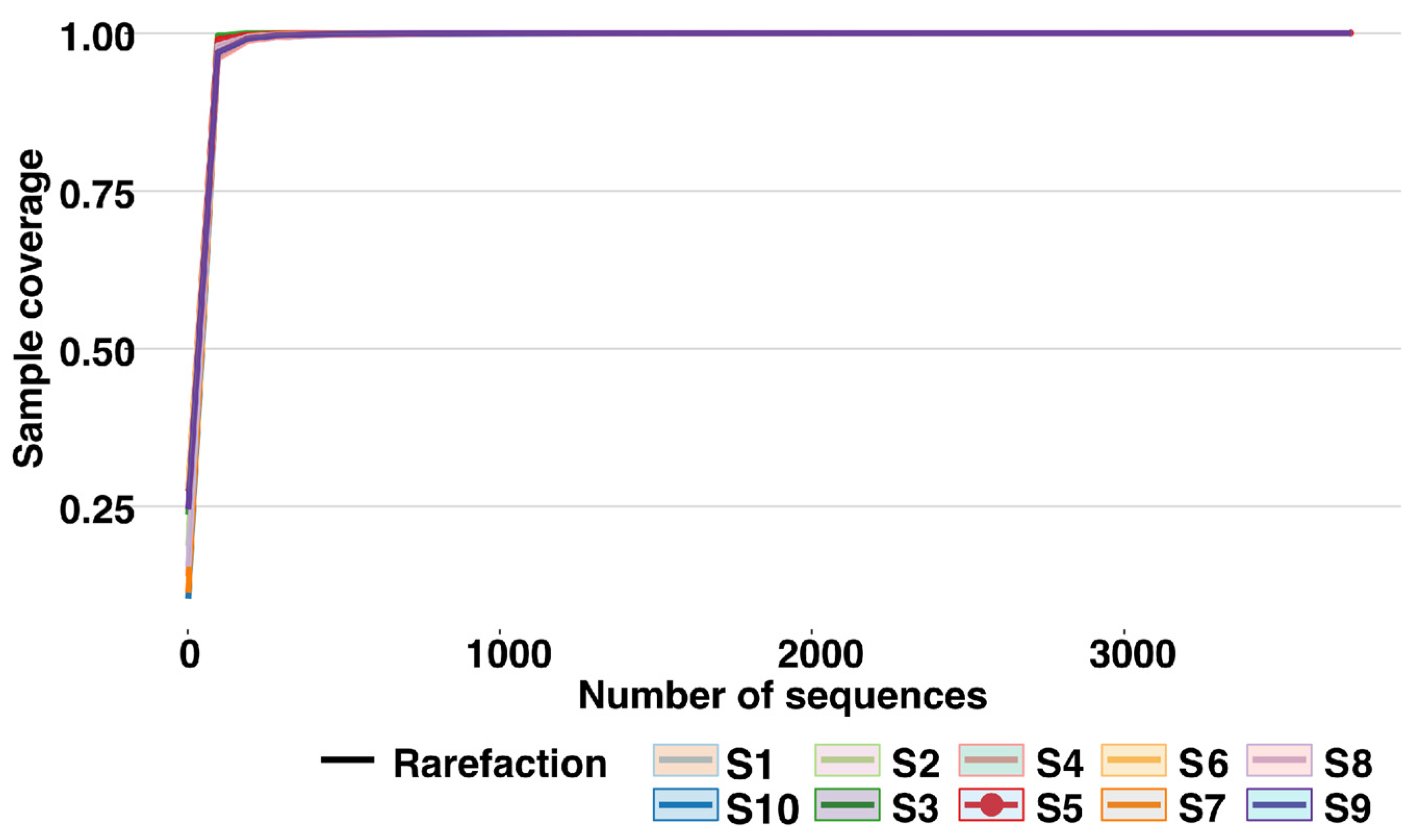
From the 10 fecal samples analyzed, a total of 1,877,590 raw sequences were obtained. After quality filtering, 1,791,082 sequences remained, from which 632 amplicon sequence variants (ASVs) were recovered. To ensure that observed richness and diversity were representative across all samples, coverage analyses were performed. Sampling effort reached a value of 1 for all samples, indicating complete coverage (Figure 2).

3.1. Fecal Microbiota of Lynx rufus

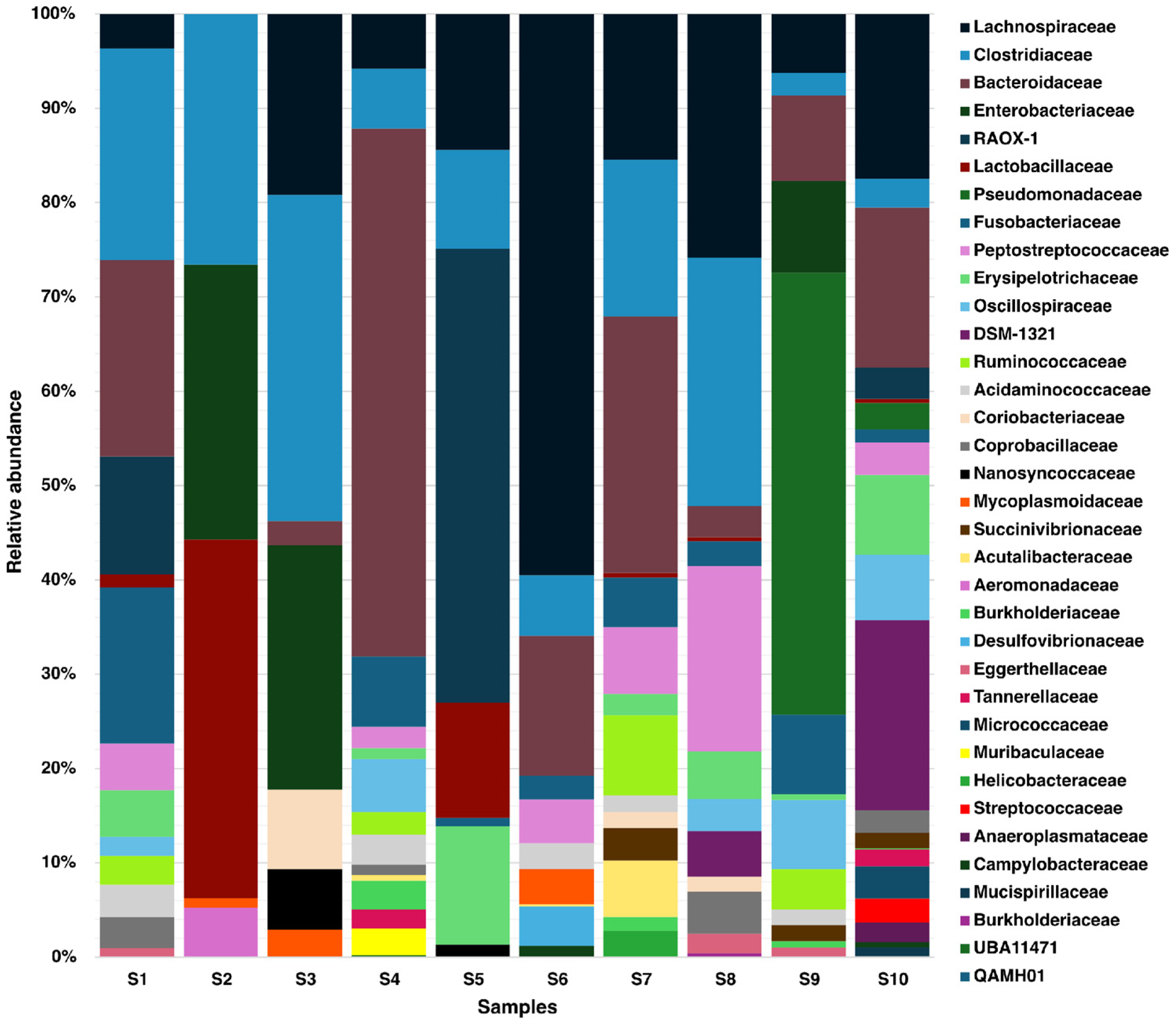
A total of 35 bacterial families were detected. Several families were dominant and present in most samples, including Lachnospiraceae (59–3%), Clostridiaceae (26–3%), Bacteroidaceae (27–2.5%), Enterobacteriaceae (29–9%), RAOX-1 (48–3%), Lactobacillaceae (38–1%), Pseudomonadaceae (47–3%) and Fusobacteriaceae (16–1%). The least abundant families (≤5% relative abundance) included QAMH01, UBA11471, Burkholderiaceae, Mucispirillaceae, Campylobacteraceae, Anaeroplasmataceae, Streptococcaceae, Helicobacteraceae, Muribaculaceae, Micrococcaceae, Tannerellaceae, Eggerthellaceae and Desulfovibrionaceae (Figure 3).
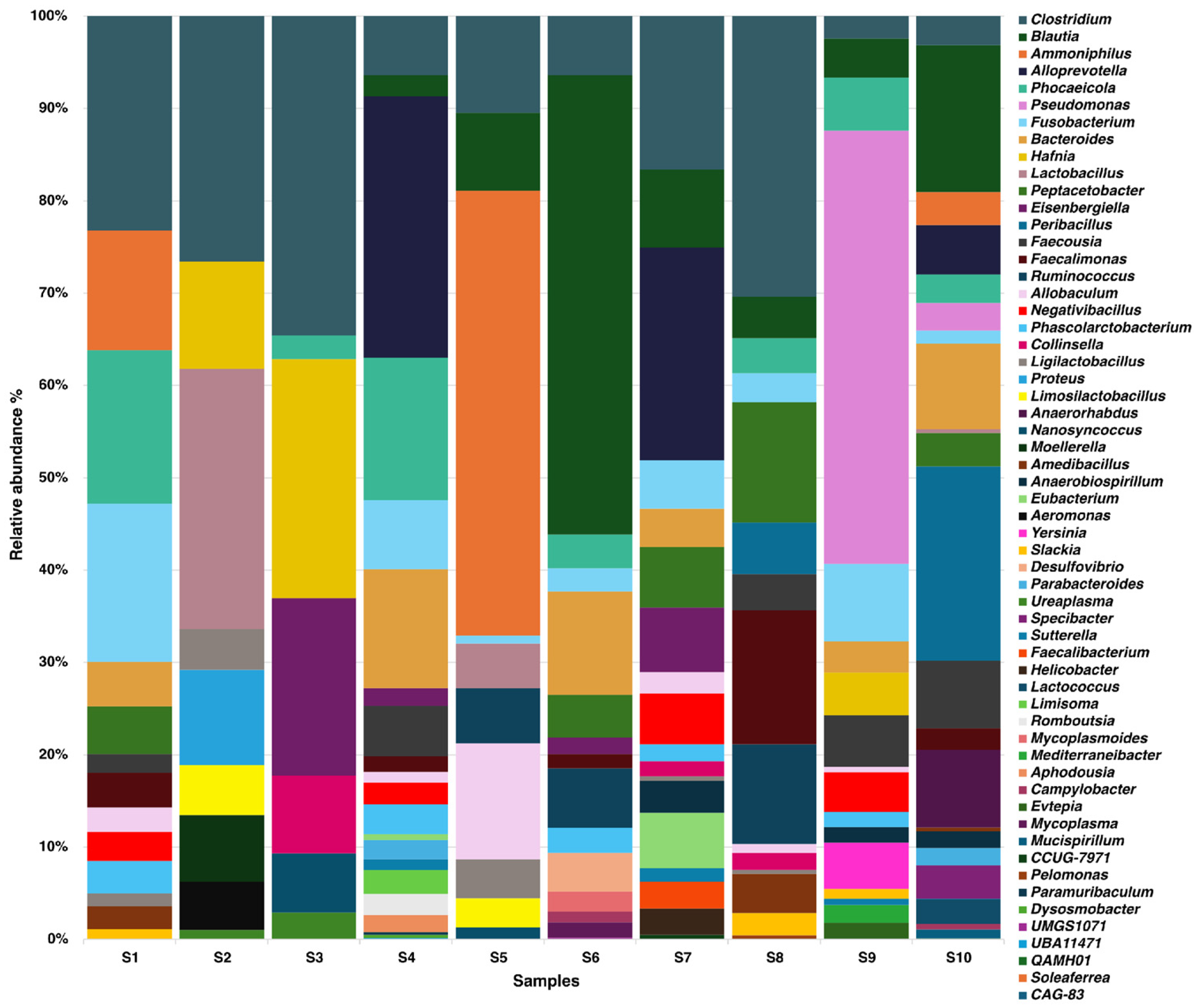
A total of 58 bacterial genera were identified, with high variability in composition among samples. Clostridium, Blautia, Ammoniphilus, Alloprevotella, Phocaeicola, Pseudomonas, Fusobacterium and Bacteroides were present in most samples and in a high proportion of relative abundance. However, several samples were dominated by specific genera, such as Pseudomonas in S9 (46.93%), Blautia in S6 (49.73%), Ammoniphilus in S5 (48.15%), Alloprevotella in S4 (28.36%), and Hafnia in S3 (25.92%) (Figure 4). On the other hand, UMGS1071, UBA11471, QAMH0, Soleaferrea and CAG-83 were less abundant.

3.2. Alfa Diversity

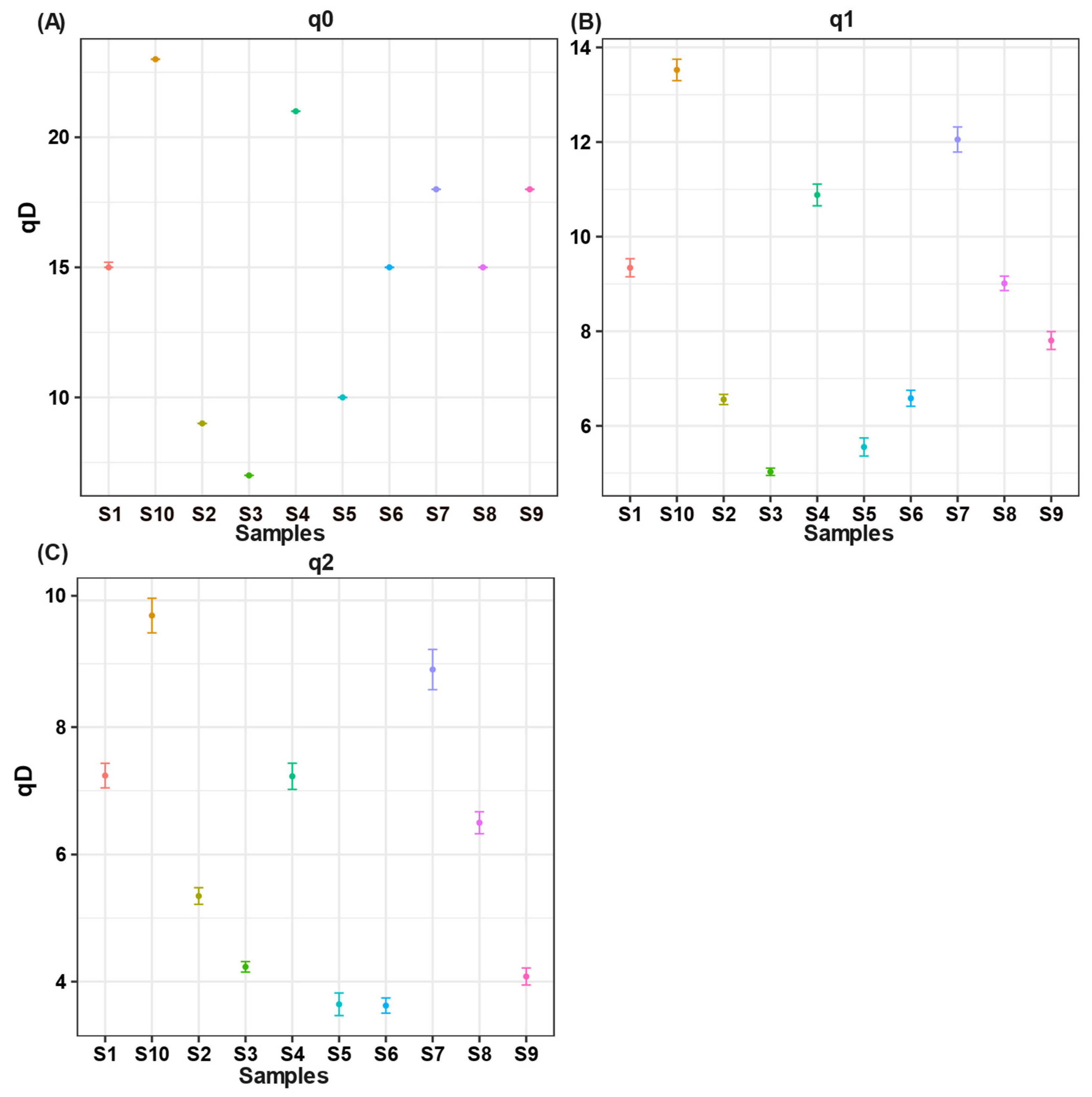
The diversity was estimated using Hill numbers. Samples S4, S7, and S10 exhibited the highest diversity. Species richness (Hill number q = 0) for these samples was 18, 20, and 22 genera, respectively. The exponential Shannon entropy (Hill number q = 1) yielded values of 11, 12, and 13.5, while the inverse Simpson index (Hill number q = 2) yielded values of 7.2, 8.8, and 9.5 (Figure 5).

3.3. Predicted Functional Profile of the Microbial Community

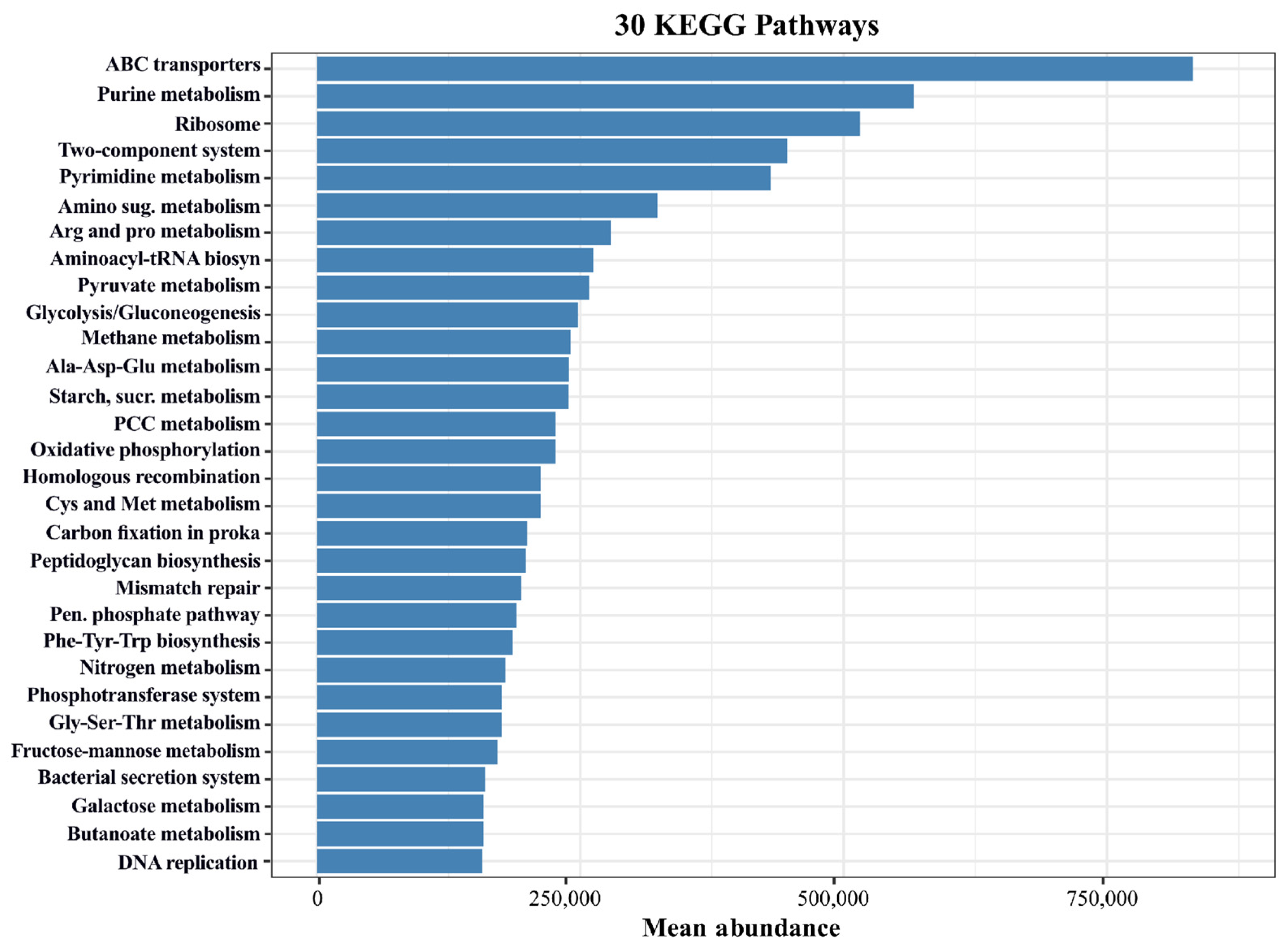
Functional prediction analyses suggested a predominance of pathways associated with environmental information processing and cellular energy metabolism (Figure 6). A total of 30 predictive functional categories were identified as the most abundant across the analyzed samples. The predominant categories included ABC transporters, followed by purine metabolism, ribosome, and the two-component system.
Additionally, pathways related to pyrimidine metabolism, amino acid metabolism including alanine, aspartate, and glutamate metabolism, as well as arginine and proline metabolism were highly represented. Predicted pathways profiles also included glycolysis/gluconeogenesis, pyruvate metabolism, and the pentose phosphate pathway among the most represented KEGG categories (Figure 6).

4. Discussion

The fecal microbiota of Lynx rufus from the temperate forest of central Mexico revealed a diverse bacterial community dominated by families and genera commonly associated with carnivorous diets [18,42,43,44]. Overall, our results are consistent with previous studies of bobcat gut microbiota conducted in the central United States [24] and in the Mapimi Biosphere Reserve, Mexico [25], while also highlighting differences in community composition among studies. Similar patterns of variation have been reported in mammals and have been associated with multiple ecological and host-related factors, including diet and evolutionary history [11,45]. In particular, carnivorous mammals tend to exhibit lower microbial diversity and less temporally stable fecal microbiota compared to herbivores [46].
At the family level, the fecal microbiota of Lynx rufus was dominated by Lachnospiraceae, Clostridiaceae, Bacteroidaceae, Enterobacteriaceae, RAOX-1, Lactobacillaceae, Pseudomonadaceae, and Fusobacteriaceae, several of which have been reported in the gut microbiota of carnivorous mammals and felids [47,48]. RAOX-1 was detected at relatively high abundance; however, its taxonomic affiliation and ecological role remain poorly resolved in current reference databases. Members of the family Lachnospiraceae have been associated with the production of short-chain fatty acids, particularly butyrate, which contributes to intestinal homeostasis and epithelial health [49]. Clostridiaceae and Fusobacteriaceae include taxa involved in protein and amino acid metabolism and are commonly reported in carnivorous species [48]. Bacteroidaceae has been linked to the degradation of a wide range of organic substrates and may contribute to nutrient utilization in the intestinal environment [50].
In addition, Lactobacillaceae was detected in several samples and includes bacteria associated with immune modulation and inhibition of potentially pathogenic microorganisms [51]. Acidaminococcaceae was also present and is known for its ability to ferment amino acids and produce metabolites such as succinate and propionate, which participate in microbial metabolic processes [52]. Enterobacteriaceae was consistently detected across samples, in agreement with studies of wild and captive felids where members of this family are commonly found as part of the intestinal microbiota [47,53].
At the genus level, the presence of Clostridium, Fusobacterium, Bacteroides, and Phocaeicola in most samples analyzed in this study supports the recurrent detection of these genera in multiple bobcat studies, as these genera are involved in protein degradation, amino acid fermentation, and bile acid metabolism [43,54,55]. Nevertheless, the high variability observed among fecal samples, including the dominance of genera such as Pseudomonas, Blautia, Ammoniphilus, Alloprevotella, and Hafnia, indicates heterogeneity in the fecal microbiota of L. rufus. The biological factors underlying this variability cannot be determined from this study. However, previous studies have suggested that recent diet, prey composition, host genetics and physiological factors may contribute to variation in the fecal microbiota of wild mammals. Pseudomonas, Blautia, and Hafnia have previously been reported in the gut microbiota of the volcano rabbit (Romerolagus diazi), suggesting that some of these taxa may represent recurrent components of lagomorph-associated microbial communities [12,13]. Blautia is widely recognized as a short-chain fatty acid–producing genus within the Firmicutes, frequently associated with carbohydrate fermentation and gut homeostasis in mammals [56]. In contrast, Pseudomonas and Hafnia comprise facultative or opportunistic taxa that have been detected in mammalian gastrointestinal tracts and are often associated with environmental exposure or transient colonization [57,58]. Although fecal samples were collected at least 1 km apart to reduce the likelihood of repeated sampling, host species and individual identity were not genetically confirmed. Therefore, species misidentification and pseudoreplication cannot be completely excluded, and the observed variability should be interpreted at the fecal-sample level rather than as independent individual microbiome profiles. Future studies incorporating host genetic confirmation, larger sample sizes, and longitudinal sampling will help clarify the ecological and biological drivers of microbiota variation in wild bobcats.
Our results expand the current understanding of bobcat gut microbiota by providing data from a temperate forest ecosystem in central Mexico and by placing these findings in a broader geographic context. We identified 58 bacterial genera in fecal samples, while in Mapimi, 28 microbial genera were found and in Central USA, 17 bacterial genera were reported for wild bobcats. Although these differences in genera richness and composition could result from differences in sampling strategies, sequencing methodologies, and bioinformatic pipelines [59], it may be indicative of a geographic pattern in which the latitude plays a role in shaping the microbiota of bobcat, as has been reported in ruminants [60], mouse [61] and threespine [62]. Further research is needed to contrast these hypotheses.
Comparison of the bacterial taxa reported in this study with those described for bobcat populations from the central United States and the Mapimi Biosphere Reserve revealed limited overlap in genus composition, with only one genus shared among all studies. However, these observations should be interpreted with caution, as the comparisons are based on published taxonomic descriptions rather than standardized analyses of raw sequencing data. Consequently, the biological factors underlying these differences cannot be determined from this study. Previous ecological studies have shown that bobcat populations inhabiting different regions consume different prey species. For example, in Mapimi, the most frequently reported prey include Lepus californicus, Sylvilagus audubonii, and Neotoma leucodon [22], while in the Chichinautzin Biological Corridor, the main prey are Romerolagus diazi, Sylvilagus cunicularius, Sylvilagus floridanus, and Neotomodon alstoni [23]. It has also been proposed that geographic location, environmental conditions, and host-related factors are possible determinants of gut microbiota variation in wild mammals [63]. While these factors represent explanations for the differences observed between studies, they were not evaluated in the present work and, therefore, should be considered hypotheses that require further investigation using standardized microbiome analyses, along with ecological and host data.
The functional predictions suggest that the inferred functional potential of the fecal microbiota of Lynx rufus is characterized by pathways related to energy metabolism, nutrient transport, and genetic information processing. The high abundance of glycolysis/gluconeogenesis, pyruvate metabolism, and oxidative phosphorylation pathways may reflect a metabolically active microbial community capable of efficiently utilizing substrates available in the intestinal environment [64]. Likewise, the prominence of amino acid metabolism pathways is consistent with the protein-rich diet typical of carnivorous mammals, where gut microorganisms contribute to the degradation and transformation of nitrogen-containing compounds [14]. An interesting observation was that, despite differences in the relative abundance of several bacterial genera among samples, the predicted functional profile remained similar across all samples. The persistence of the 30 most abundant predicted pathways suggests a degree of functional redundancy within the bobcat gut microbiota [65], whereby different microbial taxa may contribute to similar metabolic functions.
The predicted pathways may reflect the taxonomic composition of the dominant bacterial genera identified in this study, including Clostridium, Blautia, Bacteroides, Fusobacterium, and Ruminococcus. These genera have been reported as common members of the mammalian gut microbial communities [17,18]. Their prevalence may contribute to the observed representation of pathways related to nutrient transport and amino acid metabolism, including alanine, aspartate, glutamate, arginine, proline, and sulfur-containing amino acid metabolism. Similarly, the abundance of ABC transporters may reflect the active uptake and exchange of nutrients within the intestinal microbial community.
Although bobcats are considered obligate carnivores, the detection of genera commonly associated with carbohydrate fermentation, such as Blautia and Ruminococcus, may be related to the indirect ingestion of plant-derived material contained in the gastrointestinal tract of prey species. In the Chichinautzin Biological Corridor, bobcats prey on lagomorphs, including R. diazi, as well as various rodent species [12,13,23], which could represent a potential source of plant-associated substrates reaching the intestinal microbiota.
Nevertheless, these results should be interpreted with caution because PICRUSt2 infers functional potential from taxonomic composition rather than directly measuring gene content or activity. Although this approach is useful for exploring potential metabolic capabilities, predictions based on the V3–V4 region of the 16S rRNA gene have inherent limitations and may be influenced by database coverage and taxonomic representation [41,66]. Therefore, the functional predictions presented here should be regarded as exploratory and hypothesis-generating, providing an overview of the potential metabolic capabilities of the fecal microbiota rather than direct evidence of microbial function.

5. Conclusions

This study provides new information on the fecal microbiota of Lynx rufus from central Mexico and contributes to the current knowledge of the gut microbiota of this species. Comparisons among bobcats from the central United States, the Mapimi Biosphere Reserve, and the temperate forests of central Mexico revealed the recurring presence of several bacterial taxa previously reported in the microbiota of bobcats and other carnivorous mammals. Exploratory functional predictions inferred from 16S rRNA gene data suggested pathways related to nutrient transport, energy production, and amino acid metabolism despite taxonomic variation among fecal samples. These predictions should be interpreted as exploratory and hypothesis-generating rather than as direct evidence of microbial function. Although further studies incorporating larger sample sizes, host genetic confirmation and direct metagenomic approaches are needed, our findings contribute to a broader understanding of gut microbiota in wild bobcats and the potential value of microbiome data for ecological, conservation, and wildlife health research.

Author Contributions

Conceptualization, L.M.M.-C., J.H.E.-C., J.A.G. and E.M.-R.; methodology, L.M.M.-C., J.H.E.-C., H.D.A.-H. and J.A.G.; software, L.M.M.-C. and H.D.A.-H.; validation, L.M.M.-C., J.A.G. and E.M.-R.; formal analysis, L.M.M.-C., H.D.A.-H. and J.A.G.; resources, E.M.-R.; data curation, L.M.M.-C. and J.H.E.-C.; writing—original draft preparation, L.M.M.-C.; writing—review and editing, L.M.M.-C., H.D.A.-H., J.A.G. and E.M.-R.; visualization, L.M.M.-C. and H.D.A.-H.; supervision, J.A.G. and E.M.-R.; project administration, E.M.-R.; funding acquisition, E.M.-R. All authors have read and agreed to the published version of the manuscript.

Funding

This study was supported by Universidad Nacional Autónoma de México, PAPIIT UNAM IN206124 grant awarded to Esperanza Martinez-Romero. Leslie M. Montes-Carreto (CVU: 667266) received a postdoctoral scholarship from the Secretaría de Ciencia, Humanidades, Tecnología e Innovación (SECIHTI, 2024).

Institutional Review Board Statement

Not applicable.

Informed Consent Statement

Not applicable.

Data Availability Statement

Raw gene sequences of the 16S rRNA V3–V4 region for all fecal samples have been deposited in the NCBI Sequence Read Archive (SRA) under BioProject PRJNA1434635 (https://www.ncbi.nlm.nih.gov/bioproject/PRJNA1434635, accessed on 11 July 2026), with individual accession numbers SAMN56416254-SAMN56416263 corresponding to each sample.

Acknowledgments

We thank colleagues at FCB-UAEM for fieldwork support. We acknowledge CCG-UNAM for access to their computing cluster used for bioinformatic analyses. We are grateful to Gustavo Delgado-Prudencio and Luis Tapia for their comments and critical review of the manuscript. We also thank all individuals who contributed directly or indirectly to sample collection, processing, and data analysis.

Conflicts of Interest

The authors declare no conflicts of interest.

Abbreviations

The following abbreviations are used in this manuscript:
ASVsamplicon sequence variants

References

  1. Forsythe, P.; Bienenstock, J. Immunomodulation by commensal and probiotic bacteria. Immunol. Investig. 2010, 39, 429–448. [Google Scholar] [CrossRef] [Scilit] [PubMed]
  2. LeBlanc, J.G.; Chain, F.; Martin, R.; Bermudez-Humaran, L.G.; Courau, S.; Langella, P. Beneficial effects on host energy metabolism of short-chain fatty acids and vitamins produced by commensal and probiotic bacteria. Microb. Cell Fact. 2017, 16, 79. [Google Scholar] [CrossRef] [Scilit] [PubMed]
  3. Petersen, C.; Round, J.L. Defining dysbiosis and its influence on host immunity and disease. Cell. Microbiol. 2014, 16, 1024–1033. [Google Scholar] [CrossRef] [Scilit] [PubMed]
  4. Peixoto, R.S.; Harkins, D.M.; Nelson, K.E. Advances in Microbiome Research for Animal Health. Annu. Rev. Anim. Biosci. 2021, 9, 289–311. [Google Scholar] [CrossRef] [Scilit] [PubMed]
  5. Shreiner, A.B.; Kao, J.Y.; Young, V.B. The gut microbiome in health and in disease. Curr. Opin. Gastroenterol. 2015, 31, 69–75. [Google Scholar] [CrossRef] [Scilit] [PubMed]
  6. Sommer, F.; Backhed, F. The gut microbiota—Masters of host development and physiology. Nat. Rev. Microbiol. 2013, 11, 227–238. [Google Scholar] [CrossRef] [Scilit] [PubMed]
  7. Carthey, A.J.R.; Blumstein, D.T.; Gallagher, R.V.; Tetu, S.G.; Gillings, M.R.; Bennett, A. Conserving the holobiont. Funct. Ecol. 2020, 34, 764–776. [Google Scholar] [CrossRef] [Scilit]
  8. Trevelline, B.K.; Fontaine, S.S.; Hartup, B.K.; Kohl, K.D. Conservation biology needs a microbial renaissance: A call for the consideration of host-associated microbiota in wildlife management practices. Proc. Biol. Sci. 2019, 286, 20182448. [Google Scholar] [CrossRef] [Scilit] [PubMed]
  9. Arellano-Hernandez, H.D.; Montes-Carreto, L.M.; Guerrero, J.A.; Martinez-Romero, E. The fecal microbiota of the mouse-eared bat (Myotis velifer) with new records of microbial taxa for bats. PLoS ONE 2024, 19, e0314847. [Google Scholar] [CrossRef] [Scilit] [PubMed]
  10. Guimaraes Sales, N.; da Cruz Kaizer, M.; Browett, S.S.; Gabriel, S.I.; McDevitt, A.D. Assessing the gut microbiome and the influence of host genetics on a critically endangered primate, the northern muriqui (Brachyteles hypoxanthus). Environ. DNA 2024, 6, e559. [Google Scholar] [CrossRef] [Scilit]
  11. Ley, R.E.; Hamady, M.; Lozupone, C.; Turnbaugh, P.J.; Ramey, R.R.; Bircher, J.S.; Schlegel, M.L.; Tucker, T.A.; Schrenzel, M.D.; Knight, R.; et al. Evolution of mammals and their gut microbes. Science 2008, 320, 1647–1651. [Google Scholar] [CrossRef] [Scilit] [PubMed]
  12. Montes-Carreto, L.M.; Aguirre-Noyola, J.L.; Solis-Garcia, I.A.; Ortega, J.; Martinez-Romero, E.; Guerrero, J.A. Diverse methanogens, bacteria and tannase genes in the feces of the endangered volcano rabbit (Romerolagus diazi). PeerJ 2021, 9, e11942. [Google Scholar] [CrossRef] [Scilit] [PubMed]
  13. Montes-Carreto, L.M.; Arellano-Hernandez, H.D.; Guerrero, J.A.; Martinez-Romero, E. Comparative fecal microbiome analysis of the endangered Volcano rabbit (Romerolagus diazi) reveals a microbial core in contrasting habitats of Central Mexico. PLoS ONE 2026, 21, e0343260. [Google Scholar] [CrossRef] [Scilit] [PubMed]
  14. Muegge, B.D.; Kuczynski, J.; Knights, D.; Clemente, J.C.; Gonzalez, A.; Fontana, L.; Henrissat, B.; Knight, R.; Gordon, J.I. Diet drives convergence in gut microbiome functions across mammalian phylogeny and within humans. Science 2011, 332, 970–974. [Google Scholar] [CrossRef] [Scilit] [PubMed]
  15. Han, S.; Guan, Y.; Dou, H.; Yang, H.; Yao, M.; Ge, J.; Feng, L. Comparison of the fecal microbiota of two free-ranging Chinese subspecies of the leopard (Panthera pardus) using high-throughput sequencing. PeerJ 2019, 7, e6684. [Google Scholar] [CrossRef] [Scilit] [PubMed]
  16. He, F.; Liu, D.; Zhang, L.; Zhai, J.; Ma, Y.; Xu, Y.; Jiang, G.; Rong, K.; Ma, J. Metagenomic analysis of captive Amur tiger faecal microbiome. BMC Vet. Res. 2018, 14, 379. [Google Scholar] [CrossRef] [Scilit] [PubMed]
  17. Wasimuddin; Menke, S.; Melzheimer, J.; Thalwitzer, S.; Heinrich, S.; Wachter, B.; Sommer, S. Gut microbiomes of free-ranging and captive Namibian cheetahs: Diversity, putative functions and occurrence of potential pathogens. Mol. Ecol. 2017, 26, 5515–5527. [Google Scholar] [CrossRef] [Scilit] [PubMed]
  18. Karmacharya, D.; Manandhar, P.; Manandhar, S.; Sherchan, A.M.; Sharma, A.N.; Joshi, J.; Bista, M.; Bajracharya, S.; Awasthi, N.P.; Sharma, N.; et al. Gut microbiota and their putative metabolic functions in fragmented Bengal tiger population of Nepal. PLoS ONE 2019, 14, e0221868. [Google Scholar] [CrossRef] [Scilit] [PubMed]
  19. Greene, L.K.; Williams, C.V.; Junge, R.E.; Mahefarisoa, K.L.; Rajaonarivelo, T.; Rakotondrainibe, H.; O’Connell, T.M.; Drea, C.M. A role for gut microbiota in host niche differentiation. ISME J. 2020, 14, 1675–1687. [Google Scholar] [CrossRef] [Scilit] [PubMed]
  20. Rolley, R.E. Dynamics of a Harvested Bobcat Population in Oklahoma. J. Wildl. Manag. 1985, 49, 283–292. [Google Scholar] [CrossRef] [Scilit]
  21. Larivière, S.; Walton, L.R. Lynx rufus. Mamm. Species 1997, 563, 1–8. [Google Scholar] [CrossRef] [Scilit]
  22. López-Vidal, J.C.; Elizalde-Arellano, C.; Hernández, L.; Laundré, J.W.; González-Romero, A.; Cervantes, F.A. Foraging of the bobcat (Lynx rufus) in the Chihuahuan Desert: Generalist or specialist? Southwest. Nat. 2014, 59, 157–166. [Google Scholar] [CrossRef] [Scilit]
  23. Uriostegui Velarde, J.M.; Vera García, Z.S.; Ávila Torresagatón, L.G.; Rizo Aguilar, A.; Hidalgo Mihart, M.G.; Guerrero, J.A. Importancia del conejo zacatuche (Romerolagus diazi) en la dieta del coyote (Canis latrans) y del lince (Lynx rufus). Therya 2015, 6, 609–624. [Google Scholar] [CrossRef] [Scilit]
  24. Eshar, D.; Lee, C.; Weese, J.S. Comparative molecular analysis of fecal microbiota of bobcats (Lynx rufus) and domestic cats (Felis catus). Can. J. Vet. Res. 2019, 83, 42–49. [Google Scholar] [PubMed]
  25. Pacheco-Torres, I.; Garcia-De La Peña, C.; Meza-Herrera, C.A.; Vaca-Paniagua, F.; Díaz-Velásquez, C.; Méndez-Catalá, C.; Tarango-Arambula, L.; Salazar, J. Primer acercamiento a la microbiota bacteriana fecal del gato montés (Lynx rufus) en la Reserva de la Biosfera Mapimí, México. In Importancia Económica, Social y Ambiental de la Diversidad Biológica; Tópicos sobre diversidad biológica; UJED Publishing House: Durango, Mexico, 2021. [Google Scholar]
  26. Ruell, E.W.; Riley, S.P.D.; Douglas, M.R.; Pollinger, J.P.; Crooks, K.R. Estimating bobcat population sizes and densities in a fragmented urban landscape using noninvasive capture–recapture sampling. J. Mammal. 2009, 90, 129–135. [Google Scholar] [CrossRef] [Scilit]
  27. Riley, S.P.D.; Sauvajot, R.M.; Fuller, T.K.; York, E.C.; Kamradt, D.A.; Bromley, C.; Wayne, R.K. Effects of urbanization and habitat fragmentation on bobcats and coyotes in Southern California. Conserv. Biol. 2003, 17, 566–576. [Google Scholar] [CrossRef] [Scilit]
  28. McKelvey, K.S.; Kienast, J.V.; Aubry, K.B.; Koehler, G.M.; Maletzke, B.T.; Squires, J.R.; Lindquist, E.L.; Loch, S.; Schwartz, M.K. DNA analysis of hair and scat collected along snow tracks to document the presence of Canada Lynx. Wildl. Soc. Bull. 2006, 34, 451–455. [Google Scholar] [CrossRef] [Scilit]
  29. Aranda, J.M. Huellas y Otros Rastros de los Mamíferos Grandes y Medianos de México; Instituto de Ecología: Mexico City, Mexico, 2000. [Google Scholar]
  30. Klindworth, A.; Pruesse, E.; Schweer, T.; Peplies, J.; Quast, C.; Horn, M.; Glockner, F.O. Evaluation of general 16S ribosomal RNA gene PCR primers for classical and next-generation sequencing-based diversity studies. Nucleic Acids Res. 2013, 41, e1. [Google Scholar] [CrossRef] [Scilit] [PubMed]
  31. Chen, S.; Zhou, Y.; Chen, Y.; Gu, J. fastp: An ultra-fast all-in-one FASTQ preprocessor. Bioinformatics 2018, 34, i884–i890. [Google Scholar] [CrossRef] [Scilit] [PubMed]
  32. Callahan, B.J.; McMurdie, P.J.; Rosen, M.J.; Han, A.W.; Johnson, A.J.; Holmes, S.P. DADA2: High-resolution sample inference from Illumina amplicon data. Nat. Methods 2016, 13, 581–583. [Google Scholar] [CrossRef] [Scilit] [PubMed]
  33. Bolyen, E.; Rideout, J.R.; Dillon, M.R.; Bokulich, N.A.; Abnet, C.C.; Al-Ghalith, G.A.; Alexander, H.; Alm, E.J.; Arumugam, M.; Asnicar, F.; et al. Reproducible, interactive, scalable and extensible microbiome data science using QIIME 2. Nat. Biotechnol. 2019, 37, 852–857. [Google Scholar] [CrossRef] [Scilit] [PubMed]
  34. Bokulich, N.A.; Kaehler, B.D.; Rideout, J.R.; Dillon, M.; Bolyen, E.; Knight, R.; Huttley, G.A.; Gregory Caporaso, J. Optimizing taxonomic classification of marker-gene amplicon sequences with QIIME 2′s q2-feature-classifier plugin. Microbiome 2018, 6, 90. [Google Scholar] [CrossRef] [Scilit] [PubMed]
  35. McDonald, D.; Jiang, Y.; Balaban, M.; Cantrell, K.; Zhu, Q.; Gonzalez, A.; Morton, J.T.; Nicolaou, G.; Parks, D.H.; Karst, S.M.; et al. Greengenes2 unifies microbial data in a single reference tree. Nat. Biotechnol. 2024, 42, 715–718. [Google Scholar] [CrossRef] [Scilit] [PubMed]
  36. Neu, A.T.; Allen, E.E.; Roy, K. Defining and quantifying the core microbiome: Challenges and prospects. Proc. Natl. Acad. Sci. USA 2021, 118, e2104429118. [Google Scholar] [CrossRef] [Scilit] [PubMed]
  37. Chiu, C.H.; Chao, A. Estimating and comparing microbial diversity in the presence of sequencing errors. PeerJ 2016, 4, e1634. [Google Scholar] [CrossRef] [Scilit] [PubMed]
  38. Ma, Z.S.; Li, L. Measuring metagenome diversity and similarity with Hill numbers. Mol. Ecol. Resour. 2018, 18, 1339–1355. [Google Scholar] [CrossRef] [Scilit] [PubMed]
  39. Hsieh, T.C.; Ma, K.H.; Chao, A. iNEXT: An R package for rarefaction and extrapolation of species diversity (Hill numbers). Methods Ecol. Evol. 2016, 7, 1451–1456. [Google Scholar] [CrossRef] [Scilit]
  40. R Core Team. R: A Language and Environment for Statistical Computing; R Foundation for Statistical Computing: Vienna, Austria, 2025. [Google Scholar]
  41. Douglas, G.M.; Maffei, V.J.; Zaneveld, J.R.; Yurgel, S.N.; Brown, J.R.; Taylor, C.M.; Huttenhower, C.; Langille, M.G.I. PICRUSt2 for prediction of metagenome functions. Nat. Biotechnol. 2020, 38, 685–688. [Google Scholar] [CrossRef] [Scilit] [PubMed]
  42. Becker, A.A.; Janssens, G.P.; Snauwaert, C.; Hesta, M.; Huys, G. Integrated community profiling indicates long-term temporal stability of the predominant faecal microbiota in captive cheetahs. PLoS ONE 2015, 10, e0123933. [Google Scholar] [CrossRef] [Scilit] [PubMed]
  43. Kim, H.; Chae, Y.; Cho, J.H.; Song, M.; Kwak, J.; Doo, H.; Choi, Y.; Kang, J.; Yang, H.; Lee, S.; et al. Understanding the diversity and roles of the canine gut microbiome. J. Anim. Sci. Biotechnol. 2025, 16, 95. [Google Scholar] [CrossRef] [Scilit] [PubMed]
  44. Lee, Y.J.; Lee, S.; Kim, B.; Kwak, D.; Kim, T.; Seo, M.G. Gut microbiome diversity and composition in captive siberian tigers (Panthera tigris altaica): The influence of diet, health status, and captivity on microbial communities. Microorganisms 2024, 12, 2165. [Google Scholar] [CrossRef] [Scilit] [PubMed]
  45. Ley, R.E.; Lozupone, C.A.; Hamady, M.; Knight, R.; Gordon, J.I. Worlds within worlds: Evolution of the vertebrate gut microbiota. Nat. Rev. Microbiol. 2008, 6, 776–788. [Google Scholar] [CrossRef] [Scilit] [PubMed]
  46. Zoelzer, F.; Burger, A.L.; Dierkes, P.W. Unraveling differences in fecal microbiota stability in mammals: From high variable carnivores and consistently stable herbivores. Anim. Microbiome 2021, 3, 77. [Google Scholar] [CrossRef] [Scilit] [PubMed]
  47. Deusch, O.; O’Flynn, C.; Colyer, A.; Swanson, K.S.; Allaway, D.; Morris, P. A longitudinal study of the feline faecal microbiome identifies changes into early adulthood irrespective of sexual development. PLoS ONE 2015, 10, e0144881. [Google Scholar] [CrossRef] [Scilit] [PubMed]
  48. Youngblut, N.D.; Reischer, G.H.; Walters, W.; Schuster, N.; Walzer, C.; Stalder, G.; Ley, R.E.; Farnleitner, A.H. Host diet and evolutionary history explain different aspects of gut microbiome diversity among vertebrate clades. Nat. Commun. 2019, 10, 2200. [Google Scholar] [CrossRef] [Scilit] [PubMed]
  49. Vacca, M.; Celano, G.; Calabrese, F.M.; Portincasa, P.; Gobbetti, M.; De Angelis, M. The controversial role of human gut Lachnospiraceae. Microorganisms 2020, 8, 573. [Google Scholar] [CrossRef] [Scilit] [PubMed]
  50. Wexler, H.M. Bacteroides: The good, the bad, and the nitty-gritty. Clin. Microbiol. Rev. 2007, 20, 593–621. [Google Scholar] [CrossRef] [Scilit] [PubMed]
  51. Huynh, U.; Zastrow, M.L. Metallobiology of Lactobacillaceae in the gut microbiome. J. Inorg. Biochem. 2023, 238, 112023. [Google Scholar] [CrossRef] [Scilit] [PubMed]
  52. Marchandin, H.; Teyssier, C.; Campos, J.; Jean-Pierre, H.; Roger, F.; Gay, B.; Carlier, J.-P.; Jumas-Bilak, E. Negativicoccus succinicivorans gen. nov., sp. nov., isolated from human clinical samples, emended description of the family Veillonellaceae and description of Negativicutes classis nov., Selenomonadales ord. nov. and Acidaminococcaceae fam. nov. in the bacterial phylum Firmicutes. Int. J. Syst. Evol. Microbiol. 2010, 60, 1271–1279. [Google Scholar] [CrossRef] [Scilit] [PubMed]
  53. Garcia-Mazcorro, J.F.; Barcenas-Walls, J.R.; Suchodolski, J.S.; Steiner, J.M. Molecular assessment of the fecal microbiota in healthy cats and dogs before and during supplementation with fructo-oligosaccharides (FOS) and inulin using high-throughput 454-pyrosequencing. PeerJ 2017, 5, e3184. [Google Scholar] [CrossRef] [Scilit] [PubMed]
  54. Clausen, U.; Vital, S.T.; Lambertus, P.; Gehler, M.; Scheve, S.; Wohlbrand, L.; Rabus, R. Catabolic Network of the Fermentative Gut Bacterium Phocaeicola vulgatus (Phylum Bacteroidota) from a Physiologic-Proteomic Perspective. Microb. Physiol. 2024, 34, 88–107. [Google Scholar] [CrossRef] [Scilit] [PubMed]
  55. Rowland, I.; Gibson, G.; Heinken, A.; Scott, K.; Swann, J.; Thiele, I.; Tuohy, K. Gut microbiota functions: Metabolism of nutrients and other food components. Eur. J. Nutr. 2018, 57, 1–24. [Google Scholar] [CrossRef] [Scilit] [PubMed]
  56. Liu, X.; Mao, B.; Gu, J.; Wu, J.; Cui, S.; Wang, G.; Zhao, J.; Zhang, H.; Chen, W. Blautia—A new functional genus with potential probiotic properties? Gut Microbes 2021, 13, 1875796. [Google Scholar] [CrossRef] [Scilit] [PubMed]
  57. Berg, G.; Rybakova, D.; Fischer, D.; Cernava, T.; Verges, M.C.; Charles, T.; Chen, X.; Cocolin, L.; Eversole, K.; Corral, G.H.; et al. Microbiome definition re-visited: Old concepts and new challenges. Microbiome 2020, 8, 103. [Google Scholar] [CrossRef] [Scilit] [PubMed]
  58. Janda, J.M.; Abbott, S.L. The genus Hafnia: From soup to nuts. Clin. Microbiol. Rev. 2006, 19, 12–18. [Google Scholar] [CrossRef] [Scilit] [PubMed]
  59. Abellan-Schneyder, I.; Matchado, M.S.; Reitmeier, S.; Sommer, A.; Sewald, Z.; Baumbach, J.; List, M.; Neuhaus, K.; Tringe, S.G. Primer, Pipelines, Parameters: Issues in 16S rRNA Gene Sequencing. mSphere 2021, 6, e01202-20. [Google Scholar] [CrossRef] [Scilit] [PubMed]
  60. Henderson, G.; Cox, F.; Ganesh, S.; Jonker, A.; Young, W.; Global Rumen Census Collaborators; Janssen, P.H. Rumen microbial community composition varies with diet and host, but a core microbiome is found across a wide geographical range. Sci. Rep. 2015, 5, 14567. [Google Scholar] [CrossRef] [Scilit] [PubMed]
  61. Marsh, K.J.; Raulo, A.M.; Brouard, M.; Troitsky, T.; English, H.M.; Allen, B.; Raval, R.; Venkatesan, S.; Pedersen, A.B.; Webster, J.P.; et al. Synchronous seasonality in the gut microbiota of wild mouse populations. Front. Microbiol. 2022, 13, 809735. [Google Scholar] [CrossRef] [Scilit] [PubMed]
  62. Harer, A.; Kurstjens, E.; Rennison, D.J. Host traits and environmental variation shape gut microbiota diversity in wild threespine stickleback. Anim. Microbiome 2025, 7, 67. [Google Scholar] [CrossRef] [Scilit] [PubMed]
  63. Biles, T.L.; Beck, H.; Masters, B.S. Microbiomes in Canidae. Ecol. Evol. 2021, 11, 18531–18539. [Google Scholar] [CrossRef] [Scilit] [PubMed]
  64. Flint, H.J.; Scott, K.P.; Duncan, S.H.; Louis, P.; Forano, E. Microbial degradation of complex carbohydrates in the gut. Gut Microbes 2012, 3, 289–306. [Google Scholar] [CrossRef] [Scilit] [PubMed]
  65. Louca, S.; Polz, M.F.; Mazel, F.; Albright, M.B.N.; Huber, J.A.; O’Connor, M.I.; Ackermann, M.; Hahn, A.S.; Srivastava, D.S.; Crowe, S.A.; et al. Function and functional redundancy in microbial systems. Nat. Ecol. Evol. 2018, 2, 936–943. [Google Scholar] [CrossRef] [Scilit] [PubMed]
  66. Sun, S.; Jones, R.B.; Fodor, A.A. Inference-based accuracy of metagenome prediction tools varies across sample types and functional categories. Microbiome 2020, 8, 46. [Google Scholar] [CrossRef] [Scilit] [PubMed]
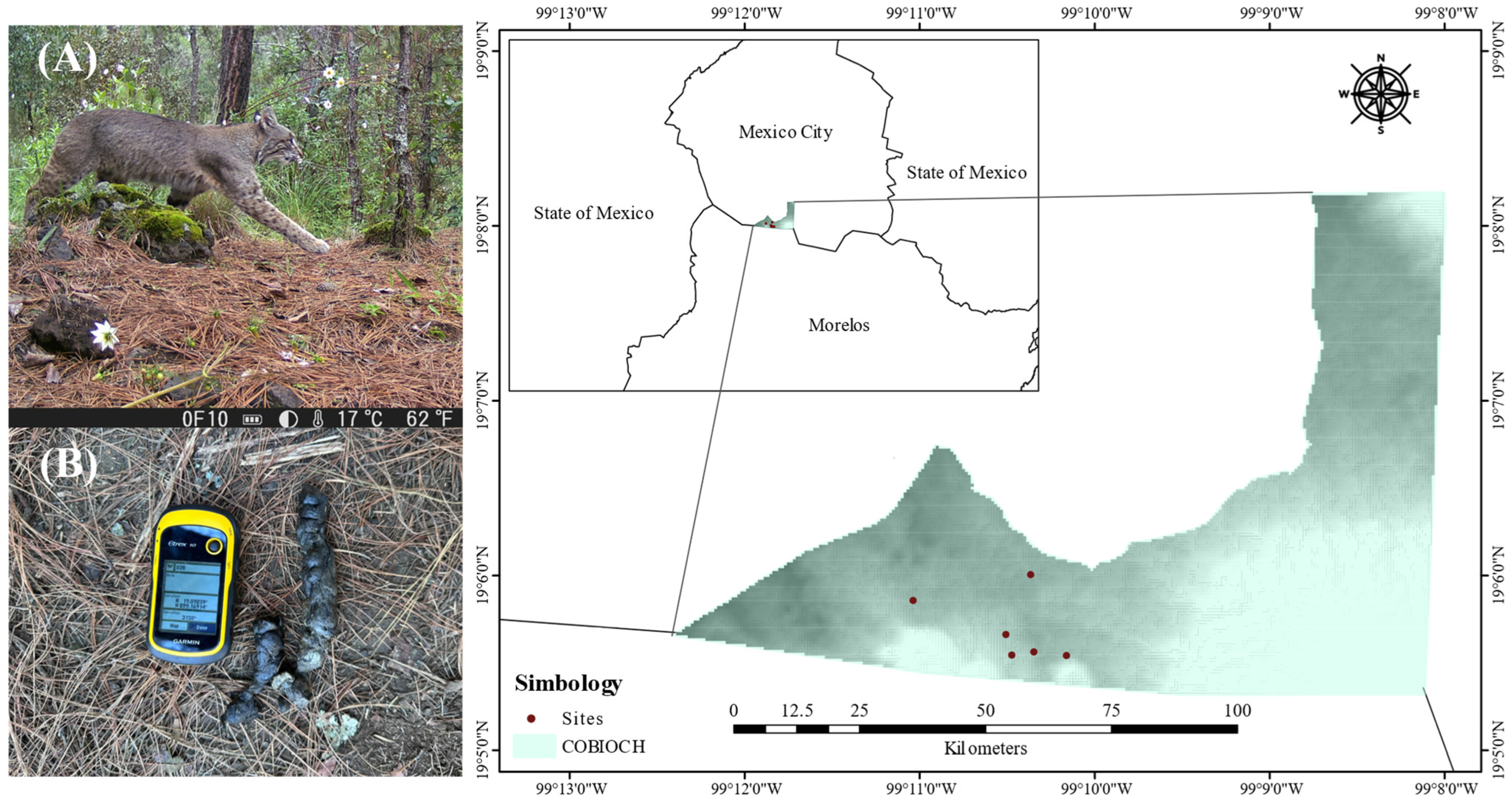
Figure 1. Sampling sites in the Chichinautzin Biological Corridor, central Mexico, where ten fecal samples of Lynx rufus were collected. (A) Bobcat photographed by a camera trap; (B) Fresh fecal sample collected for microbiota characterization.
Ecologies 07 00068 g001
Figure 2. Sampling coverage and rarefaction analysis of fecal microbiota from Lynx rufus in Chichinautzin.
Ecologies 07 00068 g002
Figure 3. Relative abundance of bacterial families in fecal samples of Lynx rufus from the Chichinautzin Biological Corridor.
Ecologies 07 00068 g003
Figure 4. Relative abundance of bacterial genera in 10 fecal samples of Lynx rufus.
Ecologies 07 00068 g004
Figure 5. Estimated alpha diversity and 95% confidence intervals of fecal microbiota from Lynx rufus the genus level. Diversity is shown for (A) q = 0 (richness), (B) q = 1 (exponential of Shannon entropy), and (C) q = 2 (inverse Simpson index).
Ecologies 07 00068 g005
Figure 6. Predicted functional profile of the fecal microbiota of the bobcat (Lynx rufus, n = 10) in the Chichinautzin Biological Corridor. Values represent the mean relative abundance of the 30 most represented inferred KEGG metabolic.
Ecologies 07 00068 g006
Disclaimer/Publisher’s Note: The statements, opinions and data contained in all publications are solely those of the individual author(s) and contributor(s) and not of MDPI and/or the editor(s). MDPI and/or the editor(s) disclaim responsibility for any injury to people or property resulting from any ideas, methods, instructions or products referred to in the content.