Review

Ecological Invasion, Impact, and Management of Johnsongrass [Sorghum halepense (L.) Pers.] for Sustainable Livestock Production: A Systematic Review


1
Department of Agriculture, Döhne Agriculture Development Institute, Stutterheim 4930, Eastern Cape Province, South Africa
2
Department of Agriculture and Rural Development, Agricultural Research Services, Potchefstroom 2531, North-West Province, South Africa
3
Food Security and Safety Niche Area, Faculty of Natural and Agricultural Sciences, North-West University, Mafikeng 2745, North-West Province, South Africa
4
Department of Agricultural Sciences and Game Management, Nelson Mandela University, Summerstrand, South Campus, Gqeberha 6001, Eastern Cape Province, South Africa
5
Department of Agriculture, Queenstown 5320, Eastern Cape Province, South Africa
6
Department of Agriculture, Aliwal North 9750, Eastern Cape Province, South Africa
*
Author to whom correspondence should be addressed.
Ecologies 2026, 7(2), 51; https://doi.org/10.3390/ecologies7020051 (registering DOI)
Submission received: 16 March 2026 / Revised: 30 April 2026 / Accepted: 4 May 2026 / Published: 5 June 2026
(This article belongs to the Special Issue Feature Review Papers in Ecology)

Abstract

Sorghum halepense is widely recognised as one of the most aggressive invasive perennial grasses affecting agricultural ecosystems worldwide. This systematic review synthesises existing scientific evidence on the ecological invasion dynamics, origin, distribution patterns, impacts on both biodiversity and livestock, and management strategies. A systematic literature review approach was employed to identify and evaluate peer-reviewed and grey literature. Relevant studies were retrieved from major scientific databases, including Google Scholar, PubMed, and ResearchGate, using predefined search terms related to S. halepense, invasion, impact on native plants and livestock, and possible control measures. Articles were screened based on relevance, methodological quality, and thematic alignment with the objectives of the review. The results showed that Johnsongrass is making a gradual invasion in South Africa through seed production and rhizome systems. Sorghum halepense alters native species composition, subsequently reduces biodiversity, and outcompetes native species. Although it may provide forage under certain conditions, its accumulation of cyanogenic compounds and nitrates poses serious poisoning risks to herbivores. Management strategies such as mechanical, burning, and chemical methods vary in terms of effectiveness. Some of these measures are influenced by the genetic make-up of the plant, costs associated with each control measure and other environmental factors. This review highlights the need for integrated management approaches that balance invasive weed control with sustainable forage production. This review emphasises the importance of adopting integrated management strategies that effectively control both seed production and underground stems. Future research should prioritise climate-responsive management approaches, improved understanding of invasion ecology, and the development of cost-effective control measures. Bringing together policy makers and specialists in weed science, natural conservation science, and animal health will be essential for reaching consensus on the actions required to curb the expansion and reduce the economic losses associated with the abundance of Sorghum halepense in our ecosystems.

1. Introduction

Sorghum halepense is widely recognised as one of the most aggressive species and is native to the Mediterranean–West Asian region. The species has become naturalised across Africa, North and South America, Europe, Asia, and Australia, invading temperate, subtropical, and tropical agroecological ecosystems [1,2]. Its global proliferation, which was accelerated during the 18th and 19th centuries through contaminated crop seeds and unintentional introduction, illustrates a typical pattern of anthropogenic-assisted invasion into new habitats [3,4]. Sorghum halepense has been listed as a noxious weed found in more than 50 countries. Where the plant invades, it colonies natural vegetation by displacing native grass species. The plant can adapt to a wide range of habitats, including croplands, arable land, land along roads and rangelands. Johnsongrass develops into tall and dense tufted plants that can intercept natural resources such as light, water and nutrients for indigenous species, subsequently suppressing their growth and regeneration [5].
Sorghum halepense expansion is expected to be worsened by climate change, as a result of the projected rise in temperature and atmospheric carbon dioxide concentrations. These changing climatic conditions are likely to create a conducive ecosystem for the species’ proliferation, while also enhancing its competitive advantage over native plants [6]. Sorghum halepense emerges earlier than most native grasses, giving it a competitive advantage that enables it to outcompete perennial grasses [7]. Sorghum halepense is a hybrid derived from Sorghum bicolor and Sorghum propinquum, both belonging to the Poaceae grass family.
This hybrid plant can adapt in harsh environmental conditions such as extremely low and high temperatures [8]. Sorghum halepense can produce more than 70,000 seeds per plant and an abundance of underground stems, and these botanical characteristics enable the plant to spread or colonise areas rapidly. Furthermore, these traits allow the plant to be more become resilience to disturbance [9].
Previous studies have also revealed that Sorghum halepense performs better under global warming and carbon dioxide enrichment scenarios [9,10,11]. Despite the growing recognition of Sorghum halepense as an aggressive species, its ecological impact on biodiversity and livestock-related implications remain insufficiently synthesised in the scientific community. Due to its extensive rhizome network (underground stems) and high seed production, its eradication is a concern in agricultural potential land.
Consequently, its control requires integrated management strategies [5]. Therefore, this review aimed to provide a systematic evaluation of the published literature on the botanical description and ecological characteristics, origin, distribution patterns, impact of biodiversity and livestock, and control measures of Sorghum halepense.

2. Materials and Methods

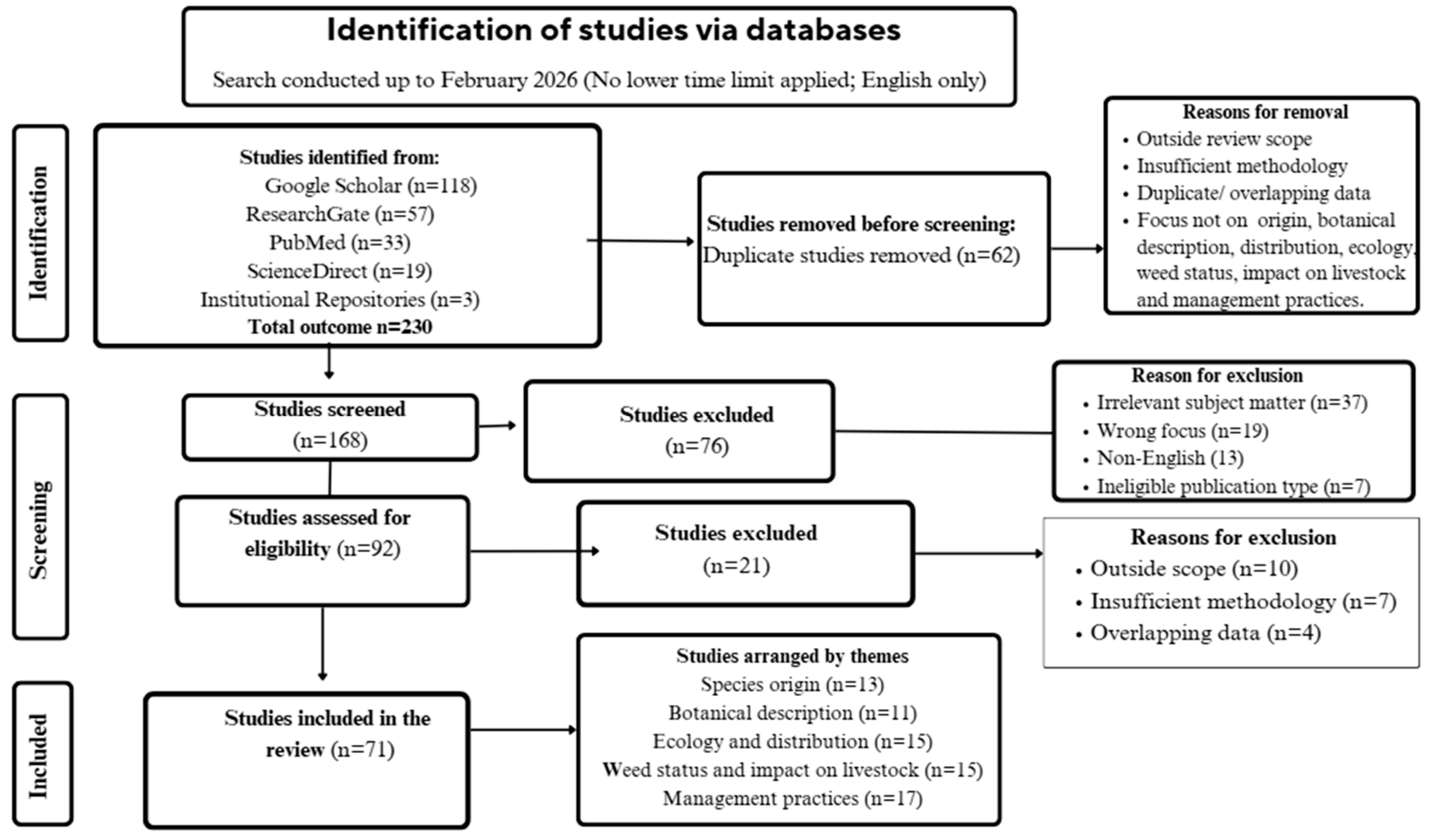
This review was conducted following a systematic literature review approach, guided by Preferred Reporting Items for Systematic Reviews and Meta-Analyses (PRISMA) principles. The process comprises a structured and transparent search, screening, and selection of relevant research studies to identify and critically examine the published research studies on Sorghum halepense species. The methodological steps followed in this review are summarised and illustrated in Figure 1.
Peer-reviewed scholarly articles and grey literature were systemically identified and obtained using several search engines such as Google Scholar, PubMed, ResearchGate, Scopus, ScienceDirect, as well as institutional repositories and other relevant online sources. These platforms were used to compile a comprehensive body of secondary data, ensuring broad coverage of published and unpublished research work that might be relevant to the current study. Access to these databases was provided by the Dohne Agricultural Development Institute (DADI) online library.
The following search strings were applied using keywords such as Sorghum halepense plant origin, botanical characteristics, distribution, ecological impacts on livestock, effects on biodiversity and management practices or strategies. No time limit was applied, and as a result all relevant studies published up to the year 2025 were considered for inclusion. However, this review was limited to studies written in the English language. This review incorporated both peer-reviewed articles and grey literature, including theses, dissertations, government reports, and non-government organisation (NGOs) reports.
In terms of research content, sources of information including Sorghum halepense’s origin, botanical characteristics, distribution, ecological impact on biodiversity, effects on livestock and control management strategies were examined. Media reports, opinion-based sources, and publications with insufficient methodological details were excluded for this review.
The initial search yielded a total of 230 published articles, and 62 duplicates were identified and subsequently removed during the screening process. The remaining articles (n = 168) were further screened based on their topics, keywords, and abstracts to assess their relevance to the study. Therefore, the screening resulted in an exclusion of 76 articles for this review. Out of 92 articles retained, 21 articles did not meet the inclusion criteria and were subsequently excluded.
The main reasons for exclusion were as follow: (i) studies that were outside the thematic scope of this review (for example, papers focused solely on ornamental use), (ii) publications with insufficient methodological detail or evidence, (iii) overlapping data across different sources, and (iv) studies where the primary focus was unrelated to the scope of this review.
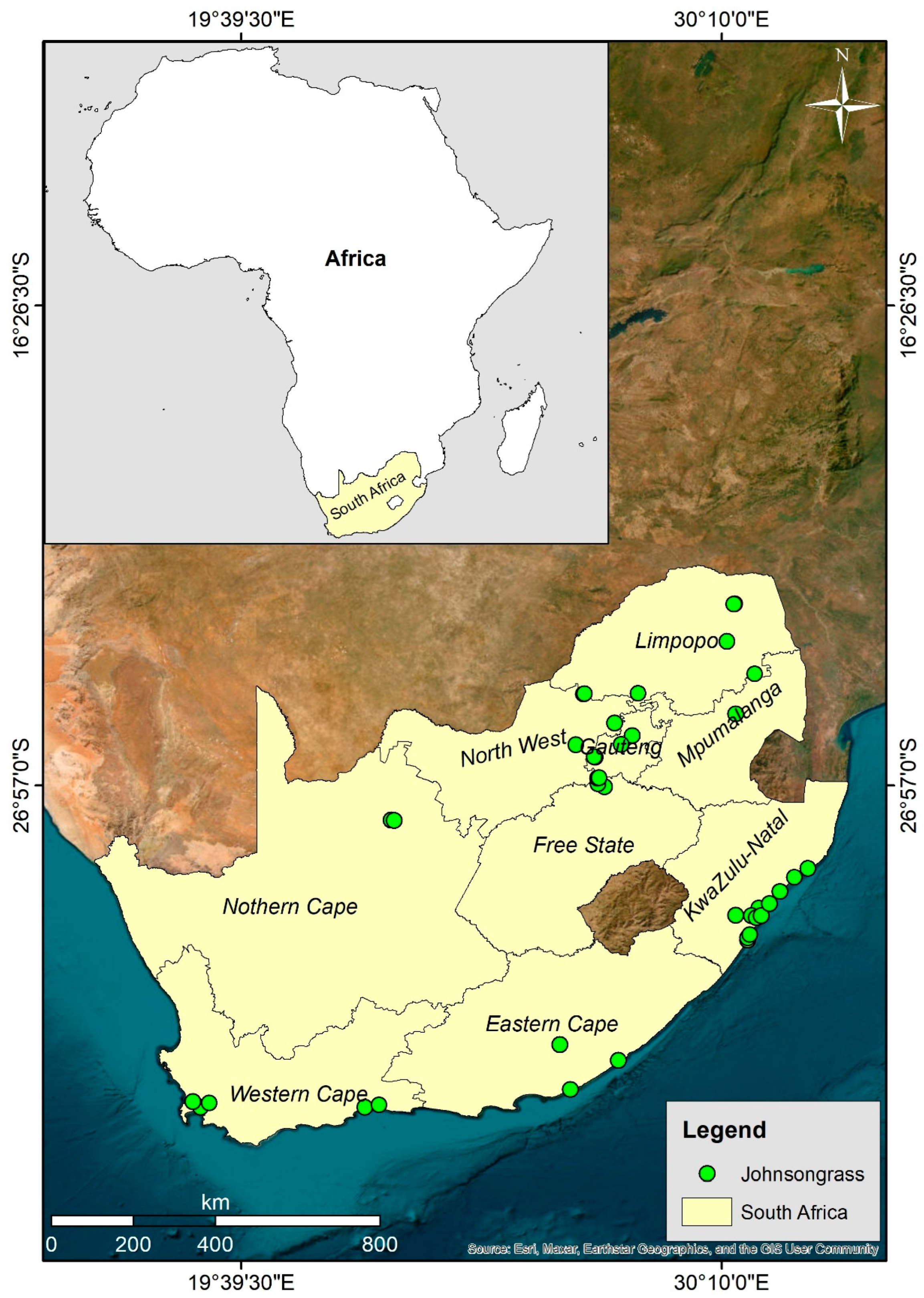
After applying these criteria, 71 articles were retained for the final synthesis and are all listed in the bibliography section. From the 71 publications, the author(s), year, region, key research focus and major findings were extracted. The extracted information was grouped thematically into six domains: plant origin, botanical description, distribution, ecological impacts on biodiversity, effects on livestock, and control management practices or strategies. A narrative synthesis approach was applied to compare findings, highlight contradictions, and identify knowledge gaps. Potential biases include restricting the review to studies published in English, which was inevitable, and may have excluded relevant works published in other languages. The coordinates used for mapping distribition of Johnsongrass were extracted or sourced from the iNaturalists website: https://www.inaturalist.org (accessed on 2 February 2026).

3. History and Origin of Sorghum halepense

The genus sorghum is an economically important member of the Poaceae plant family within the Andropogoneae tribe, which also includes crops like maize (Zea mays), sugarcane (Saccharum spp.), and the millets [12]. Sorghum halepense is a hybrid species from two parent materials, namely Sorghum bicolor and Sorghum propinquum [13]. The genus Sorghum comprises approximately 25 species widely distributed across different regions of the world [13,14]. Previous studies highlighted that Sorghum bicolor and Sorghum propinquum possess adaptive traits that enable them to thrive under harsh environments conditions [15]. Similar traits have been reported on the hybrid called “Sorghum halepense” which was derived from two ancestors, namely Sorghum bicolor and Sorghum propinquum [15]. Sorghum halepense originates from Mediterranean areas of Africa and Asia [12,14]. Its spread or expansion was facilitated by the United States importing contaminated seed containing Sorghum halepense seed. This unintentional introduction subsequently contributed to the current distribution of Sorghum halepense in other countries [2,14,16]. Wind, birds, rivers, and oceans are current drivers of Sorghum halepense across different regions of the world [17].

4. Classification and Description of Sorghum halepense

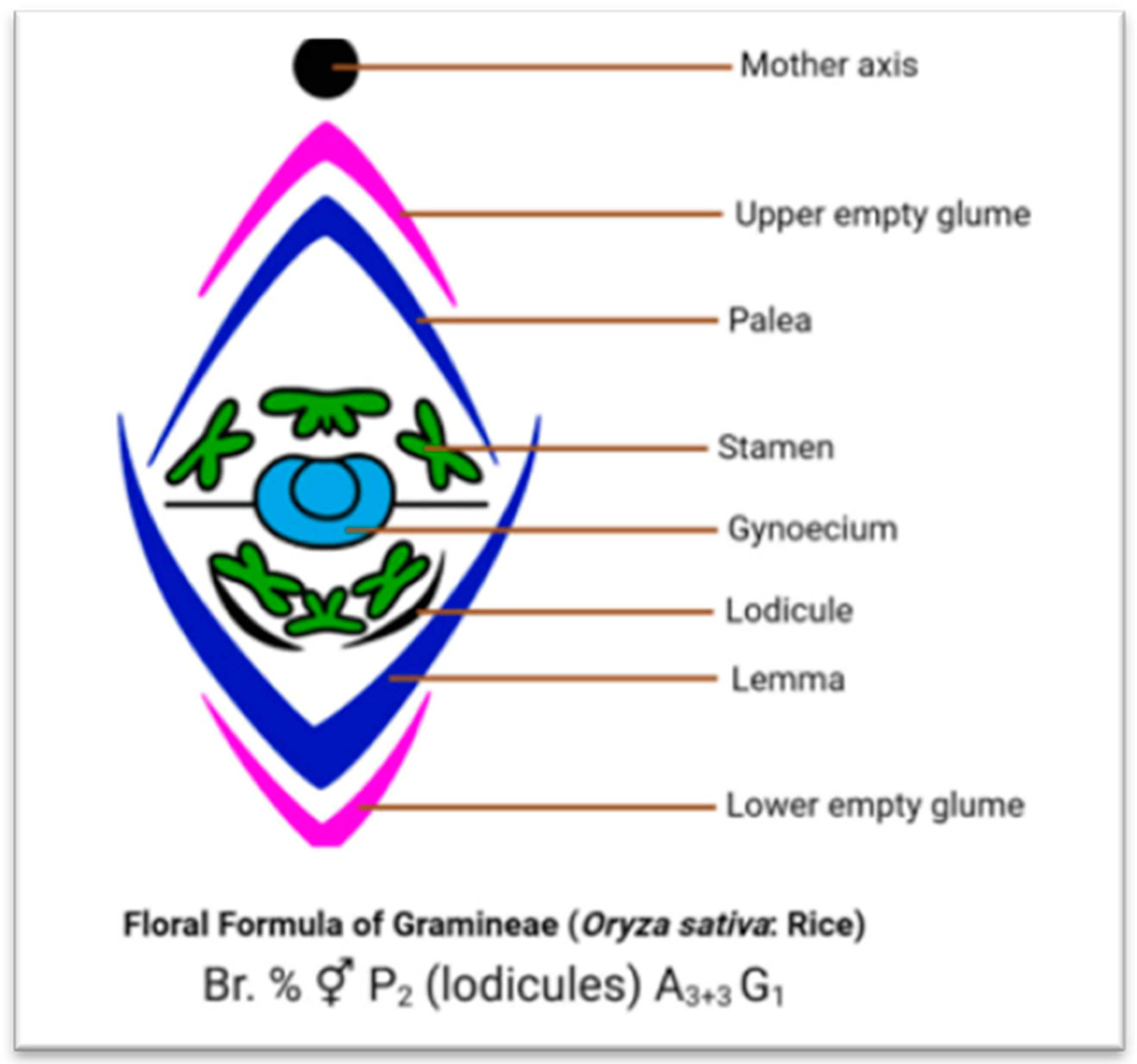
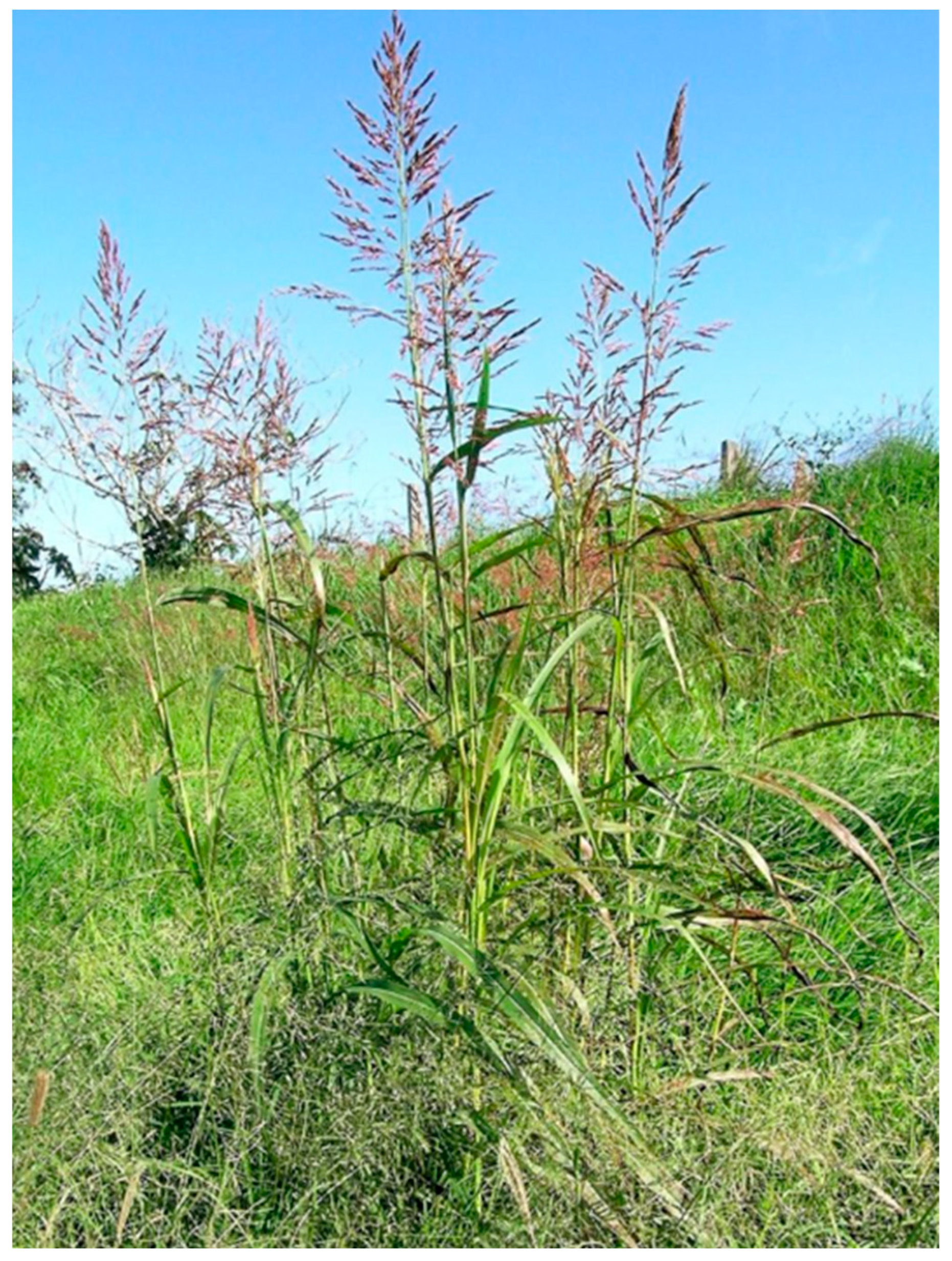
Sorghum halepense is a perennial grass species in the poaceae family [18]. Poaceae is a family of grass species, the fifth-largest plant family, in the order of Poales, with a distinct floral arrangement as shown in Figure 2 [19]. Poaceae is a highly economically important cosmopolitan plant family, comprising a monocotyledonous flowering plant [20]. The grass family is mainly annual or perennial herbaceous, rarely shrubby; however, it does comprise some woody plants, including cereals, bamboo, reeds, and sugarcane [2,21]. Sorghum halepense is a narrow-leaved perennial grass with a distinct morphology in the adult stage, reaching up to 2.5 m in height and 0.5 m–2.0 cm in stem diameter, often rooting from the nodes, with the internodes partially covered with brown scale-like sheaths [22]. The plant has broad leaves that are veined with a prominent white midrib, and can grow up to 60 cm in length and 3.3 cm in width [23]. Its inflorescence is a large, erect panicle, at first compact, later spreading, and an open, pyramidal, purplish, and hairy panicle that grows up to 50 cm long and 20 cm wide [24,25]. The ovary apex is glabrous; styles are free to the base and yellow, pink, red, purple, or black [26]. When mature, the plant produces an open, purplish panicle (seed head), as shown in Figure 3 [17]. Below-ground stems develop an extensive subterranean rhizome network which can account for up to 70% of the plant’s dry weight [18].

5. Distribution and Spread of Sorghum halepense

Sorghum halepense is currently a widespread species with a global footprint [28,29]. The species can be found throughout Asia, Africa, Europe, North and South America, and Australia [30]. In Africa, the plant mainly grows throughout West Africa, south of the Sahara, and to the coast and eastward in Sudan, Ethiopia, and Somalia [30]. Johnson grass is an important plant species in Uganda, Kenya, Tanzania, Rwanda, Burundi, Zambia, Malawi, and the drier areas of Mozambique [29]. In South Africa, S. halepense is gradually spreading across the country, particularly in the Western Cape, Gauteng, KwaZulu-Natal, Mpumalanga, Limpopo, and Eastern Cape provinces, as in Figure 4 [31]. The spread of Sorghum halepense across the different regions of the world is currently driven by natural vectors such as birds, wind, and water systems, including rivers and oceans. These natural vectors facilitate the movement of seeds over both long and short distances [15].

6. Impact of Sorghum halepense on Biodiversity

Grasses are typically categorised into annual and perennial species depending on their lifecycle [32]. Thus, annual grasses complete their life cycles in a single year and maintain seeds for part of the time [33]. While perennial grasses are long-lived and can survive repeated fires and grazing pressure, they are also capable of spreading through vegetative as well as seed reproduction [34]. These differences are valuable in an ecological sense, as the impacts and potential control strategies would differ for these two broad types. Sorghum halepense is a highly reproductive monoecious (self-fertilisation) species producing approximately thousands of seeds per plant in one growing season, and can be viable for up to a decade in the soil [35]. This seed dormancy period substantially enhances its invasiveness and complicates management and eradication efforts [32]. Johnson grass demonstrates a wide range of germination responses at varying soil depths, with nearly 64% at a 1 cm depth, decreasing to 30% at 20–25 cm soil depth [17]. Likewise, the rapid seed germination has led to a high density of Sorghum halepense, resulting in a severe loss of plant diversity, impacting the native vegetation negatively [36]. Its seeds germinate easily in both wild and agricultural fields. Johnsongrass grow more effectively than C4 plants. By doing so, the plant can easily outcompete the indigenous flora by intercepting water and soil nutrients [29]. The seeds’ dispersal is aided by water, wind, livestock, commercial seed contamination, and contaminated machinery [37].
The vegetative reproduction of Johnsongrass happens through the rhizomes, which regenerate easily from small pieces and can grow or remain dormant in a variety of environmental conditions [35]. The enormous, fast-growing rhizome system gives this grass a competitive advantage, allowing it to form dense colonies, displacing desirable vegetation, and restricting tree seedling establishment. Its ecological impact has been evident in soil nutrition, soil temperature, and water content, leading to a C3 species decrease as well as a C4 group biomass increase [26].
At maturity, Sorghum halepense has a higher leaf area, which is host to numerous pests, nematodes, and fungal pathogens for annual crops such as the sorghum midge and leaf spot diseases [32]. As such, the existence of this plant in rangelands poses an increasing invasion risk, threatening agriculture, economic development, and human health [35]. Johnsongrass occurs in temperate, subtropical, and tropical regions where it frequently occurs in ditches, field borders, cultivated lands, waste places, roadsides, other rights-of-ways, creeks, canal banks, and prairies. The plant survives under different conditions, and it usually grows in ditches, field boundaries, cultivated areas, wastelands, roadsides, streams, and canal banks [19].
Land users and researchers have different views regarding the abundance and distribution of S. halepense in grazing lands [36,38]. These varying views can influence the management strategies of S. halepense. Intensive and repeated grazing pressure can weaken the plant, reduce its competitive ability, and in some instances lead to mortality of individual plants [39]. Moreover, this grass strongly competes with native grasses for soil resources, including water and soil nutrients [39]. The plant gains a competitive advantage, attributed to its greater height and vigorous growth habit, by intercepting sunlight before it reaches the underlying grass layer [40,41]. This shading effect reduces light availability to shorter grasses, thereby suppressing their growth and regeneration [28]. Consequently, the invasion of this species can lead to reduced native species diversity, decreased rangeland productivity and a decline in plant diversity and ecosystem functioning [42].

7. Impact of Sorghum halepense on Livestock

Sorghum halepense can provide relatively high nutritional quality forage, with crude protein ranging from 10% to 14% and total digestible nutrient values varying between 55% and 60. The nutritional characteristics of Sorghum halepense suggest that the species could serve as valuable feed resource for livestock, especially during the dry season [39,40]. High protein and energy content from this species can complement the natural grasses during the drier season when native grasses exhibit lower nutritional quality. Nonetheless, the potential nutritional benefits of this species should be considered in the context of this invasive trait and the management challenges it presents, including replacement of native grasses, reduced biodiversity, and increased control expenses. Because of relatively high nutritional benefits and acceptability, cattle often prefer to graze Sorghum halepense [38].
In contrast, Johnsongrass contains high concentrations of nitrate and prussic acid (commonly known as hydrocyanic acid), particularly during early stages and following specific climatic events such as first frost or first rain after prolonged drought [43]. Hydrocyanic acid is formed when the glucosides (sugar compounds) break down in the rumen, freeing the cyanide from the sugar [44]. In addition, nitrate poisoning in livestock occurs when accumulated nitrates in the plant material are converted to nitrite in the rumen [45]. Subsequently, when hydrocyanic acid combines with haemoglobin, it creates cyanglobin, which does not carry oxygen [46]. Similarly, nitrate is normally absorbed into the bloodstream and can interfere with oxygen transportation, resulting in clinical symptoms of toxicity [47]. Because methaemoglobin is unable to transport oxygen effectively to body tissues, ruminant animals die from oxygen insufficiency [40]. High concentrations of prussic acid interfere with oxygen supply; an animal may die from asphyxiation within a few minutes when a lethal dose of prussic acid is consumed [48]. Typical symptoms of toxicity include increased respiratory rate, excessive salivation, muscular tremors, and loss of coordination manifested as staggering. In advanced cases, the affected animal may collapse and die suddenly [49]. The risk to livestock associated with Johnsongrass increases during drought conditions and after intensive grazing and trampling. During these events, Johnsongrass contains a high concentration of toxic compounds and produces rapid regrowth. However, within the family of Gramineae, there are plant species that produce prussic acid; these species include Phaseolus vulgaris and Prunus amygdalus, as illustrated in Table 1.
Furthermore, the toxic dose of hydrocyanic acid leading to death in livestock such as cattle and sheep is approximately 2.0 mg/kg of body weight [50]. However, the tolerance levels are displayed in Table 2 below.

8. Management and Control of Sorghum halepense

8.1. Mechanical Control Method

Sorghum halepense may be controlled using mechanical control methods such as hand uprooting and mowing. Uprooting and mowing may reduce the aboveground foliage, limit seed production, and prevent seed spread. These practices weaken the plant by reducing its ability to photosynthesise and store energy in its rhizomes [52]. When mowing and uprooting are applied at the right time and appropriate growth stages, mechanical control can contribute to lowering the density of Johnsongrass [53]. Mowing alone may not be an effective control method because the plant produces extensive underground stems known as rhizomes. Furthermore, mowing can be highly costly for communal farmers, as it needs specialised machinery [54]. These underground stems enable the plant to store reserves and regenerate after the aboveground parts have been cut. Although mowing can reduce plant height and seed production, the plant is capable of re-sprouting from the underground stems (rhizomes). Therefore, the integration of mechanical practices with other management strategies, such as chemical and burning methods, is often needed to effectively suppress the growth and spread of Johnsongrass [55,56].

8.2. Chemical Control Method

Sorghum halepense has shown extreme resistance to some herbicides; for example, Johnsongrass was found to be resistant to glyphosate in a study conducted in Argentina [57]. Given the genetic relationship of Johnsongrass to Sorghum bicolor, chemical control of Sorghum halepense is difficult, as chemical applications could directly affect native species and create more herbicide-resistant strains [58]. Nearly 32% of common Sorghum bicolor alleles were identified in Sorghum halepense species [59]. This confirmed that the acquired herbicide-resistance gene can be transferred and widely spread [60]. Johnsongrass may be able to be controlled using acetolactate synthase-inhibiting herbicides like sulfosulfuron, nicosulfuron, or primisulfuron; imazapic-acetyl-CoA carboxylase-inhibiting herbicides such as clethodim or sethoxydim; or 5-enolpyruvylshikimate-3-phosphate synthase inhibitors like glyphosate [61]. Proper use of these herbicides has shown an 88% to 97% efficacy rate [42].
However, repeated herbicide use can create resistance. In addition, there is a growing concern that Johnsongrass may emerge as a superweed due to the increased likelihood of herbicide-resistant genes being transferred among sorghum species, including Johnsongrass [17]. Applying tembotrione at 100 g/ha as a postemergence treatment (15–20 DAS) may significantly reduce the density of Sorghum halepense but may also negatively impact other species [17]

8.3. Biological Control

The biological method has also been used as one of the means of suppressing Sorghum halepense [21]. The study involves various agents, among which are insects and pathogenic fungi. Insects such as stem borers affect the plants by damaging plant tissues and thus limiting their seed production [15]. As for fungi, Colletotrichum and Fusarium species have demonstrated potential as effective bioherbicides [26]. They infect leaves and stems, affecting the plant’s ability to photosynthesise efficiently [34]. However, biological methods have not been proven to be efficient due to the difficulties in ensuring host specificity, environmental dependence, and the inconsistency of results obtained during the application of biological control in the field [54]. In addition, the use of animals (in particular, goats and other livestock) may become another alternative way of controlling sorghum in the early stages of development since grazing helps to remove young shoots from the soil surface [55]. This approach should be implemented carefully to avoid new growths from the underground parts of the weed, as well as possible poisoning by cyanide-containing substances.

8.4. Management of the Seed Bank

Management of the seed bank is essential for controlling the population of Sorghum halepense since the species is known for prolific seeding, with numerous seeds capable of surviving in the soil for many years [7]. Moreover, this weed often demonstrates delayed seed dormancy that causes staggered germination. This complicates the problem of control since new plants will keep coming out of the soil over a certain period. Therefore, efficient management measures will involve the prevention of seed formation in the first place [60]. In order to accomplish this task, timely mowing and/or herbicide treatment will be carried out before flowering occurs [61]. Apart from mechanical/chemical measures, various cultural techniques may prove effective in minimising the seed bank. One such technique includes the use of the stale seedbed approach; the weed seeds should be allowed to germinate after sowing and removed through tillage or the application of non-selective herbicides before crop establishment [62]. Tillage can be used appropriately, as well, since it will push weed seeds too far under the soil surface, which reduces germination chances. Nonetheless, it is important to not disturb the soil layer excessively since this will bring dormant weed seeds to the surface, where they will be able to germinate. Another useful strategy in dealing with a persistent seed bank would be proper mulching and the use of cover crops, as they reduce exposure to light, which inhibits seed germination [63].

8.5. Integrated Management (IM)

The integrated management (IM) technique appears to be the best and most sustainable technique that can be used in managing Sorghum halepense [64]. The IM method involves the combination of a number of techniques to form an effective strategy. Using agricultural practices such as crop rotation, selection of competing crop species, and optimal plant density reduces the competitiveness of invasive plants [65]. Mechanical control such as through cutting and tillage involves turning the soil to disturb and expose underground stems, which helps expose and remove the underground stems from the soil. This technique aims to deplete plant reserves and reduce vegetation reproduction. Bringing roots to the surface means they may dry out and reduce their ability to regenerate. However, deep ploughing is applicable in cultivated croplands rather than in rangelands. Therefore, tillage should be carefully timed and integrated with other management practices to improve the effectiveness of the technique. However, ploughing or tillage can be very expensive for resource-poor farmers, as it requires the use of specialised machinery [57,66].
From a rangeland point of view, ploughing or tillage can severely disturb the natural vegetation cover, damage desirable perennial grasses, and accelerate soil erosion. One of the principles of rangeland management is to maintain stable soil structure and vegetation cover; therefore, an intensive soil disturbance approach is not suitable for rangelands.
The use of chemicals, especially herbicides such as molopo and glyphosate, may also play a significant in reducing the density of invasive grasses like Sorghum halepense as they can effectively control the weed both above and underground [67,68]. However, the use of herbicides comes with various limitations; for example, controlled plants might develop resistance over time [69,70]. Due to the fast growth and high biomass production of Sorghum halepense, particularly in warmer and drier climatic conditions, prescribed burning may also suppress the aboveground vegetation. However, timing and the proper application of burning are critical as burning can cause severe damage to properties [58,71].

9. Conclusions

Sorghum halepense is one of the most aggressive invasive weeds worldwide. Originating from hybridisation between Sorghum bicolor and Sorghum propinquum, the species possesses strong adaptive traits that enable it to thrive across diverse environments. Its rapid growth, prolific seed production, and extensive rhizome system allow it to spread quickly and dominate croplands and rangelands across Africa, Asia, Europe, and Australia. As a result, it suppresses native vegetation, reduces plant biodiversity, and alters ecosystem functioning through strong competition for water, nutrients, and space. Although Sorghum halepense can produce substantial forage biomass, its benefits are limited by the risk of livestock poisoning due to nitrate and hydrocyanic acid accumulation, particularly under stress conditions. Managing this species remains challenging because of its reproductive versatility and strong regenerative capacity. Mechanical control can reduce aboveground biomass but is often ineffective alone due to underground rhizomes, while deep ploughing is unsuitable for rangelands. Prescribed burning and chemical control may provide additional options, although herbicide resistance and high costs limit their effectiveness, especially for resource-poor farmers. Future research should focus on developing cost-effective, integrated management strategies, improving early detection, and monitoring systems, and enhancing understanding of the species’ ecological responses to climate change. Such efforts are essential to limit the spread of Sorghum halepense and protect rangeland biodiversity, agricultural productivity, and livestock health.

Author Contributions

Conceptualisation: S.T., Methodology: A.D. and S.T. Software: L.R., Validation: S.T. Formal analysis: A.D. and S.T. Investigation: W.M., A.D. and S.T. Resources: S.T. Data curation: A.D. Writing original draft: S.T., A.D., W.M., M.R., A.K. and S.M. All authors have read and agreed to the published version of the manuscript.

Funding

This research received no external funding.

Data Availability Statement

No new data were created or analyzed in this study. Data sharing is not applicable to this article.

Acknowledgments

We are grateful to the Eastern Cape Department of Agriculture and Dohne Agriculture Development Institute (DADI) for the opportunity to conduct this research.

Conflicts of Interest

The authors declare no potential conflicts of interest.

References

  1. Eberlein, C.V.; Miller, T.L.; Luryey, E.L. Seasonal emergence and growth of Sorghum almum. Weed Technol. 1988, 2, 275–281. [Google Scholar] [CrossRef]
  2. Schantz, M.C. Sorghum halepense (Johnsongrass): A review of the invasion, management, and spread in the changing climate of the Southern Great Plains. Weed Sci. 2025, 73, e31. [Google Scholar] [CrossRef]
  3. McWhorter, C.G. Introduction and spread of Johnsongrass in the United States. Weed Sci. 1971, 19, 496–501. [Google Scholar] [CrossRef]
  4. Peerzada, A.M.; Ali, H.H.; Hanif, Z.; Bajwa, A.A.; Kebaso, L.; Frimpong, D.; Iqbal, N.; Namubiru, H.; Hashim, S.; Rasool, G.; et al. Eco-biology, impact, and management of Sorghum halepense (L.) Pers. Biol. Invasions 2017, 25, 955–973. [Google Scholar] [CrossRef]
  5. Ryder, N. Transcriptome assembly and annotation of Johnsongrass (Sorghum helepense) rhizomes identify candidate rhizome-specific genes. Plant Direct 2018, 2, e00065. [Google Scholar] [CrossRef]
  6. Overpeck, J.K.; Bartlein, P.J.; Webb, T. Potential magnitude of future vegetation change in eastern north America: Comparisons with the past. Science 1991, 254, 692–705. [Google Scholar] [CrossRef]
  7. Kelly, S.; Fletcher, R.A.; Barney, J.N. Intraspecific, ecotypic and home climate variation in photosynthetic traits of the widespread invasive grass Johngrass. AoB Plants 2020, 12, plaa015. [Google Scholar] [CrossRef]
  8. Yim, K.O.; Bayer, D.E. Rhizome expression in a selected cross in the Sorghum genus. Euphytica 1997, 94, 6. [Google Scholar] [CrossRef]
  9. Coiner, H.; Hayhoe, K.A.; Ziska, L.H.; Van Dorn, J.; Sage, R.F. Tolerance of subzero winter cold in kudzu (Pueraria montana var. lobata). Oecolgia 2018, 187, 839–849. [Google Scholar] [CrossRef]
  10. Hariprasanna, K.; Patil, J.V. Sorghum: Origin, classification, biology, and improvement. In Sorghum Molecular Breeding; Springer: New Delhi, India, 2015; pp. 3–20. [Google Scholar]
  11. Bednarova, M.; Karafiatova, M.; Hribova, E.; Bartos, J. B chromosomes in genus Sorghum (Poaceae). Plants 2021, 10, 505. [Google Scholar] [CrossRef]
  12. Garber, E.D. Cytotaxanomic studies in the genus Sorghum. Univ. Calif. Publ. Bot. 1950, 23, 283–362. [Google Scholar]
  13. Lazarides, M.; Hacker, J.B.; Andrew, M.H. Taxonomy, cytology, and ecology of indigenous Australian sorghum (Sorghum Moench: Andropogoneae: Poaceae). Aust. Syst. Bot. 1991, 4, 591–635. [Google Scholar] [CrossRef]
  14. Gamashe, S.S.; Tayade, N.; Ganapathy, K.N. Sorghum. In Plant Genebank Utilization for Trait Discovery in Milletps; Springer Nature: Singapore, 2025; Volume IV, pp. 43–76. [Google Scholar]
  15. Sias, C. Understanding Interspecific Hybridization Between Sorghum bicolor and Its Weedy Congener, S. halepense. Doctoral Dissertation, Texas A&M University, College Station, TX, USA, 2020. [Google Scholar]
  16. Gui, H.; Jiao, Y.; Tan, X.; Wang, X.; Huang, X.; Paterson, A.H. Duplication and genetic innovation in cereal genomes. Genome Res. 2019, 29, 261–269. [Google Scholar] [CrossRef]
  17. Peterson, A.H.; Kong, W.; Johnston, R.M.; Nabukalu, P.; Wu, G.; Poehlman Şin, B.; Kadıoğlu, İ.; Yıldırım, C. Determination of some biological properties of the seeds of the Johnson grass (Sorghum halepense (L.) Pers.). J. Agric. Biotechnol. 2024, 5, 71–78. [Google Scholar] [CrossRef]
  18. Khan, M.N.; Ali, S.; Yaseen, T.; Ullah, S.; Zaman, A.; Iqbal, M.; Shah, S. Eco-taxonomic study of family Poaceae (Gramineae). RADS J. Biol. Res. Appl. Sci. 2019, 10, 63–75. [Google Scholar] [CrossRef]
  19. Xu, Z.; Zhou, G. Gramineae. In Identification and Control of Common Weeds; Springer: Dordrecht, The Netherlands, 2017; Volume 1, pp. 3–364. [Google Scholar]
  20. Liang, Z.; Shi, S.; Xue, B.; Li, D.; Liu, Y.; Liu, C. Comparative analysis of TALE gene family in Gramineae. Agronomy 2025, 15, 1460. [Google Scholar] [CrossRef]
  21. Klein, P.; Smith, C.M. Invasive Johnsongrass, a threat to native grasslands and agriculture. Biologia 2021, 76, 413–420. [Google Scholar] [CrossRef]
  22. Warwick, S.I.; Black, L.D. The biology of Canadian weeds.: 61. Sorghum halepense (L.) Pers. Can. J. Plant Sci. 1983, 63, 997–1014. [Google Scholar] [CrossRef]
  23. Nestorović Živković, J.; Simonović, M.; Mišić, D.; Nešić, M.; Jovanović, V.; Gašić, U.; Bjedov, I.; Dmitrović, S. Bioherbicidal Evaluation of Methanol Extract of Sorghum halepense L. Rhizome and Its Bioactive Components Against Selected Weed Species. Molecules 2025, 30, 3060. [Google Scholar] [CrossRef]
  24. Kigel, J.; Rubin, B. Sorghum halepense. In Handbook of Flowering; CRC Press: Boca Raton, FL, USA, 2019; pp. 376–379. [Google Scholar]
  25. Rout, M.E.; Chrzanowski, T.H.; Smith, W.K.; Gough, L. Ecological impacts of the invasive grass Sorghum halepense on native tallgrass prairie. Biol. Invasions 2013, 15, 327–339. [Google Scholar] [CrossRef]
  26. Giantin, S.; Franzin, A.; Brusa, F.; Montemurro, V.; Bozzetta, E.; Caprai, E.; Fedrizzi, G.; Girolami, F.; Nebbia, C. Overview of cyanide poisoning in cattle from Sorghum halepense and S. bicolor cultivars in Northwest Italy. Animals 2024, 14, 743. [Google Scholar] [CrossRef] [PubMed]
  27. iNaturalist. 2026. Available online: https://www.inaturalist.org/observations?taxon_id=58387 (accessed on 2 February 2026).
  28. Taylor, J.R. Sorghum and millets: Taxonomy, history, distribution, and production. In Sorghum and Millets; AACC International Press: St. Paul, MN, USA, 2019; pp. 1–21. [Google Scholar]
  29. Hedayetullah, M.; Zaman, P. Johnson Grass (Aleppo Grass) Md. Hedayetullah and Parveen Zaman. In Forage Crops of the World, Volume I: Major Forage Crops; Apple Academic Press: Palm Bay, FL, USA, 2018; pp. 99–110. [Google Scholar]
  30. Linder, H.P.; Lehmann, C.E.; Archibald, S.; Osborne, C.P.; Richardson, D.M. Global grass (Poaceae) success underpinned by traits facilitating colonization, persistence, and habitat transformation. Biol. Rev. 2018, 93, 1125–1144. [Google Scholar] [CrossRef] [PubMed]
  31. Reynolds, L.; Wangdi, K. Country Pasture/Forage Resource Profiles; FAO: Rome, Italy, 2006. [Google Scholar]
  32. Wood, A.R.; Den Breeÿen, A. Plant pathogens and biological control of invasive alien plants in South Africa: A review of projects and progress (2011–2020). Afr. Entomol. 2021, 29, 983–1004. [Google Scholar] [CrossRef]
  33. O’Connor, T.G.; van Wilgen, B.W. The impact of invasive alien plants on rangelands in South Africa. In Biological Invasions in South Africa; Springer International Publishing: Cham, Switzerland, 2020; pp. 459–487. [Google Scholar]
  34. Friedman, J. The evolution of annual and perennial plant life histories: Ecological correlates and genetic mechanisms. Annu. Rev. Ecol. Evol. Syst. 2020, 51, 461–481. [Google Scholar] [CrossRef]
  35. Mordecai, E.A.; Molinari, N.A.; Stahlheber, K.A.; Gross, K.; D’Antonio, C. Controls over native perennial grass exclusion and persistence in California grasslands invaded by annuals. Ecology 2015, 96, 2643–2652. [Google Scholar] [CrossRef]
  36. Nagaraja, T.E.; Parveen, S.G.; Aruna, C.; Hariprasanna, K.; Singh, S.P.; Singh, A.K.; Joshi, D.C.; Joshi, P.; Tomar, S.M.S.; Talukdar, A.; et al. Millets and pseudocereals: A treasure for climate resilient agriculture ensuring food and nutrition security. Indian J. Genet. Plant Breed. 2024, 84, 1–37. [Google Scholar] [CrossRef]
  37. Yazlik, A.; Üremiş, İ. Impact of Sorghum halepense (L.) Pers. on the species richness in native range. Phytoparasitica 2022, 50, 1107–1122. [Google Scholar] [CrossRef]
  38. Bennett, H. Johnsongrass, dallisgrass, and other grasses for the humid south. In Forages: The Science of Grassland Agriculture, 3rd ed.; Heath, M.E., Metcalfe, D.S., Barnes, R.F., Eds.; Iowa State University Press: Ames, IA, USA, 1973; pp. 333–343. [Google Scholar]
  39. Hawkins, G.E.; Kelley, W.; Smith, L. Comparison of Starr Millet, Sweet, Sudangrass, Johngrass as Dairy Forages; Alabama Agricultural Experiment Station Leaflet Circular; Auburn University: Auburn, AL, USA, 1958; pp. 60–75. [Google Scholar]
  40. Rocteli, A.; Manuchehri, M. Johnsongrass in Pastures: Weed or Forage? Oklahoma State University: Stillwater, OK, USA, 2017; Volume 8, pp. 15–36. [Google Scholar]
  41. Watson, V.H.; Coats, R.E.; Kimbrough, L.E. Johnsongrass as a forage in Mississippi. Miss. State Univ. Bull. 1980, 886, 528. [Google Scholar]
  42. Andrae, J. Grazing impacts on pasture composition. UGA Coop. Ext. Bull. 2009, 1243, 1–6. [Google Scholar]
  43. Stichler, C.; Reagor, J.C. Nitrate and Prussic acid Poisoning; Drovers: Inverarnan, UK, 2024; pp. 45–60. [Google Scholar]
  44. Gensa, U. Review on cyanide poisoning in ruminants. J. Biol. Agric. Health 2019, 9, 1–12. [Google Scholar]
  45. Amjadian, O.A.; Arji, I.; Changizi, M.; Khaghani, S.; Salehi, H.R. Determination of cyanogenic glycosides in endemic species of wild almond seeds in the Zagros Mountains. Braz. J. Bot. 2020, 43, 697–704. [Google Scholar] [CrossRef]
  46. Baeza, M.; Luis, D.; Raventos, J.; Escarre, A. Factors influencing fire behaviour in shrublands of different stand ages and the implications for using prescribed burning to reduce wildfire risk. J. Environ. Manag. 2002, 65, 199–208. [Google Scholar] [CrossRef] [PubMed]
  47. Ceseki, A.; Al-Khatib, K.; Dahlberg, J.A. Biology and Management of Johnsongrass (Sorghum halepense); ANNR Publication 8569; University of California Agriculture and Natural Resources: Davis, CA, USA, 2017; 11p. [Google Scholar]
  48. Cox, S.; Nabukalu, P.; Paterson, A.H.; Kong, W.; Nakasagga, S. Development of Perennial Grain Sorghum. Sustainability 2018, 10, 172. [Google Scholar] [CrossRef]
  49. Johnson, W.G.; Wait, J.D. Johnsongrass control, total nonstructural carboydrates in rhizomes, and regrowth after application of herbicide-resistant corn (Zea mays). Weed Technol. 2003, 17, 36–41. [Google Scholar] [CrossRef]
  50. McCulough, P.; Shilling, D. Johnsongrass control in pastures, roadsides, and noncropland areas. UGA Coop. Ext. Bull. 2022, 15, 1–4. [Google Scholar]
  51. Emendack, Y.; Sanchez, J.; Laza, H. Dhurrin: A potential endogenous nitrogen turnover source for early seedling growth in sorghum. Front. Plant Sci. 2025, 16, 155–871. [Google Scholar] [CrossRef]
  52. Vinall, H. A study of the literature concerning poisoning of cattle by the prussic acid in sorghum, Sudan grass and Johnson grass. J. Am. Soc. Agron. 1921, 13, 267–280. [Google Scholar] [CrossRef][Green Version]
  53. Morell, P.L.; Williams-Coplin, T.D.; Lattu, A.L.; Browsers, J.E.; Chandler, J.M.; Paterson, A.H. Crop to weed introgression has impacted allelic composition of Johnsongrass populations with and without recent exposure to cultivated Sorghum. Mol. Ecol. 2005, 14, 2143–2154. [Google Scholar] [CrossRef]
  54. Sankaran, S.; Rajasekaran, M.P.; Govindaraj, V.; Sowmiya, P.; Shiny-Rebekka, S.; Kaleeswaran, B. Acute Cyanide Poisoning: Identification of Prussic Acid in by Analyzing of Various Parameters in Cattle. In Proceedings of the 2020 International Conference on Communication and Signal Processing, Bangalore, India, 19–24 July 2020; pp. 561–568. [Google Scholar]
  55. Provin, T.; Pitt, J.L. Nitrates and Prussic Acid in Forages: Sampling, Testing and Management Strategies; The Texas A&M University System: College Station, TX, USA, 2024. [Google Scholar]
  56. Rashid, S.; Ashraf, R.; Jamil, F.; Sanawar, S.; Zubair, Z.; Iftikhar, H.F. Use and abuse of sorghum and jequirity plants in cattle. In One Health Triad; Unique Scientific Publishers: Faisalabad, Pakistan, 2023; Volume 3, pp. 194–201. [Google Scholar]
  57. Kohler, B.; Gigon, A.; Edwards, P.J.; Krusi, B.; Langenauer, R.; Luscher, A. Changes in the species composition and conservation value of limestone grassland in Northern Switzerland after 22 years of contrasting managements. Perspect. Plant Ecol. Evol. Syst. 2005, 7, 51–67. [Google Scholar] [CrossRef]
  58. Deen, A.U.; Kumari, V.; Sharma, A.N.; Mondal, G.; Singh, G.P. Understanding cyanogenic glycoside toxicity in livestock: A review. Int. Chem. Stud. 2018, 6, 1559–1561. [Google Scholar]
  59. Harris, B.; Shearer, J. Nitrate, Prussic Acid and Grass Tetany Problems in Cattle Feeding; DS6; Animal Science Department, Florida Cooperative Extension Service, Institute of Food and Agricultural Sciences, University of Florida: Gainesville, FL, USA, 2003; 5p. [Google Scholar]
  60. Dweikat, I. A diploid, interspecific, fertile hybried from caltivated Sorghum, Sorghum bicolor, and the common Johngrass weed Sorghum helepense. Mol. Breed. 2005, 16, 93–101. [Google Scholar] [CrossRef]
  61. Venkateswaran, K.; Elangovan, M.; Sivaraj, N. Origin, Domestication, and diffusion of sorghum bicolor. In Breeding Sorghum for Diverse End Uses; Woodhead Publ.: Delhi, India, 2019; pp. 15–31. [Google Scholar]
  62. Van Saun, R.J. Trace mineral nutrition of sheep. Vet. Clin. Food Anim. Pract. 2023, 39, 517–533. [Google Scholar] [CrossRef] [PubMed]
  63. T’oth, V.; Lehoczky, E. Investigations on the germination depth of Johnsongrass (Sorghum helepense) pers. Commun. Agric. Appl. Biol. Sci. 2006, 71, 803–808. [Google Scholar]
  64. Sinha, R.K.; Kumari, B.I.B.H.A.; Kumar, A.N.I.L.; Azad, C.S. Sorghum poisoning in cattle and its therapeutic management. J. AgriSearch 2019, 6, 108–109. [Google Scholar]
  65. Selk, G. Nitrate and Prussic Poising in Cattle; CR-3272; Oklahoma Cooperative Extension Service: Stillwater, OK, USA, 1988; 6p. [Google Scholar]
  66. Fletcher, R.A.; Varnon, K.M.; Barney, J.N. Climate drives differences in the germination niche of globally distributed invasive grass. J. Plant Ecol. 2020, 13, 195–203. [Google Scholar] [CrossRef]
  67. Majumdar, S.; Sanwal, U.; Inderjit. Interference potential of Sorghum halepense on soil and plant seedling growth. Plant Soil. 2017, 418, 219–230. [Google Scholar] [CrossRef]
  68. Shiferaw, W.; Demissew, S.; Bekele, T. Ecology of soil seed banks: Implications for conservation and restoration of natural vegetation: A review. Int. J. Biodivers. Conserv. 2018, 10, 380–393. [Google Scholar] [CrossRef]
  69. Netto, A.G.; Christoffoleti, P.; VanGessel, M.; Carvalho, S.J.; Nicolai, M.; Brunharo, C. Seed production, dissemination, and weed seedbanks. In Persistence Strategies of Weeds; John Wiley & Sons: Hoboken, NJ, USA, 2022; pp. 19–42. [Google Scholar]
  70. Panotra, N.; Ashoka, P.; Vashistha, A.; Mohanty, L.K.; Yadav, V.; Gopal, R.; Parameswari, P.; Kaur, S. Integrated weed management in modern agriculture: A review of innovative approaches and their efficiency. J. Sci. Res. Rep. 2025, 31, 775–797. [Google Scholar] [CrossRef]
  71. Mashece, W.; Beyene, S.T.; Mndela, M.; Jordaan, G.; Gulwa, U.; Tokozwayo, S. Effect of herbicides on forage dry matter yield and plant density in the old arable lands in communal area of the Eastern Cape Province, South Africa. Int. J. Plant Biol. 2024, 15, 110–121. [Google Scholar] [CrossRef]
Figure 1. PRISMA flow diagram illustrating the screening and selection process for studies included in this review.
Ecologies 07 00051 g001
Figure 2. Schematic diagram which illustrates floral structure and formular for Poaceae grass family [18].
Ecologies 07 00051 g002
Figure 3. The image shows the picture of Sorghum halepense identified in communal rangelands of the in Eastern Cape Province [27].
Ecologies 07 00051 g003
Figure 4. Distribution of S. halepense in South Africa [27].
Ecologies 07 00051 g004
Table 1. Different plant families, plant sources and types of cyanogenic glycosides.
Plant FamilyScientific NameType of Cyanogenic GlycosideConcentration
Level
References
GramineaeSorghum helepenseDhurin (C14H17NO7)High[50,51]
FabaceaePhaseolus vulgarisLinamarin (C10H17NO6)High[52]
RosaceaePrunus amygdalusPrunacin (C14H17NO6)High[50]
Table 2. Livestock tolerance to levels of hydrocyanic acid in feed (dry matter basis) [adapted from [51].
Hydrocyanic Acid (ppm)Effect on Livestock
Less than 500Considered safe
500–750Slightly toxic, should not be the only source of feed to livestock
>750Toxic and will cause animal death
Disclaimer/Publisher’s Note: The statements, opinions and data contained in all publications are solely those of the individual author(s) and contributor(s) and not of MDPI and/or the editor(s). MDPI and/or the editor(s) disclaim responsibility for any injury to people or property resulting from any ideas, methods, instructions or products referred to in the content.