Article

Assessment of Agroecological Factors Shaping the Population Dynamics of Sunn Pest (Eurygaster integriceps Puton) in Kazakhstan


by
Shynbolat Rsaliyev
1,*,
Amangeldy Sarbaev
1,
Aidarkhan Eserkenov
1,
Sholpan Bastaubayeva
1,
Nurbakyt Orazaliev
2,
Arman Baimagambetov
1,3 and
Kanat Yermekbayev
4,*
1
Kazakh Research Institute of Agriculture and Plant Growing, Almalybak 040909, Kazakhstan
2
Krasnovodopad Agricultural Experimental Station, Saryagash 160914, Kazakhstan
3
Faculty of Agrobiology, Kazakh National Agrarian Research University, Almaty 050010, Kazakhstan
4
Research Institute of Biotechnology and Ecology, Zhetysu University Named After Zhansugurov, Taldykorgan 040009, Kazakhstan
*
Authors to whom correspondence should be addressed.
Ecologies 2025, 6(4), 81; https://doi.org/10.3390/ecologies6040081 (registering DOI)
Submission received: 17 October 2025 / Revised: 21 November 2025 / Accepted: 24 November 2025 / Published: 1 December 2025

Abstract

The Sunn pest (Eurygaster integriceps Puton) ranks among the most harmful pests affecting wheat yield and grain quality in Kazakhstan. In particular, it poses a serious threat to regions in which winter wheat cultivation is dominant. Climate change, parasites, predators, and recent transformations in agriculture and human activities in Kazakhstan and throughout Central Asia have significantly influenced the population dynamics of the Sunn pest. This study reports the findings on Sunn pest population dynamics in Kazakhstan’s winter wheat growing regions from 2022 to 2024, based on surveys of 233 hectares across four regions. In total, 1753 specimens of the Sunn pest were studied. The obtained results were analyzed in comparison with historical data (1991–2020) and recent findings in this field. We found that a combination of ecological factors are the main determinants of the Sunn pest population dynamics in different regions of the country. The pest population increased in seasons with optimal temperature (sum of effective temperatures—SET) and humidity conditions (hydrothermal coefficient—HTC), as well as when wheat cultivation areas and forest belts expanded. Moreover, the results highlighted that the pest population is controlled by the activity of egg parasites (Telenomus) in the south, unfavorable weather conditions during overwintering in the east and west, and the growing of resistant varieties in the southeast of the country. Compared to wild grasses, wheat crops increased the reproductive potential of the pest.

1. Introduction

The Sunn pest (Eurygaster integriceps Puton) (Hemiptera: Scutelleridae) is a major economic threat to wheat production in many countries of Central and Western Asia, Eastern Europe, and North Africa [1,2,3,4]. In years of mass outbreaks, this pest can cause critical disruptions in grain production in Russia, Türkiye, Iran, Syria, and other countries [2,5,6,7,8]. In Kazakhstan, the Sunn pest is officially recognized as a highly detrimental agricultural pest, warranting state-supported management and control measures. Upon initial detection in crop fields, integrated pest management (IPM) protocols are promptly enacted according to national guidelines for the control of priority pest species [9].
The use of insecticides remains the main strategy for controlling the Sunn pest to obtain high-quality grain yields [3,7,10]. Modern insecticides, mainly pyrethroids, demonstrate high biological effectiveness (82–96%) and a long-lasting effect [11,12]. For example, spring treatments against overwintered bugs reduce the Sunn pest egg population by 1.5–3.3 times. However, intensive use of insecticides can lead to environmental pollution, the death of natural enemies, and the emergence of various ecological risks. Thus, the application of insecticides and herbicides in wheat fields results in 100% mortality of beneficial insects [10,13,14].
Climate change further exacerbates the challenges of protecting wheat from the Sunn pest. In particular, it has a negative effect on control measures applied in wheat fields, leading to the destabilization of the phytosanitary status of crops, increased pest harmfulness and pesticide resistance, and, consequently, the disruption of effective pest management strategies. Ultimately, this results in significant yield losses [15,16,17,18,19].
The lack of technology and insufficient funding after the collapse of the USSR triggered economic hardship in the country, leading to new agricultural reforms which significantly complicated plant protection measures, particularly in cereal crops like wheat. Since 1994, Sunn pest populations have increased in traditional winter wheat growing regions such as Turkestan, Zhambyl, Almaty, and East and West Kazakhstan [20]. In recent years, therefore, an increase in the Sunn pest’s population size has been observed across Kazakhstan [4,21]. This highlights the importance of research studies on the impact of various environmental factors on population dynamics of the Sunn pest based on the analysis of long-term datasets.
Meteorological factors (air temperature, precipitation, and hydrothermal coefficient), biotic, trophic (annual life cycle features, interactions between pests and parasitoid oophages, and pest feeding on different host crops), and anthropogenic factors (cereal crop planting, wheat proportion in crop rotations, shelterbelts, insecticide treatments, and varietal resistance) affecting Sunn pest development in winter and spring wheat fields have been extensively studied in Kazakhstan [20,22,23,24,25,26]. However, no studies have been conducted to evaluate the impact of the aforementioned factors on Sunn pest development in cereal crops under the scenario caused by climate change. The aim of this study was to analyze agroecological factors influencing Sunn pest population dynamics in winter wheat-growing regions of Kazakhstan to improve IPM and integrated pest management strategies. The results of a study of Sunn pest population dynamics from 2022 to 2024 are presented, based on surveys in four regions of the republic. The findings were analyzed using long-term data (1991–2020).

2. Materials and Methods

2.1. Experiment Locations

Studies of various climatic factors (air temperature, precipitation, and hydrothermal coefficient) influencing the population dynamics of the Sunn pest were conducted across Kazakhstan from 2022 to 2024. The obtained results were analyzed in comparison with 30-year data (1991–2020) collected throughout the country. Pest monitoring was carried out in the western (West Kazakhstan and Aktobe), southern (Turkistan), southeastern (Almaty, Zhambyl, and Zhetysu), and eastern (Abai and East Kazakhstan) regions of Kazakhstan where winter wheat is predominantly cultivated (Figure 1).
The large-scale experiments were conducted at two experimental sites of the Kazakh Research Institute of Agriculture and Plant Growing (KRIAPG) in the Almaty region: (i) the main KRIAPG Nursery and (ii) the Karoy Nursery. Additional trials were carried out in the east at the Taldykorgan branch of KRIAPG (Zhetysu region), in the southeast at LLC “Sypatai Batyr” (Zhambyl region), in the south at the Krasnovodopad Agricultural Experimental Station (Turkistan region), and in the west at the West Kazakhstan Agricultural Experimental Station (West Kazakhstan region). From 2022 to 2024, a total of 233 hectares of winter wheat fields were surveyed across four regions of Kazakhstan, and 1753 Sunn pest individuals were studied (Table 1).

2.2. Plant Material

The characteristics determining the survival rate of the Sunn pest in different developmental phases were monitored on widely grown winter (Saratovskaya 90, Zhemchujina Povolzhya (Institute of Agriculture of the South-East, Saratov, Russia), Steklovidnaya 24, Bogarnaya 56 (Kazakh Institute of Agriculture and Plant Growing, Kazakhstan), Krasnovodopad 210, Yuzhnaya 12 (Krasnovodopad Agricultural Station, Kazakhstan)) and spring (Volgouralskaya (Ural Agricultural Station, Kazakhstan), and Saratovskaya 42 (Institute of Agriculture of the South-East, Saratov, Russia)) wheat varieties using the standardized protocol (Table S4) [27]. Wheat seeds were sown following the Methodology of State Variety Testing of Agricultural Crops [28], in accordance with the principles and rules of field experimentation [29]. Additional experiments on bulbous barley (Hordeum bulbosum) and smooth brome (Bromus inermis) were conducted in their natural habitat.

2.3. Pest Research Methods

The species and morphological characteristics of the Sunn pest on wheat and grass species were determined using established pest identification protocols [5,30]. The phenotypes scored included pre-oviposition body mass (POBM, mg), number of eggs per female (NEF, pcs), larval developmental period (PDP, days), number of adult per square meter (NAM, m2), and adult body mass (ABM, mg). For each characteristic, three individual pests were assessed, except NAM, for which four pests were examined. The causes of pest development or suppression in wheat fields were identified depending on weather conditions (air temperature and precipitation), the sum of effective temperatures (SET), the hydrothermal coefficient (HTC), the varietal resistance of wheat to the pest, and the cultivation region.
Overwintering adults were surveyed in spring once air temperatures stabilized above +5–6 °C, with assessments of abundance, species composition, survival rate, and mortality causes. During the growing season, pest density was monitored 3–4 times per field using a 1 m2 frame for direct counts, complemented by sweep-net sampling (30 cm diameter, 60 cm depth, 1.5 m handle). One sample represented 10 continuous sweeps (~1 m2) [5], with collections standardized to 10 m2 per site. Sampling was repeated every 5–10 days to refine phenological observations. At migration, the abundance and mean body mass of young adults were also recorded [5]. Meteorological data (temperature and precipitation) were obtained from local weather stations and compared with 30-year climatic averages (1991–2020).

2.4. Methods for Calculating the Main Indicators

The SET for the development of the Sunn pest was determined by considering only the temperatures of months with an average temperature above the threshold [31] using the following formula:
SET = (Tave − Tthreshold) × N
where
  • Tave—average daily temperature;
  • Tthreshold—developmental threshold temperature;
  • N—number of days with a temperature exceeding the threshold.
The HTC of the experimental site was calculated using the formula:
HTC = (R × 10)/Σt
where
  • R—total precipitation (mm) for the period with temperatures above +10 °C;
  • ∑—sum of temperatures (°C) for the same period.
Regions were classified based on HTC values as follows: extreme drought (<0.3), dry (0.3–0.5), moderately dry (0.5–0.7), optimal (0.7–1.0), wet (1.0–1.3), and very wet (>1.3).
The obtained data were analyzed using the ANOVA model in R. Where necessary, significant differences among treatment means were further examined using Tukey’s HSD (Honest Significant Difference) test for pairwise comparisons.

3. Results

3.1. Study of Weather and Climatic Factors

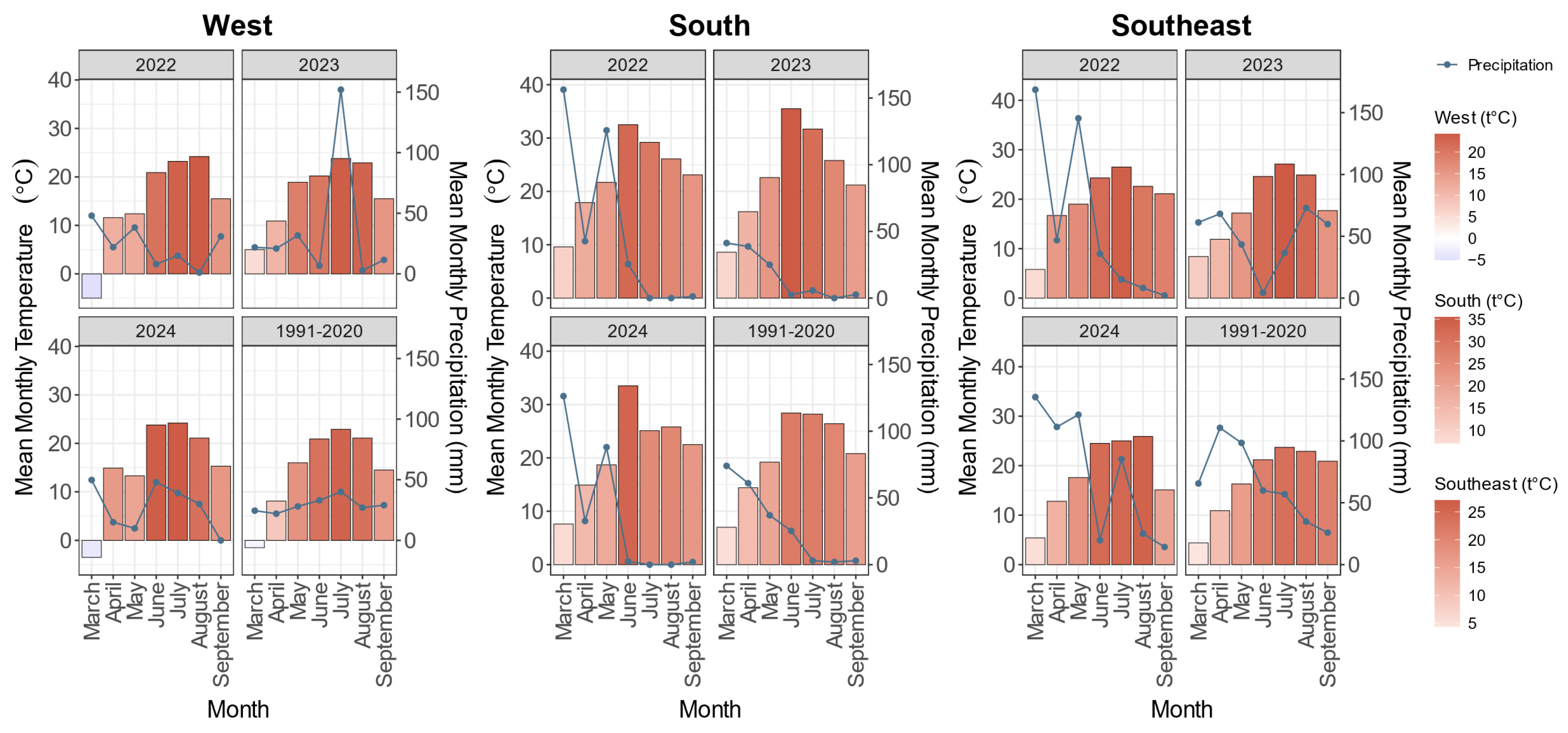
Comparative analysis of meteorological data showed that in the southeastern region of Kazakhstan (Almaty region), during the 2022 growing season, the mean temperature increased by 3.4 °C and precipitation rose by 113.4 mm compared to the long-term average (1990–2020). In 2023, the temperature increased by 2.0 °C, while precipitation decreased by 133.6 mm. In the western part of the country (West Kazakhstan region), temperature increases of 2.2 °C and 2.5 °C were recorded in 2022 and 2023, respectively, with rainfall fluctuations ranging from +146.2 mm to –89.5 mm. In southern Kazakhstan (Turkestan region), the 2022 temperature was close to the long-term average, but rainfall was 40.3 mm lower than the 1990–2020 mean. In 2023, despite a 46.0 mm increase in precipitation, the temperature rose by 2.3 °C (Tables S1–S3, and Figure 2). These climate data indicate a general increase in temperature and a decrease in precipitation across Kazakhstan, which in turn contributed to changes in the population dynamics of the Sunn pest (Eurygaster integriceps) in wheat.
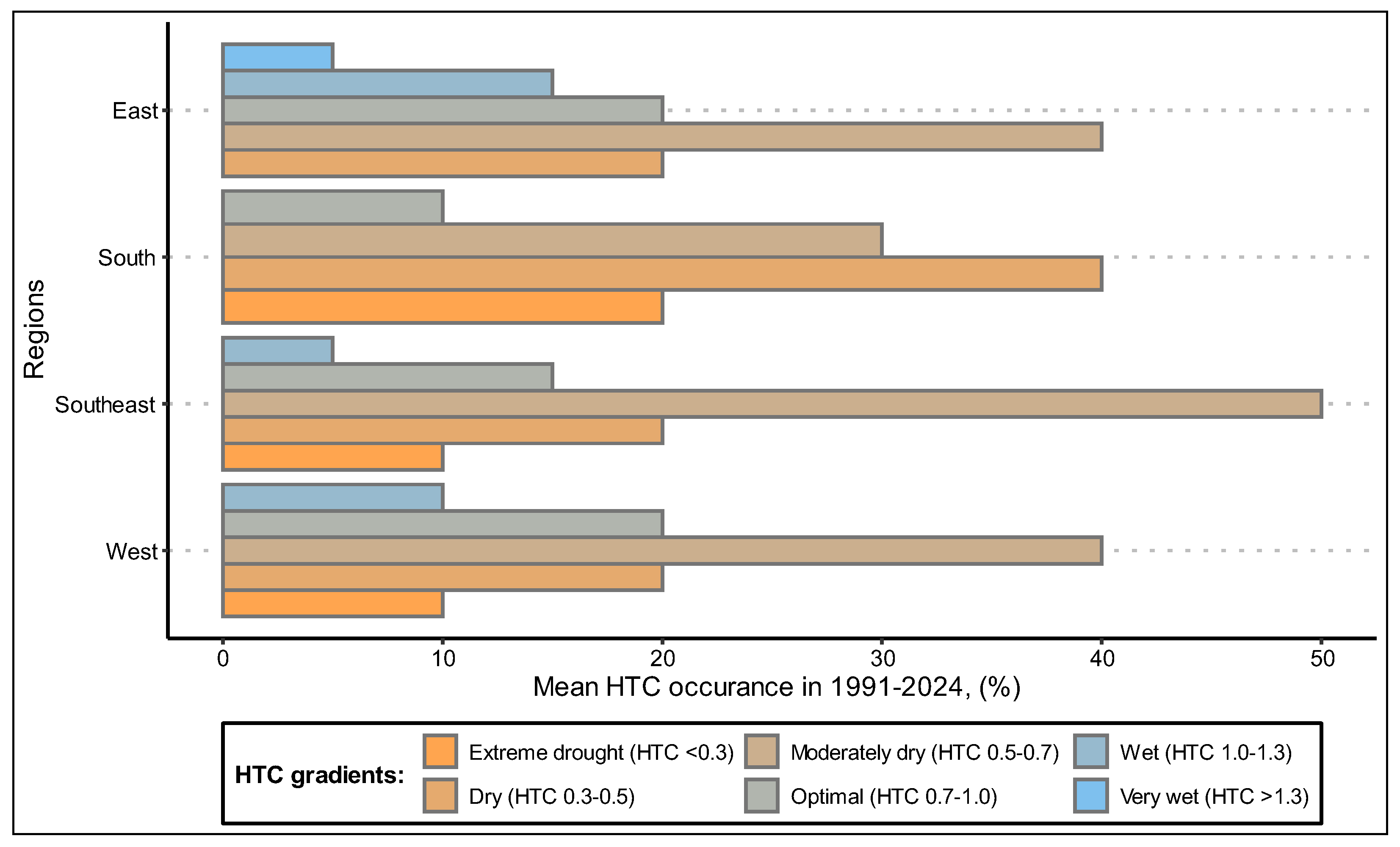
Depending on the region, the recurrence of HTC varies, which contributes to changes in the population dynamics of the pest. For instance, the mass emergence of Sunn pest adults during the waxy and full ripening stages of grain is most often observed in the southeastern regions of Kazakhstan, particularly in dry years (Figure 3).
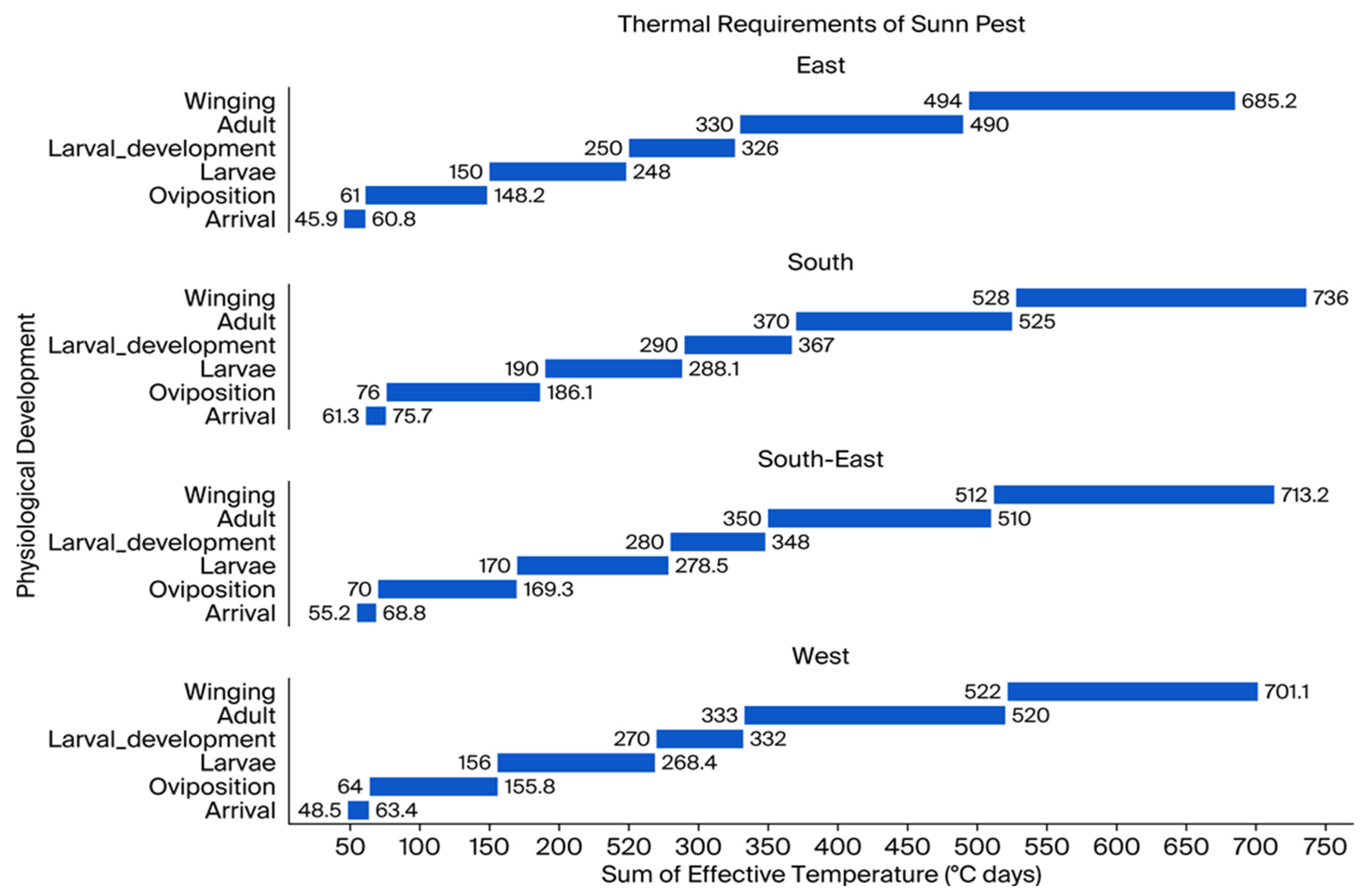
The obtained results show that the SET required for pest development, from arrival to winging, varies across different wheat growing regions of Kazakhstan. The lowest SET for normal physiological development was observed in the east (45.9–685.2 °C), whereas in the south, the life cycle progression of the pest required higher SET (61.3–736.0 °C). This difference between the east and south was stable across entire developmental phases from arrival to winging. Comparatively, the developmental thermal requitement of the Sunn pest in the west and southeast comprised 48.5–701.1 °C and 55.2–713.2 °C, respectively, falling between the former two regions (Figure 4).
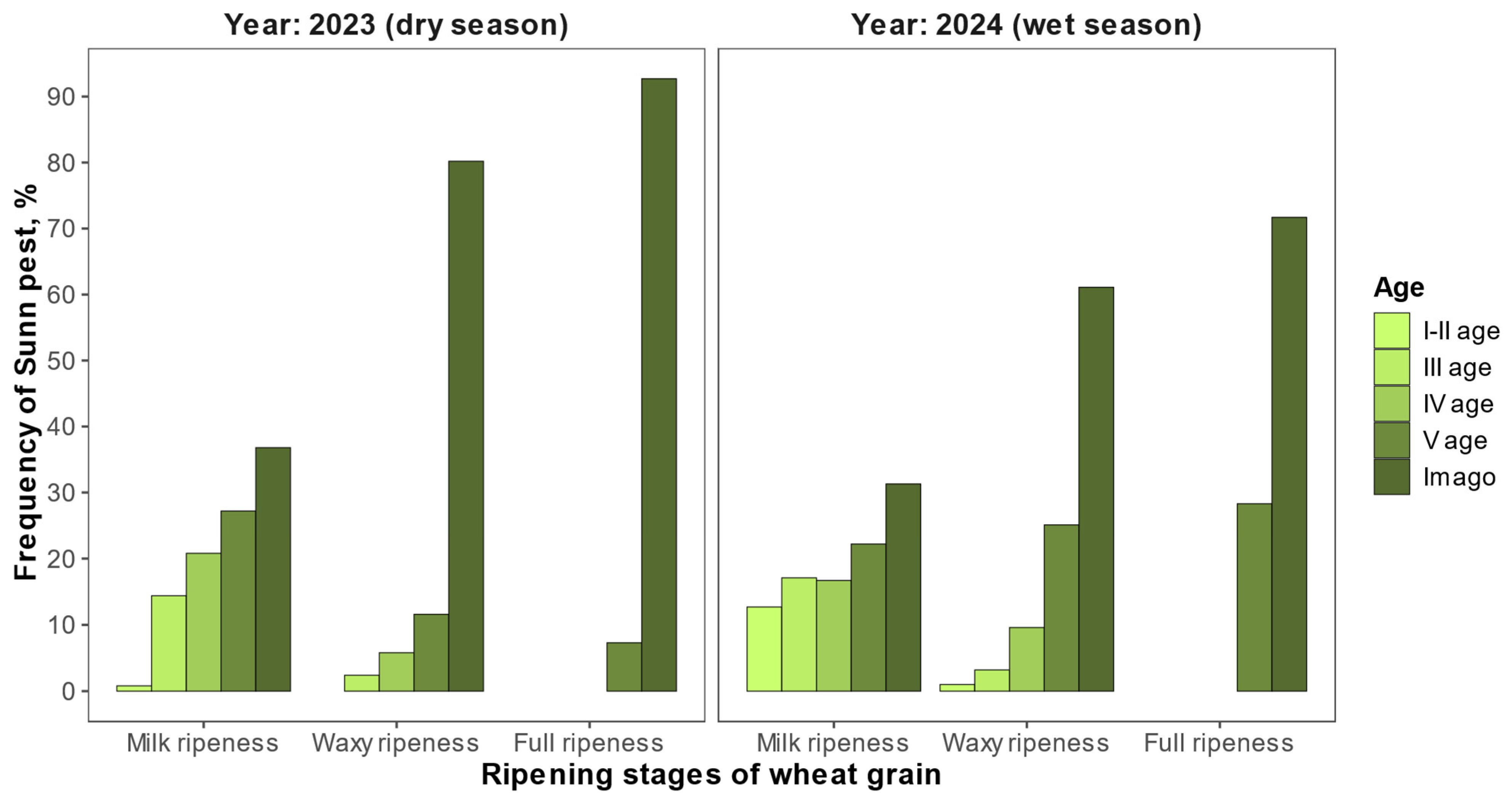
A significant variation in the age profile of the Sunn pest population was identified depending on moisture availability. In dry seasons (for example, in 2023), a higher proportion of adult insects (imago) developed during the wax ripeness (80.2%) and full maturity (92.7%) stages of winter wheat compared to the wet seasons (2024), in which the share of imago accounted for 61.1% and 71.7% at the wax ripeness and full maturity stages, respectively (Figure 5).
Moreover, we found that weather conditions exhibit unique characteristics that influence the population dynamics of the Sunn pest across various regions of Kazakhstan. Insufficient rainfall is often a key factor contributing to the sharp decline in the Sunn pest population in the western region. The population density of the pest in this region is largely determined by the number of “critical periods” during the winter–spring period. In the West Kazakhstan Region, approximately every third spring over the past two decades (20 years) has been characterized by minimal rainfall in April, ranging from 2 to 9 mm, with an average of 20 mm. High temperatures exceeding 27–30 °C, combined with low relative humidity, caused desiccation of eggs.
In southern and southeastern regions, when spring is warm and dry (average daily temperature about 11–12 °C, hydrothermal coefficient 0.5–0.6), the Sunn pest shows an accelerated transition from diapause to mass flight from overwintering sites. In a year with a rainy spring (2024), when the average temperature during diapause termination was below normal and the HTC was around 1.0, extended migration of the bugs from overwintering sites was observed.
In eastern regions, the main overwintering sites of the Sunn pest are concentrated in foothills and mountains, where, compared with plains, stable and fairly deep snow cover forms immediately after snowfall. Therefore, in mountainous overwintering sites, the survival rate of bugs during winter is relatively high, averaging 70–80%. In contrast, bug’s mortality during overwintering can reach up to 30% in foothill valley sites, where frequent temporary thaws result in unstable and much thinner snow cover compared with the mountains. In addition, these areas are intensively used for livestock grazing during the autumn–winter period, which leads to trampling and destruction of plant remnants that bugs rely on during diapause.

3.2. Study of Biotic Factors

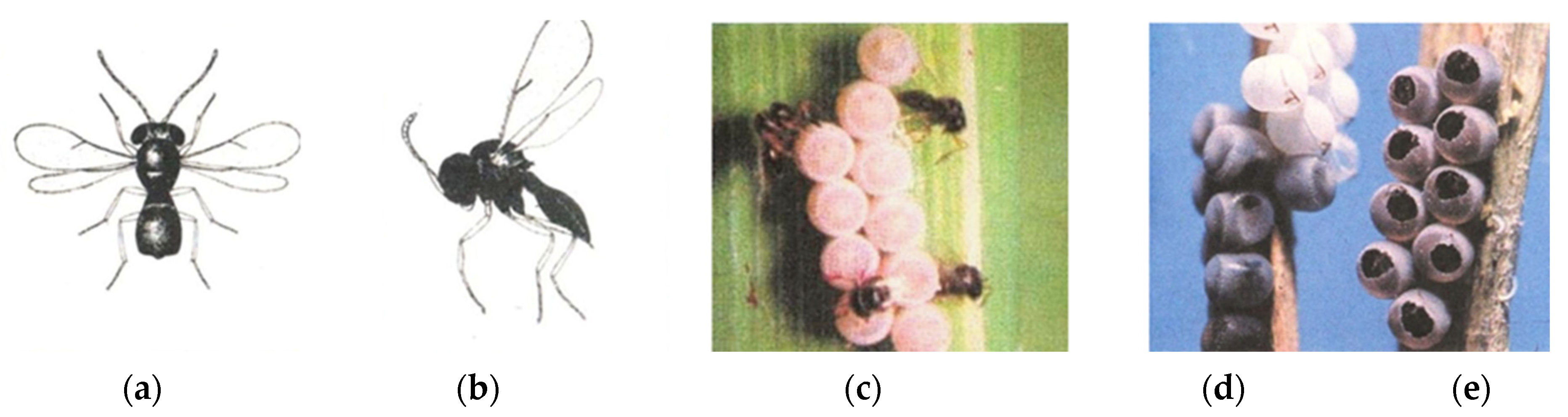
In Kazakhstan, Sunn pest eggs are parasitized by eight parasitoid species of the genera Trissolcus and Telenomus, with Trissolcus grandis Thomson being the predominant species in terms of both frequency and parasitism rate (Figure 6).
In winter wheat fields located near overwintering sites, the egg parasitism rate of the Sunn pest can reach 60–80%, whereas in more distant fields, it ranges between 20 and 40%. Winter wheat fields do not require treatment if the density of overwintered Sunn pests does not exceed two individuals per square meter and if the parasitism rate of the first egg clutches by Telenomus species reaches 40–50%.
It is known that Telenomus parasitoids in Kazakhstan develop in 3–5 generations. Their emergence from overwintering sites occurs earlier than that of overwintered Sunn pest adults, especially in the southern and southeastern regions, where the majority of the pest population overwinters in the mountains. Consequently, the first generation of Telenomus parasitoids mainly develops by parasitizing the eggs of polyphagous bug species. The duration of the second parasitoid generation ranges between 18 and 26 days at an average daily temperature of 15.0–21.4 °C, with a maximum of 24–32 °C, while the development period of the third generation is reduced to 12–14 days at an average daily temperature of 22–27 °C and a maximum of 33–38 °C in June.
Compared to Western Kazakhstan, where wheat dominates, the southern region of the country cultivates a wide range of crops on a large scale, including technical crops, vegetables, other row crops, alfalfa, and perennial forage grasses. Additionally, horticulture and viticulture are well-developed. This diversified agricultural practice provides egg parasitoids with additional alternative hosts. This advantage allows Telenomus parasitoids to complete a full life cycle in spring, producing one generation prior to the mass Sunn pest egg laying begins. In summer, after the Sunn pest stops laying eggs, Telenomus parasitoids produce another 2–3 generations on alternative hosts. Furthermore, in South Kazakhstan, Sunn pest populations are mostly found at field edges which greatly facilitates parasitoids’ search for their hosts. It is also important to note that wheat fields in the foothill zone are usually small and rarely exceed 100 hectares in the region. This, in turn, enables egg parasitoids to control the entire field area effectively.

3.3. Study of Feeding Factors

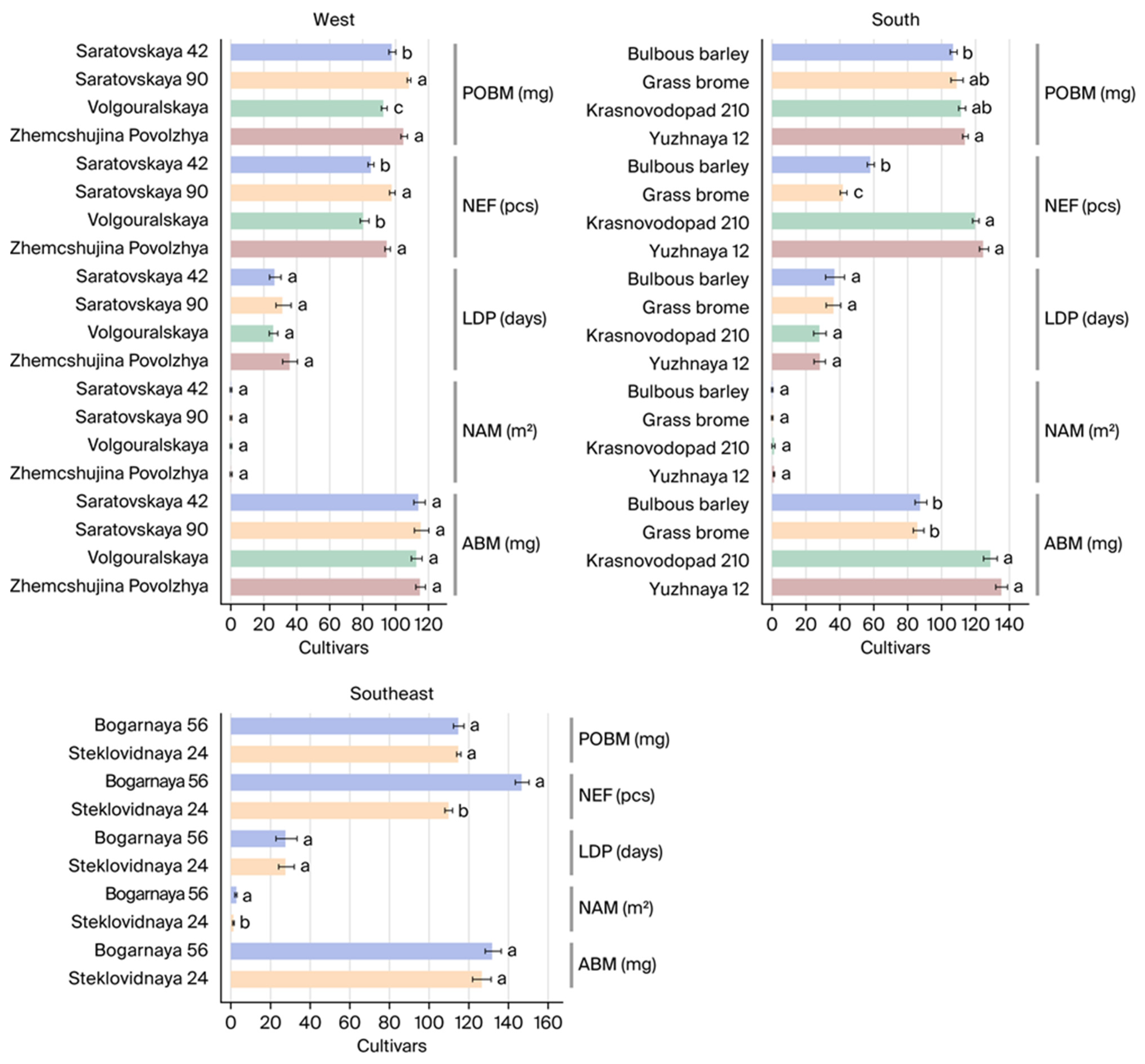
The Sunn pest possesses broad feeding adaptability. Its host relationship with wild grasses was particularly evident in foothill regions, where large wheat fields border grassland habitats. In addition to winter and spring wheat cultivars, the pest fed on wild grasses such as Bromus and Hordeum. Bulbous barley (Hordeum bulbosum) was the most preferred host, occurring from lowland valleys up to 1000–1200 m above sea level. Owing to its prolonged growing season, H. bulbosum provides a highly suitable food source. Nevertheless, populations feeding mainly on wheat differ from those completing their life cycle on wild grasses in terms of development rate, duration of life stages, number of egg clutches, and physiological condition prior to overwintering (Figure 7).
Among monitored pest characteristics, a significant difference was observed between spring (Saratovskaya 42; Volgouralskaya) and winter wheat cultivars (Saratovskaya 90; Zhemcshujina Povolzhya) in POBM and NEF in the west. We did not see any variation between and within spring and winter genotypes for the rest of the examined characteristics. Interestingly, the pre-oviposition body mass (POBM) of pests found on spring wheat variety Volgouralskaya was statistically lower than that on Saratovskaya 42, but with no difference observed for ABM (mg) and NAM (m2).
Between winter wheat cultivars (Krasnovodopad 210; Yuzhnaya 12) grown in the south, no difference was identified in any of the developmental parameters of the Sunn pest. Although the pest’s host relationship with wild grasses is particularly evident in foothill regions bordering with large wheat fields, they mostly preferred wheat as a host plant compared to Bromus and Hordeum. Female pests laid significantly fewer eggs (NEF, pcs) on Bromus than on Hordeum. However, the number of individuals observed per square meter was nearly the same, suggesting that the pests exhibited no clear host selectivity during oviposition in the southern region. These findings could also be generalized for the west.
Comparatively, in the southeast, a clear consistency was found between NEF (pcs) and NAM (m2) although no difference was observed in POBM (mg), LDP (days), and ABM (mg). Pests exhibited a preference for Bogarnaya 56 over Steklovidnaya 24 for both egg laying and feeding, which may suggest that Steklovidnaya 24, which has been the predominant cultivar in wheat fields for the past three decades, could possess certain biological or genetic traits conferring partial resistance to pest attack NEF (Figure 7). Since in this study we examined the agroecological factors affecting Sunn pest population dynamics in Kazakhstan rather than identifying resistant wheat genotypes, additional field and genetic studies using a larger set of wheat genotypes are needed to address the proposed hypothesis.

3.4. Phenological Study of Sunn Pest Development Across the Regions of Kazakhstan, 2022–2024

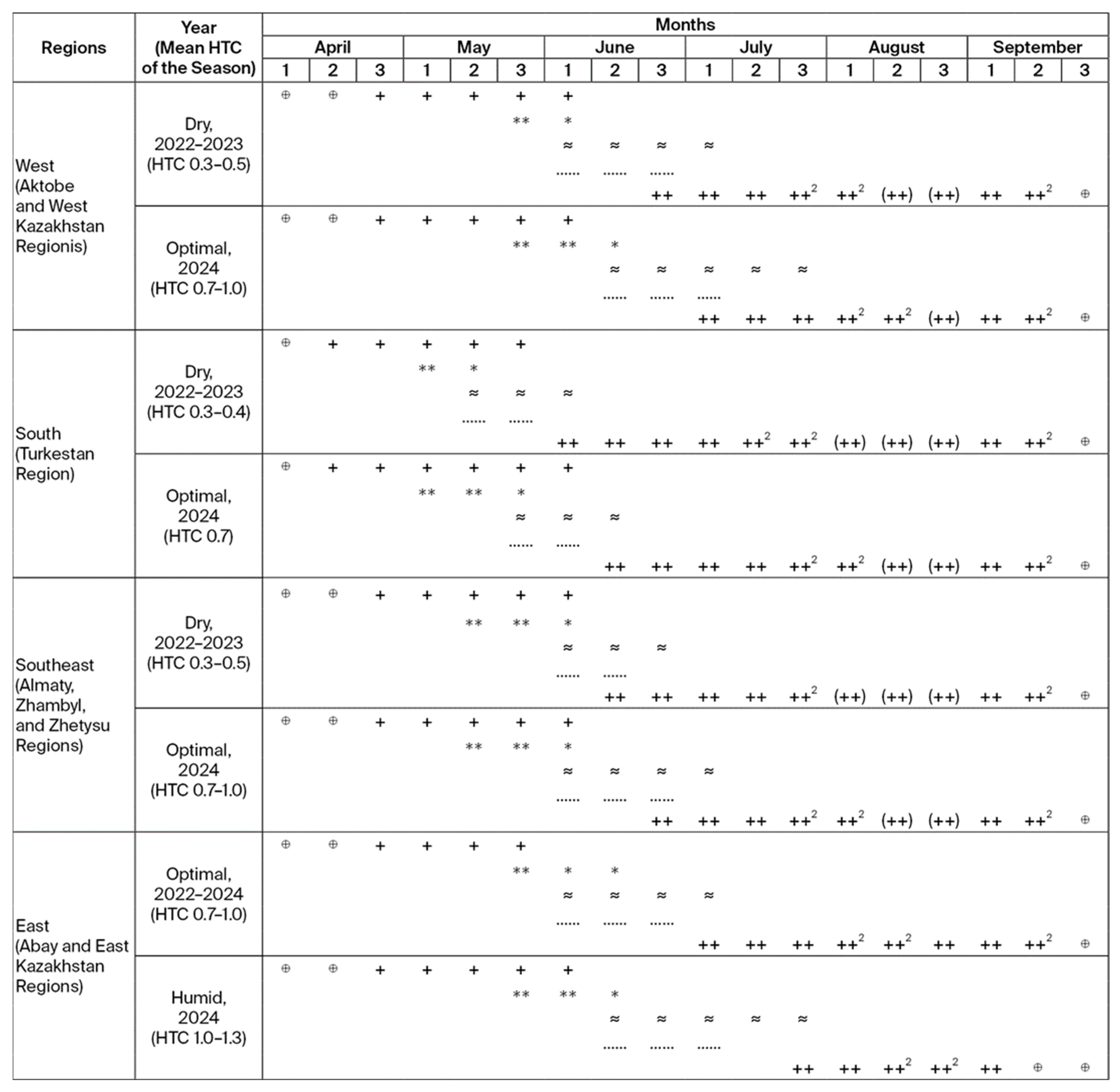
In dry seasons (2022 and 2023), earlier development of the Sunn pest was recorded across all regions of Kazakhstan compared to 2024, when conditions were optimal in the west, south, and southeast and wetter in the east. Depending on spring temperature and moisture, pest development occurred 5–20 days earlier or later than the long-term average. During the study years, the total duration of oviposition ranged from 20 to 50 days, depending on region and HTC. Within this period, the “effective oviposition” phase, during which most offspring are produced, lasted 10–20 days. The emergence of nymphs and young adults coincided with the grain filling and full ripening stages of winter wheat. At this time, the greatest damage to grain yield was caused by late-instar nymphs and young adults. Migration from wheat fields was observed in the second–third decade of July (west, south, and southeast) and the first–second decade of August (East Kazakhstan). In arid regions of the country, due to high temperatures and low air humidity, the insects remained in summer refuges under plant residues following migration. With a decline in mean daily temperatures to 11–12 °C, they became active again and made short local migrations to winter crops and weeds for additional feeding. At mean daily temperatures of 7–8 °C, the migration stopped, and the insects sheltered under plant residues for overwintering (Figure 8).

4. Discussion

Like the other parts of the world today, Kazakhstan is experiencing a change in climate toward increased aridity compared with the long-term average over the past 30 years (Tables S1–S3, and Figure 1) [16,19,32,33,34]. These changes are characterized by sharp fluctuations both between years and across months within the same year [4,15]. Our study has shown that the recurrence of HTC also varies depending on the region of Kazakhstan, which in turn influences the population dynamics of the Sunn pest. For example, mass emergence of adults during the waxy and full ripening stages of grain is most often observed in southeastern Kazakhstan. This phenomenon was more pronounced in dry years, leading to a higher level of crop damage by the pest which is consistent with the earlier findings (Figure 5) [35,36].
In Kazakhstan, within the regions of pest distribution, the SET at a developmental threshold of +10 °C was 45.9–75.7 °C for pest arrival into fields, 61.0–186.1 °C for oviposition (egg laying), 150.0–288.1 °C for larvae (nymph emergence), 250.0–367.0 °C for larval development (nymphal development), 230.0–522.0 °C for adult (adult emergence), and 494.0–736.0 °C for winging. This is also consistent with the results obtained from the Volgograd region (Russia) [36].
Cold winters, accompanied by the absence or insufficient amount of snowfall, were among the main factors limiting the population size of the pest. This factor was most often observed in the northwestern and eastern regions of the Sunn pest distribution and was frequently the primary cause of mass mortality during overwintering. These results agree with published studies suggesting that pest development is optimal at larval feeding temperatures exceeding +20.5 °C and an HTC of 0.2–0.7 [36]. In Kazakhstan, climate change and related factors have already reduced wheat yields [37]. Similarly, in Ukraine, higher moisture levels promoted pest population growth, with densities reaching 0.7–2.7 individuals per m2 in non-irrigated and 0.8–3.8 individuals per m2 in irrigated winter wheat fields [38].
Factors such as global warming, frequent droughts combined by extreme heat, changes in atmospheric carbon dioxide concentration, weather variability, and other climate-related drivers continue to threaten agricultural crop yields [39,40]. Increases in pest populations driven by climatic conditions and weather fluctuations may negatively affect crop productivity and availability, ultimately posing risks to global and regional food security [33]. According to the Intergovernmental Panel on Climate Change (IPCC), rising temperatures and precipitation in Kazakhstan adversely affect the yields of spring wheat and spring barley. By contrast, higher temperatures in the country are expected to enable substantially greater yields of winter wheat compared with historical levels [40].
In Kazakhstan, mean annual near-surface air temperatures have increased significantly over the past 70 years (1951–2020) with an average of +0.31 °C per decade, whereas trends in precipitation were not pronounced, and drought occurrence varied by year [41]. The population dynamics of the Sunn pest showed periodic fluctuations driven by multiple factors, including weather conditions, synchrony with host plant phenology, wheat cultivar resistance, natural enemies, and fungal pathogens [13,36,41,42,43,44,45,46,47,48,49,50]. Several studies highlighted the critical role of weather during key periods, such as adult migration, nymphal development, overwintering, and post-diapause emergence, in shaping pest dynamics [24,36]. Although most researchers agree that population changes mainly stem from a combination of factors, the relative importance of individual drivers remains debated [42,51].
One important component of IPM in cereals is the use of natural populations of egg parasitoids (Telenomus, Scelionidae) that parasitize the pest’s egg masses [26,36,44,50]. In Russia, studies on natural enemies and their effectiveness in reducing Sunn pest populations, as well as attempts at mass rearing and introduction of egg parasitoids, were unsuccessful, as parasitoid populations died in early spring due to their strong xerophilous and thermophilous traits [52]. In Kazakhstan, however, extensive research has been carried out on the bioecology of Telenomus [22,24,25], providing a basis for exploring more adapted biocontrol strategies.
The species composition and frequency of occurrence of Telenominae in Kazakhstan differ from those in other countries. For example, in Syria, five species of Telenomus have been identified, with T. semistriatus being the most widespread [44]. In southern Kazakhstan, high efficiency of Telenomus (more than 50% of pest eggs parasitized) was often observed during the initial period of Sunn pest oviposition [25]. This highlights the significant role of Telenomus in reducing pest populations, as they destroy a substantial portion of the viable offspring.
In addition to Telenominae, there are numerous other parasites and predators capable of controlling the Sunn pest at different developmental stages [25,36,51]. However, despite the high infection rates of overwintered bugs by these parasites, their significance as natural enemies in Kazakhstan was considerably reduced due to the late onset of their active period. A natural enemy of the Sunn pest, the predatory ant identified as Camponotus spp. [49] has not yet been detected in the country during this study. In overwintering sites, the Sunn pest was also affected by diseases, which in some years cause mortality rates of up to 30–50% [36].
Among individuals feeding on different hosts, significant differences were observed in the realization of potential fecundity and in the duration of larval development. As shown in Figure 2, bugs feeding on wild grasses laid 2–2.5 times fewer eggs than those feeding on wheat cultivars. Individuals developing on winter wheat exhibited a higher reproductive potential compared to those developing on wild grasses. The specific developmental traits of the Sunn pest on different grasses contributed to the formation of a complex population structure of this species. These findings align with previous studies [1,8,42,43,45,47], confirming that wheat supports the highest reproductive potential, while wild grasses sustain much lower levels.
Although much deeper experiments are required for conducting ANOVA with mixed-effects modeling, preliminary trials showed clear differences in Sunn pest infestation among wheat cultivars. Densities ranged from as low as 0.30 individuals/m2 on the spring wheat Saratovskaya 29 to as high as 2.60 individuals/m2 on the winter wheat Bogarnaya 56. Notably, Steklovidnaya 24 displayed comparative resistance in the southeast. This evidence was corroborated by previous reports highlighting the variability of wheat cultivar resistance to both pests and diseases [2,21,36,53,54,55].
Our findings highlighted temperature as a central driver of Sunn pest physiology, affecting traits such as lifespan and diapause regulation, and thereby exerting different influences on the population growth of each individual (Figure 7). During the autumn–winter and early spring periods, the pests’ bodies develop increased cold tolerance, which is particularly critical for overwintering [56,57]. In summer refuges, their resistance to air dryness increases, preventing desiccation, which is especially important in years with dry summers. During this period, pests rely on carbohydrate reserves to fuel migration to overwintering sites [58].
Thus, at present, insect pests pose a serious threat to food security, especially under conditions of climate change [3,16,18,33,34,59]. Global wheat grain yield is projected to decline and become increasingly variable with further increase in temperature [15,19]. While Kazakhstan may benefit from improved winter wheat yields in some scenarios [40], regional shifts in HTC are likely to favor the Sunn pest and other harmful organisms, reducing productivity [21,37]. Despite new advances in monitoring the global distribution of the Sunn pest [8,60,61,62,63,64,65], studying its parasites and predators [49,50], developing modern pesticides and application methods [10,12,31], improving IPM strategies [18,66,67], and breeding for resistance [2,36,48,54,68,69], certain issues related to the influence of climatic, biotic, and anthropogenic factors in the Sunn pest–wheat system still demand further research, taking into account newly acquired knowledge and technologies [17,19,52,64,65]. Our results indicated that these influences are highly region-specific in Kazakhstan, and their combined effects are greater than those of any single factor—an observation supported by other studies [19,70].

5. Conclusions

Sunn pest dynamics in Kazakhstan are shaped by regional factors that interact with climate change. In East and West Kazakhstan, overwintering conditions are decisive, with harsh weather often causing large-scale mortality. During the wheat-growing season, pest development was driven mainly by HTC and SET. In contrast, in the south and southeast, biotic interactions (food sources and natural enemies) dominate. Here, host plants and natural enemies—particularly egg parasitoids (Telenomines)—play key roles, with local vegetation (forests and shrublands) creating favorable habitats for pest outbreaks. Host plant choice strongly affects reproductive success: adults on wild grasses lay 2–2.5 times fewer eggs than those on wheat cultivars, and wheat-fed populations show higher fecundity and stronger population growth. The Sunn pest exhibited no clear host selectivity during oviposition in southern and western regions of the country. These findings highlight the combined importance of climatic and biotic factors in shaping pest outbreaks and provide insights for refining integrated pest management strategies.

Supplementary Materials

The following supporting information can be downloaded at. https://www.mdpi.com/article/10.3390/ecologies6040081/s1, Table S1: Meteorological data from sowing to harvesting of winter wheat at KRIAPG (Almaty region, Southeastern Kazakhstan) for 2022–2024 and long-term average; Table S2: Meteorological data from sowing to harvesting of winter wheat in Krasnovodopad Agricultural Station (Turkestan region, South Kazakhstan) for 2022–2024 and long-term average; Table S3: Meteorological data from sowing to harvesting of winter wheat in Ural Agricultural Station (West Kazakhstan region) for 2022–2024 and long-term average; Table S4: Characteristics of the wheat varieties used in experiments on the study of the Sunn pest in the regions of Kazakhstan in 2022–2024. Figure S1. The Sunn pest bug (Eurygaster integriceps Puton) at different developmental stages on winter wheat.

Author Contributions

Conceptualization, S.R.; methodology, S.R., A.S. and A.E.; formal analysis, S.B., N.O. and K.Y.; investigation, S.R., A.S., A.E. and A.B.; writing—original draft, S.R., A.S. and K.Y.; writing—review and editing, S.R., A.S., S.B. and K.Y.; visualization, S.R. and K.Y.; supervision, S.R.; project administration, S.R. All authors have read and agreed to the published version of the manuscript.

Funding

This research was funded by the Science Committee of the Ministry of Science and Higher Education of the Republic of Kazakhstan, Project IRN AP23489491 “Adaptive properties of winter wheat to damage by the Sunn pest (Eurygaster integriceps Puton) in connection with climate change”.

Data Availability Statement

The data presented in the study are available on request from the corresponding authors.

Acknowledgments

The authors are grateful to G.H. Shektybaeva (Ural Experimental Station, West Kazakhstan region), K.K. Shaikhiev (LLP “Sypatai Batyr”, Zhambyl region) for providing the necessary information.

Conflicts of Interest

The authors declare no conflicts of interest. The funders had no role in the design of the study; in the collection, analyses, or interpretation of data; in the writing of the manuscript; or in the decision to publish the results.

References

  1. Pavlushin, V.A.; Vilkova, N.A.; Sukhoruchenko, G.I.; Nefedova, L.I.; Kapustkina, A.V. Sunn Pest and Other Cereal Bugs; St. Petersburg, Russia, 2015; 280p. (In Russian) [Google Scholar]
  2. Emebiri, L.; El Bousshini, M.; Tan, M.-K.; Ogbonnaya, F.C. Field-based screening identifies resistance to Sunn pest (Eurygaster integriceps) feeding at vegetative stage in elite wheat genotypes. Crop Past. Sci. 2017, 68, 126–133. [Google Scholar] [CrossRef]
  3. Davari, A.; Parker, B.L. A review of research on Sunn Pest {Eurygaster integriceps Puton (Hemiptera: Scutelleridae)} management published 2004–2016. J. Asia-Pacific Ent. 2018, 21, 352–360. [Google Scholar] [CrossRef]
  4. Rsaliyev, S.S.; Sarbaev, A.T.; Eserkenov, A.K. The development of a Sunn Pest on winter wheat in the grain-growing regions of Kazakhstan. Izdenister Natizheler (Res. Results) 2024, 2–1, 359–367. (In Russian) [Google Scholar] [CrossRef]
  5. Alekhin, V.T. Sunn Pest. Plant Prot. Quar. 2002, 4, 1–32. (In Russian) [Google Scholar]
  6. Tafaghodinia, B.; Majdabadi, M. Temperature based model to forecasting attack time of the Sunn Pest Eurygaster integriceps Put. in wheat fields of Iran. WSEAS Trans. Environ. Dev. 2005, 1, 395–397. [Google Scholar]
  7. Dizlek, H.; Özer, M.S. Improvement bread characteristics of high level sunn pest (Eurygaster integriceps) damaged wheat by using transglutaminase and some additives. J. Cer. Sci. 2017, 77, 90–96. [Google Scholar] [CrossRef]
  8. Kapustkina, A.V.; Frolov, A.N. Wheat Grain Damage by Eurygaster integriceps Puton (Hemiptera, Scutelleridae): Diagnostics and Detection Methods. Entomol. Rev. 2022, 102, 50–62. [Google Scholar] [CrossRef]
  9. Order of the Minister of Agriculture of the Republic of Kazakhstan Dated June 10, 2022 No. 188 “On Amending the Order of the Minister of Agriculture of the Republic of Kazakhstan dated March 30, 2015 No. 4-4/282 “On Approval of the List of Quarantine Objects and Alien Species in Relation to Which Plant Quarantine Measures Are Established and Implemented, and the List of Particularly Dangerous Pests”. Available online: https://online.zakon.kz/Document/?doc_id=34809481&show_di=1&pos=33;-57#pos=33;-57 (accessed on 23 November 2025). (In Russian).
  10. Khalaf, M.Z.; Alrubeai, H.F.; Sultan, A.A.; Abdulkareem, A.M. Evaluating Some Insecticides for Controlling the Sunn Pest Eurygaster spp. Puton (Hemiptera: Scutelleridae) under Field Conditions. J. Agric. Sci. Technol. B 2017, 7, 264–267. [Google Scholar] [CrossRef]
  11. Markarova, J.R. Effectiveness of insecticides against Sunn pest depending on the term of their application. Int. J. Human. Nat. Sci. 2018, 9, 99–103. (In Russian) [Google Scholar] [CrossRef]
  12. Shorokhov, M.N.; Dolzhenko, V.I.; Silaev, A.I. Improving the range of chemical protection products for winter wheat from the Sunn Pest (Eurygaster integriceps Put.). Agrochemistry 2019, 11, 38–47. (In Russian) [Google Scholar] [CrossRef]
  13. Alekhin, V.T.; Yu, Y.M. Biological protection of cereals from pests. Prot. Quaran. Plants 1998, 10, 18–20. (In Russian) [Google Scholar]
  14. Sukhoruchenko, G.I. The resistance of harmful organisms to pesticides is a problem of plant protection in the second half of the 20th century in the CIS countries. Bull. Plant Prot. 2001, 1, 18–37. (In Russian) [Google Scholar]
  15. Asseng, S.; Ewert, F.; Martre, P.; Rötter, R.P.; Lobell, D.B.; Cammarano, D.; Kimball, B.A.; Ottman, M.J.; Wall, G.W.; White, J.W.; et al. Rising temperatures reduce global wheat production. Nat. Clim. Change 2015, 5, 143–147. [Google Scholar] [CrossRef]
  16. Bajwa, A.A.; Farooq, M.; Al-Sadi, A.M.; Nawaz, A.; Jabran, K.; Siddique, K.H.M. Impact of climate change on biology and management of wheat pests. Crop Prot. 2020, 137, 105304. [Google Scholar] [CrossRef]
  17. Skendžić, S.; Zovko, M.; Živković, I.P.; Lešić, V.; Lemić, D. The impact of climate change on agricultural insect pests. Insects 2021, 12, 440. [Google Scholar] [CrossRef]
  18. Akbar, M.; Aleem, K.; Sandhu, K.; Shamoon, F.; Fatima, T.; Ehsan, M.; Shaukat, F. A Mini Review on Insect Pests of Wheat and Their Management Strategies. Int. J. Agric. Biosci. 2023, 12, 110–115. [Google Scholar] [CrossRef]
  19. Cao, Y.; Qiu, X.; Kang, M.; Zhang, L.; Lu, W.; Liu, B.; Tang, L.; Xiao, L.; Zhu, Y.; Cao, W.; et al. Evaluating the impacts of climatic factors and global climate change on the yield and resource use efficiency of winter wheat in China. Eur. J. Agric. 2024, 159, 127295. [Google Scholar] [CrossRef]
  20. Zharmukhamedova, G.; Sarbaev, A. Sunn Pest in Central Asia: An Historical Perspective. In Sunn Pest Management: A Decade of Progress 1994–2004; Arab Society for Plant Protection: Beirut, Lebanon, 2007; pp. 61–66. [Google Scholar]
  21. Rsaliyev, S.S.; Yeserkenov, A.K. Resistance of winter wheat to damage by Sunn Pest in the south-east of Kazakhstan. Sci. Innov. 2024, 3, 94–99. (In Russian) [Google Scholar] [CrossRef]
  22. Tilmenbaev, A.T. The Sunn Pest and Control Measures; Alma-Ata, Kazakhstan, 1969; 45p. (In Russian) [Google Scholar]
  23. Tilmenbaev, A.T. Some features of the ecology of the Sunn Pest in Southern Kazakhstan. Sci. Works Kazakh Agric. Inst. 1976, 19, 10–19. (In Russian) [Google Scholar]
  24. Sarbaev, A.T. Sunn Pest in the Western Kazakhstan. In Ecology of Plant Diseases and Pests in Kazakhstan and Control Measures; Alma-Ata, Kazakhstan, 1980; pp. 13–18. (In Russian) [Google Scholar]
  25. Tilmenbaev, A.T.; Sarbaev, A.T.; Beksultanov, S.Z. The main environmental factors regulating the number of Sunn Pest in Kazakhstan. In Ecology of Plant Diseases and Pests in Kazakhstan and Control Measures; Alma-Ata, Kazakhstan, 1980; pp. 3–13. (In Russian) [Google Scholar]
  26. Tilmenbaev, A.T.; Beksultanov, S.Z.; Sarbaev, A.T. The main elements of integrated control of the sunn pest in Kazakhstan. In Noveishie Dostizheniya Sel’skokhozyaistvennoi Entomologii, Vil’nyus; 1981; pp. 184–186. (In Russian) [Google Scholar]
  27. The State Register of breeding achievements recommended for use in the Republic of Kazakhstan; Astana, Kazakhstan, 2021; 125p. (In Russian)
  28. Fedin, M.A. Methodology of state variety testing of agricultural crops. Mosc. USSR Minist. Agric. 1989, 2, 250p. (In Russian) [Google Scholar]
  29. Dospekhov, B.A. The Methodology of Field Experience; Agropromizdat: Moscow, USSR, 1985; 351p. (In Russian) [Google Scholar]
  30. Artokhin, K.S. Pests of Agricultural Crops. Volume 1: Pests of Grain Crops; Pechatny Gorod: Moscow, Russia, 2013; pp. 185–204. (In Russian) [Google Scholar]
  31. Afonin, A.N.; Milyutina, E.A.; Musolin, D.L. Methods for calculating sums of effective temperatures from monthly average temperature data and producing of global maps for ecological and geographical modelling. Meteorol. i Gidrolog. 2024, 3, 78–86. (In Russian) [Google Scholar] [CrossRef]
  32. Bobojonova, I.; Aw-Hassan, A. Impacts of climate change on farm income security in Central Asia: An integrated modeling approach. Agric. Ecosyst. Environ. 2014, 188, 245–255. [Google Scholar] [CrossRef]
  33. Subedi, B.; Poudel, A.; Aryal, S. The impact of climate change on insect pest biology and ecology: Implications for pest management strategies, crop production, and food security. J. Agric. Food Res. 2023, 14, 100733. [Google Scholar] [CrossRef]
  34. Mannig, B.; Pollinger, F.; Gafurov, A.; Vorogushyn, S.; Unger-Shayesteh, K. Impacts of Climate Change in Central Asia. In Encyclopedia of the Anthropocene, (Reference Module in Earth Systems and Environmental Sciences); Elsevier: Amsterdam, The Netherlands, 2018; pp. 195–203. [Google Scholar] [CrossRef]
  35. Iranipour, S.; Pakdel, A.K.; Radjabi, G. Life history parameters of the Sunn pest, Eurygaster integriceps, held at four constant temperatures. J. Insect Sci. 2010, 10, 106. [Google Scholar] [CrossRef]
  36. Ivantsova, E.A. Bioecology of Sunn Pest (Eurygaster integriceps Put.) in the conditions of the Lower Volga region. Bull. Volgograd State Univ. Ser. 11 Nat. Sci. 2013, 2, 45–52. (In Russian) [Google Scholar]
  37. Schierhorn, F.; Hofmann, M.; Adrian, I.; Bobojonov, I.; Müller, D. Spatially varying impacts of climate change on wheat and barley yields in Kazakhstan. J. Arid. Environ. 2020, 178, 104164. [Google Scholar] [CrossRef]
  38. Melnichuk, F.; Alekseeva, S.; Hordiienko, O.; Nychyporuk, O.; Borysenko, A. Influence of irrigation on the Sunn pest Eurygaster integriceps Put. (Insecta: Heteroptera) in the Central Forest-Steppe of Ukraine. Ecol. Quest. 2023, 34, 101–107. [Google Scholar] [CrossRef]
  39. Lin, H.-I.; Yu, Y.-Y.; Wen, F.-I.; Liu, P.-T. Status of food security in East and Southeast Asia and challenges of climate change. Climate 2022, 10, 40. [Google Scholar] [CrossRef]
  40. Islyami, A.; Aldashev, A.; Thomas, T.S.; Dunston, S. Impact of Climate Change on Agriculture in Kazakhstan. Silk Road A J. Eurasian Dev. 2020, 2, 66–88. [Google Scholar] [CrossRef]
  41. Karatayev, M.; Clarke, M.; Salnikov, V.; Bekseitova, R.; Nizamova, M. Monitoring climate change, drought conditions and wheat production in Eurasia: The case study of Kazakhstan. Heliyon 2022, 8, e08660. [Google Scholar] [CrossRef]
  42. Emelyanov, N.A.; Kritskaya, E.E.; Eskov, I.D.; Dubrovin, V.V. Population dynamics of the Sunn pest in agroecosystems of the Volga region. Agrar. Nauchnyy Zhurnal 2018, 7, 6–10. (In Russian) [Google Scholar]
  43. Kamenchenko, S.E.; Strizhkov, N.I.; Naumova, T.V. Reproduction features of cereal bugs in agrocenoses of Lower Volga area. Zashchita I Karantin Rasteniy 2013, 7, 41–43. (In Russian) [Google Scholar]
  44. Trissi, A.N.; El Bouhssini, M.; Ibrahem, J.; Abdulhai, M.; Reid, W. Survey of Egg Parasitoids of Sunn Pest in Northern Syria. In Sunn Pest Management: A Decade of Progress 1994–2004; Arab Society for Plant Protection: Beirut, Lebanon, 2007; pp. 309–314. [Google Scholar]
  45. Neymorovets, V.V. Distribution of species of the genus Eurygaster (Heteroptera: Scutelleridae) in Russia. Bull. Plant Prot. 2019, 4, 36–48. (In Russian) [Google Scholar] [CrossRef]
  46. Shapiro, I.D. Immunity of field crops to insects and mites. In Immunitet Polevykh Kul’tur k Nasekomym i Kleshcham; Zoologicheskiĭ Institut, Akademiya Nauk SSSR: Leningrad, USSR, 1985; 321p. (In Russian) [Google Scholar]
  47. Kapustkina, A.V.; Khilevskiy, V.A. Population and harmfulness dynamics of the Sunn Pest Eurygaster integriceps Put. (Heteroptera, Scutelleridae) in wheat crops of the Ciscaucasia steppe zone. Entomol. Rev. 2020, 100, 173. [Google Scholar] [CrossRef]
  48. Würschum, T.; Leiser, W.L.; Langer, S.M.; Tucker, M.R.; Miedaner, T. Genetic Architecture of Cereal Leaf Beetle Resistance in Wheat. Plants 2020, 9, 1117. [Google Scholar] [CrossRef]
  49. Al-Fayyadh, M.J.; Najim, S.A.; Al-Husainawi, K.J. Description of Sunn Pest (Hemiptera: Scutelleridae) and Camponotus spp. (Hymenoptera: Formicidae), as their predator, from the wheat fields of Thi-Qar province southern Iraq. J. Phys. Conf. Ser. 2020, 1664, 012142. [Google Scholar] [CrossRef]
  50. Amir-Maafi, M. Modeling temperature-dependent development of Trissolcus grandis Thomson (Hymenoptera: Scelionidae). J. Entomol. Soc. Iran 2024, 44, 257–268. [Google Scholar] [CrossRef]
  51. Frolov, A.N. Patterns of pest population dynamics and phytosanitary forecast. Bull. Plant Prot. 2019, 3, 4–33. (In Russian) [Google Scholar] [CrossRef]
  52. Shirinyan, J.A. Methods of Pesticide-free protection of winter wheat. Plant Prot. Quar. 2015, 2, 9–13. (In Russian) [Google Scholar]
  53. Morgounov, A.; Tufan, H.A.; Sharma, R.; Akin, B.; Bagci, A.; Braun, H.J.; Kaya, Y.; Keser, M.; Payne, T.S.; Sonder, K.; et al. Global incidence of wheat rusts and powdery mildew during 1969–2010 and durability of resistance of winter wheat variety Bezostaya. Eur. J. Plant Pathol. 2012, 132, 323–340. [Google Scholar] [CrossRef]
  54. El Bouhssini, M.; Nachit, M.; Valkoun, J.; Moussa, M.; Ketata, H.; Abdallah, O.; Abdulhai, M.; Parker, B.L.; Rihawi, F.; Joubi, A.; et al. Evaluation of Wheat and its Wild Relatives for Resistance to Sunn Pest under Artificial Infestation. In Sunn Pest Management: A Decade of Progress 1994–2004; Arab Society for Plant Protection: Beirut, Lebanon, 2007; pp. 363–368. [Google Scholar]
  55. El Bouhssini, M.; Street, K.; Joubi, A.; Ibrahim, Z.; Rihawi, F. Sources of wheat resistance to Sunn pest, Eurygaster integriceps Puton, in Syria. Genet. Res. Crop Evol. 2009, 56, 1065–1069. [Google Scholar] [CrossRef]
  56. Tauber, M.J.; Tauber, C.A.; Masaki, S. Seasonal Adaptations of Insects; Oxford University Press: New York, NY, USA, 1986; 411p, ISBN 0-19-503635-2. [Google Scholar]
  57. Hahn, D.A.; Denlinger, D.L. Meeting the energetic demands of insect diapause: Nutrient storage and utilization. J. Insect Physiol. 2007, 53, 760–773. [Google Scholar] [CrossRef]
  58. Amiri, A.; Bandani, A.R. Comparison of Energy Reserves in Prediapause and Diapausing Adult Sunn Pest, Eurygaster integriceps Puton (Hemiptera: Scutelleridae). J. Agric. Sci. Technol. 2013, 15, 435–444. [Google Scholar]
  59. Sharma, S.; Kooner, R.; Arora, R. Insect pests and crop losses. In Breeding Insect Resistant Crops for Sustainable Agriculture; Springer: Singapore, 2017; pp. 45–66. [Google Scholar] [CrossRef]
  60. Hasanvand, H.; Izadi, H.; Mohammadzadeh, M. Overwintering Physiology and Cold Tolerance of the Sunn Pest, Eurygaster integriceps, an Emphasis on the Role of Cryoprotectants. Front. Physiol. 2020, 11, 321. [Google Scholar] [CrossRef]
  61. Yuan, L.; Zhang, J.; Deng, Q.; Dong, Y.; Wang, H.; Du, X. Differentiation of Wheat Diseases and Pests Based on Hyperspectral Imaging Technology with a Few Specific Bands. Phyton—Int. J. Exp. Bot. 2022, 92, 611–628. [Google Scholar] [CrossRef]
  62. Zhu, L.; Ma, Q.; Chen, J.; Zhao, G. Current progress on innovative pest detection techniques for stored cereal grains and thereof powders. Food Chem. 2022, 396, 133706. [Google Scholar] [CrossRef]
  63. Gibicsár, S.; Keszthelyi, S. Topographical Based Significance of Sap-Sucking Heteropteran in European Wheat Cultivations: A Systematic Review. Diversity 2023, 15, 109. [Google Scholar] [CrossRef]
  64. Motie, J.B.; Saeidirad, M.H.; Jafarian, M. Identification of Sunn-pest affected (Eurygaster Integriceps Put.) wheat plants and their distribution in wheat fields using aerial imaging. Ecol. Inform. 2023, 76, 102146. [Google Scholar] [CrossRef]
  65. García-Munguía, A.; Guerra-Ávila, P.L.; Islas-Ojeda, E.; Flores-Sánchez, J.L.; Vázquez-Martínez, O.; García-Munguía, A.M.; García-Munguía, O. A Review of Drone Technology and Operation Processes in Agricultural Crop Spraying. Drones 2024, 8, 674. [Google Scholar] [CrossRef]
  66. Andrew, N.R.; Hill, S.J. Effect of Climate Change on Insect Pest Management. Environ. Pest Manag. 2017, 9, 197–223. [Google Scholar] [CrossRef]
  67. Li, S.; Yuan, Z.; Peng, R.; Leybourne, D.; Xue, Q.; Li, Y.; Yang, P. An effective farmer-centred mobile intelligence solution using lightweight deep learning for integrated wheat pest management. J. Industr. Inf. Integr. 2024, 42, 100705. [Google Scholar] [CrossRef]
  68. Krupnov, V.A. Wheat breeding for resistance to the Sunn pest (Eurygaster spp.): Does risk occur? Rus. J. Genet. Appl. Res. 2012, 2, 79–84. [Google Scholar] [CrossRef]
  69. Shabolkina, E.N.; Sycheva, O.M.; Syukov, V.V. The use of modified methods for assessing the quality of wheat grains against the background of a bug infestation. Vavilov J. Genet. Breed. 2012, 16, 965–969. (In Russian) [Google Scholar]
  70. Han, W.; Lin, X.; Wang, D. Uncovering the primary drivers of regional variability in the impact of climate change on wheat yields in China. J. Clean. Prod. 2023, 421, 138479. [Google Scholar] [CrossRef]
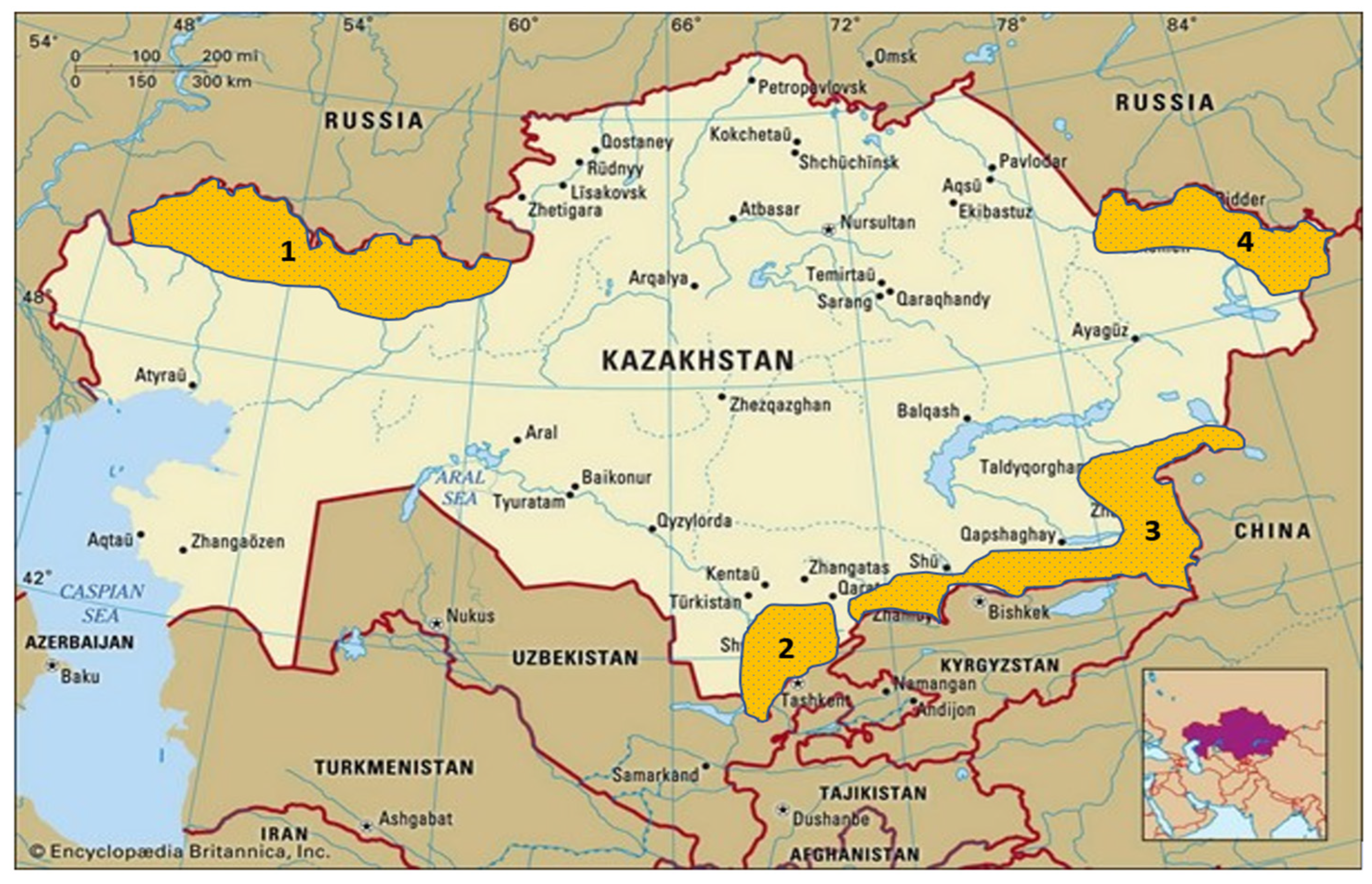
Figure 1. Distribution areas of the Sunn pest on wheat crops in Kazakhstan. 1—West (West Kazakhstan and Aktobe regions). 2—South (Turkistan region). 3—Southeast (Almaty, Zhambyl, and Zhetysu regions). 4—East (Abai and East Kazakhstan regions).
Ecologies 06 00081 g001
Figure 2. Mean monthly temperature and precipitation (2022–2024 vs. 1991–2020) in winter wheat growing regions of Kazakhstan.
Ecologies 06 00081 g002
Figure 3. Frequency of annual HTC across the regions of Kazakhstan.
Ecologies 06 00081 g003
Figure 4. Variation in the sum of effective temperature (SET) required for the physiological development of the Sunn pest across the regions of Kazakhstan (2022–2024).
Ecologies 06 00081 g004
Figure 5. Age structure of the Sunn pest population at different grain maturity stages of winter wheat in Kazakhstan.
Ecologies 06 00081 g005
Figure 6. Parasitism of Sunn pest eggs by Trissolcus grandis Thomson ((a)—male; (b)—female; (c)—parasitism process; (d)—development; (e)—emergence of parasitoids from the egg clutch).
Ecologies 06 00081 g006
Figure 7. Developmental parameters of the Sunn pest on wheat varieties and wild grasses. Different letters above bars indicate significant differences between treatments as determined by Tukey’s HSD test at p < 0.05.
Ecologies 06 00081 g007
Figure 8. Changes in the phenological phases of Sunn pest development in Kazakhstan during 2022–2024. Symbols and abbreviations: ⊕ overwintered adults; + adults; * eggs; ** period of “effective oviposition”; ≈ nymphs of instars I–V; ++ new generation adults; ++2 bug migration; (++) summer shelter; …… crop treatment dates.
Ecologies 06 00081 g008
Table 1. Study of the Sunn pest in the regions of Kazakhstan during 2022–2024.
RegionLocationCoordinatesWheat Cultivars and Forage Grass SpeciesSurveyed Area, ha/Number of Sunn Pests, pcs.
202220232024
EastKRIAPG (Branch, Taldykorgan)N 45°01′42″ E 78°31′50″Steklovidnaya 2410/3010/3015/50
SoutheastKRIAPG (Cereal crop nursery, Almalybak)N 43°23′77″ E 76°69′68″Steklovidnaya 24, Bogarnaya 56, Bulbous barley, Grass brome28/18634/30349/466
KRIAPG (Rainfed nursery, Karaoy)N 43°49′49″ E 76°66′21″Steklovidnaya 24, Bogarnaya 56, Bulbous barley, Grass brome1/291/531/120
LLP “Spatai batyr”N 42°82′24″ E 73°35′84″Steklovidnaya 2410/5010/7510/100
SouthLLP “Krasnovodopad Agricultural Experimental Station”N 41°46′40″ E 69°43′66″Krasnovodopad 210, Yuzhnaya 12, Bulbous barley, Grass brome11/5511/4317/107
WestUral Agricultural Experimental StationN 51°26′42″ E 51°32′16″Saratovskaya 90, Zhemcshujina Povolzhya, Volgouralskaya, Saratovskaya 425/145/185/24
65 ha/
364 pcs.
71 ha/
522 pcs.
97 ha/
867 pcs.
Disclaimer/Publisher’s Note: The statements, opinions and data contained in all publications are solely those of the individual author(s) and contributor(s) and not of MDPI and/or the editor(s). MDPI and/or the editor(s) disclaim responsibility for any injury to people or property resulting from any ideas, methods, instructions or products referred to in the content.