

Enhancing Invasive Alien Plant Species Management Through Participatory GIS: A Spatial Analysis of Species Distribution on Rodrigues Island, Mauritius

Abstract
1. Introduction
2. Materials and Methods
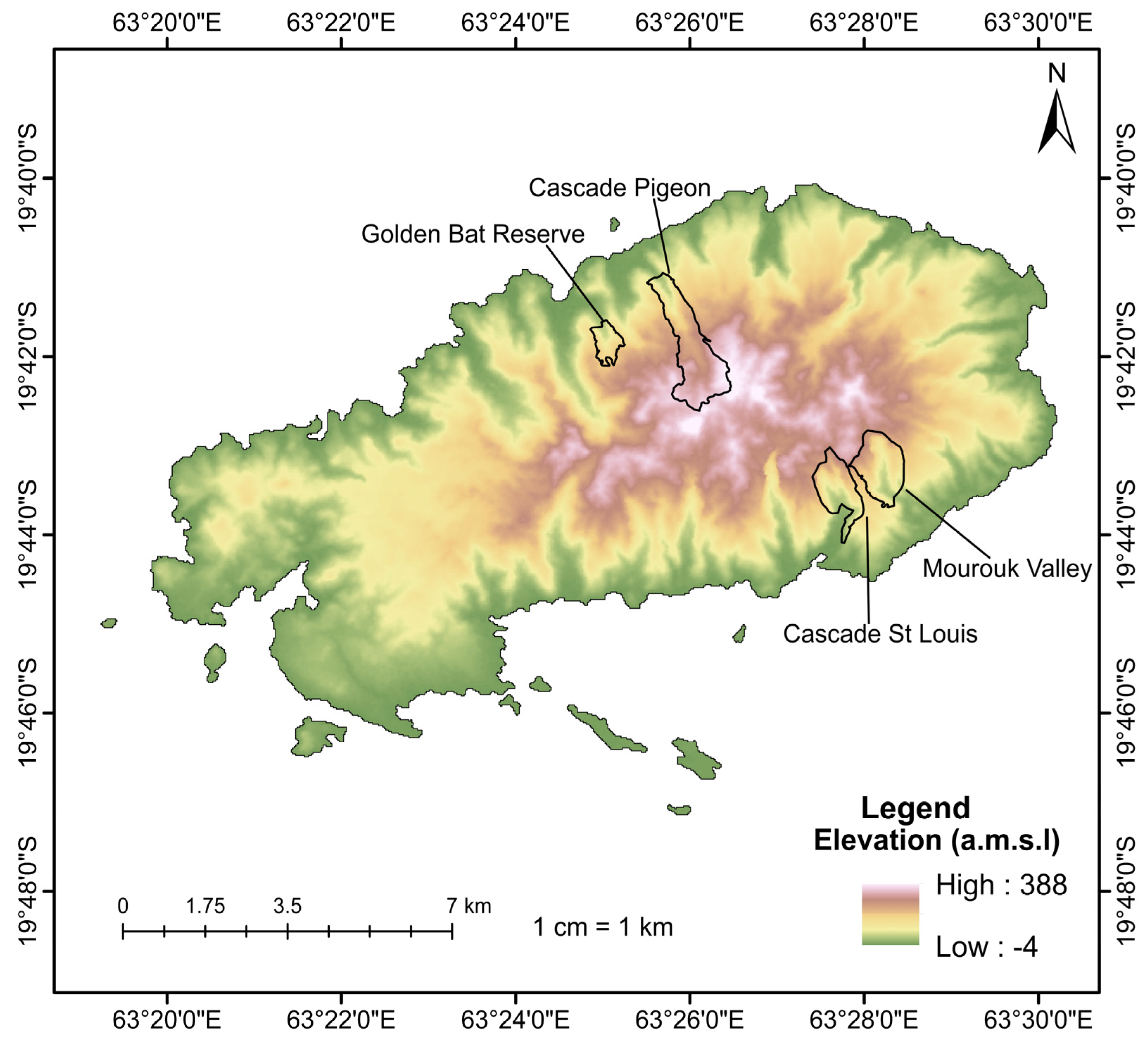
2.1. Case Study Area
2.2. Site Selection
2.3. Species Selection
- Importance: The significance of the species in terms of its rate of spread and overall impact on the ecosystem.
- Feasibility: Priority was given to species that could be easily identified during field surveys.
- Potential to Spread: Species with a high propensity to spread rapidly and widely were prioritized. This criterion also considered the mode of spread (e.g., via wind, animals, or human activity) and the species’ preferred habitats for invasion.
- Equilibrium Status: The extent to which the species has already established itself within the ecosystem.
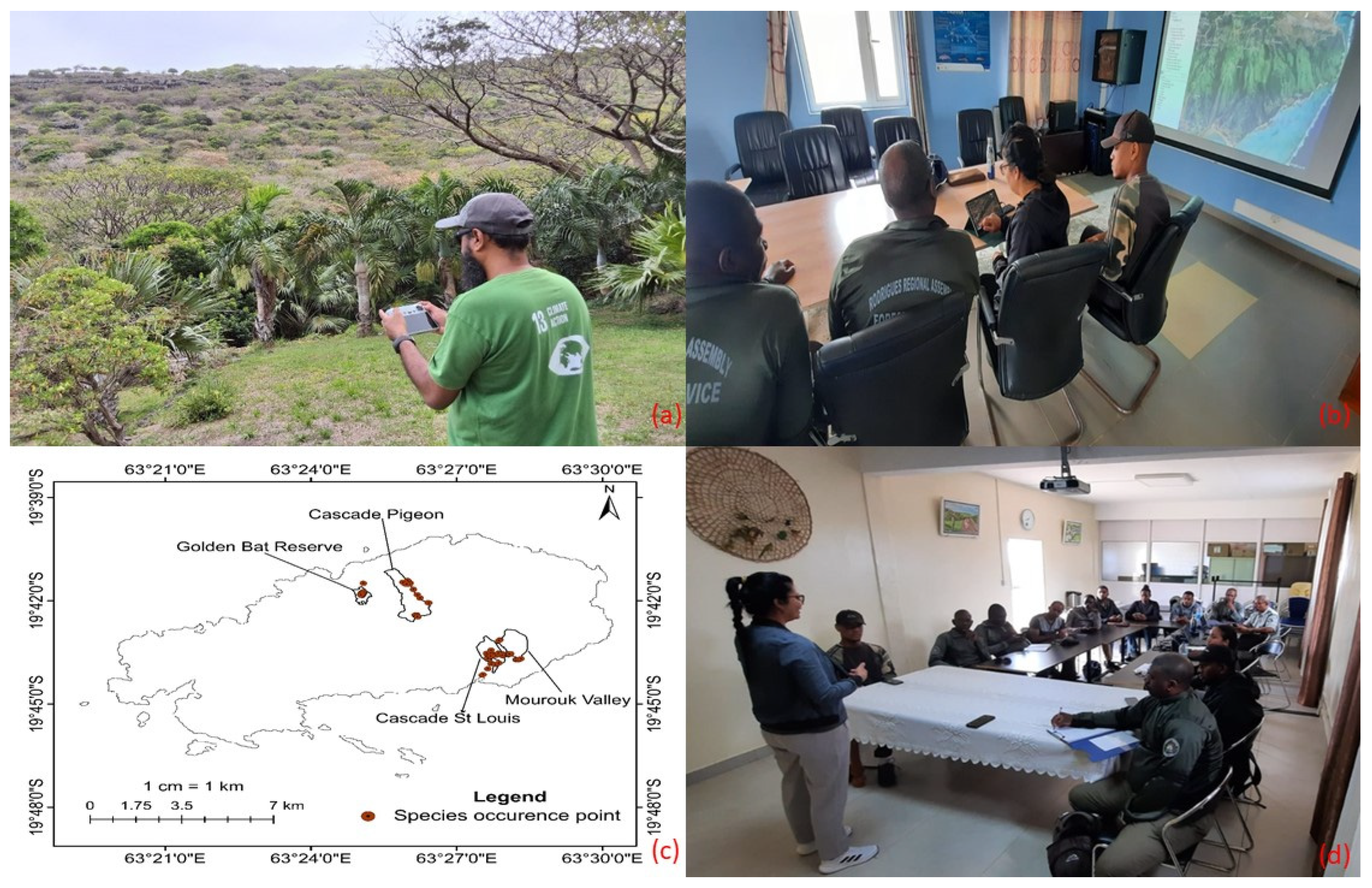
2.4. Field Surveys
2.5. Participatory GIS Mapping
2.6. Data Analysis
3. Results

| Species | Method | |
|---|---|---|
| Mobile Application | Drone | |
| Albizia lebbeck | 06 | 06 |
| Samanea saman | 02 | 06 |
| Eucalyptus spp. | 04 | 05 |
| Furcraea foetida | 18 | 82 |
| Tabebuia pallida | 27 | 101 |
| Litsea sebifera | 07 | 79 |
| Leucaena leucocephala | 07 | 35 |
| Ravenala madagascariensis | 04 | - |
| Rubus rosifolius | 02 | - |
| Syzygium jambos | 03 | - |
| Vachellia nilotica | 07 | 25 |
| Millettia pinnata | 12 | 77 |
3.1. Species Distribution Maps
3.2. Model Accuracy
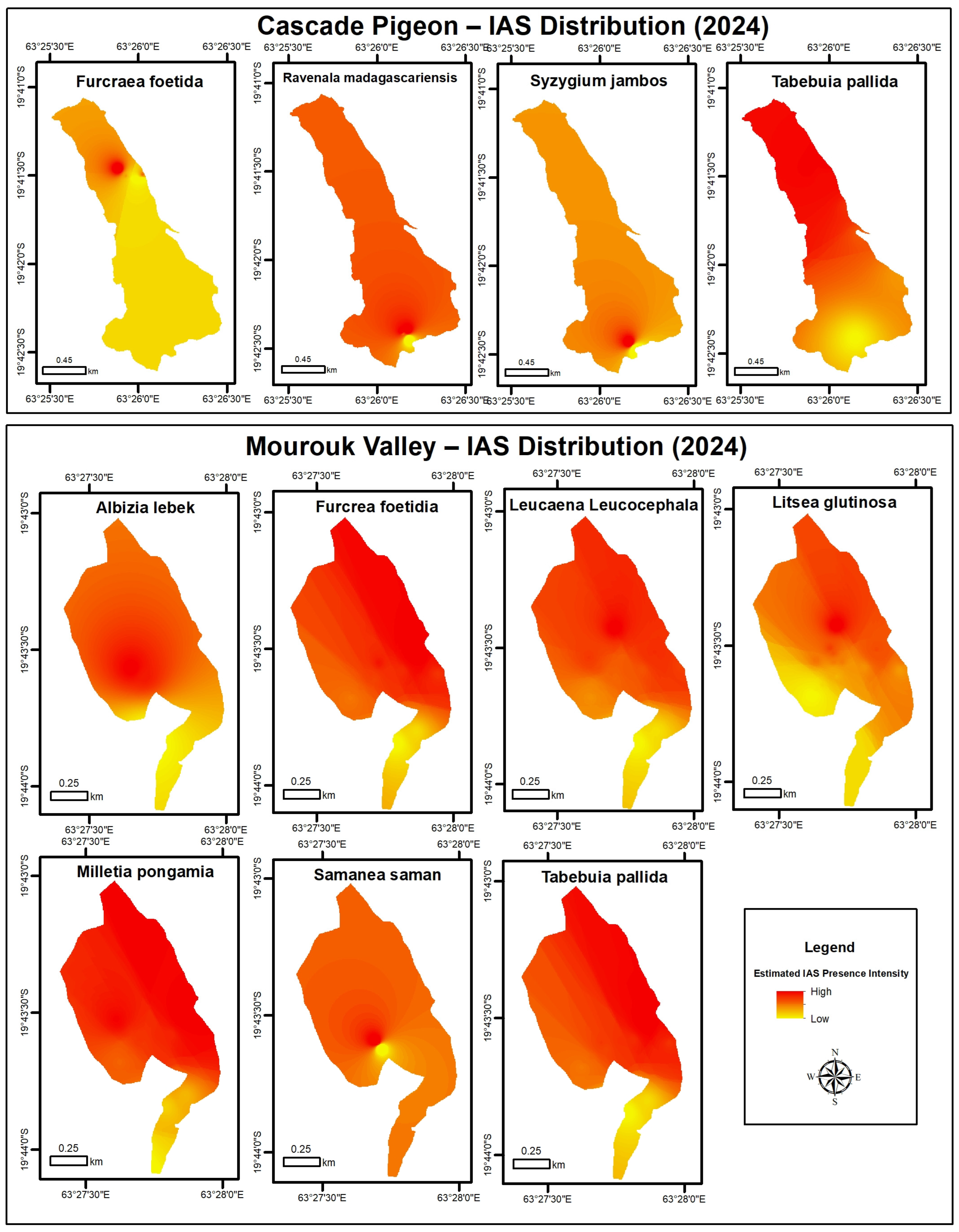
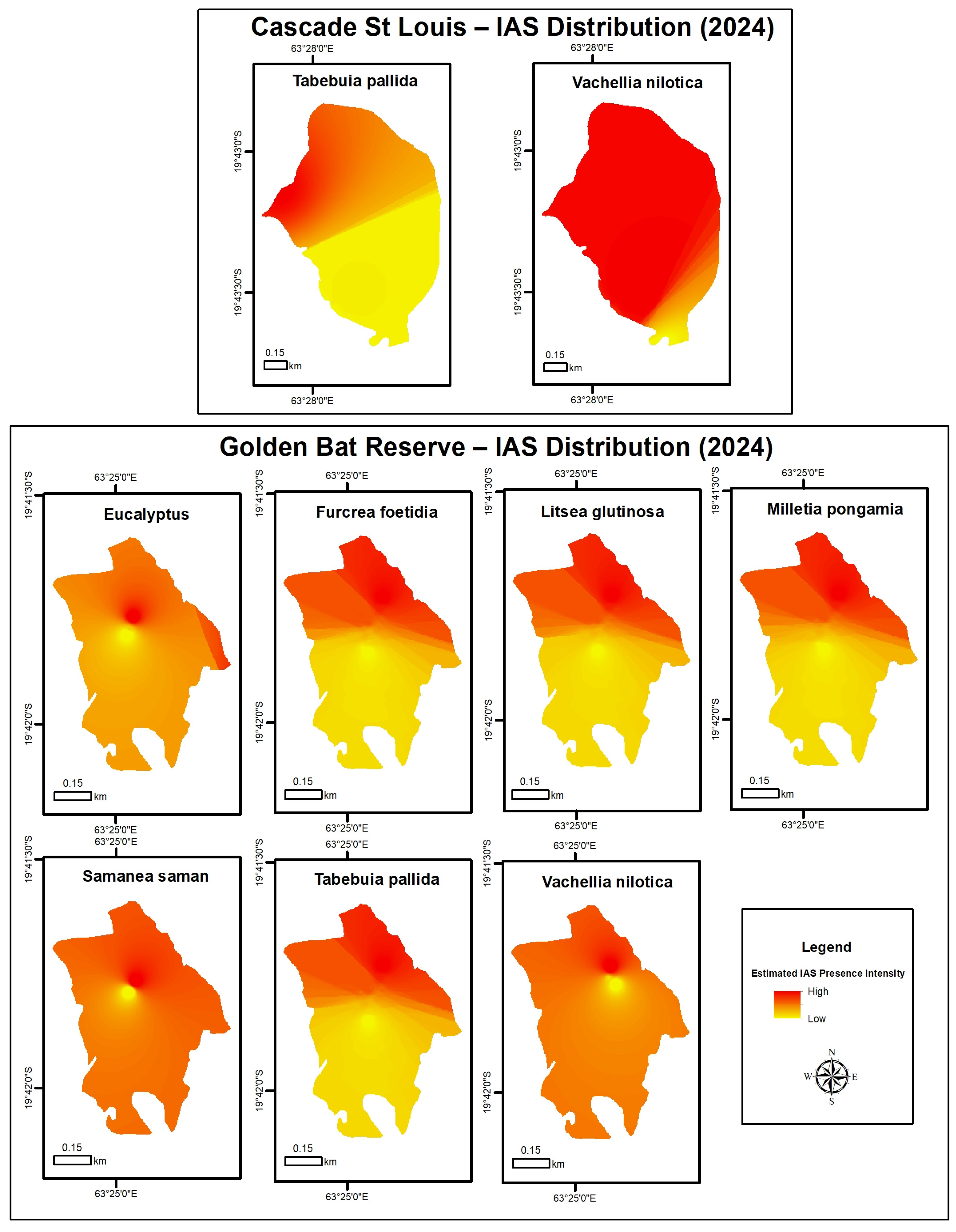
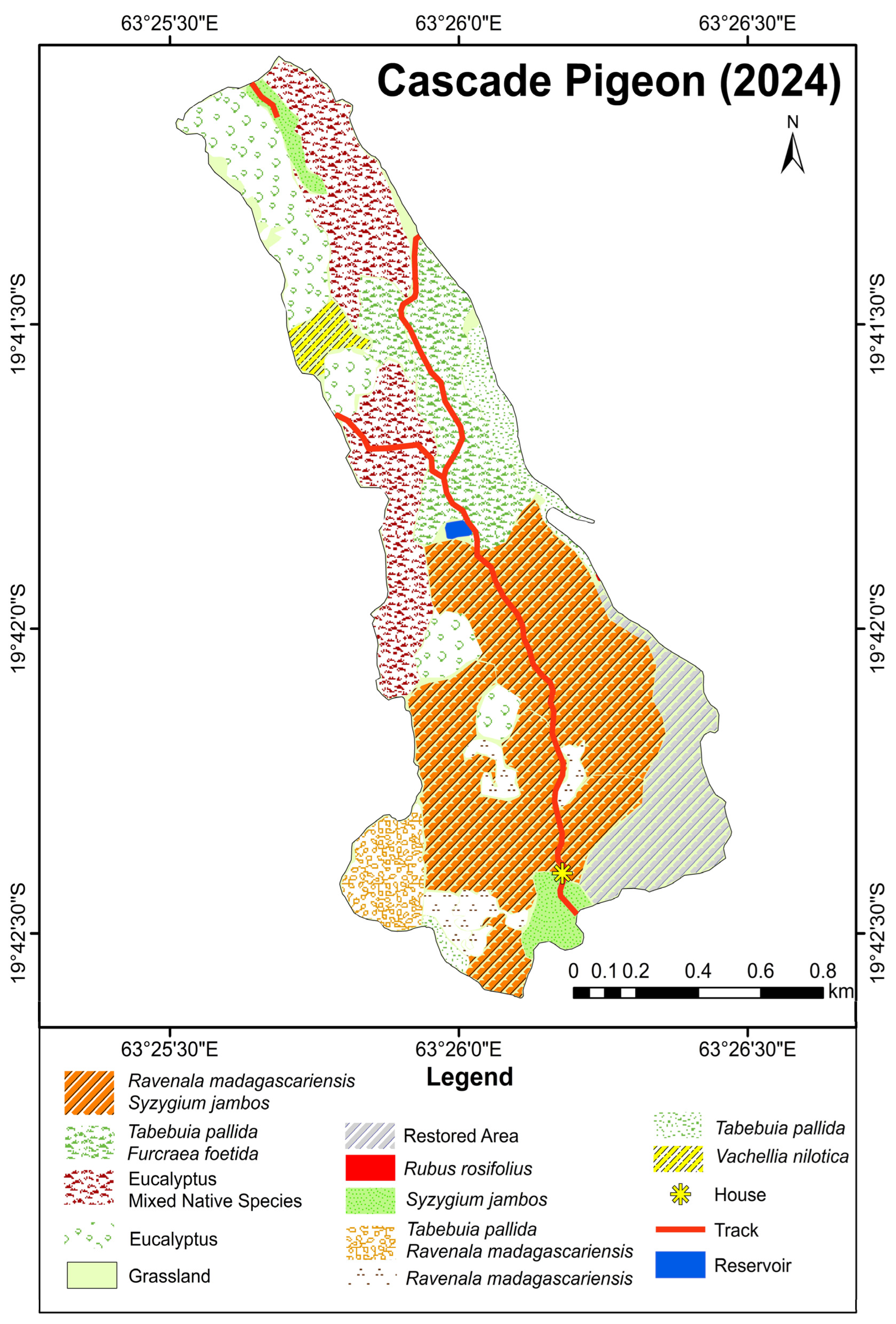
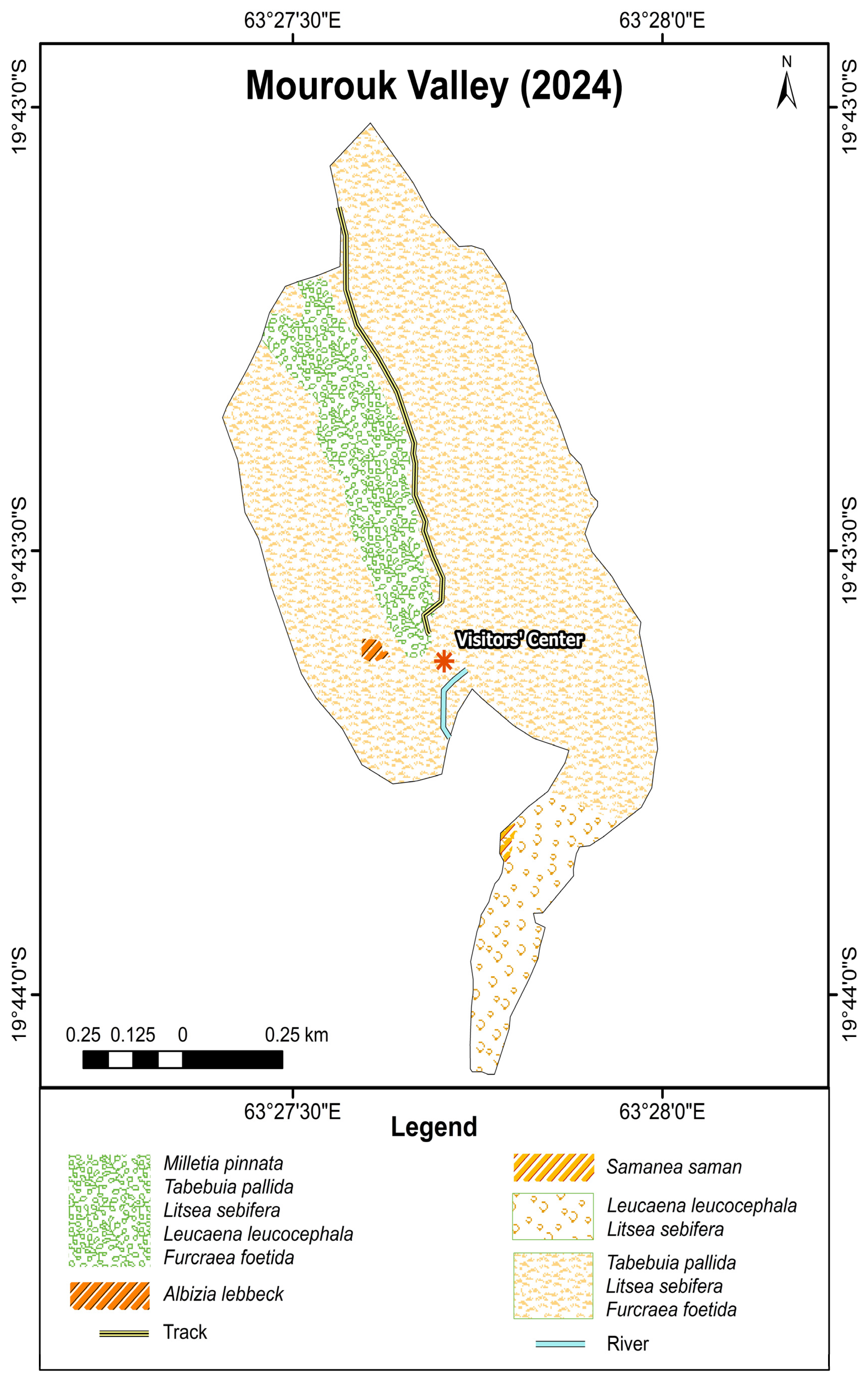
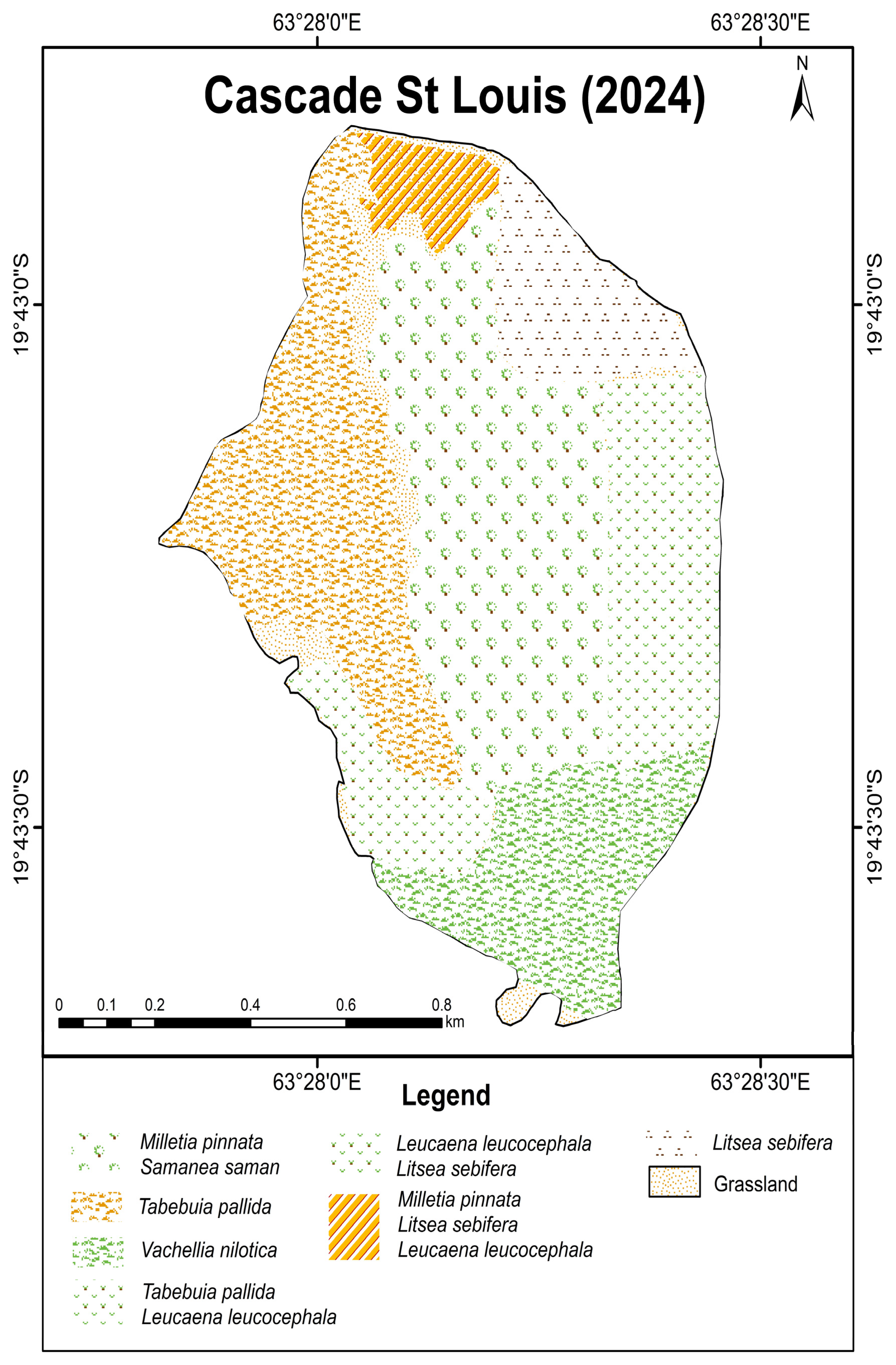
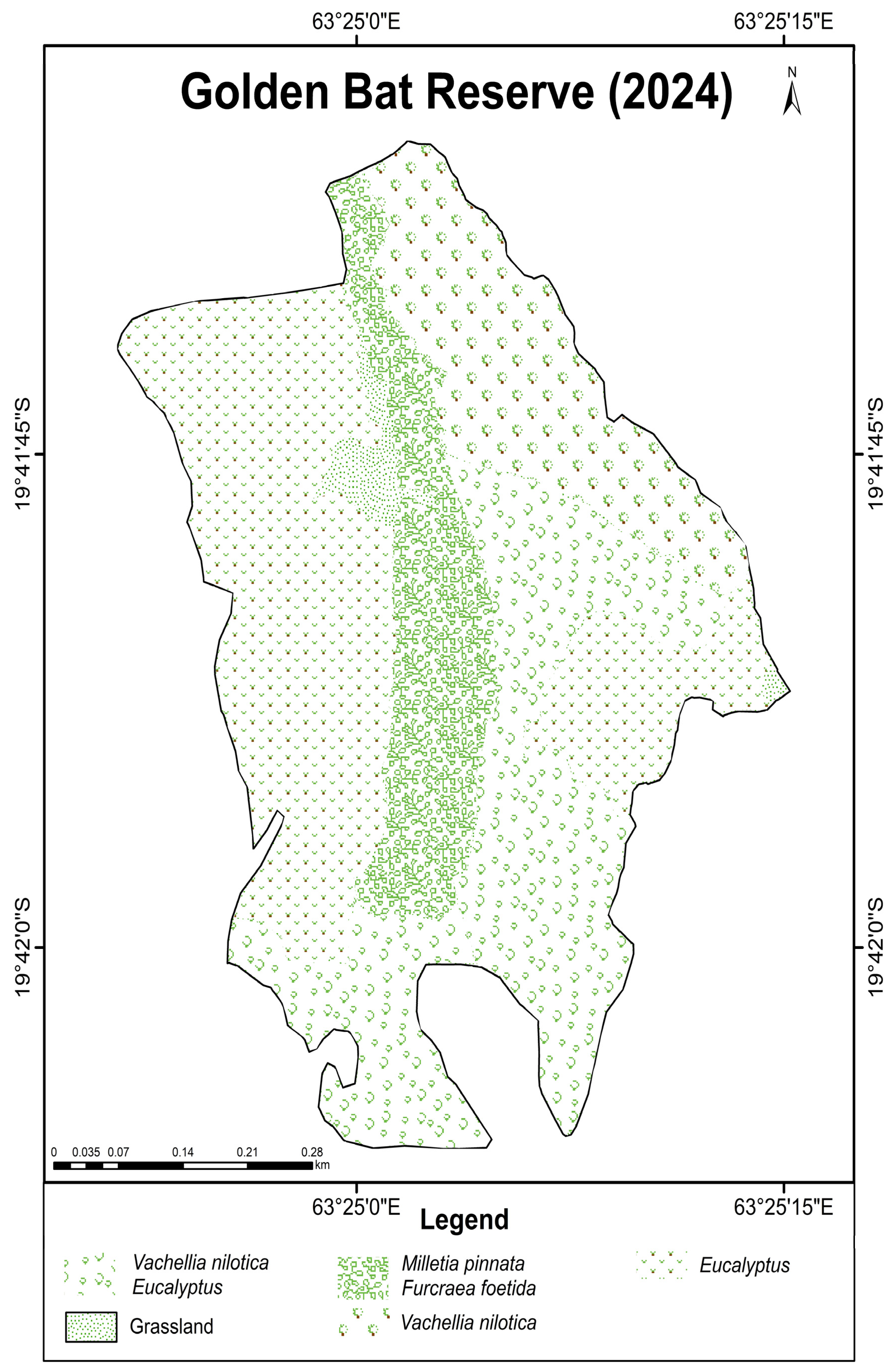
3.3. Final IAS Distribution Maps
4. Discussion
4.1. Spatial Distribution Patterns of IAS at the Four Sites of Rodrigues Island
4.2. Model Reliability and Participatory GIS Mapping
4.3. Enhancing IAS Management on Rodrigues Island Using PGIS Mapping
4.4. Limitations and Recommendations
5. Conclusions
- Integrated Approach Efficiency: The combination of PGIS and spatial interpolation IDW proved effective for mapping IAS in data-scarce island contexts, producing reliable outputs even under limited field conditions.
- Site-Specific Invasion Patterns: Distinct spatial patterns were identified at each site, with Leucaena leucocephala, Millettia pinnata, and Furcrae foetida emerging as dominant invasive species in ecologically sensitive areas.
- Buffer-Zone Potential: Grassland zones showed minimal invasion, indicating their potential as natural buffer areas that could be prioritized for ecological restoration.
- Model Reliability: Low RMSE values and minimal spatial error confirmed the robustness and accuracy of the IDW interpolation for species-distribution estimation.
- Participatory Validation: The PGIS approach significantly improved map accuracy, particularly in inaccessible terrains such as Cascade St Louis, by incorporating local ecological knowledge.
- Management Implications: The integration of geospatial tools and participatory mapping offers a replicable, adaptive framework for IAS management in small island states, supporting progress towards Sustainable Development Goal 15—Life on Land.
Funding
Data Availability Statement
Acknowledgments
Conflicts of Interest
References
- Roy, H.E.; Pauchard, A.; Stoett, P.; Renard Truong, T.; Bacher, S.; Galil, B.S.; Hulme, P.E.; Ikeda, T.; Sankaran, K.V.; McGeoch, M.A.; et al. Summary for Policymakers of the Thematic Assessment Report on Invasive Alien Species and Their Control of the Intergovernmental Science-Policy Platform on Biodiversity and Ecosystem Services; IPBES Secretariat: Bonn, Germany, 2023. [Google Scholar]
- IUCN. Invasive Alien Species and Climate Change. Issues Brief. 2025. Available online: https://iucn.org/sites/default/files/2025-03/invasive-alien-species-and-climate-change-feb.-2025-update.pdf (accessed on 10 April 2025).
- Wittenberg, R. Invasive alien species—A threat to global biodiversity and opportunities to prevent and manage them. In Western Corn Rootworm: Ecology and Management; Vidal, S., Kuhlmann, U., Edwards, C.R., Eds.; CAB International: Wallingford, UK, 2005; pp. 1–28. [Google Scholar]
- CBD. Convention on Biological Diversity: Invasive Alien Species. 2021. Available online: https://www.cbd.int/ (accessed on 27 January 2025).
- Côté, I.M.; Smith, N.S. The lionfish Pterois sp. invasion: Has the worst-case scenario come to pass? J. Fish Biol. 2018, 92, 660–689. [Google Scholar] [CrossRef]
- Pimentel, D.; Zuniga, R.; Morrison, D. Update on the environmental and economic costs associated with alien-invasive species in the United States. Ecol. Econ. 2005, 52, 273–288. [Google Scholar] [CrossRef]
- Russell, J.C.; Meyer, J.Y.; Holmes, N.D.; Pagad, S. Invasive alien species on islands: Impacts, distribution, interactions and management. Environ. Conserv. 2017, 44, 359–370. [Google Scholar] [CrossRef]
- Mauchamp, A. Threats from alien plant species in the Galápagos Islands. Conserv. Biol. 1997, 11, 260–263. Available online: https://www.jstor.org/stable/2387299 (accessed on 10 April 2025). [CrossRef]
- Li, J.; Heap, A.D. Spatial interpolation methods applied in the environmental sciences: A review. Environ. Model. Softw. 2014, 53, 173–189. [Google Scholar] [CrossRef]
- Phillips, S.J.; Anderson, R.P.; Schapire, R.E. Maximum entropy modeling of species geographic distributions. Ecol. Model. 2006, 190, 231–259. [Google Scholar] [CrossRef]
- Cutler, D.R.; Edwards, T.C.; Beard, K.H.; Cutler, A.; Hess, K.T.; Gibson, J.; Lawler, J.J. Random forests for classification in ecology. Ecology 2007, 88, 2783–2792. [Google Scholar] [CrossRef]
- Elith, J.; Leathwick, J.R. Species distribution models: Ecological explanation and prediction across space and time. Annu. Rev. Ecol. Evol. Syst. 2009, 40, 677–697. [Google Scholar] [CrossRef]
- Chambers, R. Participatory mapping and geographic information systems: Whose map? Who is empowered and who disempowered? Who gains and who loses? Electron. J. Inf. Syst. Dev. Ctries. 2006, 25, 1–11. [Google Scholar] [CrossRef]
- McCall, M.K.; Dunn, C.E. Geo-information tools for participatory spatial planning: Fulfilling the criteria for “good” governance? Geoforum 2012, 43, 81–94. [Google Scholar] [CrossRef]
- Azzurro, E.; Cerri, J. Participatory mapping of invasive species: A demonstration in a coastal lagoon. Mar. Policy 2021, 126, 104412. [Google Scholar] [CrossRef]
- Baider, C.; Florens, F.B.V.; Baret, S.; Beaver, K.; Matatiken, D.; Strasberg, D.; Kueffer, C. Status of plant conservation in oceanic islands of the Western Indian Ocean. In Proceedings of the 4th Global Botanic Gardens Congress, Dublin, Ireland, 13–18 June 2010. [Google Scholar]
- Florens, F.B.V. Conservation in Mauritius and Rodrigues: Challenges and achievements from two decades of NGO work. In Lost Land of the Dodo; Cheke, A., Hume, J., Eds.; T & AD Poyser: London, UK, 2008. [Google Scholar]
- Cheke, A.S.; Hume, J.P. Lost Land of the Dodo: The Ecological History of Mauritius, Réunion, and Rodrigues; Yale University Press: New Haven, CT, USA, 2008. [Google Scholar]
- Baider, C.; Florens, F.B.V. Control of invasive alien weeds averts imminent plant extinction. Biol. Invasions 2011, 13, 2641–2646. [Google Scholar] [CrossRef]
- Sunkur, R.; Mauremootoo, J. Spatio-temporal Analysis of an Invasive Alien Species, Vachellia nilotica, on Rodrigues Island, Mauritius, Using Geographic Information Systems and Remote Sensing Techniques. Indones. J. Earth Sci. 2024, 4, A835. [Google Scholar] [CrossRef]
- Eicken, H.; Danielsen, F.; Sam, J.M.; Fidel, M.; Johnson, N.; Poulsen, M.K.; Lee, O.A.; Spellman, K.V.; Iversen, L.; Pulsifer, P.; et al. Connecting top-down and bottom-up approaches in environmental observing. BioScience 2021, 71, 467–483. [Google Scholar] [CrossRef] [PubMed]
- CHM (Clearing-House Mechanism). Status and Threats—Terrestrial Biodiversity. Government of Mauritius, 2023. Available online: http://chm.govmu.org/status-and-threats/terrestrial (accessed on 10 April 2025).
- Strahm, W.A. Plant Red Data Book for Rodrigues; Mauritian Wildlife Foundation: Vacoas, Mauritius, 1999. [Google Scholar]
- Republic of Mauritius. National Biodiversity Strategy and Action Plan 2017–2025; Ministry of Agro-Industry and Food Security: Port Louis, Mauritius, 2017. Available online: https://www.cbd.int/doc/world/mu/mu-nbsap-v2-en.pdf (accessed on 10 April 2025).
- Chambers, R. Whose Reality Counts? Putting the First Last; Intermediate Technology Publications: London, UK, 1997; Available online: https://www.jstor.org/stable/44257385 (accessed on 10 April 2025).
- Yoccoz, N.G.; Nichols, J.D.; Boulinier, T. Monitoring of biological diversity in space and time. Trends Ecol. Evol. 2001, 16, 446–453. [Google Scholar] [CrossRef]
- Sharma, P.; Kaur, A.; Batish, D.R.; Kaur, S.; Chauhan, B.S. Critical insights into the ecological and invasive attributes of Leucaena leucocephala, a tropical agroforestry species. Front. Agron. 2022, 4, 890992. [Google Scholar] [CrossRef]
- CABI. Albizia lebbeck (sirisa). In Invasive Species Compendium; CAB International: Wallingford, UK, 2023. [Google Scholar] [CrossRef]
- Kueffer, C.; Daehler, C.C.; Torres-Santana, C.W.; Lavergne, C.; Meyer, J.-Y.; Otto, R.; Silva, L. A global comparison of plant invasions on oceanic islands. Perspect. Plant Ecol. Evol. Syst. 2010, 12, 145–161. [Google Scholar] [CrossRef]
- da Silveira, M.C.; Silveira, M.; Medeiros, L.S.; Aguiar, L.M. The role of feeding roosts in seed dispersal service bats provide in urban areas. Biotropica 2024, 56, e13291. [Google Scholar] [CrossRef]
- FAO. Global Forest Resources Assessment 2005: Thematic Study on Forest Restoration: Current Patterns and Future Opportunities; Forest Resources Assessment Programme, Working Paper 83; FAO: Rome, Italy, 2005; Available online: https://www.fao.org/4/y5901e/y5901e07.htm (accessed on 10 April 2025).
- Russell, J.C.; Innes, J.G.; Brown, P.H.; Byrom, A.E. Predator-Free New Zealand: Conservation Country. BioScience 2017, 67, 820–829. [Google Scholar] [CrossRef]
- Fourcade, Y.; Engler, J.O.; Rödder, D.; Secondi, J. Mapping species distributions with MAXENT using a geographically biased sample of presence data: A performance assessment of methods for correcting sampling bias. PLoS ONE 2014, 9, e97122. [Google Scholar] [CrossRef]
- Mataruse, T.P.; Nyikahadzoi, K.; Fallot, A.; Perrotton, A. Using participatory mapping for a shared understanding of deforestation dynamics in Murehwa district, Zimbabwe. Cah. Agric. 2024, 33, 15. [Google Scholar] [CrossRef]
- Chan, C.M.; Owers, C.J.; Fuller, S.; Hayward, M.W.; Moverley, D.; Griffin, A.S. Capacity and capability of remote sensing to inform invasive plant species management in the Pacific Islands region. Conserv. Biol. 2025, 39, e14344. [Google Scholar] [CrossRef] [PubMed]
- Shackleton, R.T.; Adriaens, T.; Brundu, G.; Dehnen-Schmutz, K.; Estévez, R.A.; Fried, J.; Larson, B.M.; Liu, S.; Marchante, E.; Marchante, H.; et al. Stakeholder engagement in the study and management of invasive alien species. J. Environ. Manag. 2019, 229, 88–101. [Google Scholar] [CrossRef] [PubMed]
- Vujanović, D.; Losapio, G.; Milić, S.; Milić, D. The impact of multiple species invasion on soil and plant communities increases with invasive species co-occurrence. Front. Plant Sci. 2022, 13, 875824. [Google Scholar] [CrossRef]
- Pyšek, P.; Hulme, P.E.; Simberloff, D.; Bacher, S.; Blackburn, T.M.; Carlton, J.T.; Dawson, W.; Essl, F.; Foxcroft, L.C.; Genovesi, P.; et al. Scientists’ warning on invasive alien species. Biol. Rev. 2020, 95, 1511–1534. [Google Scholar] [CrossRef]
- Zhang, L.; Zhu, M.; Wan, Y.; Liu, X. Multiple invasion trajectories induce niche dynamics inconsistency and increase risk uncertainty of a plant invader. Ecosphere 2023, 14, e4483. [Google Scholar] [CrossRef]
- Tataridas, A.; Jabran, K.; Kanatas, P.; Oliveira, R.S.; Freitas, H.; Travlos, I. Early detection, herbicide resistance screening, and integrated management of invasive plant species: A review. Pest Manag. Sci. 2022, 78, 3957–3972. [Google Scholar] [CrossRef]
- IUCN. Guidelines for Invasive Species Planning and Management on Islands; Alan, T., Ed. and Translator; IUCN: Cambridge, UK; Gland, Switzerland, 2018. [Google Scholar] [CrossRef]
- Republic of Mauritius. Good Practice Guide to Native Forest Restoration in Mauritius; Ministry of Agro Industry: Port Louis, Mauritius; Food Security: Port Louis, Mauritius, 2018.
| Site | Size (ha) |
|---|---|
| Mourouk Valley | 77 |
| Cascade Pigeon | 200 |
| Cascade St Louis | 110 |
| Golden Bat Reserve | 141 |
| SN | Scientific Name | Common Name | Occurrence Region |
|---|---|---|---|
| 1 | Albizia lebbeck | Siris | Mourouk Valley, Golden Bat Reserve |
| 2 | Samanea saman | Monkey Pod Tree | Mourouk Valley, Golden Bat Reserve, Cascade St Louis |
| 3 | Eucalyptus spp. | Eucalyptus | Cascade Pigeon, Golden Bat Reserve, Mourouk Valley |
| 4 | Furcraea foetida | Aloès | Cascade Pigeon, Golden Bat Reserve, Mourouk Valley |
| 5 | Tabebuia pallida | Tecoma | Cascade Pigeon, Cascade St Louis, Golden Bat Reserve, Mourouk Valley |
| 6 | Litsea sebifera | Bolly beech | Golden Bat Reserve, Mourouk Valley, Cascade St Louis |
| 7 | Leucaena leucocephala | Acacia | Mourouk Valley, Cascade St Louis |
| 8 | Ravenala madagascariensis | Ravenale | Cascade Pigeon |
| 9 | Rubus rosifolius | Framboise | Cascade Pigeon |
| 10 | Syzygium jambos | Jamrosa | Cascade Pigeon |
| 11 | Vachellia nilotica | Prickly Acacia | Cascade Pigeon, Cascade St Louis, Golden Bat Reserve |
| 12 | Millettia pinnata | Pongame | Golden Bat Reserve, Mourouk Valley, Cascade St Louis |
| Mourouk Valley | Cascade Pigeon | Cascade St Louis | Golden Bat Reserve |
|---|---|---|---|
| 231 | 39 | 47 | 198 |
| Species | Mourouk Valley | Cascade Pigeon | Cascade St Louis | Golden Bat Reserve |
|---|---|---|---|---|
| Albizia lebbeck | 1.55 × 10⁻⁹ | - | - | - |
| Samanea saman | 0.01 | - | - | 4.90 |
| Eucalyptus spp. | - | - | - | −0.01 |
| Furcraea foetida | −6.06 × 10⁻⁵ | 0.01 | - | −1.23 × 10⁻⁵ |
| Tabebuia pallida | −5.74 × 10⁻⁵ | −6.15 × 10⁻⁵ | −9.72 × 10⁻⁶ | −1.52 × 10⁻⁵ |
| Litsea sebifera | 5.23 × 10⁻⁷ | - | - | −1.82 × 10⁻⁵ |
| Leucaena leucocephala | −7.83 × 10⁻⁵ | - | - | |
| Ravenala madagascariensis | - | −0.01 | - | - |
| Rubus rosifolius | - | - | - | - |
| Syzygium jambos | - | 4.56 × 10⁻⁵ | - | - |
| Vachellia nilotica | - | - | −2.24 × 10⁻⁵ | −3.39 × 10⁻⁵ |
| Millettia pinnata | −8.03 × 10⁻⁵ | - | - | −1.04 × 10⁻⁵ |
| Species | Mourouk Valley | Cascade Pigeon | Cascade St Louis | Golden Bat Reserve |
|---|---|---|---|---|
| Albizia lebbeck | 0.000005 m (~0 mm) | - | - | - |
| Samanea saman | 26.61 m | - | - | 0.15 m (~15 cm) |
| Eucalyptus spp. | - | - | - | 12.72 m |
| Furcraea foetida | 0.18 m (~18 cm) | 0.31 m (~31 cm) | - | 0.037 m (~4 cm) |
| Tabebuia pallida | 0.17 m (~17 cm) | 0.18 m (~18 cm) | 0.029 m (~3 cm) | 0.045 m (~5 cm) |
| Litsea sebifera | 0.00157 m (~1.6 mm) | - | - | 0.054 m (~5 cm) |
| Leucaena leucocephala | 0.23 m (23 cm) | - | - | |
| Ravenala madagascariensis | - | 0.39 m (~39 cm) | - | - |
| Rubus rosifolius | - | - | - | - |
| Syzygium jambos | - | 0.14 m (~14 cm) | - | - |
| Vachellia nilotica | - | - | 0.067 m (~7 cm) | 0.102 m (~10 cm) |
| Millettia pinnata | 0.24 m (~24 cm) | - | - | 0.031 m (~3 cm) |
| Species | Mourouk Valley | Cascade Pigeon | Cascade St Louis | Golden Bat Reserve |
|---|---|---|---|---|
| Albizia lebbeck | 3.89 × 10⁻⁷ | - | - | - |
| Samanea saman | 0.02 | - | - | 8.49 × 10⁻⁵ |
| Eucalyptus spp. | - | - | - | 0.01 |
| Furcraea foetida | 0.01 | 0.01 | - | 6.73 × 10⁻⁵ |
| Tabebuia pallida | 0.01 | 0.01 | 6.28 × 10⁻⁵ | 6.46 × 10⁻⁵ |
| Litsea sebifera | 0.01 | - | - | 6.2 × 10⁻⁵ |
| Leucaena leucocephala | 0.01 | - | - | - |
| Ravenala madagascariensis | - | 0.01 | - | - |
| Rubus rosifolius | - | - | - | - |
| Syzygium jambos | - | 0.01 | - | - |
| Vachellia nilotica | - | - | 0.01 | 8.33 × 10⁻⁵ |
| Millettia pinnata | 0.01 | - | 6.77 × 10⁻⁵ |
Disclaimer/Publisher’s Note: The statements, opinions and data contained in all publications are solely those of the individual author(s) and contributor(s) and not of MDPI and/or the editor(s). MDPI and/or the editor(s) disclaim responsibility for any injury to people or property resulting from any ideas, methods, instructions or products referred to in the content. |
© 2025 by the author. Licensee MDPI, Basel, Switzerland. This article is an open access article distributed under the terms and conditions of the Creative Commons Attribution (CC BY) license (https://creativecommons.org/licenses/by/4.0/).
Share and Cite
Sunkur, R. Enhancing Invasive Alien Plant Species Management Through Participatory GIS: A Spatial Analysis of Species Distribution on Rodrigues Island, Mauritius. Ecologies 2025, 6, 82. https://doi.org/10.3390/ecologies6040082
Sunkur R. Enhancing Invasive Alien Plant Species Management Through Participatory GIS: A Spatial Analysis of Species Distribution on Rodrigues Island, Mauritius. Ecologies. 2025; 6(4):82. https://doi.org/10.3390/ecologies6040082
Chicago/Turabian StyleSunkur, Reshma. 2025. "Enhancing Invasive Alien Plant Species Management Through Participatory GIS: A Spatial Analysis of Species Distribution on Rodrigues Island, Mauritius" Ecologies 6, no. 4: 82. https://doi.org/10.3390/ecologies6040082
APA StyleSunkur, R. (2025). Enhancing Invasive Alien Plant Species Management Through Participatory GIS: A Spatial Analysis of Species Distribution on Rodrigues Island, Mauritius. Ecologies, 6(4), 82. https://doi.org/10.3390/ecologies6040082

