1. Introduction
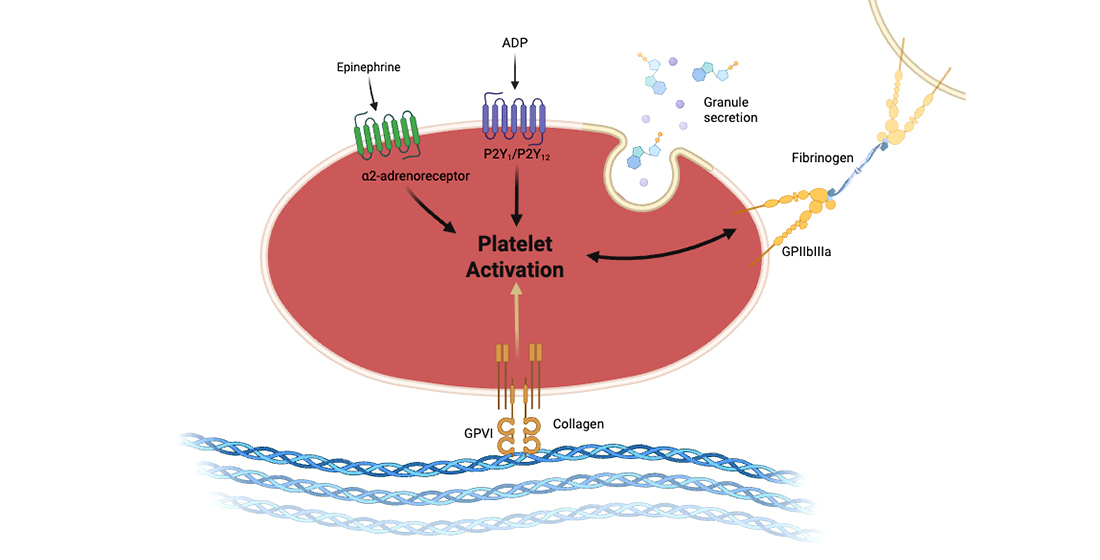
Platelet aggregation is an essential process in hemostasis, in which platelets adhere to one another to form a hemostatic plug in response to vascular injury. Various substances, such as epinephrine, collagen, and ADP, play a key role in platelet activation and aggregation [
1,
2]. As the search for novel antiplatelet therapies continues, coumarins offer a promising avenue for further investigation. Their potential to modulate platelet activity uniquely could pave the way for more effective and personalized antiplatelet strategies in the future [
3].
Coumarin (1,2-benzopyrone or 2H-1-benzopyran-2-one) is the basic structure of many natural and synthetic compounds [
4,
5]. Coumarins that inhibit the vitamin K epoxide reductase (VKORC1) enzyme are the best-known and most widely used clinically as oral anticoagulants [
6]. However, only a very few coumarins exhibit anticoagulant activity, as this requires specific substitutions at positions 3 and 4 of the basic structure [
6]. In contrast, in recent decades, studies on the multifunctional pharmacology of coumarin and iso-coumarin derivatives have strengthened the scientific background and contextualized their relevance beyond antiplatelet activity. It has been described as exhibiting other biological effects of therapeutic interest (anti-inflammatory, antioxidant, cardioprotective, anticancer, and neuroprotective [
4,
7,
8,
9].
We recently reported the inhibitory effect of monosubstituted coumarin derivatives on epinephrine-induced aggregation [
10]. This study demonstrated that introducing Methoxy or hydroxy groups enhances affinity for platelet receptors β
2 and α
2-adrenoreceptors, without inhibiting collagen- or ADP-induced aggregation. However, the inhibitory effect of these molecules on platelet aggregation was moderate, and we hypothesize that other chemical substitutions at key positions of the coumarin ring could increase anti-aggregatory efficacy; therefore, we focus on synthesizing molecules with different substitutions to evaluate the possible increase efficiency on other therapeutic targets like glycoprotein VI (GPVI), P
2Y
12 receptor, and integrin GPIIb/IIIa (fibrinogen receptor).
GPIIb/IIIa plays a central role in amplifying and stabilizing the thrombotic response. However, their clinical translation requires a better understanding of their specific molecular targets, optimal dosing strategies, and potential side effects, particularly regarding bleeding risks [
11,
12].
Developing safer and more effective antiplatelet agents remains a significant goal in cardiovascular pharmacology. Recent strategies emphasize multitarget drugs, molecules that act on two or more receptors to achieve synergistic therapeutic effects [
13]. In this study, we synthesized and tested three nitrogen-substituted coumarins for their ability to inhibit platelet aggregation induced by epinephrine, collagen, and ADP. Nitrogen substitutions can form additional interactions, such as hydrogen bonds and π–π cation contacts, thereby improving the recognition of critical domains in G protein–coupled receptors and integrins. This approach aims to design multitarget inhibitors that simultaneously modulate multiple pro-aggregatory targets, such as the α
2-adrenoceptor, GPVI receptor, or P
2Y
12 receptor, to overcome platelet resistance. Finally, molecular docking was used to explore potential interactions between the compounds and these receptors and the GPIIb/IIIa integrin, supporting the structure–activity relationship of multitarget coumarins.
To further enhance the anti-aggregatory activity observed in previously reported monosubstituted coumarins, a rational design strategy was developed based on structural features found in ligands known to modulate platelet activation pathways. Structural elements in agonists and antagonists that act through ADP-dependent purinergic receptors, adrenergic receptors, and integrin-mediated pathways were analyzed to identify molecular motifs associated with receptor recognition and stabilization. These analyses revealed the importance of heterocyclic systems, heteroatom-rich substituents, and conformationally constrained scaffolds that promote productive ligand–receptor interactions.
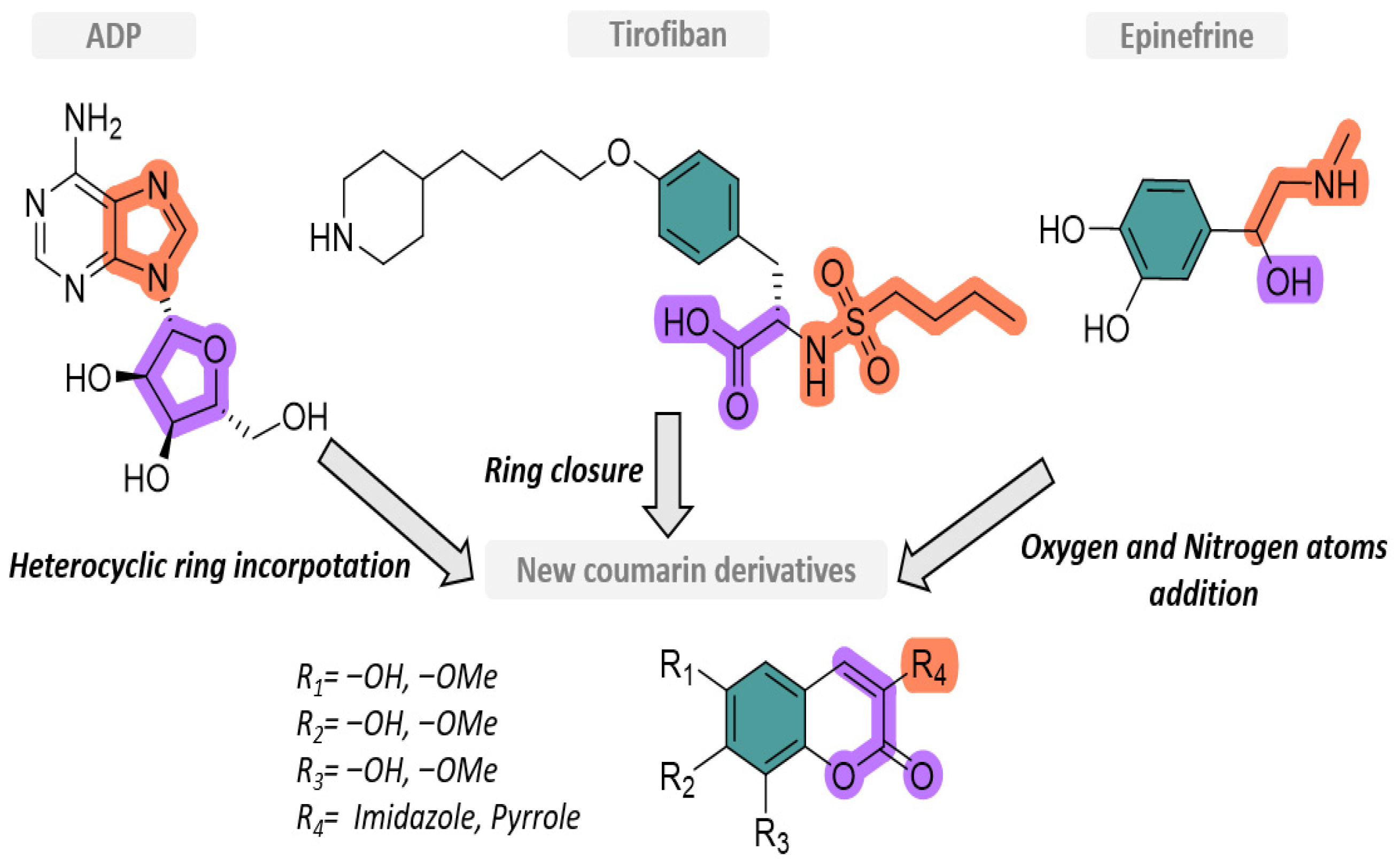
Accordingly, new coumarin derivatives were designed by combining three complementary structural strategies (
Figure 1). First, ring closure and scaffold rigidification were employed to preserve favorable pharmacophoric orientations while reducing conformational flexibility, a factor known to improve binding efficiency by lowering entropic penalties upon receptor association. The coumarin nucleus was retained as the central scaffold due to its planar aromatic system and lactone functionality, which provide π-interaction capacity and hydrogen-bond acceptor sites frequently observed in bioactive ligands targeting platelet receptors. Second, the incorporation of heterocyclic rings was explored to emulate structural fragments present in known platelet receptor modulators. Nitrogen-containing heterocycles, such as imidazole and pyrrole, were introduced at selected positions to increase interaction versatility, enabling potential hydrogen bonding, electrostatic interactions, and π- π contacts within receptor binding pockets. Third, the strategic incorporation of oxygen- and nitrogen-containing substituents was implemented to modulate electronic distribution and polarity while expanding the capacity for intermolecular interactions. Hydroxyl and methoxy substituents were introduced to promote hydrogen-bond formation and adjust aromatic electron density, whereas nitrogen-containing fragments were incorporated to allow additional ionic and polar contacts, potentially enhancing affinity toward multiple platelet activation targets.
This design framework aimed to generate coumarin-based compounds that interact with multiple receptors involved in platelet aggregation, including α2-adrenergic receptors, purinergic receptors such as P2Y12, collagen-associated glycoprotein VI (GPVI), and the fibrinogen receptor, integrin GPIIb/IIIa. Thus, the synthesized molecules were conceived as multitarget scaffolds that combine rigidity, heterocyclic functionality, and heteroatom-mediated interaction potential, providing a rational basis for evaluating their inhibitory effects on platelet aggregation induced by epinephrine, collagen, and ADP.
The design of new coumarin derivatives was guided by structural elements present in representative ligands involved in platelet activation pathways, including ADP-, epinephrine-, and integrin-related modulators. Key modifications included (i) heterocyclic ring incorporation inspired by purine-like systems to enhance interaction versatility; (ii) scaffold rigidification through ring closure to preserve favorable pharmacophoric geometries; and (iii) strategic introduction of oxygen- and nitrogen-containing substituents to increase hydrogen-bonding capacity and electrostatic interaction potential. Variable substitutions at positions R1–R3 include hydroxyl or methoxy groups, while R4 incorporates nitrogen-containing heterocycles such as imidazole or pyrrole. These combined strategies yielded coumarin-based scaffolds designed to enhance multitarget interactions with platelet receptors implicated in aggregation. Therefore, the aim of this study was to determine the effect of three newly synthesized nitrogen-substituted coumarins on platelet function. It also explored how these compounds might interact with platelet receptors using molecular docking and evaluated the structure–activity relationship.
2. Materials and Methods
2.1. Reagents
Adenosine diphosphate (ADP; Cat. No. 384), collagen (Cat. No. 385), and epinephrine (Cat. No. 393) were obtained from Chrono-PAR Corporation (Havertown, PA, USA). Dimethyl sulfoxide (DMSO; Cat. No. D2650) was purchased from Aldrich Chemical Co. (Milwaukee, WI, USA). The coumarin derivatives were synthesized at the Faculty of Chemistry, National Autonomous University of Mexico (Mexico City, Mexico), as described below. The selected agonist concentrations were ADP (10 µM), epinephrine (10 µM), and collagen (2 µg/mL).
The selected agonist concentrations (ADP 10 µM, epinephrine 10 µM, and collagen 2 µg/mL) were chosen based on previously standardized human PRP aggregation protocols, ensuring reproducible platelet activation suitable for evaluating inhibitory activity under controlled experimental conditions [
14]
2.2. Synthetic Compounds
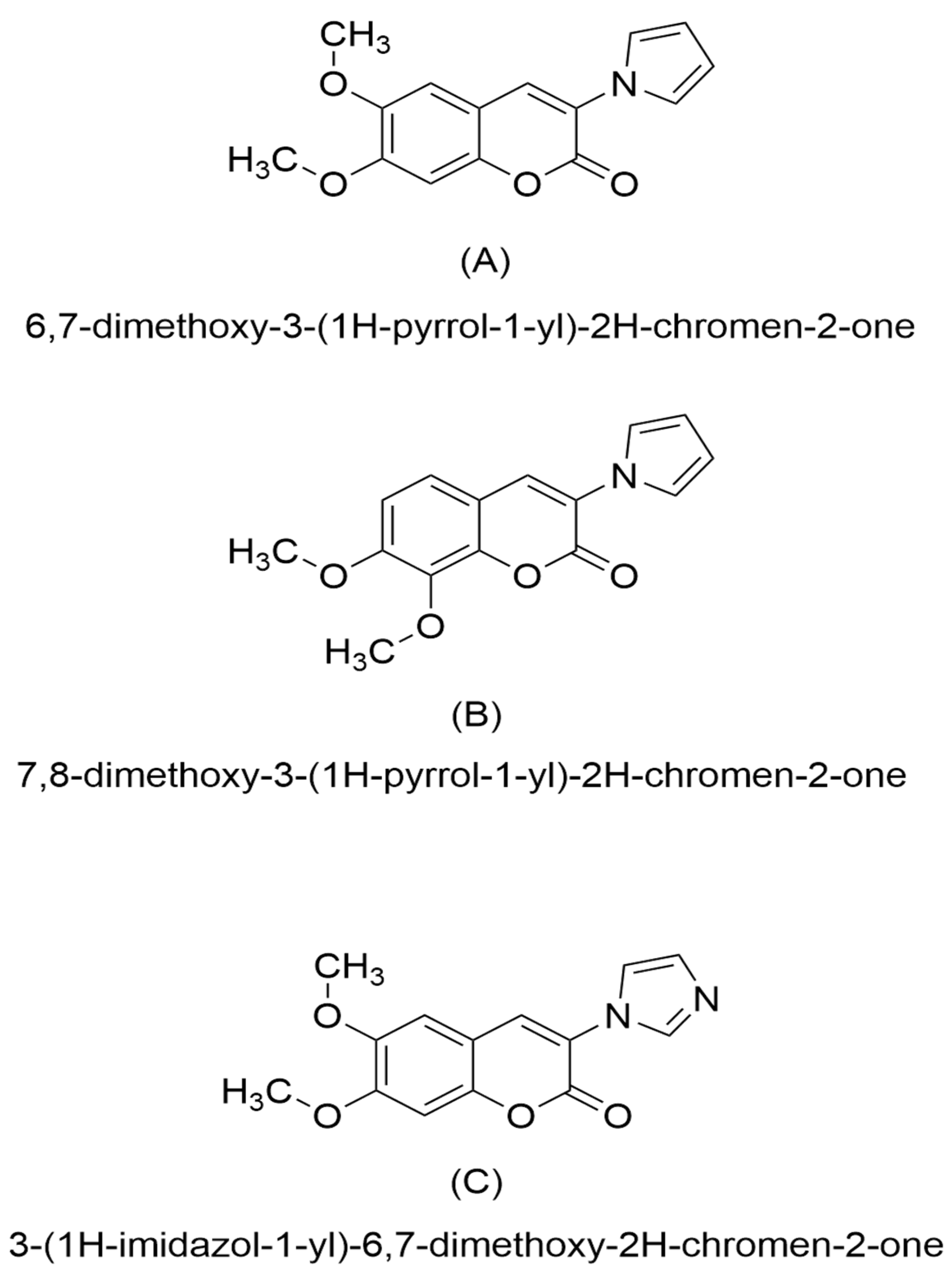
Compound A: 6,7-dimethoxy(1H-pyrrol-1-yl)-2H-chromen-2-one, Compound B: 7,8-dimethoxy-3-(1H-pyrrol-1-yl)-2H-chromen-2-one, and Compound C: 3-(1H-imidazol-1-yl)-6,7-dimethoxy-2H-chromen-2-one (
Figure 2).
General Synthesis of 3-Pyrrolyl- and 3-Imidazolyl-Substituted Coumarins
In a 10 mL round-bottom flask equipped with a magnetic stirring bar, 0.10 g (0.50 mmol) of the appropriate salicylaldehyde derivative, 0.13 g (1.1 mmol) of t-BuOK, 0.50 mmol of the corresponding N-(cyanomethyl) pyrrole or N-(cyanomethyl) imidazole derivative, and 1 mL of DMF were combined. The reaction mixture was heated to 110 °C for 16 h. After cooling to room temperature, distilled water was added, and the suspension was stirred for an additional 0.3 h. The crude product was isolated by liquid–liquid extraction with EtOAc. The combined organic layers were dried over anhydrous Na
2SO
4, and the solvent was removed under reduced pressure [
15]. The residue was purified by silica-gel column chromatography (DCM/MeOH gradient, 100:0 to 92:8
v/
v) to afford the desired coumarin (
Appendix B).
2.3. In Vitro Platelet Aggregation
This study was approved by the Ethics Committee of the Medicine School at UNAM (Protocol reference number 032-2019). In accordance with the Declaration of Helsinki, all human volunteers provided informed consent. The blood samples were obtained from healthy blood donors in the blood bank at the National Institute of Cardiology “Ignacio Chávez” (INC). A general medic from the INC interviewed all donors. They met the requirements of the Mexican Official Standard for the Disposition of Human Blood and Its Components for Therapeutic Purposes (NOM-253-SSA1-2012) [
14].
For each assay, as previously described, blood was collected by venipuncture from healthy subjects aged 24–50, in plastic tubes containing an anticoagulant (0.109 M trisodium citrate). After centrifugation at 140 g for 5 min at room temperature (20–24 °C), the platelet-rich plasma (PRP), was collected. Platelet-poor plasma (PPP) was prepared by centrifuging the remaining blood at 250 g for 15 min at room temperature (20–24 °C). The platelet count was adjusted to 250 × 103/μL with PPP. The assays were performed within 2 h of blood draw. Platelet aggregation was measured using a Lumi-aggregometer (Chrono-Log 560CA, Havertown, PA, USA) at 37 °C with constant stirring (1000 rpm) and calibrated according to the manufacturer’s instructions. Platelet-poor plasma (PPP) was used as the blank.
Platelet aggregation was measured using a Lumi-aggregometer (Chrono-Log 560CA, Havertown, PA, USA) at 37 °C with constant stirring (1000 rpm) and calibrated according to the manufacturer’s instructions. Platelet-poor plasma (PPP) was used as the blank.
Platelet-rich plasma (PRP) was obtained from healthy human donors. To minimize inter-individual variability in platelet responsiveness, PRP samples were prepared by pooling blood from nine different donors for each experiment. A total of five independent experiments (n = 5) were performed, each using a different donor pool, resulting in 45 donors included in the study.
For aggregation assays, 500 µL of PRP were placed in a disposable cuvette and allowed to stabilize for 2 min at 37 °C with continuous stirring (1000 rpm). Compounds A, B, or C were then added at the indicated concentrations, while 0.4% DMSO was used as the vehicle control. Platelet aggregation was induced by the addition of epinephrine (10 µM), collagen (2 µg/mL), or adenosine diphosphate (ADP, 10 µM).
Platelet aggregation was recorded as changes in light transmission, and results were expressed as the percentage of inhibition relative to the control (0%).
2.4. Computational Methods
2.4.1. Ligand Preparation
Ligand structures were initially built using Avogadro software Schrödinger Maestro, version 2023-2, with the Universal Force Field (UFF) [
16,
17,
18,
19].
2.4.2. Protein Preparation
Crystallographic structures of α
2-adrenergic receptor (PDB: 6KUX), GPVI receptor (PDB: 5OU8), P
2Y
12 receptor (PDB: 4PXZ), and GPIIb/IIIa complex receptor (PDB: 7TD8) were obtained from the Protein Data Bank. Structures were processed with ChimeraX 1.1 [
20,
21]. Missing side-chain atoms were modeled using the Dunbrack 2010 [
21] rotamer library [
22], and hydrogen atoms were added according to predicted protonation states of titra residues at pH 7.4. All crystallographic water molecules beyond 5 Å from the binding sites were removed (
Appendix A,
Table A1).
2.4.3. Molecular Docking
Docking calculations were performed using GNINA 1.3 [
21], employing convolutional neural network (CNN) scoring to prioritize poses. Search boxes were automatically defined from reference ligands using GNINA’s autoboxing feature. An exhaustiveness value of 9 was employed for all runs unless otherwise specified. Up to 20 poses were generated per ligand, and near-duplicate poses were filtered using an RMSD cutoff of 2.0 Å to ensure diversity (
Appendix A.1)
2.4.4. Quality Control and Considerations
The test was performed five times in duplicate or triplicate for accuracy. A negative control (PRP without agonist) was run to confirm baseline stability. All reagents were freshly prepared and properly stored to maintain their activity. This protocol ensures precision and reproducibility.
2.4.5. General Synthetic Strategy for the Preparation of Multitarget Coumarin
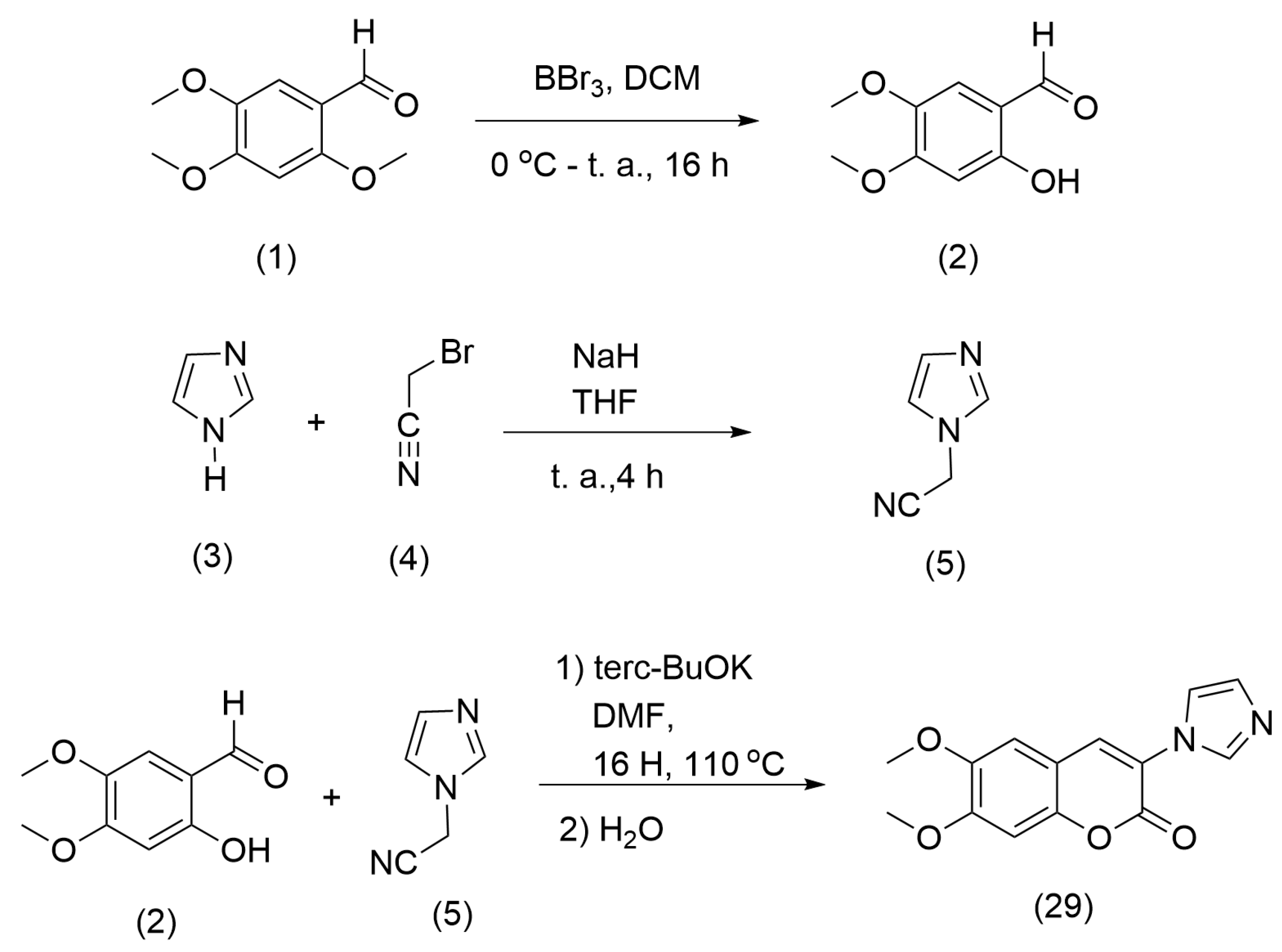
General synthetic route for the preparation of coumarin derivatives used in this study is presented in
Scheme 1. Reagents and reaction conditions are indicated for each step.
2.4.6. Statistical Analysis
The data are presented with a measure of central tendency and a measure of dispersion, depending on their distribution, determined using the Shapiro–Wilk test.
Differences between experimental and control groups were analyzed using the 2-tailed Student’s t-test for single-condition comparisons and two-way or repeated-measures ANOVA for comparisons involving multiple conditions. p values less than 0.05 were considered significant. Aggregation response (%) was measured as the increase in light transmission. Statistical calculations and graphics were performed using GraphPad Prism, version 9.5.1.
3. Results
3.1. Synthetics Coumarins Inhibit Agonist-Induced Platelet Aggregation and Aggregation Inhibition (IC50)
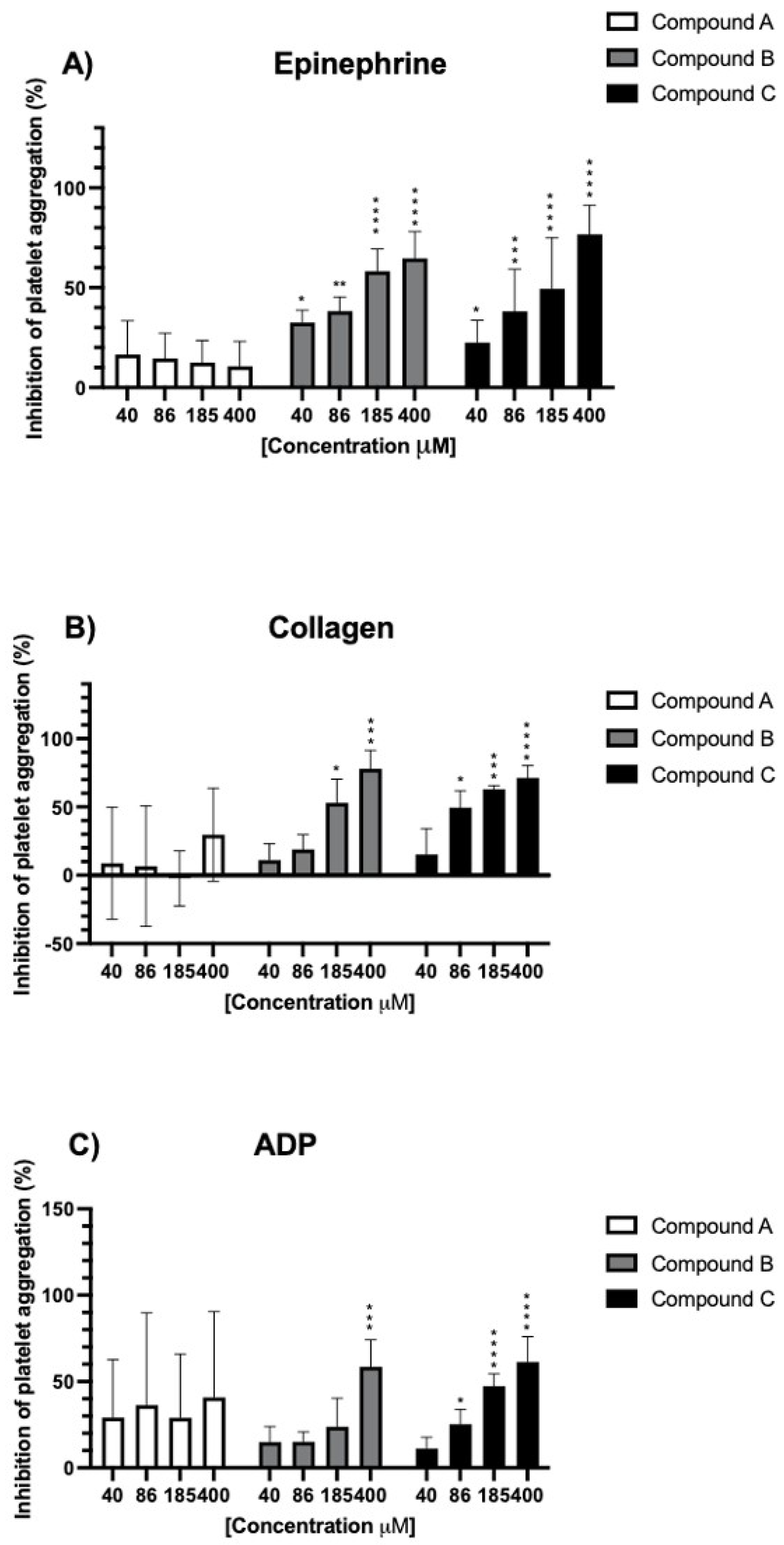
In epinephrine-induced aggregation, coumarin C was the most potent (IC
50 = 110 ± 14.9 µM), followed by coumarin B (IC
50 = 175 ± 27.4 µM). Both compounds produced significant inhibition at the lowest concentration tested (40 µM). At the highest concentration (400 µM), coumarin C showed the greatest efficacy, with a maximum inhibition of 77%, whereas coumarin B reached only 57%. Coumarin A produced no significant inhibition, with values below 20% relative to the control (
Table 1).
Table 1 Inhibitory concentration 50 (IC
50) values of coumarin derivatives on human platelet aggregation induced by epinephrine, collagen, and ADP. Results are expressed in µM as mean ± SD from independent assays performed in human platelet-rich plasma (PRP). Higher IC
50 values indicate lower inhibitory potency. IC
50 was calculated by nonlinear regression.
In collagen-induced aggregation, coumarin C was again the most active (IC
50 = 128 ± 5.5 µM), followed by coumarin B (IC
50 = 183 ± 25.0 µM). Coumarin C produced statistically significant inhibition starting at the second tested concentration, with a maximum efficacy of 78%. Coumarin B was significant only at the two highest concentrations, reaching a maximum of 83%. Compound A showed no inhibitory activity under any condition and exhibited high variability (
Figure 3).
In ADP-induced aggregation, coumarin C was the most potent (IC
50 = 272 ± 27.6 µM), producing significant inhibition from the second tested concentration (86 µM) and reaching a maximum of 61%. Coumarin B ranked second (IC
50 = 377 ± 30.4 µM), showing significant inhibition only at the highest concentration (400 µM), with a maximum of 60%. Coumarin A showed no significant inhibition, with values below 36% relative to the control (
Figure 3).
3.2. Molecular Docking
Given these differential inhibitory effects across platelet agonists, exploring the structural basis of these effects became important. Because the tested molecules were more effective against epinephrine- and collagen-induced aggregation than against ADP-induced aggregation, their potential interactions with the corresponding receptor systems were examined. For this purpose, four representative targets involved in platelet activation and vascular regulation were considered: the α
2-adrenergic receptor (epinephrine pathway), the glycoprotein VI (GPVI) receptor (collagen pathway), the P
2Y
12 receptor (ADP pathway), and the integrin GPIIb/IIIa (fibrinogen receptor) (
Appendix A).
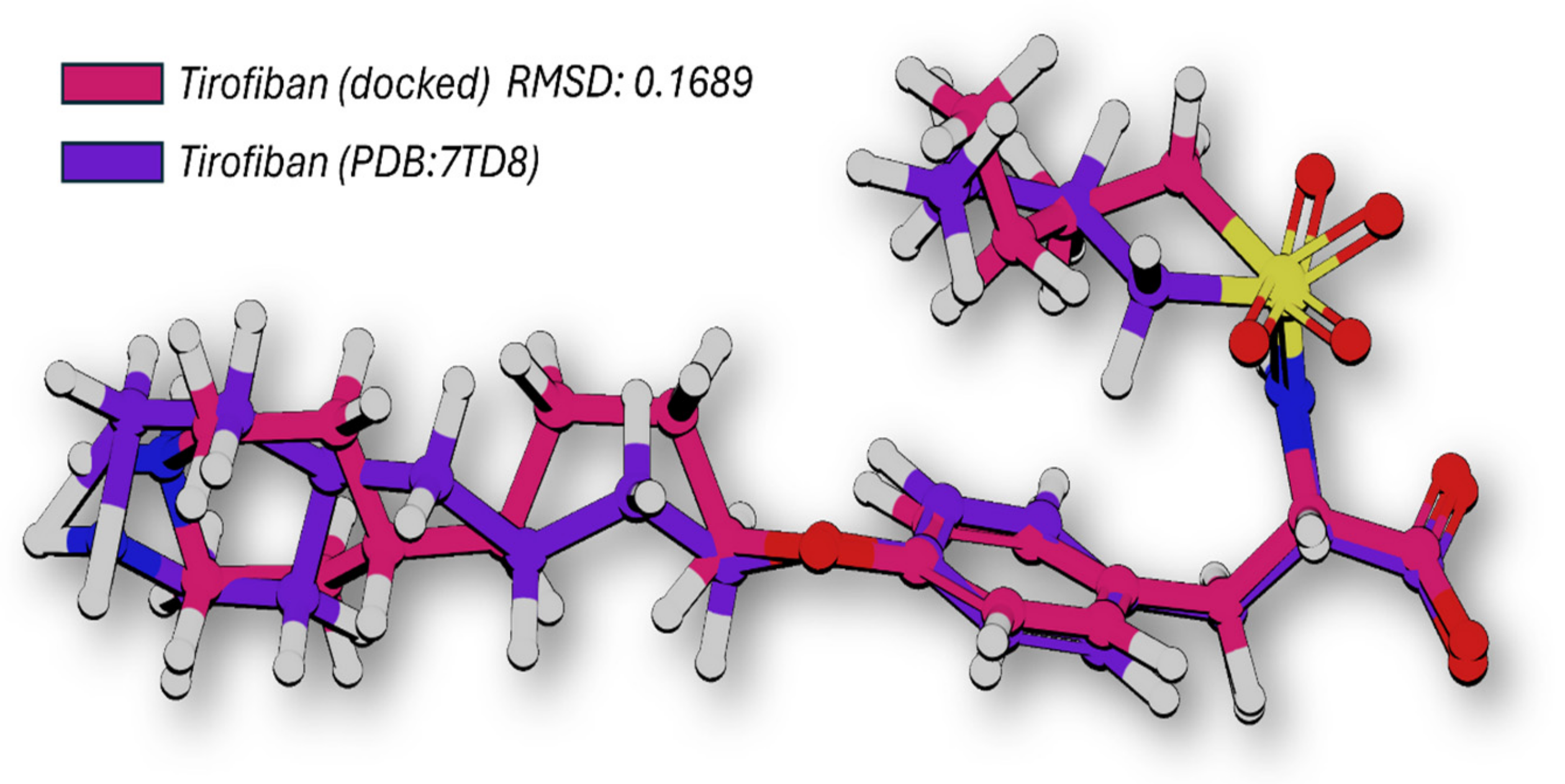
Before analyzing ligand–receptor interactions, the docking protocol was validated for each target. For the α2-adrenergic, P2Y12, and GPIIb/IIIa receptors, redocking of the co-crystallized ligands reproduced the experimental binding modes, yielding root-mean-square deviation (RMSD) values below 2.0 Å, thereby confirming the reliability of the adopted docking procedure. For GPVI, the available crystallographic structure contains a collagen-derived triple-helical peptide rather than a small-molecule ligand. Consequently, classical pose-based RMSD validation was not applicable. Instead, validation was performed at the binding-site level by assessing recovery of the experimentally identified collagen-interaction interface. Docking poses were required to localize within the collagen-binding region and preserve key contacts with residues known to mediate GPVI–collagen recognition, as defined by the co-crystallized collagen fragment.
By characterizing the binding modes and key contact residues for each receptor, we identified molecular features that contribute to the potency differences observed in the functional aggregation assays. The following sections describe these receptor-specific interactions in detail, providing a structural framework for contextualizing the aggregation data discussed above [
21].
3.3. α2-Adrenergic Receptor
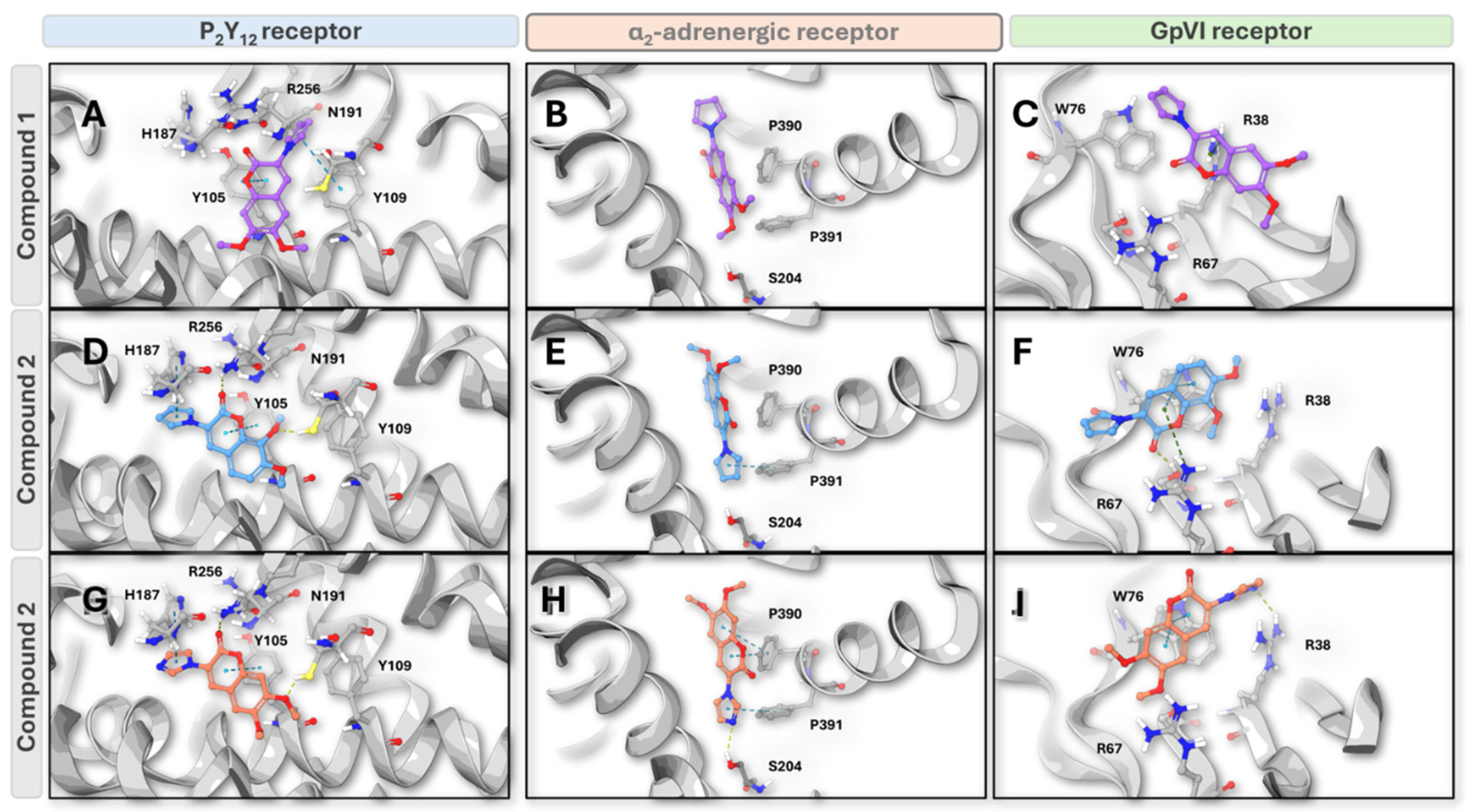
All three compounds bound to a similar region of the α
2-adrenergic receptor defined by PHE390, PHE391, and SER204 (
Figure 4B,E,I). Compound C displayed the most favorable interaction pattern, establishing two π–π contacts with PHE390 and PHE391, while compound B retained only one π–π contact with PHE391. Compound A, in contrast, oriented its pyrrole moiety outward, producing a more superficial binding pose that limited the stabilization of the complex.
3.4. GPVI Receptor
At the GPVI receptor, compounds B and C adopted orientations that engaged TRP76 via π–π stacking and formed hydrogen bonds with ARG67, features compatible with ligand accommodation within the collagen-binding site within the collagen-binding site (
Figure 4C,F,I). Compound A failed to form these interactions, instead adopting a pose with limited contact, consistent with its reduced inhibitory effect on collagen-induced aggregation.
Affinity scoring reinforced this trend: compound B achieved the strongest binding affinity score of −5.661 (CNN = 0.892); compound C showed intermediate affinity of −4.654 (CNN = 0.736); and compound A scored lowest at −4.179 (CNN = 0.810). These results suggest that aromatic stacking and hydrogen-bonding capacity, particularly in compounds B and C, are central to effective competition with collagen binding (
Appendix A, Collagen receptor).
3.5. P2Y12 Receptor
All three coumarins localized within the binding cavity of the P
2Y
12 receptor (
Figure 4A,D,H), contacting HIS187, TYR105, ARG256, ASN191, and TYR109. Compounds B and C displayed orientations toward helices VI and VII, establishing π–π stacking with TYR105 and HIS187 and hydrogen bonding with ARG256 and MET108. These residues contribute to antagonist stabilization, suggesting that B and C can adopt orientations compatible with receptor engagement. Compound A failed to maintain these key interactions, resulting in a less stable binding mode.
Still, energy analysis indicated that compound B was the strongest binder affinity score −8.389 (CNN = 0.819), followed by compound C −6.762 (CNN = 0.656). Although C has a lower affinity than compound B, it has a greater effect on platelet function. Compound A was inactive and showed negligible affinity, 0.028 (CNN = 0.482) (ADP receptor). Although docking scores provide a relative estimate of binding affinity, these values should be interpreted qualitatively and in conjunction with experimental aggregation data.
3.6. Fibrinogen Receptor
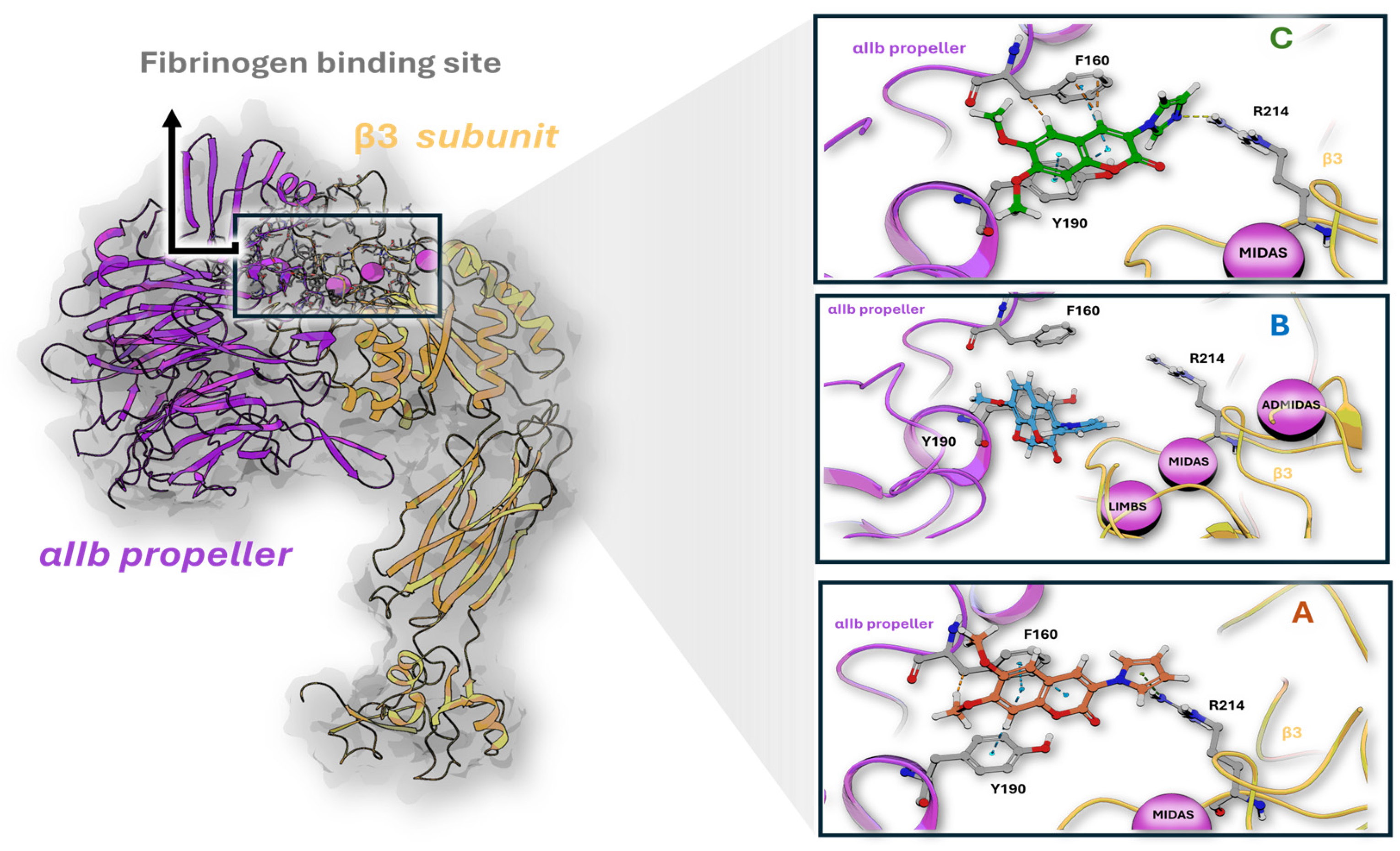
Within the fibrinogen-binding site of GPIIb/IIIa (
Figure 5), all compounds contacted critical residues PHE160, TYR190, and ARG214, as well as the MIDAS region. Compound A adopted a moderate binding orientation, covering part of the binding pocket without extensive anchoring. Compound B assumed a more extended conformation, bridging the MIDAS and LIMBS sites, while compound C was positioned deeper within the MIDAS, forming interactions consistent with stabilization of its binding pose.
Affinity scores reflected these conformational differences: compound C showed the highest affinity −6.122 (CNN = 0.704), compound B scored −5.261 (CNN = 0.840), and compound A −4.810 (CNN = 0.840) (Receptor GPIIb/IIIa).
The consistent engagement of compound C with the MIDAS site is particularly relevant, as this region mediates fibrinogen recognition. These findings align with its stronger experimental profile and suggest that the coumarin scaffold may share certain interaction features with established antagonists, though with reduced overall strength.
3.7. Chemical Structures
The three chemical structures labeled A, B, and C, derived from the coumarin molecule (2H-chromen-2-one), share a substitution at position 3 with a nitrogen-containing heterocycle and two methoxy groups on the benzene ring. Structure A corresponds to 6,7-dimethoxy-3-(1H-pyrrole-1-yl)-2H-chromen-2-one, characterized by having methoxy groups at positions 6 and 7 and a pyrrole ring at position 3. Structure B, called 7,8-dimethoxy-3-(1H-pyrrole-1-yl)-2H-chromen-2-one, is a regioisomer of the former where the methoxy groups are displaced to positions 7 and 8, maintaining the same pyrrole ring. Finally, Structure C is 3-(1H-imidazol-1-yl)-6,7-dimethoxy-2H-chromen-2-one, which takes up the configuration of the methoxy groups at positions 6 and 7 (as in A), but is distinguished by substituting the pyrrole ring at position 3 with an imidazole ring.
4. Discussion
We have previously reported that simple coumarins, such as 7-hydroxycoumarin and 7-methoxycoumarin (which exhibit very low toxicity in humans), inhibit epinephrine-induced platelet aggregation (IC50 = 243 and 142 µM, respectively) but lack activity in the collagen and ADP pathways [
23]. In contrast, coumarins B and C have a similar magnitude of effect in the epinephrine pathway but also inhibit collagen- and ADP-induced aggregation.
Molecular docking was employed exclusively as a hypothesis-generating approach and not as definitive mechanistic evidence. In the absence of direct receptor-binding or biochemical validation, docking results must be interpreted with caution. Therefore, in silico analyses were integrated with functional aggregation assays to rationalize structure–activity relationships and support experimental observations, rather than replace them. Accordingly, in the present study, molecular docking was employed as a hypothesis-generating tool to rationalize the differential antiplatelet effects observed in vitro, rather than as a standalone demonstration of receptor engagement. The in silico analyses were therefore integrated with the aggregation data to identify plausible structure–activity relationships and to support, rather than replace, the experimental findings.
Our results demonstrate that nitrogen substitution in coumarins differentially modulates the inhibition of platelet aggregation induced by epinephrine, collagen, and ADP. Compound A lacked measurable biological activity, confirming that not all nitrogen substitutions necessarily yield relevant pharmacological effects. This observation is consistent with the findings of [
11], who reported that heterocyclic derivatives bearing substitutions at non-strategic positions frequently lose affinity for thrombotic targets. Although docking simulations suggested that compound A could theoretically interact with specific platelet receptors, its lack of biological activity underscores the limitations of docking-based predictions when not supported by functional outcomes.
One plausible explanation for the observed inhibition patterns is that coumarins and their derivatives interact with platelet receptors through a combination of aromatic, polar, and metal-adjacent interactions rather than through a single dominant binding event. Coumarin-based scaffolds have been reported to interact with the active conformation of the GPIIb/IIIa integrin, thereby interfering with fibrinogen binding and blocking the final common step of platelet aggregation, independently of the initiating agonist. Previous studies have demonstrated that coumarin derivatives can inhibit the active form of GPIIb/IIIa and reduce platelet adhesion to fibrinogen, supporting this mechanistic framework [
12,
13].
In the case of compound A, docking poses indicated that the molecule can be accommodated within the fibrinogen-binding region of GPIIb/IIIa, establishing contacts in the vicinity of the MIDAS environment and adjacent residues. However, the lack of antiplatelet activity suggests that these interactions are either weak, poorly oriented, or insufficiently persistent to stabilize the integrin in an inactive conformation. From a structural perspective, this behavior may reflect suboptimal alignment of the coumarin core with aromatic residues such as PHE160 and TYR190, or an absence of functional groups capable of reinforcing polar interactions near ARG214. Consequently, future modifications aimed at improving activity could involve introducing substituents capable of forming additional hydrogen bonds or electrostatic contacts in this region, as well as slight rigidification of the scaffold to reduce entropic penalties upon binding.
Compound B exhibited an interaction profile consistent with partial engagement of the α
2-adrenergic receptor, in line with previous findings from our group showing that substitutions at positions 7 and 8 of the coumarin scaffold favor adrenergic receptor interactions [
8]. Docking analyses revealed that the aromatic system of compound B can occupy the receptor cavity and establish hydrophobic and π–π contacts, although these appear less extensive than those observed for compound C. This interaction pattern is compatible with the requirement for higher concentrations to achieve inhibition, suggesting that receptor engagement may be transient or conformationally heterogeneous. In this context, optimization strategies could focus on reinforcing aromatic stacking by increasing planarity or substituting residues such as PHE390 and PHE391 with π-donating groups, while maintaining sufficient polarity to preserve solubility and avoid excessive lipophilicity.
In contrast, compound C displayed the most coherent and extensive interaction network across all evaluated targets, consistent with its superior potency. Within the α2-adrenergic receptor, compound C established stable π–π stacking interactions with PHE390 and PHE391, residues known to be critical for ligand recognition. These interactions likely underlie the strong inhibition of epinephrine-induced aggregation. Further enhancement of this effect could potentially be achieved by subtle modulation of the aromatic electronics or by scaffold rigidification to preserve the stacking geometry and reduce conformational entropy upon binding.
In the GPVI receptor, compound C formed a combination of π–π interactions and hydrogen bonds involving TRP76 and ARG67, residues located at the ligand-accessible interface of the receptor. These contacts provide a structural basis for the effective inhibition of collagen-induced aggregation. From an optimization standpoint, incorporating additional hydrogen-bond donors or acceptors oriented toward this region could strengthen GPVI engagement, provided that such modifications do not compromise interactions with other platelet targets.
Notably, compound C also demonstrated consistent anchoring within the fibrinogen-binding region of GPIIb/IIIa, establishing contacts near the MIDAS site and surrounding residues. This binding mode suggests that the coumarin scaffold is well-positioned to interfere with integrin activation and fibrinogen recognition. Structural refinements aimed at improving complementarity with the MIDAS-adjacent region—such as introducing polar substituents to stabilize interactions near metal coordination motifs or optimizing the orientation of existing heteroatoms—could further enhance this effect and yield lower IC50 values.
Overall, the multitarget interaction profile observed for compound C indicates that its antiplatelet activity likely arises from the concerted modulation of α2-adrenergic, GPVI, and GPIIb/IIIa receptors. Rather than relying on a single high-affinity interaction, compound C appears to exploit a balanced combination of aromatic stacking, hydrogen bonding, and integrin anchoring. This interaction-driven framework provides a rational basis for future structural optimization of coumarin derivatives, guiding modifications toward reinforcing key contacts while preserving the multitarget character associated with enhanced antiplatelet potency.
The present findings are consistent with previous reports highlighting the pharmacological versatility of coumarins. For example, ref. [
8] described heterocyclic coumarin derivatives with antifungal, anti-inflammatory, and antithrombotic activities, albeit often with limited receptor selectivity. In contrast, the interaction patterns observed for compound C suggest a more defined and structurally coherent engagement with platelet receptors, supporting the use of interaction-based analyses to rationalize and further optimize biological activity.
Lipophilicity also emerged as an important determinant of biological activity. Effective antiplatelet agents must balance sufficient hydrophobicity for membrane access with adequate aqueous solubility in platelet-rich plasma. Compound C is predicted to have lower lipophilicity than compounds A and B, suggesting a more favorable balance between membrane partitioning and solubility, which may facilitate more effective receptor engagement.
Importantly, integrating the functional aggregation data with the molecular docking results suggests that compounds B and C may attenuate platelet activation by modulating upstream receptors (α
2-adrenergic, GPVI, and P
2Y
12) and downstream effector mechanisms. Activation of GPVI and P
2Y
12 is known to promote inside-out signaling that induces the conformational activation of GPIIb/IIIa, thereby enabling fibrinogen binding. In parallel, the predicted interactions of compounds B and C with the MIDAS site of GPIIb/IIIa raise the possibility of additional interference with outside-in signaling, which usually amplifies platelet aggregation following fibrinogen engagement. Such dual modulation has been described for other GPIIb/IIIa-targeting agents [
8] and the present results are consistent with this conceptual framework. Overall, the ability of coumarins B and C to engage multiple platelet-related targets, as inferred from the combined in vitro and in silico analyses, highlights binding plasticity as a potential contributor to enhanced antiplatelet efficacy, while acknowledging the need for future biochemical validation to confirm these interactions.
In this study, we used 2 µg/mL collagen, 10 µM epinephrine and 10 µM ADP to induce platelet aggregation. These concentrations are commonly used in light-transmission aggregometry, which is considered the gold standard for measuring platelet function and was used in this study, because they induce strong platelet aggregation in PRP and help characterize the properties of bioactive compounds, such as flavonoids and coumarin derivatives. Many studies on antiplatelet agents use similar conditions, which supports the validity of our method [
24,
25,
26,
27].
Perspectives
Future studies should extend these findings by evaluating the activity of the most promising derivatives in larger cohorts of human donors and in complementary mechanistic models, including receptor-binding assays and in vivo thrombosis models, to further define their pharmacological profile and translational potential as multitarget antiplatelet agents.




 ,
,