1. Introduction
Magnetic Resonance Imaging (MRI) has become an indispensable diagnostic tool in modern medical science, primarily due to its capacity for producing high-resolution images of soft tissues. Since its conceptual beginnings, the technology has evolved into one of the most important clinical practices. It is particularly valued for its ability to render exceptionally detailed, three-dimensional images without the safety concerns of ionizing radiation. As a key visualization tool, MRI provides important support for clinical decision-making across diverse fields, including neurology, oncology, cardiology, and musculoskeletal diagnostics. This remarkable diagnostic power, specifically its ability to differentiate subtle tissue contrasts, depict complex neural pathways, and monitor metabolic processes in real time, is a direct result of integrating sophisticated physical principles with advanced engineering [
1].
The gradient system is a fundamental component for spatial encoding in MRI, consisting mainly of gradient coils and gradient amplifiers. As the system’s driving component, the gradient amplifier delivers highly controlled current waveforms to the gradient coils, which in turn generate time-varying magnetic field gradients along the three spatial axes. These gradients are important to the spatial localization of magnetic resonance signals and the reconstruction of detailed anatomical and functional images. Therefore, the design and performance of gradient amplifiers play an important role in determining the overall image quality, acquisition speed, and operational reliability of MRI systems [
2,
3].
The gradient amplifier must produce extremely accurate current waveforms, defined by high output amplitude, rapid slew rate, and exceptional steady-state precision. These demands are significant: typical MRI applications require currents exceeding several hundred amperes and voltages at or above one kilovolt [
4]. The primary design challenge stems from the load itself. The gradient coil behaves as a highly inductive series R-L circuit, typically with tens of milliohms of resistance and tens to hundreds of microhenries of inductance. This high inductance necessitates a very high voltage to achieve the rapid current transitions required for modern imaging [
2]. The amplifier must therefore be designed to maintain stability and linearity under these large-signal, high-speed conditions, all while minimizing distortion, current ripple, and thermal stress [
5,
6].
The integration of wide-bandgap semiconductors, particularly Gallium Nitride (GaN) and its enhancement-mode variants, represents a critical shift in overcoming the efficiency and thermal bottlenecks currently limiting high-performance MRI gradient drivers. While many contemporary high-power solutions have begun adopting Silicon Carbide (SiC) technology, the broader transition to GaN allows for operation at significantly higher switching frequencies and voltages than legacy silicon architectures. This capability is essential for generating the precise, high-amplitude current waveforms required for the rapid spatial encoding demanded by modern imaging sequences. Currently, these devices enable higher control bandwidths and facilitate the use of smaller passive filters, which effectively reduce the coupled noise that can compromise image resolution. Looking forward, the trajectory of clinical imaging points toward utilizing these high-power-density devices within modular, parallelized frameworks that intelligently combine smaller modules to achieve the fidelity of linear amplifiers without their massive thermal losses. This evolution is expected to bridge the gap between ideal current waveforms and physical reality, supporting the escalating power demands of advanced modalities like functional brain imaging while potentially enabling more compact, energy-efficient clinical platforms.
Despite many advances, building gradient amplifiers for MRI systems still comes with serious technical and cost-related challenges. These amplifiers are among the most expensive parts of an MRI setup, mainly because they need to meet strict performance requirements and use high-power semiconductor devices. In large clinical systems, gradient amplifiers often deliver over 2 MVA of power and more than 1000 A of current [
7]. Smaller or more specialized scanners, such as those used for brain imaging, animal studies, or portable MRI, usually require far less power. However, there are few commercial amplifiers designed specifically for these smaller systems, so researchers often have to build their own. In several cases, engineers have managed to adapt commercial audio power amplifiers for this purpose, taking advantage of their good linearity, wide frequency range, and relatively low price. Because quality audio amplifiers already operate well above the 10 kHz range typically used for MRI gradients, only a few simple changes can make them suitable for low or mid-performance imaging systems [
8].
This technology heavily relies on gradient fields along three spatial axes to provide the spatial encoding required for image formation. While the gradient coil geometry determines the field orientation, the applied current sets the gradient strength; therefore, image quality depends critically on both the achievable gradient amplitude and the accuracy of the current waveform. It is known that high-performance MRI systems typically drive gradient coils with currents of several hundred amperes and high voltages to achieve the rapid current transitions demanded by modern imaging sequences. Each system has its own specific parameters, but to give a general example, system requirements need contemporary gradient drivers that must routinely deliver peak currents above 500 A and slew rates that necessitate drive voltages greater than 1200 V [
3]. One practical means of meeting these high-current demands is to operate multiple driver modules in parallel. However, ensuring stable, synchronized, and distortion-free operation at the required bandwidth introduces substantial challenges in terms of control, protection, and system stability. Some solutions note that the gradient amplifier is required to deliver trapezoidal current waveforms with peak amplitudes and voltages. To satisfy these stringent voltage and current requirements, Stacked Full-Bridge converter architectures are widely adopted, wherein multiple FB stages are connected in series [
9,
10]. In addition to these topologies and their proposed solutions, other studies in the literature will also be examined and discussed in light of their findings [
11]. In summary, this review aims to evaluate various design approaches for gradient amplifiers, which constitute one of the key subsystems of MRI, which is one of the most critical components of modern imaging systems [
12].
3. Overview of Methods
3.1. Stacked High/Low-Voltage-Level H-Bridge Circuit for Gradient Amplifier of MRI System
Li et al. [
2] highlight the critical role of the gradient amplifier as it is the determinant of MRI image quality, tasked with driving the gradient coils, modeled as series inductor-resistor loads, to generate the magnetic fields necessary for spatial encoding. To satisfy the rigorous demands for high output amplitude, fast slew rates, and high steady-state precision, the system requires high-voltage capabilities to drive current changes through the inductive load. Consequently, the architecture favors switch-mode designs over linear topologies due to superior efficiency, typically utilizing H-Bridge circuits to facilitate four-quadrant operation combined with output LC filtering. The specific implementation described addresses the trade-off between high-dynamic and steady-state requirements by employing a platform of stacked high- and low-level H-Bridges, which is regulated by a feed-forward control strategy with a low-pass filter that has been validated through experimental results [
2,
13].
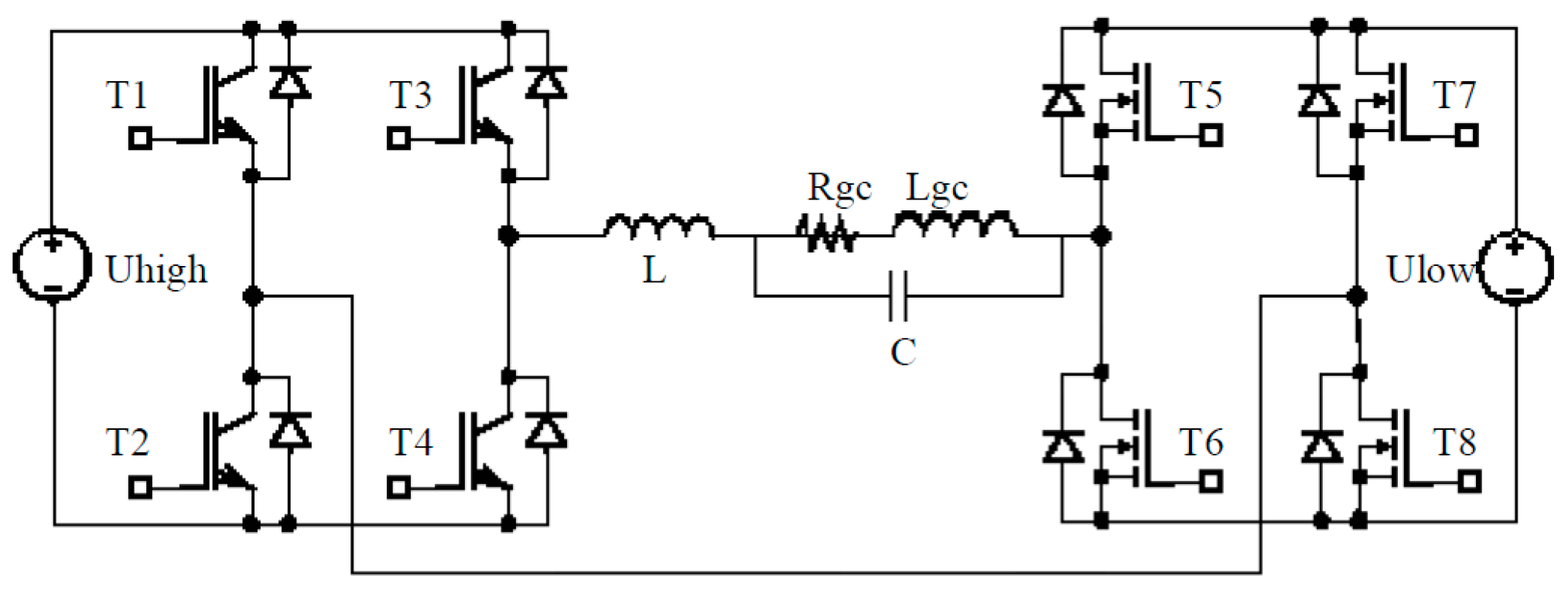
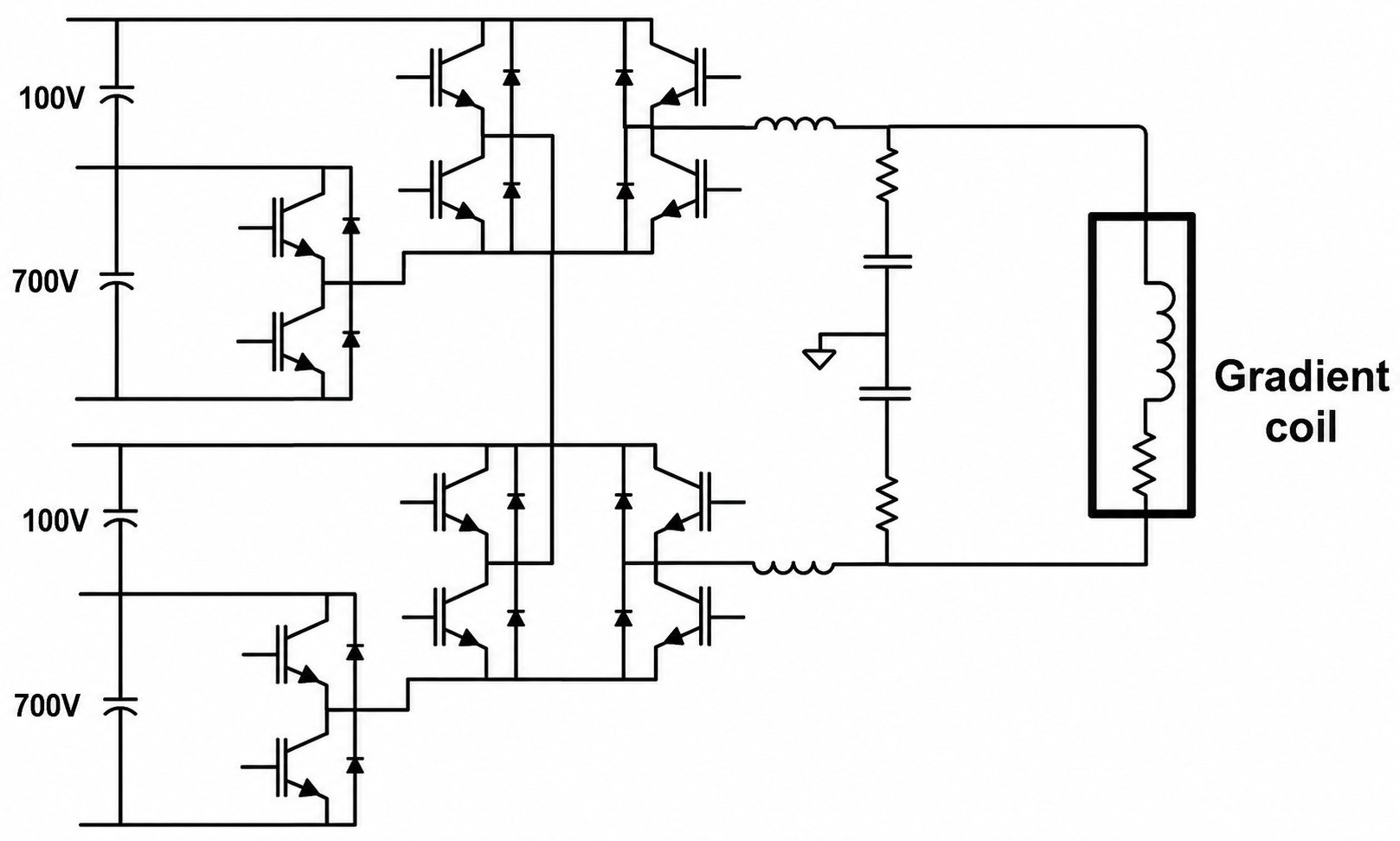
Regarding the operational strategy, the authors specify that the low-voltage source is utilized during the steady period to ensure high precision and minimize output ripple. Because the system must operate across distinct voltage levels, the switching devices labeled T3 through T6 are required to possess high-voltage ratings. Building upon a topology referenced in prior work, the study adopts a specific stacked configuration shown in
Figure 1, which combines two distinct H-Bridges: one rated for high voltage and the other for low voltage. To optimize this architecture, the authors implement a hybrid selection of power semiconductor devices, utilizing IGBTs for the high-voltage bridge and MOSFETs for the low-voltage bridge [
2,
14].
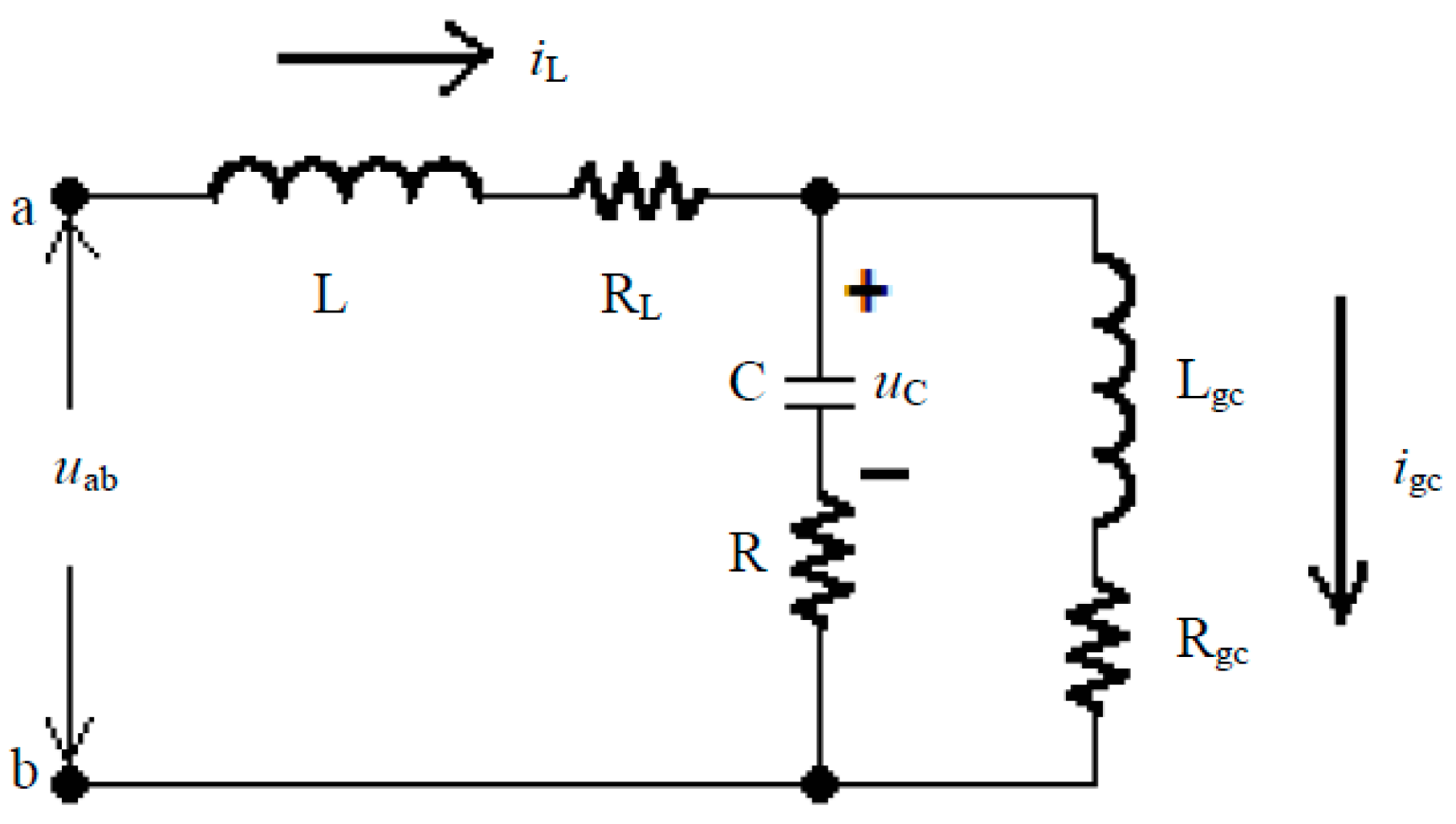
In implementing the stacked H-Bridge topology, the authors utilize high-frequency MOSFETs for the low-voltage bridge, a specific design choice intended to significantly reduce the steady switching ripple current. Regarding the control architecture, the study evaluates state vector feedback controllers; while acknowledging their favorable performance, the authors argue that the requirement for multiple feedback values introduces excessive complexity to the system. Consequently, a feed-forward controller with a low-pass filter (FFCLPF) is proposed as a more efficient alternative. The theoretical framework for this control scheme, illustrated in the text as
Figure 2, models the output filter and load circuits using three distinct state variables: the filter inductance current i
L, the filter capacitance voltage u
c, and the load current i
gc, with the voltage u
ab defined as the system input. As one can see, the modeled equation of
Figure 2 [
2], which is the output filter and coil circuit schematic, is shown as (1).
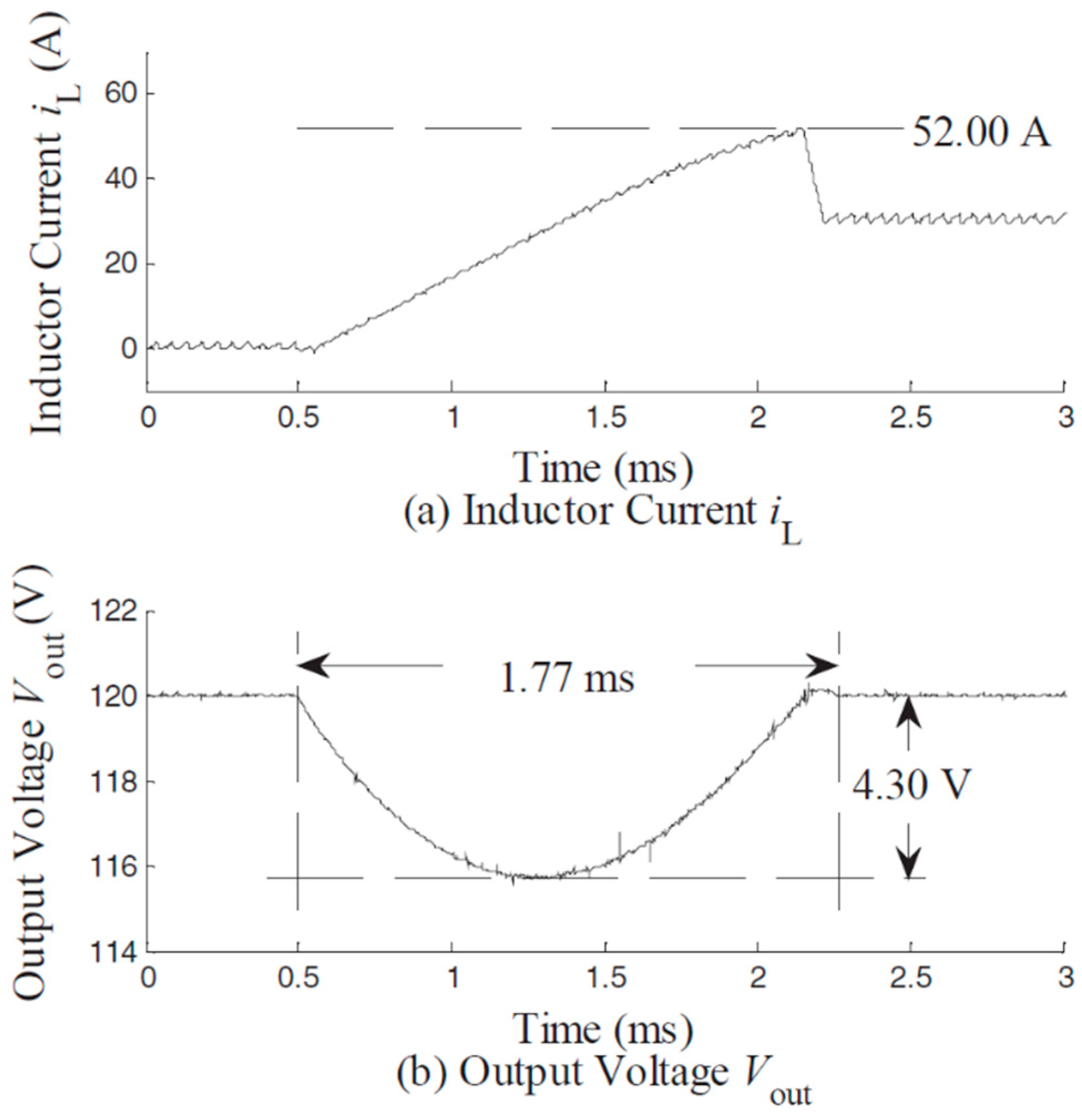
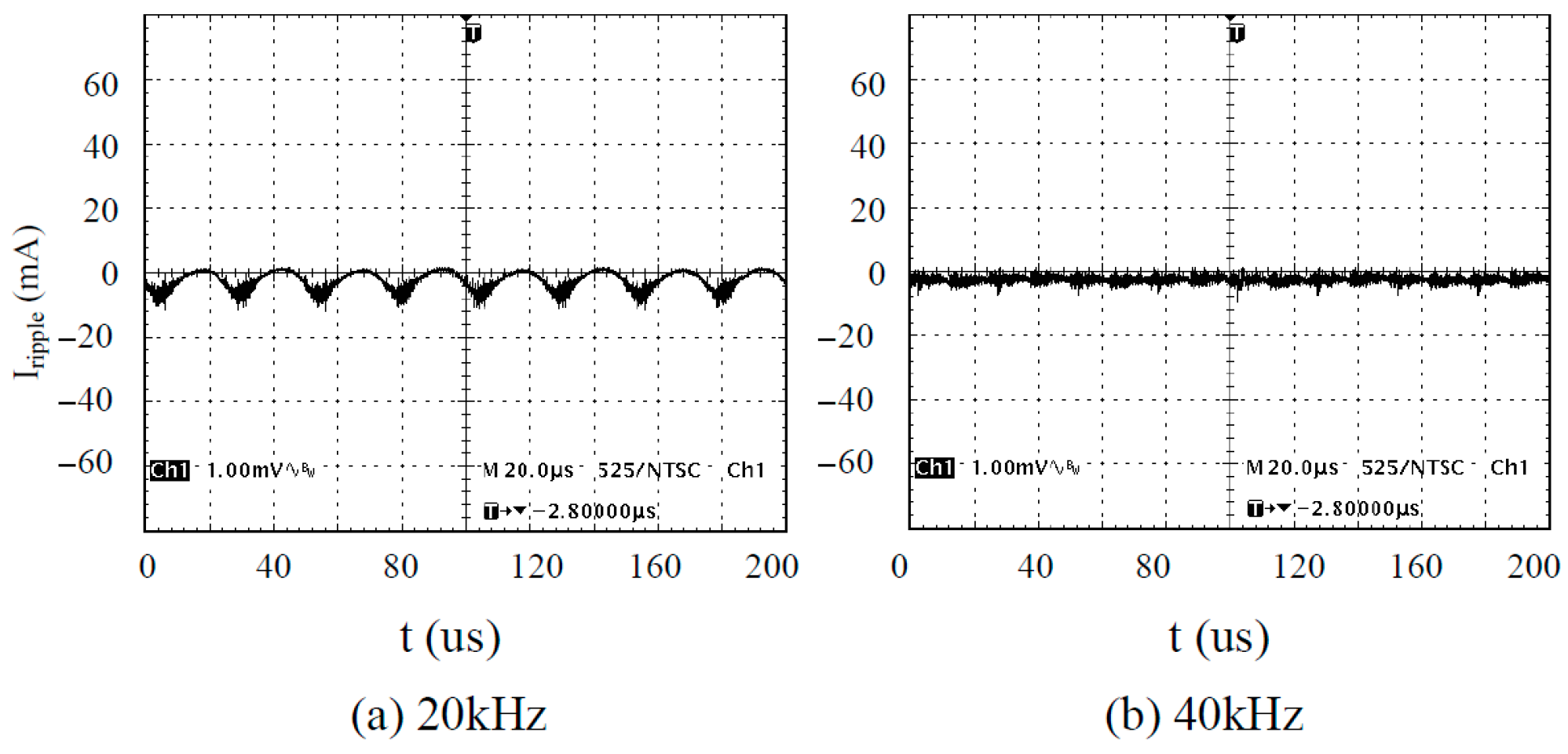
To validate the proposed architecture, the authors conducted experimental measurements on the test platform, specifically analyzing the steady ripple current using an AC-coupled oscillograph under a 30 A output condition. As illustrated in their results (
Figure 3), operating at a switching frequency of 20 kHz yielded a switching ripple RMS of approximately 4.5 mA (a ratio of 0.15%); however, increasing the frequency to 40 kHz reduced this figure to approximately 1.2 mA (0.04%). Based on these findings, the study confirms that increasing switching frequency effectively mitigates ripple, noting that the magnitude at 40 kHz satisfies the specific requirements. In summary, the paper establishes that the constructed stacked low and high-level H-Bridge platform, utilizing the proposed and validated feed-forward control with a low-pass filter, effectively addresses control circuit challenges and proves suitable for MRI gradient amplifier applications [
2].
3.2. Low-Cost Gradient Amplifiers for Small MRI Systems
Evetts et al. [
8] explore the feasibility of adapting consumer audio stereo power amplifiers for use in MRI gradient systems, specifically addressing the needs of small-scale imagers where commercial gradient amplifiers are often over-dimensioned, and custom fabrication is resource-intensive. Noting the functional similarities between high-fidelity audio and gradient requirements, the authors propose modifying standard audio amplifiers to include DC coupling, thereby extending the frequency response to zero hertz as required for gradient service. The research argues that the typical audio bandwidth (>50 kHz) comfortably exceeds the approximate 10 kHz requirement for gradient waveforms, offering a cost-effective solution with reduced engineering overhead. However, the work identifies a fundamental limitation in this approach: because the modified audio amplifier operates as a controlled voltage (CV) source with low output impedance, the output current driving the gradient coil does not track the voltage step immediately but instead follows an exponential rise and fall governed by the load’s L/R time constant [
8,
15,
16].
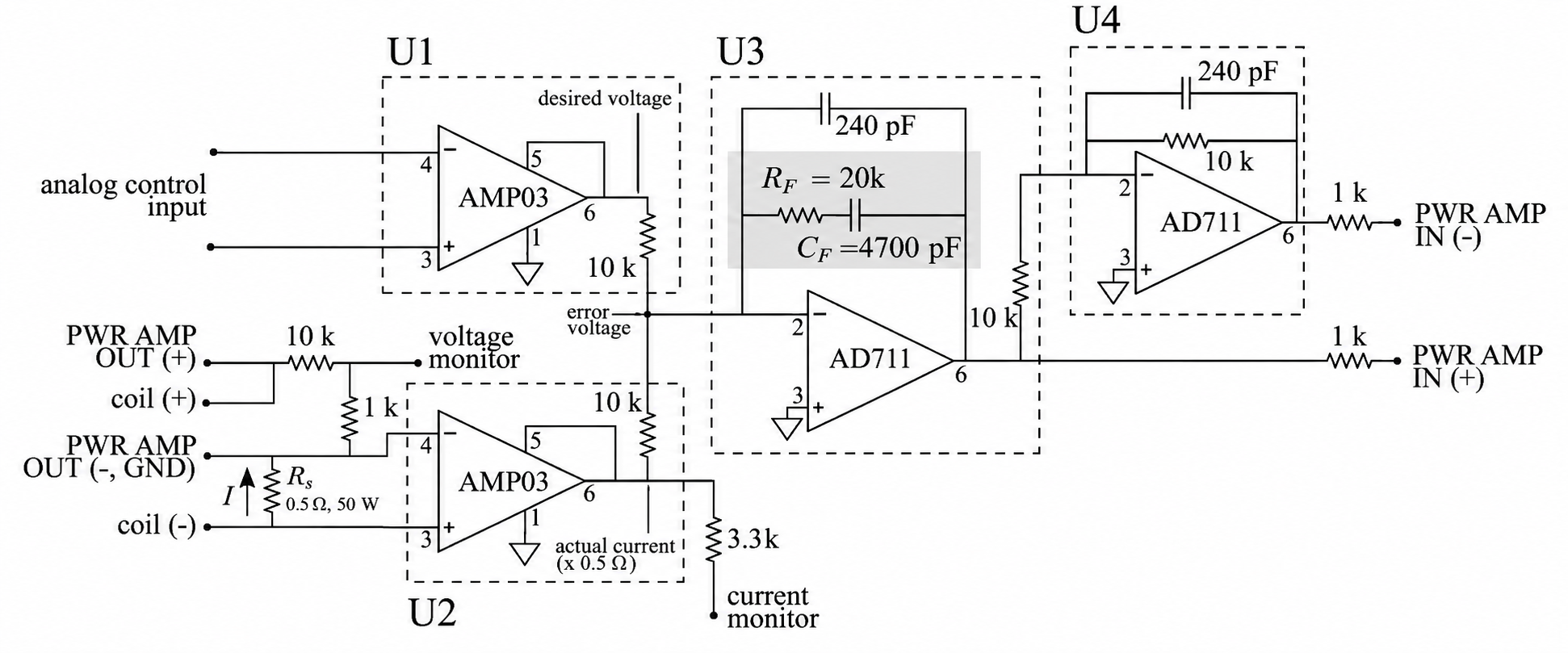
To address the limitations of voltage-mode driving, the authors constructed a three-channel front-end interface (
Figure 4) designed to convert the standard amplifiers into controlled current (CC) sources. The circuit implementation relies on 0.5 Ω power resistors for current sensing and highlights a critical R
F-C
F (feedback resistance and feedback capacitance) feedback compensation network centered around a specific operational amplifier stage. The study details that at low frequencies, the capacitive impedance of C
F dominates the feedback loop, effectively configuring the amplifier as an integrator; this results in near-infinite gain at DC, a mechanism expressly designed to nullify any inherent DC offset within the audio amplifier system.
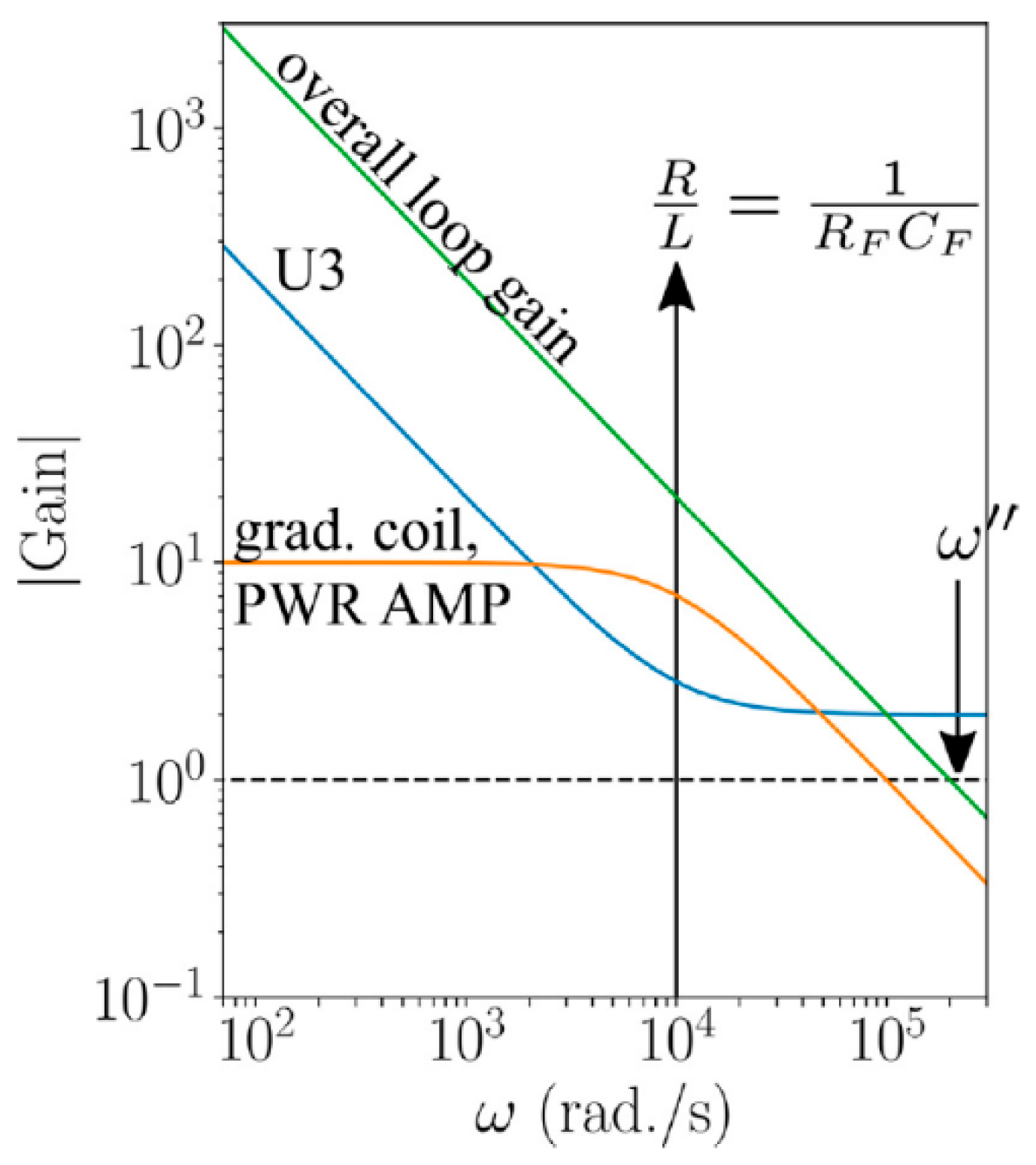
Expanding on the frequency domain analysis, the authors illustrate in
Figure 5 that the compensation stage (U3) exhibits an inverse-frequency gain characteristic (1/ω) at low frequencies, transitioning to a flat response above the corner frequency defined by 1/(RFCF). Conversely, the remaining portion of the feedback loop, dominated by the gradient coil’s inductance (L) and total resistance (R, inclusive of the sensing resistor RS), maintains a flat gain at low frequencies before rolling off (1/ω) above the load’s natural corner frequency R/L. The study demonstrates that by precisely matching the compensation time constant to that of the load (R
F-C
F (feedback resistance and capacitance) = L/R), the system achieves a pole-zero cancellation effect; this results in an overall feedback loop gain that varies consistently as 1/
ω across the full frequency range, ensuring stable and predictable control performance despite the inherent inductive lag of the coil.
In conclusion, the authors assert that modifying standard audio power amplifiers to achieve DC coupling serves as a viable, cost-effective foundation for gradient amplifiers in small-scale NMR imaging systems. The study provides practical methodologies for adapting specific commercial units, such as Samson products, and identifies existing commercial alternatives like Crown amplifiers modified by AE Techron (Elkhart, IN, USA). While noting that these amplifiers can drive gradient coils in constant voltage (CV) mode, the researchers emphasize that utilizing the proposed front-end circuit enables true constant current (CC) operation. Ultimately, the paper affirms that this approach delivers excellent performance for small-scale applications, provided the system is operated within the amplifiers’ inherent power limitations.
3.3. Design of a Low-Power Gradient Amplifier for Benchtop Nuclear Magnetic Resonance Spectrometer
Gao et al. [
17] address the specific challenges of integrating conventional commercial gradient amplifiers into Benchtop Nuclear Magnetic Resonance (BNMR) systems, noting that the excessive power consumption and physical bulk of standard amplifiers render them unsuitable for these compact applications. While acknowledging the sophistication of NMR for molecular analysis via chemical shifts and relaxation metrics, the authors highlight that the transition to smaller benchtop instruments is typically hindered by low magnetic field strengths, which result in severe peak overlapping and strong coupling effects. To overcome these limitations, the research presents a novel gradient amplifier design optimized specifically for BNMR environments. The authors argue that by refining the gradient chain encompassing the module, amplifier, and coils and integrating specialized power amplifiers with pulse sequence designs, the functional capabilities of low-field spectrometers can be expanded, with the amplifier’s performance directly influencing the final imaging outcomes [
17,
18,
19,
20].
Critiquing the landscape of existing commercial gradient amplifiers, the authors note that standard devices are engineered for large-scale MRI systems, typically employing SiC switching technology to deliver output currents ranging from hundreds to thousands of amperes. The study argues that these high-power solutions are ill-suited for benchtop magnetic resonance instruments due to their excessive capacity, high power consumption, and substantial physical footprint. Consequently, the research focuses on the design of a compact, low-power gradient amplifier specifically optimized to meet the modest requirements of gradient field generation in low-field Magnetic Resonance Spectroscopy (MRS) and MRI applications.
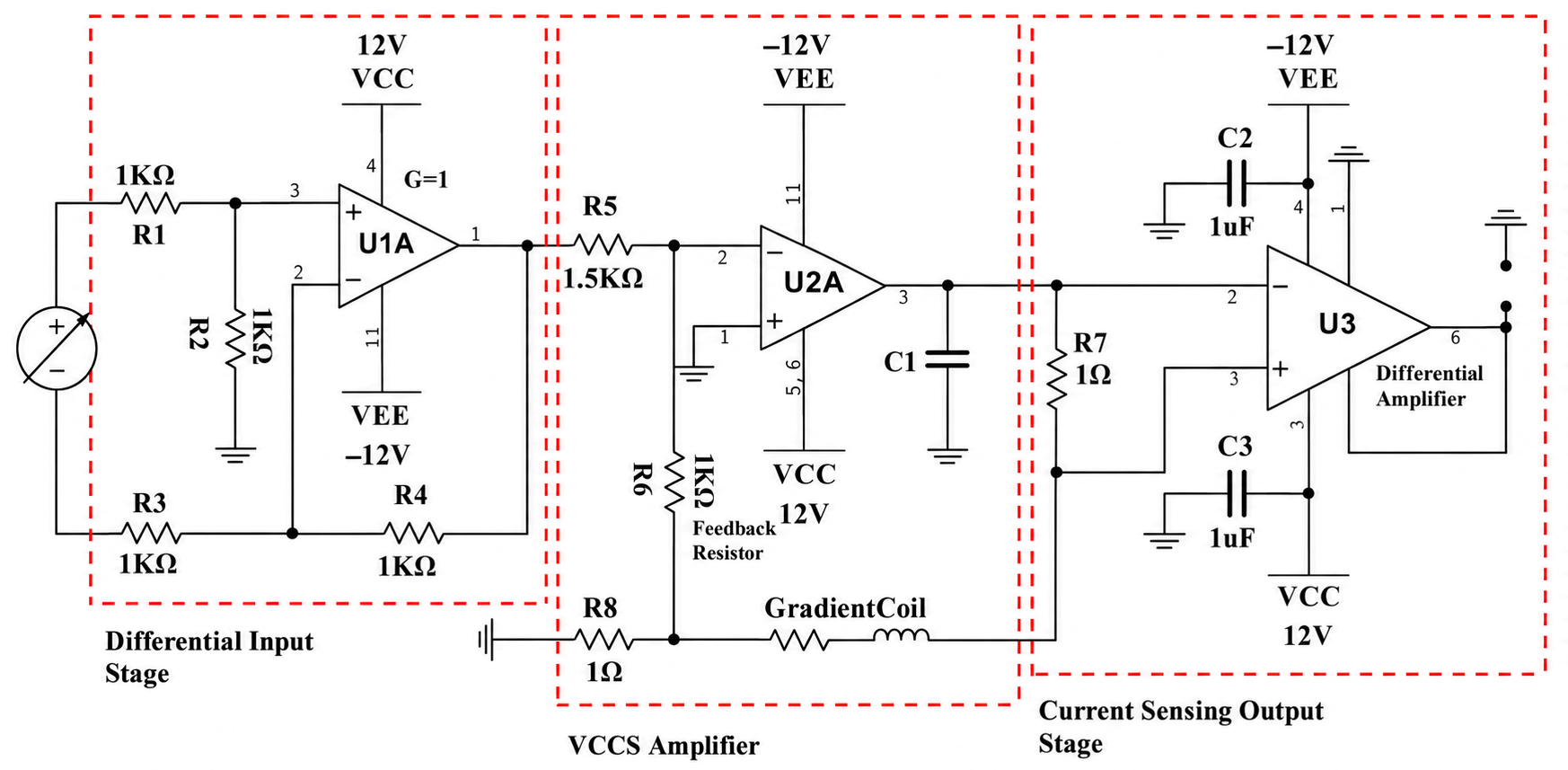
Detailing the specific circuit implementation (
Figure 6), the study describes an architecture driven by a differential input voltage (−5 V to +5 V) sourced from the gradient module. The input stage employs an OPA227 operational amplifier configured for unity-gain differential amplification, a design choice intended to generate control signals while providing necessary galvanic isolation between the signal source and the output stage. A commonly applied method involves a current-sensing resistor to detect the voltage shift across a small shunt resistor and determine the current flow. For the core power conversion, the authors utilize an OPA554-based Voltage-Controlled Current Source topology, where a resistive divider network dynamically biases the nodal potential to direct the primary excitation current through a low-impedance path. To ensure precision, the output stage incorporates the gradient coil in series with a sampling resistor within a closed-loop architecture; this system implements interstage current-parallel negative feedback (via U1A/U2A and resistor R6) to strictly enforce parity between the static input and feedback currents, thereby guaranteeing synchronous compensation and stable constant current operation [
17,
21,
22].
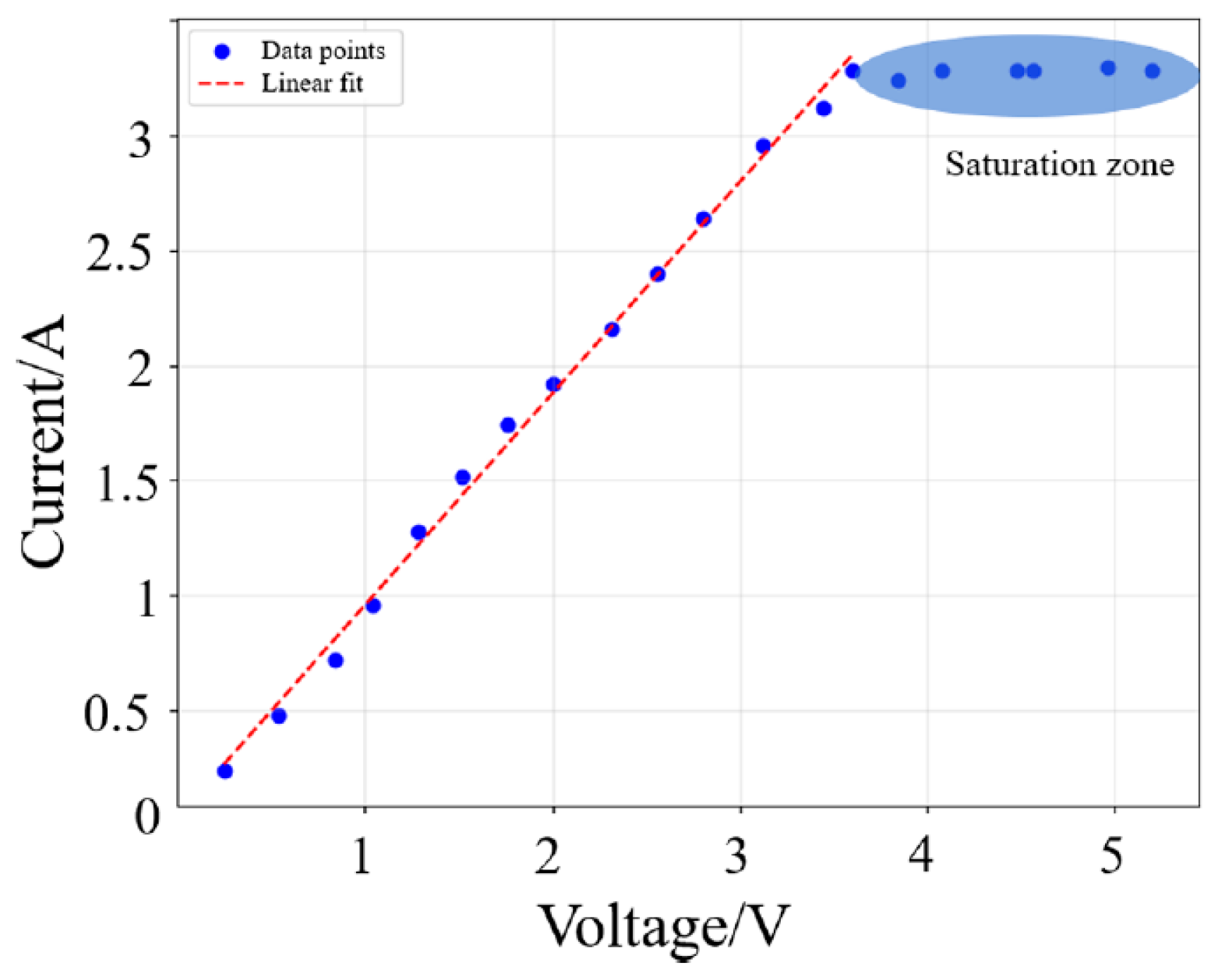
Emphasizing the critical nature of linearity for MRS and MRI applications, the study evaluates the amplifier’s output characteristics by correlating the spectrometer’s input signal against the output voltage measured across a resistive load. As seen in
Figure 7, the experimental data, spanning an input range of 0 to 5.2 V, clearly delineate the system’s operational limits; specifically, within the 0 to 3.6 V range, the amplifier demonstrates robust linearity, evidenced by a first-order curve fit with a slope of 0.9205, an offset of 0.0359, and a determination coefficient of 0.9963. However, the authors report that for differential input voltages exceeding the 3.6 V threshold, the device departs from this linear behavior and enters a saturation zone characterized by a distinct roll-over in the response curve [
17].
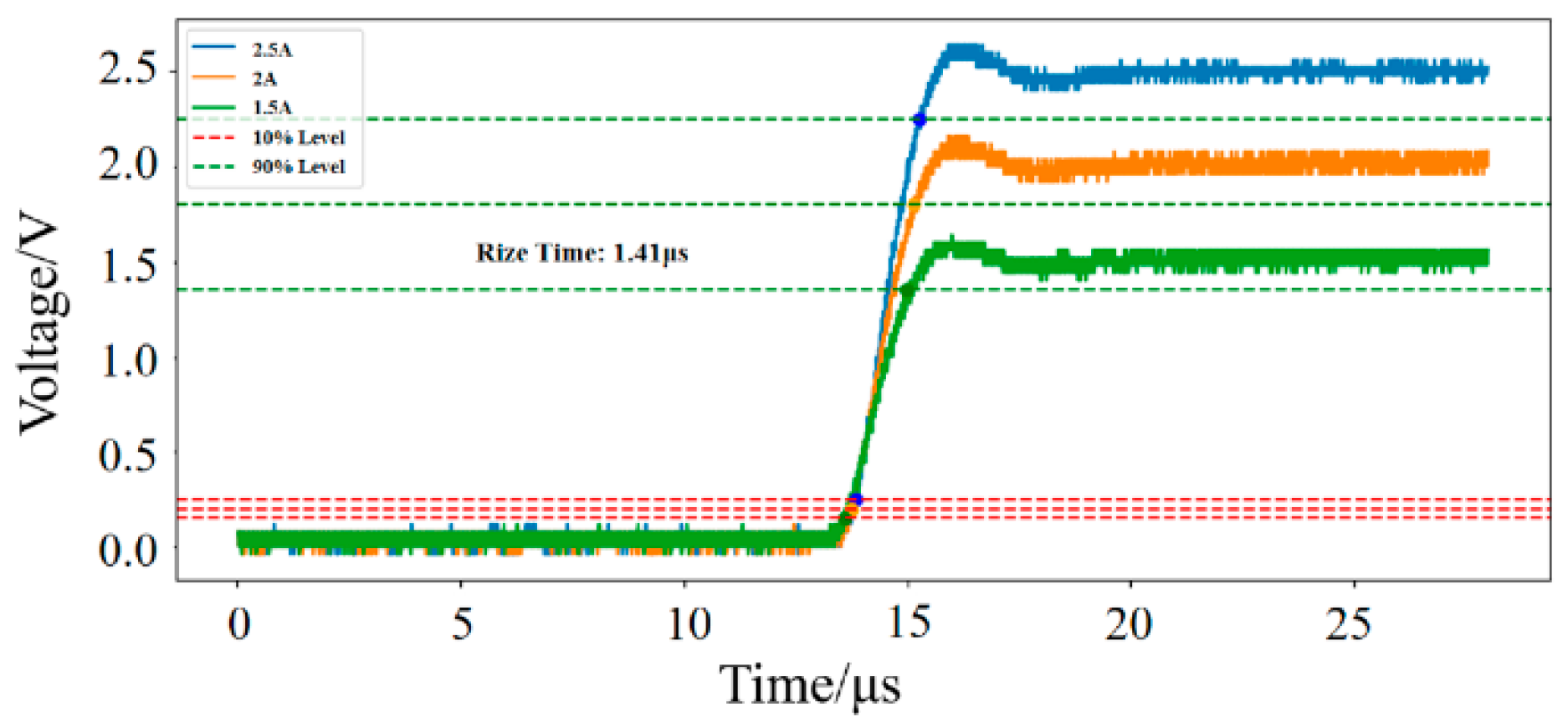
Figure 8 characterizes the amplifier’s dynamic response by analyzing voltage waveforms across a thick-film resistive load at varying output current levels of 1.5 A, 2.0 A, and 2.5 A. Defining rise time as the duration required for the signal to transition from 10% to 90% of its steady-state value, the authors report a consistent performance metric of approximately 1.41 us across all tested outputs. Based on these rapid transition times, the research concludes that the design is adequately responsive for applications involving fast gradient coil driving.
The study proposes a low-power gradient amplifier scheme, detailing the assembly of a prototype that was effectively utilized for field compensation and spatial encoding within NMR and MRI experiments. Gao et al. assert that this miniaturized design, characterized by its optimized power consumption, is particularly well-suited for integration into small-bore magnetic resonance systems.
3.4. Ripple Cancellation Filter for Magnetic Resonance Imaging Gradient Amplifier
Sabate et al. [
23] investigate the critical power requirements of MRI gradient systems, noting that the necessity for high-amplitude currents (several hundred amperes) and voltages (exceeding 1500 V) for spatial encoding renders linear amplifiers impractical due to excessive losses, thereby necessitating the use of switching topologies. To mitigate the resulting switching artifacts, the authors introduce a ripple cancellation technique designed to eliminate output voltage and current ripple using solely passive components. This approach modifies a concept originally developed for DC power supplies, adapting it specifically to handle the arbitrary output waveforms and almost purely inductive loads characteristic of gradient coils. Experimental results demonstrate the method’s efficacy, showing attenuation levels more than ten times greater than those achievable with conventional filtering techniques of comparable physical size [
23,
24,
25].
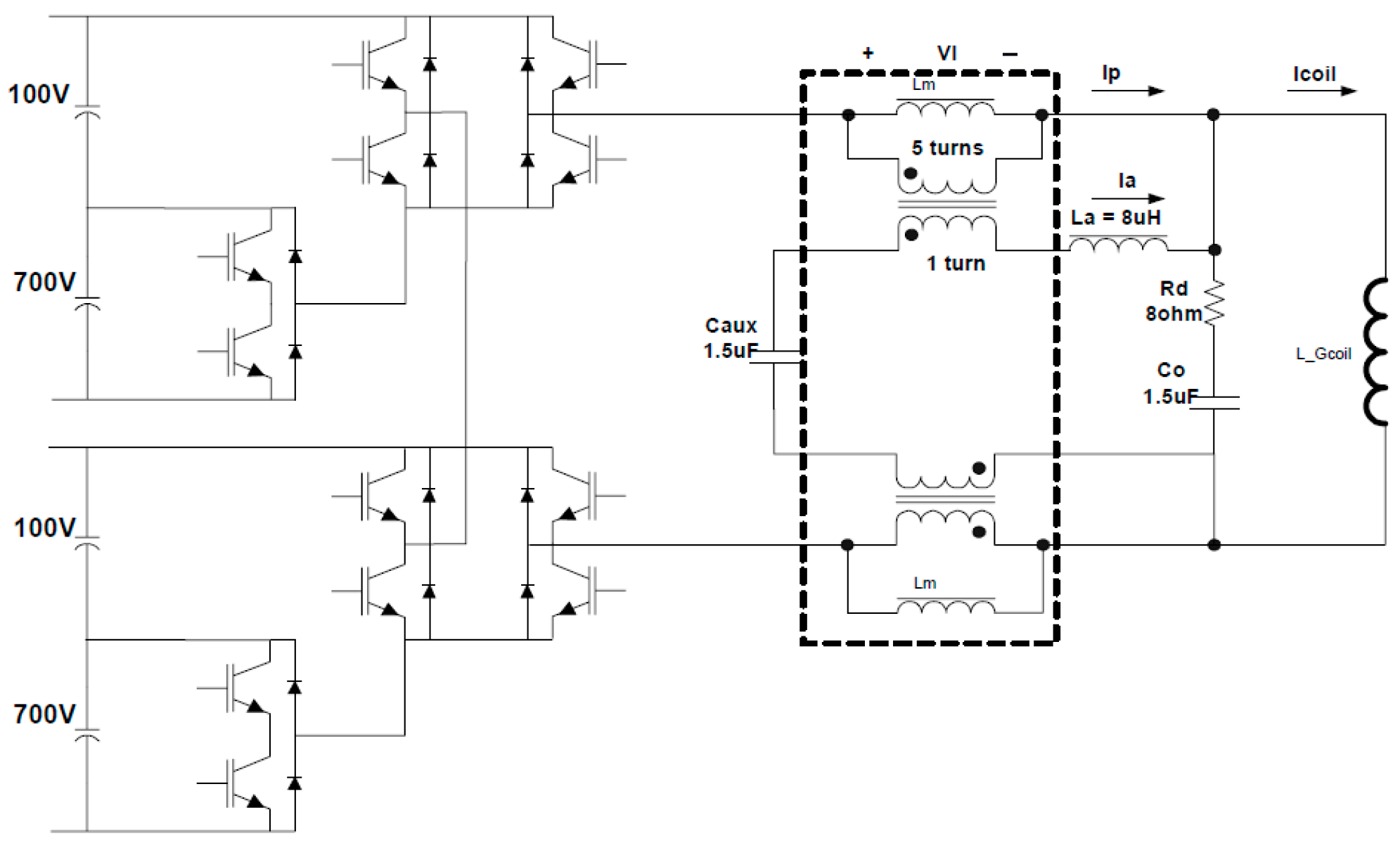
High-performance imaging necessitates that gradient coil current ripple and transient overshoots be restricted to a few milliamperes, even when driving output waveforms of several hundred amperes. The authors identify that the primary drawbacks of switched amplifiers, specifically PWM voltage frequencies and high dv/dt variations, introduce coupled noise that severely compromises image resolution. To mitigate these effects without introducing active circuitry or bulky components, the study proposes a passive cancellation topology (illustrated in
Figure 9) comprising an output coupled inductor (L
m) with a low-current secondary winding, an auxiliary inductor (L
a), and two matching capacitors. The analysis demonstrates that by selecting La to meet a specific cancellation condition, this configuration achieves significantly greater ripple attenuation compared to conventional LC filters of equivalent value, while simultaneously reducing damping resistor losses and minimizing the impact on amplifier bandwidth [
23].
To validate the theoretical design, the authors implemented the proposed ripple cancellation circuit within a commercially active gradient amplifier system capable of delivering 1500 V and currents up to 300 A. The experimental setup operated within a standard configuration where distinct amplifiers drive the gradient coils for the X, Y, and Z spatial encoding directions. The study specifically integrated the filter topology into the power stage of one of these axes to evaluate its performance under actual operating conditions.
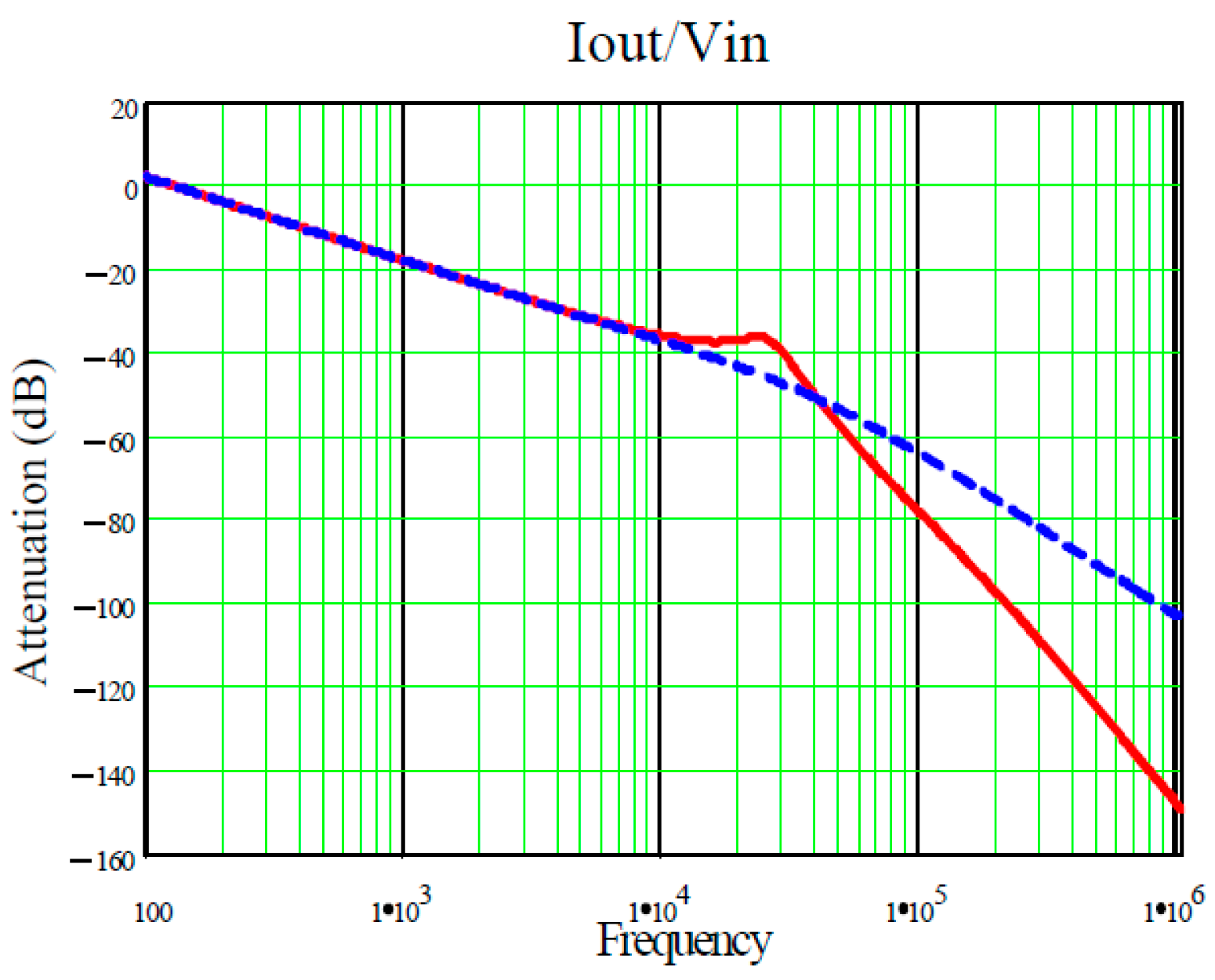
Quantitative analysis of the system’s frequency response was conducted (
Figure 10) by comparing the transfer function of the proposed filter against a conventional topology utilizing equivalent inductance and cumulative capacitance. The results indicate that the proposed circuit yields superior attenuation characteristics at frequencies exceeding 40 kHz. Regarding stability, the authors observe that the phase shift introduced by both designs is negligible below the first corner frequency; given that the control bandwidth is designed to operate below this threshold, system stability remains uncompromised. Ultimately, the study concludes that the novel configuration achieves approximately 20 dB/dec of additional attenuation at the switching frequency compared to standard filtering techniques, without necessitating larger components or degrading the amplifier’s bandwidth [
23].
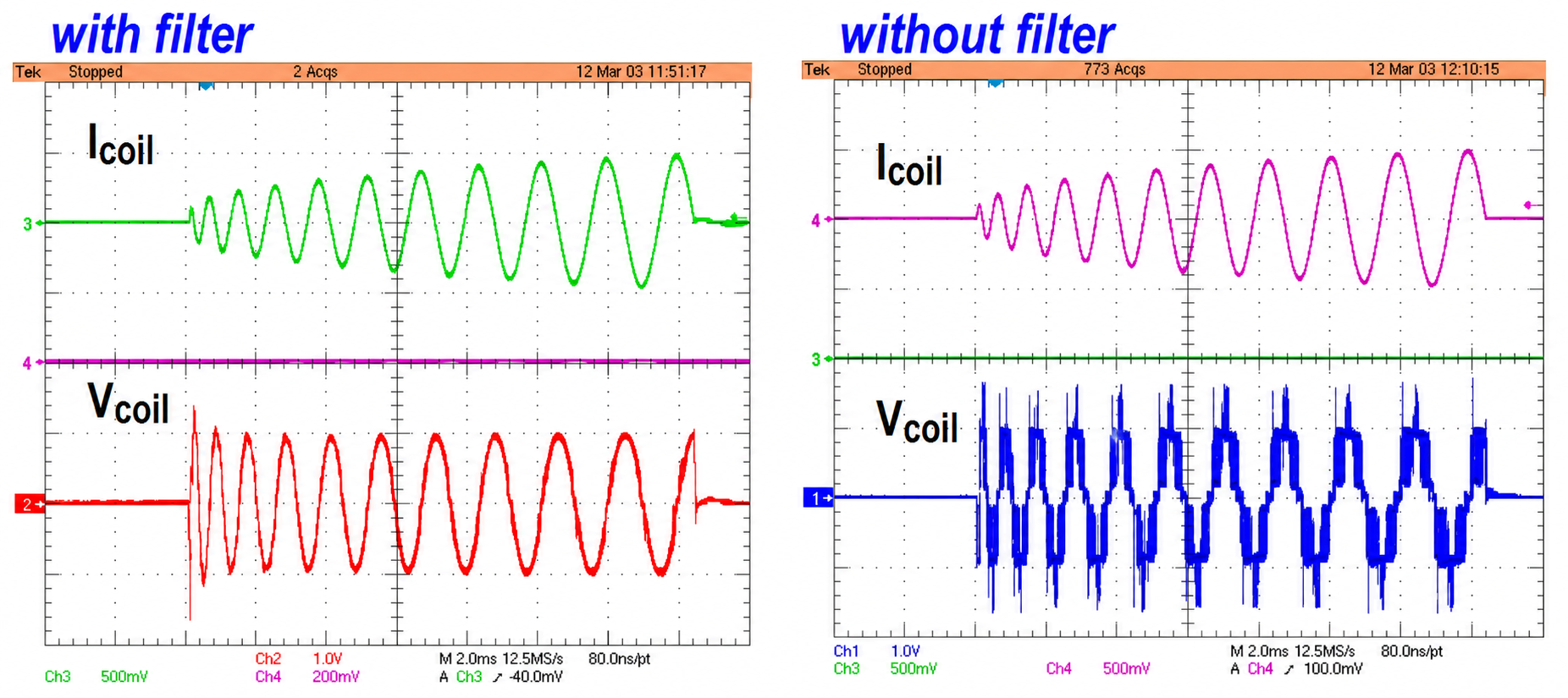
In order to validate the system’s performance under dynamic imaging conditions, the study analyzes coil voltage and current waveforms captured during a spiral scan trajectory (
Figure 11). They observed a distinct reduction in voltage stepping artifacts, which they correlate directly with an extremely low magnitude of current ripple, thereby confirming the efficacy of the cancellation technique in maintaining signal purity during complex spatial encoding sequences.
3.5. Parallel Operation of Gradient Power Amplifiers Without Large Current-Sharing Reactor
Xue et al. [
7] are addressing the escalating power demands of advanced MRI modalities like functional brain imaging. This paper explores the parallel operation of Gradient Power Amplifiers (GPAs) as a solution to the semiconductor, thermal, and distribution limitations inherent in single-unit designs. The authors identify a critical challenge in parallel architectures: the generation of circulating currents due to component mismatches, which standard methodologies typically mitigate using prohibitively large and expensive coupling reactors. To provide a compact, cost-effective alternative, the research proposes a novel control framework integrating a total-current-feedback algorithm with a specific current-sharing protocol and a small magnetic core. This configuration is reported to achieve tight load sharing and high-fidelity performance without the bandwidth compromises associated with large passive reactors, a claim substantiated by the presented experimental results [
7].
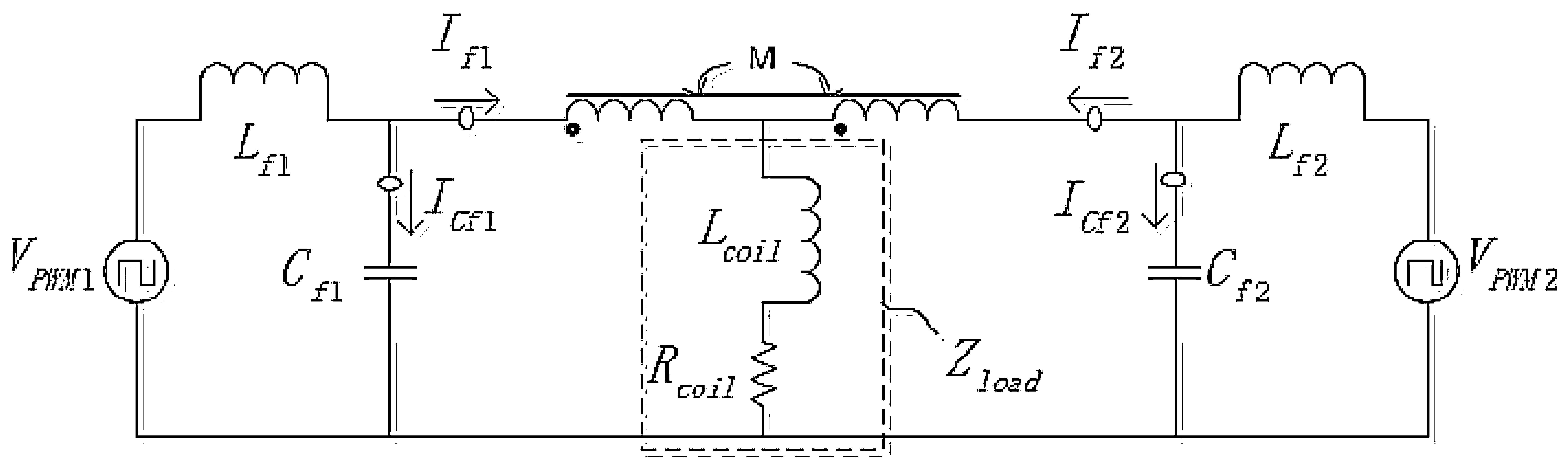
Detailing the system architecture depicted in
Figure 12, the study describes a parallel configuration where two GPAs, utilizing cascaded H-bridges with phase-shift PWM, drive a common gradient coil load (L
coil, R
coil). The design incorporates a current-sharing reactor with mutual coupling “M” intended to exhibit zero differential-mode inductance, thereby ensuring no reduction in output voltage slew rate. In contrasting this approach with existing standalone operation methods, the authors highlight a critical instability mechanism where large oscillating circulating currents emerge if the load inductance exceeds that of the reactor. Consequently, they argue that relying on conventional reactor sizing to accommodate typical coil ranges (200 uH to 1.5 mH) would mandate a component larger than 1.5 mH with a 1000 A rating, resulting in an impractical and prohibitively bulky system. To solve these stability issues and physical constraints, the study proposes a novel control architecture for parallel operation. Departing from conventional individual regulation, the method implements a global feedback strategy wherein the total load current, rather than the independent output of each module, is fed back to the controller of every Gradient Power Amplifier [
3,
7,
26].
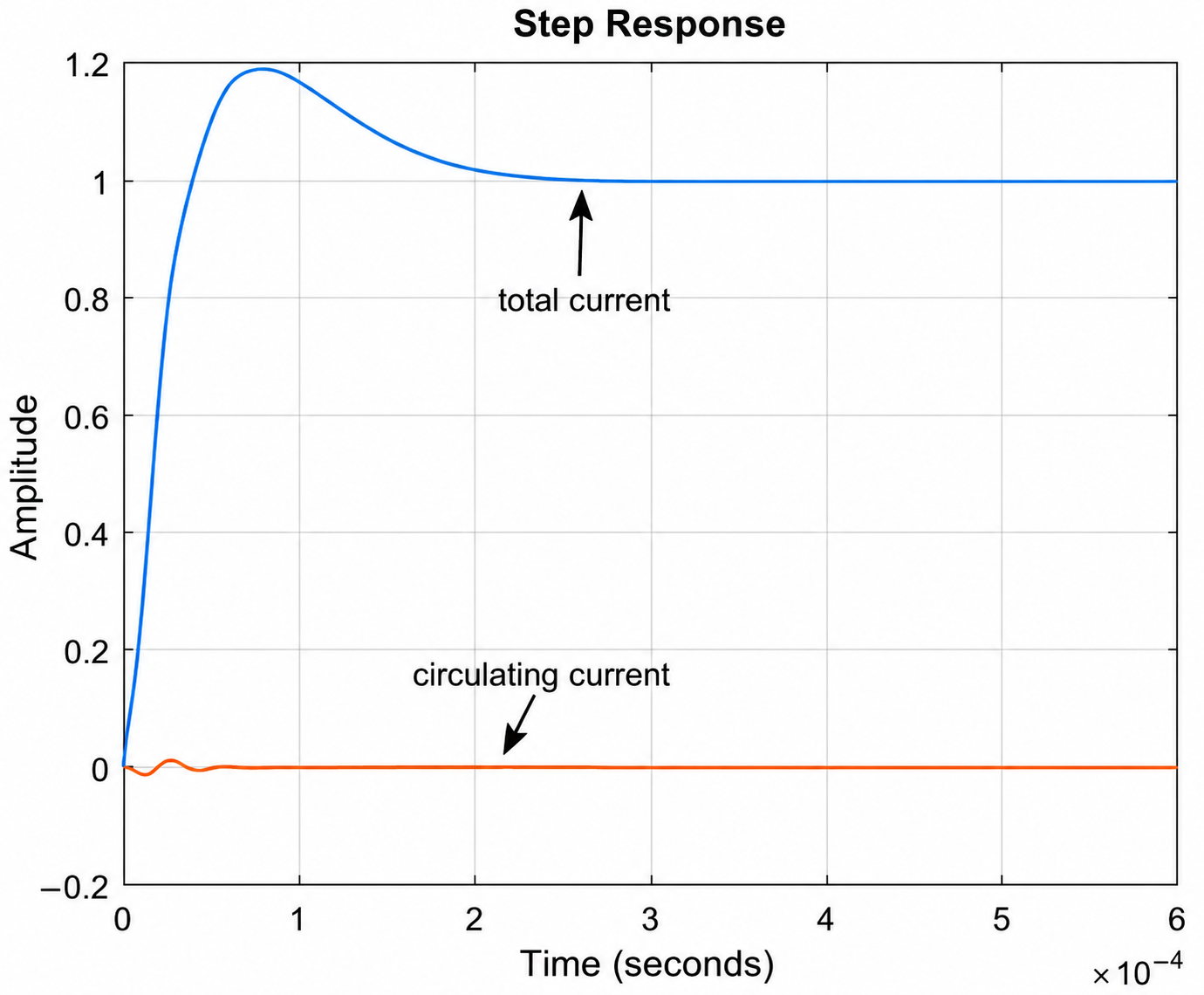
To validate the robustness of the proposed control strategy, the study examines the system’s dynamic behavior under conditions of parameter mismatch, specifically introducing unequal filter inductances to simulate real-world component tolerances. As illustrated in
Figure 13, the authors report that despite these asymmetries, the circulating current decays rapidly while the total load current converges smoothly to the setpoint. These findings serve to verify that the combined total-current-feedback and current-sharing algorithms effectively maintain system stability and signal fidelity, even in the presence of hardware imbalances.
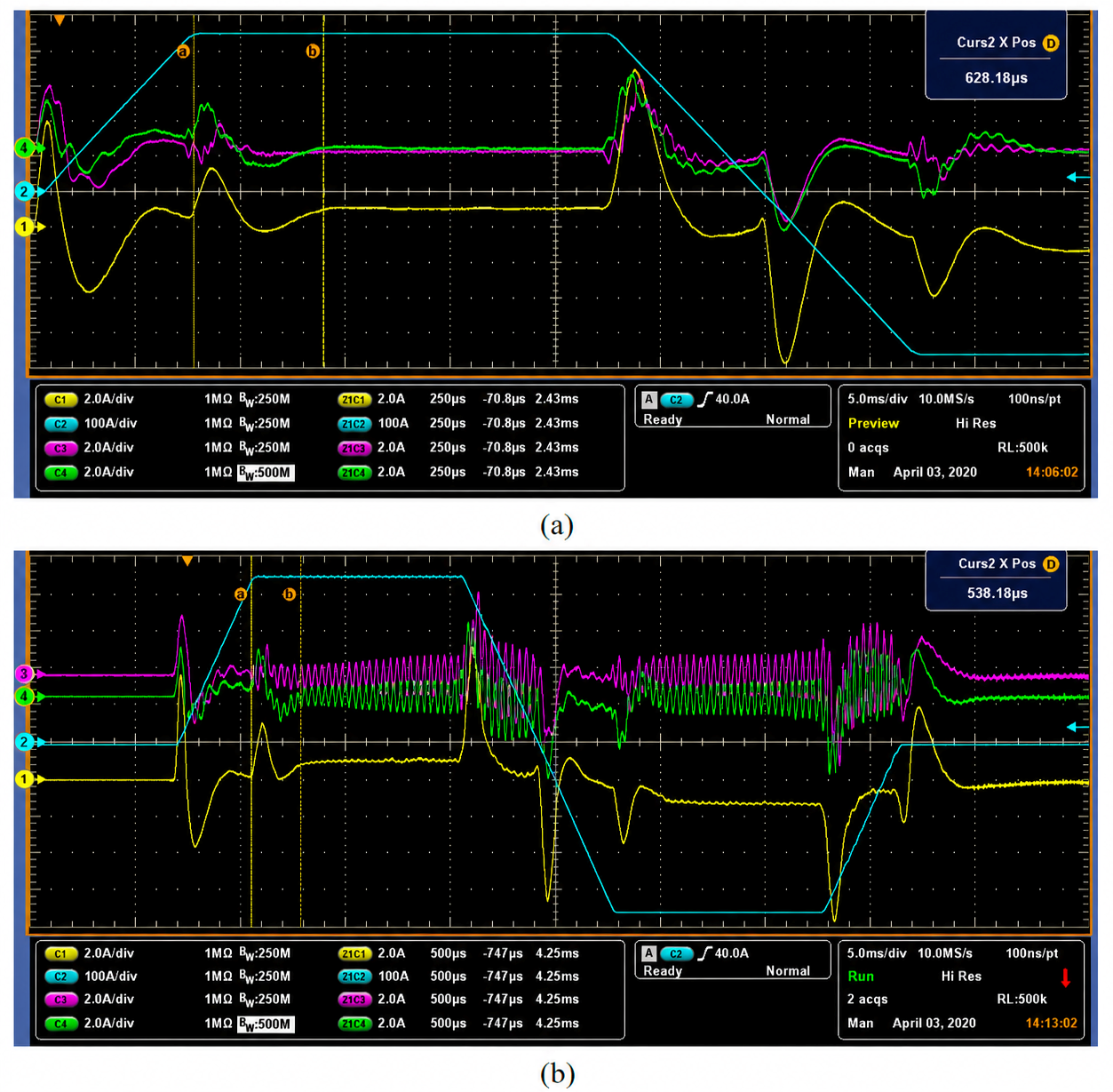
They evaluate the conventional parallel configuration utilizing a large reactor (L
CM = 320 uH, L = 3.5 uH with the amplifiers operating in standalone mode without active data exchange. The experimental results highlight a fundamental trade-off between tracking accuracy and stability in this passive configuration: while restricting the control loop to half bandwidth minimizes circulating currents, it results in substantial total current tracking errors (
Figure 14a). Conversely, utilizing the full control bandwidth effectively reduces the tracking error but induces significant circulating currents (
Figure 14b), leading the authors to conclude that the reactor inductance is insufficient for high-performance operation and that reliance solely on passive components necessitates a difficult balance to avoid core saturation [
7].
The parallel GPA system to a high-intensity Echo-Planar Imaging (EPI) sequence characterized by a 2000 A amplitude, a 700 us ramp time, and a 1000 us flat-top duration. The resulting waveforms (
Figure 15) indicate that the proposed control scheme effectively suppresses circulating currents to insignificant levels with a notable absence of high-order harmonics. Furthermore, the study reports that the total-current tracking error remained minimal throughout the sequence, leading the authors to conclude that the system delivers satisfactory high-fidelity performance even under demanding imaging protocols [
7].
In conclusion, the study proposes a control framework for parallel Gradient Power Amplifiers (GPAs) that synergizes a total-current feedback algorithm with a current-sharing strategy, replacing bulky multi-turn reactors with a compact magnetic core.
Furthermore, the research highlights the practical advantages of this topology, specifically noting that the core requires no active cooling and that the control method is inherently scalable to support configurations involving more than two parallel amplifiers.
3.6. Dynamic Physical Limits of a Phase-Shifted Full-Bridge Circuit for Power Supply of Magnetic Resonance Imaging Gradient Amplifier
Shi et al. [
27] propose a method for examining the dynamic limitations of a Phase-Shifted Full-Bridge (PSFB) converter used as the power supply for MRI gradient amplifiers. Since gradient amplifiers impose rapidly changing load conditions, the study emphasizes the importance of maintaining a stable output voltage under fast transients. In their analysis, the authors focus mainly on voltage overshoot, undershoot, and the time required for the supply to settle after a sudden change in load. Because large current steps with high di/dt are common in this application, the converter must keep the output voltage within a tight tolerance despite these abrupt variations [
27,
28,
29].
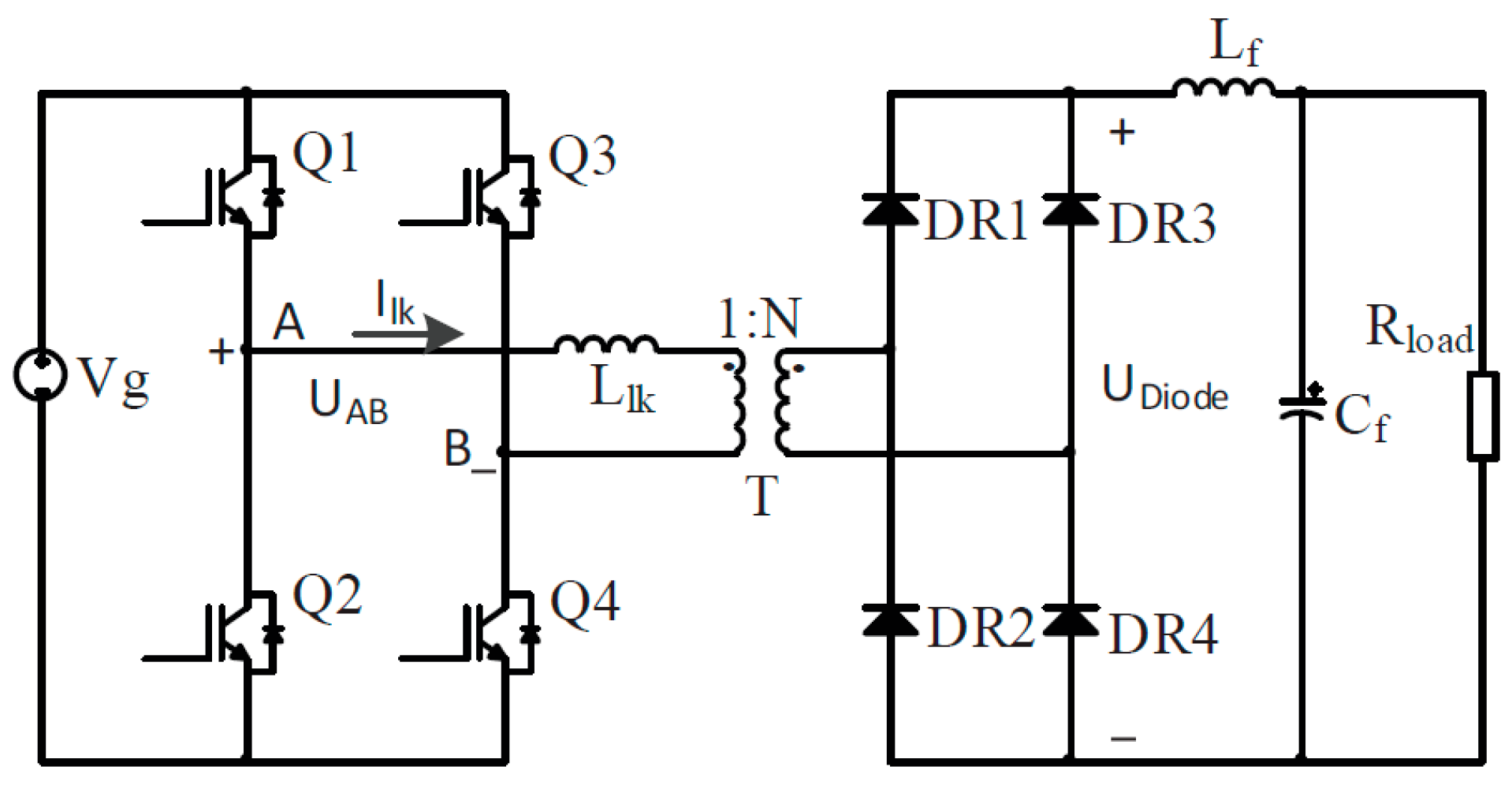
In their work, the authors also explain the circuit setup used in the experiments, shown in
Figure 16. The supply is built around a Phase-Shifted Full-Bridge (PSFB) converter that has been adapted for the demands of MRI gradient hardware. In the prototype, the controller operates with a sampling rate twice the switching frequency. During normal operation, both legs of the bridge run at a fixed 50% duty cycle; the output voltage is then adjusted only by changing the phase shift between the legs.
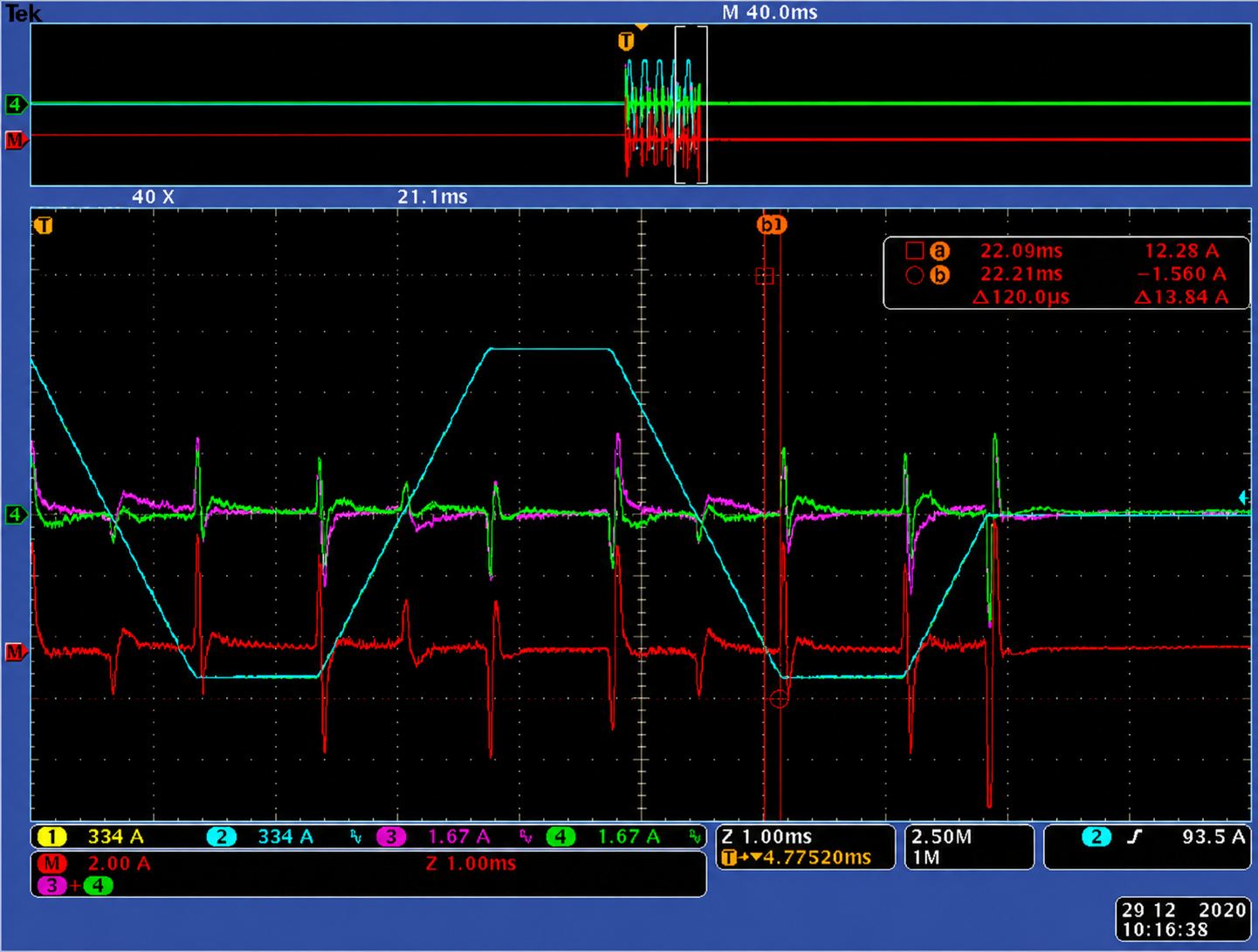
Figure 17 shows the experimental results. They validate the simulation model by showing a tight correlation with experimental data, where errors for voltage undershoot and recovery time were limited to just 0.2 V and 70 µs, respectively. Interestingly, the theoretical calculations were less accurate, predicting a recovery time about 200 µs faster than what was actually measured. The authors explain that this gap stems from oversimplifications in the mathematical model: specifically, it ignored the duty cycle loss due to transformer leakage inductance and the resistive voltage drops across the switches and inductors. Both factors effectively reduce the voltage available to drive the inductor current, making the real-world transient response slower than the idealized equations suggest.
In conclusion, the paper establishes a method for determining the dynamic physical limits of the PSFB converter, explicitly accounting for the constraints of digital control where duty cycle updates are bound to integral sampling periods. By grounding their analysis in time-optimal control theory, the authors provide a practical benchmark that allows designers to quantify the exact “improvement space” available for a given controller relative to the system’s theoretical maximum. This analytical framework is validated through both simulation and experimental results, confirming its utility as a standard for evaluating the efficacy of various optimal control methods in high-performance gradient power supplies.
3.7. A New Gradient Driver with Only a Single DC Voltage Source for Use in MRI Systems
Shahrbabaki et al. [
30] address the significant hardware challenges associated with MRI gradient spatial encoding, particularly the requirement for high-fidelity currents exceeding 1 kA and voltages above 2 kV to achieve fast slew rates. Conventional solutions typically rely on complex multi-level stacked H-bridges powered by multiple isolated sources, a setup that necessitates a power chain rated for peak loads, which can reach ten times the average power. To overcome these inefficiencies, the authors propose a novel driver topology that utilizes a single DC source coupled with two energy-storage capacitors, allowing for direct connection to the Power Distribution Unit (PDU) and effectively eliminating the need for a dedicated intermediate power supply. This architecture is designed to boost the maximum output voltage to more than three times the input while simultaneously minimizing peak power draw from the grid through an optimized switching strategy. Simulations of the proposed topology confirm its performance, highlighting a significant reduction in both semiconductor and magnetic component counts compared to traditional isolated-source designs [
30,
31,
32].
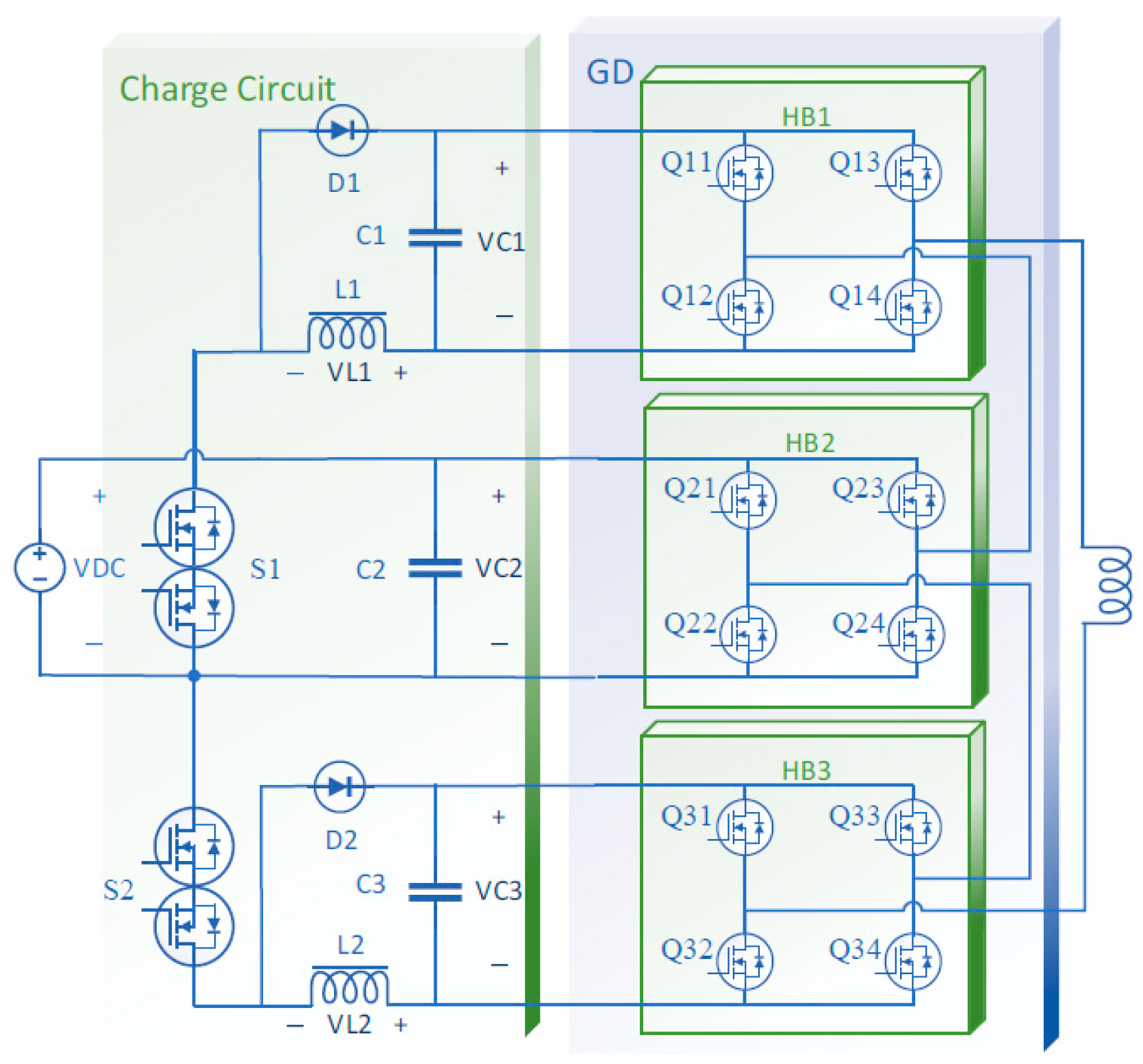
Detailed in
Figure 18, the proposed driver architecture comprises three stacked H-bridges and a dedicated charging circuit, all powered by a single DC source to obviate the need for multiple isolated voltage supplies. The authors delineate a specific operational hierarchy: one H-bridge is directly coupled to the DC source to regulate output current and sustain power against coil resistance, while the remaining two bridges draw from pre-charged capacitors to supply the high instantaneous power demanded during rapid transient events. By utilizing capacitors (C1 through C3) as energy storage media, the topology effectively buffers the large energy fluxes inherent to reactive gradient loads, thereby aligning the maximum power draw closer to the average rather than the peak.
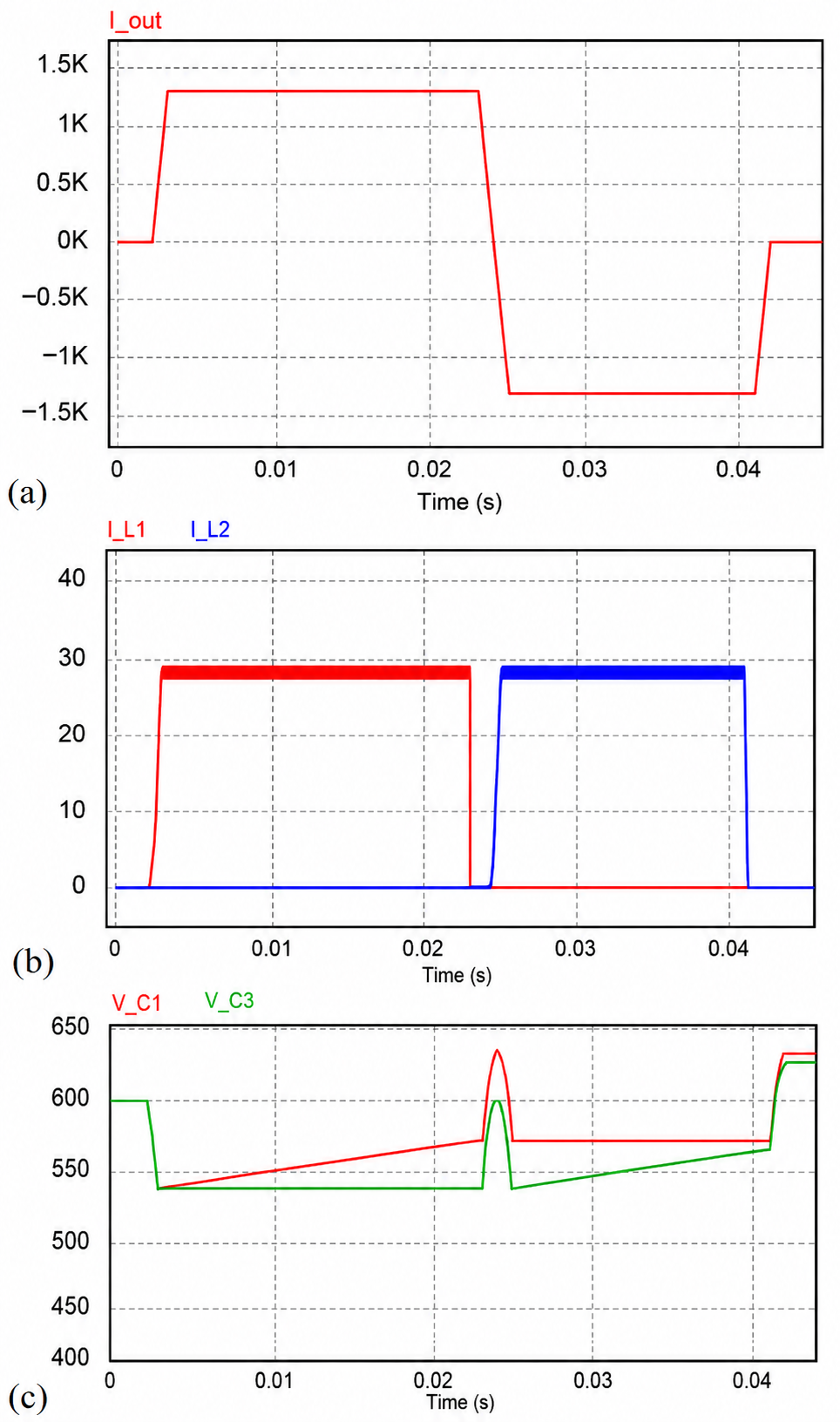
To validate the system’s dynamic performance, the study presents experimental waveforms (
Figure 19) captured during a standard trapezoidal pulse sequence characterized by a 20 ms positive flat-top and a 16 ms negative interval. The authors report that the output current tracks the reference command with high fidelity, while the voltages across the energy storage capacitor (C1) and the currents through the charging inductors (L1, L2) remain strictly within their designated operational ranges. These results confirm that the proposed single-source topology effectively manages energy storage without compromising the precision required for spatial encoding.
In conclusion, the study proposes a novel gradient driver architecture designed to simplify the power supply chain by utilizing a single DC voltage source, effectively eliminating the requirement for multiple isolated inputs per driver. The design integrates energy storage components specifically to mitigate peak power demands on the facility. Through mathematical analysis of the charging modes and subsequent simulation, the authors validate the converter’s ability to generate high-performance outputs of 1300 A and 1800 V from a modest 600 V input, confirming both the theoretical framework and the practical viability of the topology.
3.8. Parallel Operation of Switching Amplifiers Driving Magnetic Resonance Imaging Gradient Coils
Sabate et al. [
3] focus on the escalating power demands in high-performance MRI systems, where currents exceeding several hundred amperes and voltages above 1000 V are required for rapid spatial encoding. To meet these rigorous specifications, the authors propose a parallel configuration of two high-current switched amplifiers. However, the text identifies that direct parallelization often compromises bandwidth and stability due to the mutual loading effects between drivers. To resolve this, the research presents a solution utilizing an output-coupled inductor (interconnection reactance). This component is designed to present high impedance between the drivers to ensure precise current sharing during both steady-state and transient operations, while simultaneously maintaining low impedance toward the load to prevent voltage loss. Furthermore, the authors highlight that this topology enables out-of-phase switching between the amplifiers, a technique that significantly reduces output current ripple without necessitating an increase in the inductor’s physical size [
3].
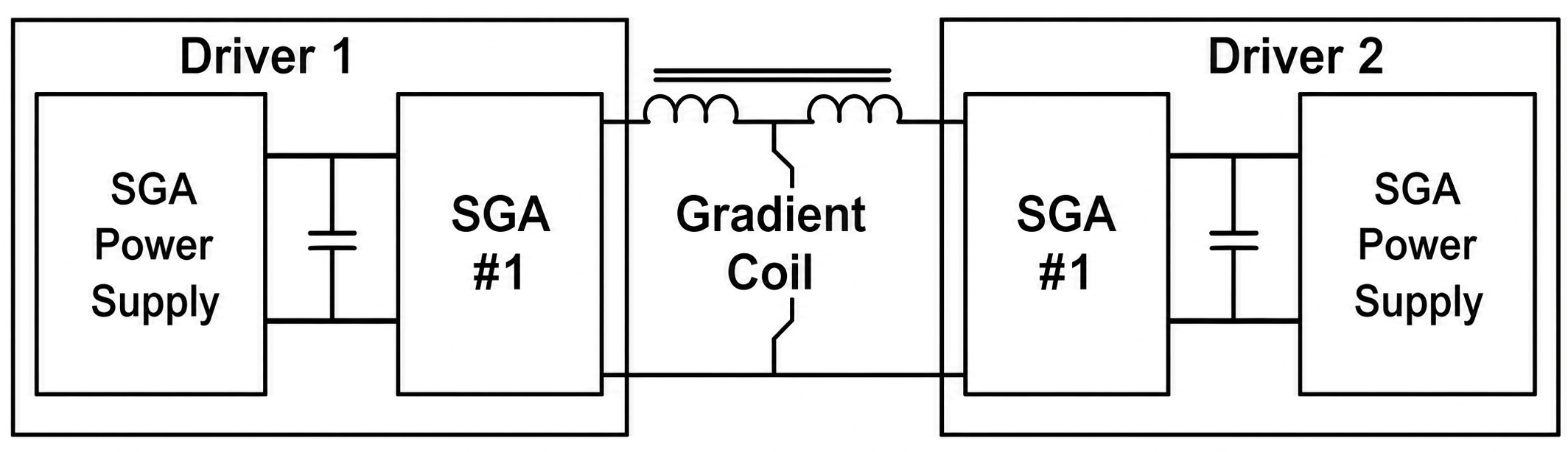
The authors describe the specific implementation of the Switching Gradient Amplifier (SGA) utilizing a stacked bridge topology, as illustrated in
Figure 20. In this configuration, the system comprises two stacked stages, where each stage consists of a Full-Bridge inverter powered by a variable DC-bus generated by an upstream half-bridge converter. The study notes that this sophisticated architecture requires four distinct input voltage sources per amplifier to support its operation.
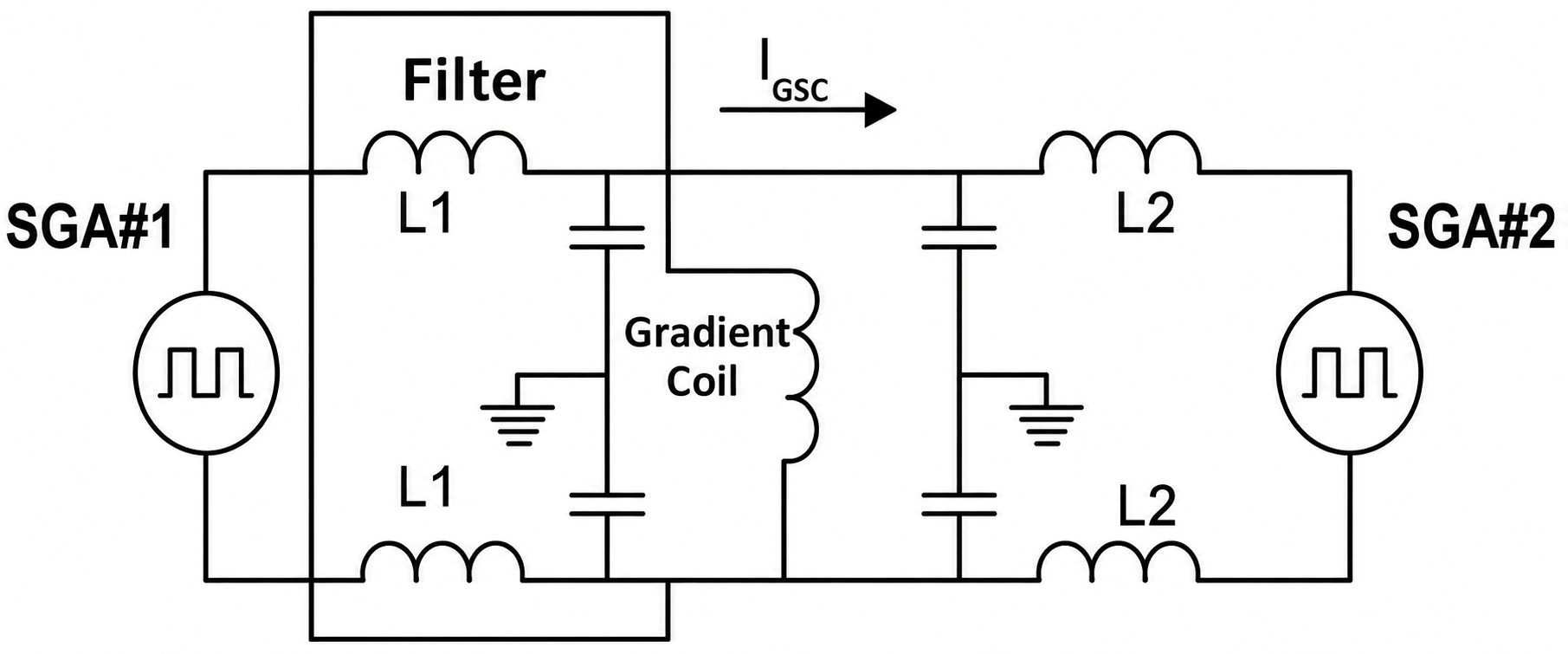
From a modeling perspective, the researchers simplify the Switching Gradient Amplifier (SGA) into a pulsed voltage source followed by a compact output filter. As illustrated in
Figure 21, this LC filter employs a notably small inductance of approximately 50 µH, a value selected specifically to attenuate high-frequency noise rather than the main switching frequency. The design strategy effectively leverages the substantial inherent inductance of the gradient coil itself to act as the primary flywheel, ensuring that the current ripple at the load remains minimal despite the reduced size of the amplifier’s output filter. They highlight that while standard control loops are designed for stability with typical gradient coil inductances (750 uH to 1 mH), the parallel arrangement presents a unique challenge where the effective load seen by the controller changes drastically [
33]. Specifically, if there are any synchronization errors or supply voltage mismatches, the control loop attempts to regulate current into the low-impedance path of the opposing amplifier (2L
1 + 2L
2) rather than the coil, leading to instability and large oscillating circulating currents. To solve this, the text describes the implementation of a coupled reactor on a shared core as shown in
Figure 22. This component is designed to present a high impedance to the circulating path between the two drivers to ensure stability, while introducing only negligible leakage inductance to the output path, thereby preserving the high slew rate capability required for the gradient coil.
Figure 22.
System architecture featuring an interconnection reactor for stable parallel operation of Switching Gradient Amplifiers (SGAs).
Figure 22.
System architecture featuring an interconnection reactor for stable parallel operation of Switching Gradient Amplifiers (SGAs).
In their concluding analysis, the study proposes an interconnection strategy utilizing two coupled inductors to enable the effective parallel operation of existing gradient drivers. While the authors evaluated alternative methods, such as modifying the control loop gain to manage load sharing, they determined that the coupled inductor topology offers superior stability and maintains acceptable bandwidth, particularly when the system is subjected to significant supply voltage imbalances. A key advantage highlighted in the design is that only the minor leakage inductance of the coupled coils is added to the gradient load path; consequently, the maximum achievable slew rate is not compromised. The paper confirms the robustness of this parallel configuration through both simulation and experimental validation.
3.9. Balancing Control of Paralleled Full-Bridge Converters in High-Current Gradient Amplifiers for MRI Applications
Kumar et al. [
11] discuss the rigorous demands of high-performance MRI systems—specifically the requirement for trapezoidal current pulses exceeding 500 A with slew rates up to 3 A/µs—the study investigates the parallel operation of Full-Bridge (FB) converters as a means to distribute the substantial thermal and electrical load. While acknowledging that stacked FB structures are standard for achieving high-voltage capabilities (~1000 V) and low ripple through interleaved control, the authors identify a critical challenge in ensuring equal current sharing between parallel units, which traditionally necessitates bulky coupled inductors with large magnetizing inductance (LM) to mask synchronization errors. To overcome the volume constraints associated with large magnetics, the paper proposes a hybrid hardware-software strategy. This approach utilizes coupled inductors with significantly reduced LM values, compensated for by an active balancing control algorithm. The efficacy of this combined method is validated through simulation and experimental results on prototypes driving gradient-coil currents of 75 A and 400 A, demonstrating that precise load sharing is achievable without the penalty of excessive component size [
2,
11,
34].
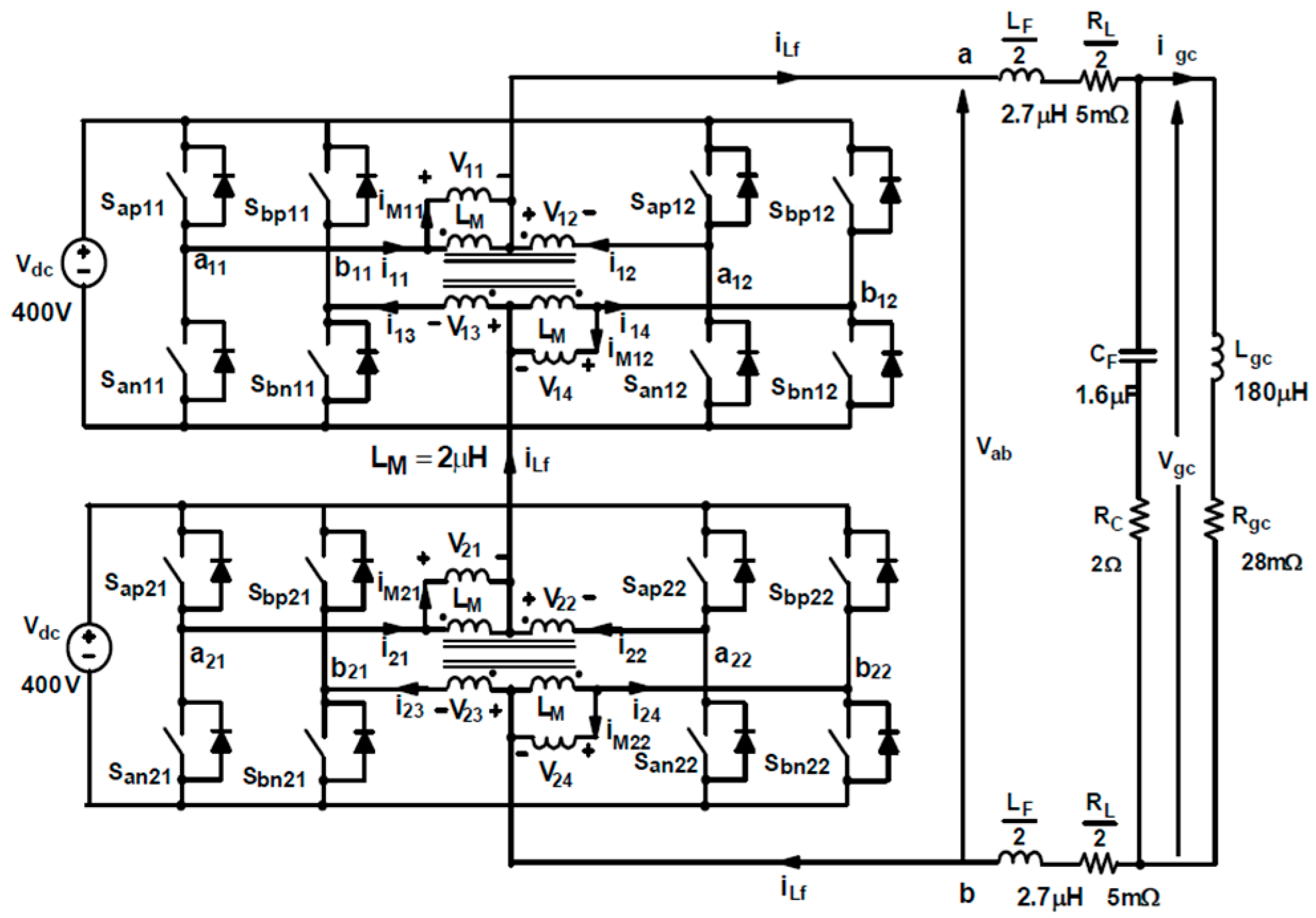
Detailed in
Figure 23 [
35], the implementation features a topology comprising two-stacked, two-paralleled Full-Bridge converters engineered to deliver a total peak gradient-coil current of 900 A. To optimize component costs, the design utilizes 400 V DC input rails, allowing for the use of standard 450 V energy storage capacitors, while the switching stage employs parallel SiC devices operating at 40 kHz. A critical design trade-off is observed in the selection of the coupled inductors: the authors opted for a remarkably low magnetizing inductance (L
M ≈ 2 uH) to minimize physical volume. Although this small inductance imposes a saturation threshold of approximately 110 A, the study asserts that the active balancing control is essential to restrict the magnetizing current well below this limit, thereby preventing saturation while maintaining precise current sharing between the parallel units [
36].
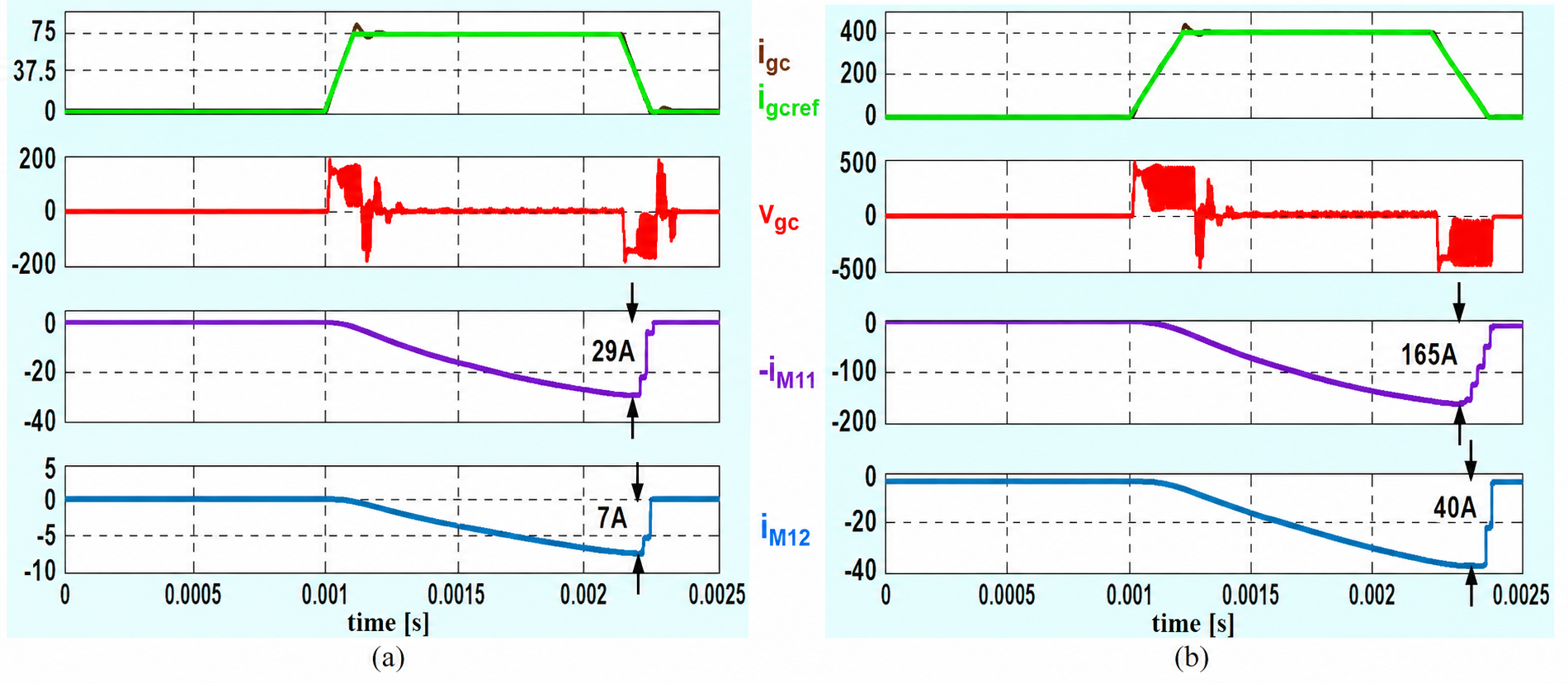
To validate the efficacy of the proposed balancing control strategy within the digital domain, the authors present key simulation waveforms illustrating the system’s performance under distinct operating conditions. Specifically, the response is characterized at a lower power tier with a maximum gradient-coil current (Imax) of 75 A and a DC link voltage of 150 V, as well as at a high-power operating point with Imax reaching 400 A at a bus voltage of 400 V (
Figure 24). These results serve to confirm the controller’s ability to maintain stability and current fidelity across a broad dynamic range, effectively scaling from modest to high-current demands [
11].
In their final analysis, the authors address the scalability of gradient amplifiers, specifically the parallelization of Full-Bridge (FB) converters to achieve currents exceeding 500 A. To mitigate the bulk usually associated with passive balancing, the study advocates for a combined hardware-software methodology that pairs a coupled inductor possessing a low magnetizing inductance with an active balancing control algorithm. Quantitative results from the experimental validation, conducted at a maximum gradient-coil current of 400 A and a DC link voltage of 400 V, demonstrate that the proposed control scheme successfully reduces the maximum current sharing error to just 4.5%. The researchers conclude that this performance metric represents a highly effective degree of load sharing, validating the hybrid approach for high-power MRI applications.
3.10. Low-Cost MRI System for Teaching
Carroll et al. [
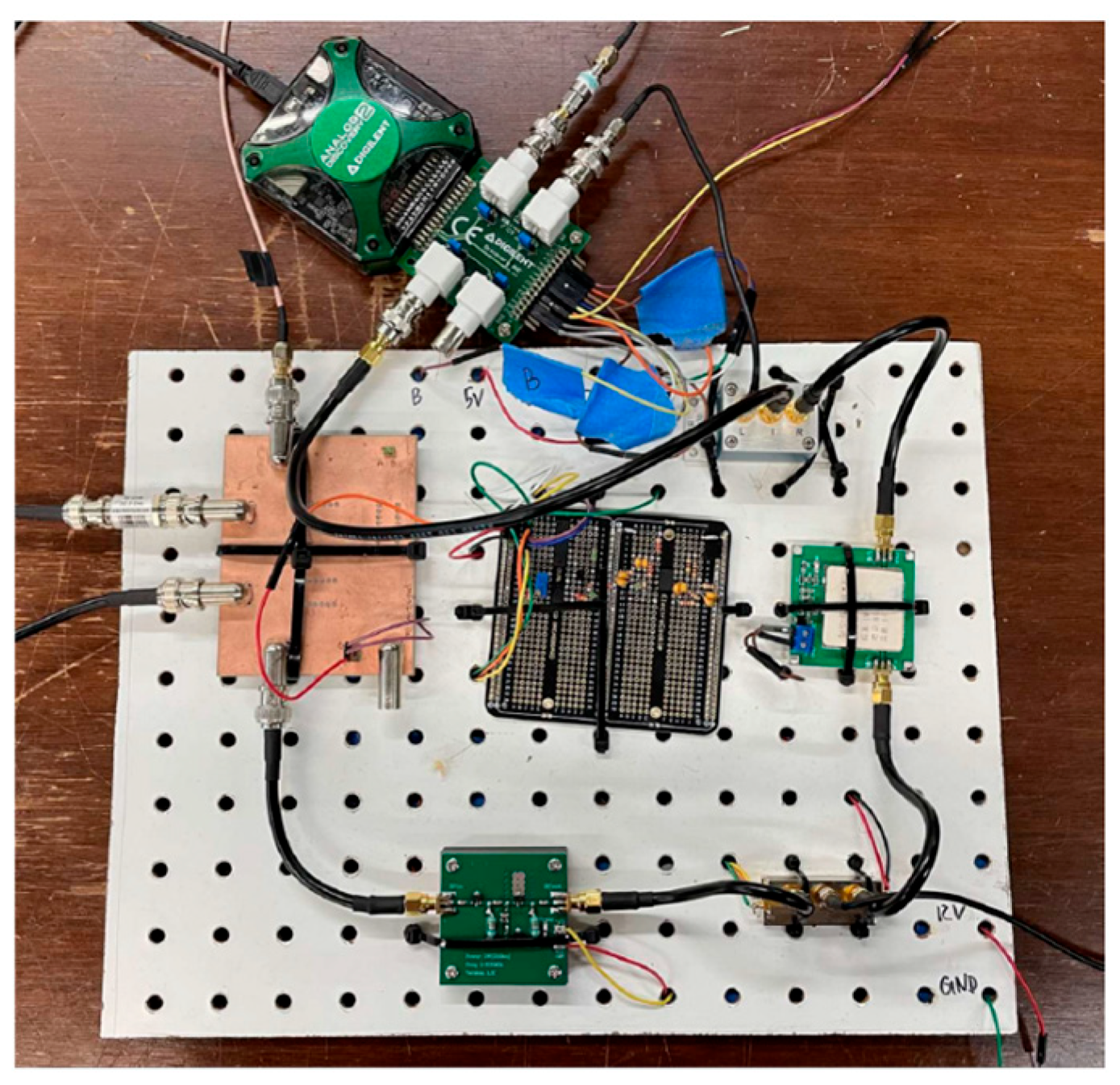
37] outline the development of a highly accessible and cost-effective MRI system designed specifically to support educational objectives, including potential applications for remote learning where students can engage with hardware off-campus. Motivated by the prohibitive costs of standard clinical equipment, which limit access to this critical diagnostic technology, the study proposes a desktop-scale architecture constructed from affordable components. Key elements of the design include inexpensive transmit and receive chains, off-the-shelf gradient amplifiers selected for teaching suitability, and a lightweight Halbach magnet array. To validate the feasibility of this low-cost approach, the authors report the successful capture of initial projections and images using a 0.06 T permanent magnet, contributing to the broader research effort into inexpensive desktop imaging systems. Emphasizing maintainability and accessibility for educational deployment, the project utilizes an off-the-shelf amplifier circuit board to interface the AD2 (Digilent’s Analog Discovery 2) waveform generators with the gradient coils. The hardware platform integrates an OPA445 preamplifier with an OPA541 audio power amplifier. To optimize the system for gradient service, the authors modified the preamplifier stage to reduce the overall gain from 33 to 4.5 by inserting a 1 kΩ resistor in series with the gain-setting resistor R1. The study confirms that this adapted configuration supports currents up to 5 A, providing sufficient drive capability for student-designed coils. Physically, the setup employs rectangular coils wound on a 3D-printed cylinder positioned on either side of the Halbach magnet, connected in series with opposing current directions to generate the required field gradients [
37,
38,
39].
In their evaluation of the experimental results, the authors report that the initial objective to utilize the Halbach magnet was hindered by the limitations of having only a single gradient coil, which precluded the necessary shimming to achieve an optimal linewidth. To demonstrate the system’s imaging capabilities despite this constraint, the study substituted a 0.06 T magnet with a linewidth of less than 20 PPM. Although the researchers acknowledge that the resulting images require further refinement, they conclude that the successful acquisition validates the project’s core premise: that the Analog Discovery 2 (AD2) interface, combined with accessible off-the-shelf hardware, serves as an effective and low-cost platform for teaching the fundamental principles of MRI as shown in
Figure 25.
3.11. High-Power High-Fidelity Switching Amplifier Driving Gradient Coils for MRI Systems
This work [
14] presents a high-power gradient amplifier architecture designed to meet the rigorous demands of modern MRI systems, which require currents exceeding several hundred amperes and voltages above 1500 V for fast spatial encoding. To address the dual challenges of high fidelity and thermal management, the authors propose a power stage consisting of three Stacked Full-Bridges utilizing interleaved switching. The topology adopts a hybrid frequency approach: one bridge operates at 400 V with a high switching frequency to ensure high control bandwidth, while the remaining two bridges operate at 800 V with lower frequencies to minimize overall losses. Regarding control, the study investigates two distinct modulation strategies implemented via a fully digital platform, one optimized for minimal switching losses (potentially necessitating bi-directional power supplies) and an alternative that offers superior flexibility for arbitrary waveforms at the cost of higher losses. The authors situate this work within the broader industry transition from linear amplifiers, which have become impractical for these power levels, toward fully switched stacked or parallel architectures [
40,
41].
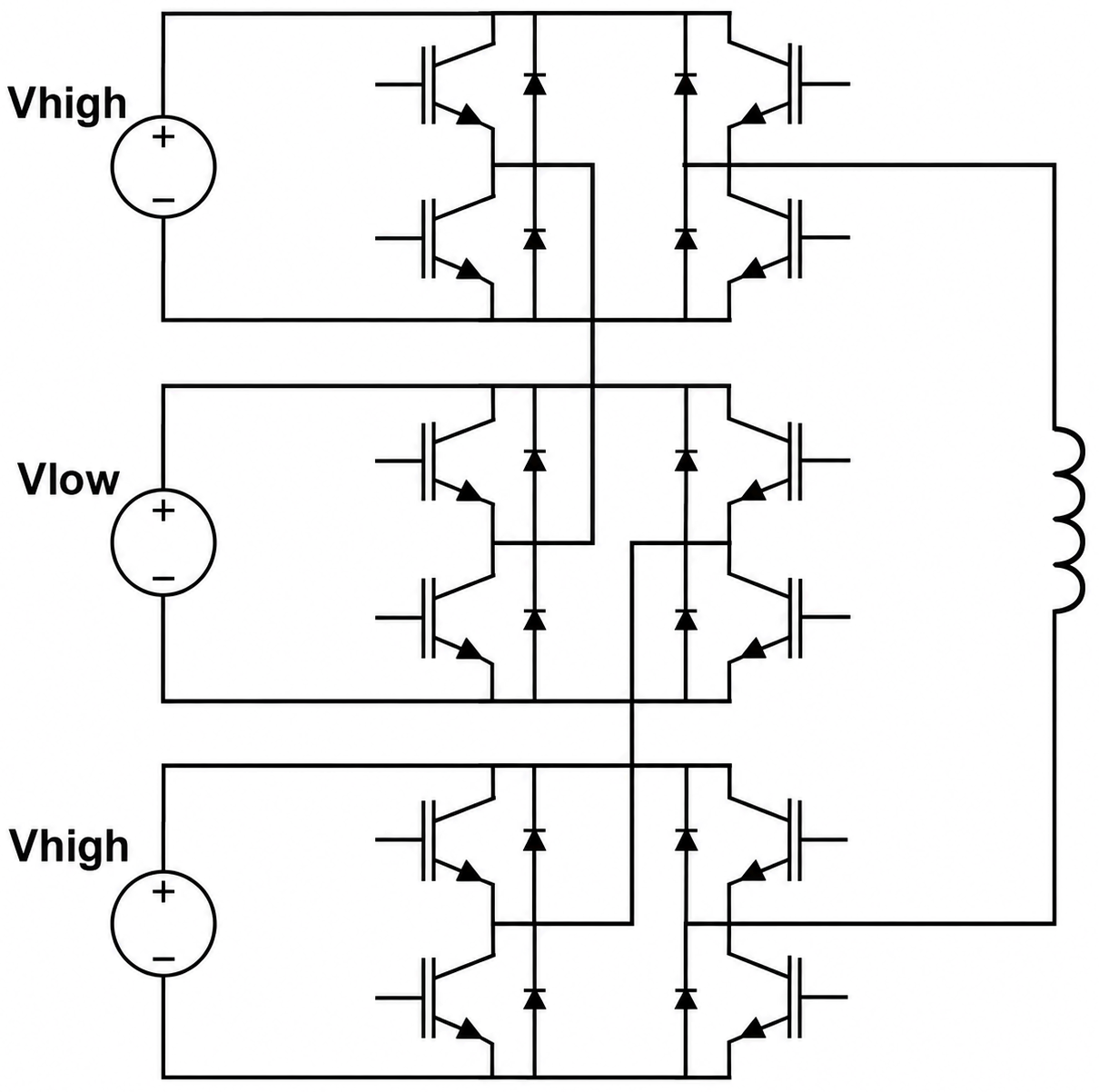
The authors propose a specific circuit implementation [
14] (
Figure 26) that replaces the traditional linear amplifier stage with a multi-frequency switching architecture. In this design, a fast-switching bridge operating at 62.5 kHz is utilized to handle high-dynamic requirements, while two additional bridges switching at a lower frequency of 31.25 kHz are employed to provide the bulk high voltage. This hybrid approach allows for an optimized selection of semiconductor devices: the high-frequency bridge is implemented using fast IGBTs with lower voltage ratings, whereas the low-frequency stages utilize higher voltage-rated, albeit slower, IGBTs. The study asserts that the interleaved operation of these three bridges effectively synthesizes a high-frequency, low-amplitude output ripple, thereby improving signal fidelity while maximizing efficiency.
A critical operational constraint highlighted in the study is the use of unidirectional power supplies, which limits the system’s ability to manage regenerative energy. Consequently, the text emphasizes the necessity of a specialized modulation strategy designed to prevent inter-source energy transfer, specifically, charging the coil field from one supply and discharging it into another, thereby avoiding uncontrolled DC bus voltage swells and potential component failure.
In summary, the paper proposes a hybrid power stage architecture designed to achieve both high dynamic performance and high-power handling by stacking a low-voltage, high-switching-frequency bridge with two high-voltage, low-switching-frequency bridges. The authors evaluate two distinct control methodologies for this topology: a loss-minimized approach that imposes restrictions on replicable waveforms to prevent power supply overvoltage, and a preferred unrestricted method that supports arbitrary waveforms despite incurring higher switching losses. Implemented via a fully digital controller utilizing combined feedback and feedforward techniques, the selected control strategy allows the system to replicate waveform features exceeding the closed-loop bandwidth. Experimental validation confirms that this configuration delivers the requisite accuracy and high-power performance for MRI systems, while enabling the generation of complex current shapes for advanced scanning techniques.
3.12. Output Filter Design for Gradient Amplifier and Shimming Amplifier of MRI: An Overview
Yu et al. [
42] show the challenge of mitigating current ripple and switching noise in switch-mode gradient amplifier artifacts inherent to pulse-width modulation (PWM) control that significantly degrade MRI image quality. While acknowledging the prevalence of single or dual-stage LC low-pass filters, the authors critique these conventional methods for their excessive physical size and limited attenuation capabilities at the switching frequency. In response, the study presents and experimentally evaluates four alternative filter topologies designed with notch-mode characteristics to enhance noise rejection. The authors further discuss the critical design trade-off between minimizing input ripple and preserving the coil’s slew rate, a constraint that typically necessitates lower filter inductances at the cost of effective attenuation, and contextualize their specific approach within an experimental setup utilizing a home-built matrix gradient coil with element inductances of approximately 11 uH [
42,
43,
44].
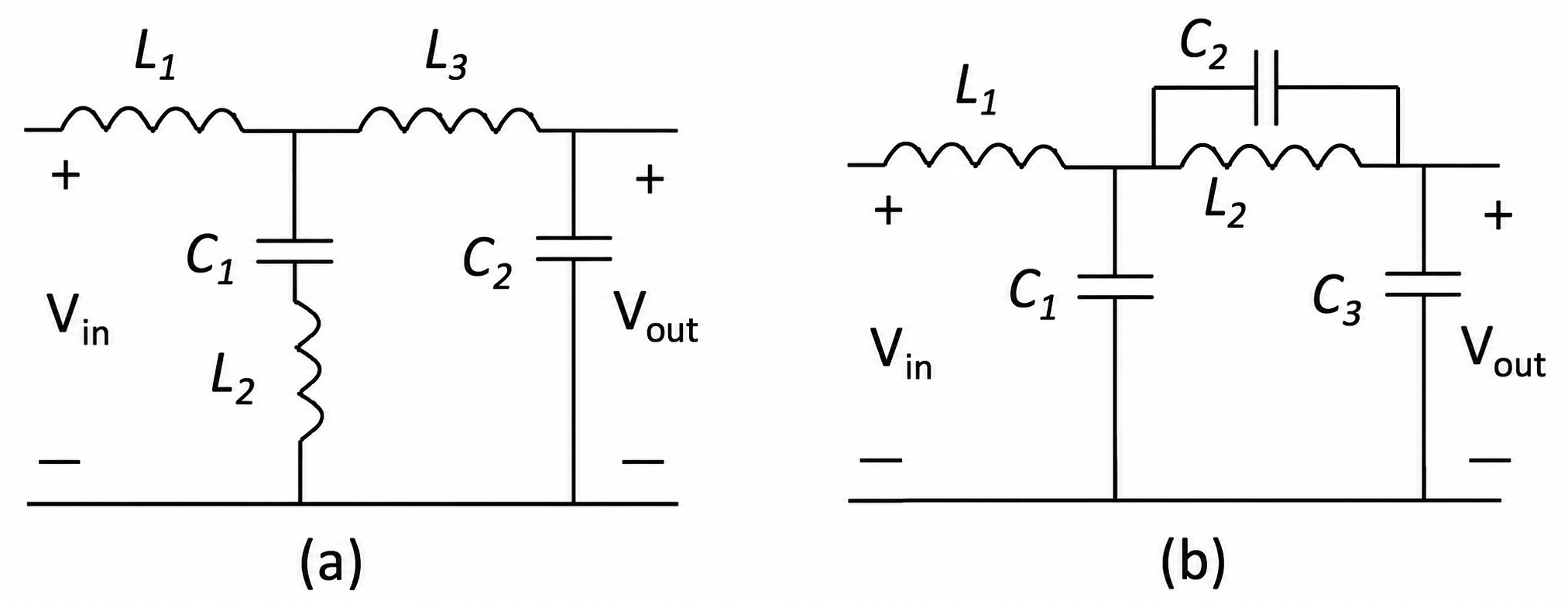
To clarify the operational principles of the proposed filtering stage, the authors detail a coupled-inductor topology constructed from a single ferrite core, two distinct coils, and two capacitors. For theoretical analysis, the study adopts a T-equivalent circuit model as the preferred framework, arguing that this representation, illustrated in their schematic (
Figure 27) provides the most effective means of characterizing the complex magnetic coupling and dynamic behavior of the filter.
The study compares several filter topologies and shows that both the coupled-inductor and the uncoupled notch-filter designs provide better ripple attenuation than a standard LC filter built with the same component values. For high-current imaging channels, the authors point out that the coupled-inductor versions have a practical size advantage because the windings share a single magnetic core; among these, the “Type-1” design is reported to incur lower high-frequency winding losses than “Type-2.” However, for lower-current shimming channels, the paper recommends the uncoupled options (LLC-LC or LC-LCC), mainly because they can be assembled with readily available components. The study also comments on how sensitive each topology is to parasitics: the series-resonant designs (both the coupled variant and the LLC-LC) depend on low-ESR film capacitors to preserve their notch depth, whereas the parallel-resonant LC-LCC tends to tolerate parasitic resistance better. The authors further note that the overall performance depends strongly on how well the branches are matched. When perfect symmetry cannot be achieved, converting the differential filter arrangement into a common-mode structure is suggested as a workable way to compensate for mismatches.
3.13. High-Bandwidth High-Power Gradient Driver for Magnetic Resonance Imaging with Digital Control
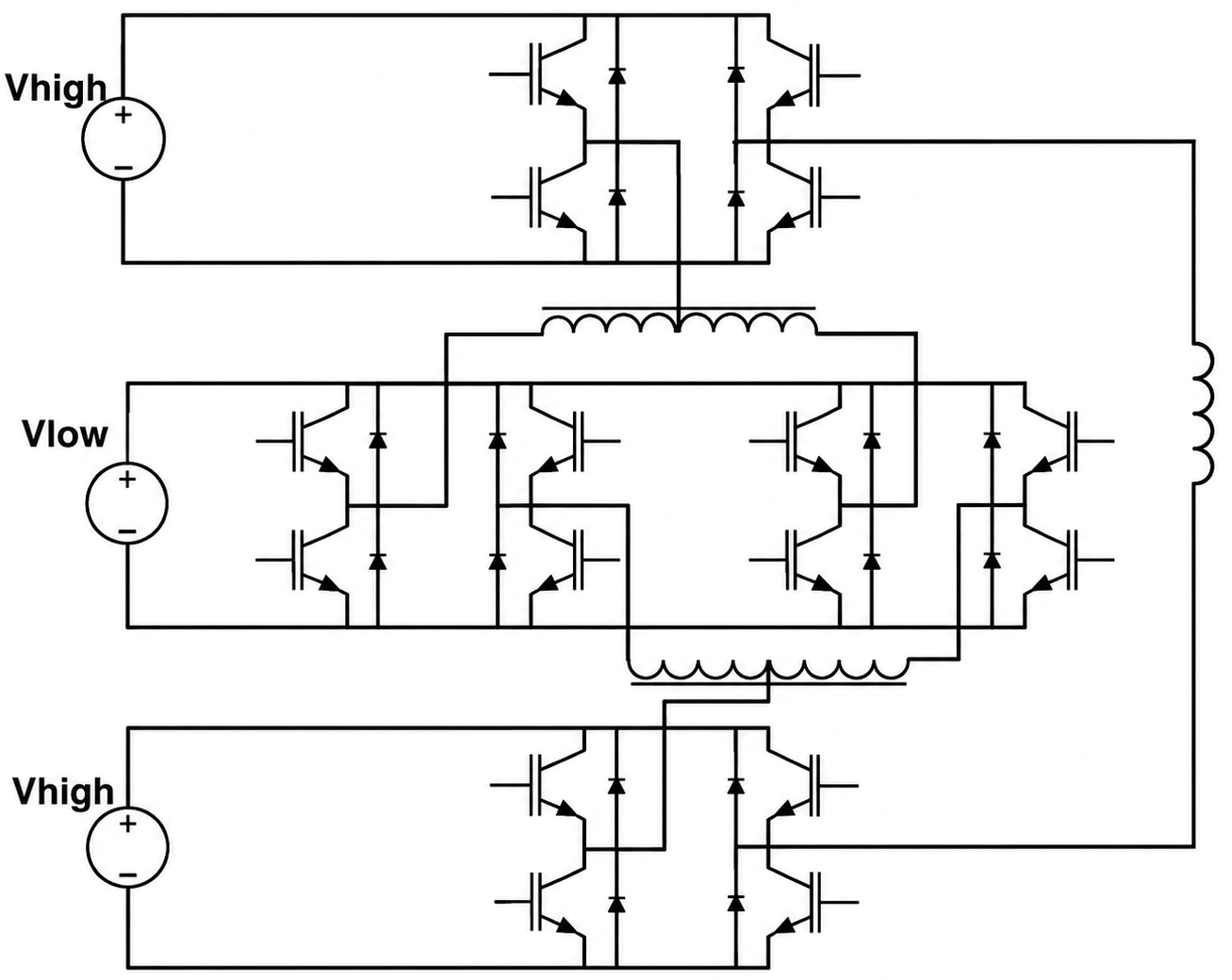
Modern MRI gradient coils push driver circuits to their limits. They often need currents over 500 A and voltages above 1600 V just to achieve the fast slew rates required for high-quality imaging. To meet these demands, this work builds on a previously proposed high-frequency driver and makes several improvements. Instead of focusing on raw power alone, the design also emphasizes keeping waveforms accurate and maintaining control bandwidths above 10 kHz. The proposed architecture (
Figure 28) uses stacked bridges combined with a parallel arrangement. This setup allows the system to deliver higher currents without losing efficiency. A big part of the design is the digital controller, which handles the different modulation options and keeps the output ripple low. It is a practical solution to manage the complexity of this hybrid topology while still meeting performance targets [
45,
46].
To handle the thermal and current stresses associated with high-power operation, the design uses three stacked IGBT bridges. Two of these operate at high voltage and a switching frequency of 31.25 kHz, providing most of the required potential, while a third, lower-voltage stage takes on high-bandwidth regulation. Because the low-voltage stage experiences the greatest switching losses, implementing it as a single device would be impractical for currents above 500 A. To address this, the stage is split into two parallel bridges with interleaved gating. This arrangement spreads the thermal load across multiple components without compromising overall ripple performance. Balance inductors are also included to reduce circulating currents, resulting in a robust architecture capable of maintaining effective ripple frequencies between 125 and 250 kHz. To test the concept, the authors built a prototype using 1200 V, 600 A IGBTs for the high-voltage bridges and 600 V, 600 A devices for the low-voltage stage. They report that this arrangement can deliver the high currents needed for gradient operation while keeping the switching frequency high enough to support wide-bandwidth control and minimize output ripple. The paper also notes that placing the high-frequency bridges in parallel is an effective way to increase overall power capability. On the control side, the team implemented a combination of feedback and feed-forward loops. According to the authors, this approach not only extends the control bandwidth but also helps compensate for non-idealities in the system.
Experimental results confirmed that the driver meets the stringent performance requirements needed for clinical MRI applications.
3.14. Developing an AI-Empowered Head-Only Ultra-High-Performance Gradient MRI System for High Spatiotemporal Neuroimaging
Wu et al. [
47] show the transition toward head-only gradient architectures that represent a significant leap in neuroimaging performance, primarily by localizing gradient fields to a smaller volume to circumvent the biophysical limits of peripheral nerve stimulation (PNS) inherent in whole-body systems. Recent developments, such as the NeuroFrontier system, have pushed these boundaries further by achieving an unprecedented gradient strength of 650 mT/m and a slew rate of 600 T/m/s. A critical technical breakthrough in these systems is the use of ultra-high-power Gradient Power Amplifiers (GPAs) capable of delivering 7 MW of peak power. Unlike legacy parallel architectures that rely on bulky, failure-prone current-sharing reactors, modern designs utilize a feedback control method combined with small nanocrystalline magnetic rings to suppress circulating currents beyond the control bandwidth. This high-fidelity power delivery, shared by other specialized platforms like the MAGNUS and Impulse systems, enables the aggressive spatial encoding required for submillimeter layer-specific fMRI and advanced microstructural mapping via high-b-value diffusion MRI.
To support the rigorous spatial encoding speeds required for modern neuroimaging, the Gradient Power Amplifier must sustain significant electrical transients while operating within strict thermal bounds. High-power drivers in this category utilize 3.5 MW stages for each axis, capable of delivering peak outputs of 1550 A and 2280 V. Real-time synchronization between these parallel power modules is achieved through high-speed optical fiber links, which facilitate the precise information exchange necessary for accurate current tracking during rapid pulse execution. A critical operational constraint for these systems is the root-mean-square gradient (G
RMS) of 120 mT/m, which defines the amplifier’s ability to maintain a 100% duty cycle relative to the heat dissipation capacity of the cooling assembly. By prioritizing high-bandwidth digital feedback and integrated power management, these amplifiers provide the stability and precision essential for resolving complex cellular architectures in the human brain [
47].
4. Conclusions and Discussion
The evolution of MRI gradient amplifiers reflects a continuous tug-of-war between two conflicting demands: the need for massive power to drive faster scans and the absolute necessity of signal precision for image clarity. The thermal and efficiency limitations of older designs simply cannot sustain the requirements of modern high-field imaging. Consequently, switch-mode topologies, particularly stacked H-bridge configurations, have established themselves as the standard, offering the only viable path to generating the kilovolt-level outputs required today.
Table 1 provides a comprehensive cross-comparison of representative gradient amplifier topologies and highlights the fundamental trade-offs among power capability, slew rate, rise time, linearity, and output fidelity. A clear distinction can be observed between high-power clinical/research-oriented systems and precision-focused low-power implementations. Architectures based on stacked H-bridges, parallel converters, and multilevel topologies generally demonstrate the highest voltage and current capabilities, enabling rapid current transitions and high slew-rate operation required for whole-body MRI and advanced neuroimaging applications. In several reported designs, these systems support kilovolt-level outputs, kiloampere current ranges, and gradient slew rates exceeding 0.5 A/µs; however, such performance is often accompanied by increased switching ripple, electromagnetic interference, thermal management challenges, and greater control complexity, frequently necessitating FPGA-based coordination and ripple mitigation strategies. In contrast, analog Class-AB and Voltage-Controlled Current Source (VCCS) architectures have emerged as viable alternatives for benchtop, portable, and educational MRI platforms, where high output precision, low ripple, and minimal electromagnetic interference are prioritized over maximum power density. Although these approaches demonstrate excellent linearity and improved waveform fidelity, their lower efficiency and limited scalability restrict their applicability in high-field clinical systems. More recently, the integration of AI-assisted control frameworks and advanced filtering techniques has demonstrated the growing role of intelligent optimization methods in improving amplifier performance without substantial hardware redesign. Overall, the comparison indicates that no single topology universally satisfies all MRI requirements; rather, amplifier selection must be guided by the specific gradient strength, settling time, precision, efficiency, and imaging-speed demands of the intended application.
While the reviewed literature establishes a strong foundation for improving existing gradient amplifier topologies, several important research challenges remain for future investigators. First, the adoption of wide-bandgap semiconductors, such as SiC and GaN devices, presents opportunities for improved switching performance, although challenges related to parasitic inductance, thermal management, and layout complexity in high-current implementations require further investigation. Second, as MRI systems demand higher gradient performance, future studies should focus on scalable parallel amplifier architectures and advanced current-balancing techniques that reduce reliance on bulky passive components while maintaining bandwidth. Third, further research is needed on switching-noise mitigation through improved output filter designs, including coupled-inductor structures, notch filters, and active ripple cancellation methods. Additionally, the integration of high-speed digital control platforms may enable more adaptive and intelligent gradient operation in future MRI systems. Finally, compact and cost-effective gradient driver architectures remain an important area of research to support the development of portable and low-field MRI systems.
Moving to switched architectures has not solved every problem; it has simply traded thermal management challenges for control complexity. The push for higher gradient strengths, driven by advanced applications like functional brain imaging, is now being met through parallelization. We are seeing a shift where hardware capacity is no longer increased just by building bigger components, but by intelligently combining smaller modules. This relies heavily on the advanced active control amplifier itself. These innovations allow systems to maintain the efficiency of a switched driver while approaching the spectral purity of the linear amplifiers they replaced.
Conversely, a divergent but equally significant trend is observed in the domain of non-clinical imaging. The rise in benchtop, portable, and educational MRI systems has necessitated low-cost, accessible driver solutions. The successful adaptation of commercial audio power amplifiers and linear operational-amplifier circuits demonstrates that high-performance imaging is achievable at a fraction of the cost of clinical hardware, provided that power requirements are scaled down. This democratization of hardware is crucial for expanding MRI access and educational opportunities.
Also, Versteeg et al.’s [
48] study utilizes a dedicated Prodrive NG500 gradient amplifier to drive its specialized
z-axis insert, delivering peak outputs of 940 V and 630 A. This power stage is permanently tuned to the insert’s specific R-L load, facilitating a “plug-and-play” installation that eliminates the need for the complex re-tuning often required for standard whole-body systems. Although the amplifier’s 4 A/μs step response limits the practical slew rate to 1300 T/m/s, the system achieves a robust 200 mT/m gradient strength, enabling the fast spatial encoding demanded by high-resolution fMRI. This hardware strategy highlights the critical role of dedicated, high-power-density drivers in overcoming the biophysical and thermal bottlenecks of conventional clinical amplifiers.
Shi et al. [
27] and Shahrbabaki et al. [
30] prepared two related studies (
Table 2). Both conducted experiments using Full-Bridge topologies and presented their results. Considering the scarcity of studies on our topic, a comparison of these two studies will yield useful results for a general overview. These two studies address complementary aspects of the MRI power chain but operate at vastly different power scales and architectural levels. The first paper investigates the power supply unit (PSU), specifically a Phase-Shifted Full-Bridge converter, focusing on the theoretical limits of strategies to balance currents and suppress circulating energy, proving that the future of this technology lies as much in digital control algorithms as it does in power electronics.
At the same time, the quest for efficiency has forced a re-evaluation of how we handle noise. Since switching amplifiers inherently generate interference, the development of sophisticated output filters, such as coupled-inductor ripple cancellation circuits, has become just as critical as the voltage recovery during transient load steps. Its validation is conducted on a scaled-down 30 A prototype, identifying parasitic losses like transformer leakage as key factors limiting dynamic performance. You can examine the circuit parameters of these two studies in
Table 2. Conversely, the second paper proposes a complete redesign of the gradient driver topology itself. Rather than optimizing an external PSU, it aims to eliminate the need for isolated power supplies entirely by integrating capacitive energy storage directly into the driver. Furthermore, while the first paper relies on experimental data to validate control theory on a low-power model, the second study utilizes simulation to demonstrate the feasibility of a much higher-performance architecture capable of delivering 1300 A, highlighting a shift from component-level optimization to system-level peak power management.
The surveyed literature establishes a clear link between specific research topologies and commercial or clinical gradient systems. For example, “stacked high/low-voltage-level H-Bridge circuit [
2]” utilizes a platform modeled after the Copley Controls 231P, while “Low-cost gradient amplifiers for small MRI systems [
8]” demonstrates the modification of consumer-grade Samson Servo 600 and Crown XLi 800 units to approximate the performance of specialized drivers like the AE Techron 2105 and 7114. Similarly, “Developing an AI-empowered head-only ultra-high-performance gradient [
47]” highlight the development of the United Imaging Healthcare (UIH) NeuroFrontier system, referencing the Siemens Prisma as an industry benchmark. For specialized applications, “Design of a low-power gradient amplifier [
17]” aligns with Tecmag Discovery and Apollo consoles, while “Low-cost MRI System for Teaching [
37]” employs the Digilent Analog Discovery 2 as a functional alternative to traditional gradient chains.
Table 3 provides a generalized comparison of the principal electronic components employed across various MRI gradient amplifier implementations reported in the literature. As observed, modern designs predominantly rely on high-power semiconductor switching devices such as IGBTs and SiC MOSFETs, particularly in stacked and parallel bridge topologies designed for high-current operation. Passive energy storage elements are consistently integrated to support energy buffering, filtering, and ripple suppression. In terms of control architecture, many systems adopt digital platforms based on DSPs, FPGAs, microcontrollers, or PWM-based control schemes to achieve precise current regulation and synchronization. Additionally, sensing elements such as Hall-effect sensors, current transducers, and high-resolution ADCs are incorporated in several designs to enable feedback control, although some studies omit detailed sensing hardware descriptions. Overall, the table highlights the diverse yet recurring component-level design strategies used to meet the demanding performance requirements of MRI gradient amplification systems.
Looking forward, the trajectory of gradient amplifier design appears poised for another leap with the integration of wide-bandgap devices such as Silicon Carbide (SiC) and Gallium Nitride (GaN). The ability of these devices to switch at significantly higher frequencies and voltages suggests that future amplifiers will likely feature smaller passive filters, higher control bandwidths, and even greater power densities, further narrowing the gap between the ideal current waveform and physical reality.