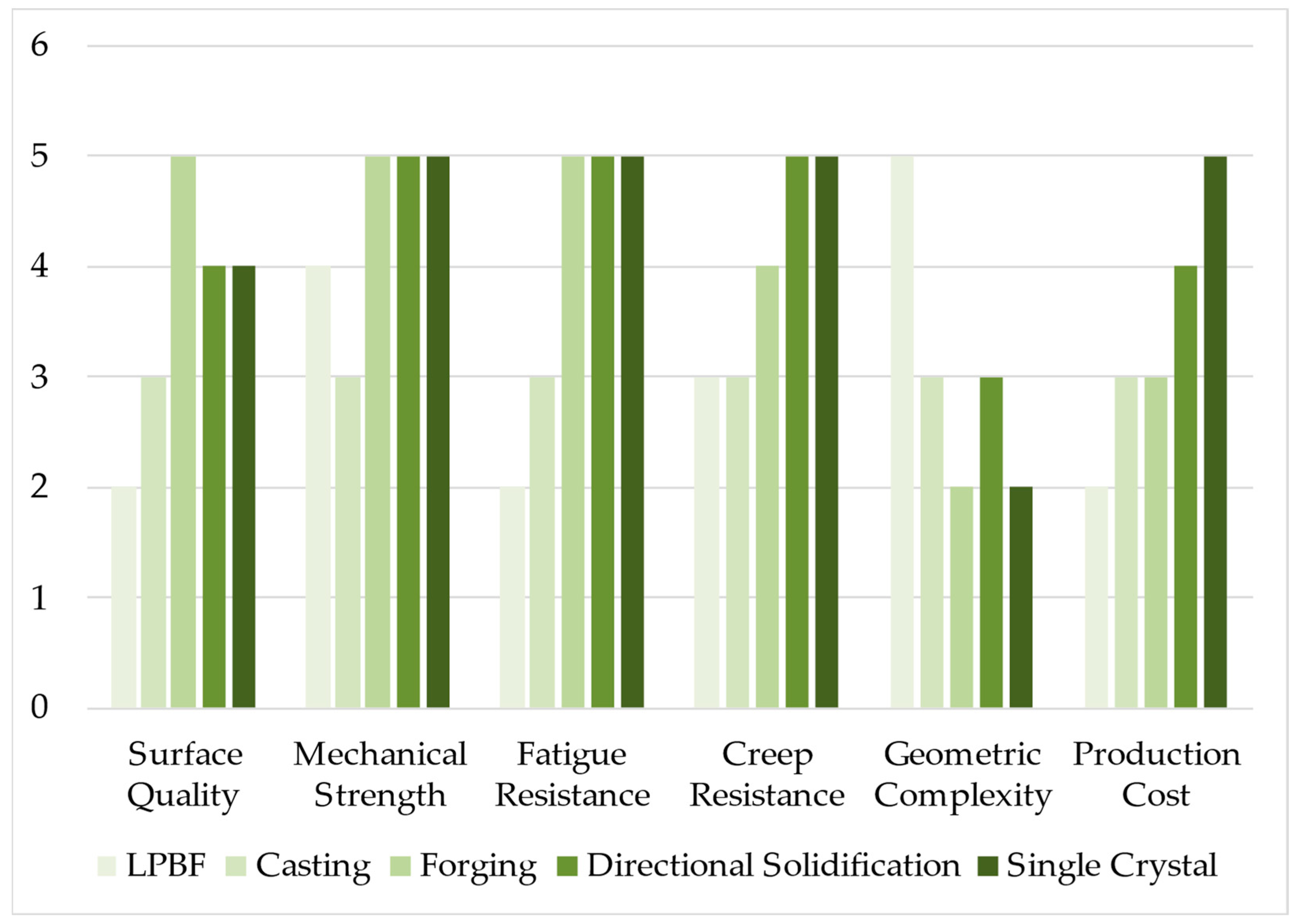

Next-Generation Manufacturing Technologies for High-Performance Turbomachinery Blades: Trends, Challenges, and Future Directions

 , , and
Abstract
1. Introduction
2. Functional Requirements for Turbomachinery Blades
2.1. Material Overview, Temperature Limits, and Mechanical Integrity
2.2. Aerodynamic Profile, Surface Integrity, and Cooling Architecture

2.3. Material Stability, Coating Systems, and Advanced Repair
3. A Classification Scheme for Blade Manufacturing Technologies
3.1. Class I—Foundational Fabrication Routes
3.2. Class II—Advanced and Hybrid Manufacturing Processes
3.3. Class III—Digital and Intelligent Manufacturing Enablers
3.4. Design-for-Manufacturing Considerations
4. Process–Performance Relationships
4.1. Manufacturing Routes
4.2. Surface Condition and Defect-Induced Performance Limitations
4.3. Post-Processing and Operational Performance
5. Case Studies and Emerging Blade Architectures
6. Challenges, Bottlenecks, and Research Gaps
7. Future Directions
8. Conclusions
Author Contributions
Funding
Institutional Review Board Statement
Informed Consent Statement
Data Availability Statement
Acknowledgments
Conflicts of Interest
Abbreviations
| TBC | Thermal Barrier Coating |
| ESM | Electro Stream Machining |
| DED | Direct Energy Deposition |
| PM | Powder Metallurgy |
| DAROC | Depth Averaged Radial Overcut |
| EDM | Electrical Discharge Machining |
| UHTC | ultra-high-temperature ceramic |
| HPT | High-Pressure Turbine |
| THP | Thermohydrogen Processing |
| CMC | Ceramic matrix composite |
| DS | Directionally Solidified |
| HCF | High-Cycle Fatigue |
| TET | Turbine Entry Temperature |
| SBDDR | Sensitivity-Based Deep Dimensionality Reduction |
| ECM | Electrochemical Machining |
| AM | Additive Manufacturing |
| FEM | Finite Element Method |
| TSECDD | Tube Electrode High-Speed Electrochemical Discharge Drilling |
| SC | Single-Crystal |
| AI | Artificial Intelligence |
| LPT | Low-Pressure Turbine |
| CHT | Conjugate Heat Transfer |
| SHM | Smart Blades |
| ODS | Oxide Dispersion Strengthening |
| HLM | Hybrid Layered Manufacturing |
| HEA | High-Entropy Alloy |
| HPC | High-Performance Computing |
| TBC | Thermal Barrier Coatings |
| CWR | Cross-Wedge Rolling |
| TRL | Technology Readiness Level |
| NCM | Non-Conventional Machining |
| AWJM | Abrasive Water Jet Machining |
| CNC | Computer Numerical Control |
| PBF | Powder Bed Fusion |
| EBM | Electron Beam Melting |
| NDE | Non-Destructive Evaluation |
| L-PBF | Laser Powder Bed Fusion |
| TCP | Topologically Close-Packed |
| SEM | Scanning Electron Microscopy |
| HIP | Hot Isostatic Pressing |
| DfM | Design-for-Manufacturing |
| TGO | Thermally Grown Oxides |
| FGM | Functionally Graded Materials |
| FAA | Federal Aviation Administration |
| EASA | European Union Aviation Safety Agency |
References
- Sikora, P.F.; Johnston, J.R. Engine Performance of Precision-Forged, Electropolished and Machined Blades of Nimonic 80 and 80A Alloys; NACA RM E55A21; NASA: Washington, DC, USA, 1955. [Google Scholar]
- Chen, K.S. Materials Characterization and Structural Design of Ceramic Micro Turbomachinery. Ph.D. Thesis, Massachusetts Institute of Technology, Cambridge, MA, USA, February 1999. Available online: https://dspace.mit.edu/handle/1721.1/43047 (accessed on 4 April 2026).
- Han, Z.X.; Dennis, B.H.; Dulikravich, G.S. Simultaneous Prediction of External Flow-Field and Temperature in Internally Cooled 3-D Turbine Blade Material; ASME paper 2000-GT-0253, ASME IGTI Turbo-Expo-2000; ASME: Munich, Germany, 2000. [Google Scholar]
- Zhang, X.F.; Hodson, H.P.; Harvey, N.W. Unsteady boundary layer studies on ultra-high-lift low-pressure turbine blades. Proc. Inst. Mech. Eng. Part A J. Power Energy 2005, 219, 451–460. [Google Scholar] [CrossRef]
- Caron, P.; Khan, T. Evolution of Ni-based superalloys for single crystal gas turbine blade applications. Sci. Tech. 2007, 36, 297–301. [Google Scholar] [CrossRef]
- Bruschi, S.; Ghiotti, A. Distortions induced in turbine blades by hot forging and cooling. Int. J. Mach. Tools Manuf. 2008, 48, 761–767. [Google Scholar] [CrossRef]
- Behrens, B.-A.; Schröder, J.; Brands, D.; Scheunemann, L.; Niekamp, R.; Chugreev, A.; Sarhil, M.; Uebing, S.; Kock, C. Experimental and Numerical Investigations of the Development of Residual Stresses in Thermo-Mechanically Processed Cr-Alloyed Steel 1.3505. Metals 2019, 9, 480. [Google Scholar] [CrossRef]
- Rao, V.N.B.; Kumar, I.N.N.; Prasad, K.B.; Madhulata, N.; Gurajarapu, N. Failure mechanisms in turbine blades of a gas turbine Engine—An overview. Int. J. Eng. Res. Dev. 2014, 10, 48–57. [Google Scholar]
- Zhang, Y.; Xu, Z.; Zhu, Y.; Zhu, D. Machining of a film-cooling hole in a single-crystal superalloy by high-speed electrochemical discharge drilling. Chin. J. Aeronaut. 2016, 29, 560–570. [Google Scholar] [CrossRef]
- Paraschiv, A.; Matache, G.; Vladut, M. Assessment of Residual Stresses in Laser Powder Bed Fusion Manufactured IN 625. Materials 2024, 17, 413. [Google Scholar] [CrossRef] [PubMed]
- Ma, Y.; Cheng, G. Forming property and broaching error prediction of a forged nickel-based superalloy turbine disc. Aerosp. Sci. Technol. 2017, 62, 55–64. [Google Scholar] [CrossRef]
- Torkaman, A. Flutter Stability of Shrouded Turbomachinery Cascades with Nonlinear Frictional Damping. Ph.D. Dissertation, University of Central Florida, Orlando, FL, USA, 2018. Available online: https://stars.library.ucf.edu/etd/6169/ (accessed on 4 April 2026).
- Aust, J.; Pons, D. Taxonomy of Gas Turbine Blade Defects. Aerospace 2019, 6, 58. [Google Scholar] [CrossRef]
- Huang, L.; Cao, Y.; Zhang, X.; Zhang, J.; Lei, Y.; Li, Y.; Fan, Q. Research on the multi-physics field coupling simulation of aero-rotor blade electrochemical machining. Sci. Rep. 2021, 11, 12817. [Google Scholar] [CrossRef]
- Wang, L.F.; Li, Y.; Zhou, L.; Lou, Y.; Liu, S.; Zheng, D.; Yi, M. Progress in additive manufacturing, additive repair and fatigue evaluation of aviation titanium alloy blades. Mater. Res. Lett. 2023, 11, 973–1012. [Google Scholar] [CrossRef]
- Chen, Z.; Fu, W.; Luo, J. A dimensionality reduction method for uncertainty study of geometric variations of turbomachinery blades. Aerosp. Sci. Technol. 2024, 145, 108897. [Google Scholar] [CrossRef]
- Miyakozawa, T. Flutter and Forced Response of Turbomachinery with Frequency Mistuning and Aerodynamic Asymmetry. Ph.D. Thesis, Duke University, Durham, NC, USA, 2008. Available online: https://dukespace.lib.duke.edu/dspace/handle/10161/617 (accessed on 6 May 2026).
- Dai, H.; Gebelin, J.; Newell, M.; Reed, R.; Brown D’Souza, N.P.; Dong, H. Grain selection during solidification in spiral grain selector. In Proceedings of the Superalloys 2008, Champion, PA, USA, 14–18 September 2008; pp. 367–374. [Google Scholar]
- Miracle, D.B.; Senkov, O.N. A critical review of high entropy alloys and related concepts. Acta Mater. 2017, 122, 448–511. [Google Scholar] [CrossRef]
- Xie, X.; Li, N.; Liu, W.; Huang, S.; He, X.; Yu, Q.; Xiong, H.; Wang, E.; Hou, X. Research Progress of Refractory High Entropy Alloys: A Review. Chin. J. Mech. Eng. 2022, 35, 142. [Google Scholar] [CrossRef]
- Min, J.B.; Harris, D.L.; Ting, J. Advances in ceramic matrix composite blade damping characteristics for aerospace turbomachinery applications. In Proceedings of the AIAA/ASME/ASCE/AHS/ASC Structures, Structural Dynamics and Materials Conference, Denver, CO, USA, 4–7 April 2011. [Google Scholar]
- Padture, N. Advanced structural ceramics in aerospace propulsion. Nat. Mater. 2016, 15, 804–809. [Google Scholar] [CrossRef]
- Wilson, J.M.; Piya, C.; Shin, Y.; Zhao, F.; Ramani, K. Remanufacturing of turbine blades by laser direct deposition with its energy and environmental impact analysis. J. Clean. Prod. 2014, 80, 170–178. [Google Scholar] [CrossRef]
- Rao, V.N.B.; Kumar, I.N.N.; Katuru, B.P. Failure analysis of gas turbine blades in a gas turbine engine used for marine applications. Int. J. Eng. Sci. Technol. 2014, 6, 43–48. [Google Scholar] [CrossRef]
- Liu, D.J.; Lippold, J.C.; Li, J.; Rohklin, S.R.; Vollbrecht, J.; Grylls, R. Laser Engineered Net Shape (LENS) Technology for the Repair of Ni-Base Superalloy Turbine Components. Metall. Mater. Trans. A 2014, 45, 5707–5718. [Google Scholar] [CrossRef]
- Chintala, V.G.; Gudimetla, P. Optimum material evaluation for gas turbine blade using Reverse Engineering (RE) and FEA. Procedia Eng. 2014, 97, 1332–1340. [Google Scholar] [CrossRef]
- Vilar, R.; Almeida, A. Repair and manufacturing of single crystal Ni-based superalloys components by laser powder deposition—A review. J. Laser Appl. 2015, 27, S17004. [Google Scholar] [CrossRef]
- Chen, Y.; Zhang, Z.; Ai, Y.; Guan, P.; Yao, Y.; Liu, H. Thermal–Fluid–Solid Coupling Analysis on the Effect of Cooling Gas Temperature on the Fatigue Life of Turbine Blades with TBCs. Coatings 2023, 13, 1795. [Google Scholar] [CrossRef]
- Klocke, F.; Zeis, M.; Klink, A. Interdisciplinary modelling of the electrochemical machining process for engine blades. CIRP Ann. Manuf. Technol. 2015, 64, 217–220. [Google Scholar] [CrossRef]
- Liu, W.D.; Ao, S.S.; Li, Y.; Zhao, C.F.; Luo, Z.; Li, Q.; Luo, T. Elimination of the over cut from a repaired turbine blade tip post-machined by electrochemical machining. J. Mater. Process. Technol. 2016, 231, 27–37. [Google Scholar] [CrossRef]
- Kuppan, P.; Narayanan, S.; Rajadurai, A.; Aditah, M. Effect of EDM parameters on hole quality characteristics in deep hole drilling of Inconel 718 superalloy. Int. J. Manuf. Res. 2015, 10, 84–101. [Google Scholar] [CrossRef]
- Antar, M.; Chantzis, D.; Marimuthu, S.; Hayward, P. High Speed EDM and Laser Drilling of Aerospace Alloys. Procedia CIRP 2016, 42, 526–531. [Google Scholar] [CrossRef]
- Kliuev, M.; Boccadoro, M.; Perez, R.; Dal Bó, W.; Stirnimann, J.; Kuster, F.; Wegener, K. EDM Drilling and Shaping of Cooling Holes in Inconel 718 Turbine Blades. Procedia CIRP 2016, 42, 322–327. [Google Scholar] [CrossRef]
- Liu, J.; Hui, L.; Jia, D.; Liu, Y.; Zhu, D. An electrochemical machining method for aero-engine blades based on four-directional synchronous feeding of cathode tools. Chin. J. Aeronaut. 2023, 36, 380–391. [Google Scholar] [CrossRef]
- Luo, S.; Wang, Q.; Zhang, P.; Li, J.; Liu, Q. Effect of friction conditions on phase transformation characteristics in hot forging process of Ti-6Al-4V turbine blade. J. Mater. Res. Technol. 2020, 9, 2107–2115. [Google Scholar] [CrossRef]
- Buckingham, R.C.; Argyrakis, C.; Hardy, M.C.; Birosca, S. The effect of strain distribution on microstructural developments during forging in a newly developed nickel base superalloy. Mater. Sci. Eng. A 2016, 654, 317–328. [Google Scholar] [CrossRef]
- Fellet, M. Ceramic-matrix composites take the heat. MRS Bull. 2015, 40, 917–920. [Google Scholar] [CrossRef]
- Reifsnyder, R.; Mathison, R.; Dsouza, K. Experimental identification of blade tip rub forces at engine relevant temperatures and speeds. In Proceedings of the ASME Turbo Expo 2024: Turbomachinery Technical Conference and Exposition, London, UK, 24–28 June 2024. [Google Scholar]
- Hafezalkotoba, A.; Hafezalkotoba, A. Risk-based material selection process supported on information theory: A case study on industrial gas turbine. Appl. Soft Comput. 2017, 52, 1116–1129. [Google Scholar] [CrossRef]
- Kaierle, S.; Overmeyer, L.; Alfred, I.; Rottwinkle, B.; Hersdorf, J.; Wesling, V.; Weidlich, N. Single-crystal turbine blade tip repair by laser cladding and remelting. CIRP J. Manuf. Sci. Technol. 2017, 19, 196–199. [Google Scholar] [CrossRef]
- Alfred, I.; Nicolaus, M.; Hermsdorf, J.; Kaierle, S.; Möhwald, K.; Maier, H.-J.; Wesling, V. Advanced high pressure turbine blade repair technologies. Procedia CIRP 2018, 74, 214–217. [Google Scholar] [CrossRef]
- Alabort, E.; Reed, R.C.; Barba, D. Combined modelling and miniaturised characterisation of high-temperature forging in a nickel-based superalloy. Mater. Des. 2018, 160, 683–697. [Google Scholar] [CrossRef]
- Saiz, A.E. Modelling Friction-Saturated Limit-Cycle Oscillation in Unstable Turbomachinery Rotor Blades. Ph.D. Thesis, Universidad Politehnica de Madrid, Escuela Tecnica Superior de Ingenieria Aeronautica y del Espacio, Madrid, Spain, 2025. Available online: https://oa.upm.es/90934/1/ALVARO%20ESCUDERO%20SAIZ_2.pdf (accessed on 4 April 2026).
- Jordan, E.; Gell, M. Low Thermal Conductivity, High Durability Thermal Barrier Coatings for IGCC Environments; Department of Energy, National Energy Technology Laboratory: Morgantown, WV, USA, 2015. [Google Scholar] [CrossRef]
- Saboori, A.; Aversa, A.; Marchese, G.; Biamino, S.; Lombardi, M.; Fino, P. Application of Directed Energy Deposition-Based Additive Manufacturing in Repair. Appl. Sci. 2019, 9, 3316. [Google Scholar] [CrossRef]
- Rittinghaus, S.K.; Schmelzer, J.; Rackel, M.W.; Hemes, S.; Vogelpoth, A.; Hecht, U.; Weisheit, A. Direct Energy Deposition of TiAl for Hybrid Manufacturing and Repair of Turbine Blades. Materials 2020, 13, 4392. [Google Scholar] [CrossRef]
- Wang, X.; Xu, W.; Xu, P.; Zhou, H.; Kong, F.; Chen, Y. High Nb-TiAl Intermetallic Blades Fabricated by Isothermal Die Forging Process at Low Temperature. Metals 2020, 10, 757. [Google Scholar] [CrossRef]
- Meli, E.; Rindi, A.; Ridolfi, A.; Furferi, R.; Buonamici, F.; Iurisci, G.; Corbo, S.; Cangioli, F. Design and Production of Innovative Turbomachinery Components via Topology Optimization and Additive Manufacturing. Int. J. Rot. Mach. 2019, 9546831. [Google Scholar] [CrossRef]
- Angel, N.M.; Basak, A. On the Fabrication of Metallic Single Crystal Turbine Blades with a Commentary on Repair via Additive Manufacturing. J. Manuf. Mater. Process. 2020, 4, 101. [Google Scholar] [CrossRef]
- Xu, Z.; Wang, Y. Electrochemical machining of complex components of aero-engines: Developments, trends, and technological advances. Chin. J. Aeronaut. 2021, 34, 28–53. [Google Scholar] [CrossRef]
- Pawar, A.; Kamble, D.; Ghorpade, R.R. Overview on electro-chemical machining of super alloys. Mater. Today Proc. 2021, 46, 696–700. [Google Scholar] [CrossRef]
- Wang, Y.; Xu, Z.; Liu, J.; Zhang, A.; Xu, Z.; Meng, D.; Zhao, J. Study on flow field of electrochemical machining for large size blade. Int. J. Mech. Sci. 2021, 190, 106018. [Google Scholar] [CrossRef]
- Gao, C.; Liu, Z.; Zhao, K.; Guo, C. Abrasive Water Jet Drilling of Ceramic Thermal Barrier Coatings. MProcedia CIRP 2018, 68, 517–522. [Google Scholar] [CrossRef]
- Gao, C.; Liu, Z.; Qiu, Y.; Zhao, K. Feasibility of Drilling Holes on Thermal Barrier Coated Superalloy using Electrical-discharge Machining. Procedia CIRP 2020, 95, 522–526. [Google Scholar] [CrossRef]
- Sinha, A.; Swain, B.; Behera, A.; Mallick, P.; Samal, S.K.; Vishwanatha, H.M.; Behera, A. A Review on the Processing of Aero-Turbine Blade Using 3D Print Techniques. J. Manuf. Mater. Process. 2022, 6, 16. [Google Scholar] [CrossRef]
- Condruz, M.R.; Badea, T.A.; Paraschiv, A. Compressive Behavior of Inconel 625 and Ti-6Al-4V Strut Lattices Fabricated by LPBF. Appl. Sci. 2024, 14, 11909. [Google Scholar] [CrossRef]
- Adiaconitei, A.; Vintila, I.S.; Mihalache, R.; Paraschiv, A.; Frigioescu, T.F.; Popa, I.F.; Pambaguian, L. Manufacturing of Closed Impeller for Mechanically Pump Fluid Loop Systems Using Selective Laser Melting Additive Manufacturing Technology. Materials 2021, 14, 5908. [Google Scholar] [CrossRef] [PubMed]
- Toma, A.C.; Condruz, M.R.; Paraschiv, A.; Badea, T.A.; Pătroi, D.; Popa, N.M. Investigation of High-Temperature Oxidation Behavior of Additive Manufactured CoCrMo Alloy for Mandrel Manufacturing. Materials 2024, 17, 3660. [Google Scholar] [CrossRef]
- Kumar, A.S.; Velu, R.; Nagesha, B.K.; Tigga, A.K.; Barad, S.G.; Suresh, T.N. Single crystal metal deposition using laser additive manufacturing technology for repair of aero-engine components. Mater. Today Proc. 2021, 45, 5395–5399. [Google Scholar]
- Wang, C.; Li, Q.; Zhou, X.; Zhu, W.; Huang, R.; Pan, Z.; Chen, K.; He, C. Contrastive Studies between Laser Repairing and Plasma Arc Repairing on Single-Crystal Ni-Based Superalloy. Materials 2019, 12, 1172. [Google Scholar] [CrossRef]
- D’Souza, N.; Ravichandran, S.; Donovan, S.; Daum, P.; Morrell, R.; Nye, Z.; Lancaster, R. On the design optimisation of direct energy deposited support structures to repair aero-engine turbine segments. Addit. Manuf. 2022, 56, 102905. [Google Scholar] [CrossRef]
- Tong, F.; Ren, W.; Xu, J.; Deng, H.; Sun, H.; Zhao, J. Research on improving profile accuracy of electrochemical machining of twisted blades based on flow field uniformity. Mater. Today Commun. 2025, 42, 111561. [Google Scholar] [CrossRef]
- Tchoupe Sambou, E.; Lauwers, D.; Petersen, T.; Herrig, T.; Klink, A.; Meinke, M.; Schröder, W. Investigating Workpiece Deflection in Precise Electrochemical Machining of Turbine Blades. J. Manuf. Mater. Process. 2024, 8, 138. [Google Scholar] [CrossRef]
- Wang, Y.; Hu, Z.; Chen, M.; Song, R.; Hua, L.; Chen, Y. Effect of Laser Power on Microstructure, Mechanical Properties, and Defect Behavior in Laser Additive Manufacturing Repair of IN718 Nickel-Based Superalloy. Available online: https://ssrn.com/abstract=5352219 (accessed on 12 April 2026). [CrossRef]
- Gäumann, M.; Henry, S.; Cléton, F.; Wagnière, J.-D.; Kurz, W. Epitaxial laser metal forming: Analysis of microstructure formation. Mater. Sci. Eng. A 1999, 271, 232–241. [Google Scholar] [CrossRef]
- Available online: https://www.azom.com/article.aspx?ArticleID=17901 (accessed on 6 May 2026).
- Qi, Q.; Tao, F.; Hu, T.; Anwer, N.; Liu, A.; Wei, Y.; Wang, L.; Nee, A.Y.C. Enabling technologies and tools for digital twin. J. Manuf. Syst. 2021, 58, 3–21. [Google Scholar] [CrossRef]
- Zhang, M.; Zhu, J. Application framework of digital twin-driven product smart manufacturing system: A case study of aeroengine blade manufacturing. Int. J. Adv. Robot. Syst. 2019, 16, 1729881419880663. [Google Scholar] [CrossRef]
- Castelló-Pedrero, P.; García-Gascón, C.; Bas-Bolufer, J.; García Manrique, J.A. Integrated computational modeling of large format additive manufacturing: Developing a digital twin for material extrusion with carbon fiber-reinforced acrylonitrile butadiene styrene. Proc. Inst. Mech. Eng. Proc. Part L J. Mater. Des. Appl. 2024, 238, 332–346. [Google Scholar] [CrossRef]
- Bajgholi, M.E.; Rousseau, G.; Viens, M.; Thibault, D. Capability of Advanced Ultrasonic Inspection Technologies for Hydraulic Turbine Runners. Appl. Sci. 2021, 11, 4681. [Google Scholar] [CrossRef]
- Błachnio, J.; Chalimoniuk, M.; Kułaszka, A.; Borowczyk, H.; Zasada, D. Exemplification of Detecting Gas Turbine Blade Structure Defects Using the X-ray Computed Tomography Method. Aerospace 2021, 8, 119. [Google Scholar] [CrossRef]
- Bhat, G.A.; Jasiuniene, E. Evaluation of Artificial Defects in Additively Manufactured Turbine Blade Using Ultrasonic Immersion Testing. In Proceedings of the International Ultrasonic Testing Conference (UT NDTnet/UT Online 2021), Virtual, 1–30 November 2021; pp. 1–6. [Google Scholar]
- Sims, C.T.; Stoloff, N.S.; Hagel, W.C. Superalloys II: High-Temperature Materials for Aerospace and Industrial Power; John Wiley and Sons: Hoboken, NJ, USA, 1987; ISBN 978-0-471-01147-7. [Google Scholar]
- DebRoy, T.; Wei, H.L.; Zuback, J.S.; Mukherjee, T.; Elmer, J.W.; Milewski, J.O.; Beese, A.M.; Wilson-Heid, A.; De, A.; Zhang, W. Additive manufacturing of metallic components—Process, structure and properties. Prog. Mater. Sci. 2018, 92, 112–224. [Google Scholar] [CrossRef]
- Fernández, D.S.; Wynne, B.P.; Crawforth, P.; Fox, K.; Jackson, M. The effect of forging texture and machining parameters on the fatigue performance of titanium alloy disc components. Int. J. Fatigue 2021, 142, 105949. [Google Scholar] [CrossRef]
- Boyle, R.J.; Stripf, M. Simplified Approach to Predicting Rough Surface Transition. J. Turbomach. 2008, 131, 1345–1357. [Google Scholar] [CrossRef][Green Version]
- Ligrani, P.M.; McNabb, E.; Collopy, H.; Anderson, M.; Marko, S.M. Recent investigations of shock wave effects and interactions. Adv. Aerodyn. 2020, 2, 4. [Google Scholar] [CrossRef]
- Szwaba, R.; Kaczynski, P.; Doerffer, P. Roughness effect on shock wave boundary layer interaction area in compressor fan blades passage. Aerosp. Sci. Technol. 2019, 85, 171–179. [Google Scholar] [CrossRef]
- Gilge, P.; Kellersmann, A.; Friedrichs, J.; Seume, J.R. Surface roughness of real operationally used compressor blade and blisk. Proc. Inst. Mech. Eng. Part G. J. Aerosp. Eng. 2019, 233, 5321–5330. [Google Scholar] [CrossRef]
- Lim, S.; Ko, Y.; Hong, D.; Kim, M.; Song, S.J. Impact of Additive Manufacturing Surface Roughness on the Aerodynamic Performance of Axial Compressor Blades. Int. J. Aeronaut. Space Sci. 2025, 26, 42–49. [Google Scholar] [CrossRef]
- Alqallaf, J.; Teixeira, J.A. Blade Roughness Effects on Compressor and Engine Performance—A CFD and Thermodynamic Study. Aerospace 2021, 8, 330. [Google Scholar] [CrossRef]
- Rott, S.; Ladewig, A.; Friedberger, K.; Casper, J.; Full, M.; Schleifenbaum, J.H. Surface roughness in laser powder bed fusion—Interdependency of surface orientation and laser incidence. Addit. Manuf. 2020, 36, 101437. [Google Scholar] [CrossRef]
- Nismath, V.H.; Aydogan, B.; Jaggers, D.; Chou, K. On morphology and roughness of upskin surfaces in laser powder-bed fusion additive manufacturing—Contouring strategy effects. Manuf. Lett. 2024, 41, 920–930. [Google Scholar] [CrossRef]
- Roos, S.; Rännar, L.E. Surface roughness reduction in electron beam powder bed fusion additive manufacturing of super duplex stainless steel 2507: Investigating optimisation techniques and face orientation-dependent irregularities. Prog. Addit. Manuf. 2025, 10, 2487–2503. [Google Scholar] [CrossRef]
- Soe, A.N.; Sombatmai, A.; Promoppatum, P.; Srimaneepong, V.; Trachoo, V.; Pandee, P. Effect of post-processing treatments on surface roughness and mechanical properties of laser powder bed fusion of Ti–6Al–4V. J. Mater. Res. Technol. 2024, 32, 3788–3803. [Google Scholar] [CrossRef]
- Wang, J.; Zhang, M.; Wang, B.; Tan, X.; Wu, W.J.; Liu, Y.; Bi, G.J.; Tor, S.B.; Liu, E. Influence of surface porosity on fatigue life of additively manufactured ASTM A131 EH36 steel. Int. J. Fatigue 2021, 142, 105894. [Google Scholar] [CrossRef]
- Gong, H.; Rafi, K.; Gu, H.; Starr, T.; Stucker, B. Analysis of defect generation in Ti–6Al–4V parts made using powder bed fusion additive manufacturing processes. Addit. Manuf. 2014, 1–4, 87–98. [Google Scholar] [CrossRef]
- Herzog, D.; Seyda, V.; Wycisk, E.; Emmelmann, C. Additive manufacturing of metals. Acta Mater. 2016, 117, 371–392. [Google Scholar] [CrossRef]
- Liu, Z.; Zhang, Q.; Lu, Z.; Zhan, K.; Jiang, C.; Ji, V. Recent progress on residual stress measurement methods and its application-a review. Measurement 2026, 277, 121551. [Google Scholar] [CrossRef]
- Gudivada, G.; Pandey, A.K. Recent developments in nickel-based superalloys for gas turbine applications: Review. J. Alloys Compd. 2023, 963, 171128. [Google Scholar] [CrossRef]
- Barwinska, I.; Kopec, M.; Kukla, D.; Senderowski, C.; Kowalewski, Z.L. Thermal Barrier Coatings for High-Temperature Performance of Nickel-Based Superalloys: A Synthetic Review. Coatings 2023, 13, 769. [Google Scholar] [CrossRef]
- Tresa; Pollock, M.; Tin, S. Nickel-Based Superalloys for Advanced Turbine Engines: Chemistry, Microstructure, and Properties. J. Propuls. Power 2006, 22, 18239. [Google Scholar] [CrossRef]
- Pollock, T.M.; Murphy, W.H. The Breakdown of Solidification in High Refractory Nickel-Base Superalloys. Metall. Mater. Trans. 1996, 27A, 1081–1094. [Google Scholar] [CrossRef]
- Stefanescu, D.M.; Ruxanda, R. Fundamentals of Solidification; ASM International: Almere, The Netherlands, 2004. [Google Scholar] [CrossRef]
- Hamdi, H.; Sadatabhari, S.; Tajik, A.; Hanzaki, A.Z.; Hatamiyan, A.; Abedi, H.R. From melt pool to performance: A review of microstructural engineering in the additive manufacturing of nickel-based superalloys. Results Eng. 2025, 28, 107402. [Google Scholar] [CrossRef]
- Rueda, C.G. Fundamentals of Solidification During Selective Laser Melting of Aerospace Alloys. Ph.D Thesis, Universidad Politecnica de Madrid, Madrid, Spain, 2022. [Google Scholar]
- Wang, K.; Yang, H.-Q.; Liu, X.-F.; Yan, D.-D.; Shan, Z.-D.; Guo, Z.; Zhang, C.-B.; Jang, K.-H.; Zou, W.-B.; Kong, X.-H.; et al. Research progress on directional solidification process of single-crystal turbine blades made of nickel-based superalloys for aero-engines. J. Alloys Compd. 2026, 1066, 188232. [Google Scholar] [CrossRef]
- Yang, C.; Baker, I. Directional recrystallisation processing: A review. Int. Mater. Rev. 2021, 66, 256–286. [Google Scholar] [CrossRef]
- Yu, Z.; Wang, X.; Yang, F.; Yue, Z.; Li, J.C.M. Review of γ’ Rafting Behavior in Nickel-Based Superalloys: Crystal Plasticity and Phase-Field Simulation. Crystals 2020, 10, 1095. [Google Scholar] [CrossRef]
- Gan, W.; Gao, H.; Zhao, Y.; Wen, Z.; Lu, G.; Jiang, B. Influence of microstructure degradation induced by pretreatment on the creep behavior in Ni-based single-crystal superalloy with different orientations. J. Mat. Res. 2020, 35, 610–622. [Google Scholar] [CrossRef]
- Zhang, P.; Zhou, X.; Wang, X.; Lu, Y.; Cheng, X.; Zhang, W. Study on the microstructural degradation and rejuvenation heat treatment of directionally solidified turbine blades. J. Alloys Compd. 2020, 829, 154474. [Google Scholar] [CrossRef]
- Wang, X.; Cui, Y.; Zhou, Y.; Li, Z.; Zhao, Y.; Wang, J. The Microstructure Evolution of a Ni-Based Superalloy Turbine Blade at Elevated Temperature. Coatings 2025, 15, 835. [Google Scholar] [CrossRef]
- Xie, Y.; Zhao, J.; Wang, J.; Wei, H. Microstructure degradation of service-exposed turbine blades made of directionally solidified DZ125 superalloy. Front. Mater. 2022, 9, 973119. [Google Scholar] [CrossRef]
- Atkinson, H.V.; Davies, S. Fundamental aspects of hot isostatic pressing: An overview. Metall. Mater. Trans. A 2000, 31, 2981–3000. [Google Scholar] [CrossRef]
- German, R.M. Sintering: From Empirical Observations to Scientific Principles, Butterworth-Heinemann; Butterworth-Heinemann: Oxford, UK, 2014. [Google Scholar] [CrossRef]
- Aghayar, Y.; Shahriari, A.; Moazzen, P.; Mohammadi, M. Hot isostatic pressing of additively manufactured metallic components: A critical review on microstructure, mechanical, and corrosion properties. J. Mater. Res. Technol. 2026, 40, 3343–3381. [Google Scholar] [CrossRef]
- Mehboob, G.; Liu, M.-J.; Xu, T.; Hussain, S.; Mehboob, G.; Tahir, A. A review on failure mechanism of thermal barrier coatings and strategies to extend their lifetime. Ceram. Int. 2020, 46, 8497–8521. [Google Scholar] [CrossRef]
- Han, J.-C.; Dutta, S.; Ekkad, S. Gas Turbine Heat Transfer and Cooling Technology, 2nd ed.; CRC Press: Boca Raton, FL, USA, 2012. [Google Scholar]
- Li, X.; Ren, J.; Jiang, H.; Wang, Z. Advanced internal cooling structures for turbine blades: A review. J. Therm. Sci. 2016, 25, 289–302. [Google Scholar] [CrossRef]
- Bunker, R.S. Gas turbine heat transfer: Ten remaining hot gas path challenges. J. Turbomach. 2007, 129, 193–201. [Google Scholar] [CrossRef]
- Fan, X.; Li, L.; Zou, J.; Zhou, Y. Cooling methods for gas turbine blade leading edge: Comparative study on impingement cooling, vortex cooling and double vortex cooling. Int. Commun. Heat. Mass. Transf. 2019, 100, 133–145. [Google Scholar] [CrossRef]
- Liu, Y.; Wang, Y.; Ma, Y. CFD-based design optimization of internal cooling channels in turbine blades. Int. J. Heat. Mass. Transf. 2019, 135, 1240–1254. [Google Scholar] [CrossRef]
- Kaminski, M.; Behrens, B.-A.; Müller, A.; Chugreev, A.; Almohallami, M.S.; Hübner, S.; Busch, C. Bio-inspired topology optimization of wind turbine blades using additive manufacturing. Renew. Energy 2020, 150, 779–792. [Google Scholar]
- Aage, N.; Andreassen, E.; Lazarov, B.S.; Sigmund, O. Giga-scale topology optimization: High-performance computing for structural design. Nature 2017, 550, 84–86. [Google Scholar] [CrossRef]
- Sigmund, O.; Maute, K. Topology optimization approaches. Struct. Multidisc Optim. 2013, 48, 1031–1055. [Google Scholar] [CrossRef]
- Naslain, R. Design, preparation and properties of non-oxide CMCs for application in engines and nuclear reactors: An overview. Compos. Sci. Technol. 2004, 64, 155–170. [Google Scholar] [CrossRef]
- Wehrel, P. Technological Level of CMC Components for Stationary Gas Turbines and Aero-Engines (DLR-IB-AT-KP-2022-32); German Aerospace Center (DLR): Cologne, Germany, 2022. [Google Scholar]
- Priyadarshini, M.; Gaba, V.K.; Ahirwar, M.K.; Chawdhury, P.K. Bio-inspired and topology-optimized turbine blade structures: A review. Energies 2021, 14, 3954. [Google Scholar] [CrossRef]
- Priyadarshini, M.; Gaba, V.K.; Ahirwar, M.K. Topology optimization and additive manufacturing for energy-related components. Energies 2019, 12, 47. [Google Scholar] [CrossRef]
- Evans, A.G.; Hutchinson, J.W.; Wei, Y. The mechanics and performance of multilayered thermal barrier coatings. Prog. Mater. Sci. 2001, 46, 505–553. [Google Scholar] [CrossRef]
- Koizumi, M. FGM activities in Japan. Compos. Part B Eng. 1997, 28, 1–4. [Google Scholar] [CrossRef]
- Wang, H.; Qin, Q. Thermal Analysis of a Functionally Graded Coating/Substrate System Using the Approximated Transfer Approach. Coatings 2019, 9, 51. [Google Scholar] [CrossRef]
- Birman, V.; Byrd, L.W. Modeling and Analysis of Functionally Graded Materials and Structures. ASME Appl. Mech. Rev. 2007, 60, 195–216. [Google Scholar] [CrossRef]
- Castelló, D.; Pedrero-García, A.; Gascón, F.; Bolufer, A. Integrated computational modeling of large-format additive manufacturing processes. Addit. Manuf. 2020, 36, 101541. [Google Scholar] [CrossRef]
- Bacciaglia, A.; Ceruti, A.; Liverani, A. Additive manufacturing and multifunctional design of aerospace structures. Aerospace 2021, 8, 30. [Google Scholar] [CrossRef]
- Top, N.; Şahin, İ.; Gökçe, H. The Mechanical Properties of Functionally Graded Lattice Structures Derived Using Computer-Aided Design for Additive Manufacturing. Appl. Sci. 2023, 13, 11667. [Google Scholar] [CrossRef]
- Bhamu, J.; Sangwan, K.S. Lean manufacturing: Literature review and research issues. Int. J. Oper. Prod. Manag. 2014, 34, 876–940. [Google Scholar] [CrossRef]
- Hicks, B.J.; Matthews, J. The barriers to realising sustainable process improvement: A root cause analysis of paradigms for manufacturing systems improvement. Int. J. Comput. Integr. Manuf. 2010, 23, 585–602. [Google Scholar] [CrossRef]
- Sharifzadeh, M. Integration of process design and control: A review. Chem. Eng. Res. Des. 2013, 91, 2515–2549. [Google Scholar] [CrossRef]
- Terra, J.D.R.; Berssaneti, F.T.; Quintanilha, J.A. Challenges and barriers to connecting World Class Manufacturing and continuous improvement processes to Industry 4.0 paradigms. Eng. Manag. Prod. Serv. 2021, 13, 115–130. [Google Scholar] [CrossRef]
- De Luca, A.; Kenel, C.; Griffiths, S.; Joglekar, S.S.; Leinenbach, C.; Dunand, D.C. Microstructure and defects in a Ni-Cr-Al-Ti γ/γ’ model superalloy processed by laser powder bed fusion. Mater. Des. 2021, 201, 109531. [Google Scholar] [CrossRef]
- Griffiths, S.; Tabasi, H.G.; Ivas, T.; Maeder, X.; De Luca, A.; Zweiacker, K.; Wróbel, R.; Jhabvala, J.; Logé, R.E.; Leinenbach, C. Combining alloy and process modification for micro-crack mitigation in an additively manufactured Ni-base superalloy. Add. Manuf. 2020, 36, 101443. [Google Scholar] [CrossRef]
- Murphy, C.; Buksa, S.; Day, J.; Felix-Lopez, A.; Antony Jose, S.; Menezes, P.L. Disruptive Manufacturing of Oxide Dispersion-Strengthened Steels for Nuclear Applications: Advances, Challenges, and Future Prospects. Processes 2025, 13, 1572. [Google Scholar] [CrossRef]
- Markus; Wilms, B.; Rittinghaus, S.-K.; Goßling, M.; Gökce, B. Additive manufacturing of oxide-dispersion strengthened alloys: Materials, synthesis and manufacturing. Prog. Mater. Sci. 2023, 133, 101049. [Google Scholar] [CrossRef]
- del Bosque, A.; Fernández-Arias, P.; Vergara, D. Advances in the Additive Manufacturing of Superalloys. J. Manuf. Mater. Process. 2025, 9, 215. [Google Scholar] [CrossRef]
- Kolb, C.G.; Zier, K.; Grager, J.C.; Bachmann, A.; Neuwirth, T.; Schmid, S.; Haag, M.; Axtner, M.; Bayerlein, F.; Grosse, C.; et al. An investigation on the suitability of modern nondestructive testing methods for the inspection of specimens manufactured by laser powder bed fusion. SN Appl. Sci. 2021, 3, 713. [Google Scholar] [CrossRef]
- Ramírez, I.S.; Márquez, F.P.G.; Papaelias, M. Review on additive manufacturing and non-destructive testing. J. Manuf. Syst. 2023, 66, 260–286. [Google Scholar] [CrossRef]
- Baumers, M.; Dickens, P.; Tuck, C.; Hague, R. The cost of additive manufacturing: Machine productivity, economies of scale and technology-push. Technol. Forec. Soc. Change 2016, 102, 193–201. [Google Scholar] [CrossRef]
- Rakicka-Pustułka, M.; Mirończuk, A.M.; Celińska, E.; Białas, W.; Rymowicz, W. Scale-up of the erythritol production technology—Process simulation and techno-economic analysis. J. Clean. Prod. 2020, 257, 120533. [Google Scholar] [CrossRef]
- Antony Jose, S.; Tonner, A.; Feliciano, M.; Roy, T.; Shackleford, A.; Menezes, P.L. Smart Manufacturing for High-Performance Materials: Advances, Challenges, and Future Directions. Materials 2025, 18, 2255. [Google Scholar] [CrossRef]
- Ghobakhloo, M. Industry 4.0, Digitization, and Opportunities for Sustainability. J. Clean. Prod. 2020, 252, 119869. [Google Scholar] [CrossRef]
- Soori, M.; Arezoo, B.; Dastres, R. Internet of things for smart factories in industry 4.0, a review. Internet Things Cyber-Phys. Syst. 2023, 3, 192–204. [Google Scholar] [CrossRef]
- Gao, R.X.; Krüger, J.; Merklein, M.; Möhring, H.-C.; Váncza, J. Artificial Intelligence in manufacturing: State of the art, perspectives, and future directions. CIRP Ann. 2024, 73, 723–749. [Google Scholar] [CrossRef]
- Lasi, H.; Fettke, P.; Kemper, H.-G.; Feld, T.; Hoffmann, M. Industry 4.0. Bus. Inf. Syst. Eng. 2014, 6, 239–242. [Google Scholar] [CrossRef]
- Kapil, S.; Legesse, F.; Kumar, R.; Karunakaran, K.P. Hybrid Layered Manufacturing of Turbine Blades. Mater. Today Proc. 2017, 4, 8837–8847. [Google Scholar] [CrossRef]
- Ngo, T.D.; Kashani, A.; Imbalzano, G.; Nguyen, K.T.Q.; Hui, D. Additive manufacturing (3D printing): A review of materials, methods, applications and challenges. Compos. Part B Eng. 2018, 143, 172–196. [Google Scholar] [CrossRef]
- Gludovatz, B.; Hohenwarter, A.; Catoor, D.; Chang, E.H.; George, E.P.; Ritchie, R.O. A fracture-resistant high-entropy alloy for cryogenic applications. Science 2014, 345, 1153–1158. [Google Scholar] [CrossRef]
- Zhou, Y.; Zhang, Z.; Wang, D.; Xiao, W.; Ju, J.; Liu, S.; Xiao, B.; Yan, M.; Yang, T. New trends in additive manufacturing of high-entropy alloys and alloy design by machine learning: From single-phase to multiphase systems. J. Mater. Inf. 2022, 2, 18. [Google Scholar] [CrossRef]
- Prasad, H.; Singh, S.; Panigrahi, B. Mechanical activated synthesis of alumina dispersed FeNiCoCrAlMn high entropy alloy. J. Alloys Compd. 2017, 692, 720–726. [Google Scholar] [CrossRef]
- Smith, T. GRX-810: NASA High Temperature Alloy Development for Additive Manufacturing. 2022. Available online: https://ntrs.nasa.gov/citations/20220013032 (accessed on 12 April 2026).
- Smith, T.M.; Kantzos, C.A.; Zarkevich, N.A.; Harder, B.J.; Heczko, M.; Gradl, P.R.; Thompson, A.C.; Mills, M.J.; Gabb, T.P.; Lawson, J.W. A 3D printable alloy designed for extreme environments. Nature 2023, 617, 513–518. [Google Scholar] [CrossRef]
- Sivasankaran, S.; Sherif, E.-S.M.; Ammar, H.R.; Alaboodi, A.S.; Mekky, A.-B.H. Influence of Oxide Dispersions (Al2O3, TiO2, and Y2O3) in CrFeCuMnNi High-Entropy Alloy on Microstructural Changes and Corrosion Resistance. Crystals 2023, 13, 605. [Google Scholar] [CrossRef]
- Liang, Z.; Zhang, Y.; Yue, L. Experimental Investigation: Vibration Measurement of a Rotating Blade with Digital Image Correlation and Blade Tip-Timing. Micromachines 2022, 13, 2156. [Google Scholar] [CrossRef]
- Wang, F.; Fu, C.; Tian, S.; Liu, J.; Zheng, L. Blade tip timing-based blade vibration measurement technology and its applications to aeroengine: A systematic review. Aerosp. Sci. Technol. 2026, 168, 111064. [Google Scholar] [CrossRef]
- Shahpar, S. Use of Artificial Intelligence Techniques in Turbomachinery Aero-thermodynamics, Rolls-Royce plc. 2025. Available online: https://www.nafems.org/downloads/dropbox/nologin/aiuk25/shahpar_ext_abs.pdf?srsltid=AfmBOoqXTbf0Kv9a_uvd2OHwC3PxeRtQ9xzg7Z0OThcNdlF5JVa6Ut-E (accessed on 14 April 2026).
- Federal Aviation Administration. Available online: https://www.faa.gov/ (accessed on 5 May 2026).
- European Union Aviation Safety Agency. Available online: https://www.easa.europa.eu/en (accessed on 5 May 2026).


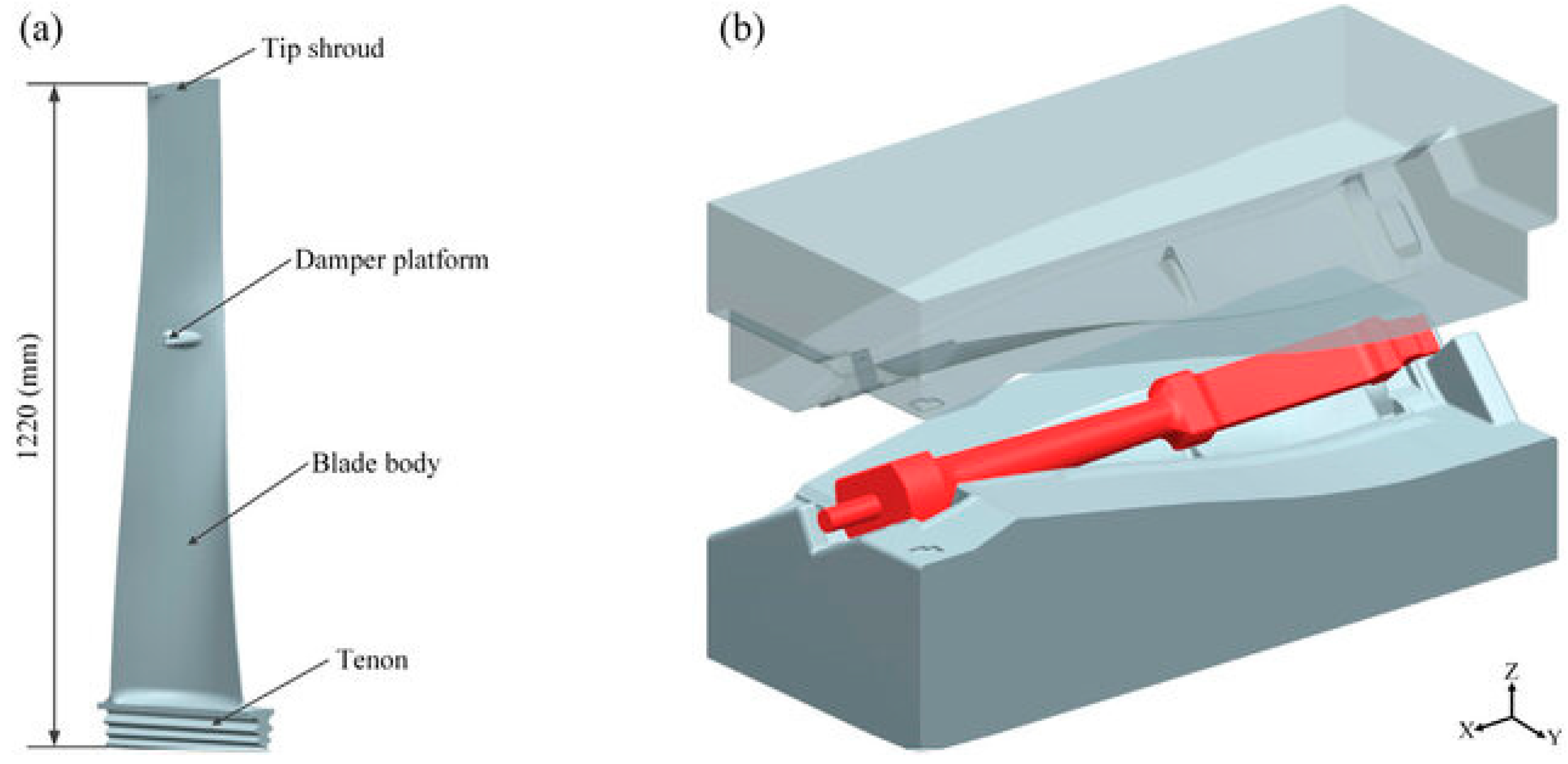


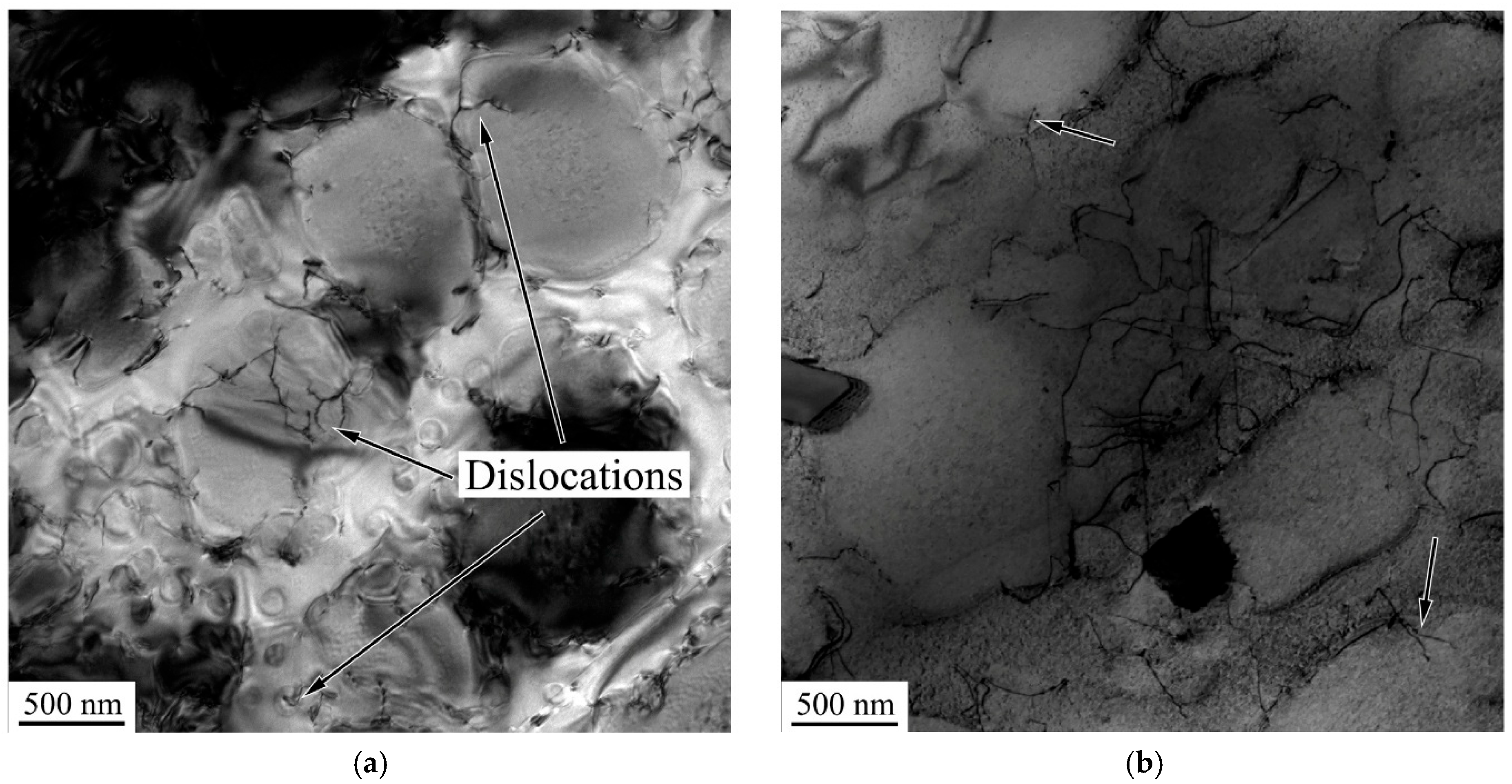



| Material Class | Example Alloy/Type | Functional Temperature Limit (°C) | Primary Degradation Mechanism | Core Mechanical Advantage | Key Structural Constraint |
|---|---|---|---|---|---|
| SC Ni-Superalloys | SC Ni-based (e.g., Re-containing) | 1150 (short-term limit under coated conditions) | Creep, Hot Corrosion, Microstructural Instability | Superior Creep Strength, High Tensile/Fatigue | High Density, Complex Casting/Repair (SC Integrity) |
| Ceramic Matrix Composite (CMC) | C/SiC | 1350 | Oxidation, Environmental Erosion | Low Density (approx. 1/3 of Metal), High Internal Damping | Brittleness, Cost, Complex Coatings (EBC) |
| Ti Intermetallics | TiAl (γ-TiAl) | 750–900 | Oxidation, Low Ductility | Excellent Strength-to-Weight Ratio | Low Service Temperature Ceiling, Processing Complexity (THP) |
| Ultra-High Temp. Ceramic (UHTC) | TiB2/HfB2 | >2000 | Thermal Stress, Brittle Failure | Extreme Refractoriness, Corrosion Resistance (Stators) | Not Suitable for High Centrifugal Loads (Rotors) |
| Manufacturing Method | TRL/Industrial Maturity | Primary Applications | Key Advantages | Main Limitations | Characteristic Defects/Issues |
|---|---|---|---|---|---|
| Investment Casting (Equiaxed, DS, SC) | Very High (TRL 9) | HPT blades, vanes |
|
|
|
| Forging (Conventional, Isothermal) | Very High (TRL 9) | Compressor blades, turbine discs, structural rotors |
|
|
|
| Precision Machining (Conventional CNC) | Very High (TRL 9) | Final shaping of blades and discs Complex blade airfoils, twisted large blades; finishing and repairs |
|
|
|
| Electrochemical Machining (ECM) | High (TRL 8–9) | Complex blade airfoils, twisted large blades; finishing and repairs |
|
|
|
| Electrical Discharge Machining (EDM) (including high-speed EDM) | High (TRL 8–9) | Cooling hole drilling, diffuser-shaped exits, hard superalloys |
|
|
|
| Hybrid AWJM + EDM | High (TRL 7–8) | Cooling holes in TBC-coated blades |
|
|
|
| Manufacturing Method | Typical Equipment/Machines | Equipment Cost (USD) | Material Used | Material Cost (USD/kg) |
|---|---|---|---|---|
| Investment Casting (DS, SC) | Casting furnace, chill molds, ceramic cores, directional solidification setup | 500 k–2 M | SC Ni-based superalloys, DS Ni-alloys | 150–400 |
| Forging (Isothermal) | High-tonnage forging press, dies, heating furnace | 1–5 M | Ni-based alloys, Ti alloys (Ti6Al4V, TiAl) | 50–200 |
| Precision Machining (CNC) | 5-axis CNC milling/grinding, inspection equipment | 200–500 k | Ni-based alloys, TiAl, CMC (if compatible) | 50–500 |
| Electrochemical Machining (ECM) | ECM tool, power supply, electrolyte system, flow controllers | 150–400 k | Ni-based alloys, Inconel, SC blades | 50–400 |
| Electrical Discharge Machining (EDM) | EDM machine (die-sink, wire EDM), high-speed drilling units | 100–500 k | Ni-based alloys, TiAl, SC blades | 50–400 |
| Hybrid AWJM + EDM | Abrasive water jet cutting machine + EDM machine (integrated or sequential) | 300–700 k | Ni-based alloys, TBC-coated SC blades | 50–400 |
| Process | Microstructure Characteristics | Surface Condition | Typical Defects | Post-Processing | Resulting Performance Impact |
|---|---|---|---|---|---|
| Additive Manufacturing (LPBF) | Fine cellular/columnar grains, strong anisotropy, rapid solidification microstructures | High roughness due to particles and stair-stepping | Porosity, lack of fusion, residual stresses | Polishing, machining, sandblasting, HIP | High strength but reduced fatigue life; increased aerodynamic losses |
| Powder Bed Fusion (PBF-EB) | Similar to LPBF but with different thermal gradients; columnar grains | High–moderate roughness | Surface irregularities, porosity | Surface finishing, parameter optimization | Moderate–high losses; performance depends strongly on process control |
| Casting | Coarse, equiaxed grains depending on cooling rate | Moderate roughness governed by mold surface | Shrinkage porosity, inclusions | Machining, HIP | Balanced mechanical properties; moderate fatigue resistance |
| Directional Solidification | Columnar grains aligned with thermal gradient | Relatively controlled surface | Freckles, misoriented grains | Limited finishing required | Improved creep resistance; anisotropic mechanical behaviour |
| Single Crystal Processing | No grain boundaries, oriented crystal structure | Controlled surface quality | Minimal grain-related defects | Surface finishing, coatings | Superior high-temperature strength and creep resistance |
| Forging/Machining | Refined, deformed grains with directional texture | Low roughness | Minimal internal defects | Polishing or finishing | High fatigue resistance; low aerodynamic losses |
| Coated Systems (TBCs) | Multilayer structure (ceramic + bond coat + substrate) | Roughness depends on coating process | TGO formation, cracking, delamination | Surface finishing, controlled deposition | Thermal protection; failure affects durability and lifespan |
| Technology Area | Key Developments | Advantages | Limitations | Relevance |
|---|---|---|---|---|
| Industry 4.0/IoT | Smart sensors, CPS, real-time monitoring [2,3] | Real-time control, predictive maintenance, improved efficiency | Integration complexity, data quality issues | Enables monitoring of blade production and operation |
| Hyper-automation | AI, robotics, analytics | Reduced variability, higher consistency, fewer defects | High implementation cost, workforce adaptation | Critical for precision manufacturing of complex geometries |
| Hybrid Layered Manufacturing (HLM) | Additive, subtractive integration [1] | Flexibility, near-net shaping, reduced tooling | Process optimization, material limitations | Suitable for complex blade geometries and repair |
| Additive Manufacturing (AM) | Layer-wise fabrication of metals | Design freedom, material efficiency | High cost per volume, limited throughput | Enables rapid prototyping and complex blade structures |
| High-Entropy Alloys (HEAs) | Multi-principal element alloys [6] | High strength, thermal stability, oxidation resistance | Microstructural control, process sensitivity | Promising for high-temperature blade applications |
| Oxide Dispersion Strengthening (ODS) | Nano-oxide reinforced alloys [9,11] | Improved creep, oxidation, and strength | Processing complexity, dispersion control | Enhances performance of turbine-grade materials |
| Multi-material/FGMs | Functionally graded compositions [13] | Tailored local properties | Manufacturing complexity, modeling challenges | Optimizes thermal and mechanical gradients in blades |
| Smart Blades (SHM) | Embedded sensors [14] | Real-time health monitoring, condition-based maintenance | Sensor integration reliability, durability | Improves safety and lifecycle management |
| Digital Ecosystems | Digital twins, MBSE, closed-loop systems | Virtual testing, lifecycle optimization | Data integration, model accuracy | Enables end-to-end blade lifecycle management |
| AI in Aerothermal Engineering | Physics-informed ML, HPC-based models [15] | Faster simulations, improved predictions | Data dependency, interpretability, computational cost | Enhances design, analysis, and optimization |
| Manufacturing Route | Certification Maturity | Main Qualification Challenges | Typical Validation Requirements |
|---|---|---|---|
| Casting/Forging | High | Defect consistency, residual stresses | Metallography, fatigue, creep databases |
| AM (LPBF/DED) | Moderate | Porosity, anisotropy, repeatability | CT, in situ monitoring, HIP validation |
| Hybrid AM + machining | Moderate | Process-chain traceability | Multi-stage inspection |
| Digital manufacturing | Emerging | Data integrity, model validation | Sensor qualification, digital thread verification |
Disclaimer/Publisher’s Note: The statements, opinions and data contained in all publications are solely those of the individual author(s) and contributor(s) and not of MDPI and/or the editor(s). MDPI and/or the editor(s) disclaim responsibility for any injury to people or property resulting from any ideas, methods, instructions or products referred to in the content. |
© 2026 by the authors. Licensee MDPI, Basel, Switzerland. This article is an open access article distributed under the terms and conditions of the Creative Commons Attribution (CC BY) license.
Share and Cite
Roșu, R.-A.; Prisăcariu, E.G.; Dumitrescu, O.; Crunteanu, D.E. Next-Generation Manufacturing Technologies for High-Performance Turbomachinery Blades: Trends, Challenges, and Future Directions. Eng 2026, 7, 225. https://doi.org/10.3390/eng7050225
Roșu R-A, Prisăcariu EG, Dumitrescu O, Crunteanu DE. Next-Generation Manufacturing Technologies for High-Performance Turbomachinery Blades: Trends, Challenges, and Future Directions. Eng. 2026; 7(5):225. https://doi.org/10.3390/eng7050225
Chicago/Turabian StyleRoșu, Raluca-Andreea, Emilia Georgiana Prisăcariu, Oana Dumitrescu, and Daniel Eugeniu Crunteanu. 2026. "Next-Generation Manufacturing Technologies for High-Performance Turbomachinery Blades: Trends, Challenges, and Future Directions" Eng 7, no. 5: 225. https://doi.org/10.3390/eng7050225
APA StyleRoșu, R.-A., Prisăcariu, E. G., Dumitrescu, O., & Crunteanu, D. E. (2026). Next-Generation Manufacturing Technologies for High-Performance Turbomachinery Blades: Trends, Challenges, and Future Directions. Eng, 7(5), 225. https://doi.org/10.3390/eng7050225