Article

Risk Assessment of Asphaltene–Resin–Paraffin Deposition During Reservoir Cooling in the XIII Horizon of the Uzen Oil Field

by
Aliya Togasheva
1,
Ryskol Bayamirova
1,*,
Danabek Saduakassov
1,*,
Akshyryn Zholbasarova
1,*,
Nurzhaina Nurlybai
1 and
Yeldos Nugumarov
2
1
Department of Geology and Petrochemical Engineering, Yessenov University, Aktau 130000, Kazakhstan
2
PetroLogic Ltd., LLC, Aktau 130000, Kazakhstan
*
Authors to whom correspondence should be addressed.
Eng 2026, 7(4), 184; https://doi.org/10.3390/eng7040184
Submission received: 6 March 2026 / Revised: 10 April 2026 / Accepted: 13 April 2026 / Published: 17 April 2026
(This article belongs to the Section Chemical, Civil and Environmental Engineering)

Abstract

This study presents a risk assessment of asphaltene–resin–paraffin deposition (ARPD) in the producing formations of the XIII reservoir unit of the Uzen oil field at a late stage of development. The crude oil is characterized by an extremely high paraffin (wax) content of up to 29 wt.%. Long-term operation of the reservoir pressure maintenance (RPM) system with cold water injection has resulted in significant reservoir cooling, with temperatures declining from the initial 60–65 °C to 20–30 °C in zones of intensive waterflooding. To refine the critical phase transition temperatures of paraffin components, a dynamic laboratory approach was applied using a Wax Flow Loop system, which simulates wax deposition processes under flowing conditions. The results indicate that the wax appearance temperature (WAT) ranges from 41.0 to 44.0 °C, significantly exceeding the current bottomhole temperatures in the cooled zones of the reservoir. Intensive bulk crystallization of paraffins occurs within the temperature interval of 33.5–35.0 °C, while loss of oil flowability is observed at 25–34 °C, corresponding to the gelation and structural network formation of wax crystals under reduced thermal conditions. The obtained results confirm the inevitability of bulk oil structuring and solid wax phase precipitation directly within the reservoir porous medium. This process leads to blockage of low-permeability interlayers, deterioration of filtration properties, and a reduction in the displacement efficiency factor by 20–35%. Under the current thermal regime, ARPD should therefore be considered not merely as an operational flow assurance issue, but as a systemic factor limiting reservoir development efficiency. The research results substantiate the need to transition from reactive ARPD removal methods to proactive management of the thermal regime of the reservoir and wells, as well as to the differentiated application of thermal and chemical treatment methods.

1. Introduction

1.1. Geological Characteristics of the XIII Reservoir Unit and Paraffin Content Dynamics

The Uzen oil field, located in the South Mangyshlak depression and discovered in 1961 [1], represents a unique multilayer hydrocarbon accumulation with a complex geological structure. The XIII reservoir unit belongs to the upper productive Jurassic sequence and occurs at depths of 1080–1370 m [2].
It is important to note that reservoir cooling during waterflooding and the subsequent deposition of paraffins, particularly in high-paraffin crude oils, is not unique to the Uzen oil field, but is a typical issue encountered in many mature fields worldwide [3,4]. Cold water injection to maintain reservoir pressure is a widely accepted practice; however, it often leads to hazardous changes in reservoir temperature, a significant increase in oil viscosity, and paraffin precipitation, adversely affecting field development and the displacement efficiency of high-paraffin crude oils worldwide. This is a widely recognized issue encountered in various regions, including West Africa [5], North America [6], and Europe [7]. It is essential to understand key oil characteristics to develop effective production strategies. These factors include the mass fraction of paraffins, asphaltene–resin components, and reservoir thermal regimes. The scientific novelty of this study lies in providing a fundamental reinterpretation of ARPD risks for high-wax reservoirs at a late stage of development. For the first time, this research resolves a critical thermodynamic contradiction in the fundamental physicochemical data of the Uzen field, where previous archival records showed a 28 °C discrepancy in wax melting points (33–61 °C). By utilizing a dynamic Wax Flow Loop approach, this study identifies the ‘bulk crystallization’ threshold (33.5–35.0 °C) not as a theoretical value, but as a definitive technological marker for oil mobility loss within the reservoir rock matrix. Crucially, it establishes the first quantitative correlation between these dynamic phase transitions and the 20–35% decline in displacement efficiency under conditions of extreme water cut (up to 89.8%). This research shifts the paradigm of wax deposition from a routine operational wellbore complication to a predictable systemic factor that directly governs ultimate oil recovery at the reservoir scale. The principal geological and petrophysical parameters of the productive reservoir units of the Uzen oil field are presented in Table 1.
The crude oil of the Uzen field exhibits complex physicochemical characteristics associated with a high content of paraffinic and heavy organic components. According to the data presented in Table 2, the oil belongs to the naphthenic–aromatic type, which indicates a considerable presence of cyclic hydrocarbons and aromatic compounds in its composition. The sulfur content ranges from 0.98 to 1.9%, which classifies this crude oil as relatively high in sulfur. In addition, the oil contains a significant proportion of heavy fractions, including silica-gel resins (up to 22%) and asphaltenes (up to 3%), which considerably influence its rheological properties and phase behavior during production and transportation.
A notable feature of Uzen crude oil is its high paraffin content, reaching 22–29 wt.%, which largely determines its flow behavior. Such a high concentration of paraffinic hydrocarbons contributes to the formation of wax crystals during cooling, leading to changes in the rheological characteristics of the fluid. The paraffin crystallization temperature is reported to be within the range of 57–60 °C [8,9,10,11], indicating that the process of wax formation begins at relatively elevated temperatures. Furthermore, the pour point of the oil is approximately 30 °C, which reflects the tendency of the crude oil to lose fluidity and significantly increase in viscosity as the temperature decreases. These properties explain the strong tendency of Uzen crude oil to form paraffin deposits in the wellbore and production equipment, creating operational challenges during field development and transportation.
Table 2. Principal Properties of Uzen Crude Oil [8].
ParameterValue
Oil TypeNaphthenic-aromatic
Sulfur Content0.98–1.9%
Silica gel resinsUp to 22%
AsphaltenesUp to 3%
Paraffin content22–29% by mass [8,11]
Paraffin crystallization temperature57–60 °C [8]
Pour point~30 °C
Despite its high paraffin content, the crude oil retains sufficient mobility under reservoir conditions due to elevated reservoir temperature and the influence of dissolved gas. It is noted that oil viscosity decreases sharply with increasing temperature. It should also be taken into account that reservoir oil samples collected at depth often contain water-in-oil emulsions, which may complicate laboratory analysis and affect the determination of parameters such as viscosity [8].
Over the decades of field development, which began in 1965 [12], the dynamics of paraffin content in the produced fluids have undergone significant changes. During the initial years of production (since 1965), due to the absence of a reservoir pressure maintenance system and the decline in reservoir temperature, paraffin precipitation occurred directly within the porous reservoir medium. This led to a reduction in paraffin concentration in the produced oil.
Following the implementation of a hot water injection system beginning in 1967 (initially Albian–Cenomanian water, followed by seawater injection from 1971) [13], the paraffin content in degassed oil gradually began to recover and, by 1984, had nearly reached its initial values [14].
At the late stage of development, despite overall reservoir depletion, the crude oil remains highly paraffinic, creating a persistent risk of ARPD formation even under minor deviations in the thermal regime. For reservoir units XIII–XVIII of the Uzen field, an increase in produced water cut has been observed from 87.5% in 2013 to 89.8% in 2017, further complicating wax deposition issues. The wax crystallization onset temperature is close to the reservoir temperature [8], requiring careful control of thermobaric conditions.

1.2. Thermal State of the Reservoir: Analysis of Temperature Zones

One of the principal characteristics of the crude oil in the XIII reservoir unit is its extremely high paraffin content, reaching up to 29 wt.%, as well as an asphaltene–resin content of up to 20%. These properties determine the anomalous behavior of the fluid: the wax crystallization onset temperature under reservoir conditions (58–61 °C) is critically close to the initial reservoir temperature (60–65 °C). Long-term operation of the reservoir pressure maintenance system has led to a significant transformation of the field’s thermal regime.
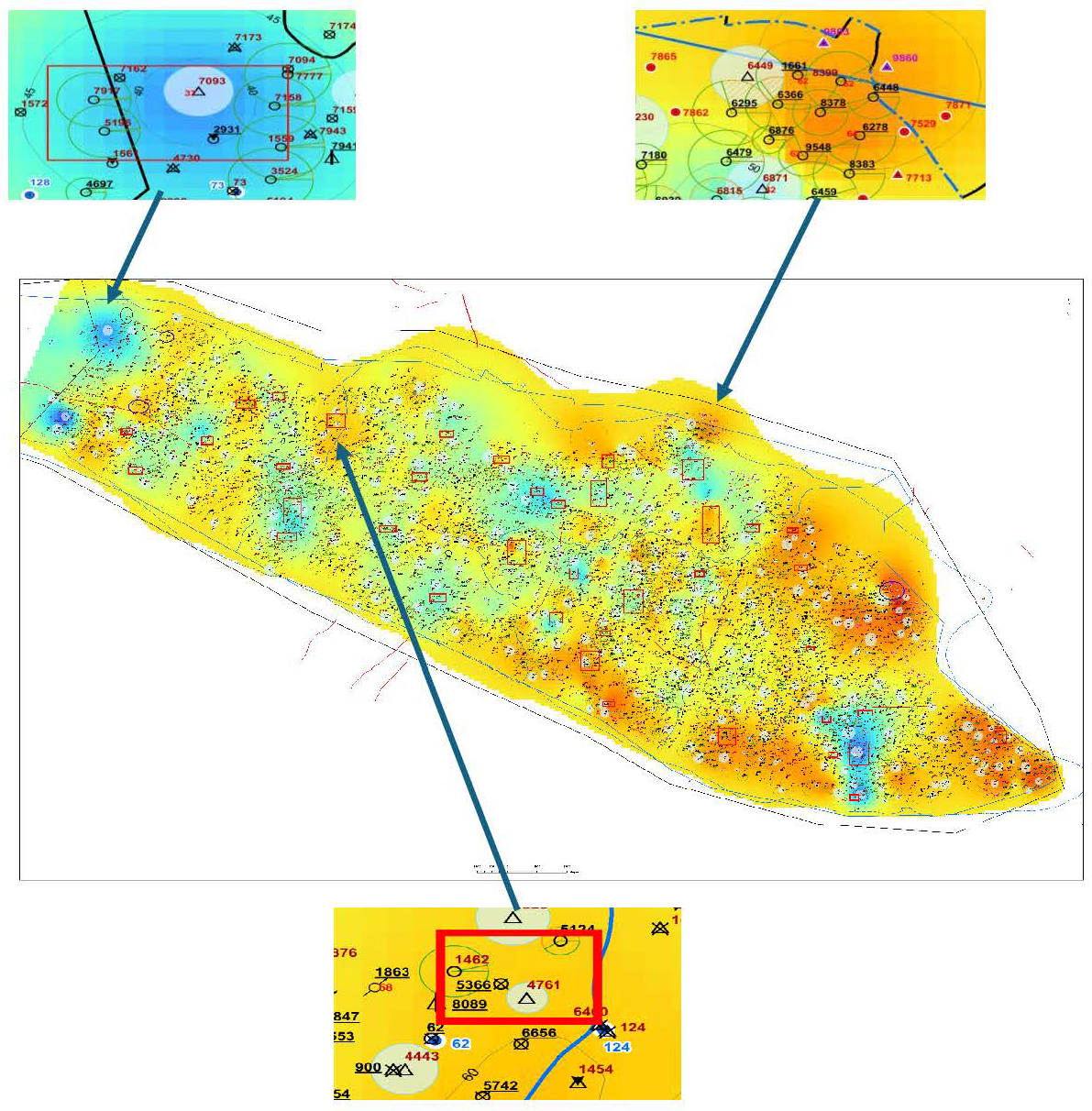
For the XIII reservoir unit, a temperature distribution map of the Uzen field was developed to represent the current spatial variation in reservoir temperatures across the production area. The temperature distribution map was constructed by integrating long-term operational data from the reservoir pressure maintenance (RPM) system with the results of field hydrodynamic studies. The modeling relies on historical records of cold water injection (seawater and waste water at +7 to +20 °C) initiated in 1971, allowing for the mapping of the thermal front’s advancement and the identification of zones where the temperature has dropped significantly below the initial state. As shown in Figure 1, the map reflects the heterogeneity of thermal conditions within the reservoir, which may significantly influence the physicochemical properties of the produced crude oil, particularly the process of paraffin crystallization. Based on this temperature distribution and the results of previous hydrodynamic studies, several representative zones were selected for crude oil sampling. Special attention was given to wells located in low-temperature zones, where the probability of wax precipitation is higher, as well as wells situated in zones with relatively elevated temperatures, close to the initial reservoir conditions. This comparative selection made it possible to assess the influence of temperature gradients on paraffin content and the tendency of crude oil to form wax deposits under varying reservoir conditions. The map shows the current thermal heterogeneity of the XIII reservoir horizon, resulting from prolonged injection of cold water. Blue and light-blue areas correspond to cooled zones where the temperature has dropped to 20–30 °C, creating a high risk of paraffin deposition. Orange and red areas indicate regions where the temperature remains close to the initial state (55–65 °C). Insets show four sectors selected for sampling (wells 1559, 8378, and 1462), allowing comparison of local reservoir temperature with the results of laboratory studies, which will be explained later.
This approach enables a comprehensive assessment of the influence of the reservoir thermal regime on the process of wax deposition and the associated changes in the rheological properties of crude oil. By comparing oil samples obtained from wells located in different thermal environments, it becomes possible to evaluate how temperature variations affect paraffin crystallization, viscosity growth, and the tendency of the oil to form deposits in the wellbore and production equipment. Therefore, the primary objective of this analysis is to obtain a more complete understanding of the mechanisms of paraffin deposition under varying reservoir temperature conditions and to identify the zones most susceptible to wax-related complications during field development.
The current thermal state of the XIII reservoir unit is characterized by the presence of two principal temperature zones, which differ significantly in terms of reservoir conditions and the behavior of produced fluids. These zones are summarized in Table 3. The first group includes cooled areas formed as a result of long-term injection of relatively cold seawater or waste water, typically with temperatures ranging from approximately +7 to +20 °C. In such zones, the bottomhole temperature can decrease to 20–30 °C, which leads to a sharp increase in oil viscosity and the formation of a structured paraffin network. As a result, the crude oil may partially lose its mobility, causing blockage of low-permeability layers and a deterioration of filtration properties.
The second group corresponds to areas where the reservoir temperature remains close to the initial thermal conditions. These zones are usually located in the crestal parts of the structure or in sections that are relatively distant from injection wells. In these regions, the temperature remains above 55–60 °C, which allows the oil to retain its Newtonian flow behavior and stable filtration capacity. Under such conditions, the probability of intensive wax crystallization is significantly lower, and the produced fluids maintain favorable transport properties.
The analysis shows that a reduction in reservoir temperature by 15–20 °C results in a decrease in the displacement efficiency factor by 20–35%. This statistical correlation was established by comparing the decline curves and residual oil saturation levels in the mature blocks of the Uzen field, where long-term cold water injection led to localized thermal degradation compared to zones maintaining original temperatures. This confirms the necessity of strict thermal regime control when planning geological and engineering interventions. The established 20–35% reduction in displacement efficiency is derived from a comparative statistical analysis of production decline curves and residual oil saturation data from mature blocks of the XIII unit. Specifically, sectors subjected to long-term cold water injection (resulting in localized temperatures of 20–30 °C) were compared against ‘thermal buffer’ zones where temperatures remained above 55 °C. This efficiency loss was further validated by production logging data, which confirmed the ‘switching off’ of low-permeability interlayers as they reached the bulk crystallization threshold of 33.5–35.0 °C, effectively trapping significant residual reserves.
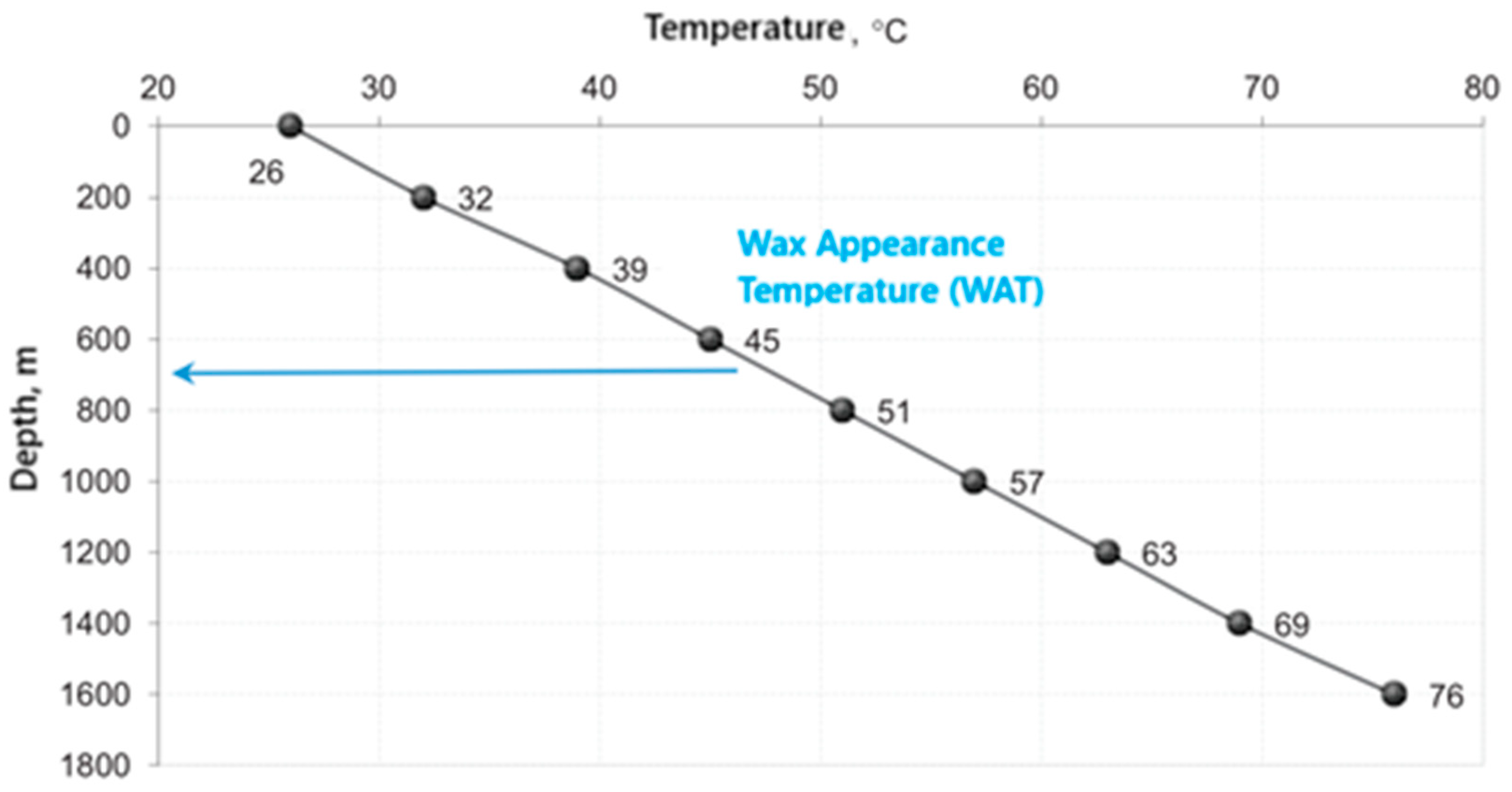
The wax crystallization onset temperature is one of the key parameters required for timely technological decision-making aimed at preventing solid-phase paraffin precipitation within the reservoir and the near-wellbore zone. A calculation of the wax crystallization onset temperature was performed for a hypothetical well of the field (Figure 2). The calculations and the corresponding temperature profile indicate that wax deposition in the wellbore will occur at a depth of approximately 650 m from the wellhead, where the temperature reaches the wax crystallization threshold of 47 °C [15]. The graph displays the temperature gradient along the wellbore as a function of depth. The horizontal blue arrow indicates the critical intersection point (at approximately 650 m) where the fluid temperature reaches the calculated WAT of 47 °C. This intersection marks the theoretical depth for the onset of paraffin deposition within the production tubing, which is essential for planning preventive thermal and chemical treatments.

1.3. Physicochemical Characterization of Crude Oil: Composition and Melting Temperature

The physicochemical properties of crude oil from the XIII reservoir unit largely determine its high tendency toward the formation of organic deposits during production and transportation. This behavior is primarily associated with the significant concentration of heavy hydrocarbon components, including waxes, resins, and asphaltenes, which play a key role in the structural transformation of crude oil under changing thermobaric conditions. As shown in Table 4, the organic fraction of the oil contains a considerable proportion of paraffinic hydrocarbons, with wax content ranging from 18.6 to 29.0 wt.% [8]. Such a high concentration of wax components significantly increases the probability of paraffin crystallization when the temperature decreases below the WAT.
In addition to wax hydrocarbons, the oil contains silica-gel resins with a concentration of up to 22%, which contribute to the stabilization of dispersed structures and affect the aggregation behavior of paraffin crystals. Asphaltenes, present in amounts of up to 3%, also influence the formation of complex organic deposits by interacting with resins and paraffin molecules. These heavy fractions can promote the formation of structured networks within the crude oil, especially under cooling conditions, which leads to increased viscosity and reduced flowability. Consequently, the combined presence of wax, resins, and asphaltenes explains the strong propensity of crude oil from the XIII reservoir unit to form ARPD during field operation.
A key parameter in risk assessment is the wax melting temperature. According to laboratory studies, the equilibrium melting temperature for crude oil of the XIII reservoir unit is 61 °C, although other sources report wax crystallization temperatures ranging from 57 to 60 °C and melting temperatures up to 33 °C [8]. To resolve the observed inconsistencies, this study adopts a unified interpretation of these values as distinct physical states: the lower temperatures often refer to the pour point or bulk crystallization, while the higher values (61–62 °C) represent the high energy threshold required for the complete dissolution of established wax deposits. Such discrepancies may be attributed to differences in analytical methodologies and the fractional composition of the investigated oil samples. Under initial reservoir temperature conditions, wax remains in a dissolved state; however, any cooling (particularly below 40 °C) triggers intensive crystallization.
Upon cooling of degassed crude oil below 20 °C, it completely loses flowability due to the formation of a rigid internal structure. The viscosity of water cut production increases exponentially as temperature decreases. For example, a 20% water cut may increase viscosity by 2.9 times, while a 60% water cut may result in an elevenfold increase. This effect is critical for well operation at the Uzen oil field, where high water cut is observed. Under current conditions, the onset of ARPD formation within the wellbore is observed at a depth of 700–800 m, where the temperature gradient intersects the wax saturation curve.
Despite the long history of research, the process of ARPD formation at the current stage of field development requires reconsideration. Long-term operation of the reservoir pressure maintenance (RPM) system with cold seawater and produced water injection has led to critical reservoir cooling, from the initial 60–65 °C to 20–30 °C in zones of intensive waterflooding.
Under conditions where the current reservoir temperature is 2–3 times lower than the wax saturation temperature of the crude oil, solid-phase precipitation within the porous medium becomes inevitable. However, existing development models do not fully account for the dynamics of wax phase transitions under conditions of extreme water cut (up to 89.8%), which is characteristic of the late stage of exploitation of the XIII reservoir unit. Cooling transforms the crude oil into a structured viscoplastic mass, resulting in a sharp decline in permeability and effectively “switching off” low-permeability interlayers that contain significant residual reserves. An additional complication arises from uncertainty in fundamental physicochemical parameters: various sources and archival reports provide substantially divergent data on wax melting temperature (from 33 °C to 61 °C) and oil pour point. Such discrepancies prevent accurate design of thermal stimulation methods and proper selection of chemical reagents for near-wellbore treatment.
One of the major challenges in the petroleum industry is the crystallization of wax in crude oil at low temperatures and the subsequent formation of solid deposits in production equipment. This phenomenon complicates the operation of wells, pipelines, and surface facilities, reduces flow capacity, and leads to increased operating costs.
Significant discrepancies are observed in the literature regarding wax phase transition temperatures. For example, studies indicate that the full solidification temperature of crude oil may vary from +29 to +35 °C, while historical data in some cases report a decrease in pour point from 38–40 °C at early development stages to 34–36 °C in subsequent design documentation. At the same time, the wax melting temperature in crude oil may reach 60–63 °C.
Reported wax crystallization temperatures for different crude oils also demonstrate a wide range, varying from 18 to 45 °C. Moreover, in practical conditions, melting temperatures of solid deposits have been recorded in the range of 46.1 °C to 50.1 °C for different crude oils. Such substantial variability, reflected in the broad interval of wax melting temperatures reported in the literature—from 33 °C to 61 °C [16] —as well as the dependence of values on the measurement methods used to determine WAT [17,18], highlight the necessity for deeper investigation of wax deposition mechanisms and mitigation strategies. To ensure a unified interpretation of the thermal behavior, the following parameters are strictly defined based on our dynamic experimental results: (1) WAT refers to the thermodynamic onset of crystal nucleation (41.0–44.0 °C); (2) Bulk Crystallization identifies the narrow interval of intensive three-dimensional network formation and rapid growth of the solid phase (33.5–35.0 °C); and (3) Pour Point signifies the temperature of complete loss of mobility (25–34 °C).
The ambiguity of these data increases the relevance of the present study and constitutes the primary motivation for this work, aimed at refining the physicochemical regularities of wax formation.
The objective of this study is to refine the temperature intervals of bulk wax crystallization for crude oil of the XIII reservoir unit, eliminate uncertainty in the critical phase transition parameters (melting temperature), and assess the risks of filtration flow blockage in cooled reservoir zones. Based on the obtained results, the paper provides justification for the effectiveness of thermal stimulation methods and the application of composite solvents to restore well productivity under current thermobaric conditions.

2. Materials and Methods

Within the framework of this study, a comprehensive approach was implemented to evaluate wax deposition in crude oil from the Uzen oil field. This approach included sampling from different reservoir temperature zones and the application of a dynamic laboratory method using a Wax Flow Loop system (PSL Systemtechnik GmbH, Osterode am Harz, Germany).
Oil emulsion samples were collected from four producing wells of the XIII reservoir unit (1559, 9586, 8378, and 1462) (Zhanaozen, Republic of Kazakhstan), located both in cooled zones and in areas where reservoir temperatures remain close to initial conditions. This sampling strategy enabled assessment of the influence of the thermal regime on wax formation. Prior to testing, the samples were subjected to maximum dehydration in order to minimize the influence of water on wax crystallization behavior.
Detailed information on the collected crude oil samples is summarized in Table 5. Sampling was carried out from several producing wells of the XIII reservoir unit located in different thermal zones of the field. The selection of wells was based on the previously developed temperature distribution map and hydrodynamic data, which made it possible to obtain representative samples reflecting the variability of reservoir conditions. Each sample had a volume of 5 L, which ensured sufficient material for laboratory studies related to paraffin crystallization and physicochemical analysis.
A critical stage of sample preparation was the complete dehydration of the crude oil samples prior to laboratory testing. This procedure was necessary to minimize the influence of formation water on the crystallization process and to ensure the reliability of the experimental results. The presence of water can significantly affect the formation and structure of paraffin crystals, alter rheological properties, and lead to the formation of emulsions that distort the interpretation of laboratory measurements. Therefore, special attention was paid to collecting samples with minimal water content, especially in wells located in low-temperature zones where wax deposition risks are particularly high.

Dynamic Method

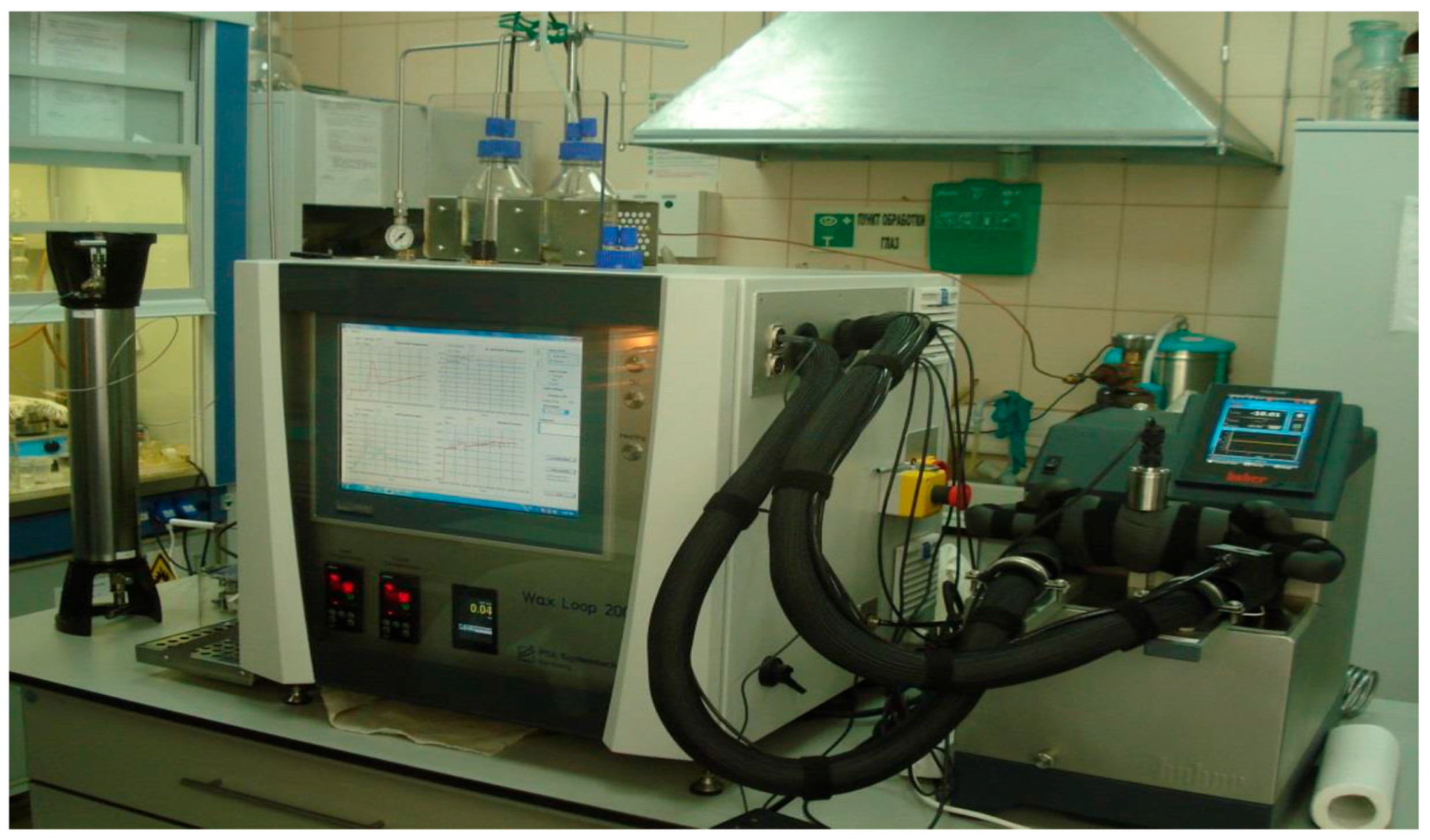
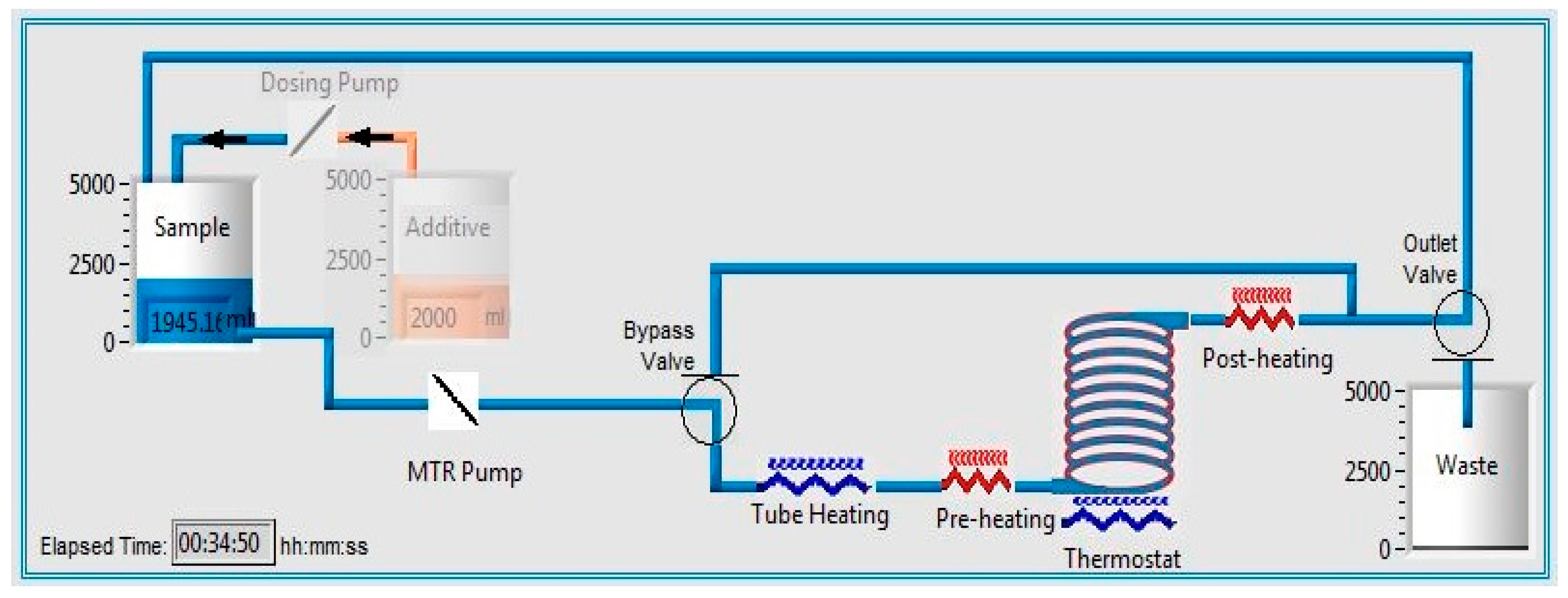
Dynamic testing was performed using a Wax Flow Loop laboratory unit (PSL Systemtechnik GmbH, Osterode am Harz, Germany) (Figure 3 and Figure 4), designed to simulate wax deposition processes in a closed circulation loop under controlled thermohydrodynamic conditions. The test loop consisted of a tube with an internal diameter of 2 mm and a length of 1 m. Operating pressure, flow rate, and wall and bulk fluid temperatures were regulated over wide ranges, ensuring reproduction of real oil flow conditions in wells and pipelines. The use of the Wax Flow Loop in this study is primarily aimed at identifying the intrinsic thermodynamic markers of the crude oil—specifically, the WAT and the bulk crystallization interval. While the hydrodynamic conditions in a 2 mm tube differ from those in a porous medium, these phase transition temperatures are fundamental physical properties of the specific oil composition. Consequently, they serve as reliable indicators for identifying the thermal thresholds at which solid-phase precipitation and oil gelation are triggered, regardless of the flow geometry. The experiments were conducted at a constant flow rate of 50 mL/min and a system pressure of 10 MPa, which simulates the bubble point pressure of the XIII reservoir unit (9–10 MPa). These parameters were selected to maintain a stable shear regime characteristic of the near-wellbore area within a test tube of 2 mm internal diameter. To ensure the reliability and repeatability of the measurements, each test was performed in triplicate, with the maximum recorded temperature deviation between runs not exceeding ±0.2 °C.
The oil temperature in the feed reservoir was maintained above the wax crystallization onset temperature, while the wall temperature of the test section was reduced stepwise by 0.2 °C every 60 min. This procedure allowed precise identification of the onset and progression of wax deposition.
The wax crystallization onset temperature was determined based on the increase in differential pressure caused by cross-sectional narrowing due to deposits and by the appearance of a thermal insulation effect on the loop wall. The bulk crystallization interval was identified as the temperature range in which a sharp acceleration in differential pressure growth and stabilization of the insulating layer were observed, indicating transition to volumetric oil structuring. The physical distinction between these points lies in the transition from surface-driven nucleation to volumetric framework development. During the cooling process (0.2 °C/60 min), the baseline ΔP remains stable until the WAT is reached at approximately 41–44 °C, where a gradual increase in pressure signifies the onset of wall deposition. As cooling continues, a distinct “inflection point” appears in the range of 33.5–35.0 °C, marking the bulk crystallization. At this stage, the ΔP curve exhibits a sharp, exponential acceleration, reflecting the formation of a three-dimensional wax network within the entire fluid volume. Finally, the flowability loss is observed at 25–34 °C, where the pressure exceeds the system’s limits or the flow effectively ceases due to total gelation.
To improve measurement accuracy, frictional pressure losses—determined separately under deposit-free conditions—were subtracted from the experimental differential pressure values. Additionally, based on laboratory measurements and geothermal calculations, the depth of wax deposition onset in a representative wellbore was estimated as the intersection point between the temperature profile along depth and the wax crystallization curve, enabling correlation of laboratory data with actual well operating conditions. To ensure the reliability and accuracy of the experimental results, several measures were implemented during the dynamic testing. The temperature of the tube wall was reduced in small increments of 0.2 °C every 60 min, which allowed for high-resolution detection of the WAT and the onset of bulk crystallization. To eliminate systematic errors in pressure measurements, frictional pressure losses were determined independently under deposit-free conditions and subsequently subtracted from the total differential pressure values recorded during the tests. Furthermore, the consistency of the identified temperature intervals (WAT, bulk crystallization, and flowability loss) across samples from four different wells representing diverse thermal zones of the reservoir confirms the reproducibility of the observed phase transition patterns.

3. Experimental Results

Laboratory investigations demonstrated that the mass fraction of wax in crude oil from the XIII reservoir unit of the Uzen field ranges from 22.5 to 27.5 wt.%, with resin content up to 21 wt.% and asphaltenes up to 0.94 wt.%. The melting temperature of the wax phase for most investigated samples is 61 °C, while for one well it reaches 62 °C. This confirms the absence of exceptionally high-melting fractions but indicates a high energy threshold required for the complete dissolution of already formed deposits.
According to dynamic testing results, the wax crystallization onset temperature varies from 41.0 to 44.0 °C for different samples, with the maximum value of 44.0 °C recorded for the sample from well 1462. The bulk crystallization interval for the same test series lies within a narrow range of 33.5–35.0 °C; the minimum value of 33.5 °C was obtained for the sample from well 1559.
The flowability loss temperature of degassed crude oil, depending on composition and test conditions, ranges from 25 to 34 °C. Upon further cooling below 20 °C, the oil completely loses mobility due to the formation of a rigid internal structure.
The detailed results of the dynamic tests are presented in Table 6.
Correlation of laboratory data with the current reservoir thermal field indicates that in the cooled zones of the XIII reservoir unit, reservoir temperatures of 20–30 °C are already below not only the initial but also the bulk wax crystallization onset temperature and are close to the flowability loss interval. Calculation of the temperature profile along a representative wellbore shows that the intersection of the geothermal curve with the wax crystallization onset temperature occurs at a depth of approximately 650 m, corresponding to the beginning of deposit formation within the production casing.
Based on the integration of experimental and calculated data, it has been established that a reduction in reservoir temperature by 15–20 °C relative to the initial level leads to a 20–35% decrease in the water displacement efficiency of high-wax crude oil. This confirms the significant impact of wax deposition and oil structuring on waterflood performance. The justification for extrapolating these laboratory-scale results to reservoir-scale behavior lies in the direct correlation between the identified thermal markers and the spatial distribution of temperatures within the reservoir. The bulk crystallization interval (33.5–35.0 °C) represents a physical limit beyond which the oil transitions into a non-Newtonian, structured state. When the reservoir’s thermal field, cooled by waterflooding, falls below this threshold, the resulting increase in filtration resistance and reduction in displacement efficiency are driven by the same phase behavior observed in the flow loop.
The identified 20–35% efficiency loss specifically correlates with the transition through the bulk crystallization interval (33.5–35.0 °C) determined in this study; reaching this threshold triggers the rheological “switching off” of low-permeability channels, which was validated by production logging data in the cooled reservoir sectors.
On the dynamic Wax Flow Loop test bench, both initial and bulk crystallization temperatures were determined. The initial wax crystallization onset temperature ranged from +41.0 °C to +44.0 °C, while the bulk crystallization interval ranged from +33.5 °C to +35.0 °C. The highest initial value (+44.0 °C) was recorded for the sample from well 1462, whereas the lowest bulk value (+33.5 °C) corresponded to the sample from well 1559.
The wax melting temperature for most investigated samples was 61 °C, except for well 9586, where it reached 62 °C. A general trend was observed: with increasing wax content in the crude oil, the crystallization onset temperature increases and oil viscosity rises at temperatures below this threshold.

4. Discussion of Results

4.1. Risk Assessment

The integrated analysis of the thermal regime and phase behavior reveals that the XIII reservoir unit was initially in a state of delicate thermodynamic equilibrium. The initial reservoir temperature (60–65 °C) was critically close to the wax saturation point (57–60 °C), meaning even minor local cooling could initiate deposition. Dynamic testing via the Wax Flow Loop identified two definitive stages of this process: the Wax Appearance Temperature (WAT) at 41.0–44.0 °C and the bulk crystallization interval at 33.5–35.0 °C. The transition to bulk crystallization serves as the primary technological marker, as it signifies the shift from surface-driven nucleation to the rapid growth of a three-dimensional crystalline framework throughout the oil volume. This volumetric structuring leads to an exponential rise in viscosity and the effective blockage of low-permeability interlayers, explaining the established 20–35% decline in displacement efficiency. The validation of the link between laboratory-scale Wax Flow Loop results and reservoir-scale behavior is based on the thermodynamic invariance of phase transition temperatures as intrinsic properties of the crude oil composition. While hydrodynamic conditions differ, the transition to bulk crystallization (33.5–35.0 °C) triggers an identical physical transformation of the oil into a non-Newtonian viscoplastic mass within the rock matrix. This scaling is empirically validated by production logging data (PLD) and residual oil saturation analysis in the cooled sectors of the XIII horizon. Specifically, sectors where reservoir temperatures have dropped to 20–30 °C exhibit the predicted ‘switching off’ of low-permeability interlayers, confirming that the laboratory-identified bulk crystallization threshold serves as a definitive boundary for recovery degradation at the field scale. Given that current temperatures in cooled zones have dropped to 20–30 °C—well below both the WAT and bulk thresholds—wax precipitation within the porous medium is now a systemic factor.
The obtained set of temperature characteristics—initial and bulk wax crystallization onset temperatures, wax melting temperature, and the flowability loss range—indicates that the thermal regime of the XIII reservoir unit was initially “critically close” to the wax phase transition conditions, while long-term cold-water waterflooding shifted the system into a domain where wax crystallization and oil structuring become inevitable. At the initial reservoir temperature of 60–65 °C and a wax saturation temperature of 57–60 °C, even minor local cooling could trigger crystallization; under current conditions, in the cooled reservoir zones, actual temperatures are already below both the initial and bulk crystallization thresholds, implying stable persistence of a solid wax phase within the pore space.
Of particular importance is the narrow bulk crystallization interval of 33.5–35.0 °C. At these temperatures, wax crystallization moves from nucleation to rapid bulk growth. This process creates a three-dimensional wax framework. Such structural changes lead to a sharp increase in the effective viscosity of the crude oil. Under conditions of high water cut and pronounced reservoir heterogeneity, this leads to early crossing of the critical temperature interval in low-permeability interlayers with limited thermal buffering, causing them to be effectively excluded from filtration flow, while higher-permeability zones may retain mobility for a longer period. This mechanism explains the calculated 20–35% decrease in displacement efficiency and the accelerated degradation of residual oil recovery in low-permeability zones. At the pore scale, this degradation is driven by a combination of mechanisms: surface deposition of wax crystals on the pore walls, which narrows the effective flow paths, and pore throat plugging, where wax crystal aggregates physically obstruct the narrowest channels of the porous medium. Furthermore, the formation of a complex wax gel network within the larger pores creates additional resistance to flow, effectively trapping oil and reducing the overall permeability of the formation.
Comparison with data from other high-wax fields confirms the universality of the identified mechanisms: in many cases, reservoir cooling to or below the WAT leads to a significant increase in hydraulic resistance, wax precipitation in the porous medium, and a noticeable decline in well production rates. For Uzen, the situation is aggravated by the combination of extremely high wax content (up to 29 wt.%) and very high water cut (up to 89.8%), which intensifies viscosity growth and system structuring during cooling.
The obtained results allow ARPD to be reinterpreted not as a purely operational complication, but as a systemic factor limiting oil recovery at the late stage of development. Under these conditions, conventional reactive approaches—periodic thermal treatments and mechanical wellbore cleaning—are energy-intensive and insufficiently effective: complete dissolution of deposits requires heating to temperatures close to 61–62 °C, whereas actual reservoir temperatures in the cooled zones are far below this level. Therefore, the key direction should be proactive thermal regime management, including control of injected water volume and temperature, spatial waterflood selection, and the application of localized thermal and chemical treatments designed with consideration of the initial and bulk crystallization intervals and the flowability loss range.

4.2. Global Context of Wax Deposition Under Reservoir Cooling

Wax crystallization and subsequent deposition caused by reservoir cooling during waterflooding is a well-studied phenomenon in global practice. It is not a specific feature of the Uzen field, but a common challenge for high-wax crude oils in many regions worldwide [3,4,19]. For example, West African fields commonly report wax crystallization onset temperatures in the range of 21–29 °C [5], while for crude oil from Alaska’s North Slope, the WAT may reach 40.6 °C [6]. At the Gannet oil field in the United Kingdom, the WAT is approximately 35.5 °C [7]. In China, at the Changchunling oil field, the reservoir temperature is only 17.6 °C, combined with a high wax content (up to 31.6%), which results in severe wax deposition problems [20].
Studies emphasize that cold water injection into the reservoir may lead to significant cooling of the near-wellbore zone and the advancement of a cold front, resulting in wax precipitation within the porous medium and, consequently, reduced permeability and well productivity. Modeling and laboratory experiments confirm that a decrease in reservoir temperature to or below the WAT critically affects the production process.
In one documented case, bottomhole temperature in a producing well declined from 37 °C to 26–27 °C over a period of six years, leading to a threefold reduction in oil production rate due to both decreased oil mobility and wax crystal formation [21,22]. These findings correlate with the issues observed at the Uzen field and confirm the universality of the physical mechanisms underlying this phenomenon.

4.3. Critique and Comparative Analysis of Wax Crystallization Onset Temperature and Deposition Depth Data

The wax crystallization onset temperature is one of the key parameters that governs technological decisions aimed at preventing solid wax phase formation within the reservoir and the near-wellbore zone. According to calculations for a hypothetical well at the Uzen oil field, wax deposits may form at a depth of 650 m from the wellhead at a crystallization onset temperature of 47 °C.
Comparison of these data with dynamic laboratory results, where the initial crystallization onset temperature ranged from 41.0 to 44.0 °C, supports several key conclusions. The calculated crystallization onset temperature for the hypothetical well exceeds the maximum experimental value, indicating a potentially earlier onset of wax deposition in wells compared with laboratory measurements on individual samples. A higher crystallization onset temperature implies wax precipitation at elevated temperatures, thereby expanding the risk zone for deposition. In addition, the identified deposition onset depth (650 m) is shallower than the previously indicated interval of 700–800 m, suggesting that ARPD-related issues may occur closer to the wellhead, increasing the complexity and cost of both preventive and remedial interventions.
However, long-term injection of cold seawater (+7 to +20 °C) and produced water within the reservoir pressure maintenance system leads to significant reservoir cooling. When cold water is injected into the formation, the temperature near the injection wells decreases and falls below the wax saturation temperature. As a result, wax precipitates from the crude oil within the porous medium of the productive formations, adversely affecting field development [23,24]. Recent studies confirm that this process is accompanied by a significant reduction in phase permeability and necessitates the integration of modern thermodynamic models to predict displacement efficiency [25,26].
During the displacement of high-wax crude oil by cold water injection, a hazardous temperature change occurs, which may lead to wax precipitation and solidification, transforming it into an immobile solid phase. This physical mechanism reduces the efficiency of water displacement of high-wax crude oil at temperatures below the original reservoir conditions. The wax crystallization onset temperature (both experimental, 41–44 °C, and calculated, 47 °C) is significantly higher than the temperatures observed in cooled reservoir zones and near-wellbore regions, inevitably leading to deposit formation. ARPD also deteriorates filtration properties, reduces well production rates, and increases operating costs.
The dynamic method using the Wax Flow Loop system, which simulates oil flow in a pipeline, demonstrated that the wax crystallization onset temperature is recorded when the volume of formed deposits becomes sufficient to noticeably affect flow parameters, such as an increase in differential pressure. This confirms that under real operating conditions, where oil is flowing and cooling, ARPD formation occurs actively, causing hydraulic resistance and a reduction in throughput capacity. The bulk crystallization temperature (33.5–35.0 °C) is significantly lower than the initial crystallization onset temperature, indicating a wide temperature interval over which active formation and densification of the wax structure take place. This means that even with a relatively small decrease in temperature below the initial crystallization threshold, the deposition process will continue, aggravating the problem.
The absence of high-melting wax fractions (melting temperature 61–62 °C) suggests that the main wax deposition issues will arise not in the deeper, hotter parts of the reservoir, but during cooling of the oil as it ascends the wellbore and during subsequent transportation, where temperature conditions intersect the crystallization interval. When degassed crude oil is cooled below 20 °C, it completely loses flowability due to the formation of a rigid internal structure. The flowability loss temperature range (25–34 °C) is critical, as reaching these values significantly increases the risk of complete blockage of wells and pipelines.
The results summarized in Table 7 clearly demonstrate that the thermal regime of development of the XIII reservoir unit at the Uzen oil field is a key factor determining the high tendency of the crude oil to form ARPD. Unlike many fields where ARPD primarily develops in the near-wellbore zone or at advanced stages of production, Uzen is characterized by a systemic overlap of unfavorable thermal conditions already at the reservoir level.
Particular attention should be paid to the extremely small difference between the initial reservoir temperature (60–65 °C) and the wax saturation temperature of the crude oil (57–60 °C). Such a “critical convergence” of parameters indicates that the thermodynamic equilibrium of the system was initially close to instability. Even during the early development stage, any local temperature decrease—for example, near injection wells or under heterogeneous flow conditions—could potentially initiate wax crystallization. Table 7 confirms that subsequent cold water injection fully realized this inherent risk.
A critically important aspect of the development of the XIII reservoir unit is the established 20–35% reduction in oil displacement efficiency when reservoir temperature decreases by 15–20 °C. The detailed explanation of this phenomenon lies in reaching the bulk crystallization threshold (33.5–35.0 °C), which serves as a key technological marker.
This volumetric structuring of crude oil directly within the porous reservoir medium triggers a cascading negative effect: a sharp increase in effective fluid viscosity and a significant rise in filtration resistance.
Under conditions of geological heterogeneity, this results in the preferential blockage of low-permeability interlayers, which are effectively excluded from the filtration process. Thus, crossing the bulk crystallization threshold leads to rapid degradation of reserve recovery and confirms that even moderate anthropogenic cooling may have critical consequences for ultimate oil recovery. This degradation is the direct result of the transition from individual crystal nucleation to the development of a stable three-dimensional crystalline framework. This framework acts as a wax gel network that immobilizes the oil phase, while simultaneously, pore throat plugging and surface deposition further exacerbate the loss of connectivity within the reservoir’s pore space. The necessity of accounting for these effects is further emphasized by the variability of wax crystallization temperatures, which may range from 18 to 45 °C for different crude oils.
Synthesis of these results indicates that for the Uzen field, the risk of ARPD is not a localized near-wellbore issue but a systemic reservoir-scale phenomenon. The intersection of the bulk crystallization threshold with the actual reservoir temperature in cooled zones (20–30 °C) marks a permanent phase transition of the oil from a Newtonian fluid to a non-Newtonian viscoplastic mass directly within the rock matrix. This transformation necessitates a fundamental shift from periodic reactive well treatments to continuous thermal management of the entire waterflooding system to prevent irreversible loss of recovery from low-permeability zones.
The bulk crystallization threshold (33.5–35.0 °C) identified by the dynamic Wax Flow Loop method serves as the ultimate boundary for efficient field development. Crossing this temperature line during reservoir cooling triggers an avalanche-like increase in hydraulic resistance, rendering standard displacement methods ineffective due to the systemic gelation of the crude oil within the filtration channels.
The overlap of current thermal conditions with the bulk crystallization interval and the subsequent flowability loss range (25–34 °C) creates inevitable risks of complete blockage of filtration channels, necessitating the immediate implementation of proactive reservoir thermal management strategies.
The flowability loss temperature presented in the table represents another critical indicator. The laboratory range of 25–34 °C overlaps with oil temperatures under intensive cooling conditions, particularly during well shutdowns and restarts after downtime. This indicates that the Uzen field is exposed not only to gradual operational complications but also to emergency scenarios associated with the complete loss of production mobility.
The formation of ARPD at depths of 650–800 m suggests that the zone of intensive deposition is located significantly above the bottomhole. This substantially complicates mitigation efforts, as it requires treatment of extended intervals of the production casing and the application of integrated approaches—thermal, chemical, and operational. In combination with the high wax melting temperature (61–62 °C), this renders conventional periodic heating methods energy-intensive and economically burdensome.
Overall, the data presented in Table 7 confirm the multifactorial and self-sustaining nature of ARPD formation in the XIII reservoir unit of the Uzen field. An unfavorable initial thermal balance, intensified by cold water injection, interacts with the phase behavior characteristics of high-wax crude oil and reservoir geological heterogeneity. The obtained results justify the transition from reactive ARPD removal measures to proactive management of the reservoir and well thermal regime, as well as to the differentiated selection of deposition prevention strategies based on actual thermodynamic operating conditions.


5. Conclusions

Based on the comprehensive laboratory investigations and analysis of the thermal evolution of the XIII reservoir unit of the Uzen oil field, the following conclusions can be drawn:
  • Long-term operation of the reservoir pressure maintenance system has transformed the thermal field, resulting in current reservoir temperatures in cooled zones (20–30 °C) significantly below the wax saturation temperature (57–60 °C) and the experimentally determined wax crystallization onset temperature.
  • Application of the dynamic method eliminated uncertainty in key fluid characteristics. Intensive bulk crystallization was identified within the interval of 33.5–35.0 °C, while complete loss of flowability occurs at 25–34 °C. These conditions promote the formation of a rigid wax structure directly within the reservoir.
  • Precipitation of the solid wax phase in the porous medium leads to the effective exclusion of low-permeability zones from the filtration process, although these zones contain significant residual reserves. The formation of ARPD in the wellbore at depths of 650–800 m (shallower than previously assumed values) indicates an expanded risk zone and the necessity of treating extended casing intervals.
  • Considering the high wax melting temperature (61–62 °C), conventional removal methods are energy-intensive. A transition toward differentiated thermal stimulation strategies and the application of composite solvents capable of operating effectively under current thermobaric conditions is required.
Thus, the thermal factor is decisive for stabilizing production at the late stage of Uzen field development and necessitates the implementation of scientifically grounded monitoring and thermal management systems. Quantitative analysis established a direct correlation between thermal degradation and recovery: every 1 °C of reservoir cooling below the wax appearance temperature (41–44 °C) leads to an average 1.5–1.8% decrease in displacement efficiency, which justifies the necessity of maintaining the temperature of injected water above 35–40 °C in critical zones to preserve oil mobility. 6. From a practical standpoint, the identified deposition onset at 650 m and the high wax melting point (61–62 °C) indicate that reactive cleaning is insufficient. Effective flow assurance requires a transition to proactive thermal management, including the use of composite solvents optimized for reservoir temperatures of 20–30 °C and the localized application of thermal–chemical treatments to restore the filtration capacity of low-permeability interlayers, potentially increasing their contribution to production by 15–20%.

Author Contributions

Conceptualization, R.B.; methodology, R.B. and A.T.; validation, D.S.; formal analysis, A.Z.; investigation, N.N. and D.S.; resources, R.B.; data curation, A.T.; writing—original draft preparation, A.T. and R.B.; writing—review and editing, D.S. and Y.N.; visualization, A.T. and Y.N.; supervision, N.N. and A.Z.; project administration, R.B.; funding acquisition, R.B. All authors have read and agreed to the published version of the manuscript.

Funding

The work was carried out with the support of the Science Committee of the Ministry of Science and Higher Education of the Republic of Kazakhstan (grant AP26101849).

Institutional Review Board Statement

Not applicable.

Informed Consent Statement

Not applicable.

Data Availability Statement

The original contributions presented in this study are included in the article. Further inquiries can be directed to the corresponding authors.

Conflicts of Interest

Yeldos Nugumarov was employed by PetroLogic Ltd., LLC, Aktau 130000, Kazakhstan. The remaining authors declare that the research was conducted in the absence of any commercial or financial relationships that could be construed as a potential conflict of interest. The authors declare no conflicts of interest.

References

  1. Sarsenbekov, N.D.; Khafizov, S.F.; Strizhnev, K.V.; Dosmukhambetov, A.K. Synergy of geochemistry and concept technology in optimising the development of multi-layer reservoirs in the Parsumurun dome of the Uzen field. Bull. Tomsk. Polytech. Univ. Geo Assets Eng. 2025, 336, 59. [Google Scholar] [CrossRef]
  2. Shakhverdiev, К.; Ikhsanov, К.; Kalesheva, G.E.; Uteeva, Т.Н.; Akmalieva, А. Otsenka effektivnosti regulyatornogo protsessa razrabotki mestorozhdeniya uzen. Vestn. Zapadn.-Kazakhstanskogo Univ. Innov. I Tekhnologii 2024, 30, 173. [Google Scholar]
  3. Elarbe, B.; Elganidi, I.; Ridzuan, N.; Abdullah, N.; Yusoh, K. Paraffin wax deposition and its remediation methods on crude oil pipelines: A systematic review. Maejo Int. J. Energy Environ. Commun. 2021, 3, 6. [Google Scholar] [CrossRef]
  4. Misra, S.; Baruah, S.; Singh, K. Paraffin Problems in Crude Oil Production and Transportation: A Review. SPE Prod. Facil. 1995, 10, 50. [Google Scholar] [CrossRef]
  5. Wilson. Reassessing Operational Strategies for Wax Management Reduces Expenses. J. Pet. Technol. 2018, 70, 109. [Google Scholar] [CrossRef]
  6. Zhu, T.; Walker, J.; Liang, J. Evaluation of Wax Deposition and Its Control During Production of Alaska North Slope Oils; University of Alaska Fairbanks: Fairbanks, Alaska, 2008. [Google Scholar]
  7. Theyab, M.A.; Yahya, S.Y. Introduction to Wax Deposition. Int. J. Petrochem. Res. 2018, 2, 126. [Google Scholar] [CrossRef]
  8. Trebin, G.F.; Savinikhina, A.V.; Kapyrin, Y.V. Formation Oils of the Uzen Field. Pet. Geol. A Dig. Russ. Lit. 1966, 10, 206–207. [Google Scholar]
  9. Zholbassarova, T.; Bayamirova, R.; Ratov, B. Development of technology for intensification of oil production using emulsion based on natural gasoline and solutions of nitrite compounds. SOCAR Proc. 2024, 2, 48–55. [Google Scholar] [CrossRef]
  10. Boyko, G.I.; Lyubchenko, N.P.; Aitkaliyeva, G.; Sarmurzina, R.G.; Karabalin, U.S.; Tiesov, D.S.; Bukaeva, G.A. Asphalt-resin-paraffin deposits of the western kazakhstan and compositions for their removal. Kazakhstan J. Oil Gas Ind. 2020, 2, 60. [Google Scholar] [CrossRef]
  11. Umirova, G.K.; Togizov, K.; Muzapparova, A.; Kisseyeva, S. Preparation of calculation parameters according to logging data for 19–24 productive horizons of the uzen field. In Proceedings of the 23rd SGEM International Multidisciplinary Scientific GeoConference; International Multidisciplinary Scientific GeoConference SGEM: Sofia, Bulgaria, 2023; Volume 23, p. 729. [Google Scholar]
  12. Kurbanbaev, M.I.; Dishin, O.A.; Keldibaeva, S.S.; Mamedbeili, T.E. The analysis of a state development 13-th horizon, “Uzen” field, on the basis of statistical modelling of life cycle. SOCAR Proc. 2013, 3, 41–44. [Google Scholar] [CrossRef]
  13. Tadzhibayev, M.O.; Bayamirova, R.; Togasheva, A.R. Development of an Integrated Approach to Assessing the Localization of the Residual Recoverable Oil Reserves to Enchance the Effectiveness of Geological and Technical Measures at the Uzen Field. Kazakhstan J. Oil Gas Ind. 2025, 7, 42. [Google Scholar] [CrossRef]
  14. Alisheva, Z.; Nadirov, K.S.; Al-Dujaili, A.N.; Bimbetova, G.; Nadirova, Z.; Zhantasov, M.; Tileuberdi, N.; Dauletuly, A. Integrated Strategies for Controlling Water Cut in Mature Oil Fields in Kazakhstan. Polymers 2025, 17, 829. [Google Scholar] [CrossRef]
  15. Mussin, B.S.; Tleukulova, Z.K. Selection of effective solvents against asphalteneresin-paraffin deposition in the Uzen oilfield. Kazakhstan J. Oil Gas Ind. 2020, 2, 42. [Google Scholar] [CrossRef]
  16. Ganeeva, Y.M.; Yusupova, T.N.; Romanov, G.V. Waxes in asphaltenes of crude oils and wax deposits. Pet. Sci. 2016, 13, 737. [Google Scholar] [CrossRef]
  17. Japper-Jaafar, A.; Bhaskoro, P.T.; Mior, Z.S. A new perspective on the measurements of wax appearance temperature: Comparison between DSC, thermomicroscopy and rheometry and the cooling rate effects. J. Pet. Sci. Eng. 2016, 147, 672. [Google Scholar] [CrossRef]
  18. Simon, S.; Ruwoldt, J.; Sjöblom, J. A critical update of experimental techniques of bulk and interfacial components for fluid characterization with relevance to well fluid processing and transport. Adv. Colloid Interface Sci. 2020, 277, 102120. [Google Scholar] [CrossRef]
  19. Nikiforov, A.I.; Sadovnikov, R.V.; Nikiforov, G.A. Modeling of Paraffin Deposition During Oil Production by Cold Water Injection. Lobachevskii J. Math. 2022, 43, 1178. [Google Scholar] [CrossRef]
  20. Xie, J.; Hu, X.; Liang, H.; Wang, M.; Guo, F.; Zhang, S.; Cai, W.; Wang, R. Cold damage from wax deposition in a shallow, low-temperature, and high-wax reservoir in Changchunling Oilfield. Sci. Rep. 2020, 10, 14223. [Google Scholar] [CrossRef]
  21. Sandyga, M.S.; Struchkov, I.A.; Rogachev, М.К. Formation damage induced by wax deposition: Laboratory investigations and modeling. J. Pet. Explor. Prod. Technol. 2020, 10, 2541. [Google Scholar] [CrossRef]
  22. Sandyga, M.S.; Struchkov, I.A.; Rogachev, М.К. Research of Temperature Conditions of Organic Sediments Formation in the Productive Formation at Paraffinic Oil Well Production. Perm J. Pet. Min. Eng. 2021, 21, 84. [Google Scholar] [CrossRef]
  23. Bayamirova, R.; Togasheva, A.; Zholbasarova, A.; Sarbopeyeva, M. Displacement of high-parafin oil from formations by injected cold water. In Proceedings of the 23rd International Scientific Conference Engineering for Rural Development; Latvia University of Life Sciences and Technologies: Jelgava, Latvia, 2024. [Google Scholar]
  24. Saduakasov, D.; Bayamirova, R.; Togasheva, A.; Zholbasarova, A.; Tabylganov, M.; Gusmanova, A.; Sarbopeeva, M.; Nauyryzova, B.; Nugumarov, S. Reservoir Development and Well Operation Control Methods: Practical Application. Processes 2025, 13, 1541. [Google Scholar] [CrossRef]
  25. Liu, H.; Wen, Z.; Zhou, B.; Meng, W.; Li, H. Effects of temperature and pressure on wax precipitation and melting characteristics of oil-gas condensate: An experimental and simulation study. Pet. Sci. Technol. 2022, 41, 978–998. [Google Scholar] [CrossRef]
  26. Yang, S.L.; Wu, X.H.; Wang, Y.X.; Yang, X.Y.; Chen, H.; Li, L.C.; Zhang, X. Wax deposition in pores and the permeability change for high-wax crude in a sandstone reservoir. Pet. Sci. Technol. 2011, 31, 1891–1898. [Google Scholar] [CrossRef]
Figure 1. Temperature distribution map of the XIII reservoir unit of the Uzen field and locations of crude oil sampling wells.
Eng 07 00184 g001
Figure 2. Temperature Distribution versus Well Depth in the Uzen Oil Field, °C.
Eng 07 00184 g002
Figure 3. Dynamic wax flow loop system for real-time paraffin deposition analysis.
Eng 07 00184 g003
Figure 4. Process Flow Diagram (PFD) for Paraffin Deposition Studies.
Eng 07 00184 g004
Table 1. Geological and Petrophysical Parameters of the Productive Reservoir Units of the Uzen Oil Field.
ParameterValue
Depth1080–1370 m
Total thickness of reservoir units300–350 m
Effective oil-saturated thickness13–55 m
Average porosity (core data)27–32%
Average permeability (core data)0.118–0.341 μm2
Bubble point pressure for the XIII reservoir unit74–79 atm (9–10 MPa) [8]
Reservoir temperature60–70 °C [8]
Table 3. Characteristics of Temperature Zones in the XIII Reservoir Unit of the Uzen Oil Field.
ZoneCharacteristicsTemperatureOil State
Cooled AreasCaused by years of injecting cold sea/waste water (+7 to +20 °C).Drops to 20–30 °C at the bottomhole.Sharp rise in viscosity; transformation into a structured mass; blockage of low-permeability layers.
Initial Temp AreasFound in crestal parts or areas far from injection rows.Remains >55–60 °C.Retains Newtonian fluid properties and filtration capacity.
Table 4. Composition of the Organic Fraction of Crude Oil from the XIII Reservoir Unit.
ComponentMass Fraction, %Source
Wax18.6–29.0[8]
Silica gel resinsup to 22 
Asphaltenesup to 3 
Table 5. Summary Information on the Collected Samples.
Well Number for SamplingZoneTypeAlternative WellsSample VolumeCharacteristicNote
15591XIII producing well5196, 7777, 7158, 79175 LLow-temperature zonePreferably water-free
95862XIII producing well4272, 80375 L  
83783XIII producing well6278, 9548, 6448, 64495 LLow-temperature zone 
14624XIII producing well8089, 51245 L  
Table 6. Results of Dynamic Wax Flow Loop Tests.
No.Sample IDOrganic Fraction Composition, % (Wax/Resins/Asphaltenes)Wax Melting Temperature, °CFlowability Loss Temperature, °CWax Crystallization Onset Temperature (Initial/Bulk), °C
1837822.5/20.6/0.67613041.5/34.2
2155927.5/21.0/0.70613443.0/33.5
3146224.7/18.3/0.92613244.0/35.0
4958626.3/16.5/0.94622541.0/33.8
Table 7. Comparison of Reservoir Thermal Regimes and Wax Deposition Characteristics.
ParameterDescriptionTypical RangeRelevance in Terms of Flow Assurance
Reservoir TemperatureThermal state of the XIII unit impacted by long-term reservoir pressure maintenance.60–65 °C (Initial)/20–30 °C (Cooled)Determines the stability of dissolved wax; cooling below the WAT causes a 20–35% decline in displacement efficiency.
Wax Saturation TemperatureEquilibrium temperature where wax starts to precipitate from the oil under reservoir conditions.57–60 °CThe “critical convergence” with initial reservoir temperature indicates high instability and immediate risk of precipitation upon minor cooling.
Wax Appearance Temperature (WAT)The temperature marking the onset of solid phase nucleation and initial wall deposition.41.0–44.0 °C (Dynamic)/47.0 °C (Calculated)Represents the threshold for systemic paraffin formation; these values exceed current cooled-zone temperatures.
Bulk Wax CrystallizationThe transition from surface nucleation to intensive volumetric structuring and 3D wax framework growth.33.5–35.0 °CPrimary technological marker for rapid viscosity rise and the effective blockage of low-permeability interlayers.
Wax Melting TemperatureThe temperature required to completely dissolve existing asphaltene–resin–paraffin deposits.61–62 °CThe high energy threshold confirms that proactive thermal management is more effective than reactive cleaning.
Flowability LossThe temperature range where crude oil ceases to flow due to the formation of a rigid gel structure.25–34 °C (Initial loss)/<20 °C (Complete solidification)Critical risk factor for flow assurance during well shutdowns and restarts in cooled reservoir sections.
Deposition Onset DepthThe calculated depth at which the wellbore temperature profile intersects the WAT curve.650 m (Calculated)/700–800 m (Historical data)An earlier onset interval indicates an expanded risk zone along the wellbore, increasing the cost and complexity of treatments.
Disclaimer/Publisher’s Note: The statements, opinions and data contained in all publications are solely those of the individual author(s) and contributor(s) and not of MDPI and/or the editor(s). MDPI and/or the editor(s) disclaim responsibility for any injury to people or property resulting from any ideas, methods, instructions or products referred to in the content.