1. Introduction
The Republic of Kazakhstan has an extensive railroad network, which as of 2025 included ~16,300 km of operational railroad line length and ~21,400 km of main lines. Railway transportation is a key element of the national transportation system: according to the official data, its share in the total cargo turnover exceeds 50%, and some sources indicate that it reaches up to 68%; in the passenger turnover, its share exceeds 57% [
1,
2,
3,
4].
The geographical location of Kazakhstan gives it strategic importance as a transit country. In the north, the Republic borders with the Russian Federation along the longest land border in the world (7591 km), and in the east, it borders the People’s Republic of China. In the south, Kazakhstan is contiguous with Kyrgyzstan, Uzbekistan, and Turkmenistan. This situation creates prerequisites for the formation and use of transport corridors linking Europe, Central Asia, and China.
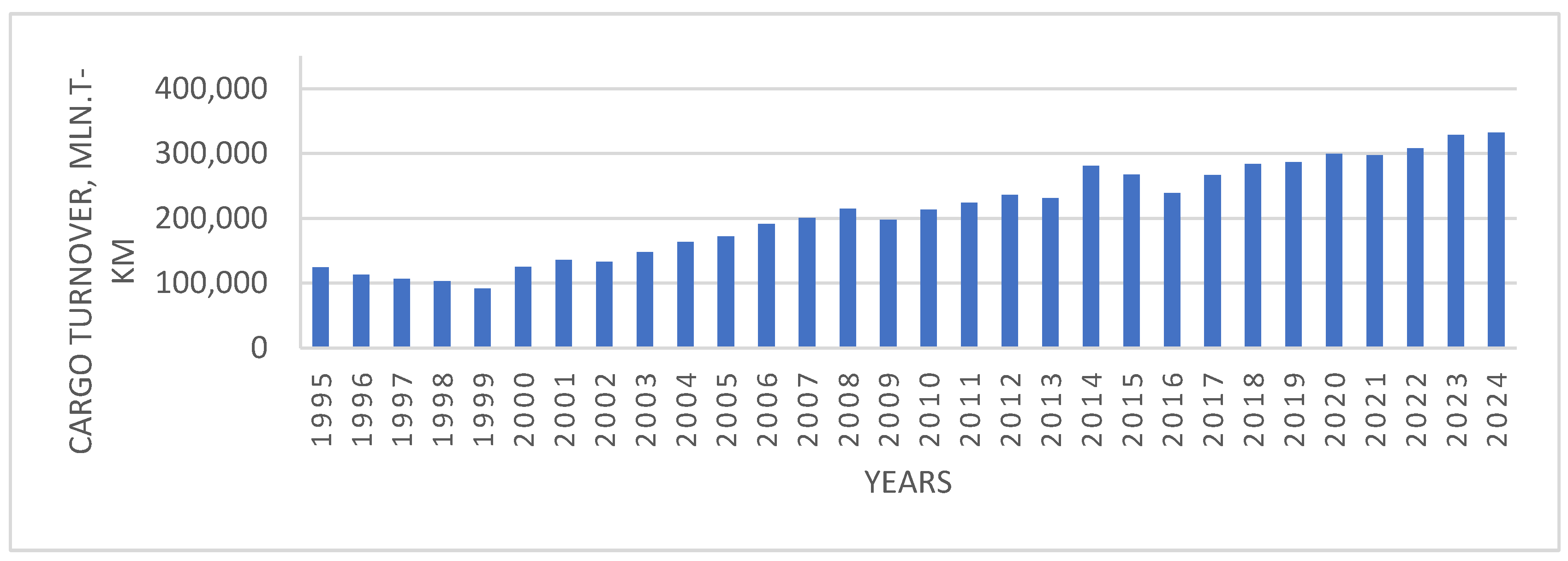
Over the last decade, there has been a steady growth in the role of transit transportation, which is reflected in the growth of its share in exports of transportation services; whereas in the early 2010s this figure amounted to around 60%, more recent estimates indicate an increase to around 80% (
Figure 1). Within the framework of the international transportation, rail transport holds the leading position—about 60–65%—while motor transport accounts for 20–25%, and sea transport provides 5–10% and is used to reach the markets of the Middle East and Europe through the Mediterranean and Caspian ports [
5,
6].
Compared with international studies focused mainly on tamping units, ballast cleaning systems, and control automation, the present work addresses a less-studied but technologically important problem, namely the geometric optimization of the ballast profiling working body. In contrast to purely structural verification studies, the proposed approach combines finite element modeling with response-surface-based optimization, making it possible not only to assess strength, but also to identify rational parameter combinations within the design space.
A quantitative bibliometric analysis of scientific publications demonstrates a pronounced imbalance in the existing research. More than 70% of studies address tamping and ballast cleaning machines, whereas less than 10% focus on ballast profiling equipment, and only a very limited fraction considers the parametric optimization of their working bodies. Studies dedicated specifically to electric ballast profiling machines are mostly descriptive and rarely apply numerical optimization or multi-parametric analysis.
This clearly indicates an insufficient scientific coverage of design-level optimization for ballast profiling working bodies [
7,
8,
9,
10,
11,
12,
13,
14,
15,
16,
17,
18,
19,
20,
21,
22].
Under the conditions of changing market conditions and the growth of international transportation volumes, especially due to the transit cargo flows from neighboring countries, the load on Kazakhstan’s railway infrastructure has significantly increased. This is due to the fact that the Republic is a key transit link between China, Central Asian countries, Russia, and the European Union. According to the Ministry of Transport of the Republic of Kazakhstan, only transit transportation through the territory of Kazakhstan has almost doubled over the last ten years, with the bulk of it being carried out by railway. The expansion of the range of cargoes transported, ranging from energy carriers and ores to agricultural products and container transportation, became an additional factor in the load growth. According to the materials of the “Kazakhstan Temir Zholy” National Company Joint Stock Company, for January 2025, the volume of loading on the main network increased by 7.3% year-over-year terms and reached 21.7 million tons, while export traffic increased by 13.4%. According to forecasts and roadmaps, the implementation of measures on the modernization of the North–South corridor (including the east direction) will increase its throughput capacity from the current ≈6 million tons to 10 million tons by 2027, and to 20 million tons by 2030. As a result, there is a growing need to modernize railway tracks, strengthen maintenance, and introduce modern repair technologies to ensure the sustainable functioning of the transport system and its integration into the international logistics chains [
7,
8,
23,
24,
25,
26].
Kazakhstan’s railroad infrastructure was designed under the conditions of significantly less intensive transportation demand than the current load level.
In recent years, there has been a significant increase in track deterioration (estimated infrastructure deterioration rates as high as 57%), an increase in malfunctions, accidents, and derailments (diagram for 20- to 30-year intensity, two design proposals) (6515 incidents, including 1656 derailments, were recorded for 2019–2024). At the same time, the fleet of track machines remains relatively stable; there are 629 units of track equipment owned by the “Kazakhstan Temir Zholy” NC JSC, and the average depreciation of the track facilities exceeds 61% [
7,
8,
23,
24,
25,
26].
In the Republic of Kazakhstan, the operation, maintenance, and repair of the railway track are performed by specialized enterprises having a fleet of track machines. According to
Table 1, there are 543 pieces of equipment in the country, including machines of track divisions, private companies, and line service, which provide operations on alignment, tamping, ballast cleaning, and the modernization of the tracks.
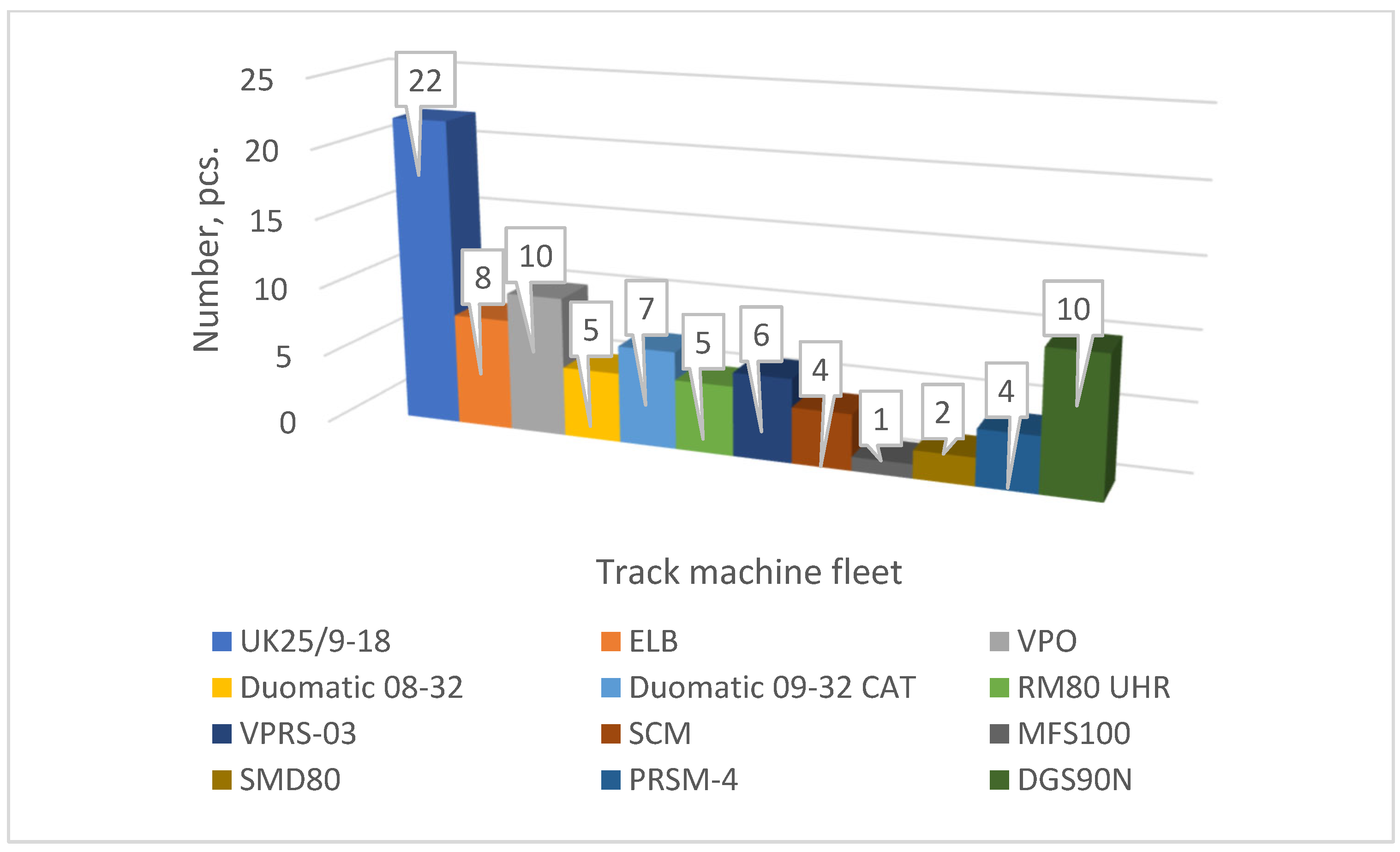
These machines are the main technical resources that ensure the maintenance of Kazakhstan’s infrastructure and the performance of scheduled and emergency repairs on the railway network. The structure and distribution of this track equipment fleet by the main types of machines are presented in
Figure 2 [
27,
28,
29,
30].
In the foreign scientific literature, modernization of track equipment is considered as an effective way to improve reliability and productivity of track operations without the complete replacement of the machine fleet. Thus, paper [
9] proposes modernization of the track machine VPO-3-3000 (Karaganda, Kazakhstan) by replacing magnetic grippers with roller grippers as part of the lifting and straightening device. The authors perform a computational and analytical substantiation of the modernized assembly by the stress–strain state and confirm the serviceability of the structure by strength criteria, which allows for recommending the implementation of the modernization into operation. The limitations of the approach are a lack of an assessment of operational indicators after modernization (the change in the availability factor, reduction in failures, and increase in production), and a lack of technical and economic comparison with alternative strategies of equipment renewal.
Another type of modernization is related to the introduction of automation in the technological process of track machine operation. Paper [
10] discusses the upgrade of the ballast cleaning machine via the development and introduction of an operational mechanism control system. It is shown that automation allows for increasing the stability of the technological process of cleaning and reducing the dependence of the quality of the work on the operator, which is an important factor in increasing the efficiency of mechanized ballast cleaning. At the same time, the paper does not present quantitative indicators of the modernization effect (the productivity gain, reduction in the operation time, and impact on the downtime), and also does not consider the reliability of the control system under the conditions of long-term operation (dust, vibration, and temperature loads).
A separate direction of modernization includes the digital reinforcement of track repairs through the introduction of objective diagnostics. Paper [
11] proposes to modernize the mechanized ballast cleaning by including GPR control (georadar) for a quantitative assessment of the degree of ballast layer clogging before and after the operation of the ballast cleaning machine. The results of the study confirm that the use of GPR allows for recording changes in the ballast layer parameters and assessing objectively the effect of the cleaning, improving the validity of operation assignment and quality control. The limitation is the need for additional costs for diagnostic equipment and personnel training, and a lack of a comprehensive assessment of the impact of GPR implementation on fleet performance indicators (the availability factor, number of failures, and life cycle cost-effectiveness) [
31,
32,
33,
34,
35].
Existing studies confirm the effectiveness of track equipment modernization through structural upgrades and the introduction of control systems, but the main attention is paid to tampers and ballast cleaning machines, while modernization of ballast profile equipment is covered insufficiently. At the same time, the productivity of the repair “windows” and stability of the process chain are largely determined by the serviceability of the ELB-4S electric ballasting machine, which performs the key operations in ballast preparation. The greatest effect of the ELB-4S modernization can be achieved by optimizing its working body, since the results of ballast distribution and energy efficiency are determined by its design and kinematic parameters (the blade geometry, approach angle, frequency and amplitude of oscillations, and speed of interaction with the ballast). An irrational choice of these parameters leads to the growth of energy costs, deterioration of ballast prism profiling quality, and accelerated wear of equipment, which confirms the relevance of the development and justification of the ELB-4S modernization [
35].
2. Materials and Methods
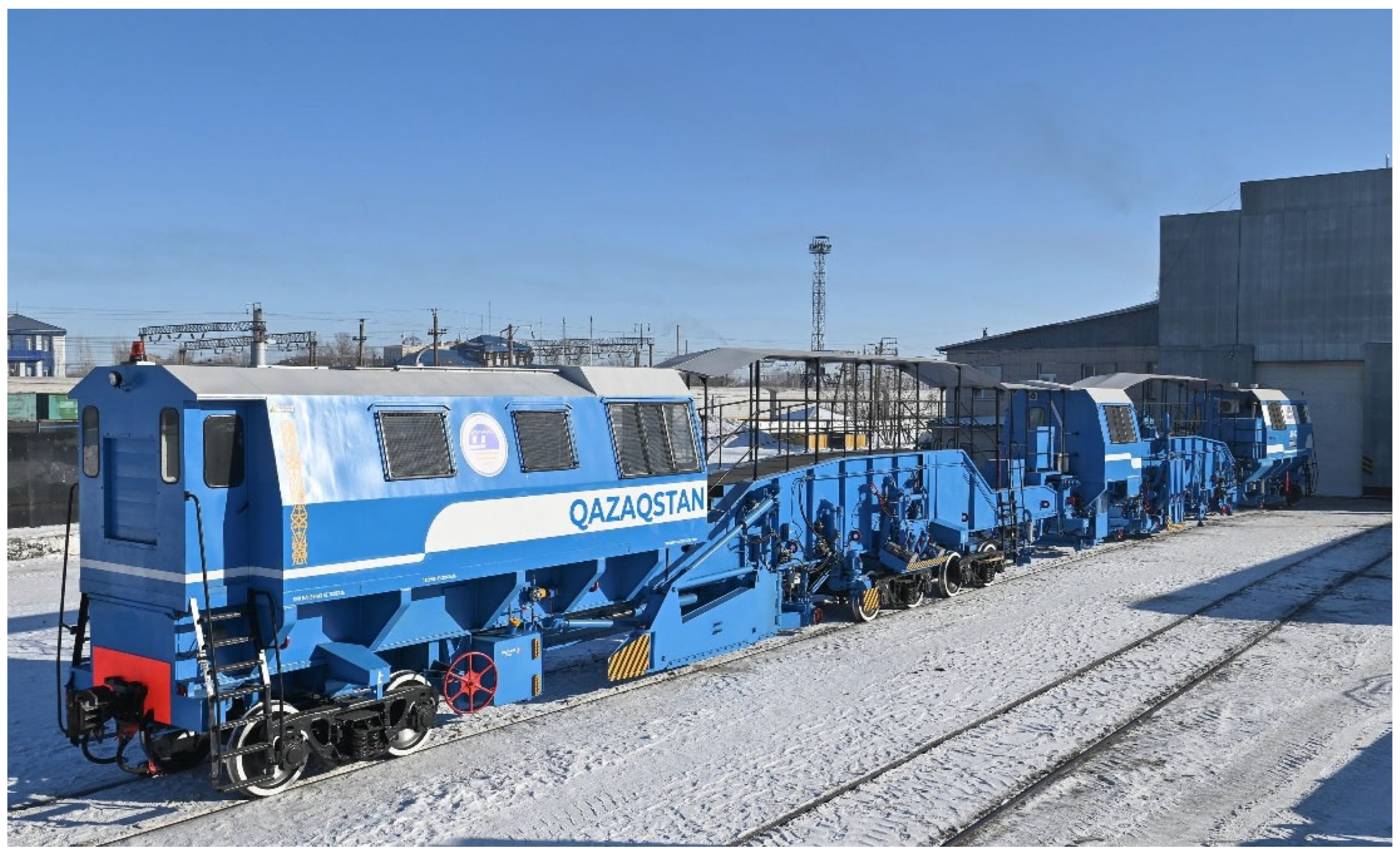
The key ballast profile machines that determine the efficiency of ballast prism shaping and layout operations include the electric ballasting machine (
Figure 3). Electric ballasting machines are universal multi-operational reproduction machines of continuous action, which are designed for putting the track on the ballast base during track construction and maintenance provided by the current system of track maintenance. Electric ballasting machines dose ballast previously unloaded along the track, spread ballast at the sleeper ends, level slopes and inter-track zones of the prism, raise the track skeleton on the ballast layer being formed, perform rough alignment and lining of the track, dress earth bed shoulders, form ballast material stacks on crushed stone bases, and lift small bridge spans during repair [
12,
13,
14,
15,
16,
17].
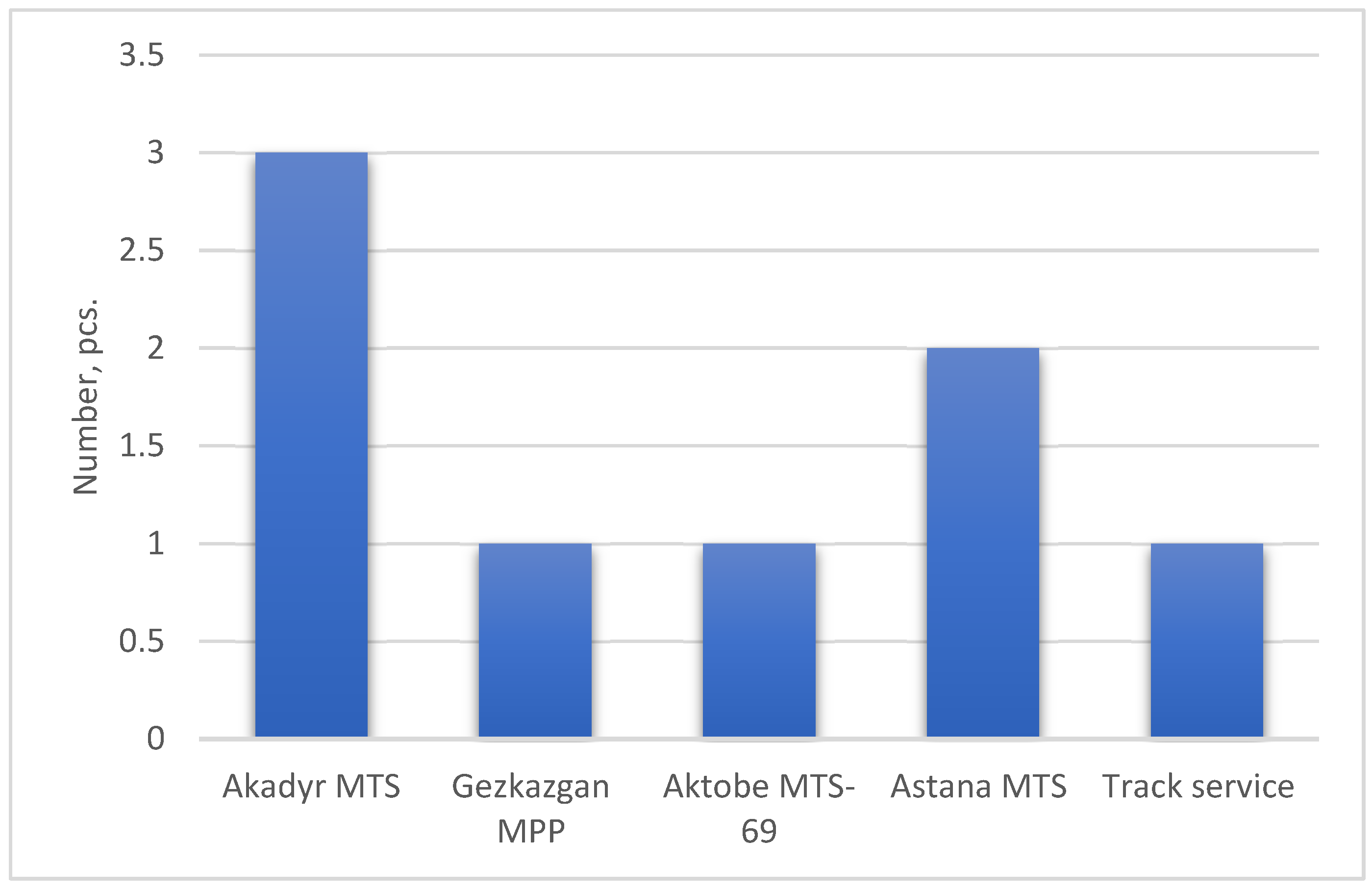
An important stage of the analysis is the assessment of the equipment fleet and operation structure in Kazakhstan.
Figure 4 presents information on the number, types, and distribution of electric ballasting machines in operation in the country, which makes it possible to assess the level of mechanization and technical equipment of track facilities [
18,
19,
20,
21,
22].
All presented electric ballasting machines were produced by the Kaluga plant “Remputmash” (Kaluga, Russia). According to the information, some of the machines are operated by the Akadyr mechanized division, TMS-69 Aktobe (Karaganda, Kazakhstan), Astana TMS, and in the line service. The largest number of electric ballasting machines came into operation between 2008 and 2009, which corresponds to the stage of renewal of the track machine fleet. In addition, the table reflects that in 2023, the Astana TMS received a new machine of the ELB-4C-070 series (Karaganda, Kazakhstan), and by the end of 2025, it is expected that three more electric ballasting machines will be delivered, which indicates the ongoing process of modernization and renewal of the specialized equipment [
36].
From the point of view of the theory of reliability and track facilities organization, track machines are a crucial link in the production cycle, and their availability factor reflects the share of time, during which the equipment is able to perform its functions without forced downtime. Under the conditions of a high load on the infrastructure and a growing share of worn-out sections of the railway network, low values of operating availability lead to longer downtime periods, lower shift productivity, and longer periods of capital and rehabilitation repairs.
The availability factor is a basic indicator of the track machine reliability used:
- •
to calculate the required machine fleet;
- •
to schedule “windows”;
- •
to assess the efficiency of the maintenance;
- •
to forecast failures and repairs;
- •
to choose between machine modernization and replacement.
Application of the availability factor makes it possible to quantitatively estimate the share of time during which the track machines are actually in a serviceable condition and can perform repair and track operations. Under the conditions of the country, where more than 50% of the railway infrastructure has exceeded its normal service life, and the volume of repair operations is growing annually, an adequate assessment of the technical availability of machines becomes a key factor.
The availability factor reflects how much of the total operating time the machine was actually capable of performing its functions [
36,
37,
38,
39,
40]:
where
—track machine availability factor;
T—actual operating time of the machine (time of proper functioning, operating time);
TB—reconstruction time (downtime), i.e., the period during which the machine cannot operate due to failures, repairs, waiting for spare parts, etc.
The availability factor shows the proportion of time the machine is in serviceable condition relative to the total time of operation:
If is close to 1, the machine is almost always available for operation.
If , the machine is deemed to be unreliable and can interfere with the track repair schedule.
This indicator shows the proportion of the time the machine is in serviceable condition compared to the total period of its operation, including downtime.
The shorter the reconstruction time, the higher the availability factor and, therefore, the reliability of the machine (
Table 2).
The availability factors of track machines (
Table 2) are in the range of 0.86 to 0.99, which generally characterizes the fleet as reliable. The highest values were observed for MPD and SCh (k
g = 0.99), and for UK-25/9-18 and Duomatic 09-32 (k
g = 0.98), which indicate minimal operational downtime. The lowest indicator was recorded for the ELB-4S (k
g = 0.86), which can limit the rate of ballast operations and reduce the efficiency of repair operations.
The electric ballasting machine ELB-4C is designed to be used for track raising, interim maintenance, and overhaul of the track with rails and sleepers of all types to perform the following operations: the dosing of ballast along the track length and ballast prism width; track lifting or continuous skeletonizing of the track skeleton on the move; shifting of the track skeleton in plane; the elimination of unevenness of the track in the plane; dynamic track stabilization; the loosening of ballast under the track skeleton; the spreading and leveling of earth bed shoulders; the rough dressing of the slopes of the ballast prism; slope compaction; and aligning.
The control cabs are located on the outermost sections of the machine and are designed to accommodate a driver and operators. Inside, there are remote controls, instrumentation, indication, and monitoring systems for the position of the working bodies. The design of the cabs ensures ergonomic working conditions, vibration, and noise isolation. The presence of two cabs allows for reverse movement without turning the train, which meets the requirements for safe operation of track machines.
The power unit is a diesel-generator set comprising an internal combustion engine of about 300–350 kW and an electric generator to supply power to the hydraulic stations and control systems. The engine is cooled by a closed-loop liquid system, which ensures stable operation under sustained loads. The unit layout meets the requirements for mobile power plants [
41,
42,
43].
Torque is transmitted from the power unit to the working bodies via a hydrostatic transmission. The system provides smooth control of the speed and direction of rotation of the actuators. Safety valves and fine oil filters are installed in the hydraulic circuit, which meets the requirements for the reliability of the hydraulic systems.
The main process unit of the machine includes leveling blades, side blades, brushes, and belt conveyors. These bodies spread and level the ballast to form the required cross-section profile. The geometric parameters are monitored using optical and laser sensors, which allow for achieving an accuracy of ±2 mm in track height. Section operation is synchronized with the machine movement; this eliminates the formation of zones with excessive or insufficient ballast.
The lifting and tampering mechanism is designed to correct the track position in longitudinal and transverse directions. It consists of clamping tongs, lifting and tampering cylinders, and force sensors. The track is lifted to a specified height, after which ballast is fed under the sleepers with subsequent compaction. This process is regulated in accordance with the Railway Track Maintenance Rules.
The leveling and stabilization system includes brushes and vibratory compactors to provide finishing leveling and stabilization of the track. The use of a vibrating stabilizer allows for increasing ballast density up to the standard values without an additional pass by a tamping machine.
The machine is mounted on four two-axle bogies with spring suspension and pneumatic brakes. The bogies are designed for uniform weight distribution and reduced dynamic impact on the track. In transport mode, the speed can reach 80 km/h, which corresponds to the technical specifications for self-propelled track machines.
The system provides ballast circulation between the working areas and the storage hoppers. Conveyors are equipped with a hydraulic drive with adjustable feed speed and the possibility of changing the direction of transportation. Such a solution ensures uniform material distribution and minimizes losses.
The hydraulic system includes pumping stations, distributors, valves, filters, and high-pressure pipelines (up to 20 MPa). It provides synchronized movement of the working bodies and automatic overload protection. The system is designed in accordance with the safety requirements.
The machine is equipped with a microprocessor-based control system integrating sensors, actuator modules, and display units. The system automatically maintains the required track profile by digitally recording its parameters. The control algorithms are based on the principles of adaptive control that are used in modern production complexes [
43,
44].
The key operational disadvantages of the ELB-4S are related to dimensional and structural limitations, the complexity of technical systems, and high dependence on operating conditions; all these reduce maneuverability and increase the risk of failures (
Table 3).
One of the operational disadvantages of the ELB-4S electric ballasting machine is the tendency of working and support rollers, and the guiding elements of the lifting and aligning unit, to get contaminated with ballast (crushed stone) during intensive work on a contaminated track. During the process cycle—especially during the vibratory movement of the rail-sleeper skeleton and ballast redistribution—sharp crushed stone fractions penetrate the gaps between the rollers, axles, and guide skids. The entry of crushed stone fractions into the gap between the magnetic roller and the metal surface causes mechanical shielding of magnetic force lines, which leads to the dissipation of the magnetic flow and a reduction in magnetic induction in the working zone. As a result, there is a disturbance in the stability of magnetic pull and a decrease in the rail holding force. In case of significant contamination, incomplete gripping or spontaneous falling out of the magnetic zone is possible.
This leads to a number of negative consequences:
Increased wear of bearings and bushings. Fine particles of crushed stone, once in the seating areas, act as an abrasive, accelerating wear and tear of metal surfaces and reducing the service life of rotating friction pairs.
Increased resistance to the movement of the working bodies. The presence of foreign particles in rolling units increases the friction torque, which leads to an additional load on hydraulic drives, increased energy consumption, and a possibility of overheating of the hydraulic fluid.
Reduced accuracy of track positioning. Reduced smoothness of the rollers and jamming of the guides impair the stability of the lifting and aligning mechanism. This causes errors in the designed alignment and can lead to local deviations from track gauge and track level standards.
The need for frequent maintenance. Regular cleaning of the roller units and lubrication of the rubbing pairs are required to prevent jamming and subsequent failure. In the case of a large volume of operations, it increases off-cycle downtime and the labor intensity of the complex maintenance [
45,
46,
47,
48,
49].
Contamination of rollers with crushed stone is a typical operational problem with all ballasting machines operating with vibrating or shear bodies. However, in the ELB-4S, this effect is more pronounced due to the high intensity of vibration and a large number of simultaneously operating roller pairs in the aligning mechanism system.
Under the conditions of excessively contaminated crushed stone and in the absence of preliminary cleaning of the ballast prism, accelerated wear of rolling units and reduced accuracy of the process operations are observed, which reduces the overall operational reliability of the machine.
During the construction and operation of railroad tracks, the quality of the ballast prism, which ensures stability of the rail-sleeper skeleton, is of particular importance. Specialized complexes are used for the compaction and leveling of crushed stone, among which the electric ballasting machine (ELB-4S) plays an important role. A problem is often observed in the operation of these machines: rollers and alignment bodies are pressed into the crushed stone layer, resulting in an uneven distribution of material and reduced compaction efficiency.
Elimination of this disadvantage requires improvement of the working bodies’ design, in particular, the side blades that are involved in the alignment and distribution of crushed stone over the surface of the ballast layer. Their shape, angular parameters, thickness, and geometry of the cutting edge determine the quality of leveling, the forces of interaction with crushed stone, and the durability of the structure [
49,
50,
51,
52].
Modern design methods allow for using computer modeling and numerical calculations to select the optimal geometry of working bodies. The ANSYS Workbench software 2023 R2 package provides tools to perform parametric optimization, which involves varying key blade design parameters for the purpose of achieving the best combination of strength and performance characteristics. This approach reduces wear, decreases traffic resistance, and improves the quality of crushed stone leveling.
Based on the above, the actual tasks are the design and parametric optimization of the blade for the electric ballasting machine in ANSYS Workbench, which will allow for eliminating the identified disadvantage and improving the efficiency of track equipment operation.
Unlike conventional finite element parametric studies, which require a large number of full-scale simulations and significant computational resources, the central composite design (CCD) combined with Kriging surrogate modeling enables systematic exploration of the design space using a limited number of numerical experiments.
To demonstrate the methodological advantage of the proposed optimization strategy, the CCD–Kriging framework was compared with a conventional full-factorial finite element parameter sweep. For four variable parameters with five levels each, a direct FEM study would require 625 simulations, whereas the adopted central composite design required only 26 design points. Thus, the number of high-fidelity simulations was reduced by approximately 95.8%, which significantly decreased the total computational effort. In addition, the Kriging surrogate model demonstrated high approximation accuracy with respect to the FEM results, which confirms its suitability for engineering optimization of the blade geometry.
This approach provides response surfaces suitable for sensitivity analysis and engineering decision-making, while reducing computational costs by an order of magnitude compared to direct multi-parameter FEM sweeps.
The finite element method (FEM) implemented in the ANSYS Workbench package was used for the analysis. The main stage of the research involves the construction of a parametric geometric model.
The selected geometric parameters were not chosen arbitrarily. Their selection was based on the structural configuration of the original ELB-4S blade, observed operational problems during ballast redistribution, and the mechanical role of each parameter in the blade–ballast interaction. Thickness affects stiffness and bending resistance; inclination angles define the direction and magnitude of ballast flow and contact forces; blade height influences the effective working volume; and edge curvature affects local stress concentration and abrasive wear. Therefore, these variables were identified as the most mechanically and technologically significant for parametric optimization [
7,
8,
9,
16,
31].
In particular, thickness (t) and installation/inclination angles (α, β) govern bending stiffness, stress concentration, and contact force levels, while height (h) and leading-edge curvature (r) control ballast flow, cutting resistance, and abrasive wear during profiling operations [
12,
13,
14,
15,
24,
25,
26,
27,
28,
29,
30,
32,
33,
34,
35,
36,
37,
38,
52,
53,
54].
Therefore, these parameters were identified as the most mechanically and technologically meaningful design variables for the DOE-based parametric optimization framework.
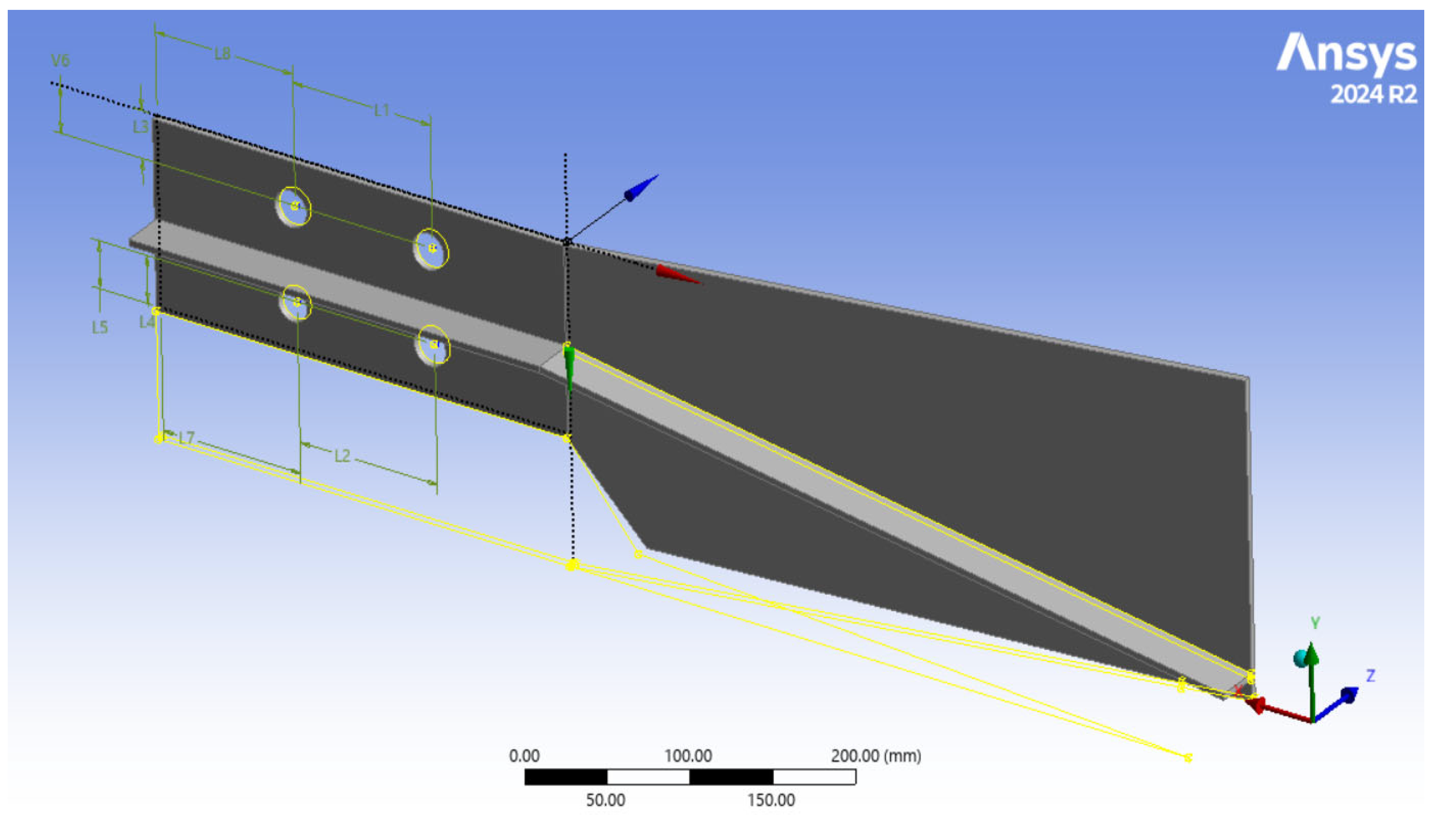
Accordingly, the following key geometric parameters were selected for the parametric study: l, h, t, α, r.
These values are taken into account in the parameter list in the Design Modeler module so that they can be changed during optimization (
Figure 5).
The choice of 09G2S steel for the manufacturing of the ELB-4S blade is conditioned by the optimal ratio of strength and plastic properties, high impact toughness during operation at low temperatures, and good weldability and processability, which ensures the reliability and durability of the working body. This makes the selected material optimal for heavy-duty applications characterized by impact loads, abrasion wear and tear, and variable stress conditions.
Table 4 summarizes the mechanical properties of the blade material.
The results of the parametric analysis are presented in
Table 5.
Table 5.
Mechanical properties of 09G2S steel.
Table 5.
Mechanical properties of 09G2S steel.
| Property | Denotation | Value (Standard) |
|---|
| Density | ρ | 7850 kg/m3 |
| Modulus of elasticity (by Young) | E | 210 GPa |
| Poisson’s ratio | ν | 0.3 |
| Yield strength | σ | 300 MPa |
| Breaking strength | σ | 470 MPa |
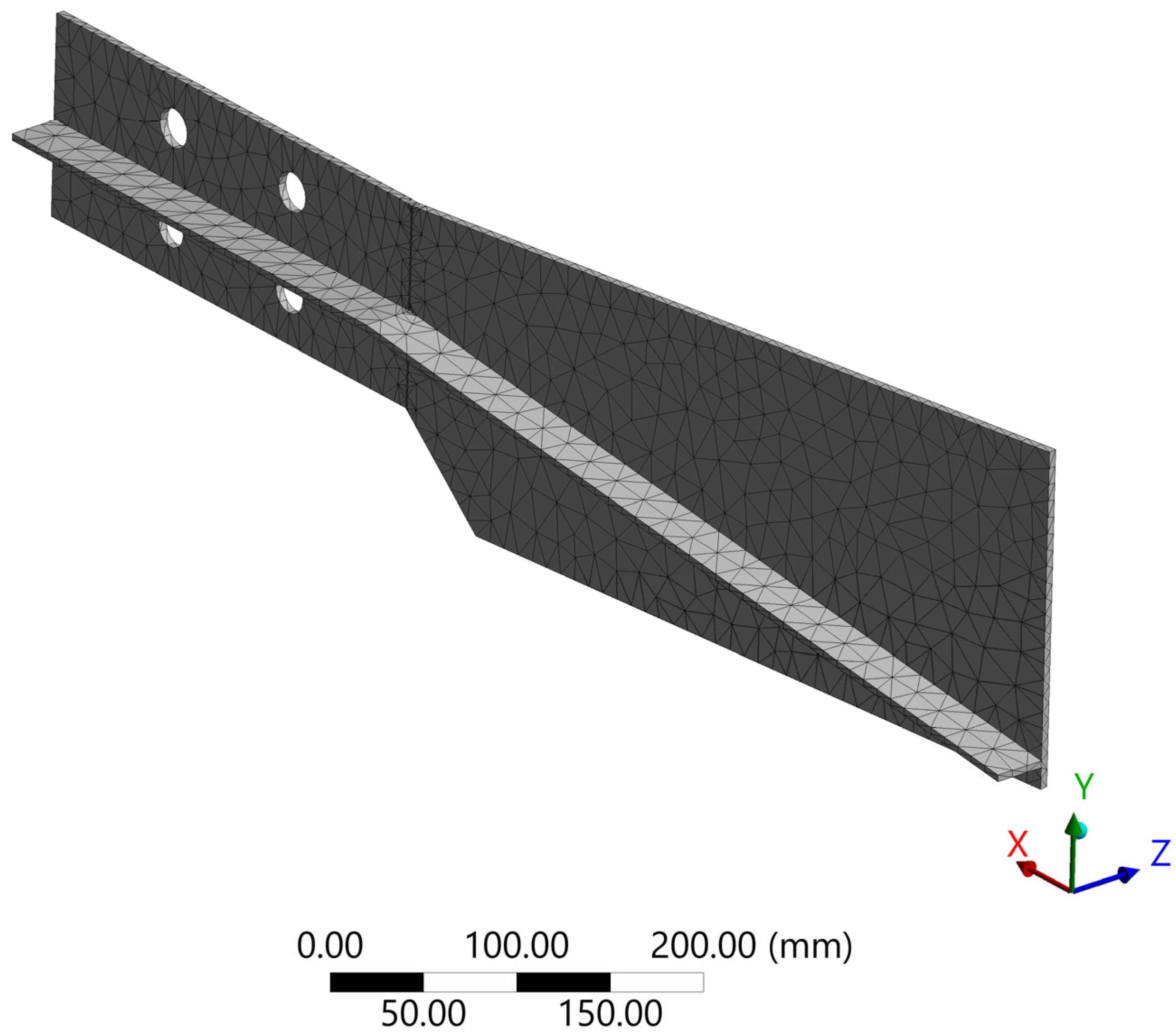
The finite element mesh is the basic element of numerical calculation, and the accuracy of the modeling results is largely determined by its quality and parameters. For the designed blade, an optimal mesh is formed taking into account the geometrical features of the design, loading conditions, and the requirements for the subsequent analysis of the repeatability of the calculation (
Figure 6).
Superposition of loads simulating the impact of crushed stone (
Figure 7):
The blade calculation is based on the mechanical representation of a cantilever-type plate subjected to gravitational loading generated by the ballast material.
The applied load was represented as a uniformly distributed pressure corresponding to the self-weight of the crushed stone layer. The pressure magnitude was calculated as:
where ρ is the bulk density of crushed stone (ρ = 1600 kg/m
3), g is the gravitational acceleration (g = 9.81 m/s
2), and h is the ballast layer height (h = 0.2 m).
The uniformly distributed pressure represents a globalized engineering approximation of ballast self-weight loading. Local contact non-uniformity is not explicitly modeled, as the objective of the study is a comparative parametric analysis rather than a discrete particle-level simulation.
Strength Condition:
where
σx,
σy,
σz are the normal stresses in three directions;
τxy,
τyz,
τzx are the shear stresses; [σ] is the acceptable stress (for 09GS steel [σ] = 200 MPa).
Finite element model validation was performed based on engineering consistency and strength-based verification principles.
The applied load representation corresponds to typical operating conditions of ballast profiling and captures the dominant global mechanical effect governing the blade response.
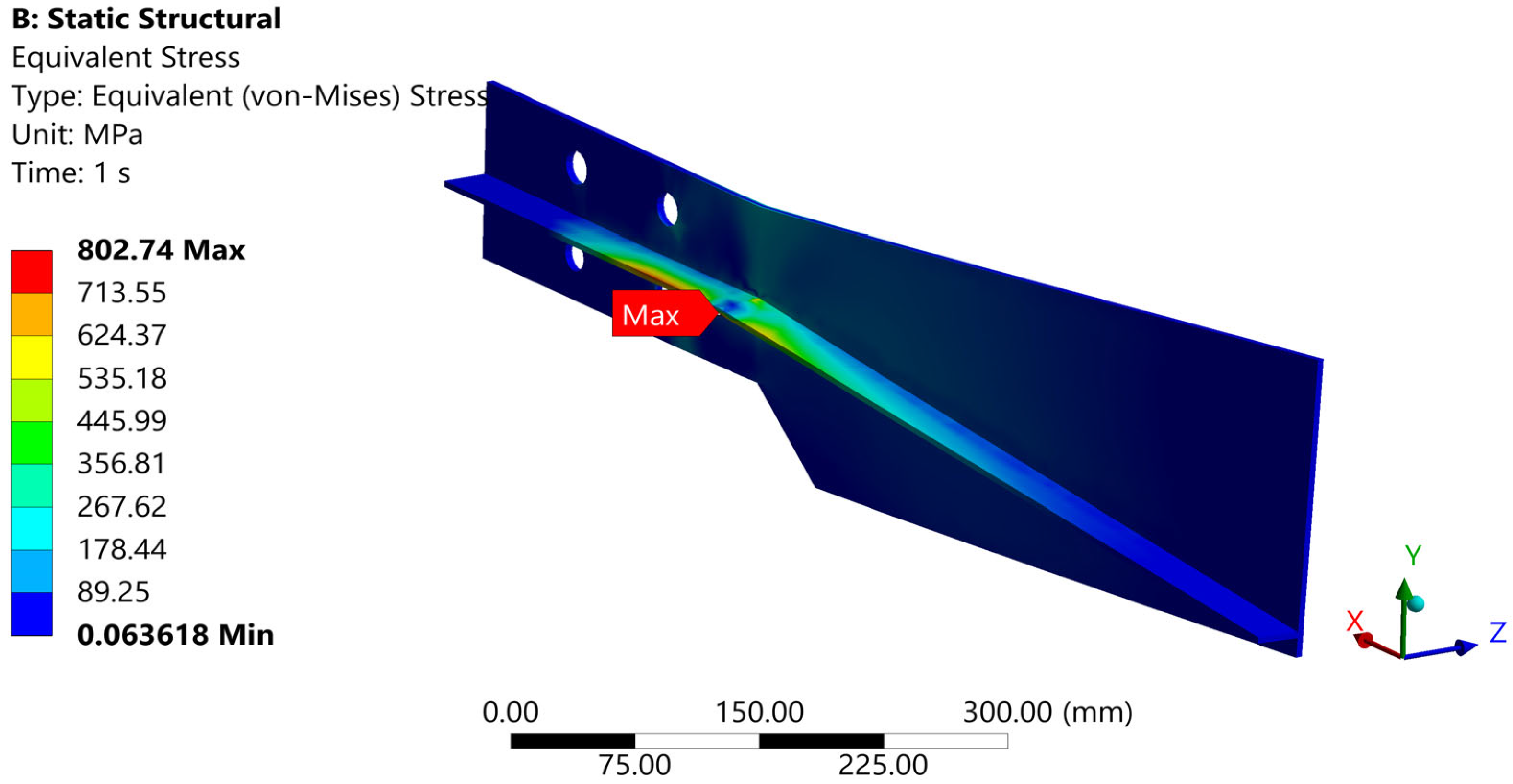
The resulting stress distribution exhibits the expected bending-dominated behavior characteristic of a cantilever-type structure.
The maximum equivalent (von Mises) stress remains below the material yield strength, confirming the physical adequacy and numerical reliability of the finite element model for parametric optimization purposes.
Total deformation and displacement fields were also evaluated and confirmed an elastic structural response without excessive deflection.
The difference between the current and finer mesh did not exceed 5% for maximum von Mises stress values, indicating numerical convergence. Therefore, the selected mesh density represents an optimal compromise between computational efficiency and result accuracy.
Optimization is performed using the DesignXplorer module 2023 to build the response surface and define the region of optimal solutions in the Response Surface Optimization module.
Response Surface Optimization is an optimization method based on approximating the results of numerical experiments using a response surface [
54,
55,
56].
Method sequence:
First, a series of calculations (26 calculations) with different parameter values (four variables) are performed using DOE (Central Composite Design) in ANSYS (
Table 6).
These are used to construct a response surface, a mathematical model that relates input parameters (two thicknesses, two angles) to output results (maximum Mises stress).
Optimization is performed not on the real model, but on an approximation; this significantly reduces the computational cost.
Central Composite Design is a type of experimental design in Response Surface Methodology (RSM). It is used to construct an approximation model (mathematical response surface) describing the dependence of the system response (e.g., stress or strain) on several varying parameters (e.g., thickness, angles, and curvature radii). The variation range and corresponding stress response values are summarized in
Table 7.
Table 7.
Foor variable Central Composite Design.
Table 7.
Foor variable Central Composite Design.
| No. | P1—t1 (mm) | P2—t2 (mm) | P4—α (deg) | P7—β (deg) | P3—Max Equivalent Stress (MPa) |
|---|
| 1 | 10 | 10 | 20 | 6.5 | 227.82 |
| 2 | 5 | 10 | 20 | 6.5 | 333.79 |
| 3 | 15 | 10 | 20 | 6.5 | 160.68 |
| 4 | 10 | 5 | 20 | 6.5 | 395.19 |
| 5 | 10 | 15 | 20 | 6.5 | 161.42 |
| 6 | 10 | 10 | 10 | 6.5 | 224.37 |
| 7 | 10 | 10 | 30 | 6.5 | 231.05 |
| 8 | 9 | 10 | 20 | 3 | 226.64 |
| 9 | 10 | 10 | 20 | 10 | 229.06 |
| 10 | 6.479 | 6.479 | 12.958 | 4.0353 | 415.31 |
| 11 | 13.521 | 6.479 | 12.958 | 4.0353 | 240.50 |
| 12 | 6.479 | 13.521 | 12.958 | 4.0353 | 234.14 |
| 13 | 13.521 | 13.521 | 12.958 | 4.0353 | 139.53 |
| 14 | 6.479 | 6.479 | 27.042 | 4.0353 | 420.12 |
| 15 | 13.521 | 6.479 | 27.042 | 4.0353 | 243.72 |
| 16 | 6.479 | 13.521 | 27.042 | 4.0353 | 220.91 |
| 17 | 13.521 | 13.521 | 27.042 | 4.0353 | 142.93 |
| 18 | 6.479 | 6.479 | 12.958 | 8.9647 | 418.36 |
| 19 | 13.521 | 6.479 | 12.958 | 8.9647 | 245.86 |
| 20 | 6.479 | 13.521 | 12.958 | 8.9647 | 235.53 |
| 21 | 13.521 | 13.521 | 12.958 | 8.9647 | 140.59 |
| 22 | 6.479 | 6.479 | 27.042 | 8.9647 | 424.62 |
| 23 | 13.521 | 6.479 | 27.042 | 8.9647 | 247.26 |
| 24 | 6.479 | 13.521 | 27.042 | 8.9647 | 222.82 |
| 25 | 13.521 | 13.521 | 27.042 | 8.9647 | 143.92 |
Kriging is the response plotting method chosen to obtain the surface. The advantages of this method are:
- -
it exactly passes through all computational points (in contrast to polynomial approximations);
- -
it works well for nonlinear dependencies;
- -
it takes into account both the global behavior of the function and local fluctuations;
- -
it gives an estimate of the approximation error at each point (useful for analyzing model confidence).
Kriging is one of the methods for constructing a response surface in the ANSYS Workbench. It is based on a statistical approximation of the data and combines a regression model (describes the overall trend) and a correlation function (accounts for local features).
3. Results
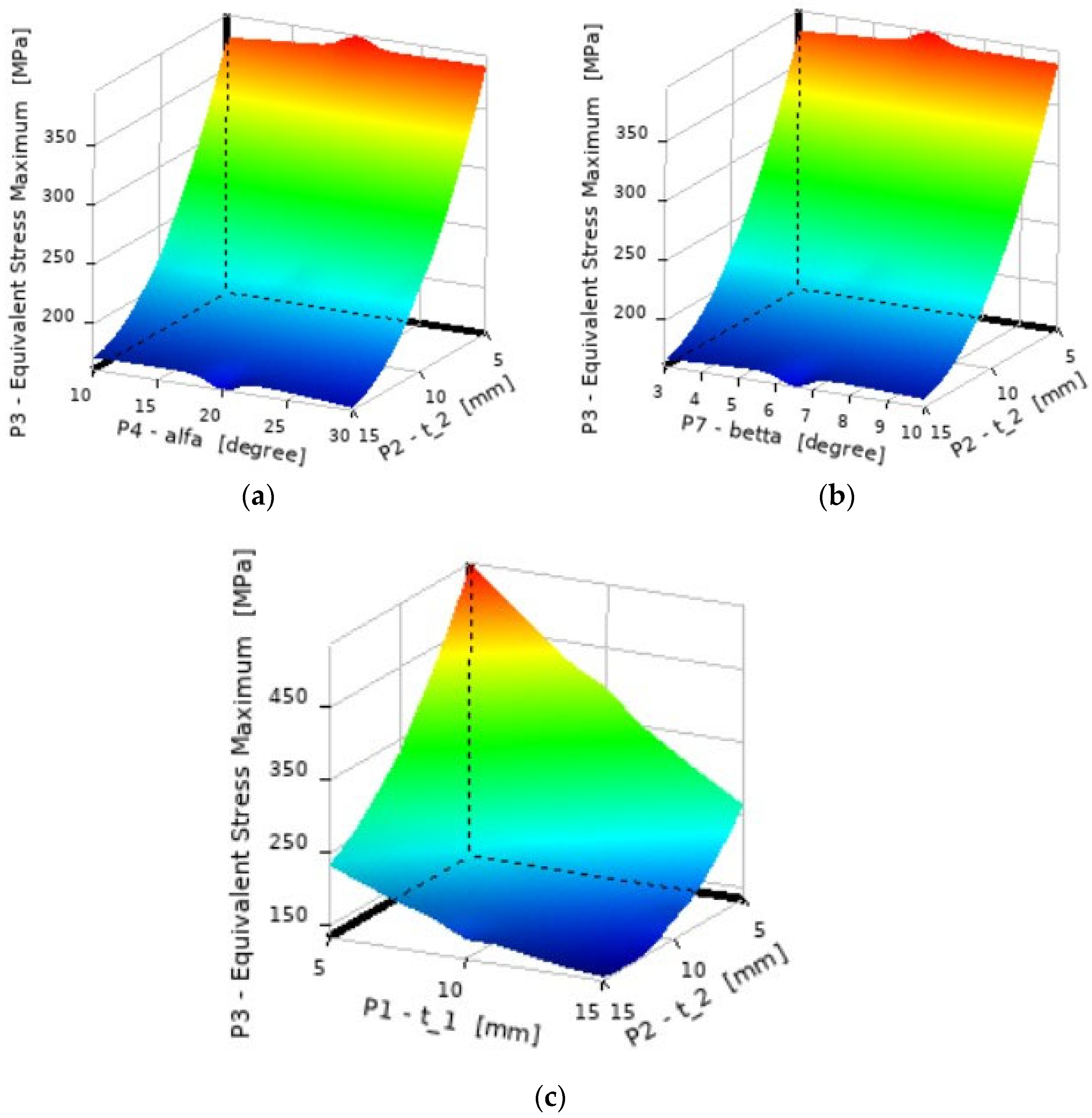
Figure 8 and
Figure 9 show that even small changes in the thicknesses result in a noticeable increase in stresses. This demonstrates that this parameter has a strong influence on the stress condition of the structure. A change in the blade angle affects the stresses more gradually; i.e., this factor is less sensitive.
In order to quantify the influence of each design variable, a normalized sensitivity analysis was carried out based on the response surface model. The sensitivity coefficients were determined by evaluating the relative change in the output response (maximum equivalent stress) with respect to variations in each input parameter within the investigated design range. The variation range and corresponding stress response values are summarized in
Table 8.
Table 8.
Quantitative sensitivity of design parameters to maximum equivalent stress.
Table 8.
Quantitative sensitivity of design parameters to maximum equivalent stress.
| Parameter | Variation Range | Stress Response Range | Normalized Sensitivity | Rank |
|---|
| α | 10–30 deg | 224–231 MPa | 0.84 | 1 |
| β | 3–10 deg | 226–229 MPa | 0.71 | 2 |
| t1 | 5–15 mm | 160.7–333.8 MPa | 0.46 | 3 |
| t2 | 5–15 mm | 161–395 MPa | 0.39 | 4 |
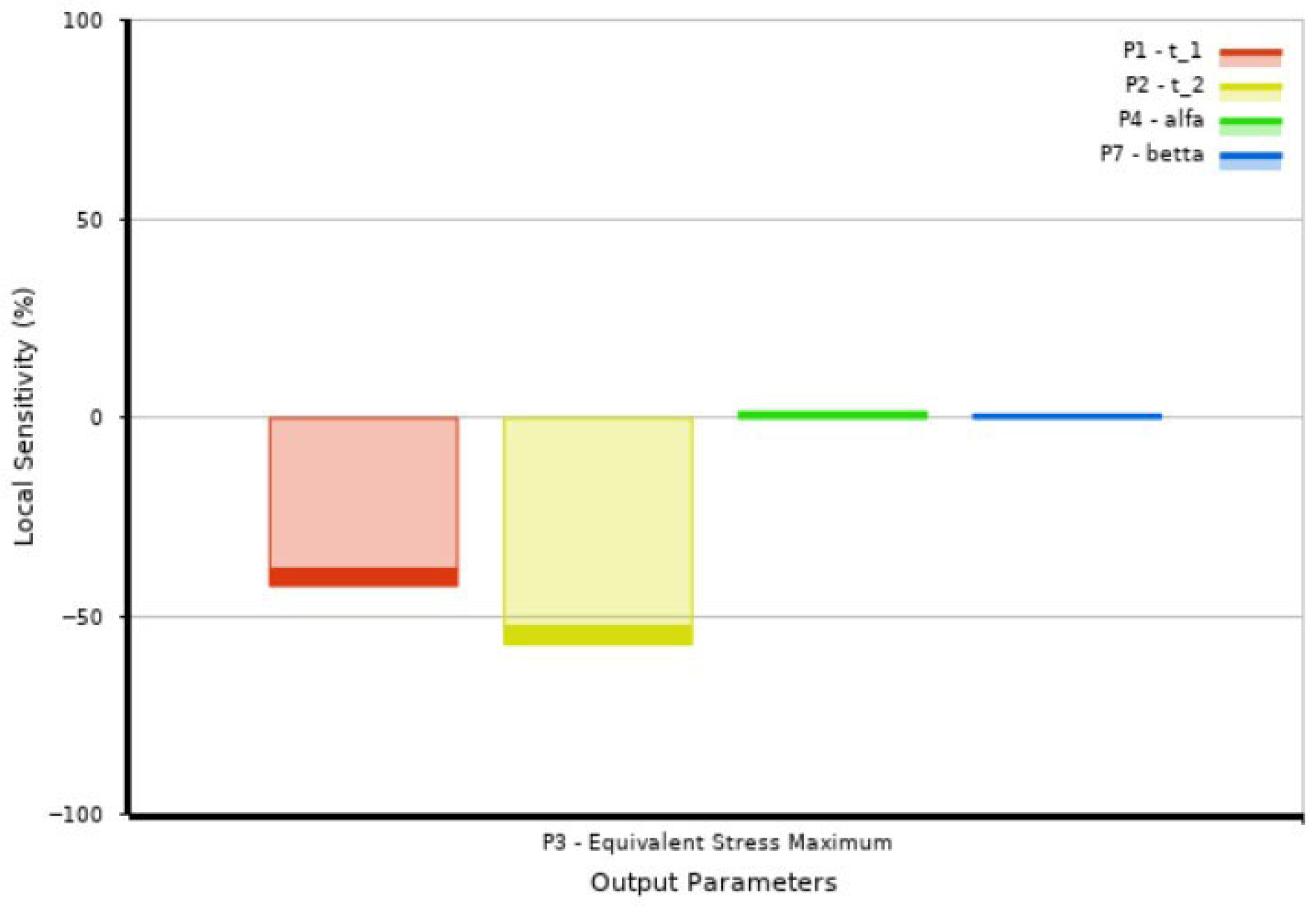
An analysis of the graphs allows for determining which geometric characteristics require priority optimization:
Figure 10 clearly indicates the parameters whose change has a key impact on the result.
The response surface analysis demonstrates that variations in inclination angles α and β produce the largest gradients of stress response, indicating their dominant influence on the stress–strain state.
Thickness parameters exert a secondary but stabilizing effect, primarily contributing to structural stiffness rather than stress reduction.
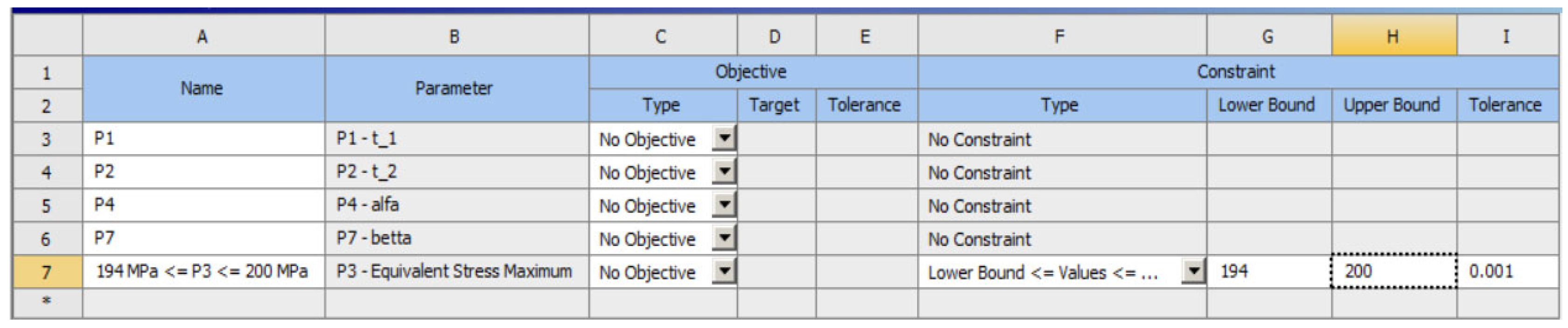
Next, we move on to optimizing the selected parameters. Let us select the optimization criteria (strength constraint) (
Figure 10).
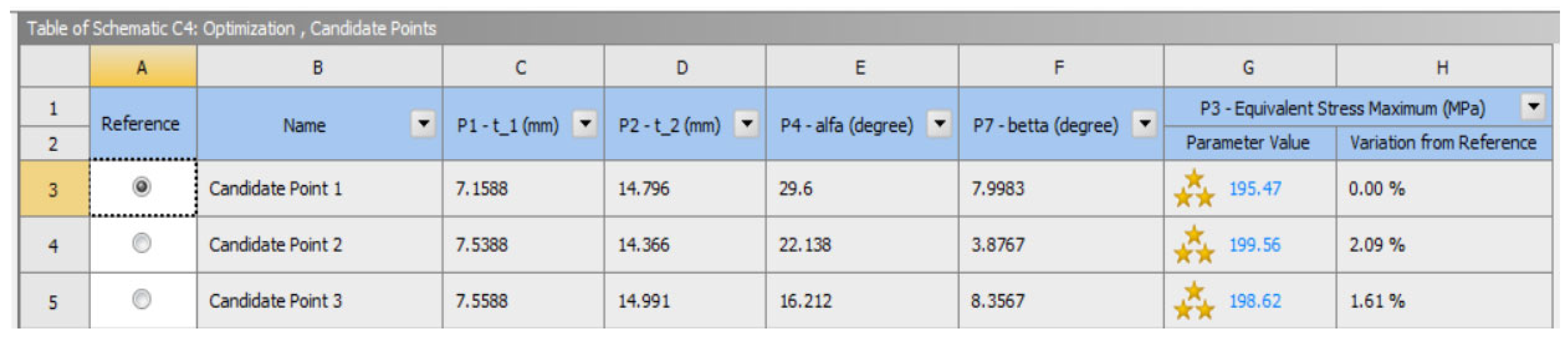
During the parametric optimization process in ANSYS Workbench (DesignXplorer), three design combinations of parameters (Candidate Points) were obtained (
Figure 11).
Candidate Point 1 is the basic variant, in which the element thickness t1 = 7.16 mm, t2 = 14.80 mm, and the angles α = 29.60 and β = 7.990. This variant showed the lowest Mises equivalent stress of 195.47 MPa.
Candidate Point 2—with an increase in thickness t1 to 7.54 mm and a decrease in angles α = 22.1 = 22.100 and β = 3.880, the maximum stress increased to 199.56 MPa; this is 2.09% greater than the basic value.
Candidate Point 3—for the parameters t1 = 7.56 mm, t2 = 14.99 mm, α = 16.200, and β = 8.360, the stress amounted to 198.62 MPa, which is 1.61% higher than the basic value.
Thus, the lowest stress level is achieved with the Candidate Point 1 parameters, making this variant optimal in terms of strength. The changes in angles α and β are most critical to the equivalent stress level.
The results of the calculations identified the influence of geometrical parameters on the stress-strain state of the blade. By means of optimization of such values of thickness and angles with which the strength is ensured, we, by rounding up, accepted the following: t1 = 7 mm; t2 = 14 mm; α = 300; and β = 80.
Optimized blade geometry (t1 ≈ 7 mm; t2 ≈ 15 mm; α ≈ 30°; β ≈ 8°) provides a reduction in equivalent stresses and an increase in the strength reliability of the structure, which allows for improving the efficiency of the dressing and finishing machine and the quality of ballast layer compaction.
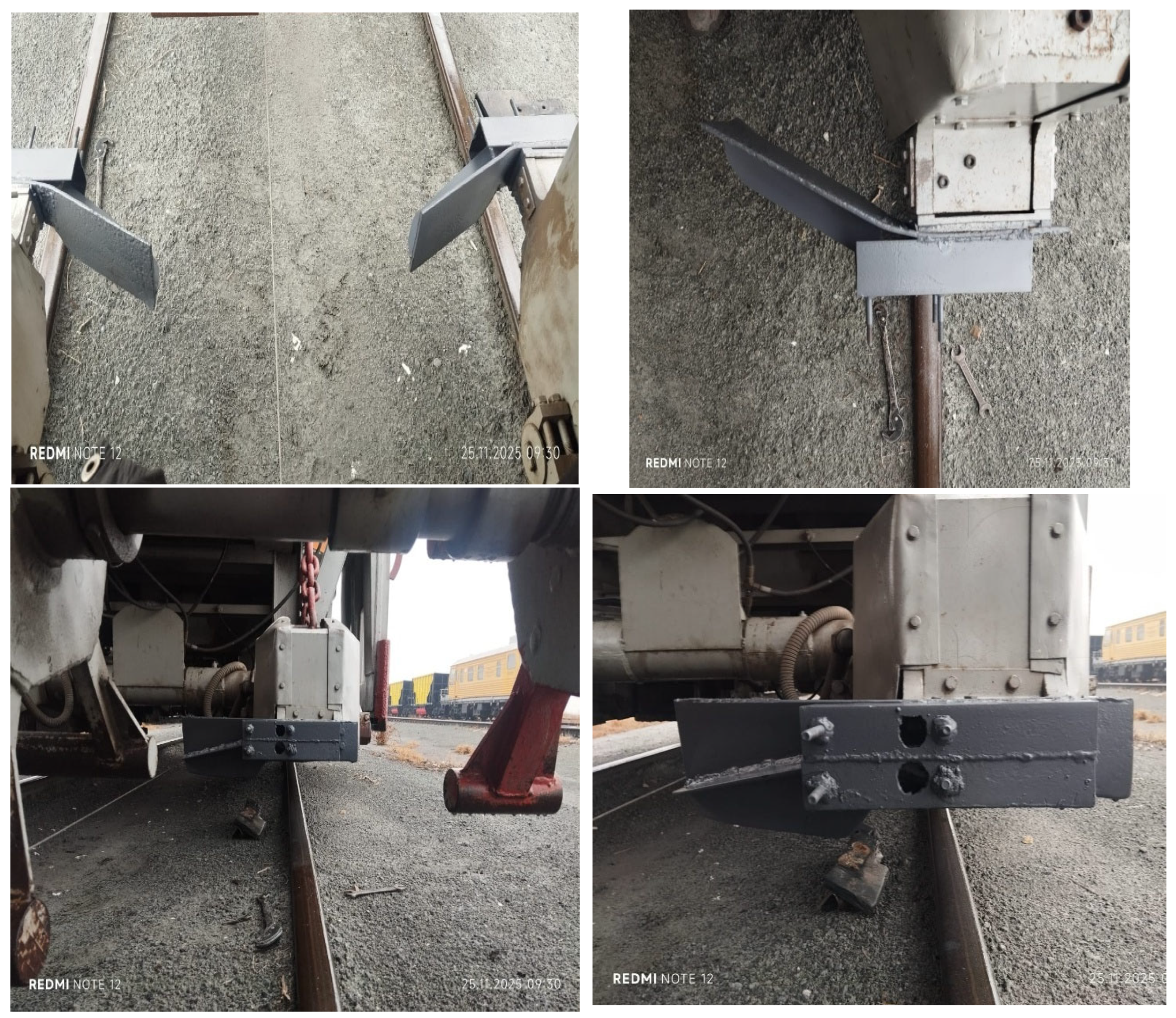
Field validation was carried out under real maintenance conditions on a railway track section with crushed-stone ballast. The pilot blade manufactured according to the optimized geometry was installed on the ELB-4S machine and operated during routine ballast profiling works.
The monitored indicators included the geometric stability of the blade, visible wear of the cutting edge, the presence of cracks or local damage, and general operational behavior during ballast redistribution.
During the test period, no structural failure or abnormal wear was observed, and the blade maintained stable geometry under working conditions. Although direct stress measurements were not performed in the field, the operational observations were consistent with the finite element predictions and confirmed the practical applicability of the optimized design.
The results of the field tests confirmed the efficiency of the modernized element and showed that the correct choice of design and kinematic parameters provides an increase in the quality of ballast preparation and a reduction in operational losses; the obtained data were used to verify the results of finite element modeling (
Figure 12).
Field testing included the monitoring of geometric stability, wear patterns, and operational behavior of the optimized blade under real track maintenance conditions. No structural damage or abnormal wear was observed during the test period, confirming the practical applicability of the optimized design.
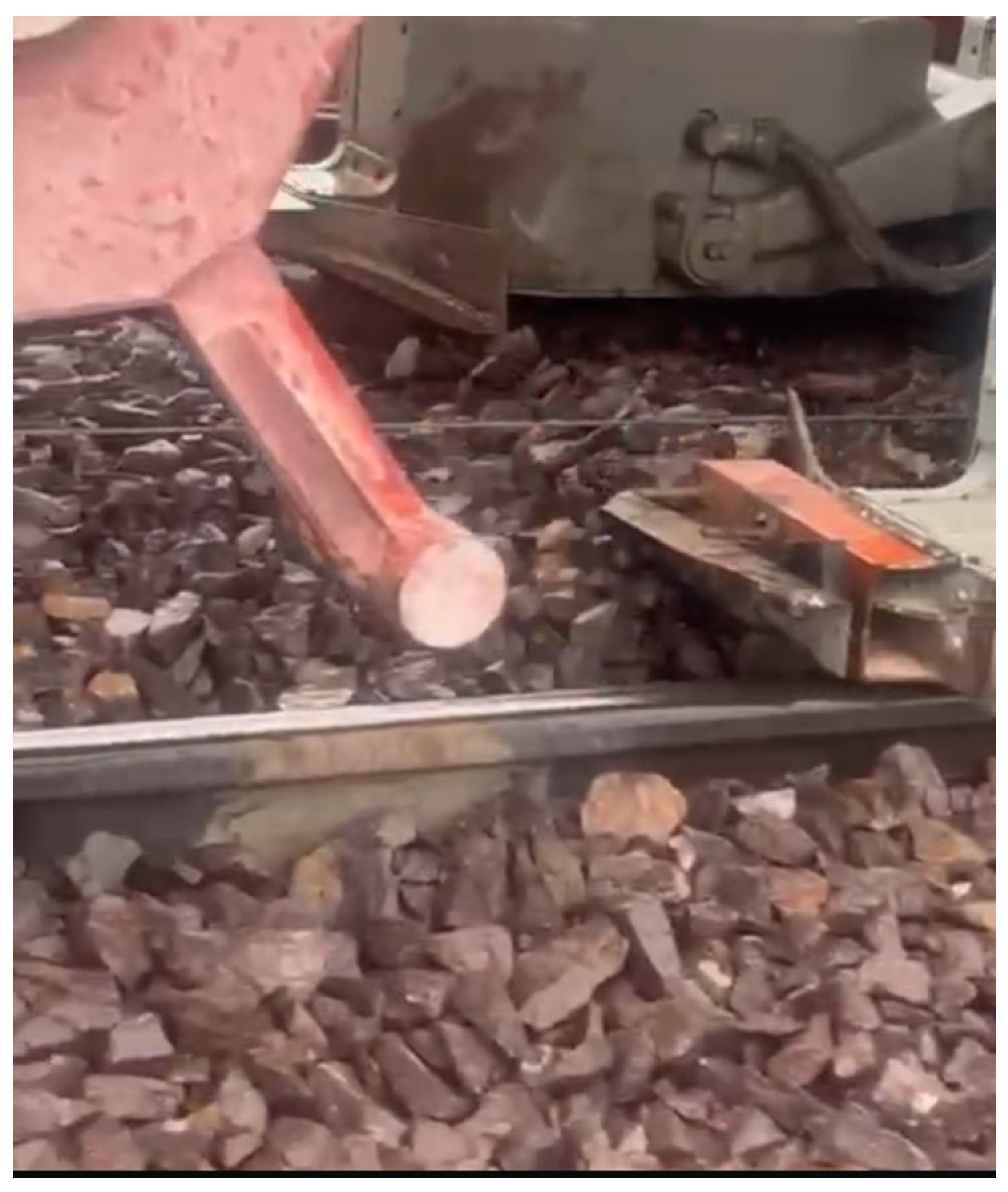
The experimental part of the research included the manufacture of a pilot blade with the optimized profile (Candidate Point 1) using 09G2S steel, its installation on the electric ballasting machine, and subsequent testing within the framework of already performed repair operations on the railway track (
Figure 13). In the process of operation during the ballasting operations, the stability of geometry, the nature of wear, and the presence of damage to the working body were recorded.
Figure 12.
Blade installed on the ELB machine.
Figure 12.
Blade installed on the ELB machine.
Figure 13.
The blade in operation.
Figure 13.
The blade in operation.
4. Discussion
The obtained results are consistent with previously published international studies, where the modernization of track maintenance equipment is recognized as an effective strategy for improving reliability and productivity without the complete replacement of the machine fleet.
For example, studies devoted to the modernization of the VPO-3-3000 track machine demonstrate that the constructive renewal of key assemblies ensures the technical feasibility of modernization and is supported by strength-based verification.
Similarly, research on ballast cleaning machines shows that the introduction of advanced control systems improves process stability and reduces the human-factor influence, while PR-based monitoring techniques provide an objective quality assessment of ballast maintenance operations.
At the same time, an analysis of the available literature indicates that the primary focus is typically placed on tamping, stabilization, and ballast cleaning complexes, whereas the modernization of ballast profiling machines remains comparatively underexplored, despite their critical role in ballast prism formation and the efficiency of repair “windows”.
The results of the present study contribute to this direction by demonstrating that the operational efficiency of the ELB-4S electric ballasting machine is strongly governed by the design and kinematic parameters of its working body, which define the mechanical interaction with the ballast material. It was established that the rationalization of blade geometry and working parameters is directly associated with reduced energy consumption, improved ballast redistribution uniformity, and lower wear intensity of machine assemblies.
Thus, the findings of this study do not contradict established modernization concepts, but extend them by emphasizing working-body optimization as a priority and mechanically efficient modernization pathway for ballast profiling machines [
51,
54,
55,
56,
57,
58,
59,
60,
61,
62].
From an economic perspective, the proposed design modification does not require changes in manufacturing technology or material type, which minimizes implementation costs.
The increased service life and reduced failure probability of the working body contribute to lower maintenance expenditures and improved machine availability.
Structural reinforcement was not considered as the primary strategy, since it would alter mass distribution, kinematics, and ballast flow behavior. Parametric geometric optimization provides a weight-neutral and mechanically consistent method for improving stress distribution within existing machine constraints.
From an engineering-economic standpoint, the proposed modification is feasible because it does not require a change in material grade or manufacturing technology. Therefore, implementation costs are limited mainly to dimensional adjustment of the blade geometry. At the same time, the reduction in equivalent stress is expected to increase service life and reduce maintenance frequency. Consequently, the optimized blade may provide economic benefits through lower lifecycle maintenance costs and reduced downtime of the ballasting machine.
It should be noted that the adopted load model represents an engineering simplification of the real blade–ballast interaction. In actual operating conditions, the ballast medium is discrete, and the load acting on the blade is non-uniform, time-dependent, and influenced by vibration and impact effects. However, the objective of the present study was not particle-scale simulation, but a comparative evaluation of geometric parameters within a computationally efficient optimization framework. Therefore, the uniformly distributed pressure was used as a first-order engineering approximation of ballast resistance. Further research will be aimed at developing a coupled DEM–FEM or transient dynamic model that accounts for discrete ballast particles, impact loading, and vibrational effects.