


Abstract
To overcome the drawbacks of conventional wedge cut blasting—high peak particle velocity (PPV), low blasthole utilization, and a high proportion of large fragments—this paper proposes a delayed blasting method for wedge cut blasting. By integrating the rock-fracturing process of wedge cut blasting, the mechanisms of rock breaking and vibration reduction are investigated and confirm the method through field tests. The results indicate that the rock breaking process can be divided into two stages, the stage of fracture propagation and the stage of cavity ejection, and a rock breaking criterion for wedge cut delayed blasting is established. Considering differences in the vibration waveforms generated by different types of cut holes, a vibration waveform fitting method for wedge cut delayed blasting is proposed. Furthermore, the generation time of the blast-induced free surface during the rock breaking process is calculated, and a calculation Equation for the optimal delayed time is derived. Field tests in the Qi Jiazhuang tunnel show that, compared with conventional blasting, the proposed delayed blasting method increases blasthole utilization by 23.8%, reduces the large fragment rate by 67.4%, lowers PPV by 53.7%, and increases the dominant vibration frequency by 42.0%. These results significantly improve the wedge cut blasting performance and construction safety.
1. Introduction
Drill-and-blast excavation remains one of the most widely used construction methods in tunnel engineering because of its strong adaptability to complex geological conditions, relatively low equipment dependence, and high flexibility in section adjustment. In a blasting round, the cut holes are detonated first to create an initial cavity and a blast-induced free surface for the subsequent holes [1]. Therefore, the performance of the cut blasting directly affects the cavity formation quality, advance per round, fragmentation quality, and overall excavation efficiency. According to the spatial relationship between the cut holes and the tunnel face, tunnel cut blasting patterns can generally be classified into parallel cut, wedge cut, and hybrid cut. Among these cut blasting patterns, parallel cut has advantages of simple operation and ease of drilling; however, its drawbacks include a large number of holes, substantial drilling workload, and high specific explosive consumption [2]. Wedge cut generally yields a slightly shorter advance per round, but it requires lower specific explosive consumption and achieves better cavity formation [3]. Hybrid cut can better accommodate varying rock properties and engineering requirements and is particularly suitable for cases involving extremely hard surrounding rock or deep-hole blasting, where it can markedly improve construction efficiency and safety. Considering factors such as tunnel cross-sectional area, advance per round, and construction operability, inclined cut is currently one of the most widely adopted blasting methods in tunnel excavation [4,5]. As the most commonly used form of inclined cut, wedge cut blasting has been extensively investigated from multiple perspectives in order to improve its blasting efficiency.
Some scholars have investigated wedge cut blasting from the perspective of cut pattern and parameter design. Lou et al. [6] studied the rock breaking mechanism of tunnel wedge cut blasting and deriving calculation Equations for the corresponding blasting parameters by establishing a mechanical model for the wedge cut blasting cavity. Recent international studies have further shown that cut design should be evaluated not only in terms of excavation advance but also in terms of construction efficiency, charge utilization, and adaptability to different tunnel sizes and rock conditions [7,8]. In addition, new cut layouts such as compound or mixed cut times have been proposed for hard-rock tunnels with restricted construction space, further extending the design idea of conventional wedge cuts [9]. Tian et al. [10] proposed a theoretical method for reduced hole blasting in large-section tunnels as an alternative to the traditional drilling-and-blasting design concept of “more holes with less charge” and presented a calculation method for the extrapolation distance of wedge cut holes based on explosive energy dissipation and the critical rock fragmentation energy characteristics.
At the same time, increasing attention has been paid to the rock breaking mechanism and energy evolution of cut blasting. Lanari et al. [11] employed a continuous two-dimensional analytical model to simulate the effects of shock waves and detonation gas generated by wedge cut blasting on the surrounding rock. Cheng et al. [12] investigated the influence of charge diameter on the blasting performance of wedge cuts in hard rock and analyzed the shock wave propagation history and stress field distribution characteristics within the cut cavity under different charge diameters. Further studies emphasized that the blasting performance of different cutting methods is closely related to the distribution and utilization of explosive energy, and that the cavity-forming process should be regarded as a coupled process involving stress wave action, gas expansion, crack propagation, and fragment ejection [13,14]. More recently, refined characterization methods such as 3D laser scanning, numerical reconstruction, and multi-scale FDM–DEM coupling have been introduced to quantify cavity morphology, surrounding rock damage, and energy dissipation more accurately, indicating a clear shift from empirical judgment to a more mechanism-based evaluation [15,16]. Recent studies have shown that cutting angle, induced-fracture angle, and the coupled shear–tensile resistance of the surrounding rock can significantly affect stress redistribution and rock fragmentation within the cavity [17].
With optimization of delayed initiation, studies on wedge cut blasting with delayed hole initiation have shown that appropriate inter-hole delay can improve free-surface creation, reduce rock clamping, and promote the staged release of explosive energy [18]. In addition, hole-inner delay and center-hole supplementary cut methods have been proposed to reorganize the initiation sequence and compensation space inside the cut region, thereby improving cavity formation and excavation efficiency [19,20]. These studies indicate that delayed time is not only a vibration control parameter, but also a key variable governing the temporal and spatial coordination of rock breaking, cavity expansion, and muck ejection [21].
Another important research line concerns blasting vibration and structural safety. Existing studies have shown that blast-induced vibration is one of the main constraints on the engineering application of efficient cut blasting, especially in shallow-buried tunnels or tunnels adjacent to existing structures. A blasting vibration safety criterion for tunnel lining structures has been proposed, which provides an important basis for evaluating the dynamic safety of underground support systems [22]. Recent studies have further revealed the dynamic responses and failure-prone zones of existing tunnels under transient excavation unloading or disturbance caused by nearby blasting, highlighting the sensitivity of adjacent underground structures to dynamic loading [23]. Moreover, vibration propagation and stress evolution in complex tunnel systems are strongly affected by tunnel geometry, structural interaction, and blasting sequence, which further emphasizes the necessity of incorporating vibration control into cut blasting design at the source [24].
Although substantial progress has been achieved in cut geometry optimization, cavity formation analysis, delay design, and vibration safety assessment, several important issues in tunnel wedge cut delayed blasting remain insufficiently addressed. First, existing mechanism studies mainly focus on conventional wedge cuts or modified cut layouts, while the rock breaking and cavity-forming mechanisms of wedge cut delayed blasting itself have not yet been systematically clarified. Second, although vibration response and structural safety under blasting have been widely studied, relatively few studies have directly linked the staged blasting process in wedge cut holes with vibration waveform superposition and practical delayed time determination. Third, existing delayed time optimization studies are still limited in number, and a practical engineering method that simultaneously considers cavity formation conditions and vibration reduction effects is still lacking.
To address the above issues, this study investigates the rock breaking and vibration reduction mechanisms of wedge cut blasting in tunnel and proposes a wedge cut precise delayed blasting method. First, the rock breaking process of wedge cut delayed blasting is analyzed from the perspectives of fracture propagation, cavity formation, and fragment ejection. Then, a practical delayed time calculation method is developed by integrating cavity formation analysis with vibration waveform superposition. Finally, field tests were conducted in the Qi Jiazhuang tunnel to validate the proposed method in terms of blasthole utilization, fragmentation quality, vibration intensity, and dominant vibration frequency. The results provide both mechanistic insight and practical guidance for safer, more efficient, and tunnel blasting construction with reduced disturbance.
2. Proposed Wedge Cut Precise Delayed Blasting Method in Tunnel
In the present study, an eight-hole wedge cut layout for the first step is adopted as the engineering case for developing and validating the proposed wedge cut delayed blasting method. This layout is selected according to the excavation section, surrounding rock conditions, and construction requirements of the Qi Jiazhuang tunnel, and should not be regarded as a universally applicable arrangement for all tunnel blasting cases.
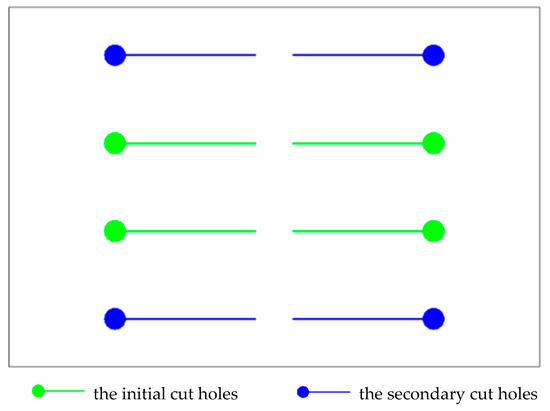
Four pairs of cut holes (eight holes in total) are arranged in the Qi Jiazhuang tunnel, as shown in Figure 1. All these holes are detonated simultaneously in conventional wedge cut blasting. The proposed wedge cut precise delayed blasting method is a blasting time sequence developed in this study, which divides these cut holes into initial cut holes (green) and secondary cut holes (blue). After the initial cut holes detonate, the rock in that zone is fractured and ejected outward under the combined action of explosion stress wave and detonation gas, thereby forming a blast-induced free surface. Then, the secondary cut holes detonate after a certain delayed time. By altering the initiation sequence of the wedge cut holes and adopting electronically detonated caps to implement a rational and precise delayed time, this method can improve blasting performance while simultaneously reducing blasting vibration.
Figure 1.
Layout of proposed wedge cut delayed blasting.
3. Rock Breaking Mechanism of the Proposed Wedge Cut Delayed Blasting in Tunnel
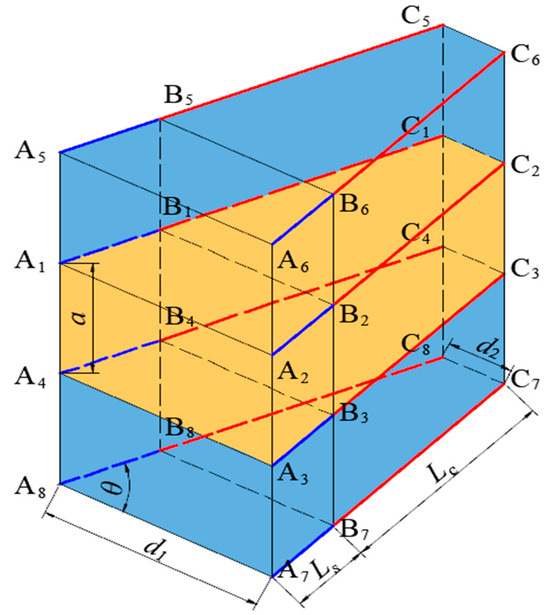
As an important engineering technology, rock blasting has been widely applied in mining, construction, energy, and other fields. Therefore, a thorough understanding of rock breaking mechanisms is crucial for improving engineering efficiency and ensuring project safety. The cavity block model of wedge cut delayed blasting in tunnel is shown in Figure 2. The cavity block for the initial cut holes is represented by the yellow area in Figure 2. A1A2A3A4 represents the free surface; C1C2C3C4 represents the bottom of the cavity for the initial cut holes. A1C1, A2C2, A3C3, and A4C4 represent the cut holes with a length of L. B1C1, B2C2, B3C3, and B4C4 represent explosives with a length of Lc. A1B1, A2B2, A3B3, and A4B4 represent stemming sections with a length of Ls. d1 represents the collar spacing, d2 represents the spacing between cut hole bottoms, a represents the spacing between adjacent cut holes, θ represents the inclination angle of the cut holes, db represents the diameter of the cut hole, and dc represents the diameter of the explosive. The specific representatives can be seen in Figure 2.
Figure 2.
Cavity block model of wedge cut delayed blasting.
When the explosives (B1C1, B2C2, B3C3, and B4C4) are detonated simultaneously, cracks propagate in the rock between adjacent cut holes under the combined action of the explosion stress wave and detonation gas. These cracks eventually cause the cavity boundary to separate from the surrounding rock, resulting in the formation of a complete cavity. Subsequently, the cavity overcomes its self-weight and the frictional resistance of the sidewalls and is ejected outward. This process provides a new free surface for the detonation of the secondary cut holes and sufficient space for subsequent rock fragmentation.
To simplify the mechanical analysis of cavity formation in wedge cut delayed blasting, the following assumptions are adopted.
(1) The rock breaking process is divided into two stages: the stress wave-dominated crack initiation and propagation stage, and the gas pressure-dominated cavity expansion and rock ejection stage.
(2) Before the gas pressure-dominated cavity expansion and rock ejection stage begins, cracks between adjacent cut holes and toward the free surface are assumed to be partially penetrated under the action of the explosion stress wave, so that the rock in the cut region can be treated as a detachable blasting rock.
(3) The resistance to rock movement during the stage of the stress wave-dominated crack initiation and propagation mainly consists of shear resistance, tensile resistance, self-weight, and frictional resistance. Since this stage is dominated by rock movement after crack development, the shear resistance is evaluated using the Mohr–Coulomb criterion as an engineering approximation [25], rather than a complete dynamic failure criterion for the entire blasting process.
(4) During the gas pressure-dominated stage, the detonation gas is assumed to rapidly fill the effective cavity space and exert an equivalent pressure on the surfaces of the rock. The present model focuses on the dominant gas pressure loading and does not explicitly quantify the transient contribution of secondary shock waves after cavity formation.
(5) The rock is assumed to move mainly toward the free surface and along the direction of the minimum resistance line, and the short-duration dynamic interaction is represented in an equivalent mechanical form rather than by a full high-rate constitutive model.
It should be noted that the Mohr–Coulomb criterion is not used here to describe the instantaneous failure caused by the initial high-rate stress wave, but rather to estimate the equivalent shear resistance during the stress wave-dominated crack initiation and propagation stage after crack initiation. Therefore, its use in the present study is an engineering simplification for the analysis of cavity formation and rock ejection, rather than a complete dynamic failure description for the entire blasting process.
Therefore, the rock breaking process of wedge cut delayed blasting can be summarized as follows: the initial cut holes are detonated first, and the explosion stress wave initiates and propagates cracks between adjacent cut holes and toward the free surface. After sufficient crack development and cavity formation, the detonation gas continues to act on the fractured rock mass, driving cavity expansion and rock ejection. After a precise delayed time, the secondary cut holes are detonated. Based on the above staged mechanism, the formation of cavity by the initial cut holes should satisfy two conditions: (1) the explosive-induced load acting on the upper boundary of the cavity along the direction of the minimum burden must exceed the sum of the shear resistance around the cavity and the tensile resistance at the cavity bottom; (2) under the action of the detonation gas, the cavity rock mass must overcome its self-weight and frictional resistance and be ejected out of the surrounding rock. On this basis, the rock breaking process of wedge cut delayed blasting in tunnels is divided into two stages, namely the stage of fracture propagation and the stage of cavity ejection, and the corresponding criteria are established for each stage. These two stages are not only used to describe the physical process of rock breaking but also provide the basis for the corresponding cavity formation criteria.
3.1. The Stage of Fracture Propagation
In this stage, the objective is to determine whether the explosive-induced load is sufficient to cause crack penetration and separation of the cavity block boundary from the surrounding rock. For engineering simplicity, the load acting on the cavity block boundary and the resisting forces are represented in an equivalent mechanical form.
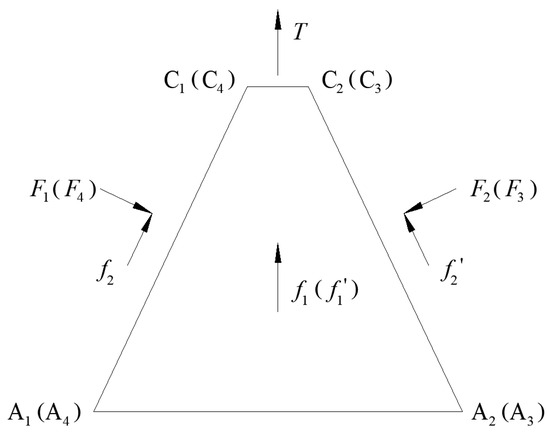
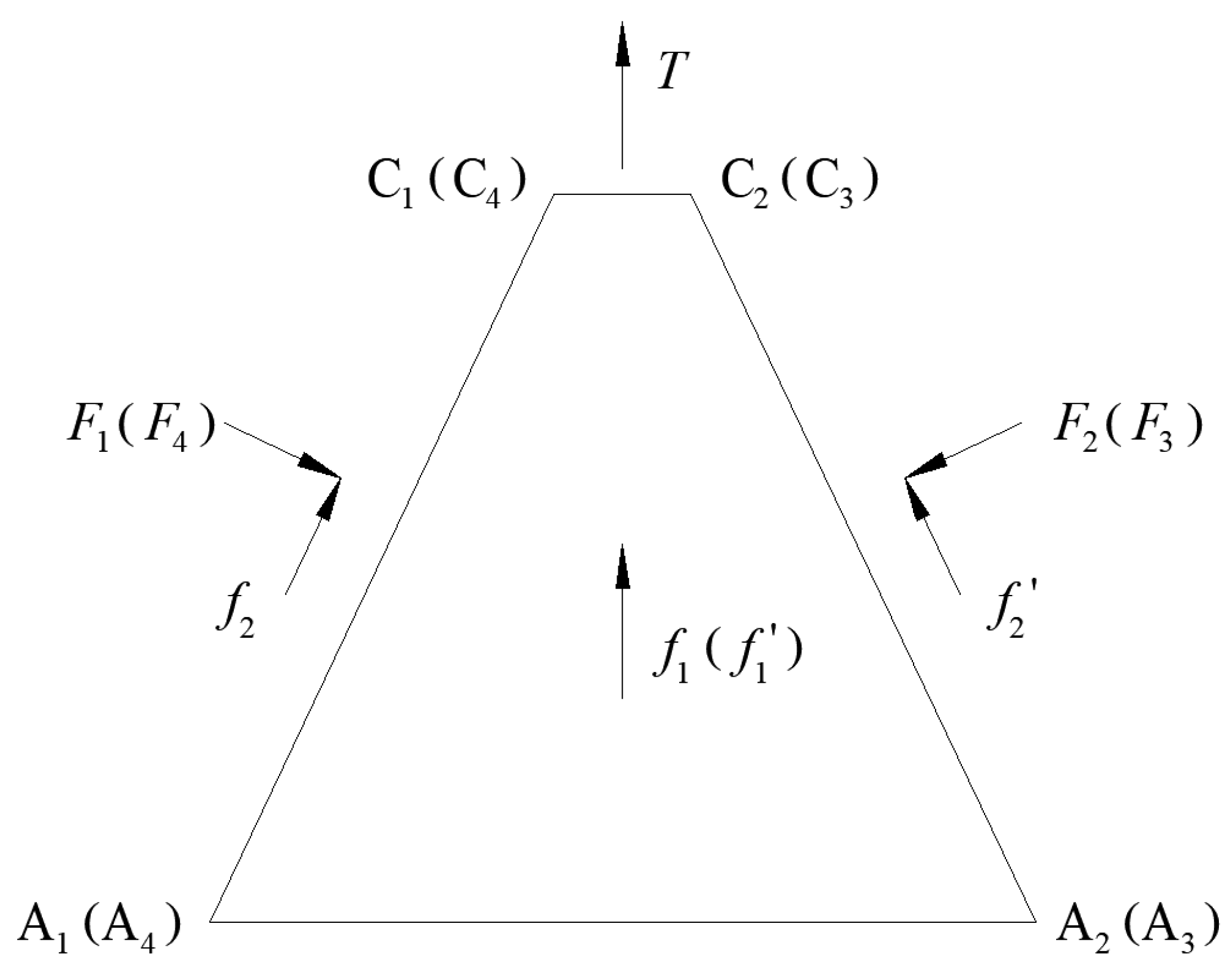
Figure 3 shows the top view of the forces acting on the cavity block. f1, , f2, and represent the shear resistances acting on surfaces A1A2C2C1, A4A3C3C4, A4A1C1C4, and A2A3C3C2, respectively. T represents the tensile resistance acting at the cavity block bottom C1C2C3C4. F1, F2, F3, and F4 represent the blasting load acting on the cut hole walls after the detonation of the explosive B1C1, B2C2, B3C3, and B4C4, F1 = F2 = F3 = F4.
Figure 3.
Top view of the force in wedge cut cavity block.
The shear resistance f1 can be expressed as follows [26]:
where c represents cohesion; represents internal friction angle. represents normal stress. The shear resistance in surfaces A3A4C4C3 is equal to f1. The shear resistance f2 can be expressed as follows:
where represents horizontal tectonic stress. The shear resistance is equal to f2. Therefore, the total shear resistance f experienced by the wedge cut in the direction of the minimum resistance line can be expressed as follows:
The tensile resistance T can be expressed as follows:
where σt represents tensile strength. After the explosive is detonated, the blasting load P acts on the cut hole wall [27].
where ρ0 represents the density of the explosive, kg/m3; D represents the detonation velocity of the explosive, m/s; n represents the pressure increase coefficient when the detonation products impact the cut hole wall, n = 8–10; and γ represents the adiabatic expansion index of the detonation products, γ = 3.
Accordingly, the resultant force F acting along the minimum burden line of the cavity can be expressed as follows:
Therefore, the criterion for ensuring fracture penetration during the stage of fracture propagation can be expressed as follows:
Equation (7) is the fracture propagation criterion for the initial cut holes, rather than the final Equation for calculating the optimal delayed time.
3.2. The Stage of Cavity Ejection
After the initial cut holes form a complete cavity, the fractured rock inside the cavity is treated as a detachable blasting block. The analysis in this stage focuses on the gas pressure-driven cavity ejection process, rather than the instantaneous high-rate failure induced by the initial explosion stress wave. To improve the effectiveness of the secondary cut holes blasting, the cavity rock should be fully ejected from the cut cavity [28].
where V0 represents the initial velocity of the cavity rock block at the moment it separates from the surrounding rock; M represents the mass of the cavity block; Ib represents the initial impulse of the detonation gas and the cavity block; and If represents the impulse due to frictional resistance acting on the cavity block.
where Sℎ represents the cross-sectional area of the charged section of the cut holes in the axial direction of the cavity block; Si represents the contact area between the cavity block and the surrounding rock; δ represents the dynamic friction coefficient between the cavity block and the surrounding rock, δ = 0.2; and Pm represents the initial pressure acting on the cavity block at the moment of separation from the surrounding rock, and its variation with time is expressed as:
Substituting Equations (9) and (10) into Equation (8) gives the initial velocity V0. Due to the small advance per cycle of the cut blasting process, the cavity block can be regarded as undergoing uniformly accelerated motion along the direction of the resistance line under the action of the blast load and detonation gas. The resultant force K acting on the cavity block during ejection is as follows:
When the cavity block is fully ejected, V1 ≥ 0. According to the law of conservation of energy, the following relation can be obtained:
Thus, the initial velocity V0 should satisfy the following condition:
By combining Equations (7) and (13), the cavity formation criteria for wedge cut blasting can be derived. These criteria not only help clarify the rock breaking mechanism in tunnel excavation but also provide a basis for precise delay-time calculation, thereby improving the effectiveness of wedge cut blasting and enhancing the safety of tunnel excavation.
4. Calculation of Delayed Time for Wedge Cut Blasting
Delayed time is the one of key factor affecting the vibration and rock breaking performance in wedge cut blasting. Thus, the Anderson superposition principle is introduced to determine the optimal delayed time for wedge cut blasting.
4.1. Anderson Superposition Principle
Anderson et al. [29] proposed a method for predicting the vibration waveform of group hole blasting based on linear superposition theory. This method involves measuring the vibration waveform of a single hole blasting in the field and linearly superimposing it to obtain the vibration waveform of group holes blasting. Since the vibration waveform measured from a single hole blasting accurately reasonably reflect the geological characteristics of the blasting site, this method can be applied under various blasting conditions. When applying the Anderson superposition principle to the linear superposition of single cut hole blasting vibration waveforms, the vibration waveform of delayed group cut holes blasting V(t) can be expressed as:
where Δti represents the initiation delayed time between the i cut hole and its neighboring cut hole, v(t) represents single cut hole vibration waveform, and n represents the type of cut holes.
During the process of tunnel wedge cut blasting, the charge quantity, free surface, and other conditions vary among different types of cut holes on the tunnel face, leading to significant differences in the blasting vibration waveforms. Therefore, it is inappropriate to use a single cut hole vibration waveform to superimpose the vibration waveform of group cut holes. This study introduces a method for obtaining the vibration waveforms of different types of cut holes through field measurements, followed by waveform superposition calculations to determine the vibration waveform of grouped cut holes under precise delay conditions. The expression can be expressed as:
where Vi(t) represents the vibration waveform generated by the i-th type of cut hole.
4.2. Fitting Method for Blasting Vibration Waveforms
The vibration waveforms of different types of cut holes were obtained through field single-hole blasting tests under controlled delayed conditions. Because the measured waveforms are discrete data points for different types of cut holes, these waveforms cannot be directly used for superposition calculations under different delayed times. Therefore, the measured waveforms should be fitted into continuous functional expressions to enable subsequent superposition calculations.
Since current vibration monitoring equipment cannot automatically adjust the monitoring time according to the actual blasting vibration in real time, the sampling time is set before the experiment. To ensure that the complete vibration waveform is captured, the sampling time is often longer than the actual vibration duration, leading to some irrelevant data being included in the monitoring results. Before fitting, the measured single cut hole vibration waveform must be truncated to the effective vibration interval [0, ζ] in order to remove irrelevant data outside the actual vibration duration. The truncated waveform was then fitted using the Gauss function to obtain a continuous functional expression for subsequent superposition calculations. The fitting expression for the waveform of a single type of cut hole based on the Gauss function is as follows [30]:
The fitting coefficients aj, bj and cj represent the amplitude, position, and width parameters of the Gaussian components, respectively; and m denotes the fitting order. The fitting quality of the fitted function was evaluated using R2.
4.3. Calculation of the Precise Delayed Time for Wedge Cut Blasting
Based on Equation (20) and MATLAB programming, the vibration waveforms for group cut holes under different delayed times are calculated, and the PPV data corresponding to these waveforms are extracted to support the optimization of delayed time design in field blasting. The specific procedure is as follows:
- (1)
- Field tests on different types of cut holes and acquisition of the corresponding vibration waveforms
Based on the field blasting conditions, the precise delayed characteristics of electronic detonators are used to set an appropriate delayed time between adjacent cut holes in the test section to avoid mutual interference between the vibration waveforms of adjacent cut holes. Each experiment is repeated more than three times, and a representative waveform is selected as the basis for subsequent calculations to improve the reliability of the measured vibration waveforms.
- (2)
- Fitting of blasting vibration waveforms using the Gauss function
First, the waveforms are truncated to remove irrelevant data. Then, MATLAB R2022a is used to fit the waveforms of different types of cut holes using the Gauss function to obtain the corresponding fitted waveform functions. The truncation intervals of different waveforms should be kept consistent to facilitate subsequent superposition calculations. Additionally, the blasting vibration waveforms should decay to approximately zero within the truncated time interval. The velocity functions V1(t) and V2(t) corresponding to the initial cut holes and secondary cut holes, respectively, can be expressed as follows:
- (3)
- Superposition of the fitted waveform functions based on the Anderson superposition principle
The delay accuracy of electronic detonators can reach ±1 ms, which provides a practical basis for calculating the optimal delayed time based on the Anderson superposition principle. Superposition calculations were performed with a delayed time increment of Δt = 1 ms between different types of cut holes to obtain the variation in PPV with different delayed times by using MATLAB programming.
Based on the above analysis, the precise delayed blasting velocity function for wedge cut can be expressed as follows:
The vibration superposition calculations for different delayed times were performed, and the PPV–delay relationship can be expressed as follows:
where the interval of delayed time t is [0, ζ]. Within this interval, there exists a specific time Tm, at which the PPV reaches its minimum.
Based on the above analysis, the rock breaking and cavity formation process in wedge cut delayed blasting is divided into two stages. During the fracture propagation stage, the duration t1 can be expressed as follows:
For the cavity ejection stage, Lw represents the ejection distance of the cavity block. According to the literature, when Lw = 0.1 m, the blast-induced free surface can be considered fully formed. Since the ejection distance is short, it can be assumed that the cavity block moves at a constant speed, and the time for this stage t2 can be expressed as follows:
Thus, the Tmin time required for the free-surface formation can be expressed as follows:
The initial cut holes provide a new free surface for the secondary cut holes to blast effectively. When Tm ≥ Tmin, it indicates the PPV is minimized at the delayed time Tm, and the free surface has already formed, thereby resulting in the best blasting performance. The optimal delayed time T can be expressed as:
Therefore, the optimal delayed time is determined by jointly considering the minimum delayed time required for free-surface formation and the delayed time corresponding to the minimum PPV. Thus, the optimal delayed time determined in this study is case-dependent and should be interpreted together with the specific tunnel geometry, rock conditions, and cut hole layout. Unlike empirical delayed selection, the present study determines the delayed time from both the cavity-forming process and waveform superposition, which provides a more transparent engineering basis for delay-time design.
5. Application Research on Wedge Cut Delayed Blasting in Shallow-Buried Tunnel
5.1. Engineer Background
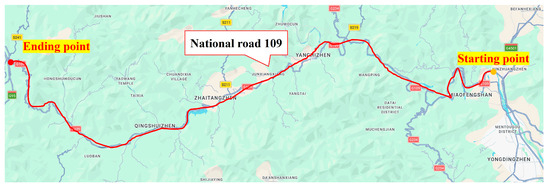
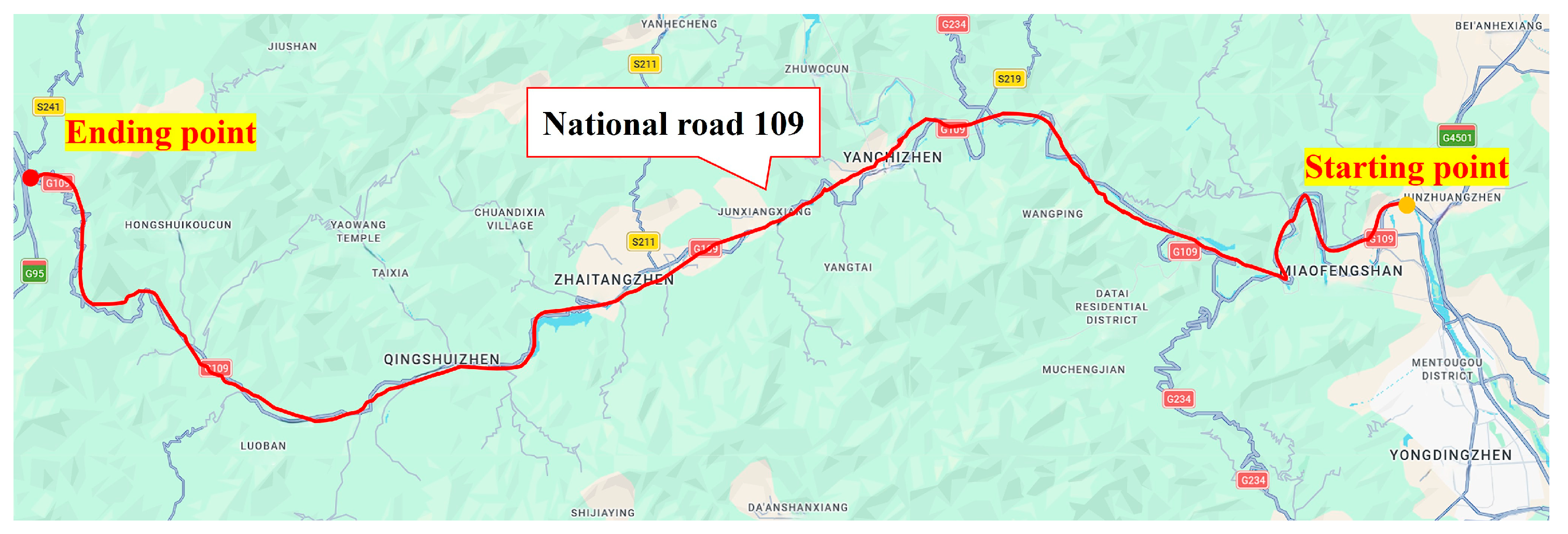
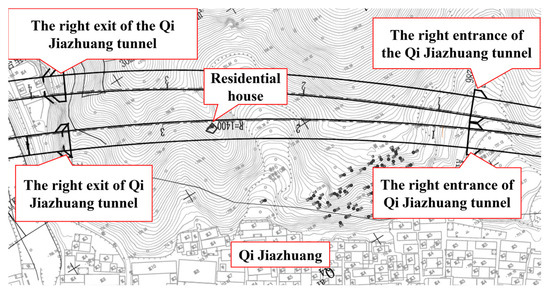
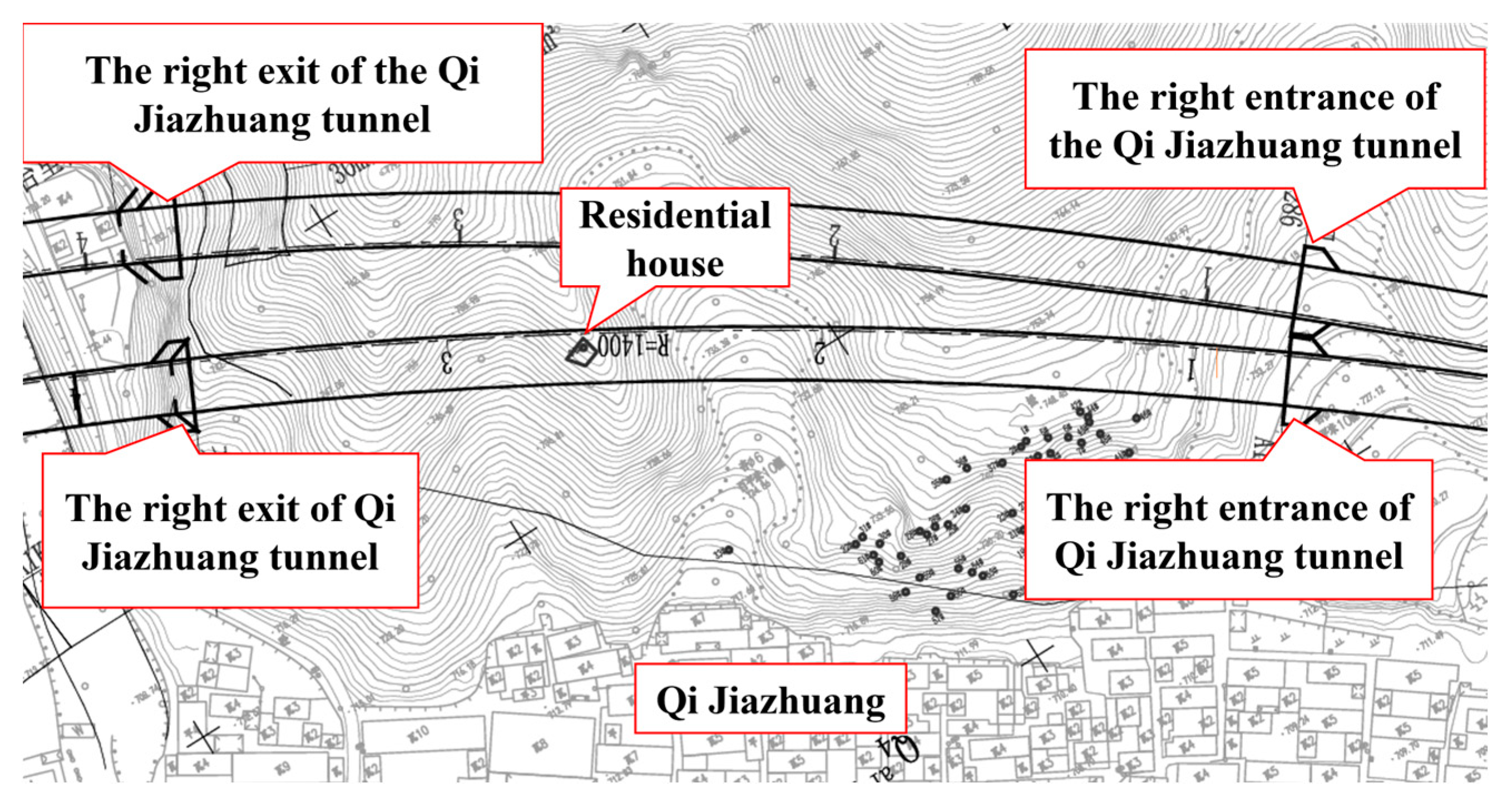
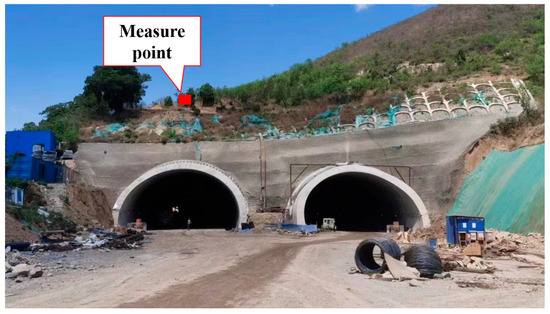
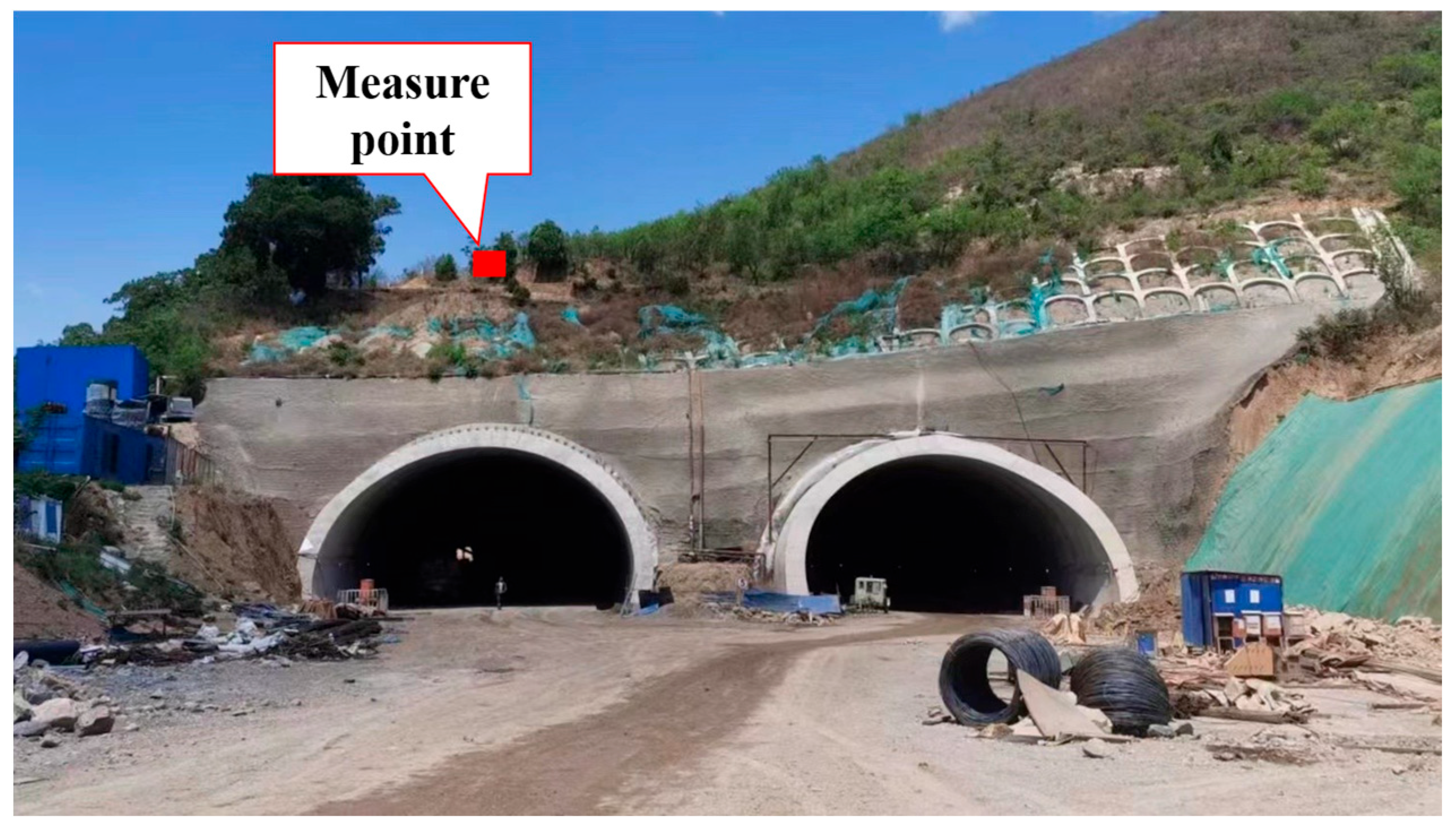
The new national road 109 is one of the crucial transportation routes connecting Beijing and Hebei. The route is illustrated in Figure 4. A residential building and several utility poles are present on the ground surface, resulting in a relatively complex surrounding environment for blasting operations. Therefore, it is necessary to control the PPV induced by cut blasting at the site. The field conditions of the Qi Jiazhuang tunnel are shown in Figure 5.
Figure 4.
Route map of national road 109.
Figure 5.
Field conditions of Qi Jiazhuang tunnel.
5.2. Blasting Parameters
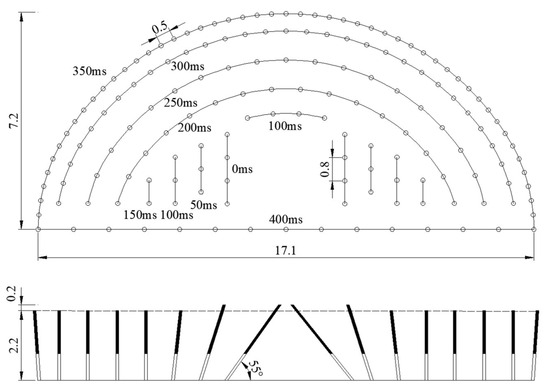
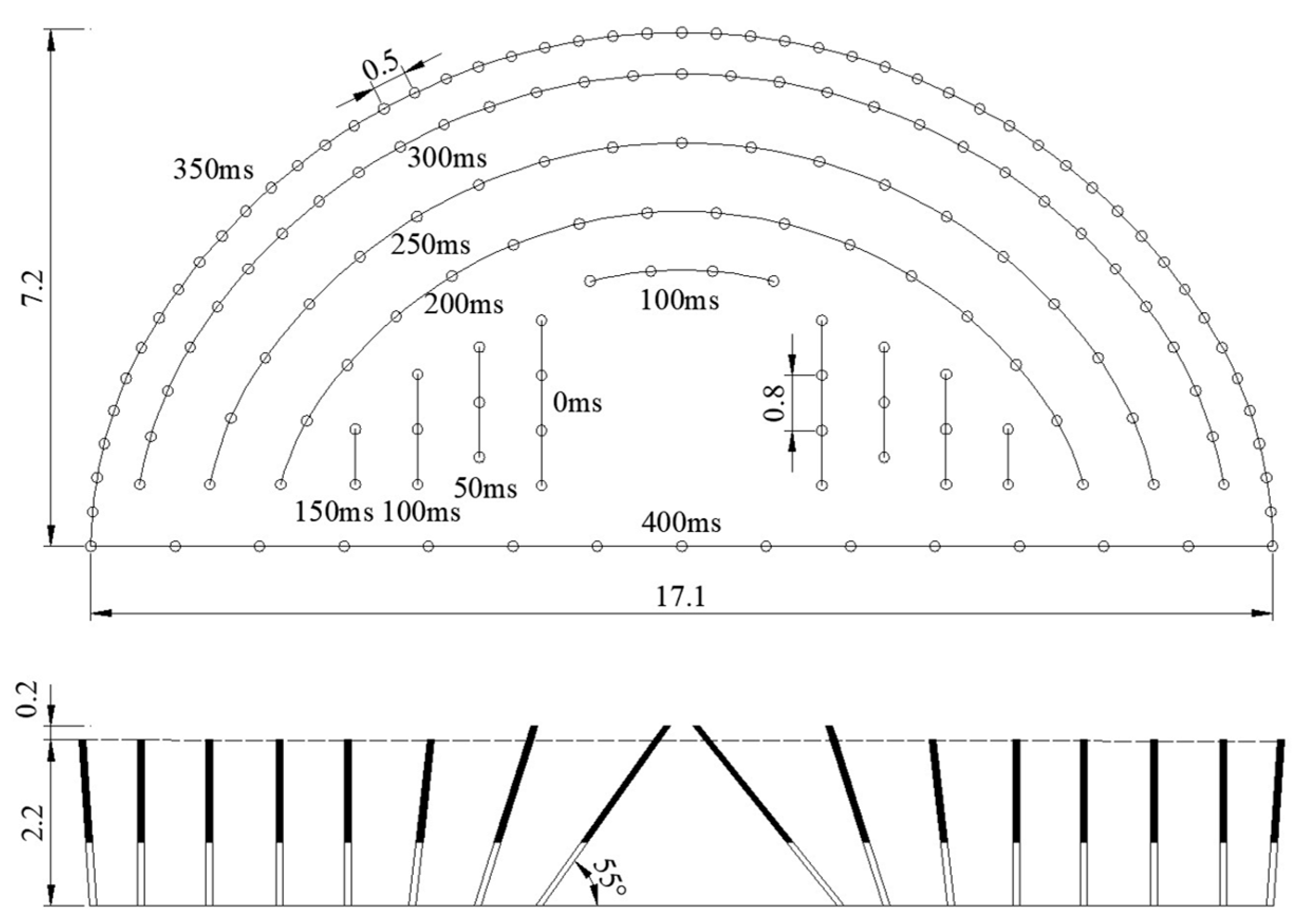
Considering the stability of the surrounding rock, cross-section dimensions, and initial support design of the Qi Jiazhuang tunnel, the bench method is employed for the IV-grade surrounding rock sections. The designed advancing distances for the upper and lower benches are 2 m and 4 m, respectively, with a distance of 50 m between the upper and lower benches. During the blasting construction of the upper bench, the blastholes are arranged as cut holes, auxiliary holes, and perimeter holes, with a sequential setting of detonation times to gradually expand and complete the blasting excavation. For the lower bench, horizontal auxiliary holes and perimeter holes are arranged, with the detonation times arranged sequentially from top to bottom, fully utilizing the free surface formed by the blasting excavation of the upper bench while controlling the impact of blasting vibrations on the lining structure and nearby surface structures. Figure 6 shows the blastholes layout and detonation sequence for the upper bench of the Qi Jiazhuang tunnel, and Table 1 lists the blasting parameters for the Qi Jiazhuang tunnel.
Figure 6.
Holes arrangement and initiation sequence of Qi Jiazhuang tunnel (unit: m).
Table 1.
Conventional blasting parameters of Qi Jiazhuang tunnel.
In the left tunnel, the measure points were arranged on the surface as shown in Figure 7. According to on-site measurement, the distance from the blasting center was 20 m. When the measure points were arranged, the x-direction corresponds to the tunnel excavation direction, the y-direction was the horizontal tangent direction, and the z-direction was vertical.
Figure 7.
Measure point of the Qi Jiazhuang tunnel.
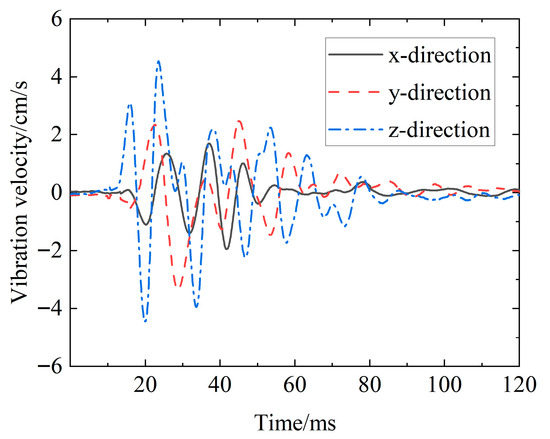
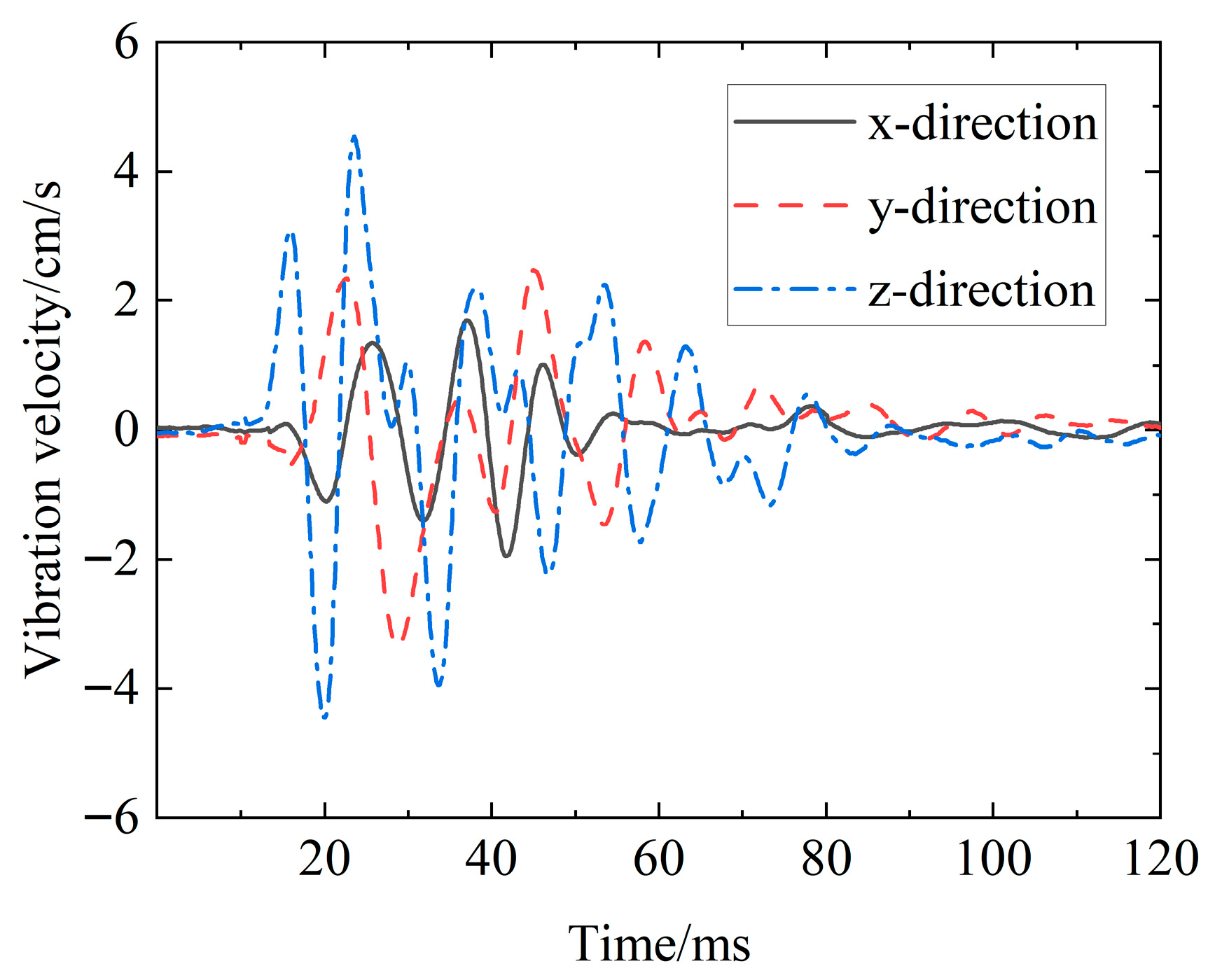
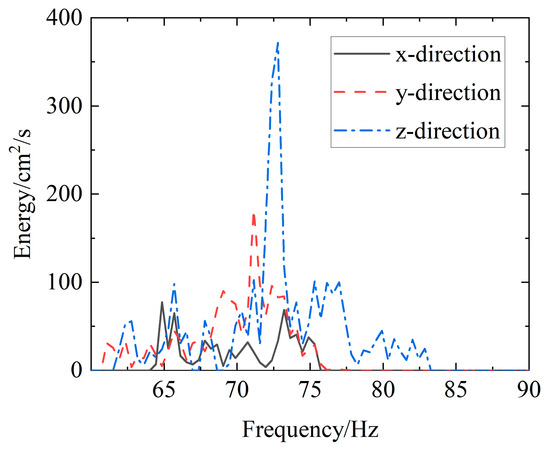
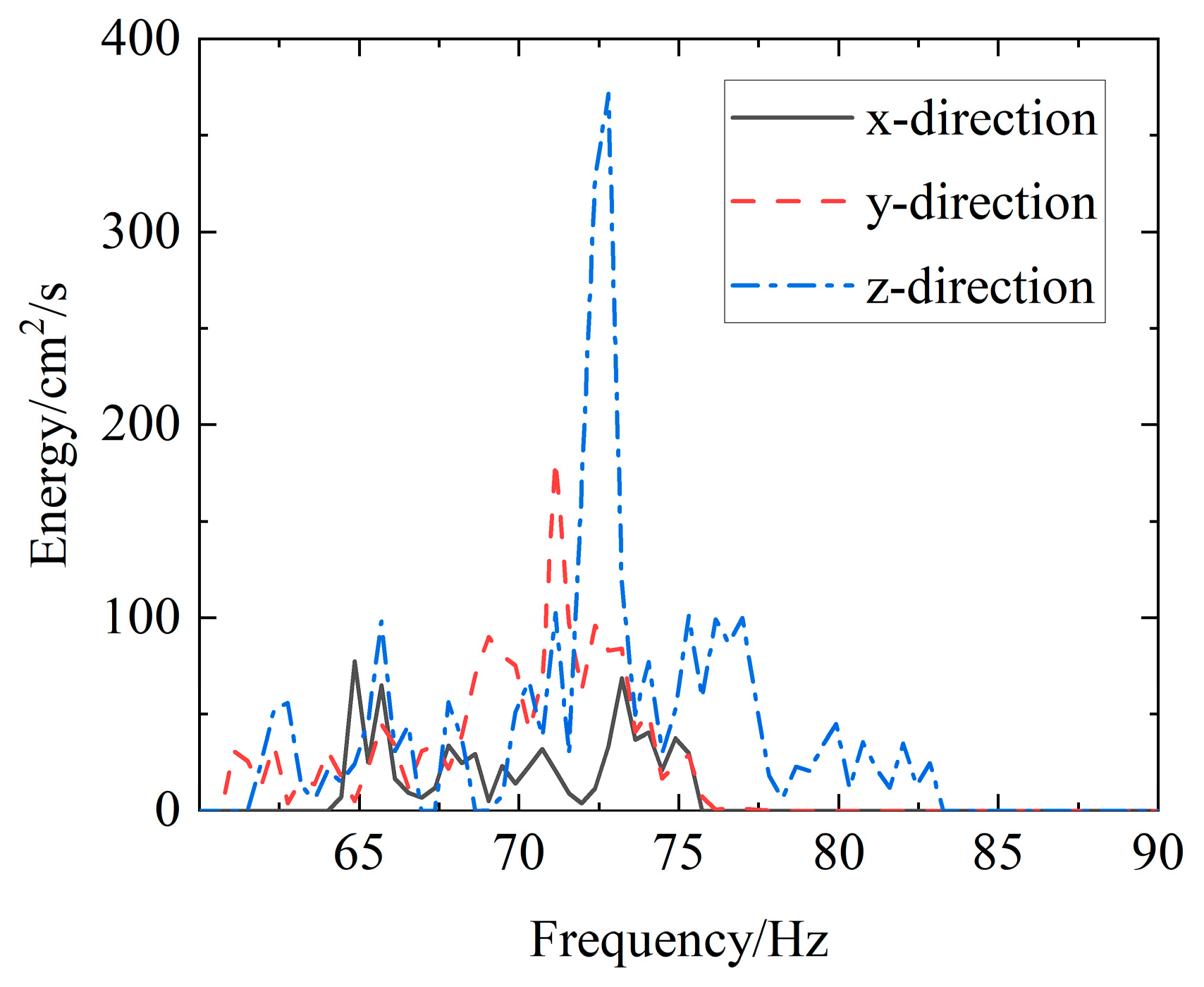
Figure 8 shows the typical vibration velocity time-history curve during the conventional wedge cut blasting, with the PPV of 1.82 cm/s, 3.36 cm/s, and 4.48 cm/s in the x-, y-, and z-directions, respectively, indicating that the PPV is greatest in the z-direction. Figure 9 shows the Hilbert marginal spectrum from this test. The dominant frequency in the x-direction is mainly between 65.4 and 76.5 Hz, with a dominant vibration frequency of 65.5 Hz; the dominant frequency in the y-direction is mainly between 68.3 and 75.2 Hz, with a dominant vibration frequency of 72.4 Hz; and the dominant frequency in the z-direction is mainly between 70.8 and 78.8 Hz, with a dominant vibration frequency of 73.7 Hz.
Figure 8.
Time-history curve of blasting vibration velocity of measure point.
Figure 9.
Hilbert marginal spectrum.
When the dominant vibration frequency f > 50 Hz, the safe allowable vibration velocity is v ≤ 3.0 cm/s [31]. Therefore, the PPV in the z-direction exceeds the threshold specified in the blasting safety regulations during the conventional wedge cut blasting in the Qi Jiazhuang tunnel, indicating that conventional wedge cut blasting may pose a significant risk to nearby surface structures, and highlighting the need for vibration reduction measures. In this study, the vibration control effect is evaluated jointly by the PPV and the dominant vibration frequency with reference to the blasting safety regulations in this study.
5.3. Determination of Delayed Time for Wedge Cut Blasting
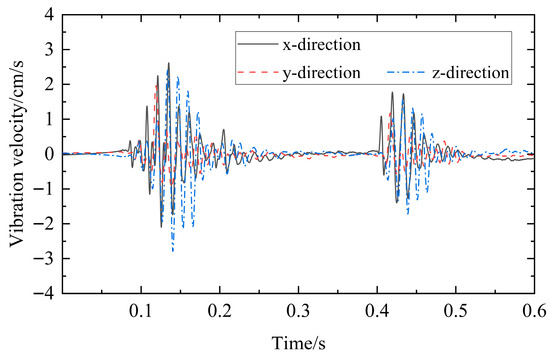
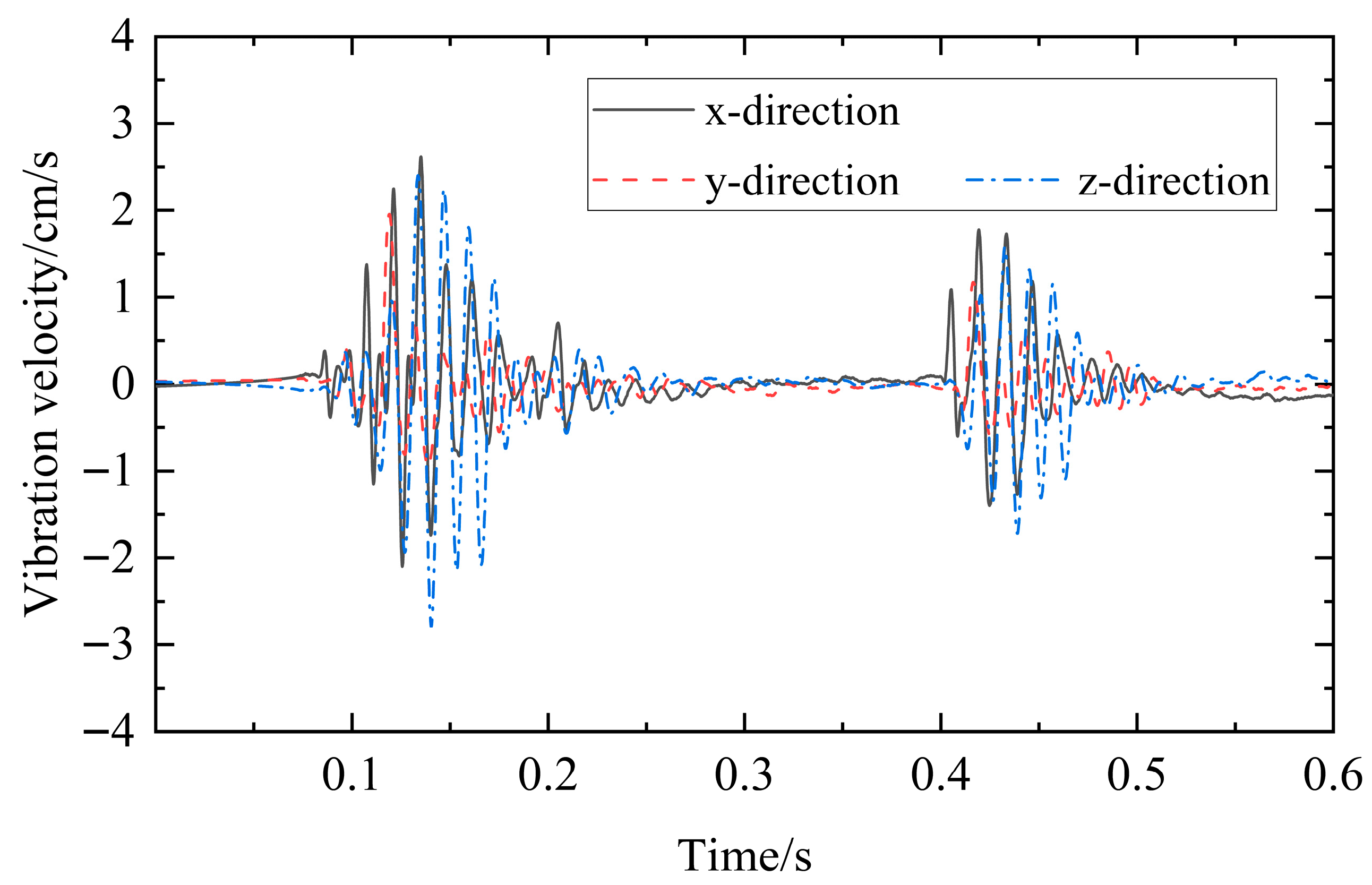
To obtain the vibration waveforms of the initial cut holes and the secondary cut holes for subsequent waveform fitting and superposition calculations, a large delay interval was set using electronic detonators: the initial cut holes were detonated at 100 ms, whereas the secondary cut holes were detonated at 400 ms. Using a TC-6850 network vibration meter (Chengdu Zhongke Monitoring and Control Co. Ltd., Chengdu, China), the typical vibration velocity time-history curve for delayed blasting at the measure point was obtained, as shown in Figure 10.
Figure 10.
Time-history curve of blasting vibration velocity of measure point under delayed time.
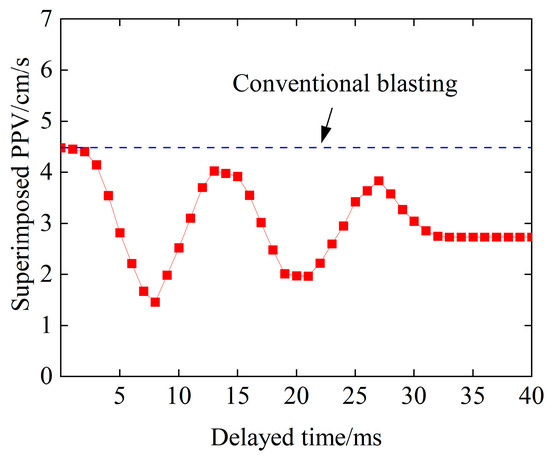
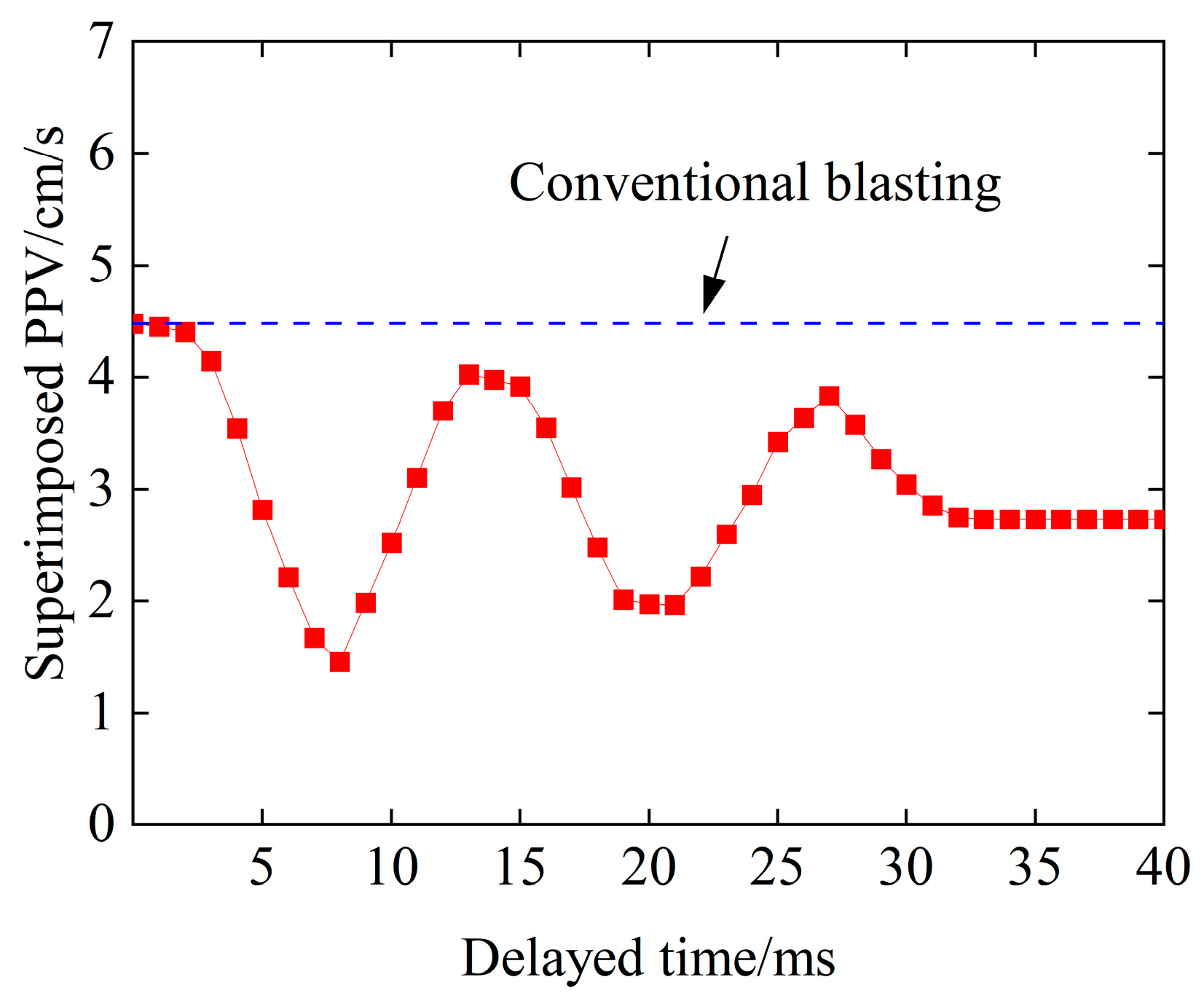
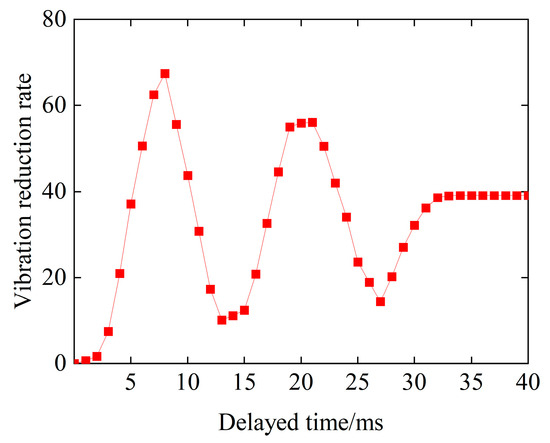
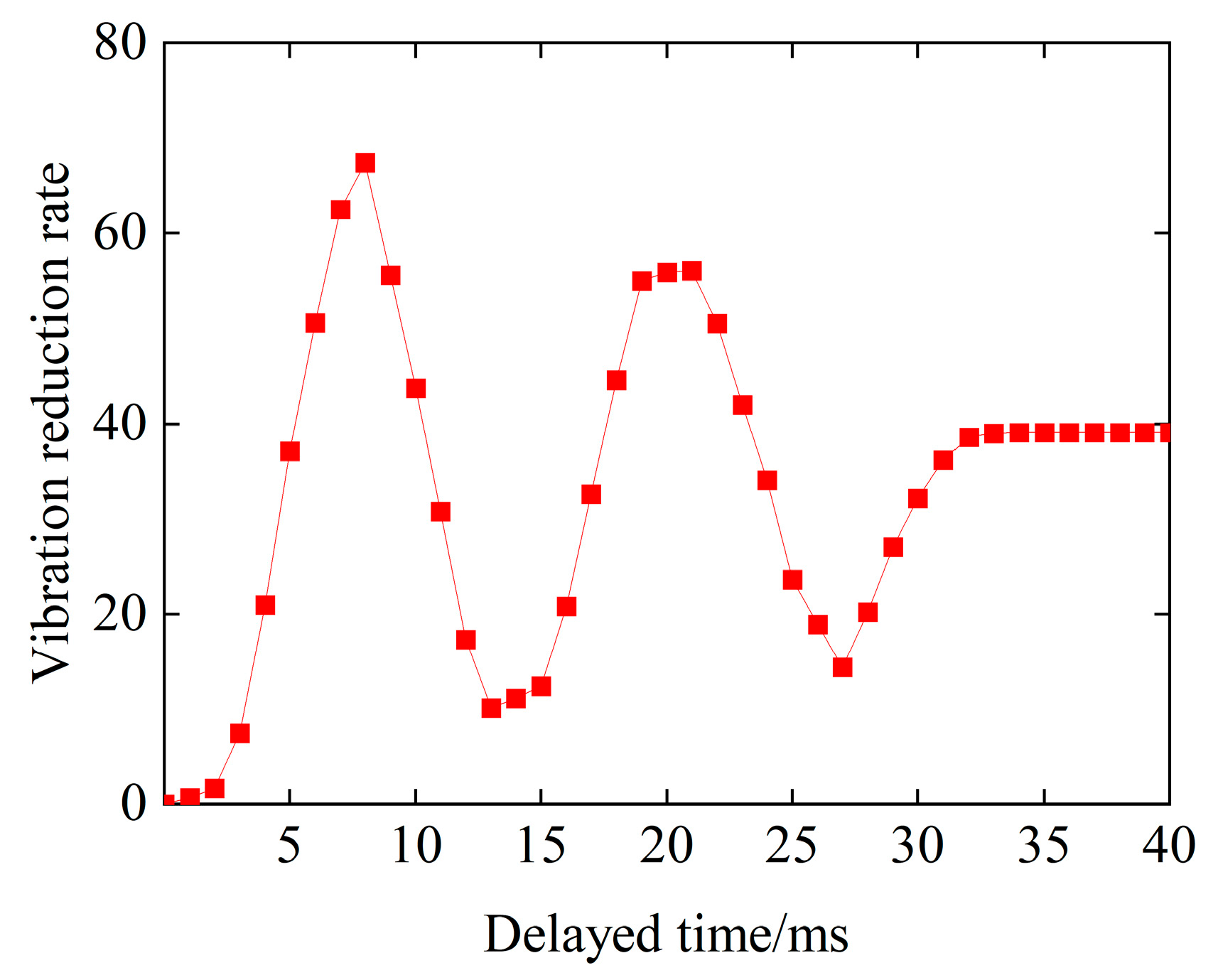
Since the vibration response in the z-direction is the controlling component in the present tunnel case, the measured vibration velocity waveforms in the z-direction shown in Figure 10 were extracted for waveform fitting. According to Equation (17), each representative single-hole waveform was fitted by a multi-Gaussian function, and the corresponding fitting coefficients aj, bj and cj were obtained. The fitted parameter values for the different types of cut holes are listed in Table 2 and Table 3. The coefficients of determination (R2) of the fitted waveforms are 0.97 and 0.99, respectively, indicating that the fitted functions can adequately reproduce the measured vibration waveforms and are suitable for subsequent waveform superposition analysis. After that, by combining Equation (18), the PPV–delay relationship is shown in Figure 11, while the vibration reduction rate is shown in Figure 12.
Table 2.
Fitting parameters of V1(t).
Table 3.
Fitting parameters of V2(t).
Figure 11.
The superimposed PPV–delay relationship under different delayed time.
Figure 12.
The vibration reduction rate with different delayed time.
Figure 11 shows that when the delayed time increases from 1 ms to 8 ms, the superimposed PPV decreases from 4.5 cm/s to 1.5 cm/s. As the delayed time increases to 13 ms, the superimposed PPV rises to 4.0 cm/s. When the delayed time reaches 21 ms, the superimposed PPV decreases to 2.0 cm/s. Upon further increase to 27 ms, the superimposed PPV again rises to 3.8 cm/s. Finally, when the delayed time increases to 33 ms, the superimposed PPV gradually decreases to 2.7 cm/s and tends to stabilize.
Figure 12 shows that when the delayed time is 8 ms, the minimum superimposed PPV is recorded at 1.5 cm/s, achieving a vibration reduction rate of 62.5%. This vibration velocity satisfies the allowable vibration threshold for the relevant frequency range specified in the blasting safety regulations. Furthermore, according to Equation (22), under the surrounding rock at the tunnel application site, the minimum time for forming a new free surface is Tmin = 6.7 ms, which is less than 8 ms, indicating that the new free surface has already formed when the delayed time reaches 8 ms.
5.4. Evaluation of the Effects of Wedge Cut Delayed Blasting
To further verify the rationality of the delayed time optimization method and evaluate the blasting performance under different delayed times, field tests were conducted in the Qi Jiazhuang tunnel. Based on the predicted PPV–delay relationship shown in Figure 11, four representative delayed times, i.e., Δt = 0, 8, 20, and 35 ms, were selected for comparative field validation. Among them, 8 ms corresponds to the optimal delayed time predicted by the proposed method, while 20 ms and 35 ms were introduced as additional validation cases in the medium and long delayed ranges. For each delayed time, 10 blasting tests were carried out under similar geological and construction conditions. The utilization rate of blastholes, the rate of large fragments, PPV, and dominant vibration frequency were statistically analyzed and compared to evaluate the influence of delayed time on cavity formation quality, rock fragmentation, and blasting vibration characteristics. Due to the large size and quantity of fragmented rock, direct measurement using square hole sieves was not feasible. Therefore, Split-Desktop software v3.1 was used for quantitative analysis.
It should be noted that PPV and dominant vibration frequency are adopted as vibration safety indicators with reference to the blasting safety regulations, while the blasthole utilization rate and large fragment ratio are used as comparative engineering performance indicators to evaluate cavity formation quality, fragmentation performance, and excavation efficiency under the same field conditions.
- (1)
- The utilization rate of blastholes
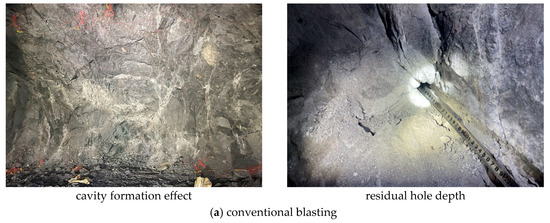
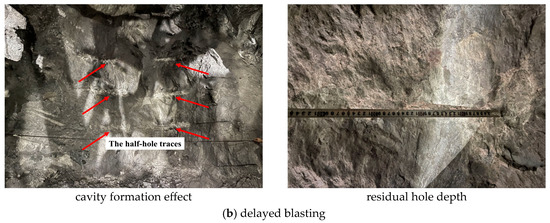
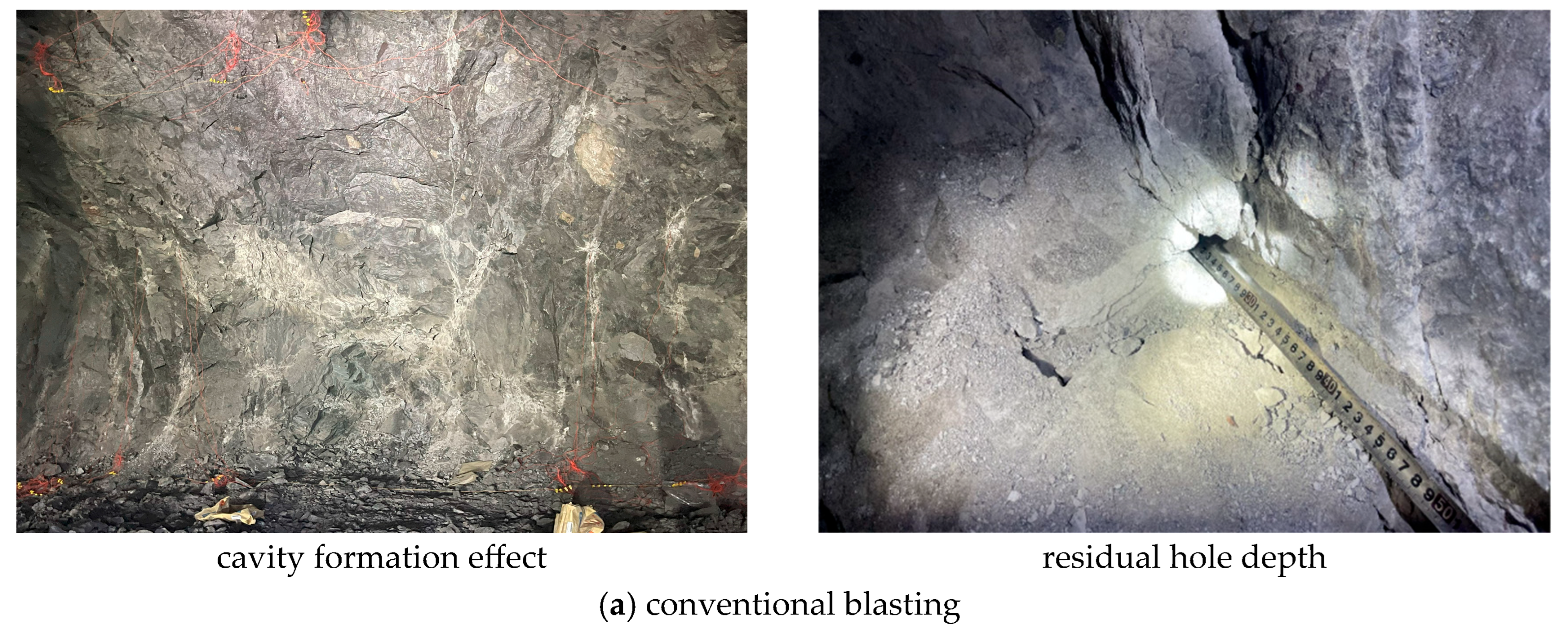
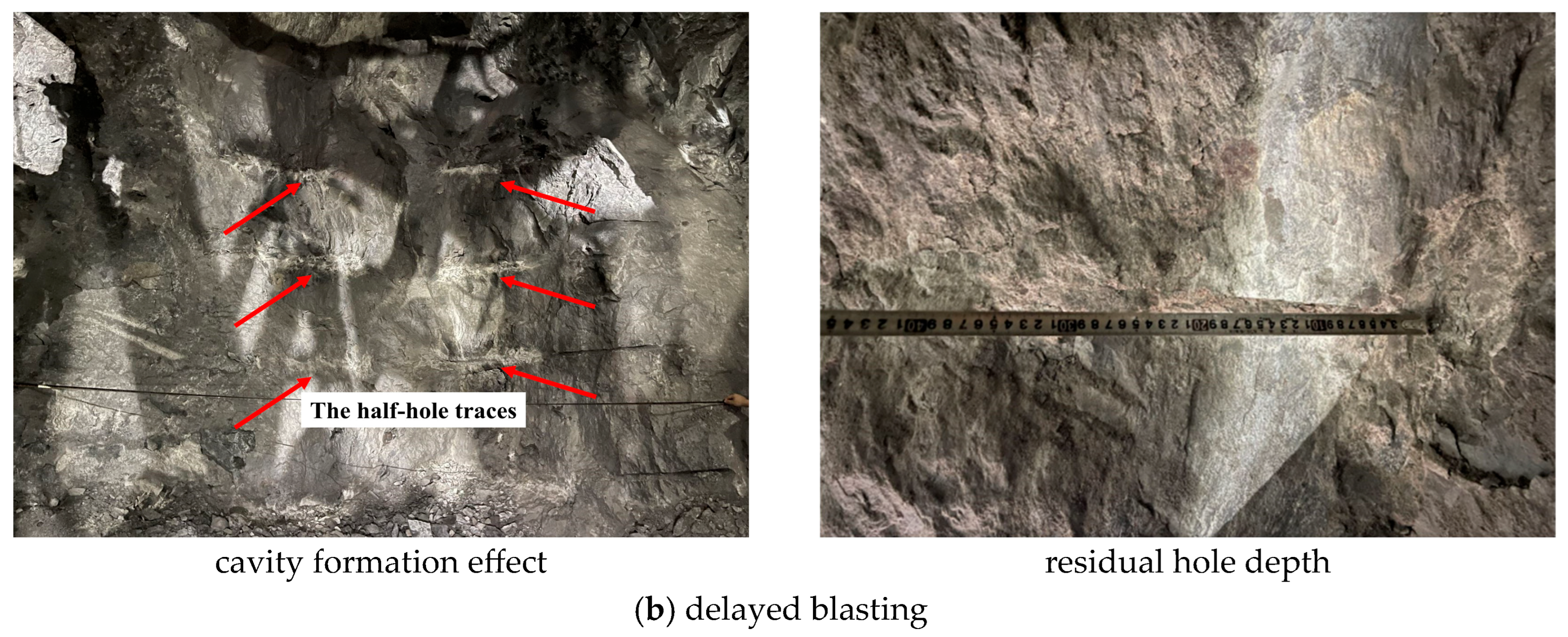
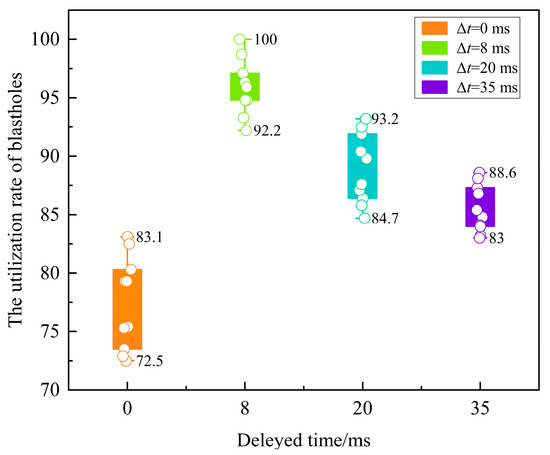
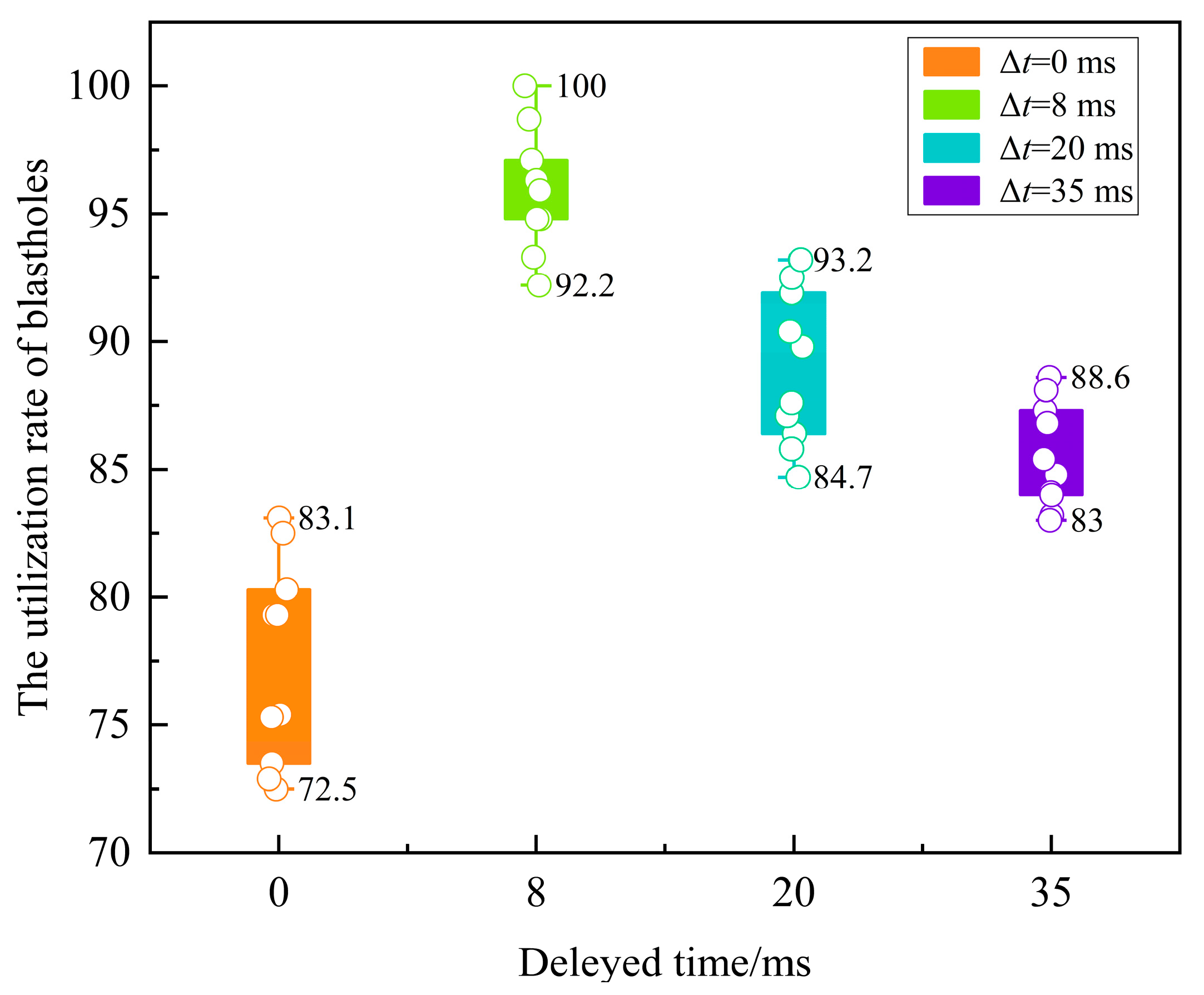
Figure 13a,b show the representative cavity formation results and residual blasthole depth produced by conventional wedge cut blasting and the 8 ms delayed time in the Qi Jiazhuang tunnel. It can be seen that conventional wedge cut blasting results in poor cavity formation, and under-excavation occurs at the bottom of the cut cavity in the surrounding rock. In contrast, the 8 ms delayed blasting time leads to a marked improvement in cavity formation, and clear half-hole traces can be observed in the surrounding rock after blasting (the red lines in Figure 13b). Figure 14 further compares the blasthole utilization rates under four delayed times (Δt = 0, 8, 20, and 35 ms). The average utilization rates are 77.4%, 95.8%, 88.9%, and 85.5%, respectively. Compared with conventional blasting, the blasthole utilization rate increases by 23.8%, 14.9%, and 10.5% under the 8, 20, and 35 ms delayed times, respectively. Among them, the 8 ms time achieves the highest blasthole utilization rate, indicating that this delayed time provides the best coordination between blast-induced free-surface formation and the detonation of the secondary cut holes. The 20 ms and 35 ms delayed times also improve the blasthole utilization rate compared with conventional blasting, but their performance is lower than that of the 8 ms delayed time. This suggests that an appropriate delayed time can significantly enhance the cavity-forming effect and excavation efficiency, whereas an excessively long delay weakens the synergistic rock breaking effect between the initial and secondary cut holes.
Figure 13.
Performance of wedge blasting in the Qi Jiazhuang tunnel.
Figure 14.
The utilization rate of blastholes under different delayed times in Qi Jiazhuang tunnel.
- (2)
- The rate of large fragments
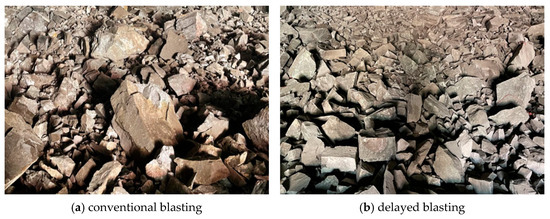
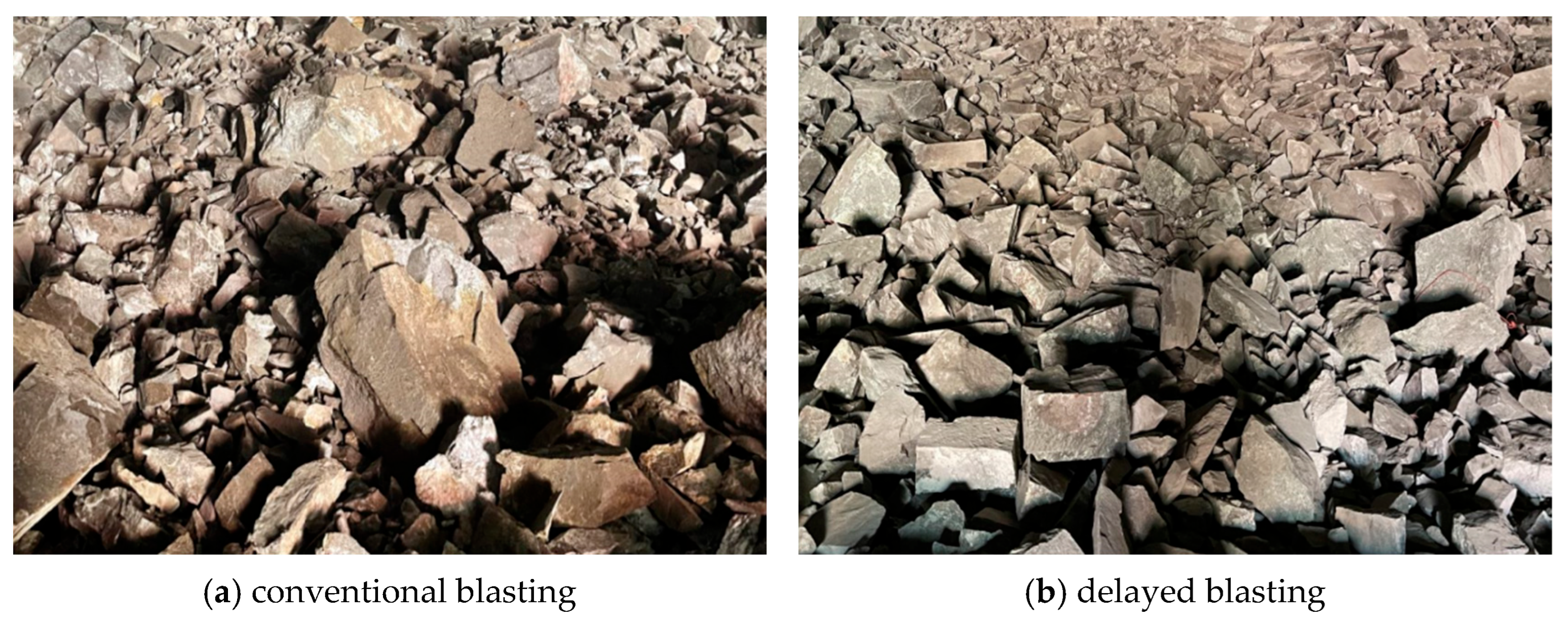
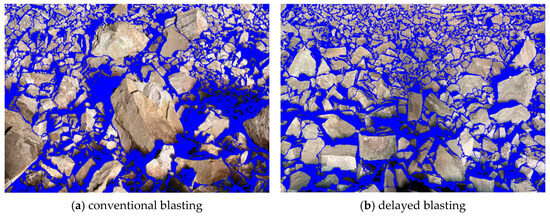
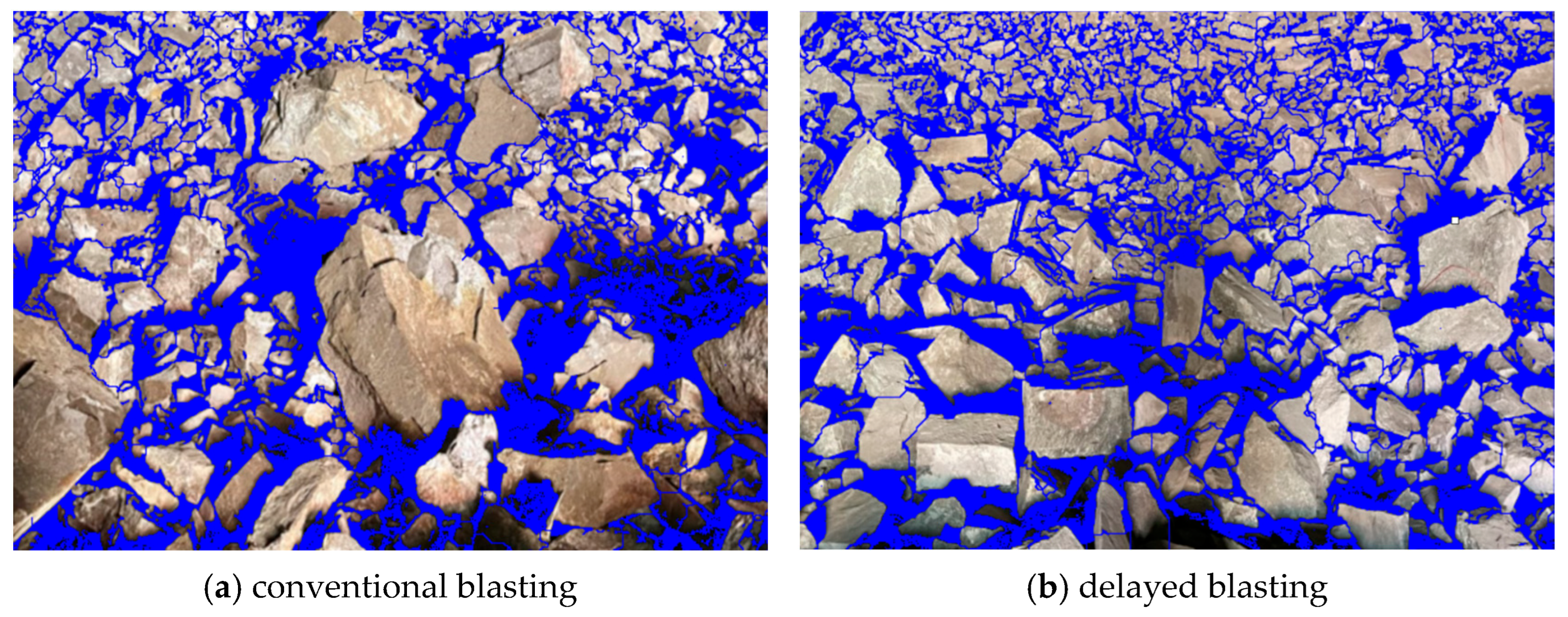
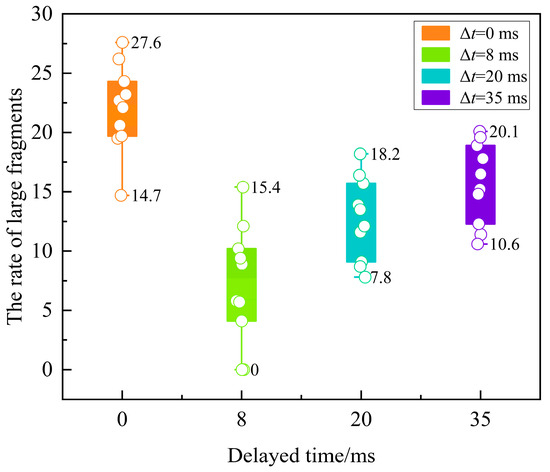
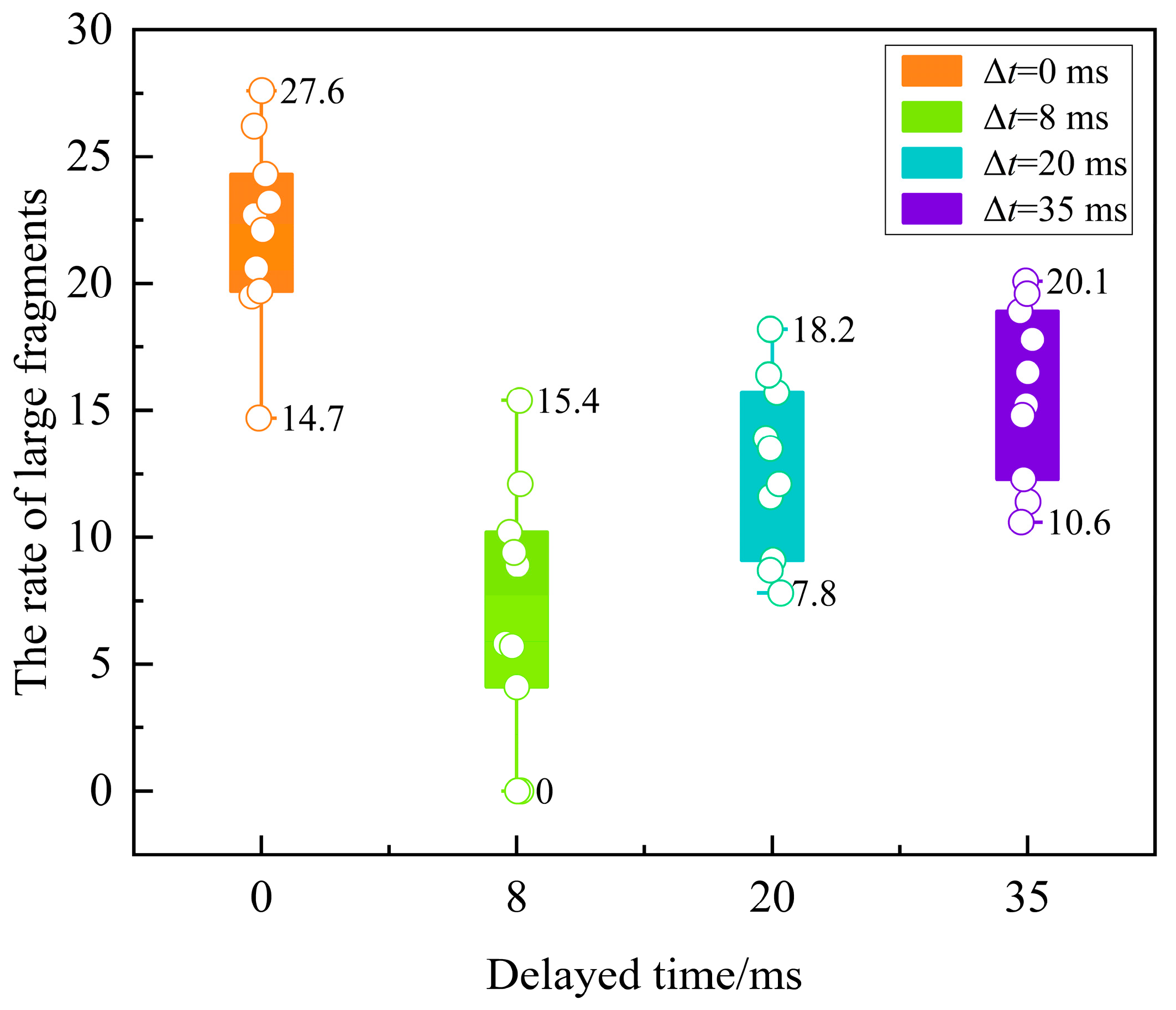
Figure 15a,b show representative fragmentation patterns produced by conventional wedge cut blasting and the 8 ms delayed blasting time in the Qi Jiazhuang tunnel. Conventional blasting generates a considerable number of large fragments and exhibits poor fragmentation uniformity, whereas the 8 ms delayed blasting time produces fewer large fragments and a more uniform fragment size distribution. After image analysis using Split-Desktop software (Figure 16), the large fragment ratio was quantified, and the corresponding results are summarized in Figure 17. The average rate of large fragments for Δt = 0, 8, 20, and 35 ms are 22.1%, 7.2%, 12.7%, and 15.7%, respectively. Compared with conventional blasting, the large fragment ratio is reduced by 67.4%, 42.5%, and 29.0% under the 8, 20, and 35 ms delayed times, respectively. The 8 ms time yields the lowest large fragment ratio, demonstrating the most favorable fragmentation effect. Although the 20 ms and 35 ms delayed times also outperform conventional blasting, their improvements are less pronounced than those of the 8 ms delayed time, indicating that excessive delay reduces the synergistic rock breaking effect. Overall, the results confirm that a properly selected delayed time can effectively reduce large fragments, improve mucking efficiency, and lower construction costs.
Figure 15.
Crushed rock of wedge cut blasting in Qi Jiazhuang tunnel.
Figure 16.
The treatment of crushed rock of wedge cut blasting in Qi Jiazhuang tunnel.
Figure 17.
The rate of large fragments of crushed rock under different delayed times after wedge cut blasting in Qi Jiazhuang tunnel.
- (3)
- The PPV and the dominant vibration frequency
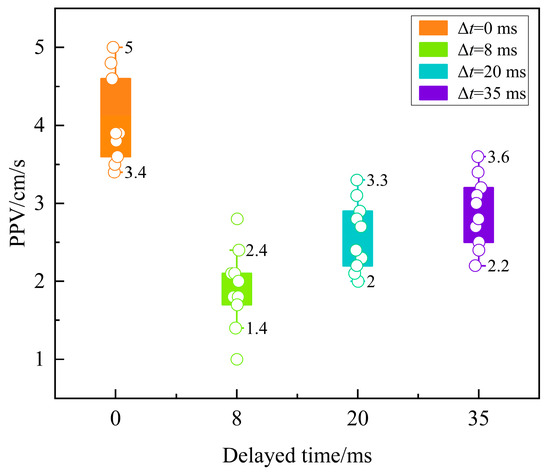
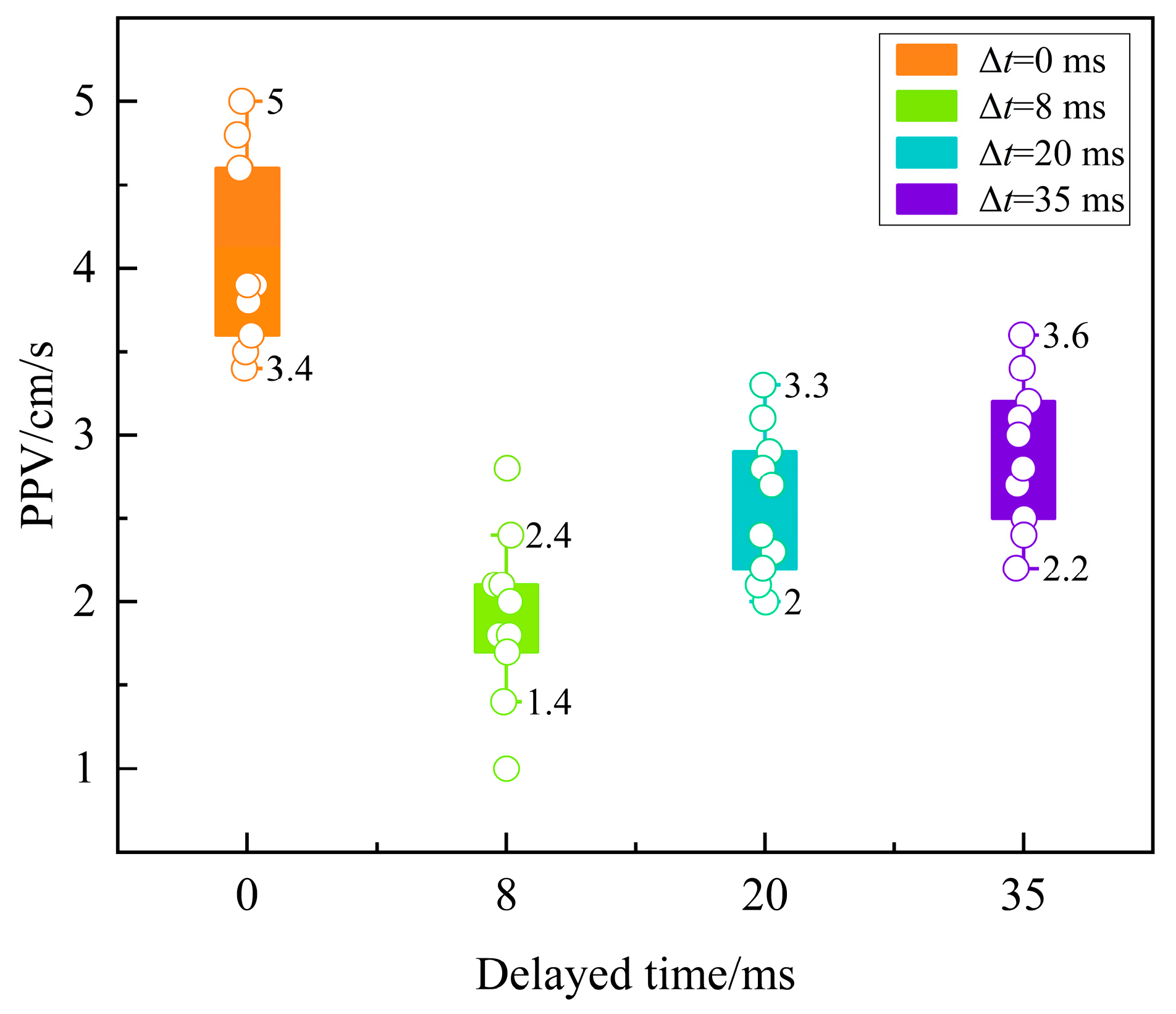
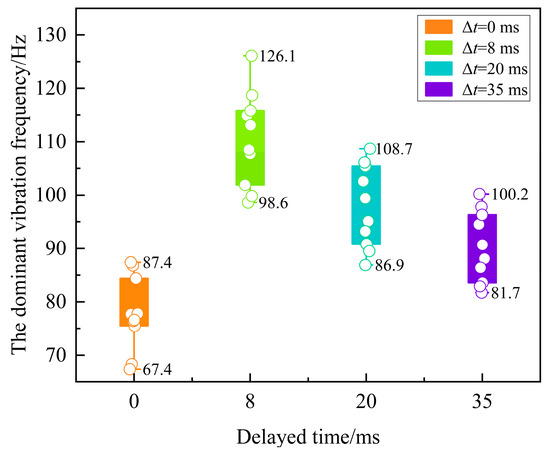
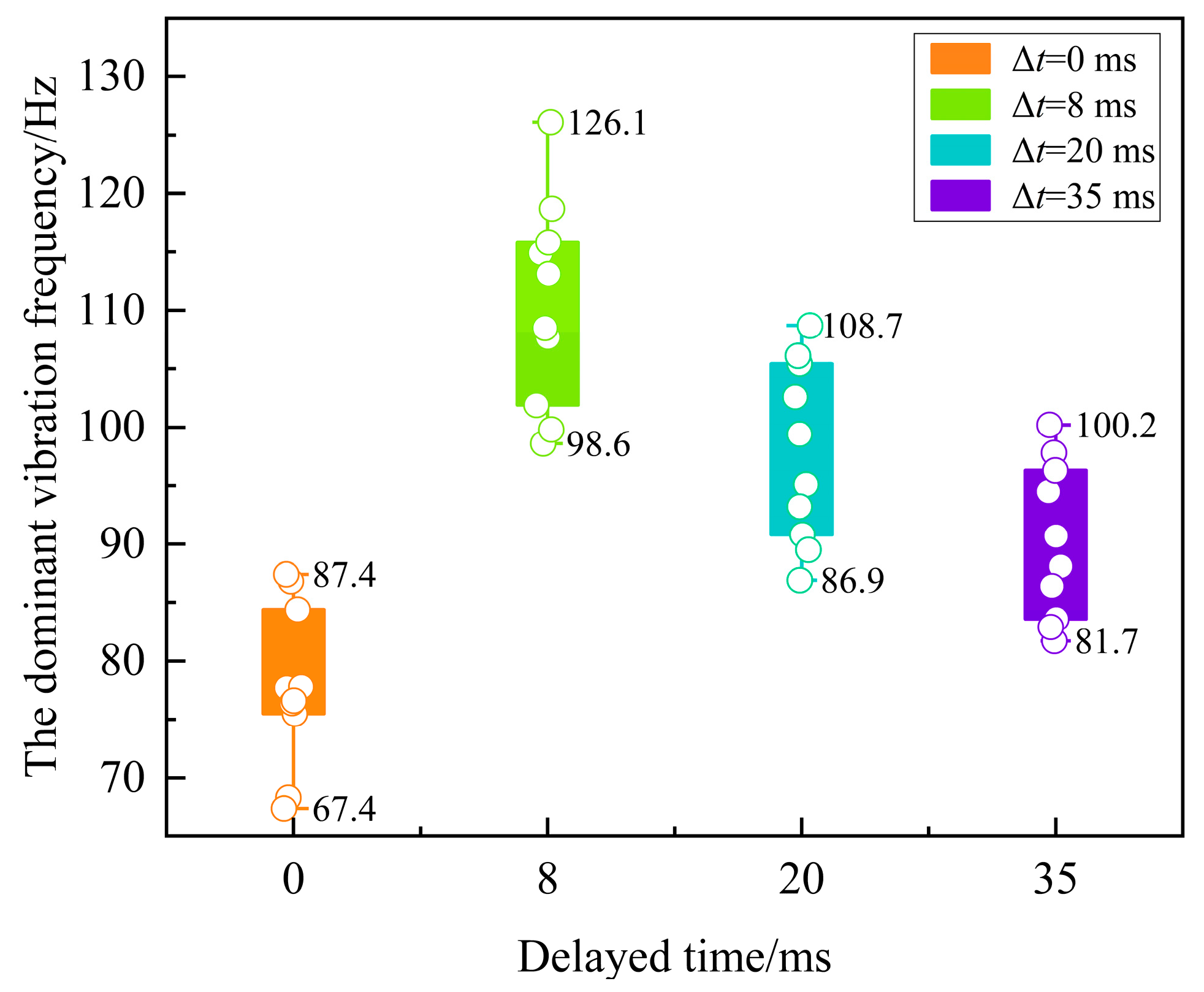
The PPV and the dominant vibration frequency in the z-direction at the measure point in the Qi Jiazhuang tunnel were summarized under four delayed times, and the results are summarized in Figure 18 and Figure 19. The average PPVs for Δt = 0, 8, 20, and 35 ms delayed times are 4.1, 1.9, 2.6, and 2.9 cm/s, respectively, while the corresponding average dominant vibration frequencies are 77.8, 110.5, 97.8, and 90.2 Hz. Among them, the 8 ms delayed time yields the lowest PPV and the highest dominant vibration frequency, indicating the best comprehensive vibration control effect. Compared with conventional blasting, the PPV is reduced by 53.7%, 36.6%, 29.3%, under the 8, 20, and 35 ms delayed times, while the dominant vibration frequency increases by 42.0%, 25.7%, and 15.9%, respectively. Although the 20 and 35 ms delayed times also reduce the PPV and increase the dominant vibration frequency compared with conventional blasting, their improvements are less pronounced than those of the 8 ms delayed time. These results demonstrate that an appropriate delayed time can effectively reduce vibration wave superposition and shift the vibration response toward a higher frequency band, mitigating the adverse influence of blasting vibrations on the surrounding environment and reducing the risk of resonance-induced structural damage.
Figure 18.
The PPV of wedge cut blasting under different delayed times in Qi Jiazhuang tunnel.
Figure 19.
The dominant vibration frequency of wedge cut blasting under different delayed times in Qi Jiazhuang tunnel.
6. Conclusions
This study addresses the issues associated with conventional wedge cut blasting, including high PPV, high rate of large fragments and low blasthole utilization rate. It explores the mechanisms of rock breaking and the determination of optimal delayed times for wedge cut blasting, leading to the following main conclusions:
(1) A method for wedge cut delayed blasting that differs from conventional wedge cut blasting is proposed. The physical and mechanical processes of rock breaking during wedge cut blasting are analyzed. It is concluded that the development of the cavity can be divided into two stages: the stage of fracture propagation and the stage of cavity ejection. Based on the analysis of the force characteristics of the cavity at each stage, a blasting fracture and cavity formation criterion is established.
(2) The vibration waveforms of group cut holes delayed blasting are obtained. By considering the differences in vibration waveforms of various types of cut holes and introducing the Gauss function, a method for linear superposition of single type cut hole vibration waveforms is proposed. Additionally, a fitting method for the vibration waveforms of wedge cut precise delayed blasting is presented. A calculation Equation for the precise delayed time of wedge cut blasting is presented based on the development of the rock breaking and cavity formation processes.
(3) In shallow-buried tunnel excavation blasting, the PPV in the vertical direction (z) is maximized. For the IV-grade surrounding rock section of the Qi Jiazhuang tunnel, the optimal delayed time for wedge cut blasting is determined to be 8 ms. Compared with conventional blasting, the 8 ms time increases the average blasthole utilization rate by 23.8%, reduces the large fragment ratio by 67.4%, decreases the PPV by 53.7%, and increases the dominant vibration frequency by 42.0%. Although the 20 ms and 35 ms times also show improved performance relative to conventional blasting, the 8 ms time provides the best overall effect.
(4) The optimal delayed time determined in this study is determined by jointly considering the free-surface formation requirement and the minimum PPV condition. This value should be understood as a case-specific result for the Qi Jiazhuang tunnel, rather than a universal constant. Nevertheless, it is generally consistent with the engineering practice and previous studies showing that an appropriate millisecond delay between cut hole groups can improve cavity formation and mitigate vibration superposition.
Several limitations of this study should be acknowledged. First, it should be noted that the present simplified treatment does not fully capture the rate dependence of rock strength under highly dynamic loading, nor does it explicitly quantify the additional dynamic contribution of secondary shock waves after cavity formation. These issues should be further investigated through refined dynamic constitutive modeling, higher-resolution field monitoring, and numerical simulation in future studies. Second, the proposed wedge cut delayed blasting method and the corresponding optimal delay time were validated only in the IV-grade surrounding rock section of the shallow-buried Qi Jiazhuang tunnel; therefore, the applicability of the obtained results to other surrounding rock classes, burial depths, tunnel geometries, and charging conditions still requires further verification. Third, the number and layout of cut holes may vary significantly depending on tunnel geometry, rock conditions, advance demand, and construction constraints in practical engineering. Therefore, the present eight-hole wedge cut layout should be regarded as a case-specific design assumption used for method development and validation. Future studies should focus on multi-site field validation under different geological and construction conditions, further refinement of the mechanical model through numerical simulation and in situ monitoring, and the development of a more general design method for wedge cut delayed blasting that simultaneously considers vibration control, cavity formation quality, and construction efficiency.
Author Contributions
Y.H., Conceptualization, methodology, software, writing—original draft preparation. R.Y., visualization, supervision. J.Z., validation, writing—review and editing. W.H., data curation. G.W., resources, funding acquisition. D.H., formal analysis. Y.G., project administration. All authors have read and agreed to the published version of the manuscript.
Funding
This research received no external funding.
Institutional Review Board Statement
Not applicable.
Informed Consent Statement
Not applicable.
Data Availability Statement
The original contributions presented in this study are included in the article. Further inquiries can be directed to the corresponding author.
Conflicts of Interest
Authors Wangjing Hu, Genzhong Wang and Depeng Hua were employed by the Zhejiang Lihua Blasting Engineering Co., Ltd. Author Yongli Guan was employed by the company Ningbo Yongan Construction Co., Ltd. The remaining authors declare that the research was conducted in the absence of any commercial or financial relationships that could be construed as a potential conflict of interest.
References
- Zhang, H.; Xing, X.Y.; Zhang, B.H.; Zhang, S.L.; Yu, J.X.; Li, S.Q.; Li, T.C. Cavity formation evolution and determination of cut angle in wedge cut blasting. Eng. Fract. Mech. 2026, 332, 111639. [Google Scholar] [CrossRef] [Scilit]
- Deng, X.H.; Wang, J.Y.; Wang, R.; Liu, Q. Influence of blasting vibrations generated by tunnel construction on an existing road. Int. J. Civ. Eng. 2020, 18, 1381–1393. [Google Scholar] [CrossRef] [Scilit]
- Marilena, C.; Jacopo, S. Quantifying the difficulty of tunnelling by drilling and blasting. Tunn. Undergr. Space Technol. 2016, 60, 178–182. [Google Scholar] [CrossRef] [Scilit]
- Zhang, H.; Li, T.C.; Du, Y.T.; Zhu, Q.W.; Zhang, X.T. Theoretical and numerical investigation of deep-hole cut blasting based on cavity cutting and fragment throwing. Tunn. Undergr. Space Technol. 2021, 111, 103854. [Google Scholar] [CrossRef] [Scilit]
- Bao, X.L.; Yao, S.; Wang, W.W.; Wei, Q.; Kang, Y.Q.; Wei, Y.M.; Li, Z.Y. Study on the vibration mechanism of different cutting modes in shallow tunnel excavation under thermal explosion loading. Acs Omega 2025, 10, 43519–43531. [Google Scholar] [CrossRef] [Scilit]
- Lou, X.M.; Wang, B.; Wu, E.; Sun, M.W.; Zhou, P.; Wang, Z.C. Theoretical and numerical research on V-Cut parameters and auxiliary cuthole criterion in tunnelling. Adv. Mater. Sci. Eng. 2020, 2020, 8568153. [Google Scholar] [CrossRef] [Scilit]
- Kang, S.S.; Jang, H. A case study on tunnel blasting design evaluation considering blast damage zone. Sci. Technol. Energetic Mater. 2020, 81, 106–113. [Google Scholar]
- Kumar, P.; Mohammadi, H.; Chopra, R.; Tyagi, S.K.; Pandey, S.K. A newly developed blasting cut in tunnels; application of “combined method” in small to medium-sized tunnels. Tunn. Undergr. Space Technol. 2023, 142, 105426. [Google Scholar] [CrossRef] [Scilit]
- Tu, M.; Tang, X.L.; He, G.D.; Peng, S.L.; Yang, L.; Xu, J.X. Experimental study on blasting with a short straight hole+wedge compound cut time in hard rock tunnels. Front. Earth Sci. 2025, 13, 1684101. [Google Scholar] [CrossRef] [Scilit]
- Tian, X.C.; Tao, T.J.; Xie, C.J. Research on the theory and method of reduced-hole blasting for large cross-section tunnel based on explosive energy dissipation. Geomech. Geophys. Geo-Energy Geo-Resour. 2024, 10, 96. [Google Scholar] [CrossRef] [Scilit]
- Lanari, M.; Fakhimi, A. Numerical study of contributions of shock wave and gas penetration toward induced rock damage during blasting. Comput. Part. Mech. 2015, 2, 197–208. [Google Scholar] [CrossRef] [Scilit]
- Cheng, B.; Wang, H.B.; Zong, Q.; Xu, Y.; Wang, M.X.; Zheng, Q.Q.; Li, C.J. A study on cut blasting with large diameter charges in hard rock roadways. Adv. Civ. Eng. 2020, 2020, 8873412. [Google Scholar] [CrossRef] [Scilit]
- Man, K.; Liu, X.L.; Wang, J.; Wang, X.Y. Blasting energy analysis of the different cutting methods. Shock Vib. 2018, 2018, 9419018. [Google Scholar] [CrossRef] [Scilit]
- Wang, Z.K.; Gu, X.W.; Zhang, W.L.; Xie, Q.K.; Xu, X.C.; Wang, Q. Analysis of the cavity formation mechanism of wedge cut blasting in hard rock. Shock Vib. 2019, 2019, 1828313. [Google Scholar] [CrossRef] [Scilit]
- Zhang, X.; You, S.; Yang, Y.; Li, J.; Yang, Z.; Chen, S.L.; Li, X.J. Cut blasting optimization using 3D laser scanning and numerical simulation. Rock Mech. Rock Eng. 2025, 58, 2549–2568. [Google Scholar] [CrossRef] [Scilit]
- Bai, S.S.; Zhou, Z.Q.; Gao, C.L.; Gao, T.; Jin, G.H.; Tao, G.Z. An FDM–DEM bridging domain coupling simulation method considering blasting dynamic disturbance for tunnel excavation. Comput. Part. Mech. 2025, 12, 3985–4001. [Google Scholar] [CrossRef] [Scilit]
- Wan, A.T.; Tao, T.J.; Tian, X.C.; Xie, C.J.; Liu, X.; Zhao, Z.H.; Zhang, H.Y. Analysis of the influence of shear-tensile resistance and rock-breaking effect of cutting holes. Sci. Rep. 2024, 14, 4917. [Google Scholar] [CrossRef] [Scilit]
- Gao, W.L.; Liu, Z.C.; Wang, Y.P.; Yan, Z.W.; Zhang, Z.H. Study on optimization of delay method of wedge cut blasting in tunnel. Shock. Vib. 2021, 2021, 1676269. [Google Scholar] [CrossRef] [Scilit]
- Cheng, B.; Wang, H.; Zong, Q.; Xu, Y.; Wang, M.X.; Zheng, Q.Q. Study of the double wedge cut technique in medium-depth hole blasting of rock roadways. Arab. J. Sci. Eng. 2021, 46, 4895–4909. [Google Scholar] [CrossRef] [Scilit]
- Cheng, B.; Wang, Q.; Wang, H.B.; Zong, Q.; Gao, P.F. Research on the mechanism and application of wedge cutting blasting with hole-inner delay. Sci. Rep. 2024, 14, 11383. [Google Scholar] [CrossRef] [Scilit]
- Cheng, B.; Wang, H.B.; Zong, Q.; Wang, M.X.; Gao, P.F.; Lv, N. Study on the improved method of wedge cutting blasting with center holes detonated subsequently. Energies 2022, 15, 4282. [Google Scholar] [CrossRef] [Scilit]
- Jiang, N.; Zhou, C.B. Blasting vibration safety criterion for a tunnel liner structure. Tunn. Undergr. Space Technol. 2012, 32, 52–57. [Google Scholar] [CrossRef] [Scilit]
- Xu, Y.; Tang, J.X.; Yu, Y.C.; Yao, W.; Wu, B.B.; Xia, K.W. Dynamic responses and failure mechanisms of the existing tunnel under transient excavation unloading of an adjacent tunnel. J. Rock Mech. Geotech. Eng. 2023, 15, 2930–2942. [Google Scholar] [CrossRef] [Scilit]
- Sun, X.F.; Su, Y.; Liu, D.W.; Tang, Y.; Zhang, P.; Hu, J.S.; Sun, X.H. Study on the vibration propagation law and stress distribution characteristics in double-arch tunnels during blasting. Buildings 2025, 15, 139. [Google Scholar] [CrossRef] [Scilit]
- Tian, X.C.; Tao, T.J.; Xie, C.J. Experimental study on the dynamic mechanical properties and critical crushing energy dissipation characteristics of rocks under three-dimensional dynamic–static combinations of loading scenarios. Int. J. Civ. Eng. 2024, 22, 2109–2127. [Google Scholar]
- Jiang, Y.; Li, Y.; Zhou, J.; Yi, W.W. Punching shar performance of reinforced concrete slab-column joints with shearhead reinforcement. Int. J. Civ. Eng. 2024, 22, 1893–1918. [Google Scholar]
- Liu, X.Q.; Wang, G.; Song, L.B.; Bao, C.Y.; Wang, Z.H.; Chang, Y.; Wang, D.X. Energy evolution in rockburst model under different gradient stress. Int. J. Civ. Eng. 2023, 21, 1495–1508. [Google Scholar] [CrossRef] [Scilit]
- Li, Y.C.; Liu, H.Q.; Wang, C. Study of millisecond blasting technology of shaft excavation by one-step deep-hole blasting. Rock Soil Mech. 2012, 33, 1742–1746. [Google Scholar]
- Wang, S.J.; Wu, H.J.; Gong, M.; Wu, X.D. Impact of the spatiotemporal relationship between blast source and protected area on wave arrival sequence and vibration control methods in bench blasting. Appl. Sci. 2025, 12, 4641. [Google Scholar] [CrossRef] [Scilit]
- Maryam, Z.D.; Mahnaz, G.H.; Saleh, H.J. Analysis of one-dimensional advection-diffusion problems using finite element methods with spherical hankel shape functions. Int. J. Civ. Eng. 2024, 23, 885–894. [Google Scholar]
- Liu, D.S. Practical Handbook of Engineering Blasting; Metallurgical Industry Press: Beijing, China, 1999. [Google Scholar]

Disclaimer/Publisher’s Note: The statements, opinions and data contained in all publications are solely those of the individual author(s) and contributor(s) and not of MDPI and/or the editor(s). MDPI and/or the editor(s) disclaim responsibility for any injury to people or property resulting from any ideas, methods, instructions or products referred to in the content. |
© 2026 by the authors. Licensee MDPI, Basel, Switzerland. This article is an open access article distributed under the terms and conditions of the Creative Commons Attribution (CC BY) license.