Review

The Tesla Turbine—Design, Simulations, Testing and Proposed Applications: A Technological Review


1
Department of Engineering and Sciences, Faculty of Industrial Engineering, Mercatorum University, 00178 Roma, Italy
2
Faculty of Engineering, eCampus University, 00182 Rome, Italy
*
Author to whom correspondence should be addressed.
Submission received: 5 December 2025 / Revised: 1 January 2026 / Accepted: 2 January 2026 / Published: 7 January 2026

Abstract

This article offers a comprehensive technical and mechanical review of the Tesla turbine, an innovative device conceived by Nikola Tesla. The core research question guiding this review is: How can the design and application of the Tesla turbine be optimized to overcome its current efficiency limitations and unlock its full potential across various energy recovery technologies? The analysis focuses on the mechanical design of the turbine, illustrating the configuration of co-axial discs without blades mounted on a central shaft, and on the fluid dynamic phenomena that generate torque through the viscous boundary layer between the discs. Mathematical models based on the equations of viscous motion and CFD simulations are used to evaluate mechanical and fluid-dynamic losses, such as viscous friction, edge losses, and inlet duct losses. The work describes mechanical engineering challenges related to efficiency and performance, highlighting optimization techniques for the number and spacing of the discs, nozzle geometry, and thermal management to mitigate the risk of overheating. Finally, potential application areas in microturbine technology for low-enthalpy thermal cycles and energy recovery are examined. The article makes a significant contribution to applied mechanical engineering, offering design guidelines and an updated overview of the challenges and opportunities of Tesla turbine technology.

1. Introduction: The Tesla Turbine

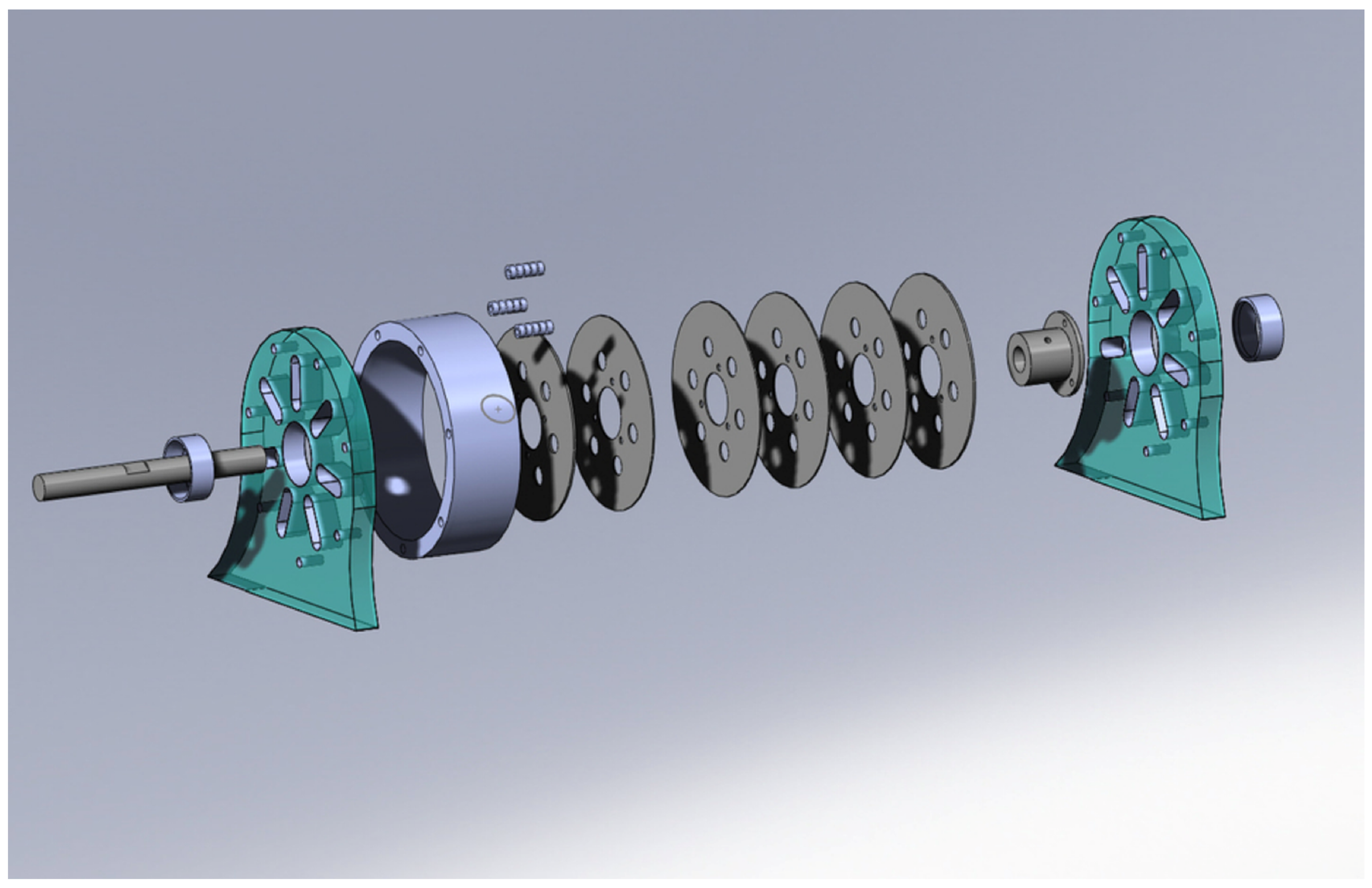
Invented by Nikola Tesla [1], the Tesla disc turbine is a type of turbo-machinery in which a series of coaxial, parallel discs is used instead of blades (Figure 1). Mounted on a central shaft, these discs are arranged with a small gap between each successive disc. The shaft and the discs are enclosed in a cylindrical container with minimal clearance both radially and axially. The working fluid is guided by one or more nozzles to enter almost tangentially from the edge of the discs. At the centre of each disc, there are exit apertures close to the shaft. The fluid travels in a spiral pattern through the tiny crevices between the discs. Due to the pressure differential between the periphery and the central exit, as well as the component of inward radial velocity, the working fluid moves from the intake up to the central exit. Due to the steady reduction in flow area, the radial velocity increases toward the central exit. After their invention in 1909 and patent in 1913, research interest in Tesla turbines grew from the 1950s [2], and it has been resurgent in recent years. The primary drawback of Tesla disc turbines is that they currently have lower efficiency ratings than traditional turbines. Tesla turbines, though, offer several benefits and could eventually find specialized uses. Additionally, it is anticipated that the present wave of research will help to demonstrate the effectiveness of disc turbines. For example, as mentioned in [3], experimental work has been carried out on an improved nozzle design, significantly improving efficiency and uniformity in the jet velocity profile.
In a Tesla turbine, the loss in the nozzle turns out to be the main source of loss [2,3,4]. The Tesla turbine is also known as the boundary-layer turbine, cohesion-type turbine, and Prandtl-layer turbine. It uses the boundary-layer effect to transfer the fluid’s kinetic energy to the discs, thereby causing them to rotate. It is easy to manufacture and less expensive. It is capable of processing a variety of fluids (Newtonian and non-Newtonian fluids, multiphase flows, etc.) to generate energy [5,6,7,8,9,10,11]. R. Steidel and H. Weiss [12] suggested that the bladeless turbine is well-suited for power generation in geothermal power stations. Research at different scales has been carried out for various fluid applications, including biomass, air, steam, water, and oil. Tesla claimed that a Tesla turbine could possibly achieve an efficiency of 80–90%. This caught the attention of a few early researchers, such as Leaman (1950) [13], Beans [14], Armstrong [2], and Rice [3], who published notable papers. Leaman [13] achieved a maximum of 31% efficiency by reproducing Tesla’s patent design. To put this into perspective, conventional bladed turbines typically achieve efficiencies ranging from 80 to 90%. This stark contrast highlights the potential yet untapped efficiency gains that can be achieved with the Tesla turbine, underscoring the criticality of future optimization efforts.

2. Tesla Turbine: From the Patent to the Existing Models

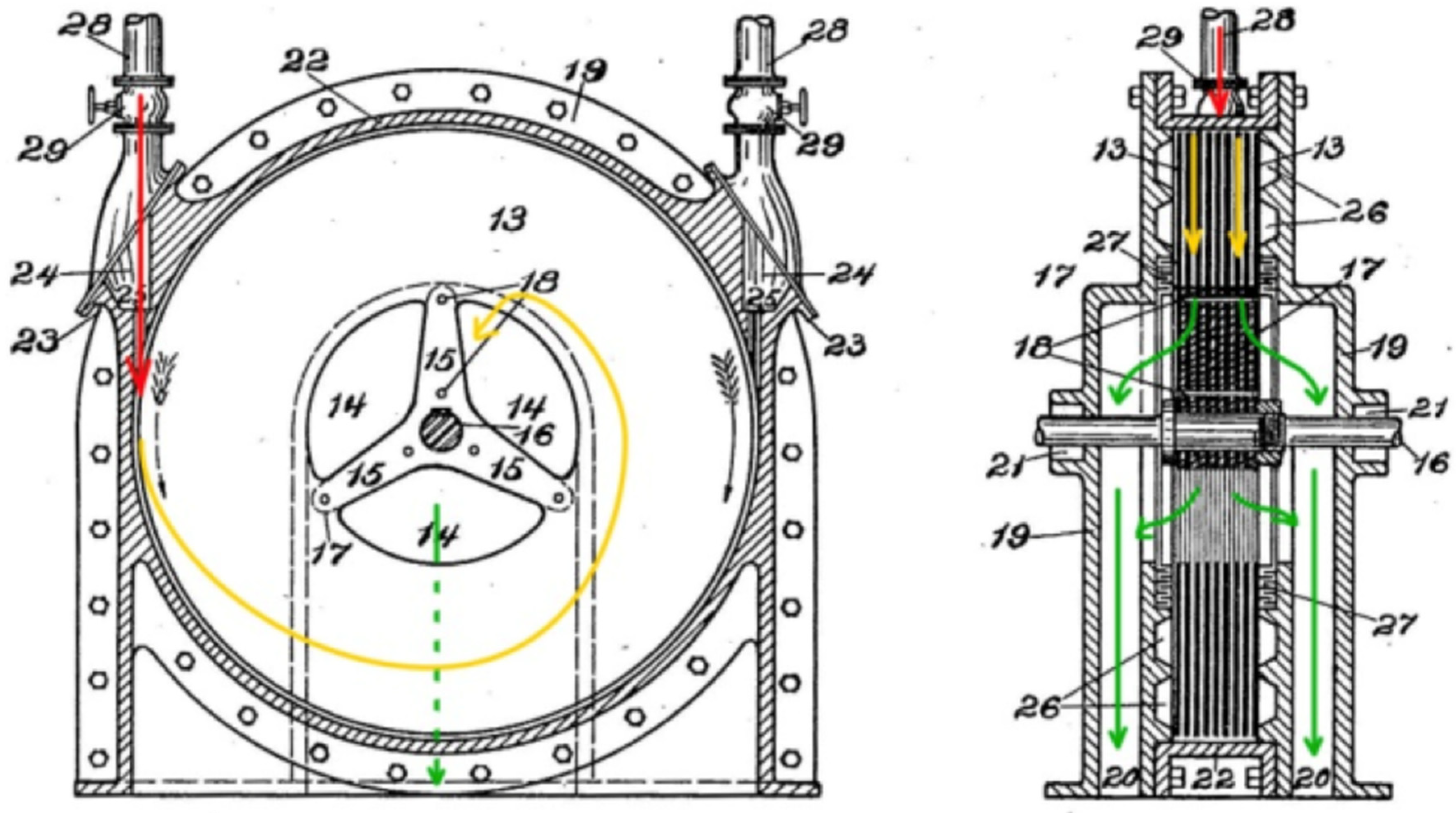
Figure 2 below shows us the design of the Tesla turbine as patented by Nikola Tesla in 1913 [1]. The components of the Tesla Turbine, as marked in the figure below, are:
13. Disc Platter Set,
14. Exhaust Holes,
15. Support Spokes,
16. Shaft,
17. Housing,
18. Washer Spacers,
19. End Castings,
20. Bearings,
21. Stuffing Boxes,
22. Central Ring Gap,
23. Flanged Extensions,
24. Inlet,
25. Nozzles,
26. Circular Grooves,
27. Labyrinth Seals,
28. Supply Pipes,
29. Valves.
It is a reversible design in which either valve (29) can be opened to rotate the turbine. The fluid follows a spiral path through the discs and imparts momentum to the plates via boundary layer forces. Once the fluid reaches the centre of the plates, it can escape through the exit holes and eventually exit the turbine outlet. The fluid path is shown in Figure 1. The disc pack is hermetically sealed, with labyrinth seals that allow the discs to rotate freely while preventing fluid from entering the spaces between the discs. The power is transmitted via the shaft, which rests on two bearings. The turbines were built by Nikola Tesla, with varying disc numbers and sizes ranging from 6 to 10 inches. These were made from steel.

2.1. Other Designs

As discussed earlier, the first notable research work was presented by A. Leaman [13] and J.H. Armstrong [2], along with several others, including Warner, Iversen, Blake, and Rice, but copies and evidence of some of their works were not well preserved. Beans [14] and North [15] contributed to the work on the Tesla Turbine in 1961 and 1969. Their designs are the primary set, as most later designs are similar to those.
In almost all studies on the Tesla turbine, efficiency is considered as the ratio of the measured output power (torque times angular velocity) to the power available from the incoming fluid (the driving energy available in the fluid flow, generally derived from fluid mass, pressure drop, and enthalpy difference).

2.1.1. Leaman Designs

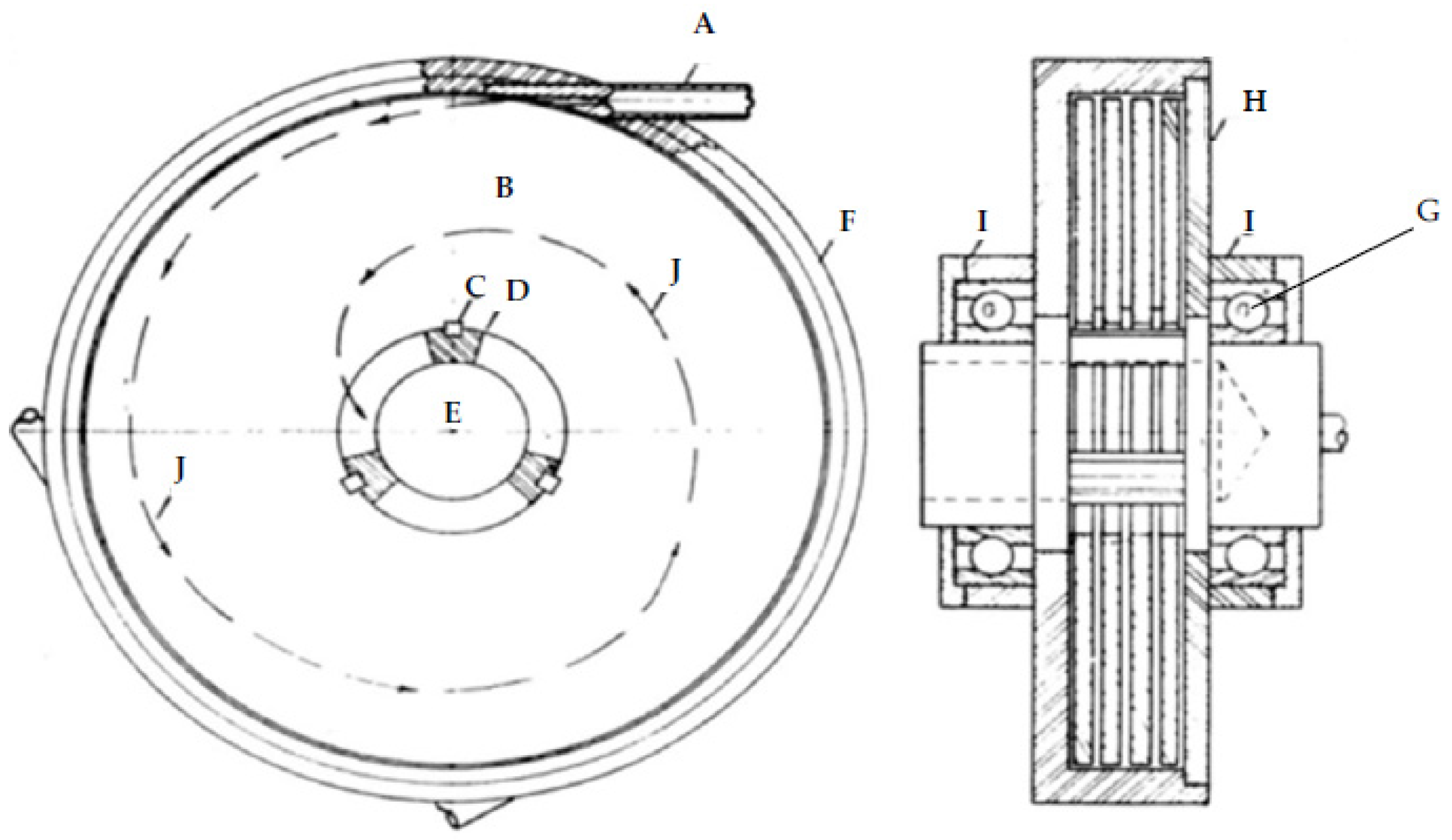
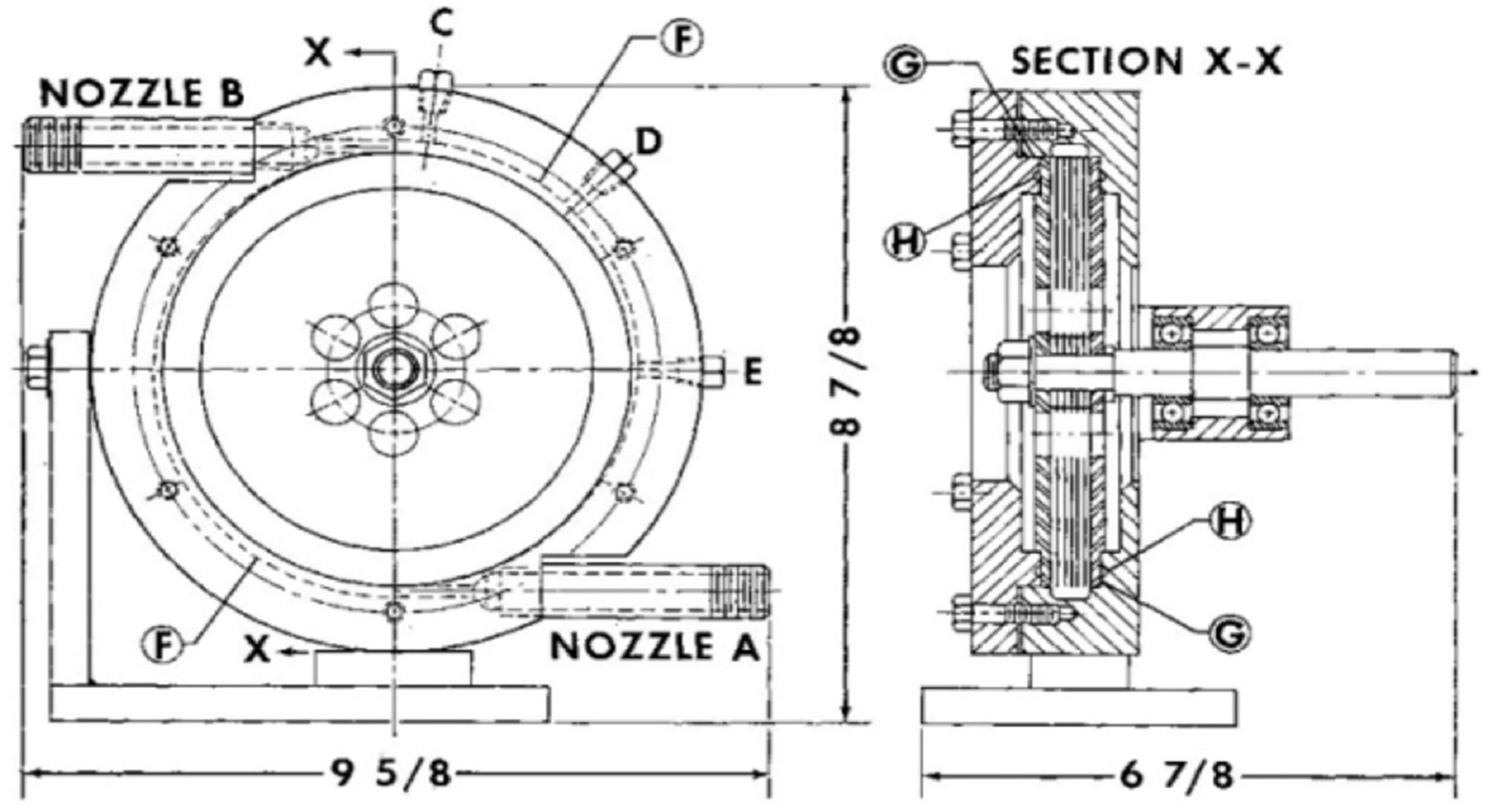
The proposed Leaman device (1950) used steam. The discharge took place centrally, the discs used had a diameter of 0.126 m, the working pressure was 5.8 bar, and the efficiency of 8.24% at a speed of 9000 rpm (Figure 3). The peculiarity of the design was the different arrangement of the discs and the exhaust made in the central cavity, with a shaft equipped with slots for the disposal of the exhaust gas. Finally, Leaman used various surface textures for the disc to evaluate its effects. From his analysis, it emerged that surface roughness had negative effects; that is, a smooth surface increased efficiency and vice versa.
Components are:
Central exhaust E,
Working fluid—Air,
4 nozzle inlets A,
126 mm discs were used,
Disc spacing of approximately 2 mm,
Pressure head of maximum 5.8 bar,
Maximum rpm achieved 9000 rpm,
Maximum efficiency of 8.24%.
Leaman measured the rotational speed and torque of the shaft to obtain the output power. He calculated the isentropic efficiency by comparing the measured power with the power theoretically available from the incoming air flow.

2.1.2. Armstrong’s Design

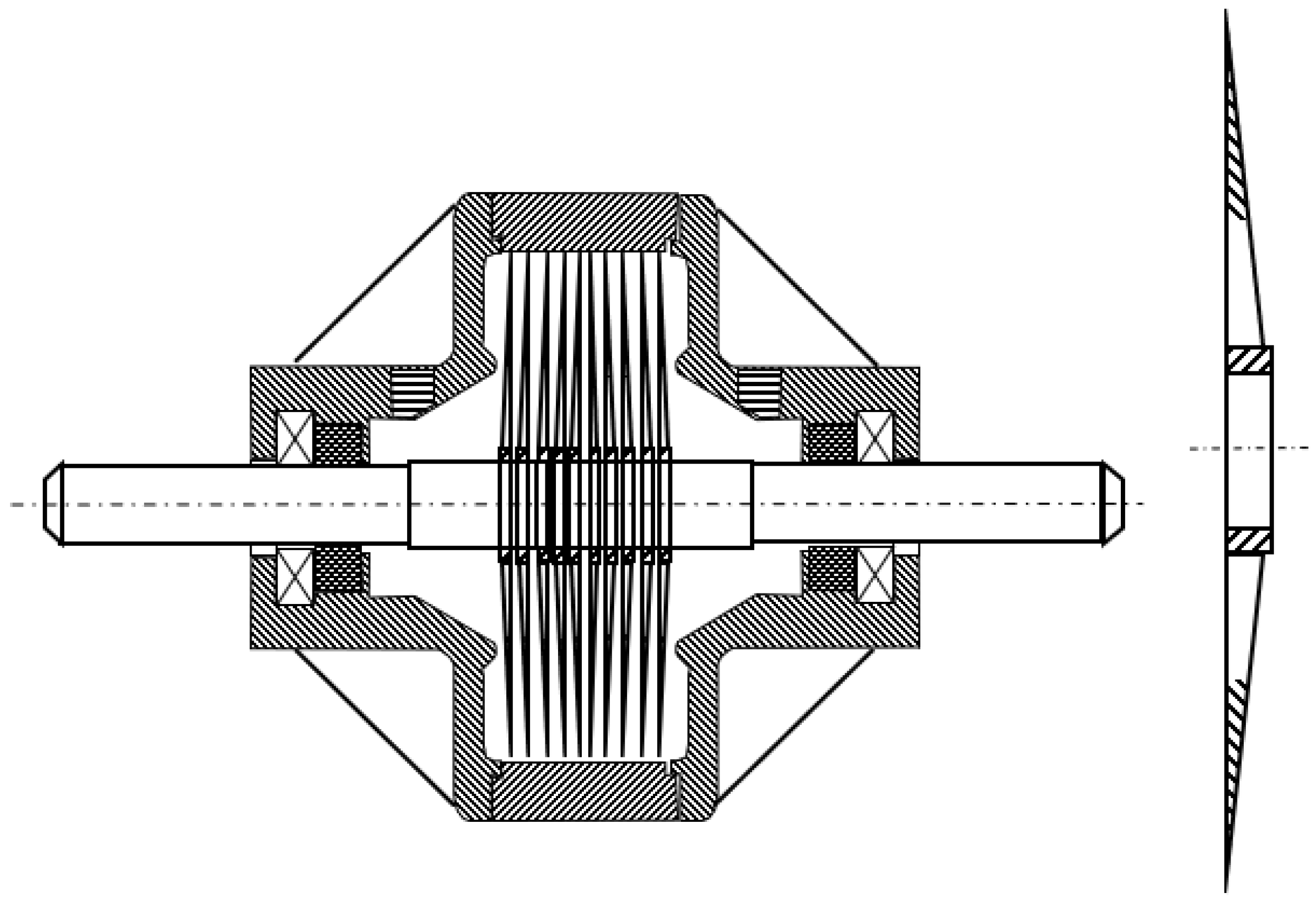
Armstrong [2] also built a steam turbine (Figure 4). Various changes have been made, but the most evident and characteristic is the shape of the discs, which have tapered edges to reduce turbulence at the fluid’s entry into the turbine. The tapering mitigates boundary-layer separation at entry by providing a smooth transition for the fluid, thus maintaining a coherent flow along the disc surfaces. The working pressure was 8.6 bar at 9000 rpm, with a disc section of 0.178 m. The efficiency was very low, about 4%. As previously described, the list of components is reported below:
Tapered edges,
178 mm diameter,
25.5 mm exhaust hole at the centre,
Steam as medium,
Inlet Pressure—8.6 bar,
Maximum speed—9000 RPM,
4% efficiency.
The efficiency was also obtained from experimental measurements of rotor mechanical power relative to the energy of the incoming fluid.

2.1.3. Beans Design of Tesla Turbine

For Beans [14] the main objective in developing his model was to study the effects of the gap between the discs on the machine’s performance and on inlet pressure (Figure 5). The device has two nozzles mounted on cantilever bearings, a disc diameter of 0.152 m, and a pressure and operating speed of 2.76 bar and 18,000 rpm, respectively. With these specifications, the efficiency achieved was 24%.
The main characteristics are:
Two inlet nozzles,
152 mm disc diameter,
2.76 bar,
Top Speed—18,000 rpm,
24% efficiency,
Ball bearing arrangement.
Here too, the output power was derived from experimental data (torque and rotational speed). The input power was estimated from the airflow through the nozzles and the pressure drop.

2.1.4. North’s Design

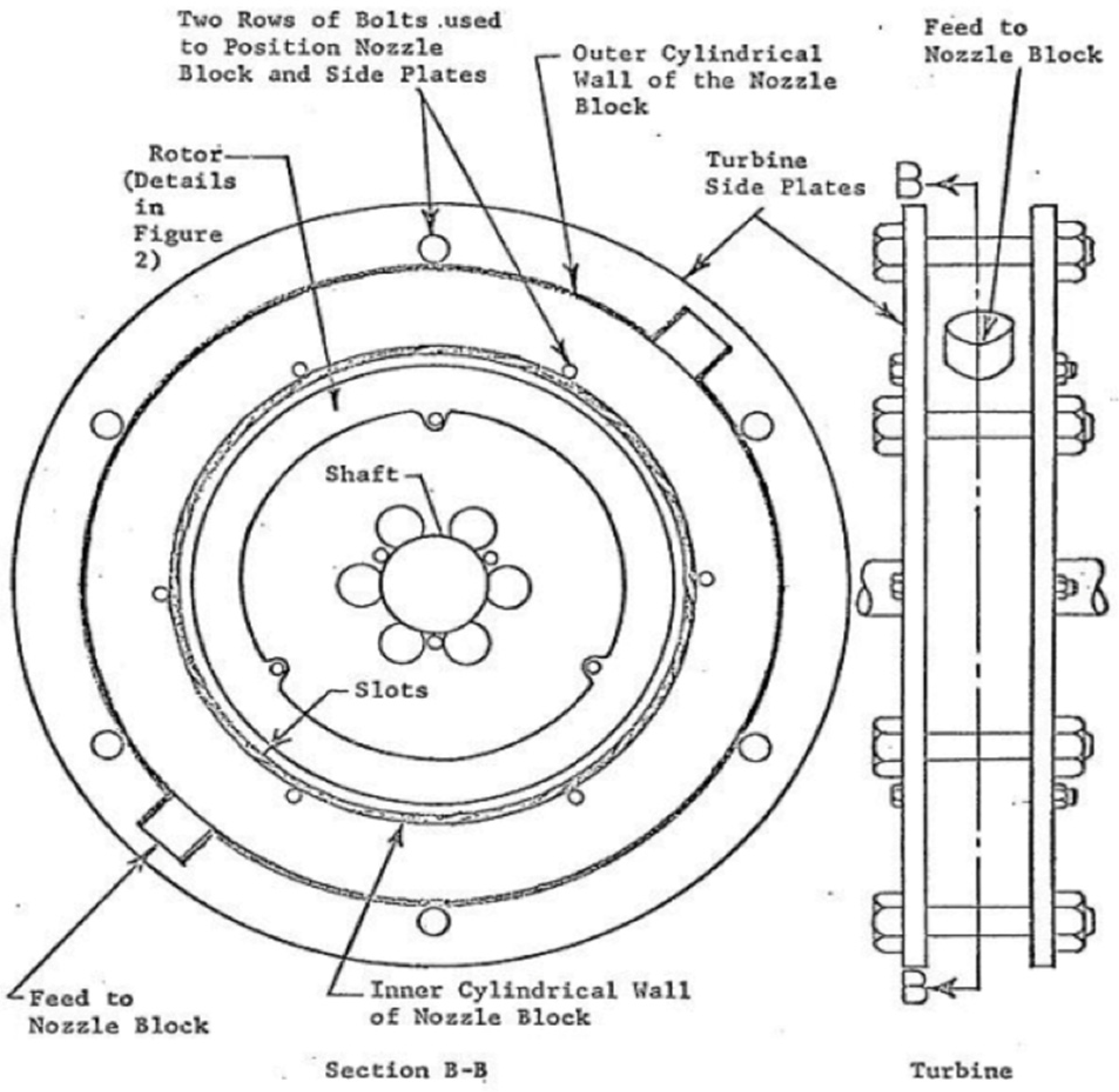
The author built (1969) a device to change the mode of entry into the turbine [15]. For this reason, he creates such a supply chamber, a defined volume in pressure, able to feed a fairly large number of nozzles, all arranged circumferentially. The proposed device consisted of 4 discs with a diameter of 0.124 m operating at 1 bar and 2700 rpm (Figure 6). The efficiency calculated by North was about 16%.
Designs for a new supply chamber that can supply fluid to high number of nozzles at high pressure.
124 mm discs,
1 bar pressure,
Maximum speed 2070 rpm,
16% efficiency.
North’s work appears only in historical tables of Tesla turbine projects, but the methodology is similar to other studies, through the experimental measurement of output power relative to input power.

2.1.5. Rice’s Design

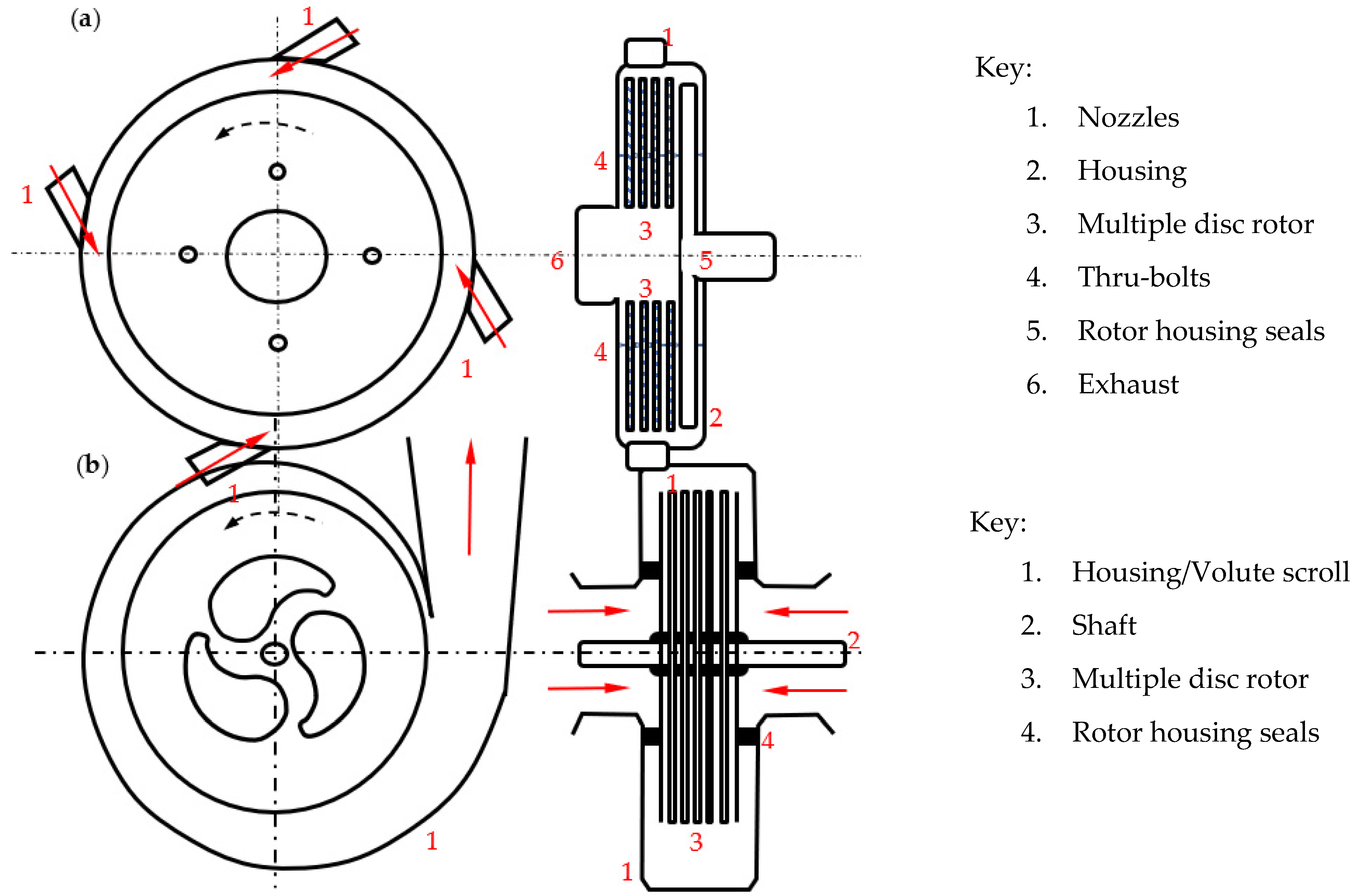
Regarding the configuration presented by Rice and his students (Figure 7a), a few dates are worth noting. The only reference is Rice’s original 1963 thesis. However, at the 1991 Nikola Tesla symposium, a device based on Rice’s original design was presented, featuring a hub–exhaust configuration (Figure 7b).
Rice, for his part, estimated efficiencies for individual stages, based on rotor output power measurements relative to the incoming energy of the fluid.

2.1.6. Hoya & Guha’s Design

Hoya and Guha used the same configuration presented by Rice, and the main characteristics and results are listed below:
Used the same design as that of Rice,
Disc diameter of 92 mm,
Pressure inlet at 3.9 bar,
Maximum efficiency achieved was 25%.
For them too, the input power is derived from the pressure and flow conditions of the incoming fluid, and the output power is measured through torque and speed measurements.
Figure 7. (a) Rice first design; (b) 1991 Rice modified design.
Eng 07 00030 g007
Summarizing the various models and the different methods for calculating efficiency, we can compile the following Table 1.

3. The Mathematical Approach to the Tesla Turbine

To enhance understanding as we delve into the mathematical exploration of the Tesla turbine, this section will outline the key performance metrics derived from the equations presented in the upcoming sections. By analyzing the Navier–Stokes equations, we aim to quantify the turbine’s inherent efficiency and power-generation capabilities, focusing on the fluid dynamics within the rotor channels. The goal is to equip the reader with a comprehensive view of the turbine’s operational mechanics, providing a solid foundation for grasping the intricate calculations that follow.

3.1. Fluid Dynamics Analysis

The analysis is based on the Navier–Stokes equations, which describe the fluid dynamics within the channel. These aspects are pretty developed and explained by Romanin in his PhD thesis [16]. The first step in the analytical study of turbomachinery is to start from the equations that govern fluid mechanics:
Continuity equation (V is the Velocity field):
V = O
Navier–Stokes dynamic equation:
V · V =   P ρ + v 2 V + f           ( f friction factor , described in Equation ( 14 ) )
In the equations, the fluid is treated as incompressible, following Rice’s treatment, which assumes small pressure jumps in the expander. In addition, the following simplifications can be adopted:
  • The fluid is stationary, laminar, and two-dimensional;
  • Admission is total, i.e., the machine is powered by infinite nozzles;
  • The fluid dynamic field is considered radially symmetric, and the inlet fluid is uniform. This implies an independence of the entry conditions with respect to all derivatives, which θ are therefore null;
  • The inlet and discharge effects are not considered; the fluid therefore evolves in the impeller, only in the gaps between the discs.
Considering the assumptions just made and introducing the cylindrical coordinates, the following variations of Equations (1) and (2) are obtained:
  • Continuity equation:
1 r · r · V r r
Navier–Stokes Momentum equation in radial direction:
V r · V r r   V θ 2 r =     1 ρ · P r + v 1 r · r · r · V r r + 2 V r z 2 V r r 2
Navier–Stokes Momentum equation in θ direction:
V r · V θ r +   V r V θ r =   + v 1 r · r · r · V θ r + 2 V θ z 2 V θ r 2
Navier–Stokes Momentum equation in z direction:
0 =     1 ρ · P z
For each r and θ, the speed range is described as follows:
V r =   V ¯ r r Φ z
V θ = V ^ θ r Φ z + U r
where Φ(z) is defined as:
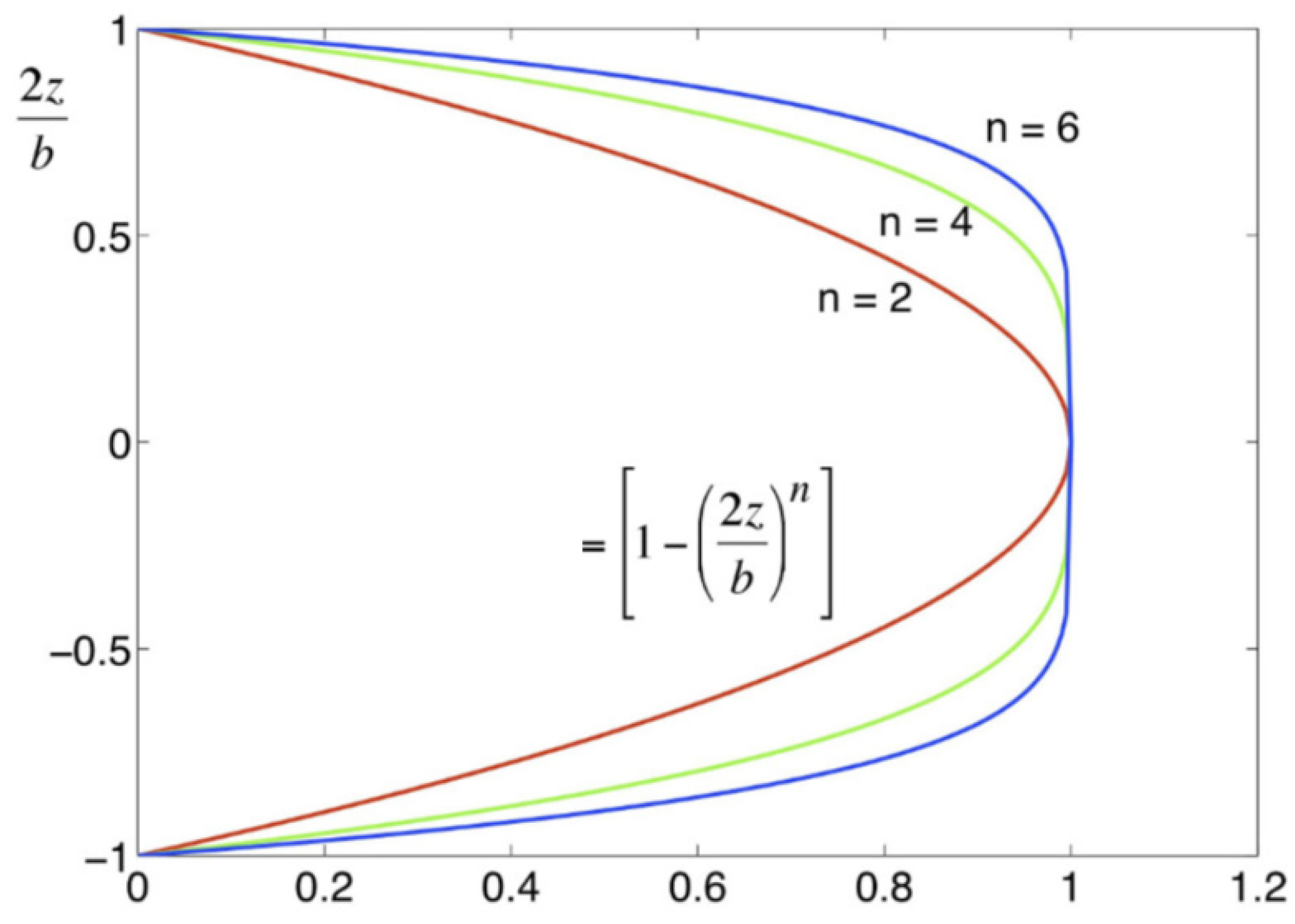
Φ z =   1 2 z b n
Φ z is a dimensionless scalar function, introduced to describe a normalized profile along a coordinate z. It is not a “universal” law; its meaning depends on the physical context, but the form is typical of profile functions used in fluid dynamics and transport. In this case, “n” is the shape exponent that controls how flat the profile is (large n), or whether it is parabolic or more rounded (small n).
The following velocities represent the mean radial absolute velocity and the mean tangential relative velocity, respectively:
V ¯ r ( r ) =   1 b · b / 2 b / 2 V r d z
V ^ θ r = 1 b · b / 2 b / 2 V θ U d z
V ^ θ = V ¯ θ U  
while “b” represents the gap between a pair of discs. The tangential stress is proportional to the relative velocity and is defined as:
τ w = f   ρ · V ^ θ 2 2
Considering the Poiseuille Po number for a laminar fluid, usually placed equal to 24, and the Reynolds Rec number, the friction factor for a Newtonian fluid can be written:
f =   P o R e c
where
R e c = ρ · V ^ θ · D H μ   c o n   D H = 2 b
We then define a dimensionless parameter F P o :
F P o = 1 24   P o
which allows us to derive the following relation:
n + 1 = 1 8 P o = 3   F P o
Figure 8 shows the trend of the velocity field along z as n varies, a parameter proportional to the disc’s roughness, defined in Equation (17). To provide a practical understanding of this parameter, consider that n is related to physical roughness that can be directly measured using the Ra value, a common surface finish measure. For instance, a disc with an n value typical of this setup might correspond to a surface roughness (Ra) of 1.2 μm. This helps practitioners gauge the implications of turbulence and fluid dynamics directly from common manufacturing specifications.

3.2. Radial Velocity

From Equations (3) and (7), we have:
r · V r = r · V ¯ r · Φ = c o n s t a n t =   C r
using the following integrals:
b / 2 b / 2 Φ · d z = 2   0 b / 2 Φ · d z = b
b / 2 b / 2 r · V r · d z = b / 2 b / 2 r · V ¯ r · Φ · d z = r · V r · b = b · C r = C r  
Applying continuity equation:
2 π · r o · ρ b 2 b 2 V r · d z = 2 π · r o · ρ · V ¯ r r o · b 2 b 2 Φ · d z = 2 π · r o · ρ · V ¯ r r o · b =   m ˙ c  
The following field of mean radial velocities as a function of radius is defined:
V ¯ r =     1 r · r o V ¯ r o
which, at the outer radius:
V ¯ r o =   m ˙ c 2 π · r o · ρ · b

3.3. Tangential Velocity and Moment

The next step is to replace Equations (7) and (8) in (5) and (6). Once the substitution has been made, each term must be integrated through the micro-channel, consisting of the gap between each pair of discs, and using (19), it obtains:
b / 2 b / 2 Φ 2 · d z = 2   0 b / 2 Φ 2 · d z = b · 2 n + 1 2 n + 1
b / 2 b / 2 d 2 Φ d z 2 d z = 2   0 b / 2 d 2 Φ d z 2 d z = 4 ( n + 1 ) b
Introducing the following dimensionless parameters:
ξ =   r r o
W ^ = V ^ θ U o = V ¯ θ U U o
P ^ = P P o ρ U o 2 2
V r o = V ¯ r o U o
ε = 2 b r o
R e m * = D H r o · D H · m ˙ c 2 π · r o · b · μ = D H · m ˙ c π · r o 2 · μ
And considering W ^ = d W ^ / d ξ e W ^ = d 2 W ^ / d ξ 2 , Equations (5) and (6) become:
P ^ ξ =   P ^ =   4 n + 1 2 n + 1 · ξ 3 · V r o 2 + W ^ 2 ξ 2 + 4 W + 2 ξ + 32 n + 1 V r o 2 R e m * · ξ
2 n + 1 n + 1 = 2 n + 1 2 n + 1 · ε 2 R e m * · ξ W ^ + 2 n + 1 2 n + 1 · ε 2 R e m * + 1 · W ^ + 1 2 n + 1 2 n + 1 · ε 2 R e m * · 1 ξ 8 2 n + 1 ξ R e m * · W ^
The solution of these equations requires boundary conditions on the dimensionless, relative velocity and pressure parameters (Equation (26) and following) below:
ξ = 1   e   W ^ 1 =   W ^ o
Which leads to writing:
P ^ 1 = 0
Since ε << 1, assuming a series development of the solutions, we obtain:
W ^ =   W ^ 0 + ε W ^ 1 + ε 2 W ^ 2 +
P ^ = P ^ 0 + ε P ^ 1 + ε 2 P ^ 2 +
And substituting into Equations (32) and (33) yields (where the term “0” indicates the zeroth order in the asymptotic expansion):
O ε 0                   6 F P o 1 3 F P o =   W ^ 0 + 1 ξ 8 6 F P o 1 · ξ R e m * W ^ 0 P ^ o =   12 F P o 6 F P o 1 · 1 ξ 3 · V r o 2 + W ^ 0 2 ξ 2 + 4 W ^ o + 2 ξ + V r o 2 F P o · 96 R e m * · ξ
With ξ = 1 ; P ^ o = 0 ; W ^ o = W ^ r o
O ε 1                   0 = W ^ 1 + 1 ξ 8 6 F P o 1 · ξ R e m * W ^ 1 P ^ 1 = 12 F P o 6 F P o 1 · 1 ξ · 2 W ^ 0 W ^ 1 + 4 W ^ 1
With ξ = 1 ; P ^ 1 = 0 ; W ^ 1 = 0
O ε 2                     W ^ 2 + 1 ξ 8 ξ 2 n + 1 R e m * · W ^ 2 = 6 F P o 1 6 F P o · ξ W ^ 0 R e m * + W ^ 0 R e m * W ^ 0 R e m * · ξ P ^ 2 = 12 F P o 6 F P o 1 · 1 ξ · 2 W ^ 0 W ^ 2 + 4 W ^ 2
With ξ = 1 ; P ^ 2 = 0 ; W ^ 2 = 0
Defining dimensionless parameters as a function of the following physical parameters, with:
ξ i =   r i r o
W ^ r o r o = V ¯ θ _ r o U o U o
R e m * =   D H · m ˙ c π · r o 2 · μ
V r o = V ¯ r o U o
ε = 2 b r o
where
  • b , the gap through two discs where DH = 2b;
  • m ˙ C is the flow rate per gap;
  • ri, ro, respectively, inner radius and outer radius;
  • ω = Uo/ro angular speed;
  • Vθ_ro, average tangential velocity at rotor inlet.
Solving Equations (38)–(40) with the boundary conditions listed above yields the following solutions:
W ^ 0 = W ^ 0 . r o R e m * 24 F P o · e f ξ ξ · e f 1 + R e m * 24 ξ · F P o
W ^ 1 = 0
W ^ 2 = e f ξ ξ · 1 ξ ξ * e f ξ *   g ξ * d ξ *
where ξ is the integration variable. The asterisk in the formula referring to the Reynolds (or to the integration variable) does not indicate a derivative or the complex conjugate, but indicates a modified or corrected version of the Reynolds number. In the case of the Tesla turbine, we have that: (a) the flow is not through a standard duct; (b) the velocity varies with z (between the disks); (c) viscous forces depend on the value of the integrals along the profile; (d) the flow regime is laminar with dominant wall friction. In this case R e m * = C R e m , with C being a corrective factor derived from the integrals along the profile.
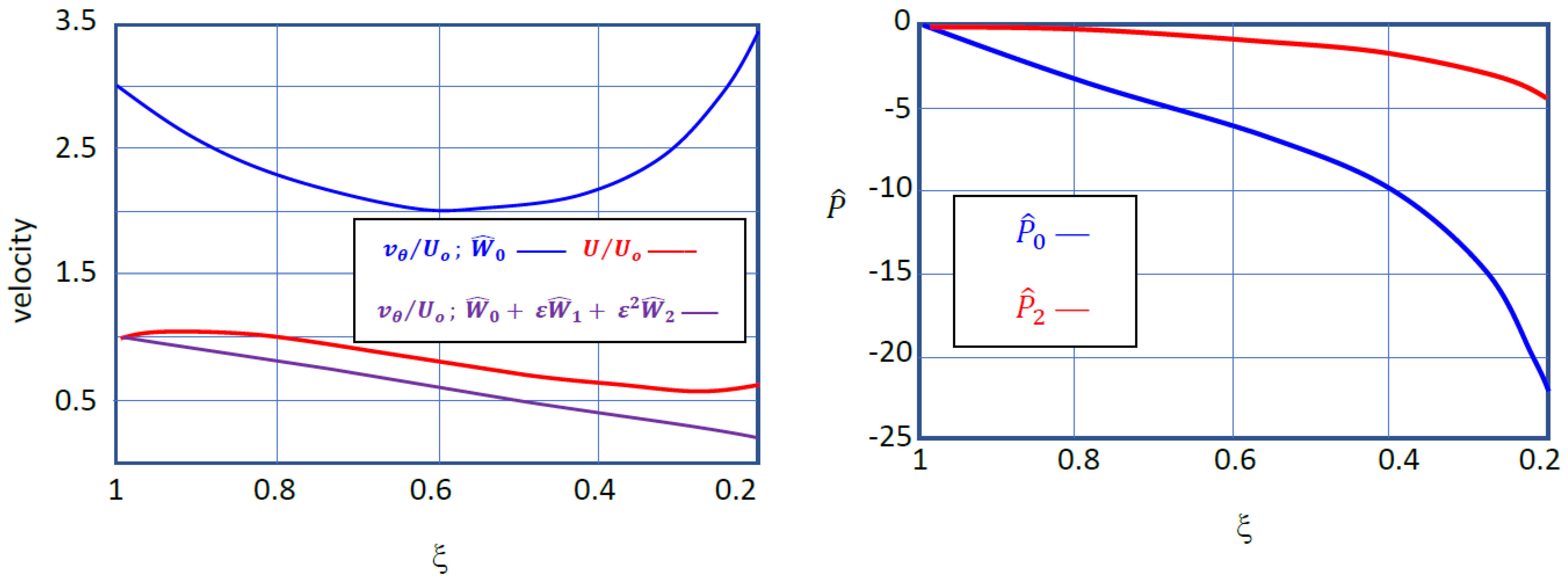
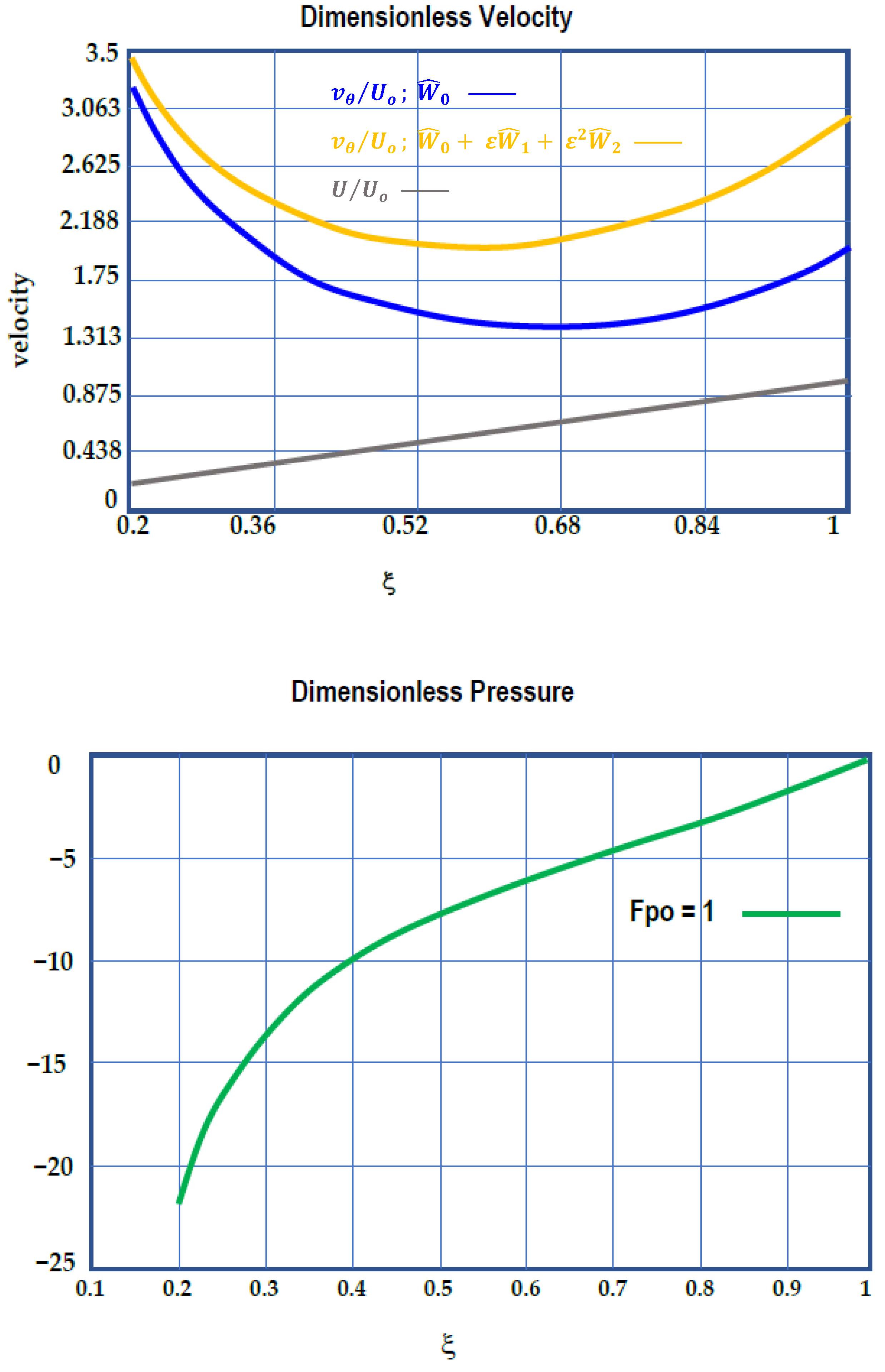
The solution is presented as a sum of terms of increasing order, which represent the various degrees of approximation of the result. For a high-precision solution, it is sufficient to consider terms up to second order. From Romanin’s analysis, however, it is shown that even the solution limited to order zero is satisfactory. In fact, reporting on a graph, the solution at the second order and that at the zero order, the two solutions are overlapping both about the dimensionless relative velocity and about the dimensionless pressure (Figure 9 and Figure 10).

3.4. Power and Efficiency

Once the trend of the tangential stress along the fluid’s spiral motion, as defined in (13), is known, we proceed to the analysis of the torque generated by the latter. In its definition, the moment is given by:
M =   r 1 r 2 τ w · 2 π r · r   d r
Once the torque acting on a single surface of the disc has been determined, the torque generated by the entire machine (composed of ND discs) is derived:
M t o t =   2 N D 1 · M
As a result, the power turns out to be:
P =   M t o t · ω
Finally, the value of the machine’s efficiency is determined, calculated both through the classical methodology used for turbomachinery and through dimensionless treatment:
η T =   V θ , o U o V θ , i U i V θ , o U o ;               η T =   1 W ^ i + ξ i ξ i W ^ 0 + 1

3.5. Spiral Tracking (The Path of Fluid)

The previously defined model allows determination of the trajectory of fluid motion in the single-rotor channel in cylindrical coordinates (r, θ). This path is obtained by integrating the following differential equations:
r d θ =   V θ d t ;             d r =   V r d t
Combining the equations gives the final differential equation, which can be integrated to determine the dependence of θ with r:
d θ d r s t =   V θ r · V r
As can be seen, it is possible to derive the previous relation in dimensionless form:
d θ d ξ s t =   ξ + W ^ V r 0
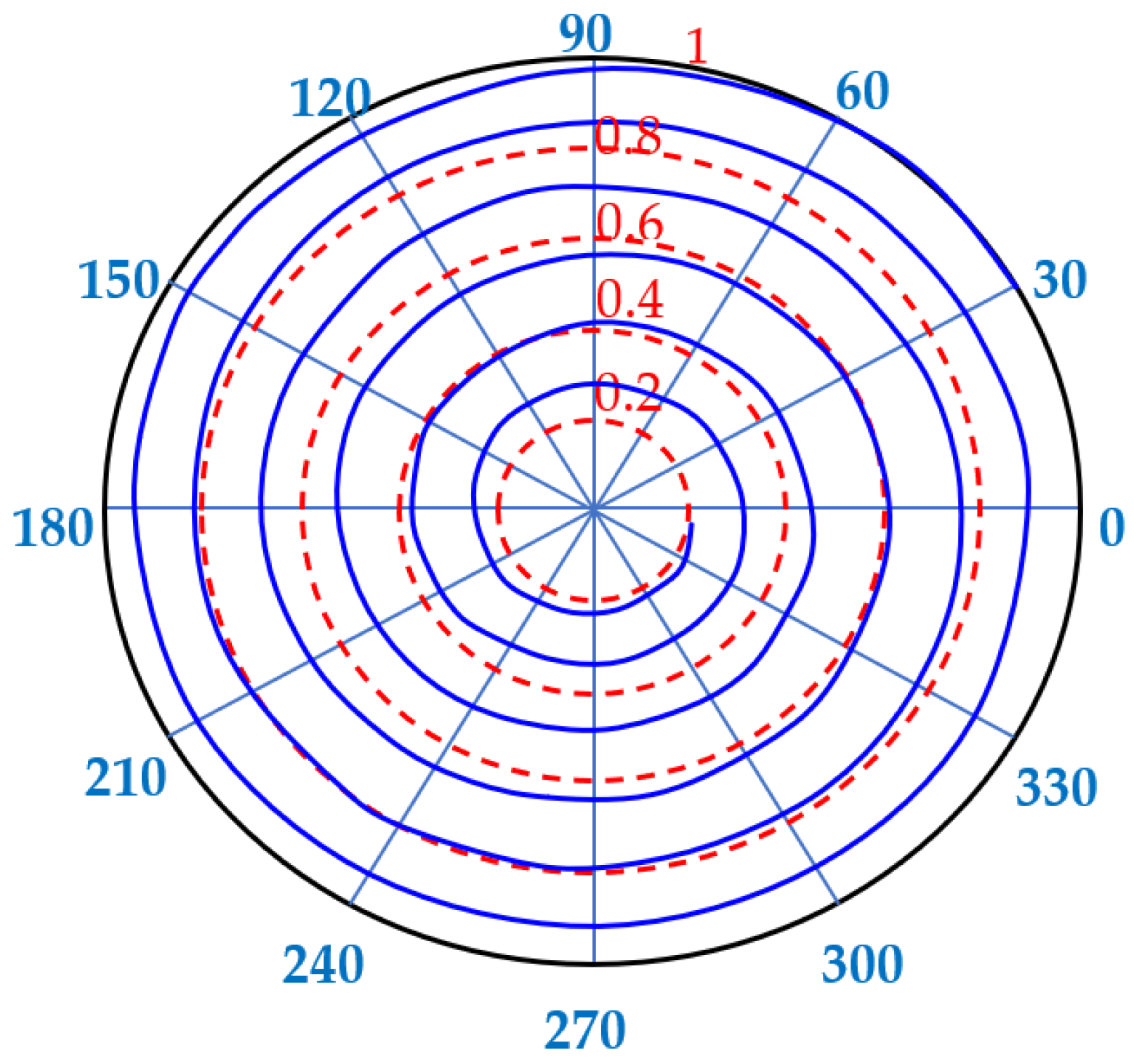
Once the equation is solved and the initial hypothesis of total admission is considered, the fluid motion trajectory is obtained (Figure 11).

3.6. Nozzle Sizing

Finally, to obtain the exact definition and design of the machine, it is necessary to determine the fluid-dynamic values at the turbine input. In this case, the sizing equations of the converging nozzles are used using isentropic flow formulae (The following formulae are the classic ones that describe the efflux of compressible fluids, by the characteristic adiabatic velocity, efflux velocity and nozzle flow rate, passage area, etc.).
m ˙ = p R T · c s · M a · A
T t T = 1 + κ 1 2 · M a 2
p t p = 1 + κ 1 2 · M a 2 κ 1 κ
A t h r o a t A o u t l e t = κ 1 2 κ + 1 2 κ 1 · M a o u t l e t 2 1 + κ 1 2 · M a o u t l e t 2 κ + 1 2 κ 1

4. A Technical Remark Review: Previous and Actual Work on Tesla Turbine and Related Issues

The first report on developments and research on the Tesla turbine, up to 1991, was by Rice [3,17,18]. In his dissertation, Rice notes that the methods used at the time included the analysis of mass parameters and the substitution method in truncated series [3,15,16,17,18]. Both methods have negative aspects: the substitution methodology suffers from limited accuracy, while the analysis of mass parameters shows an inconsistency, better to say inadequacy, in the friction factor [14,18,19,20,21,22,23,24,25,26,27,28,29,30]. In an effort to overcome these difficulties, Hoya and Guha [4] developed the relatively simple and reliable “angular acceleration method” for determining the net power and total losses of the turbine. The method also enabled the calculation of low torque at high rotational speeds. At the same time, it was found that the nozzle’s operating characteristics and suction conditions strongly influence the machine’s efficiency. Rice, through his studies, confirms that if it could obtain a high-performance nozzle, it would be possible to achieve the efficiencies of conventional rotors. All the studies demonstrated this assumption, as the efficiencies obtained in the tests are always very modest. This improvement was introduced again by Hoya and Guha, who, after analyzing the causes of these losses, developed a new nozzle for the turbine inlet. This new nozzle significantly reduces inlet losses and improves the homogeneity of the jet velocity profile. The method for selecting the number of discs to use was defined by Couto [25]. The model predicts the thickness of the fluid boundary layer. The authors propose calculating this thickness in the laminar field using the formula δ ≈ 5ν(r2 − r1)/Uθ. However, this formula had no numerical or experimental evidence. To develop an applicable mathematical model, Deam [29] proposed a method based on one-dimensional incompressible flow. What made this model deficient was the absence of the radial component of the flow. In addition, the proposed theory calculates only the maximum efficiency, without losses. Such efficiency is possible only when the fluid velocity equals the rotor speed.
In fact, under operating conditions, if no relative speed is established between the rotor and the fluid, no viscous drag force is generated, and no power is generated. On this basis, Carey [31] studied the use of the Tesla in combined Rankine-cycle systems. By treating a one-dimensional system as a model and calculating the momentum, he determined the machine’s efficiency. Finally, he stated that the turbine’s isentropic efficiency can reach around 75% under ideal conditions. Like Carey, both Lampart [26] and Choon [32] have implemented applications in the field of power generation. In addition, these authors used numerical fluid-dynamics simulations to optimize the device, highlighting that their proposals produced a torque of about 0.033 Nm with a total efficiency of 10.7%.
The models and studies described so far, as we recall, are based on the laminar flow hypothesis. However, in the case of a significant loss, this hypothesis “is not entirely certain”. To determine whether this approach (laminar) is applicable, a thorough stability analysis must be performed. In the literature, there are the works of Gregory et al. [33] and Faller and Kaylor [34], which use an endless rotating disc, highlighting two forms of boundary layer instability: a class A instability due to viscosity, and a second type, or class B, due to inflectional instability.
These two instabilities are different in direction, wavelength, and phase velocity, and both occur as regular spiral rolls within the boundary layer. These spirals had already been found in some studies [20,21,22,23,24,25,26,29] in the Bödewadt layer. Circular waves propagating inward are a sign of flow instability between a rotating disc and a stationary disc with separate boundary layers. The instability of the spiral model coexists with circular waves when the Reynolds number increases [35,36].
The instability between a rotating disc and a stationary disc is represented by localized spirals or solitary waves. If the Reynolds number increases, some turbulent structures overlap the spirals. In the case of moderate or mild counter-rotating flows, Gauthier found the presence of asymmetric propagation vortices and positive spirals. In the case of counter-rotating flows of high intensity, a third form of instability was detected, unique to this situation, characterized by the generation of negative spirals. These studies may not be applicable to the Tesla turbine. Experiments conducted by Murata [37] have shown that the flow within the disc gap is laminar, except for a small region between the internal and external perimeters. In opposition to what has been written, Rice states that the flow between two facing discs can be laminar, laminar with recirculation, turbulent, transitional, or reverse transition. Of fundamental importance, in this context, was the introduction of the Nendl number [38] defined as viscos-geometric number (α = [(Vrb2)/(ν r)]). If this number is less than 10, the flow remains laminar. Finally, as a closing of this paragraph, it is recalled that a complete analysis of flow stability has not yet been completed [39,40,41,42,43].

5. Considerations on Rotating Fluid Flow in Contact with Discs—Simulation Analysis Summary

In a Tesla turbine, rotation and power are generated by the action of a tangentially entering fluid. Von Karman’s [44] studies focused on fluid–disc interactions under stationary conditions, assuming the discs had infinite radius. The results of this study showed that such interactions fall into two types: the fluid immediately next to the disc flows radially outward due to centrifugal force, and the fluid moves axially toward the disc to fill the space. Bödewadt [45], on the other hand, studied this behaviour using a stationary disc (not rotating) in a rotating fluid, treated as a rigid body. Under the action of centrifugal force, the fluid heads inwards. Once “entered”, this fluid is forced to move axially upwards due to friction between the rotating flow and the stationary disc.
Batchelor’s studies [46] involved two discs (each with infinite radius) placed apart from each other. While one disc was stationary, the other rotated. The rotating disc generates fluid motion from a state of initial rest. Batchelor simulations [46] have shown the presence of boundary layers on both the rotor and stator, and how a fluid core rotates between these two layers at a slower speed than the rotating disc. In addition, it is seen that the fluid is continuously pumped radially outwards from the rotating disc, while it is supplied to the core through radial inflow near the stator surface. Stewartson [47] also studied the same phenomenon using a series expansion for flows at lower Reynolds numbers. The result obtained is different from Batchelor’s. The solution presented by Stewartson emphasizes that there is no central region in the flow structure between the two discs. The flow, or rather, its pattern, is more like that of von Kármán. The simulation also shows that the configuration studied by Stewartson exhibits a continuous decrease in the fluid’s angular velocity from the rotating disc to the static one. Picha and Eckert [48] attempted to mediate the Batchelor–Stewartson results. The tested and simulated discs were finite in size and in two configurations: in one, the casing separated the external space of the two discs from the environment, while in the other, the casing was absent. The study confirmed that, in the case of unshrouded discs, the values coincide with the values obtained by Stewartson [47], while in the other case (shrouded), the solution is that of Batchelor [46]. Lance and Rogers [49] have shown, through numerical simulations, how the flow evolves from a Stewartson-type flow with separate boundary layers (low Reynolds number) to the Batchelor [46] flow, purely viscous with joined boundary layers. In addition, Pearson [50] noted that Batchelor’s solution is accurate (qualitatively) and that Stewartson’s findings depend on a very low Re value and are therefore misleading. To finish this topic, Sirivat [51] also found, through numerical simulations, that the flow becomes a torsional Couette flow as Re decreases and the disc radius approaches infinity.
To complicate matters, Dijkstra and van Heijst [52] and Gauthier [53] have added further complexities. Their results indicate that the angular velocity of the nucleus deviates from Batchelor’s values for high Re with finite, shrouded disc sizes. To these considerations are added those of Zandbergen [54], Poncet [55,56], who have remarked that in the rotor–stator system, the structure of the flow “depends on the superposed flow into the cavity”. In conclusion, according to Poncet, the model described by Batchelor turns into Stewartson when the “superposed outflow increases [47]”. Dijkstra and van Heijst [52] showed, through their simulations, the coexistence of the two types of flow (Stewartson and Batchelor). Their results show the presence of a Stewartson-type motion near the centres of the discs and a Batchelor-type motion near the edges of the discs. This is further supported by Mellor’s study [57], which shows that as Re increases, the von Karman solution becomes the limit case of two-disc configurations. Then, as the number of Re varies (as noted by Roger and Lance [58] and Zandbergen [54]), a series of configurations for the flow between the discs is obtained, of which Batchelor and Stewartson’s solutions represent two of the many possible solutions.
According to Gupa and Hoya [4], the Tesla turbine study requires a new approach, which has not been considered in the studies described so far. The flow between the turbine discs is not the product of the rotation of the turbine discs. In addition, the fluid has both radial and tangential components at the machine inlet. The rotor then rotates thanks to the torque generated by the flow acting on the disc surfaces. This approach differs from that of Bödewadt [45], who considered a single stationary disc of infinite radius in a rotating fluid with no overlapping flow. This is because all the discs in a Tesla turbine are rotors, with the flow directed inwards and overlapping. This means that the various simulations, such as those by Poncet [55], are not relevant for the Tesla turbine. In fact, these authors, again according to Gupa, had considered the stator–rotor configuration. In addition, the space between the two discs becomes fundamental, which, in some cases, can be considered a microchannel. This results in the two boundary layers of the two discs mixing, blocking a Batchelor-like flow. Finally, these boundary layers do not correspond to the definition of the Ekman boundary layer, which applies only to the Coriolis component of the inertial components.
Kreith [59], Fahidy [60], and Batista [61] simulated a multi-disc pump and used the results obtained for the Tesla turbine. Unfortunately, the method they use cannot accurately describe the phenomenon as the disc radius decreases, especially because it cannot account for the fluid’s pressure drop. An evolution of this approach, which allowed, through solution iteration, a more detailed description, was presented by Matsch and Rice for the asymptotic region of radially inward flow between co-rotating discs, in combination with a multi-disc turbine [35].
Such a flow depends on two factors. The first is the Reynolds number, which depends on the fluid specifications, the velocity, and the geometric characteristic, i.e., the distance between the discs [62]. The second is the flow rate coefficient, which depends on the speed and the cross-section, and is a function of the discs’ radius.
Continuing the analysis of the different approaches for the turbine, Breiter and Pohlhausen [63] proposed a numerical method (finite differences) to calculate the input flow between discs. Rusin [64,65] and Boyd and Rice [19] used a fairly similar approach to determine the radial inward flow of the multi-disc turbine. A feature of the simulation is that the fluid enters the turbine along the circumference of the disc via a nozzle. The nozzle provided the speed with radial, tangential, and even axial components. In their simulation, the authors arbitrarily set the velocity distribution field. At the same time, Guha [30] and then Neckel and Godinho [66], focused on the behaviour of the turbine nozzle, identifying it as the main cause of irreversibility. By refining the simulation further Rice [3] reduced computational time. This tool was then further improved by Romanin [67]. To conclude, Talluri et al. [68,69,70] studied the geometry and performance requirements for an ORC application, while Kandlikar [71] highlighted the influence of surface roughness on pressure drop. Qi et al. [72,73] finally studied the effects of thickness and spacing distance on the aerodynamic performance of the turbine. They have shown that careful nozzle design can minimize nozzle losses by 40–50%. Finally, Carey [31] provided an accurate computational and theoretical modelling of the flow inside a Tesla turbine. In this study, the advantages and limitations of computational and analytical methods are discussed in detail.

6. The Numerical Simulation Studies and Experimental Tests Comparison

The experimental validation of numerical models represents a fundamental step in the development and optimization of fluid machines, such as the Tesla turbine. In this context, comparing numerical simulations with experimental tests enables evaluating the accuracy of CFD models, identifying the main sources of loss, and providing practical guidance on the machine’s design and scalability. This paragraph analyzes recent studies on the numerical simulation of Tesla turbine prototypes, compares results with experimental data to highlight agreements and discrepancies, and provides recommendations to improve performance and ensure repeatability. One notable observation is the percentage error between simulated and measured power outputs, which currently stands at approximately 10%. This quantitative deviation highlights the limits of the current model and underscores the need for improved turbulence closure schemes to enhance accuracy.
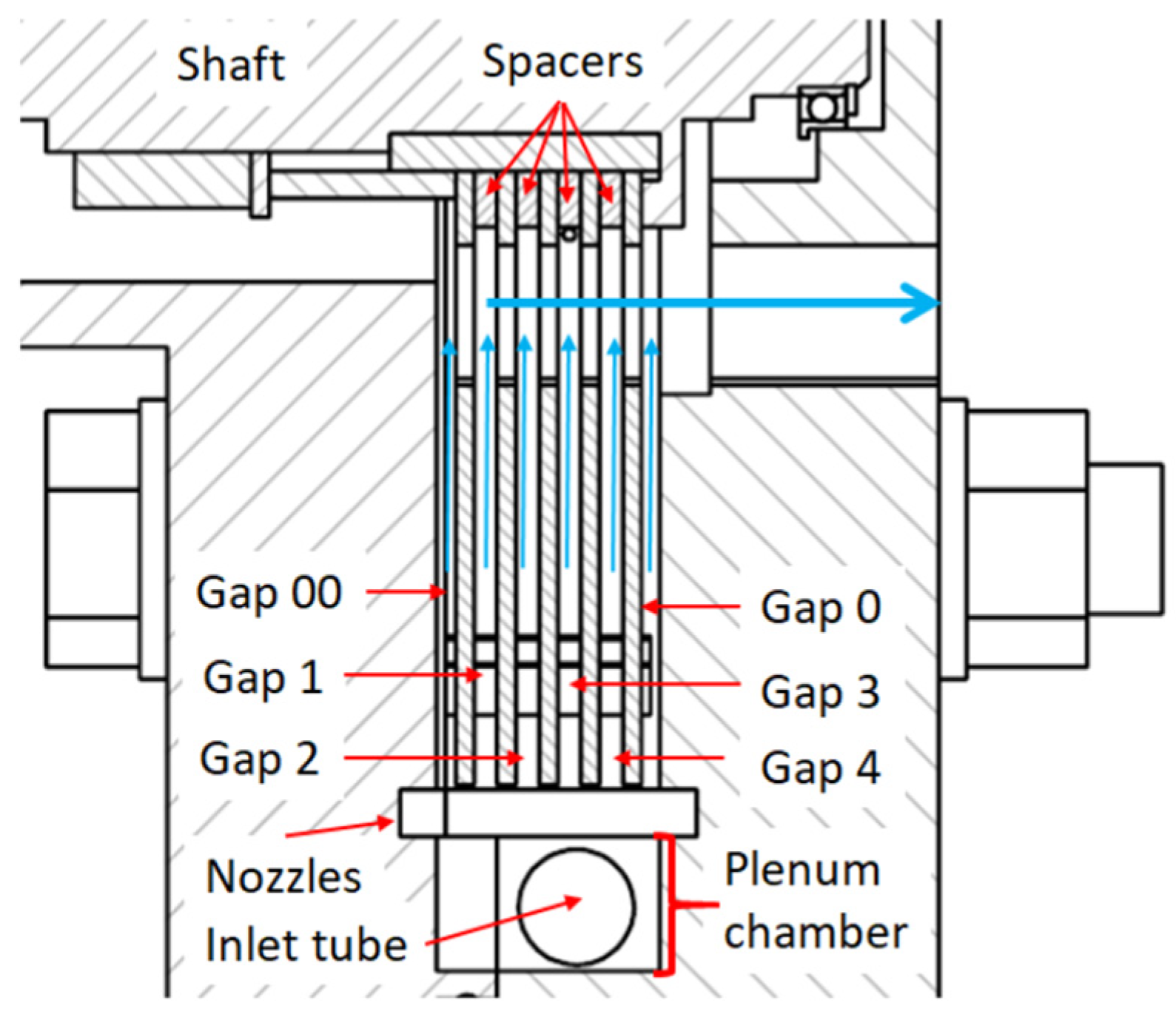
In their studies on the actual Tesla prototype, Rusin [65,74] simulated a machine consisting of 5 discs with a diameter of 160 mm with a gap of about 0.75 mm, fed by 4 diverging nozzles with a characteristic cross-section of 2.85 mm. The simulation was carried out in a subsonic flow field, with air as the fluid. The pressure ratios chosen were 1.4, 1.6, and 1.88. The roughness of the discs was Ra < 1. The rotor is made of aluminum alloy with a thickness of 2 mm, to prevent vibrations issues at high rotational speeds. The inlet apparatus consists of a pressure chamber and 4 converging inlet nozzles. The nozzles are in a one-to-many configuration, that means the nozzles is the entire width of the rotor long.
This approach is less efficient compared to the one-to-one approach; in fact, the fluid experiences losses at the edges of the disc. Anyway, it is needed to maintain a flexible rotor structure and to avoid nozzle misalignment and disc-to-disc gaps. The purpose of the plenum is to limit the loss of total pressure and generate a tangential flow toward the nozzles. The working fluid enters the chamber through two pipes, each 12.4 mm in diameter and 200 mm long. The outlet is provided with 5 elliptical holes in the rotor discs near the shaft and the collection chamber. The total area of the holes in the disc is about 350 mm2, necessary to prevent flow choking at the outlet. The collection chamber collects the working medium and allows it to flow out. Tests report a power output of 126 W. The simulation results are very close to the experimental results (140 W), especially in terms of device efficiency. For a low rotational speed, the CFD and experimental tests showed good agreement. The highest efficiency was 10.3% in the CFD simulations, compared to the 8.3% value in the experiment. For each value of the pressure ratio, the maximum efficiency is almost equal to the experimental value, although numerical simulations show a slight decrease in efficiency as this ratio increases. Furthermore, efficiency is significantly affected by changes in mass flow rate. A 10% variation in flow rate can lead to a 6-times decrease in efficiency. Other parameters, such as the pressure distribution in the pressure chamber and the clearance at the rotor tip, vary linearly with changes in rotation speed. As for the power, CFD provides a value that is overestimated compared to the value obtained from tests. This difference increases as the operating speed increases. This means that the numerical model is able to correctly describe the fundamental flow phenomena, but if the operating speed increases, a more accurate calculation model becomes necessary and mandatory, especially with regard to turbulence [75,76,77,78,79,80]. In conclusion, it can be said that, from this simulation, it can be deduced that, to operate efficiently, a Tesla turbine must have a sufficiently large number of discs so that it operates in a laminar flow regime. Figure 12 shows the sectional view of the tested device.
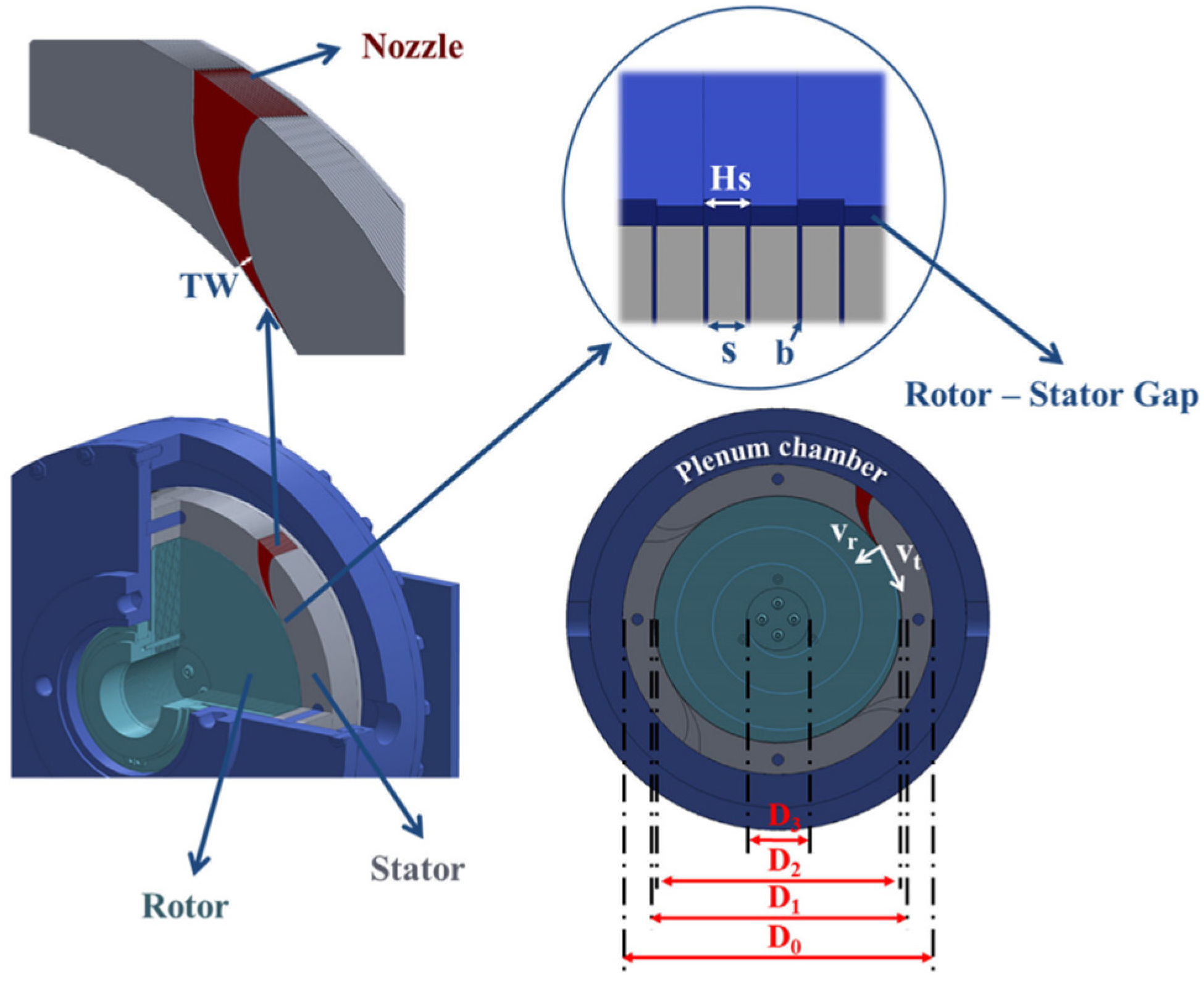
In [81], Manfrida investigates the use of organic working fluids (R1233zd(E), R245fa, R1234yf, n-Hexane) in a Tesla turbine (Figure 13). The performance of the Tesla turbine is analyzed as a function of the geometric parameters (rotor channel width/inlet diameter, B = b/D2; rotor outlet diameter/inlet diameter, R = D3/D2; throat width ratio, TWR = T W · H s · Z π · D 2 · b · n ), using a 2D calculation code developed in the Engineering Equation Solver environment. The model exploits the real properties of the fluid included in the EES thermodynamic database and, therefore, allows the calculation of density and viscosity, as well as all other thermodynamic functions, as functions of local variables (typically pressure and temperature). Figure 13 reports the main characteristics of the built machinery.
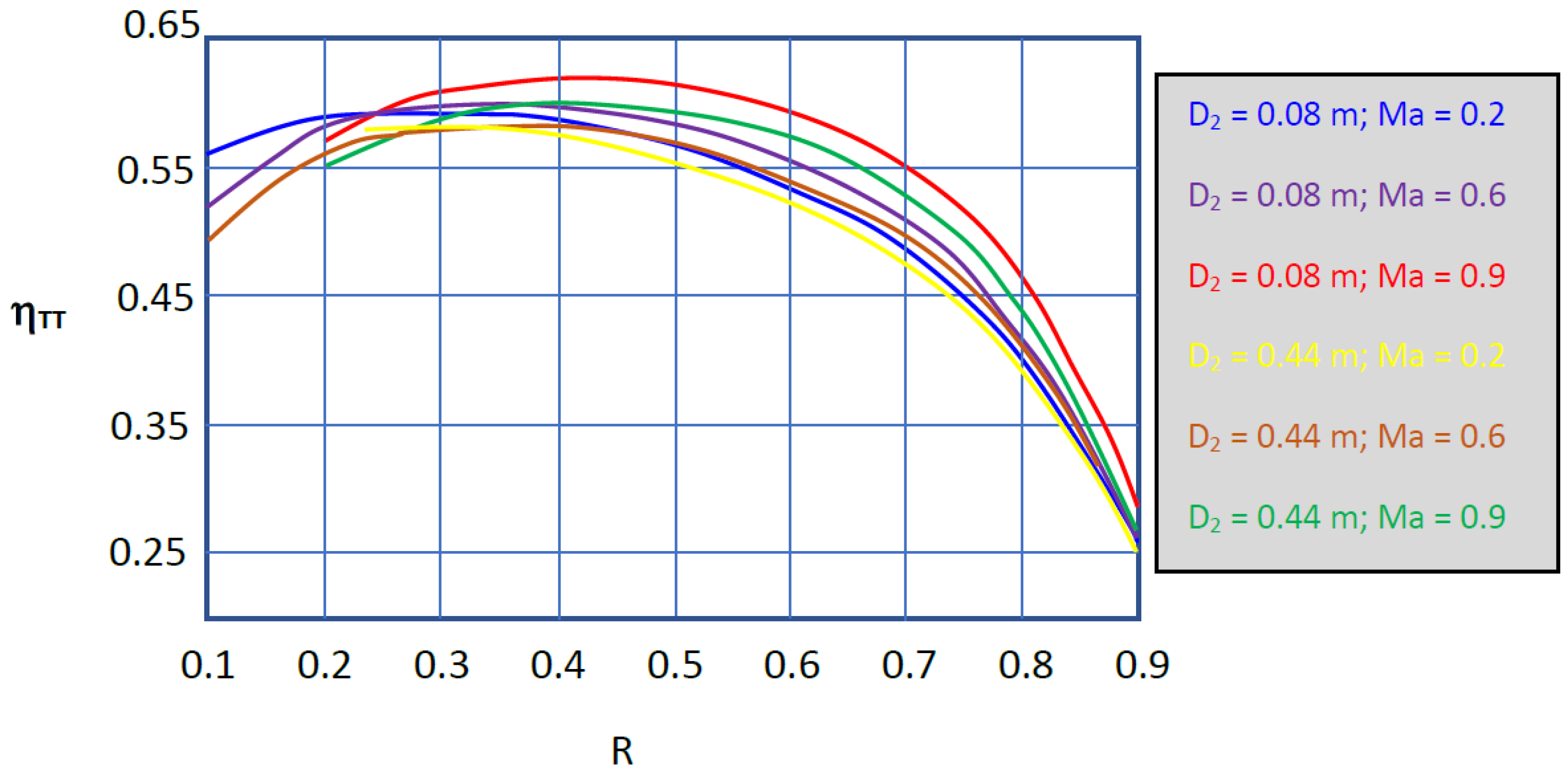
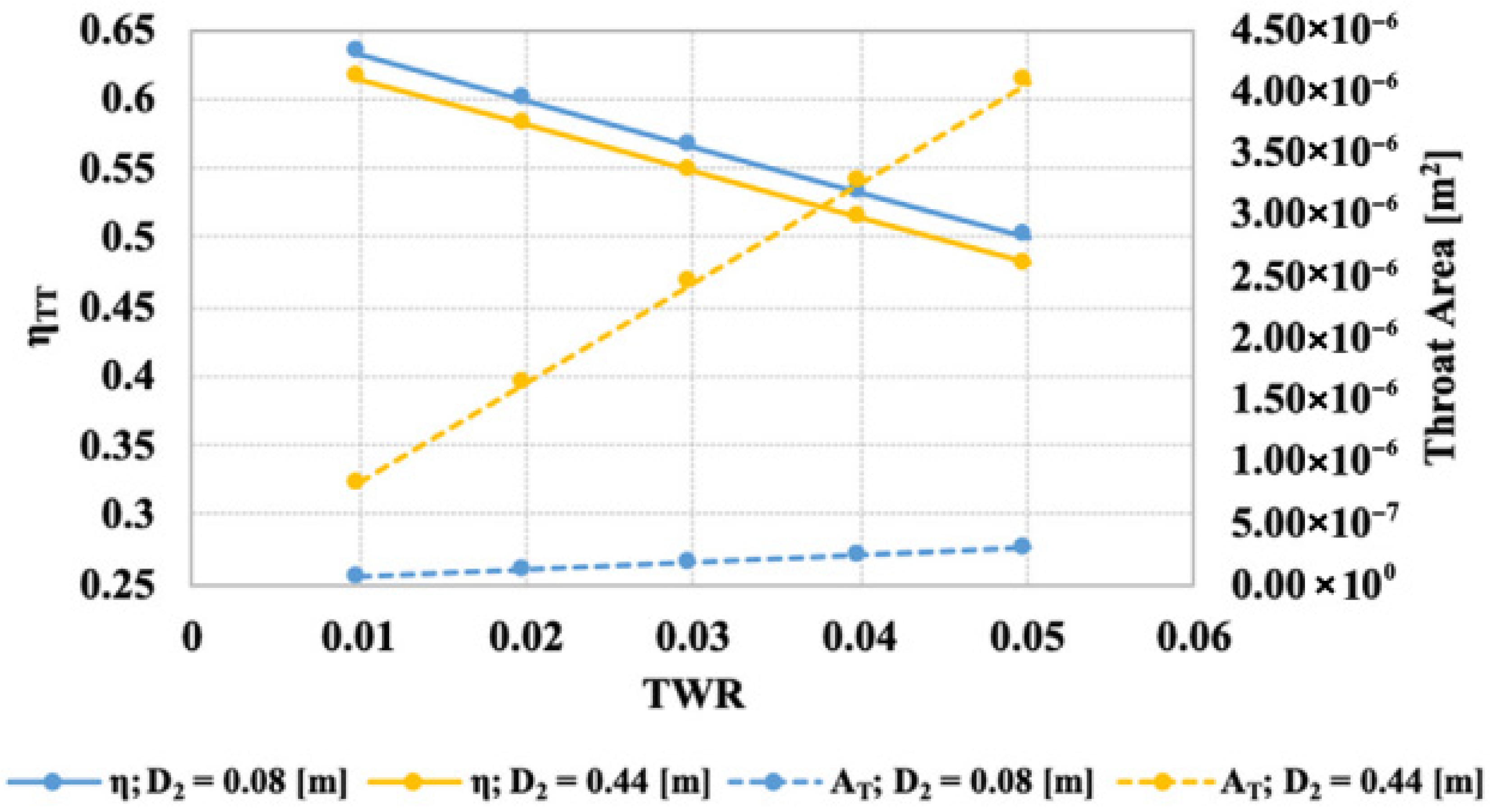
The results obtained can be evaluated according to the three parameters defined above. From the simulations conducted, the optimal value of the outlet/rotor inlet diameter ratio (R) was evaluated by performing different parametric analyses (determining different Mach number conditions). It was found that the optimal value for each turbine size is always between 0.3 and 0.4, with the lower limit corresponding to the lowest Mach number (0.2–0.3) and the upper limit to a high Mach number (approximately 1). In the case of TWR, it has been observed to increase linearly with decreasing TWR. The choice of a low TWR implies the production of very small stator channels that must respect a precise geometry (Figure 14) to achieve the required high output angle (typically 85° and 87°).
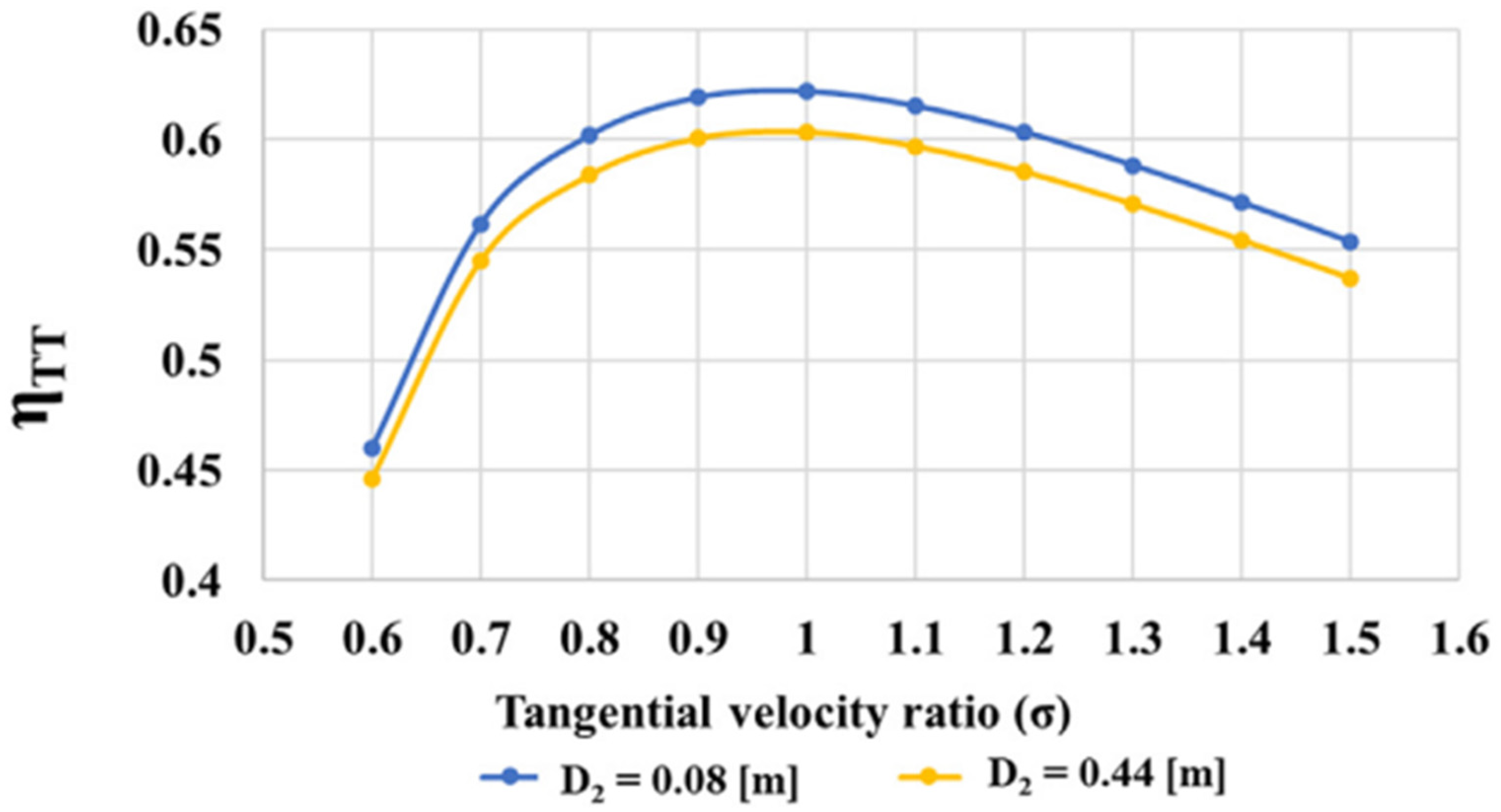
Regarding the kinematic and geometrical aspects, the simulation results show that the tangential velocity ratio σ =   V 2 t U 2 is one of the most important parameters for optimizing the Tesla turbine. In practice, the total efficiency (defined as η T T =   W h 0 s s =   V 2 θ U 2 V 3 θ U 3 h 0 h 03 s s ) is maximum for σ = 1, with the best values of the tangential velocity ratios in the range 0.9–1. Tangential velocity ratio σ = V2t/U2 is a local kinematic parameter that compares the tangential component of the fluid velocity with the peripheral speed of the disk. It is not an efficiency, but indicates the degree of fluid drag. Total efficiency, on the other hand, is a global energetic parameter that measures how much of the available enthalpy drop is converted into mechanical work. In any case, V2t ≡ V2θ are the same quantity, written either according to the engineering definition or in angular coordinates. Both parameters are used because σ indicates how much the fluid ‘moves at the same speed as the disk’, while total efficiency defines how much total energy can be extracted.
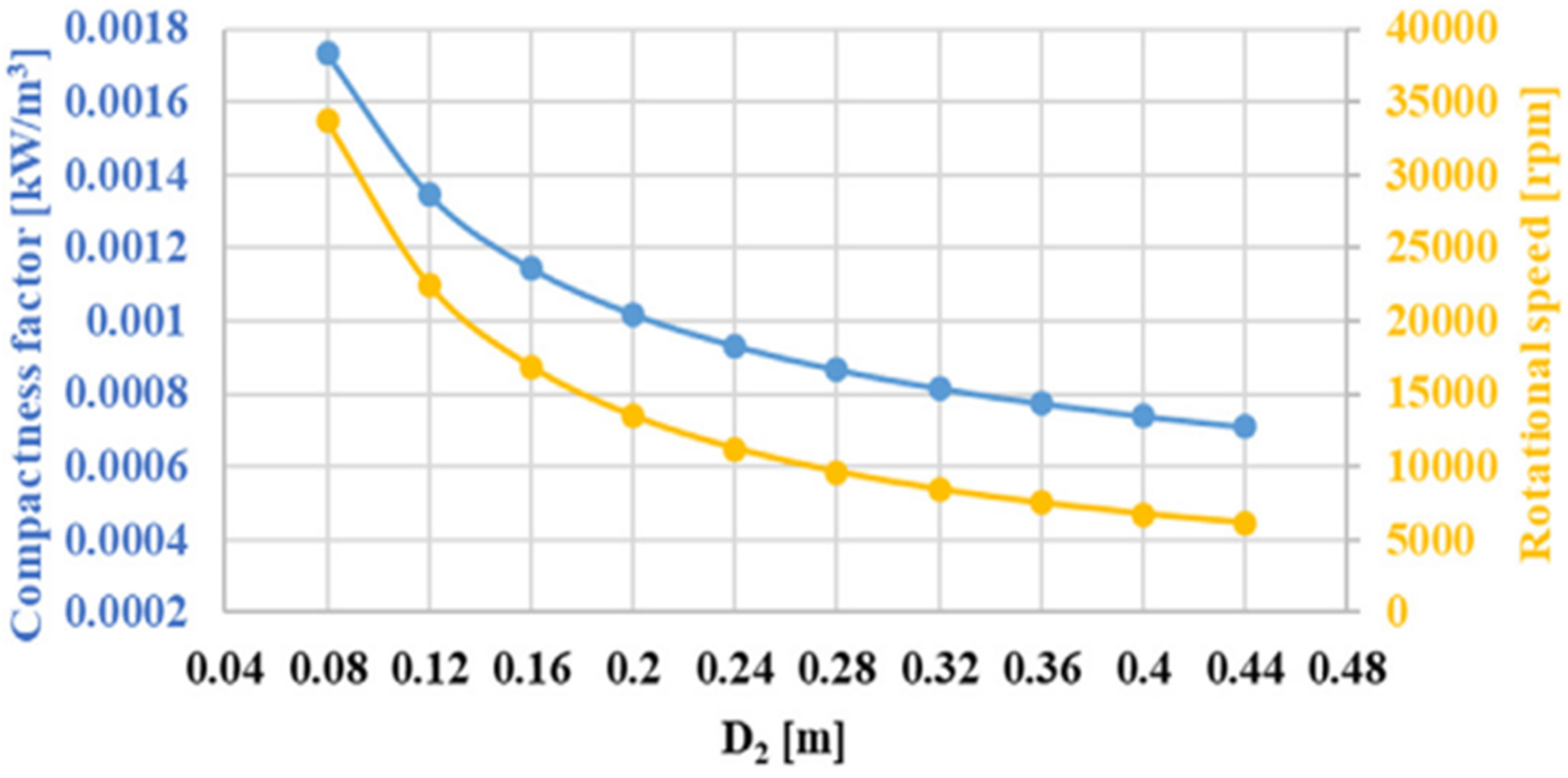
In geometry, the correct correspondence between the tangential speed at the rotor inlet and the rotational speed is important for achieving high turbine performance. Specifically, the smaller the rotor, the higher the rotational speed required for the best efficiency (Figure 15, Figure 16 and Figure 17).
Finally, the analysis underscores how performance and geometric characteristics vary with the working fluid. Considering different working fluids (mentioned above), the geometry obtained as a function of the outer diameter of the rotor turns out to be optimized within specific ranges. The diameter ratio must be between 0.3 < R < 0.4, the throat width ratio is about TWR = 0.02, and the Mach number of the throat and the velocity ratio σ are close to unity. In addition, fixing the rotational speed implies assuming an input tangential velocity ratio (for fixed thermodynamic conditions), and therefore both the β expansion ratio and the efficiency are maximized when σ approaches unity.
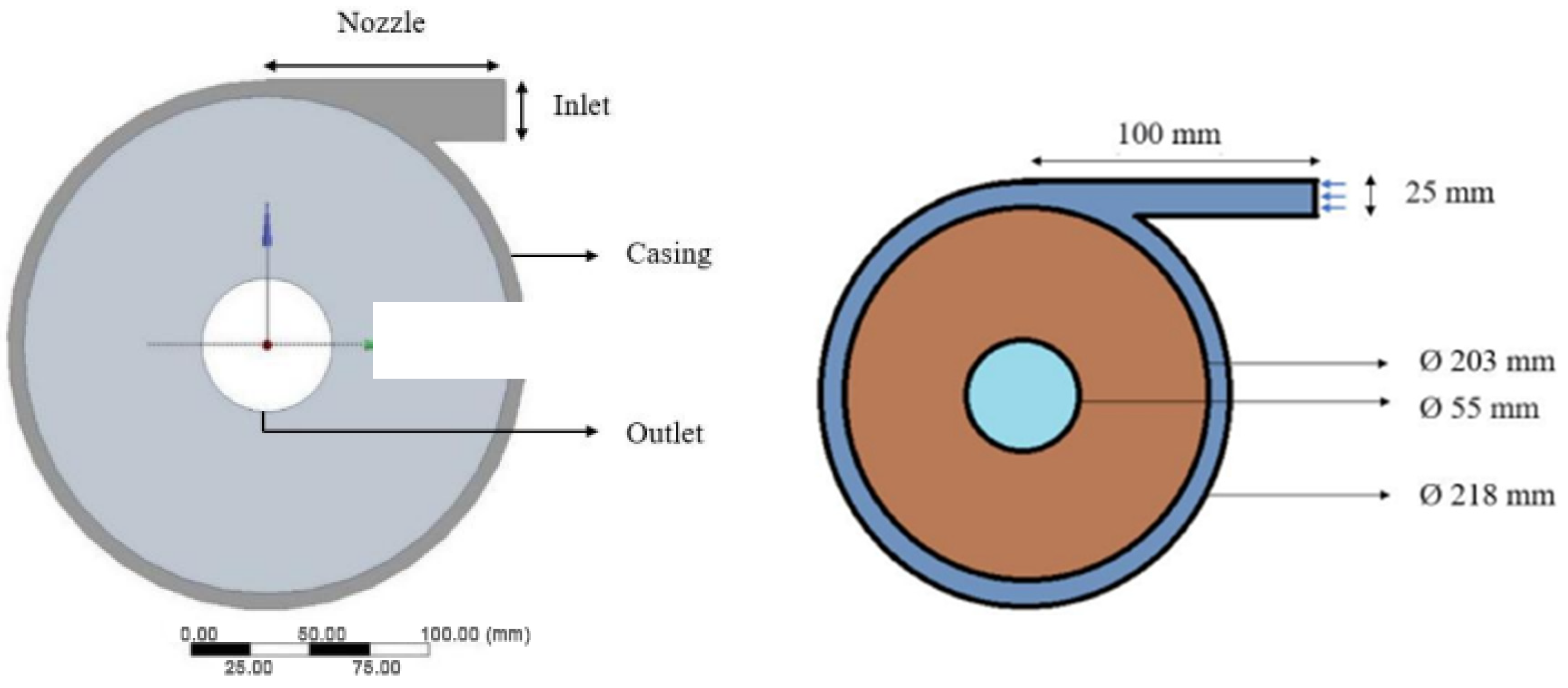
In [82], a 2D simulation was used to analyze the dependence of the machine’s performance on key parameters, including disc diameter and rotation speed. The turbine layout is shown in Figure 18.
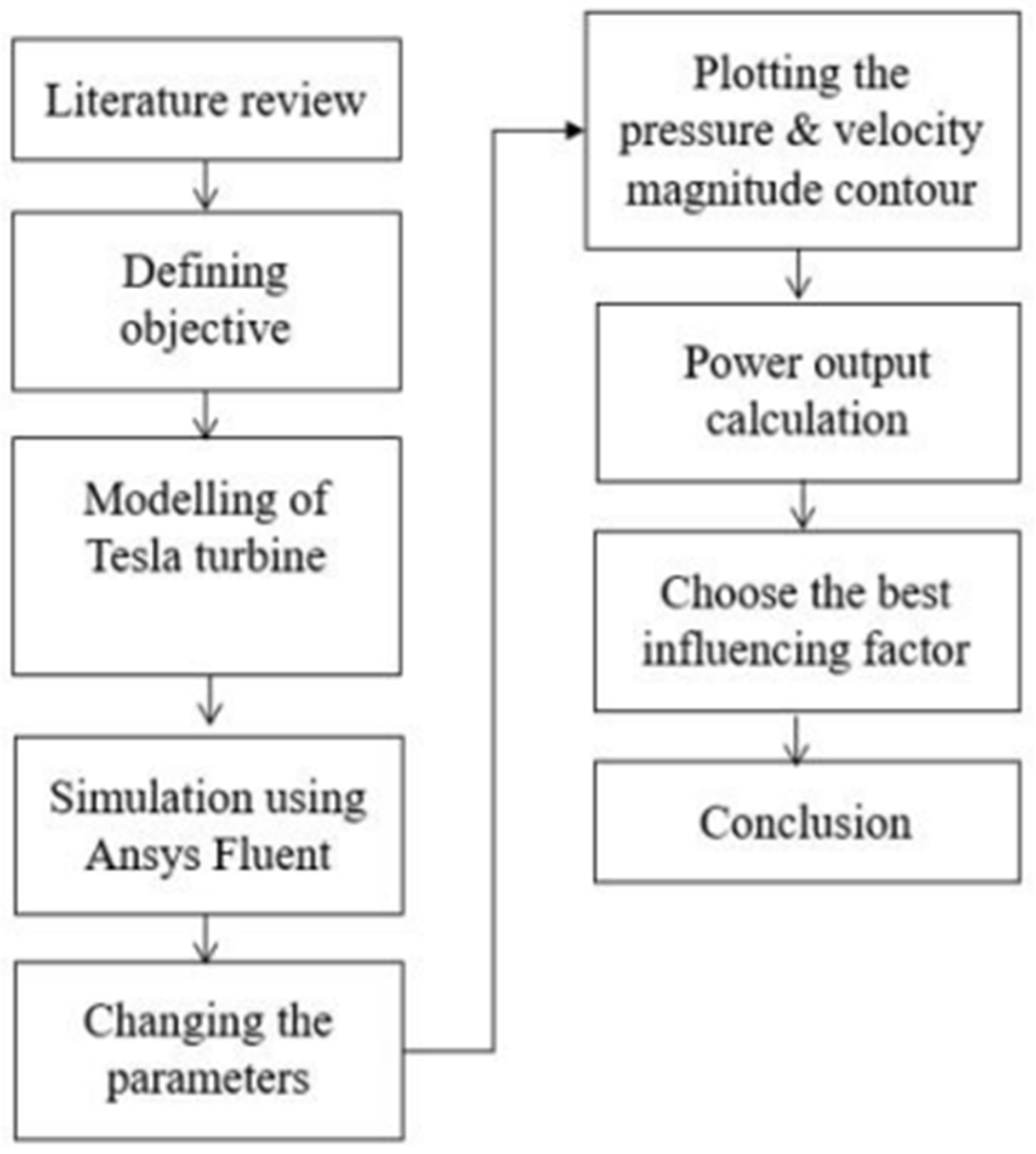
The parametric study of the turbine was performed by varying the rotational speed, evaluating the pressure profile, and the speed and power profiles. The analysis procedure is shown in the following flowchart (Figure 19). The diameter of the simulated devices ranges from 203 to 205 mm. The other parameters are:
  • inner diameter of the disc 55 mm;
  • case diameter 218 mm;
  • channel length 100 mm;
  • inlet nozzle diameter 25 mm;
  • rotational speed 2000–3000 rpm.
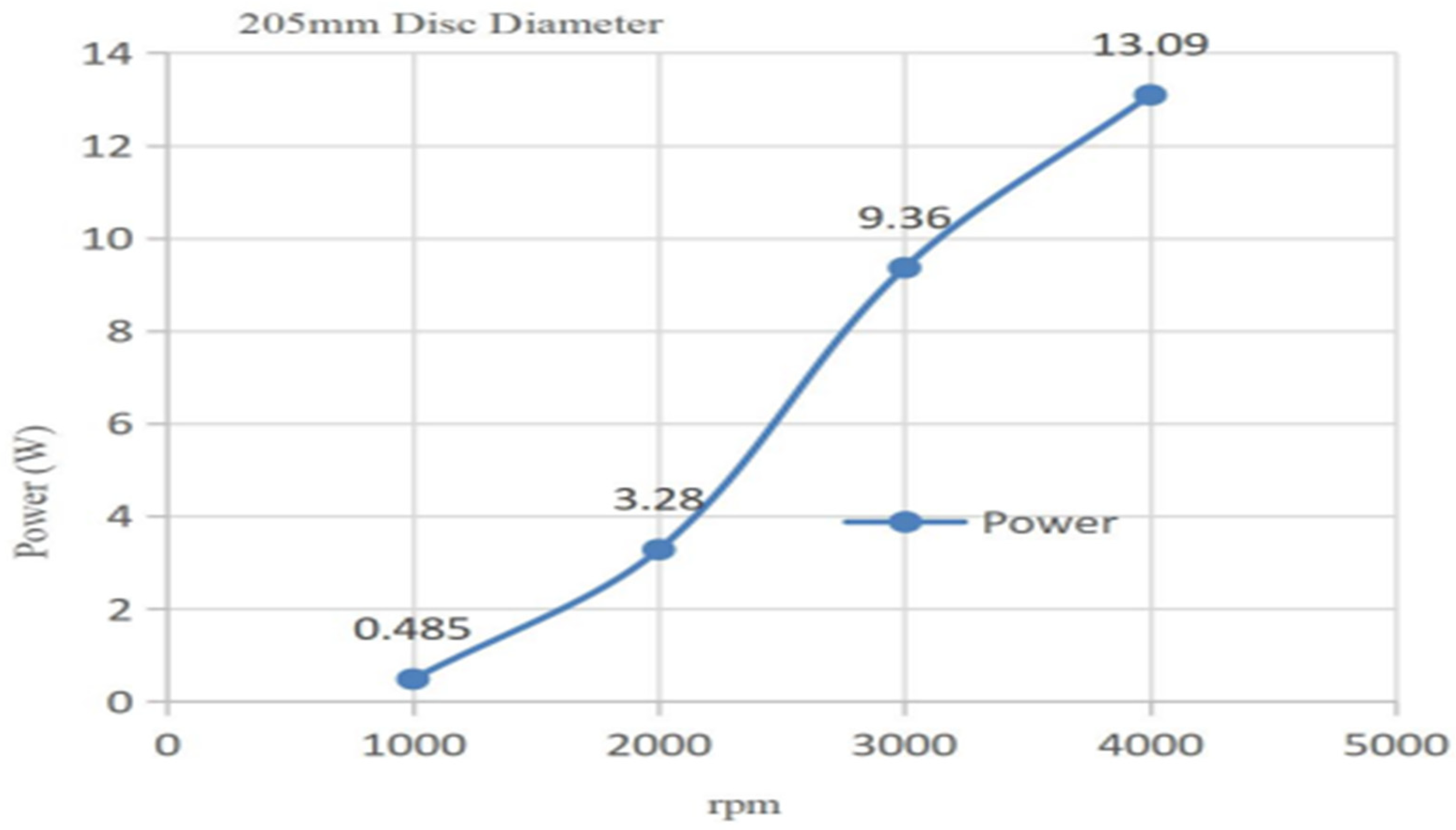
Simulations have shown that as pressure and speed increase, efficiency and power output improve. In addition, by acting on the characteristic dimensions, the turbine power is higher with a larger disc diameter, thereby reducing the clearance between the turbine case and the rotating disc. The graph in Figure 20, comparing power output to rpm, shows that power output is maximum at higher rpm.
Romanin [16,75] focused on analyzing the Tesla turbine, particularly for small- and micro-scale applications and energy recovery. One of the objectives was to develop analytical (theoretical) and experimental models that would allow for estimating performance, losses, and scalability, in order to propose a fairly practical design procedure for the Tesla turbine. The developed analytical model is based on an integral perturbative approach of the flow and momentum transport in the blind channels between the turbine discs. To validate his approach, he conducted experimental tests on a millimetre-to-centimetre-scale Tesla turbine; for example, a rotor about 1 cm in diameter with water as the working fluid. The experimental results obtained were then compared with CFD simulations (or numerical models) to understand the discrepancies between theory and practice, especially regarding losses. In fact, experimentally, he achieved an efficiency of 36% for a 1 cm rotor with a water flow rate of 2 cm3/s. This allowed the identification of various sources of loss—nozzles, viscous–laminar friction in the channels between discs, axial/radial losses, and scale effect. The researcher quantified how these losses affect actual efficiency relative to the ideal, and investigated how to scale the Tesla turbine down to very small sizes (≈1 mm) and the limits on efficiency, power density, rotational speed, etc. Another important aspect is the creation of guidelines for turbine design: from this study, recommendations emerge for sizing the disc gap, choosing the fluid, number of discs, nozzle geometry, and diameter ratios (outlet/inlet) to maximize momentum transfer and avoid excessive losses. In this case, it can be seen how a small Tesla turbine can achieve a reasonable performance, but there are practical limits: achieving the theoretical high efficiency is hindered by real losses (friction, leakage, non-ideal turbulence, complex geometries), which become increasingly significant as the scale changes. This is because phenomena that may be negligible at larger scales (e.g., laminar/viscous regime selection, gap/disc ratio, radial flow distribution) become dominant at smaller scales. Moreover, although 36% is a good value in that experimental context, the actual power obtainable was very low (milliwatts), which limits its applicability for traditional industrial uses; however, it may be interesting for micro-generative devices or energy recovery from modest flows. Finally, the study conducted can be considered a valuable link between theory and practice. It provides an analytical model, supported by experimental data and design insights, allowing researchers and engineers to make informed decisions when designing a small-scale Tesla turbine. Additionally, it identifies which geometric and operational variables most significantly influence efficiency (e.g., gap thickness, inner/outer diameters, number of discs, fluid type).

7. Experimental Test Bench and Results

Numerous experiments have been conducted on the Tesla turbine. Among these, Romanin’s tests are often cited and used as a reference point [75]. In his experiments, the turbine is very small-scale (e.g., a rotor about 1 cm in diameter) for microscopic applications. As described in the previous paragraph, under these conditions, the device achieved an efficiency of 36%. This series of tests is characterized by an analytical/experimental approach, with particular attention to scalability (scaling laws) and the characteristic losses of disc turbines (disc-to-disc gap, viscous forces, etc.). From the analysis of these tests, it emerges that at the micro-scale, the Tesla turbine can achieve significant efficiencies (e.g., ~36%)—well above similar devices at a larger scale. This allows for establishing relationships between the scale-up/down laws, in particular, how performance changes when size is reduced, speed increases, or materials change. The great and undeniable advantage is that it provides experimental data (real, not simulations) that give an accurate picture of the losses and allow understanding of the practical limitations. On the other hand, the ~36% efficiency achieved thus far refers to a small-scale prototype. This does not imply that such efficiency can be obtained on large-scale machines. One consideration is that this experimental study is a “laboratory” study with highly controlled test conditions and does not use fluids typical of industrial applications. But one of the most important results is to underline the gap between the discs, with consequent effects on wear, viscous losses, and inevitable problems with balancing and rotation, characteristics that currently limit its efficiency and industrial applications.
In their experiments, Awasthi and Aggarwal [83] use water as the working fluid (instead of steam or air). In their experiments, the authors generated “useful electrical power,” offering a new perspective on the Tesla turbine. Another interesting aspect is the use of “dense” and “liquid” fluids (such as water). Guha [84] analyzed the effects of rotor interaction in Tesla disc turbines and built a small prototype using air as the working fluid. The prototype has a power output of less than 1 kW and is driven by compressed air. Using the “Design of Experiments” (DoE) method, various aspects of the experiment were studied, particularly the effects of inlet pressure, temperature, and rotational speed on power and efficiency. In these experiments, the maximum efficiency achieved is about 14.2% ± 0.4% at 3 bar and ~4000 rpm. The comparison with simulations shows a significant difference between theory and practice. In fact, various simulations available in the literature report efficiencies between 40 and 60%, while the actual experiments conducted result in much lower efficiency (≤20%). One very important result, however, that can be deduced from these experiments is that efficiency increases on average by 5% when the inlet pressure increases by 1 bar (in the studied range). Continuing, Talluri et al. [85] achieved a maximum net power of 371 W, with a maximum shaft efficiency of approximately 9.62%. The study highlighted “edge effects” of the discs (clearance, bypass between the disc pack and the casing) and losses that degrade performance. This work suggests that the Tesla turbine can be “feasible” for micro-energy or low-enthalpy applications, but with efficiencies lower than conventional turbines. Other numerical/experimental studies, such as those of Savas [86,87], Holodniok et al. [88,89], Yu [90], Thomazoni et al. [91], Onanuga [92] and Renuke et al. [77], combined CFD simulations with experimental validation for nozzles, jets, and materials.
Regarding availability, Hoya and Guha [4] conducted tests by varying the optimized characteristics of the nozzle (disk Ø92 mm, 3.9 bar), reporting a maximum efficiency of 25% at 18,000 rpm, with variations < 5% over a set of 10 trials. At a fixed pressure (the tests showed an error of about 2–3% due to velocity fluctuations, i.e., ±500 rpm). Regarding losses, Guha/Smiley [5] verified that nozzle losses are about 35% of the total available (reduced to <1% with a plenum chamber), viscous losses 40–50% (due to the disk boundary layer), edge and bypass losses 15–20%. Furthermore, Hoya & Guha showed how these losses increase proportionally from 30% (low speed) to 50% (high Re). The calculation model is: η n o z z l e = 1 0.4 ( V i n / U ) 0.5 , with η t o t = η n o z z l e ( 1 f v i s c / R e ) , where f v i s c = P o R e c   ( P o = 24 ) .
In conclusion, the main problems encountered in the experiments can be highlighted. The actual experimental efficiencies are much lower than Tesla’s theoretical expectations (e.g., ~10–15% experimental vs. theoretical up to 90% claimed). This is because, more often than not, the operating conditions (inlet pressure, fluid type, temperature, rotation speed) are sufficiently “optimistic but not realistic” for industrial environments [93,94,95,96,97,98,99]. As for the losses, these are due to:
friction in the bearings;
viscous losses between discs;
edge bypass between disc and casing;
nozzle losses;
turbulence.
A similar discussion concerns the scale adopted and the materials used. To achieve useful power, large-diameter discs or high speeds must be used (with related structural problems and wear). These considerations lead to a process of geometric optimization of the gap between discs, selecting the appropriate number of discs, type of fluid to use, and conditions (boundary conditions) at the inlet/outlet, nozzle/volute. Regarding applications, the most promising seem to be micro-turbines for ORC cycles or pressure reduction systems rather than main turbines for large power plants. So, to summarize, the following list can be drawn up regarding performance, types of losses, advantages, and disadvantages (see the following Table 2):
Finally, it may be useful to provide the following Table 3 on the various experiments conducted recently (2000–today) and a summary Table 4 of the significant studies on the Tesla device (starting from the Tesla patent).

8. Conclusions

The analyses conducted in the present study confirm that the Tesla turbine, while an innovative engineering solution with a simple design, poses significant operational efficiency challenges. The results show that mechanical and fluid-dynamic losses, mainly due to viscous phenomena, disk-edge bypass effects, and nozzle losses, limit actual performance relative to Nikola Tesla’s original theoretical expectations. However, the adoption of advanced mathematical models and CFD simulations, combined with experimental testing, has allowed a deeper understanding of the causes of inefficiencies and guided strategies for geometric and thermal optimization.
In particular, the careful management of the number of disks, the spacing between them, the nozzle geometry, and the flow kinematics has proven essential for maximizing momentum transfer between the fluid and the rotor, while minimizing pressure losses and the risk of overheating. The scale of application plays a crucial role: at the microscopic level, relatively high efficiencies are observed, but with very limited absolute power, whereas at industrial levels, structural issues related to wear, balancing, and high-speed vibrations persist.
The most promising applications lie in microturbines for low-enthalpy thermal cycles and energy recovery systems, where their quietness, reliability, and compatibility with various fluids warrant further development. In conclusion, although Tesla’s turbine has not yet reached the efficiency of traditional turbines, current research lays a solid foundation for future innovations and potential uses in specific market niches, leveraging its unique fluid-dynamic and mechanical features. Looking forward, what could be the next breakthrough in disc turbine technology that researchers should aim for? Could novel materials or unprecedented disc configurations unlock new potentials? These questions invite researchers and practitioners alike to delve deeper into the unexplored realms of Tesla turbine advancements, transforming theoretical possibilities into practical energy solutions.
To conclude, a consideration of the use of AI and new construction techniques.
The use of Artificial Intelligence (AI) and 3D technologies is opening new prospects in the study and development of Tesla turbines, overcoming many historical limitations of this type of machine. It could be used to optimize projects by analyzing large volumes of data from CFD simulations and experimental tests. If combined with machine learning, it should be possible to identify optimal parameter combinations, such as disk spacing, number of disks, velocity profile, and operating conditions. Moreover, neural networks and surrogate models drastically reduce computational time compared to full numerical simulations, enabling rapid analysis of many configurations. Three-dimensional technologies would also allow the creation of Tesla turbine prototypes with complex geometries and very tight tolerances, which are difficult to achieve with traditional techniques. This would lead to experimenting with new materials, textured surfaces, and micro-channels to improve viscous momentum transfer. The combination of AI and 3D printing should accelerate the design–production–testing cycle, allowing for rapid, low-cost iterations. Additionally, sensors integrated into 3D-printed prototypes can provide real-time data, which AI then uses to calibrate and improve theoretical models. Looking ahead, the integration of AI and 3D technologies could lead to highly customized Tesla turbines designed for specific operating conditions.

Author Contributions

Conceptualization, R.C. and A.C.; methodology, R.C. and A.C.; software, R.C.; validation, R.C. and A.C.; formal analysis, R.C. and A.C.; investigation, R.C. and A.C.; resources, R.C.; data curation, R.C.; writing—original draft preparation, R.C.; writing—review and editing, R.C.; visualization, R.C.; supervision, R.C. and A.C.; project administration, R.C. All authors have read and agreed to the published version of the manuscript.

Funding

This research received no external funding.

Institutional Review Board Statement

Not applicable.

Informed Consent Statement

Informed consent was obtained from all subjects involved in the study.

Data Availability Statement

The original contributions presented in this study are included in the article. Further inquiries can be directed to the corresponding author.

Conflicts of Interest

The authors declare no conflict of interest.

Nomenclature

atSpeed of sound at nozzle throat
bGap distance between discs
cpSpecific heat capacity at constant pressure
DHHydraulic diameter
fFriction factor
FPoDrag enhancement number
hEnthalpy
JMoment of inertia of the rotor
m c ˙ Mass flow rate per disc gap
Mrotor tip Mach number
nVelocity profile modifier
PPressure
PDimensionless pressure for incompressible nozzle flow
PoPressure at the turbine outer radius
PntTotal pressure upstream of the nozzle
P ^ Dimensionless pressure/Derivative of P ^   with respect to ξ
P ^ 0 ,   P ^ 1 0th order, 1st order, etc., pressure terms
PoPoiseuille number
rRadial coordinate
roouter radius of turbine disc
riinner radius of turbine disc
RIdeal gas constant
ReReynolds number
R e m * Modified Reynolds number
TTemperature
TtGas temperature at nozzle throat for choked flow
TntTotal temperature upstream of the nozzle
UDisc velocity
UoDisc speed at the turbine outer radius
UiDisc speed at the turbine inner radius
VVelocity
Tangential component of fluid velocity
vrRadial component of fluid velocity
vzAxial component of fluid velocity
vo,cNozzle exit velocity for choked flow (of an ideal gas)
vo,iIsentropic nozzle exit velocity for choked flow
vVelocity vector
v ^ Mean velocity difference
VroDimensionless radial velocity at the turbine outer radius
WShaft power
WDimensionless relative velocity
W ^ Dimensionless relative velocity difference
W ^ i Dimensionless velocity difference at the turbine inner radius
W ^ o Dimensionless velocity difference at the turbine outer radius
W ^ O , r o 0th order dimensionless velocity difference at the turbine outer radius
W ^ 0 ,   W ^ 1   0th order, 1st order, etc., velocity terms
zAxial coordinate
Greek Symbol
φ(z)Dimensionless velocity profile
γHeat capacity ratio (cp/cv)
ηEfficiency
ηexpExperimental turbine efficiency
ηiIsentropic efficiency of the turbine as predicted by the integral perturbation solution of flow through the rotor
ηi,incIsentropic efficiency of the turbine as predicted by the integral perturbation solution of flow through the rotor, incompressible nozzle flow
ηnozIsentropic nozzle efficiency
ηrmEfficiency of the rotor
µViscosity
νKinematic viscosity
oDisc gap aspect ratio (=DH/ro)
θAzimuthal coordinate
ρDensity
τTorque
τwWall shear stress
ωAngular velocity of the rotor
ζDimensionless radial coordinate

References

  1. Tesla, N. Turbine. U.S. Patent 1,061,206, 6 May 1913. [Google Scholar]
  2. Armstrong, J.H. An Investigation of the Performance of a Modified Tesla Turbine. Master’s Thesis, Georgia Institute of Technology, Atlanta, GA, USA, 1952. [Google Scholar]
  3. Rice, W. An analytical and experimental investigation of multiple-disc turbines. J. Eng. Power 1965, 87, 29–36. [Google Scholar] [CrossRef]
  4. Hoya, G.P.; Guha, A. The design of a test rig and study of the performance and efficiency of a Tesla disc turbine. Proc. Inst. Mech. Eng. Part A J. Power Energy 2009, 223, 451–465. [Google Scholar] [CrossRef]
  5. Guha, A.; Smiley, B. Experiment and analysis for an improved design of the inlet and nozzle in Tesla disc turbines. Proc. Inst. Mech. Eng. Part A J. Power Energy 2010, 224, 261–277. [Google Scholar] [CrossRef]
  6. Rice, W. Tesla turbomachinery. In Handbook of Turbomachinery; Logan, E., Ed.; Marcel Dekker: New York, NY, USA, 2003; pp. 861–874. [Google Scholar]
  7. Guha, A. Structure of partly dispersed normal shock waves in vapor-droplet flows. Phys. Fluids A 1992, 4, 1566–1578. [Google Scholar] [CrossRef]
  8. Guha, A. Jump conditions across normal shock waves in pure vapor-droplet flows. J. Fluid Mech. 1992, 241, 349–369. [Google Scholar] [CrossRef]
  9. Guha, A. A unified theory of aerodynamic and condensation shock waves in vapor-droplet flows with or without a carrier gas. Phys. Fluids 1994, 6, 1893–1913. [Google Scholar] [CrossRef]
  10. Guha, A. A unified theory for the interpretation of total pressure and temperature in two-phase flows at subsonic and supersonic speeds. Proc. R. Soc. Lond. Ser. A Math. Phys. Eng. Sci. 1998, 454, 671–695. [Google Scholar] [CrossRef]
  11. Guha, A. Computation, analysis and theory of two-phase flows. Aeronaut. J. 1998, 102, 71–82. [Google Scholar] [CrossRef]
  12. Steidel, R.; Weiss, H. Performance Test of a Bladeless Turbine for Geothermal Applications; Report No. UCID-17068; Lawrence Livermore Laboratory: Livermore, CA, USA, 1974.
  13. Leaman, A.B. The Design, Construction and Investigation of a Tesla Turbine. Master’s Thesis, Faculty of the Graduate School of the University of Maryland, Livermore, CA, USA, 1950. Available online: https://archive.org/stream/leaman/leaman_djvu.txt (accessed on 15 November 2025).
  14. Beans, E.W. Investigation into the performance characteristics of a friction turbine. J. Spacecr. Rocket. 1966, 3, 131–134. [Google Scholar] [CrossRef]
  15. North, R.C. An Investigation of the Tesla Turbine. Ph.D. Thesis, University of Maryland, College Park, MD, USA, 1969. [Google Scholar]
  16. Romanin, V.D. Theory and Performance of Tesla Turbines. 2012. Available online: https://escholarship.org/content/qt6584x24x/qt6584x24x.pdf (accessed on 15 November 2025).
  17. Matsch, L.; Rice, W. An asymptotic solution for laminar flow of an incompressible fluid between rotating discs. ASME Trans. J. Appl. Mech. 1968, 35, 155–159. [Google Scholar] [CrossRef]
  18. Rice, W. An analytical and experimental investigation of multiple disc pumps and compressors. ASME Trans. J. Eng. Power 1963, 85, 191–198. [Google Scholar] [CrossRef]
  19. Boyd, K.; Rice, W. Laminar inward flow of an incompressible fluid between rotating disk, with full Peripheral Admission. J. Appl. Mech. 1968, 35, 229–237. [Google Scholar] [CrossRef]
  20. Ladino, A.F.R. Numerical Simulation of the Flow Field in a Friction-Type Turbine (Tesla Turbine). Master’s Thesis, Institute of Thermal Powerplants Vienna University of Technology, Vienna, Austria, 2014. Available online: http://www.altmann.haan.de/combustion-force-turbine/VKT_papers/Tesla_Simulation.pdf (accessed on 15 November 2025).
  21. Sivaramakrishnaiah, M.; Santhosh Kumar Reddy, Y.; Sudarsana Reddy, G. Study and Design of Bladeless Tesla Turbine. Int. J. Theor. Appl. Mech. 2017, 12, 881–889. [Google Scholar]
  22. Lemma, E.; Deam, R.T.; Toncich, D.; Collins, R. Characterisation of a small viscous flow turbine. Exp. Therm. Fluid Sci. 2008, 33, 96–105. [Google Scholar] [CrossRef]
  23. Schroeder, H.B. An Investigation of Viscosity Force in Air by Means of a Viscosity Turbine. BAE Thesis, Rensselaer Polytechnic Institute, Troy, NY, USA, 1950. [Google Scholar]
  24. Valente, A. Installation for pressure reduction of hydrocarbon gases in a near isothermal manner. In Proceedings of the Abu Dhabi International Petroleum Exhibition and Conference, Abu Dhabi, United Arab Emirates, 3–6 November 2008. [Google Scholar]
  25. Couto, H.S.; Duarte, J.B.F.; Bastos-Netto, D. Tesla Turbine Revisit, Department of Mechanical Engineering. In Proceedings of the 8th Asia- Pacific International Symposium on Combustion and Energy Utilization, Sochi, Russia, 10–12 October 2006. [Google Scholar]
  26. Lampart, P.; Kosowski, K.; Piwowarski, M.; Jędrzejewski, Ł. Design analysis of Tesla micro-turbine operating on a low-boiling medium. Pol. Marit. Res. 2009, 16, 28–33. [Google Scholar] [CrossRef]
  27. Modi, P.N.; Seth, S.M. Hydralics and Fluid Mechnics including Hydralic Machines, 5th ed.; HFM Publication: Downers Grove, IL, USA, 2005; pp. 221, 284–289, 915–973. [Google Scholar]
  28. Sheshagiri Hebbar, K.; Sridhara, K.; Paranjpe, P.A. Performance of Conical Jet Nozzles in Terms of Discharge Coefficient. J. Aeronaut. Soc. India 1970, 22, 3–9. [Google Scholar]
  29. Deam, R.T.; Lemma, E.; Mace, B.; Collins, R. On scaling down turbines to millimetre size. ASME Trans. J. Eng. Gas Turbines Power 2008, 130, 052301-1–052301-9. [Google Scholar] [CrossRef]
  30. Guha, A.; Sengupta, S. The fluid dynamics of the rotating flow in a Tesla disc turbine. Eur. J. Mech.-B/Fluids 2013, 37, 112–123. [Google Scholar] [CrossRef]
  31. Carey, V.P. Assessment of Tesla turbine performance for small scale solar Rankine combined heat and power systems. J. Eng. Gas Turbines Power 2010, 132, 122301. [Google Scholar] [CrossRef]
  32. Choon, T.W.; Rahman, A.A.; Jer, F.S.; Aik, L.E. Optimization of Tesla turbine using computational fluid dynamics approach. In Proceedings of the 2011 IEEE Symposium on Industrial Electronics and Applications, Langkawi, Malaysia, 25–28 September 2011; pp. 477–480. [Google Scholar]
  33. Gregory, N.; Stuart, J.T.; Walker, W.S. On the stability of three-dimensional boundary layers with application to the flow due to a rotating disc. Philos. Trans. R. Soc. Lond. Ser. A Math. Phys. Sci. 1955, 248, 155–199. [Google Scholar]
  34. Faller, A.J.; Kaylor, R.E. Numerical study of the instability of the laminar Ekman boundary layer. J. Atmos. Sci. 1966, 23, 466–480. [Google Scholar] [CrossRef]
  35. Matsch, L.; Rice, W. Flow at low Reynolds number with partial admission between rotating disk. J. Appl. Mech. 1968, 34, 768–770. [Google Scholar] [CrossRef]
  36. Gauthier, G.; Gondret, P.; Moisy, F.; Rabaud, M. Instabilities in the flow between co- and counter-rotating discs. J. Fluid Mech. 2002, 473, 1–21. [Google Scholar] [CrossRef]
  37. Murata, S.; Yutaka, M.; Yoshiyuki, I. A Study on a Disc friction pump. Bull. Jpn. Soc. Mech. Eng. 1976, 19, 168–178. [Google Scholar] [CrossRef]
  38. Nendl, D. Dreidimensionale laminare instabilitäten bei ebenen wänden. Z. Angew. Math. Mech. 1973, 56, T211–T213. [Google Scholar] [CrossRef]
  39. Pikhtov, S.V.; Smirnov, E.M. Boundary layer stability on a rotating disc with corotation of the surrounding fluid. Fluid Dyn. 1993, 27, 657–663. [Google Scholar] [CrossRef]
  40. Schouveiler, L.; Le Gal, P.; Chauve, M.P. Stability of a traveling roll system in a rotating disc flow. Phys. Fluids 1998, 10, 2695–2697. [Google Scholar] [CrossRef]
  41. Serre, E.; Crespo del Arco, E.; Bontoux, P. Annular and spiral patterns in flows between rotating and stationary discs. J. Fluid Mech. 2001, 434, 65–100. [Google Scholar] [CrossRef]
  42. Sankov, P.I.; Smirnov, E.M. Bifurcation and transition to turbulence in the gap between rotating and stationary parallel discs. Fluid Dyn. 1985, 19, 695–702. [Google Scholar] [CrossRef]
  43. Wu, P.S. Evaluation of Analytical Models for Multiple-Disc Pump Rotor Calculations. Master’s Thesis, Department of Mechanical and Aerospace Engineering, Arizona State University, Tempe, AZ, USA, 1986. [Google Scholar]
  44. von Kármán, T. Über laminare und turbulente Reibung. Z. Angew. Math. Mech. 1921, 1, 233–252. [Google Scholar] [CrossRef]
  45. Bödewadt, U.T. Die drehströmung über festem grunde. Z. Angew. Math. Mech. 1940, 20, 241–253. [Google Scholar] [CrossRef]
  46. Batchelor, G.K. Note on a class of solutions of the Navier–Stokes equations representing steady rotationally-symmetric flow. Q. J. Mech. Appl. Math. 1951, 4, 29–41. [Google Scholar] [CrossRef]
  47. Stewartson, K. On the flow between two rotating coaxial discs. Proc. Camb. Philos. Soc. 1953, 49, 333–341. [Google Scholar] [CrossRef]
  48. Picha, K.G.; Eckert, E.R.G. Study of the air flow between coaxial discs rotating with arbitrary velocities in an open or enclosed space. In Proceedings of the 3rd U.S. National Congress of Applied Mechanics, Providence, RI, USA, 11–14 June 1958; pp. 791–798. [Google Scholar]
  49. Lance, G.N.; Rogers, M.H. The axially symmetric flow of a viscous fluid between two infinite rotating discs. Proc. R. Soc. Lond. Ser. A Math. Phys. Sci. 1962, 266, 109–121. [Google Scholar]
  50. Pearson, C.E. Numerical solutions for the time-dependent viscous flow between two rotating coaxial discs. J. Fluid Mech. 1965, 21, 623–633. [Google Scholar] [CrossRef]
  51. Sirivat, A. Stability experiment of flow between a stationary and a rotating disc. Phys. Fluids A 1991, 3, 2664–2671. [Google Scholar] [CrossRef]
  52. Dijkstra, D.; van Heijst, G.J.F. The flow between two finite rotating discs enclosed by a cylinder. J. Fluid Mech. 1983, 128, 123–154. [Google Scholar] [CrossRef]
  53. Gauthier, G.; Gondret, P.; Rabaud, M. Axisymmetric propagating vortices in the flow between a stationary and a rotating disc enclosed by a cylinder. J. Fluid Mech. 1999, 386, 105–126. [Google Scholar] [CrossRef]
  54. Zandbergen, P.J.; Dijkstra, D. Von Kármán swirling flows. Annu. Rev. Fluid Mech. 1987, 19, 465–491. [Google Scholar] [CrossRef]
  55. Poncet, S.; Chauve, M.P.; Le Gal, P. Turbulent rotating disc flow with inward throughflow. J. Fluid Mech. 2005, 522, 253–262. [Google Scholar] [CrossRef]
  56. Poncet, S.; Chauve, M.P.; Schiestel, R. Batchelor versus Stewartson flow structures in a rotor-stator cavity with throughflow. Phys. Fluids 2005, 17, 075110. [Google Scholar] [CrossRef]
  57. Mellor, G.L.; Chapple, P.J.; Stokes, V.K. On the flow between a rotating and a stationary disc. J. Fluid Mech. 1968, 31, 95–112. [Google Scholar] [CrossRef]
  58. Rogers, M.H.; Lance, G.N. The rotationally symmetric flow of a viscous fluid in the presence of an infinite rotating disc. J. Fluid Mech. 1960, 7, 617–631. [Google Scholar] [CrossRef]
  59. Kreith, F. Convection Heat Transfer in Rotating Systems. In Advances in Heat Transfer; Elsevier: Amsterdam, The Netherlands, 1969; Volume 5, pp. 129–251. ISBN 9780120200054. [Google Scholar] [CrossRef]
  60. Fahidy, T.; Cóuret, F. A Re-examination of Heat Transfer in Laminar Divergent Flow Between Two Parallel Fixed Discs. Can. J. Chem. Eng. 2001, 79, 132–136. [Google Scholar] [CrossRef]
  61. Batista, M. Steady flow of incompressible fluid between two co-rotating disks. Appl. Math. Model. 2011, 35, 5225–5233. [Google Scholar] [CrossRef]
  62. Talluri, L.; Dumont, O.; Manfrida, G.; Lemort, V.; Fiaschi, D. Geometry definition and performance assessment of Tesla turbines for ORC. Energy 2020, 211, 11857. [Google Scholar] [CrossRef]
  63. Breiter and Pohlhausen, Laminar Flow Between Two Parallel Fixed Discs. Aeronautical Research Laboratory Office of Aerospace Research United States Air Force. 1962. Available online: https://apps.dtic.mil/sti/tr/pdf/AD0275562.pdf (accessed on 25 September 2025).
  64. Rusin, K.; Wróblewski, W.; Strozik, M. Comparison of methods for the determination of Tesla turbine performance. J. Theor. Appl. Mech. 2019, 57, 563–575. [Google Scholar] [CrossRef]
  65. Rusin, K.; Wróblewski, W.; Rulik, S. The evaluation of numerical methods for determining the efficiency of Tesla turbine operation. J. Mech. Sci. Technol. 2018, 32, 5711–5721. [Google Scholar] [CrossRef]
  66. Neckel, A.; Godinho, M. Influence of geometry on the efficiency of convergent–divergent nozzles applied to Tesla turbines. Exp. Therm. Fluid Sci. 2015, 62, 131–140. [Google Scholar] [CrossRef]
  67. Romanin, V.D.; Carey, V.P. An integral perturbation model of flow and momentum transport in rotating microchannels with smooth or microstructured wall surfaces. Phys. Fluids 2011, 23, 082003. [Google Scholar] [CrossRef]
  68. Manfrida, G.; Talluri, L. Fluid dynamics assessment of the Tesla turbine rotor. Therm. Sci. 2019, 23, 1–10. [Google Scholar] [CrossRef]
  69. Ciappi, L.; Fiaschi, D.; Niknam, P.; Talluri, L. Computational investigation of the flow inside a Tesla turbine rotor. Energy 2019, 173, 207–217. [Google Scholar] [CrossRef]
  70. Dumont, O.; Talluri, L.; Fiaschi, D.; Manfrida, G.; Lemort, V. Comparison of a scroll, a screw, a roots, a piston expander and a Tesla turbine for small-scale organic Rankine cycle. In Proceedings of the 5th International Seminar on ORC Power Systems, Athens, Greece, 9–11 September 2019. [Google Scholar]
  71. Kandlikar, S.G.; Schmitt, D.; Carrano, A.L.; Taylor, J.B. Characterization of surface roughness effects on pressure drop in single-phase flow in minichannels. Phys. Fluids 2005, 17, 100606. [Google Scholar] [CrossRef]
  72. Qi, W.; Deng, Q.; Jiang, Y.; Yuan, Q.; Feng, Z. Disc Thickness and spacing distance impacts on flow characteristics of multichannel Tesla turbines. Energies 2018, 12, 44. [Google Scholar] [CrossRef]
  73. Qi, W.; Deng, Q.; Chi, Z.; Hu, L.; Yuan, Q.; Feng, Z. Influence of disc tip geometry on the aerodynamic performance and flow characteristics of multichannel Tesla turbines. Energies 2019, 12, 572. [Google Scholar] [CrossRef]
  74. Rusin, K.; Wróblewski, W.; Rulik, S.; Majkut, M.; Strozik, M. Performance Study of a Bladeless Microturbine. Energies 2021, 14, 3794. [Google Scholar] [CrossRef]
  75. Romanin, V.D.; Krishnan, V.G.; Carey, V.P.; Maharbiz, M.M. Experimental and analytical study of sub-watt scale Tesla turbine performance. In Proceedings of the ASME 2012 International Mechanical Engineering Congress and Exposition, Houston, TX, USA, 9–15 November 2012; pp. 1005–1014. [Google Scholar]
  76. Renuke, A.; Reggio, F.; Silvestri, P.; Traverso, A.; Pascenti, M. Experimental investigation on a 3 kW air Tesla expander with high speed generator. In Proceedings of the ASME Turbo Expo, Virtual, Online, 21–25 September 2020; Volume 5. [Google Scholar]
  77. Renuke, A.; Vannoni, A.; Pascenti, M.; Traverso, A. Experimental and numerical investigation of small-scale Tesla turbines. J. Eng. Gas Turbines Power 2019, 141, 121011. [Google Scholar] [CrossRef]
  78. Silvestri, P.; Traverso, A.; Reggio, F.; Efstathiadis, T. Theoretical and experimental investigation on rotor dynamic behavior of bladeless turbine for innovative cycles. In Proceedings of the ASME Turbo Expo, Phoenix, AZ, USA, 17–21 June 2019; Volume 3. [Google Scholar]
  79. Rusin, K.; Wróblewski, W.; Strozik, M. Experimental and numerical investigations of Tesla turbine. J. Phys. Conf. Ser. 2018, 1101, 012029. [Google Scholar] [CrossRef]
  80. Renuke, A.; Traverso, A.; Pascenti, M. Experimental campaign tests on a Tesla micro-expanders. E3S Web Conf. 2019, 113, 03015. [Google Scholar] [CrossRef]
  81. Manfrida, G.; Pacini, L.; Talluri, L. An upgraded Tesla turbine concept for ORC applications. Energy 2018, 158, 33–40. [Google Scholar] [CrossRef]
  82. Joseph, J.K.; Jeyanthinathan, R.; Harish, R. CFD investigation on the performance analysis of Tesla turbine. IOP Conf. Ser. Earth Environ. Sci. 2021, 850, 012026. [Google Scholar] [CrossRef]
  83. Awasthi, K.; Aggarwal, A. Experimental Investigation of Tesla Turbine and its Underlying Theory. Int. J. Eng. Trends Technol. (IJETT) 2014, 13, 98–100. [Google Scholar] [CrossRef]
  84. Sengupta, S.; Guha, A. Inflow-rotor interaction in Tesla disc turbines: Effects of discrete inflows, finite disc thickness, and radial clearance on the fluid dynamics and performance of the turbine. Proc. Inst. Mech. Eng. Part A J. Power Energy 2018, 232, 971–991. [Google Scholar] [CrossRef]
  85. Talluri, L.; Dumont, O.; Manfrida, G.; Lemort, V.; Fiaschi, D. Experimental investigation of an Organic Rankine Cycle Tesla turbine working with R1233zd(E). Appl. Therm. Eng. 2020, 174, 115293. [Google Scholar] [CrossRef]
  86. Savas, Ö. On flow visualization using reflective flakes. J. Fluid Mech. 1985, 152, 235–248. [Google Scholar] [CrossRef]
  87. Savas, Ö. Stability of Bödewadt flow. J. Fluid Mech. 1987, 183, 77–94. [Google Scholar] [CrossRef]
  88. Holodniok, M.; Kubíček, M.; Hlaváček, V. Computation of the flow between two rotating coaxial discs. J. Fluid Mech. 1977, 81, 689–699. [Google Scholar] [CrossRef]
  89. Holodniok, M.; Kubíček, M.; Hlaváček, V. Computation of the flow between two rotating coaxial discs: Multiplicity of steady-state solutions. J. Fluid Mech. 1981, 108, 227–240. [Google Scholar] [CrossRef]
  90. Yu, Y.M.; Pustovalov, V.N. Calculation of laminar flow of a viscous fluid between rotating discs. Izv. Akad. Nauk SSSR Mekh. Zhidk. Gaza 1982, 1, 76–81. [Google Scholar]
  91. Thomazoni, A.L.R.; Ermel, C.; Schneider, P.S.; Vieira, L.W.; Hunt, J.D.; Ferreira, S.B.; Rech, C.; Gouvêa, V.S. Influence of operational parameters on the performance of Tesla turbines: Experimental investigation of a small-scale turbine. Energy 2022, 261, 125159. [Google Scholar] [CrossRef]
  92. Onanuga, O.K.; Erusiafe, N.E.; Olopade, M.A.; Chendo, M.A.C. Experimental and analytical analysis of a bladeless turbine of an incompressible fluid in a confined cylinder. Results Eng. 2020, 6, 100130. [Google Scholar] [CrossRef]
  93. Lyu, W.; Ma, H.; Zhou, H.; Zhang, J.; Yurchenko, D.; Zhou, S. Design, simulation and experimental validation of a Tesla turbine based rotational electromagnetic energy harvester for pipelines. Mech. Syst. Signal Process. 2025, 224, 112034. [Google Scholar] [CrossRef]
  94. Kachawong, T.; Koonsrisuk, A. From vapor to liquid: Unlocking the potential of Tesla turbines in ORC power plants with variable steam qualities. Energy 2025, 315, 134306. [Google Scholar] [CrossRef]
  95. Li, L.; Teng, S.; Zhao, Y.; An, D.; Xi, H. Experimental study on a Tesla turbine integrated into a Mini-ORC system using R245fa as working fluid. Energy 2025, 324, 136067. [Google Scholar] [CrossRef]
  96. Islam, S.H.T.; Islam, M.; Rafee, A.K.; Islam, T. A Practical Design Approach of the Tesla Turbine for Hydro Power Applications. IOP Conf. Ser. Mater. Sci. Eng. 2024, 1305, 012004. [Google Scholar] [CrossRef]
  97. Choon, T.W.; AnasRahman, A.; Li, T.S.; Aik, L.E. Tesla turbine for energy conversion: An automotive application. In Proceedings of the 2012 IEEE Colloquium on Humanities, Science and Engineering (CHUSER), Kota Kinabalu, Malaysia, 3–4 December 2012; pp. 820–825. [Google Scholar] [CrossRef]
  98. Talluri, L.; Fiaschi, D.; Neri, G.; Ciappi, L. Design and optimization of a Tesla turbine for ORC applications. Appl. Energy 2018, 226, 300–319. [Google Scholar] [CrossRef]
  99. Teng, S.; Li, L.; Yan, C.; An, D.; Zhao, Y.; Xi, H. Multi-parameter experimental study of a tesla turbine applied to an organic Rankine cycle system for low-grade heat utilisation. Energy Convers. Manag. 2025, 333, 119824. [Google Scholar] [CrossRef]
Figure 1. A sketch of Tesla turbine.
Eng 07 00030 g001
Figure 2. Tesla patent machinery.
Eng 07 00030 g002
Figure 3. Leaman “tesla turbine” design.
Eng 07 00030 g003
Figure 4. Longitudinal section of Armstrong turbine and detail of rotor disc.
Eng 07 00030 g004
Figure 5. Beans design.
Eng 07 00030 g005
Figure 6. North turbine.
Eng 07 00030 g006
Figure 8. Velocity trend as “n” varies.
Eng 07 00030 g008
Figure 9. Development of dimensionless relative velocity and second-order dimensionless pressure. Adapted from [16].
Eng 07 00030 g009
Figure 10. Trend of dimensionless relative velocity and dimensionless pressure at zero order.
Eng 07 00030 g010
Figure 11. Analytical representation of the fluid trajectory inside the machine.
Eng 07 00030 g011
Figure 12. Layout of the simulated device.
Eng 07 00030 g012
Figure 13. Schematic of Tesla turbine.
Eng 07 00030 g013
Figure 14. Total-to-total efficiency against rotor outlet/inlet diameter ratio R. Adapted from [81].
Eng 07 00030 g014
Figure 15. Total-to-total efficiency and throat area against throat width ratio TWR.
Eng 07 00030 g015
Figure 16. Total-to-total efficiency tangential velocity ratio for two different Tesla turbine sizes.
Eng 07 00030 g016
Figure 17. Compactness factor CF and rotational speed for assessed Tesla turbine geometry (Ma1 ¼ 1; s ¼ 10:08 < D2).
Eng 07 00030 g017
Figure 18. The 2D diagram of the Tesla turbine.
Eng 07 00030 g018
Figure 19. The flow chart for methodology.
Eng 07 00030 g019
Figure 20. Power vs. rpm variation for 205 mm disc.
Eng 07 00030 g020
Table 1. Efficiency Calculating Method.
AuthorMethodη
Leaman [13]torque/speed and inlet pressure/flow measurement~8%
Armstrong [2]same, variations in disc spacing~24%
Beans [14]same, modified disc profile~4%
North [15]same (traditional) (not reported but comparable)
Rice [3]experimental & analytical~36–41%
Hoya & Guha [4]test rig with nozzle modifications~25%
Table 2. Tesla turbine specifications.
PerformanceLossesAdvantages
Mechanical efficiencies5–20%.High viscous losses in the boundary layer between discsSilent operation
Theoretical efficiencies (by CFD):up to 40–60% *Difficulty in maintaining uniform spacing (0.2–1 mm)Simple construction (no blades)
Rotational speeds3000–30,000 **Flow losses between discs and casingPossible use with “dirty” fluids or in low-enthalpy micro-cycles
Pressure1–6 bar (air), 0.1–0.3 MPa (steam/liquids).Need for resistant and well-balanced materials
Experimental powerfrom a few watts to several hundred watts
* Not achieved experimentally. ** Depending on diameter.
Table 3. Recent experimental test.
Author/InstitutionYearFluidBoundary ConditionsEfficiency/Results
Awasthi & Aggarwal2014Water6 discs prototype;
D = 180 mm
Kirwan et al.2022Compressed air3 bar, 4000 rpm P < 1 kW, ηmax 14.2%
Talluri et al.2020R1233zd (E)Organic Rankine Cycleηshaft 9.6%, ηadiabatic 30%
Turan et al.2017AirDisc and gap variationηmax 5–15%
Klingl et al.2025Air (CFD & test)HPC testLosses quantification
Bansal & Zuber2021AirTest on prototypeηmax 10–20%
Table 4. Summary table.
AuthorrorlCentral (c)
Shaft (s) Exhaust
# DiscsDisc SpacingSteam (s)
Water (w) Air (a)
Operating PressureMax SpeedMax TorqueMax PowerMax Efficiency
mmmm mm barrpmNmW%
Amstrong88.947.62s10variables8.160000.15304.26
Beans76.230.5s612.7–6.7a2.7517,0000.9560024
Rice88.933.5c91.6a9.611,800n/a180023.2
Leaman6310c43.2a5.890000.1878.24
Lemma255.95s6n/aa0.51496,0000.0422020
Tesla228.5n/as25n/as8.69000n/a150,000n/a
Emran18.817s4n/aa5.950,0000.345n/an/a
Peshlakai7534.5s121.3a6.14n/an/a1231
Boudicek10017c13n/aa20.5n/a0.758.320.45
Romanin36.518s101.2a5.424,170n/an/a16.3
Romanin51c40.5wn/an/an/a3513.7
Hoya & Guha4612.5c80.2a3.625,0000.714026
Disclaimer/Publisher’s Note: The statements, opinions and data contained in all publications are solely those of the individual author(s) and contributor(s) and not of MDPI and/or the editor(s). MDPI and/or the editor(s) disclaim responsibility for any injury to people or property resulting from any ideas, methods, instructions or products referred to in the content.