Article

The Influence of Co-Stacking Waste Rock and Tailings on the Saturation Line of Tailings Dams

1
Faculty of Land Resources Engineering, Kunming University of Science and Technology, Kunming 650093, China
2
Kunming Nonferrous Metallurgical Design and Research Institute, Kunming 650200, China
*
Author to whom correspondence should be addressed.
Submission received: 10 October 2025 / Revised: 12 December 2025 / Accepted: 17 December 2025 / Published: 19 December 2025
(This article belongs to the Section Chemical, Civil and Environmental Engineering)

Abstract

The large-scale development of mineral resources has led to a sharp increase in the amount of tailings and waste rock accumulated in tailings ponds and waste disposal sites, forming a large number of high-risk tailings dams and high-pile waste disposal sites. In recent years, frequent incidents of tailings dam breaches and landslides in high-pile dumping sites have posed a serious threat to the lives and property of downstream residential areas. Therefore, studying the collaborative storage technology of waste rock and tailings is of great significance. By conducting physical model experiments on tailings dams of a similar scale and using the SEEP/W module in GeoStudio 2022.1 software for numerical simulation, the influence of the built-in waste-rock inclusions on the permeability characteristics of the dam body and the depth of the saturation line is analyzed. The results showed that the seepage flow increased with the decrease in fine particle content in the waste-rock inclusions, with the highest seepage flow in the C-grade waste-rock inclusions and the most significant decrease in the saturation line, and the seepage volume decreased with the increase in the spacing between waste-rock inclusions. The depth of the saturation line is negatively correlated with the distance between the centers of the waste-rock inclusions; that is, the smaller the distance (200 mm), the greater the depth of the saturation line. The research results can provide a reference for ensuring the safety and stability analysis of tailings dams.

1. Introduction

As a high-risk artificial accumulation body, a tailings dam is essentially an artificial-debris-flow risk source with high potential energy. Across the long-term operation cycle, natural factors, such as geological activities and climate changes, improper management, and other human-related errors continuously act upon the dam’s structure, forming a dynamic superposition of potential safety hazards, posing a continuous threat to the surrounding ecological environment, human life, and property safety. Mining-associated waste and tailings (including mine rubble, fly ash, and slag) are characterized by their content of heavy metals and various toxic compounds. Substandard disposal methods or inadequate containment can easily result in the mobilization and dispersion of these contaminants in the environment [1]. It is worth noting that the total amount of waste rock and tailings produced by the current mining production is far more than the actual utilization rate. Most of the unused solid waste is eventually accumulated in tailings reservoir areas. After years of continuous accumulation, these artificial accumulation bodies gradually evolve into geological structures with significant environmental risks. As mineral resource extraction intensifies, the rising accumulation of tailings and waste rock—coupled with deficiencies in the design and management of tailings dams and waste dumps—has led to frequent failures of these structures [2,3,4].
In order to study the scientificity and reliability of the physical model test of the tailings pond, many scholars have carried out a large number of experiments and achieved corresponding research results. Aubertin et al. [5] have verified that waste-rock inclusions (WRI) can effectively improve the stability of tailings ponds, accelerate the consolidation and drainage of tailings, and enhance seismic performance through field monitoring, laboratory testing, physical modeling, and numerical simulation. Ma et al. [6], aiming to improve the scientificity and reliability of physical modeling of tailings dams, further studied the feasibility of such modeling from four aspects: dam break, downstream evolution, stability evaluation, and protection tests.
Gao et al. [7] conducted a scale model test by constructing waste-rock columns in a tailings dam. They concluded that the particle gradation of waste rock and the spacing of waste-rock columns have significant influences on the dam’s saturation line. Saleh-Mbemba et al. [8] studied the effect of WRI in tailings dams through physical model tests and found that WRI can accelerate drainage and reduce pore water pressure, thereby affecting the consolidation of tailings. Zhou et al. [9] investigated the combined discharge method of tailings and waste rock. They demonstrated that the reasonable arrangement of waste rock can shorten the deep seepage path of tailings and reduce the height of the phreatic line, thus improving dam stability. Li et al. [10] found that adding vertical waste-rock drainage walls in the dam body can effectively control the burial depth of the phreatic line and improve the dam’s drainage capacity.
Jahanbakhshzadeh et al. [11] have shown that WRI can accelerate the drainage and consolidation of tailings, thereby improving the short-term and long-term safety factors of tailings dams. Bolduc et al. [12] discovered that WRI can provide horizontal drainage paths, accelerate the dissipation of pore water pressure, and enhance the consolidation performance of tailings. Nguyen N D et al. [13] analyzed that WRI can increase the consolidation rate of tailings by 3.3 times, and the influence range of tailings consolidation varies with the properties of the tailings.
Based on the relevant literature, the research on the performance and construction technology of waste rock and the synergistic effect between the dam body and waste rock is still limited. Scholars across the globe mainly study the evolution law of the saturation line through numerical simulations of waste-rock inclusions in tailings dams. Only the problem of whether or not there are waste-rock inclusions in the dam is considered. In order to analyze the influence of waste-rock inclusions on the saturation line of a tailings dam, a physical model of a tailings dam with waste-rock inclusion structure is constructed in this paper. GeoStudio numerical simulation software is used to explore the influence of waste-rock inclusion gradation and center spacing on the permeability of the dam body and the distribution of the saturation line through the SEEP/W analysis module, which provides a technical path for maintaining seepage safety control of tailings dams.

2. Physical Model Test of Tailings Dam Construction

2.1. Overview of Tailings Dam Project

This study selects a specific tailings dam in Yunnan Province as its research subject, motivated by two primary considerations. First, the dam is highly representative. Located in the rainy region of Southern China, it faces the prevalent challenge of a consistently high saturation line, making it a valuable case for developing solutions to this common issue. Second, data accessibility was a key factor. Through our collaboration with the mine operator, we acquired comprehensive data, including the geological survey report, construction drawings, and monitoring records, which provided a solid foundation for our numerical modeling and reliability analysis.
The total height of the tailings dam is 64.50 m, mainly composed of an initial dam, an accumulation dam, etc. For the initial dam, the characteristics are as follows: the dam height is 20.50 m, the foundation cleaning depth is 7.50 m, the dam crest width is 4.00 m, and the dam axis length is 162.60 m. The slope ratio of the inner and outer slopes of the dam body is 1:2.0. The initial dam is a permeable accumulation dam, constructed using hard rock debris. For the stacked dam, the characteristics are as follows: the height of the stacked dam is 44.00 m, the total height of the dam is 64.50 m, and the overall slope ratio of the stacked dam is 1:4.0. The total storage capacity is 8.36 million m3, and the effective storage capacity is 7.108 million m3, belonging to the third-class reservoir.

2.2. Similarity Model Material

2.2.1. Tailings Particle Gradation

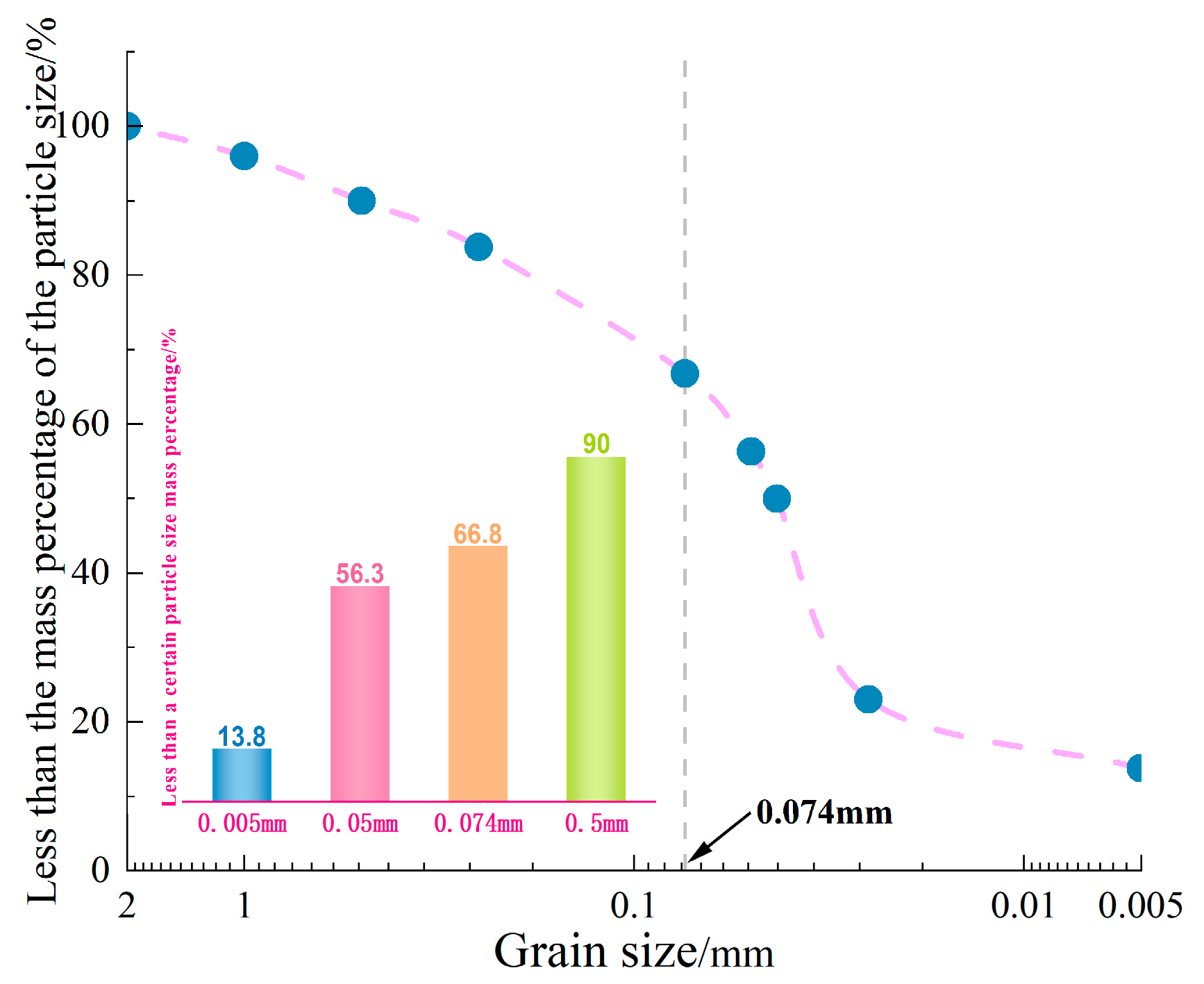
The particle size distribution of tailings has an important influence on the physical and mechanical properties of tailings. The tailings materials of the accumulation dam used in the physical model are four kinds of medium sand, fine sand, silty sand, and silty clay. The model tailings are all taken from the tailings of a tailings reservoir in Yunnan, China. Before the test, the physical and mechanical properties of the accumulated tailings were obtained through geotechnical tests and analysis. The content of tailings particles with particle size less than 0.074 mm in the whole tailings was 66.8%. The natural bulk density of each tailings particle was 1.99 g/cm3, 2.02 g/cm3, 2.04 g/cm3, and 1.89 g/cm3. The natural void ratios were 0.535, 0.525, 0.676, and 0.929. The plasticity index of the tail silty clay was 14.89. The whole tailings D10 was 0.005 mm, D50 was 0.043 mm, the non-uniformity coefficient Cu was 11.2, and the curvature coefficient Cc was 3.66. The grain size grading curve of the whole tailings is shown in Figure 1.

2.2.2. Waste-Rock Particle Gradation

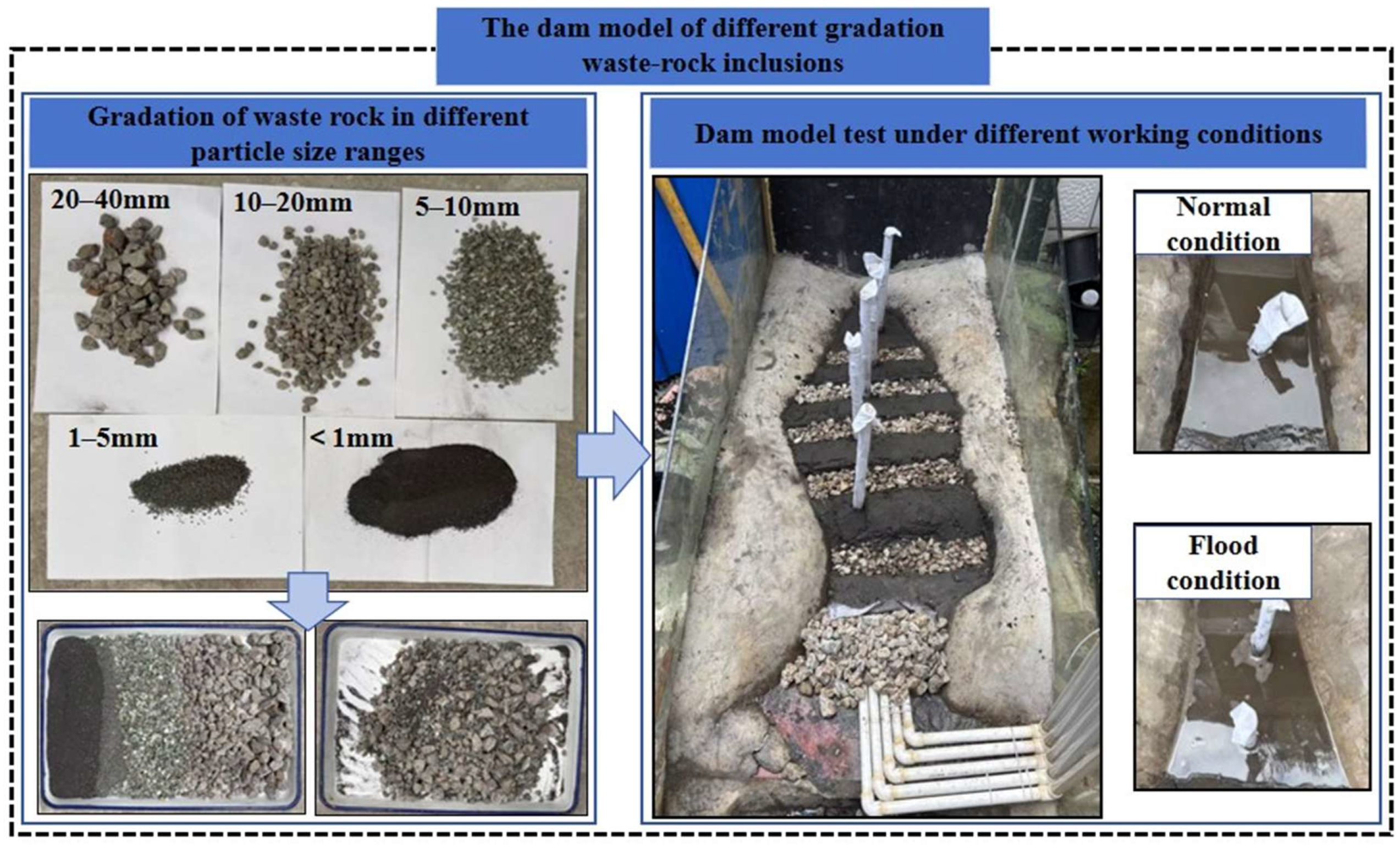
The value of the permeability coefficient greatly affects the burial depth (buried depth refers to the distance from the dam crest to the saturation line) of the saturation line of the tailings dam. In the test, the optimal particle gradation of waste rock is determined by the content of fine particles and coarse particles. In engineering practice, particles with a particle size less than 5 mm are usually defined as fine particles. The sieve analysis method and permeability test stipulated in the “standard of geotechnical test method” are adopted. Firstly, the waste rock is classified according to particle size, and then three gradation samples of A, B, and C are artificially prepared according to the proportion of different particle size ranges. Finally, the penetration test was performed with a constant head penetration test device. The gradation of waste rock A was as follows: D10 was 0.089 mm, D50 was 8.47 mm, the coefficient of uniformity Cu was 129.55, and the curvature coefficient Cc was 3.90. The gradation of waste rock B was as follows: D10 was 0.25 mm, D50 was 11.49 mm, the coefficient of uniformity Cu was 60.64, and the curvature coefficient Cc was 8.84. The gradation of waste rock C was as follows: D10 was 0.083 mm, D50 was 10.55 mm, the coefficient of uniformity Cu was 165.9, and the curvature coefficient Cc was 28.1. The relevant parameters are shown in Table 1.

2.3. Model Testing Device

2.3.1. Determination of Model Similarity Parameters

According to the engineering survey data of the tailings pond, combined with the indoor test conditions, the geometric scale of the physical model is determined to be 1:300 [14]. According to the similarity theory [15,16], the similarity scale of the physical model was set, as shown in Table 2. According to the engineering data of a tailings dam in Yunnan, combined with the principle of similar scale, the total size of the physical model was determined to be 2000 mm long and 900 mm wide. In the model, the design height of the initial dam was 70 mm, the total height of the whole dam was 215 mm, and the length of the dam was 1670 mm.

2.3.2. Model Building

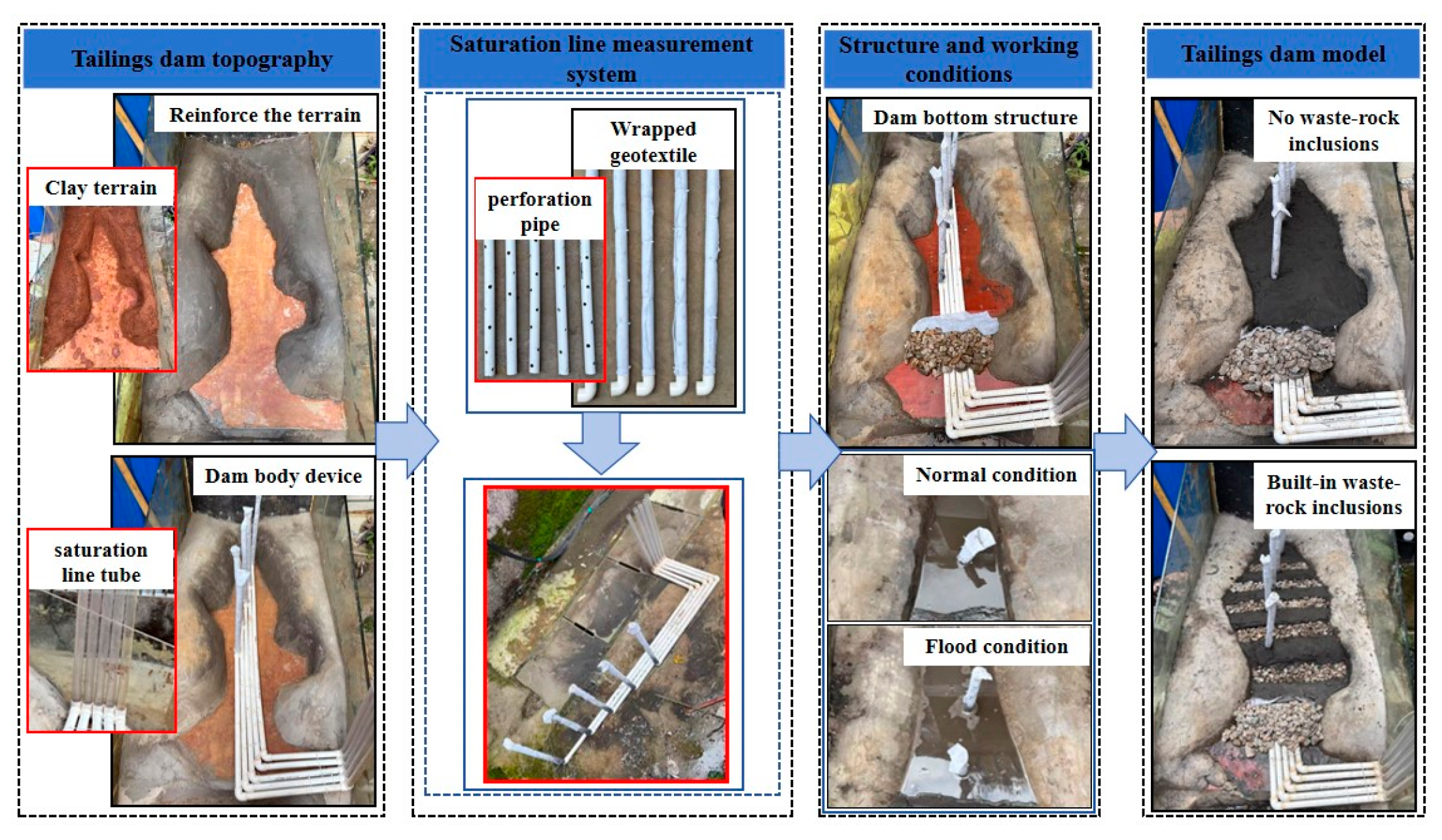
The high position of the saturation line affects the stability of the tailings dam [17]. When the saturation line dropped by 1 m, the stability coefficient of the tailings reservoir increased by more than 0.05 [18]. Therefore, in testing the physical model of the tailings dam, when the waste rock and tailings were stacked together, the layered stacking method was adopted, and the stacking started from the bottom of the reservoir area, and the height increased synchronously with the increase in the dam body. When the tailings deposit filled the waste-rock inclusions, a new layer of waste rock was piled on the top of the existing waste-rock inclusions to heighten the entire waste-rock inclusions system. This process was repeated until the final dam height was reached, resulting in the formation of an internal supporting structure composed of waste rock. According to the environmental protection and anti-seepage design of “tailings pond facilities design specification”, clay was used to carry out anti-seepage treatment of the tailings reservoir before tailings dam construction. As shown in Figure 2, the influence of waste-rock inclusions on the buried depth of the saturation line was studied.
The test used a model with a geometric similarity scale of 1:300. The model test device was mainly composed of the test tank, saturation line measurement system, and drainage system. In order to clearly observe the buried depth of the saturation line, a vertical transparent saturation line measuring tube is arranged at the edge of the test tank. The immersion line measurement system was composed of a vertical perforated PVC tube in the test tank, extended to a transparent tube connection at the edge of the tank. The circumferential equidistant drilling of the pipe wall was measured, and the geotextile was wrapped to effectively block the tailings particles from entering the pipe, resulting in the blockage of the water flow channel and the distortion of the test results. The two sides of the inner edge of the test tank were piled with soil. There were a total of five transparent tubes used as saturation line tubes. During the test, the measured data were read according to the arrangement order of the saturation line measuring tube, and the points were connected with a smooth line. The obtained curve was approximately regarded as the saturation line of the dam body. The drainage system referred to a system that relied solely on the initial dam in front of the dam for drainage when there was no waste-rock inclusion. After the waste-rock inclusion was built in, the waste-rock inclusion and the initial dam in front of the dam formed an integrated drainage system for the dam body.
In the seepage model test of the tailings dam, the dam body was first adjusted to reach a stable seepage state, and the saturation line and seepage flow data were recorded. Then, the water level of the model reservoir was raised to 52 cm to simulate and study the seepage morphology and stability of the dam under extreme floods.

3. Testing Results and Analysis

3.1. Unit Time Seepage Flow

According to the test scheme, a drainage model of waste-rock inclusions was constructed in the tailings dam, and then the inlet valve at the end of the tailings reservoir was opened for water injection, so that the water level in the reservoir was maintained at the set elevation. After the seepage of the dam body was stable, the seepage volume accumulation V discharged through the waste-rock inclusions in a fixed period t was measured by a measuring cylinder, and the seepage flow Kr (Kr = V/t) per unit time was calculated accordingly. Kr indicates the water flow through the seepage path in the dam body and the water flow out of the dam through the waste-rock inclusions. Firstly, the model test of the tailings dam without waste-rock inclusions (control group) was carried out. Finally, a drainage model with waste-rock inclusions with a thickness of 80 mm and a constant center spacing was built in the tailings dam. Three kinds of waste-rock gradation schemes, A, B, and C, were used to carry out the test. Each group of tests was repeated three times, and the test values are shown in Table 3.
According to the results of multiple tests (Table 3), the seepage flow (Kr) of the tailings dam without waste-rock gradations is the smallest. Among them, the Kr of the tailings dam with C-graded waste-rock gradations is the largest, and the seepage flow of the tailings dam with A-graded waste-rock gradations is the smallest compared with the control group. The main reason for this phenomenon is that the gravel particles in the waste-rock gradations have a wide particle size distribution. When the content of fine particles is high, the pores formed by the coarse particle skeleton will be gradually filled, thereby reducing the overall permeability coefficient and reducing the seepage flow. Therefore, the C-graded waste-rock inclusions with the largest Kr were selected to construct a tailings dam physical test model with a center spacing of 200–300 mm and a waste-rock accumulation thickness of 80 mm, and the test was carried out. Each group of tests was carried out three times, and the relevant test data are shown in Table 4.
It can be seen from the data in Table 4 that the seepage flow is negatively correlated with the center spacing: when the spacing increases from the minimum value of 200 mm to the maximum value of 300 mm, the seepage flow decreases from the maximum value to the minimum value. By changing the distance between the two waste-rock inclusions, it was found that the spacing of the waste-rock inclusions had a significant change in the seepage flow Kr of the tailings dam at time t. The test showed that with the increase in the center spacing of the waste-rock inclusions, the seepage flow of the dam body gradually decreased, but it was still higher than that of the tailings dam without the waste-rock inclusions. This was because the increase in the center spacing prolonged the seepage path in the tailings and reduced the overall permeability. The smaller the center spacing of the waste-rock inclusions, the more the number of seepage channels formed in the dam body, which made the permeability rate higher. The existence of waste-rock inclusions made the dam body maintain a relatively high permeability, so its seepage flow was always better than that of the dam body without waste-rock inclusions.

3.2. Influence of Waste-Rock Gradation on Buried Depth of Saturation Line

In the experiment, the spacing of the waste-rock inclusions was kept constant (200 mm), and their particle composition was adjusted to construct a physical model of the tailings dam containing the waste-rock inclusions (Figure 3). During the test, the water level at the tail of the reservoir remained constant, and the water flow gradually infiltrated through the seepage channel inside the dam. With the continuous infiltration, water appeared within the saturation line measuring tubes, and the water content of the dam gradually increased. When the water content of local tailings reached the peak, the water content of the soil in this area tended to be stable, and the water level of the corresponding saturation line measurement tube did not change, indicating that the dam body had reached saturation.
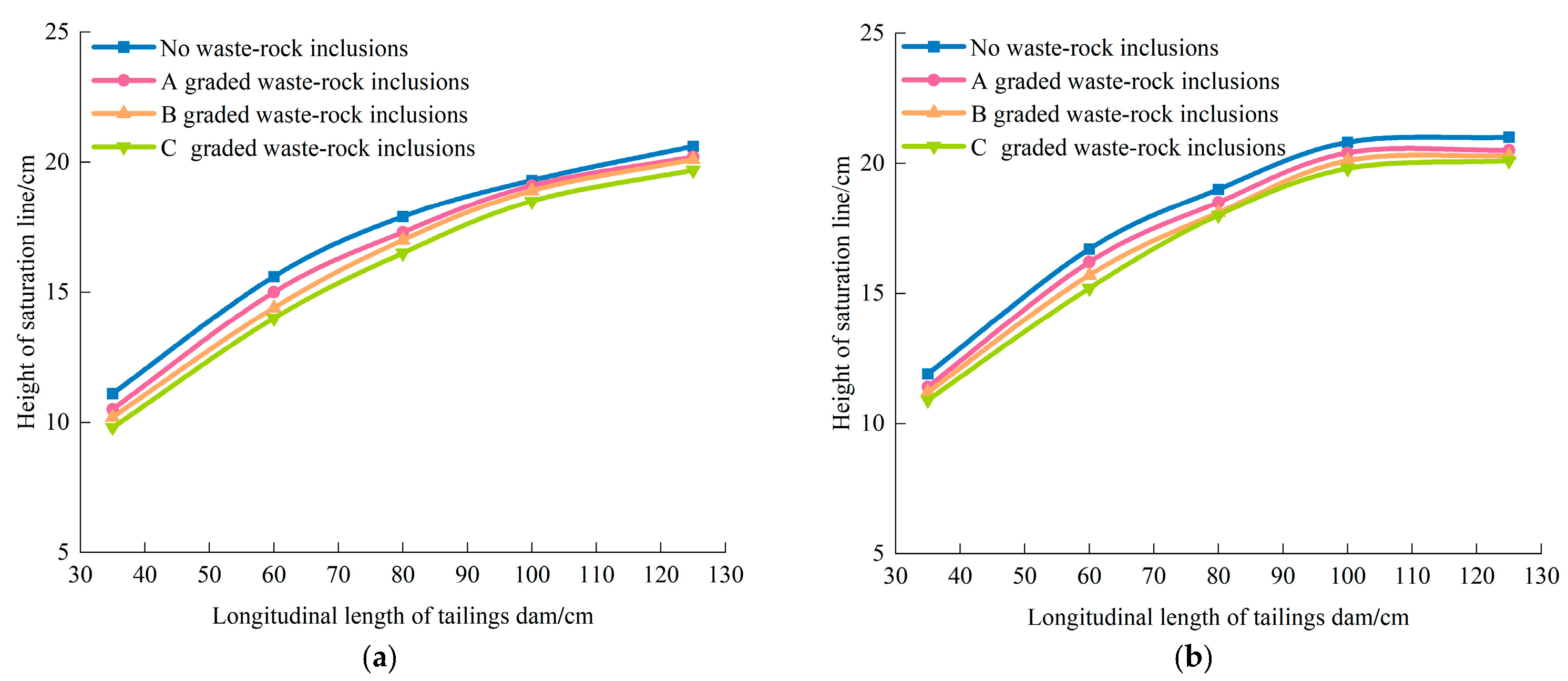
Through experimental observation, the variation law of the buried depth of the saturation line of the tailings dam under different working conditions was obtained, such as the curve of the buried depth of the saturation line in Figure 4. From the initial dam crest position, the distance of five phreatic line pipes in the dam body was measured in turn as the abscissa. The test results showed that after the waste-rock inclusions were set in the dam body, the saturation line changed significantly. The water-level-change amplitude of the saturation line pipe at the tail of the dam body was relatively small, while the saturation line pipe in front of the reservoir showed a significant downward trend, and the height difference was obvious, indicating that the waste-rock inclusions had a certain local influence range on the saturation line of the dam body. The C-graded waste-rock inclusions reduced the saturation line of the tailings dam to the lowest value, and the decrease was the largest. Different-graded waste-rock inclusions caused changes in the depth of the saturation line, but the C-graded waste-rock inclusions always showed the best precipitation level effect. This was mainly due to the high permeability of the waste-rock materials, and the setting of waste-rock inclusions significantly improved the drainage efficiency of the dam. Under the condition of fixed spacing, the stronger the permeability of the waste-rock inclusions was, the more obvious the decrease in the corresponding dam saturation line was. The setting of waste-rock inclusions can effectively promote the seepage stability of the tailings dam and significantly reduce the height of the saturation line. This drainage strengthening effect is helpful to improve the stability of the dam body and reduce the risk of seepage failure caused by a high saturation line.

3.3. Effect of Center Spacing of Waste-Rock Inclusions on the Buried Depth of Saturation Line

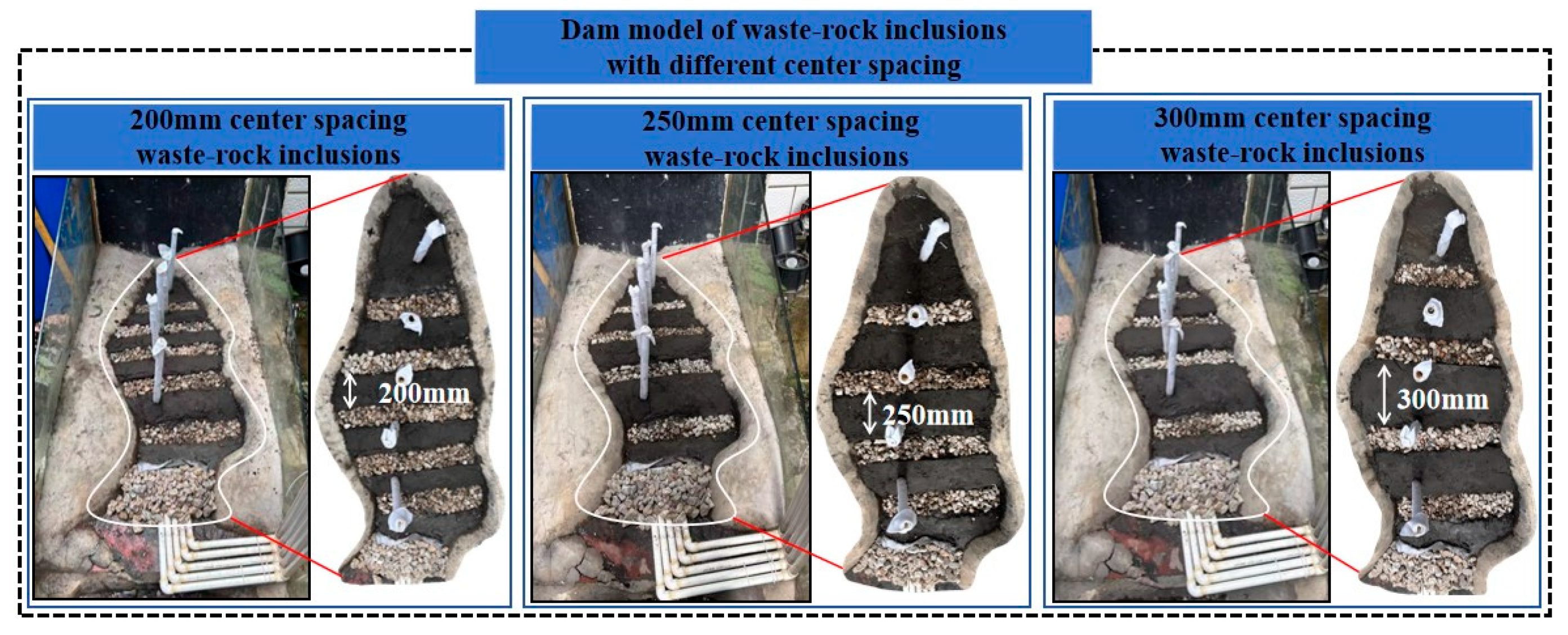
In order to further study the influence of the center spacing of waste-rock inclusions on the seepage characteristics of the tailings dam, the control variable method was used in the test. Under the condition of keeping the grade of waste-rock grade C, the center spacing of waste-rock inclusions was systematically adjusted (200 mm, 250 mm, 300 mm) to carry out the dam model test. Figure 5 shows the physical model of waste-rock inclusions with different center spacing.
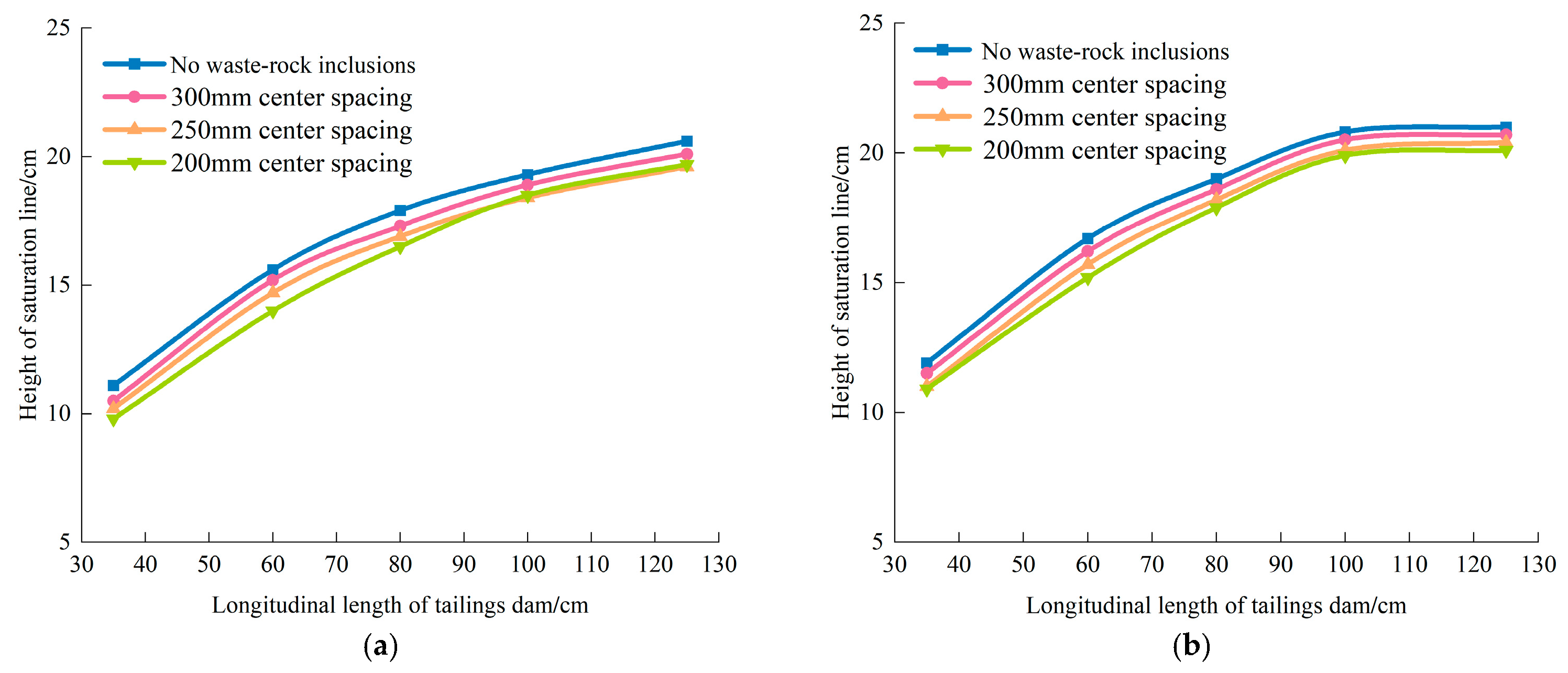
Under the condition that there was no seepage overflow in the test model, the comparative tests of normal conditions and flood conditions were carried out, respectively. The curve of the buried depth of the saturation line is shown in Figure 6. The results show that the depth of the saturation line in the case of no waste-rock inclusions is significantly lower than that in the case of waste-rock inclusions. The center spacing of the waste-rock inclusions had a significant regulatory effect on the buried depth of the saturation line—the larger the spacing, the smaller the buried depth of the saturation line in the tailings dam. This phenomenon was mainly because, as the center spacing of the waste-rock inclusions increased, the seepage path of the water flow in the tailings sand body increased. Due to the small permeability coefficient of the tailings material itself, the seepage velocity was slow. It can be seen that the setting of the waste-rock inclusions significantly changed the distribution characteristics of the saturation line of the tailings dam.
Under normal working conditions, the saturation line was the shallowest when there was no waste-rock inclusions. When the center spacing of the waste-rock inclusions was set to 200 mm, the saturation line of the dam body was at the lowest elevation, and the degree of decline was particularly obvious. With the expansion of the spacing of the waste-rock inclusions, the height of the saturation line showed an upward trend, and there was a small change in the local area, but overall, it was still significantly lower than the conventional tailings dam without the waste-rock inclusions. When the center spacing of the waste-rock inclusions was 300 mm, the difference between the buried depth of the saturation line and the situation without the waste-rock inclusions was the smallest. Under the flood condition, the buried depth of the saturation line of all the test groups changed significantly compared with the normal condition. Among them, the buried depth of the saturation line of the tailings dam with three different center spacings was still greater than that of the control dam without waste-rock inclusions. This phenomenon showed that the reasonable arrangement of the waste-rock inclusions effectively controlled the seepage of the dam body, and the excessive spacing weakened its drainage effect, but it was still better than the dam body structure without waste-rock inclusions.

4. GeoStudio Introduction and Numerical Simulation Analysis

4.1. Introduction of GeoStudio

The SEEP/W module in GeoStudio software was used to simulate and analyze the seepage conditions under various engineering conditions, and supported the solution of the basic problems of saturated and unsaturated seepage under steady and transient conditions. In this experiment, the SEEP/W module in GeoStudio software was used to simulate the saturation line of steady seepage.

4.2. Model Establishment

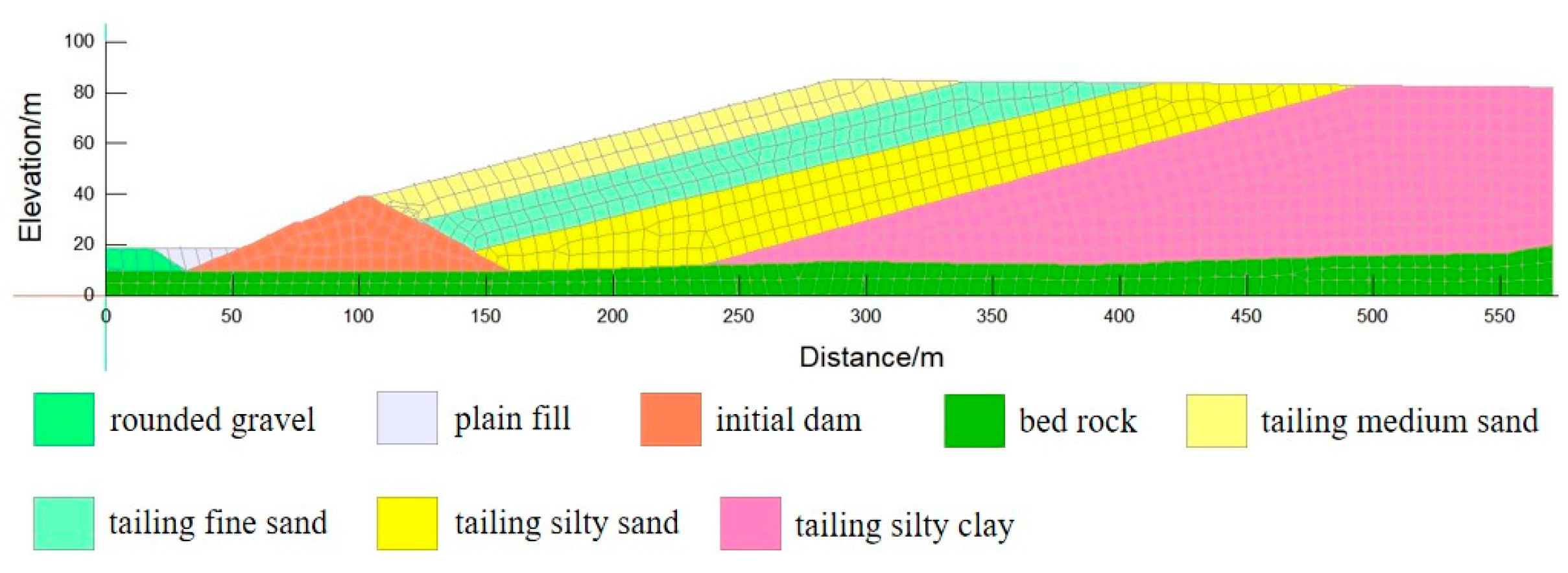
Based on the exploration data and field test, the generalized analysis was carried out. On this basis, a layered numerical model partition was established for the tailings reservoir. According to the indoor physical model test results and the field tailings reservoir exploration data, the tailings dam profile was generated. The partition materials were eight kinds of tailing medium sand, tailing fine sand, tailing silty sand and tailing silty clay, plain fill, initial dam, rounded gravel, and bedrock. The established two-dimensional model is shown in Figure 7. Based on the center spacing of the waste-rock inclusions selected by the physical model test, the tailings dam models with center spacings of 60 m, 75 m, and 90 m were simulated, after amplification according to a similar scale.
In this study, given that the analysis focused on steady-state seepage, the Soil–Water Characteristic Curve (SWCC) was not considered. Accordingly, the numerical model employed a saturated permeability model for the materials. For the steady-state analysis conducted herein, the convergence tolerance was set with a significant figure of 3 and a head difference of 1 × 10⁻³ m. The maximum number of iterations for the computation was set to 200. The model boundary conditions were as follows: the bottom of the model and the right side of the bedrock were impermeable boundaries, the rear and right sides of the dry beach on the dam crest were constant head boundaries, the top of the accumulation dam (and initial dam) was a potential infiltration surface, and the total flow Q was zero. The drainage ditch located at the foot of the dam downstream of the initial dam was set to zero pressure head. The upstream dry length of the tailings dam was 208.5 m from the top of the accumulation dam.
In the seepage simulation of the tailings dam, the physical and mechanical parameters of each material of the dam were key to the analysis; they played a decisive role in the accuracy and reliability of the simulation results. According to the survey report and indoor geotechnical test, the index parameters of each partition material in the model were calculated and are shown in Table 5.

4.3. Simulation Results and Analysis

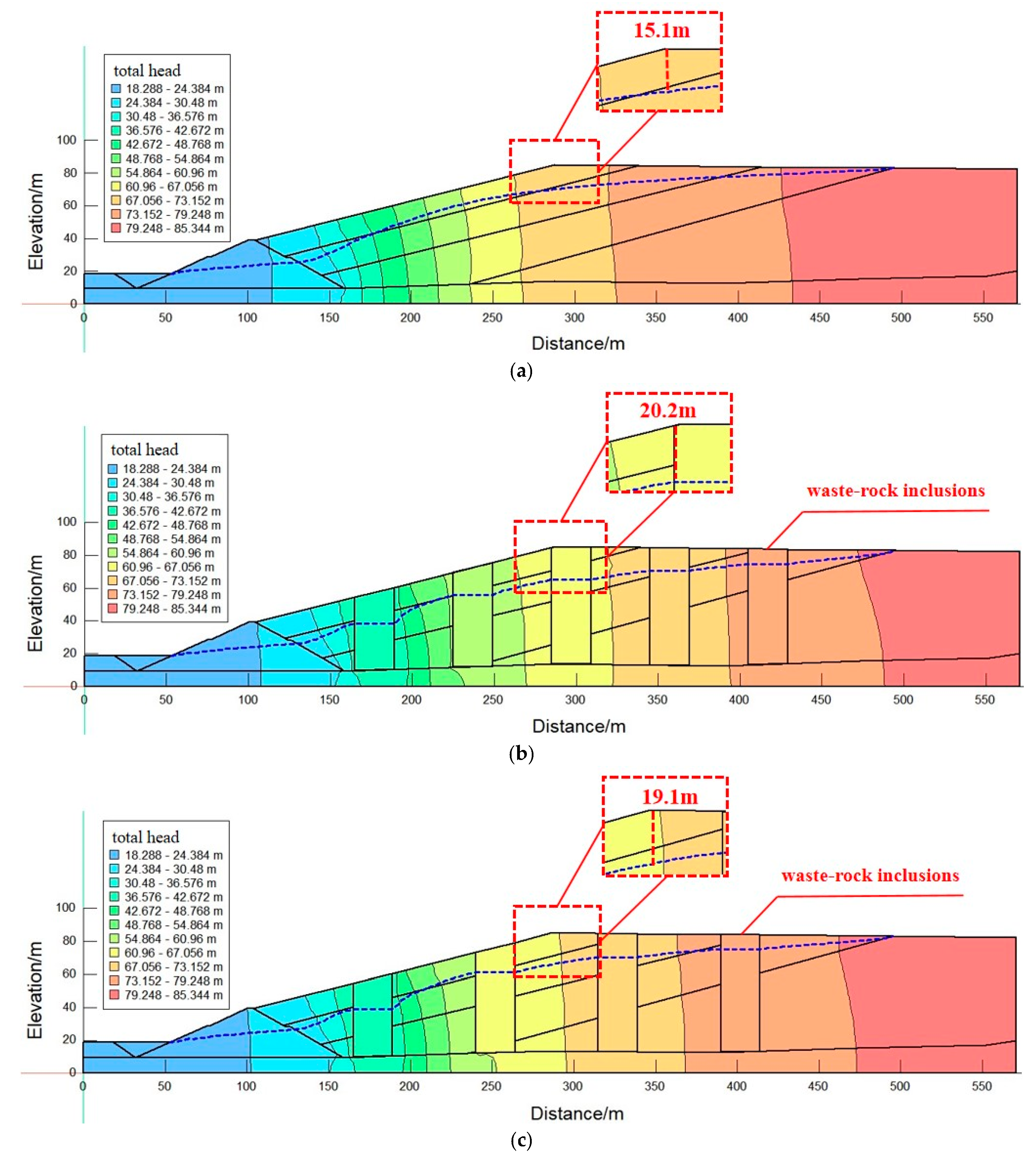
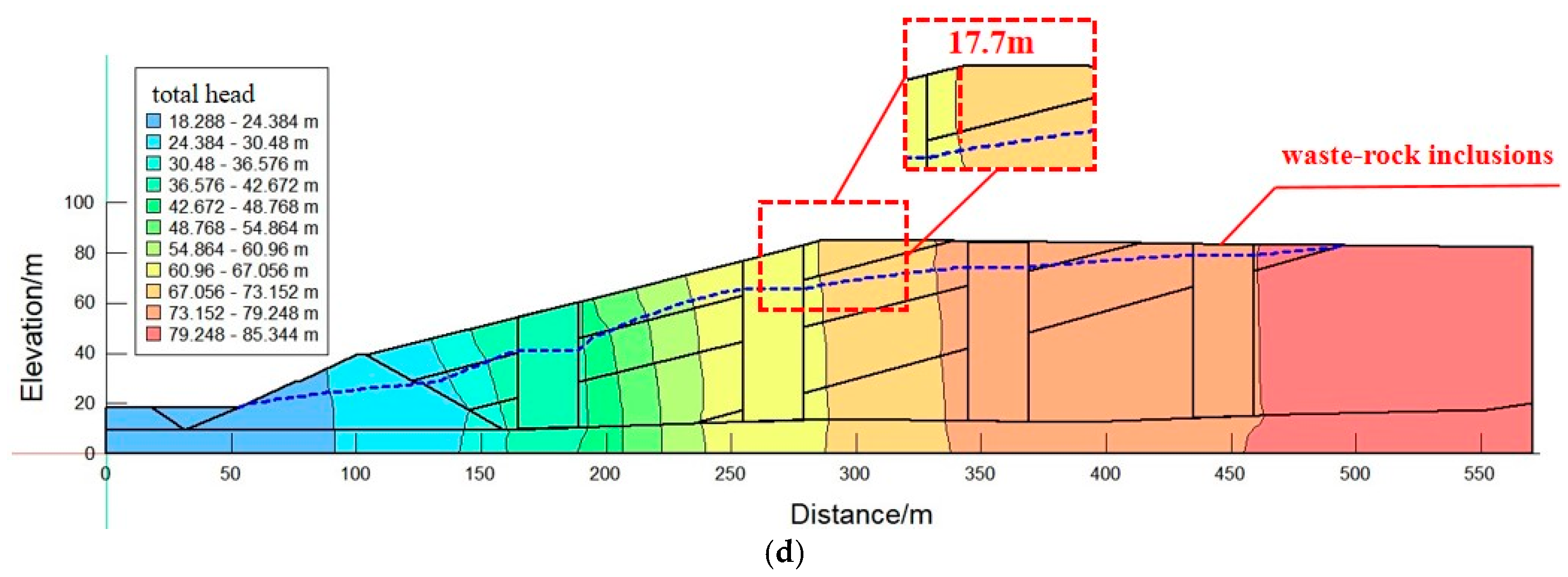
According to the physical model test, the distribution of the saturation line of the dam body under normal and flood conditions was similar. In the numerical simulation process, the SEEP/W module of GeoStudio software was used to analyze the seepage characteristics of the dam body under normal conditions, and the following results were obtained, as shown in Figure 8. The width of the waste-rock inclusion was 24 m. The contour line of pore water pressure = 0 kPa was the saturation line.
The simulation results showed that the saturation line of the dam body without waste-rock inclusions was relatively high, and the saturation line of the dam body decreased under the waste-rock inclusions with different center spacing. Intuitively, it can be seen that the saturation line of the waste-rock inclusions was below the saturation line of the dam without waste-rock inclusions. With the change in the center spacing, the saturation line changed obviously, and there was an obvious sudden drop near the waste-rock inclusions. This phenomenon was mainly due to the addition of a waste-rock embankment structure in the dam body. Because the waste-rock medium had large pores and a high permeability coefficient, the seepage rate of the area was significantly higher than that of the adjacent tailings layer when the seepage fluid flowed through the waste-rock area. Under the action of the dominant seepage channel formed by such coarse-grained materials, the water body mainly migrated to the dam foundation along the construction path of waste rock. In the tailings dam with waste-rock inclusions, the distribution of the saturation line showed obvious regional differences. In the area of waste-rock accumulation, the saturation line approximately maintained a horizontal trend, and after entering the tailings accumulation area, the saturation line decreased, forming a fluctuating form as a whole. This phenomenon was mainly due to the significant difference in permeability between waste rock and tailings. Due to the high permeability coefficient of the waste rock, the seepage velocity of water in it was faster. In contrast, the permeability coefficient of tailings was lower, resulting in a relatively slow water flow. In addition, the existence of the waste-rock inclusions effectively improves the seepage condition of the dam body, not only accelerating the process of seepage reaching a stable state, but also significantly reducing the stable height of the saturation line by enhancing the drainage capacity of the dam body, thereby improving the seepage stability of the tailings dam.
According to the data shown in Figure 8, when there were no waste-rock inclusions, the maximum burial depth of the saturation line of the tailings dam from the top of the accumulation dam was 15.1 m. After adding the waste-rock inclusions, and the center spacing of the waste-rock inclusions was 90 m, the maximum burial depth of the saturation line was 17.7 m. When the center spacing of the waste-rock inclusions was 75 m, the maximum burial depth of the saturation line was 19.1 m. When the center spacing of the waste-rock inclusions was 60 m, the maximum burial depth of the saturation line was 20.2 m. The buried depth increased by 2.6~5.1 m compared with that of the model without waste-rock inclusions. The test results showed that the central spacing affected the burial depth of the saturation line of the tailings dam; that is, the smaller the spacing, the deeper the burial depth of the saturation line from the top of the accumulation dam.

5. Comparative Analysis of Numerical Simulation and Model Test Results

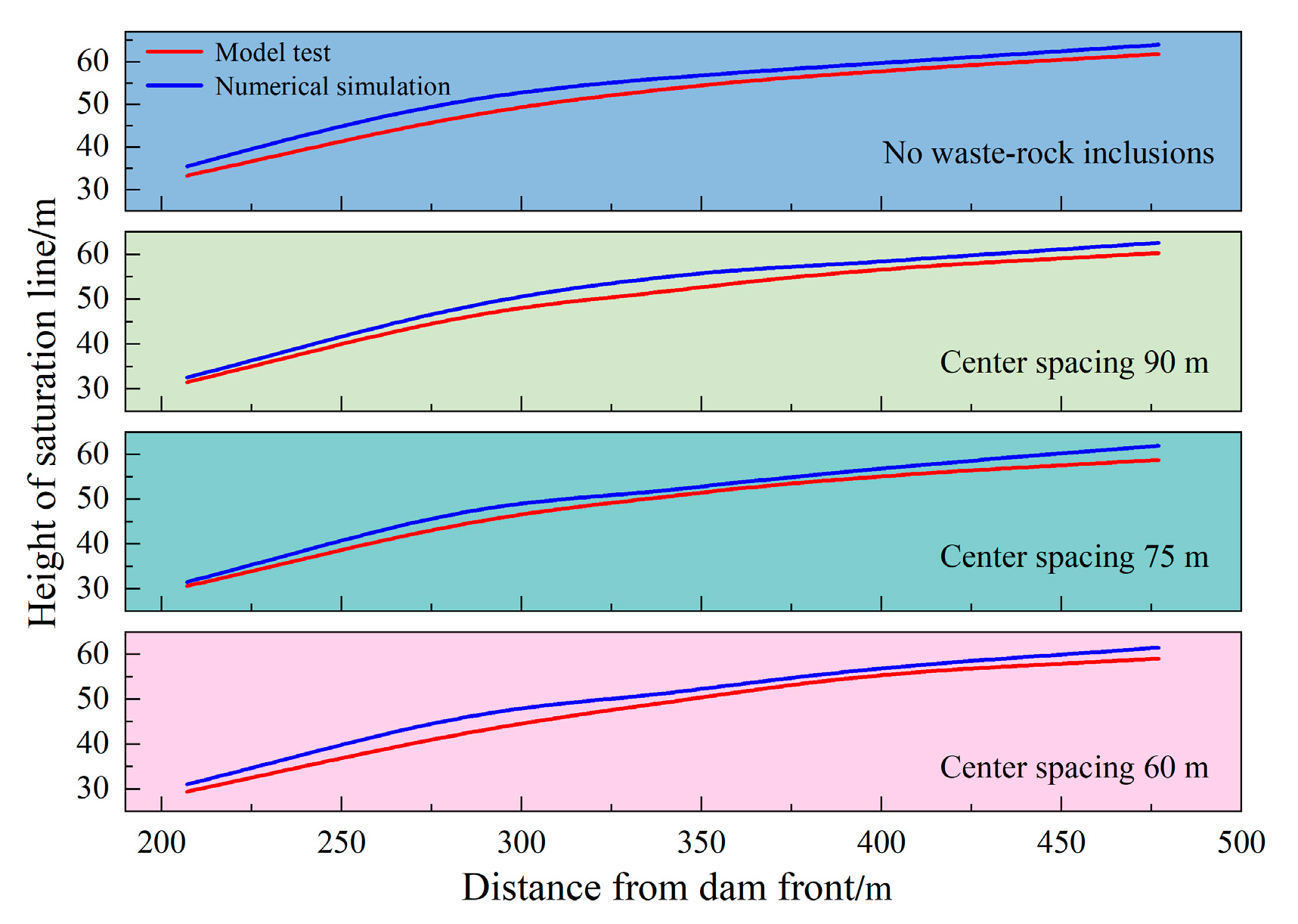
According to the model test results, the overall trend of the saturation line of the two was close to that of the numerical simulation results after amplification according to a similar scale, as shown in Figure 9. The setting of the tailings dam drainage system had a significant effect on the buried depth of the saturation line. When the dam body was not set with waste-rock inclusions, due to the lack of effective drainage channels, it was difficult for the seepage water to be discharged smoothly through the tailings layer with weak permeability, resulting in the uplift of the saturation line in the dam body. After setting up the waste-rock inclusions, there was a significant difference in permeability between the waste-rock material and the tailings, and the permeability of the waste rock was significantly stronger than that of the tailings. This permeability advantage formed an efficient drainage channel, which made the seepage preferentially migrate and quickly discharge in the waste-rock inclusions, and promoted the effective reduction in the dam saturation line. Through comparative analysis, it was found that the indoor physical model test results were in good agreement with the saturation line obtained by numerical simulation in terms of morphological characteristics and spatial distribution. This correspondence fully proves that the numerical simulation technology can be effectively applied to the analysis of the seepage field, and its calculation model has engineering credibility for the characterization of dam seepage characteristics, which proves that the calculation model can effectively reflect the actual working condition characteristics of tailings dam seepage.


6. Discussion

After the introduction of waste-rock inclusions into the tailings pond, the large pores and high permeability inside the waste-rock inclusions led to the migration of fine-grained tailings under the action of seepage. This phenomenon has raised concerns that it may clog pores, change the seepage field, and affect long-term stability. However, with field observation and laboratory tests, Bolduc et al. [12] noted that although there was a phenomenon of tailings migrating into the waste rock, this did not have a significant effect on the overall water conductivity of the waste-rock inclusion (WRI), and the water flow could still pass through smoothly. To avoid possible severe effects, a thick geotextile can be used on the contact surface between waste-rock inclusions and tailings. The selection of a thick geotextile is mainly based on its better anti-clogging performance, which can ensure long-term permeability. It can be used as an effective buffer layer to diffuse and weaken the cusp stress of the sharp corner waste rock, so as to avoid the geotextile being pierced and losing its effect.

7. Conclusions

Through the physical model test, the buried depth of the saturation line of the dam body was studied by three different center spacings of the waste-rock inclusions, and then the GeoStudio software was used for simulation. The results are as follows:
(1)
The test was carried out under the condition of keeping the thickness of waste-rock accumulation at 80 mm. The results show that the seepage flow is negatively correlated with the content of fine particles: when the content of fine particles in the waste-rock inclusions decreases, the fine particles filled in the pores of the coarse particle skeleton decrease, which significantly improves the permeability coefficient of the waste-rock inclusions, so that the C-graded waste-rock embankment dam reaches the maximum seepage flow per unit time. The seepage flow increases with the decrease in the center spacing of the waste-rock inclusions. When the C-graded waste-rock inclusions are used to build the dam, the seepage flow of the dam body increases gradually with the decrease in the center spacing.
(2)
The permeability coefficient of the waste-rock inclusions directly affects the buried depth of the saturation line. When the C-graded waste-rock inclusions are used for dam construction, the saturation line of the tailings dam can be reduced to the lowest level. The setting of waste-rock inclusions can significantly reduce the saturation line of the dam body, and the buried depth of the saturation line is negatively correlated with the center spacing of waste-rock inclusions: with the decrease in center spacing, the buried depth of the saturation line of the dam body increases.
(3)
According to the results of the physical model test of the tailings dam, there is no seepage overflow phenomenon under normal and flood conditions, when the width of waste-rock inclusion is 80 mm. The test data show that under the two working conditions, the saturation line of the tailings dam under the flood condition is always higher than that under the normal condition. Compared with the waste-rock inclusions with different center spacing, the waste-rock inclusions with 200 mm center spacing have the most significant effect on reducing the saturation line, and the saturation line decreases the most.
(4)
The results of numerical simulation analysis show that the regulation effect of waste-rock inclusions on the saturation line is closely related to the center spacing: the smaller the spacing, the lower the saturation line. When the minimum center spacing (60 m) is adopted, the saturation line decreases most significantly. Under the condition of 90 m center spacing, the saturation line is closest to the dam body without waste-rock inclusions. The comparison of specific data shows that the maximum buried depth of the saturation line from the top of the accumulation dam is 15.1 m when there is no waste-rock inclusions, and the buried depth increases by 2.6~5.1 m after the waste-rock inclusions is set up, among which the 60 m spacing increases the most (5.1 m), and the 90 m spacing increases the least (2.6 m).
(5)
Through comparison, it is found that the indoor physical model test results are in good agreement with the numerical simulation results in terms of the shape distribution of the saturation line. The numerical simulation technology can be effectively applied to the analysis of the seepage field, and the simulation results of the seepage characteristics of the dam body have engineering credibility.

Author Contributions

The authors confirm contribution to the paper as follows: study conception and design, T.S.; draft manuscript preparation and interpretation of results, B.Z.; analysis and interpretation of results, R.L.; data collection, M.L. All authors have read and agreed to the published version of the manuscript.

Funding

This research was funded by the central guidance of local science and technology development funds—Research on the Application of Green Mining Technology for Phosphate Mine Solid Waste Backfilling and Water Conservation in Important Ecological Sensitive Areas, and Industrial Application of Full Solid Waste High-Concentration Filling Mining System in Phosphate Industry, grant number (202407AC110019-1); Youth Project of Yunnan Basic Research Program, grant number (202501AU070145); and Innovation Center of Phosphorus Resource, Yunnan Province, grant number (202305AK340002-1).

Institutional Review Board Statement

Not applicable.

Informed Consent Statement

Not applicable.

Data Availability Statement

Some or all data that support the findings of this study are available from the corresponding author upon reasonable request.

Conflicts of Interest

The authors declare that the research was conducted in the absence of any commercial or financial relationships that could be construed as a potential conflict of interest.

References

  1. Yuan, H.; Zhang, M.; Tao, X.; Wang, H.; Zhao, X.; Zhang, G. Factors analysis and suggestions on environmental accident of tailings ponds. J. Environ. Eng. Technol. 2024, 14, 1026–1033. [Google Scholar]
  2. Lin, S.; Wang, G.; Liu, W.; Zhao, B.; Shen, Y.; Wang, M.; Li, X. Regional distribution and causes of global mine tailings dam failures. Metals 2022, 12, 905. [Google Scholar] [CrossRef]
  3. Chen, S. Problems and countermeasures of safety evaluation of tailing pond. Chin. J. Geotech. Eng. 2016, 38, 1869–1873. [Google Scholar]
  4. de Cássia Costa da Silva, R.; de Novais, M.A.P.; Zucchi, P. Notifications of work-related injuries and diseases: An observational study on a mining disaster. BMC Health Serv. Res. 2023, 23, 936. [Google Scholar] [CrossRef] [PubMed]
  5. Aubertin, M.; Jahanbakhshzadeh, A.; Yniesta, S. The effect of waste-rock inclusions on the seismic stability of a tailings impoundment. In Earthquake Geotechnical Engineering for Protection and Development of Environment and Constructions; CRC Press: Boca Raton, FL, USA, 2019; pp. 1220–1227. [Google Scholar]
  6. Ma, H.; Zhang, Y. Physical Modeling of Tailings Dams in China: A Review. J. Min. Sci. 2022, 58, 548–560. [Google Scholar] [CrossRef]
  7. Gao, L.; He, G.; Liao, J.; Dai, B.; Zhang, Q.; Xiao, F.; Li, G. Study of the influence mechanism of mine waste rock on saturation line of tailings dam. Min. Res. Dev. 2019, 39, 96–102. [Google Scholar]
  8. Saleh-Mbemba, F.; Aubertin, M. Physical and numerical modelling of drainage and consolidation of tailings near a vertical waste rock inclusion. Can. Geotech. J. 2021, 58, 1263–1276. [Google Scholar] [CrossRef]
  9. Zhou, H.; Dong, W.; Cui, X. A new method for co-disposal of tailings and waste rock. Nonferrous Met. (Miner. Process. Part) 2017, 3, 60–65. [Google Scholar]
  10. Li, X.; Shen, Z. Evaluation of seepage control effect of drainage wall and geotechnical mat combined system of tailings pond. Nonferrous Met. (Min. Part) 2024, 76, 74–80. [Google Scholar]
  11. Jahanbakhshzadeh, A.; Aubertin, M. Effective Stress Analyses to Assess the Stability of Progressively Raised Upstream Dikes for Tailings Impoundments with waste-rock inclusions. Geotech. Geol. Eng. 2024, 42, 3193–3212. [Google Scholar] [CrossRef]
  12. Bolduc, F.L.; Aubertin, M. Numerical investigation of the influence of waste-rock inclusions on tailings consolidation. Can. Geotech. J. 2014, 51, 1021–1032. [Google Scholar] [CrossRef]
  13. Nguyen, N.D.; Pabst, T. Consolidation behavior of various types of slurry tailings co-disposed with waste-rock inclusions: A numerical study. Environ. Earth Sci. 2023, 82, 65. [Google Scholar] [CrossRef]
  14. Song, N. Physical Model Test and Study on Safety and Stability of Tailings Dam Collapse. Master’s Thesis, Kunming University of Science and Technology, Kunming, China, 2023. [Google Scholar]
  15. Jiang, Q. Similarity theory and model testing. Eng. Mach. 1982, 7, 30–37. [Google Scholar]
  16. Yang, J. Similarity Theory and Structural Model Testing; Wuhan University of Technology Press: Wuhan, China, 2005. [Google Scholar]
  17. Tao, X. Influence of high phreatic line on stability of tailings pond and measuresto reduce phreatic line. Fujian Metall. 2023, 52, 8–11. [Google Scholar]
  18. Wang, W.; Li, L.; Wang, X.; Li, Q.; Jia, S.; Tong, R. Saturation Line Forecasting via a Channel and Temporal Attention-Based Network. IEEE Access 2022, 10, 121641–121652. [Google Scholar] [CrossRef]
Figure 1. Particle size grading curve of tailings.
Eng 07 00003 g001
Figure 2. Experimental setup for physical model of tailings dam.
Eng 07 00003 g002
Figure 3. Physical model of waste-rock inclusions with different gradations.
Eng 07 00003 g003
Figure 4. Variations in the height of the saturation lines with distance from the crest of the initial dam for different waste-rock inclusions. (a) Normal condition; (b) Flood condition.
Eng 07 00003 g004
Figure 5. Physical model of waste-rock inclusions with different center spacing.
Eng 07 00003 g005
Figure 6. Variations in the height of the saturation lines with distance from the crest of the initial dam for different center spacing between the waste-rock inclusions. (a) Normal condition; (b) Flood condition.
Eng 07 00003 g006
Figure 7. Generalized profile of tailings dam.
Eng 07 00003 g007
Figure 8. Saturation lines (blue dashed lines) from numerical simulation of different center spacing between the waste-rock inclusions. (a) No waste-rock inclusions; (b) Center spacing 60 m; (c) Center spacing 75 m; (d) Center spacing 90 m.
Eng 07 00003 g008aEng 07 00003 g008b
Figure 9. Comparison of numerical simulation and model test results.
Eng 07 00003 g009
Table 1. Grading and permeability coefficient of waste rock particles.
GradationGrain Size/mmPermeability Coefficient
/(cm·s−1)
20–4010–205–10<5
A212421340.11
B302519260.75
C262625230.95
Table 2. Selection of model similarity parameters.
Similar Physical VariableGeometric ScaleVolume ScaleGravity Acceleration ScaleTime Scale
Similarity scale1:3001:30031:11:3001/2
Table 3. Seepage flow per unit time of tailings dam.
Grading TypeKr/(L·S−1)Frequency
Control group2.82 × 10−43
A4.85 × 10−43
B6.75 × 10−43
C7.92 × 10−43
Table 4. Seepage flow per unit time of tailings dam.
Center Spacing/mmKr/(L·S−1)Frequency
2007.92 × 10−43
2505.95 × 10−43
3004.36 × 10−43
Table 5. The physical and mechanical index value of the dam material.
Name of the MaterialPermeability Coefficient/(cm·s−1)Volumetric Water Content/(%)
Tailing medium sand1.4 × 10−336.0
Tailing fine sand1.2 × 10−338.0
Tailing silty sand8.6 × 10−432.0
Tailing silty clay1.4 × 10−547.0
Initial dam5.0 × 10−310.2
Plain fill3.0 × 10−339.1
Bed rock3.0 × 10−73.1
Rounded gravel3.0 × 10−319.2
Waste-rock inclusions9.5 × 10−112.9
Disclaimer/Publisher’s Note: The statements, opinions and data contained in all publications are solely those of the individual author(s) and contributor(s) and not of MDPI and/or the editor(s). MDPI and/or the editor(s) disclaim responsibility for any injury to people or property resulting from any ideas, methods, instructions or products referred to in the content.