

Residual Value: Predictive Lifetime Monitoring of Power Converter Components for Sustainable Reuse and Reliability


Abstract
1. Introduction
- -
- Minimizing resource consumption through efficiency and conservation.
- -
- Enhancing the circularity of resource use and creating sustainable value chains.
- The first part presents context, analyzes residual value calculations in other electrical engineering fields related to power electronics, and proposes a residual value formula for electronic components or power converter sub-systems. The parameters needed to calculate the residual value will be detailed in the next two parts with a specific focus on two crucial parameters.
- The second part deals with the residual value parameter of remaining useful life. It proposes a method to monitor online the remaining life of components to inform the residual value formula and make end-of-life decisions.
- The third part deals with the residual value parameter of reusability rate of a component in an electronic set. This part proposes experimental protocols to measure reusability rates through aging evaluations of the extraction process.
2. Definition of the Residual Value in Power Electronics
2.1. Residual Value in the Automotive Sector
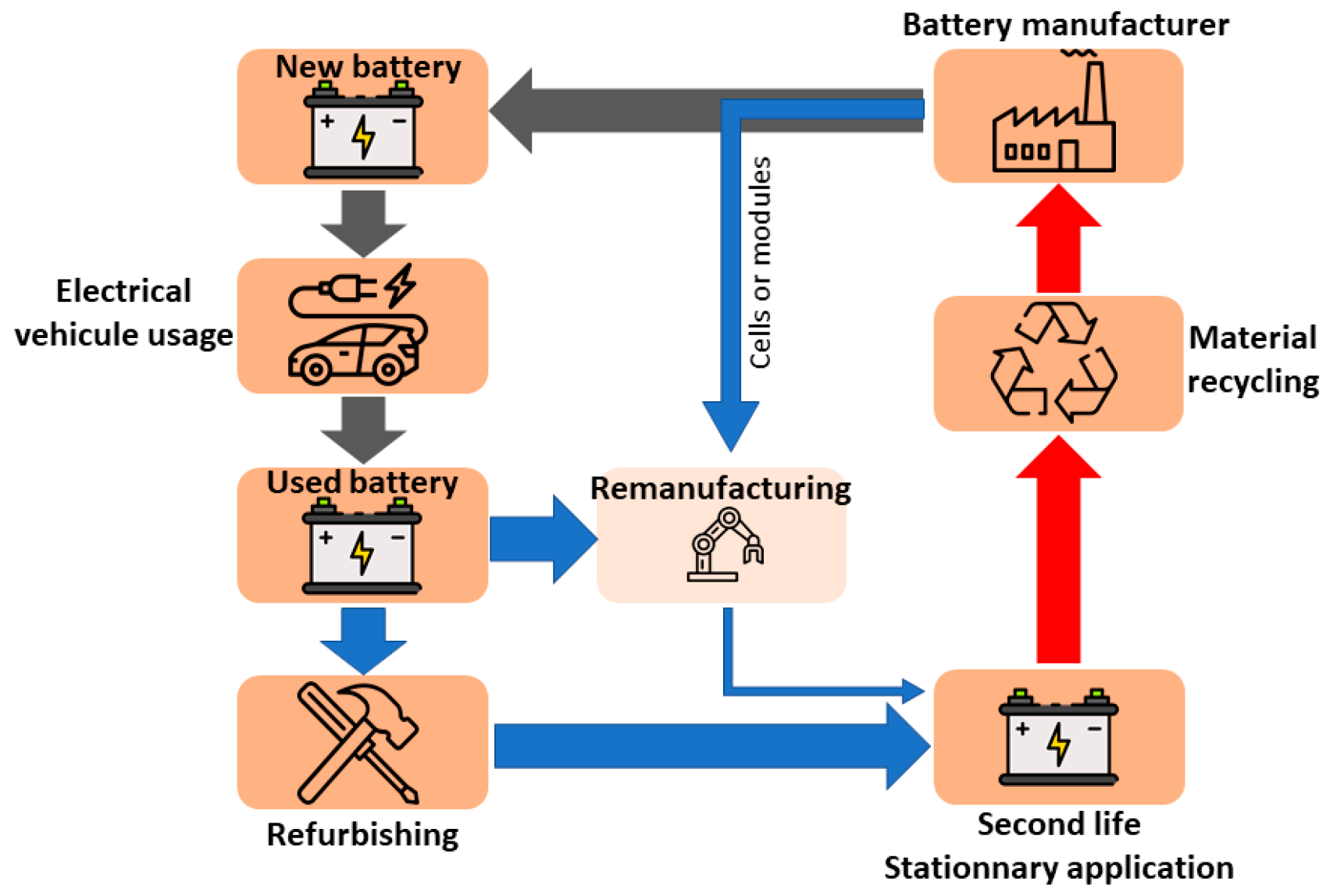
2.2. Residual Value in Battery Industry
2.3. Definition of Residual Value in Power Electronics
- 4.
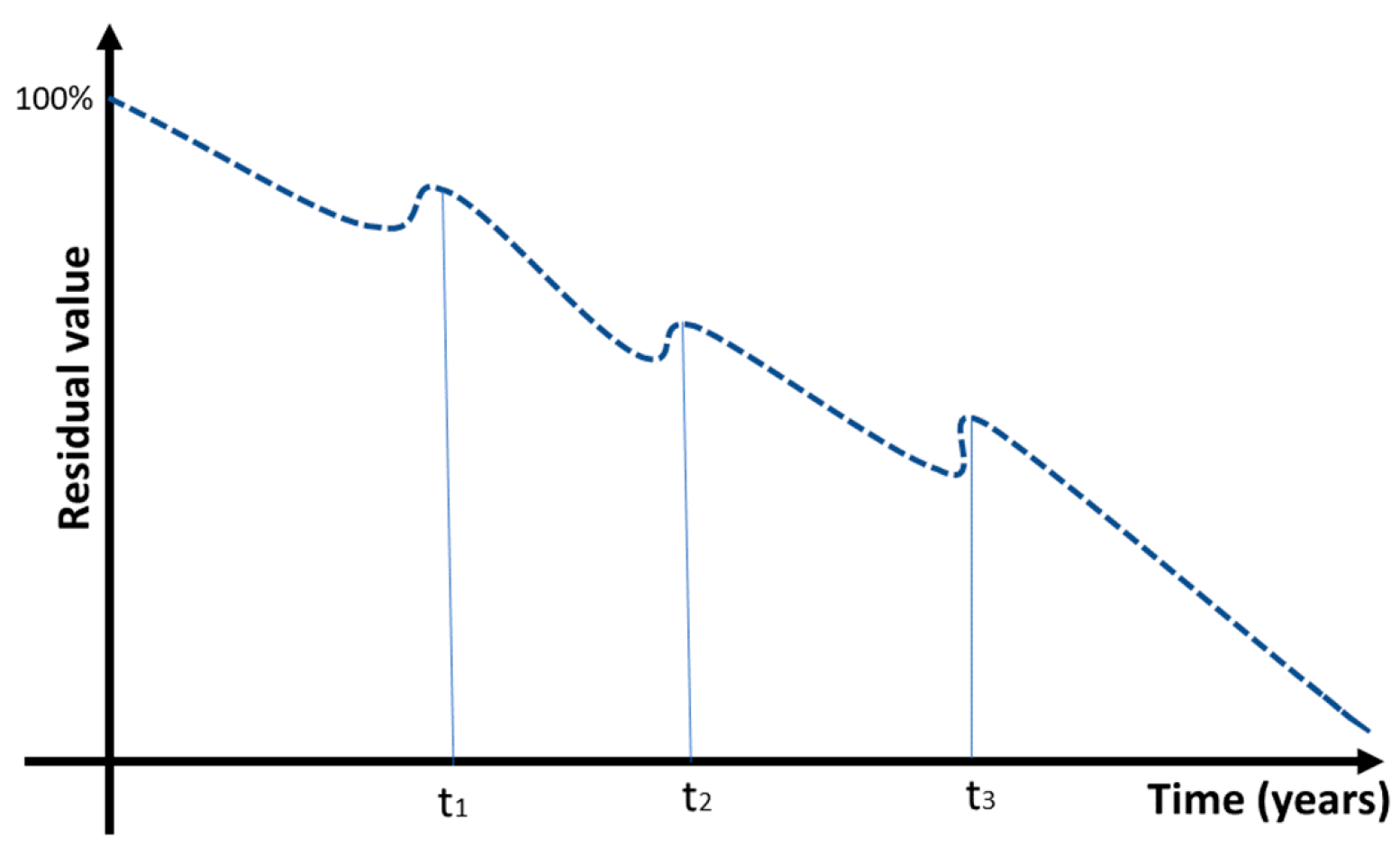
- Residual value is based on usage time and the remaining operational life, following a depreciation model linked to reliability.
- 5.
- Requalification process costs are additional costs that reduce monetary value but increase functional residual value.
- 6.
- If the extraction of a component or module from its converter is impossible or would cause damage, its value is considered zero.
- 7.
- The value can be adjusted by a correction factor during singular events related to socio-economic context and supply difficulties (e.g., geopolitical constraints).
3. Monitoring of the Remaining Lifetime
3.1. Basics of Physics of Failure
- ○
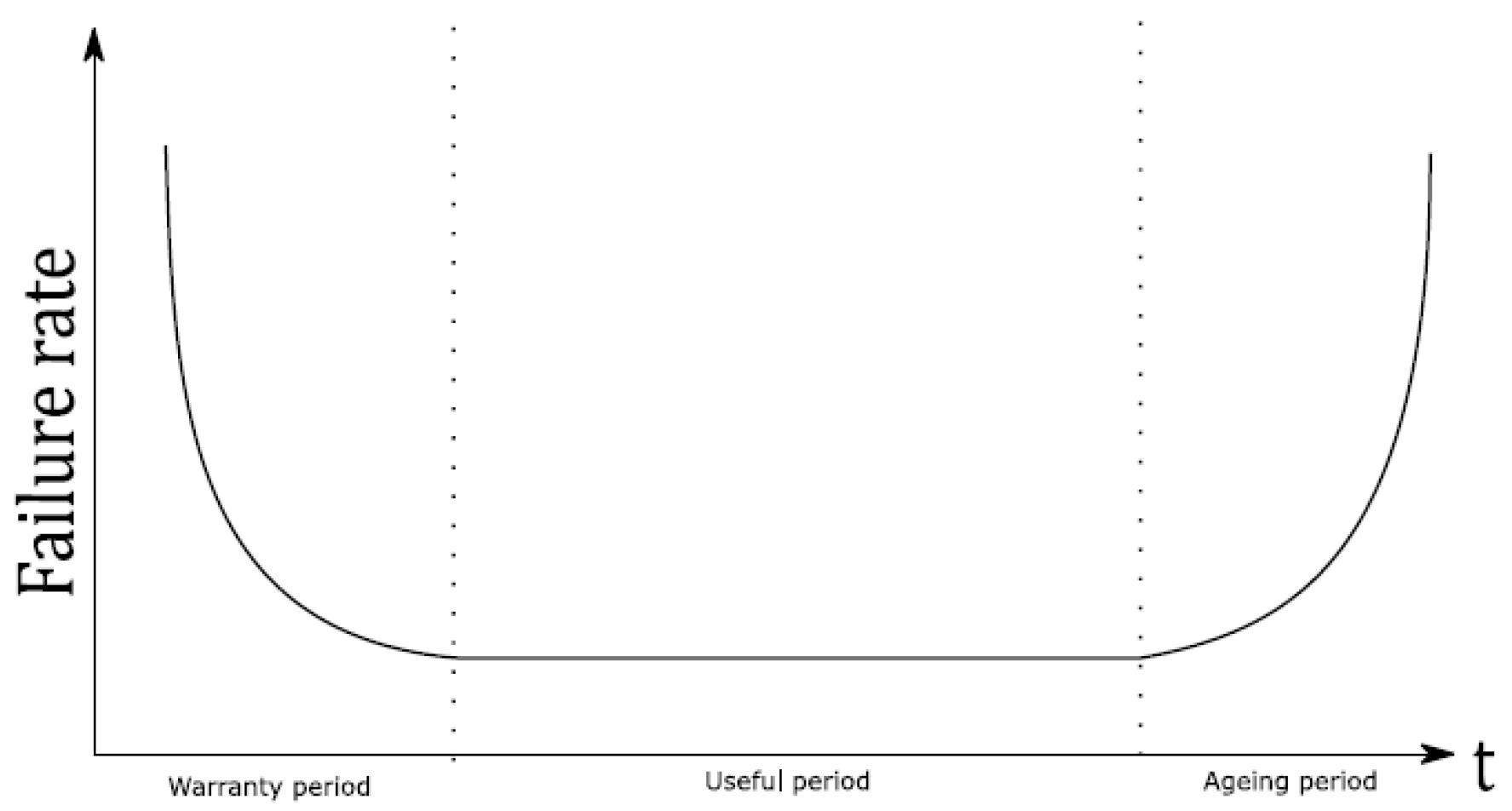
- Warranty period: Failures occurring during this period are typically due to manufacturing defects and are not considered in reliability studies. For instance, photovoltaic module manufacturers typically guarantee 5 years against mechanical failures.
- ○
- Useful life period: this represents the majority of a product’s life, where fatigue and wear have not yet significantly impacted the component.
- ○
- End-of-life period: failure rate increases rapidly during this phase due to wear-out phenomena.
3.2. Failure Mechanisms
3.3. Lifetime Monitoring Methods
3.4. Temperature-Based Models for Lifetime Monitoring
- Universal lifespan estimation: the method must be able to evaluate the remaining lifespan of all components.
- Easy integration: the method should be lightweight and not add unnecessary sensors to all components.
- Standardized system approach: the approach should be based on standardized systems that are produced on a large scale.
- State observer creation: a detailed study should allow the creation of an observer that links the thermal parameters of each component to the operational conditions of the converter.
- Embedded observers: the state observer can be embedded in the converter, evaluating the remaining lifespan in real time, avoiding the need to store the mission profile.
- Minimal sensor addition: to minimize costs and maintain reliability, no additional sensors (or very few) should be added to the system.The proposed method involves three main implementation axes:
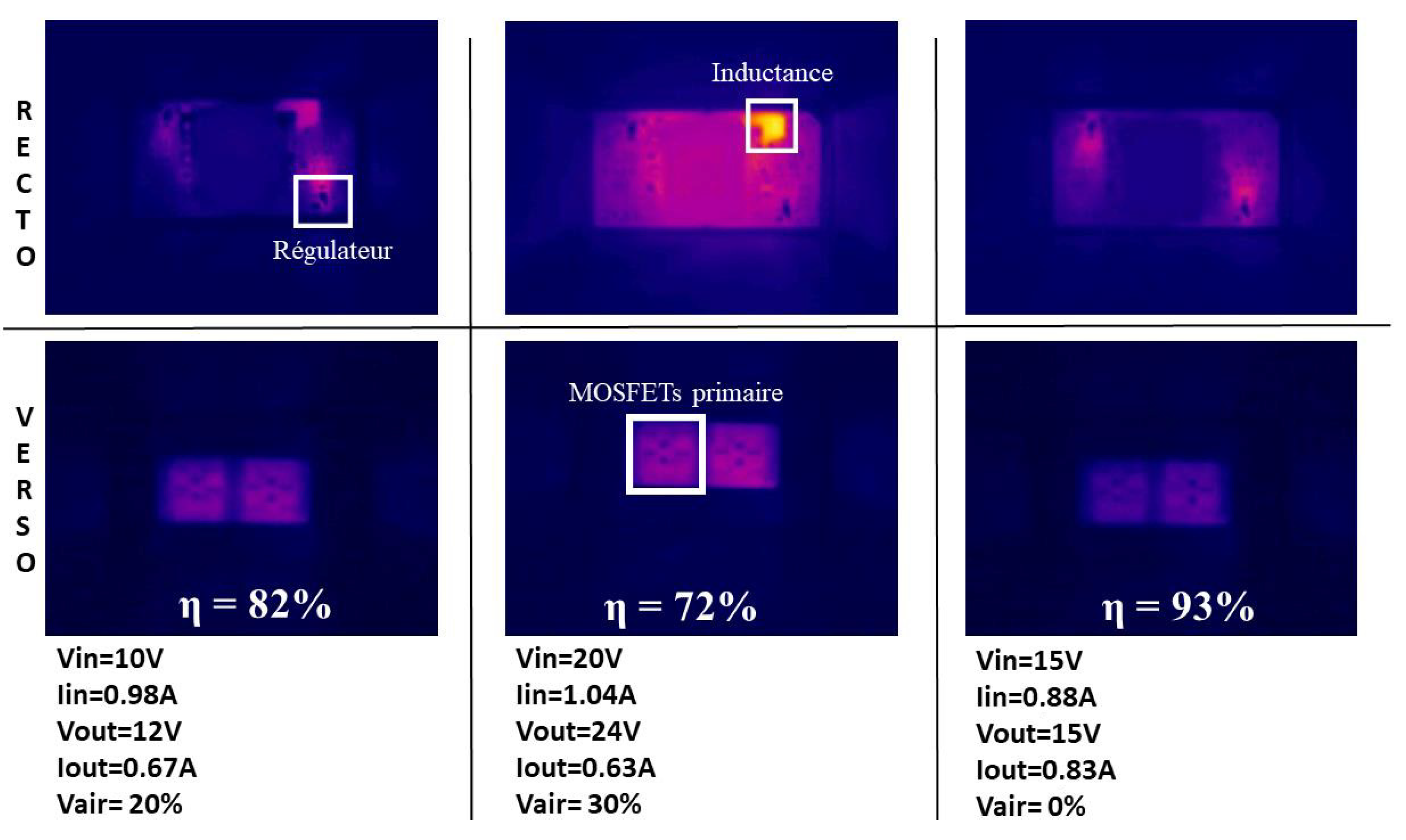
- Data collection of temperature: data is collected through thermal imaging and test benches to replicate real operational conditions.
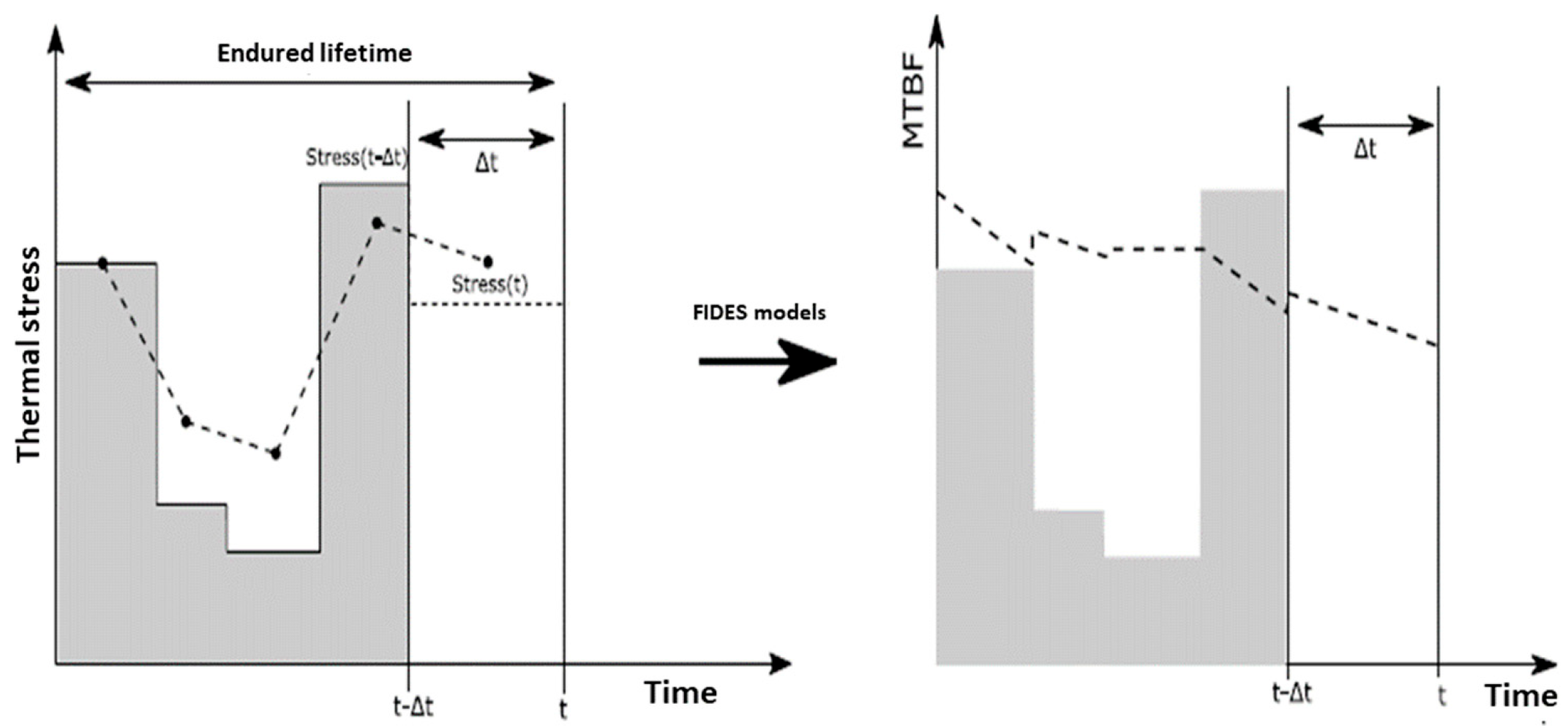
- Building statistical models: the collected thermal data will be used to construct statistical models, combining empirical results and FIDES reliability models.
- Integration into the converter microcontroller: the improved FIDES reliability models are integrated into the converter’s microcontroller to track the remaining lifespan of each component based on the operating conditions of the converter.
3.5. The Description of the Methodology
3.5.1. Collecting Data

3.5.2. Component Temperature Models’ Creation
3.5.3. Real-Time Predictive Algorithm
4. The Impact of Disassembly on the Remaining Lifetime
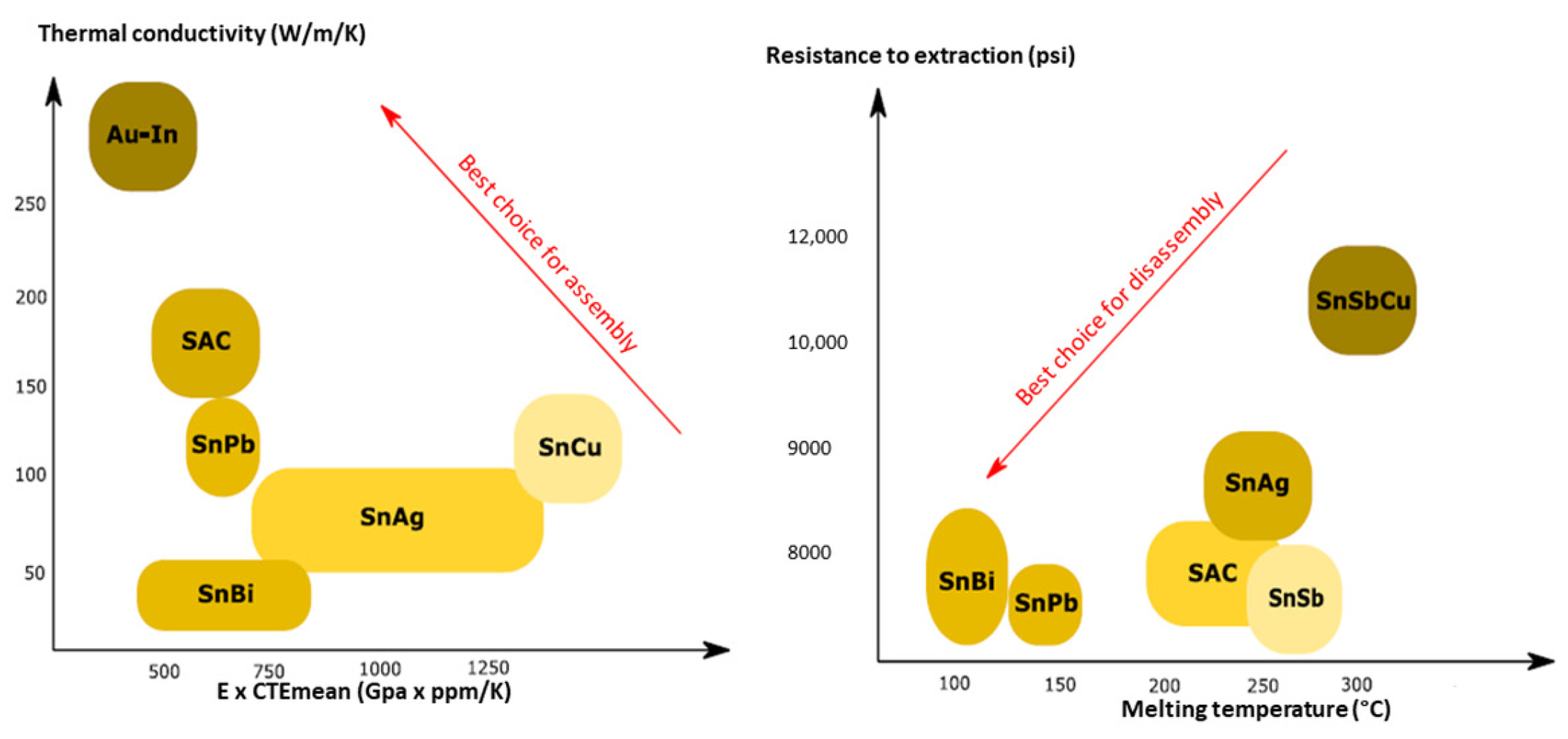
4.1. Disassembly Methods
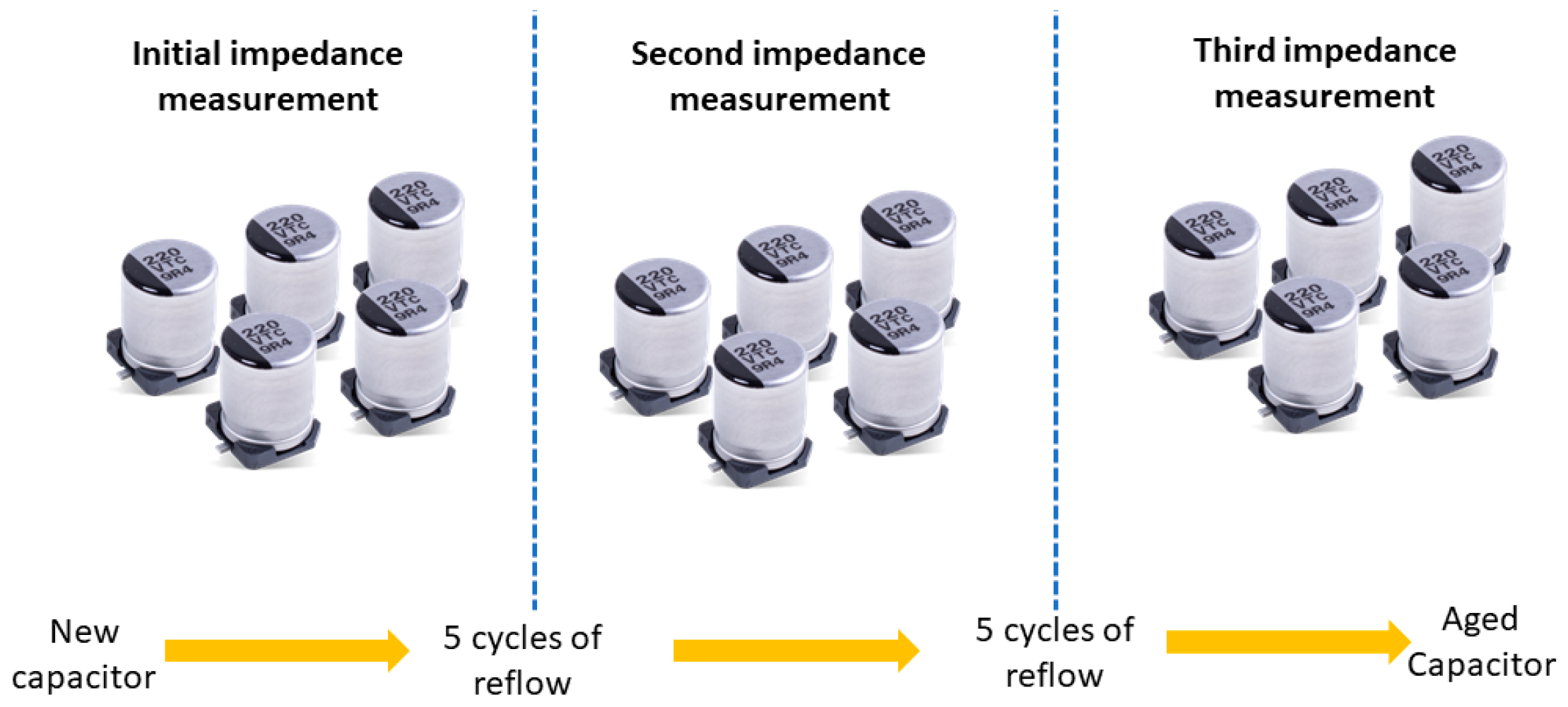
- Preheating Phase: The PCB temperature gradually rises from ambient temperature to ~150 °C, with a controlled ramp-up rate (0.75 °C to 2 °C per second). This step prevents thermal shock and eliminates residual chemicals.
- Soaking Phase: Temperature stabilization ensures uniform heating across all components. During this phase, the flux in the solder paste activates, removing oxides from component leads and PCB pads to enhance electrical contact.
- Reflow Phase: Solder particles melt and form metallurgical bonds between component pins and copper traces. The peak temperature must be high enough to liquefy the solder while avoiding component degradation.
- Cooling Phase: The PCB naturally cools using a fan, allowing the solder to solidify. This phase is critical for assembly but less relevant for disassembly, where precise cooling control is unnecessary.
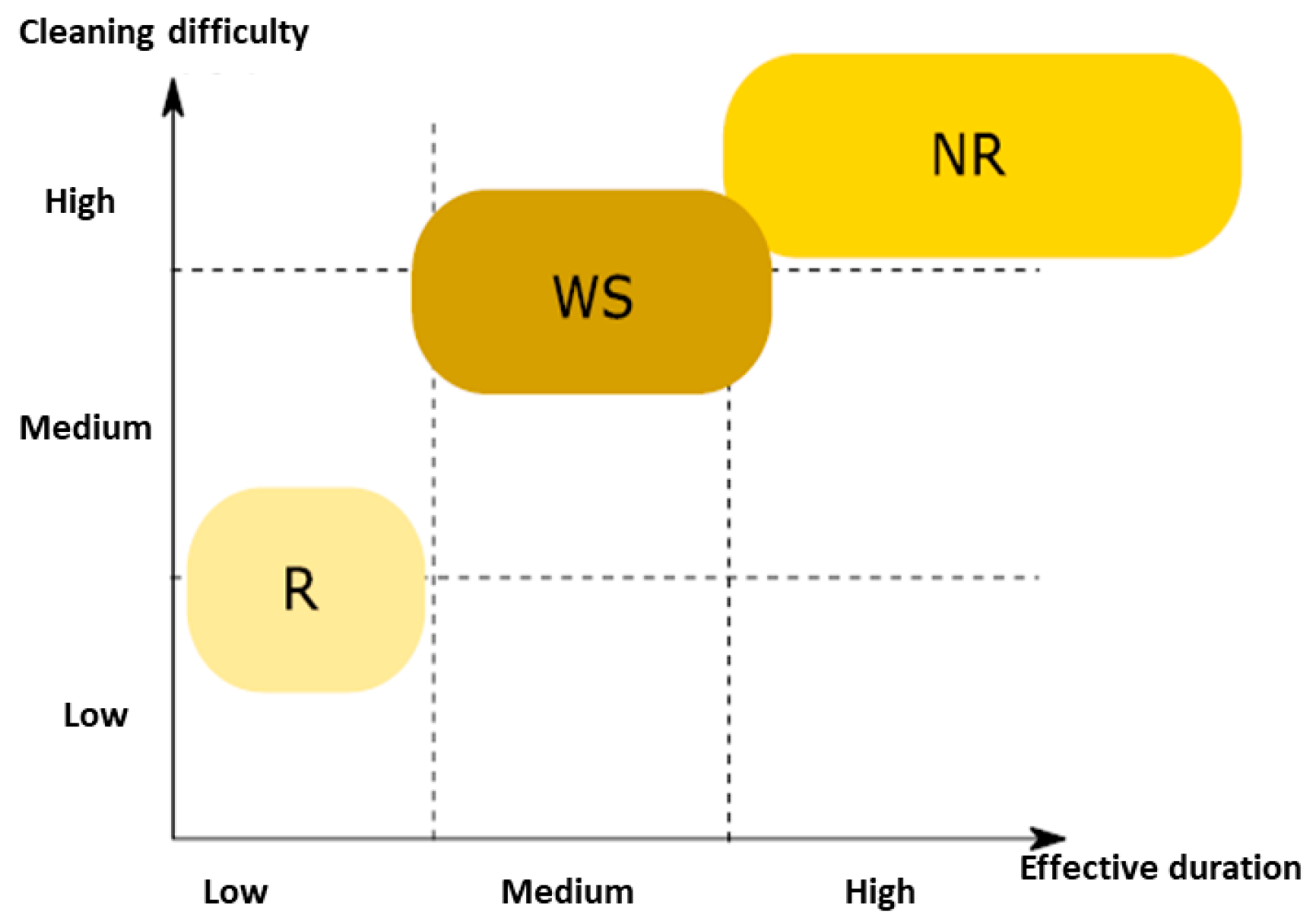
- Rosin-based (R): requires minimal cleaning, common in consumer electronics.
- Inorganic acid flux (NR): leaves minimal residue, used in industrial applications.
- Water-soluble (WS): easily washable, environmentally preferred (less polluting) but requires additional cleaning steps.
4.2. The Impact of Disassembly on SMD Electrolytic Capacitors
4.2.1. Aging Mechanisms of Capacitors
- A hermetically sealed aluminum casing to prevent electrolyte leakage.
- Stacked aluminum foils and insulating layers impregnated with electrolytes.
- A rubber sealing disc and a cover to maintain integrity.
- Two terminals: one connecting the anode foils and the other the cathode foils.
- Breakdown of the oxide dielectric layer.
- Electrolyte depletion and changes in its properties.
- Leakage of electrolytes through seals or self-regeneration of the oxide layer.
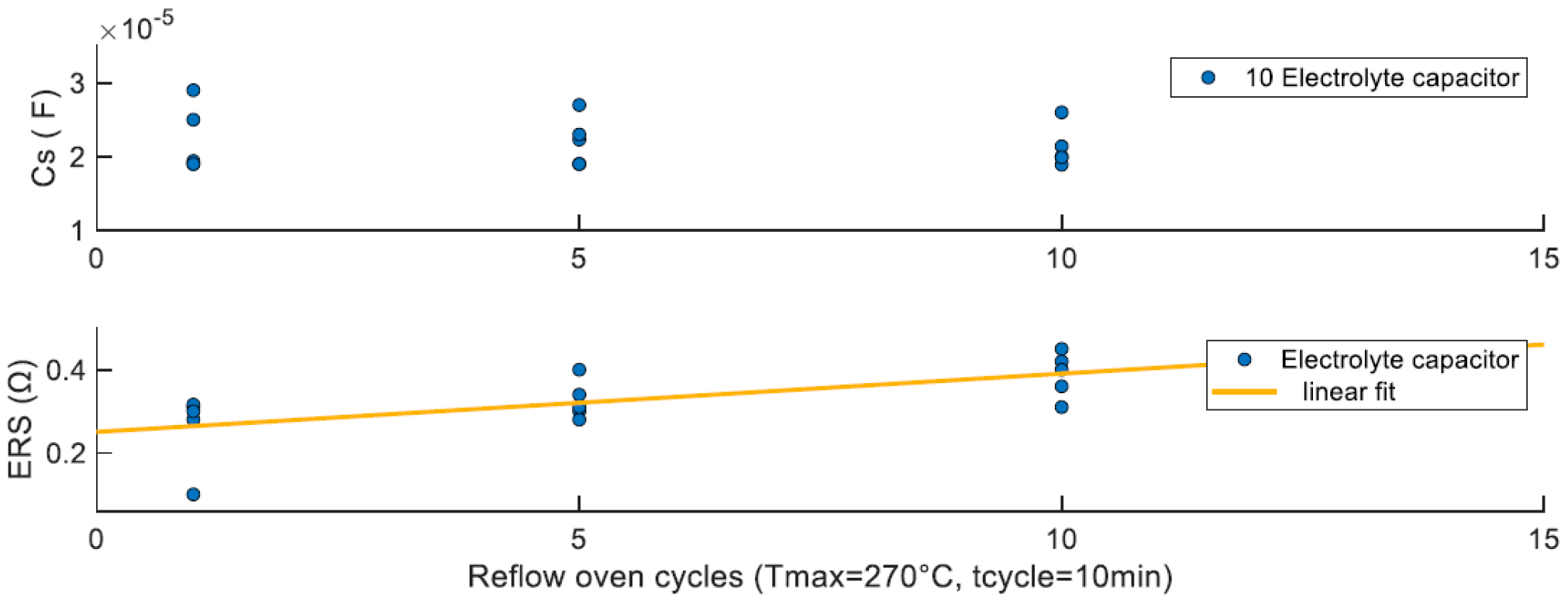
- Increase in ESR–indicating higher internal resistance.
- Decrease in capacitance–resulting from dielectric deterioration.
4.2.2. Aging Experimental Setup

| Parameter | Value |
|---|---|
| Capacity | 33 μF |
| Maximum temperature | 105 °C |
| Nominal voltage | 7 V |
| ESR max (120 Hz, 20 °C) | 300 m O hm |
| Theoretical MTBF | 5 years |

4.3. The Impact of Disassembly on a SMD HF Planar Transformer
4.3.1. Aging Mechanisms and Experimental Results
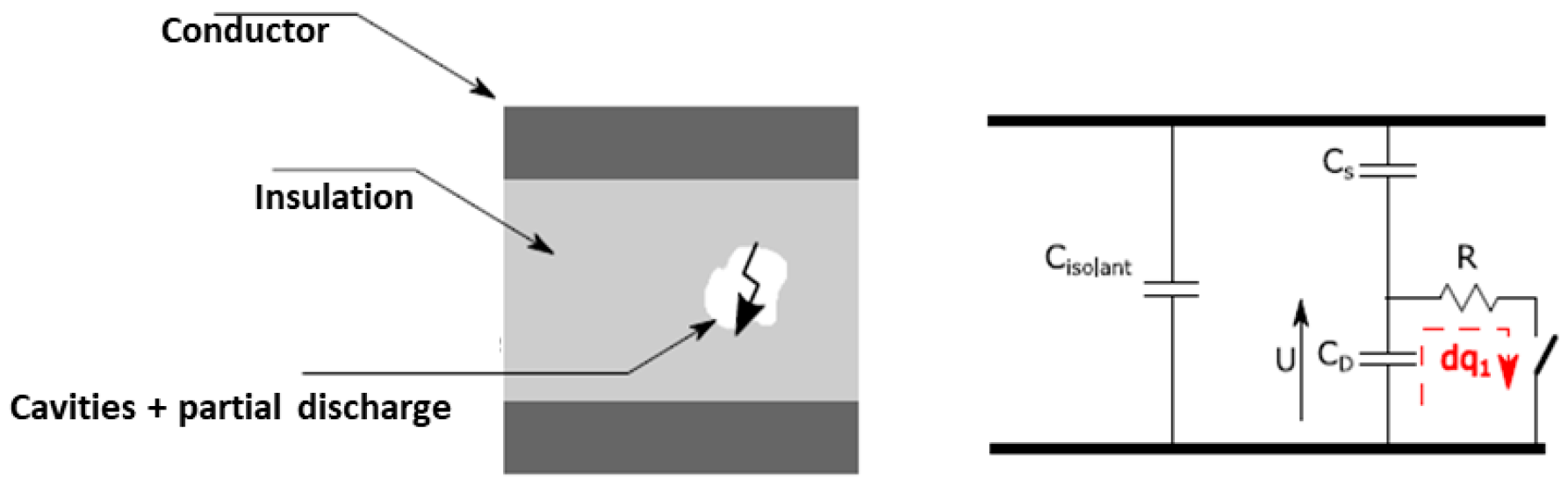
- Insulation Breakdown: Insulation materials (e.g., epoxy resin, PVC, mica) degrade over time due to temperature stress, leading to cracks and reduced dielectric properties. Partial discharge tests (Figure 13), primary-secondary capacitance, and parallel resistance measurements can indicate insulation wear.
- Magnetic Core Aging: The ferrite core is thermally stable, but the adhesive bonding between core sections deteriorates over time, causing misalignment. This misalignment alters the magnetizing inductance, which serves as an indicator of core degradation.
- Winding and PCB Deterioration: Copper winding insulation weakens, and PCB deformations due to heat lead to microcracks. The oxidation of exposed copper and solder joint movement affect transformer structure and leakage inductance. Resonance frequency changes can indicate dielectric aging of windings.
4.3.2. Experimental Set Up
- Magnetizing inductance (measured with an impedance meter with an open-circuited secondary).
- Leakage inductance (measured with a short-circuited secondary).
- Primary-to-secondary capacitance (measured with both windings short-circuited).
- Partial discharge inception voltage, which indicates insulation degradation under high voltage.
- Magnetizing inductance decreased by ~20% after 20 cycles.
- Leakage inductance and primary-secondary capacitance showed no significant trend due to initial component variability and measurement noise.
- A partial discharge inception voltage dropped by ~20%, indicating insulation degradation.
4.3.3. Link with the Remaining Lifetime
5. Conclusions and Discussion
- Reuse Rate: An empirical value based on repair experiments, indicating how many times a component can be successfully reused. This factor integrates functional complexity into the assessment.
- Environmental Impact and Reuse Costs: a theoretical indicator combining disassembly tools, time, energy consumption, and environmental footprint.
- Remaining Lifetime (RLT): a component retains its value if its remaining lifespan is significant.
- FIDES failure models, an empirical reliability calculation framework for electronic components and systems.
- Experimental methods using infrared (IR) thermal imaging to capture component degradation.
- Residual Value Function Modeling: A generic function for residual value estimation is introduced, incorporating parameters like mean time between failures (MTBF). Inspired by methodologies in the automotive sector, this quantification aids end-of-use decision-making during diagnostic phases.
- Reuse Rate Estimation for Passive Components: A method for estimating the reuse rate of passive components is proposed. Accelerated aging tests, particularly reflow oven cycling, provide degradation trends. The results suggest that robust components, like transformers, may outlast their datasheet specifications, whereas fragile components, such as electrolytic capacitors, degrade rapidly, making their reuse challenging.
- Real-Time MTBF Estimation for Power Converters: A real-time MTBF estimation method is developed for standard power converters. This involves the following:
- Pre-use temperature data collection using thermal cameras and test benches.
- Statistical modeling based on collected data, integrated with FIDES reliability models and empirical results.
- Embedded implementation in the converter’s microcontroller for continuous health monitoring, allowing the real-time tracking of each component’s remaining lifespan.
Author Contributions
Funding
Institutional Review Board Statement
Informed Consent Statement
Data Availability Statement
Acknowledgments
Conflicts of Interest
References
- Steffen, W.; Sanderson, A.; Tyson, P.; Jäger, J.; Matson, P.; Moore, B.; Oldfield, F.; Richardson, K.; Schellnhuber, H.J.; Turner, B.L.; et al. Global Change and the Earth System: A Planet Under Pressure; Springer Science & Business Media: Berlin/Heidelberg, Germany, 2005. [Google Scholar] [CrossRef]
- Diederen, A.M. Metal minerals scarcity: A call for managed austerity and the elements of hope. TNO Def. Secur. Saf. 2009, 2. [Google Scholar]
- GROW.R.2.DIR. Critical Raw Materials Resilience: Charting a Path Towards Greater Security and Sustainability. 2020. Available online: https://eur-lex.europa.eu/legal-content/EN/TXT/?uri=CELEX:52020DC0474 (accessed on 8 December 2025).
- Rockström, J.; Steffen, W.; Noone, K.; Persson, Å.; Chapin, F.S., III; Lambin, E.; Lenton, T.M.; Scheffer, M.; Folke, C.; Schellnhuber, H.J.; et al. Planetary boundaries: Exploring the safe operating space for humanity. Ecol. Soc. 2009, 14, 32. [Google Scholar] [CrossRef]
- Fiona, V. The Oil Crisis; Routledge: Abingdon, UK, 2016. [Google Scholar]
- Lenton, T.M.; Rockström, J.; Gaffney, O.; Rahmstorf, S.; Richardson, K.; Steffen, W.; Schellnhuber, H.J. Climate tipping points—Too risky to bet against. Nature 2019, 575, 592–595. [Google Scholar] [CrossRef]
- Sachs, J.; Kroll, C.; Lafortune, G.; Fuller, G.; Woelm, F. Sustainable Development Report 2022; Cambridge University Press: Cambridge, UK, 2022. [Google Scholar]
- S & P Global. The Future of Copper: Will the Looming Supply Gap Short-Circuit the Energy Transition? IHS Markit. 2022. Available online: https://cdn.ihsmarkit.com/www/pdf/1022/The-Future-of-Copper_Full-Report_SPGlobal.pdf (accessed on 8 December 2025).
- Egloff, E. Le marché de l’automobile d’occasion rembraye. Le Figaro, 21 April 2011. [Google Scholar]
- Gupta, S.M.; Güngör, A.; Govindan, K.; Özceylan, E.; Kalaycı, C.B.; Piplani, R. Responsible & sustainable manufacturing. Int. J. Prod. Res. 2020, 58, 7181–7182. [Google Scholar] [CrossRef]
- Feltham, G.A.; Ohlson, J.A. Uncertainty Resolution and the Theory of Depreciation Measurement. J. Account. Res. 1996, 34, 209–234. [Google Scholar] [CrossRef]
- Wan, J.; Qiu, Q. Depreciation Rate by Industrial Sector and Profit after Tax in China. Chin. Econ. 2022, 55, 111–128. [Google Scholar] [CrossRef]
- Boiteux, M. L’amortissement dépréciation des automobiles. Rev. Stat. Appliquée 1956, 4, 57–73. [Google Scholar]
- Cote Argus RENAULT Kangoo, la Valeur de Référence—L’argus. Available online: https://www.largus.fr/cote/voitures-particulieres/renault/kangoo.html (accessed on 8 December 2025).
- Shafiulla, B. Marketing Strategies of Car Makers in the Pre-Owned Car Market in India. Indian J. Mark. 2012, 42, 8–16. [Google Scholar]
- Prado, S. The European used-car market at a glance: Hedonic resale price valuation in automotive leasing industry. Econ. Bull. 2009, 29, 2086–2099. [Google Scholar]
- Sentenac-Chemin, E.; Lantz, F. Analyse Des Tendances et des Ruptures Surle Marche Automobile Français; IFP School: Rueil-Malmaison, France, 2010. [Google Scholar]
- Engel, H.; Hertzke, P.; Siccard, G. Second-Life EV Batteries: The Newest Value Pool in Energy Storage; McKinsey & Company: New York, NY, USA, 2019. [Google Scholar]
- Coron, E. Diagnostic d’État de Santé des Batteries au Lithium Utilisées dans les Véhicules Électriques et Destinées à des Applications en Seconde Vie. Ph.D. Thesis, Grenoble Alpes University, Grenoble, France, 2021. [Google Scholar]
- Reid, G.; Julve, J. Second Life-Batteries as Flexible Storage for Renewables Energies. 2016. Available online: https://www.acamedia.info/sciences/sciliterature/globalw/reference/bee/SecondLife-Batterien_als_flexible_EE-Speicher.pdf (accessed on 8 December 2025).
- European Commission. Value Management Handbook; Publications Office of the European Union: Luxembourg, 1995; Available online: https://op.europa.eu/en/publication-detail/-/publication/c6199b83-a368-4853-8bed-bc678404221e (accessed on 8 December 2025).
- Montoya-Bedoya, S.; Sabogal-Moncada, L.A.; Garcia-Tamayo, E.; Martínez-Tejada, H.V. A circular economy of electrochemical energy storage systems: Critical review of SOH/RUL estimation methods for second-life batteries. Green Energy Environ. 2020, 10. [Google Scholar] [CrossRef]
- Serzhena, T. The circular economy on South Korea. The case of Samsung. Hung. Agric. Eng. 2019, 36, 75–80. [Google Scholar] [CrossRef]
- Davis, N.T.; Hoomaan, E.; Agrawal, A.K.; Sanayei, M.; Jalinoos, F. Foundation reuse in accelerated bridge construction. J. Bridge Eng. 2019, 24, 050190. [Google Scholar] [CrossRef]
- Hawkes, A.G. A bivariate exponential distribution with applications to reliability. J. R. Stat. Soc. Ser. B Methodol. 1972, 34, 129–131. [Google Scholar] [CrossRef]
- McCool, J.I. Using the Weibull Distribution: Reliability, Modeling, and Inference; John Wiley & Sons: Hoboken, NJ, USA, 2012. [Google Scholar]
- Balasooriya, U.; Balakrishnan, N. Reliability sampling plans for lognormal distribution, based on progressively-censored samples. IEEE Trans. Reliab. 2000, 49, 199–203. [Google Scholar] [CrossRef]
- Chen, Z.; Guerrero, J.M.; Blaabjerg, F. A review of the state of the art of power electronics for wind turbines. IEEE Trans. Power Electron. 2009, 24, 1859–1875. [Google Scholar] [CrossRef]
- Lall, P.; Shirgaokar, A.; Arunachalam, D. Norris–Landzberg Acceleration Factors and Goldmann Constants for SAC305 Lead-Free Electronics. J. Electron. Packag. 2012, 134, 031008. [Google Scholar] [CrossRef]
- Peck, D.S. Comprehensive model for humidity testing correlation. In Proceedings of the 24th International Reliability Physics Symposium, Anaheim, CA, USA, 1–3 April 1986; pp. 44–50. [Google Scholar]
- D’ANtuono, P. An analytical relation between the Weibull and Basquin laws for smooth and notched specimens and application to constant amplitude fatigue. Fatigue Fract. Eng. Mater. Struct. 2020, 43, 991–1004. [Google Scholar] [CrossRef]
- Li, D.; Li, X. Study of degradation in switching mode power supply based on the theory of PoF. In Proceedings of the International Conference Computing Science and Service Systems, Nanjing, China, 11–13 August 2012; pp. 1976–1980. [Google Scholar]
- Jiang, N.; Zhang, L.; Liu, Z.Q.; Sun, L.; Long, W.M.; He, P.; Xiong, M.Y.; Zhao, M. Reliability issues of lead-free solder joints in electronic devices. Sci. Technol. Adv. Mater. 2019, 20, 876–901. [Google Scholar] [CrossRef]
- Susinni, G.; Rizzo, S.A.; Iannuzzo, F. Two Decades of Condition Monitoring Methods for Power Devices. Electronics 2021, 10, 683. [Google Scholar] [CrossRef]
- Agarwal, M.; Paul, B.C.; Zhang, M.; Mitra, S. Circuit failure prediction and its application to transistor aging. In Proceedings of the 25th IEEE VLSI Test Symposium (VTS’07), Berkeley, CA, USA, 6–10 May 2007; pp. 277–286. [Google Scholar]
- Parsley, M. The use of thermochromics liquid crystals in research applications, thermal mapping and non-destructive testing. In Proceedings of the Seventh IEEE Semiconductor Thermal Measurement and Management Symposium, Phoenix, AZ, USA, 12–14 February 1991. [Google Scholar]
- Brekel, W.; Duetemeyer, T.; Puk, G.; Schilling, O. Time Resolved in situ Tvj Measurements of 6.5 kV IGBTs during Inverter Operation. In Proceedings of the PCIM Europe 2009: International Exhibition and Conference for Power Electronics, Intelligent Motion and Power Quality, Nuremberg, Germany, 12–14 May 2009. [Google Scholar]
- Motto, E.R.; Donlon, J.F. IGBT module with user accessible on-chip current and temperature sensors. In Proceedings of the Twenty-Seventh Annual IEEE Applied Power Electronics Conference and Exposition (APEC), Orlando, FL, USA, 5–9 February 2012; pp. 176–181. [Google Scholar]
- Ka, I.; Avenas, Y.; Dupont, L.; Vafaei, R.; Thollin, B.; Crebier, J.C.; Petit, M. Instrumented chip dedicated to semiconductor temperature measurements in power electronic converters. In Proceedings of the IEEE Energy Conversion Congress and Exposition (ECCE), Milwaukee, WI, USA, 18–22 September 2016; pp. 1–8. [Google Scholar]
- Jasperneite, J.; Sauter, T.; Wollschlaeger, M. Why We Need Automation Models: Handling Complexity in Industry 4.0 and the Internet of Things. IEEE Ind. Electron. Mag. 2020, 14, 29–40. [Google Scholar] [CrossRef]
- Cheraghi, M.; Karimi, M.; Booin, M.B. An investigation on acoustic noise emitted by induction motors due to magnetic sources. In Proceedings of the 9th Annual Power Electronics, Drives Systems and Technologies Conference (PEDSTC), Tehran, Iran, 13–15 February 2018; pp. 104–109. [Google Scholar]
- Luo, H.; Wang, X.; Zhu, C.; Li, W.; He, X. Investigation and emulation of junction temperature for high-power IGBT modules considering grid codes. IEEE J. Emerg. Sel. Top. Power Electron. 2018, 6, 930–940. [Google Scholar] [CrossRef]
- Hunger, T.; Schilling, O. Numerical investigation on thermal crosstalk of silicon dies in high voltage IGBT modules. In Proceedings of the PCIM Europe 2009: International Exhibition and Conference for Power Electronics, Intelligent Motion and Power Quality, Nuremberg, Germany, 27–29 May 2008. [Google Scholar]
- Ceccarelli, L.; Luo, H.; Iannuzzo, F. Investigating SiC MOSFET body diode’s light emission as temperature-sensitive electrical parameter. Microelectron. Reliab. 2018, 88–90, 627–630. [Google Scholar] [CrossRef]
- Fischer, K.; Stalin, T.; Ramberg, H.; Wenske, J.; Wetter, G.; Karlsson, R.; Thiringer, T. Field-Experience Based Root-Cause Analysis of Power Converter Failure in Wind Turbines. IEEE Trans. Power Electron. 2015, 30, 2481–2492. [Google Scholar] [CrossRef]
- Peyghami, S.; Palensky, P.; Blaabjerg, F. An overview on the reliability of modern power electronic based power systems. IEEE Open J. Power Electron. 2020, 1, 34–50. [Google Scholar] [CrossRef]
- Kauzlarich, J.J. The Palmgren-Miner rule derived. Tribol. Ser. 1989, 14, 175–179. [Google Scholar]
- Rahmani, B.; Rio, M.; Lembeye, Y.; Crebier, J.-C. Design for reuse: Residual value monitoring of power electronics’ components. Procedia CIRP 2022, 109, 140–145. [Google Scholar] [CrossRef]
- Rahmani, B.; Lembeye, Y.; Crebier, J.-C.; Rio, M. Analysis of passive power components reuse. In Proceedings of the PCIM Europe Digital Days 2021: International Exhibition and Conference for Power Electronics, Intelligent Motion, Renewable Energy and Energy Management, Nuremberg, Germany, 3–7 May 2021; VDE Verlag: Berlin, Germany, 2021; pp. 1–8. [Google Scholar]
- IEC 60270; High-Voltage Test Techniques—Charge-Based Measurement of Partial Discharges. IEC: Geneva, Switzerland, 2025.
- IEC 60076–12; Power Transformers—Part 12: Loading Guide for Dry-Type Power Transformers. IEC: Geneva, Switzerland, 2008.


| Type of Condition Monitoring Methods | The Method | Measured Quantity |
|---|---|---|
| Electrical methods: in contact with the component | Saturation current | Vce–Vds |
| Threshold gate voltage | Vge–Vgs | |
| On voltage | Vce–Vd | |
| Di/dt variation | The device’s current | |
| Thermal methods (with a sensor) | Thermal analysis chip (TTC) | Thermal resistance |
| Acoustic methods (no contact) | Acoustic waves | Wavelength or harmonic distortions |
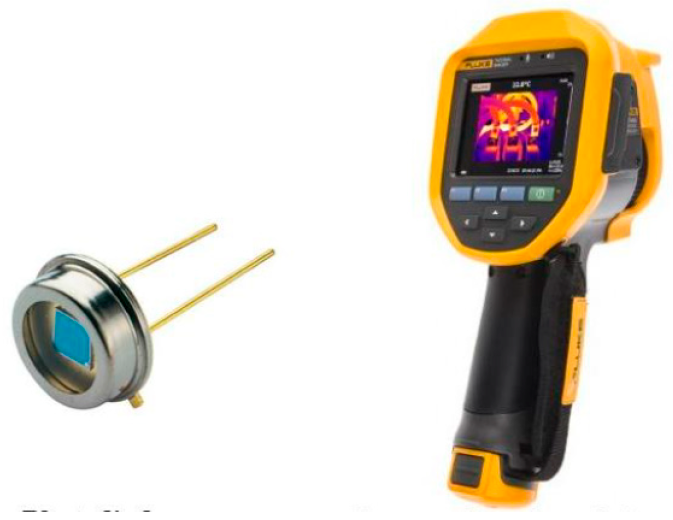
| Optical methods (no contact) | photodiodes sensors | Light intensity |
| Infrared camera | wavelength |
| Methods | Tools | Advantages | Disadvantages |
|---|---|---|---|
| Surface scraping | Pruning shears |
|
|
| Manually | Soldering iron + solder braid |
|
|
| Hot air | Hot air gun |
|
|
| Infrared ovens | Radiator + vibration |
|
|
| Soldering ovens | Reflow oven + vibration |
|
|
| Chemical | Epoxy treatment solutions or tin alloy dissolution solutions. |
|
|
| Automatic | Robotic arm |
|
|
| Type of Solder | Characteristics |
|---|---|
| Lead-based solder | Lead-containing solder alloys melt at relatively low temperatures (~180 °C). However, due to environmental concerns, lead was banned after the 2011 European RoHS directive. These alloys typically contain 60% tin and 40% lead (e.g., Sn62Pb36Ag2 or Sn63Pb37 (Indium Corporation)). |
| Lead free solder | These alloys comply with the RoHS directive and are typically composed of 90% tin. They require higher melting temperatures (up to 270 °C) and are more expensive. |
Disclaimer/Publisher’s Note: The statements, opinions and data contained in all publications are solely those of the individual author(s) and contributor(s) and not of MDPI and/or the editor(s). MDPI and/or the editor(s) disclaim responsibility for any injury to people or property resulting from any ideas, methods, instructions or products referred to in the content. |
© 2025 by the authors. Licensee MDPI, Basel, Switzerland. This article is an open access article distributed under the terms and conditions of the Creative Commons Attribution (CC BY) license.
Share and Cite
Rahmani, B.; Rio, M.; Lembeye, Y.; Crébier, J.-C. Residual Value: Predictive Lifetime Monitoring of Power Converter Components for Sustainable Reuse and Reliability. Eng 2026, 7, 2. https://doi.org/10.3390/eng7010002
Rahmani B, Rio M, Lembeye Y, Crébier J-C. Residual Value: Predictive Lifetime Monitoring of Power Converter Components for Sustainable Reuse and Reliability. Eng. 2026; 7(1):2. https://doi.org/10.3390/eng7010002
Chicago/Turabian StyleRahmani, Boubakr, Maud Rio, Yves Lembeye, and Jean-Christophe Crébier. 2026. "Residual Value: Predictive Lifetime Monitoring of Power Converter Components for Sustainable Reuse and Reliability" Eng 7, no. 1: 2. https://doi.org/10.3390/eng7010002
APA StyleRahmani, B., Rio, M., Lembeye, Y., & Crébier, J.-C. (2026). Residual Value: Predictive Lifetime Monitoring of Power Converter Components for Sustainable Reuse and Reliability. Eng, 7(1), 2. https://doi.org/10.3390/eng7010002