1. Introduction
Scapholunate instability (SLI) represents the most frequent pattern of carpal instability and a major cause of chronic wrist pain and dysfunction. It accounts for approximately 5% of wrist sprains and is commonly associated with distal radius fractures, particularly radial styloid (Chauffeur’s) fractures [
1]. SLI typically results from significant wrist trauma and involves disruption of the scapholunate interosseous ligament (SLIL), leading to progressive carpal malalignment. If untreated, persistent instability alters wrist kinematics and may culminate in scapholunate advanced collapse (SLAC), characterized by progressive radiocarpal and midcarpal degeneration [
2,
3]. The key biomechanical consequence of scapholunate ligament insufficiency is a sagittal-plane imbalance: the scaphoid tends to flex while the lunate extends, resulting in dorsal intercalated segment instability (DISI) and altered load transmission across the wrist. Restoration and maintenance of reducible alignment are therefore central goals of reconstructive procedures.
Several classification systems have been proposed to stage scapholunate instability, including arthroscopic grading (Geissler), lesion-based systems such as EWAS, and stage-based classifications such as that of Garcia-Elias [
4,
5]. While these frameworks assist in characterizing injury severity and reducibility, surgical decision-making ultimately depends on the presence of reducible malalignment and the absence of advanced degenerative changes. The main cause of SLI is falling onto an outstretched hand, which can force the wrist into an extended and radially deviated position. This results in a stretch or tear of the SLL. Clinically, patients typically report dorsal wrist pain exacerbated by activity, reduced grip strength, and mechanical clicking. On examination, the scaphoid shift (Watson) test may reproduce symptoms and demonstrate dynamic instability [
6]. Diagnosis is based on clinical assessment and imaging findings. Standard posteroanterior radiographs may reveal widening of the scapholunate interval (Terry-Thomas sign), generally defined as a gap greater than 2–3 mm. Lateral views allow evaluation of the scapholunate angle and detection of DISI deformity. Stress views may reveal dynamic instability. Advanced imaging, including CT and MRI, can further characterize ligament injury and associated carpal malalignment [
7]. Dynamic X-rays, taken while the wrist is in different positions, such as a close fist X-ray, can help identify dynamic instability, where the malalignment is only present during certain movements. CT scans and MRI scans can provide more detailed images of the bones and ligaments of the wrist and can be used to assess the extent of the damage to the SLL and surrounding structures. Various reconstructive strategies have been described for chronic, reducible SLI, including dorsal capsulodesis and tendon-based reconstructions such as three-ligament tenodesis. Although open procedures provide mechanical stability, they often require extensive soft tissue dissection and may be associated with postoperative stiffness. Conversely, anatomical tendon reconstructions increase surgical complexity and donor-site morbidity.
In this context, a limited dorsal approach aimed at reinforcing dorsal restraint while preserving soft tissue integrity may represent a balanced alternative. The purpose of this article is to describe a mini-invasive dorsal capsulodesis technique for chronic, reducible SLI, detailing indications, surgical steps, and postoperative management.
2. Materials and Methods
2.1. Surgical Technique
For the purposes of this study, chronic reducible scapholunate instability was defined as symptomatic scapholunate dissociation persisting beyond 5 weeks from injury, with radiographic widening and/or DISI pattern, but with near-anatomical reduction still achievable under fluoroscopic or intraoperative assessment. Patients with fixed DISI deformity, irreducible malalignment, SLAC stage II or higher, or advanced radiocarpal degeneration were excluded All patients were symptomatic, typically presenting with pain and functional limitation despite prior conservative treatment. Patients with irreducible deformity, fixed DISI, or advanced SLAC wrist (stage II or higher) were excluded.
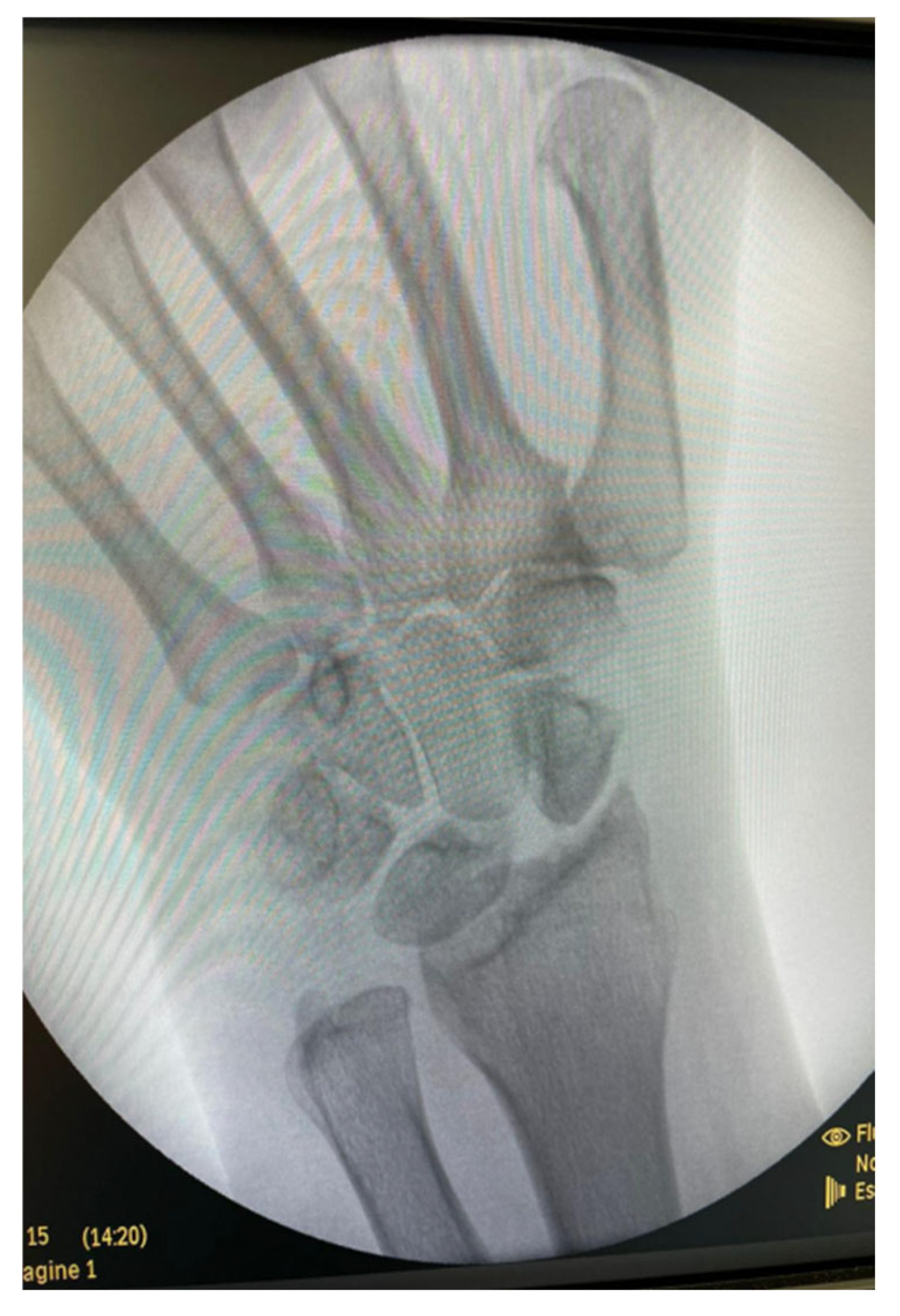
In the present case, preoperative PA radiographs confirmed scapholunate widening without radiographic evidence of advanced SLAC changes (
Figure 1).
2.2. Patient Positioning and Preparation
The patient is positioned supine with the affected upper limb placed on a radiolucent hand table. A pneumatic tourniquet is applied to the proximal arm to obtain a bloodless surgical field. A single dose of intravenous antibiotic prophylaxis is administered prior to tourniquet inflation according to institutional guidelines. After sterile preparation and draping, fluoroscopic evaluation is performed to confirm reducibility of the scapholunate interval and to assess baseline carpal alignment. Particular attention is given to identifying the dorsal aspect of the capitate under fluoroscopy, as this structure will serve as the anchoring site for capsular fixation.
2.3. Surgical Exposure
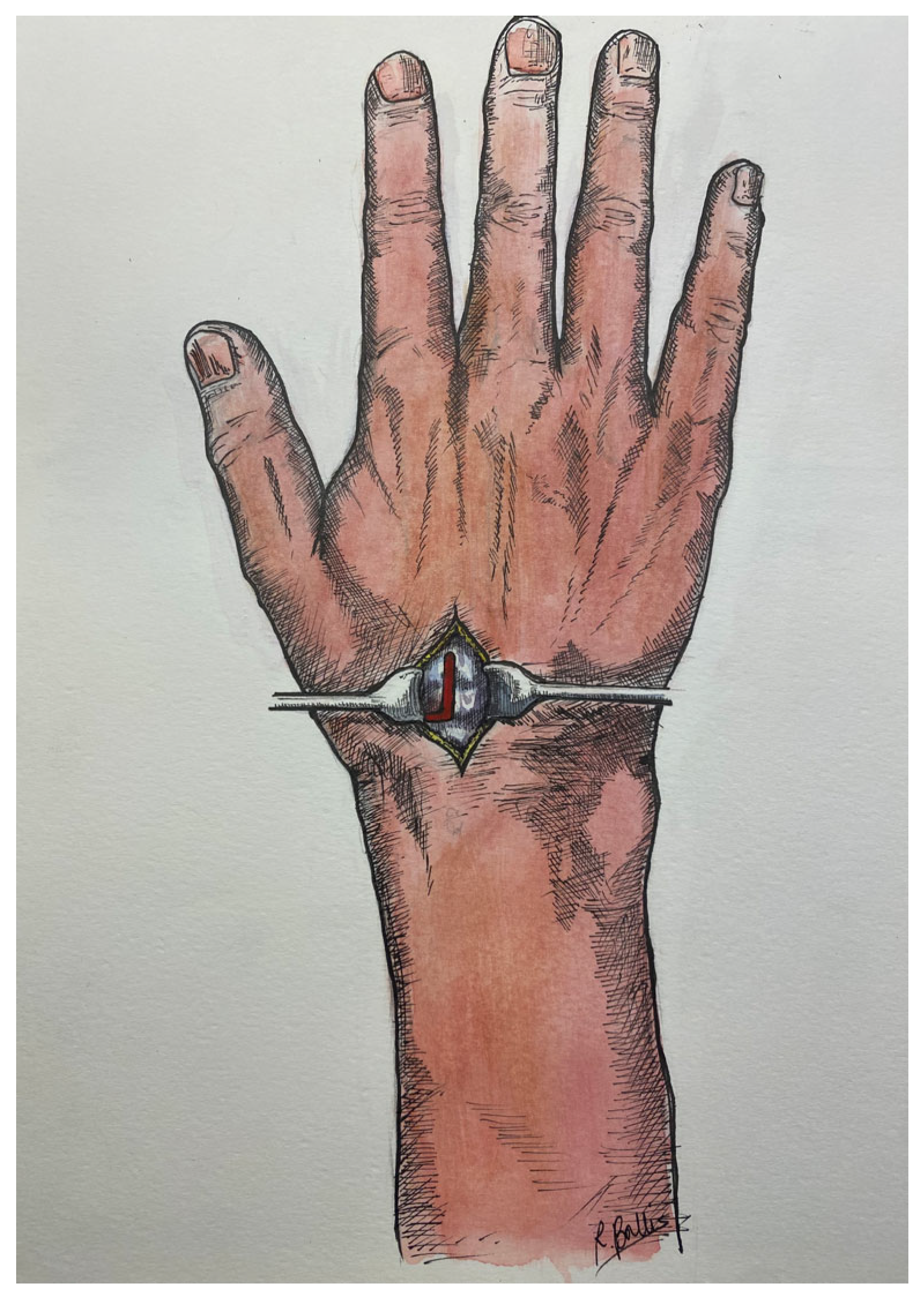
A longitudinal dorsal skin incision measuring approximately 2 cm is performed between the radiocarpal joint and the dorsal projection of the capitate (
Figure 2). The incision is centered over the scapholunate interval while maintaining sufficient distal extension to allow anchor placement. Subcutaneous dissection is carried out carefully to identify and protect superficial branches of the radial nerve. The dorsal extensor retinaculum overlying the fourth extensor compartment is exposed. The extensor digitorum communis and extensor indicis proprius tendons are identified and gently mobilized using blunt dissection. They are retracted radially and ulnarly as needed to create a safe corridor toward the dorsal capsule. Particular care is taken to avoid unnecessary stripping of soft tissues in order to preserve vascular supply and reduce postoperative fibrosis. Particular attention must be paid during surgical dissection to avoid injury to the posterior interosseous nerve and to preserve the integrity of the extensor tendons.
2.4. Capsulotomy and Flap Preparation
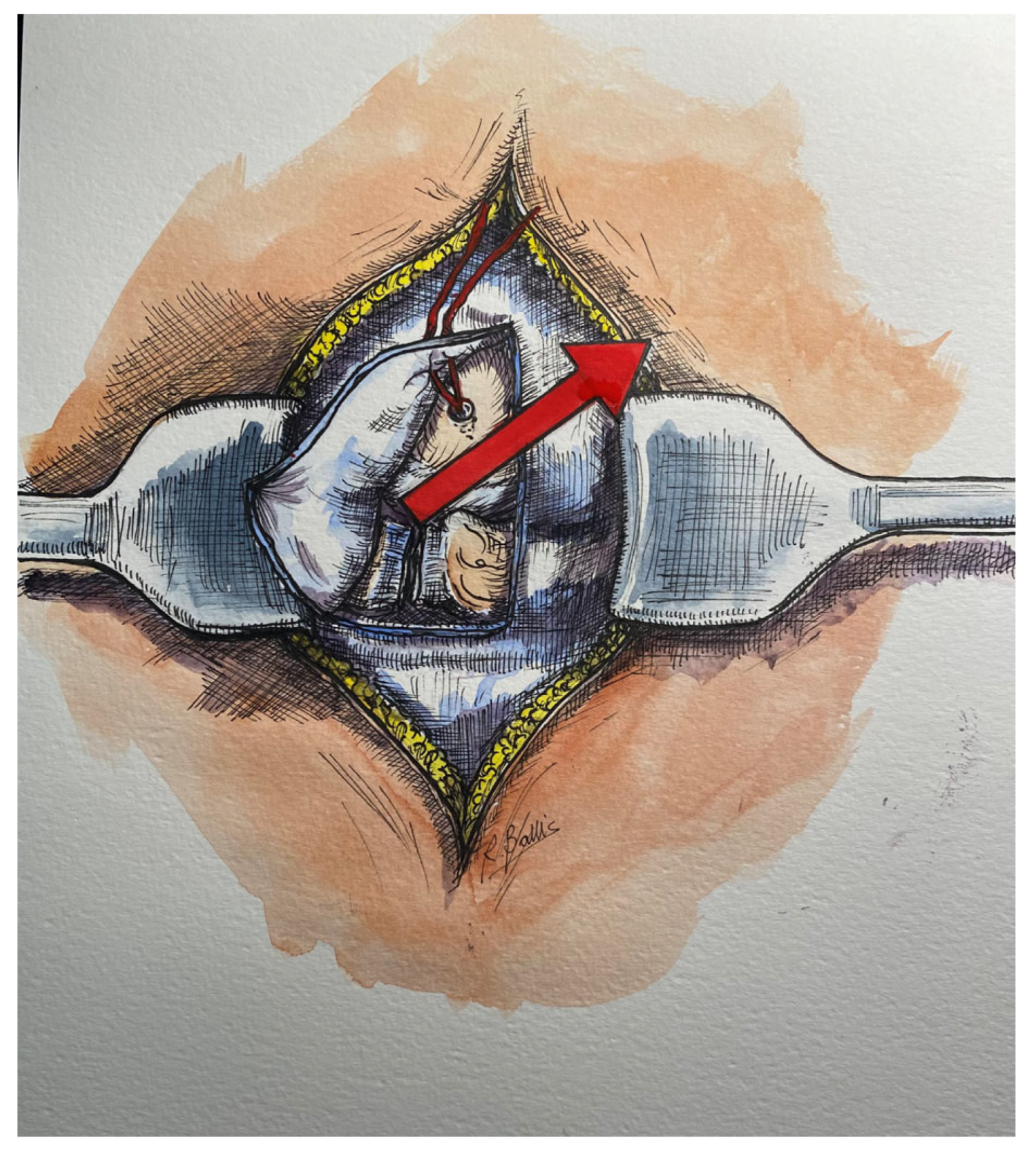
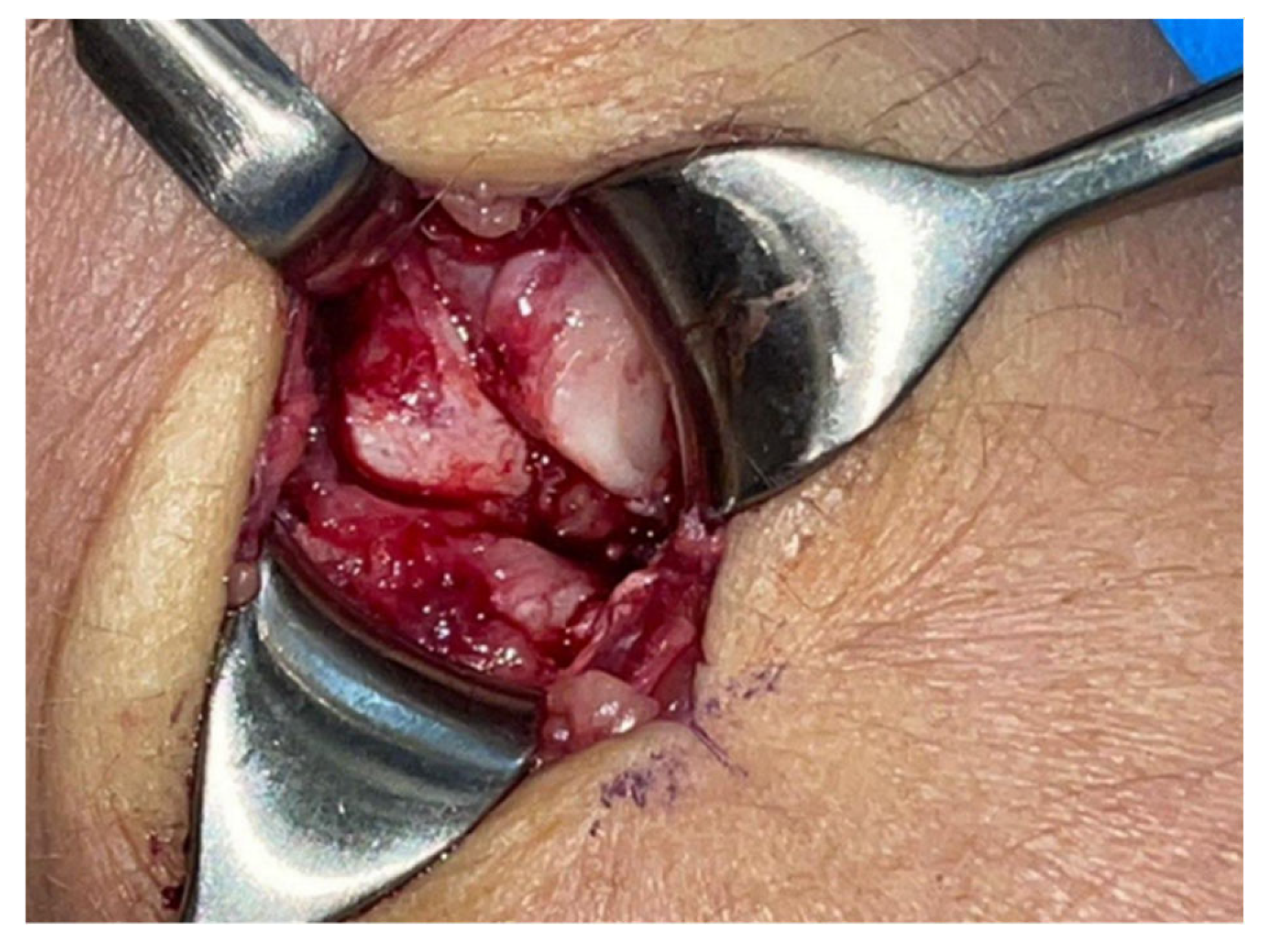
A longitudinal capsulotomy is performed directly over the scapholunate interval. The dorsal capsule is incised and a capsular flap is outlined with sufficient length and thickness to allow advancement toward the capitate (
Figure 2). At this stage, the flap is partially elevated but not fully detached, preserving tissue integrity and vascularization for subsequent tensioning. The scaphoid, lunate, and capitate are then exposed through the limited capsular window (
Figure 3).
2.5. Reduction in the Scapholunate Interval
The scapholunate interval is inspected for diastasis and rotational malalignment. Reduction is achieved using a reduction clamp or dedicated scapholunate reduction instrument placed across the scaphoid and lunate. In cases presenting with marked dorsal intercalated segment instability (DISI), a temporary joystick K-wire (1.5/2 mm) can be inserted into the lunate to facilitate correction of extension deformity before definitive fixation. Once reduction is achieved, fluoroscopic confirmation is obtained in both anteroposterior and lateral projections to verify restoration of the scapholunate angle and normalization of carpal alignment.
2.6. Temporary Fixation
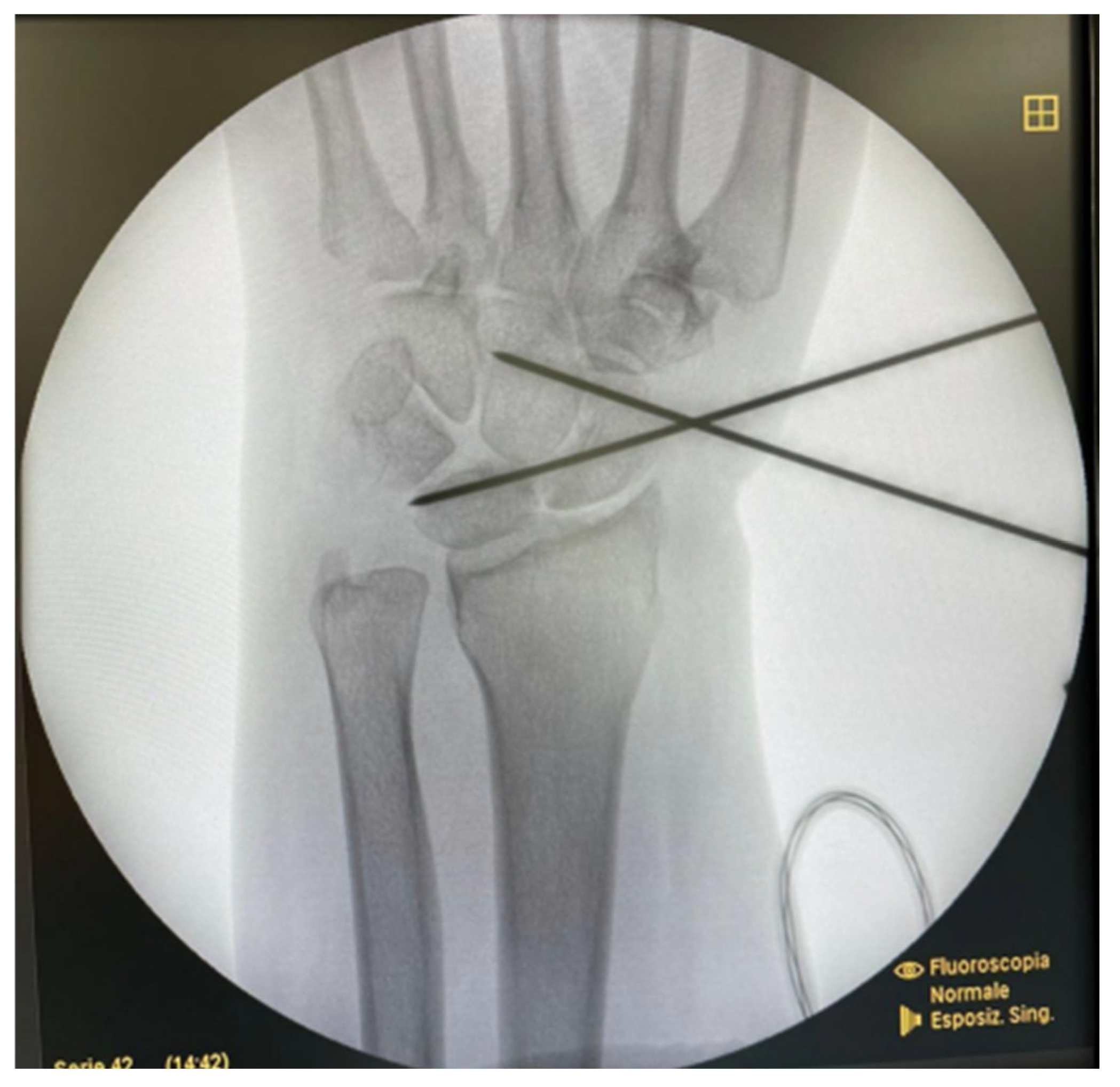
While maintaining reduction manually or with the clamp, two percutaneous 1.5 mm Kirschner wires are inserted. The first K-wire is advanced from the scaphoid into the capitate, stabilizing scaphoid rotation and counteracting flexion forces. The second K-wire is placed across the scapholunate joint to maintain intercarpal reduction. Care is taken during insertion to avoid injury to the first and second extensor compartments. Fluoroscopic imaging confirms correct trajectory and depth of both wires (
Figure 4). The K-wires are then bent and trimmed to an appropriate length to minimize soft tissue irritation while ensuring stable fixation.
2.7. Anchor Placement and Capsular Advancement
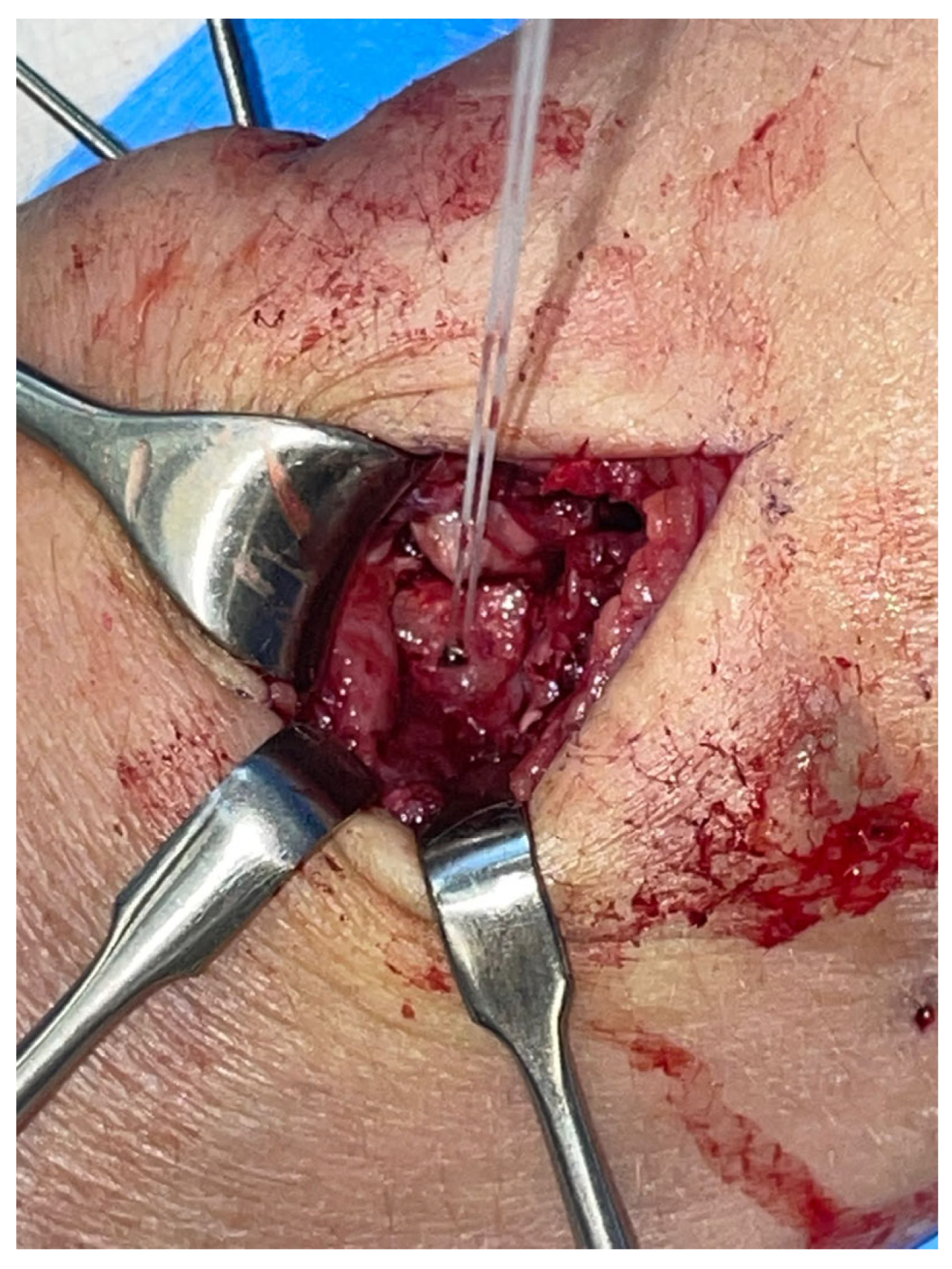
Attention is then directed to the dorsal surface of the capitate. Using a bone awl, a pilot hole is created perpendicular to the dorsal cortex to ensure optimal anchor seating. A suture anchor (Keriflex, Kerimedical, San Lazzaro di Savena, Italy) is inserted into the prepared site, achieving secure fixation within cancellous bone (
Figure 5). Proper positioning may be verified fluoroscopically if necessary.
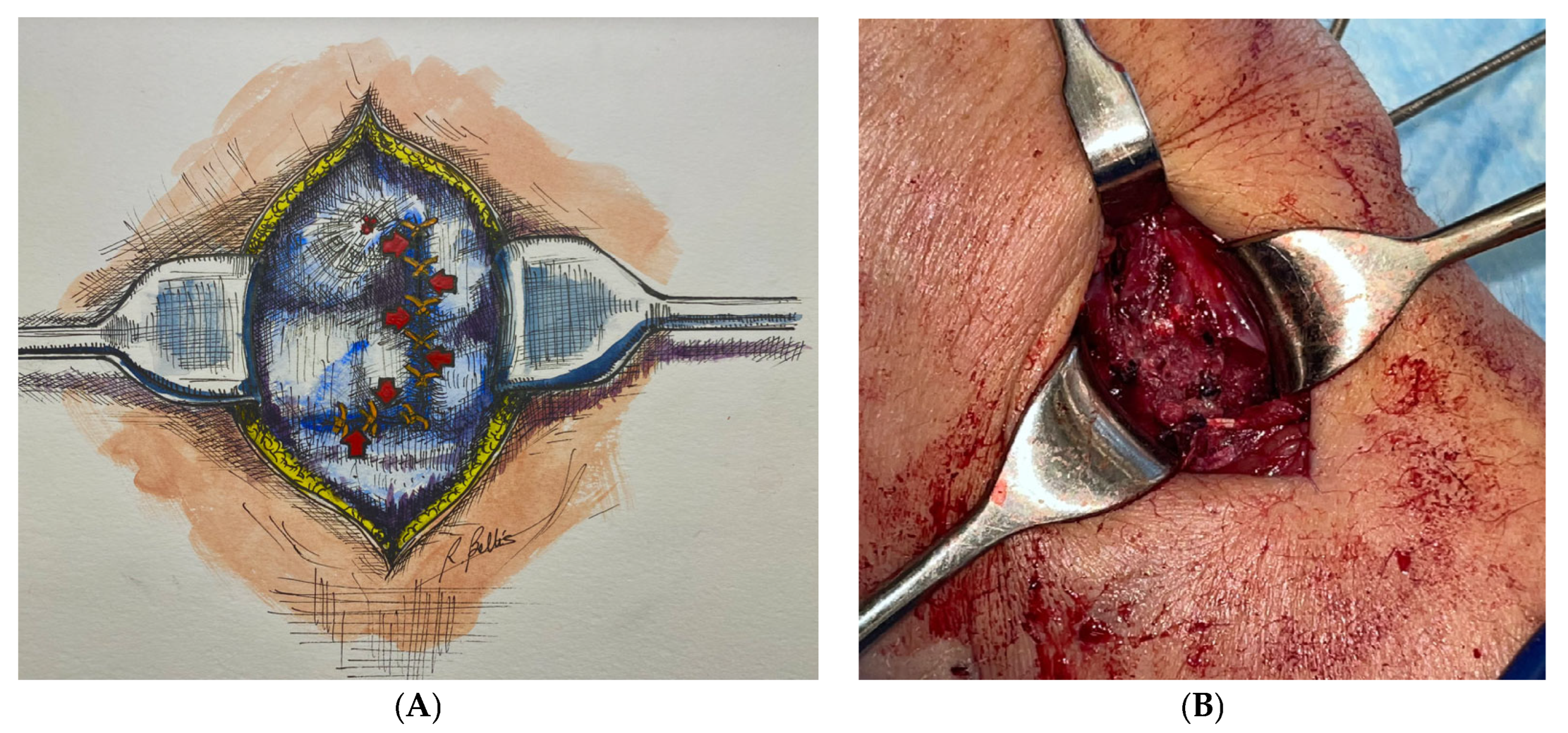
The previously prepared dorsal capsular flap is mobilized and advanced distally toward the capitate (
Figure 6). The anchor sutures are passed through the capsular tissue and tied under controlled tension (
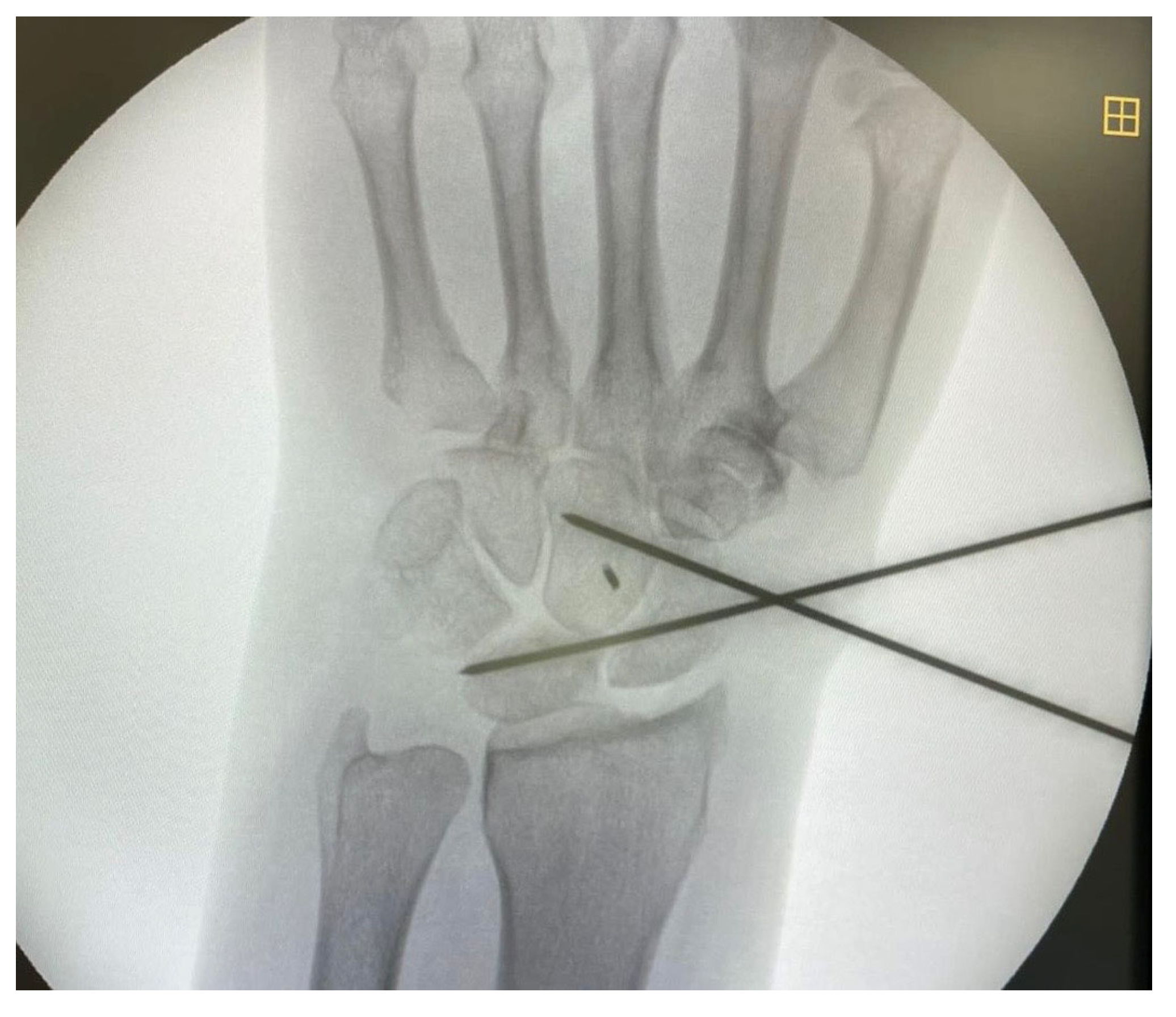
Figure 7). This advancement reinforces the dorsal capsuloligamentous complex and functions as a checkrein to limit pathological scaphoid flexion. Particular attention is paid to tension calibration: excessive tightening may restrict wrist flexion, whereas insufficient tension may compromise stability. In selected cases, controlled thermal shrinkage of the capsule may be performed to enhance capsular tightening and improve tissue adherence. Final fluoroscopic assessment is performed to confirm maintenance of reduction and correct positioning of the K-wires and anchor construct (
Figure 8).
2.8. Closure and Postoperative Management
The dorsal capsule and extensor retinaculum are repaired anatomically. Skin closure is performed using intradermal sutures, with additional reinforcement stitches placed at anchor exit sites when necessary to reduce tension. A well-molded antebrachial metacarpal (ABM) cast is applied with the wrist positioned in neutral or slight extension to optimize ligament tension and protect the repair. Kirschner wires are maintained for approximately three weeks to allow capsular healing and adaptation to the new biomechanical constraints. After wire and cast removal, a structured rehabilitation program is initiated, focusing on progressive restoration of wrist range of motion and gradual strengthening. At 3 weeks postoperatively, patients began active and assisted range-of-motion exercises under supervision. From this time point, patients were allowed free wrist mobilization within pain limits. Adjunctive physiotherapy, including ultrasound therapy, was also initiated at this stage. Progressive strengthening exercises were introduced after 6–8 weeks. Return to sports and higher-demand activities was permitted from the third postoperative month, depending on clinical progression.
3. Case Series
In addition to the technical description, a retrospective review of a consecutive series of patients treated with this technique at our institution was performed. To provide mid-term outcome data, we analyzed the first consecutive patients with a minimum follow-up of 3 years.
Inclusion criteria were patients presenting with chronic, reducible scapholunate instability. Chronic instability was defined as symptoms persisting beyond 5 weeks from injury, with radiographic evidence of scapholunate dissociation and reducible carpal alignment.
Exclusion criteria included acute injuries, irreducible deformities, advanced degenerative changes (SLAC stage II or higher), and insufficient follow-up.
4. Results
In a preliminary series, 10 patients treated with this technique and with a minimum follow-up of 3 years were included in the analysis, with a mean follow-up of approximately 4 years. Patients were followed clinically and radiographically at 1, 3, 6, and 12 months postoperatively, and annually thereafter.
The procedure was technically feasible in all cases. Intraoperative reduction in the scapholunate interval was consistently achieved under fluoroscopic guidance, with satisfactory correction of scaphoid flexion and restoration of carpal alignment. Temporary fixation with Kirschner wires provided stable maintenance of reduction during the early healing phase. At the time of K-wire removal, carpal alignment was preserved in all patients, and no early loss of reduction was observed. At latest follow-up, maintenance of scapholunate reduction was confirmed in all cases. Radiographic assessment showed preserved alignment without evidence of progression to scapholunate advanced collapse (SLAC) during the available follow-up.
From a clinical perspective, patients showed a marked reduction in pain, with mean VAS decreasing from 8 preoperatively to 2 at latest follow-up, and a significant improvement in functional outcomes, with mean QuickDASH improving from 74.6 to 16.5 (
Table 1).
This corresponds to a reduction of approximately 75% in VAS pain score and 78% improvement in QuickDASH. Given the small sample size, no formal inferential statistical analysis was performed. Mild reduction in wrist range of motion was observed in some cases, particularly during the early rehabilitation phase, but motion progressively improved with physiotherapy and did not significantly affect daily activities at final follow-up. Postoperative rehabilitation was initiated after three weeks of immobilization, with gradual recovery of wrist mobility thereafter. The limited dorsal approach allowed adequate visualization of the scapholunate interval and capitate while minimizing soft tissue dissection. Extensor tendon integrity was preserved in all cases, and no iatrogenic neurovascular injuries were recorded. No infections, hardware-related complications, neurovascular complications, or reoperations were observed during follow-up. Overall, the technique proved to be reproducible, with consistent intraoperative correction, stable postoperative alignment, and satisfactory clinical recovery in this preliminary series.
All patients returned to their previous daily and occupational activities. However, objective measurements of grip strength using dynamometers were not performed in this study, representing a limitation. Range of motion was clinically satisfactory in all patients. Wrist extension improved from a preoperative mean of approximately 45° to a postoperative range of 0–80°, while flexion reached a mean postoperative range of 0–70°. These improvements were not statistically significant. Although range of motion was assessed clinically, it was not systematically quantified using standardized goniometric measurements.
5. Discussion
The surgical management of chronic scapholunate instability (SLI) has evolved considerably over the past four decades, yet no consensus exists regarding the optimal reconstructive strategy. The fundamental biomechanical problem in SLI is the loss of the stabilizing effect of the scapholunate interosseous ligament (SLIL), resulting in pathological scaphoid flexion, lunate extension, and progressive dorsal intercalated segment instability (DISI) deformity [
8]. One of the earliest reconstructive concepts was dorsal capsulodesis, systematically described by Blatt in 1987. Blatt’s technique consisted of advancing a dorsal capsular flap and anchoring it to the distal pole of the scaphoid in order to mechanically restrain excessive scaphoid flexion. Importantly, the procedure did not aim to anatomically reconstruct the SLIL but to restore functional stability by reinforcing the dorsal restraint mechanism. Biomechanically, the rationale was sound: dorsal structures contribute significantly to scaphoid stability, and preventing scaphoid flexion can interrupt the cascade leading to scapholunate advanced collapse (SLAC) [
9]. However, traditional open dorsal capsulodesis required wide exposure, including extensive dorsal capsulotomy and soft tissue dissection, often resulting in postoperative stiffness and loss of wrist flexion [
10]. Subsequent modifications attempted to address these drawbacks. Augmented capsulodesis combined with direct ligament repair was proposed to improve reduction maintenance [
11]. Nevertheless, even with technical refinements, open capsulodesis has been associated with limited range of motion and variable long-term radiographic stability. Our mini-invasive dorsal capsulodesis directly builds upon Blatt’s biomechanical principle—control of scaphoid flexion—while significantly limiting surgical exposure and preserving dorsal soft tissue integrity. As experience with isolated dorsal capsulodesis progressively revealed limitations in maintaining long-term carpal alignment, surgical interest shifted toward tendon-based reconstructive procedures aiming at a more anatomical restoration of the scapholunate complex.
Among these, the three-ligament tenodesis described by Garcia-Elias [
12] became one of the most widely adopted techniques for the treatment of chronic reducible scapholunate instability. This procedure utilizes a strip of flexor carpi radialis (FCR) tendon, which is passed through bone tunnels in the scaphoid and lunate to reconstruct both dorsal and volar stabilizing components of the scapholunate ligament complex. By addressing multiple stabilizing vectors, the technique seeks to restore near-physiological carpal kinematics. Biomechanical and clinical studies have demonstrated improved maintenance of reduction and more consistent correction of DISI deformity compared with isolated capsulodesis [
12]. However, these advantages must be balanced against the increased surgical complexity inherent to tendon-based reconstructions. The need for tendon harvesting introduces donor-site morbidity and may compromise wrist flexion strength, particularly in high-demand patients. Furthermore, the creation of bone tunnels within the scaphoid and lunate increases surgical invasiveness and may theoretically affect vascular integrity of already vulnerable carpal bones. These technical steps inevitably prolong operative time and require more extensive surgical exposure, factors that have been associated with a higher incidence of postoperative stiffness and delayed rehabilitation [
13].
Modifications of the Brunelli procedure and the development of spiral tenodesis techniques have attempted to more closely reproduce the oblique orientation and multiplanar function of the native scapholunate interosseous ligament. Spiral tenodesis, in particular, aims to recreate both rotational and translational stability through a more anatomical tendon trajectory. Although biomechanically appealing, such procedures remain technically demanding and are characterized by longer operative times and more substantial soft tissue dissection. In addition, the requirement for tendon graft passage and fixation through multiple carpal segments further increases procedural complexity.
In contrast, the present mini-invasive dorsal capsulodesis does not aim at anatomical ligament reconstruction but rather at restoring functional stability by controlling pathological scaphoid flexion through dorsal restraint. By avoiding tendon harvest and bone tunnel creation, the procedure minimizes surgical trauma and preserves both vascular supply and donor-site integrity. The limited dorsal approach reduces soft tissue disruption, potentially decreasing postoperative fibrosis and stiffness while shortening operative time. Moreover, because no autologous tendon is sacrificed and no irreversible bone tunnels are created, future reconstructive or salvage procedures remain fully feasible if instability recurs. Thus, while tendon-based reconstructions prioritize anatomical restoration, our technique embraces a biomechanically focused strategy centered on functional stabilization. This philosophy is consistent with the original concept proposed by Blatt yet executed through a markedly less invasive approach that seeks to balance stability, motion preservation, and surgical morbidity. Recent years have seen the development of arthroscopic reconstructions and suture-tape internal brace augmentations. Arthroscopic techniques provide reduced soft tissue trauma and improved visualization of intra-articular pathology. However, their role is best established in acute or subacute tears rather than chronic instability with capsular attenuation. Internal brace–augmented reconstructions attempt to provide immediate mechanical stability through synthetic reinforcement. Although promising, concerns remain regarding long-term behavior, potential over-constraint of carpal kinematics, and implant-related complications. In contrast, our mini-invasive capsulodesis uses native capsular tissue, avoiding synthetic augmentation and preserving physiological carpal motion patterns. Temporary K-wire fixation provides stability during early biological healing, after which the reinforced dorsal capsule maintains alignment. Chronic SLI is characterized by progressive loss of coordinated scaphoid-lunate motion. The key pathological feature is uncontrolled scaphoid flexion, leading to DISI deformity and altered load transmission across the radiocarpal and midcarpal joints [
14].
Dorsal capsulodesis acts primarily by limiting scaphoid flexion rather than reconstructing intrinsic ligament fibers. This approach does not restore normal SLIL anatomy but re-establishes a functional dorsal checkrein. In reducible cases without fixed deformity or advanced degenerative changes, such restraint may be sufficient to interrupt the degenerative cascade [
9].
By anchoring the dorsal capsular flap to the capitate through a minimal incision, our technique preserves dorsal ligamentous continuity and minimizes devascularization risk. The smaller surgical footprint may contribute to reduced postoperative fibrosis, facilitating earlier rehabilitation and improved range of motion recovery.
Appropriate patient selection represents the most critical determinant of success in any reconstructive procedure for chronic scapholunate instability. The heterogeneity of scapholunate pathology—ranging from dynamic instability to fixed deformity and advanced degenerative collapse—requires careful preoperative assessment and precise staging. In our experience, the mini-invasive dorsal capsulodesis is particularly suited for patients presenting with chronic yet reducible scapholunate dissociation, in whom carpal alignment can be anatomically restored intraoperatively and maintained through temporary fixation. The absence of fixed DISI deformity is essential, as rigid sagittal malalignment may reflect advanced ligamentous insufficiency or adaptive capsular contracture that cannot be adequately corrected by dorsal restraint alone. Similarly, the procedure is indicated only in the absence of advanced degenerative changes, ideally in pre-SLAC or early SLAC stage I wrists, where preservation of articular cartilage allows meaningful restoration of near-physiological kinematics. In contrast, irreducible deformities, established SLAC beyond stage I, or complete carpal collapse represent different pathological entities in which partial wrist fusion or salvage procedures may provide more predictable pain relief and functional outcome [
15]. Attempting ligamentous reconstruction in the presence of advanced degenerative disease may expose patients to unnecessary surgical morbidity without altering the natural course of arthritic progression.
One of the theoretical advantages of the present technique lies in its conservative philosophy. By avoiding tendon sacrifice and complex bone tunnel creation, the procedure preserves both soft tissue integrity and osseous architecture. This is not merely a matter of surgical simplicity but has strategic implications: in the event of recurrent instability or progressive degeneration, subsequent reconstructive or salvage procedures remain technically feasible and uncompromised. In this sense, mini-invasive dorsal capsulodesis may function as a stabilizing intervention that does not “burn bridges,” maintaining future surgical options for the patient. In terms of clinical outcomes, the improvements observed in our series appear to be consistent with those reported in the literature for reconstructive procedures in chronic reducible scapholunate instability. Previous studies on dorsal capsulodesis and tendon-based reconstructions have reported meaningful pain reduction and functional improvement [
10], although results are often variable and may be associated with postoperative stiffness or loss of motion [
13]. In our series, patients demonstrated substantial improvement in both pain (VAS) and functional outcome (QuickDASH), with preservation of wrist motion and no major complications or reoperations at mid-term follow-up. While direct comparison is limited by differences in patient selection, surgical technique, and outcome reporting across studies, our findings suggest that the present mini-invasive approach provides outcomes that are at least comparable to those reported in the literature, with the potential advantage of reduced surgical morbidity. Despite encouraging clinical outcomes, the present study is not without limitations. The absence of a randomized comparative design precludes definitive conclusions regarding superiority over established techniques such as three-ligament tenodesis or spiral tenodesis. The sample size, although adequate to demonstrate feasibility and mid-term clinical effectiveness, limits the statistical power of subgroup analyses. Furthermore, while our four-year follow-up suggests durable correction of carpal alignment, longer-term radiographic evaluation beyond ten years would be necessary to confirm sustained prevention of degenerative progression. Finally, formal biomechanical testing comparing this mini-invasive construct to tendon-based reconstructions would provide valuable quantitative insight into stability profiles under cyclical loading conditions. The search for the ideal surgical solution for chronic scapholunate instability remains ongoing. Future developments may involve biologic augmentation strategies aimed at enhancing capsular healing, including platelet-rich plasma or collagen-based scaffolds. Hybrid approaches combining limited open dorsal stabilization with arthroscopic assessment and treatment of associated intra-articular pathology may further refine patient-specific management. Moreover, improved imaging-based selection criteria and multicenter prospective registries could help define more precise indications and identify predictors of long-term success. Within this evolving reconstructive landscape, mini-invasive dorsal capsulodesis may represent an intermediate and balanced strategy—situated between simple capsular reinforcement and complex anatomical ligament reconstruction. By focusing on functional stabilization through dorsal restraint while minimizing surgical morbidity, this approach seeks to reconcile biomechanical rationale with preservation of motion and future surgical flexibility. The present report includes a limited preliminary clinical experience. Although the number of patients and follow-up duration are not sufficient to draw definitive conclusions, these findings support the feasibility and safety of the technique. This study has several limitations. The sample size is relatively small and the follow-up, although reaching up to 4 years in some patients, may not be sufficient to determine the long-term risk of progression to scapholunate advanced collapse (SLAC). Larger studies with longer follow-up are warranted to confirm these findings and to better evaluate the long-term durability of the technique.