1. Introduction
Acromegaly and gigantism are characterized by increased levels of growth hormone (GH) and insulin-like growth factor (IGF-1), most frequently due to a somatotroph pituitary tumor [
1]. With an estimated prevalence of 122 cases per million people worldwide, acromegaly is more frequent than previously thought [
2]. As diagnosis is often delayed for several years, many patients have advanced disease at presentation, with often large macroadenomas invading the adjacent cavernous sinus [
3].
Excess GH and IGF-1 act systemically to cause widespread complications [
4]. The goal of treatment is to resolve symptoms, normalize GH and IGF-1 levels, and control pituitary tumor growth. Surgical pituitary tumor removal is the first line of treatment, but often multimodal therapy, including medication and occasionally radiation therapy, is needed to achieve disease control in greater than 50% of all cases [
5]. An endoscopic endonasal approach (EEA) is now standard to remove most pituitary tumors, as it offers good visibility and minimally invasive access through the nasal cavity [
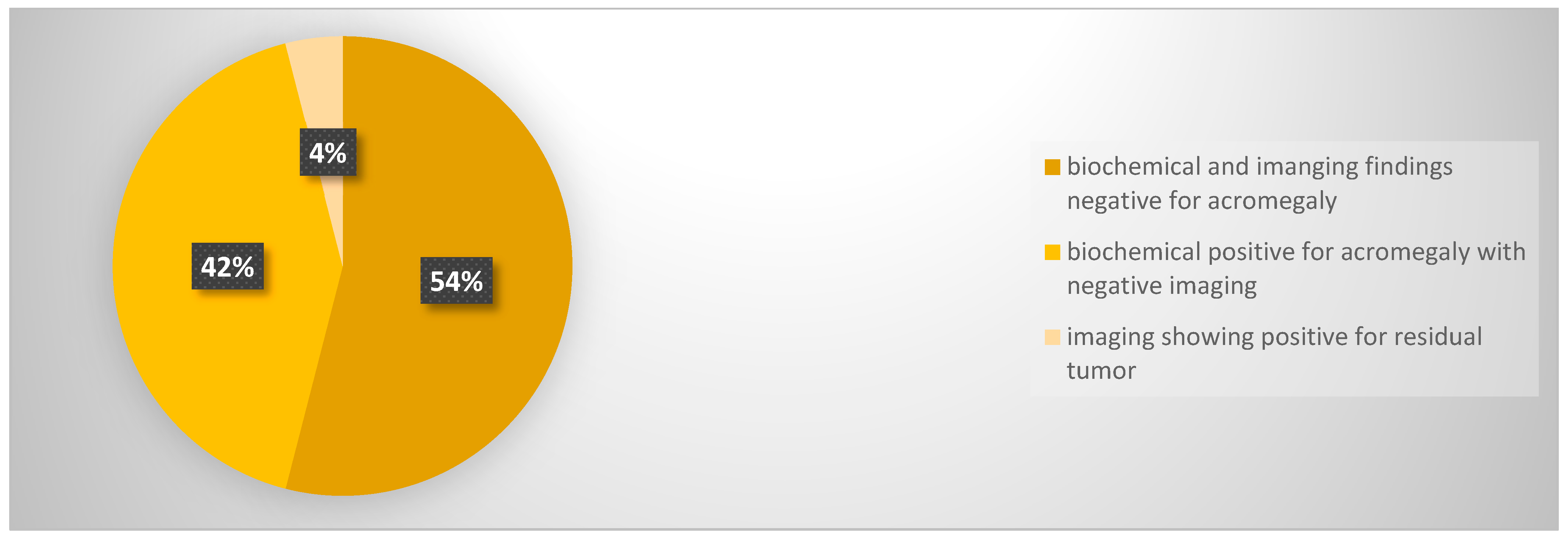
6]. However, despite improved surgical techniques, better visibility, and wide opening of the sella, surgical therapy alone in expert centers offers remission in ~54% of patients with acromegaly [
7]. As anticipated, factors most commonly influencing surgical remission rates are tumor size, cavernous sinus invasion, and surgeon experience [
8].
As mentioned previously, remission encompasses three elements. Firstly, and of paramount importance to the patient, is symptom control. Typically, soft tissue swelling and skin changes improve after GH and IGF-1 levels are normalized, but some structural bone and cartilaginous changes may be largely irreversible. The most common symptoms reported by patients suggesting uncontrolled acromegaly are peripheral swelling, joint pain, headaches, hyperhidrosis, and fatigue [
9]. Concordant with failed symptom remission, cardiovascular complications, metabolic abnormalities, sleep apnea, and carpal tunnel syndrome will continue to progress [
4]. Biochemical control is defined as a random GH level < 1 ng/dL or GH < 1 ng/dL following a glucose tolerance test, along with an age- and sex-appropriate normalized IGF-1 level.
In addition to biochemical monitoring, postoperative magnetic resonance imaging (MRI) remains a standard component of acromegaly post-surgical surveillance. Clearly, frequent neuroimaging is inconvenient for patients and imposes a significant economic burden, at least in private health systems. Limited cohorts of patients with acromegaly have hindered a comprehensive understanding of surgical outcomes, and therefore, recommendations for postoperative imaging and long-term longitudinal studies are limited. While postoperative imaging provides important anatomical information regarding potential residual tumor, it is reasonable to ask if imaging offers largely redundant data when biochemical remission is already established. This study aimed to determine the clinical utility of post-surgical surveillance imaging in patients who achieved biochemical remission with normal age- and sex-matched IGF-1 at ~3 months postoperation. Furthermore, we sought to evaluate the long-term durability of biochemical control in this patient subset.
Our study adds to the existing literature by compiling and analyzing data from a university hospital and a specialized pituitary center. This study presents a rare, long-term analysis of a series of 28 patients with a minimum of 3 years (range 3–14 years) of follow-up data.
2. Materials and Methods
In accordance with Institutional human subjects’ approval (IRB#13-000619-AM-00002, date 2 October, 2017, approved by South General Institutional Review Board, Office of Human Research Protection Program), we conducted a retrospective analysis on patients who underwent endoscopic transnasal transsphenoidal surgery for pituitary tumors at the UCLA Medical Center, Los Angeles, USA, between January 2008 and December 2014. For each patient, data regarding demographics, intraoperative findings, surgical pathology, and pre- and postoperative endocrine and imaging results were reviewed.
The following inclusion criteria were applied:
Adult patients (18–68 years) who underwent transnasal transsphenoidal pituitary tumor removal for a proven preoperative diagnosis of acromegaly;
A growth hormone-secreting pituitary tumor was confirmed by surgical pathology and immunohistochemistry in all subjects;
A minimum of 3 years of follow-up clinical, biochemical and imaging data was available for each patient and ranged from 3 to 14 years;
All surgeries were performed by a single neurosurgeon.
Patients who had received radiation therapy either before or within 6 months after surgery were excluded. The surgical technique used was a binarial endoscopic approach by a neurosurgeon and a head-and-neck surgical team. Whenever possible, intracapsular dissection and removal of the pituitary tumor was attained, though this was relatively infrequent given that somatotroph tumors are typically large and already invasive of adjacent sellar structures at presentation. The cavernous sinus was explored when it was indicated based on preoperative images and intraoperative findings.
Endocrine evaluation included completed preoperative measurement of all pituitary hormone levels (
Table 1). Our postoperative protocol includes a random GH performed in all patients ~24 h after surgery during the same hospitalization and was followed by a comprehensive outpatient analysis with measurement of random GH and IGF-1, in addition to full pituitary function testing 3 months following pituitary surgery and annually thereafter. Pituitary imaging was carried out by MRI within 6 months before surgery, 3 months postoperatively, and then annually for a minimum of three years.
A diagnosis of acromegaly was confirmed by the combined findings of elevated age- and sex-matched IGF-1 level (>2.5 SD) and clinical findings consistent with acromegaly.
Remission was defined by a random GH level < 1 µg/L in the immediate postoperative period along with an age- and sex-matched normal IGF-1 level (−2 to +2 SD) at the 3-month post-surgical visit, with no visible residual tumor on an MRI according to the latest accepted remission criteria [
7]. The oral glucose tolerance test was not used in this study to assess remission.
Clinical remission was defined by a patient-reported survey targeting core acromegaly symptoms, including hyperhidrosis, joint pain, headaches, fatigue, and hand swelling, indicating substantial symptom improvement.
Imaging Protocol: An MRI was performed with and without gadolinium contrast, and acquired in sagittal, axial and coronal planes. 3T MRI was used predominantly (25 of 28 patients), with a protocol consisting of sagittal T1, axial T2 and coronal thin-section T1 sequences. Post-contrast imaging included axial T1, as well as sagittal and coronal thin-section T1 sequences, following the intravenous administration of 10 mL Gadavist. A minority of patients (n = 3) underwent imaging on a 1.5T scanner, utilizing sagittal and axial T1, axial T2, and thin-section pituitary-weighted T1 sequences (pre- and post-contrast in sagittal and coronal planes). For these cases, Magnevist was administered intravenously. All images were read and reported by two expert neuroradiologists (N Salamon & M Linetsky). A follow-up MRI was performed at 3 months post-EEA. At this time, patients were categorized into 2 groups based on neuroradiological findings: Group 1, visible residual tumor or Group 2, no visible residual tumor. An annual follow-up MRI was performed thereafter, comparing these studies with the 3-month postoperative MRI to recategorize patients as either having stable postoperative findings or residual growth of tumor.
3. Results
During the study period (2008–2014), 28 patients—18 male (64%) and 10 female (36%), aged 18 to 68 years who underwent pituitary surgery for acromegaly and had complete clinical, biochemical and radiologic evaluation for the complete 3-year follow-up—were included in this analysis.
Of the study population, 24 patients (86%) had macroadenomas, and 4 (14%) had microadenomas.
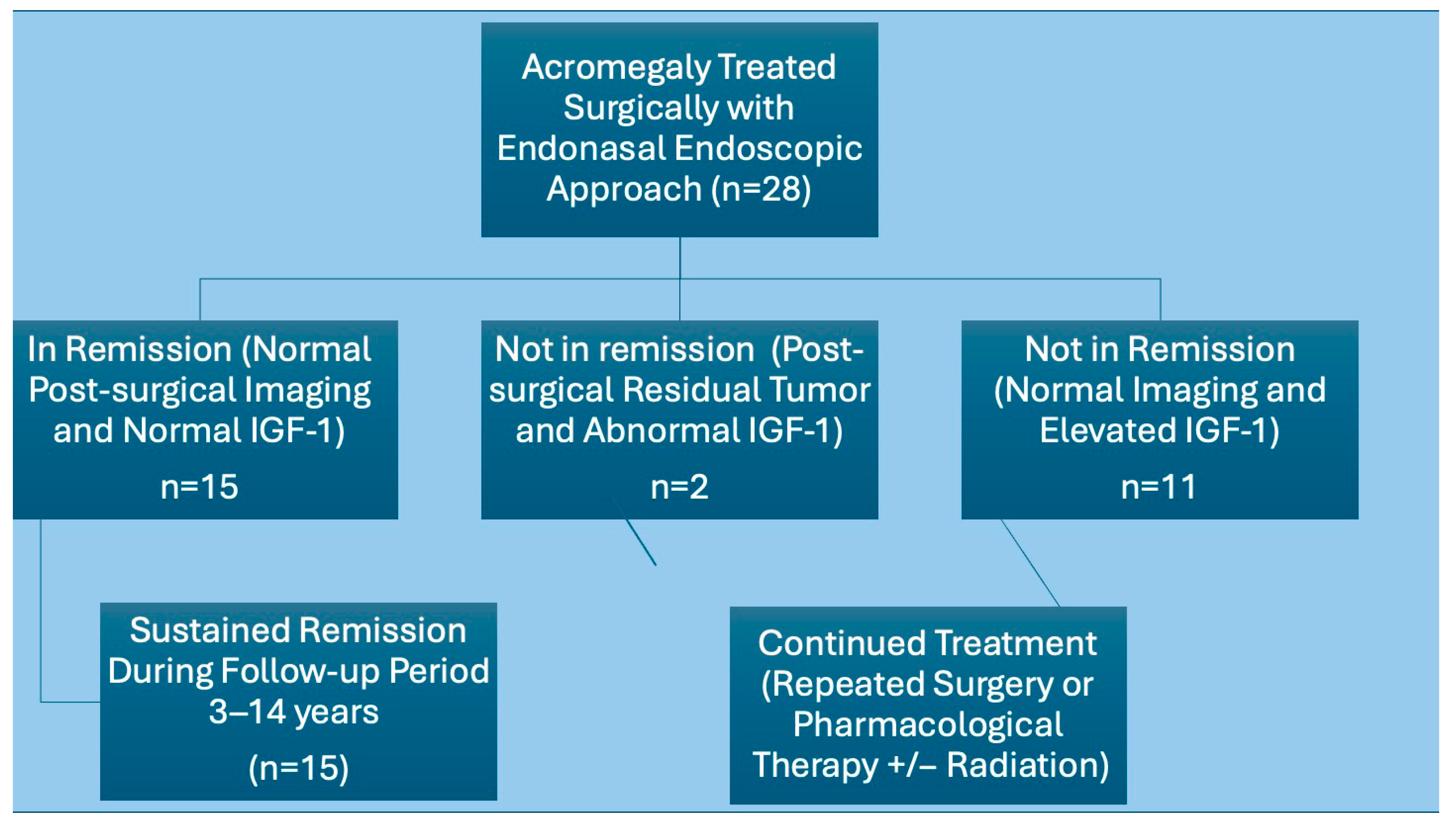
At 3 months post-EEA surgery, 15 of 28 patients (54%) achieved initial biochemical remission (
Table 1 and
Table 2). Of these 15 patients in biochemical remission, 3 were micro (75% of all microadenomas) and 12 macroadenomas (50% of all macroadenomas). Longitudinal follow-up confirmed sustained disease control in 100% of this subgroup (n = 15) through the minimum 3-year study (
Table 3). Seven of these 15 patients had a follow-up of more than 10 years.
The remaining 13 patients (46%) had elevated 3-month postoperative IGF-1 and were not in remission. No visible tumor was seen on the 3-month postoperative imaging study in 11 of these patients, and no recurrent tumor was visible in 9 of them at the 3-year follow-up (
Figure 1). The remaining two patients who were not in remission had a visible residual tumor remnant on the 3-month postoperative MRI. Out of the 13 patients, 12 patients received pharmacological therapy, and one achieved normalization of IGF-1 and GH with dopamine agonist treatment (Cabergoline—1 mg twice a week); 10 of the remaining 11 patients achieved clinical and biochemical control with somatostatin receptor ligands (SRLs), while one required the addition of the GH receptor antagonist pegvisomant to achieve complete biochemical and clinical control (
Table 4). The remaining patient, with minimally elevated IGF-1, minimal symptoms and stable imaging, declined any treatment.
In summary, 54% of all patients with acromegaly were in remission after EEA and remained in remission after 3–14 years of follow-up, and imaging findings in this sub-group remained normal over the 3-year follow-up period (
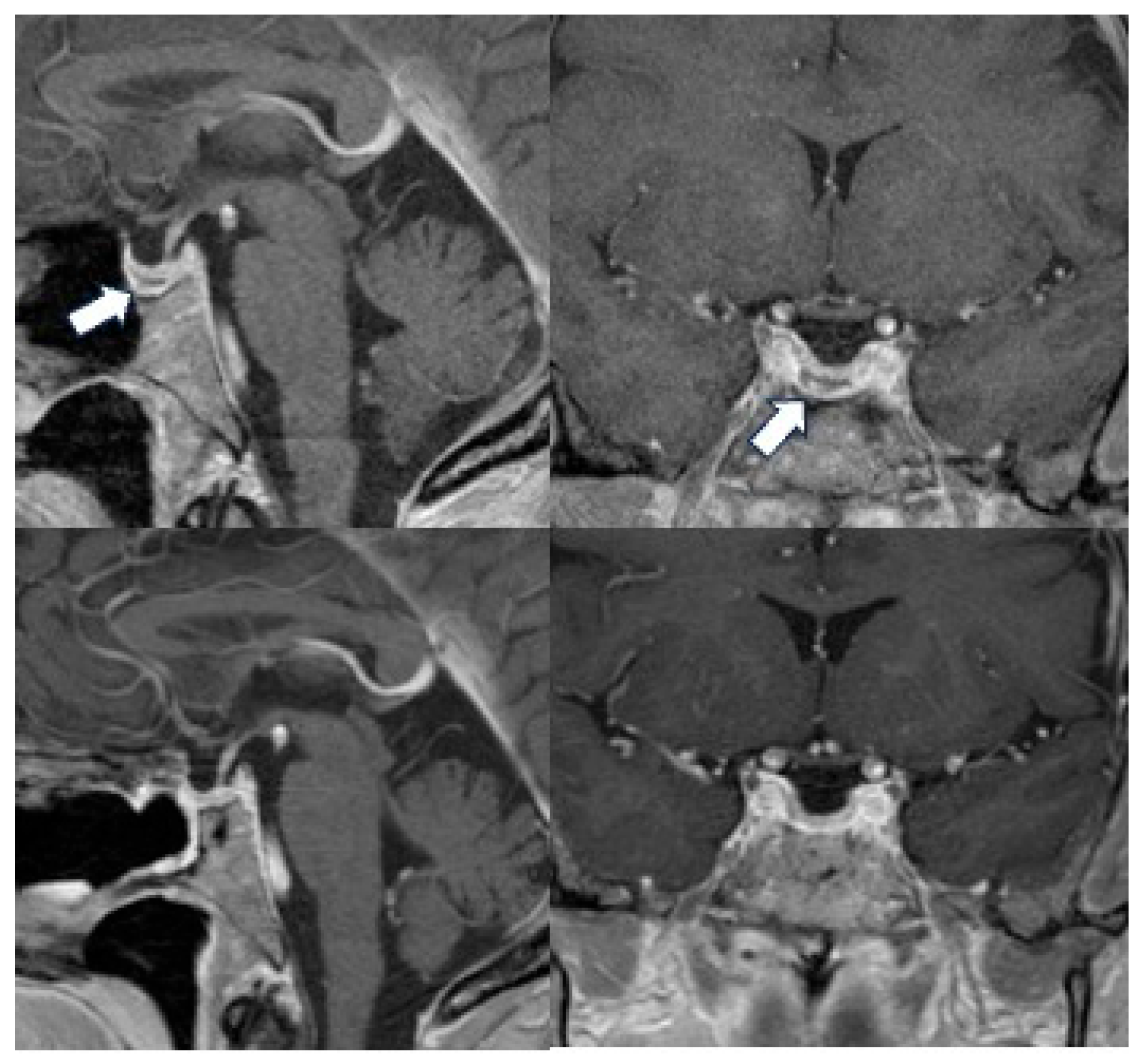
Figure 2). MRI of one patient who had normal postsurgical imaging and elevated IGF-1 with persistent symptoms of acromegaly is shown in
Figure 3.
4. Discussion
Our retrospective study evaluated clinical, biochemical and radiological responses in 28 adult patients for a minimum of three years following EEA pituitary surgery for acromegaly.
This is a limited cohort of patients due to the nature of university tertiary centers, where many patients return to local endocrinologists for postoperative care, especially if their disease is in remission; nonetheless, the data are still helpful to evaluate the utility of repeated postoperative pituitary imaging in patients with acromegaly after successful surgery. We acknowledge that this attrition may have introduced a potential selection bias, as patients with persistent disease or worse surgical outcomes are more likely to continue specialized follow-up at the study centers. It is reasonable to expect that these results potentially overrepresent poorer rather than better outcomes since patients frequently come from distant sites to have surgical treatment at this high-volume center, while continuous follow-up from a distant location may not be feasible and is less needed in better surgical outcomes. Given the sample size and potential bias, our findings should be interpreted with caution, acknowledging that the actual remission rates may be different if all patients had been followed for the entire duration of the study.
The first-line approach in the standard of care for growth hormone-secreting pituitary tumors is typically surgery to achieve complete tumor resection and offer patients remission. As noted, although the remission rates following surgical resection for somatotroph microadenomas are extremely good at 85% with a skilled, experienced surgeon, remission rates for the more frequent somatotroph macroadenomas, even in series from experienced surgeons, are consistently 50–54%. Consequently, patients return to their endocrinologist after surgery with persistent disease and often require additional interventions, such as pharmacological therapy and, occasionally, radiation [
10,
11]. Our study has excluded patients who received radiation therapy within 6 months after EEA, as clearly that can effectively alter the natural history of the disease and reduce the risk of tumor recurrence. Typically, in our center, it is only patients with more extensive postoperative tumors (e.g., invasion of cavernous sinuses or encasement of the carotid arteries) who are unresponsive or only partially responsive to mono- or combination medical therapies that are referred for radiation therapy. Nonetheless, the exclusion of this subgroup of patients potentially introduces an additional selection bias in the study population discussed here, which may underrepresent patients with initially more extensive postoperative disease.
As evidenced by our novel data and in prior studies, the success of pituitary surgical intervention is dependent on the neurosurgeon’s skill and experience [
12,
13]. Neurosurgical outcomes have improved with the increasing use of the endoscopic approach, which offers direct visualization of both the tumor and normal pituitary tissue. While some authors have suggested that an endoscopic approach enables more extensive tumor removal, surgical remission rates for the often invasive somatotroph adenomas are, at present, quite fixed at ~54% [
14]. With newer findings that somatotrophs invade the medial wall of the cavernous sinus more than other pituitary tumors do, increased attention in surgical approach to this area has improved surgical remission rates [
15]. Further technical advances, including a “binarial” approach to the sphenoid sinus, which improves field visualization and manipulation by incorporating rhinologic surgeons and the use of angled endoscopes. In this study, all patients who achieved remission after the surgical removal of pituitary tumors remained in remission during a follow-up period. This sustained outcome is similar to our previously reported observations in patients with nonfunctional pituitary tumors, where full surgical resection with an MRI that showed no residual tumor at 3-month postoperative follow-up was associated with a tenfold lower risk of recurrence compared to patients who had some visible tumor remnants [
16].
Extracapsular tumor removal, a technique that uses the tumor’s pseudocapsule as a surgical plane to remove the tumor “en bloc”, has shown promise for improving curative rates in some studies. In our center, the neurosurgeon used the extracapsular technique whenever possible, with the goal of removing all tumor cells, including the pseudocapsule. However, in practice, this technique is extremely challenging in pituitary macroadenomas, and in many cases, the pseudocapsular technique was abandoned, and the tumor was removed piecemeal. The exact number of patients who underwent a complete pseudocapsular tumor removal is unknown, making an evaluation of its effect impossible within the context of this study.
A frequent scenario encountered by endocrinologists following the surgical resection of pituitary GH-secreting adenomas by skilled surgeons is a patient with no residual tumor visible on the postoperative MRI despite persistent biochemical and clinical signs of active acromegaly. One study highlighted this discrepancy by reporting that while 71% of 24 patients had no visible tumor remnant after resection, only 46% achieved biochemical remission [
17]. In our study, 11 of 13 patients (85%) not in remission had no visible tumor on their postoperative MRI but still had evidence of active acromegaly, as the amount of residual tumor may be very small but still sufficient to secrete supraphysiologic growth hormone levels and drive persistently elevated IGF-1 levels and symptoms [
18].
Current neuroimaging techniques often lack the sensitivity required to detect microscopic tumor remnants, limiting their utility in confirming biochemical remission. While traditional post-surgical surveillance protocols involve MRI at 3 months postoperatively followed by annual imaging, evidence-based guidelines regarding optimal intervals remain somewhat ill-defined, often resulting in individualized, non-standardized care and over-utilization of imaging [
19]. Although baseline postoperative imaging remains valuable from a surgical perspective for anatomical documentation and serving as a reference point for evaluating location of a subsequent tumor recurrence, our study demonstrates that when complete surgical resection of growth hormone-secreting pituitary tumors, characterized by the normalization of growth hormone and IGF-1 levels, is attained, it provides a durable, disease-free outcome for most patients with pituitary somatotroph tumors. This sustained outcome is similar to our previously reported observations in patients with nonfunctional pituitary tumors, where full surgical resection along with an MRI that showed no residual tumor at 3-month postoperative follow-up was associated with a tenfold lower risk of recurrence compared to patients who had some visible tumor remnants [
16]. Therefore, we suggest that in the setting of biochemical remission, routine postoperative surveillance MRI provides minimal additional diagnostic value. Thus, our study would support reducing the frequency of radiographic monitoring in patients in clinical and biochemical remission and would significantly alleviate the clinical and economic burden of long-term acromegaly management.
In patients without biochemical remission, MRI shifts from diagnosis to surgical mapping and is essential in neurosurgical evaluation. It is crucial for identifying resectable remnants versus inaccessible disease. By determining if a tumor is “reachable” via a repeat endonasal approach, MRI acts as a gatekeeper—directing candidates either toward secondary surgery or toward pharmacological therapy for long-term control.
While patients in this study were evaluated using standard 1.5T and 3T MRI, the increasing accessibility of ultra-high-field technologies, such as 7T, is poised to redefine postoperative assessment. This evolution marks a transition from the mere detection of gross complications toward a sophisticated, high-definition analysis of both functional and structural recovery. Ultimately, further research is required to determine how these advanced imaging modalities will modify the long-term management and surgical evaluation of acromegaly.
Lower MRI monitoring frequency directly decreases anxiety, physical discomfort, and significant financial burdens associated with frequent, high-cost imaging. By optimizing, rather than maximizing, imaging frequency, healthcare systems can improve patient satisfaction, lower out-of-pocket expenses, and improve accessibility.
Our study also corroborates many others in emphasizing that earlier diagnosis of acromegaly and finding somatotroph tumors earlier in their phase of growth are a critical unmet need in acromegaly management, as the remission rates following surgery are very striking when comparing micro- and intra-sellar macroadenomas compared to invasive and giant macroadenomas [
20,
21]. Emerging artificial intelligence-based methods show promise in accelerating the diagnostic timeline for acromegaly by several years, which could significantly improve surgical results and reduce the long-term disease burden [
22].
A primary limitation of this study is the restricted sample size, which inevitably limits the statistical power of our analysis. However, these findings have opened important questions regarding acromegaly management that were previously underexplored. As such, this study serves as a critical starting point and highlights a clear need for these observations to be investigated in a larger-scale trial to confirm generalizability. Consequently, the findings should be interpreted as preliminary, serving as a stepping stone for larger-scale confirmatory studies.
While modern clinical pathways increasingly advocate for rationalizing the use of routine postoperative imaging to minimize costs and patient burden, the fundamental neurosurgical requirement for monitoring remains paramount. This shift toward a more selective approach does not diminish the clinical necessity of imaging; rather, it emphasizes that scans should be purposeful. For the neurosurgeon, imaging acts as a critical safety net for the early detection of asymptomatic complications, such as silent intracranial hemorrhages or early-onset cerebral edema, which may precede clinical decline. Ultimately, the goal is to move toward a risk-stratified monitoring strategy that preserves surgical excellence while avoiding the redundancies of “automatic” screening [
23].
While our sample size is limited, these findings raise compelling questions for future research. To build upon this data, a prospective, multi-center non-inferiority trial is warranted. Specifically, comparing a “biochemistry-driven, imaging-on-demand” approach against the current “standard annual imaging” protocol would be instrumental. Such a study would clarify long-term clinical outcomes, patient quality of life, and healthcare cost-effectiveness, providing definitive evidence for optimal management strategies.




 ,
,