Article

Gene-Activated Octacalcium Phosphate (OCP/VEGF) Versus Autologous Bone Graft for Single-Level TLIF in Degenerative Lumbar Stenosis

by
Renat Madekhatovich Nurmukhametov
1,2,
Medetbek Dzhumabekovich Abakirov
1,2,
Stepan Anatolyevich Kudryakov
2,
Medet Kaskirbayevich Dosanov
2,
Dilerbek Nuriddinov
3,
Batzayaa Beis Zhanchivdorj
3,
Kerly Sulay Borja Cevallos
3,
Ilya Yadigerovich Bozo
4,
Alberto Luis Martinez Mateo
5 and
Nicola Montemurro
6,*
1
Department of Neurology and Neurosurgery with a Course in Comprehensive Rehabilitation, Peoples’ Friendship University of Russia (RUDN University), 117593 Moscow, Russia
2
Neurosurgery Department, National Clinical Center No. 2, Federal State Budgetary Scientific Institution “Russian Scientific Center of Surgery Named after Academician B.V. Petrovsky”, 117593 Moscow, Russia
3
Department of Nervous Diseases and Neurosurgery Named after Professor Yu. S. Martynov, Peoples’ Friendship University of Russia (RUDN University), 117198 Moscow, Russia
4
Department of Maxillofacial and Reconstructive Plastic Surgery, National Clinical Center No. 2, Federal State Budgetary Scientific Institution “Russian Scientific Center of Surgery named after Academician B.V. Petrovsky”, 117593 Moscow, Russia
5
Traumatology Hospital, Dario Contreras, Santo Domingo 11503, Dominican Republic
6
Department of Neurosurgery, Azienda Ospedaliero Universitaria Pisana (AOUP), 56100 Pisa, Italy
*
Author to whom correspondence should be addressed.
Surgeries 2026, 7(1), 29; https://doi.org/10.3390/surgeries7010029
Submission received: 5 January 2026 / Revised: 10 February 2026 / Accepted: 19 February 2026 / Published: 22 February 2026

Abstract

Background: Autologous bone graft is widely used for lumbar interbody fusion but may increase operative time and donor-site morbidity. Gene-activated grafts combining an osteoconductive scaffold with pro-angiogenic signaling may provide comparable fusion without graft harvesting. The aim of this paper is to compare radiographic fusion and health-related quality of life after single-level transforaminal lumbar interbody fusion (TLIF) using a gene-activated octacalcium phosphate graft containing plasmid DNA encoding vascular endothelial growth factor (OCP/VEGF) versus an autologous bone graft. Methods: 200 adults undergoing first-time single-level TLIF for degenerative lumbar stenosis were allocated 1:1 to OCP/VEGF (n = 100) or autograft (n = 100), prospectively. CT-based fusion assessment and SF-36 outcomes were evaluated at 6 and 12 months follow-up. Results: At 12 months after surgery, mean fusion-zone density was 617.6 ± 180.9 HU in the OCP/VEGF group versus 599.8 ± 181.9 HU in the autograft group (mean difference 17.8 HU; p = 0.484). Complete fusion on qualitative CT grading occurred in 77% versus 73%, respectively (risk difference 4%; p = 0.583). SF-36 Physical Component Summary (PCS) and Mental Component Summary (MCS) improved significantly from baseline in both groups (p < 0.001), without clinically meaningful between-group differences at follow-up. Revision surgery occurred in 3% versus 5%. Conclusions: In single-level TLIF for degenerative lumbar stenosis, OCP/VEGF produced radiographic fusion and patient-reported outcomes comparable to autograft at 12 months, supporting its use as an autograft-sparing alternative.

1. Introduction

Degenerative–dystrophic diseases of the spine are among the most common causes of chronic back pain, leading to limitations in physical activity and a reduction in quality of life [1,2,3]. Their global prevalence is estimated at approximately 266 million people (3.63%) worldwide [1]. In recent decades, there has been a steady increase in the number of surgical interventions performed on the lumbar spine for spinal canal stenosis. The formation of spinal fusion ensures stability of the spinal motion segment. Autologous bone has proven to be the most effective material for achieving lumbar spinal fusion and is recognized as the gold standard among bone grafting materials [4]. An autologous bone graft possesses high biological activity and mechanical strength, enabling the induction of functional bone regeneration. However, harvesting autologous bone requires an additional surgical procedure, which increases recovery time and the risk of complications. Consequently, the issue of replacing and restoring bone defects remains a relevant topic in modern medicine [5].
Gene-activated materials based on octacalcium phosphate (OCP) and plasmid DNA containing the vascular endothelial growth factor (VEGF) gene represent a modern and promising alternative to autologous bone grafts. Structurally, this material is similar to the mineral component of the bone extracellular matrix and demonstrates pronounced biocompatibility, osteoconductivity, high osteointegration, and minimal fibrotic response. Due to the presence of plasmid DNA molecules encoding VEGF, the material stimulates angiogenesis, which is critically important for reparative osteogenesis. Through this mechanism, the material exhibits osteoinductive properties [6,7,8,9,10,11,12].
Despite advances in spinal instrumentation and surgical technique, the selection of an optimal osteoplastic material for lumbar interbody fusion remains a subject of ongoing debate among spine surgeons [13,14,15,16,17]. This controversy arises from the need to balance biological efficacy, mechanical stability, safety profile and cost-effectiveness. Although autologous bone graft remains the reference standard due to its osteogenic, osteoinductive and osteoconductive properties, its use is associated with donor-site morbidity, increased operative time, postoperative pain, infection risk and limited availability, particularly in elderly patients or those with metabolic bone disease [18,19,20,21,22]. Conversely, synthetic and biologically enhanced substitutes, including calcium phosphate ceramics and growth factor-based products, have demonstrated variable fusion rates and, in some cases, clinically significant complications such as delayed union, inflammatory reactions, heterotopic ossification, or excessive costs [10,11,12,23,24,25,26].
The aim of this paper is to evaluate the effectiveness of bone block formation using a gene-activated material based on OCP and plasmid DNA with the VEGF gene and to compare clinical and radiological outcomes with those of autologous bone grafting.

2. Materials and Methods

2.1. Study Design and Ethics

This investigation was designed as a prospective, single-center study conducted at the Department of Neurosurgery, Center for Traumatology and Orthopedics, Federal State Budgetary Scientific Institution “Russian Scientific Center of Surgery named after Academician B.V. Petrovsky No. 2,” between March 2024 and November 2025. The study protocol was approved by the Local Ethics Committee of the Federal State Budgetary Scientific Institution “Russian Scientific Center of Surgery named after Academician B.V. Petrovsky No. 2”. Written informed consent was obtained from all participants before enrollment.

2.2. Participants

A total of 200 adult patients with degenerative lumbar spinal stenosis undergoing single-level transforaminal lumbar interbody fusion (TLIF) were enrolled. The cohort included 110 women (54.5%) and 90 men (45.5%). Age ranged from 28 to 88 years, with a mean age of 58.2 ± 12.4 years.
Eligibility criteria and inclusion criteria: Single-level degenerative lumbar pathology consistent with symptomatic spinal canal stenosis; failure of conservative management for at least 3 months; planned first-time single-level TLIF; age ≥ 18 years; written informed consent. Exclusion criteria: Prior surgery for lumbar spinal canal stenosis; pathology involving >1 level; age < 18 years; prior surgery at the planned operative level; multilevel segmental instability; clinically relevant mismatch between symptoms and imaging findings; active inflammatory/infectious process; refusal to participate.
Randomization and groups. Patients were randomized in a 1:1 allocation ratio into two equal groups (n = 100 per group): Group A (OCP/VEGF): TLIF using a gene-activated osteoplastic material based on OCP and plasmid DNA encoding VEGF.
Patients were randomized in a 1:1 allocation ratio to the OCP/VEGF group or the autograft group using a computer-generated random sequence with fixed block sizes of four. Allocation concealment was ensured using sealed, opaque envelopes opened intraoperatively after patient enrollment. Radiological assessment of fusion was performed by two independent observers who were blinded to group allocation. All patients underwent standardized clinical and neurological assessments, including documentation of comorbidities. Postoperative evaluation included CT imaging at 6 and 12 months.
Radiological outcomes: Fusion was evaluated using CT-based metrics. Densitometry: mean Hounsfield Unit (HU) density was measured within the interbody fusion zone in the region of bone block formation. Fusion grading (Bridwell et al. [6], HU-based): Grade I (complete fusion): >600 HU; Grade II (partial fusion): 350–600 HU; Grade III (non-union): <350 HU. Patient-reported outcomes: Quality of life was assessed using the SF-36 questionnaire at baseline and at 6 and 12 months, analyzing PCS (Physical Component Summary) and MCS (Mental Component Summary). In parallel, the Tan et al. [27] classification was used to integrate quantitative Hounsfield Unit (HU) thresholds with qualitative fusion grades, providing a more objective assessment of mineralization and fusion maturation. The combined use of these systems allowed for both clinically meaningful and densitometrically reproducible evaluation of interbody fusion.

2.3. Statistical Analysis

Statistical analysis was performed in SPSS v26. Continuous variables were summarized as mean ± standard deviation and compared between groups using Student’s t-test. Categorical variables were compared using χ2 or Fisher’s exact test. Longitudinal changes in SF-36 scores were assessed using repeated-measures ANOVA. Statistical significance was defined as p < 0.05.

3. Results

The surgical outcomes of 200 patients with mono-segmental degenerative lumbar intervertebral disc disease were analyzed. Bone block formation was assessed using postoperative CT scans. The distribution of surgical procedures by spinal fixation level was evaluated. The most frequently operated level was L4–L5, accounting for 112 cases (56.6%) of the total number of procedures. The second most common level was L5–S1, with 64 cases (32%). Less frequently, surgeries were performed at the L3–L4 level (16 cases; 8%), and least commonly at the L1–L2 and L2–L3 levels, with a total of eight cases (4%) (Figure 1). This distribution indicates that the L4–L5 and L5–S1 levels are the most commonly involved, which is consistent with the typical pattern of pathology and the need for stabilization of these spinal segments.
Patient characteristics: The mean age was 58.4 ± 12.1 years in the OCP/VEGF group and 58.0 ± 12.7 years in the autograft group, with no statistically significant difference between groups (p = 0.81). Age distribution across decades was comparable, indicating balanced cohorts with respect to this key biological determinant of bone healing.
According to CT findings, bone block formation was observed in most patients by one year of follow-up. In Group A, three cases (3%) of repeat surgical intervention were recorded, related to pseudarthrosis, instrumentation instability, cage migration into the spinal canal, and adjacent segment disease. In Group B, five revision surgeries (5%) were performed, associated with adjacent segment disease (Table 1).
Qualitative assessment according to Tan et al. [27] (n, %): I—complete union (>600 HU); II—partial union (350–600 HU); III—nonunion (<350 HU). Based on the reported data on HU at 6 and 12 months after surgery, the average bone density of the VEGF and autograft groups was approximately 396 and 378 HU, respectively, at 6 months, and 600 HU in the autograft group, the differences being also statistically insignificant (p = 0.484) (Table 2).
Based on the data on the qualitative assessment, at 6 months follow-up, about 28% of cases in the VEGF group and 24% in the autograft group are characterized by complete union (I), about 44% in the VEGF group and 42% in the autograft group are characterized by partial union (II), and about 28% in the VEGF group and 34% in the autograft group are characterized by nonunion (III). Statistical analysis shows no significant differences between the groups (p = 0.502). Similarly, almost the entire sample achieved complete fusion: 77% in the VEGF group and 73% in the autograft group at 12 months follow-up. Number of partial unions: 17% in the VEGF group and 19% in the autograft group. Nonunion is also similar: 6% in the VEGF group and 8% in the autograft group. The differences between the groups in this period are also not statistically significant (p = 0.583). The Tan et al. [27] classification and the HU density assessment show similar healing dynamics and adhesion rates in both groups at 6 and 12 months. Most patients achieved complete fusion by 12 months, with no differences between the histograft and autograft. This indicates similar effectiveness of both methods in terms of the degree of bone fusion (Table 3, Appendix A).
Based on the data provided, the overall dynamics of the quality of life components in patients after the use of both methods (histograft and autograft) show a significant improvement in both physical (PCS) and psychological (MCS) aspects at 6 and 12 months compared to baseline. At the end of the period, the indicators for both groups are almost the same, which indicates the high effectiveness of both methods.
Analysis of the data shows that the most frequently performed surgeries are concentrated at the L4–L5 and L5–S1 levels, which is due to their high clinical significance. The high prevalence of comorbidities such as hypertension, diabetes mellitus and obesity requires them to be taken into account when planning and performing surgeries. The use of materials (histograft and autograft) in equal proportions made it possible to objectively assess their effectiveness, confirmed by the progressive dynamics of bone growth and improvement in the quality of life of patients.
The patients were diagnosed with concomitant diseases, which indicates a high prevalence of chronic and systemic diseases among this category. The most common disorder is arterial hypertension, which was diagnosed in 124 people and accounts for 62.6% of the total number of study participants. Type 2 diabetes mellitus and obesity were found in 48 (24.2%) and 42 (21.2%) patients, respectively. In addition, coronary heart disease (CHD) was registered in 38 (19.2%) patients and osteoporosis was reported in 22 (11.1%) patients. The presence of such comorbidities should be taken into account when planning treatment and predicting outcomes, as they can have an impact on recovery and the effectiveness of medical interventions.

4. Discussion

Over the past two decades, numerous bone graft substitutes and biologically enhanced materials have been introduced into spinal fusion practice, with variable success. Early-generation substitutes, such as hydroxyapatite and β-tricalcium phosphate ceramics, demonstrated acceptable biocompatibility and osteoconductivity but lacked intrinsic osteoinductive properties, often resulting in delayed or incomplete fusion when used alone [10,11]. Subsequent efforts focused on augmenting osteoinduction through the incorporation of growth factors, most notably recombinant human bone morphogenetic proteins (rhBMPs). While rhBMP-2 has shown high fusion rates in lumbar TLIF, its use has been associated with significant complications, including heterotopic ossification, inflammatory reactions, osteolysis, and increased costs, which have limited its widespread acceptance [26]. A meta-analysis by Ambrosio et al. [24] highlighted these safety concerns and emphasized the need for safer biologically active alternatives.
In this context, OCP has emerged as a promising synthetic calcium phosphate material with physicochemical properties closely resembling the mineral phase of natural bone. Unlike hydroxyapatite, OCP exhibits higher solubility and a more favorable resorption profile, allowing gradual replacement by newly formed bone rather than long-term persistence as an inert scaffold [22]. Experimental studies have demonstrated that OCP undergoes conversion to biological apatite in vivo, promoting osteoblast differentiation and trabecular bone formation [23,24]. Suzuki et al. [25] reported enhanced osteogenic potential of OCP compared with other calcium phosphate ceramics in both animal and in vitro models, emphasizing its suitability as a bone substitute.
Nevertheless, osteoconduction alone may be insufficient in the biological environment of degenerative spinal disease, where impaired vascularization and reduced regenerative capacity are common. Angiogenesis plays a critical role in bone repair, as vascular networks facilitate the delivery of oxygen, nutrients, inflammatory mediators, and osteoprogenitor cells to the fusion site. VEGF is a key regulator of angiogenesis and has been shown to indirectly stimulate osteogenesis through the coupling of vascular and bone formation processes. Goncharov et al. [28] demonstrated that angiogenesis precedes osteogenesis during fracture healing and that VEGF inhibition significantly impairs bone regeneration. Gene-activated bone substitutes incorporating plasmid DNA encoding VEGF have been developed to exploit this biological relationship. Unlike direct application of recombinant proteins, plasmid-based gene delivery enables localized and sustained expression of VEGF, potentially reducing systemic exposure and minimizing adverse effects. Deev et al. [29] described the translational pathway of gene-activated bone grafts from bench to bedside, reporting encouraging safety and efficacy profiles in early clinical applications. These findings provided the rationale for integrating VEGF-mediated angiogenic stimulation with an osteoconductive OCP scaffold.
The present study contributes prospective clinical evidence supporting the use of an OCP/VEGF gene-activated material in single-level TLIF. Radiological assessment using CT densitometry demonstrated progressive mineralization of the fusion mass in both the OCP/VEGF and autograft groups, with mean HU values exceeding 600 HU by 12 months. Such values are generally considered indicative of mature trabecular bone and have been correlated with biomechanically stable fusion in prior studies [19]. Importantly, no statistically significant differences were observed between groups at either 6 or 12 months, suggesting comparable fusion kinetics and maturation.
Qualitative fusion assessment using the Bridwell HU-based classification further corroborated these findings. By 12 months, more than 70% of patients in both groups achieved complete fusion (Grade I), while rates of partial fusion and non-union were low and similar between groups. These results align with fusion rates reported in contemporary TLIF series [30]. Meng et al. [15] reviewed recent advances in lumbar interbody fusion and reported one-year fusion rates ranging from 65% to 85%, depending on graft material, cage design, and patient factors. The fusion outcomes observed in the present study fall well within this expected range.
From a clinical outcome perspective, both groups demonstrated significant improvements in health-related quality of life, as measured by the SF-36 physical and mental component scores. The magnitude of improvement observed at 12 months is consistent with prior reports indicating that successful TLIF leads to meaningful functional recovery and psychosocial benefit when solid fusion is achieved [7]. The absence of intergroup differences in SF-36 outcomes suggests that the biological equivalence observed radiologically translates into comparable patient-centered benefits.
Revision surgery rates in the present cohort were low and did not differ significantly between groups. Notably, no revisions in the OCP/VEGF group were attributable to graft-related inflammatory reactions or excessive bone formation. This contrasts favorably with the complication profile associated with rhBMP-based products. In a large observational study, Fu et al. [31] reported increased rates of radiculitis, and the absence of such complications in the current study supports the hypothesis that VEGF-mediated angiogenesis offers a more physiologically regulated pathway to bone regeneration.
Comparative data from other clinical studies of gene-activated or biologically enhanced grafts further contextualize these findings. Bozo et al. [32] reported early clinical experience with gene-activated bone substitutes in orthopedic applications, demonstrating effective bone regeneration without significant adverse events. While spinal-specific data remain limited, the present study adds to a growing body of evidence suggesting that gene-activated constructs can achieve outcomes comparable to traditional grafting strategies.
An additional consideration is the role of patient comorbidities in fusion outcomes. Degenerative lumbar spine patients frequently present with conditions such as diabetes mellitus, osteoporosis, obesity and cardiovascular disease, all of which may negatively influence bone healing [33,34,35,36,37]. The comparable fusion rates observed in both groups, despite the high prevalence of comorbidities, suggest that the OCP/VEGF material performs robustly even in biologically compromised environments. This observation is clinically relevant, as it supports the potential utility of gene-activated materials in patient populations at higher risk for delayed fusion.

Limitations of the Study

Several limitations of the present study warrant discussion. First, although the follow-up period of 12 months is sufficient to assess early and intermediate fusion outcomes, longer-term follow-up is required to confirm the durability of fusion and to evaluate adjacent segment degeneration. Second, while CT densitometry provides an objective and reproducible method for assessing fusion maturation, it cannot fully replace biomechanical testing or histological analysis. However, invasive confirmation of fusion is neither ethical nor feasible in routine clinical practice. Third, this was a single-center study, and multicenter trials would enhance the generalizability of the findings.
In addition, although no adverse events related to immunogenicity, excessive angiogenesis, or abnormal tissue proliferation were observed during the 12-month follow-up, potential long-term risks associated with gene-activated materials cannot be fully excluded. Sustained or dysregulated VEGF expression could theoretically influence vascular remodeling beyond the fusion site. While prior preclinical and early clinical studies suggest a favorable safety profile for plasmid-based VEGF delivery [26,32], longer-term and multicenter studies are required to definitively establish long-term biological safety.
Cost-effectiveness analysis was not performed in the present study and represents an important area for future investigation. While gene-activated materials may entail higher upfront material costs compared to autograft, potential economic benefits could arise from reduced operative time, avoidance of donor-site morbidity, and lower revision rates. Prospective health-economic studies are warranted to assess the overall value proposition of this technology in routine spinal practice.

5. Conclusions

This prospective clinical study demonstrates that a gene-activated osteoplastic material based on OCP combined with plasmid DNA encoding VEGF achieves radiological fusion and clinical outcomes comparable to those obtained with autologous bone graft in single-level transforaminal lumbar interbody fusion for degenerative lumbar spinal stenosis. Quantitative CT densitometry and qualitative fusion grading confirmed consistent and progressive bone block maturation in both groups, with most patients attaining complete interbody fusion by 12 months. The biological performance of the OCP/VEGF construct translated into meaningful functional recovery, as reflected by significant and sustained improvements in physical and mental health-related quality-of-life measures. These gains were equivalent to those observed with autograft, indicating that the absence of donor-site bone harvesting does not compromise clinical effectiveness. The low and comparable revision surgery rates further support the safety and mechanical reliability of the gene-activated material.
By integrating an osteoconductive mineral scaffold with angiogenic stimulation, the OCP/VEGF strategy addresses critical biological limitations of spinal fusion in degenerative disease, particularly impaired vascularization and reduced regenerative potential. In contrast to highly potent growth factor-based products, this approach appears to promote physiologically balanced bone regeneration without evidence of excessive or ectopic ossification.

Author Contributions

Conceptualization, R.M.N., M.D.A., S.A.K. and N.M.; methodology, R.M.N., M.D.A., S.A.K. and N.M.; validation, M.K.D., D.N., B.B.Z. and N.M.; formal analysis, M.K.D., D.N. and N.M.; investigation, R.M.N., M.D.A. and N.M.; resources, R.M.N., M.D.A. and S.A.K.; data curation, M.K.D., D.N., B.B.Z. and N.M.; writing—original draft preparation, R.M.N., M.D.A., S.A.K. and N.M.; writing—review and editing, K.S.B.C., I.Y.B., A.L.M.M. and N.M.; visualization, K.S.B.C. and N.M.; supervision, R.M.N. and N.M. All authors have read and agreed to the published version of the manuscript.

Funding

This research received no external funding.

Institutional Review Board Statement

The study was conducted in accordance with the Declaration of Helsinki and approved by the Local Ethics Committee of the Federal State Budgetary Scientific Institution “Russian Scientific Center of Surgery named after Academician B.V. Petrovsky No. 2” (16 March 2024).

Informed Consent Statement

Informed consent was obtained from all subjects involved in the study.

Data Availability Statement

The original contributions presented in this study are included in the article. Further inquiries can be directed to the corresponding authors.

Conflicts of Interest

The authors declare no conflicts of interest.

Appendix A

Appendix A.1. Single Case with Spinal Fusion Using an Autograft
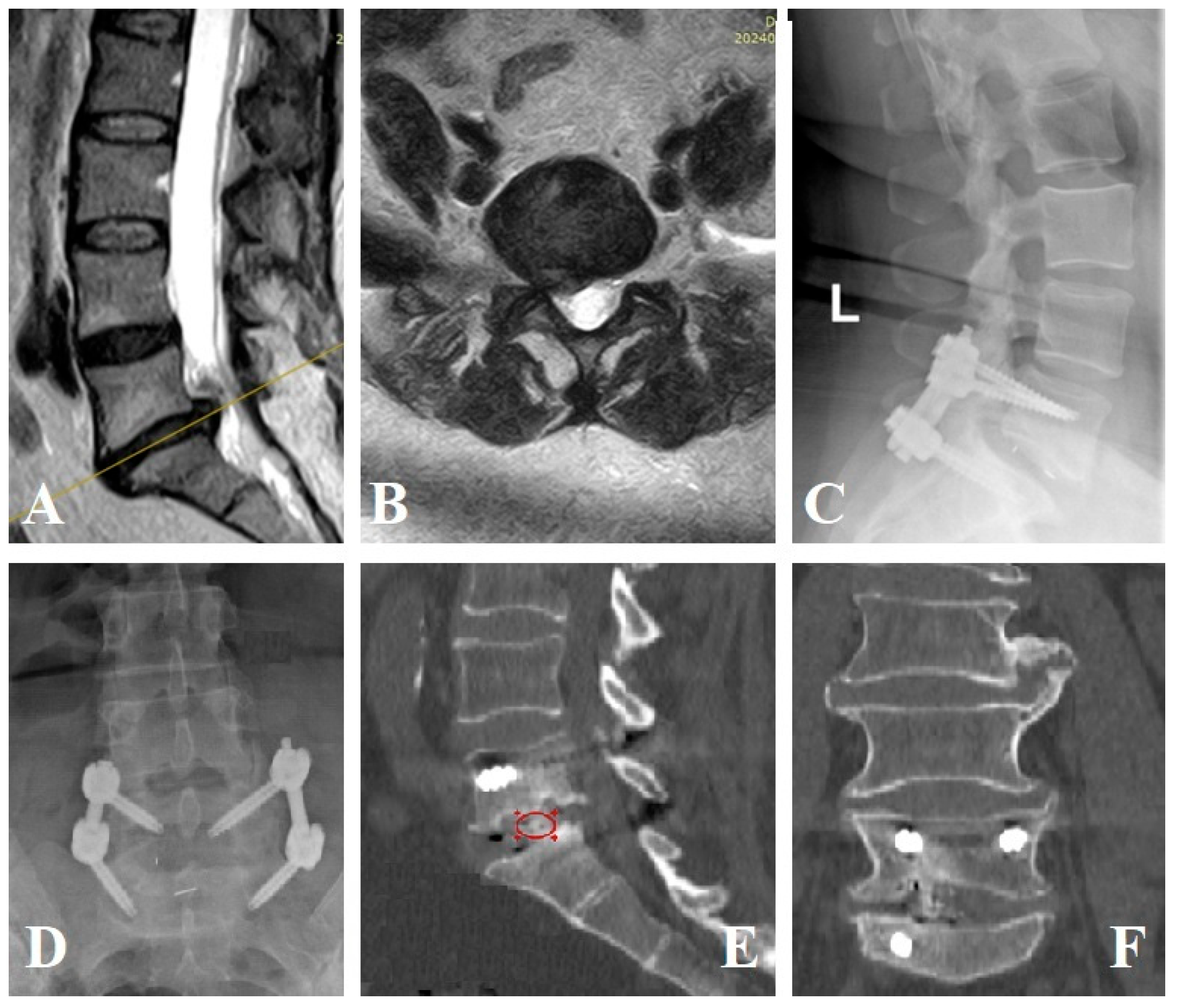
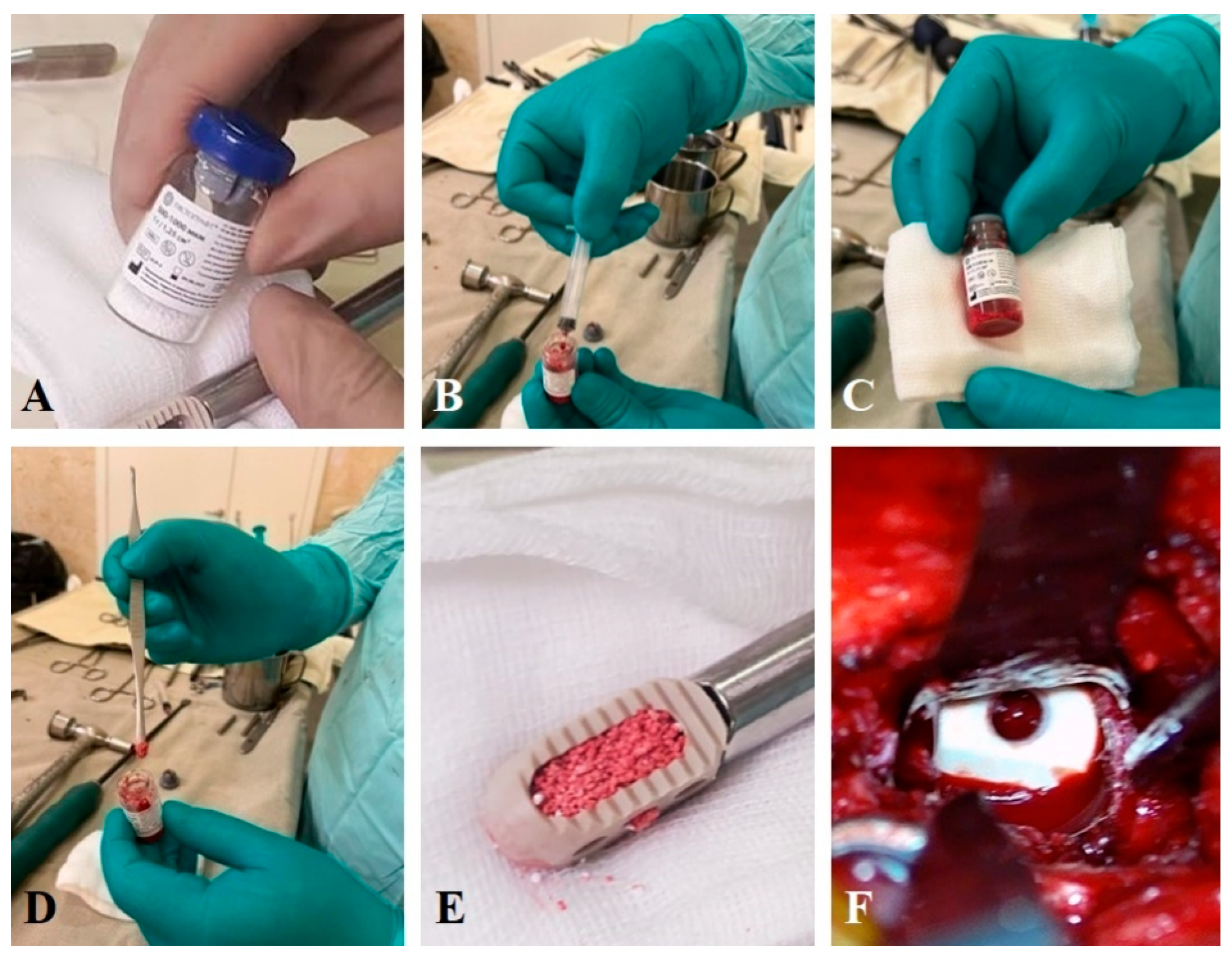
Patient complained of periodic severe pain in the lumbar spine, radiating along the posterior surface of the right buttock, thigh, and lower leg, without a positive effect from conservative treatment for 3 months. MRI of the lumbar spine: Osteochondrosis, spondylosis, spondylarthrosis of the lumbar spine, herniated disc L5–S1, instability of the spinal motor segment L5–S1. The patient underwent decompression of the spinal cord roots at the level of L5–S1, resection of the intervertebral disc at the level of L5–S1, interbody fusion with a cage at the level of L5–S1, and posterior rigid fixation of L5–S1. The effectiveness of the surgical intervention was monitored immediately after the operation by X-ray examination of the lumbar spine. It was observed for 3, 6 and 12 months after the operation; no inflammatory phenomena and corresponding pathological clinical symptoms were observed in the lumbar spine. Formation of a bone block was observed, with a density characteristic of the spongy substance of bone tissue and the integration of autogenous material 412 HU.
Figure A1. Preparation of the interbody cage with auto fusion: (A,B) preparation of autocage; (CE) filling of the cage; (F) installation of the cage in the interbody space.
Surgeries 07 00029 g0a1
Figure A2. Postoperative MRI (A,B) and X-ray (C,D) of the lumbar spine. Postoperative (E,F) CT scan at 12 months follow-up, using autograft at L5-S1 level with bone block formation (HU 412, red circle).
Surgeries 07 00029 g0a2

Appendix A.2. Single Case with Spinal Fusion Using Gene-Activated Material Based on OCP and Plasmid DNA with the VEGF Gene

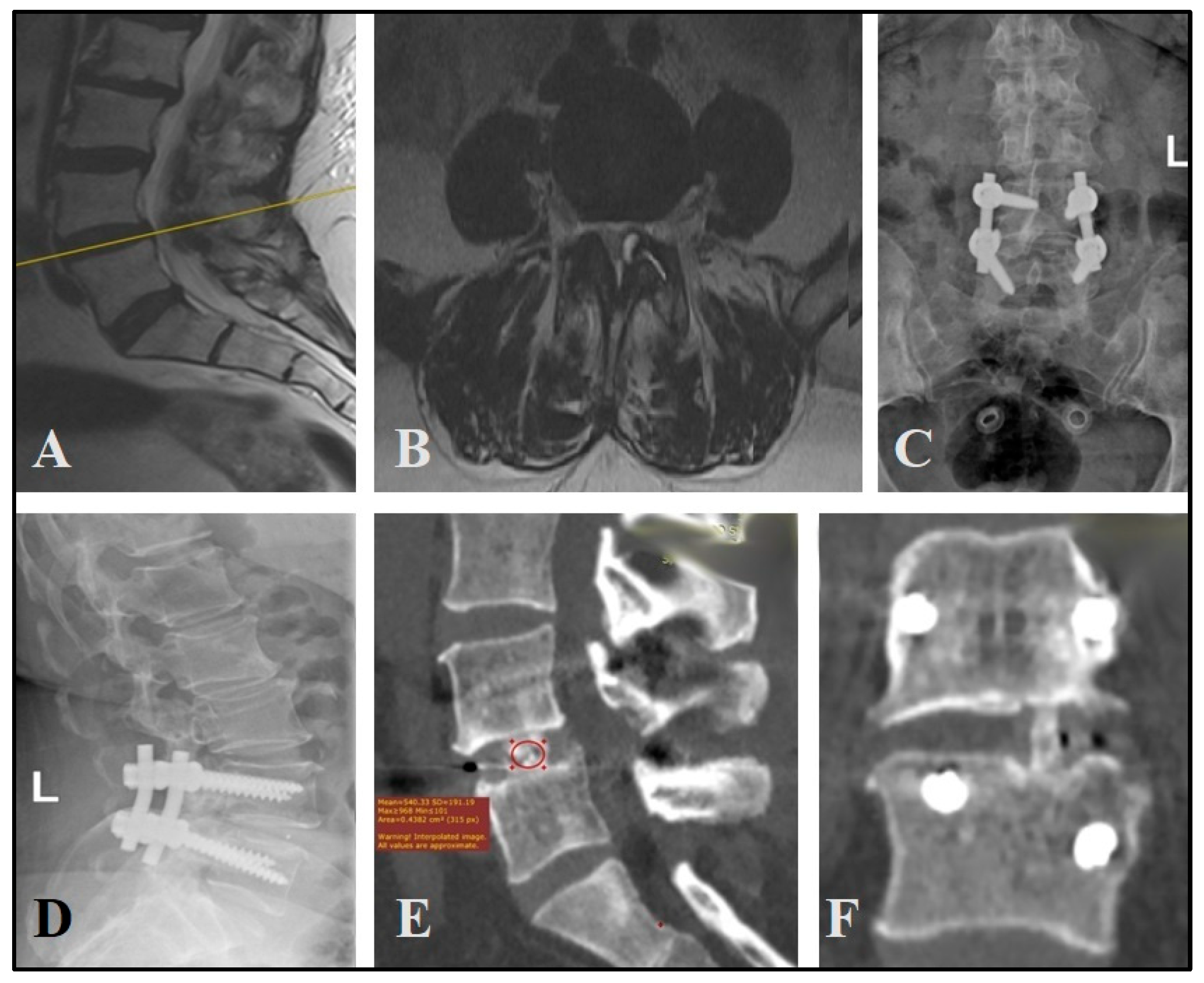
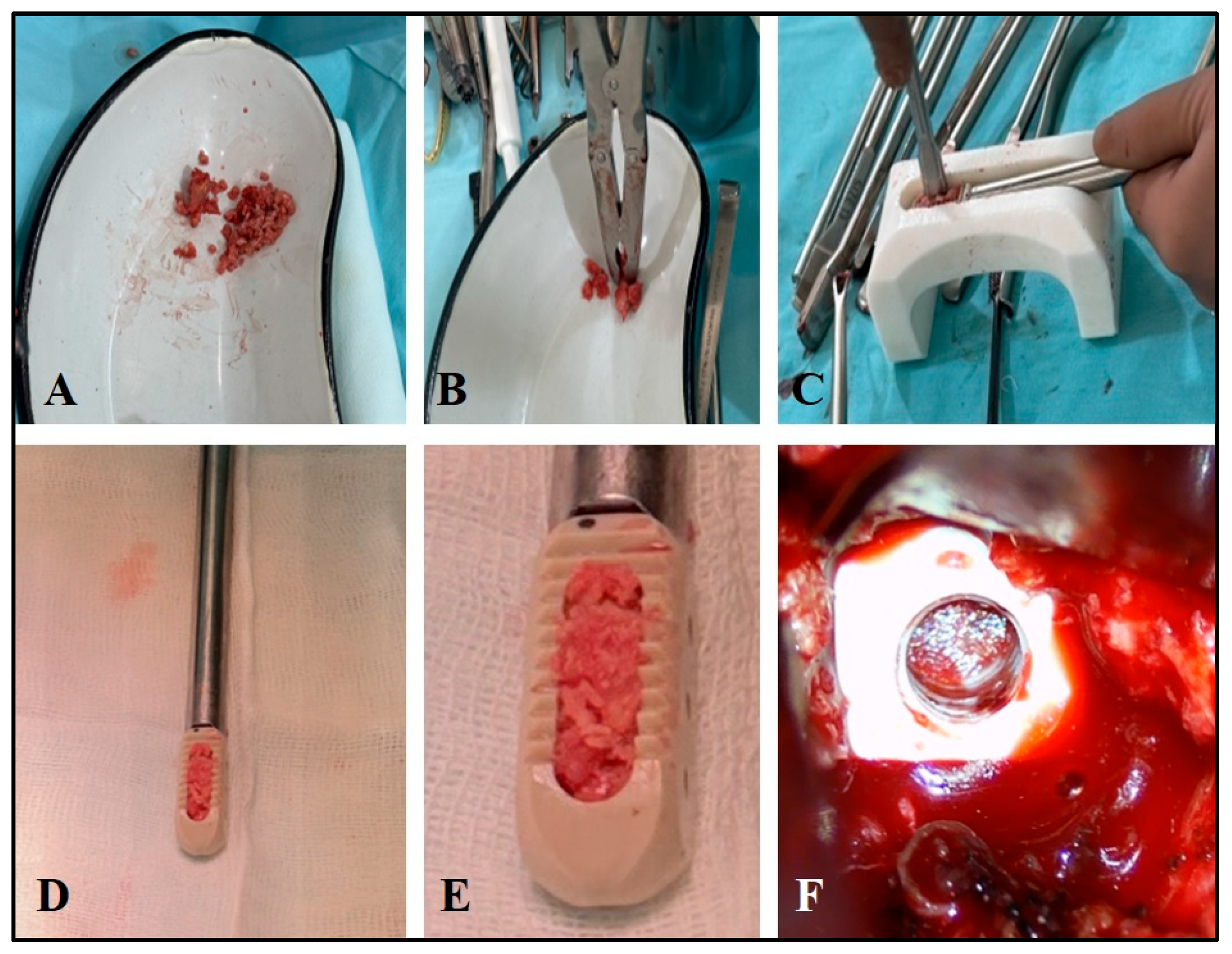
Patient complained of periodic severe pain in the lumbar spine, radiating to the lower extremities, and intermittent claudication, without a positive effect from conservative treatment for 3 months. MRI of the lumbar spine: osteochondrosis, spondylarthrosis, spondylosis of the lumbosacral spine. Stenosis of the spinal canal at the level of L4–L5. Herniated disc L4–L5. The patient underwent posterior decompression of the spinal cord roots at the level of the L4-L5 vertebrae, TLIF cage with a histograft, and posterior rigid fixation at the level of the L4–L5 vertebrae. The effectiveness of the surgical intervention was monitored immediately after the operation by X-ray examination of the lumbar spine. It was observed for 3, 6 and 12 months after the operation; no inflammatory phenomena and corresponding pathological clinical symptoms were observed in the lumbar spine. Formation of a bone block was observed, with a density characteristic of the spongy substance of bone tissue and the integration of osteoplastic material 540 HU.
Figure A3. Stages of preparation of the VEGF and interbody cage for spinal fusion: (A) vial with VEGF and cage; (B,C) movement of VEGF with the patient’s blood; (D,E) filling of the VEGF cage with tweezers; (F) installation of the cage in the interbody space.
Surgeries 07 00029 g0a3
Figure A4. Postoperative (A,B) MRI and X-ray (C,D) of the lumbar spine. Postoperative (E,F) CT scan at 12 months follow-up, using histograft at L4–L5 level with bone block formation (HU 540, red circle).
Surgeries 07 00029 g0a4

References

  1. Ravindra, V.M.; Senglaub, S.S.; Rattani, A.; Dewan, M.C.; Härtl, R.; Bisson, E.; Park, K.B.; Shrime, M.G. Degenerative Lumbar Spine Disease: Estimating Global incidence and Worldwide Volume. Global Spine J. 2018, 8, 784–794. [Google Scholar] [CrossRef]
  2. Nurmukhametov, R.; Ramirez, M.D.J.E.; Dosanov, M.; Medetbek, A.; Kudryakov, S.; Soto, G.R.; Espinoza, C.B.P.; Mukengeshay, J.N.; Cherubin, T.M.; Nikolenko, V.; et al. Exploring Pathways for Pain Relief in Treatment and Management of Lumbar Foraminal Stenosis: A Review of the Literature. Brain Sci. 2024, 14, 740. [Google Scholar] [CrossRef] [PubMed]
  3. Patel, K.; Harikar, M.M.; Venkataram, T.; Chavda, V.; Montemurro, N.; Assefi, M.; Hussain, N.; Yamamoto, V.; Kateb, B.; Lewandrowski, K.-U.; et al. Is Minimally invasive Spinal Surgery Superior to Endoscopic Spine Surgery in Postoperative Radiologic Outcomes of Lumbar Spine Degenerative Disease? A Systematic Review. J. Neurol. Surg. A Cent. Eur. Neurosurg. 2024, 85, 182–191. [Google Scholar] [CrossRef] [PubMed]
  4. Uddin, S.; Khan, A.; Waseem, S.; Dhillon, A.; Saleem, S.; Farhan, M. Comparison of Autogenous-Bone-Graft Vs Bone-Substitute in Nonunion of Long Bones in Terms of Early Union insights. J. Health Rehabil. 2024, 2, 200–204. [Google Scholar]
  5. Brodeur, P.G.; Perez, G.M.; Hartnett, D.A.; McDonald, C.L.; Gil, J.A.; Cruz, A.I.; Kuris, E.O. Surgeon Volume and Social Disparity are Associated with Postoperative Complications After Lumbar Fusion. World Neurosurg. 2022, 163, e162–e176. [Google Scholar] [CrossRef]
  6. Bridwell, K.H.; Lenke, L.G.; McEnery, K.W.; Baldus, C.; Blanke, K. Anterior fresh frozen structural allografts in the thoracic and lumbar spine. Do they work if combined with posterior fusion and instrumentation in adult patients with kyphosis or anterior column defects? Spine 1995, 20, 1410–1418. [Google Scholar] [CrossRef]
  7. Park, C.K. Total disc replacement in lumbar degenerative disc diseases. J. Korean Neurosurg. Soc. 2015, 58, 401–411. [Google Scholar] [CrossRef]
  8. Xi, Z.; Mummaneni, P.V.; Wang, M.; Ruan, H.; Burch, S.; Deviren, V.; Clark, A.J.; Berven, S.H.; Chou, D. The association between lower Hounsfield units on computed tomography and cage subsidence after lateral lumbar interbody fusion. Neurosurg. Focus FOC 2020, 49, E8. [Google Scholar] [CrossRef] [PubMed]
  9. Sánchez, J.A.S.; Solís, S.S.; García, M.E.S.; Solís, H.A.S.; Torres, B.Y.A.; Rangel, J.A.I.R. Radiological diagnostic accuracy study comparing Lenke, Bridwell, BSF, and CT-HU fusion grading scales for minimally invasive lumbar interbody fusion spine surgery and its correlation to clinical outcome. Medicine 2020, 99, e19979. [Google Scholar] [CrossRef]
  10. Kim, J.; Kim, S.; Song, I. Octacalcium phosphate, a promising bone substitute material: A narrative review. J. Yeungnam Med. Sci. 2024, 41, 4–12. [Google Scholar] [CrossRef]
  11. Suzuki, O.; Shiwaku, Y.; Hamai, R. Octacalcium phosphate bone substitute materials: Comparison between properties of biomaterials and other calcium phosphate materials. Dent. Mater. J. 2020, 39, 187–199. [Google Scholar] [CrossRef]
  12. Sallent, I.; Capella-Monsonís, H.; Procter, P.; Bozo, I.Y.; Deev, R.V.; Zubov, D.; Vasyliev, R.; Perale, G.; Pertici, G.; Baker, J.; et al. The Few Who Made It: Commercially and Clinically Successful innovative Bone Grafts. Front Bioeng. Biotechnol. 2020, 8, 952. [Google Scholar] [CrossRef] [PubMed]
  13. González-Gallardo, E.; Ekert, J.O.; Iyer, H.G.; de Llano, J.P.N.-G.; Sánchez-Garavito, J.E.; Loizos, M.; Ríos-Zermeño, J.; Buchanan, I.A.; Abode-Iyamah, K.O.; Nottmeier, E.W.; et al. Radiological Assessment of Lumbar Fusion Status: Which Imaging Modality is Best Assessing Non-union in Lumbar Spine Pseudarthrosis? Glob. Spine J. 2025, 15, 3465. [Google Scholar] [CrossRef] [PubMed]
  14. Ko, Y.-I.; Ko, M.-S.; Bang, C.; Kwon, K.; Hur, J.; Park, H.-Y.; Kim, S.-I.; Kim, Y.-H. Analysis of risk factors affecting lumbosacral pseudoarthrosis in multi-segmental fusion: A CT-based study. Eur. Spine J. 2025, 34, 3978–3987. [Google Scholar] [CrossRef] [PubMed]
  15. Meng, B.; Bunch, J.; Burton, D.; Wang, J. Lumbar interbody Fusion: Recent Advances in Surgical Techniques and Bone Healing Strategies. Eur. Spine J. 2021, 30, 22–33. [Google Scholar] [CrossRef]
  16. Nurmukhametov, R.; Dosanov, M.; Encarnacion, M.D.J.; Barrientos, R.; Matos, Y.; Alyokhin, A.I.; Baez, I.P.; Efe, I.E.; Restrepo, M.; Chavda, V.; et al. Transforaminal Fusion Using Physiologically Integrated Titanium Cages with a Novel Design in Patients with Degenerative Spinal Disorders: A Pilot Study. Surgeries 2022, 3, 175–184. [Google Scholar] [CrossRef]
  17. Pairojboriboon, S.; Niruthisard, S.; Chandhanayingyong, C.; Monsereenusorn, C.; Poopan, S.; Lo, S.-F.L. A comparison of transforaminal lumbar interbody fusion (TLIF) cage material on fusion rates: A systematic review and network meta-analysis. World Neurosurg. X 2024, 23, 100392. [Google Scholar] [CrossRef]
  18. Kiapour, A.; Seim, H.B., 3rd; Atkinson, B.L.; Lalor, P.A.; Block, J.E. Bone Mineralizationand Spinal Fusion Evaluation of a Truss-based interbody Fusion Device: Ovine Finite Element Analysis with Confirmatory in Vivo Outcomes. Spine 2022, 47, E319–E327. [Google Scholar] [CrossRef]
  19. Bhatt, R.A.; Rozental, T.D. Bone graft substitutes. Hand Clin. 2012, 28, 457–468. [Google Scholar] [CrossRef]
  20. Gillman, C.E.; Jayasuriya, A.C. FDA-approved bone grafts and bone graft substitutedevices in bone regeneration. Mater. Sci. Eng. C Mater. Biol. Appl. 2021, 130, 112466. [Google Scholar] [CrossRef]
  21. Mori, Y.; Hamai, R.; Aizawa, T.; Suzuki, O. Impact of Octacalcium Phosphate/Gelatin (OCP/Gel) Composite on Bone Repair in Refractory Bone Defects. Tohoku J. Exp. Med. 2023, 260, 245–252. [Google Scholar] [CrossRef]
  22. Canto, J.D.; Mourão, C.F.; Moraschini, V.; Bonato, R.d.S.; Sartoretto, S.C.; Calasans-Maia, M.D.; Granjeiro, J.M.; Louro, R.S. Teriparatide for Guided Bone Regeneration in Craniomaxillofacial Defects: A Systematic Review of Preclinical Studies. Curr. Issues Mol. Biol. 2025, 47, 582. [Google Scholar] [CrossRef]
  23. Lord, E.L.; Petersen, K.; Zabat, M.; Leucht, P.; Mesfin, A.; Fischer, C. Biologics in Spine Fusion. Instr. Course Lect. 2023, 72, 689–702. [Google Scholar]
  24. Ambrosio, L.; Schol, J.; Tamagawa, S.; Muthu, S.; Sakai, D.; Papalia, R.; Vadalà, G.; Denaro, V. Efficacy and Safety of Osteobiologics for Lumbar Spinal Fusion: A Systematic Review and Network Meta-Analysis. J. Bone. Joint. Surg. Am. 2025, 107, 2110–2121. [Google Scholar] [CrossRef]
  25. Suzuki, O.; Hamai, R.; Sakai, S. The material design of octacalcium phosphate bone substitute: Increased dissolution and osteogenecity. Acta Biomater. 2023, 158, 1–11. [Google Scholar] [CrossRef] [PubMed]
  26. Fitzgerald, A.; McCool, R.; Carr, E.; Miller, P.; Reddish, K.; Lohr, C.C.; Annoni, E.; Lawrence, B. A systematic review of bone graft products used in lumbar interbody fusion procedures for degenerative disc disease. North Am. Spine Soc. J. 2024, 5, 100579. [Google Scholar] [CrossRef] [PubMed]
  27. Tan, G.H.; Goss, B.G.; Thorpe, P.J.; Williams, R.P. CT-based classification of long spinal allograft fusion. Eur. Spine J. 2007, 16, 1875–1881. [Google Scholar] [CrossRef]
  28. Goncharov, E.N.; Koval, O.A.; Bezuglov, E.N.; Engelgard, M.; Igorevich, E.I.; Kotenko, K.V.; Ramirez, M.D.J.E.; Montemurro, N. Comparative Analysis of Stromal Vascular Fraction and Alternative Mechanisms in Bone Fracture Stimulation to Bridge the Gap between Nature and Technological Advancement: A Systematic Review. Biomedicines 2024, 12, 342. [Google Scholar] [CrossRef] [PubMed]
  29. Deev, R.V.; Drobyshev, A.Y.; Bozo, I.Y.; Isaev, A.A. Ordinary and Activated Bone Grafts: Applied Classification and the Main Features. Biomed. Res. Int. 2015, 2015, 365050. [Google Scholar] [CrossRef]
  30. Nurmukhametov, R.; Dosanov, M.; Medetbek, A.; Ramirez, M.D.J.E.; Chavda, V.; Chmutin, G.; Montemurro, N. Comparative Analysis of Open Transforaminal Lumbar interbody Fusion and Wiltse Transforaminal Lumbar interbody Fusion Approaches for Treating Single-Level Lumbar Spondylolisthesis: A Single-Center Retrospective Study. Surgeries 2023, 4, 623–634. [Google Scholar] [CrossRef]
  31. Fu, R.; Selph, S.; McDonagh, M.; Peterson, K.; Tiwari, A.; Chou, R.; Helfand, M. Effectiveness and harms of recombinant human bone morphogenetic protein-2 in spine fusion: A systematic review and meta-analysis. Ann. Intern. Med. 2013, 158, 890–902. [Google Scholar] [CrossRef] [PubMed]
  32. Bozo, I.Y.; Drobyshev, A.Y.; Redko, N.A.; Komlev, V.S.; Isaev, A.A.; Deev, R.V. Bringing a Gene-Activated Bone Substitute into Clinical Practice: From Bench to Bedside. Front Bioeng. Biotechnol. 2021, 9, 599300. [Google Scholar] [CrossRef] [PubMed]
  33. Nurmukhametov, R.M.; Klimov, V.; Medetbek, A.; Kudryakov, S.A.; Dosanov, M.; Guseva, A.A.; Baigushev, P.R.; Kerimov, T.A.; Montemurro, N. Comparative Clinical and Volumetric Outcomes of Contemporary Surgical Techniques for Lumbar Foraminal Stenosis: A Retrospective Cohort Study. Surgeries 2025, 6, 91. [Google Scholar] [CrossRef]
  34. Montemurro, N.; Pierozzi, E.; Inchingolo, A.M.; Pahwa, B.; De Carlo, A.; Palermo, A.; Scarola, R.; Dipalma, G.; Corsalini, M.; Inchingolo, A.D.; et al. New biograft solution, growth factors and bone regenerative approaches in neurosurgery, dentistry, and orthopedics: A review. Eur. Rev. Med. Pharmacol. Sci. 2023, 27, 7653–7664. [Google Scholar]
  35. Nurmukhametov, R.; Medetbek, A.; Ramirez, M.E.; Afsar, A.; Sharif, S.; Montemurro, N. Factors affecting return to work following endoscopic lumbar foraminal stenosis surgery: A single-center series. Surg Neurol Int. 2023, 14, 408. [Google Scholar] [CrossRef]
  36. Musa, G.; Castillo, R.E.B.; Slabov, M.V.; Chirwa, K.; E Chmutin, G.; Ramirez, M.d.J.E.; Nurmukhametov, R. Degenerative Grade 3 Spondylolisthesis Management: A Case Report and Literature Review. Cureus 2022, 14, e29374. [Google Scholar] [CrossRef]
  37. Bernard, E.; Enelis, B.; Nurmukhametov, R.; Ramirez, M.d.J.E.; Dosanov, M.; Shirshov, I.; E Efe, I.; Pena, I.J.R.; Castillo, R.E.B. Surgical Management of Lumbar Hardware Failure Due to Recurrent Postoperative Spondylodiscitis: Case Report. Cureus 2022, 14, e27457. [Google Scholar] [CrossRef] [PubMed]
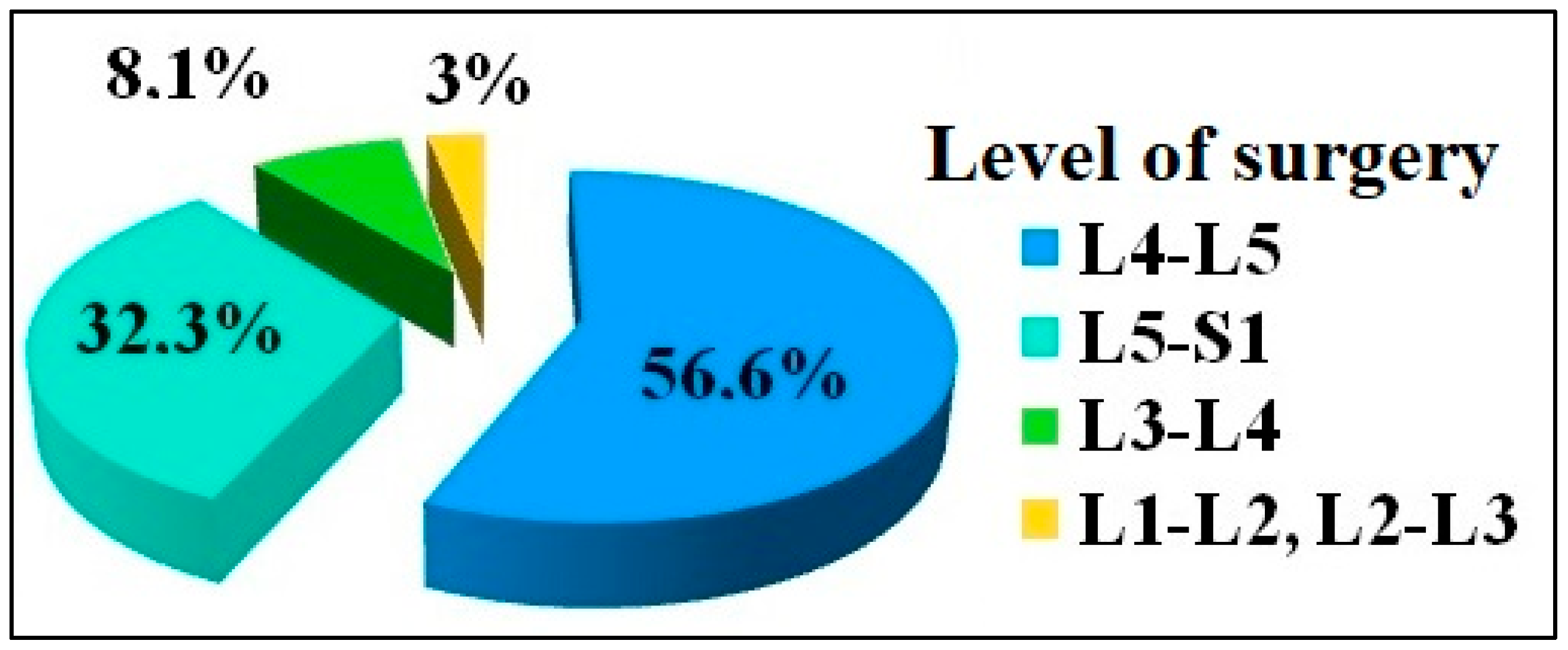
Figure 1. Overall distribution of surgical procedures by spinal level.
Surgeries 07 00029 g001
Table 1. Revision surgeries.
CausesTotalGroup AGroup B
Pseudoarthrosis101
Instability of metal structures101
Migration cage101
Symptomatic Adjacent Segment Disease422
Table 2. Comparative analysis of bone fusion using a histograft based on OCP and plasmid DNA containing the VEGF gene versus an autograft at 6 and 12 months after surgery, assessed by CT densitometry and the Bridwell et al. [6] classification.
Evaluation ParametersControl
Inspection
Octacalcium
Phosphate (OCP) (n = 100)
Autograft
(n = 100)
p-Value
HU density (mean ± SD)6 months395.8 ± 147.6377.5 ± 143.80.361
12 months617.6 ± 180.9599.8 ± 181.90.484
Qualitative assessment
(n°, %)
6 monthsI: 28 (28%)I: 24 (24%)0.502
II: 44 (44%)II: 42 (42%)
III: 28 (28%)III: 34 (34%)
12 monthsI: 77 (77%)I: 73 (73%)0.583
II: 17 (17%)II: 19 (19%)
III: 6 (6%)III: 8 (8%)
Hounsfield Unit, HU.
Table 3. Comparative dynamics of physical (PCS) and psychological (MCS) components of quality of life in patients after the use of histograft and autograft at long-term follow-up.
GroupHistograft (VEGF)Additional
Operations
6 Months12 Monthsp-Value *
Histograft (VEGF)100PCS41.74 ± 7.7158.28 ± 8.2175.62 ± 7.21<0.001
MCS26.90 ± 3.3640.38 ± 3.4870.18 ± 8.87<0.001
Autograft100PCS45.84 ± 6.9562.34 ± 9.8775.30 ± 7.86<0.001
MCS29.74 ± 5.6243.82 ± 5.7074.18 ± 8.140.001
Data are presented as mean ± standard deviation. PCS is the physical component of health, and MCS is the psychological component of health. * p-value calculated for intragroup dynamics from baseline to 12 months using ANOVA repeated measurements.
Disclaimer/Publisher’s Note: The statements, opinions and data contained in all publications are solely those of the individual author(s) and contributor(s) and not of MDPI and/or the editor(s). MDPI and/or the editor(s) disclaim responsibility for any injury to people or property resulting from any ideas, methods, instructions or products referred to in the content.