Examining the Most Influential Publications Regarding Tracheal Reconstruction: A Bibliometric Review

 , , , , and
Abstract
1. Introduction
2. Methods
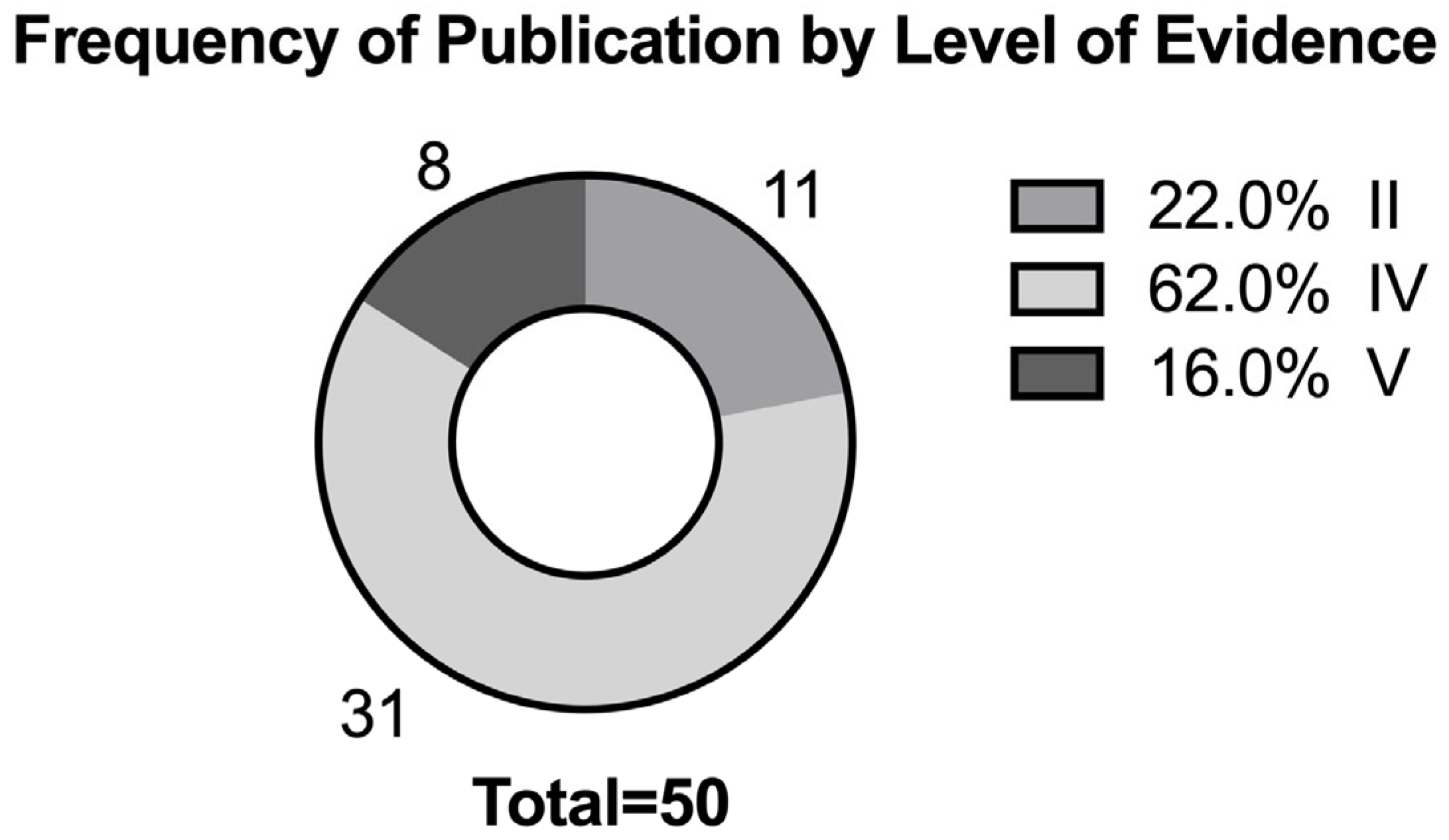
- Level 1: Systematic reviews of randomized trials, or systematic reviews of inception cohort studies.
- Level 2: Systematic reviews of cohort studies, inception cohort studies, cross-sectional studies, randomized trials, or observational studies with significant impact.
- Level 3: Retrospective cohort studies or epidemiological/observational studies.
- Level 4: Case–control studies, low-impact cohort studies, or animal studies.
- Level 5: Simulations, models, or mechanism-based reasoning.
3. Results
4. Discussion
5. Limitations
6. Conclusions
Supplementary Materials
Author Contributions
Funding
Institutional Review Board Statement
Informed Consent Statement
Data Availability Statement
Conflicts of Interest
References
- Etienne, H.; Fabre, D.; Caro, A.G.; Kolb, F.; Mussot, S.; Mercier, O.; Mitilian, D.; Stephan, F.; Fadel, E.; Dartevelle, P. Tracheal replacement. Eur. Respir. J. 2018, 51, 1702211. [Google Scholar] [CrossRef]
- Genden, E.M.; Laitman, B.M. Human Tracheal Transplantation. Transplantation 2023, 107, 1698–1705. [Google Scholar] [CrossRef]
- Stanifer, B.P.; Andrei, A.C.; Liu, M.; Meyerson, S.L.; Bharat, A.; Odell, D.D.; DeCamp, M.M. Short-Term Outcomes of Tracheal Resection in The Society of Thoracic Surgeons Database. Ann. Thorac. Surg. 2018, 106, 1612–1618. [Google Scholar] [CrossRef]
- Elsayed, H.; Mostafa, A.M.; Soliman, S.; Shoukry, T.; El-Nori, A.A.; El-Bawab, H.Y. First-line tracheal resection and primary anastomosis for postintubation tracheal stenosis. Ann. R. Coll. Surg. Engl. 2016, 98, 425–430. [Google Scholar] [CrossRef]
- Kim, S.S.; Khalpey, Z.; Hsu, C.; Little, A.G. Changes in Tracheostomy- and Intubation-Related Tracheal Stenosis: Implications for Surgery. Ann. Thorac. Surg. 2017, 104, 964–970. [Google Scholar] [CrossRef] [PubMed][Green Version]
- Johnson, R.F.; Bradshaw, S.; Jaffal, H.; Chorney, S.R. Estimations of Laryngotracheal Stenosis After Mechanical Ventilation: A Cross-Sectional Analysis. Laryngoscope 2022, 132, 1723–1728. [Google Scholar] [CrossRef] [PubMed]
- Farzanegan, R.; Zangi, M.; Abbasidezfouli, A.; Pejhan, S.; Sadeghbeigee, F.; Daneshvarkakhki, A.; Sheikhy, K.; Saghebi, S.R.; Nazemy, S.; Jahanshahi, N.; et al. Postintubation Multisegmental Tracheal Stenosis: A 24-Year Experience. Ann. Thorac. Surg. 2021, 112, 1101–1108. [Google Scholar] [CrossRef] [PubMed]
- Rich, J.T.; Gullane, P.J. Current concepts in tracheal reconstruction. Curr. Opin. Otolaryngol. Head Neck Surg. 2012, 20, 246–253. [Google Scholar] [CrossRef]
- Greaney, A.M.; Niklason, L.E. The History of Engineered Tracheal Replacements: Interpreting the Past and Guiding the Future. Tissue Eng. Part B Rev. 2021, 27, 341–352. [Google Scholar] [CrossRef]
- Haykal, S.; Salna, M.; Waddell, T.K.; Hofer, S.O. Advances in tracheal reconstruction. Plast. Reconstr. Surg. Glob. Open. 2014, 2, e178. [Google Scholar] [CrossRef]
- Zhang, Y.; Wei, S.; Li, M.; Lv, G. Revolutionizing tracheal reconstruction: Innovations in vascularized composite allograft transplantation. Front. Bioeng. Biotechnol. 2024, 12, 1452780. [Google Scholar] [CrossRef] [PubMed]
- Haykal, S.; Soleas, J.P.; Salna, M.; Hofer, S.O.; Waddell, T.K. Evaluation of the structural integrity and extracellular matrix components of tracheal allografts following cyclical decellularization techniques: Comparison of three protocols. Tissue Eng. Part C Methods 2012, 18, 614–623. [Google Scholar] [CrossRef] [PubMed]
- Kumar, L.M.; George, R.J.; Anisha, P.S. Bibliometric Analysis for Medical Research. Indian J. Psychol. Med. 2023, 45, 277–282. [Google Scholar] [CrossRef]
- Ninkov, A.; Frank, J.R.; Maggio, L.A. Bibliometrics: Methods for studying academic publishing. Perspect. Med. Educ. 2022, 11, 173–176. [Google Scholar] [CrossRef]
- Hondt, M.D.; Vranckx, J.J. Reconstruction of defects of the trachea. J. Mater. Sci. Mater. Med. 2017, 28, 24. [Google Scholar] [CrossRef]
- Perryman, M.C.; Kraft, S.M.; Kavookjian, H.L. Laryngotracheal Reconstruction for Subglottic and Tracheal Stenosis. Otolaryngol. Clin. N. Am. 2023, 56, 769–778. [Google Scholar] [CrossRef]
- Grillo, H.C.; Donahue, D.M.; Mathisen, D.J.; Wain, J.C.; Wright, C.D. Postintubation tracheal stenosis: Treatment and results. J. Thorac. Cardiovasc. Surg. 1995, 109, 486–493. [Google Scholar] [CrossRef]
- Austen, W.G.; Burke, J.F.; Mathisen, D.J.; Russell, P.S.; Wilkins, E.W., Jr. Hermes C. Grillo. Harvard Gazette. 2007. Available online: https://news.harvard.edu/gazette/story/2007/11/hermes-c-grillo/ (accessed on 11 November 2024).
- Mulliken, J.B.; Grillo, H.C. The limits of tracheal resection with primary anastomosis: Further anatomical studies in man. J. Thorac. Cardiovasc. Surg. 1968, 55, 418–421. [Google Scholar] [CrossRef]
- Grillo, H.C. Tracheal replacement: A critical review. Ann. Thorac. Surg. 2002, 73, 1995–2004. [Google Scholar] [CrossRef]
- Grillo, H.C.; Mathisen, D.J. Primary tracheal tumors: Treatment and results. Ann. Thorac. Surg. 1990, 49, 69–77. [Google Scholar] [CrossRef]
- Chen, D.; Britt, C.J.; Mydlarz, W.; Desai, S.C. A novel technique for tracheal reconstruction using a resorbable synthetic mesh. Laryngoscope 2018, 128, 1567–1570. [Google Scholar] [CrossRef]
- Zhu, J.; Lu, Y.; Shan, Y.; Yuan, L.; Wu, Q.; Shen, Z.; Sun, F.; Shi, H. Global Bibliometric and Visualized Analysis of Tracheal Tissue Engineering Research. Tissue Eng. Part B Rev. 2024, 30, 198–216. [Google Scholar] [CrossRef] [PubMed]
- Butler, C.R.; Hynds, R.E.; Gowers, K.H.; Lee, D.D.H.; Brown, J.M.; Crowley, C.; Teixeira, V.H.; Smith, C.M.; Urbani, L.; Hamilton, N.J.; et al. Rapid Expansion of Human Epithelial Stem Cells Suitable for Airway Tissue Engineering. Am. J. Respir. Crit. Care Med. 2016, 194, 156–168. [Google Scholar] [CrossRef] [PubMed]
- Kang, Y.; Wang, C.; Qiao, Y.; Gu, J.; Zhang, H.; Peijs, T.; Kong, J.; Zhang, G.; Shi, X. Tissue-Engineered Trachea Consisting of Electrospun Patterned sc-PLA/GO- g-IL Fibrous Membranes with Antibacterial Property and 3D-Printed Skeletons with Elasticity. Biomacromolecules 2019, 20, 1765–1776. [Google Scholar] [CrossRef] [PubMed]
- Chang, J.W.; Park, S.A.; Park, J.K.; Kim, Y.; Shin, Y.S.; Kim, C. Tissue-engineered tracheal reconstruction using three-dimensionally printed artificial tracheal graft: Preliminary report. Artif. Organs 2014, 38, E95–E105. [Google Scholar] [CrossRef]
- Park, J.H.; Hong, J.M.; Ju, Y.M.; Jung, J.W.; Kang, H.-W.; Lee, S.J.; Yoo, J.J.; Kim, S.W.; Kim, S.H.; Cho, D.-W. A novel tissue-engineered trachea with a mechanical behavior similar to native trachea. Biomaterials 2015, 62, 106–115. [Google Scholar] [CrossRef]
- Kobayashi, K.; Suzuki, T.; Nomoto, Y.; Tada, Y.; Miyake, M.; Hazama, A.; Wada, I.; Nakamura, T.; Omori, K. A tissue-engineered trachea derived from a framed collagen scaffold, gingival fibroblasts and adipose-derived stem cells. Biomaterials 2010, 31, 4855–4863. [Google Scholar] [CrossRef]
- Dikina, A.D.; Strobel, H.A.; Lai, B.P.; Rolle, M.W.; Alsberg, E. Engineered cartilaginous tubes for tracheal tissue replacement via self-assembly and fusion of human mesenchymal stem cell constructs. Biomaterials 2015, 52, 452–462. [Google Scholar] [CrossRef]
- Luo, X.; Liu, Y.; Zhang, Z.; Tao, R.; Liu, Y.; He, A.; Yin, Z.; Li, D.; Zhang, W.; Liu, W.; et al. Long-term functional reconstruction of segmental tracheal defect by pedicled tissue-engineered trachea in rabbits. Biomaterials 2013, 34, 3336–3344. [Google Scholar] [CrossRef]
- Remlinger, N.T.; Czajka, C.A.; Juhas, M.E.; Vorp, D.A.; Stolz, D.B.; Badylak, S.F.; Gilbert, S.; Gilbert, T.W. Hydrated xenogeneic decellularized tracheal matrix as a scaffold for tracheal reconstruction. Biomaterials 2010, 31, 3520–3526. [Google Scholar] [CrossRef]
- Bader, A.; Macchiarini, P. Moving towards in situ tracheal regeneration: The bionic tissue engineered transplantation approach. J. Cell. Mol. Med. 2010, 14, 1877–1889. [Google Scholar] [CrossRef]
- Kanzaki, M.; Yamato, M.; Hatakeyama, H.; Kohno, C.; Yang, J.; Umemoto, T.; Kikuchi, A.; Okano, T.; Onuki, T. Tissue engineered epithelial cell sheets for the creation of a bioartificial trachea. Tissue Eng. 2006, 12, 1275–1283. [Google Scholar] [CrossRef]
- Khalid, U.; Uchikov, P.; Hristov, B.; Kraev, K.; Koleva-Ivanova, M.; Kraeva, M.; Batashki, A.; Taneva, D.; Doykov, M.; Uchikov, A. Surgical Innovations in Tracheal Reconstruction: A Review on Synthetic Material Fabrication. Medicina 2024, 60, 40. [Google Scholar] [CrossRef]
- Shen, Z.; Sun, F.; Shan, Y.; Lu, Y.; Wu, C.; Zhang, B.; Wu, Q.; Yuan, L.; Zhu, J.; Wang, Q.; et al. Construction of a novel cell-free tracheal scaffold promoting vascularization for repairing tracheal defects. Mater. Today Bio. 2023, 23, 100841. [Google Scholar] [CrossRef]
- Kapat, K.; Gondane, P.; Kumbhakarn, S.; Takle, S.; Sable, R. Challenges and Opportunities in Developing Tracheal Substitutes for the Recovery of Long-Segment Defects. Macromol. Biosci. 2024, 24, e2400054. [Google Scholar] [CrossRef]
- Mizuno, K.; Ohnishi, H.; Kishimoto, Y.; Okuyama, H.; Kawai, Y.; Kitano, M.; Hayashi, Y.; Omori, K. Transplantation of Human Induced Pluripotent Stem Cell-Derived Airway Epithelia at Different Induction Stages into Nude Rat. Cell. Reprogram. 2024, 26, 156–163. [Google Scholar] [CrossRef]

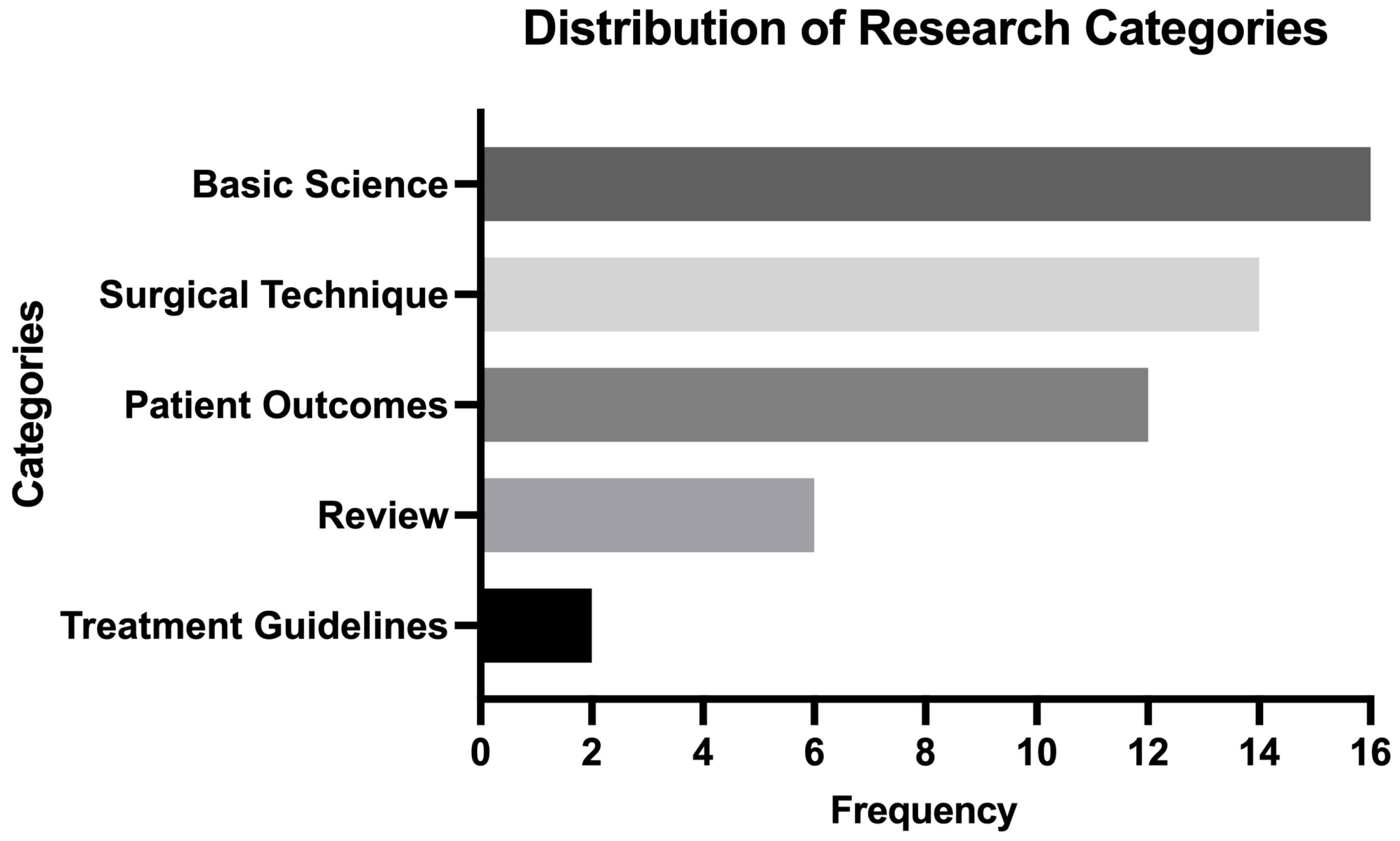

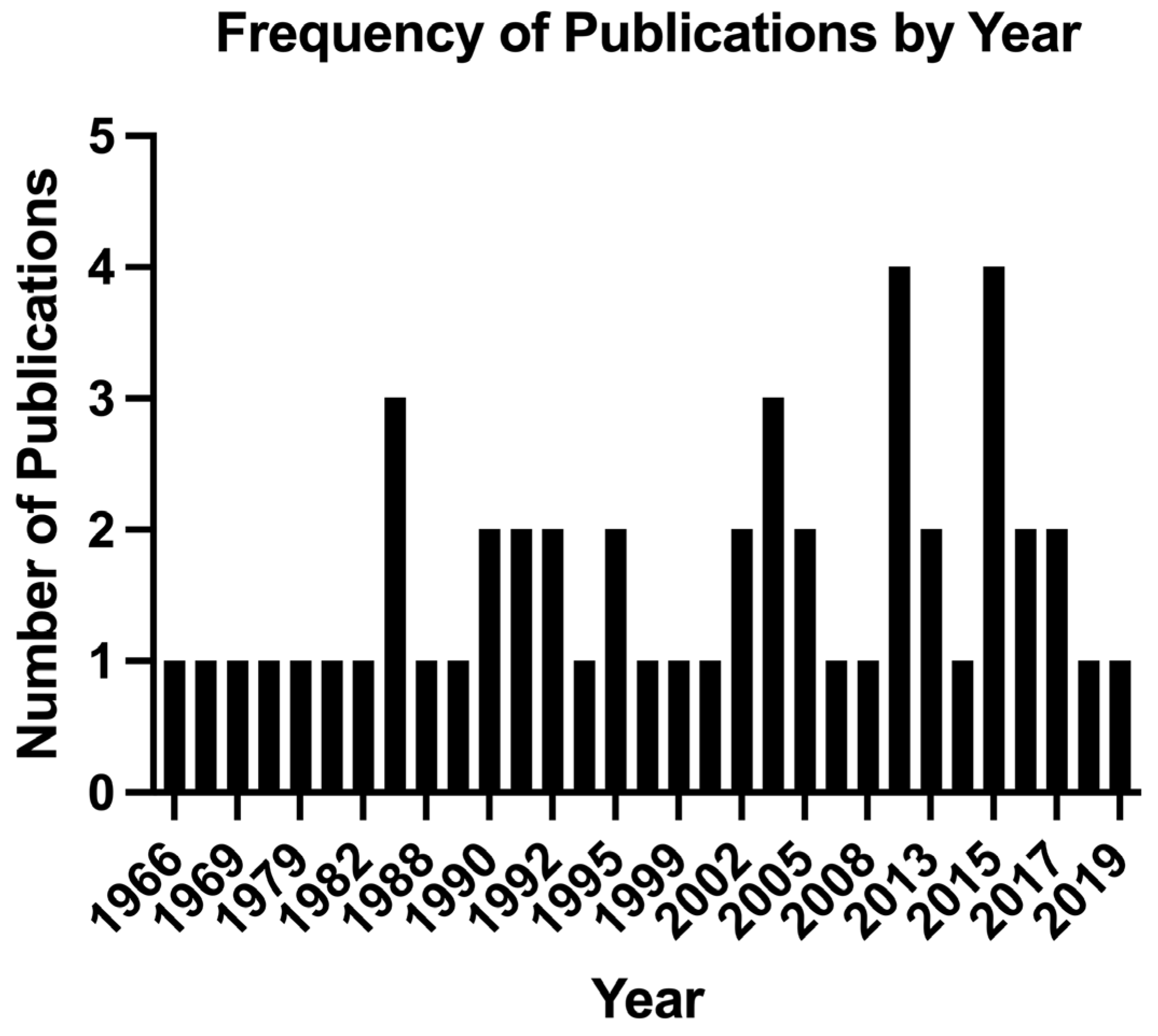
| Rank | Publication | Total Citations |
|---|---|---|
| 1 | Grillo HC, Donahue DM, Mathisen DJ, Wain JC, Wright CD. Postintubation tracheal stenosis. Treatment and results. J Thorac Cardiovasc Surg. Mar 1995 | 421 |
| 2 | Grillo HC. Tracheal replacement: A critical review. Ann Thorac Surg. Jun 2002 | 415 |
| 3 | Grillo HC, Mathisen DJ. Primary tracheal tumors: Treatment and results. Ann Thorac Surg. Jan 1990 | 315 |
| 4 | Wallace MJ, Charnsangavej C, Ogawa K et al. Tracheobronchial tree: Expandable metallic stents used in experimental and clinical applications. Work in progress. Radiology. Feb 1986 | 272 |
| 5 | Delaere P, Vranckx J, Verleden G, De Leyn P, Van Raemdonck D. Tracheal allotransplantation after withdrawal of immunosuppressive therapy. N Engl J Med. 14 January 2010 | 254 |
| 6 | Cotton RT, Gray SD, Miller RP. Update of the Cincinnati experience in pediatric laryngotracheal reconstruction. Laryngoscope. Nov 1989 | 168 |
| 7 | Grillo HC, Wright CD, Vlahakes GJ, MacGillivray TE. Management of congenital tracheal stenosis by means of slide tracheoplasty or resection and reconstruction, with long-term follow-up of growth after slide tracheoplasty. J Thorac Cardiovasc Surg. Jan 2002 | 165 |
| 8 | Neville WE, Bolanowski JP, Kotia GG. Clinical experience with the silicone tracheal prosthesis. J Thorac Cardiovasc Surg. Apr 1990 | 152 |
| 9 | Butler CR, Hynds RE, Gowers KH et al. Rapid Expansion of Human Epithelial Stem Cells Suitable for Airway Tissue Engineering. Am J Respir Crit Care Med. Jul 15 2016 | 151 |
| 10 | Grillo HC. Surgical treatment of postintubation tracheal injuries. J Thorac Cardiovasc Surg. Dec 1979 | 147 |
| 11 | Grillo HC. Primary reconstruction of airway after resection of subglottic laryngeal and upper tracheal stenosis. Ann Thorac Surg. Jan 1982 | 140 |
| 12 | Mathisen DJ, Grillo HC, Wain JC, Hilgenberg AD. Management of acquired nonmalignant tracheoesophageal fistula. Ann Thorac Surg. Oct 1991 | 131 |
| 13 | Remlinger NT, Czajka CA, Juhas ME et al. Hydrated xenogeneic decellularized tracheal matrix as a scaffold for tracheal reconstruction. Biomaterials. May 2010 | 131 |
| 14 | Lebovics RS, Hoffman GS, Leavitt RY et al. The management of subglottic stenosis in patients with Wegener’s granulomatosis. Laryngoscope. Dec 1992 | 128 |
| 15 | Neville WE, Bolanowski PJ, Soltanzadeh H. Prosthetic reconstruction of the trachea and carina. J Thorac Cardiovasc Surg. Oct 1976 | 124 |
| 16 | Chang JW, Park SA, Park JK et al. Tissue-engineered tracheal reconstruction using three-dimensionally printed artificial tracheal graft: Preliminary report. Artif Organs. Jun 2014 | 119 |
| 17 | Grillo HC, Zannini P, Michelassi F. Complications of tracheal reconstruction. Incidence, treatment, and prevention. J Thorac Cardiovasc Surg. Mar 1986 | 116 |
| 18 | Park JH, Hong JM, Ju YM et al. A novel tissue-engineered trachea with a mechanical behavior similar to native trachea. Biomaterials. Sep 2015 | 116 |
| 19 | Sarper A, Ayten A, Eser I, Ozbudak O, Demircan A. Tracheal stenosis after tracheostomy or intubation: Review with special regard to cause and management. Tex Heart Inst J. 2005 | 115 |
| 20 | Omori K, Tada Y, Suzuki T et al. Clinical application of in situ tissue engineering using a scaffolding technique for reconstruction of the larynx and trachea. Ann Otol Rhinol Laryngol. Sep 2008 | 109 |
| 21 | Kobayashi K, Suzuki T, Nomoto Y et al. A tissue-engineered trachea derived from a framed collagen scaffold, gingival fibroblasts and adipose-derived stem cells. Biomaterials. Jun 2010 | 107 |
| 22 | Grillo HC. Development of tracheal surgery: a historical review. Part 1: Techniques of tracheal surgery. Ann Thorac Surg. Feb 2003 | 106 |
| 23 | Gao M, Zhang H, Dong W et al. Tissue-engineered trachea from a 3D-printed scaffold enhances whole-segment tracheal repair. Sci Rep. 12 July 2017 | 104 |
| 24 | Cotton RT, Myer CM, 3rd, O’Connor DM, Smith ME. Pediatric laryngotracheal reconstruction with cartilage grafts and endotracheal tube stenting: the single-stage approach. Laryngoscope. Aug 1995 | 103 |
| 25 | Kang Y, Wang C, Qiao Y et al. Tissue-Engineered Trachea Consisting of Electrospun Patterned sc-PLA/GO- g-IL Fibrous Membranes with Antibacterial Property and 3D-Printed Skeletons with Elasticity. Biomacromolecules. 8 April 2019 | 102 |
| 26 | Kojima K, Bonassar LJ, Roy AK, Mizuno H, Cortiella J, Vacanti CA. A composite tissue-engineered trachea using sheep nasal chondrocyte and epithelial cells. FASEB J. May 2003 | 102 |
| 27 | Cotton RT, Evans JN. Laryngotracheal reconstruction in children. Five-year follow-up. Ann Otol Rhinol Laryngol. Sep–Oct 1981 | 101 |
| 28 | Ward RF, April MM. Mitomycin-C in the treatment of tracheal cicatrix after tracheal reconstruction. Int J Pediatr Otorhinolaryngol. 1 August 1998 | 101 |
| 29 | Muniappan A, Wain JC, Wright CD et al. Surgical treatment of nonmalignant tracheoesophageal fistula: A thirty-five year experience. Ann Thorac Surg. Apr 2013 | 101 |
| 30 | Monnier P, Savary M, Chapuis G. Partial cricoid resection with primary tracheal anastomosis for subglottic stenosis in infants and children. Laryngoscope. Nov 1993 | 100 |
| 31 | Dikina AD, Strobel HA, Lai BP, Rolle MW, Alsberg E. Engineered cartilaginous tubes for tracheal tissue replacement via self-assembly and fusion of human mesenchymal stem cell constructs. Biomaterials. Jun 2015 | 99 |
| 32 | Grillo HC, Suen HC, Mathisen DJ, Wain JC. Resectional management of thyroid carcinoma invading the airway. Ann Thorac Surg. Jul 1992 | 98 |
| 33 | Cotton RT. The problem of pediatric laryngotracheal stenosis: A clinical and experimental study on the efficacy of autogenous cartilaginous grafts placed between the vertically divided halves of the posterior lamina of the cricoid cartilage. Laryngoscope. Dec 1991 | 96 |
| 34 | Auchincloss HG, Wright CD. Complications after tracheal resection and reconstruction: prevention and treatment. J Thorac Dis. Mar 2016 | 93 |
| 35 | Etienne H, Fabre D, Gomez Caro A et al. Tracheal replacement. Eur Respir J. Feb 2018 | 92 |
| 36 | Cotton RT. Management of subglottic stenosis. Otolaryngol Clin North Am. Feb 2000 | 92 |
| 37 | Mathey J, Binet JP, Galey JJ, Evrard C, Lemoine G, Denis B. Tracheal and tracheobronchial resections; technique and results in 20 cases. J Thorac Cardiovasc Surg. Jan 1966 | 91 |
| 38 | Martinod E, Seguin A, Pfeuty K et al. Long-term evaluation of the replacement of the trachea with an autologous aortic graft. Ann Thorac Surg. May 2003 | 91 |
| 39 | Kanzaki M, Yamato M, Hatakeyama H et al. Tissue engineered epithelial cell sheets for the creation of a bioartificial trachea. Tissue Eng. May 2006 | 91 |
| 40 | Bader A, Macchiarini P. Moving towards in situ tracheal regeneration: The bionic tissue engineered transplantation approach. J Cell Mol Med. Jul 2010 | 89 |
| 41 | Xu Y, Li D, Yin Z et al. Tissue-engineered trachea regeneration using decellularized trachea matrix treated with laser micropore technique. Acta Biomater. Aug 2017 | 88 |
| 42 | Martinod E, Seguin A, Holder-Espinasse M et al. Tracheal regeneration following tracheal replacement with an allogenic aorta. Ann Thorac Surg. Mar 2005 | 86 |
| 43 | Grillo HC, Zannini P. Resectional management of airway invasion by thyroid carcinoma. Ann Thorac Surg. Sep 1986 | 85 |
| 44 | Pinsonneault C, Fortier J, Donati F. Tracheal resection and reconstruction. Can J Anaesth. May 1999 | 80 |
| 45 | Lang G, Ghanim B, Hötzenecker K et al. Extracorporeal membrane oxygenation support for complex tracheo-bronchial procedures†. Eur J Cardiothorac Surg. Feb 2015 | 79 |
| 46 | Pearson FG, Henderson RD, Gross AE, Ginsberg RJ, Stone RM. The reconstruction of circumferential tracheal defects with a porous prosthesis. An experimental and clinical study using heavy Marlex mesh. J Thorac Cardiovasc Surg. May 1968 | 79 |
| 47 | Luo X, Liu Y, Zhang Z et al. Long-term functional reconstruction of segmental tracheal defect by pedicled tissue-engineered trachea in rabbits. Biomaterials. Apr 2013 | 79 |
| 48 | Geffin B, Bland J, Grillo HC. Anesthetic management of tracheal resection and reconstruction. Anesth Analg. Sep–Oct 1969 | 76 |
| 49 | Zalzal GH. Use of stents in laryngotracheal reconstruction in children: Indications, technical considerations, and complications. Laryngoscope. Aug 1988 | 75 |
| 50 | Crowley C, Birchall M, Seifalian AM. Trachea transplantation: From laboratory to patient. J Tissue Eng Regen Med. Apr 2015 | 74 |
| Rank | Publication | Publication Year | Citations Per Year Since Publication |
|---|---|---|---|
| 1 | Kang Y, Wang C, Qiao Y et al. Tissue-Engineered Trachea Consisting of Electrospun Patterned sc-PLA/GO- g-IL Fibrous Membranes with Antibacterial Property and 3D-Printed Skeletons with Elasticity. Biomacromolecules. 8 April 2019 | 2019 | 25.50 |
| 2 | Butler CR, Hynds RE, Gowers KH et al. Rapid Expansion of Human Epithelial Stem Cells Suitable for Airway Tissue Engineering. Am J Respir Crit Care Med. 15 July 2016 | 2016 | 21.57 |
| 3 | Grillo HC. Tracheal replacement: a critical review. Ann Thorac Surg. Jun 2002 | 2002 | 19.76 |
| 4 | Delaere P, Vranckx J, Verleden G, De Leyn P, Van Raemdonck D. Tracheal allotransplantation after withdrawal of immunosuppressive therapy. N Engl J Med. 14 January 2010 | 2010 | 19.53 |
| 5 | Etienne H, Fabre D, Gomez Caro A et al. Tracheal replacement. Eur Respir J. Feb 2018 | 2018 | 18.40 |
| 6 | Gao M, Zhang H, Dong W et al. Tissue-engineered trachea from a 3D-printed scaffold enhances whole-segment tracheal repair. Sci Rep. 12 July 2017 | 2017 | 17.34 |
| 7 | Grillo HC, Donahue DM, Mathisen DJ, Wain JC, Wright CD. Postintubation tracheal stenosis. Treatment and results. J Thorac Cardiovasc Surg. Mar 1995 | 1995 | 15.04 |
| 8 | Xu Y, Li D, Yin Z et al. Tissue-engineered trachea regeneration using decellularized trachea matrix treated with laser micropore technique. Acta Biomater. Aug 2017 | 2017 | 14.67 |
| 9 | Park JH, Hong JM, Ju YM et al. A novel tissue-engineered trachea with a mechanical behavior similar to native trachea. Biomaterials. Sep 2015 | 2015 | 14.50 |
| 10 | Auchincloss HG, Wright CD. Complications after tracheal resection and reconstruction: prevention and treatment. J Thorac Dis. Mar 2016 | 2016 | 13.29 |
Disclaimer/Publisher’s Note: The statements, opinions and data contained in all publications are solely those of the individual author(s) and contributor(s) and not of MDPI and/or the editor(s). MDPI and/or the editor(s) disclaim responsibility for any injury to people or property resulting from any ideas, methods, instructions or products referred to in the content. |
© 2025 by the authors. Licensee MDPI, Basel, Switzerland. This article is an open access article distributed under the terms and conditions of the Creative Commons Attribution (CC BY) license (https://creativecommons.org/licenses/by/4.0/).
Share and Cite
Boroumand, S.; Littleton, A.; Carrillo, G.; Gu, E.; Vafa, A.Z.; Knoedler, L.; Klimitz, F.J.; Haykal, S. Examining the Most Influential Publications Regarding Tracheal Reconstruction: A Bibliometric Review. Surgeries 2025, 6, 62. https://doi.org/10.3390/surgeries6030062
Boroumand S, Littleton A, Carrillo G, Gu E, Vafa AZ, Knoedler L, Klimitz FJ, Haykal S. Examining the Most Influential Publications Regarding Tracheal Reconstruction: A Bibliometric Review. Surgeries. 2025; 6(3):62. https://doi.org/10.3390/surgeries6030062
Chicago/Turabian StyleBoroumand, Sam, Adam Littleton, Gabriel Carrillo, Emily Gu, Aliyar Zahedi Vafa, Leonard Knoedler, Felix J. Klimitz, and Siba Haykal. 2025. "Examining the Most Influential Publications Regarding Tracheal Reconstruction: A Bibliometric Review" Surgeries 6, no. 3: 62. https://doi.org/10.3390/surgeries6030062
APA StyleBoroumand, S., Littleton, A., Carrillo, G., Gu, E., Vafa, A. Z., Knoedler, L., Klimitz, F. J., & Haykal, S. (2025). Examining the Most Influential Publications Regarding Tracheal Reconstruction: A Bibliometric Review. Surgeries, 6(3), 62. https://doi.org/10.3390/surgeries6030062