
Multimodal Behavior Scoring Quantifies Depression-like Severity Across Chronic Stress Models and Identifies Stress-Resilient Mice

 ,
,
Abstract
1. Introduction
2. Materials and Methods
2.1. Animals
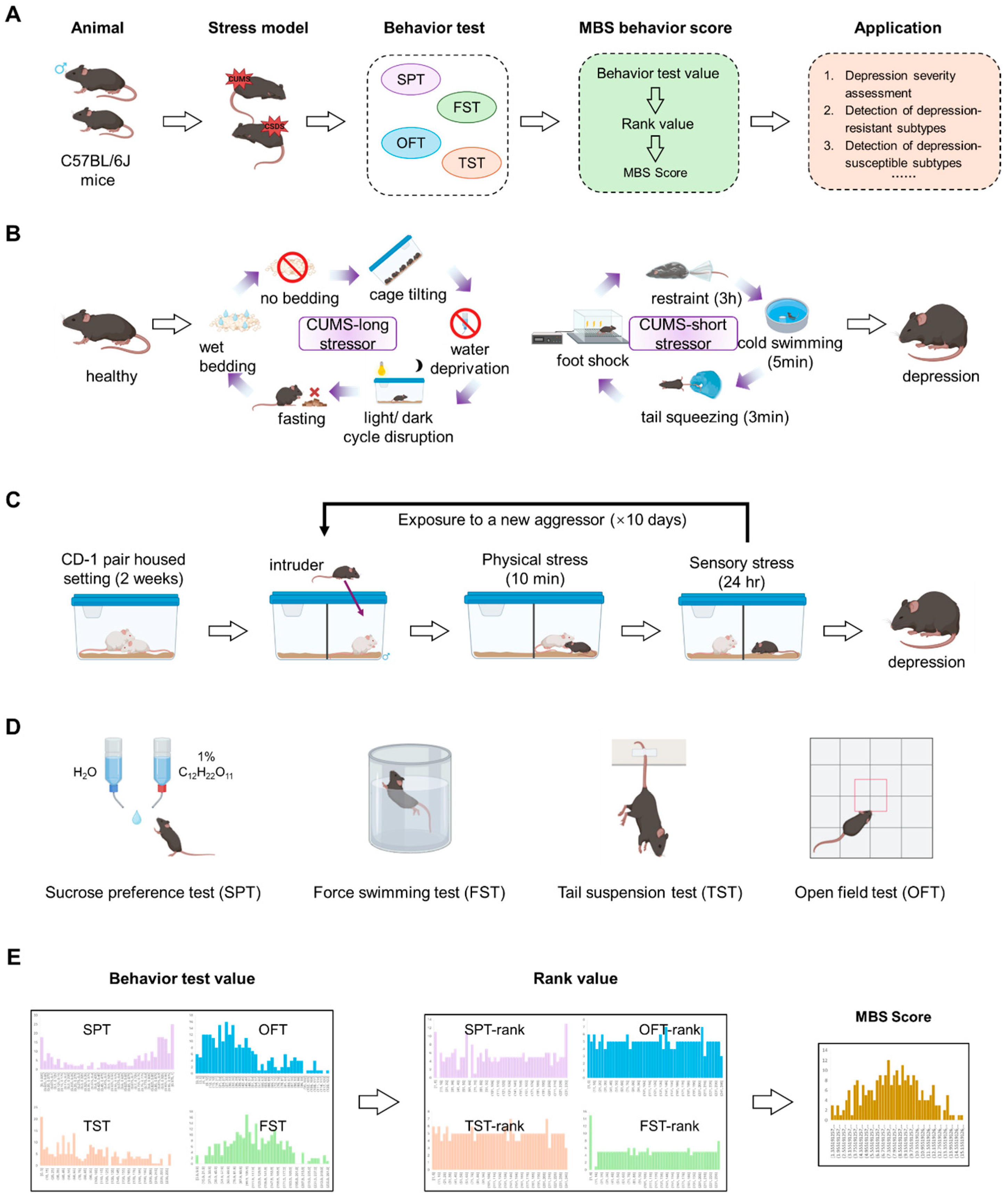
2.2. Study Design and MBS Workflow
2.3. Animal Models of Depressive-like Behavior
2.3.1. Chronic Unpredictable Mild Stress (CUMS)
2.3.2. Chronic Social Defeat Stress (CSDS)
2.4. Behavioral Testing Procedures
2.5. Multimodal Behavior Scoring (MBS)
2.6. Statistical Analysis
3. Results
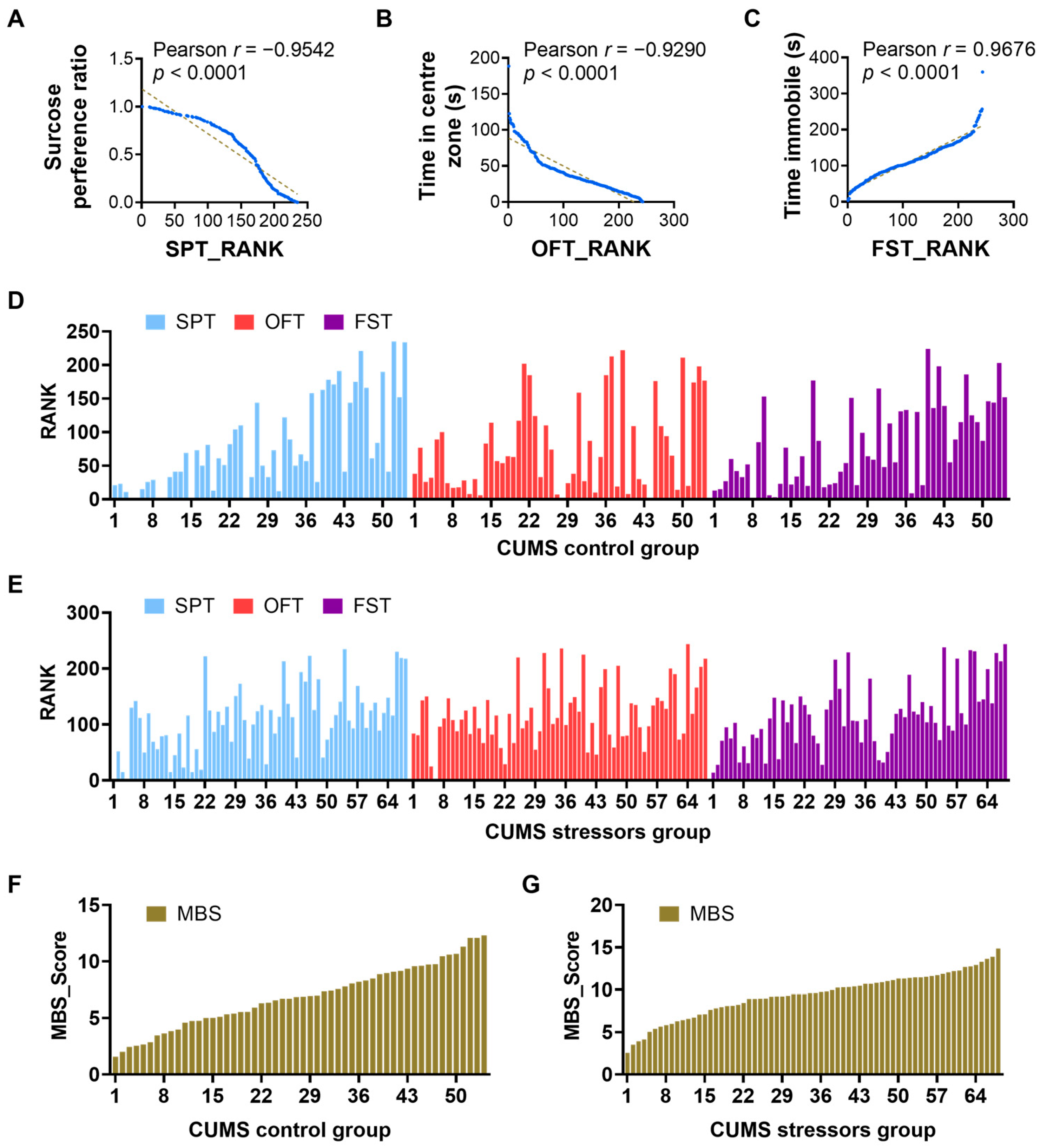
3.1. Rank Transformation Enhances Cross-Cohort Behavioral Comparability

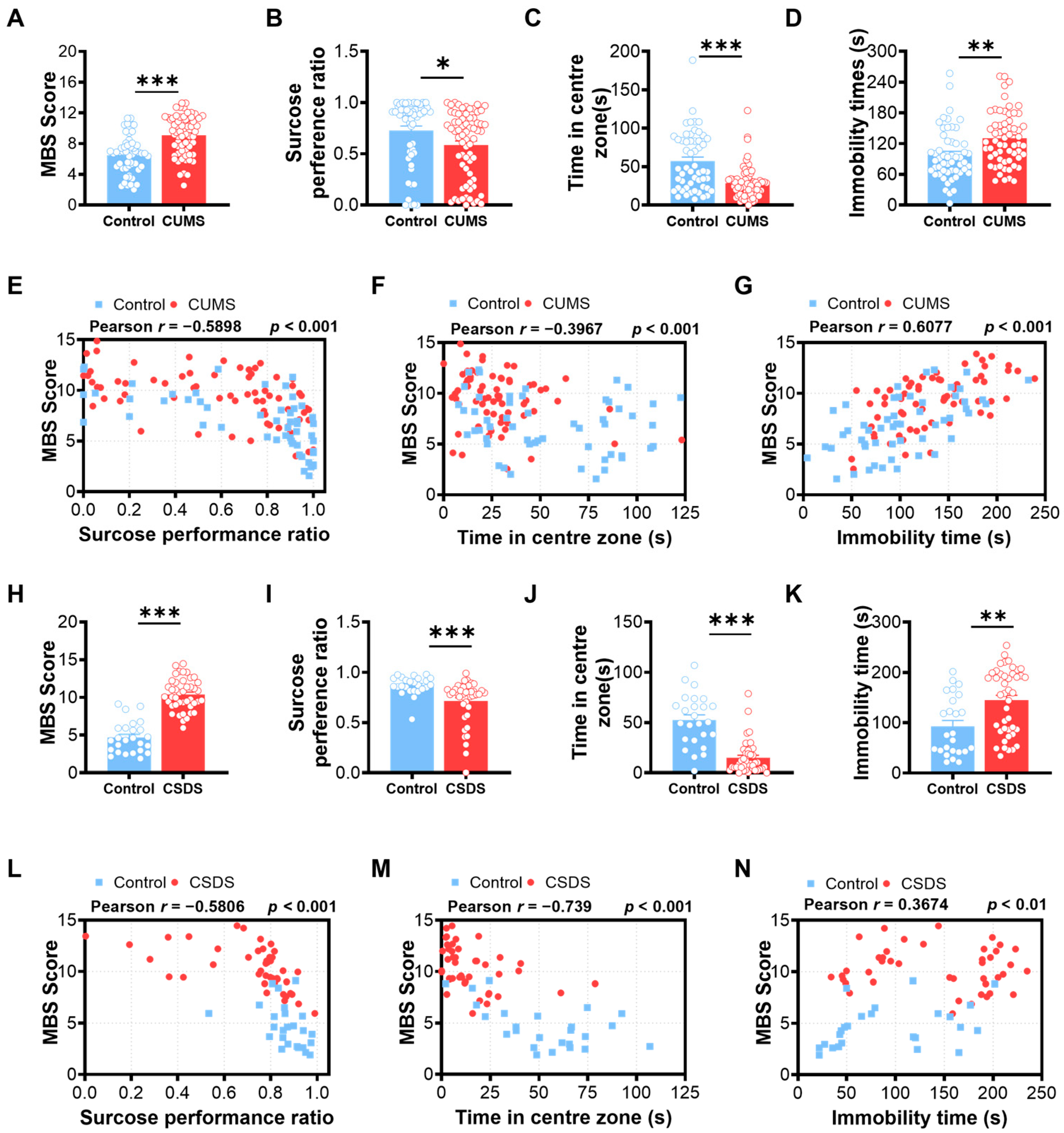
3.2. MBS Quantifies Depression Severity with High Sensitivity and Cross-Model Consistency

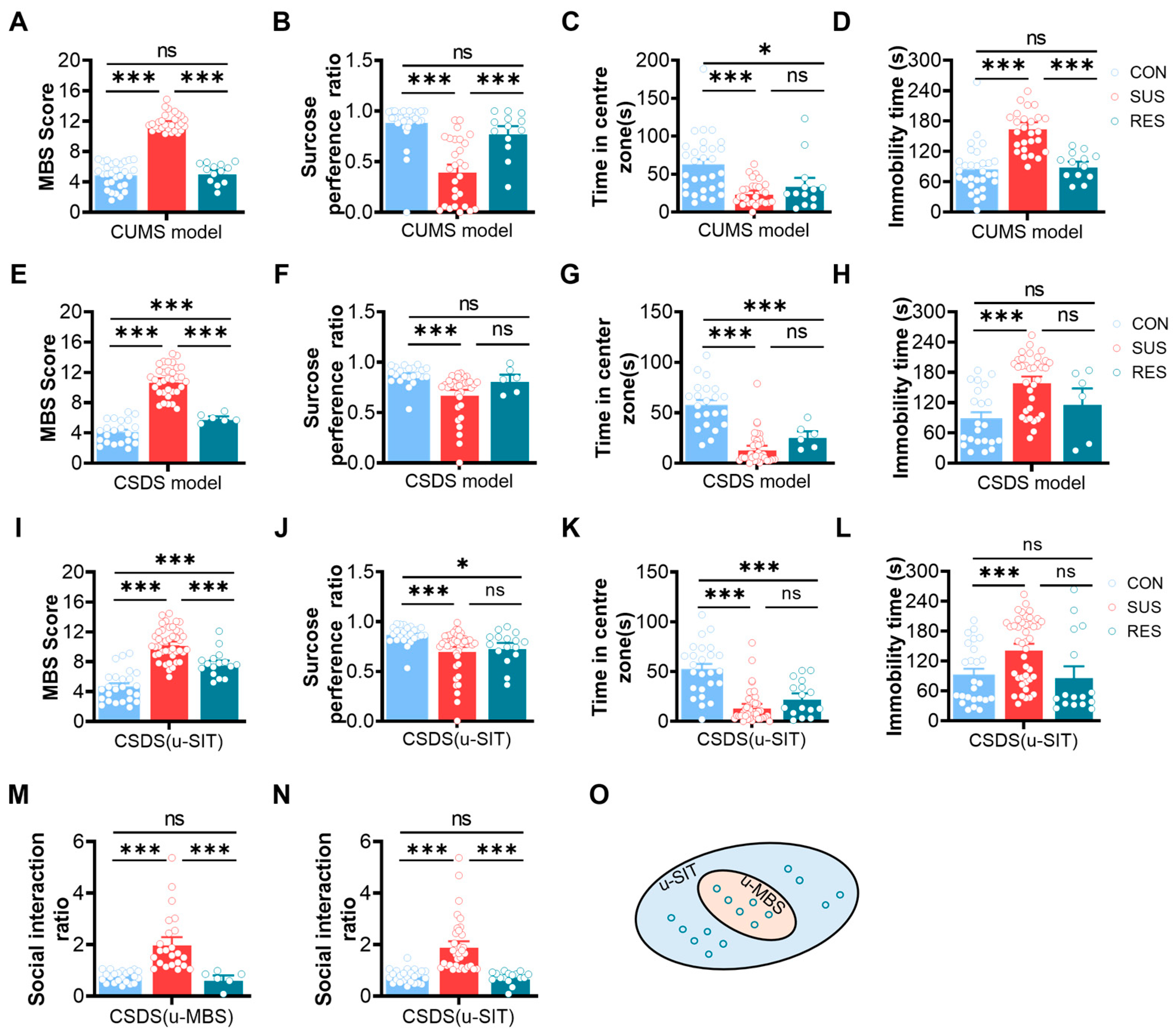
3.3. Phenotypic Stratification Delineates Susceptibility and Resilience

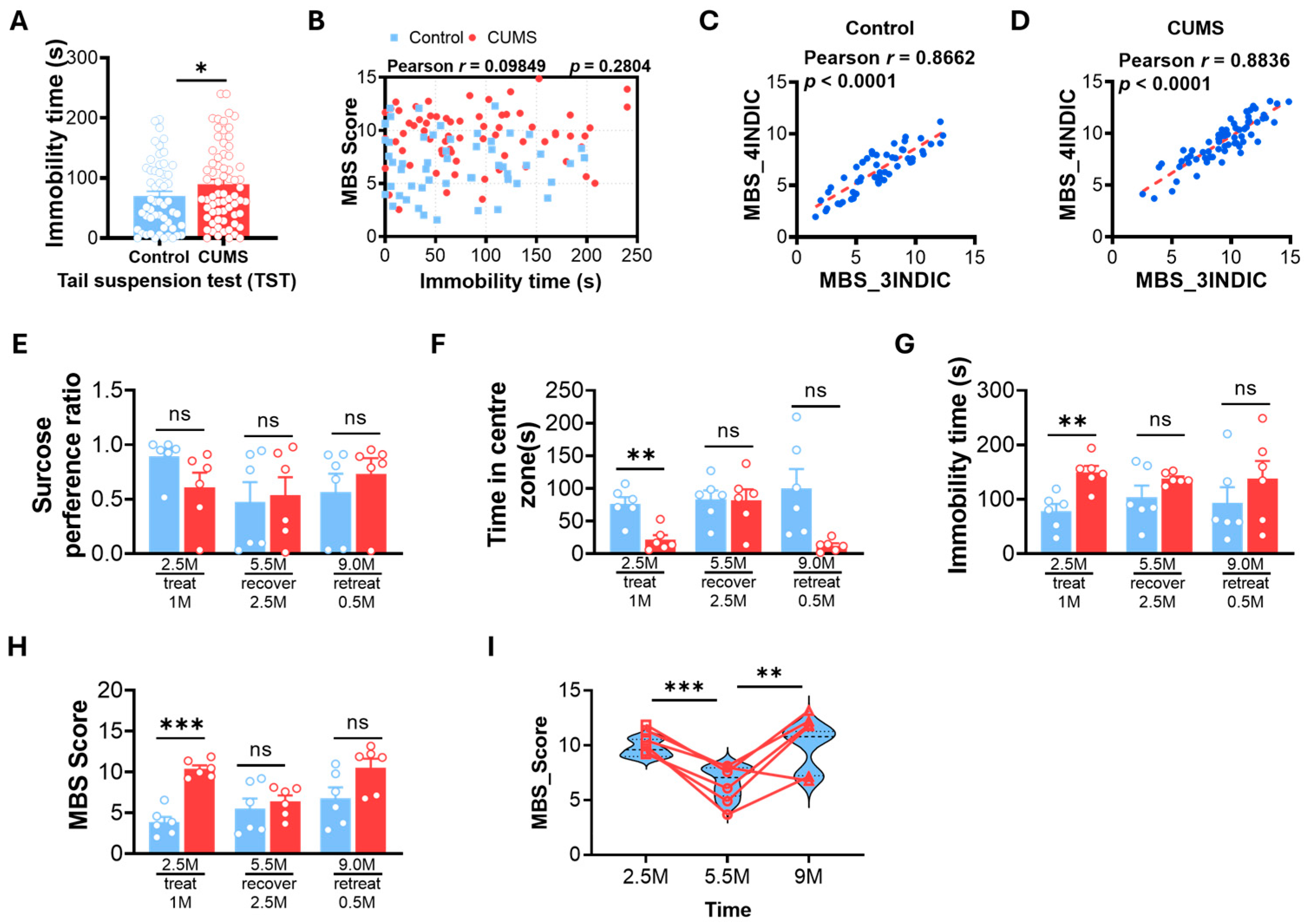
3.4. TST-Inclusive Sensitivity Analysis Supports the Modularity of the MBS Framework
3.5. MBS Dynamics Track Stress-Induced Recovery Trajectories

4. Discussion
5. Conclusions
Supplementary Materials
Author Contributions
Funding
Institutional Review Board Statement
Informed Consent Statement
Data Availability Statement
Acknowledgments
Conflicts of Interest
References
- Kirchner, L.; Kube, T.; Berg, M.; Eckert, A.L.; Straube, B.; Endres, D.; Rief, W. Social expectations in depression. Nat. Rev. Psychol. 2025, 4, 20–34. [Google Scholar]
- Wu, D.; Qu, S.; Sun, H.; Zhou, S.; Qu, X.; Chen, Y.; Hu, H.; Li, X. Unveiling the Brain Mechanism underlying Depression: 12 Years of Insights from Bibliometric and Visualization Analysis. Brain Res. Bull. 2025, 222, 111246. [Google Scholar] [CrossRef] [Scilit] [PubMed]
- Hyman, S.E. Revitalizing psychiatric therapeutics. Neuropsychopharmacology 2014, 39, 220–229. [Google Scholar] [PubMed]
- Brady, L.S.; Potter, W.Z.; Gordon, J.A. Redirecting the revolution: New developments in drug development for psychiatry. Expert Opin. Drug Discov. 2019, 14, 1213–1219. [Google Scholar] [CrossRef] [Scilit] [PubMed]
- Nestler, E.J.; Hyman, S.E. Animal models of neuropsychiatric disorders. Nat. Neurosci. 2010, 13, 1161–1169. [Google Scholar] [CrossRef] [Scilit] [PubMed]
- Krishnan, V.; Nestler, E.J. The molecular neurobiology of depression. Nature 2008, 455, 894–902. [Google Scholar] [CrossRef] [Scilit] [PubMed]
- Duman, R.S.; Aghajanian, G.K. Synaptic dysfunction in depression: Potential therapeutic targets. Science 2012, 338, 68–72. [Google Scholar] [CrossRef] [Scilit] [PubMed]
- Eliwa, H.; Brizard, B.; Le Guisquet, A.M.; Hen, R.; Belzung, C.; Surget, A. Adult neurogenesis augmentation attenuates anhedonia and HPA axis dysregulation in a mouse model of chronic stress and depression. Psychoneuroendocrinology 2021, 124, 105097. [Google Scholar] [CrossRef] [Scilit] [PubMed]
- Willner, P. Validity, reliability and utility of the chronic mild stress model of depression: A 10-year review and evaluation. Psychopharmacology 1997, 134, 319–329. [Google Scholar] [CrossRef] [Scilit] [PubMed]
- Sharma, S.; Chawla, S.; Kumar, P.; Ahmad, R.; Verma, P.K. The chronic unpredictable mild stress (CUMS) Paradigm: Bridging the gap in depression research from bench to bedside. Brain Res. 2024, 1843, 149123. [Google Scholar] [CrossRef] [Scilit] [PubMed]
- Golden, S.A.; Covington, H.E., III; Berton, O.; Russo, S.J. A standardized protocol for repeated social defeat stress in mice. Nat. Protoc. 2011, 6, 1183–1191. [Google Scholar] [CrossRef] [Scilit] [PubMed]
- Wang, W.; Liu, W.; Duan, D.; Bai, H.; Wang, Z.; Xing, Y. Chronic social defeat stress mouse model: Current view on its behavioral deficits and modifications. Behav. Neurosci. 2021, 135, 326. [Google Scholar] [CrossRef] [Scilit] [PubMed]
- Liu, M.Y.; Yin, C.Y.; Zhu, L.J.; Zhu, X.H.; Xu, C.; Luo, C.X.; Chen, H.; Zhu, D.Y.; Zhou, Q.G. Sucrose preference test for measurement of stress-induced anhedonia in mice. Nat. Protoc. 2018, 13, 1686–1698. [Google Scholar] [CrossRef] [Scilit] [PubMed]
- Voikar, V.; Stanford, S.C. The open field test. In Psychiatric Vulnerability, Mood, and Anxiety Disorders: Tests and Models in Mice and Rats; Springer: Berlin/Heidelberg, Germany, 2022; pp. 9–29. [Google Scholar]
- Yankelevitch-Yahav, R.; Franko, M.; Huly, A.; Doron, R. The forced swim test as a model of depressive-like behavior. J. Vis. Exp. JoVE 2015, 97, 52587. [Google Scholar] [CrossRef] [Scilit] [PubMed]
- Can, A.; Dao, D.T.; Terrillion, C.E.; Piantadosi, S.C.; Bhat, S.; Gould, T.D. The tail suspension test. J. Vis. Exp. JoVE 2012, 59, 3769. [Google Scholar]
- Porsolt, R.D.; Bertin, A.; Jalfre, M.J.A.I.P. Behavioral despair in mice: A primary screening test for antidepressants. Arch. Int. Pharmacodyn. Ther. 1977, 229, 327–336. [Google Scholar] [PubMed]
- Insel, T.; Cuthbert, B.; Garvey, M.; Heinssen, R.; Pine, D.S.; Quinn, K.; Sanislow, C.; Wang, P. Research domain criteria (RDoC): Toward a new classification framework for research on mental disorders. Am. J. Psychiatr. 2010, 167, 748–751. [Google Scholar] [CrossRef] [Scilit] [PubMed]
- Kalueff, A.V.; Stewart, A.M.; Song, C.; Berridge, K.C.; Graybiel, A.M.; Fentress, J.C. Neurobiology of rodent self-grooming and its value for translational neuroscience. Nat. Rev. Neurosci. 2016, 17, 45–59. [Google Scholar] [CrossRef] [Scilit] [PubMed]
- Wahlsten, D. Standardizing tests of mouse behavior: Reasons, recommendations, and reality. Physiol. Behav. 2001, 73, 695–704. [Google Scholar] [CrossRef] [Scilit] [PubMed]
- Strekalova, T.; Steinbusch, H.W. Measuring behavior in mice with chronic stress depression paradigm. Prog. Neuro-Psychopharmacol. Biol. Psychiatry 2010, 34, 348–361. [Google Scholar] [CrossRef] [Scilit]
- Lee, J.S.; Kang, J.Y.; Son, C.G. A comparison of isolation stress and unpredictable chronic mild stress for the establishment of mouse models of depressive disorder. Front. Behav. Neurosci. 2021, 14, 616389. [Google Scholar] [CrossRef] [Scilit] [PubMed]
- Berton, O.; McClung, C.A.; DiLeone, R.J.; Krishnan, V.; Renthal, W.; Russo, S.J.; Graham, D.; Tsankova, N.M.; Bolanos, C.A.; Rios, M.; et al. Essential role of BDNF in the mesolimbic dopamine pathway in social defeat stress. Science 2006, 311, 864–868. [Google Scholar] [CrossRef] [Scilit] [PubMed]
- Li, S.J.; Lo, Y.C.; Tseng, H.Y.; Lin, S.H.; Kuo, C.H.; Chen, T.C.; Chang, C.W.; Liang, Y.W.; Lin, Y.C.; Wang, C.Y.; et al. Nucleus accumbens deep brain stimulation improves depressive-like behaviors through BDNF-mediated alterations in brain functional connectivity of dopaminergic pathway. Neurobiol. Stress 2023, 26, 100566. [Google Scholar] [CrossRef] [Scilit] [PubMed]
- da Costa, V.F.; Ramírez, J.C.C.; Ramírez, S.V.; Avalo-Zuluaga, J.H.; Baptista-de-Souza, D.; Canto-de-Souza, L.; Planeta, C.S.; Rodríguez, J.L.R.; Nunes-de-Souza, R.L. Emotional-and cognitive-like responses induced by social defeat stress in male mice are modulated by the BNST, amygdala, and hippocampus. Front. Integr. Neurosci. 2023, 17, 1168640. [Google Scholar] [CrossRef] [Scilit] [PubMed]
- Russo, S.J.; Murrough, J.W.; Han, M.H.; Charney, D.S.; Nestler, E.J. Neurobiology of resilience. Nat. Neurosci. 2012, 15, 1475–1484. [Google Scholar] [CrossRef] [Scilit] [PubMed]
- Osório, C.; Probert, T.; Jones, E.; Young, A.H.; Robbins, I. Adapting to stress: Understanding the neurobiology of resilience. Behav. Med. 2017, 43, 307–322. [Google Scholar] [PubMed]
- Hodes, G.E.; Pfau, M.L.; Leboeuf, M.; Golden, S.A.; Christoffel, D.J.; Bregman, D.; Rebusi, N.; Heshmati, M.; Aleyasin, H.; Warren, B.L.; et al. Individual differences in the peripheral immune system promote resilience versus susceptibility to social stress. Proc. Natl. Acad. Sci. USA 2014, 111, 16136–16141. [Google Scholar] [CrossRef] [Scilit] [PubMed]
- Hollis, F.; Kabbaj, M. Social defeat as an animal model for depression. ILAR J. 2014, 55, 221–232. [Google Scholar] [CrossRef] [Scilit] [PubMed]
- Landis, S.C.; Amara, S.G.; Asadullah, K.; Austin, C.P.; Blumenstein, R.; Bradley, E.W.; Crystal, R.G.; Darnell, R.B.; Ferrante, R.J.; Fillit, H.; et al. A call for transparent reporting to optimize the predictive value of preclinical research. Nature 2012, 490, 187–191. [Google Scholar] [CrossRef] [Scilit] [PubMed]
- Sun, Z.W.; Wang, X.; Zhao, Y.; Sun, Z.X.; Wu, Y.H.; Hu, H.; Zhang, L.; Wang, S.D.; Li, F.; Wei, A.J.; et al. Blood-brain barrier dysfunction mediated by the EZH2-Claudin-5 axis drives stress-induced TNF-α infiltration and depression-like behaviors. Brain Behav. Immun. 2024, 115, 143–156. [Google Scholar] [CrossRef] [Scilit] [PubMed]
- Leng, L.; Zhuang, K.; Liu, Z.; Huang, C.; Gao, Y.; Chen, G.; Lin, H.; Hu, Y.; Wu, D.; Shi, M.; et al. Menin deficiency leads to depressive-like behaviors in mice by modulating astrocyte-mediated neuroinflammation. Neuron 2018, 100, 551–563. [Google Scholar] [CrossRef] [Scilit] [PubMed]
- Antoniuk, S.; Bijata, M.; Ponimaskin, E.; Wlodarczyk, J. Chronic unpredictable mild stress for modeling depression in rodents: Meta-analysis of model reliability. Neurosci. Biobehav. Rev. 2019, 99, 101–116. [Google Scholar] [CrossRef] [Scilit] [PubMed]
- Lin, S.S.; Zhou, B.; Chen, B.J.; Jiang, R.T.; Li, B.; Illes, P.; Semyanov, A.; Tang, Y.; Verkhratsky, A. Electroacupuncture prevents astrocyte atrophy to alleviate depression. Cell Death Dis. 2023, 14, 343. [Google Scholar] [CrossRef] [Scilit] [PubMed]
- Cao, P.; Chen, C.; Liu, A.; Shan, Q.; Zhu, X.; Jia, C.; Peng, X.; Zhang, M.; Farzinpour, Z.; Zhou, W.; et al. Early-life inflammation promotes depressive symptoms in adolescence via microglial engulfment of dendritic spines. Neuron 2021, 109, 2573–2589. [Google Scholar] [CrossRef] [Scilit] [PubMed]
- Cryan, J.F.; Mombereau, C.; Vassout, A. The tail suspension test as a model for assessing antidepressant activity: Review of pharmacological and genetic studies in mice. Neurosci. Biobehav. Rev. 2005, 29, 571–625. [Google Scholar] [CrossRef] [Scilit] [PubMed]
- Stukalin, Y.; Lan, A.; Einat, H. Revisiting the validity of the mouse tail suspension test: Systematic review and meta-analysis of the effects of prototypic antidepressants. Neurosci. Biobehav. Rev. 2020, 112, 39–47. [Google Scholar] [CrossRef] [Scilit] [PubMed]
- Mayorga, A.J.; Lucki, I. Limitations on the use of the C57BL/6 mouse in the tail suspension test. Psychopharmacology 2001, 155, 110–112. [Google Scholar] [CrossRef] [Scilit] [PubMed]
- Kara, N.Z.; Stukalin, Y.; Einat, H. Revisiting the validity of the mouse forced swim test: Systematic review and meta-analysis of the effects of prototypic antidepressants. Neurosci. Biobehav. Rev. 2018, 84, 1–11. [Google Scholar] [CrossRef] [Scilit] [PubMed]
- Jin, Z.L.; Chen, X.F.; Ran, Y.H.; Li, X.R.; Xiong, J.; Zheng, Y.Y.; Gao, N.N.; Li, Y.F. Mouse strain differences in SSRI sensitivity correlate with serotonin transporter binding and function. Sci. Rep. 2017, 7, 8631. [Google Scholar] [CrossRef] [Scilit] [PubMed]
- Forkman, B.; Boissy, A.; Meunier-Salaün, M.C.; Canali, E.; Jones, R.B. A critical review of fear tests used on cattle, pigs, sheep, poultry and horses. Physiol. Behav. 2007, 92, 340–374. [Google Scholar] [CrossRef] [Scilit] [PubMed]
- Bourin, M.; Chenu, F.; Ripoll, N.; David, D.J.P. A proposal of decision tree to screen putative antidepressants using forced swim and tail suspension tests. Behav. Brain Res. 2005, 164, 266–269. [Google Scholar] [CrossRef] [Scilit] [PubMed]
- Chatterjee, M.; Jaiswal, M.; Palit, G. Comparative evaluation of forced swim test and tail suspension test as models of negative symptom of schizophrenia in rodents. Int. Sch. Res. Not. 2012, 2012, 595141. [Google Scholar] [CrossRef] [Scilit]
- Cuthbert, B.N. The RDoC framework: Facilitating transition from ICD/DSM to dimensional approaches that integrate neuroscience and psychopathology. World Psychiatry 2014, 13, 28–35. [Google Scholar] [CrossRef] [Scilit] [PubMed]
- Guilloux, J.P.; Seney, M.; Edgar, N.; Sibille, E. Integrated behavioral z-scoring increases the sensitivity and reliability of behavioral phenotyping in mice: Relevance to emotionality and sex. J. Neurosci. Methods 2011, 197, 21–31. [Google Scholar] [CrossRef] [Scilit] [PubMed]
- Soumier, A.; Sibille, E. Opposing effects of acute versus chronic blockade of frontal cortex somatostatin-positive inhibitory neurons on behavioral emotionality in mice. Neuropsychopharmacology 2014, 39, 2252–2262. [Google Scholar] [CrossRef] [Scilit] [PubMed]
- Lin, L.C.; Sibille, E. Somatostatin, neuronal vulnerability and behavioral emotionality. Mol. Psychiatry 2015, 20, 377–387. [Google Scholar] [CrossRef] [Scilit] [PubMed]

Disclaimer/Publisher’s Note: The statements, opinions and data contained in all publications are solely those of the individual author(s) and contributor(s) and not of MDPI and/or the editor(s). MDPI and/or the editor(s) disclaim responsibility for any injury to people or property resulting from any ideas, methods, instructions or products referred to in the content. |
© 2026 by the authors. Licensee MDPI, Basel, Switzerland. This article is an open access article distributed under the terms and conditions of the Creative Commons Attribution (CC BY) license.
Share and Cite
Tu, Y.; Fu, Q.; Sun, C.; Deng, J.; Qin, H.; Zeng, X.; Wang, Y.; Qiu, S.; Zhang, W. Multimodal Behavior Scoring Quantifies Depression-like Severity Across Chronic Stress Models and Identifies Stress-Resilient Mice. NeuroSci 2026, 7, 81. https://doi.org/10.3390/neurosci7040081
Tu Y, Fu Q, Sun C, Deng J, Qin H, Zeng X, Wang Y, Qiu S, Zhang W. Multimodal Behavior Scoring Quantifies Depression-like Severity Across Chronic Stress Models and Identifies Stress-Resilient Mice. NeuroSci. 2026; 7(4):81. https://doi.org/10.3390/neurosci7040081
Chicago/Turabian StyleTu, Yue, Qinghui Fu, Canghao Sun, Jing Deng, Haoning Qin, Xianlin Zeng, Yuchuan Wang, Shulan Qiu, and Weixiong Zhang. 2026. "Multimodal Behavior Scoring Quantifies Depression-like Severity Across Chronic Stress Models and Identifies Stress-Resilient Mice" NeuroSci 7, no. 4: 81. https://doi.org/10.3390/neurosci7040081
APA StyleTu, Y., Fu, Q., Sun, C., Deng, J., Qin, H., Zeng, X., Wang, Y., Qiu, S., & Zhang, W. (2026). Multimodal Behavior Scoring Quantifies Depression-like Severity Across Chronic Stress Models and Identifies Stress-Resilient Mice. NeuroSci, 7(4), 81. https://doi.org/10.3390/neurosci7040081