1. Introduction
The rapid evolution of the digital economy has transformed user behavior by creating hybrid consumption environments that merge physical and digital touchpoints—commonly referred to as “phygital” contexts. Digital and data-driven systems increasingly shape how users encounter choices, process information, and navigate products and services across hybrid consumption environments [
1,
2,
3]. As users navigate these increasingly complex environments, questions of fairness, transparency, and digital ethics become closely connected to sustainability-oriented decision-making.
Generational shifts further complicate this landscape. Younger users—often referred to as digital natives—demonstrate high adaptability to algorithmic systems, whereas older users (digital immigrants) exhibit varied degrees of digital resilience. Digital resilience refers not only to technical competence, but also to psychological adaptability, critical awareness, and the capacity to act responsibly in algorithmically mediated environments. Understanding these divergences is essential for designing inclusive and effective sustainability strategies.
Despite the growing relevance of sustainability in digital platforms, few studies have explicitly modeled how users’ perceptions of algorithmic responsibility and fairness contribute to sustainable behavior. Previous research has often examined consumer influence, persuasion, and digitally mediated decision processes through separate perspectives, while less frequently integrating governance-related, user-centered, and ethical dimensions within a single framework [
4,
5]. This gap constrains the understanding of how sustainability is cognitively and structurally co-constructed within digital consumption. To address this gap, this study introduces a novel structural model that connects perceived algorithmic fairness, algorithmic responsibility perception, and digital resilience to sustainable platform behavior (SPB). These constructs are conceptually informed by literature on digital ethics, adaptive user behavior, and questions of platform responsibility and accountability. The conceptual model was further supported through a focused bibliometric support analysis of Scopus-indexed literature, which helped identify the conceptual proximity of algorithmic ethics, digital resilience, and sustainable consumption.
This study proposes and empirically tests a user-centered structural model that explains sustainable platform behavior as a function of three interconnected constructs: perceived algorithmic fairness, algorithmic responsibility perception, and digital resilience. The model was conceptually developed through a focused literature review and a bibliometric support analysis of Scopus-indexed sources, with the resulting insights informing the theoretical alignment between constructs.
By integrating psychosocial and algorithmic dimensions of user experience, the study seeks to identify key predictors of responsible and sustainability-oriented behavior within phygital environments. This paper contributes to the debate on digital sustainability by exploring how platform trust and phygital responsibility shape resilient and ethically aligned digital environments.
In line with the identified research gap and the proposed conceptual model, the study addresses the following research questions:
RQ1: How does perceived algorithmic fairness influence algorithmic responsibility perception in phygital environments?
RQ2: How do algorithmic responsibility perception and digital resilience shape sustainable platform behavior?
RQ3: How are these relationships reflected across different user profiles and selected subgroups?
Based on the proposed conceptual framework, the following hypotheses are formulated:
H1. Algorithmic responsibility perception positively influences sustainable platform behavior.
H2. Digital resilience is positively associated with sustainable platform behavior.
H3. Perceived algorithmic fairness is positively associated with algorithmic responsibility perception.
This study contributes to several intersecting fields. First, it expands theoretical models of sustainable behavior by introducing algorithmic responsibility as a central explanatory construct within the proposed framework. Second, it operationalizes digital resilience in a structural model, offering empirical tools for user profiling, segmentation, and policy design. Third, it bridges the gap between algorithmic governance and consumer sustainability, offering actionable insights for platform designers, policymakers, and digital ethics researchers.
The remainder of the paper is structured as follows.
Section 2 reviews the relevant literature on digital nudging, algorithmic power, phygital consumer experience, and sustainability-related behaviour, while also providing a bibliometric support analysis of the conceptual field.
Section 3 presents the research design, sampling procedure, instrument development, and analytical approach.
Section 4 reports the empirical findings of the PLS-SEM analysis and subgroup comparisons.
Section 5 discusses the theoretical and practical implications of the findings, and
Section 6 concludes the paper by outlining the main contributions, limitations, and directions for future research.
3. Materials and Methods
3.1. Research Design and Ethical Framework
This study employed a quantitative research design based on an anonymous online questionnaire administered via Google Forms. The data collection targeted adult users (18+) residing in the Republic of Croatia. Participation was voluntary and anonymous. Before completing the questionnaire, participants were informed about the purpose of the study and the anonymous use of the data. No personally identifiable or sensitive personal data was collected, and all responses were processed exclusively for academic purposes. Following completion of data collection, the study was reviewed and approved by the Ethics Committee/Commission for Scientific Research and Doctoral Studies of the Faculty of Commercial and Business Sciences, Celje, Slovenia, which issued a favorable ethical opinion/approval on 17 April 2026.
The study aimed to examine the relationship between perceived algorithmic fairness, digital resilience, algorithmic responsibility perception, and sustainable platform behavior (SPB). The research design was grounded in a structural modeling approach (PLS-SEM), complemented by cluster analysis to identify typologies of phygital platform users. The questionnaire-based PLS-SEM analysis constituted the primary empirical method of the study, while the bibliometric support analysis served as a complementary theoretical-mapping procedure used to support construct alignment and conceptual framing.
The study adhered to the ethical principles outlined in the ICC/ESOMAR International Code on Market, Opinion and Social Research and Data Analytics.
3.2. Bibliometric Support Analysis
To support the theoretical framing of the study, a focused bibliometric support analysis was conducted on Scopus-indexed journal publications addressing phygital consumption, algorithmic mediation, digital behaviour, and sustainability-related concepts. The analysis covered the period from 2015 to 2025 and was limited to peer-reviewed journal articles in order to ensure conceptual consistency and comparability of sources.
The Scopus search strategy was constructed around combinations of terms related to phygital consumption, algorithmic systems, digital behaviour, fairness, resilience, responsibility, and sustainability. The final search query was formulated in the TITLE-ABS-KEY field as follows: TITLE-ABS-KEY ((“phygital” OR “hybrid consumption” OR omnichannel OR “digital platform” OR “platform environment”) AND (algorithm* OR “algorithmic fairness” OR “algorithmic responsibility” OR “platform trust”) AND (“digital resilience” OR resilience OR “digital behaviour” OR “consumer behaviour”) AND (sustainab* OR “sustainable consumption” OR “sustainable behavior” OR “sustainable behaviour”)) AND PUBYEAR > 2014 AND PUBYEAR < 2026 AND (LIMIT-TO(LANGUAGE, “English”)) AND (LIMIT-TO(SRCTYPE, “j”)) AND (LIMIT-TO(DOCTYPE, “ar”)).
The search logic was intentionally designed to identify a conceptually focused rather than maximally broad literature set, because the purpose of the analysis was to test the coherence of the proposed construct space rather than to produce an exhaustive bibliometric inventory. Only English-language peer-reviewed journal articles were considered. Conference papers, books, book chapters, editorials, and publications not directly related to the conceptual focus of the study were excluded.
The retrieved records were screened in two stages. In the first stage, titles, abstracts, and author keywords were reviewed for relevance to the targeted conceptual area. In the second stage, the remaining records were assessed for topical alignment with the four core domains guiding the proposed model: fairness, resilience, responsibility, and sustainable platform behaviour. Keywords extracted from article titles, abstracts, and author keywords were then harmonized through a domain-specific thesaurus to reduce duplication, synonym variation, and closely related lexical forms. After this screening and harmonization process, the final corpus included 112 publications.
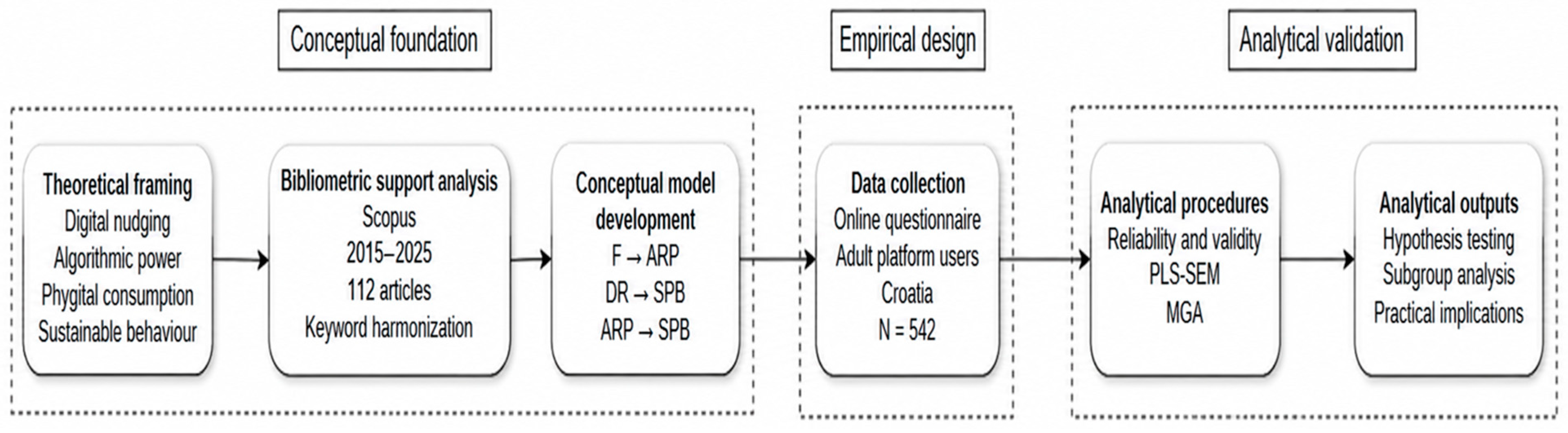
This analysis was not designed as a standalone bibliometric contribution, but as a supportive mapping exercise intended to identify recurring conceptual patterns and to verify whether the focal constructs of the proposed model were positioned within a coherent shared research field. Accordingly, its role in the study was interpretative and confirmatory rather than hypothesis-testing. The main empirical evidence of the paper is based on questionnaire data analysed through PLS-SEM, while the bibliometric support analysis provides an additional layer of theoretical grounding for the model. The position of this bibliometric support analysis within the broader research design is summarized in
Figure 1.
3.3. Data Collection Procedure
Data were collected using a structured online questionnaire disseminated via Google Forms between July and September 2025. The survey targeted adult users across Croatia who reported regular use of digital platforms and familiarity with hybrid (phygital) consumption environments. The survey invitation explicitly addressed adult users with regular experience in digital platforms and online or hybrid consumption contexts. A purposive sampling strategy was employed, supported by snowball techniques to ensure demographic variability aligned with the research goals.
A total of 542 submitted questionnaires were recorded. Because all core survey items were set as mandatory in Google Forms, no submitted questionnaire contained missing data on the variables used in the analysis. After data collection, the dataset was screened for duplicate entries, obvious response-pattern anomalies, clearly inconsistent demographic information, and technically unusable submissions. No cases met the predefined criteria for exclusion; therefore, all 542 submitted questionnaires were retained in the final analytical sample. As the questionnaire was distributed through purposive and snowball sampling to adult digital-platform users, the resulting sample should be interpreted as a heterogeneous non-probability sample rather than as statistically representative of the Croatian population.
The sample size exceeds the minimum thresholds recommended for structural equation modeling (SEM) and cluster analysis, ensuring sufficient statistical power. Participants were informed about the study before completing the questionnaire, and all data collection procedures complied with GDPR standards and ethical guidelines.
3.4. Research Instrument and Measurement Structure
The research instrument was a comprehensive, structured questionnaire consisting of 58 items, developed specifically for this study. Of these, 49 items were designed to measure key latent constructs relevant to the broader conceptual framework of the study, with the final structural model focusing on perceived algorithmic fairness, digital resilience, algorithmic responsibility perception, and sustainable platform behavior. The remaining 9 items captured demographic and contextual variables such as age, gender, education, income, and platform usage frequency.
The questionnaire was administered in Croatian and structured into three core segments:
Demographic and user profile variables (9 items);
Latent construct indicators (49 items), measured on 5-point and 7-point Likert-type scales, both unipolar and bipolar, depending on construct characteristics;
Behavioral and typological segmentation items, used for subsequent clustering analysis.
Scale items were either adapted from validated instruments or developed based on theoretical constructs identified in the literature. A pilot study with 80 participants was conducted two months before the main data collection to assess item clarity, preliminary scale reliability, and the technical functionality of the online questionnaire. The pilot also served as an additional face-validity check by confirming that the wording of the items was understandable and appropriate for the target population. Feedback obtained during this phase led to minor linguistic refinements, while the overall structure of the instrument remained unchanged. Content validity and face validity were further supported through expert consultations during the instrument development stage, ensuring alignment between the questionnaire items and the conceptual domains examined in the study.
Reliability was assessed through both Cronbach’s alpha and McDonald’s omega. Alpha coefficients for multi-item constructs ranged from 0.81 to 0.92, with corresponding omega values between 0.83 and 0.93, indicating strong internal consistency. Item–total correlations and distribution diagnostics (skewness, kurtosis) confirmed the suitability of the data for multivariate analysis. Exploratory factor analysis (EFA) supported the unidimensionality of constructs and justified their inclusion in the structural model tested later in the paper.
3.5. Sample Characteristics
The final sample consisted of 542 adult users of digital platforms residing in Croatia, balanced across gender, age groups, educational backgrounds, income levels, and intensity of digital platform use. Descriptive characteristics of the sample are presented in
Table 1.
The sample provides broad socio-demographic coverage relevant for modelling phygital user behaviour, but it should not be interpreted as statistically representative of the Croatian population because the study relied on purposive and snowball sampling. The gender ratio is balanced, and all age cohorts are adequately represented, with strong coverage of the core digital generation (25–59). Education levels are skewed toward higher education, consistent with platform-savvy populations. Income variability is well-captured, and reported platform usage aligns with expected distributions in digitally active cohorts.
3.6. Exploratory Cluster Analysis
To complement the structural model and capture heterogeneity within the sample, an exploratory cluster analysis was conducted using composite scores for the four core constructs included in the study: perceived algorithmic fairness (F), digital resilience (DR), algorithmic responsibility perception (ARP), and sustainable platform behaviour (SPB). Prior to clustering, the construct scores were standardized (z-scores) in order to ensure comparability across variables and to prevent differences in scale dispersion from disproportionately influencing the cluster solution.
A non-hierarchical k-means clustering procedure was applied because the aim of this analysis was to identify internally coherent respondent profiles based on their overall configuration across the four focal constructs. Several cluster solutions were examined and compared, with particular attention given to the interpretability of the resulting profiles, the relative balance of cluster sizes, and the conceptual distinctiveness of the clusters. The three-cluster solution was retained because it offered the clearest and most theoretically meaningful segmentation structure for the purposes of this study, distinguishing between highly aligned, conditionally aligned, and low-alignment user profiles.
The retained solution was additionally inspected for internal consistency and profile stability by comparing cluster centroids and ensuring that the resulting groups showed sufficiently differentiated mean patterns across the four standardized construct scores. The cluster analysis was used as a complementary segmentation layer and not as a substitute for the PLS-SEM model. While the structural model tested the hypothesized relationships among the core constructs, the cluster solution enabled the identification of user profiles characterized by different combinations of fairness perception, adaptive capacity, responsibility attribution, and sustainability-oriented behaviour.
4. Analysis of the Results
Informed by the study’s conceptual and theoretical framework, this section presents the results of the Partial Least Squares Structural Equation Modeling (PLS-SEM) analysis conducted to test the hypothesized relationships among four latent constructs: perceived algorithmic fairness (F), digital resilience (DR), algorithmic responsibility perception (ARP), and sustainable platform behaviour (SPB). The model was developed to investigate how user perceptions of fairness and resilience shape responsibility perception and drive sustainability-oriented behaviours in digitally mediated environments. All constructs were operationalized through validated multi-item scales and rigorously assessed for psychometric adequacy. The results are structured into three main parts: (1) measurement model validation, (2) structural model evaluation, and (3) subgroup-based multi-group analysis. Collectively, these findings provide strong empirical support for the theoretical model and offer meaningful implications for digital sustainability, user agency, and responsible platform design.
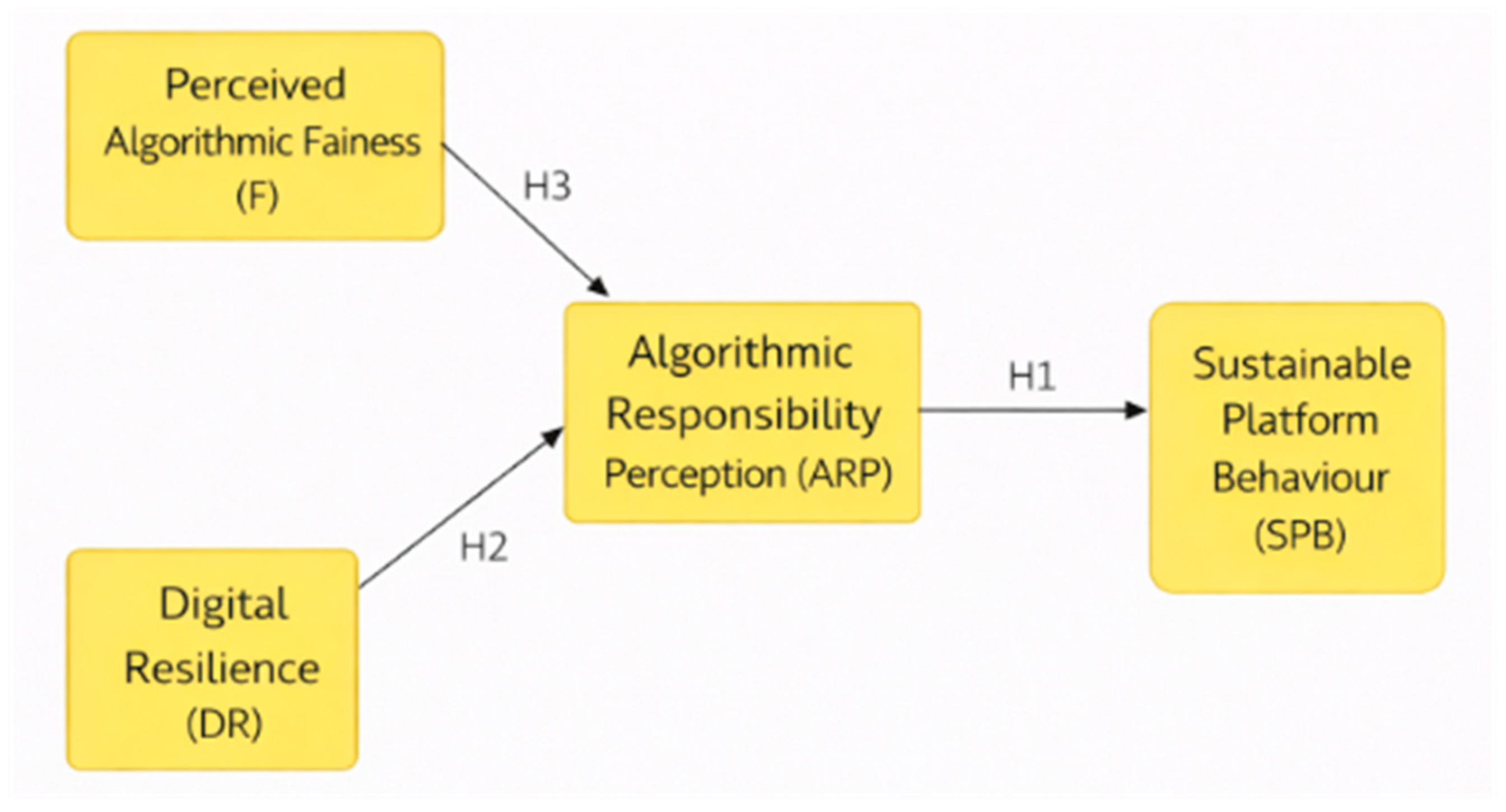
Figure 2 presents the conceptual framework, illustrating the hypothesized relationships between four latent constructs: perceived algorithmic fairness (F), digital resilience (DR), algorithmic responsibility perception (ARP), and sustainable platform behaviour (SPB).
The model posits that F influences ARP (H3), which in turn predicts SPB (H1), while DR independently contributes to SPB (H2). This directional structure serves as the theoretical foundation for the PLS-SEM analysis presented in the following section.
Before estimating the structural paths, the psychometric adequacy of the four latent constructs was assessed using indicator loadings, reliability, convergent validity, discriminant validity, and collinearity diagnostics (
Table 2,
Table 3,
Table 4,
Table 5 and
Table 6). Across the measurement model, all standardized loadings were statistically significant (
p < 0.001), supporting the adequacy of the retained indicators for subsequent PLS-SEM analysis.
Table 2 reports the standardized outer loadings for all indicators retained in the measurement model across the four latent constructs: perceived algorithmic fairness (F), digital resilience (DR), algorithmic responsibility perception (ARP), and sustainable platform behaviour (SPB). All indicator loadings were statistically significant (
p < 0.001) and ranged from 0.618 to 0.893. The highest loadings were observed for the fairness indicators (F1 = 0.893; F2 = 0.879), while the digital resilience indicators showed somewhat greater variability (0.618–0.781), which is expected for a broader behavioural construct. The ARP indicators ranged from 0.713 to 0.802, and the SPB indicators from 0.691 to 0.748. Overall, the loading pattern supports the adequacy of the retained indicators and provides a sound measurement basis for the subsequent structural model assessment.
Table 3 presents descriptive statistics and corrected item–total correlations for all indicators included in the measurement model. Across the full set of indicators, mean values ranged from 3.611 to 4.136, indicating moderate to relatively high endorsement of the measured attitudes and behaviours. Standard deviations were acceptable across items, while skewness and kurtosis values did not indicate extreme departures from normality. Corrected item–total correlations were satisfactory overall, ranging from 0.587 to 0.970. Particularly high values were observed for the ARP indicators (0.768–0.970) and SPB indicators (0.805–0.839), whereas the DR indicators showed somewhat broader variation, consistent with the wider behavioural scope of that construct. Taken together, these statistics support the internal coherence of the retained indicators and their suitability for multivariate structural analysis.
Table 4 summarizes the reliability and convergent validity of the four latent constructs included in the model. Perceived algorithmic fairness (F) showed strong convergent validity (AVE = 0.785) and satisfactory internal consistency (CR = 0.879; Cronbach’s α = 0.728; rho_A = 0.734). Digital resilience (DR) also demonstrated acceptable convergent validity (AVE = 0.524) together with high internal consistency (CR = 0.907; Cronbach’s α = 0.884; rho_A = 0.890). Algorithmic responsibility perception (ARP) met the recommended thresholds as well (AVE = 0.584; CR = 0.848; Cronbach’s α = 0.763; rho_A = 0.786), while sustainable platform behaviour (SPB) showed acceptable convergent validity and adequate composite reliability (AVE = 0.532; CR = 0.773; Cronbach’s α = 0.566; rho_A = 0.632). Taken together, the results indicate that the retained constructs showed overall acceptable psychometric properties for inclusion in the structural model.
To further assess whether the four latent constructs were empirically distinct from one another, discriminant validity was examined using the heterotrait–monotrait ratio (HTMT). HTMT is particularly informative in PLS-SEM because it provides a stringent criterion for evaluating construct separability. The results are presented in
Table 5.
As shown in
Table 5, all HTMT values remained below the recommended threshold of 0.85. The highest observed value was 0.74 (between F and ARP), which still falls within the acceptable range. These results support satisfactory discriminant validity and indicate that the four constructs capture related but empirically distinguishable dimensions of the proposed model.
Table 6 reports the variance inflation factor (VIF) values for all retained indicators across the four latent constructs. All VIF values were below the conservative threshold of 3, ranging from 1.141 to 1.932, which indicates that multicollinearity was not a concern in the measurement model. The fairness indicators showed VIF values of 1.284, and the digital resilience indicators ranged from 1.402 to 1.932, the ARP indicators from 1.392 to 1.668, and the SPB indicators from 1.141 to 1.263. These results support the statistical independence of the retained indicators and confirm the adequacy of the model specification for subsequent PLS-SEM estimation.
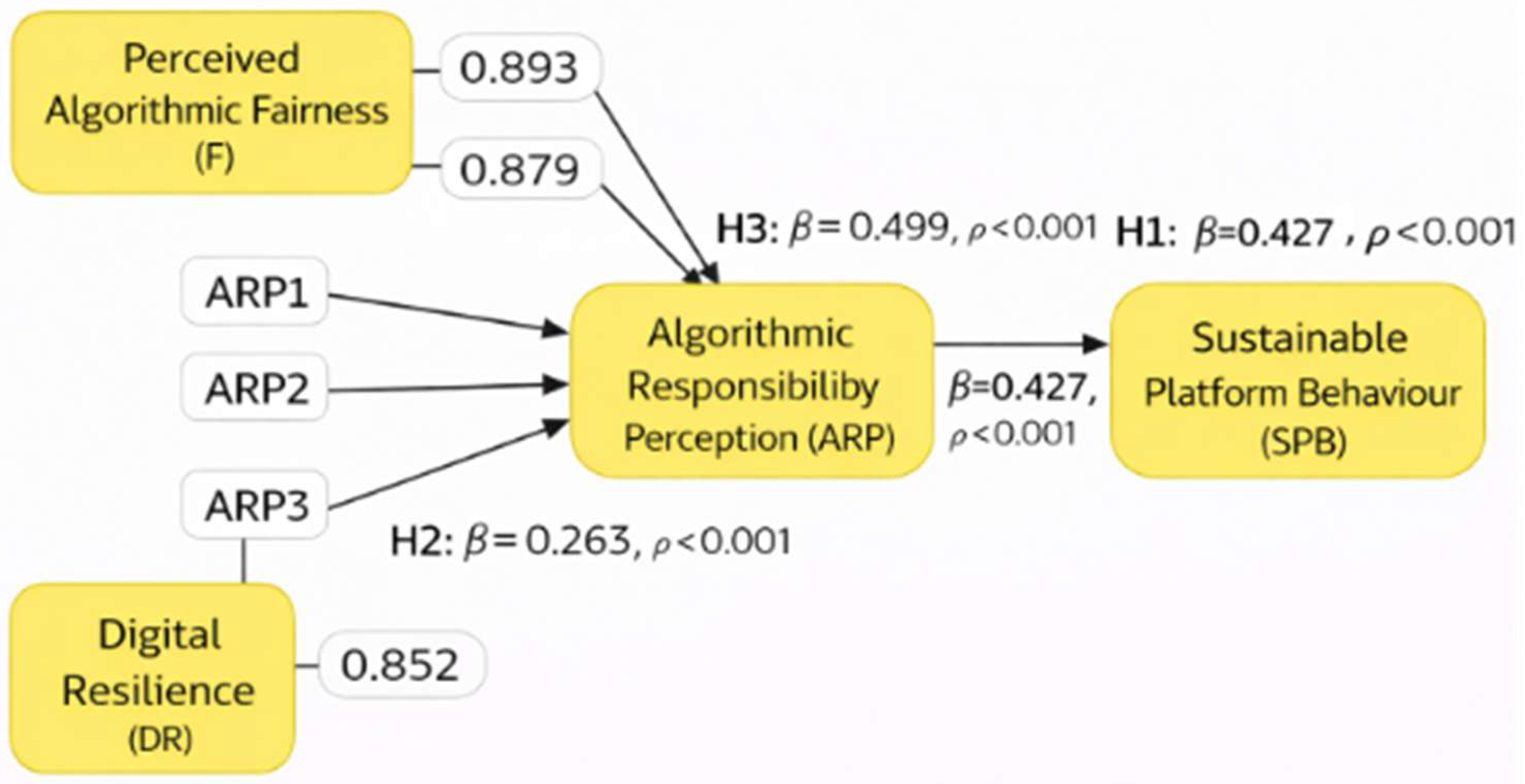
Figure 3 presents a structural equation model (PLS-SEM) showing the hypothesized paths among perceived algorithmic fairness (F), digital resilience (DR), algorithmic responsibility perception (ARP), and sustainable platform behaviour (SPB). All three hypothesized relationships were statistically significant.
Table 7 summarizes selected structural metrics used to evaluate the explanatory and predictive performance of the model. In addition to the SPB outcome, the table also reports the variance explained in algorithmic responsibility perception (ARP), which functions as the endogenous construct predicted by perceived algorithmic fairness in the proposed framework.
As shown in
Table 7, the structural model explained 24.3% of the variance in algorithmic responsibility perception (ARP) and 17.0% of the variance in sustainable platform behaviour (SPB). This indicates that the model had stronger explanatory power for ARP, while its explanatory power for SPB was modest but meaningful. The effect size for the F → ARP path was medium-to-large (f
2 = 0.321), confirming the substantive importance of perceived fairness in shaping responsibility perception. Within the SPB outcome, the ARP → SPB relationship showed a medium effect (f
2 = 0.205), whereas the DR → SPB path showed a small effect (f
2 = 0.086). In addition, the positive Q
2 value for SPB (0.112) supports the predictive relevance of the model.
To complement the structural model and provide a more fine-grained user-centered interpretation of the results, an exploratory cluster analysis was conducted on the standardized composite scores of the four core constructs included in the study: perceived algorithmic fairness (F), digital resilience (DR), algorithmic responsibility perception (ARP), and sustainable platform behaviour (SPB). Alternative cluster solutions were examined during the exploratory stage, and the three-cluster solution was retained because it yielded the most interpretable and conceptually differentiated respondent profiles, with adequate subgroup sizes for substantive comparison.
Table 8 presents the resulting cluster-based profiles of phygital users.
As shown in
Table 8, the cluster solution confirms that users in phygital environments do not constitute a homogeneous population. Rather, they can be differentiated into three distinct profiles concerning how they perceive algorithmic fairness, attribute responsibility to platforms, mobilize digital resilience, and translate these orientations into sustainable platform behaviour. The first profile is defined by consistently high scores across all four constructs, indicating strong ethical and behavioural alignment with the proposed model. The second profile reflects a more moderate and conditional orientation, suggesting that sustainability-oriented platform behaviour is present but more dependent on contextual trust and responsibility cues. The third profile is marked by comparatively lower scores across the core constructs, pointing to a more skeptical or less engaged orientation toward algorithmically mediated environments. The cluster centroids showed a consistent monotonic pattern across the four constructs, supporting the substantive distinctiveness of the three identified user types.
These findings complement the structural model by indicating that the relationships identified through PLS-SEM are accompanied by meaningful heterogeneity at the user-profile level within this sample. In practical terms, the results suggest that sustainability-oriented platform strategies should be cautious about assuming a single undifferentiated user base. Instead, the identified user profiles point to the potential value of differentiated forms of transparency, responsibility signaling, trust-building, and communication design. In this sense, the cluster analysis adds an applied segmentation layer to the study and reinforces the argument that fairness, resilience, and responsibility operate not only as theoretical constructs but also as empirically differentiating features of platform users.
To further examine whether the ARP → SPB relationship showed a consistent pattern across selected respondent categories, a multi-group analysis (MGA) was conducted across key demographic and behavioural subgroups. For the exploratory MGA, respondents were grouped into younger (18–39 years) and older (40–75 years) categories based on the age-group structure used in the sample description, while digital literacy subgroups were formed using a median split on the standardized composite digital literacy score. These subgroup comparisons were used for exploratory interpretation rather than confirmatory inference.
The multi-group analysis (MGA) presented in
Table 9 indicates that the relationship between Algorithmic Responsibility Perception (ARP) and Sustainable Platform Behavior (SPB) remains statistically significant across the examined subgroups, with observable variation in effect strength by age, gender, and digital literacy. Younger users (β = 0.489) show a stronger ARP → SPB association than older participants (β = 0.325). Gender-based differences are smaller, with women (β = 0.429) showing a slightly stronger association than men (β = 0.388). The largest difference is observed for digital literacy, where respondents with higher digital competence (β = 0.472) display a stronger ARP → SPB association than those with lower digital literacy (β = 0.314). These findings suggest that algorithmic responsibility cues may not be interpreted uniformly across user categories and that subgroup-level differences may be relevant for sustainability-oriented platform design. Because the MGA was used here primarily as an exploratory subgroup comparison, these differences should be interpreted as indicative rather than confirmatory.
Overall, the results provide empirical support for the proposed conceptual model. All three hypotheses were confirmed with statistical significance: algorithmic responsibility perception positively predicted sustainable platform behaviour (β = 0.427, p < 0.001), digital resilience positively contributed to sustainable platform behaviour (β = 0.263, p < 0.001), and perceived algorithmic fairness positively predicted algorithmic responsibility perception (β = 0.493, p < 0.001). The measurement model also showed acceptable psychometric performance, with satisfactory indicator loadings, acceptable reliability and convergent validity metrics, and VIF values below critical thresholds. In structural terms, the model demonstrated modest but meaningful explanatory power for SPB (R2 = 0.170), a medium effect size for the ARP → SPB path (f2 = 0.205), and positive predictive relevance (Q2 = 0.112). Taken together, these findings suggest that fairness perceptions, user resilience, and algorithmic responsibility are meaningfully associated with sustainable behaviour in digitally mediated phygital environments.
5. Discussion
The results of this study provide empirical support for the proposition that perceived algorithmic fairness, digital resilience, and algorithmic responsibility perception jointly form a meaningful explanatory framework for understanding sustainable platform behavior (SPB) in the observed phygital consumption context. The model provides insights relevant to global challenges of the Fourth Industrial Revolution, especially regarding fairness, algorithmic accountability, and participatory governance. By integrating psychometric validation, structural modeling, and bibliometric support analysis, this research contributes to the ongoing discussion on algorithmic ethics and phygital consumer behavior from a user-centered empirical perspective.
First, the confirmed path between algorithmic responsibility perception (ARP) and SPB (β = 0.427,
p < 0.001) positions responsibility perception as a central cognitive mechanism associated with sustainability-related behavior. This aligns with prior findings that consumer behavior can be segmented along dimensions of value orientation and algorithmic expectations [
44], supporting the conceptual distinction between responsibility attribution and behavioral intention. As platforms continue to evolve into emotionally rich, hybrid spaces, the ability to instill perceived responsibility becomes an operational advantage in fostering ethical alignment [
45]. In parallel, the literature on AI-powered personalization and market dynamics highlights the tension between automation and consumer agency, particularly regarding sustainability values [
46]. This reinforces the theoretical justification for treating ARP as a perceptual mechanism through which users evaluate platform-related responsibility in relation to sustainable behaviour.
The subgroup-based MGA further suggests that the strength of the ARP–SPB association may vary across demographic and digital literacy categories. This resonates with typological approaches in consumer segmentation, including cluster-based methods that differentiate users by behavioral tendencies rather than only demographics [
47]. In phygital environments, such segmentation becomes increasingly relevant as consumers co-create value within algorithmically mediated journeys. Literature on phygital wellbeing and experiential boundaries points to the affective richness of such environments and the necessity to account for subjective responsibility cues in predictive behavioral modeling [
48].
Moreover, the inclusion of digital resilience (DR) as an independent predictor of SPB (β = 0.263,
p < 0.001) underscores the nontrivial role of user competence in shaping ethical outcomes. In immersive phygital contexts—especially luxury or socially engaging environments—resilience serves not only as a buffer against manipulation but also as an enabler of critical choice-making [
49]. This finding is consistent with strategic models of customer experience creation, which emphasize user control and adaptive agency as preconditions for meaningful engagement [
50]. Recent studies also support the view that hedonic design in phygital retailing can either reinforce or undermine sustainable behavior depending on users’ digital capacity to interpret algorithmic signals [
51].
The path from perceived fairness to ARP (β = 0.493,
p < 0.001) confirms fairness perception as a foundational antecedent in the user’s ethical evaluation pipeline. In omnichannel environments, perceptions of fairness, transparency, and algorithmic neutrality are shown to directly shape emotional engagement and long-term brand association [
52,
53]. These dynamics echo broader digital transformation trends where sustainability is reframed not as an externality but as an embedded dimension of consumer experience design [
54]. Notably, digital inclusion—especially for elderly or digitally vulnerable populations—has emerged as a critical axis in achieving platform equity, further validating the significance of perceived fairness as a trigger for responsibility attribution [
55].
Findings from this study also suggest that SPB is neither uniform nor passively triggered by environmental cues. Rather, it reflects layered interactions between individual typologies, platform architecture, and algorithmic cues. Research on cultural consumption patterns and phygital service segmentation supports this interpretive pluralism, revealing how platform behavior is differentially expressed across media, contexts, and emotional regimes [
56,
57]. The role of affect is particularly noteworthy, as recent scholarship demonstrates that embarrassment, perceived judgment, or emotional reward significantly alter how users navigate self-service systems and AI-based environments [
58,
59].
These affective responses are not incidental; they act as normative signals through which users evaluate whether a platform aligns with their personal values. Emotional friction, such as discomfort or perceived manipulation, can disrupt sustainable behavior, while emotional empowerment enhances the likelihood of responsible action. In this light, SPB is not merely an outcome of rational evaluation, but a result of affective alignment between users’ internalized norms and the design of algorithmic systems. This insight supports recent models, which suggest that emotional architecture is a core determinant of consumer trust and retention in hybrid environments.
This layered complexity is further intensified by sensory augmentation and immersive technologies, such as augmented reality and interactive displays, which recalibrate user expectations and ethical boundaries [
60]. The value co-creation process in such environments is no longer limited to functional interactions but includes symbolic, affective, and ethical meaning-making [
61]. The proposed model, which integrates algorithmic perception and resilience with SPB, thus aligns with recent calls for multidimensional approaches that move beyond narrow behavioral prediction toward integrated sustainability frameworks.
In methodological terms, the combination of bibliometric support analysis, PLS-SEM modelling, exploratory cluster analysis, and multi-group analysis provides complementary validation for the proposed constructs. Bibliometric tools such as Bibliometrix allow for a structured exploration of conceptual proximities and thematic recurrences, anchoring the model within a mature and expanding scientific discourse [
62,
63]. In addition, the exploratory cluster analysis revealed three distinct user profiles, while the multi-group analysis further demonstrated that the key ARP → SPB relationship remained significant across demographic and digital-literacy-based subgroups. Together, these analytical layers strengthen the interpretive and practical relevance of the model by showing both structural consistency and meaningful user heterogeneity in phygital environments [
64].
The conceptual and empirical rigor of this study is reinforced by its alignment with recent interdisciplinary insights into digital ethics, platform responsibility, and user behavior. The positioning of ARP as a novel construct is not only empirically justified but supported by affective communication theory [
65], generational marketing research [
66], and studies on cross-perception and expectation mismatches in phygital retail [
67]. Research on brand equity through phygital experience also highlights the long-term value of embedding fairness and resilience into the design of platform interactions [
68].
The discussion would be incomplete without recognizing the implications of behavioral feedback loops and algorithmic learning in shaping consumer agency. Studies on purchasing and returning behavior suggest that consumption patterns are increasingly conditioned by algorithmic expectations and prior data profiles [
69]. The sustainability of digital consumption thus depends not only on user intention but also on how platforms structure expectations, reward systems, and frictionless interfaces [
70]. The predictive and explanatory strength of combining SEM and ANN approaches in similar contexts confirms the robustness of methodological triangulation in this field [
71].
The model developed and tested in this study offers a user-centered framework for examining the convergence of fairness perception, digital resilience, and algorithmic responsibility as relevant drivers of sustainable behavior in phygital environments. The empirical findings are aligned with both bibliometric trends and advanced segmentation strategies, providing a strong foundation for future research and platform design [
72].
Taken together, these findings advance not only empirical validation but also strategic insight into how digital platforms can be structured to foster user-aligned sustainability. The demonstrated link between perception and behavior reinforces the need for emotionally attuned, responsibility-centered design strategies in algorithmic environments. By moving beyond surface-level personalization toward ethically resonant engagement, the model enables a deeper understanding of how fairness and resilience operate as behavioral catalysts. This integrative perspective encourages a shift from reactive to proactive platform governance—where sustainability is not merely a policy objective, but an embedded design logic. As such, the proposed model contributes to both theory and practice by offering a replicable analytical framework with potential applicability across sectors. These insights support the theoretical relevance and practical usefulness of the model, while setting the stage for a broader academic dialogue on sustainable algorithmic systems and emotionally attuned digital environments.
Limitations and Future Research
Despite the empirical and theoretical strengths of this study, certain limitations must be acknowledged. First, the use of a cross-sectional design limits the ability to infer causal relationships or track changes over time. Second, the study was conducted within a specific cultural and platform context, which may affect the generalizability of findings to other populations or technological ecosystems. The reliance on self-reported data may also introduce bias related to social desirability, emotional framing, or response consistency.
In terms of measurement, while validated constructs were used, future studies could enrich the model by incorporating experimental methods or behavioral tracking to capture real-time user interactions with algorithmic systems. Additionally, the exploratory segmentation presented in this study could be refined in future research through additional psychographic, affective, qualitative, or longitudinal indicators. Future research should explore how socio-demographic, cross-cultural, and technological variables shape the perception–resilience–responsibility triad. Comparative studies across platform types, as well as international samples, would provide a deeper understanding of variability in sustainable behavior. Finally, investigating the role of emerging technologies such as generative AI, affective computing, or metaverse-based environments could offer new insights into how emotional architecture and algorithmic ethics co-evolve in phygital ecosystems.
6. Conclusions
This study offers a multidimensional framework for examining how sustainable platform behavior (SPB) may emerge from the convergence of algorithmic perception, digital resilience, and fairness evaluation in phygital consumption environments. By integrating bibliometric support analysis, structural equation modeling, and segmentation-based interpretation, the research helps address a conceptual gap between personalization ethics, user agency, and emotional dynamics in algorithmic interaction. Rather than viewing users as passive endpoints of automated decision-making, the model reconceptualizes them as cognitively and emotionally engaged agents, navigating a digital architecture shaped by algorithmic cues, normative expectations, and resilience capacities.
The empirical validation of this model demonstrates that sustainable behavior is not reducible to intention or attitude alone—it is the result of a layered negotiation between perceived fairness, emotional trust, and responsible action. Digital resilience emerges not only as a protective factor but as an active force that empowers users to interpret, resist, or align with algorithmic systems. By integrating behavioral, ethical, and technological dimensions, the study proposes a holistic model at the intersection of social sciences, information systems, and sustainability studies. This has deep implications for platform governance and the ethical design of digital touchpoints. As emotional friction and affective misalignment can undermine sustainability goals, so too can emotionally intelligent systems enhance them.
In this light, the study supports a perspective in which fairness can be understood not only as procedural but also as experiential, responsibility as co-constructed, and sustainability as an important logic of interaction in phygital environments. The proposed model thus offers more than a theoretical contribution—it provides a replicable, actionable, and ethically attuned framework for shaping next-generation digital environments. As hybrid spaces continue to evolve, the integration of emotional, cognitive, and ethical layers into platform design will become increasingly important for the development of more responsible and sustainability-oriented digital environments.