Systematic Review

Impact of Active Tourism on Physical Activity in Children and Adolescents: A Systematic Review (2015–2025)


by
Emilio Martínez-Redecillas
1,
José Enrique Moral-García
2,*,
Jairo Casado-Montilla
1 and
José Luis Solas-Martínez
2
1
Laboratory of Analysis and Innovation in Tourism (LAInnTUR), University of Jaén, 23071 Jaén, Spain
2
Department of Didactics of Musical, Visual and Bodily Expression, University of Jaén, 23071 Jaén, Spain
*
Author to whom correspondence should be addressed.
World 2026, 7(2), 31; https://doi.org/10.3390/world7020031
Submission received: 24 December 2025 / Revised: 10 February 2026 / Accepted: 13 February 2026 / Published: 22 February 2026
(This article belongs to the Section Health, Population, and Crisis Systems)

Abstract

This article conceptualizes active tourism as a strategy for promoting physical activity (PA) among children and adolescents and examines the literature that has analyzed its different modalities and their application across diverse settings and contexts. A systematic review (2015–2025) was conducted in accordance with PRISMA 2020, with searches performed in PubMed, Scopus, and Web of Science. Predefined inclusion and exclusion criteria were applied, alongside rigorous screening procedures and methodological quality assessment. Twelve studies were included, covering experiential and knowledge-oriented modalities implemented in curricular, extracurricular, family, and community contexts. The results show that active tourism increases PA frequency, duration, and intensity, and enhances physical fitness indicators as well as psychosocial variables (intrinsic motivation, enjoyment, autonomy, and competence). Experiential modalities and rural/natural environments predominate, generally yielding stronger effects than urban or mixed settings; however, these latter contexts broaden reach and equity by integrating activities into daily routines. Conceptual heterogeneity and the scarcity of longitudinal studies limit the estimation of sustained effects and the comparison across modalities. At present, active tourism emerges as a transversal approach to promoting meaningful PA in children and adolescents, integrating movement, learning, and well-being. Comparative and longitudinal designs capable of quantifying dose–response patterns by modality and setting are recommended, as well as policies that strengthen school–family–community linkages to enhance adherence and reduce inequalities in access to active opportunities.

1. Introduction

During the twenty-first century, a progressive decline in physical activity (PA) among children and adolescents has been observed [1]. This trend has generated increasing concern among global health authorities due to its negative implications for the physical, mental, and social health of this population [2,3]. Evidence from multiple studies indicates that most young people do not meet the recommended ≥60 min per day of moderate-to-vigorous physical activity [4,5,6], understood as any bodily movement produced by skeletal muscle contractions that increases energy expenditure above rest and includes activities ranging from walking or running to practicing sports [7]. At the same time, this situation is exacerbated by the gradual rise in screen time and social media use among young people [8,9], which has been significantly associated with lower intrinsic motivation for outdoor play and sport [10,11]. Consequently, many researchers highlight the need to substitute part of children’s and adolescents’ sedentary time with physically active and appealing activities that combine movement, enjoyment, and learning in stimulating contexts [12,13,14].
In recent years, active tourism has gained interest as a potential strategy to motivate PA practice in general populations [15]. This approach may contribute to the search for physically active alternatives by integrating leisure, environmental engagement, and well-being [16]. The current expansion of active tourism has been facilitated by globalization processes that increase access to destinations and cultural exchange at increasingly lower costs [17]. Conceptually, active tourism refers to a participatory form of recreational mobility in which physical movement and experiential involvement constitute the core of the activity [18,19]. Unlike passive or contemplative tourism, active tourism requires committed physical, cognitive, and emotional engagement with the environment [20,21]. The movement-based component of this tourism modality appears to have the potential to improve physical fitness, coordination, endurance, and body composition [22]. Psychologically and socially, outdoor and movement-based experiences enhance motivation, enjoyment, group cohesion, and self-esteem, while reducing stress and strengthening emotional well-being [23]. Thus, practicing active tourism allows for the simultaneous integration of recreational, cultural, educational, and health-related dimensions, both physical and psychological [24,25,26]. Additionally, within territorial development, rural tourism initiatives have been shown to articulate social entrepreneurship, community participation, and contributions to the Sustainable Development Goals in tourism-oriented communities, reinforcing tourism’s role as a driver of well-being and social cohesion [27].
Considering this multidimensional potential, understanding the different forms active tourism can take depending on participants’ motivations and the settings in which it occurs is essential. The current literature distinguishes two broad categories based on tourists’ primary motivation: (a) knowledge- and learning-oriented active tourism, linked to cultural exploration, environmental education, and the discovery of new environments; and (b) experiential active tourism, centered on adventure, personal challenge, and the emotional experience of movement [20,28,29]. When these modalities take place in rural or natural environments, they are characterized by direct interaction with the physical environment and participation in exploratory, cooperative, and movement-based activities in open spaces—such as hiking, climbing, or adventure circuits—which promote disconnection from everyday surroundings and enhance psychophysical well-being [30,31]. In urban and cultural settings, active tourism principles manifest through the adaptation of physical activities to everyday spaces—such as parks, trails, or historic centers—via initiatives such as urban hiking, cultural routes, or cycling itineraries [30,32]. These proposals encourage active mobility while fostering cultural learning and universal accessibility, consolidating a sustainable and inclusive leisure model in urban contexts [33,34,35].
Active tourism among young students can adopt different approaches depending on the educational and social context in which it takes place, generally falling into four domains [36,37]: curricular, extracurricular, family, and community. In curricular settings, various educational experiences have shown that integrating active tourism activities into academic subjects promotes meaningful learning and the development of motor competencies [38,39]. In extracurricular contexts, activities such as multi-adventure camps or nature expeditions conducted outside school hours have shown positive effects on PA adherence, self-confidence, and group cohesion, especially among adolescents with low baseline activity levels [40,41]. Within the family domain, shared active tourism experiences between parents and children have been identified as an effective means of consolidating active habits at home and strengthening emotional bonds [42]. Previous studies have reported that intergenerational walking and other forms of family-based active tourism significantly increase moderate PA and emotional connection across generations [43]. Finally, at the community level, open initiatives such as guided urban routes, cultural hiking, or neighborhood circuits have been used as inclusive strategies to promote active lifestyles in socially diverse contexts. These interventions not only increase young people’s movement levels but also foster social integration and a sense of community belonging [30,37].
Within exclusively educational domains, active tourism emerges as a promising strategy for promoting PA among children and adolescents, with complementary benefits in physical, psychosocial, and environmental dimensions [22]. In school contexts, programs that incorporate active tourism for pedagogical purposes—such as outdoor schools, educational stays, or learning excursions in natural environments—have demonstrated improvements in physical fitness, academic motivation, and environmental connectedness [23]. More specific proposals, such as interpretive hiking or school-based cycle tourism focused on active mobility for educational purposes, have been linked to significant increases in daily PA levels and the development of pro-environmental attitudes [39,44]. In extra-school environments, multi-adventure camps and expeditions in rural settings have shown positive effects on cardiovascular endurance, self-esteem, and social skills, particularly among adolescents with low previous PA levels [45,46]. Active tourism also takes accessible forms integrated into daily life—such as cultural routes, gamified pathways, or urban cycle tourism—with positive impacts on intrinsic motivation, enjoyment, and interdisciplinary learning [47]. However, implementing these experiences is not without challenges: the most frequently cited limitations in the literature include economic and logistical constraints in schools, limited teacher training in outdoor active pedagogies, and territorial inequalities in access to safe and adequate natural or urban environments [48].
Taken together, these findings indicate that active tourism, beyond its recreational dimension, represents a transversal and context-sensitive approach to promoting PA among children and adolescents across different socialization spheres [49]. However, an exploratory analysis of the main variables in this field reveals a very limited presence of theoretical syntheses that integrate scientific knowledge focused on the impact of active tourism on PA among school-age and adolescent populations. This scarcity is compounded by notable methodological and conceptual heterogeneity among existing studies [50], which hinders the establishment of robust conclusions and limits the practical applicability of their findings. Moreover, to our knowledge, no previous systematic review has specifically examined how different modalities of active tourism influence the physical activity, health, and well-being of children and adolescents. Although individual studies and related reviews exist—for example, reviews on adventure education programs in youth [51], youth sport participation and long-term outcomes [52], or summer camp interventions [53]—their scopes are partial. An integrative perspective would allow for the identification of common patterns, strengths, and limitations within this emerging field of research.
Accordingly, this review adopts an integrative conceptualization of active tourism, considering not only travel-based tourism experiences but also structured, experiential, and physically active interventions implemented in educational, family, and community contexts, including local and school-based programmes, when they share core characteristics of active tourism. The review considers as active tourism activities such as adventure tourism, nature-based tourism or ecotourism, sports tourism, and active wellness tourism, provided that they involve physically active participation by minors. Outcomes of interest include PA levels (e.g., time in moderate-to-vigorous activity, daily steps), indicators of physical health (anthropometric status, physical fitness, risk factors), and dimensions of mental and social health and well-being (mood, self-esteem, stress, social connectedness).
Based on the above, the present systematic review was guided by the following research question: Can active tourism be considered an effective strategy for promoting physical activity among children and adolescents? Therefore, the aim of this systematic review was to synthesize scientific evidence published between 2015 and 2025 examining the impact of active tourism as a strategy to promote physical activity in children and adolescents. Additionally, this review sought to analyze the different modalities, identify knowledge gaps, and propose future research directions in this field. This literature synthesis could offer guidance both for researchers—regarding which approaches have proven promising or which limitations remain—and for professionals in the tourism, education, or health sectors interested in the development of active tourism programs aimed at children and adolescents.

2. Methodology

This review was conducted following the PRISMA 2020 guidelines for systematic reviews and meta-analyses [54]. A systematic search was performed in October 2025, in three electronic databases (PubMed, Scopus, Web of Science) to identify relevant studies published between January 2015 and October 2025. The selection of this ten-year time frame responded to the need to compile updated and methodologically robust evidence within a period in which new strategies for promoting physical activity have been consolidated and research on active tourism in child and adolescent populations has grown markedly [40]. Moreover, this period coincides with a significant increase in the time children and adolescents devote to screens and social media, further reinforcing the relevance of examining interventions aimed at counteracting sedentary behaviors and promoting regular physical activity [7,55]. Prior to conducting the systematic review, an internal review protocol was developed and followed to guide the entire methodological process, including the definition of the research question, eligibility criteria, search strategy, study selection procedures, and quality assessment. In addition, a preliminary exploratory search was conducted to assess the feasibility of the review and refine the final search strategy, in accordance with PRISMA 2020 recommendations.

2.1. Search Strategy

The search strategy included three main blocks of descriptors: (1) active tourism, (2) physical activity, and (3) child and/or adolescent population. Terms were adapted to the syntax and controlled vocabulary of each database. Filters were applied for language (English and Spanish), document type (original research articles), and publication range (2015–2025). Additionally, backward snowballing was performed by manually screening reference lists of relevant systematic reviews to identify any primary studies that may have been missed by the electronic search. Citation tracking through Google Scholar was also conducted for key articles published in 2024–2025 to identify very recent studies not yet fully indexed in the databases. Table 1 provides detailed information on the specific search terms, applied limits, and the number of articles retrieved from each database after filtering.

2.2. Inclusion and Exclusion Criteria

Studies were eligible if they met the following criteria: (a) full-text original articles published in peer-reviewed journals; (b) included healthy participants aged 6–18 years; (c) published in English or Spanish; (d) employed longitudinal, cross-sectional, quasi-experimental, qualitative or mixed-methods designs; (e) provided a clear definition of active tourism or equivalent terms (e.g., adventure tourism, sports tourism, cultural tourism, outdoor recreation); (f) assessed at least one variable related to PA practice or adherence (amount, intensity, motivation, enjoyment, or satisfaction); and (g) clearly described the active tourism activities, allowing their classification as cultural/heritage-oriented (knowledge-based) or sports/recreational (experiential) tourism conducted in school, family, or community settings.
To complement the inclusion criteria and ensure transparency in article selection, the following exclusion criteria were established: (a) studies including participants outside the 6–18 age range or involving clinical or therapeutic populations; (b) reviews, theoretical papers, opinion pieces, book chapters, or conference proceedings without empirical data collection; (c) studies addressing non-active tourism modalities—such as contemplative tourism, gastronomic tourism, wellness/spa tourism, or medical tourism—or physical activities not aligned with the adopted definition of active tourism (e.g., traditional competitive sport programs, conventional Physical Education classes, or structured exercise interventions without a touristic, cultural, or experiential component); (d) studies that did not assess physical activity variables or related psychosocial outcomes; and (e) studies that insufficiently described the activities, preventing their classification into the defined active tourism categories.

2.3. Screening and Data Extraction Procedure

To ensure methodological rigor and reduce the risk of bias in study selection, three independent reviewers conducted the search, eligibility assessment, and data extraction phases in parallel and in a coordinated manner. During the initial phase, all records retrieved from the databases were imported into the Mendeley reference manager, which was used to manage references and to identify and remove duplicate records. Subsequently, a preliminary screening of titles and abstracts was performed to exclude studies that did not meet the predefined inclusion criteria. Documents that passed this stage were assessed in full text to confirm their eligibility. Disagreements among reviewers were resolved through discussion in joint meetings.
For each included study, systematic data extraction was carried out, collecting the following key elements: title, authorship, year of publication, methodological design, study objectives, covariates considered, sample size, participants’ age range, and country of origin. In addition, specific characteristics of the intervention or phenomenon under analysis were documented, including the type of active tourism (cultural/knowledge-oriented or sports/recreational/experiential), the geographical setting (rural or urban), and the context of implementation (school, extracurricular, family, or community). Quantitative or qualitative variables related to physical activity were extracted, along with the instruments or methodologies used for measurement and the main findings regarding PA practice, frequency, intensity, or adherence reported in each study.
Primary outcomes of interest had to assess at least one variable related to PA practice or adherence, including: (a) physical activity—objective or subjective measures (moderate-to-vigorous PA minutes, daily steps, questionnaire-based activity levels); (b) physical health (BMI or cardiometabolic parameters); (c) mental health or well-being (subjective well-being, quality of life, self-esteem, anxiety/depression symptoms); and (d) social outcomes (social skills, family connectedness, community engagement). For experimental or quasi-experimental studies, control groups were required to have no participation in the active tourism program or to engage in alternative sedentary or lower-intensity activities. In observational studies, comparisons between participants and non-participants in active tourism, or dose–response analyses based on participation frequency, were considered. Studies reporting only knowledge or attitudinal outcomes (without behavioral PA or health measures) and studies focused exclusively on academic outcomes were excluded.

2.4. Methodological Quality Assessment and Level of Evidence

Following current methodological recommendations for systematic reviews in educational and physical activity research—fields in which only a limited proportion of studies include formal quality assessment procedures [56]—this review incorporated a comprehensive evaluation of the methodological quality of all included studies. A standardized checklist, developed based on the guidelines proposed by Rusillo-Magdaleno et al. (2024) [57] and adapted to the objectives and characteristics of the present review, was applied (see Table 2).
Each item was scored according to the degree of information reported: 2 = fully described, 1 = partially described, and 0 = not described or ambiguous. The checklist included six main criteria related to the study population, intervention context, instruments and measures used, methodological design, control of confounding variables, and clarity in the presentation of results. The total methodological quality score for each study was calculated by summing the item scores (possible range: 0–12 points). Based on the global score, studies were classified into three levels of methodological quality: High Quality (HQ): score > 9; Medium Quality (MQ): score between 5 and 8; and Low Quality (LQ): score < 5.

3. Results

3.1. Overall Results of the Study Selection Process and Characteristics of the Included Studies

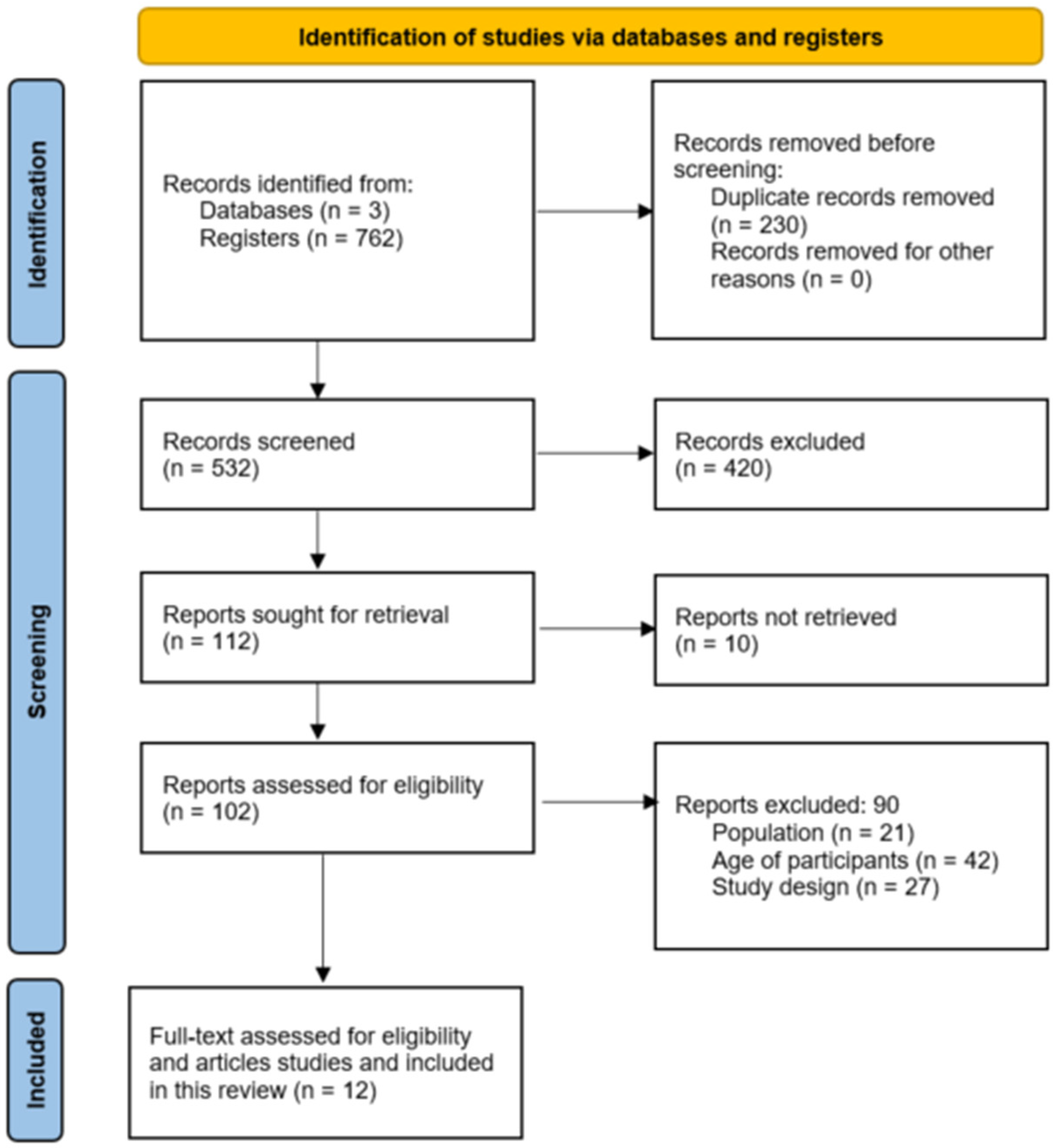
Figure 1 presents the PRISMA flow diagram corresponding to the study selection process. The initial search yielded 762 records, of which 230 were removed as duplicates, resulting in 532 unique references. A subsequent screening of titles and abstracts led to the exclusion of 420 studies that did not meet the previously established inclusion criteria. Of the remaining 112 documents, 10 could not be retrieved in full text, and 90 were excluded during detailed full-text review due to not meeting requirements related to the target population, age range, methodological design, or insufficient accessible information. Ultimately, 12 studies fulfilled all eligibility criteria and were included in this systematic review.
Of the included studies, only one was categorized as knowledge-oriented active tourism [58], whereas the remaining eleven fell under experiential active tourism. Regarding methodological approaches, four studies employed qualitative designs, three of which were cross-sectional [59,60,61] and one longitudinal [62]. Eight studies used quantitative methodologies: three with cross-sectional designs [58,63,64], one mixed-methods study combining quantitative and qualitative techniques [65], and four with quasi-experimental pre–post design [66,67,68,69]. In terms of methodological quality, 11 studies received an overall rating corresponding to high quality, while the remaining were classified as medium quality (see Table 2).
This systematic review encompassed a cumulative total of 926 participants. Of these, 137 (14.79%) were children in primary education, aged 6–12 years, represented across two of the included studies [64,66]. A total of 716 participants (77.32%) were adolescents aged 12–18 years, included in eight studies [58,60,62,64,65,67,68,69]. Finally, data from 20 families (7.88%), comprising 35 parents and 38 children, were reported in two studies [59,61]. Sample sizes ranged from a minimum of 22 participants [58] to a maximum of 228 [69]. Ten studies were categorized as having small samples (22–100 participants), whereas two were classified as medium-sized samples (101–228 participants) [67,69]. Regarding geographical distribution, six studies (50%) were conducted in the United States [58,63,64,65,66,68]. The remaining studies were carried out in Romania [69], the United Kingdom [61], Spain [67], Australia [60], Greece [62], and Canada [59].

3.2. Results on the Relationship and Impact of Active Tourism Modalities on Physical Activity

All reviewed studies (see Table 3) indicated that active tourism has a positive impact on promoting and increasing physical activity (PA) among children and adolescents. Active tourism activities demonstrated increases in PA frequency [59,61,62,63], duration [61,64,65,66,69], and intensity [64,65,68,69]. Programs involving activities such as hiking and cycling [61,62], climbing [68,69], geocaching [63], and adventure sports [58,65] significantly promoted physical exercise in a playful and motivating way [59,60,61,62,63,64,65,66,67,68,69].
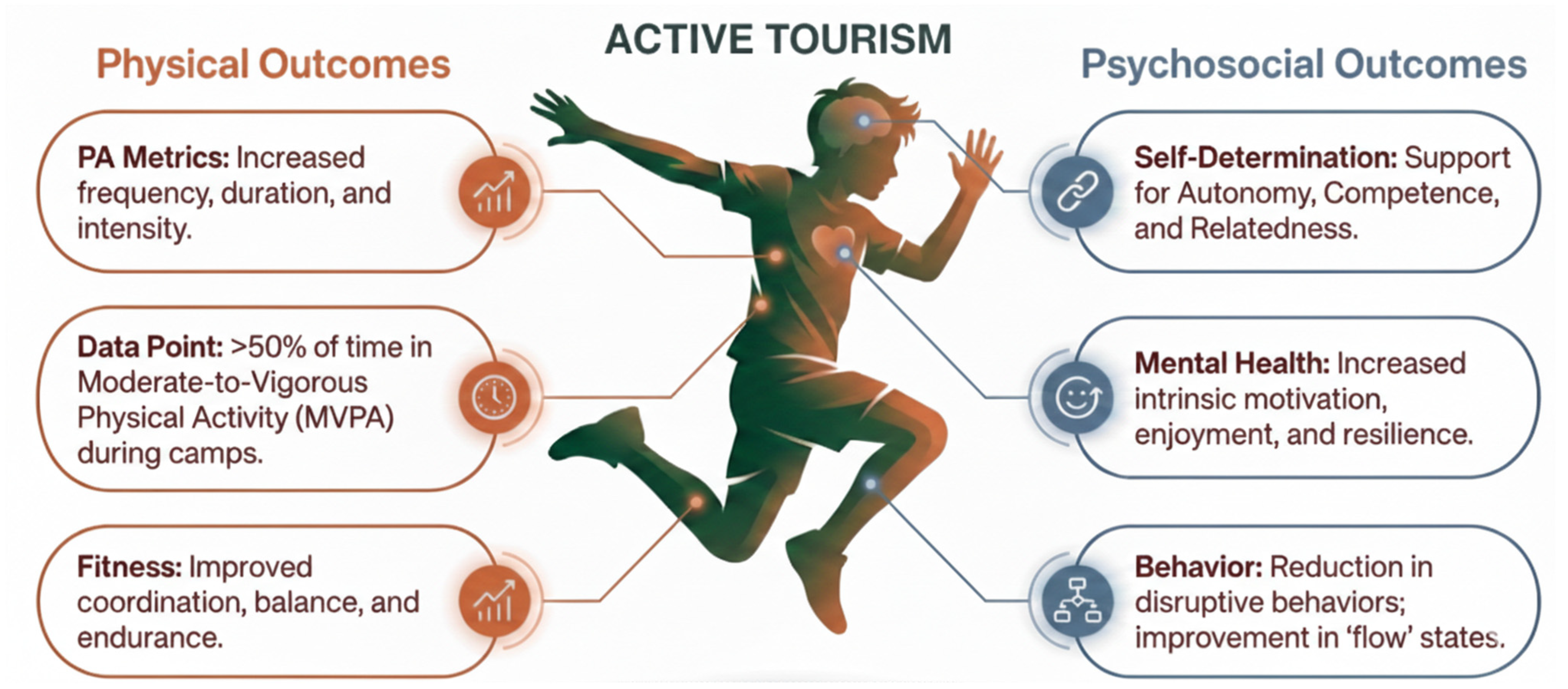
The studies also highlighted that active tourism experiences not only increase participation in PA but are also associated with improvements in coordination, balance, and endurance [69], particularly among children and adolescents with lower initial fitness levels, due to active engagement in stimulating natural environments [69]. In addition, active tourism interventions increased enjoyment [58,59,61,62,63,65,67], intrinsic motivation [61,62,65,67,69], and positive attitudes toward exercise [58,61,62,65,67,68,69]. (see Figure 2).
Similarly, programs combining PA with educational components—such as orienteering or scientific learning—reported dual benefits by simultaneously fostering motor engagement and meaningful learning [58,65]. Adventure-oriented activities, including rafting and climbing [62,68,69] or orienteering races [62,67], strengthened physical skills and the willingness to maintain regular PA [59,61,62,67,68,69].
Studies focusing on experiential or recreational active tourism also reported positive effects on PA promotion across school, family, and community contexts, particularly when interventions incorporated autonomy [59,61,62,64,65], cooperative tasks [65,66,67,68,69], and progressive challenges in natural settings [60,66,67,68,69]. In prolonged adventure-based interventions—both school-based and extracurricular—participants showed increases in PA [62,68]. Likewise, adventure vacations [61] and adventure running programs [59] acted as catalysts for active lifestyles, increasing PA, willingness to engage in outdoor activity, and maintenance of healthy habits following the experience.

3.3. Results on the Relationship and Effects of Settings and Contexts of Active Tourism on Physical Activity

The reviewed studies show that active tourism modalities are conducted mainly in rural and natural environments, appearing in ten of the twelve studies, whereas only one study took place in an urban setting [67] and one in mixed environments combining natural and urban spaces [63]. Overall, experiences in rural and natural environments focused on active exploration of the surroundings and educational adventure, using activities such as hiking, climbing, orienteering, or skiing in mountains, forests, and rivers [62,65,67,68,69]. These programs were characterized by direct contact with nature, motor activity on variable terrain, and exposure to progressive physical and emotional challenges, always within a non-competitive and cooperative framework [61,62,67,68,69]. Most interventions also incorporated educational components or reflective tasks, integrating experiential learning and risk management as central elements [61,62,65,67,68].
Across rural and natural settings, several studies highlighted the effectiveness of non-competitive, nature-adapted activities in promoting PA among children and adolescents [60,62,64,69]. Some evidence also indicated that PA levels increased during weekends [66]. In residential camps and short-term adventure courses, participants spent more than 50% of their time in moderate-to-vigorous PA [64] and surpassed 10,000 daily steps, demonstrating that outdoor living and learning stimulate spontaneous and higher-intensity PA [65].
In urban and mixed environments, active tourism modalities were also characterized by accessibility, inclusiveness, and innovation, bringing adventure and cooperative experiences into everyday spaces such as parks, green corridors, and peri-urban areas [63,67]. These proposals prioritized open and equitable participation, integrating technology, orienteering, and cooperative tasks as strategies to foster adolescents’ engagement and motivation toward PA [63,67]. Overall, active tourism in these contexts was marked by its flexibility and adaptability, integrating movement with exploration and learning, and incorporating innovative resources that facilitated autonomous, sustainable, and appealing PA practices [63,67].
Regarding the implementation context, five studies were developed within curricular settings [63,65,67,68,69]; five were conducted outside school hours [58,60,62,64,66]; and two focused on family participation [59,61]. In school contexts, an outdoor adventure program implemented over several weeks increased intrinsic motivation and reduced disruptive behaviors [67]. Likewise, school-year interventions showed that choice of activities and exposure to challenges promoted autonomy and motivation [62], and improved resilience, self-awareness, and self-management, particularly among girls [68]. Curricular outdoor and adventure programs combined physical practice with academic and socioemotional learning, fostering autonomy, cooperation, and perceived competence [65,68,69]. In extracurricular settings, both prolonged and short-term programs provided safe and recreational environments that promoted social interaction, enjoyment, and emotional connection with nature [58,62,64,66].
In family contexts, joint participation in adventure experiences was associated with more positive attitudes toward PA, increased personal confidence, and emotional connection with nature [59,61]. Vacations and shared experiences in natural environments strengthened family cohesion and encouraged sustainable active routines [59,61]. Socioeconomic conditions, geographical context, and social norms influenced the choice and frequency of participation. Gender differences, cultural perceptions of leisure, and motivations related to well-being or connection with nature also shaped engagement in these experiences [60]. Finally, technology-based innovative strategies such as geocaching showed high levels of interest among adolescents and demonstrated the ability to engage less active youth by integrating play, exploration, and GPS navigation in both natural and urban spaces [63].

4. Discussion

This systematic review analyzed the impact of active tourism on the promotion of physical activity (PA) in children and adolescents aged 6–18 years. Twelve studies published between 2015 and 2025 were included. Overall, the findings indicate that active tourism is an effective strategy for increasing the frequency, intensity, and duration of PA in both children and adolescents. Most of the reviewed studies reported improvements in physical fitness and positive attitudes toward PA, particularly in programs implemented in natural or rural environments with an experiential or adventure-based focus. Favourable effects were also observed on psychological variables such as intrinsic motivation, enjoyment, autonomy, and perceived competence, which in turn support adherence to active lifestyles. The evidence suggests that when young people participate in physically active tourism experiences—whether an adventure camp, ecological excursion, or sports trip—they tend to move more, improve certain aspects of their physical health, and feel better about themselves.

4.1. Implications of Active Tourism for PA Promotion and Child–Adolescent Health

The findings of this review show that active tourism programs increase PA levels among children and adolescents, frequently reaching the recommended ≥60 min/day of moderate-to-vigorous PA and high step counts during camps and excursions [70,71,72,73]. This pattern can be explained by the combination of exposure to natural environments and the structured design of active tasks, providing frequent opportunities for movement and increasing motor load compared with conventional school or recreational activities [72,74]. However, these improvements are not always maintained in the long term nor consistently translated into sustained physiological adaptations [75].
From a motor perspective, although variable routes and technical challenges appear to induce greater neuromuscular activation and postural control [76], the evidence remains limited and methodologically heterogeneous, underscoring the need for longitudinal research to confirm the causal relationship between active tourism and the functional improvements observed [77,78]. Likewise, although active tourism is associated with improvements in young people’s physical fitness [42], the magnitude of the effects on balance, coordination, endurance, and agility may also depend on contextual variables such as intervention duration, seasonality, and participants’ baseline fitness levels [78].
On the other hand, the psychological and social benefits derived from active tourism may have broad implications [55], particularly in an era marked by increasing reports of mental health problems in adolescents (depression, anxiety, loneliness)—recently exacerbated by the COVID-19 pandemic [79]. In general, simply going on regular excursions is associated with increases in intrinsic motivation, enjoyment, and perceived competence [80]. Improvements in self-esteem and social skills through adventure-based activities also suggest potential applications for populations with special needs: young people with low self-esteem, behavioral disorders, or at risk of social exclusion may benefit from therapeutically designed active tourism programs [81]. This aligns with recent work advocating “green prescriptions” or “activity prescriptions” for youth, such as the Park Rx initiative, in which pediatricians prescribe time in parks to improve health [82]. Similarly, the emerging field of “therapeutic adventure” uses natural environments and physical challenge for the psychosocial rehabilitation of adolescents [83].
However, the consistency of these effects appears to vary according to the structure of the intervention and participants’ motivational profiles [84]. According to Self-Determination Theory, cooperative and adventure-based activities can generate high levels of satisfaction and engagement among young people by promoting experiences of autonomy, competence, and relatedness [85]. Nevertheless, some authors warn that in short-term programs, or those with limited pedagogical support, effects tend to diminish over time [86] if follow-up mechanisms or complementary activities that maintain engagement are not included [87]. In contrast, longer active tourism programs show more sustained effects and contribute more strongly to consolidating active habits [59,61,62]. Recent evidence also highlights the importance of integrating nature prescriptions with accessible and sustainable opportunities for family participation, which may enhance adherence and the continuity of active behaviors [88,89].
In addition to participatory forms of active tourism involving direct physical engagement, other related approaches may also contribute indirectly to the promotion of physical activity among young people. Sport tourism linked to major sporting events has been suggested as a potential inspirational pathway [90], as exposure to elite sport contexts may increase interest and motivation toward sport participation [91]. Likewise, outdoor recreation and outdoor adventure education programmes, particularly those developed within Scandinavian educational systems, represent consolidated educational models that integrate movement, nature, and experiential learning [92]. Although these approaches fall partially outside the primary scope of the present review, existing evidence remains fragmented and largely focused on adult populations or general educational outcomes [25,55]. Future research should therefore examine how these complementary pathways may interact with active tourism experiences to foster sustained physical activity engagement among children and adolescents.
From an applied perspective, the findings of this review suggest that the impact of active tourism on physical activity promotion could be substantially strengthened through more systematic educational and policy-level actions. In school contexts, the integration of structured outdoor and adventure-based tourism programmes within the curriculum may enhance continuity, pedagogical coherence, and long-term adherence to physical activity, particularly when supported by adequate teacher training and institutional resources [65,67,69]. Beyond the educational setting, public tourism and health policies could play a key role by facilitating equitable access to active tourism opportunities, supporting school–community partnerships, and promoting inclusive programmes targeting children and adolescents [22,24]. Coordinated strategies linking education, tourism, and public health sectors may therefore represent an effective pathway to maximise the preventive and developmental potential of active tourism for youth populations [24].

4.2. Modalities, Settings, and Contexts of Active Tourism: Differential Effects

In this review, experiential active tourism emerged as the predominant modality. This type is associated with adventure-based PA and direct contact with highly natural environments, whereas knowledge-oriented active tourism—represented here by only one study [58]—incorporated movement as a mediator of learning. Experiential approaches have been shown to generate immediate physical and emotional engagement through challenge and cooperation, thereby promoting motor activation and hedonic motivation [68,80]. In contrast, knowledge-oriented tourism seeks to integrate movement with cognitive and cultural understanding of the environment [93]. Although various studies on active learning support the idea that embedding curricular content in bodily action increases engagement and learning retention [39,57], there is ongoing debate regarding the sufficiency of the motor load generated by these experiences, which tends to be lower than that of adventure activities. Moreover, some authors argue that the emotional component of experiential tourism, while enhancing immediate motivation, may not guarantee long-term behavioral adherence if not accompanied by reflective or educational processes [39,86]. In this sense, both models—experiential and knowledge-oriented—can be considered complementary for promoting PA within an integral educational framework, although the available empirical evidence remains limited and requires comparative designs to determine their differential effectiveness [58,93].
With regard to setting, active tourism programs conducted in rural or highly natural environments have shown more consistent effects on PA practice than those implemented in urban or mixed settings [61,65,66,69]. Numerous youth-focused studies have shown that nature-based activities promote more sustained participation and greater perceived vitality—attributed to exploration, environmental novelty, and sensory stimulation provided by these spaces [25,62,94]. However, some authors warn that these effects may be mediated more by contextual and emotional factors than by actual motor load [88,95]. Urban interventions, while generally involving lower physical demands, achieve greater population reach by being integrated into daily routines through accessible routes, parks, or circuits, thus supporting frequency and social inclusion in PA, especially when there is proximity to and quality of urban green spaces [95]. Nevertheless, evidence on the sustainability of these effects remains mixed, since greater accessibility does not always translate into sustained increases in PA [37].
Regarding implementation context, curricular, extracurricular, and family/community programs show differentiated impact patterns. In curricular settings, programs that integrate active tourism within formal teaching plans appear to enhance motor participation and experiential learning, in line with research highlighting the potential of structured school-based interventions to improve engagement and motivation when active methodologies are incorporated [96,97]. However, their impact depends on factors such as allocated time, available resources, and teacher training [98]. In extracurricular contexts, international evidence points to more pronounced effects on enjoyment and adherence, particularly when activities are varied, voluntary, and sustained over time—features that enhance intrinsic motivation and autonomy [99,100]. Family and community programs extend the benefits of active tourism into home and social environments, strengthening the continuity of active habits beyond school [101]. Recent studies show that parental involvement increases joint PA and the likelihood of maintaining active behavior during follow-up, although effect sizes tend to be moderate [74,102,103]. Finally, creating active tourism opportunities tailored to each context (schools, families, communities) may broaden young people’s capacity for choice and facilitate meaningful movement experiences, reinforcing both autonomy and the sustainability of PA over time [104,105].
Furthermore, the findings of this review indicate that participation in active tourism is shaped by a set of structural, economic, and geographical factors that may condition access and frequency of practice. Young people with greater resources and proximity to natural environments show higher participation, whereas those facing economic constraints or living in densely populated urban areas display lower involvement [60]. This pattern aligns with recent studies identifying costs related to transport, equipment, and registration as significant barriers, especially for lower-income groups [106]. Access to safe, open spaces also emerges as a central determinant, although the literature emphasizes that equity in participation depends not only on available infrastructure but also on social, cultural, and symbolic factors that shape the use and appropriation of these spaces [107]. The results therefore suggest that equitable participation in active tourism requires inclusive interventions addressing structural and symbolic inequalities, promoting safe, culturally diverse, and socially legitimized environments that foster a sense of belonging and autonomy in active tourism experiences [108,109].

4.3. Limitations, Strengths, and Future Directions

One of the main limitations of this review is the lack of a consensus definition of active tourism and substantial conceptual variability in the scientific literature. This heterogeneity is reflected in the different criteria used to classify activities as active tourism, which complicates comparisons across studies and the overall interpretation of findings. Consequently, despite the exhaustive search and selection process, some terms or categories relevant to this review may have been missed. In addition, the scarcity of longitudinal studies limits the ability to assess the sustained effects of active tourism and its influence on adherence, as most investigations were cross-sectional or short-term. Another important limitation lies in the limited control of contextual variables such as family involvement, social support, resource availability, or access to natural environments, all of which may substantially condition participation and the real impact of active tourism experiences.
Conversely, this review represents one of the first systematic approaches to active tourism as a strategy for promoting PA in school-age and adolescent populations. Its findings may contribute to advancing a more operational and consensual definition of active tourism, delineating its characteristics and distinguishing it from other forms of physical, sports, or recreational practice. Previous research has demonstrated the benefits of contact with nature for child development [110], but without a global synthesis. This review systematically confirms that the impact on PA in children and adolescents is not anecdotal but consistent across multiple active tourism studies, clarifying its scope compared with broader nature-based tourism reviews [89]. Future research should incorporate longitudinal and comparative designs to contrast active tourism with other forms of recreational or sedentary activities and to evaluate its differential effects on physical, mental, and social health. Finally, it is recommended that active tourism interventions be implemented in different spaces and contexts to more precisely analyze their dose–response relationship with PA. These studies should consider key covariates such as sex, age, baseline fitness, motivation, socioeconomic status, and sociodemographic context, as these factors may modulate both participation and the magnitude of the observed benefits.

5. Conclusions

This systematic review included 12 studies examining the impact of active tourism on the physical activity (PA) of children and adolescents. Overall, the findings show that active tourism is an effective strategy for promoting PA during these developmental stages, as it integrates movement, enjoyment, and learning within meaningful contexts. Programs incorporating active tourism demonstrate consistent increases in PA frequency, duration, and intensity, along with improvements in young people’s physical fitness. Moreover, positive psychological effects—such as enhanced intrinsic motivation, enjoyment, perceived competence, and autonomy—reinforce its potential to foster adherence and long-term engagement in active lifestyles.
Experiential tourism produces a more immediate impact on motor activation, whereas knowledge-oriented tourism links movement with cognitive and cultural learning, emerging as a complementary educational alternative. In this regard, rural and natural environments appear to amplify the physical and psychological benefits associated with PA adherence, while urban environments promote accessibility, continuity, and equity in participation. Together, the combination of both settings represents an effective strategy to broaden participation opportunities and ensure that all young people can benefit from these experiences.
The findings of this review indicate that the impact of active tourism on PA depends on multiple factors, including the tourism modality (experiential or knowledge-oriented), the environment (natural or urban), and the context of implementation (curricular, extracurricular, family, or community). It is recommended that policies and programs incorporate active tourism into school, family, and community contexts, as it represents a promising approach to strengthening the sustainability of active habits and promoting greater equity in access to meaningful opportunities for movement and learning.
Finally, beyond its empirical contribution, the findings of this review present relevant implications for educational practice and public policy development. From an educational perspective, active tourism offers a pedagogically robust framework for integrating physical activity, experiential learning, and environmental education in both formal and non-formal contexts. The incorporation of structured active tourism experiences into school curricula—through outdoor learning programs, educational field trips, or adventure-based modules—may represent a viable strategy to counteract sedentary behaviors while enhancing motivation, autonomy, and meaningful learning.
For policy planners, the results highlight the need to conceptualize active tourism not merely as a leisure or economic activity, but as a public health-oriented intervention capable of contributing to the promotion of physical activity and the well-being of children and adolescents. Intersectoral policies linking education, tourism, health, and local governance could facilitate sustainable implementation, reduce socioeconomic and territorial inequalities in access, and promote long-term adherence to active lifestyles. In this regard, positioning active tourism within preventive health and education agendas may increase its social impact and ensure that its benefits extend beyond isolated interventions, contributing instead to population-level strategies targeting children and adolescents.

Author Contributions

Conceptualization, E.M.-R., J.E.M.-G., J.C.-M. and J.L.S.-M.; methodology, E.M.-R., J.E.M.-G. and J.C.-M.; software, E.M.-R. and J.C.-M.; validation, J.E.M.-G., J.C.-M. and J.L.S.-M.; formal analysis, E.M.-R. and J.E.M.-G.; investigation, E.M.-R., J.E.M.-G., J.C.-M. and J.L.S.-M.; resources, J.L.S.-M.; data curation, E.M.-R. and J.C.-M.; writing—original draft preparation, E.M.-R. and J.C.-M.; writing—review and editing, J.E.M.-G. and J.L.S.-M.; visualization, E.M.-R. and J.C.-M.; supervision, J.E.M.-G. and J.L.S.-M.; project administration, J.E.M.-G.; funding acquisition, J.L.S.-M. All authors have read and agreed to the published version of the manuscript.

Funding

The authors declare that this research was partially funded by the Ministry of Science and Innovation of Spain (project number PID2022-137432OB-I00).

Data Availability Statement

The data supporting the findings of this study are derived from previously published articles indexed in publicly accessible scientific databases, including PubMed, Scopus, and Web of Science. All data analyzed during this study are available within the cited literature, and no new datasets were generated or deposited in public repositories.

Acknowledgments

This research was supported by Laboratory of Analysis and Innovation in Tourism (LAInnTUR). University of Jaén (Spain).

Conflicts of Interest

The author declares no conflicts of interest.

References

  1. Dumith, S.C.; Gigante, D.P.; Domingues, M.R.; Kohl, H.W. Physical activity change during adolescence: A systematic review and a pooled analysis. Int. J. Epidemiol. 2011, 40, 685–698. [Google Scholar] [CrossRef] [PubMed]
  2. Pinto, A.A.; Marques, A.P.C.; Pelegrini, A. Secular trends in physical activity in adolescents: A systematic review. J. Taibah Univ. Med. Sci. 2022, 18, 207–216. [Google Scholar] [CrossRef] [PubMed]
  3. Reilly, J.J.; Aubert, S.; Brazo-Sayavera, J.; Liu, Y.; Cagas, J.Y.; Tremblay, M.S. Surveillance to improve physical activity of children and adolescents. Bull. World Health Organ. 2022, 100, 815–824. [Google Scholar] [CrossRef] [PubMed]
  4. World Health Organization. WHO Guidelines on Physical Activity and Sedentary Behaviour; WHO: Geneva, Switzerland, 2020; ISBN 978-92-4-001512-8. [Google Scholar]
  5. Bozzola, E.; Barni, S.; Ficari, A.; Villani, A. Physical activity in the COVID-19 era and its impact on adolescents’ well-being. Int. J. Environ. Res. Public Health 2023, 20, 3275. [Google Scholar] [CrossRef]
  6. Hu, D.; Zhou, S.; Crowley-McHattan, Z.J.; Liu, Z. Factors that influence participation in physical activity in school-aged children and adolescents: A systematic review from the social ecological model perspective. Int. J. Environ. Res. Public Health 2021, 18, 3147. [Google Scholar] [CrossRef]
  7. Guthold, R.; Stevens, G.A.; Riley, L.M.; Bull, F.C. Global trends in insufficient physical activity among adolescents: A pooled analysis of 298 population-based surveys with 1·6 million participants. Lancet Child Adolesc. Health 2020, 4, 23–35. [Google Scholar] [CrossRef]
  8. Serrano-Sánchez, J.A.; Martí-Trujillo, S.; Lera-Navarro, A.; Dorado-García, C.; González-Henríquez, J.J.; Sanchís-Moysi, J. Associations between screen time and physical activity among Spanish adolescents. PLoS ONE 2011, 6, e24453. [Google Scholar] [CrossRef]
  9. Zablotsky, B.; Ng, A.E.; Black, L.I.; Haile, G.; Bose, J.; Jones, J.R.; Blumberg, S.J. Associations between screen time use and health outcomes among US teenagers. Prev. Chronic Dis. 2025, 22, E38. [Google Scholar] [CrossRef]
  10. OECD. How’s Life for Children in the Digital Age? OECD Publishing: Paris, France, 2025. [Google Scholar] [CrossRef]
  11. Owen, K.; Smith, J.; Lubans, D.R.; Ng, J.Y.; Lonsdale, C. Self-determined motivation and physical activity in children and adolescents: A systematic review and meta-analysis. Prev. Med. 2014, 67, 270–279. [Google Scholar] [CrossRef]
  12. Bacon, P.; Lord, R.N. The impact of physically active learning during the school day on children’s physical activity levels, time on task and learning behaviours and academic outcomes. Health Educ. Res. 2021, 36, 362–373. [Google Scholar] [CrossRef]
  13. Daly-Smith, A.J.; Zwolinsky, S.; McKenna, J.; Tomporowski, P.D.; Defeyter, M.A.; Manley, A. Systematic review of acute physically active learning and classroom movement breaks on children’s physical activity, cognition, academic performance and classroom behaviour: Understanding critical design features. BMJ Open Sport Exerc. Med. 2018, 4, e000341. [Google Scholar] [CrossRef] [PubMed]
  14. Larose, D.; Massie, C.-L.; St-Aubin, A.; Boulay-Pelletier, V.; Boulanger, E.; Lavoie, M.-D.; Yessis, J.; Drapeau, V. Effects of flexible learning spaces, active breaks, and active lessons on sedentary behaviors, physical activity, learning, and musculoskeletal health in school-aged children: A scoping review. J. Act. Sedentary Sleep Behav. 2024, 3, 30. [Google Scholar] [CrossRef] [PubMed]
  15. Perez-Aranda, J.; Gonzalez Robles, E.M.; Urbistondo, P.A. Sportrelated physical activity in tourism: An analysis of antecedents of sport based applications use. Inf. Technol. Tour. 2021, 23, 97–120. [Google Scholar] [CrossRef]
  16. Singh, A.; Uijtdewilligen, L.; Twisk, J.W.R.; van Mechelen, W.; Chinapaw, M.J.M. Physical activity and performance at school: A systematic review of the literature including a methodological quality assessment. Arch. Pediatr. Adolesc. Med. 2012, 166, 49–55. [Google Scholar] [CrossRef]
  17. Song, H.; Li, G.; Cao, Z. Tourism and Economic Globalization: An Emerging Research Agenda. J. Travel Res. 2017, 57, 999–1011. [Google Scholar] [CrossRef]
  18. Araújo Vila, N.; Fraiz Brea, J.A.; Paül Carril, V. El turismo activo como modalidad turística en expansión. Contab. Neg. Rev. Dep. Académico Cienc. Adm. 2012, 7, 59–70. [Google Scholar] [CrossRef]
  19. Bonnet Escuela, M.; Wehbe-Herrera, C.D.; Lobo Rodrigo, Á. Analysis of the regulation of active tourism in Spain. Rev. Estud. Empres. Segunda Época 2018, 2, 28–56. [Google Scholar] [CrossRef]
  20. Wright, R.K.; Dickson, G.; Ajiee, R.O. Active Tourism in the Active Economy. In Understanding the Active Economy and Emerging Research on the Value of Sports, Recreation, and Wellness; Finch, D., Legg, D., Eds.; IGI Global Scientific Publishing: Palmdale, PA, USA, 2021; pp. 119–137. [Google Scholar] [CrossRef]
  21. Onoi, M.; Mindrigan, V.; Nastas, N. The Role of active tourism forms on adolescents’ socialization. Ann. “Dunarea De Jos” Univ. Galati Fascicle XV Phys. Educ. Sport Manag. 2019, 2, 34–39. [Google Scholar] [CrossRef]
  22. Saunders, L.E.; Green, J.M.; Petticrew, M.P.; Steinbach, R.; Roberts, H. What are the health benefits of active travel? A systematic review of trials and cohort studies. PLoS ONE 2013, 8, e69912. [Google Scholar] [CrossRef]
  23. Pirchio, S.; Passiatore, Y.; Panno, A.; Cipparone, M.; Carrus, G. The effects of contact with nature during outdoor environmental education on students’ wellbeing, connectedness to nature and pro-sociality. Front. Psychol. 2021, 12, 648458. [Google Scholar] [CrossRef]
  24. Araújo Vila, N.; Fraiz Brea, J.A.; de Araújo, A.F. Health and Sport. Economic and Social Impact of Active Tourism. Eur. J. Investig. Health Psychol. Educ. 2020, 10, 70–81. [Google Scholar] [CrossRef] [PubMed]
  25. Hanna, P.; Wijesinghe, S.; Paliatsos, I.; Walker, C.; Adams, M.; Kimbu, A. Active engagement with nature: Outdoor adventure tourism, sustainability and wellbeing. J. Sustain. Tour. 2019, 27, 1355–1373. [Google Scholar] [CrossRef]
  26. Pomfret, G.; Bramwell, B. The characteristics and motivational decisions of outdoor adventure tourists: A review and analysis. Curr. Issues Tour. 2014, 19, 1447–1478. [Google Scholar] [CrossRef]
  27. Tejeida-Padilla, R.; Pérez-Matamoros, Z.; Rodríguez-Escalona, M.L.; Hernández-Simón, L.M.; Badillo-Piña, I. Social Entrepreneurship and SDGs in Rural Tourism Communities: A Systemic Approach in Yecapixtla, Morelos, Mexico. World 2025, 6, 71. [Google Scholar] [CrossRef]
  28. Daimon, T. Mobility and Learning Through Tourism: Touristic Learning of Children During Family Travels. Int. J. Mob. Blended Learn. (IJMBL) 2022, 14, 14. [Google Scholar] [CrossRef]
  29. Li, Z.; Arcodia, C.; Ling Yang, E.C.; Le, T.H. Children’s learning processes in family travel: A narrative review through a social cognitive lens. Tour. Manag. Perspect. 2024, 54, 101320. [Google Scholar] [CrossRef]
  30. Osóch, B. Selected forms of active tourism as a way of discovering the tourist attractions of the city of Szczecin. Eur. Res. Stud. J. 2023, 26, 500–512. [Google Scholar] [CrossRef]
  31. Rivera Mateos, M. Turismo activo, recreación al aire libre y deportes de naturaleza: Una lectura geográfica. Boletín Asoc. Geógrafos Españoles 2018, 77, 462–492. [Google Scholar] [CrossRef]
  32. Chen, Y.; Wang, B.; Huang, J.; Gao, H.; Shu, X. Urban Physical Environments Promoting Active Leisure Travel: An Empirical Study Using Crowdsourced GPS Tracks and Geographic Big Data from Multiple Sources. Land 2024, 13, 589. [Google Scholar] [CrossRef]
  33. Chountalas, P.T.; Chatzifoti, N.; Alexandropoulou, A.; Georgakellos, D.A. Analyzing Barriers to Innovation Management Implementation in Sustainable Tourism Using DEMATEL Method. World 2024, 5, 1004–1022. [Google Scholar] [CrossRef]
  34. Nguyen, L.V. OurSCARA: Awareness-Based Recommendation Services for Sustainable Tourism. World 2024, 5, 471–482. [Google Scholar] [CrossRef]
  35. Carra, M.; Pavesi, F.C.; Barabino, B. Sustainable cycle-tourism for society: Integrating multi-criteria decision-making and land use approaches for route selection. Sustain. Cities Soc. 2023, 99, 104905. [Google Scholar] [CrossRef]
  36. Bartkus, K.R.; Nemelka, B.; Nemelka, M.; Gardner, P. Clarifying the meaning of extracurricular activity: A literature review of definitions. Am. J. Bus. Educ. 2012, 5, 693–704. [Google Scholar] [CrossRef]
  37. Van Sluijs, E.M.F.; Kriemler, S.; McMinn, A.M. The effect of community and family interventions on young people’s physical activity levels: A review of reviews and updated systematic review. Br. J. Sports Med. 2011, 45, 914–922. [Google Scholar] [CrossRef] [PubMed]
  38. Barberán-Santana, E.V.; Barberán-Tejena, G.T.; Zambrano-Delgado Mde, L.; Mera-Chispe, E.G. Sendero pedagógico: Una nueva estrategia educativa en el proceso de enseñanza-aprendizaje. Polo Conoc. Rev. Científico-Prof. 2023, 8, 1782–1794. [Google Scholar] [CrossRef]
  39. Mann, J.; Gray, T.; Truong, S.; Brymer, E.; Passy, R.; Ho, S.; Sahlberg, P.; Ward, K.; Bentsen, P.; Curry, C.; et al. Getting out of the classroom and into nature: A systematic review of nature-specific outdoor learning on school children’s learning and development. Front. Public Health 2022, 10, 877058. [Google Scholar] [CrossRef]
  40. Barfield, P.A.; Ridder, K.; Hughes, J.; Rice-McNeil, K. Get Outside! Promoting adolescent health through outdoor after-school activity. Int. J. Environ. Res. Public Health 2021, 18, 7223. [Google Scholar] [CrossRef]
  41. Jostad, J.; Sibthorp, J.; Butner, J.E.; Rochelle, S. Adolescent sense of belonging in outdoor adventure education: The influence of conflict and instructors. Res. Outdoor Educ. 2019, 17, 20–37. [Google Scholar] [CrossRef]
  42. Cueto-Martín, B.; De la Cruz-Márquez, J.C.; Burgueño-Menjíbar, R.; García-Mármol, E.; De La Cruz-Campos, J.C. Efficacy of physical activity shared between parents and children to improve sports initiation in the M.A.M.I. deporte® programme. Front. Sports Act. Living 2024, 6, 1372664. [Google Scholar] [CrossRef]
  43. Levinger, P.; Dreher, B.; Fearn, M.; Bauman, A.; Brusco, N.K.; Gilbert, A.; Soh, S.-E.; Burton, E.; Hallissey, M.; Hill, K.D. Direct observations of intergenerational visits and activities at six local recreational parks in Victoria, Australia. J. Aging Phys. Act. 2024, 33, 277–286. [Google Scholar] [CrossRef]
  44. Marchant, E.; Todd, C.; Cooksey, R.; Dredge, S.; Jones, H.; Reynolds, D.; Stratton, G.; Brophy, S. Curriculum-based outdoor learning for children aged 9–11: A qualitative analysis of pupils’ and teachers’ views. PLoS ONE 2019, 14, e0212242. [Google Scholar] [CrossRef]
  45. Bonner, J.; Xiong, W.; Velasquez, C.; Nienhuis, N.; Wallace, B.; Friedman, A.; Lee, D.; Perry, A. A Novel Summer Camp Integrating Physical, Psychological, and Educational Health in Youth: The THINK Program. Nutrients 2024, 16, 1838. [Google Scholar] [CrossRef] [PubMed]
  46. Koszałka-Silska, A.; Korcz, A.; Wiza, A. The impact of physical education based on the adventure education programme on self-esteem and social competences of adolescent boys. Int. J. Environ. Res. Public Health 2021, 18, 3021. [Google Scholar] [CrossRef] [PubMed]
  47. Oberle, E.; Zeni, M.; Munday, F.; Brussoni, M. Support factors and barriers for outdoor learning in elementary schools: A systemic perspective. Am. J. Health Educ. 2021, 52, 251–265. [Google Scholar] [CrossRef]
  48. Richards, G. Cultural tourism: A review of recent research and trends. J. Hosp. Tour. Manag. 2018, 36, 12–21. [Google Scholar] [CrossRef]
  49. Muñoz-Sánchez, V.M. Turismo activo y deporte: Perfilando una línea de investigación. Hum. Rev. 2022, 11, 2–14. [Google Scholar] [CrossRef]
  50. Janowski, I.; Gardiner, S.; Kwek, A. Adventure tourism experience: A systematic literature review. Tour. Manag. Perspect. 2021, 37, 100774. [Google Scholar] [CrossRef]
  51. Down, M.J.A.; Picknoll, D.; Edwards, T.; Farringdon, F.; Hoyne, G.; Piggott, B.; Murphy, M.C. Outdoor adventure education for adolescent social and emotional wellbeing: A systematic review and meta-analysis. J. Adventure Educ. Outdoor Learn. 2024, 25, 869–898. [Google Scholar] [CrossRef]
  52. Eime, R.M.; Young, J.A.; Harvey, J.T.; Charity, M.J.; Payne, W.R. A systematic review of the psychological and social benefits of participation in sport for children and adolescents: Informing development of a conceptual model of health through sport. Int. J. Behav. Nutr. Phys. Act. 2013, 10, 98. [Google Scholar] [CrossRef]
  53. Eglitis, E.; Singh, B.; Olds, T.; Virgara, R.; Machell, A.; Richardson, M.; Brannelly, K.; Grant, A.; Gray, J.; Wilkinson, T.; et al. Health effects of children’s summer holiday programs: A systematic review and meta-analysis. Int. J. Behav. Nutr. Phys. Act. 2024, 21, 119. [Google Scholar] [CrossRef]
  54. Page, M.J.; McKenzie, J.E.; Bossuyt, P.M.; Boutron, I.; Hoffmann, T.C.; Mulrow, C.D.; Shamseer, L.; Tetzlaff, J.M.; Akl, E.A.; Brennan, S.E.; et al. The PRISMA 2020 statement: An updated guideline for reporting systematic reviews. Rev. Española Cardiol. 2021, 74, 790–799. [Google Scholar] [CrossRef]
  55. Becker, C.; Lauterbach, G.; Spengler, S.; Dettweiler, U.; Mess, F. Effects of Regular Classes in Outdoor Education Settings: A systematic review on students’ learning, social and health dimensions. Int. J. Environ. Res. Public Health 2017, 14, 485. [Google Scholar] [CrossRef] [PubMed]
  56. Lan, H.; Yu, X.; Wang, Z.; Wang, P.; Sun, Y.; Wang, Z.; Su, R.; Wang, L.; Zhao, J.; Hu, Y.; et al. How about the evidence assessment tools used in education and management systematic reviews? Front. Med. 2023, 10, 1160289. [Google Scholar] [CrossRef] [PubMed]
  57. Rusillo-Magdaleno, A.; Moral-García, J.E.; Brandão-Loureiro, V.; Martínez-López, E.J. Influence and Relationship of Physical Activity before, during and after the School Day on Bullying and Cyberbullying in Young People: A Systematic Review. Educ. Sci. 2024, 14, 1094. [Google Scholar] [CrossRef]
  58. Son, J.S.; Houge Mackenzie, S.; Eitel, K.; Bradford, L. Engaging youth in physical activity and STEM subjects through outdoor adventure education. J. Outdoor Environ. Educ. 2017, 20, 33–47. [Google Scholar] [CrossRef]
  59. Isnor, H.; Dawson, K.A. An exploratory examination of families engaged in a children’s adventure running program. J. Outdoor Recreat. Educ. Leadersh. 2017, 9, 342–354. [Google Scholar] [CrossRef]
  60. Maniam, V.; Brown, R. Participation in outdoor recreational activities and cultural identity in Australia: An exploratory qualitative study. Phys. Cult. Sport. Stud. Res. 2020, 87, 34–45. [Google Scholar] [CrossRef]
  61. Pomfret, G.; Varley, P. Families at leisure outdoors: Well-being through adventure. Leis. Stud. 2019, 38, 494–508. [Google Scholar] [CrossRef]
  62. Lazaridis, A.; Syrmpas, I.; Krommidas, C.; Digelidis, N. Perceptions and experiences after participating in a two-year outdoor adventure programme. Phys. Cult. Sport. Stud. Res. 2023, 100, 35–46. [Google Scholar] [CrossRef]
  63. Battista, R.A.; West, S.T.; Houge Mackenzie, S.; Son, J.S. Is this exercise? No, it’s geocaching! Exploring factors related to aspects of geocaching participation. J. Park Recreat. Adm. 2016, 34, 43–61. [Google Scholar] [CrossRef]
  64. Wahl-Alexander, Z.; Morehead, C.A. An observational assessment of physical activity levels and social behavior during residential summer camp unstructured time. Am. J. Health Promot. 2020, 34, 379–385. [Google Scholar] [CrossRef]
  65. Houge Mackenzie, S.; Son, J.S.; Eitel, K. Using outdoor adventure to enhance intrinsic motivation and engagement in science and physical activity: An exploratory study. J. Outdoor Recreat. Tour. 2018, 21, 76–86. [Google Scholar] [CrossRef]
  66. Christiana, R.W.; Urroz, J.; Venrick, H.W. Evaluation of a nature prescription program in schools to increase nature-based physical activity and time spent outdoors: Implementation of the Kids in Parks TRACK Rx program by the school nurse. J. Sch. Nurs. 2023, 41, 470–477. [Google Scholar] [CrossRef] [PubMed]
  67. Lamoneda, J.; González-Víllora, S.; Evangelio, C.; Fernández-Río, J. Hybridizing outdoor adventure education and cooperative learning in physical education: Students and teachers’ views. J. Adventure Educ. Outdoor Learn. 2022, 24, 159–174. [Google Scholar] [CrossRef]
  68. Albedry, B.; Ammons, L.; Marenus, M.W.; Hammoud, D.; Jandali, D.; Chrzanowski, M.; Chen, W. The effects of an adventure education pilot study on social emotional learning, resilience, and physical activity among high school students. Am. J. Health Educ. 2023, 54, 329–342. [Google Scholar] [CrossRef]
  69. Stoica, L.; Stefanescu, C.A.; Dobre, A.-G. Exploring the effects of adventure activity programs in educational contexts. Rev. Rom. Pentru Educ. Multidimens. 2025, 17, 308–323. [Google Scholar] [CrossRef]
  70. Brazendale, K.; Beets, M.W.; Weaver, R.G.; Chandler, J.L.; Randel, A.B.; Turner-McGrievy, G.M.; Moore, J.B.; Huberty, J.L.; Ward, D.S. Children’s Moderate to Vigorous Physical Activity Attending Summer Day Camps. Am. J. Prev. Med. 2017, 53, 78–84. [Google Scholar] [CrossRef]
  71. Kidokoro, T.; Minatoya, Y.; Imai, N.; Shikano, N.; Noi, S. The Immediate and Lasting Effects of Resident Summer Camp on Movement Behaviors among Children. Front. Pediatr. 2022, 10, 912221. [Google Scholar] [CrossRef]
  72. Tassitano, R.M.; Weaver, R.G.; Tenório, M.C.M.; Brazendale, K.; Beets, M.W. Physical Activity and Sedentary Time of Youth in Structured Settings: A Systematic Review and Meta-Analysis. Int. J. Behav. Nutr. Phys. Act. 2020, 17, 160. [Google Scholar] [CrossRef]
  73. Pereira, J.V.; Vila-Nova, F.; Veiga, G.; Lopes, F.; Cordovil, R. Associations between outdoor play features and children’s behavior and health: A systematic review. Health Place 2024, 87, 103235. [Google Scholar] [CrossRef]
  74. Wang, H.; Pang, J.; Yang, X.; Jia, Y.; Huang, X.; Yu, L.; Hou, X. School-based environment and physical activity in adolescents: A systematic review and meta-analysis. Prev. Med. 2025, 191, 108221. [Google Scholar] [CrossRef]
  75. Su, T.-T.; Barclay, R.; Moineddin, R.; Salbach, N.M. The impact of outdoor walking interventions on frailty among older adults with mobility limitations: Findings from the Getting Older Adults Outdoors (GO-OUT) study. PLoS ONE 2025, 20, e0323923. [Google Scholar] [CrossRef] [PubMed]
  76. Karagiannakis, D.; Mandalidis, D.G. Acute effects of voluntary breathing patterns on postural control during walking. Hum. Mov. Sci. 2025, 99, 103326. [Google Scholar] [CrossRef] [PubMed]
  77. Lahart, I.; Darcy, P.; Gidlow, C.; Calogiuri, G. The Effects of Green Exercise on Physical and Mental Wellbeing: A Systematic Review. Int. J. Environ. Res. Public Health 2019, 16, 1352. [Google Scholar] [CrossRef] [PubMed]
  78. Mnich, C.; Weyland, S.; Jekauc, D.; Schipperijn, J. Psychosocial and Physiological Health Outcomes of Green Exercise in Children and Adolescents—A Systematic Review. Int. J. Environ. Res. Public Health 2019, 16, 4266. [Google Scholar] [CrossRef]
  79. Madigan, S.; Racine, N.; Vaillancourt, T.; Korczak, D.J.; Hewitt, J.M.A.; Pador, P.; Park, J.L.; McArthur, B.A.; Holy, C.; Neville, R.D. Changes in Depression and Anxiety Among Children and Adolescents From Before to During the COVID-19 Pandemic: A Systematic Review and Meta-analysis. JAMA Pediatr. 2023, 177, 567–581. [Google Scholar] [CrossRef]
  80. Waaler, R.; Halvari, H.; Skjesol, K.; Ulstad, S.O. Students’ personal desire for excitement and teachers’ autonomy support in outdoor activity: Links to passion, intrinsic motivation, and effort. J. Res. Arts Sports Educ. 2022, 6. [Google Scholar] [CrossRef]
  81. Bowen, D.J.; Neill, J.T.; Crisp, S.J. Wilderness adventure therapy effects on the mental health of youth participants. Eval. Program Plan. 2016, 58, 49–59. [Google Scholar] [CrossRef]
  82. Zarr, R.; Han, B.; Estrada, E.; Cohen, D.A. The Park Rx trial to increase physical activity among low-income youth. Contemp. Clin. Trials 2022, 122, 106930. [Google Scholar] [CrossRef]
  83. Pringle, G.; Boddy, J.; Slattery, M.; Harris, P. Adventure Therapy for Adolescents with Complex Trauma: A Scoping Review and Analysis. J. Exp. Educ. 2022, 46, 433–454. [Google Scholar] [CrossRef]
  84. Down, M.J.A.; Picknoll, D.; Hoyne, G.; Piggott, B.; Bulsara, C. e-Delphi in the outdoors: Stakeholder contributions to the development of a wellbeing-focused outdoor adventure education intervention program. Health Promot. J. Aust. 2023, 34, 777–788. [Google Scholar] [CrossRef]
  85. Ryan, R.M.; Deci, E.L. Self-Determination Theory: Basic Psychological Needs in Motivation, Development, and Wellness; The Guilford Press: New York, NY, USA, 2017. [Google Scholar] [CrossRef]
  86. Manninen, M.; Dishman, R.; Hwang, Y.; Magrum, E.D.; Deng, Y.; Yli-Piipari, S.R. Self-determination theory-based instructional interventions and motivational regulations in organized physical activity: A systematic review and multivariate meta-analysis. Psychol. Sport Exerc. 2022, 64, 102248. [Google Scholar] [CrossRef]
  87. Thovinakere, N.; Ghosh, S.; Itturia-Medina, Y.; Geddes, M. Social determinants of health and functional brain connectivity predict long-term physical activity in older adults with a new cardiovascular diagnosis. medRxiv 2024. [Google Scholar] [CrossRef]
  88. Christiana, R.W.; Besenyi, G.M.; Gustat, J.; Horton, T.H.; Penbrooke, T.L.; Schultz, C.L. A Scoping Review of the Health Benefits of Nature-Based Physical Activity. J. Healthy Eat. Act. Living 2021, 1, 154–172. [Google Scholar] [CrossRef] [PubMed]
  89. Fyfe-Johnson, A.L.; Hazlehurst, M.F.; Perrins, S.P.; Bratman, G.N.; Thomas, R.; Garrett, K.A.; Hafferty, K.R.; Cullaz, T.M.; Marcuse, E.K.; Tandon, P.S. Nature and children’s health: A systematic review. Pediatrics 2021, 148, e2020049155. [Google Scholar] [CrossRef]
  90. Mölenberg, F.J.M.; de Waart, F.; Burdorf, A.; van Lenthe, F.J. Hosting elite sport events to target recreational sport participation: An interrupted time series analysis. Int. J. Sport Policy Politics 2020, 12, 531–543. [Google Scholar] [CrossRef]
  91. Weed, M.; Coren, E.; Fiore, J.; Wellard, I.; Chatziefstathiou, D.; Mansfield, L.; Dowse, S. The Olympic Games and raising sport participation: A systematic review of evidence and an interrogation of policy for a demonstration effect. Eur. Sport Manag. Q. 2015, 15, 195–226. [Google Scholar] [CrossRef]
  92. Remmen, K.B.; Iversen, E. A scoping review of research on school-based outdoor education in the Nordic countries. J. Adventure Educ. Outdoor Learn. 2022, 23, 433–451. [Google Scholar] [CrossRef]
  93. Dania, A.; Anagnostopoulos, C.; Ntalachani, K.; Georgaroudi, K.; Kossyva, E.; Lemling, A.; Adamakis, M.; Cools, W.; Caballero, P.; Lasaga Rodríguez, M.J.; et al. Integrating outdoor and adventure education in school physical education: Insights from European physical educators. Int. J. Educ. Res. 2025, 134, 102822. [Google Scholar] [CrossRef]
  94. Mîndrescu, V.; Simion, G.; Turcu, I.; Cătună, C.; Păun, D.G.; Nechita, F. The multiplicative effect interaction between outdoor education activities based on the sensory system. Sustainability 2022, 14, 11859. [Google Scholar] [CrossRef]
  95. Nigg, C.; Fiedler, J.; Burchartz, A.; Reichert, M.; Niessner, C.; Woll, A.; Schipperijn, J. Associations between green space availability and youth’s physical activity in urban and rural areas across Germany. Landsc. Urban Plan. 2024, 247, 105068. [Google Scholar] [CrossRef]
  96. Cassar, S.; Salmon, J.; Timperio, A.; Naylor, P.-J.; Nassau, F. Adoption, implementation and sustainability of school-based physical activity and sedentary behaviour interventions in real-world settings: A systematic review. Int. J. Behav. Nutr. Phys. Act. 2019, 16, 120. [Google Scholar] [CrossRef] [PubMed]
  97. Watson, A.; Timperio, A.; Brown, H.; Best, K.; Hesketh, K.D. Effect of classroom-based physical activity interventions on academic and physical activity outcomes: A systematic review and meta-analysis. Int. J. Behav. Nutr. Phys. Act. 2017, 14, 114. [Google Scholar] [CrossRef] [PubMed]
  98. Peñafiel, J.T. Teachers’ instructional competence, management support, and school infrastructure: Bases for intervention program in the Schools’ Division of Iloilo. Int. Multidiscip. Res. J. 2024, 6, 129–135. [Google Scholar] [CrossRef]
  99. Beets, M.W.; Glenn Weaver, R.; Turner-McGrievy, G.; Huberty, J.; Ward, D.S.; Freedman, D.A.; Saunders, R.; Pate, R.R.; Beighle, A.; Hutto, B.; et al. Making healthy eating and physical activity policy practice: The design and overview of a group randomized controlled trial in afterschool programs. Contemp. Clin. Trials 2014, 38, 291–303. [Google Scholar] [CrossRef]
  100. Naylor, P.-J.; Nettlefold, L.; Race, D.; Hoy, D.; Ashe, M.C.; Higgins, H.W.; McKay, H.A. Implementation of school based physical activity interventions: A systematic review. Prev. Med. 2015, 72, 95–115. [Google Scholar] [CrossRef]
  101. Amorim, I.; Irma, B.; Guerra, F.; Lopes, R.; Ricou, M. Parental perspectives on children’s lifestyles: A path for health promotion. Heliyon 2024, 10, e30095. [Google Scholar] [CrossRef]
  102. Brown, H.E.; Atkin, A.J.; Panter, J.; Wong, G.; Chinapaw, M.J.; van Sluijs, E.M.F. Family-Based Interventions to Increase Physical Activity in Children: A Systematic Review, Meta-Analysis and Realist Synthesis. Obes. Rev. 2016, 17, 345–360. [Google Scholar] [CrossRef]
  103. Rhodes, R.E.; Hollman, H.; Sui, W. Family-based physical activity interventions and family functioning: A systematic review. Fam. Process 2024, 63, 392–413. [Google Scholar] [CrossRef]
  104. Huéscar, E.; Moreno-Murcia, J.A.; Domenech, J.F.; Núñez, J.L. Effects of an Autonomy-Supportive Physical Activity Program for Compensatory Care Students During Recess Time. Front. Psychol. 2020, 10, 3091. [Google Scholar] [CrossRef]
  105. Lee, S.M.; Sallis, J.F.; Biddle, S.J. Active communities for youth and families: Using research to create momentum for change. Prev. Med. 2010, 50, S3–S5. [Google Scholar] [CrossRef]
  106. Tandon, P.S.; Kroshus, E.; Olsen, K.; Garrett, K.; Qu, P.; McCleery, J. Socioeconomic Inequities in Youth Participation in Physical Activity and Sports. Int. J. Environ. Res. Public Health 2021, 18, 6946. [Google Scholar] [CrossRef]
  107. Book, K.; Högdahl, E. Equalizer: Breaking down the barriers at informal outdoor sport and recreational spaces. Leis. Stud. 2022, 43, 961–977. [Google Scholar] [CrossRef]
  108. Duffey, K.; Barbosa, A.; Whiting, S.; Mendes, R.; Yordi Aguirre, I.; Tcymbal, A.; Abu-Omar, K.; Gelius, P.; Breda, J. Barriers and Facilitators of Physical Activity Participation in Adolescent Girls: A Systematic Review of Systematic Reviews. Front. Public Health 2021, 9, 743935. [Google Scholar] [CrossRef]
  109. Hjort, R.L.-N.; Agergaard, S. Sustaining equality and equity: A scoping review of interventions directed towards promoting access to leisure-time physical activity for children and youth. Int. J. Environ. Res. Public Health 2022, 19, 1235. [Google Scholar] [CrossRef]
  110. Kuo, M.; Barnes, M.; Jordan, C. Do experiences with nature promote learning? Converging evidence of a cause-and-effect relationship. Front. Psychol. 2019, 10, 305. [Google Scholar] [CrossRef]
Figure 1. Flow of articles through the search process.
World 07 00031 g001
Figure 2. Physical and psychosocial health benefits derived from active tourism interventions in youth populations. Conceptual figure developed by the authors.
World 07 00031 g002
Table 1. Search Strategy in Databases.
DatabaseSearch StrategyLimitsFiltered Items
PubMed(“active tourism” OR “adventure tourism” OR “sports tourism” OR “nature tourism” OR “outdoor tourism” OR “urban tourism” OR “cultural tourism” OR “rural tourism” OR “adventure activities” OR “outdoor recreation” OR “adventure education”) AND (“physical activity” OR exercise OR sport * OR “motor activity” OR “active lifestyle” OR “movement-based activity” OR “green exercise”) AND (child * OR children OR adolescent * OR youth OR student * OR “school-age” OR teenager * OR “young people”)
  • Date: 2015–2025
  • Language: Spanish and English
  • Research articles
65 items filtered
SCOPUS
  • Date: 2015–2025
  • Language: Spanish and English
  • Research articles
263 items filtered
Web of Science
  • Date: 2015–2025
  • Language: Spanish and English
  • Research articles
434 items filtered
Note. The asterisk (*) indicates truncation used to retrieve variations of the root word (e.g., child* = child, children).
Table 2. Quality Assessment of the Studies Included in the Systematic Review.
Authors (Year)ABCDEFTotal
Score
Quality Level
1.
Son et al. (2017) [58]
2212209HQ
2.
Isnor et al. (2017) [59]
2212108MQ
3.
Maniam & Brown (2020) [60]
22212110HQ
4.
Pomfret & Varley (2019) [61]
21222110HQ
5.
Lazaridis et al. (2023) [62]
2221209HQ
6.
Battista et al. (2016) [63]
22221110HQ
7.
Wahl-Alexander & Morehead (2020) [64]
22222010HQ
8.
Mackenzie et al. (2018) [65]
22222010HQ
9.
Christiana et al. (2023) [66]
22212110HQ
10.
Lamoneda et al. (2022) [67]
22221211HQ
11.
Albedry et al. (2023) [68]
22222111HQ
12.
Stoica et al. (2025) [69]
22222010HQ
Note. HQ = (A) The study was an original full-text article published in a peer-reviewed journal. (B) The population consisted of healthy children or adolescents aged between 6 and 18 years. (C) The study provided a clear and coherent definition of active tourism or equivalent synonyms (e.g., sports tourism, adventure tourism, cultural tourism, or outdoor recreation), with an adequate description of the activities performed. (D) The characteristics of the intervention, program, or type of active tourism and setting were reported in detail. (E) The physical activity associated with active tourism was clearly and thoroughly described, whether performed, assessed, or self-reported, specifying its type, frequency, duration, and intensity, allowing the level of physical involvement of the experience to be evaluated. (F) The analysis considered relevant covariates or confounding factors and presented the results clearly.
Table 3. Specific characteristics of the analysed studies.
Title
Authors
Year
Study Design
Objective
Confounders
Sample
Age (Years)
Country
Key Characteristics of Active Tourism
Type of Active Tourism
Context
Implementation Context
Physical Activity
Instrument PA
Key Results
The Effects of an Adventure Education Pilot Study on Social Emotional Learning, Resilience, and Physical Activity among High School students.
Albedry et al., 2023 [68]
Pilot study, quasi-experimental (pre–post).
To assess the impact of an adventure education programme on social emotional learning (SEL), resilience, and physical activity among high school students.
No confounders.
95 students of 10th grade (53% girls).
14–16.
United States.
Focuses on physical challenge, teamwork, problem-solving, and risk management through outdoor adventure activities.
Aimed at improving resilience, emotional regulation, and social interaction in non-competitive settings.
Experiential/Rural/Curricular.
The programme used adventure-based activities typical of active tourism, such as rock climbing, rafting, hiking, group challenges and other outdoor experiences conducted in natural and outdoor environments.
Quantitative data were collected using the SEL and Resilience scales, administered before and after the programme. Qualitative data were gathered through semi-structured interviews with students and teachers.
The programme had a notable impact on physical activity engagement. Participants reported an average of 3.5 h per week of outdoor physical activity, which was a significant increase compared to baseline measures.
In terms of resilience, the programme resulted in an 18% improvement. The difference was statistically significant (p = 0.0002), indicating that the adventure education programme helped enhance participants’ resilience over the course of the intervention. Programs that improve resilience can also be effective at increasing participants’ PA.
The participants showed significant improvement in intense physical activity but there was no significant change in the overall physical activity or in the moderate PA.
Is This Exercise? No, It’s Geocaching! Exploring Factors Related to Aspects of Geocaching Participation.
Battista et al., 2016 [63]
Cross-sectional study.
To explore physical and psychosocial factors related to geocaching participation in adolescents and examine how self-efficacy, motivation, and social support influence interest in geocaching.
No confounders.
82 adolescents (54.9% girls).
14–17.
United States.
Geocaching is a sportive active tourism activity included as outdoor recreation combined with technology (GPS), carried out as part of an after-school activity that engaged participants in walking and exploration across a 2.5-mile course in a greenway.
Experiential/Mixed/Curricular.
Geocaching involves walking, problem-solving, and navigating with GPS technology in natural and urban outdoor environments. Activities aimed at exploration, physical engagement, and technology use for leisure.
Quantitative data were collected using psychosocial scales measuring self-efficacy, social support (friends/family), and the pros and cons of physical activity, along with the Geocaching Interests/Abilities Scale (8 items, α = 0.82).
Regarding PA engagement, 32.1% of participants met the ≥5 days of activity per week guideline, with a mean PA score of 18.05 ± 8.35/35. These results indicate that geocaching is an effective and novel way to encourage physical activity among youth, particularly those who are less active.
The study suggests that geocaching can potentially increase leisure-time physical activity (LTPA) among underactive adolescents, as it may be perceived as fun and engaging, even by those who do not enjoy traditional forms of physical activity.
Evaluation of a Nature Prescription Program in Schools to Increase Nature-Based Physical Activity and Time Spent Outdoors: Implementation of the Kids in Parks TRACK Rx Program by the School Nurse
Christiana et al., 2023 [66]
Quasi-experimental design (pre–post with control group).
To evaluate the effectiveness of the TRACK Rx program implemented by a school nurse to increase nature-based PA and time outdoors.
Seasonal variation.
78 children (53.8% girls).
7–9.
United States.
Involves direct contact with natural environments while focusing on educational learning about nature and health, is non-competitive, and promotes active family participation.
Experiential/Rural/Extracurricular.
Outdoor walking, play, and park visits.
Pre- and post-intervention surveys completed by parents and school nurses to record time outdoors and activity engagement.
The program significantly increased outdoor PA time on weekends compared to the control group.
No significant change in total or weekday PA.
Parents showed high trust in school nurses as health promoters.
Authors recommend integrating the model into Physical Education and classroom health education.
An Exploratory Examination of Families Engaged in a Children’s Adventure Running Program
Isnor et al, 2017 [59]
Qualitative exploratory study.
Examine the experiences of families who participated in a children’s adventure running program (ARP) in Canada.
No confounders.
5 families (6 parents and 5 children).
8–12.
Canada.
The Adventure Running Program (ARP) involved running activities combined with navigation in a natural environment (forests).
Families participated in a children’s adventure running program in Canada, which combined navigation, running, and exploration in natural settings. The initiative emphasized shared experiences between parents and children, encouraging cooperation, enjoyment of nature, and mutual motivation for physical activity.
Experiential/Rural/Familiar.
Participation in non-traditional, outdoor, and physically demanding activities that strengthened family bonds, increased confidence, and promoted active, outdoor lifestyles for both children and parents.
Semi-structured, open-ended interviews conducted with both parents and children after the midpoint of the program. All interviews were audiotaped and transcribed verbatim, and field notes were taken following to ensure richness and accuracy of qualitative data.
Results showed that three of the children reported increased confidence in their abilities after participating in the ARP. This translated into a greater interest in going outside, exploring, and using their new skills. Parents also reported increased physical activity levels as a direct result of their children’s participation in the program. Outdoor physical activities, like running and navigation, had a positive impact on both children and family dynamics.
Hybridizing Outdoor Adventure Education and Cooperative Learning in Physical Education: Students and Teachers’ Views
Lamoneda et al., 2022 [67]
Quasi-experimental pre–post design (mixed methods).
To compare the effects of hybrid Outdoor Adventure Education (OAE) and Cooperative Learning (CL) versus Direct Instruction on students’ motivation and disruptive behaviours, and to explore teachers’ and students’ views.
Teacher workload effects.
170 high school students (57% girls).
15–17.
Spain.
Emphasized outdoor experiential learning, group cooperation, and controlled physical challenge (navigating and problem-solving in natural/urban settings).
Promoted autonomy, risk management, and social cohesion.
Experiential/Urban/Curricular.
Recreational active tourism through orienteering activities in nearby urban parks and outdoor environments.
14 sessions (7 weeks, 2 × 55 min/week).
Open-ended questionnaires to students and semi-structured interviews (teachers).
Students in the experimental group showed significantly higher intrinsic motivation to perform PA and lower disruptive behaviours (fails to follow directions, distracts others).
Qualitative data revealed themes of enjoyment, autonomy, novelty, motivation, and social connection.
Perceptions and Experiences After Participating in a Two-Year Outdoor Adventure Programme
Lazaridis, et al., 2023 [62]
Qualitative longitudinal study.
To explore adolescents’ perceptions and experiences after participating in a two-year outdoor adventure education programme, examining effects on autonomy, competence, and relatedness.
No confounders.
75 adolescents, balanced-gender.
12–14.
Greece.
Sportive active tourism combined three outdoor adventure trips per year with weekly schoolyard activities that promoted autonomy, cooperation, enjoyment, and risk management in outdoor natural settings.
Experiential/Rural/Extracurricular.
Included rafting, canyoning, climbing, rappelling, caving, hiking, mountain biking, sailing, and orienteering.
Semi-structured interviews conducted twice per year. Thematic analysis performed with Nvivo.
Adventure activities promote levels of physical activity and their participation in outdoor activities led them to experience autonomy and motivation.
Adolescents reported increased satisfaction with activities where they had the autonomy to choose, such as creating games and choreographies, which made them feel more empowered and self-regulated.
Using Outdoor Adventure to Enhance Intrinsic Motivation and Engagement in Science and Physical Activity: An Exploratory Study
Mackenzie et al., 2018 [65]
Exploratory mixed-methods study.
To explore the impact of outdoor adventure activities on intrinsic motivation and engagement in both science and physical activity among students.
No confounders.
22 adolescents (41% girls).
15–16.
United States.
The program integrated outdoor adventure activities (e.g., cross-country skiing) with a science curriculum focused on snow science. It included activities that combined learning (science) and physical activity (e.g., skiing, snowshoeing, and snow science fieldwork).
Experiential/Rural/Curricular.
PA levels, and engagement, motivation and identity in relation to both PA and science education.
Pedometer data (steps per day) to measure physical activity, along with psychological instruments like the Intrinsic Motivation Inventory (IMI), Short Flow State Scale (SFSS), and Learning Climate Questionnaire to assess motivation and engagement
Qualitative data came from interviews and open-ended questions about students’ motivation and engagement in the programme.
PA levels increased by 121%, with over 90% of students surpassing their baseline activity, meeting the 10,000 steps/day health recommendation.
Participants showed significant improvements in intrinsic motivation for physical activity (p = 0.004) and science motivation (p = 0.002). These gains were accompanied by higher levels of flow and satisfaction of basic psychological needs (autonomy, competence, relatedness), fostering enjoyment and a positive learning climate.
No significant changes were found in attitudes toward physical activity or outdoor identity, likely due to high initial scores.
Qualitative data supported these findings, with students reporting enhanced motivation, engagement, and enjoyment, and valuing the integration of physical challenges with learning experiences.
Participation in Outdoor Recreational Activities and Cultural Identity in Australia: An Exploratory Qualitative Study
Maniam & Brown, 2020 [60]
Qualitative, exploratory study.
To explore whether students from culturally diverse backgrounds in Australia participate in outdoor recreational activities and how cultural identity influences their engagement.
Gender, cultural background, and access to outdoor education.
22 adolescents (40.9% girls).
16–17.
Australia.
Outdoor recreational and adventure-type activities involving direct contact with natural environments, such as bushwalking, hiking, camping, mountain biking, fishing, scuba diving, snorkelling, and surf lifesaving. These activities emphasize physical engagement, nature exploration, and personal or cultural expression.
Experiential/Rural/Extracurricular.
Involvement in outdoor recreational physical activities (frequency and type).
Open-ended written reflections analyzed qualitatively using NVivo software to identify participation patterns and themes related to activity type, cultural background, and gender.
Participation in outdoor recreation promoted physical activity and contributed to active lifestyles and improved health awareness, especially among students who engaged regularly.
Those from culturally diverse backgrounds preferred individual land-based activities (e.g., hiking, camping) over group or water-based activities (e.g., Surf Life Saving, Scouts), likely due to cultural norms and access barriers. Female participation was lower overall, with social and cultural restrictions particularly limiting girls from diverse backgrounds in outdoor and water-related activities. Outdoor education in schools was identified as a key factor in sustaining extracurricular participation and fostering lifelong active behaviors.
Families at leisure outdoors: well-being through adventure
Pomfret & Varley, 2019 [61]
Qualitative, exploratory study.
To explore how families benefit from shared participation in outdoor adventure holidays and to determine the role of adventure tourism in promoting family well-being.
Socioeconomic and cultural diversity.
15 families (29 adults and 33 children).
Parents 30–50
Children 5–17.
United Kingdom.
Family-based outdoor adventure holidays combining physical challenge, exploration, and engagement with nature, including activities such as skiing, mountain biking, surfing, hiking, climbing, canoeing, and white-water rafting. These experiences integrate physical activity, cooperation, and immersion in natural settings, fostering family cohesion, autonomy, and active lifestyles.
Experiential/Rural/Familiar.
Participation in physically demanding adventure activities (e.g., climbing, hiking, surfing, canoeing) and promotion of health, fitness, and long-term active habits.
Interviews and narratives describing perceived increases in PA, health, and energy during and after the trips.
Families used adventure holidays to reinforce and intensify their active lifestyles, gaining notable health and fitness benefits from sustained outdoor activity. The natural, stimulating environments boosted motivation and enjoyment, leading to higher levels of physical engagement than in everyday life. These experiences often served as a catalyst for healthier routines, encouraging regular exercise, better habits, and a stronger connection with both nature and physical activity.
Engaging youth in physical activity and STEM subjects through outdoor adventure education.
Son et al., 2017 [58]
Exploratory study.
To investigate how outdoor adventure education can engage high school students in both PA and STEM education.
No confounders.
22 adolescents (40.9% girls).
15–16.
United States.
Focuses on integrating outdoor physical activities with learning through real-world, place-based STEM education. Activities include snowshoeing, skiing, and snowboarding in a natural, outdoor environment. The program blends physical activity with academic learning and emphasizes self-determination, autonomy, and engagement.
Knowledge/Rural/Extracurricular.
The PA involved outdoor adventure activities like snowshoeing, downhill skiing, and snowboarding.
Data were collected through focus groups, where students described their experiences with the physical activities and their learning.
The balance between physical challenges (e.g., snowboarding) and mental challenges (e.g., scientific inquiry) enhanced engagement and learning.
Students reported enjoying the program, feeling more connected with peers and instructors, and experiencing a greater sense of competence.
The hands-on approach and nature-based learning enhanced their connection to the STEM topics, making the learning experience more relevant and enjoyable.
Exploring the Effects of Adventure Activity Programs in Educational Contexts.
Stoica et al., 2025 [69]
Quasi-experimental design.
To analyze the influence of an educational adventure program on coordination, dynamic balance, and physical endurance in students aged 11–14.
No confounders.
228 students (56.1% girls).
11–14.
Romania.
Outdoor recreational and educational activities involving physical and coordination challenges in direct contact with nature, characterized by physically engaging activities such as slackline, obstacle courses, rope routes, climbing, and balance games. These activities promote autonomy, cooperation, and connection with the natural environment, fostering both motor and cognitive-emotional development.
Experiential/Rural/Curricular.
Coordination ability, dynamic balance, and physical endurance.
Star Excursion Balance Test (dynamic balance), Denisiuk Test (general coordination) and Ruffier Test (cardiorespiratory endurance).
The 21-day outdoor adventure program led to significant improvements (p < 0.05) in all physical performance tests. These gains stemmed from the immersive natural setting, which boosted students’ curiosity, motivation, and connection with the environment, encouraging active participation. Overall, the program enhanced motor skills, strength, and coordination, while promoting intrinsic motivation and enthusiasm for physical activity through movement and exploration in nature.
An Observational Assessment of Physical Activity Levels and Social Behavior During Residential Summer Camp Unstructured Time.
Wahl-Alexander & Morehead, 2020 [64]
Observational study.
To evaluate children’s PA levels, social play behavior, activity time, and social interactions during unstructured time at a residential summer camp.
No confounders.
59 children (54.2% girls).
7–9.
United States.
Focuses on outdoor, experiential activities that promote physical activity, social interaction, and personal growth. It offers a flexible environment encouraging active participation and exploration, with opportunities for unstructured play, unlike traditional physical education.
Experiential/Rural/Extracurricular.
Time spent in MVPA and the amount of time spent in various activities such as sitting, standing, walking, and vigorous activity.
System for Observing Children’s Activity and Relationships during Play (SOCARP).
Both boys and girls spent over 50% of their unstructured playtime in MVPA.
Boys engaged more in vigorous activity (26%) compared to girls (18%). Girls spent more time sitting (12.65%) compared to boys (7.24%), and they engaged more in locomotion activities (e.g., walking, jogging).
Boys engaged more in sport activities (34.5%) than girls (3.05%).
Social interactions: Boys had significantly more physical and verbal conflicts compared to girls, while girls exhibited more prosocial behaviors (e.g., helping, encouraging).
Disclaimer/Publisher’s Note: The statements, opinions and data contained in all publications are solely those of the individual author(s) and contributor(s) and not of MDPI and/or the editor(s). MDPI and/or the editor(s) disclaim responsibility for any injury to people or property resulting from any ideas, methods, instructions or products referred to in the content.