1. Introduction
Faced with accelerating climate change, agriculture is simultaneously challenged by biotic and abiotic stresses—such as increased air temperatures, drought, floods, salinity, microorganisms, and fungal and other diseases—that reduce the yields of key crops, increase production costs, and cause instability in food markets [
1]. The consequences of these processes extend beyond the ecological to the economic dimension of sustainability, as climate risks directly affect the income and security of small farms. However, strategies that provide economically and environmentally sustainable solutions for water management in crop production under climate stress remain insufficiently developed [
2,
3]. These challenges call for the application of innovative and climate-resilient approaches in agriculture that integrate resource management, production adaptation, and socioeconomic stability [
4]. Recent research emphasizes that sustainability factors must be embedded in early-stage strategic and development decisions, as they directly influence long-term outcomes, resilience, and resource allocation patterns [
5].
Soil represents one of the key resources for food production, biodiversity conservation, and the stability of rural areas. Changes in land use also have significant economic consequences, as the increase in market value within peri-urban zones often leads to the conversion of agricultural parcels and the loss of productive functions. Rural areas today constitute a complex system of interconnected natural, social, and economic elements, but above all, they represent the living and working environment of the population [
6]. In Serbia, as in most European countries, land is exposed to pressures from urbanization, demographic change, and shifts in agrarian structure [
7,
8]. Particularly in peri-urban zones, where urban and rural functions intersect, intensive spatial transformations occur that directly affect the sustainability of agriculture [
9]. These dynamics are particularly pronounced in the municipality of Grocka, a peri-urban area of Belgrade where rural and urban functions strongly intersect. Systematic literature reviews indicate that interest in urban and peri-urban agriculture (UPA) has grown exponentially since 2015, with a marked regional bias toward studies from economically developed countries, while research from other regions remains comparatively scarce [
10]. Moreover, UPA-related findings in the literature are most often categorized within the three pillars of sustainability—environmental, economic, and social—where the environmental pillar is the most represented, while the economic and social dimensions remain underexplored and often marginalized in empirical analyses [
10].
While numerous studies address agricultural sustainability at national and regional scales, integrated assessments that combine demographic, production-related, economic, and spatial indicators at the micro-spatial level remain limited, particularly in peri-urban contexts of Southeast Europe [
10,
11,
12]. In Serbia, peri-urban municipalities are undergoing rapid demographic and land-use transformations driven by urban expansion, population aging, and shifts in agrarian structure [
6,
12,
13], yet systematic spatial evaluations of agricultural sustainability at the settlement level are still scarce. This research addresses this gap by applying a GIS-based multi-criteria analysis (MCA) to assess agricultural sustainability in the municipality of Grocka, explicitly integrating demographic dynamics, production structure, and spatial accessibility [
11,
14]. By focusing on the settlement scale, the study provides precise and detailed insights into sustainability disparities and offers a transferable methodological framework for policy-oriented planning in peri-urban agricultural systems.
Agricultural Extension and Rural Advisory Services (AERAS), as key components of global agricultural systems, play a vital role in raising awareness within farming communities about practices and adaptation to climate extremes through appropriate strategies such as innovation diffusion, training, field visits, and information and communication technology (ICT)-based services [
15]. The adoption of innovations in sustainable agriculture requires changes in access to information, knowledge, skills, and attitudes among stakeholders, with advisory services capable of accelerating this process by assuming multiple roles [
4,
15,
16]. At the same time, these services act as intermediaries between public policies, research, and market mechanisms, making them an important instrument for enhancing economic efficiency and managing risks in agriculture [
17,
18]. The transition toward circular and resource-efficient agricultural models is increasingly recognized as essential for reducing waste, improving input efficiency, and supporting long-term food system resilience [
8,
19,
20,
21]. Integrating these institutional mechanisms with spatial multi-criteria analysis (MCA) provides a coherent framework for evaluating agricultural sustainability under climate pressures.
Investments in agriculture have a positive impact on the sector’s growth and development, increasing productivity and reducing socio-economic inequalities in rural areas. Their importance lies in enabling the development of specific branches of production and improving the market position of agricultural producers [
22]. However, despite the role of investments and institutional support, there is still a lack of integrated analyses that combine demographic, production, economic, and spatial indicators at the local level—particularly in peri-urban areas of Serbia, where transformation dynamics are pronounced yet insufficiently documented.
AERAS services support numerous programs and initiatives that promote the adoption of climate-smart agriculture innovations, such as stress-resistant crop varieties, integrated pest, crop, and nutrient management, crop rotation, and modified planting patterns [
23]. Of particular importance are new technological models such as “smart gardens”, which exemplify the integration of technological and economic innovations within urban and peri-urban contexts, thereby enhancing overall production efficiency and reducing resource costs [
24,
25].
While the public sector remains the primary provider of Extension and Advisory Services (EAS), particularly in developing countries, the role of the private sector, non-governmental organizations, and producer associations is increasingly growing, introducing additional competitiveness and accelerating the adoption of innovations [
4,
17,
18,
23,
25]. Moreover, ref. [
26] highlights that advisory services can significantly contribute to the promotion and dissemination of climate-smart agricultural practices through innovation transfer, capacity building for farmers, mediation, facilitation, negotiation, and policy advocacy. Effective institutions, clearly defined legal frameworks, and a functional financial market form the foundation for long-term economic development in agriculture and the attraction of investments [
27]. A well-organized institutional framework thus provides a starting point for exploring the potential application of climate-smart practices under spatially differentiated conditions, such as those in the municipality of Grocka.
Rational management of agricultural land represents the foundation of both economic and ecological sustainability, as it requires consideration of multiple interconnected factors—production, environmental, demographic, and spatial [
7,
9]. In peri-urban areas such as the municipality of Grocka, these factors interact in a complex manner, and changes in one dimension (e.g., demographic) directly affect others (e.g., production or environmental), with the consequences of these processes reflected in the local economy, land value, and agricultural employment [
10,
28]. Although multi-criteria analysis (MCA) has been widely applied in regional and national assessments of agricultural suitability, no studies in Serbia have integrated demographic, economic, and spatial indicators to evaluate sustainability at the micro-spatial level of peri-urban municipalities [
11,
29,
30]. This study provides a spatially detailed, policy-oriented assessment for the municipality of Grocka, addressing a documented gap in the literature and offering a replicable methodological framework for other peri-urban contexts.
Recent literature recognizes GIS-based multi-criteria analysis (MCA) as an effective tool not only for spatially integrating heterogeneous indicators but also for assessing the economic feasibility of interventions and investment priorities in agriculture. For instance, in a study of the Tadla plain (Morocco) [
31], criteria weights were determined using the Analytic Hierarchy Process (AHP) through pairwise comparisons, and spatial aggregation was performed using the weighted overlay method, resulting in four-class suitability maps and clear identification of “hotspots” for intervention [
31].
Peri-urbanization processes in Serbia are particularly dynamic in the vicinity of Belgrade, where urban development expands into traditionally rural areas such as the municipality of Grocka. Research indicates that these areas experience both significant inflows and outflows of the working-age population, leading to depopulation of rural settlements and the loss of the agrarian base [
32,
33,
34]. Such processes alter the socio-economic structure of households and the market function of rural spaces, directly affecting the productive competitiveness and sustainability of local agricultural systems [
33,
34]. Increased demand for traditional food products can stimulate agricultural production and foster rural tourism development, especially when an integrated approach to rural development is applied [
35]. The rising share of income from non-agricultural sources, coupled with a decreasing share from agriculture, signals profound social transformation in villages and changes in the lifestyle of rural communities [
6]. These changes necessitate a reevaluation of the economic function of villages and the introduction of new models for sustainable rural entrepreneurship.
From an agricultural perspective, structural changes in farms are evident, along with a reduction in cultivated agricultural land due to urbanization and shifts in production practices. Between 2012 and 2023, the number of farms in Serbia declined, while the age dependency of the population has increased, highlighting the need for policies aimed at agricultural revitalization [
36,
37,
38,
39,
40]. Such policies must be grounded in spatial analyses and an integrated approach to resource management to enable the rational allocation of investments and measures to enhance productivity. Accordingly, based on the assumption that climate pressures and demographic–agrarian transformations affect the spatial sustainability of agriculture differently within the municipality, this study is guided by the following research objectives and assumptions and addresses the following questions:
- (1)
Which set of indicators best explains spatial disparities in sustainability?
- (2)
How do the choice of weights and aggregation methods affect the ranking/classes of sustainability?
- (3)
To what extent can institutional mechanisms (AERAS) support the implementation of climate-smart practices in the identified critical zones?
The objective of this research is to assess the spatial sustainability of agriculture in the municipality of Grocka through the integration of demographic, economic, and infrastructure indicators using multi-criteria analysis within a GIS environment. Specifically, the study examines:
- (1)
Spatial disparities in the level of sustainability,
- (2)
The sensitivity of results to the choice of criteria and weights, and
- (3)
The potential of institutional mechanisms (AERAS) to support the implementation of climate-smart measures at the local level as a basis for policy development and instruments for sustainable agricultural development.
The analytical framework is aligned with the principles of Climate-Smart Agriculture (CSA) and emphasizes the role of Agricultural Extension and Advisory Services (AERAS) in strengthening adaptive, economic, and institutional capacities at the local level. The adoption and scaling of climate-smart agriculture among smallholder farmers are strongly influenced by institutional support, policy coherence, and access to functional markets, which together determine farmers’ capacity to implement and sustain CSA innovations [
25].
The selection of indicators and the model structure (environmental, economic, social, and spatial aspects) are conceptually aligned with the categorization of outcomes in urban and peri-urban agriculture (UPA) literature, enhancing the comparability of results and their potential applicability in other local contexts [
10].
The study highlights clear spatial disparities in sustainability and identifies priority zones where targeted interventions can effectively support local agricultural development. Within the broader framework of Climate-Smart Agriculture, the MCA method enables the integration of indicators that reflect resilience, resource efficiency and the adaptive capacity of local agricultural systems.
2. Study Area
The preservation and rational use of land resources represent the foundation not only of the ecological but also of the economic functionality of agroecosystems, the spatial stability of rural areas, and the long-term sustainability of agricultural production [
7,
20]. Land cover, as an integral element of geographic space, reflects the dynamics of natural and social processes [
9], with its structure depending on the interaction between physical–geographical characteristics, demographic trends, and economic activities and market pressures [
8,
41].
Changes in land use may be driven by urbanization, industrialization, agricultural diversification, and climate change, but also by socio-economic processes such as depopulation, land-use conversion, and the abandonment of traditional agricultural production [
42,
43]. In peri-urban zones, where urban and agricultural functions overlap, these processes are particularly pronounced, leading to soil degradation, loss of productive land, a decline in the economic value of agricultural space, and fragmentation of agroecosystems [
34,
44].
Agriculture plays a special role in the concept of sustainable rural development, as it engages natural, human, financial, and local resources that are transformed not only into food but also into employment, income, and local well-being [
35].
Within this context, the municipality of Grocka, as a peri-urban area of Belgrade, represents an example of a space where long-standing agricultural patterns intertwine with contemporary urban and market influences [
45]. Over the past decades, this area has experienced significant changes in land cover structure and land-use patterns, most notably reflected in the gradual transformation of agricultural land into residential, industrial, and infrastructural zones [
46]. Historically recognized for viticulture and fruit growing, Grocka today faces pressures of urbanization, demographic decline, and reduced economic profitability of agricultural production, resulting in the loss of productive capacity, changes in landscape structures, and increased spatial fragmentation.
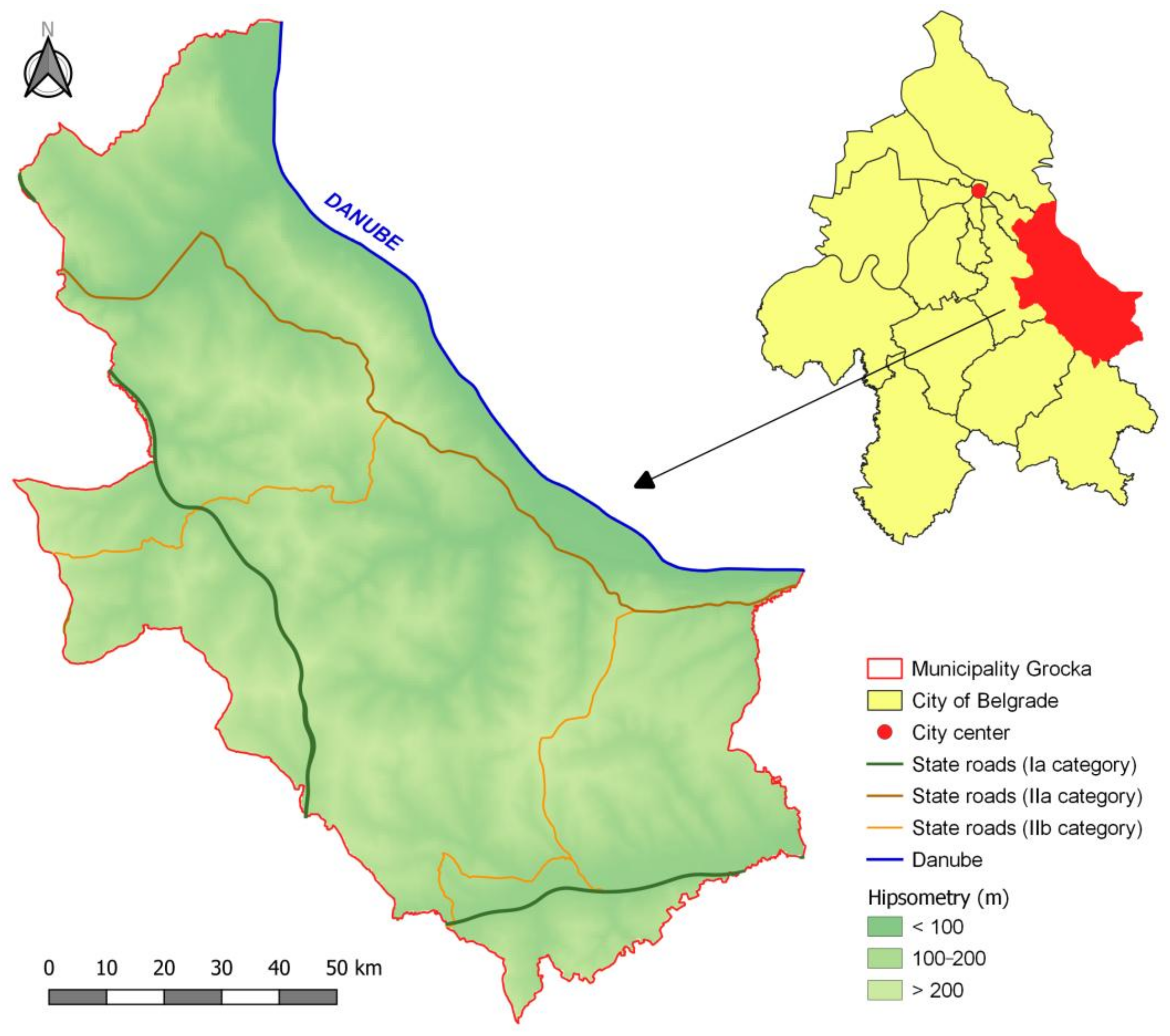
The municipality covers an area of 289 km
2 in the southeastern part of Belgrade (
Figure 1), within the Danube River basin, and includes fifteen settlements with a population of over 80,000 inhabitants [
45,
46]. According to data from the Statistical Office of the Republic of Serbia, more than three-quarters of the territory consists of agricultural land [
36,
37,
40], making Grocka one of the most agriculture-oriented municipalities within the metropolitan region. The terrain is predominantly hilly, characterized by loess plateaus and river terraces descending toward the Danube [
47]. The climate is moderately continental, with an average annual temperature of around 12 °C and annual precipitation ranging from approximately 650 to 700 mm [
45,
46,
47,
48].
Demographic indicators point to a continuous natural population decline and a negative migration balance in most rural settlements, while areas closer to Belgrade record an increase in the number of households and urban amenities [
14,
41,
49]. This differentiation results in contrasting spatial trends—some parts of the municipality are undergoing urbanization and integration into the urban fabric, accompanied by rising land and service prices, whereas others retain a traditional agrarian character dominated by orchards and vineyards [
36,
37,
40,
45,
46,
47,
48].
Agricultural production in Grocka is primarily based on permanent fruit crops (apple, peach, sour cherry, and grapevine), while vegetable and cereal cultivation occurs on a smaller scale. Over the past decade, however, the total area of arable land has declined, with an increase in plots no longer used for agricultural purposes. Farm fragmentation, limited financial resources, an unfavorable age structure among farmers, and insufficient market support further reduce productivity and the economic sustainability of the sector.
At the same time, growing urbanization pressures and the expansion of residential zones along major roads have led to the gradual degradation of fertile land, as well as changes in hydrological and pedological conditions, particularly in the Danube riverbank area. Nevertheless, this territory holds considerable potential for the development of agroecological, rural-tourism, and processing activities, which can be viewed as a promising direction for diversifying the local economy and revitalizing the rural landscape.
Figure 1.
Study area of the Municipality of Grocka, Belgrade (Serbia) [
50]—author’s elaboration.
Figure 1.
Study area of the Municipality of Grocka, Belgrade (Serbia) [
50]—author’s elaboration.
Based on the outlined characteristics of the area and the identified challenges in agricultural land use, this study applies Multi-Criteria Analysis (MCA) as an integrated procedure for assessing the sustainability of agricultural space. This method enables the simultaneous consideration and quantification of multiple interrelated factors—demographic, productive, socioeconomic, and spatial—and their integration into a single analytical framework. Frameworks that integrate sustainability criteria require methods capable of accommodating heterogeneous indicators and traceable decision logic; design science literature confirms that multi-criteria structures enable transparent weighting, modularity, and comparability across contexts [
5]. The combination of MCA and Geographic Information Systems (GIS) allows for spatial visualization of the results and the identification of zones with varying degrees of sustainability [
14,
29,
31]. Such an analysis also provides a foundation for formulating policies and measures aimed at improving economic efficiency, resource management, and the implementation of the Climate-Smart Agriculture (CSA) concept in the municipality of Grocka. Smart gardens employ sensors, artificial intelligence, and automation to optimize plant growth and enhance the sustainability of food production in urban areas [
24], as well as in peri-urban environments such as Grocka.
3. Materials and Methods
3.1. Methodological Framework
Given the complexity of the factors involved, assessing agricultural sustainability requires an integrative approach that considers economic, environmental, demographic, and spatial criteria, as well as their interdependencies within the context of local development. In this regard, multi-criteria analysis (MCA) combined with Geographic Information Systems (GIS) represents a suitable method for territorial sustainability assessment and the identification of priority development zones [
14,
29,
49]. In this study, MCA is applied not merely as a technical evaluation tool, but as a decision-support framework designed to address conflicting objectives and heterogeneous drivers of change within peri-urban agricultural systems. MCA was selected as the core analytical framework because it allows the integration of heterogeneous indicator types—demographic, economic, spatial, and production-related—into a single composite system [
29,
32]. Alternative approaches such as regression modeling or soil-suitability analysis were considered inadequate for this case because they cannot incorporate non-parametric and categorical variables (e.g., migration, infrastructure, land-use restrictions) in a spatially explicit manner. This approach enables the simultaneous consideration of spatial, production, and economic aspects of agriculture, facilitating the identification of areas with varying levels of agricultural sustainability and the definition of intervention priorities relevant for planning and investment allocation.
Within agricultural and spatial sustainability research, MCA has been widely applied for land suitability analysis, sustainability ranking, investment prioritization, and the assessment of peri-urban land-use conflicts, where demographic pressures, production potential, and spatial constraints interact [
11,
14,
29]. Accordingly, the methodological choice of MCA in this study is theoretically grounded in its capacity to structure complex decision problems and to support transparent, policy-relevant spatial evaluation.
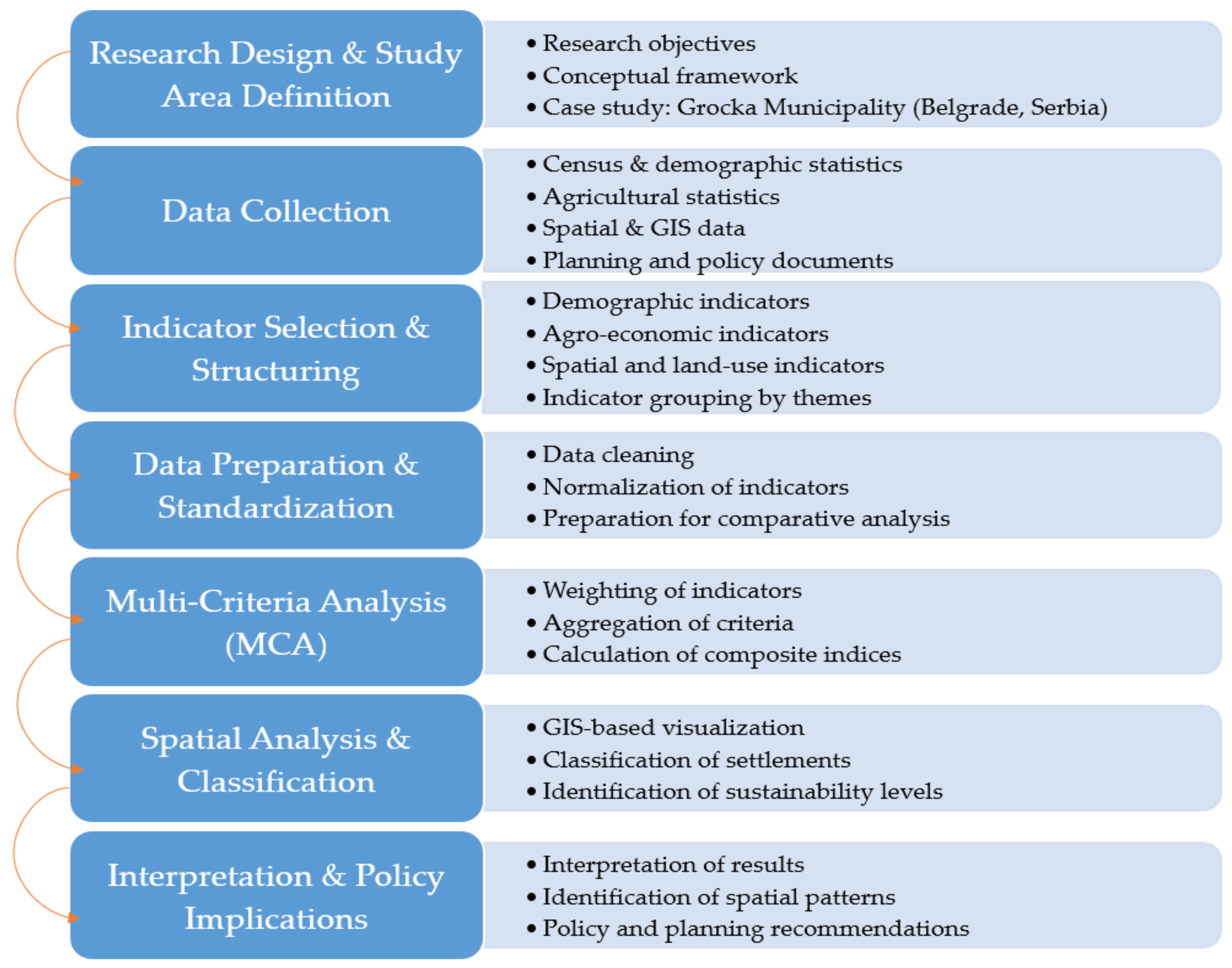
Figure 2 presents the general methodological flowchart of the study, illustrating the full research design from data acquisition to policy-oriented outputs. The flowchart integrates demographic, agro-economic, and spatial data within a GIS-based decision-support framework, covering successive stages of indicator selection, data preparation, normalization, aggregation, and spatial classification. The MCA represents a central analytical component within this broader methodological structure, linking indicator systematization, normalization, aggregation, and spatial classification.
To ensure methodological consistency and reproducibility, the analysis was based on an integrated framework combining theoretical–analytical principles with empirical spatial data. Given the multi-dimensional nature of agricultural sustainability—encompassing demographic, economic, ecological, and spatial components—the applied procedures enable the systematic integration of qualitative and quantitative indicators within a unified analytical model. This framework ensures that the obtained results are spatially interpretable, verifiable, and suitable for comparative analysis across territorial units.
Theoretical Background of Multi-Criteria Analysis in Agricultural Sustainability Studies
Multi-Criteria Analysis (MCA) represents a decision-support framework designed to address complex problems characterized by multiple, often conflicting objectives and heterogeneous evaluation criteria. In the context of agricultural sustainability assessment, MCA is not merely a technical aggregation tool, but a conceptual framework that enables the structured integration of social, economic, environmental, demographic, and spatial dimensions into a coherent analytical system [
11,
29,
30,
33]. Its theoretical foundation lies in multi-criteria decision-making theory, which emphasizes transparency of decision logic, explicit weighting of criteria, and the ability to accommodate both quantitative and qualitative information.
Within agricultural and land-use studies, MCA has been widely applied to support spatial decision-making processes such as sustainability ranking, suitability evaluation, prioritization of investment zones, and the management of land-use conflicts, particularly in peri-urban and transitional rural areas [
34,
35,
36]. Unlike purely statistical or optimization-based approaches, MCA allows the incorporation of non-parametric indicators, institutional constraints, and context-specific expert knowledge, which are essential for capturing the multifunctional character of agricultural systems [
29,
30].
Recent GIS-based MCA applications increasingly emphasize its role as a bridge between spatial data analysis and policy-oriented planning. Studies have demonstrated that the integration of MCA with GIS enhances the interpretability of results, facilitates the visualization of spatial patterns, and supports the identification of priority areas for targeted interventions [
11,
31,
37]. While classical land suitability analyses—such as those applied in homogeneous rural environments—primarily focus on biophysical constraints, contemporary sustainability-oriented MCA frameworks extend the analytical scope to include demographic dynamics, socio-economic pressures, and infrastructural accessibility, which are particularly relevant in peri-urban agricultural contexts [
10,
28,
38,
39].
Recent MCA-based studies further illustrate the methodological diversity and contextual adaptability of this framework. For instance, Carvalho et al. [
35] demonstrate the capacity of MCA to integrate environmental, infrastructural, and production-related criteria in the geospatial identification of priority zones for irrigated agriculture, highlighting the flexibility of weighted aggregation schemes under resource-related constraints. Although focused on water reuse, the methodological logic of combining heterogeneous spatial criteria is directly transferable to peri-urban agricultural systems such as the municipality of Grocka, where infrastructure accessibility and resource efficiency significantly influence sustainability outcomes [
39,
40]. Classical GIS-based suitability studies, such as the analysis conducted in the Tadla Plain, Morocco [
31], provide an important methodological benchmark by illustrating the effectiveness of weighted overlays and spatial classification; however, their predominantly biophysical orientation differs from the present study, which explicitly incorporates demographic dynamics and urbanization pressure as key determinants of agricultural sustainability. More recent approaches emphasize participatory and group-based decision-making within GIS–MCA environments [
36,
37], reinforcing the role of MCA as a transparent and policy-relevant decision-support tool capable of integrating expert judgment, spatial data, and competing development objectives. In addition, Talukder [
30] provides a comprehensive theoretical foundation for applying MCDA to agricultural sustainability assessment through the integration of economic, environmental, and social indicators, while recent CAP-oriented applications in Europe [
33] confirm the suitability of MCA for evaluating land-use change scenarios and sustainability trade-offs in transitional and peri-urban agricultural landscapes.
In this study, MCA is therefore employed as a theoretically grounded decision-support framework rather than a standalone technical procedure. Its application is specifically adapted to the peri-urban setting of the municipality of Grocka, where agricultural sustainability is shaped by the interaction of demographic decline, urbanization pressure, land-use transformation, and production restructuring [
12,
32]. By explicitly structuring indicator selection, normalization, weighting, aggregation, and classification within a transparent analytical logic, the applied MCA framework ensures methodological rigor, reproducibility, and relevance for spatial planning and agricultural policy development.
3.2. Indicator Framework and Analytical Steps
The methodological procedure was designed as a sequence of interrelated steps encompassing the selection and systematization of indicators, normalization and weighting, the application of MCA integrated with GIS, and the final spatial classification and interpretation of results. These steps correspond directly to the analytical stages presented in
Figure 2, which provides a structured overview of indicator selection, thematic grouping, and their integration within the GIS-based MCA framework. Recent frameworks for sustainable agri-food system evaluation stress the importance of combining social, economic, environmental, and technological indicators to capture system complexity and cross-sectoral dependencies [
14]. In line with these approaches, the indicator framework applied in this study integrates demographic, production-related, socio-economic, and spatial dimensions in order to reflect the multi-functional character of agricultural systems in peri-urban contexts [
41].
The selected indicators are conceptually aligned with core principles of Climate-Smart Agriculture, as they simultaneously capture production, spatial, and demographic dimensions influencing the adaptive potential of the agricultural system. Special attention was devoted to calibrating the indicator set and their analytical roles to the specific characteristics of the municipality of Grocka, with all methodological choices—indicator selection, orientation, weighting logic, and thresholds—explicitly documented to ensure transparency, representativeness, and applicability for local-level planning. The unit of analysis comprises the settlements within the municipality of Grocka (N = 15).
The multi-criteria analysis (MCA), integrated with Geographic Information Systems (GIS), was applied using QGIS 3.34 (QGIS Development Team, Open Source Geospatial Foundation, Chicago, IL, USA) to assess agricultural sustainability at the settlement level within the municipality of Grocka. Indicators were grouped into thematic categories according to their functional role within the analytical model, and the selected set of criteria included:
- -
Demographic indicators—the degree of depopulation based on census data [
42,
43,
44,
45], treated as a decreasing (limiting) indicator and inverted before aggregation according to
x′ = 1 − x;
- -
Production indicators—the share of permanent crops in utilized agricultural land [
41,
42,
45] and the economic value of crops [
45];
- -
Spatial and infrastructural indicators—distance from main transport corridors and market centers [
14], as well as relevant provisions from the Spatial Plan of the Municipality of Grocka [
46] (infrastructure, tourist sites, protected areas). These variables were integrated into a composite indicator of infrastructural connectivity, normalized to the [0,1] range with an increasing orientation;
- -
Socio-economic indicators—the number of dependents per household (decreasing orientation; inverted using x′ = 1 − x);
- -
Urbanization factors—the number of households [
41,
42,
45,
46], migration activity (net migration) [
45], and infrastructural connectivity [
46,
47,
48]. These increasing-oriented indicators were not included in the composite sustainability score (
S), but were used exclusively to construct a separate urbanization index (
U), which served as a classification criterion for identifying predominantly urbanized or peri-urban settlements.
Prior to aggregation, potential redundancy and interdependence among socio-demographic and urbanization-related indicators were examined using Spearman’s rank correlation analysis, calculated using Microsoft Excel (Microsoft Corporation, Redmond, WA, USA). No critical multicollinearity was detected (|ρ| < 0.70), which supports the assumption of relative indicator independence required for the application of weighted linear combination and confirms the internal consistency of the indicator framework.
3.3. Normalization and Aggregation Methods
Normalization and the choice of aggregation method must be explicitly documented, as different procedures (e.g., min–max, vector normalization, Ordered Weighted Averaging—OWA) can lead to variations in ranking results [
30]. All normalization, weighting, aggregation procedures, and sensitivity analyses within the MCA framework were performed using Microsoft Excel (Microsoft Corporation, Redmond, WA, USA). In spatial multi-criteria analyses, normalization represents a critical step, as it enables the integration of heterogeneous indicators measured on different scales into a unified analytical framework. To ensure comparability among the values of different indicators, normalization was conducted. In this study, the min–max scaling method was applied, given its transparency, ease of interpretation, and frequent application in GIS-based MCA studies, and it has been recognized in the literature as one of the most commonly used techniques in spatial multi-criteria analyses. As illustrated in
Figure 2, normalization and inversion represent a critical intermediate stage linking indicator systematization with the aggregation procedure within the MCA flowchart.
In the case of the municipality of Grocka, all criteria were transformed into a comparable scale using min–max normalization, defined as:
where
is the normalized value,
is the original value of the indicator, and
and
represent the minimum and maximum values of the indicator across the entire municipality. This transformation rescales all indicators to a common [0,1] interval, allowing their direct comparison and aggregation. For decreasing-oriented indicators (e.g., degree of depopulation, number of dependents per household), inversion is applied to standardize monotonicity prior to aggregation, according to the formula:
This step ensures that higher normalized values consistently indicate more favorable sustainability conditions across all criteria.
The aggregation of results was carried out using the weighted sum method, which is simple and transparent while allowing precise evaluation of interdependent indicators [
29,
49]. Formally, the overall score
Si for analysis unit
i is defined as:
where
is the normalized value of criterion
j for unit
i, and
wj is the weight of criterion
j. The weights were determined based on a combination of expert assessment and literature review, with priority given to factors exerting the greatest influence on production and spatial stability (demographics and permanent crops). Higher weights assigned to these criteria reflect their direct role in land-use persistence, agricultural viability, and resilience of peri-urban farming systems, which is consistent with findings from comparable MCA-based agricultural sustainability assessments [
14,
29,
31].
The integrated MCA framework, based on Bartzas & Komnitsas [
11], begins with the selection of economic, ecological, and social indicators, followed by their normalization and aggregation into a single composite score for ranking territorial units and identifying “hotspots” and leading zones. This analytical logic was applied at the municipal and settlement level in the case of the municipality of Grocka. To assess the reliability and robustness of the obtained results, a systematic sensitivity analysis was conducted through multiple scenarios. In the first step, criteria weights were varied by ±20% to examine the stability of the resulting sustainability classes. In the second step, an alternative normalization using the z-score method was applied to evaluate whether different standardization techniques affect the ranking order.
Spearman’s rank correlation coefficient (ρ) was used to evaluate the stability of settlement rankings between the baseline and variant MCA scenarios, providing a quantitative validation of model reliability. The results show a high correlation between ranks in the baseline and alternative scenarios (Spearman ρ > 0.80; p < 0.001), confirming the robustness of the applied normalization and weighting scheme and demonstrating that the final ranking is not overly sensitive to methodological assumptions.
Additionally, qualitative validation was conducted against actual conditions on the ground (e.g., the presence of permanent crops, proximity to infrastructure), further supporting the interpretative consistency and spatial plausibility of the derived sustainability categories.
3.4. Urbanization Index and Classification Scheme
In addition to the agro-composite sustainability score (
S), an urbanization index (
U) was calculated, representing a synthetic measure of structural and spatial urbanization pressures affecting agricultural land use. The introduction of a separate urbanization index was motivated by the need to distinguish areas where agricultural sustainability is constrained primarily by urban expansion rather than by internal agro-economic or demographic characteristics. This analytical separation into two parallel indices (
S and
U) is explicitly represented in
Figure 2, highlighting the dual-path structure of the MCA flowchart and preventing conceptual overlap between agro-economic sustainability and urbanization-driven constraints. The urbanization index is defined as:
where
Ic represents infrastructural connectivity,
H the number of households, and
M net migration activity. The assigned weights reflect the dominant role of infrastructure and residential expansion in peri-urban transformation processes, while migration activity captures dynamic population pressure.
All indicators included in the U model have an increasing orientation and were normalized to the [0,1] range. Settlements with high urbanization pressure (U ≥ 0.70) combined with a low share of permanent crops (≤0.25) were classified as Category IV (urbanized/peri-urban), indicating areas where agricultural sustainability is structurally limited by non-agricultural land-use dynamics. The remaining settlements were classified exclusively based on the composite sustainability score (S).
This two-step classification procedure ensures a clear analytical separation between urban-driven constraints and agro-economic sustainability potential, preventing the distortion of sustainability rankings in areas dominated by urban expansion.
The four-class classification (I–IV) aligns with common practices in AHP + GIS suitability studies (poor–medium–good–excellent) [
31], facilitating comparison with other territorial analyses. Equal interval classification was selected to ensure transparency and interpretability of sustainability classes for policy-oriented applications, while potential limitations of this approach were addressed through sensitivity testing of weights and normalization methods. Although equal interval classification may obscure extreme values in skewed distributions, the applied sensitivity testing confirmed that relative spatial patterns and category assignments remained stable across alternative scenarios.
In the baseline scenario, criteria weights (sum = 1) were determined based on expert evaluation and the relative importance of factors in the local context:
- -
1—“depopulation”—0.30
- -
% permanent crops—0.25
- -
economic value of crops—0.25
- -
1—“number of dependents”—0.15
- -
tourism potential—0.05
The classes of the composite score (S) were defined using equal intervals for transparency and ease of comparison:
- -
Category I: 0.00–0.33
- -
Category II: 0.33–0.66
- -
Category III: 0.66–1.00
Based on the values of S and U, the territory of the municipality of Grocka was grouped into four sustainability categories:
- -
Zones of high priority for agro-economic improvement,
- -
Zones of moderate stability,
- -
Zones suitable for the development of sustainable agricultural models,
- -
Zones with a predominantly non-agricultural character (Category IV—determined exclusively by the urbanization index (U)).
3.5. Methodological Alternatives
Alternative methodological approaches to multi-criteria decision-making in agricultural and spatial sustainability assessments are widely discussed in the literature and provide important reference points for interpreting MCA-based results. In addition to the weighted linear combination applied in this study, fuzzy multi-criteria analysis (fuzzy-MCA) is frequently proposed as an approach for addressing uncertainty and subjectivity inherent in expert-based evaluations, by employing linguistic variables (e.g., “low,” “medium,” “high”) approximated by fuzzy numbers [
37,
49].
Another widely used approach is the Analytic Hierarchy Process (AHP), which derives criterion weights through pairwise comparisons and consistency checks, followed by spatial aggregation using weighted overlay techniques within a GIS environment [
31,
36,
37]. For aggregation and ranking purposes, compromise-based methods such as TOPSIS (Technique for Order Preference by Similarity to Ideal Solution) are also commonly applied, enabling the calculation of a single performance index based on the distance from ideal and anti-ideal solutions [
46,
47,
50].
In addition, systematic sensitivity analysis—including variation of criteria weights and the application of alternative normalization techniques—represents a standard procedure for testing the robustness of MCA outcomes and is widely recommended in spatial decision-support studies [
11]. While these alternative approaches were not applied directly in this research, their exclusion was primarily related to data availability, scale compatibility, and the policy-oriented focus of the study. Nevertheless, they provide an important methodological benchmark for interpreting the obtained results and represent relevant directions for future comparative and scenario-based analyses in similar peri-urban and agricultural contexts.
3.6. Methodological Limitations
Despite its analytical advantages, the applied MCA framework is subject to several methodological limitations that should be considered when interpreting the results. One key limitation relates to the determination of criteria weights, which inevitably involves a degree of subjectivity inherent to expert-based assessment. Although the weighting scheme was informed by relevant literature and expert knowledge, and its stability was tested through systematic sensitivity analysis and robustness testing, complete objectivity in weighting procedures cannot be fully achieved [
14,
29,
34]. This limitation is intrinsic to most multi-criteria decision-making approaches that rely on expert judgment rather than purely data-driven optimization.
Another important limitation arises from the availability and spatial resolution of input data [
51]. Certain demographic, socio-economic, and infrastructural indicators are available only at aggregated or settlement-level scales, which may obscure intra-settlement heterogeneity and limit the detection of fine-scale spatial variability within agricultural systems [
14]. Furthermore, temporal inconsistencies among demographic, economic, and spatial datasets—originating from different reference years—may influence absolute indicator values, although comparative analysis suggests that these discrepancies do not substantially alter the observed spatial patterns or relative rankings among settlements.
It should also be noted that MCA represents a predominantly static analytical model and therefore cannot fully capture dynamic processes such as short-term migration fluctuations, changes in land ownership, market volatility, or rapid socio-economic transformations affecting agricultural systems [
52,
53,
54]. As a result, the analysis primarily reflects structural and medium-term conditions rather than short-term dynamics or transitional shocks. In this context, it is important to emphasize that the agro-composite sustainability score (
S) and the urbanization index (
U) serve distinct analytical purposes and are not directly comparable. To avoid conceptual ambiguity, these indices are presented separately in the Results
Section 4, and the final classification is conducted in two sequential phases: Category IV is determined exclusively based on the urbanization index (
U), while Categories I–III are derived from the composite sustainability score (
S).
Despite these limitations, MCA remains an appropriate and transparent method for integrating heterogeneous economic, ecological, demographic, and spatial criteria into a unified spatial assessment framework. Its ability to combine diverse indicators, explicitly document decision logic, and support scenario testing provides a robust basis for territorial sustainability analysis and policy-oriented interpretation, particularly in peri-urban agricultural contexts characterized by complex and interacting drivers of change [
30].
4. Results
The results present the empirical outcomes of the analysis of demographic, agro-economic, and spatial transformations affecting agriculture in the municipality of Grocka. They provide a structured overview of key demographic trends, changes in agricultural production and land use, and the spatial differentiation of settlements, culminating in the identification of areas with varying levels of agricultural sustainability based on the applied multi-criteria assessment.
4.1. Demographic Framework of Agricultural Transformations in Grocka Municipality
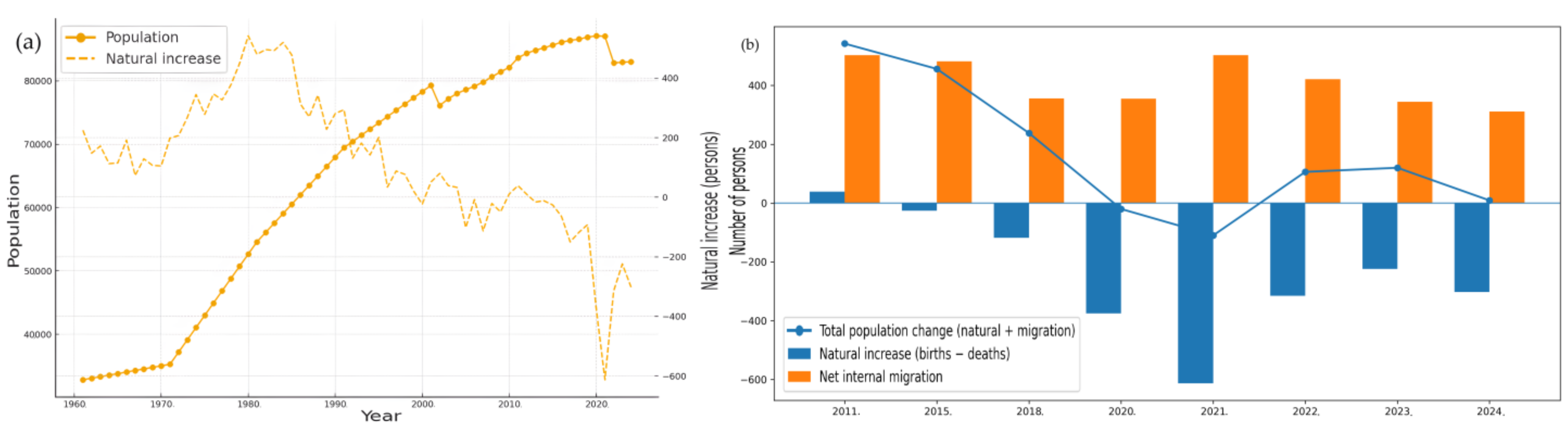
Demographic processes represent one of the key factors shaping the spatial and functional dynamics of agricultural areas. In the context of this study, demographic indicators are treated as structural drivers influencing agricultural labor availability, land-use continuity, and long-term sustainability at the settlement level. Since 2000, demographic indicators in the municipality of Grocka have shown a continuous natural population decline (
Figure 3), particularly pronounced after 2015. With the exception of three years, the period 2000–2023 shows a negative natural growth rate in almost every year (
Figure 3), reaching the lowest value of −7‰ in 2021 [
45,
46]. These trends provide an empirical basis for interpreting spatial differentiation in agricultural performance and sustainability outcomes identified in the subsequent MCA results.
It is important to emphasize that all demographic indicators presented in
Table 1 refer to aggregated, municipality-level values derived from official census data and vital statistics. As such, they do not capture intra-municipal variability at the settlement level. While the overall net migration balance of the municipality remains positive in recent years, this result is driven primarily by a limited number of peri-urban settlements located close to the City of Belgrade (most notably Kaluđerica), which experienced rapid population growth due to intensive in-migration. In contrast, remote rural settlements such as Kamendol continue to exhibit long-term demographic stagnation or decline, characterized by aging populations and limited migration attractiveness.
Although the natural population growth is negative, the total number of inhabitants showed moderate growth during the period 2011–2019, indicating the influence of immigration processes (
Figure 3). However, since 2020, a decline in the total population has been recorded (e.g., −1.3% in 2021), as a result of the combination of negative natural growth, increased mortality related to the COVID-19 pandemic, and continued outmigration. From the perspective of agricultural sustainability, these dynamics translate into an aging labor force and a shrinking pool of economically active population capable of maintaining intensive and permanent forms of agricultural production.
Changes in the structure of demographic dependency further confirm these processes. The total dependency ratio (population aged 0–14 and 65+ relative to 15–64) increased from 41.3 to 61.5 during the period 2011–2024 (calculation: (0–14 + 65+)/15–64 × 100) [
44], while the old-age dependency ratio rose from 19.1 to 36.2 [
44,
45]. This demographic aging represents a significant constraint for farm continuity, intergenerational succession, and the resilience of agricultural households, particularly in settlements with already weak production structures.
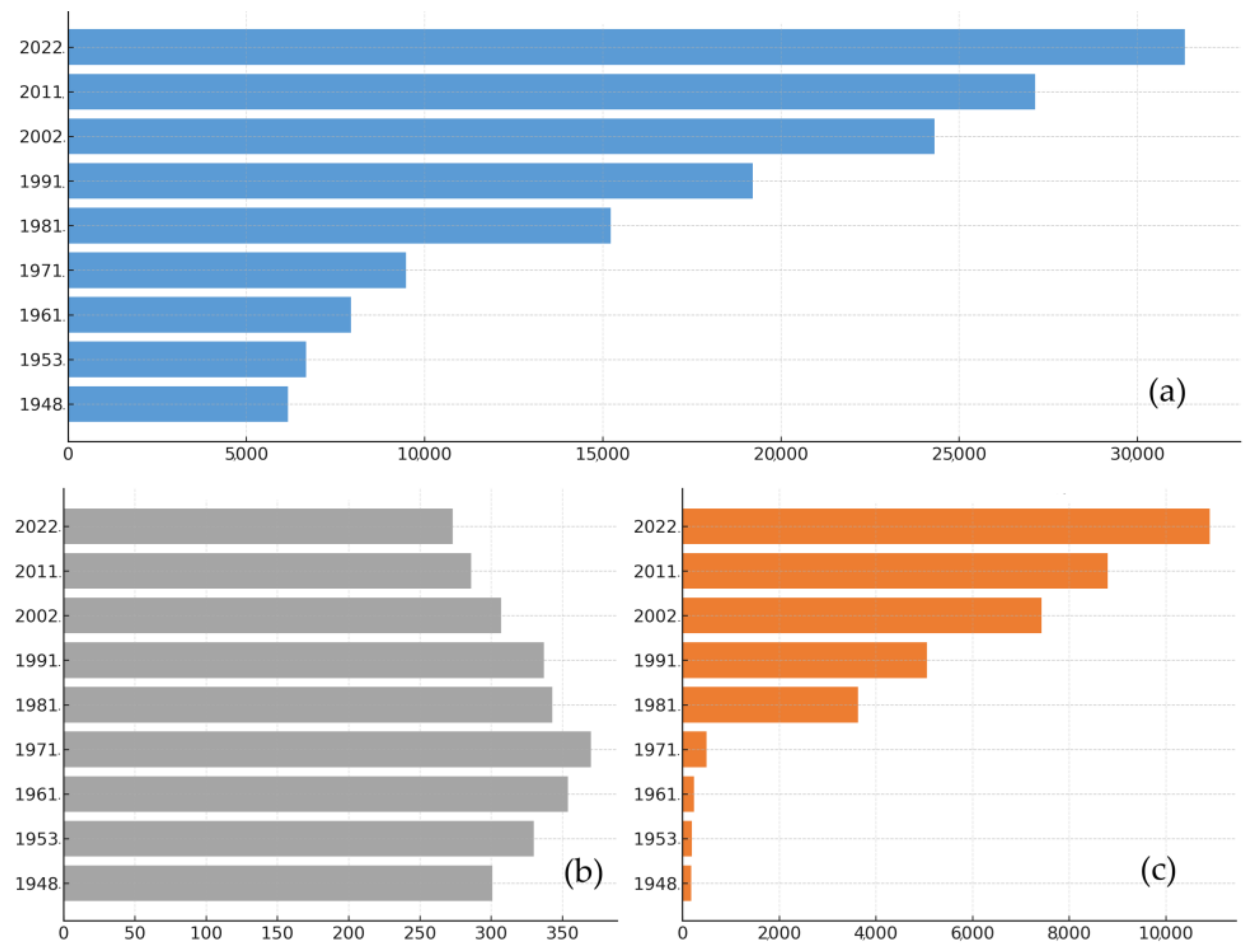
Long-term demographic dynamics at the settlement level reveal a pronounced divergence between the growth of total households and the decline of agricultural holdings in the municipality of Grocka (
Figure 4). The total number of households increased from 6164 in 1948 to over 31,000 in 2022 [
39], reflecting family nuclearization, internal migration, and intensive urban–rural development flows. However, by 2023 only 3570 agricultural holdings were registered [
44,
45], accounting for approximately 11.4% of total households. This discrepancy clearly indicates a structural weakening of the agricultural function and highlights the growing dominance of non-agricultural livelihoods across the municipality.
Spatial analysis of population dynamics by settlement (1948–2022) reveals pronounced demographic polarization. Urban-peripheral settlements (Kaluđerica, Vinča, Leštane) have experienced exponential population growth—for example, Kaluđerica’s population has increased more than 25-fold since 1961 [
46]—largely as a result of Belgrade’s metropolitan expansion and the proliferation of individual housing. In contrast, rural settlements (Kamendol, Živkovac, Dražanj, Umčari) have undergone continuous population decline, accompanied by aging and the loss of working-age residents. This spatial polarization directly corresponds to contrasting patterns of agricultural sustainability observed across settlements in the MCA results.
This spatial contrast results in a dual process:
- –
In urbanized areas, there is a loss of agricultural functions and increasing pressure on land [
53].
- –
While in rural areas, there is degradation of the agrarian structure and abandonment of arable land [
52,
55].
These two demographic pathways constitute distinct but equally limiting contexts for agricultural sustainability, which are subsequently captured through the composite sustainability score (
S) and the urbanization index (
U). A key challenge for rural development policy is to reduce the gap between urban and rural areas without eroding cultural and social diversity, which represents one of the greatest developmental assets of rural communities [
6].
4.2. Agro-Economic Transformations: Structure, Trends, and Spatial Implications
Agriculture in the municipality of Grocka, as a traditionally dominant function of the rural landscape, has undergone profound structural and functional transformations over the past three decades under the combined influence of depopulation, market fluctuations, and urbanization pressures. These long-term processes form the agroeconomic context within which settlement-level sustainability scores derived from the MCA framework should be interpreted.
In relation to the demographic dynamics outlined in
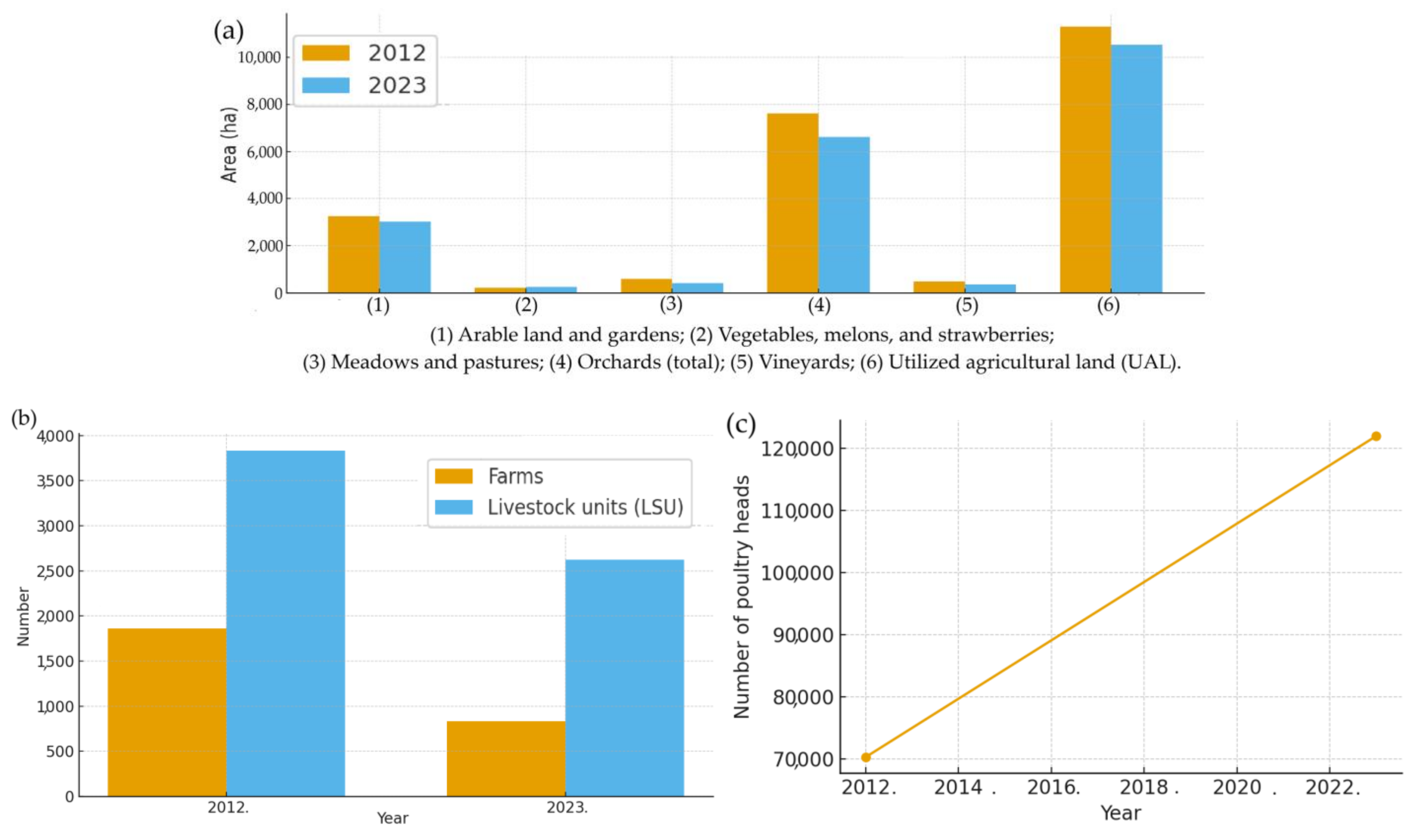
Section 4.1, agroeconomic change is manifested through a reduction in the total area of cultivated agricultural land (CAL), a decline in the number of active farms, and decreasing production capacity across key sectors—fruit growing, viticulture, arable farming, vegetable cultivation, and livestock breeding (
Figure 5). The observed patterns are closely linked to MCA indicators, particularly the economic value of crops and the share of permanent crops, which capture both production intensity and land-use stability.
Taken together, these trends point to a persistent process of deagrarization and spatial restructuring, previously identified through the multi-criteria assessment of agricultural sustainability, and here further substantiated through their concrete agroeconomic and land-use expressions at the municipal scale.
Between 2012 and 2023, the total area of utilized agricultural land (UAL) declined from 11,300 ha to 10,540 ha, corresponding to a decrease of approximately 6.7% (over 760 ha) [
39,
45]. At the same time, the number of registered farms fell from 4010 to 3532 [
39,
45]. This contraction reflects both the gradual withdrawal of small-scale producers and the growing difficulty of maintaining economically viable farming under conditions of labor shortages and market instability.
The most pronounced reductions occurred in arable land and gardens (3250 → 3020 ha) and uncultivated agricultural land (1345 → 664 ha), suggesting partial land reactivation or conversion toward non-agricultural uses [
39,
45,
46]. Such shifts are particularly evident in peri-urban settlements, where competition between agricultural and urban land uses directly affects sustainability outcomes.
A sharp decrease in forested areas outside UAL—from 2979 ha in 2012 to 1015 ha in 2023—requires cautious interpretation [
45], as the magnitude of change likely reflects methodological reclassification of land categories rather than exclusively actual land-cover transformation. This reinforces the relevance of relative, normalized indicators applied within the MCA framework, rather than reliance on absolute land-use figures alone.
Conversely, the expansion of fallow land and homestead plots indicates the persistence of temporary or semi-active land use under conditions of production uncertainty, aging farm operators, and volatile market conditions. In settlements positioned within lower sustainability categories, prevailing land-use patterns indicate the continued presence of agricultural activity, yet without the structural conditions required for long-term resilience.
4.3. Production Structure and Sectoral Trends
Crop farming remains a significant component of agricultural production in the municipality of Grocka, although long-term trends indicate a gradual contraction of both cultivated area and the number of specialized farms. The area under cereals declined from 2388 ha to 2214 ha, while the number of predominantly crop-oriented farms decreased from 1499 to 1106 [
39,
49]. Corn continues to dominate the crop structure; however, its cultivated area was also reduced (1287 → 1033 ha) [
46]. Wheat and barley exhibit similar downward trends, whereas the production of industrial and oilseed crops remains marginal and unstable, reflecting a limited degree of diversification and a high sensitivity of crop farming to market and policy fluctuations.
Vegetable farming shows a more heterogeneous development pattern. Although the total cultivated area slightly increased (206.8 → 246 ha), the number of farms declined from 664 to 538 [
39,
45]. Most vegetable crops, including tomatoes, cabbage, and onions, experienced a reduction in cultivated area, while strawberry production remained relatively stable (≈129–140 ha), despite a declining number of producers [
45]. This divergence indicates an ongoing concentration of production and increasing exposure of small producers to market volatility.
Permanent crops, traditionally one of the most important and economically valuable agricultural sectors in Grocka, display a pronounced downward trend. Total orchard areas decreased from 8117 ha to 6610 ha, while the number of farms fell from 3407 to 3015 [
39,
45]. Vineyard areas were reduced from 449 ha to 363 ha, suggesting a weakening role of fruit growing and viticulture as pillars of intensive and market-oriented agricultural production [
39,
45].
Livestock farming experienced the most severe structural decline among all agricultural sectors. The number of livestock units (LSU) dropped from 3833 to 2622, while the number of livestock farms decreased from 1860 to 834 [
40,
41,
42,
43,
44,
45]. The sharpest reductions were recorded in pig farming, with livestock numbers falling from 7634 to 2893 heads and the number of pig farms declining from 1152 to 458 [
40,
41,
42,
43,
44,
45]. Comparable patterns are observed in sheep and goat farming, whereas cattle numbers remained relatively stable, indicating partial sectoral resilience but an overall contraction of mixed farming systems.
Poultry farming represents a notable exception to the general trend of decline. The number of poultry heads increased substantially (70,268 → >121,000), while the number of farms sharply decreased (1538 → 551). This inverse relationship points to a process of production consolidation and professionalization, characterized by the dominance of larger commercial units and the marginalization of small-scale producers.
4.4. Spatial and Developmental Implications
The observed processes of deagrarization and the weakening of small and medium-sized farms are not uniform across the municipality of Grocka, but exhibit clear spatial differentiation. Rather than representing a single linear trend, agricultural decline emerges as a multi-layered phenomenon shaped by demographic contraction, uneven urbanization pressures, inconsistencies in long-term agricultural policy, the unfavorable market position of small producers, generational discontinuities, and the outmigration of the working-age population [
56].
At the settlement level, these drivers translate into distinct spatial development trajectories. In predominantly rural settlements, agricultural weakening is primarily associated with population aging, labor shortages, and the gradual abandonment or extensification of cultivated land. In contrast, in urban-peripheral settlements, the loss of agricultural function is driven mainly by land-use conversion, residential expansion, and infrastructural development, which exert direct pressure on productive agricultural areas.
The spatial consequences of these processes are reflected in changes in village morphology, functional reorganization of land use, and an increasing fragmentation of agricultural space. Agricultural land is progressively converted to non-agricultural purposes, while remaining farming activities tend to become spatially dispersed and structurally less resilient. Such configurations are characteristic of settlements positioned within lower sustainability categories identified by the MCA, where agricultural activity persists but lacks long-term structural stability.
4.5. Spatial Differentiation and Functional Contrasts
To illustrate how the results of the multi-criteria analysis translate into distinct spatial and functional patterns of agricultural sustainability, three representative settlements were selected based on their MCA classification and spatial position within the municipality (
Figure 5). The selection includes two contrasting cases located at opposite ends of the sustainability spectrum, as well as the municipal center as an intermediate reference case.
Kamendol, classified within Category I (low sustainability), represents one of the smallest and demographically weakest settlements in the municipality, characterized by a minimal population size, a low number of households, and a high age dependency ratio. Its low composite sustainability score (S ≈ 0.25) reflects the dominance of extensive agricultural practices combined with limited infrastructural connectivity and weak production capacity.
At the opposite end of the spectrum, Kaluđerica, classified as Category IV (urbanized/peri-urban), exhibits the highest level of urbanization pressure, reflected in rapid population growth, the largest number of households, and a very high urbanization index (U = 0.88) (Equation (4)). At the same time, the settlement is characterized by a very low share of permanent crops, indicating a marginal role of agriculture. The spatial development of Kaluđerica has been largely unplanned, accompanied by insufficient municipal and transport infrastructure, while its population structure reflects heterogeneous migration-driven dynamics.
Between these two extremes lies Grocka, the municipal center, which occupies an intermediate position within Category III. Compared to Kamendol, Grocka demonstrates a more stable household structure and higher values of key production indicators, while simultaneously experiencing stronger urban influences than predominantly rural settlements. This configuration reflects a transitional functional profile in which agricultural potential and urban development pressures coexist within the same spatial unit.
Taken together, these three cases illustrate the dominant pathways of agricultural function weakening identified by the MCA results:
- (i)
demographic decline and population aging in rural settlements,
- (ii)
urban conversion and spatial pressure on agricultural land in peri-urban areas,
- (iii)
a mixed transitional trajectory in municipal centers where agricultural viability persists under increasing urban influence.
4.6. MCA Results and Sustainability Classification
The multi-criteria analysis was applied to all 15 settlements within the municipality of Grocka using the most recent available data for the 2022–2023 period. Based on the methodological framework and indicator system defined in
Section 3, the analysis enabled the ranking of territorial units according to overall agricultural sustainability and their potential for developing climate-smart and economically stable agricultural models.
The MCA results are structured around eight key indicators representing demographic, production-related, socio-economic, and spatial dimensions of sustainability:
- -
Depopulation rate (2011–2022);
- -
Share of permanent orchards in utilized agricultural land (UAL);
- -
Number of households (used for the urbanization index U);
- -
Economic value of crops by settlement;
- -
Number of dependents per household;
- -
Infrastructure connectivity (normalized distance to E-75, railway, and the Danube);
- -
Tourism potential (cultural and natural assets, tourist offer);
- -
Migration attractiveness (normalized net migration balance).
Normalized indicator values and final classification scores are presented in
Table 2, which summarizes the MCA results for all settlements in Grocka Municipality.
Threshold values for the four sustainability categories were defined in accordance with the distribution of normalized scores and established methodological recommendations in MCA literature. Categories I–III were constructed using equal interval classification, selected for its transparency, reproducibility, and suitability for policy-oriented spatial interpretation. The potential limitations of this approach—particularly its sensitivity to skewed distributions—were addressed through sensitivity testing of criteria weights and normalization procedures (see
Section 3.3).
Category IV required a dual criterion, defined by high urbanization pressure (U ≥ 0.70) combined with a low share of permanent crops (≤0.25), in order to reflect the fundamentally different structural characteristics of urban-dominated and peri-urban settlements.
All indicators were normalized using the min–max method (Equation (1)), ensuring comparability across heterogeneous measurement scales. Criteria weights were defined in the Methodological
Section 3.1. based on a combined expert-based assessment and literature review, with higher weights assigned to demographic and production-related indicators due to their direct influence on land-use continuity and agricultural viability, and moderate weights assigned to spatial and tourism-related indicators.
The robustness of the weighting scheme was verified through systematic sensitivity analysis, confirming that variations in weights do not substantially alter settlement rankings.
Aggregation was performed using the weighted sum method (Equation (2)). For each settlement, a classification score was calculated as the sum of the products of normalized indicator values and their corresponding weights (Equation (3)) (
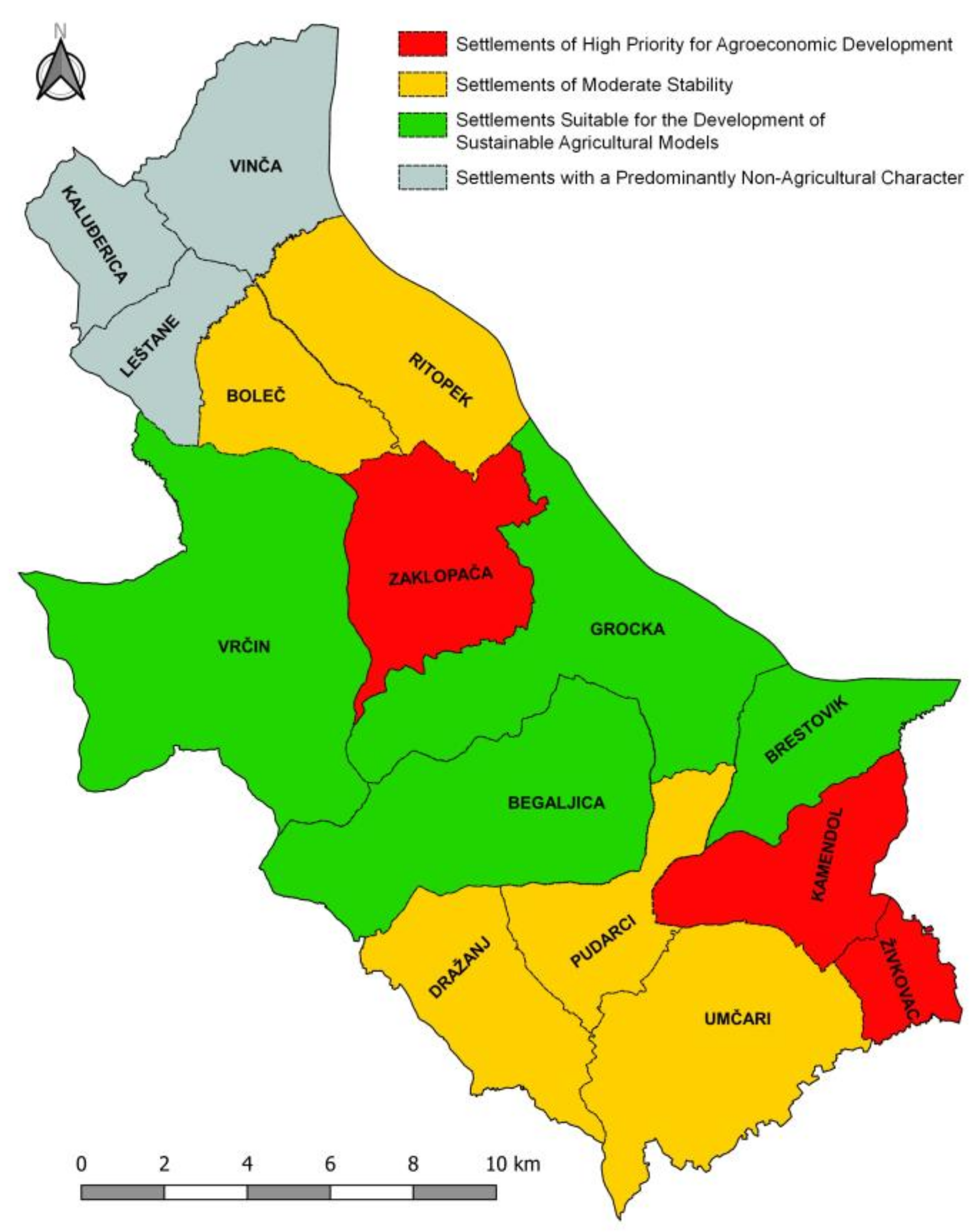
Table 2). Based on the resulting score distribution, settlements were classified into four sustainability categories (
Figure 6):
- -
High-priority settlements for agro-economic improvement—characterized by low sustainability scores, pronounced demographic risks, weak infrastructural connectivity, and the dominance of extensive agricultural practices (Živkovac, Zaklopača, Kamendol).
- -
Moderately stable settlements—exhibiting mixed characteristics, where certain production and logistical advantages coexist with structural and demographic constraints (Dražanj, Ritopek, Pudarci, Umčari, Boleč).
- -
Settlements suitable for the development of sustainable agricultural models—defined by a higher share of permanent and economically profitable crops, relatively stable demographic indicators, and favorable logistical conditions (Grocka, Vrčin, Begalica, Brestovik).
- -
Settlements with a predominantly non-agricultural character—shaped by strong migration-driven population growth, intensive urbanization, and spatial transformation, with agricultural functions playing a marginal role (Kaluđerica, Leštane, Vinča), as identified exclusively through the urbanization index (U ≥ 0.70) in combination with a low share of permanent crops (≤0.25).
6. Conclusions
The application of multi-criteria analysis (MCA) in the municipality of Grocka revealed the strong influence of contrasting and spatially differentiated processes shaping agricultural development. On the one hand, depopulation, deagrarianization, and the loss of agricultural functions dominate in certain zones, while on the other, more stable forms of agriculture persist in settlements characterized by a higher share of perennial crops and better infrastructural connectivity. The adopted analytical model—combining the agro-composite sustainability score (S) and the urbanization index (U)—clearly differentiates Categories I–IV, with Kaluđerica, Leštane, and Vinča classified as Category IV (U ≥ 0.70 and share of perennial crops ≤ 0.25). The obtained results indicate a pronounced spatial polarization, ranging from settlements where agriculture has nearly disappeared under urbanization pressure to those that continue to function as cores of agricultural production and land-use stability. Importantly, the results remain stable under a ±20% variation in indicator weights, confirming the robustness and reliability of the applied methodological framework.
The analysis further confirmed that demographic change represents a key limiting factor for agricultural sustainability. Population aging, the decline in young and economically active residents, and the reduction in agricultural holdings accelerate the weakening of rural capacities, while urban expansion intensifies land conversion and pressure on arable land. At the same time, the results demonstrate that sustainable agricultural models remain feasible, but only within specific territorial and structural conditions. Perennial crops, fruit growing, and viticulture provide opportunities for more stable production and stronger market integration, particularly when combined with favorable transport accessibility and proximity to Belgrade. In this context, the findings identify zones within the municipality of Grocka where the implementation of Climate-Smart Agriculture (CSA) practices is both spatially feasible and socio-economically justified, as derived directly from the settlement-level differentiation revealed by the MCA.
This differentiation is reflected primarily in indicators contributing to the composite sustainability score (S)—notably demographic and production-related variables—while urbanization-related indicators predominantly influence the urbanization index (U) and the classification into Category IV. On this basis, the results support the need for territorially differentiated policy measures, rather than uniform agricultural support instruments:
- −
Category I—Revitalization-oriented measures, including subsidies for young farmers, improvement of basic infrastructure, and activation of neglected agricultural land;
- −
Category II—Stabilization measures, focusing on the preservation of existing resources and the introduction of innovative technologies (e.g., precision agriculture, plant growth-promoting bacteria—PGPB/PGPR, arbuscular mycorrhizal fungi—AMF/AMG, conservation tillage);
- −
Category III—Development-oriented measures, aimed at strengthening multifunctionality through short supply chains, agritourism, branding of local products, and targeted investment in perennial crops;
- −
Category IV—Protective and regulatory measures, including the protection of remaining agricultural land, the establishment of green corridors, and stricter land-use conversion regimes.
The municipality of Grocka represents a spatial context in which urbanization and rural transformation processes intersect, making it a representative case of peri-urban agricultural change. Although the analysis focuses on a single municipality, the proposed methodological framework—based on settlement-level MCA and the combined use of S and U indices—is transferable to other peri-urban areas facing similar demographic decline, land-use transformation, and urban pressure. Consequently, integrated land and agricultural management should be grounded in the explicit interconnection of demographic, economic, and ecological dimensions, ensuring that development pressures are balanced against long-term agricultural viability and resource preservation.




 ,
,