
Next-Generation Automated Adaptive Protection Enabled by Geospatial Load Forecasting in Distribution Networks



Abstract
1. Introduction
- Development of a unified GIS-based database that integrates geospatial network data, planning rules, IEC-based maximum demand limits, customer-type classifications, and historical energy consumption to enable dynamic load demand forecasting.
- Enabling automatic adjustment of relay settings based on predefined forecast-driven thresholds.
- Demonstration of scalability and immediate practicality through laboratory validation with commercial IEDs, supporting direct applicability to real distribution networks.
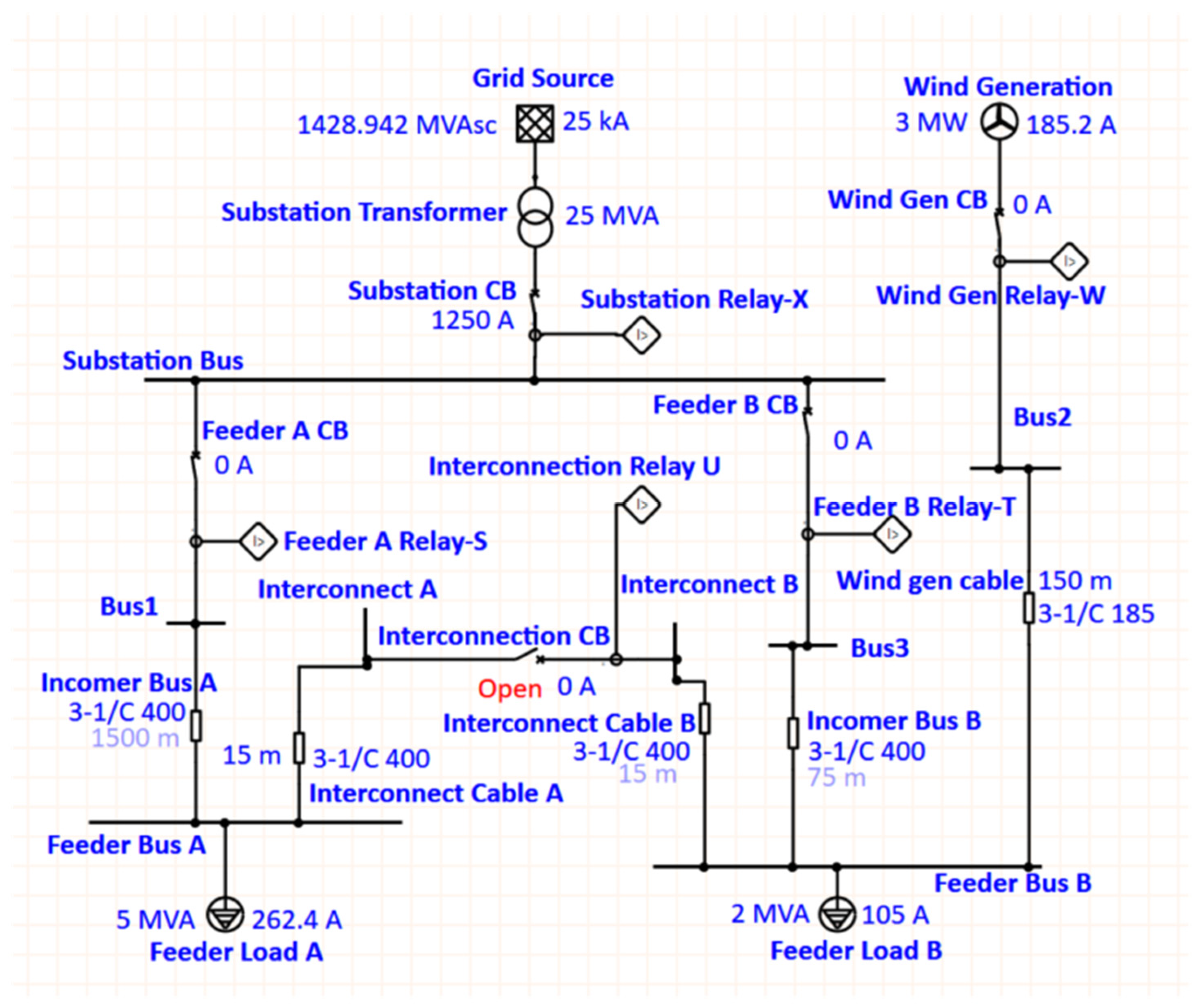
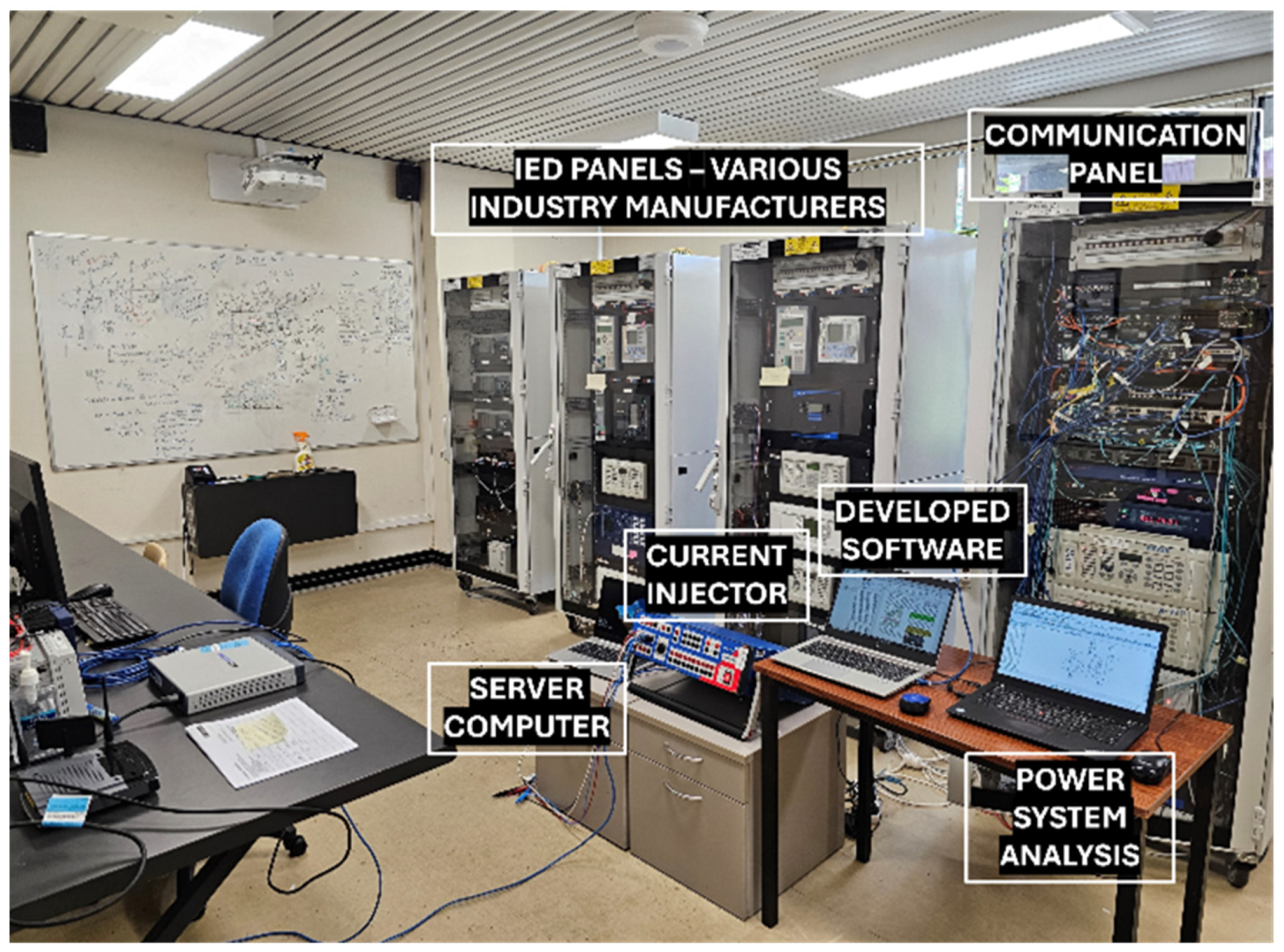
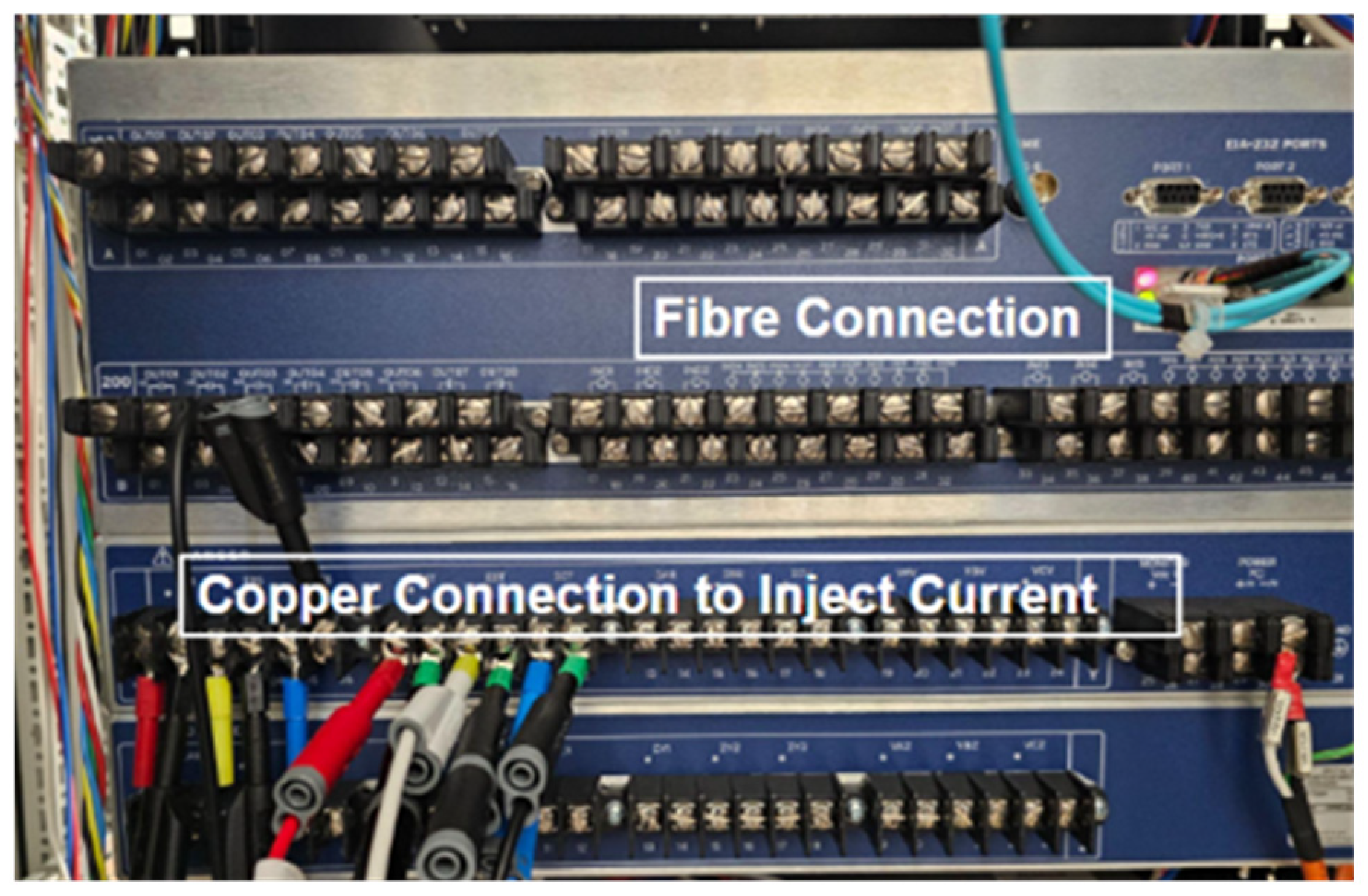
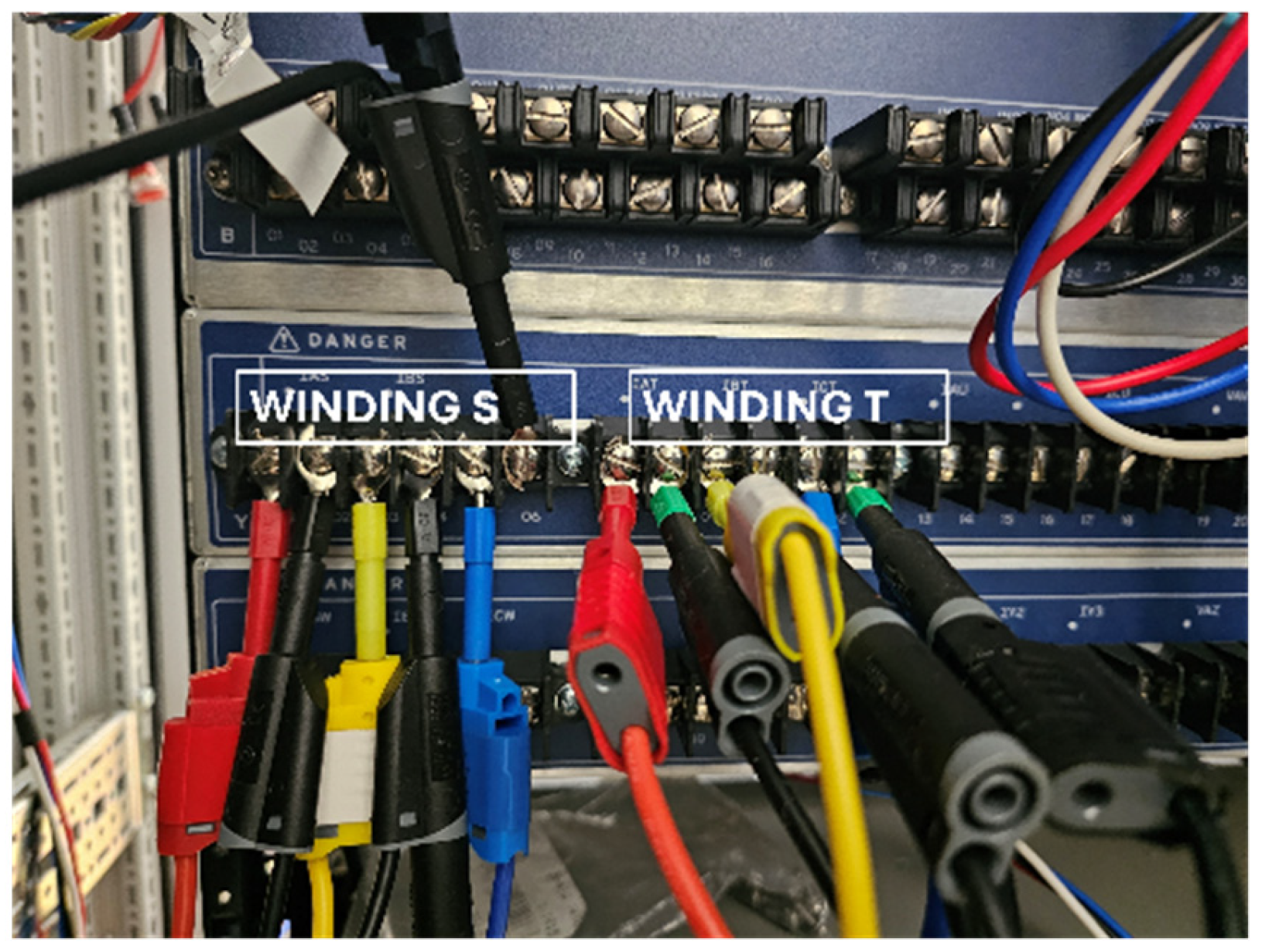
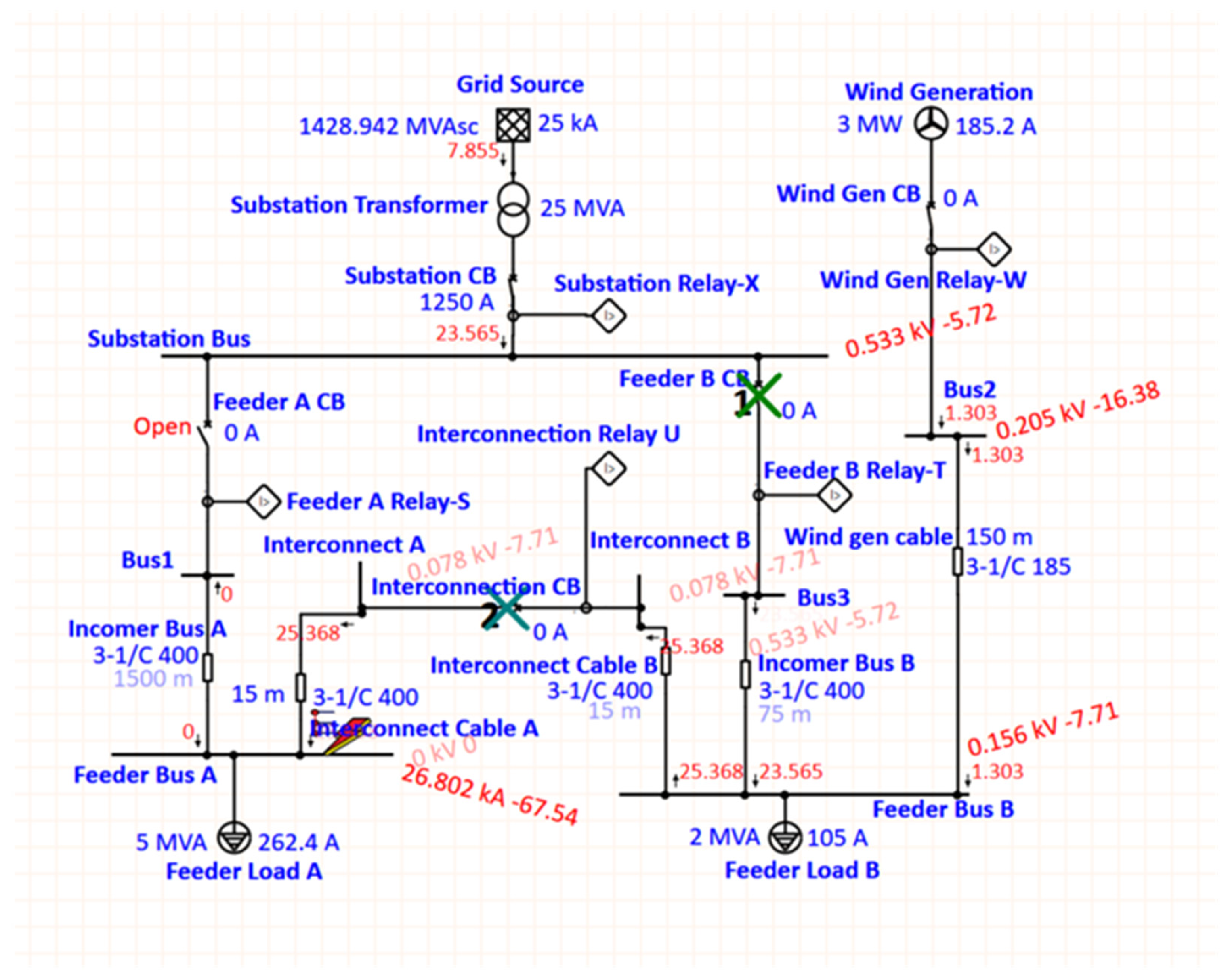
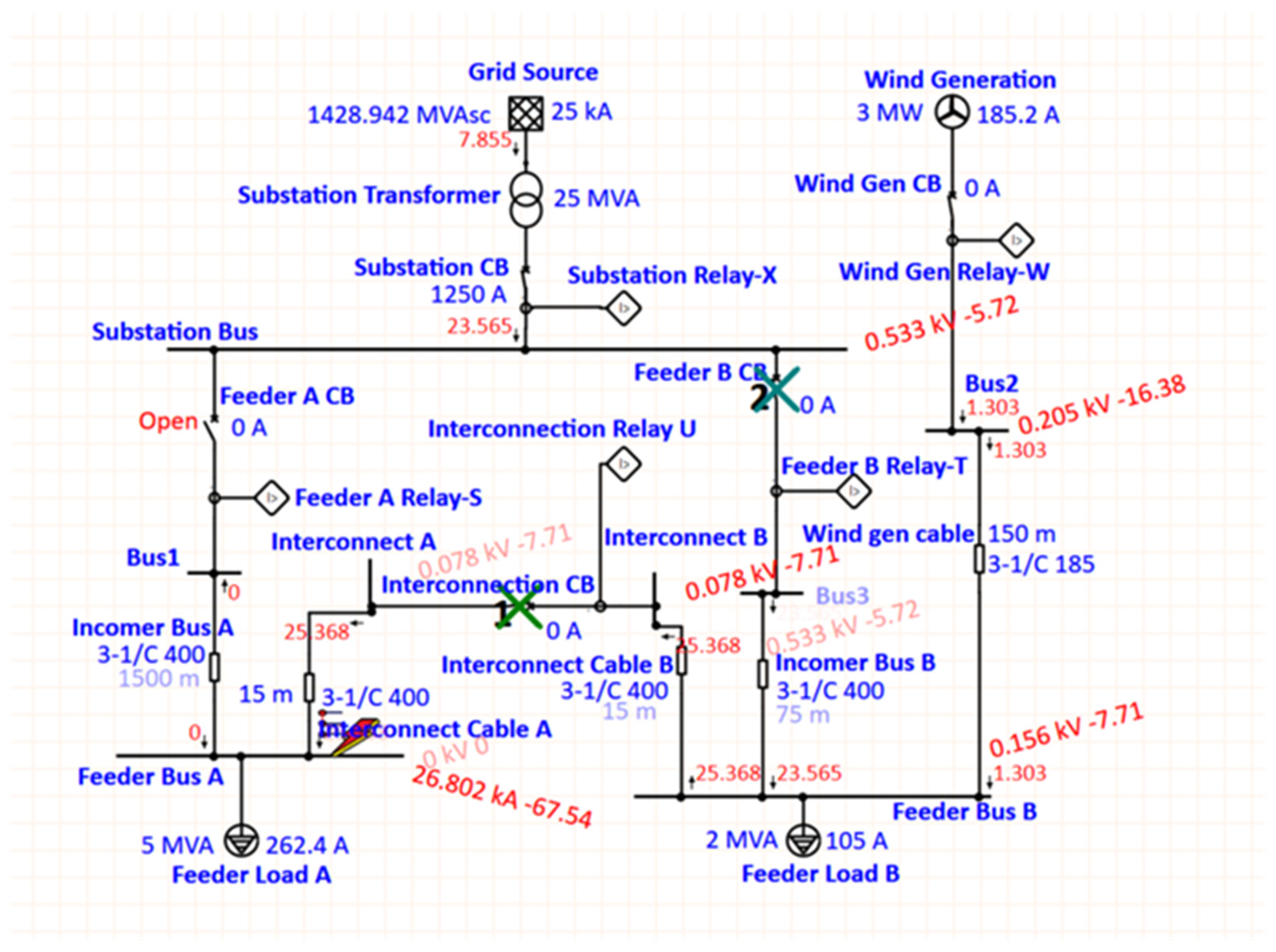
2. Network Topology and Laboratory Setup
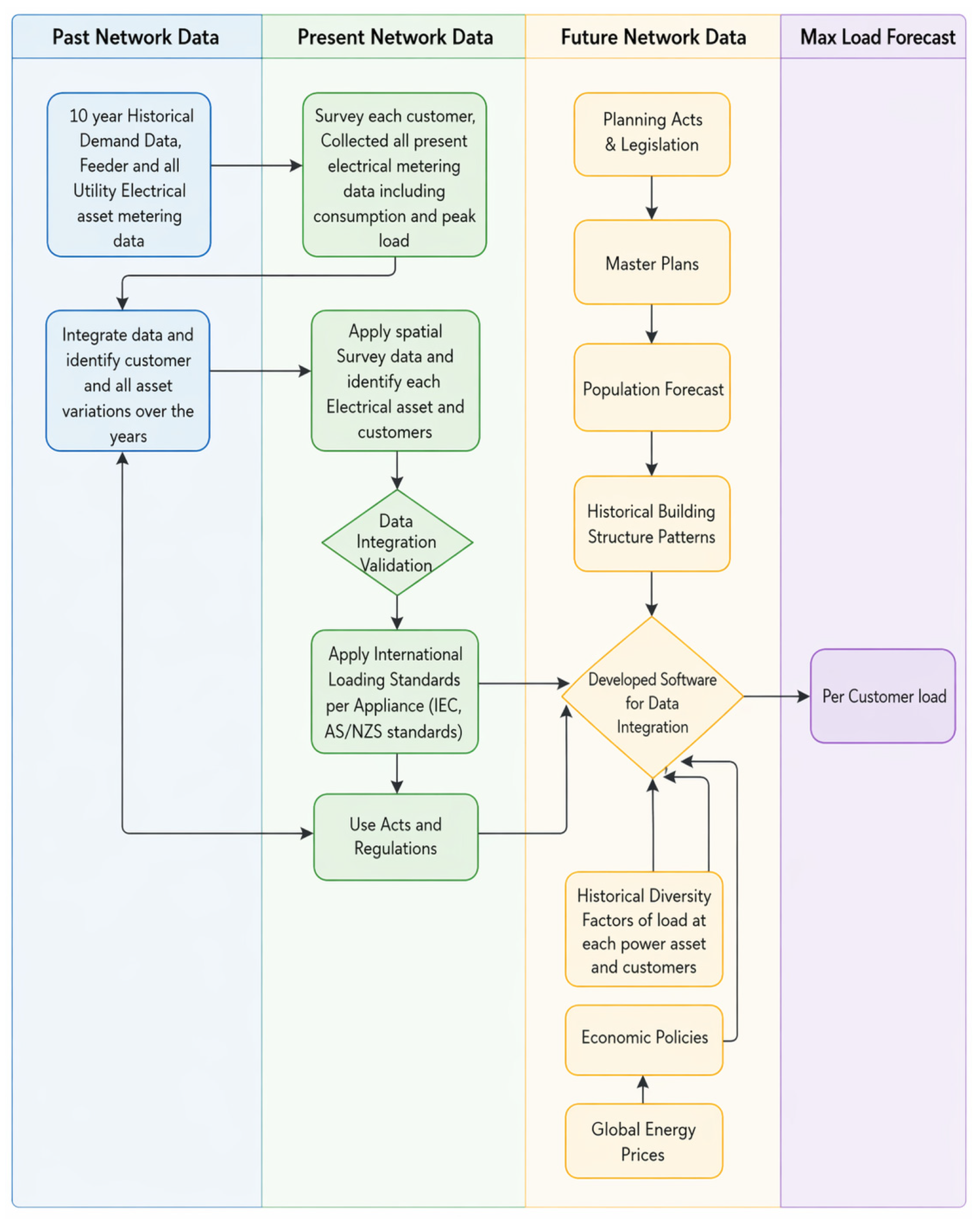
3. GIS-Based Load Forecasting Database
3.1. Past Network Data Stream
3.2. Present Network Data Stream
3.3. Future Network Data Stream
3.4. Integrated Load Forecast and Output Stream
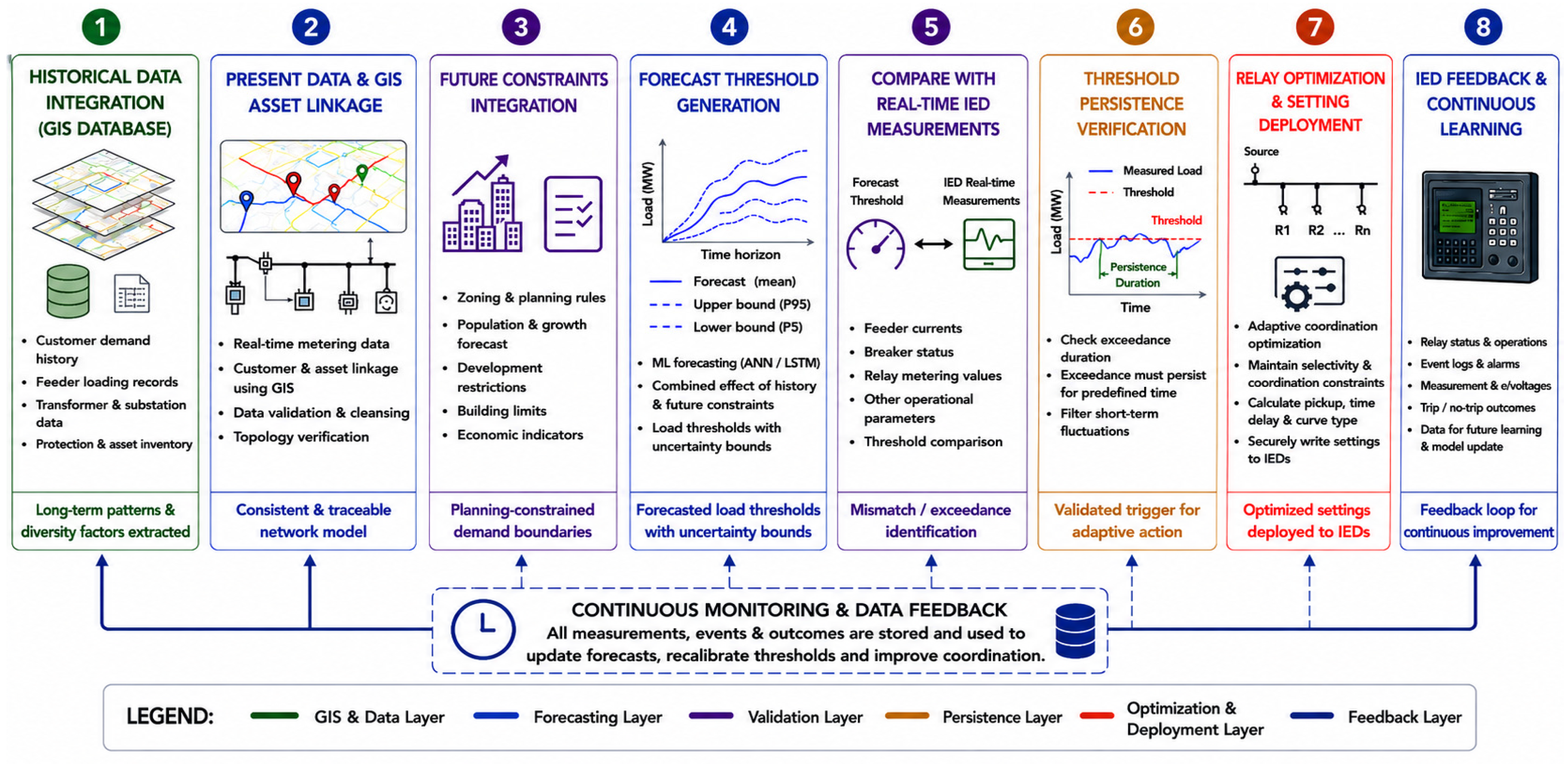
4. Proposed GIS-Based Load Forecasting
4.1. Traditional Load Forecasting Approach
4.2. Proposed Load Forecasting Approach
4.3. Integrated Maximum Load Estimation
4.4. Future Load Projection Using Planning Constraints
4.5. Workflow Between GIS Database and Relay Coordination Engine
5. Simulation and Experimental Results
5.1. Case 1—Adaptive Protection in Dynamic Power Network
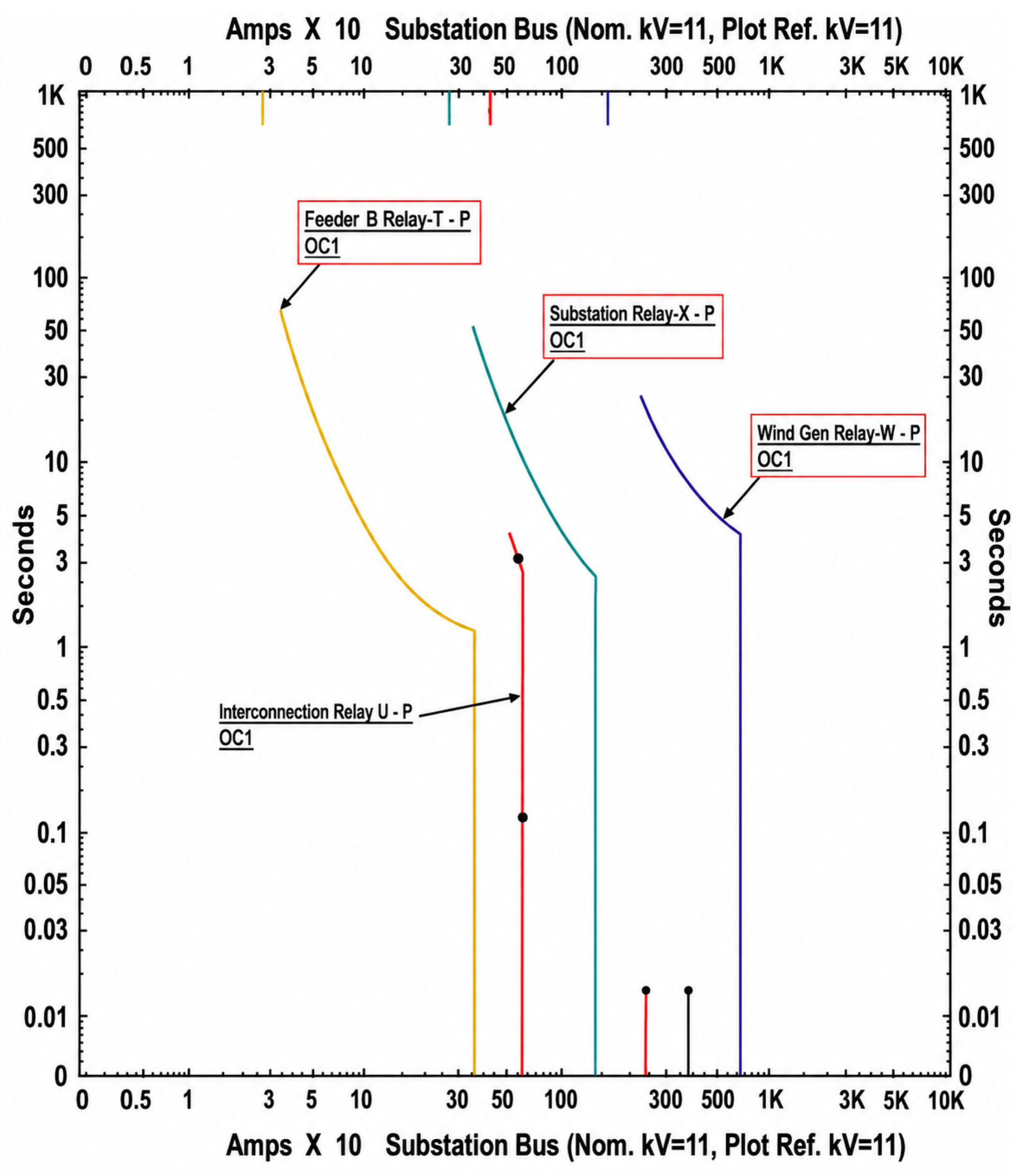
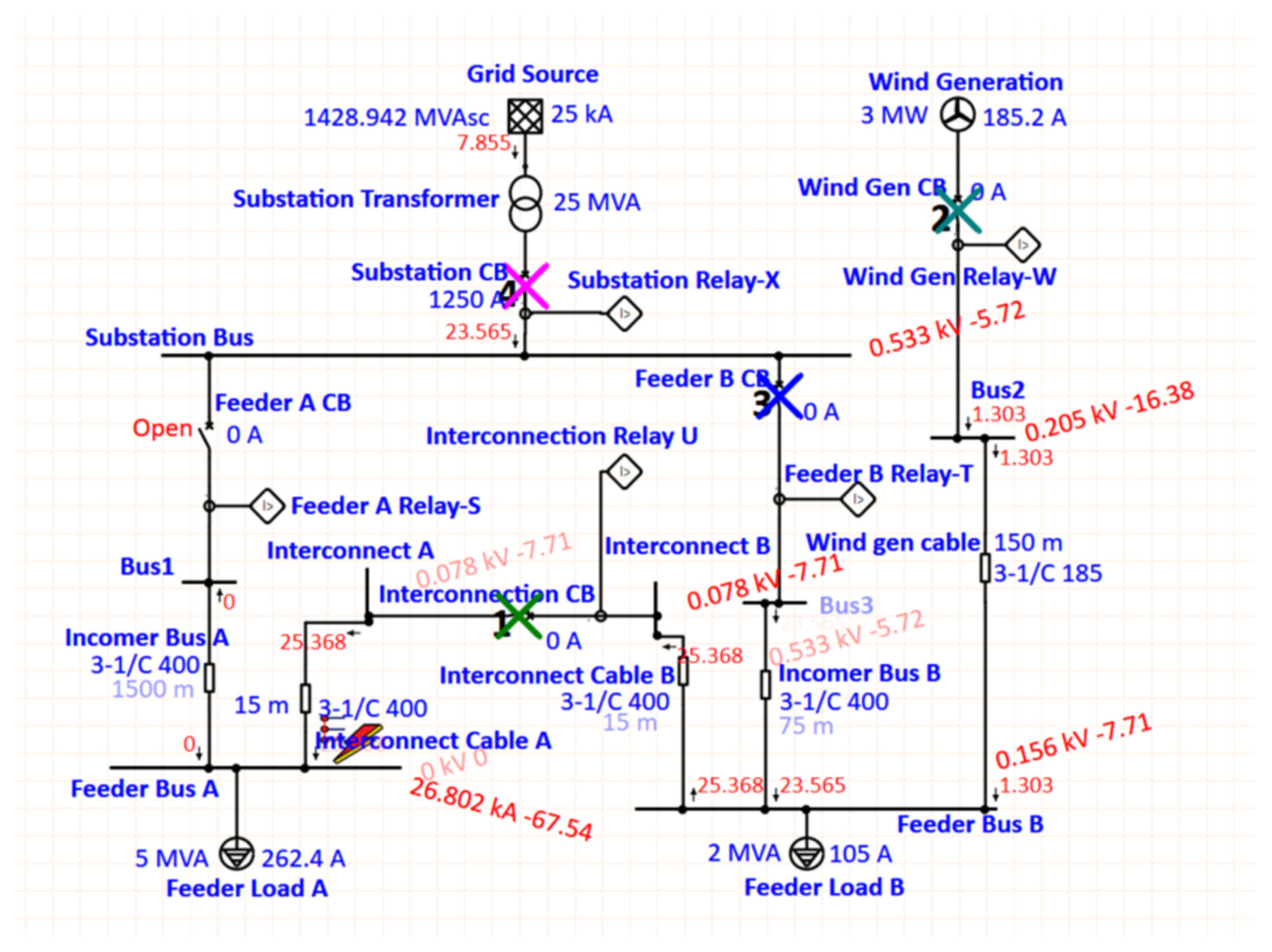
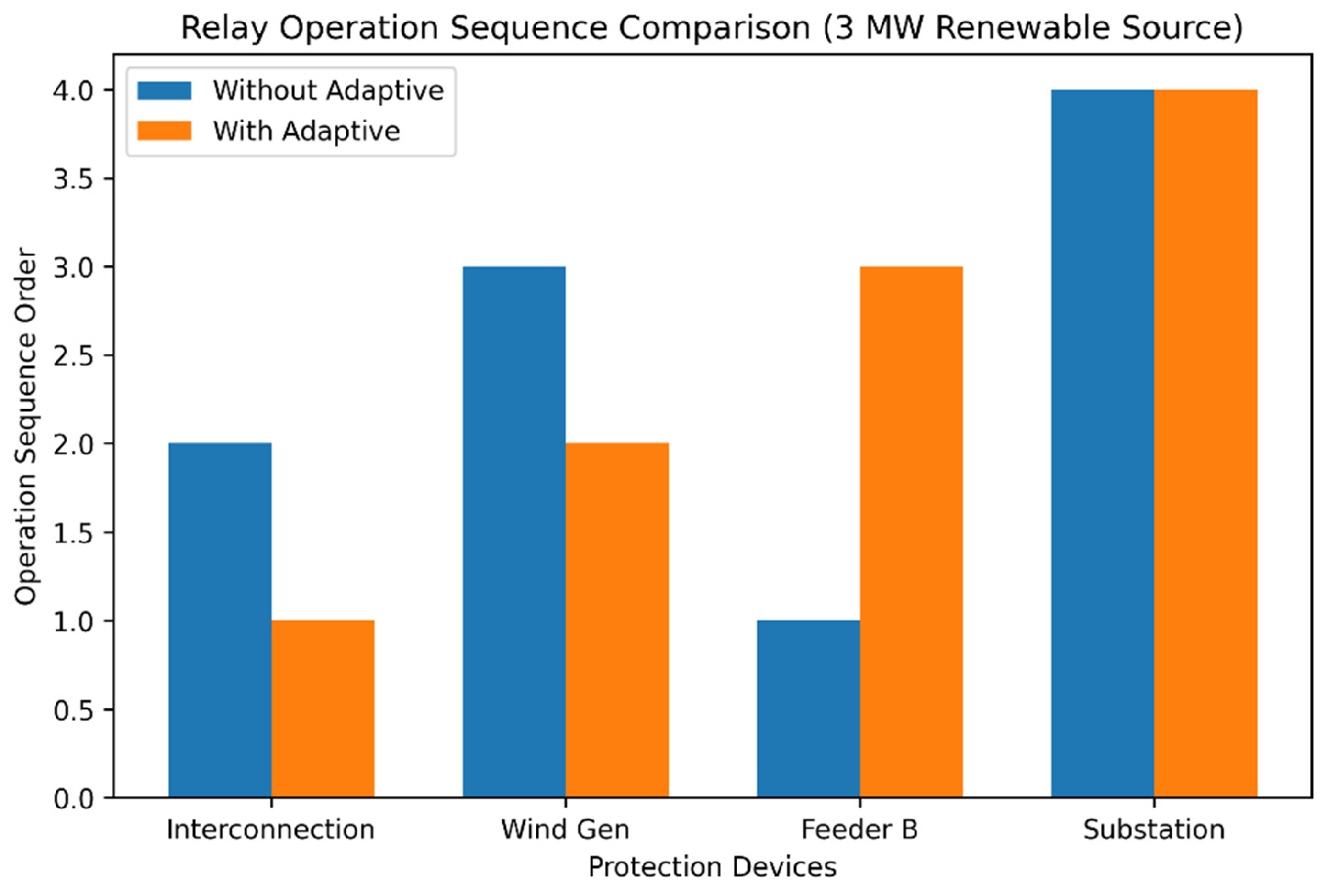
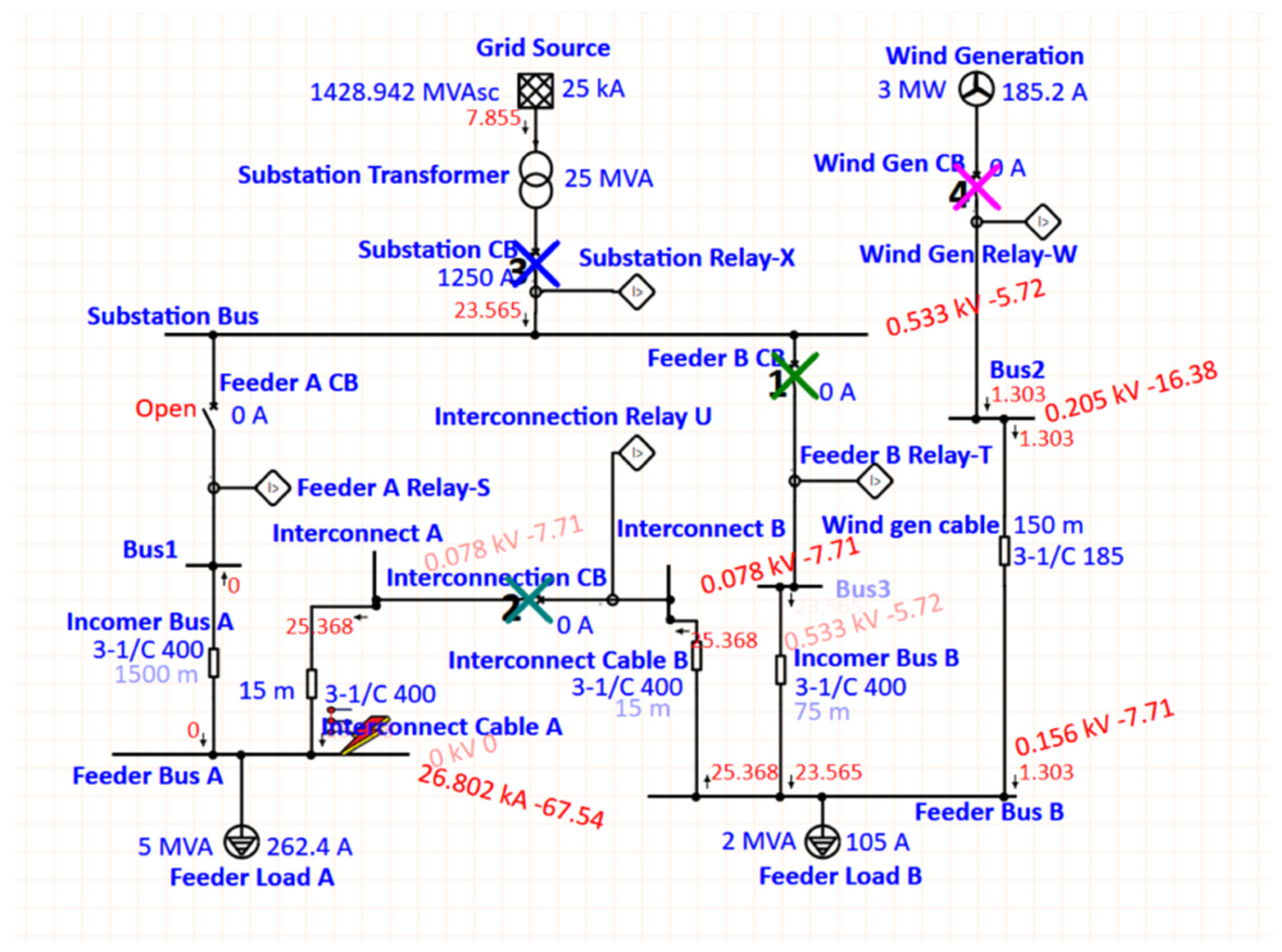
5.2. Case 2—Adaptive Protection in Renewable-Integrated Networks
6. Discussion
- Integrated GIS-centric load forecasting database:Development of a unified database that combines GIS field data, geospatial zoning, utility planning rules, IEC standard-based maximum demand limits, customer-type classifications, and historical energy consumption. All variables are relationally linked and dynamically updatable to enable accurate, spatially resolved load demand forecasting.
- Practical coupling of forecasting with adaptive protection:Direct integration of the forecasting database with adaptive relay control software, enabling modification of protection pickup and time settings based on predetermined, forecast-driven load thresholds without embedding machine-learning algorithms inside relay firmware.
- Laboratory-verified, hardware-in-the-loop methodology:Unlike simulation-only approaches, the proposed scheme is experimentally validated using a modified operational distribution network, confirming reliable performance under realistic operating and communication conditions.
- Scalability and field readiness:The architecture is inherently scalable and transferable to live distribution networks, supporting incremental expansion, future forecasting methodologies, and seamless adoption by network operators without requiring new communication infrastructure.
7. Conclusions
Author Contributions
Funding
Data Availability Statement
Acknowledgments
Conflicts of Interest
References
- Rodriguez, F.; Haddadi, A.; Boemer, J.; Majumder, R. IBR Interconnection with High Voltage Transmission Networks—Risks, Requirements and Compliance; IEEE: Piscataway, NJ, USA, 2023. [Google Scholar]
- Alam, M.S.; Al-Ismail, F.S.; Salem, A.; Abido, M.A. High-Level Penetration of Renewable Energy with Grid: Challenges and Opportunities. IEEE Access 2020, 8, 190277–190299. Available online: https://ieeexplore.ieee.org/document/9224611 (accessed on 7 May 2026). [CrossRef]
- Venkataramanan, A.; Wang, W.; Ramasubramanian, D.; Huque, A.; Mehrizi-Sani, A. Stability Analysis of Distribution Networks with High Penetration of Distributed Energy Resources. IEEE Access 2025, 13, 83867–83880. [Google Scholar] [CrossRef]
- Kezunovic, M. Smart Fault Location for Smart Grids. IEEE Trans. Smart Grid 2011, 2, 11–22. [Google Scholar] [CrossRef]
- Depuru, S.S.S.R.; Wang, L.; Devabhaktuni, V.; Gudi, N. Smart meters for power grid—Challenges, issues, advantages and status. In Proceedings of the 2011 IEEE/PES Power Systems Conference and Exposition, Phoenix, AZ, USA, 20–23 March 2011; pp. 1–7. [Google Scholar] [CrossRef]
- Telukunta, V.; Pradhan, J.; Agrawal, A.; Singh, M.; Srivani, S.G. Protection challenges under bulk penetration of renewable energy resources in power systems: A review. CSEE J. Power Energy Syst. 2017, 3, 365–379. [Google Scholar] [CrossRef]
- Islam, K.; Kim, D.; Abu-Siada, A. A review on adaptive power system protection schemes for future smart and micro grids, challenges and opportunities. Electr. Power Syst. Res. 2024, 230, 110241. [Google Scholar] [CrossRef]
- Hao, L.; Rosenwald, G.W.; Jung, J.; Chen-ching, L. Strategic Power Infrastructure Defense. Proc. IEEE 2005, 93, 918–933. [Google Scholar] [CrossRef]
- Wang, J.; Li, Y.; Hohn, F. Impact and challenges of conventional protection solutions in wind farm connected grids. In Proceedings of the 16th International Conference on Developments in Power System Protection (DPSP 2022), Gateshead, UK, 7–10 March 2022; pp. 230–237. [Google Scholar] [CrossRef]
- Bo, Z.Q.; He, J.H.; Dong, X.Z.; Caunce, B.R.J.; Klimek, A. Overcurrent Relay based Integrated Protection Scheme for Distribution Systems. In Proceedings of the 2006 International Conference on Power System Technology, Chongqing, China, 22–26 October 2006; pp. 1–6. [Google Scholar] [CrossRef]
- Yousaf, M.; Jalilian, A.; Muttaqi, K.M.; Sutanto, D. An Adaptive Overcurrent Protection Scheme for Dual-Setting Directional Recloser and Fuse Coordination in Unbalanced Distribution Networks with Distributed Generation. IEEE Trans. Ind. Appl. 2022, 58, 1831–1842. [Google Scholar] [CrossRef]
- Chattopadhyay, B.; Sachdev, M.S.; Sidhu, T.S. Protection of a distribution network: An adaptive approach. Can. J. Electr. Comput. Eng. 1994, 19, 103–112. [Google Scholar] [CrossRef]
- Wong, J.; Tan, C.; Rahim, N.A.; Tan, R.H.G. Communication-Less Adaptive Overcurrent Protection for Highly Reconfigurable Systems Based on Nonparametric Load Flow Models. IEEE Trans. Power Deliv. 2024, 39, 202–209. [Google Scholar] [CrossRef]
- Leao, B.P.; Vempati, J.; Muenz, U.; Shekhar, S.; Pandey, A.; Hingos, D. Machine Learning-based False Data Injection Attack Detection and Localization in Power Grids. In Proceedings of the 2022 IEEE Conference on Communications and Network Security (CNS), Austin, TX, USA, 3–5 October 2022; pp. 1–8. [Google Scholar] [CrossRef]
- Yang, J.; Dai, Z.; Shi, Y.; Ran, X. Research on the application of AI in power grid fault diagnosis under the digital technology system of new power system. In Proceedings of the 2025 6th New Power System International Forum—Power System and New Energy Technology Innovation Forum (NPSIF), Hainan, China, 29–31 October 2025; pp. 197–208. [Google Scholar] [CrossRef]
- Sanati, S.; Mosayebi, A.; Kamwa, I. Advanced Rapid Directional Over-Current Protection for DC Microgrids Using K-Means Clustering. IEEE Trans. Power Deliv. 2024, 39, 1088–1099. [Google Scholar] [CrossRef]
- Chang, N.; Song, G. An Adaptive Coordinated Wide-Area Backup Protection Algorithm for Network Topology Variability. IEEE Trans. Power Deliv. 2024, 39, 958–969. [Google Scholar] [CrossRef]
- Shah, K.R.; Detjen, E.D.; Phadke, A.G. Feasibility of adaptive distribution protection system using computer overcurrent relaying concept. IEEE Trans. Ind. Appl. 1988, 24, 792–797. [Google Scholar] [CrossRef]
- Samadi, A.; Chabanloo, R.M.; Farrokhifar, M.; Pozo, D. Adaptive Coordination of Overcurrent Relays Considering Setting Changes Minimization to Improve Protection System’s Reliability. In Proceedings of the 2020 IEEE PES Innovative Smart Grid Technologies Europe (ISGT-Europe), The Hague, The Netherlands, 26–28 October 2020; pp. 414–418. [Google Scholar] [CrossRef]
- Uddin, M.N.; Rezaei, N.; Olufemi, O.E. Adaptive and Optimal Overcurrent Protection of Wind Farms with Improved Reliability. IEEE Trans. Ind. Appl. 2022, 58, 3342–3352. [Google Scholar] [CrossRef]
- Kumar, D.S.; Srinivasan, D.; Reindl, T. A Fast and Scalable Protection Scheme for Distribution Networks with Distributed Generation. IEEE Trans. Power Deliv. 2016, 31, 67–75. [Google Scholar] [CrossRef]
- Singh, M.; Telukunta, V. Adaptive distance relaying scheme to tackle the under reach problem due renewable energy. In Proceedings of the 2014 Eighteenth National Power Systems Conference (NPSC), Guwahati, India, 18–20 December 2014; pp. 1–6. [Google Scholar] [CrossRef]
- Wan, H.; Li, K.K.; Wong, K.P. An Adaptive Multiagent Approach to Protection Relay Coordination with Distributed Generators in Industrial Power Distribution System. IEEE Trans. Ind. Appl. 2010, 46, 2118–2124. [Google Scholar] [CrossRef]
- Gutierrez-Rojas, D.; Nardelli, P.H.J.; Mendes, G.; Popovski, P. Review of the State of the Art on Adaptive Protection for Microgrids Based on Communications. IEEE Trans. Ind. Inform. 2021, 17, 1539–1552. [Google Scholar] [CrossRef]
- Shih, M.Y.; Conde, A.; Leonowicz, Z.; Martirano, L. An Adaptive Overcurrent Coordination Scheme to Improve Relay Sensitivity and Overcome Drawbacks due to Distributed Generation in Smart Grids. IEEE Trans. Ind. Appl. 2017, 53, 5217–5228. [Google Scholar] [CrossRef]
- Ariff, M.A.M.; Pal, B.C. Adaptive Protection and Control in the Power System for Wide-Area Blackout Prevention. IEEE Trans. Power Deliv. 2016, 31, 1815–1825. [Google Scholar] [CrossRef]
- Purwar, E.; Singh, S.P.; Vishwakarma, D.N. A Robust Protection Scheme Based on Hybrid Pick-Up and Optimal Hierarchy Selection of Relays in the Variable DGs-Distribution System. IEEE Trans. Power Deliv. 2020, 35, 150–159. [Google Scholar] [CrossRef]
- Iskakov, U.; Breido, J.; Sundet, G. PLC-Based Adaptive Relay Protection System Implementation. In Proceedings of the ceedings of the 31st DAAAM International Symposium, Vienna, Austria, 21–24 October 2020; pp. 128–136. [Google Scholar]
- Costa, G.H.S.; Pacheco, B.A.; Martins, M.A.I.; Brandão, R.O. Adaptive Protection System Using Neutral Currents Studies and Load Estimation. In Proceedings of the 2020 Intermountain Engineering, Technology and Computing (IETC), Orem, UT, USA, 2–3 October 2020; pp. 1–6. [Google Scholar] [CrossRef]
- Nassif, A.B.; Soudan, B.; Azzeh, M.; Attilli, I.; AlMulla, O. Artificial Intelligence and Statistical Techniques in Short-Term Load Forecasting: A Review. arXiv 2021. Available online: https://arxiv.org/abs/2201.00437 (accessed on 7 May 2026). [CrossRef]
- Kouvelas, V.; Moschakis, M. Short-term Electric Load Forecasting using Engineering and Deep Learning techniques. In Proceedings of the 2022 2nd International Conference on Energy Transition in the Mediterranean Area (SyNERGY MED), Thessaloniki, Greece, 17–19 October 2022; pp. 1–5. [Google Scholar] [CrossRef]
- Ali, M. Load Forecasting Techniques for Power System: Research Challenges and Survey. IEEE Access 2022, 10, 71054–71090. [Google Scholar] [CrossRef]
- Gao, R.; Du, L.; Suganthan, P.N.; Zhou, Q.; Yuen, K.F. Random Vector Functional Link Neural Network Based Ensemble Deep Learning for Short-Term Load Forecasting. Expert Syst. Appl. 2021, 206, 117784. [Google Scholar] [CrossRef]
- Chen, K.; Chen, K.; Wang, Q.; He, Z.; Hu, J.; He, J. Short-Term Load Forecasting with Deep Residual Networks. IEEE Trans. Smart Grid 2019, 10, 3943–3952. [Google Scholar] [CrossRef]
- Lu, N.; Ouyang, Q.; Li, Y.; Zou, C. Electrical Load Forecasting Model Using Hybrid LSTM Neural Networks with Online Correction. arXiv 2024. Available online: https://arxiv.org/abs/2403.03898 (accessed on 7 May 2026).
- Kumar, Y.; Vaithiyanathan, D.; Verma, M. Analysis of CNN-LSTM based hybrid Model for Improving Individual Household Load Forecasting. In Proceedings of the 2025 IEEE Guwahati Subsection Conference (GCON), Itanagar, India, 18–20 June 2025; pp. 1–6. [Google Scholar] [CrossRef]
- Ullah, K.; Ahsan, M.; Hasanat, S.M.; Haris, M.; Yousaf, H.; Raza, S.F.; Tandon, R.; Abid, S.; Ullah, Z. Short-Term Load Forecasting: A Comprehensive Review and Simulation Study with CNN-LSTM Hybrids Approach. IEEE Access 2024, 12, 111858–111881. [Google Scholar] [CrossRef]
- Carroll, P.T. Distribution Line Protection Practices—Industry Survey Results. In Proceedings of the IEEE Power System Relaying Committee Report, IEEE PSRC, 2002/12; IEEE: Piscataway, NJ, USA, 2002; Available online: https://www.pes-psrc.org/kb/report/079.pdf (accessed on 7 May 2026).
- IEC. Technical Report 63043; IEC TR 63043:2020; IEC Commission: Geneva, Switzerland, 2020. [Google Scholar]
- AS/NZS 3000:2018; Electrical Installations. Standards Australia: Sydney, NSW, Australia, 2018.
- Li, T.; Wang, B.; Zhou, M.; Zhang, L.; Zhao, X. Short-Term Load Forecasting Using Optimized LSTM Networks Based on EMD. In Proceedings of the 2018 10th International Conference on Communications, Circuits and Systems (ICCCAS), Chengdu, China, 22–24 December 2018; pp. 84–88. [Google Scholar] [CrossRef]
- Operation Technology, Protective Device Coordination | Relay Coordination Software | ETAP. 2025. Available online: https://etap.com/packages/protective-device-coordination (accessed on 7 May 2026).
- Sridevi, J.; Prasad, A.S.; Ashwanth, B.; Srikanth, B.; Shareef, S.N.; Singh, M.P.; Vafaeva, K.M. Microgrid Relay Coordination Using ETAP Software. AIP Conf. Proc. 2025, 3157, 040006. [Google Scholar] [CrossRef]
- Andersson, G.; Donalek, P.; Farmer, R.; Hatziargyriou, N.; Kamwa, I.; Kundur, P.; Martins, N.; Paserba, J.; Pourbeik, P.; Sanchez-Gasca, J.; et al. Causes of the 2003 major grid blackouts in North America and Europe, and recommended means to improve system dynamic performance. IEEE Trans. Power Syst. 2005, 20, 1922–1928. [Google Scholar] [CrossRef]
- Busby, J.W.; Baker, K.; Bazilian, M.D.; Gilbert, A.Q.; Grubert, E.; Rai, V.; Rhodes, J.D.; Shidore, S.; Smith, C.A.; Webber, M.E. Cascading risks: Understanding the 2021 winter blackout in Texas. Energy Res. Soc. Sci. 2021, 77, 102106. [Google Scholar] [CrossRef]
- Islam, K. A Real-World Case Study on Dynamic Pricing, Geospatial Supply Chains & Smart BoQ Development in Energy Infrastructure. In Proceedings of the 2026 IEEE PES International Meeting (PES IM), Hong Kong, China, 18–21 January 2026; pp. 1–5. [Google Scholar] [CrossRef]
- Kumar, S.; Abu-Siada, A.; Das, N.; Islam, S. Toward a Substation Automation System based on IEC 61850. Electronics 2021, 10, 310. [Google Scholar] [CrossRef]
- Masoum, A.; Deilami, S.; Abu-Siada, A.; Masoum, M. Fuzzy Approach for Online Coordination of Plug-In Electric Vehicle Charging in Smart Grid. IEEE Trans. Sustain. Energy 2015, 6, 1112–1121. [Google Scholar] [CrossRef]



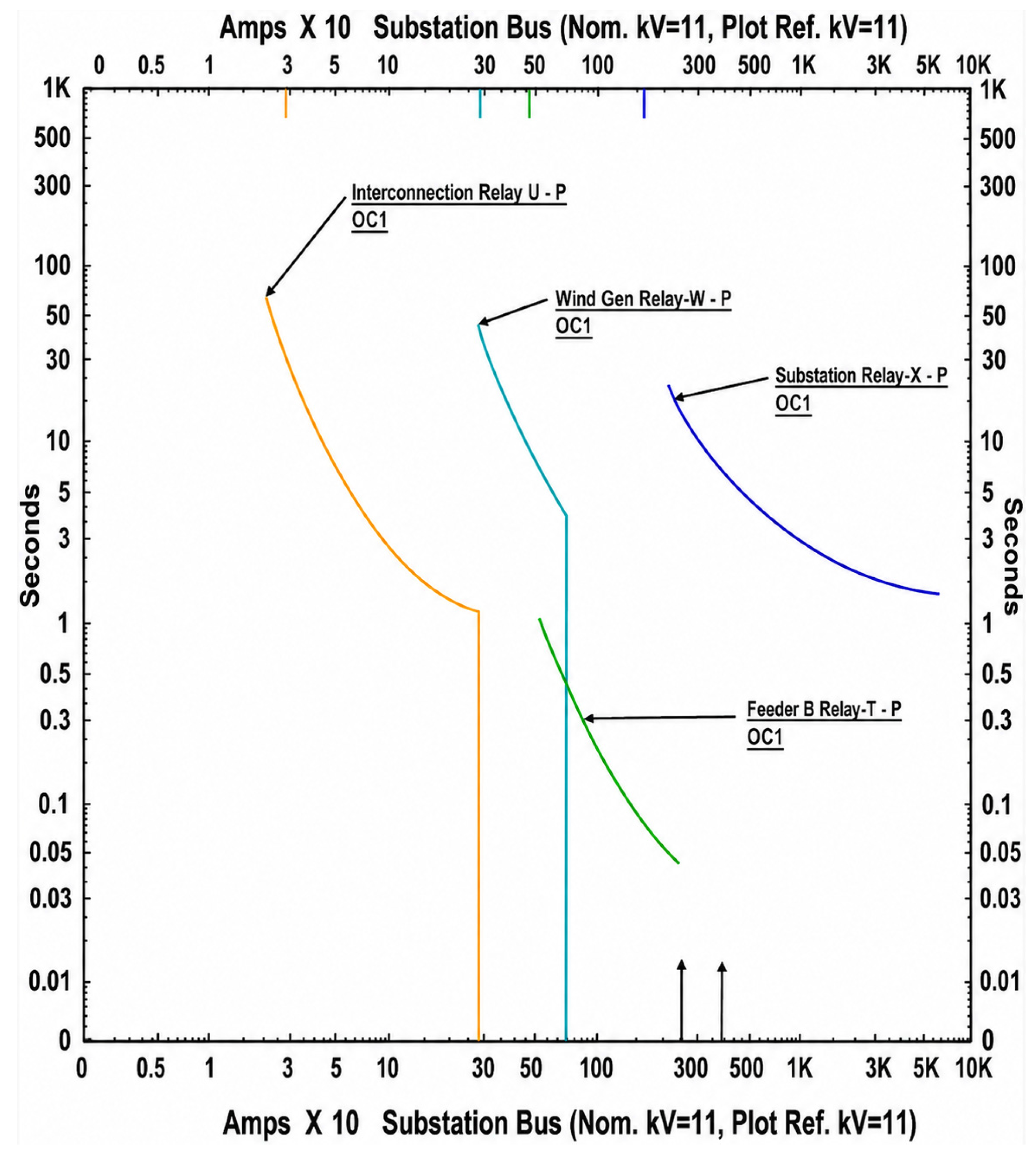



| Component Being Protected | Relay Name | Winding Nomenclature |
|---|---|---|
| Feeder A | Relay-S | S |
| Feeder B | Relay-T | T |
| Interconnection feeder (for RMU) | Relay-U | U |
| Wind Generation | Wind Gen-W | W |
| Substation feeder | Substation relay-X | X |
| Input Winding1 | Input Data1 | Data Trigger1 (AMP) | Output Set | Output Winding | Output Setting | Output Value |
|---|---|---|---|---|---|---|
| S | MAG (Amp, primary) | Forecasted Load Threshold | 1 | U | 50UP1P (Pick up) | 35 |
| S | MAG (Amp, primary) | Forecasted Load Threshold | 1 | U | 67UP1D (Duration) | 0.01 |
| Parameter | Description | Source |
|---|---|---|
| Phase Current | Real-time feeder loading | Relay metering |
| Breaker Status | Open/Close Network state | IED Logic |
| RMU status | Network topology condition | SCADA input |
| Fault current level | Short-circuit condition | Power system model |
| Relay setting | Active protection profile | Adaptive software |
| Performance Metric | Conventional | Adaptive |
|---|---|---|
| Miscoordination observed | Yes | No |
| Nuisance tripping | Yes | No |
| Manual intervention | Required | Not required |
| Response adaption | Static | Dynamic |
| Network topology awareness | No | Yes |
| Metric | Reactive Adaptive | Proposed Predictive |
|---|---|---|
| Coordination margin | 0.28 s | 0.42 s |
| Incorrect trips | 2 | 0 |
| Relay setting updates | Post-event | Pre-event |
| Response mechanism | Reactive | Predictive |
| Restoration time | Higher | Reduced |
Disclaimer/Publisher’s Note: The statements, opinions and data contained in all publications are solely those of the individual author(s) and contributor(s) and not of MDPI and/or the editor(s). MDPI and/or the editor(s) disclaim responsibility for any injury to people or property resulting from any ideas, methods, instructions or products referred to in the content. |
© 2026 by the authors. Licensee MDPI, Basel, Switzerland. This article is an open access article distributed under the terms and conditions of the Creative Commons Attribution (CC BY) license.
Share and Cite
Islam, K.; Abu-Siada, A. Next-Generation Automated Adaptive Protection Enabled by Geospatial Load Forecasting in Distribution Networks. Automation 2026, 7, 90. https://doi.org/10.3390/automation7030090
Islam K, Abu-Siada A. Next-Generation Automated Adaptive Protection Enabled by Geospatial Load Forecasting in Distribution Networks. Automation. 2026; 7(3):90. https://doi.org/10.3390/automation7030090
Chicago/Turabian StyleIslam, Khandoker, and Ahmed Abu-Siada. 2026. "Next-Generation Automated Adaptive Protection Enabled by Geospatial Load Forecasting in Distribution Networks" Automation 7, no. 3: 90. https://doi.org/10.3390/automation7030090
APA StyleIslam, K., & Abu-Siada, A. (2026). Next-Generation Automated Adaptive Protection Enabled by Geospatial Load Forecasting in Distribution Networks. Automation, 7(3), 90. https://doi.org/10.3390/automation7030090